
20 Wedding Seating Chart Cheat Sheet Ideas: Who Goes Where (Etiquette & Layout Tips)
20 Wedding Seating Chart Cheat Sheet Ideas: Who Goes Where (Etiquette & Layout Tips)
By zainzari • Published October 2026

📌 Save
Short on time? The secret to a stress-free wedding seating chart is simple: group guests into natural clusters (parents, wedding party, family, friends), seat divorced parents at separate tables with supportive company, keep 8 guests per round table, and finalize everything 7–10 days before the wedding with a couple of buffer seats to spare.
Start With a Master Guest List Spreadsheet
📌 Save
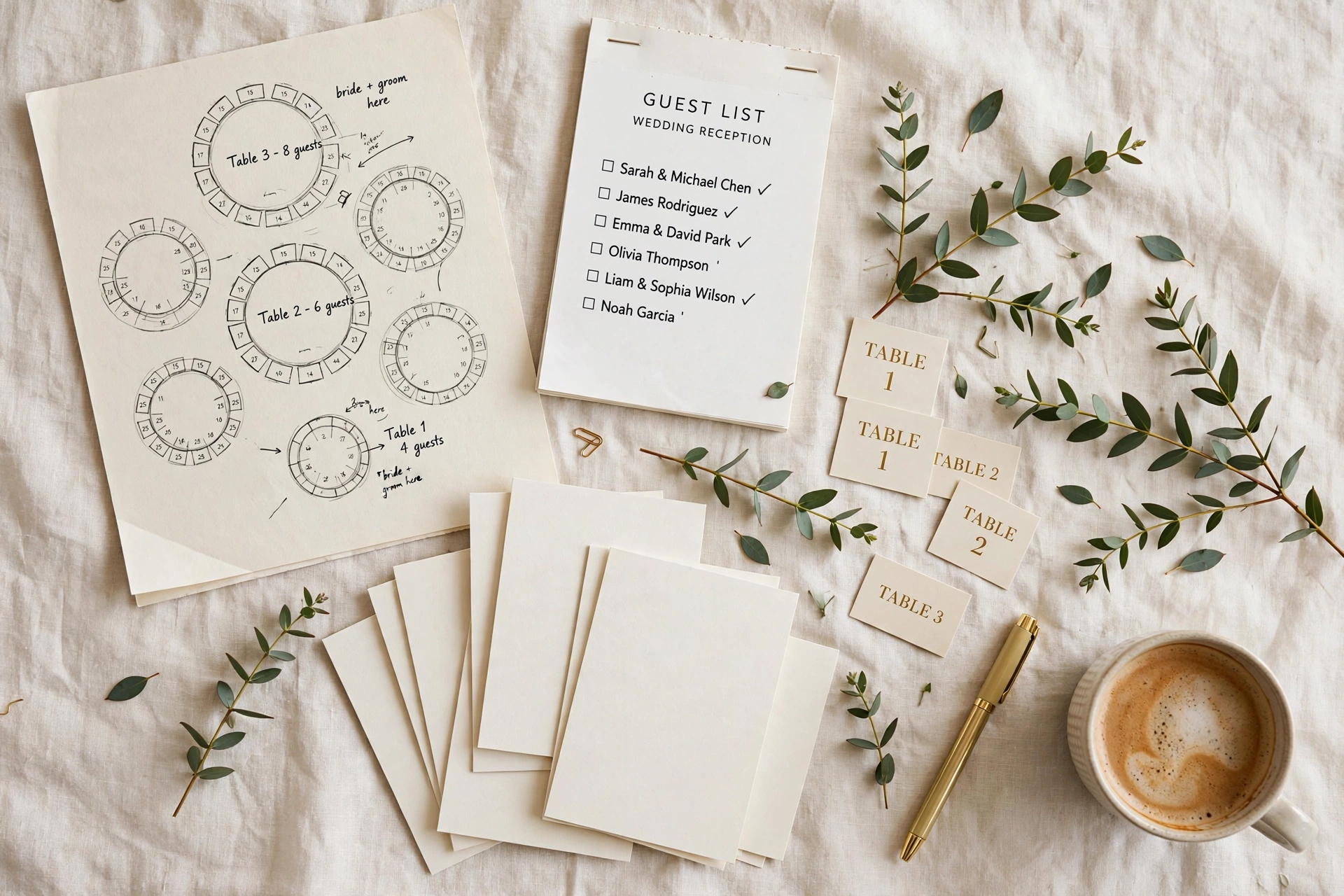
Every great seating chart starts as a spreadsheet — one master list with names, relationships, meal choices, and special notes.
Add columns for table assignments, dietary needs, and “must not sit near” flags. This single document becomes the source of truth for your planner, caterer, and day-of coordinator. Most couples finish the draft in two or three relaxed sessions with coffee — never attempt it all in one sitting.
The Sweetheart Table Rule

📌 Save
Seat yourselves first — a sweetheart table for two gives you a rare private moment during the busiest day of your lives.
Place it centrally so guests can come to you between courses, and keep it within sight of the dance floor for toasts. This is the trending choice for 2026–2027 weddings, and photographers love the intimate framing it creates.
Parents’ Tables, Sorted
Traditionally, the bride’s parents host one table and the groom’s parents host another — both as close to you as possible.
Seat each set of parents with their closest friends and relatives so both tables feel like celebrations, not obligations. If parents are happily married, you can merge them into one grand family table — just confirm with both sides first.
The Divorced-Parents Playbook
Divorced parents go at separate tables — each surrounded by their own supportive relatives and friends.
Place both tables at a similar distance from you so neither parent feels sidelined, but keep them non-adjacent. Brief your coordinator privately about the arrangement so they can steer toasts, photos, and any surprise encounters with care. New partners sit with their respective parent — never force a blended table unless everyone genuinely agrees.
Build the Wedding Party Table
Group your bridesmaids, groomsmen, and their plus-ones at one lively table near the dance floor.
These are your most energetic guests — seating them together keeps the dance floor full all night. If the group is large, split into two adjacent tables (wedding party + dates) so nobody is squeezed. Seat them where speeches and toasts are clearly visible.
Cluster Extended Family Together
Aunts, uncles, and cousins who rarely see each other will love being grouped — family reunions are half the fun of a wedding.
Keep generations in mind: grandparents near the front with easy aisle access, and rowdier cousin groups toward the middle where laughter carries. If two family branches don’t mix well, give each branch its own table with a friendly buffer table between them.
Mix Friends and Coworkers Thoughtfully
College friends, work friends, and neighbors can absolutely share tables — just seed each table with people who share something.
Common ground matters more than history: same city, same hobbies, same age group. Avoid seating a lone coworker among ten childhood friends — give every guest at least one person they already know, plus a table of friendly strangers to discover.
The Singles Table Strategy
Pair your single guests together — it’s the table with the most spark potential at the whole reception.
Choose singles with overlapping interests and a similar vibe, and never label it “the singles table” on the chart — a fun table name (“Table Wanderlust”) keeps it classy. Seat this table near the bar or dance floor, never in a back corner.
Keep Exes Comfortably Apart
Ex-partners who are both invited deserve tables far enough apart that neither spends dinner on edge.
Separate tables on opposite sides of the room is the safe play, each with their own circle of friends. You don’t need to explain it to anyone — a good chart makes the arrangement feel completely natural.
Decide on a Kids’ Table Early
If you’re inviting children, decide now: one kids’ table with activities, or kids seated with their parents?
A dedicated kids’ table (ages 5–12) with coloring pages and kid-friendly food keeps little ones happy and parents relaxed — but toddlers belong with their parents, always. Place the kids’ table near, but not next to, the dance floor speakers.
Seat VIPs Closest to You
Proximity is love language at a wedding — your nearest and dearest belong at the tables closest to yours.
Think in rings: ring one is parents and wedding party, ring two is close family and best friends, ring three is extended family and friends, and the outer ring is coworkers and plus-ones. Nobody minds an outer table when the inner rings are clearly the people you see every day.
Do the Round-vs-Long Table Math
Round tables seat 8 comfortably; long banquet tables seat guests on both sides at about 24 inches of elbow room each.
Round tables encourage conversation across the whole table; long tables feel grand and work beautifully in narrow venues. Count your confirmed guests, divide by your table capacity, then add one spare table’s worth of buffer seats — running out of chairs is the one mistake you can’t fix mid-reception.
The 8-Per-Table Sweet Spot
Eight guests per 60-inch round table is the golden number — everyone can talk, eat, and move without elbowing neighbors.
Six works for intimate, chatty dinners; ten is possible but feels crowded and slows down service. When your numbers don’t divide evenly, it’s better to have two tables of seven than one table of ten and one of four.
Seat Shy Guests With Connectors
Every guest list has a few quiet souls — seat them with warm, outgoing “connector” personalities who draw people out.
Never seat a shy guest at a table where they know no one. One familiar face plus one friendly stranger is the minimum for a comfortable evening. This small kindness is what guests remember about your wedding years later.
Flag Dietary and Accessibility Needs
Note every allergy, dietary restriction, and mobility need in your spreadsheet — then share it with your caterer and venue.
Guests with wheelchairs or walkers need aisle-adjacent seats with real maneuvering room; elderly guests appreciate tables near restrooms and away from speakers. For meals, a discreet colored dot on the place card helps servers deliver the right plate without announcements.
Head Table or Sweetheart Table?
Sweetheart table (just you two) means intimacy; a head table with your wedding party means togetherness — pick your vibe.
There’s no wrong answer, but decide early because it reshapes your whole chart: a head table absorbs 10–14 wedding party seats, while a sweetheart table frees your wedding party to sit with their dates. Couples who want to actually eat and talk during dinner usually choose the sweetheart table.
Keep Buffer Seats for Late RSVPs
Late RSVPs and plus-one surprises are inevitable — hold two to four buffer seats across your friend tables.
Sprinkle the buffer seats one per table rather than leaving a sad half-empty table. Finalize your chart 7–10 days before the wedding, but keep your spreadsheet editable until the rehearsal dinner for last-minute swaps.
Make the Chart Display Crystal Clear

📌 Save
The best-planned chart fails if guests can’t read it — alphabetize names, use large lettering, and light the display well.
Group by last name (not table number) so guests find themselves in seconds, and place the display where the guest flow naturally pauses — the cocktail hour entrance. A linen board with calligraphy cards, a mirror, or an acrylic panel all work; readability beats style every time.
Walk the Room With Your Planner
A paper chart looks perfect until you see the actual room — walk the floor plan with your planner before you lock it in.
Check sightlines to the dance floor and sweetheart table, distance from speakers and kitchen doors, and whether “Table 12” is secretly next to the restrooms. Venue staff know which tables are the hidden gems and which to avoid — ask them.
Print a Day-Of Cheat Sheet
Condense your final chart into a one-page cheat sheet: table numbers, headcounts, VIP flags, and dietary notes.
Hand copies to your coordinator, caterer captain, and maid of honor. When a guest’s name is missing or a chair breaks, the cheat sheet turns a crisis into a 30-second fix. Laminate one copy — receptions and paper don’t mix.
Seating chart planning at a glance
| Step | What to do | When |
|---|---|---|
| 1. Guest list | Master spreadsheet with groups, meals, notes | 8–10 weeks out |
| 2. Table math | Confirm table sizes; divide guests by 8 per round | 6 weeks out |
| 3. Draft chart | Assign tables by cluster after RSVPs close | 3–4 weeks out |
| 4. Finalize | Walk the room, lock names, print cheat sheets | 7–10 days out |
Timelines assume a standard planning runway — adjust if you’re planning on a shorter schedule.
Key takeaways
- Group guests into natural clusters first — tables assign themselves.
- Seat divorced parents at separate tables with their own supportive company.
- Eight guests per round table is the comfort sweet spot.
- Every guest needs at least one familiar face at their table.
- Finalize 7–10 days out, keep buffer seats, and print a day-of cheat sheet.
Frequently asked questions
How do you seat divorced parents at a wedding?
Seat divorced parents at separate tables, each surrounded by their own supportive relatives or friends. Place both tables close to you but not adjacent, and tell your planner or coordinator about the arrangement so they can handle any day-of tension discreetly.
How many guests should sit at each wedding table?
Eight guests per 60-inch round table is the sweet spot — everyone can converse comfortably. Six works for intimate settings; ten is possible but feels crowded. For long banquet tables, seat guests on both sides with about 24 inches of elbow room each.
When should I finalize my wedding seating chart?
Start drafting your seating chart once RSVPs close (usually 3–4 weeks before the wedding) and finalize it 7–10 days out. Keep two to four buffer seats free for late RSVPs and last-minute changes.
Should I have a sweetheart table or a head table?
A sweetheart table (just the two of you) gives you a private moment during dinner and is trending for 2026–2027 weddings. A head table with your wedding party feels more traditional and communal. Choose based on whether you want intimacy or togetherness — there’s no wrong answer.
What is the easiest way to make a wedding seating chart?
Start with a master guest list spreadsheet, group guests into natural clusters (family, wedding party, friends, coworkers), sketch your table layout on paper, then assign tables before assigning individual seats. Most couples finish in two to three relaxed sessions.