Dog Ring Bearers: A Complete Guide (2027)
By zainzari • Published October 23, 2026 • Updated October 23, 2026
 📌 Save
A dog ring bearer works when four things are in place: replica rings in a securely attached pouch (the real rings stay with the best man), a dedicated handler walking the dog, six to eight weeks of kind, gradual training including a full venue rehearsal, and a cheerful backup plan if your dog says no on the day.
It is one of the most searched, saved and beloved wedding moments of the decade: your dog, in a bow tie, trotting down the aisle with the rings. Done well, it melts a room. Done on hope alone, it produces a loose dog, a missing pouch and a ceremony story nobody wanted. The difference is entirely preparation.
This complete guide covers the ring-bearer role end to end: judging readiness, ring safety, choosing and kitting the handler, a week-by-week training approach, rehearsing with real distractions, the ceremony-day sequence minute by minute, and the backup plans that mean you never actually need luck. Your dog’s comfort outranks the moment at every step — that is what makes the moment work.
At a Glance: Stage, Focus & Timing
| # | Stage | Focus | Timing |
|---|---|---|---|
| 1 | Assess If Your Dog Is Ready for the Aisle | Readiness check | Before anything else |
| 2 | Use Replica Rings, Always | Replica rings | Always |
| 3 | Choose a Secure Ring Pouch or Harness | Secure pouch fitted | Weeks ahead |
| 4 | Pick the Right Handler for the Walk | Handler chosen | Months ahead |
| 5 | Start Training Six to Eight Weeks Out | Training starts | 6–8 weeks out |
| 6 | Teach a Reliable Loose-Leash Walk | Core skill | Weeks 1–3 |
| 7 | Practice the Exact Aisle Route | Route practiced | Weeks 3–6 |
| 8 | Rehearse at the Venue With Music and Chairs | Venue rehearsal | 1–2 weeks out |
| 9 | Add Distractions Gradually | Distraction-proofing | Weeks 4–7 |
| 10 | Reward With High-Value Treats | Reward system | Throughout |
The timeline is the training: each stage builds calmly on the last, and no stage is skipped because a dog ‘will probably be fine.’ If any stage falls apart, repeat it kindly — wedding-day confidence is just rehearsal, remembered.
Assess If Your Dog Is Ready for the Aisle
 📌 Save
An aisle-ready dog walks calmly on a leash around strangers, settles when asked, ignores dropped food reasonably well, and recovers quickly from surprises like applause. If your dog lunges at guests, panics at clapping or cannot yet walk past a buffet table, they are not ready — and a photo role instead of an aisle role is the kind, correct call.
Use Replica Rings, Always
 📌 Save
The golden rule of dog ring bearers: the dog carries beautiful replica rings, and the real rings travel in the best man’s pocket. Replicas look identical in photographs, cost almost nothing, and remove the only genuinely catastrophic outcome — a dog bolting with your wedding bands across a field, lake or car park.
Choose a Secure Ring Pouch or Harness
 📌 Save
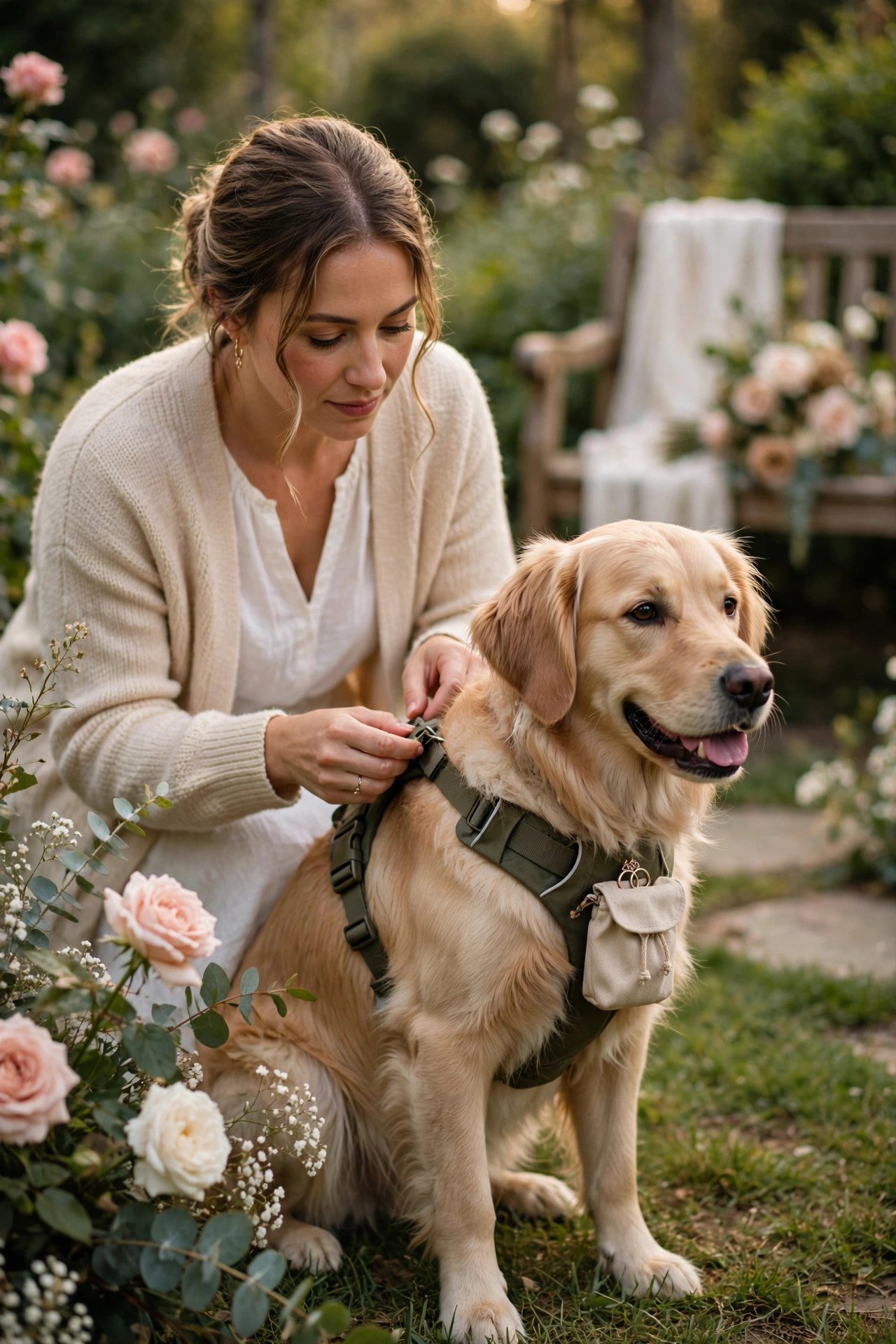
The pouch must attach to a harness or a sturdy collar with a locking clasp, sit flat so it cannot swing or snag, and have no dangling strings, bells or parts the dog can chew. Test it on walks: the dog should forget it exists within minutes, and the handler should be able to open and remove it with one hand while holding the leash.
Pick the Right Handler for the Walk
 📌 Save
The handler walks the dog down the aisle, so choose someone the dog adores and obeys, who is calm under an audience’s gaze and not otherwise in the ceremony. A professional pet attendant is ideal; a trusted friend who has trained alongside you is a good second. The couple, parents and wedding party are all disqualified — they have entrances of their own.
Start Training Six to Eight Weeks Out
 📌 Save
Six to eight weeks of short, daily, treat-rich practice turns an ordinary dog into a reliable ring bearer. Two five-minute sessions a day beat one heroic weekend: dogs learn in repetitions, not marathons. Put the sessions in the diary like dress fittings — this is a wedding supplier appointment with your own dog.
Teach a Reliable Loose-Leash Walk
 📌 Save
The aisle walk is a loose-leash walk with an audience: the dog beside the handler, leash slack, attention checking in regularly. Train it with high-value treats delivered at the handler’s seam line, first at home, then on your street, then in steadily busier places. Pulling, zig-zagging and leash-chewing are fixed here, in training — never on the day.
Practice the Exact Aisle Route
 📌 Save
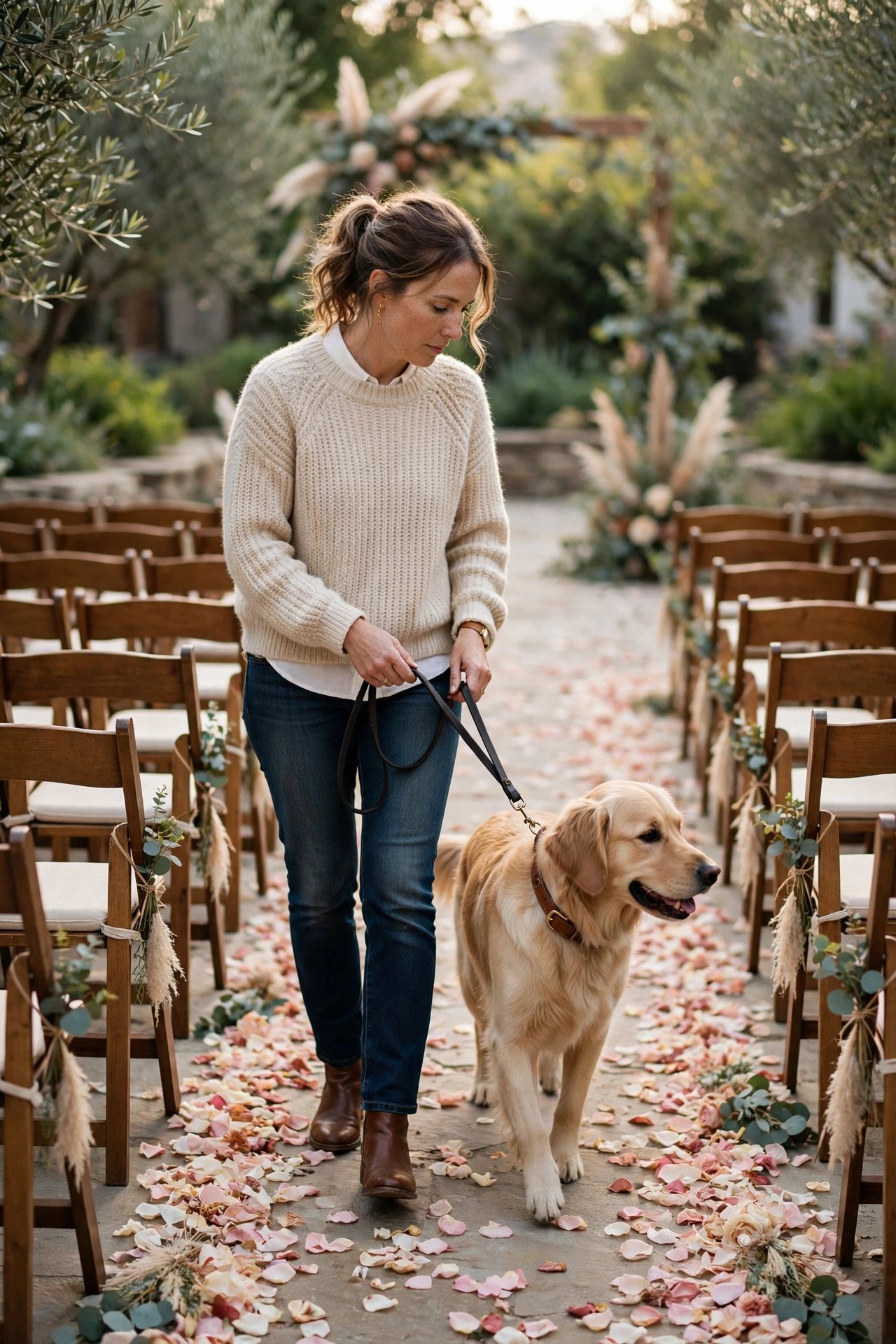
Recreate the route as closely as you can: a path of similar length, a turn at the end, chairs or markers along the sides, and a finish point where the handler stops, the dog sits or settles, and the pouch is removed. Dogs learn places and sequences — walk the exact pattern until it is boring, because boring is what calm looks like.
Rehearse at the Venue With Music and Chairs
 📌 Save
At least once, rehearse in the real space: chairs set out, ceremony music playing, a few friendly people seated. Walk the route, do the finish, remove the pouch, and leave. Ten successful minutes at the venue teaches your dog that this strange room is simply another place the walking game happens.
Add Distractions Gradually
 📌 Save
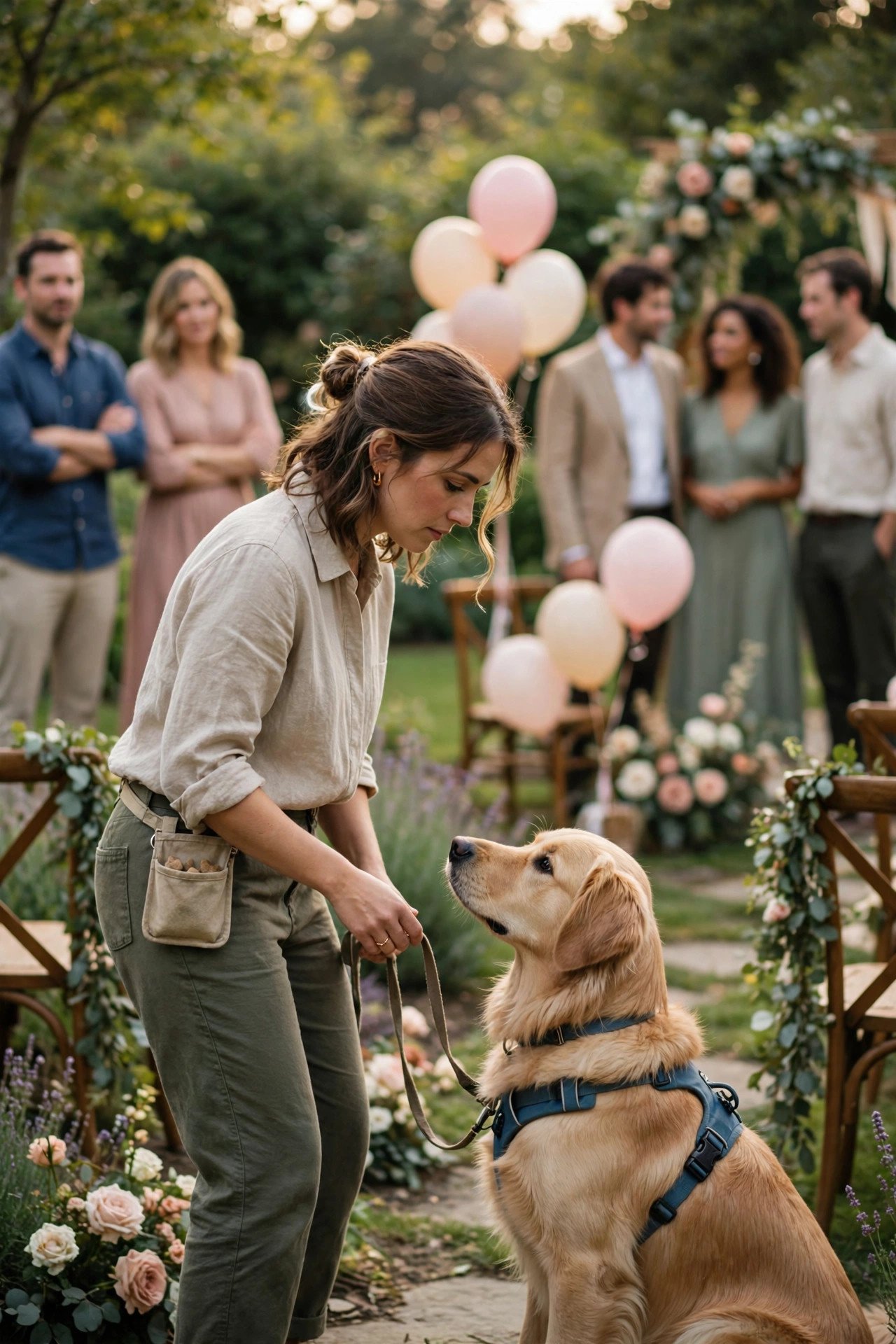
Weddings applaud, laugh, gasp and drop canapés. Build those in layers during training: one clapping friend, then several; music; a plate of food near (never on) the route; children at a distance. Reward the dog for noticing and choosing the handler anyway. A distraction the dog has met in training is just scenery on the day.
Reward With High-Value Treats
 📌 Save
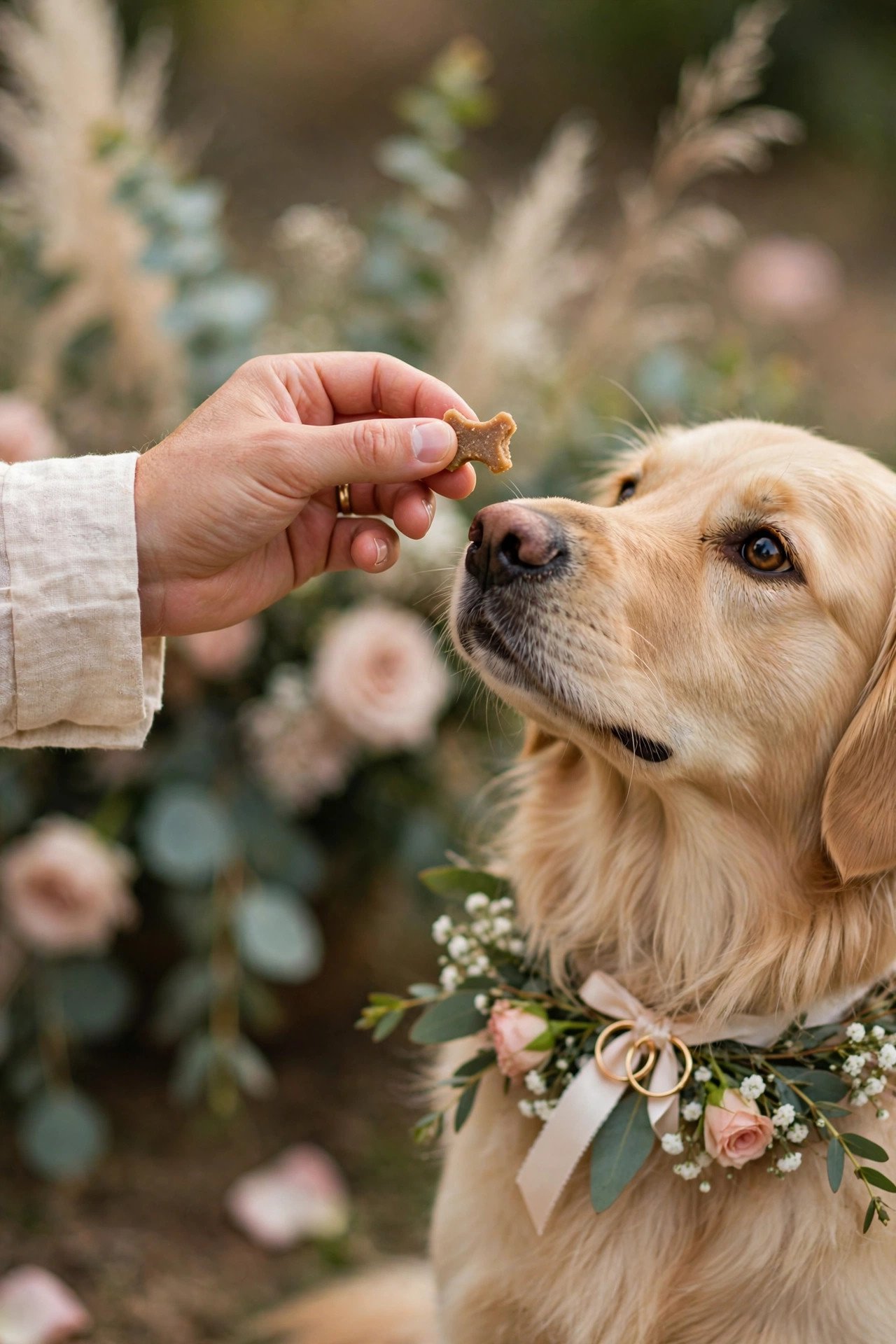
Wedding-level concentration deserves wedding-level pay: small pieces of chicken, cheese or whatever your dog considers treasure, reserved for aisle training only. The handler carries them in a smart pouch on the day, delivering quietly at the finish and during any waiting — never mid-aisle from guests’ hands, and never anything from the reception food.
Kit the Handler With Treats and Cues
 📌 Save
The handler’s kit: treat pouch, a spare leash, waste bags, a small water bottle and bowl, a lint roller, and the agreed cue words written on a card. Decide the exact cues — the attention word, the sit or settle, the release — and have only the handler use them during the ceremony window, so the dog hears one clear voice in a room of kind noise.
Rehearse in the Ring Bearer Outfit
 📌 Save
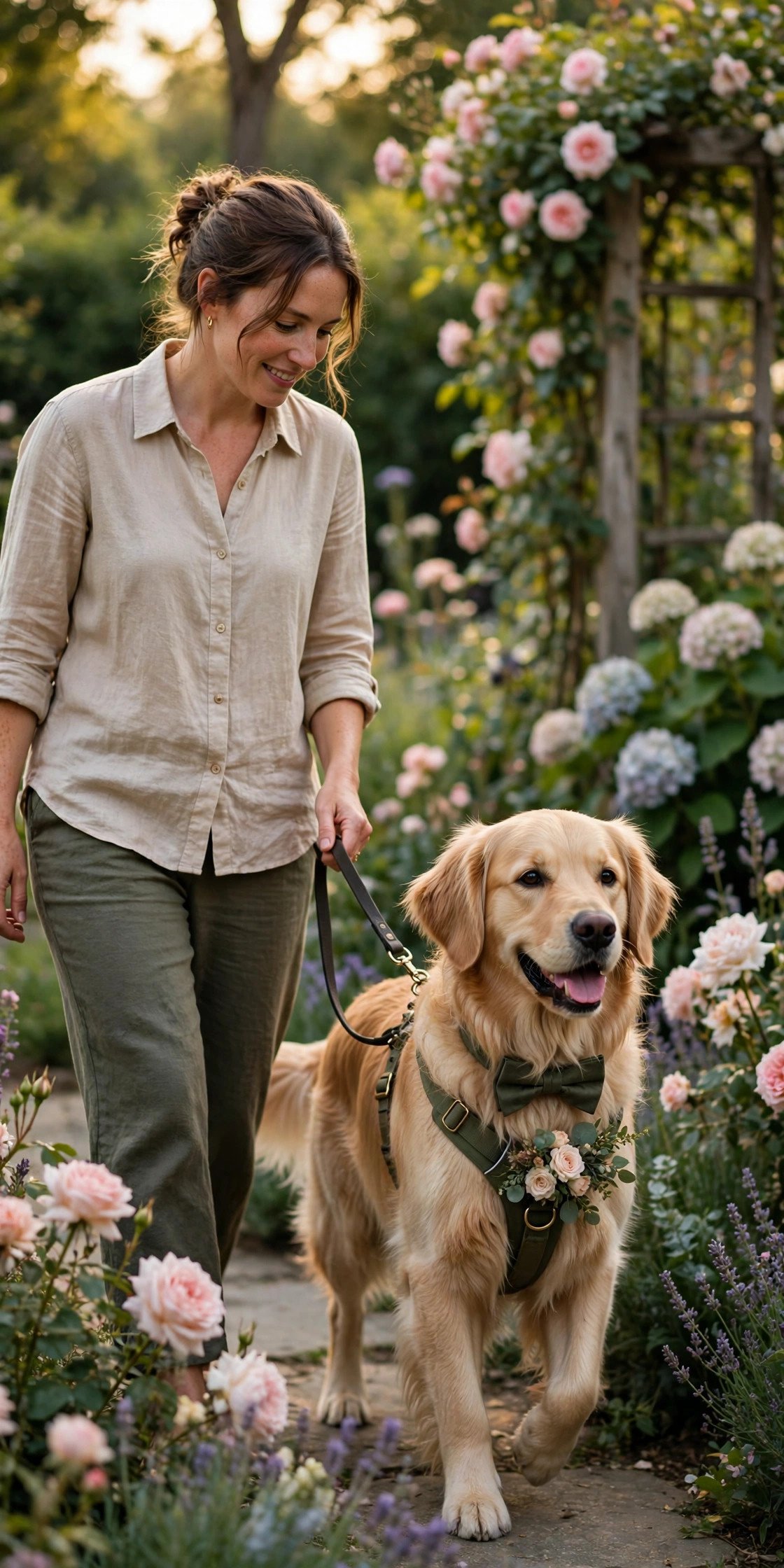
The bow tie, bandana, floral collar or tuxedo harness joins the route rehearsals two weeks out, so the full picture — outfit, pouch, route, music — is familiar as a set. Sessions should end with the dog relaxed in the outfit, playing or eating, so the clothing predicts good things rather than strange restraint.
Choose Comfort-First Attire
 📌 Save
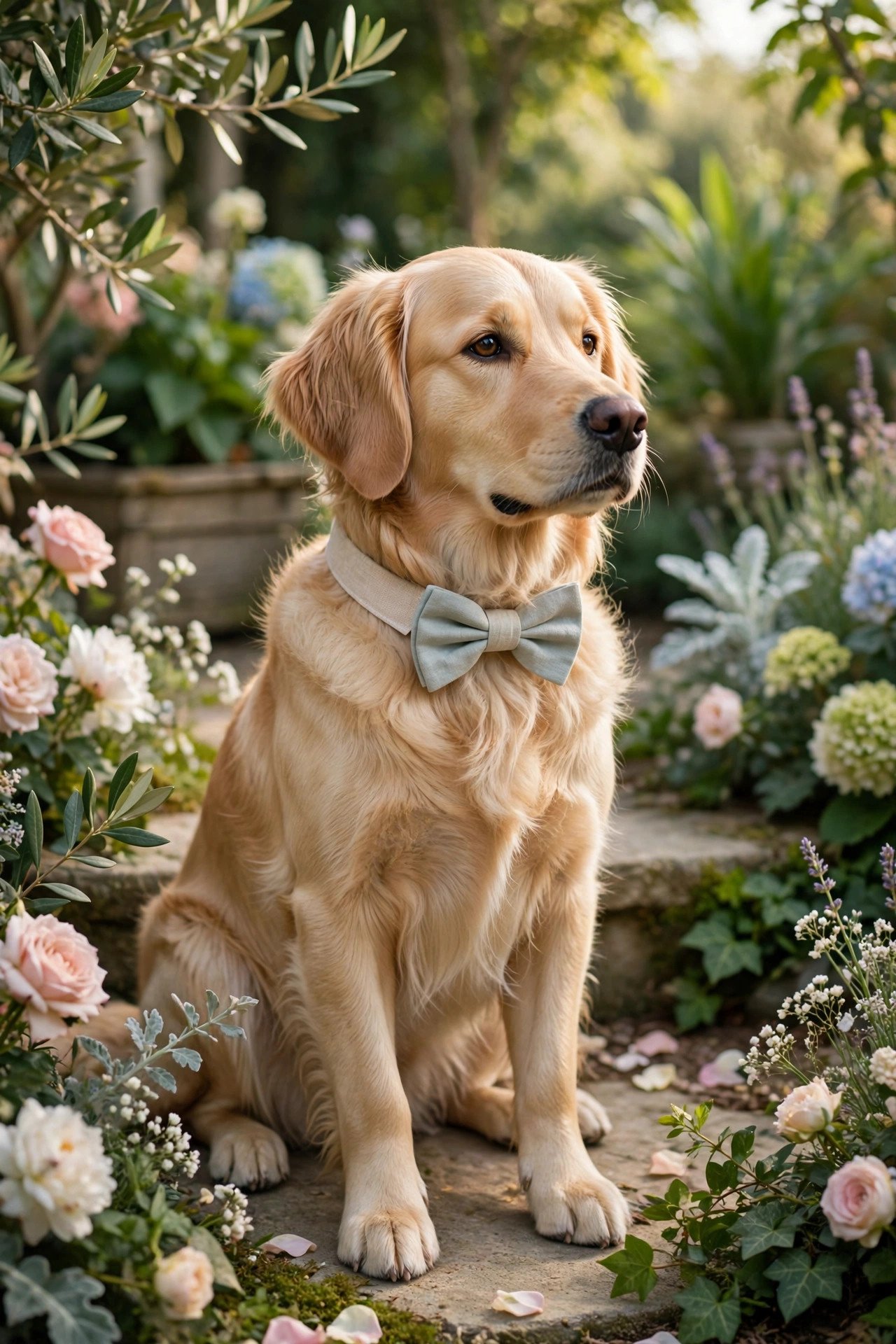
Ring bearer fashion has one rule: the dog forgets they are wearing it. Lightweight bow ties on the usual collar, breathable bandanas, or a properly fitted harness with a pouch panel all photograph beautifully. Skip anything heavy, hot, tight, trailing or noisy, and plan for the outfit to come off right after the photo moment.
Time a Toilet Break Before the Ceremony
 📌 Save
Thirty minutes before the ceremony: a calm walk, a full toilet opportunity, a drink of water, and a few minutes of sniffing to decompress. A dog who has emptied, drunk and sniffed walks the aisle in a completely different frame of mind from one rushed straight from the car to a crowd.
Walk Off Energy Beforehand, Gently
 📌 Save
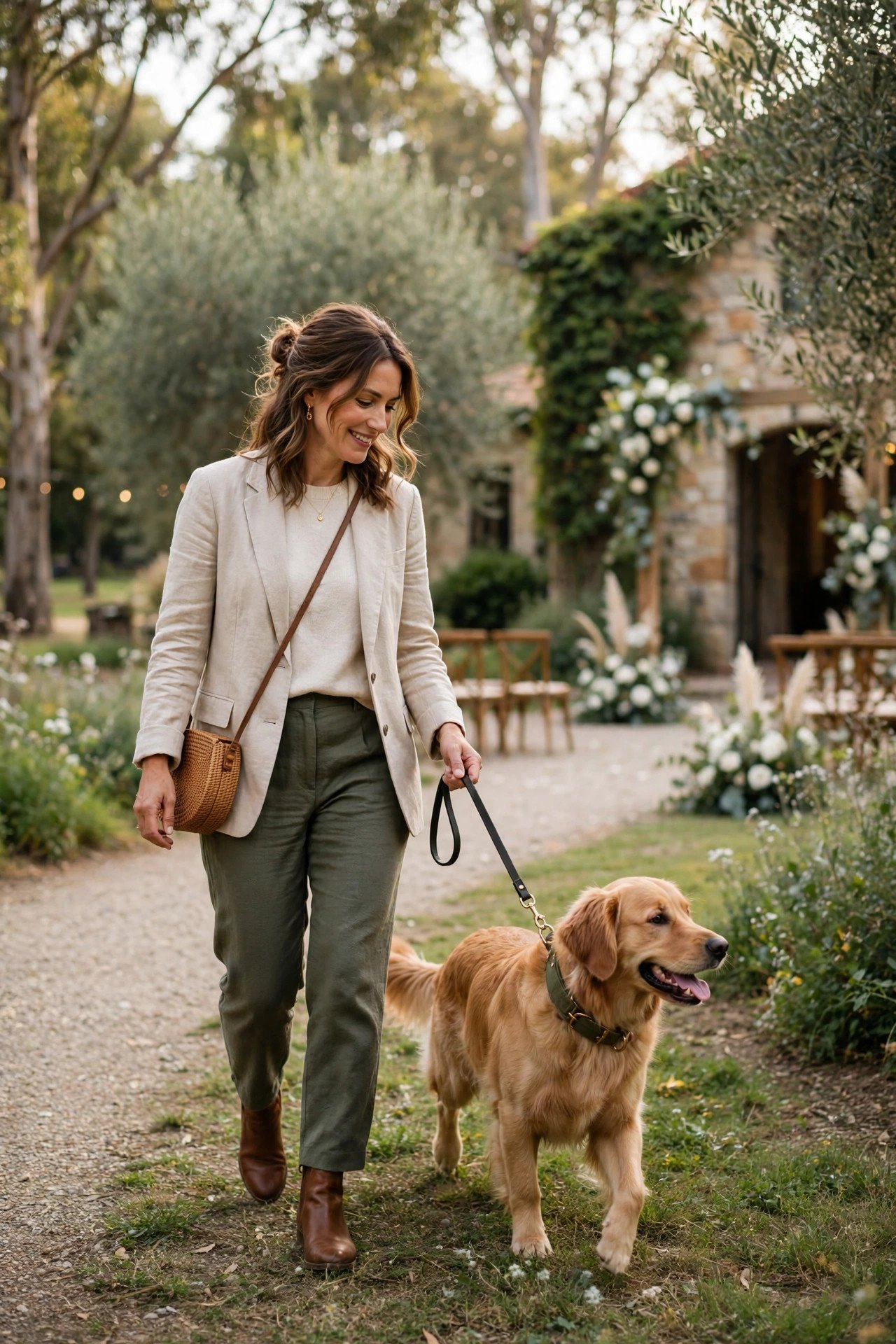
A good, familiar walk or play session earlier in the day settles a ring bearer beautifully — aim for contentedly tired, never exhausted or overstimulated. Avoid brand-new adventures, dog-park chaos or long runs on the wedding morning; routine exercise in a known place is the recipe for a level-headed afternoon.
Plan the Entry Cue With the Coordinator
 📌 Save
Decide the precise trigger: the music change, the celebrant’s nod, the coordinator’s signal at the door. The handler waits out of sight until that cue, enters on the leash at a natural walking pace, and the ceremony breathes around them. Everyone — coordinator, musicians, photographer — should know the dog’s moment is coming and roughly how long it lasts.
Keep the Aisle Clear of Hazards
 📌 Save
Walk the aisle yourself before guests arrive: no loose petals or confetti at mouth height that a dog will hoover, no candles where a tail or leash can reach, no trailing ribbons across the path, and no food anywhere near the route. Ask the florist to keep toxic blooms — lilies especially — out of low arrangements along the aisle.
Position a Second Handler at the Front
 📌 Save
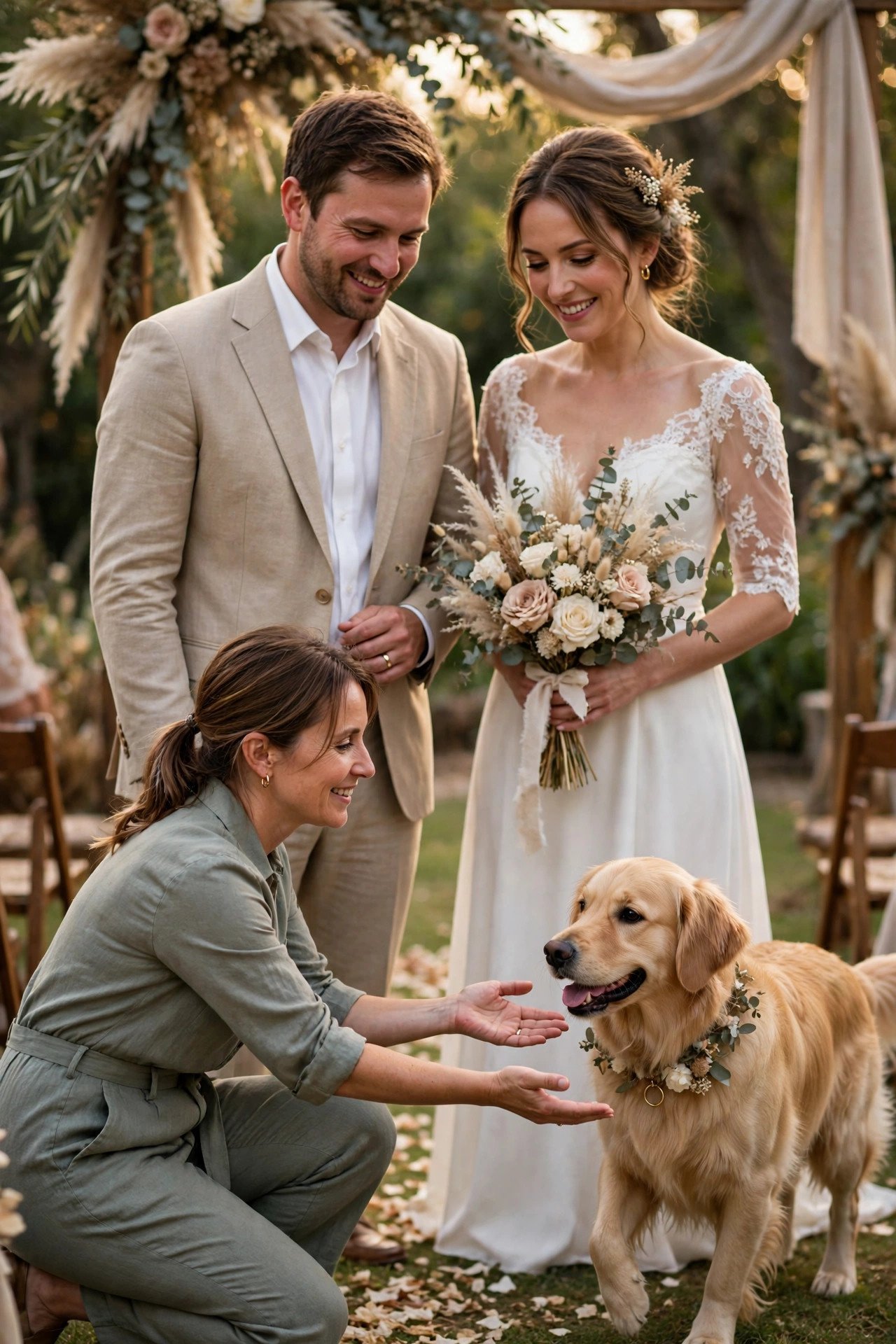
A second trusted person at the front — beside the wedding party, with treats — gives the dog a target to walk toward and a safe pair of hands at the finish. The lead handler can hand over the leash gracefully, the pouch is removed, and the dog settles or exits without a mid-ceremony reshuffle in front of two hundred phones.
Plan the Exit Immediately After the Walk
 📌 Save
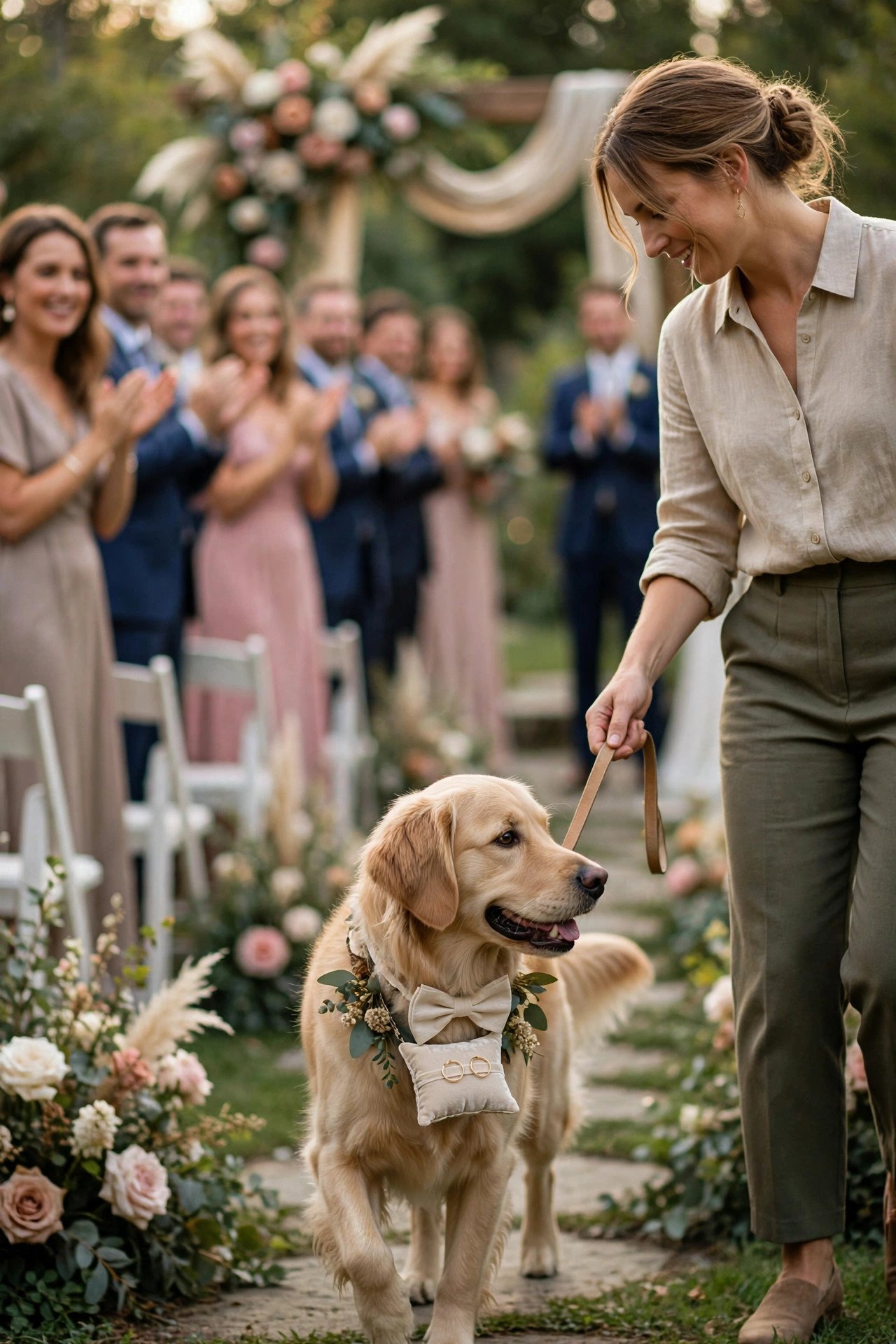
The walk is the job; the exit is the reward. As soon as the pouch is removed, the handler takes the dog out by the pre-agreed route — to water, a toilet break, and the rest zone — before the ceremony continues. Lingering at the front through readings and vows is where even good dogs unravel.
Set Up Water and Rest Straight After
 📌 Save
The rest zone waits with water, a familiar bed or blanket, shade if outdoors, and quiet. After the excitement of the aisle, twenty minutes of genuine downtime lets your dog’s heart rate settle before any photo session. The handler stays with them — praise, water, a small meal if it is due, and no guests for a while.
Prepare a Backup Entrance
 📌 Save
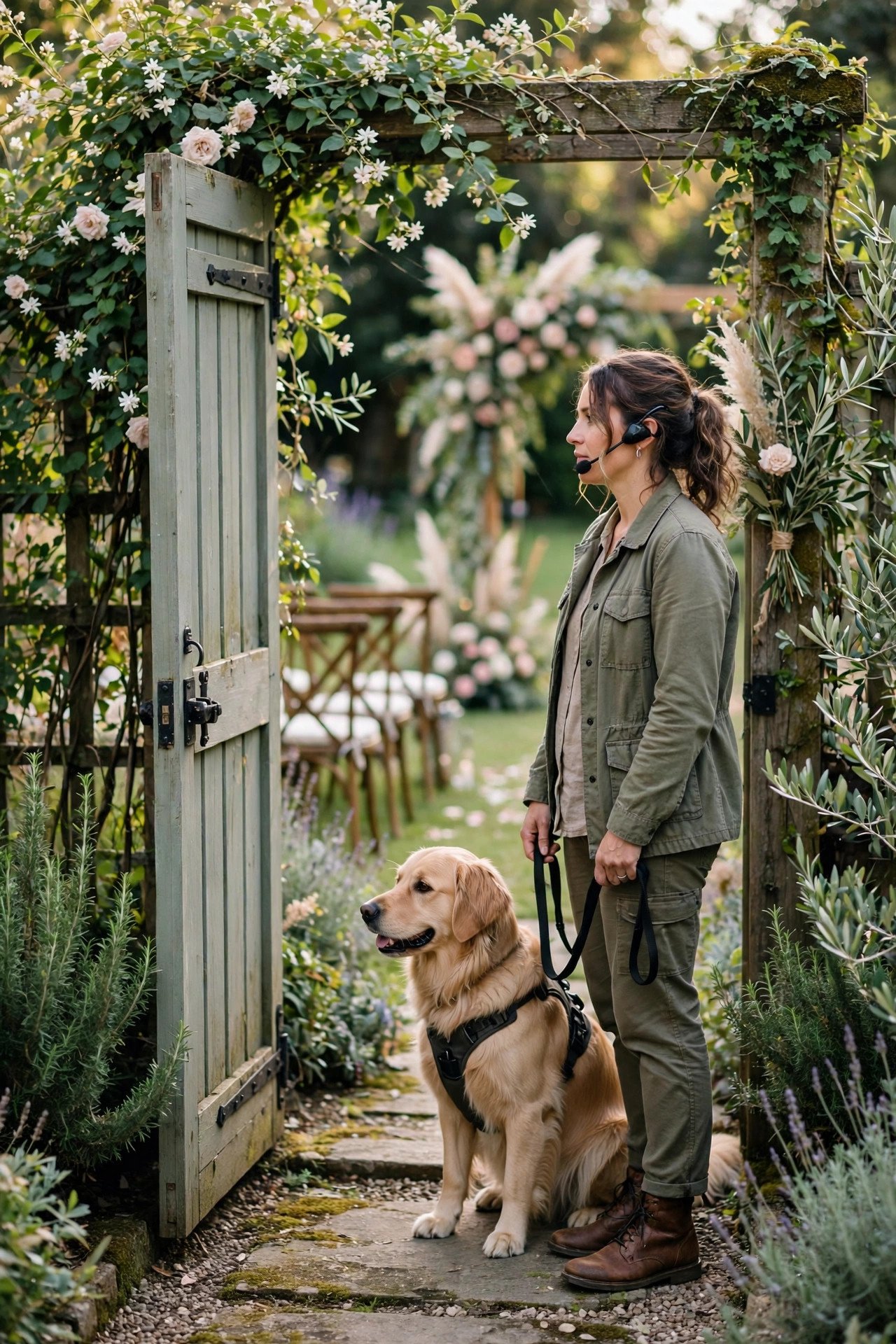
If your dog freezes at the door, the backup entrance saves the moment: the handler calmly carries the pouch in themselves (or hands it to the human ring bearer), the celebrant smiles, and the dog joins later for photos if they wish. Rehearse the handover once so it looks graceful rather than like a salvage operation.
Brief Guests: No Calling, No Feeding
 📌 Save
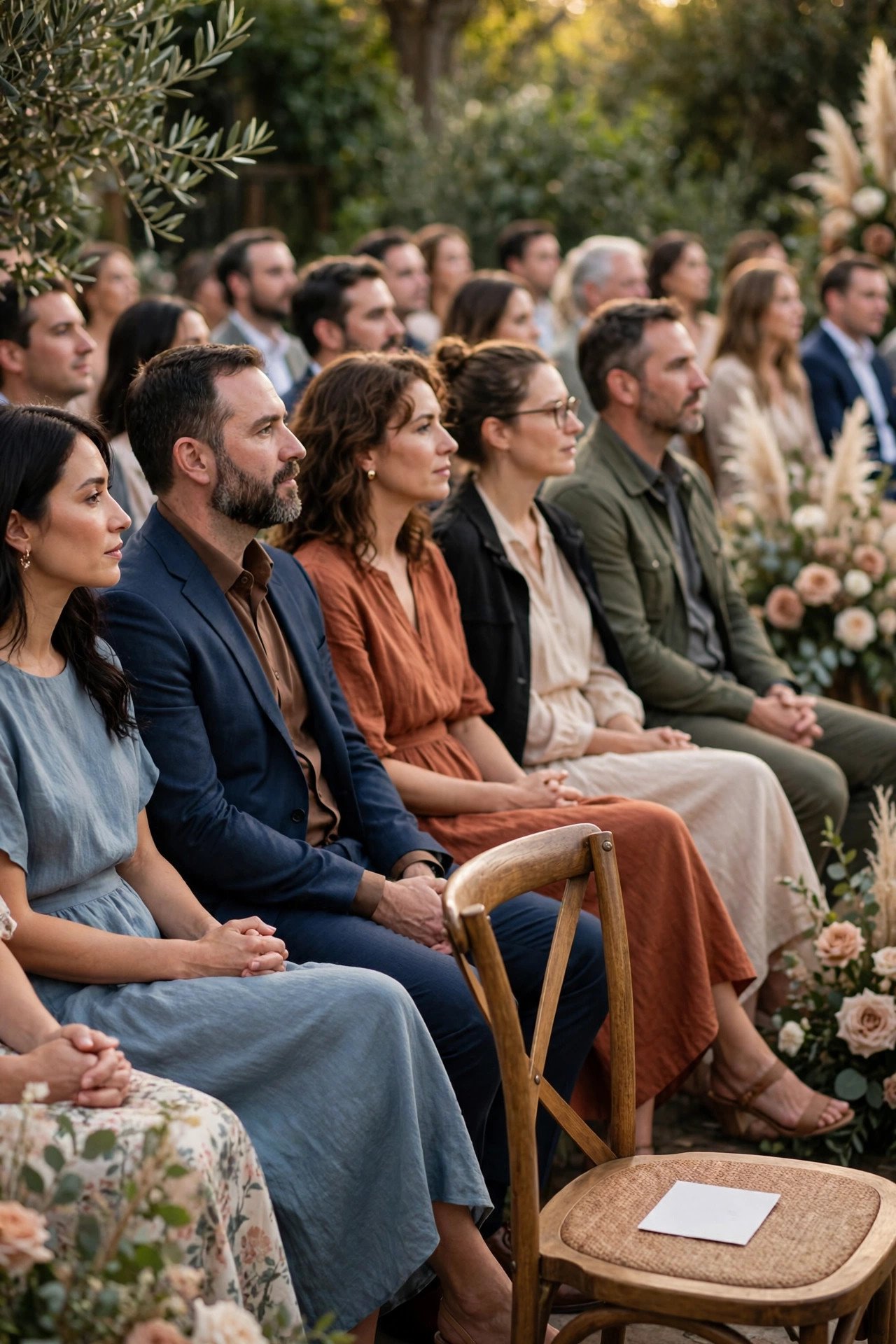
One announcement prevents most aisle chaos: the celebrant or a sign asks guests to let the dog work — no calling their name, no whistling, no treats, no reaching into the aisle. Guests mean love, but fifty people calling a dog mid-aisle is how pouches end up in the third row.
Do a Final Full Rehearsal the Day Before
 📌 Save
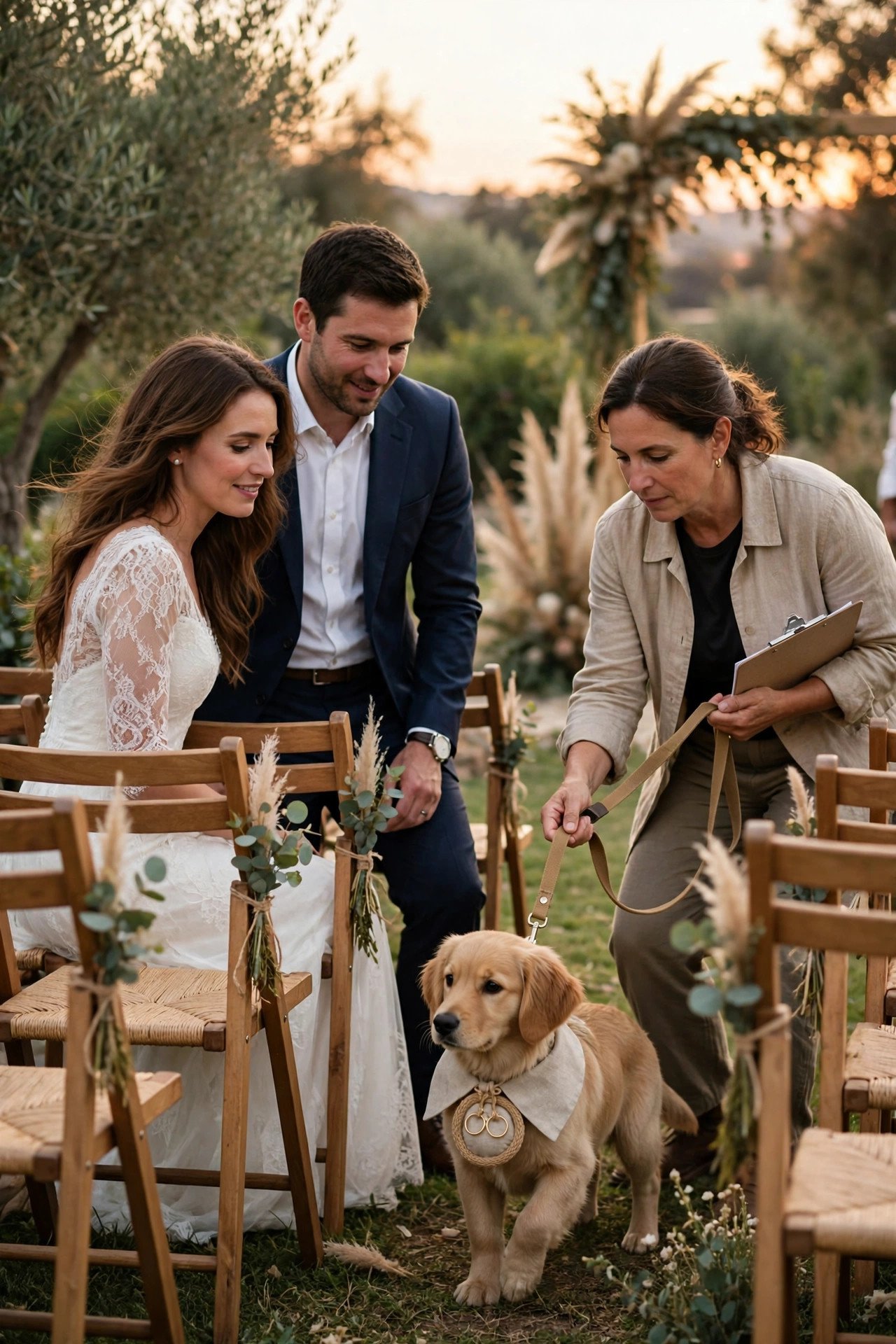
The day before, run the complete sequence once at the venue if possible: arrival, waiting spot, entry cue, walk, finish, pouch off, exit, rest zone. Keep it short and successful, end with play and praise, then let the dog have a quiet evening. The dress rehearsal is for the humans’ nerves as much as the dog’s memory.
Have a No-Go Backup Plan
 📌 Save
Illness, storms, a dog who is simply not themselves: any of these means the human ring bearer steps in and the dog stays home with the sitter, joining the celebration through photos and details instead. Decide this now, tell the handler they have your full permission to call it, and mean it. A protected dog is the whole point of the plan.
Celebrate With Photos, Then Send Them Home
 📌 Save
After a rest, take the portraits: the couple, the dog, the bow tie, the whole joyful evidence. Keep it short, let the handler run it with treats and the dog’s favorite toy, then wave your star off home or to their sitter for a well-earned, ordinary evening. Their job is done; yours is just beginning.
Dog Ring Bearers: A Complete Guide FAQs
Should our dog carry the real wedding rings?+
No — never. Dogs carry secure, good-looking replica rings while the real rings stay in the best man’s pocket. It looks identical in every photo, guests never know, and it removes the one disaster that could genuinely spoil the day.
How long does it take to train a dog ring bearer?+
Plan six to eight weeks of short daily practice: loose-leash walking first, then the route, then distractions, then venue rehearsals. Naturally calm, well-socialized dogs may need less; young or excitable dogs may need more — or a smaller role.
What if our dog freezes or pulls on the day?+
The handler stays calm, gives the dog a moment and a treat, and if the dog still says no, switches to the backup: the handler carries the pouch in or hands it to the human ring bearer, and the dog exits for water and rest. Rehearsed backups look like choreography.
Who should walk the dog down the aisle?+
A dedicated handler the dog knows and trusts — ideally a professional pet attendant, or a friend who trained alongside you. Not the couple, parents or wedding party: they have their own entrances, and the handler must be free to leave with the dog at any moment.
What age of dog makes the best ring bearer?+
Adult dogs between about two and seven usually cope best: past the puppy chaos, before senior stiffness and anxiety. But temperament beats age — a steady senior who adores people may out-perform a bouncy two-year-old. Judge the individual dog, honestly.
Key Takeaways
- Replica rings on the dog, real rings with the best man — no exceptions.
- A dedicated handler walks the dog; the wedding party never doubles up.
- Train six to eight weeks: loose leash, exact route, distractions, venue rehearsal.
- Toilet break, gentle exercise and water before; rest zone and exit straight after.
- Rehearse the backup entrance and the no-go plan — then nobody needs luck.
Final Thoughts
A dog ring bearer is not a stunt; it is a small, trained performance by an animal who trusts you completely. Honor that trust with replicas, rehearsals, a brilliant handler and permission to stop — and the moment everyone cries at will be the one where your dog trots happily down the aisle, entirely in their comfort zone.