
Reception Dress vs Ceremony Dress: Do You Need Two? (2027)
By zainzari • Published October 23, 2026 • Updated October 23, 2026
 📌 Save
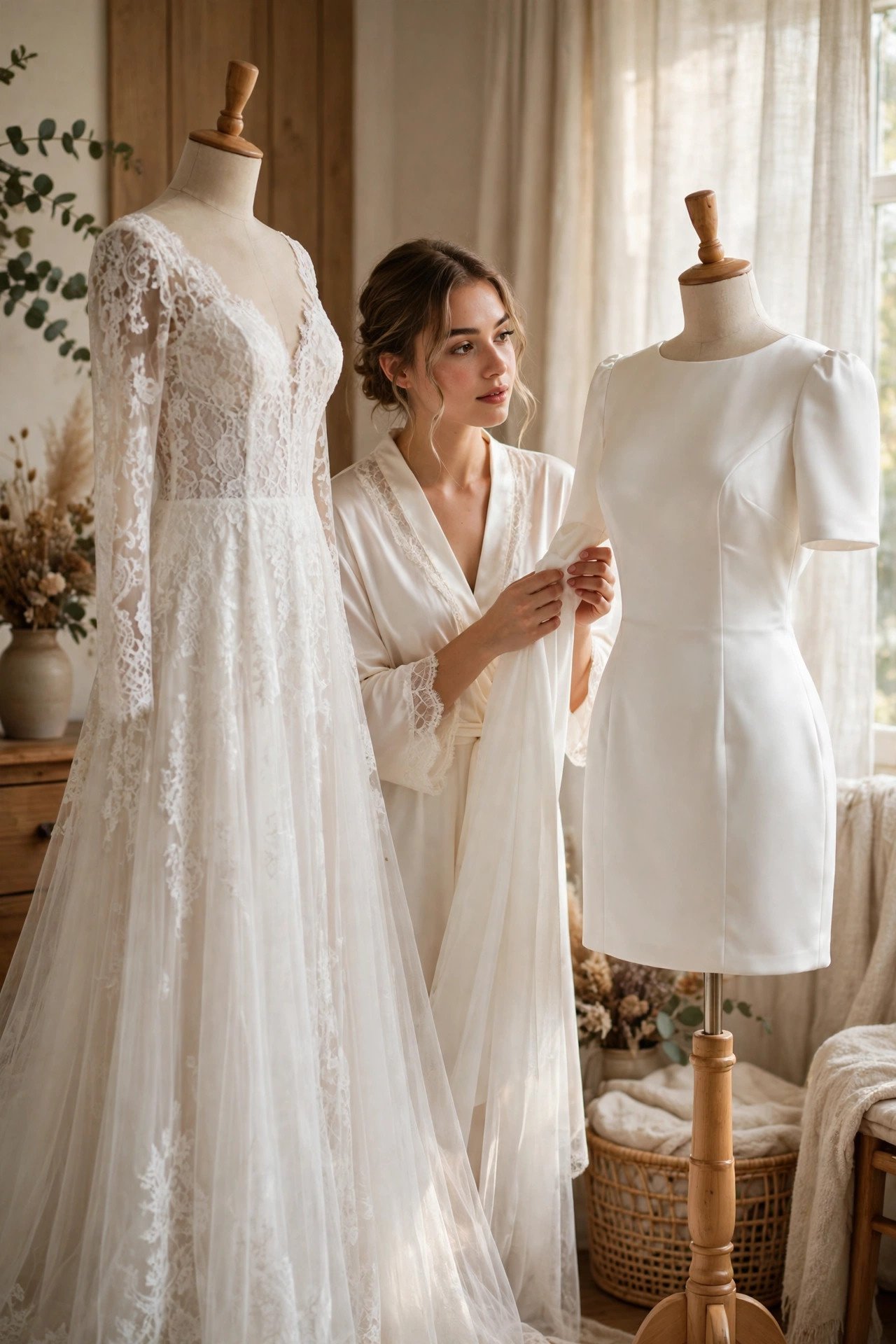
In the reception dress vs ceremony dress debate there is no universal right answer: a ceremony dress is built for the aisle, photographs and tradition, while a reception dress is built for comfort, dancing and mingling. You need two only if your ceremony dress restricts movement, your reception runs long, or a second look genuinely excites you — otherwise one well-chosen dress, styled differently, works beautifully.
Almost every bride asks it at some point: do I actually need a second dress? Influencers say yes, budgets say maybe, and your grandmother probably says one dress served her perfectly well. The truth sits in your specific dress, venue, timeline and priorities.
This guide compares the two looks across 25 honest points — comfort, cost, photographs, logistics and pure joy — so you can decide with clear eyes. Read it with your ceremony dress in mind, not someone else’s wedding.
At a Glance: The Two Looks, Point by Point
| # | Comparison Point | Ceremony Dress | Reception Dress | Edge Goes To |
|---|---|---|---|---|
| 1 | The Aisle Moment: Ceremony Dress Wins | Full-length, formal | Light, shorter or simpler | Ceremony |
| 2 | The Dance Floor: Reception Dress Wins | Sculpted and structured | Soft and flexible | Reception |
| 3 | Comfort Across a 10-Hour Day | Designed for still photos | Designed for motion | Split |
| 4 | The Budget Question, Honestly | Higher price | Usually lower price | Reception |
| 5 | Photographs: Two Looks, Two Albums | Worn 2–4 hours | Worn 4–6 hours | Reception |
| 6 | When One Dress Is Genuinely Enough | Needs a bustle | No bustle needed | Reception |
| 7 | The Train and Bustle Problem | The aisle moment | The entrance moment | Split |
| 8 | Weather and Season Considerations | Dry clean & preserve | Rewear potential | Reception |
| 9 | Guest Mingling and the Hug Test | One fitting journey | Two fitting journeys | Ceremony |
| 10 | The Grand Entrance Effect | All tradition | All personality | Split |
Quick verdict: the longer and hotter your reception, and the heavier your ceremony dress, the stronger the case for a second look. A light ceremony dress at a short reception rarely needs a partner.
The Aisle Moment: Ceremony Dress Wins
 📌 Save
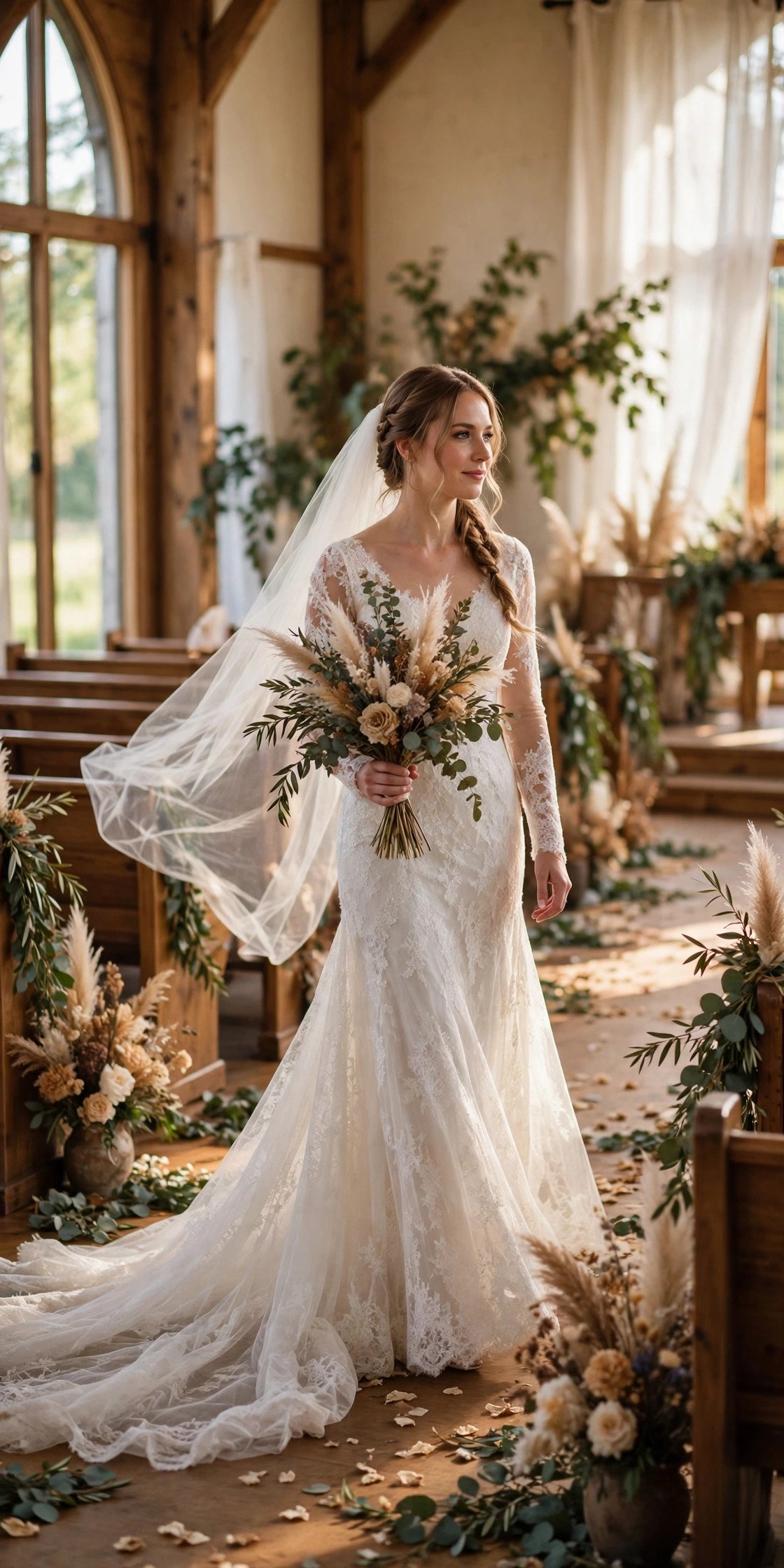
Nothing replaces the aisle moment: the train settling behind you, the hush, the photographs you will frame for decades. A ceremony dress is engineered for exactly this — presence, structure and ceremony. If you only weigh one point heavily, weigh this one.
The Dance Floor: Reception Dress Wins
 📌 Save
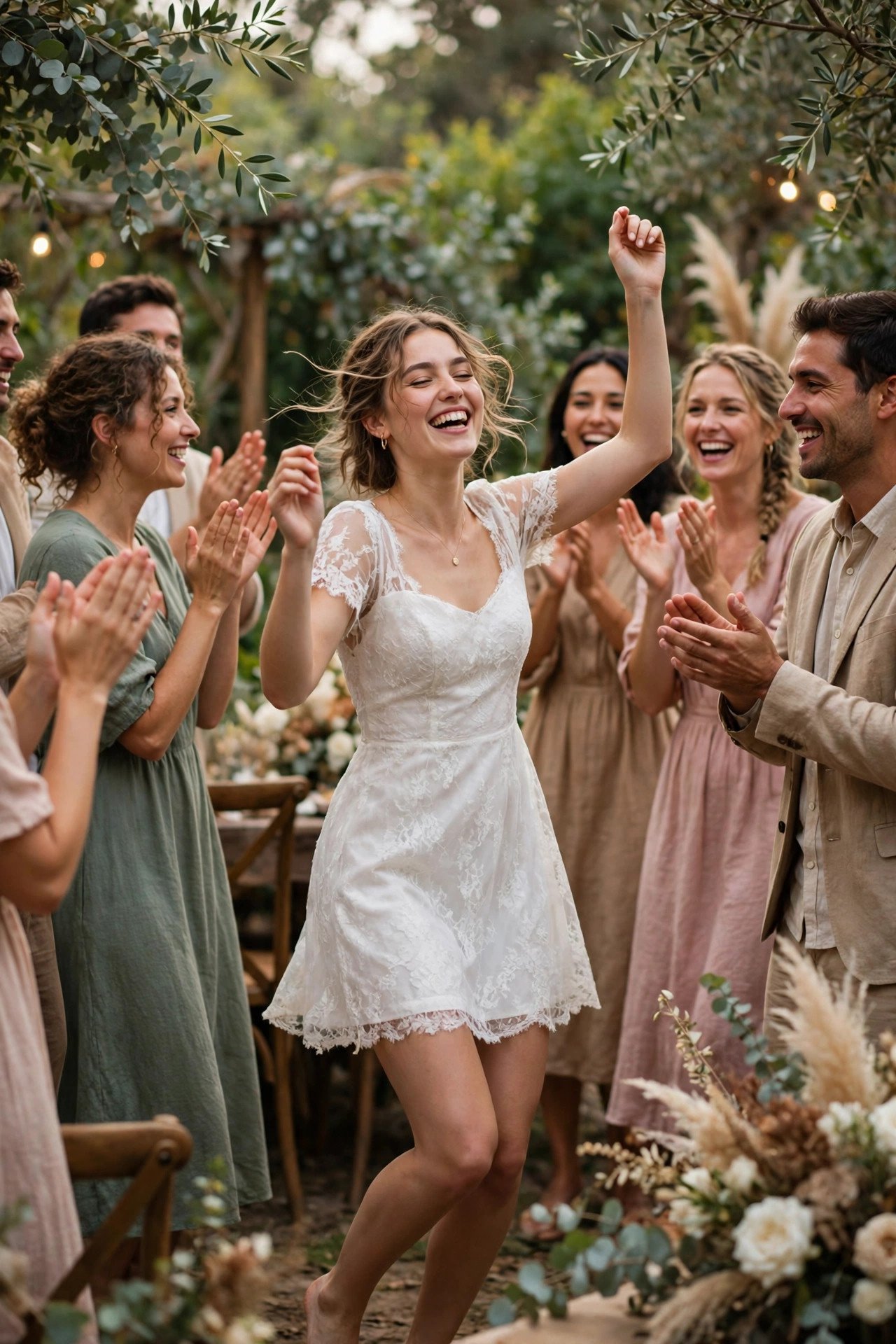
By 10 p.m. the priorities flip completely. A shorter, lighter reception dress lets you spin, dip and join every song without a bustle to manage or a train to protect. Brides who dance all night almost never regret changing.
Comfort Across a 10-Hour Day
 📌 Save
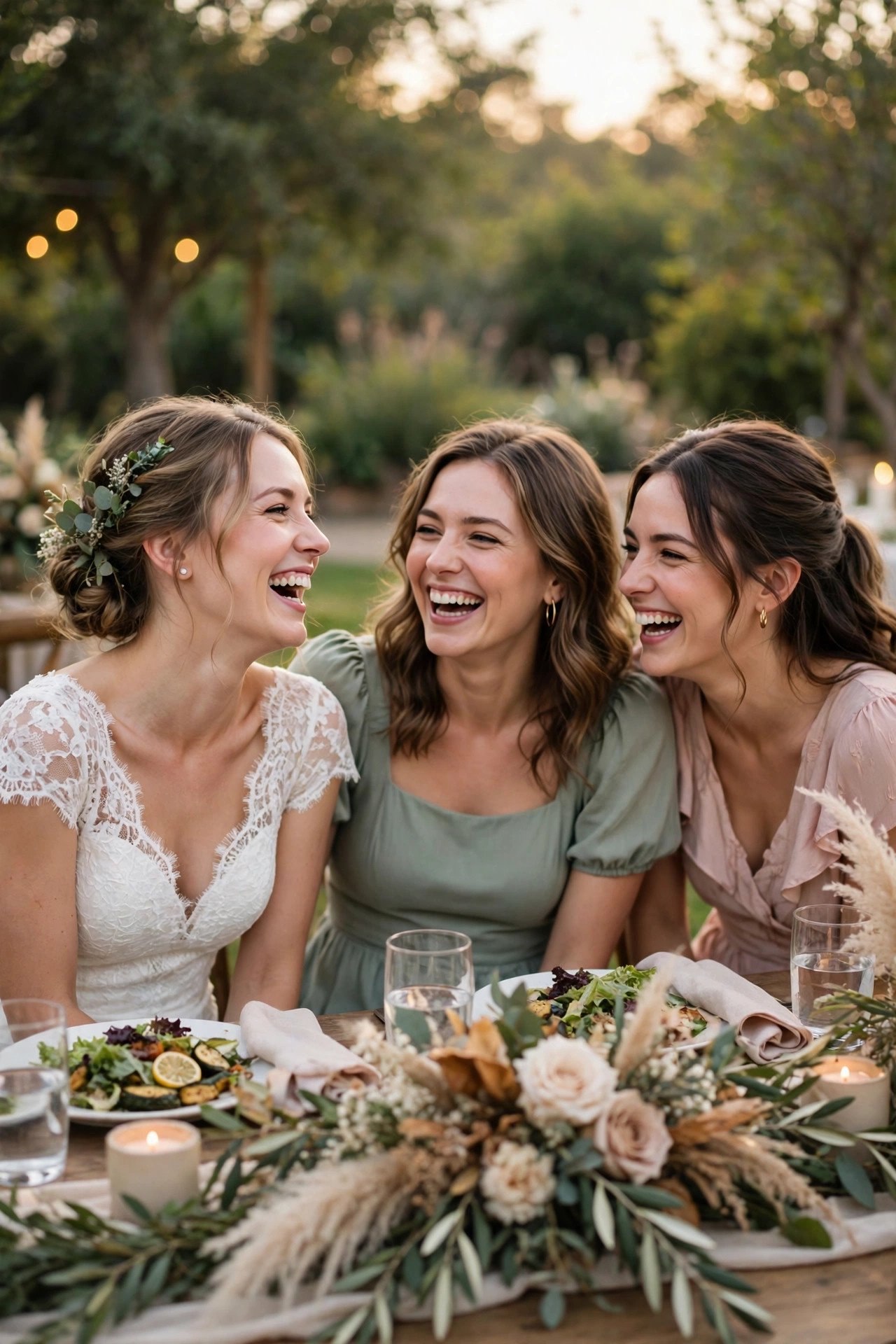
A structured gown feels fine at hour two and very different at hour nine. Boning, layers and weight add up, especially in summer. If your celebration runs from an afternoon ceremony to a midnight finish, a lighter second look is less a luxury than a strategy.
The Budget Question, Honestly
 📌 Save
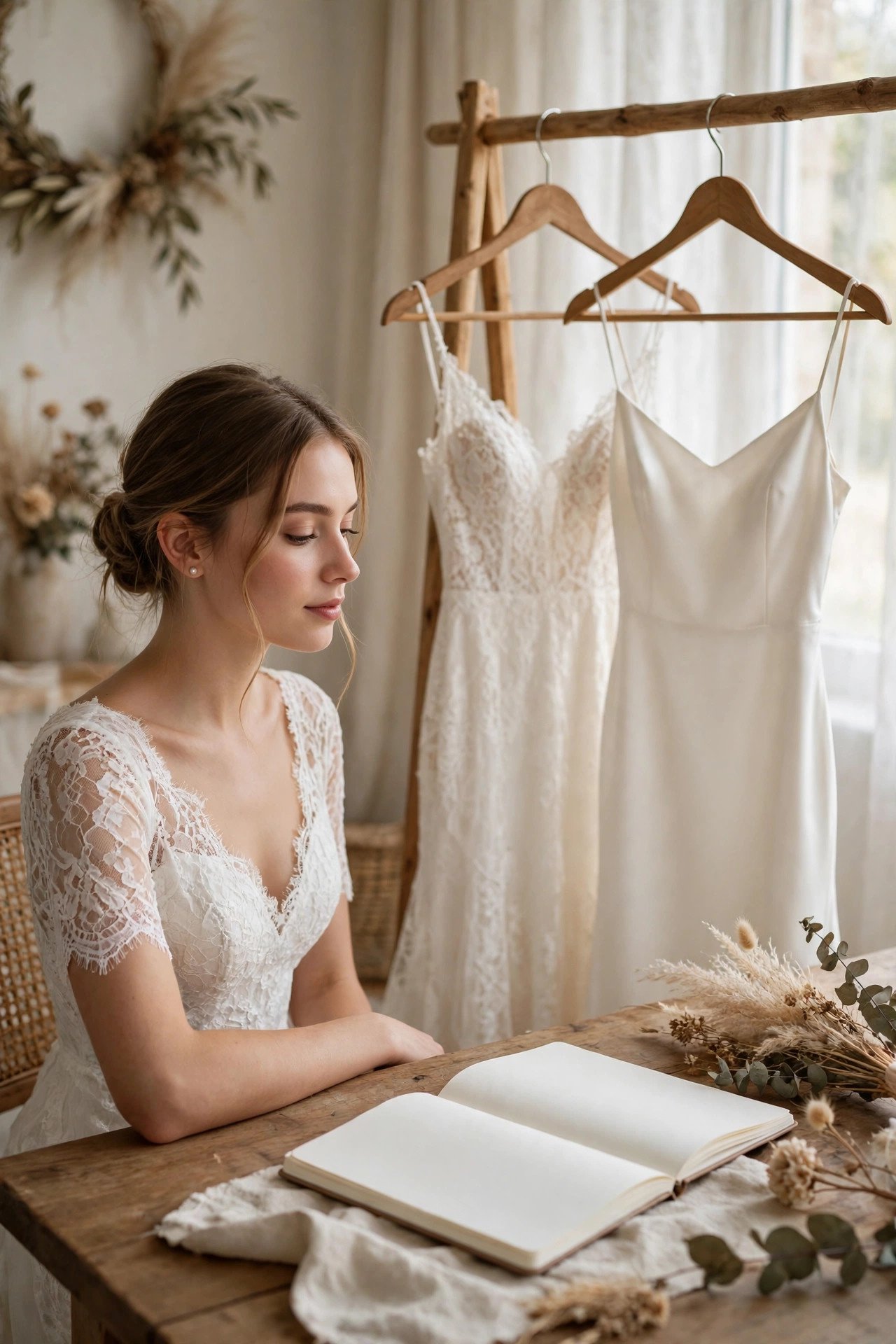
A second dress can cost as little as a nice dinner out or as much as a second designer gown. Set the number before you shop, and remember the hidden costs: shoes, alterations and accessories for look two. Many brides fund it by choosing a simpler ceremony dress or selling the reception dress afterwards.
Photographs: Two Looks, Two Albums
 📌 Save
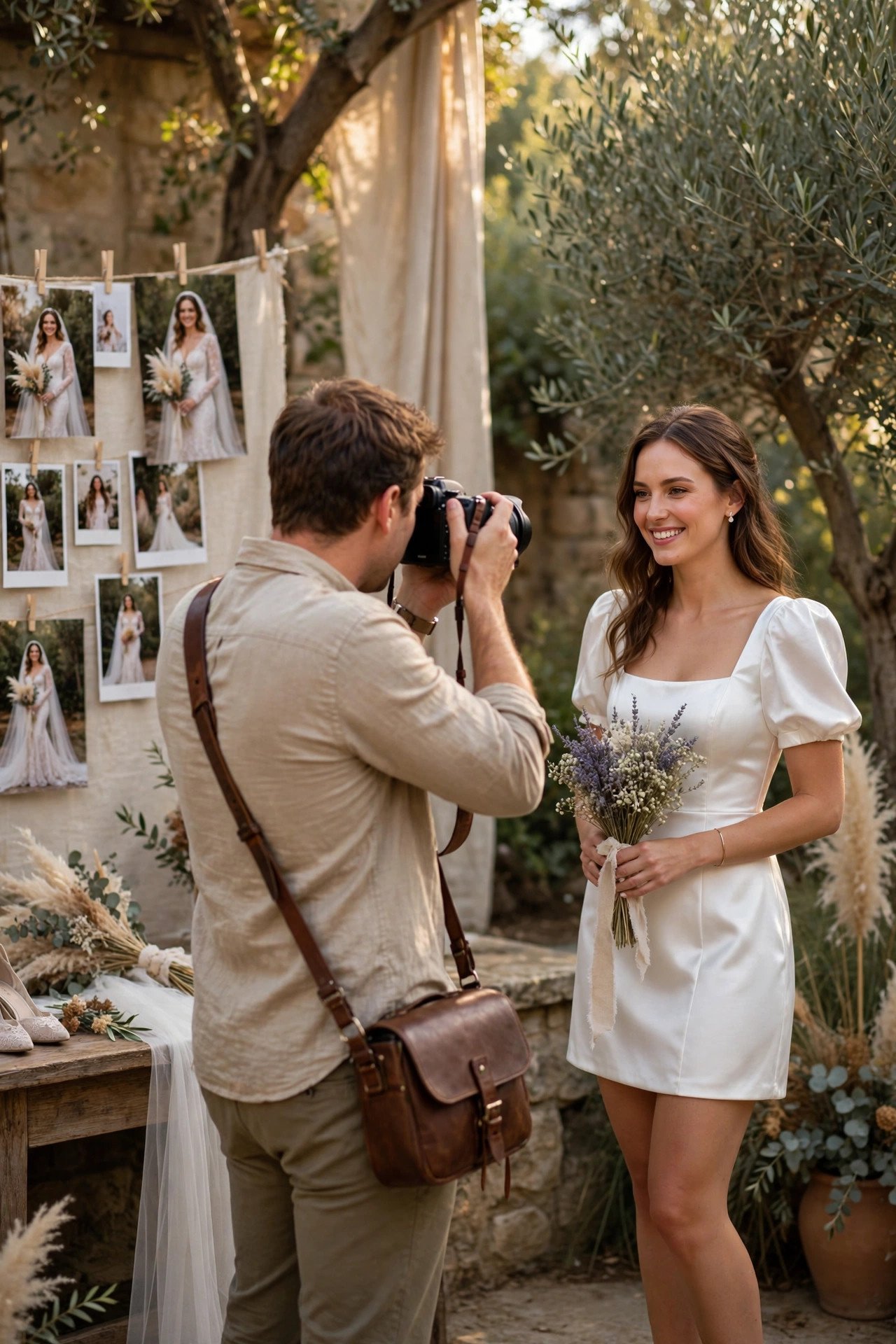
Two looks give your photographer two stories: timeless and formal early, joyful and candid late. Your gallery gains variety without a second shoot, and your social posts never repeat a silhouette. Just tell your photographer the change time so no key moment is missed mid-change.
When One Dress Is Genuinely Enough
 📌 Save
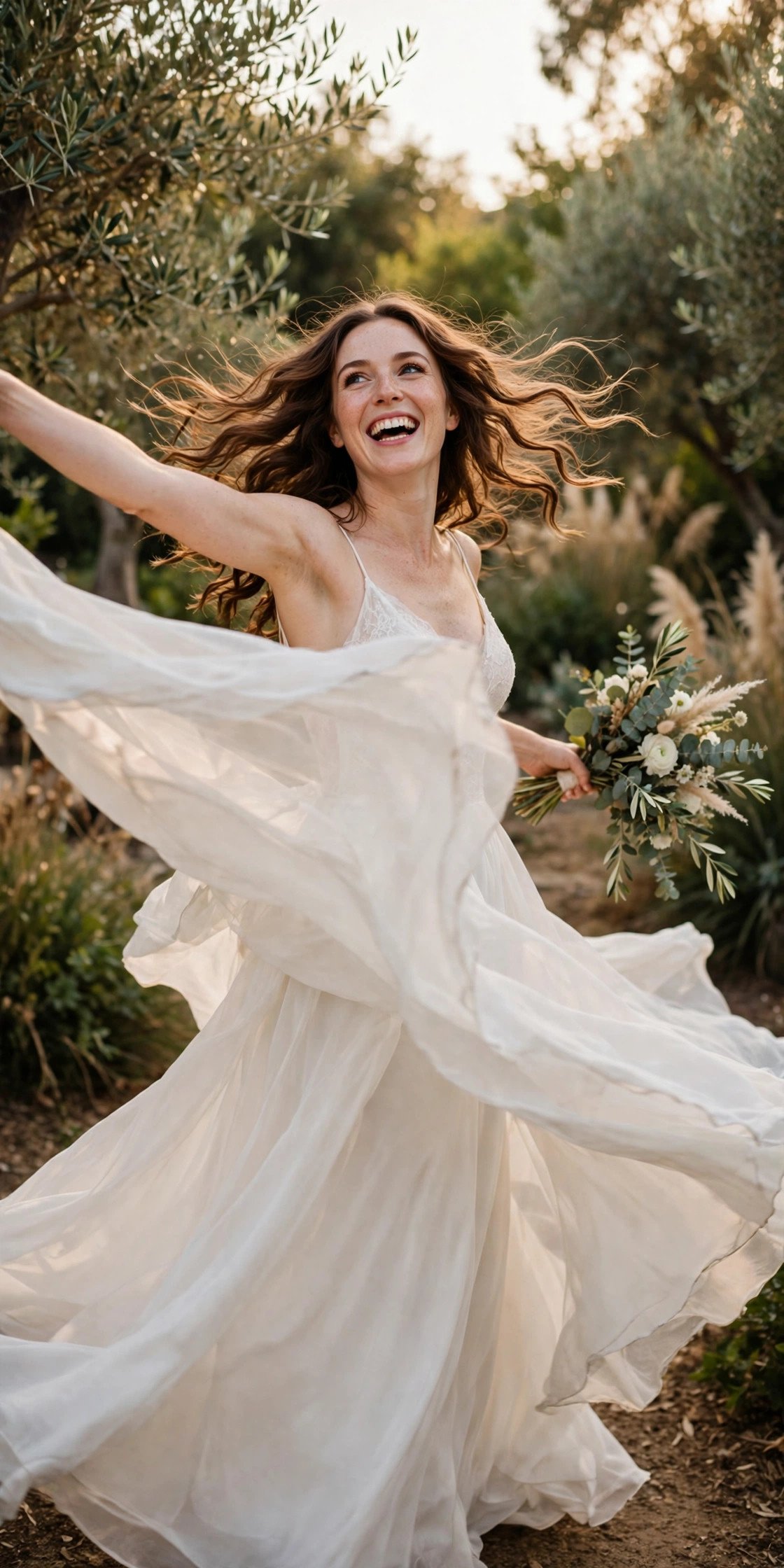
If your ceremony dress is light, you can sit and dance in it, and your reception is short, one dress is not a compromise at all. Plenty of 2027 gowns are designed as all-day dresses. Spend the saved money on tailoring so that one dress fits like it was made on you.
The Train and Bustle Problem
 📌 Save
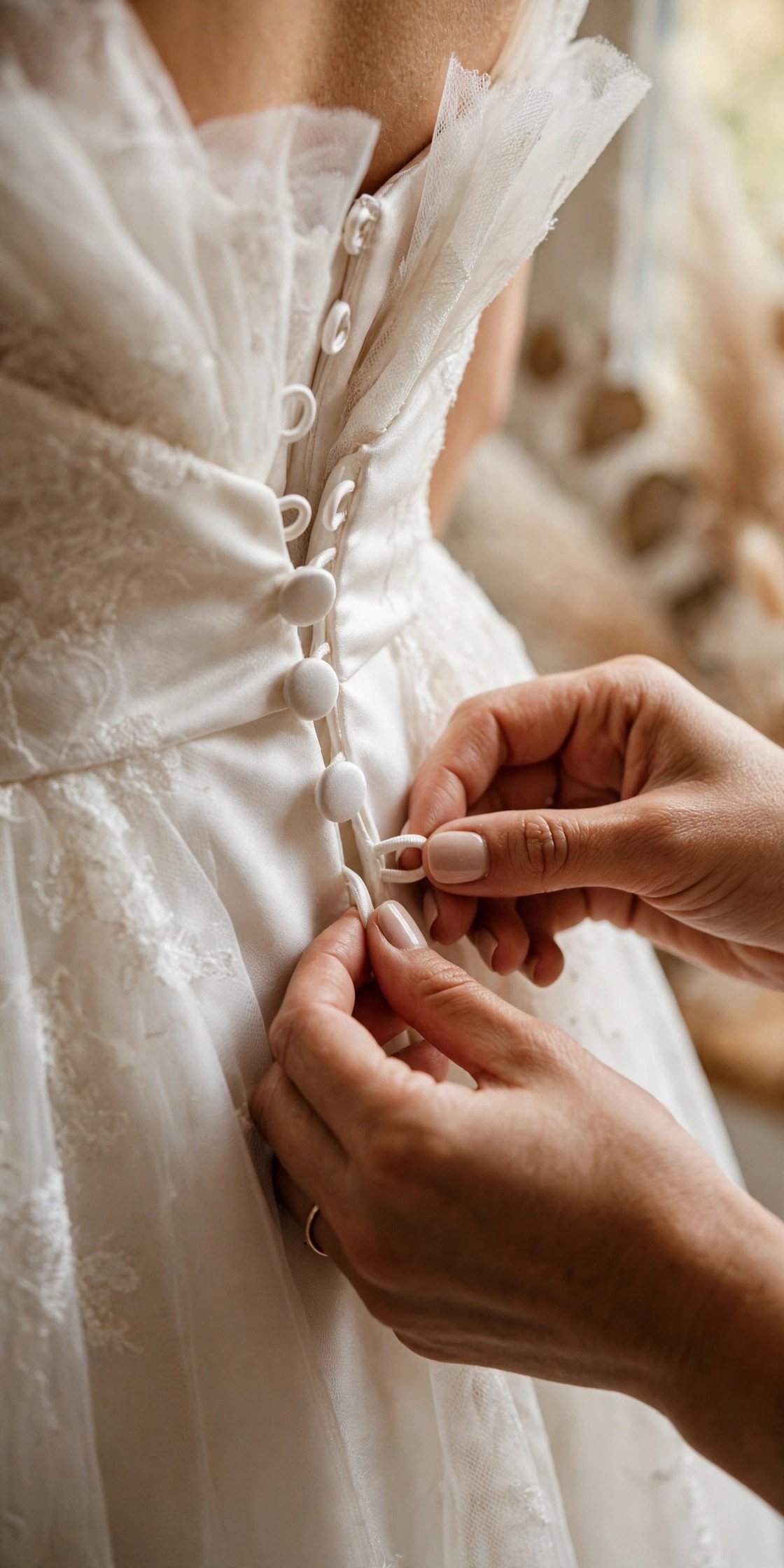
Bustles break. It is the most common wardrobe malfunction at receptions, and a failed bustle means a dragging train all night or an emergency safety-pin repair. If your gown has a long train and a complex bustle, a reception dress removes the risk entirely.
Weather and Season Considerations
 📌 Save
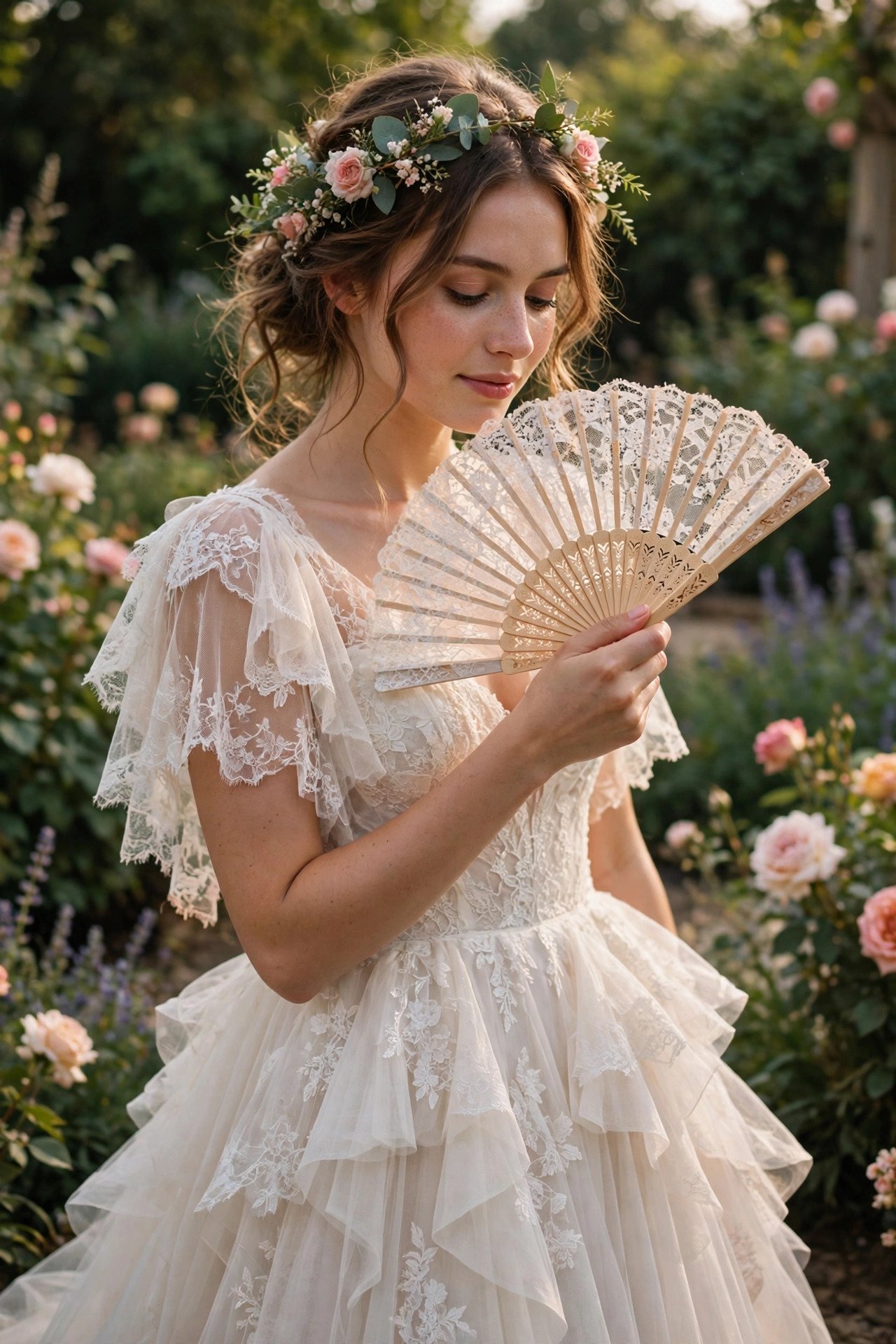
A layered gown at a 30°C garden reception is genuinely hard work, and a breathable second look can rescue the evening. In winter the maths reverses: receptions are indoors, gowns feel cosy, and a short dress may leave you cold during outdoor photos and the exit.
Guest Mingling and the Hug Test
 📌 Save
You will hug nearly every guest, often while holding a drink and a plate at different moments. Stiff bodices, huge skirts and delicate straps all make mingling harder than it needs to be. A reception look designed for movement keeps you circulating instead of stationed.
The Grand Entrance Effect
 📌 Save
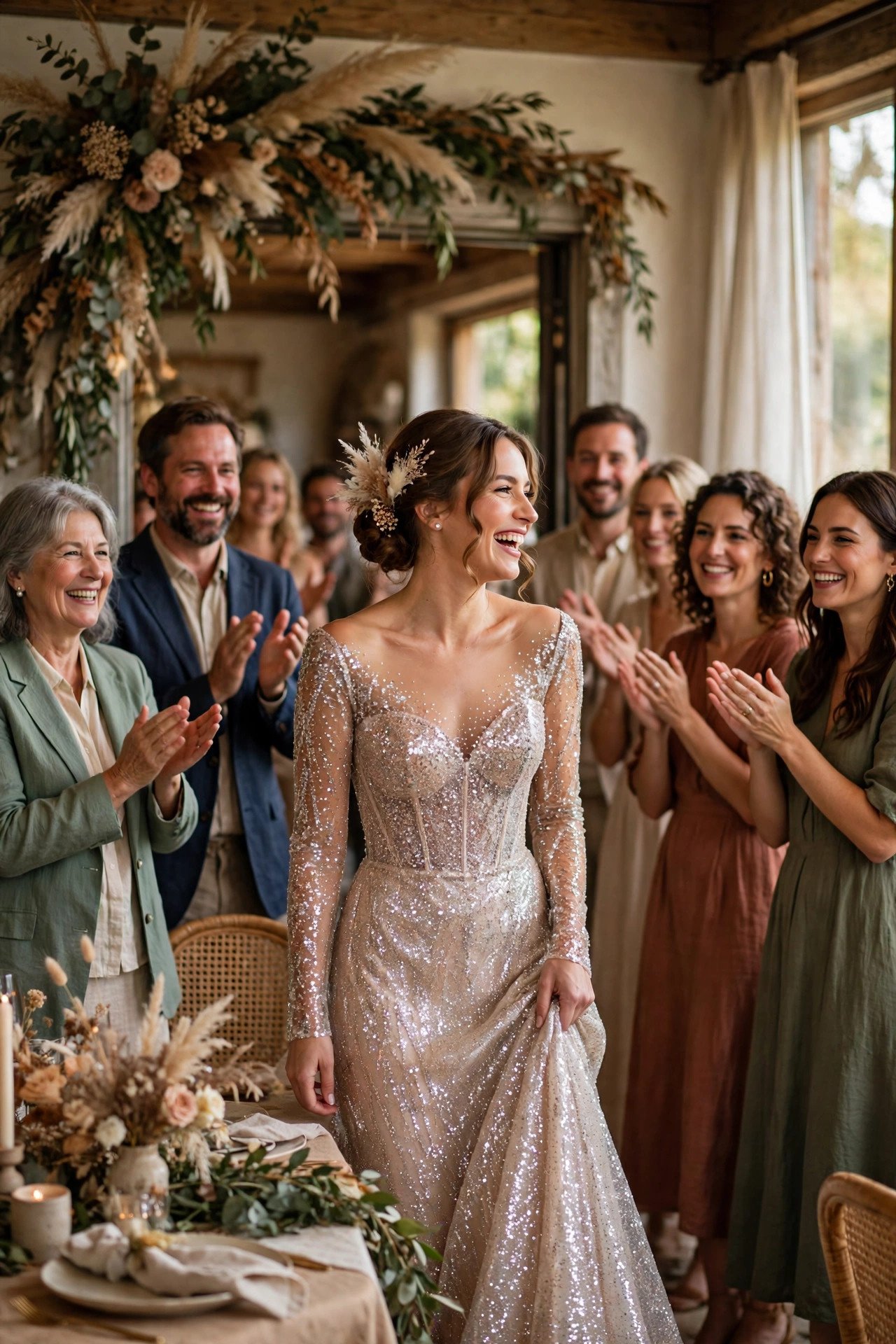
A second look creates a second entrance — a genuine event inside the event. Guests love the reveal, the energy lifts, and the party restarts with you at the centre of it. If your reception needs a mid-evening spark, few things deliver like a changed bride reappearing.
Tradition, Family and Expectations
 📌 Save
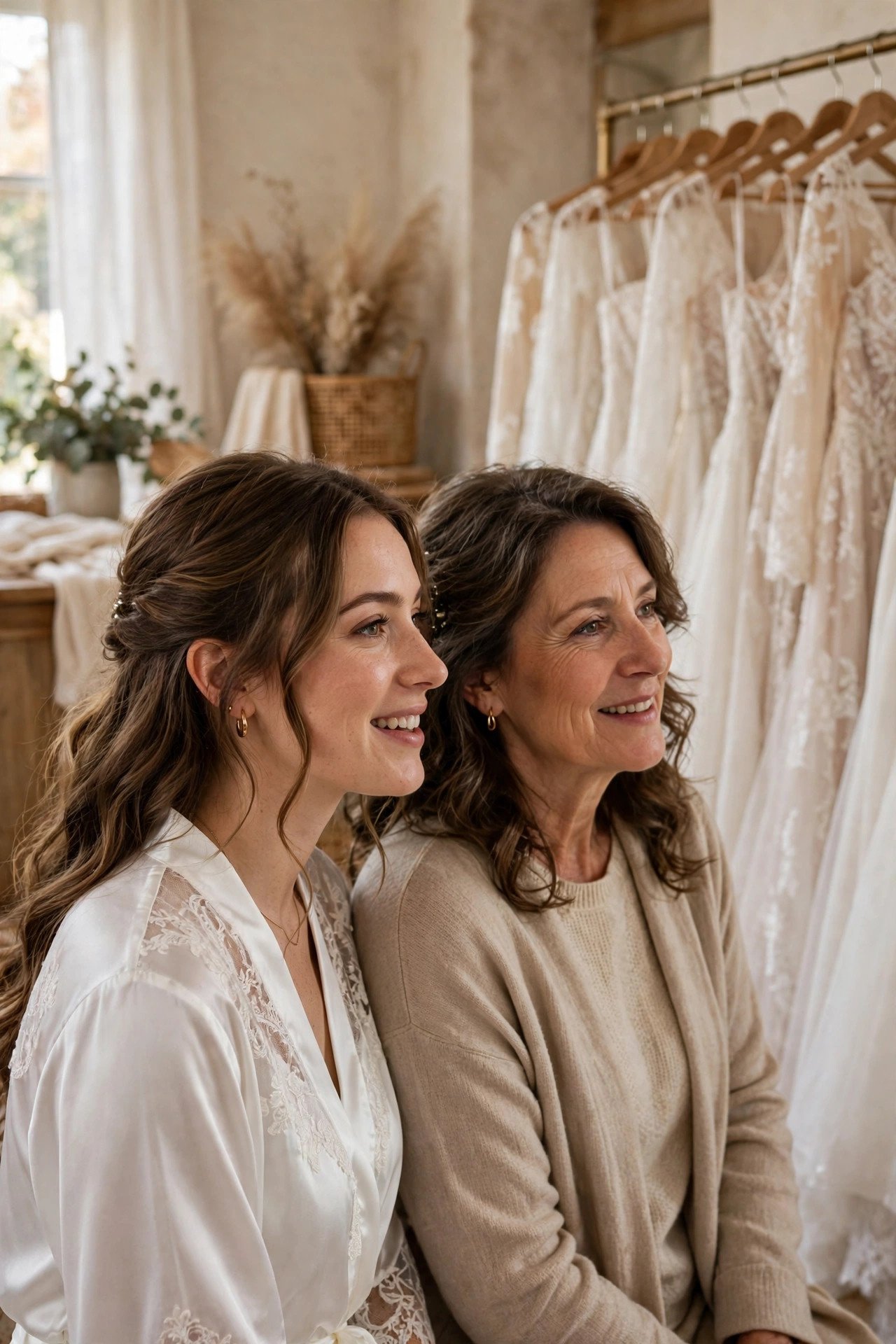
Some ceremony dresses carry real family weight — a mother’s gown restyled, a cultural silhouette, a veil with history. A reception change lets you honour all of that fully, then celebrate in your own style afterwards. Framed that way, most families embrace the second look warmly.
Eating Dinner Like a Human
 📌 Save
Your wedding dinner is one of the few meals where everyone you love is watching you try to enjoy it. A boned ceremony bodice rarely allows a full, relaxed meal. Changing before or right after dinner means actually tasting the food you chose so carefully.
Shoes: The Hidden Second-Location Problem
 📌 Save
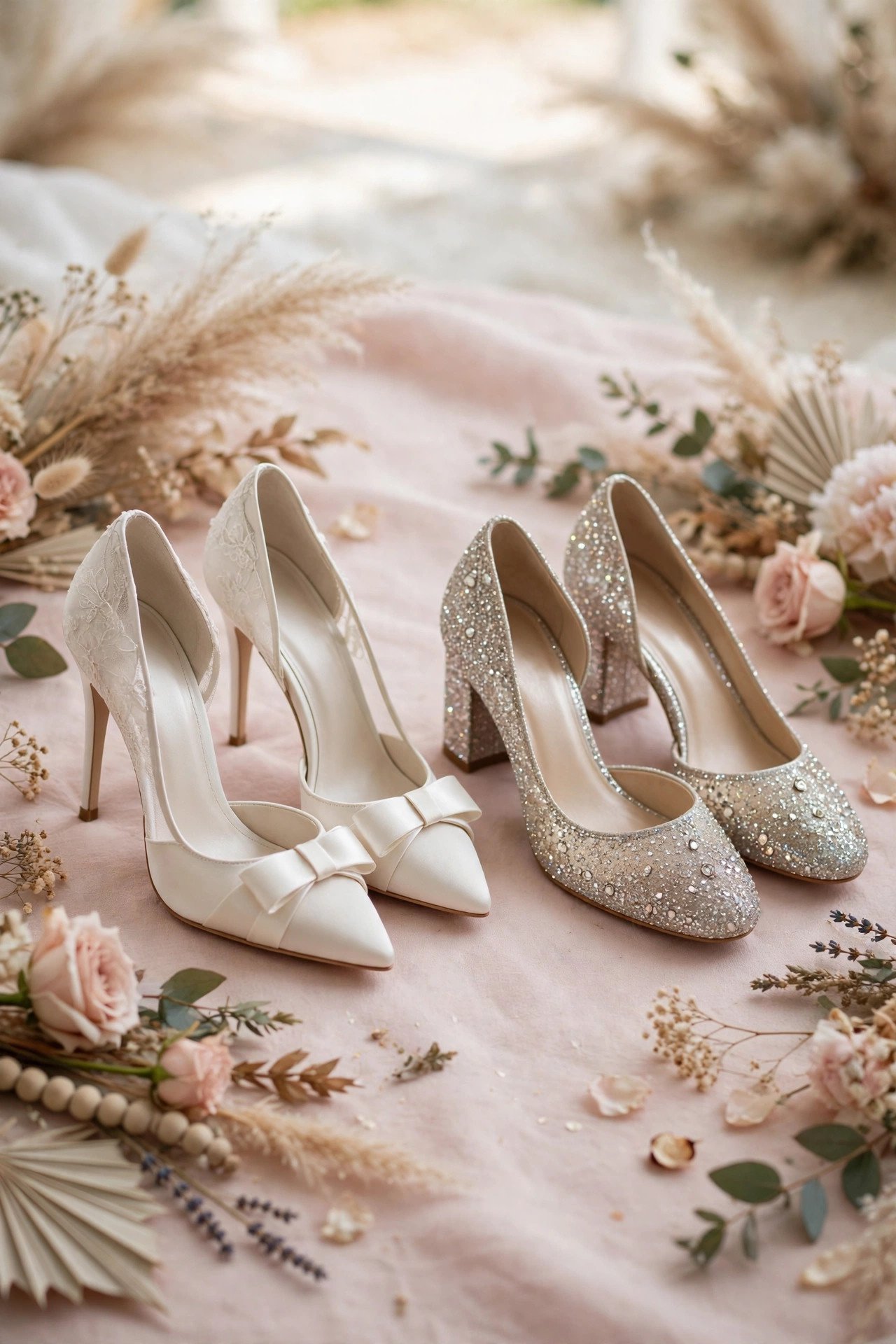
Ceremony heels are chosen for photographs; by the reception your feet have other ideas. A reception dress hemmed for lower, kinder shoes solves the height mismatch that makes a bustled gown trip-prone. Many brides say the shoe change mattered more than the dress change.
Packing, Travel and Destination Weddings
 📌 Save
For destination weddings, one enormous gown can be harder to transport than two light looks combined. Separates and short reception dresses pack flat, steam quickly and survive suitcases gracefully. If you are marrying abroad, the second look may actually simplify your luggage.
The Resale and Rewear Factor
 📌 Save
A ceremony gown is usually preserved or sold. A reception look — especially separates, a mini or a jumpsuit — can be worn to parties, anniversaries and other weddings in another colour story. That second life changes the cost conversation completely.
Time Cost: Fittings, Shopping, Decisions
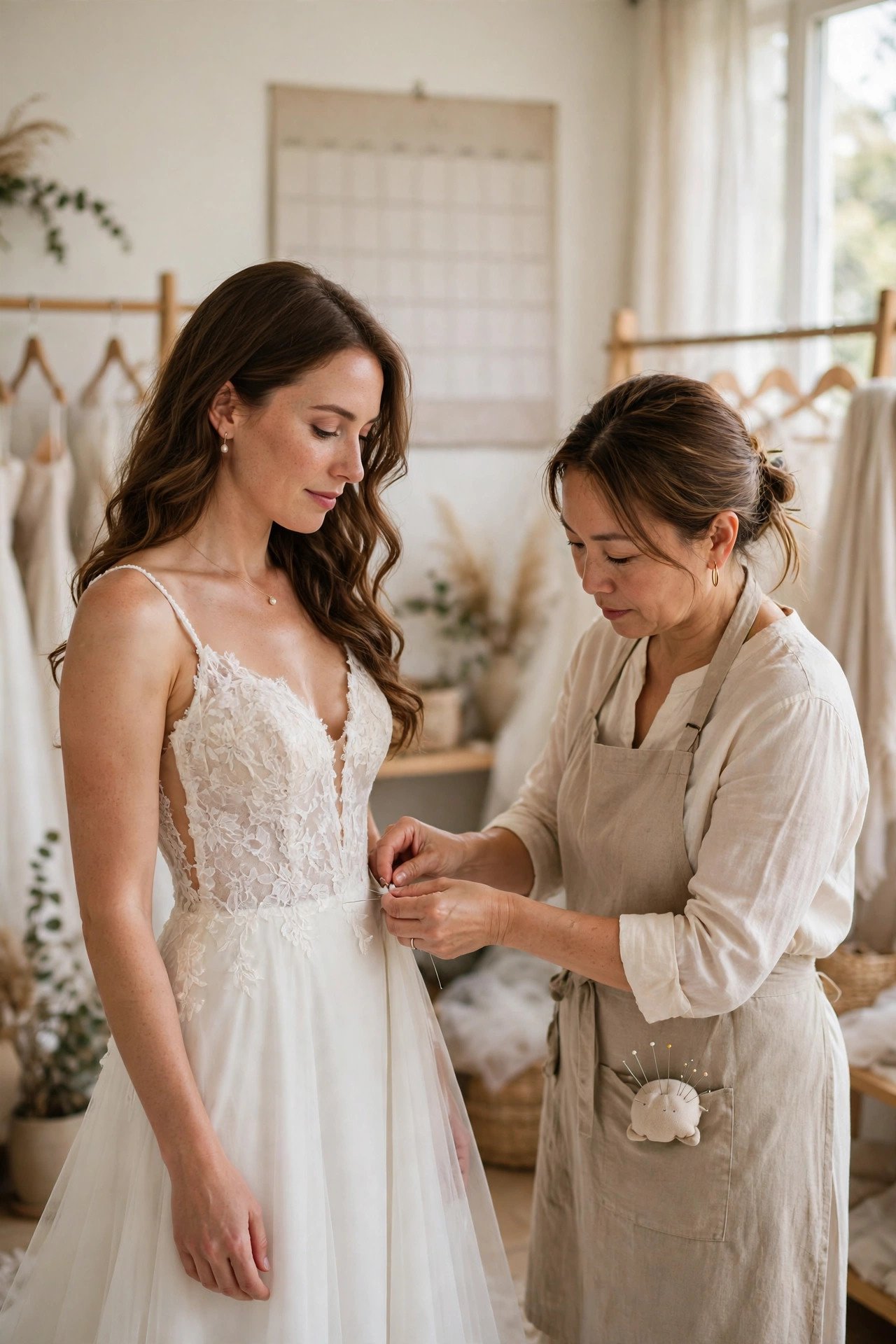 📌 Save
Be honest about bandwidth: a second dress means more shopping, more fittings and more decisions in an already full planning season. If you are already overwhelmed, one perfect dress protects your peace. If you love the process, the second hunt is half the fun.
Venue Rules and Dress Codes
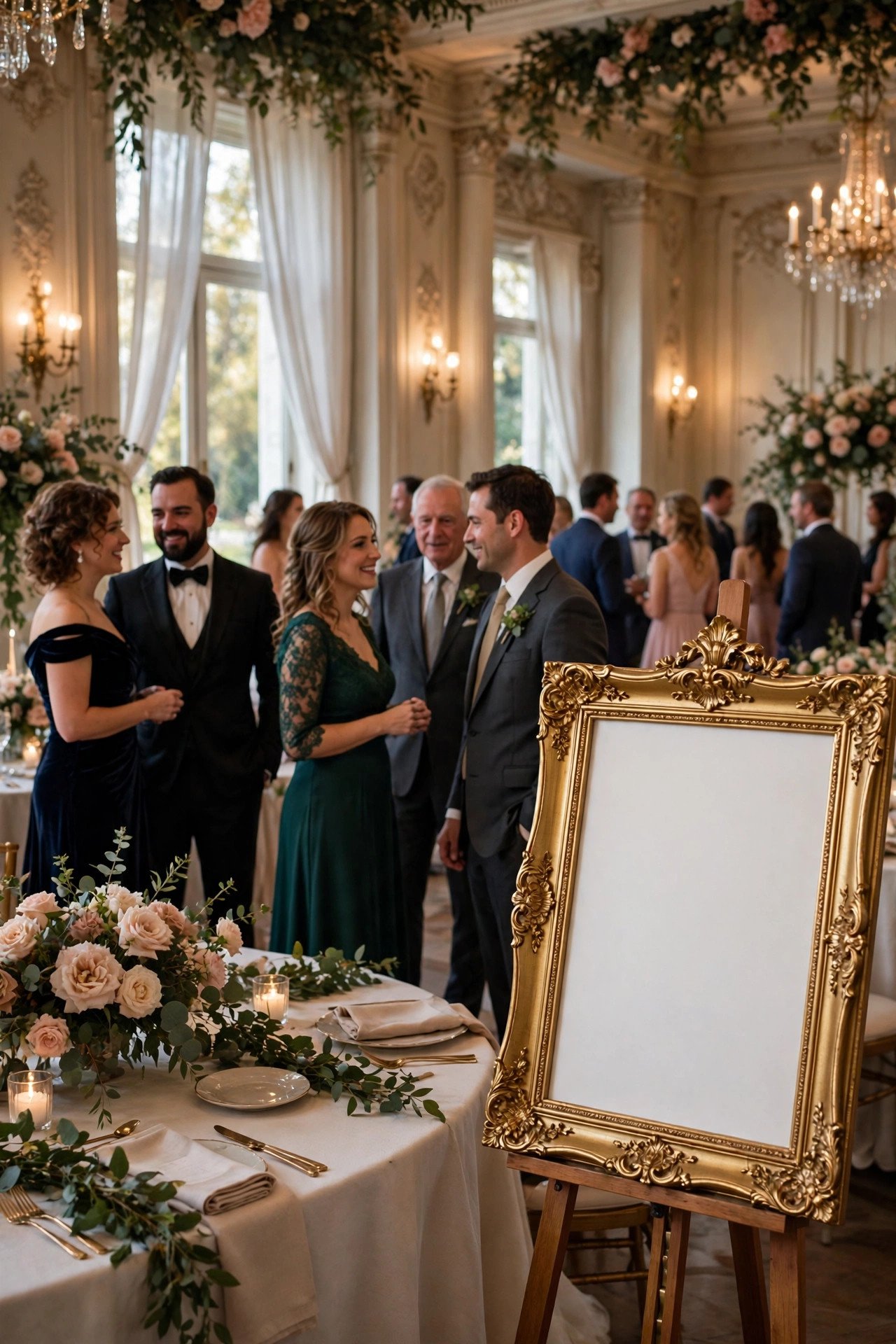 📌 Save
A black-tie ballroom with a formal dress code may genuinely suit keeping the gown on, while a barn, beach or festival-style venue invites the change. Read your venue’s energy before deciding — the room itself usually answers the question.
Your Partner’s Look and Matching Energy
 📌 Save
You are not the only one in formalwear all day. Many couples plan the wind-down together — you change your dress while your partner swaps a jacket, loosens a tie or changes shoes. Matching your comfort level keeps the photos natural and the energy shared.
Cultural and Religious Outfit Changes
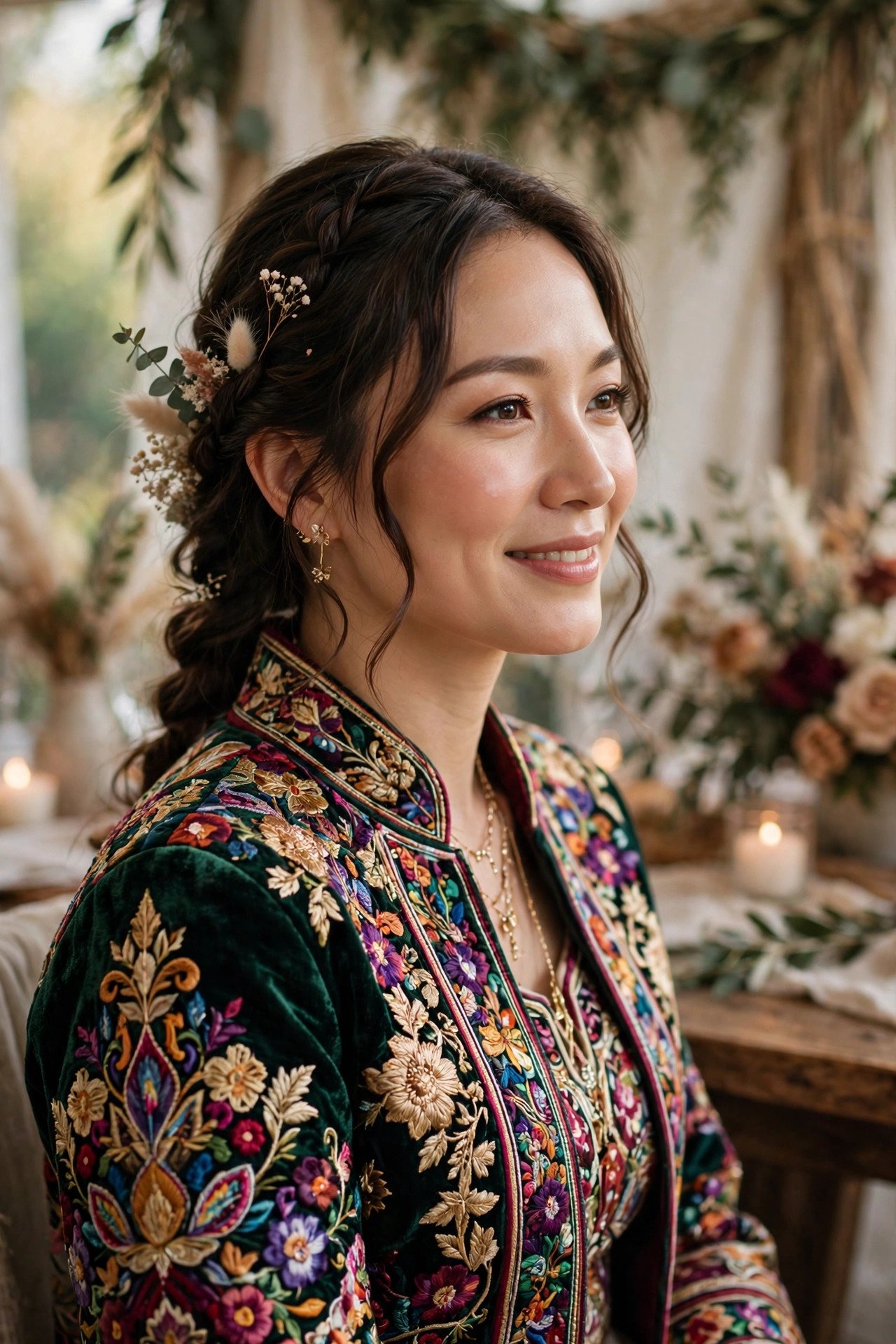 📌 Save
For many brides across the UK, Canada and the USA, an outfit change is not a trend but a tradition — moving from a ceremony gown into cultural dress, or the reverse, to honour heritage. If that is your celebration, the question is not whether to change but how to time it beautifully.
The Compromise: Transformable Dresses
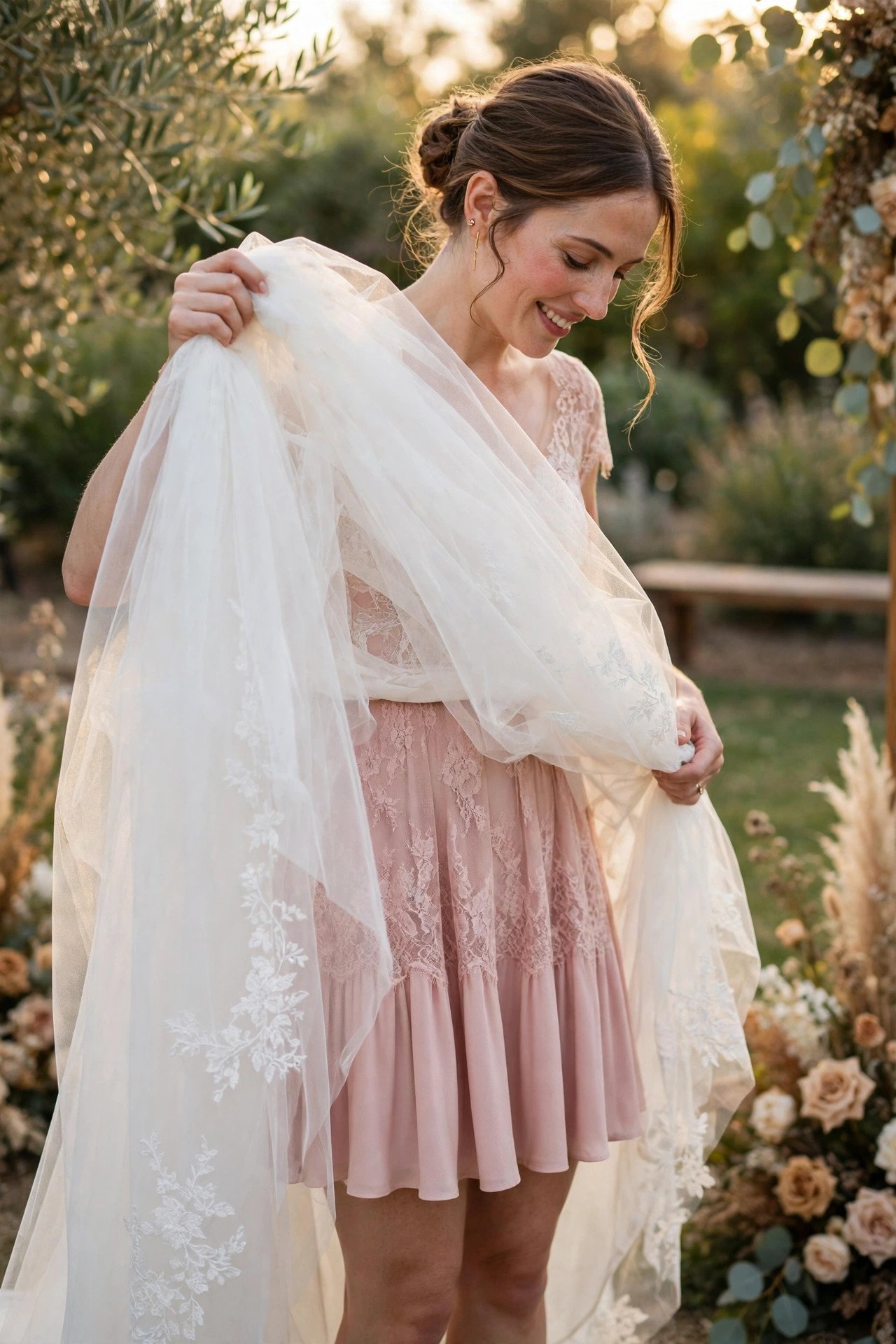 📌 Save
Detachable overskirts, removable sleeves, convertible straps and two-piece gowns offer the transformation without a second purchase. This middle path suits brides who want the reveal moment but not the second-dress budget or logistics. Ask bridal shops specifically for convertible styles — the range grows every season.
What Brides Actually Regret
 📌 Save
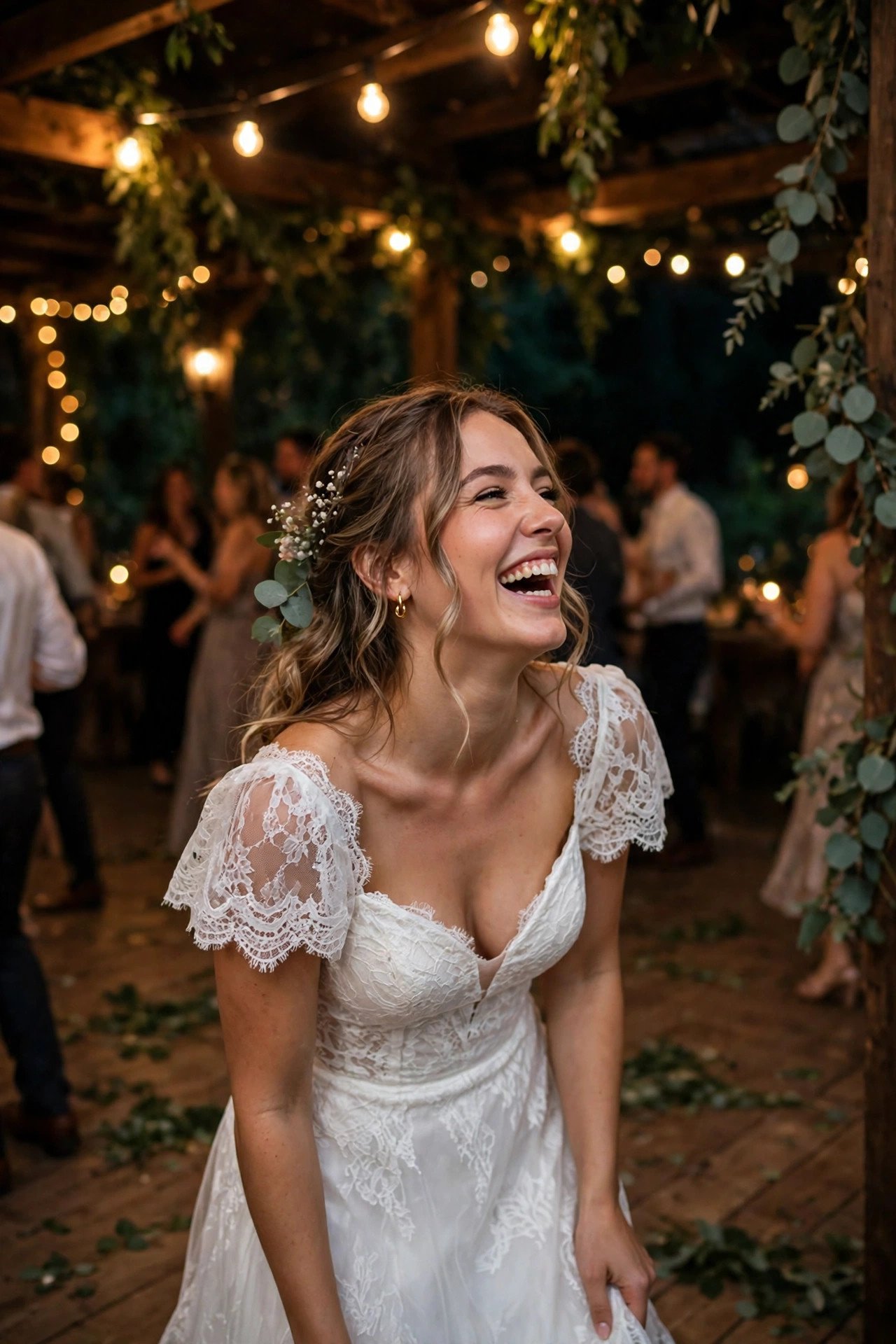
Ask married friends and a pattern emerges: almost nobody regrets changing, but plenty regret not changing — the broken bustle, the missed dancing, the dress they fought all night. The opposite regret exists too: brides who adored their gown and felt they wore it too little. Know which bride you are.
Second Dress, Same Budget: Where to Save
 📌 Save
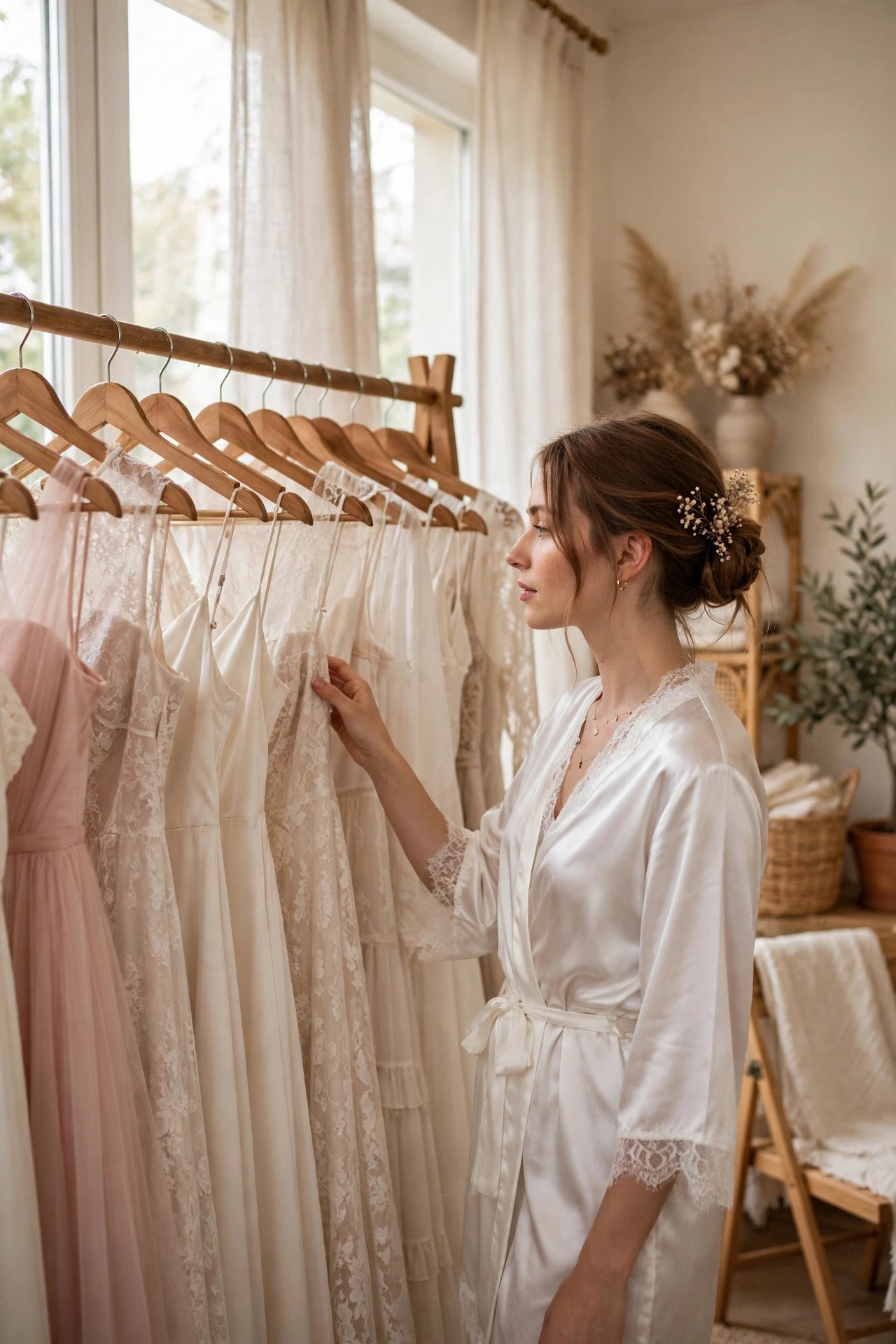
You can fund a second look inside the same budget: choose high-street or sample-sale pieces, keep accessories shared between looks, or simplify one element of the ceremony outfit. Reception dresses do not need bridal-store price tags to photograph beautifully.
Timing the Change Like a Pro
 📌 Save
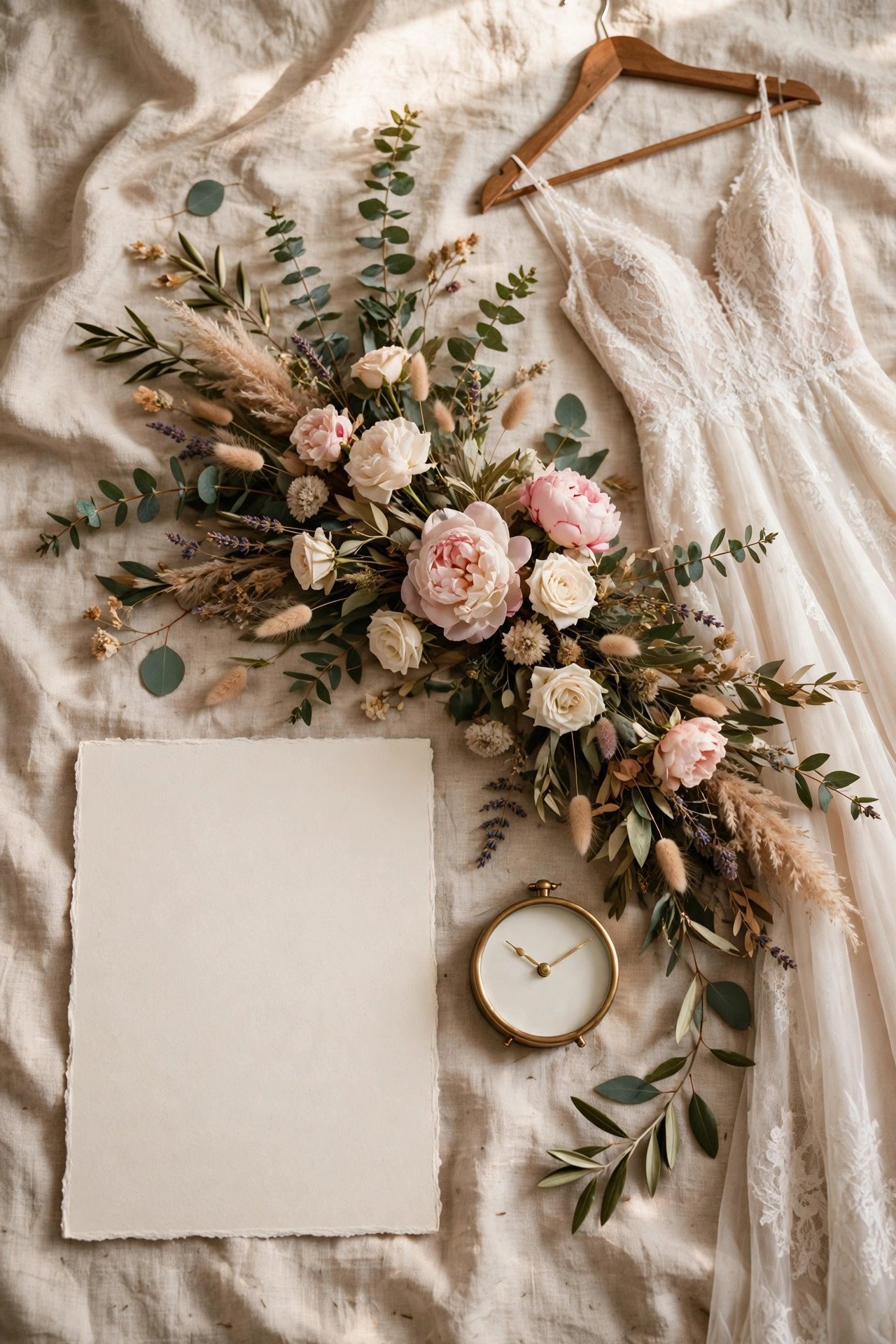
The smoothest changes happen at a planned moment: after dinner, after the first dance, or during the room turnaround. Ten minutes, a helper, a pre-packed bag and a lipstick touch-up are all it takes. An unplanned change, by contrast, always seems to collide with a key moment.
If You Skip the Second Dress: Style One Dress Twice
 📌 Save
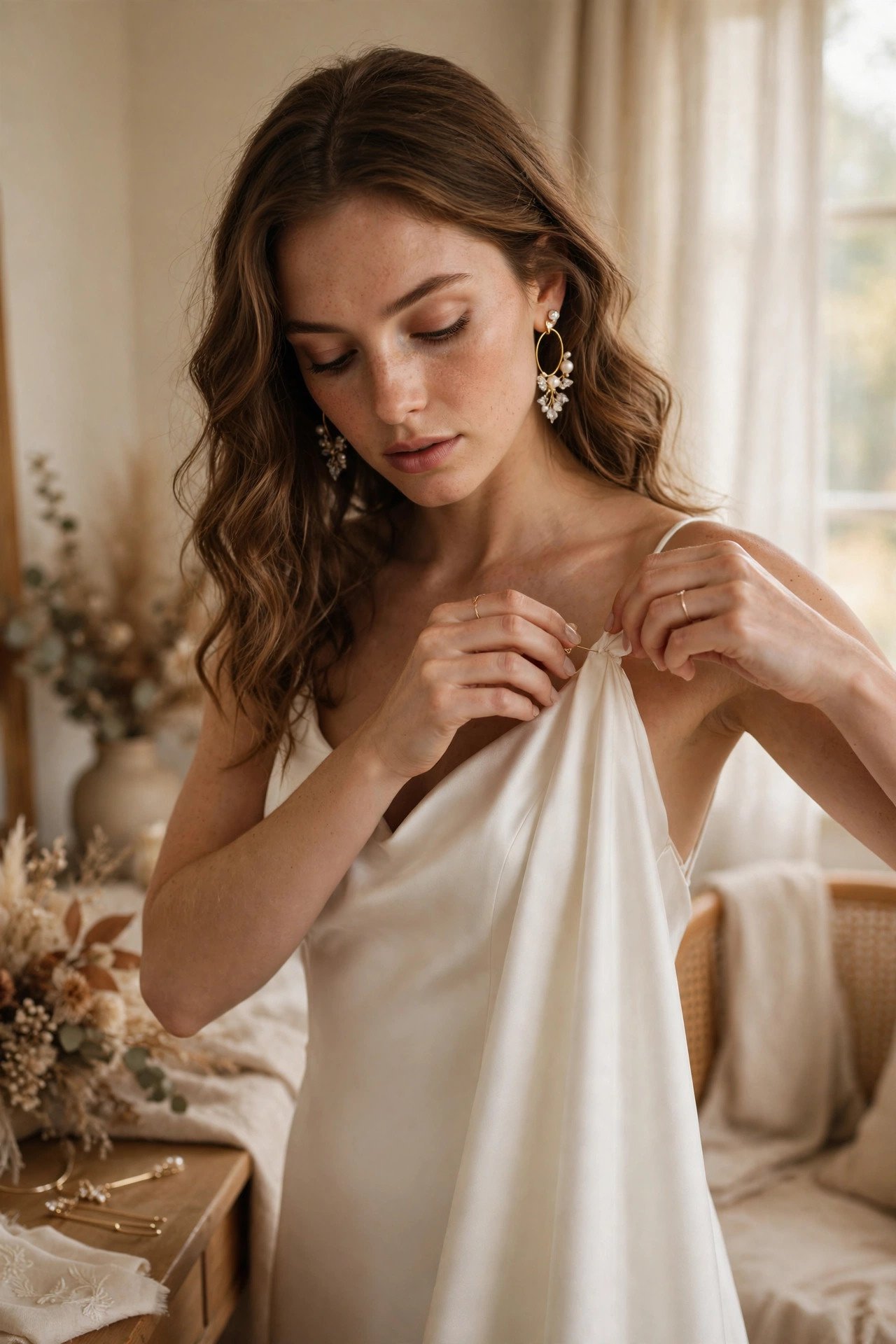
One dress can still give two moods: hair down after being pinned up, a bold lip for the evening, statement earrings swapped in, sleeves or overskirt removed, shoes changed. Photographers notice the refresh instantly, and guests read it as a whole new look.
The Final Decision Checklist
 📌 Save
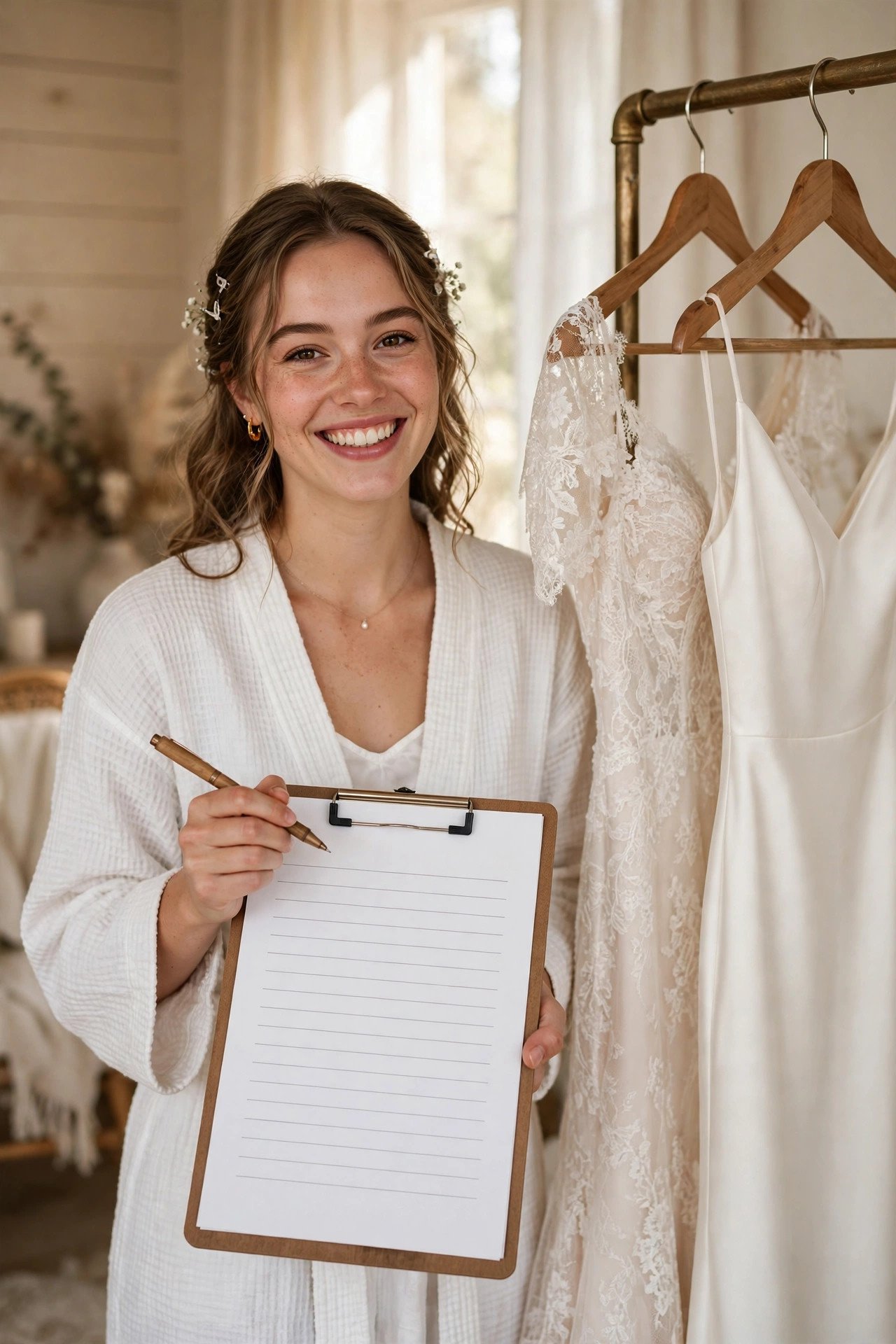
Ask five questions: Can I dance freely in my ceremony dress? Will my reception run past four hours? Is my gown heavy or hot? Does a second look excite me? Can I fund it without stress? Three or more answers pointing one way is your decision — trust it and stop second-guessing.
Reception Dress vs Ceremony Dress: Do You Need Two? FAQs
Do most brides wear a second reception dress?+
It varies by country and budget, but second looks are now common across the USA, UK and Canada — roughly a third to a half of brides change, and the share grows every year. It is a preference, never an expectation, and no guest will judge either choice.
How much should a reception dress cost?+
Anything you are comfortable with. Many excellent reception dresses cost under £150 or $200 from high-street and sample-sale sources, while designer second looks can run into thousands. Set your ceiling before shopping and include alterations and shoes.
Will I look like I disliked my ceremony dress if I change?+
No — guests read a change as a party moment, not a rejection of the gown. Your ceremony dress owns the aisle, the portraits and the formal photographs; the reception look simply owns a different job.
When is a second dress not worth it?+
If your reception is short, your ceremony dress is light and danceable, or the extra shopping would stress you more than delight you, skip it. A transformable detail or an evening restyle gives most of the benefit with none of the logistics.
Can my reception dress be non-white?+
Yes. Many brides choose blush, champagne tones, soft metallics or even a bold colour for the reception. As long as it feels celebratory and unmistakably you, there is no rule that the second look must be white.
Key Takeaways
- Ceremony dresses are built for the aisle and portraits; reception dresses are built for movement and hours of wear.
- Heat, length of reception and train weight are the strongest arguments for changing.
- A second look can cost very little — high-street and sample sales photograph beautifully.
- Transformable dresses and evening restyles offer a genuine middle path.
- Use the five-question checklist, decide once, and enjoy the choice you made.
Final Thoughts
There is no trophy for wearing one dress or two — there is only the wedding day you actually experience. If your gown can carry you from aisle to last dance in comfort, wear it proudly all day. If a second look promises you more dancing, more ease and more joy, that is reason enough. Decide like the bride you are, not the bride the internet describes.






One Comment