
Wedding Veil Types That Complete Every Bridal Look
Wedding Veil Types That Complete Every Bridal Look
By zainzari • Published October 2026
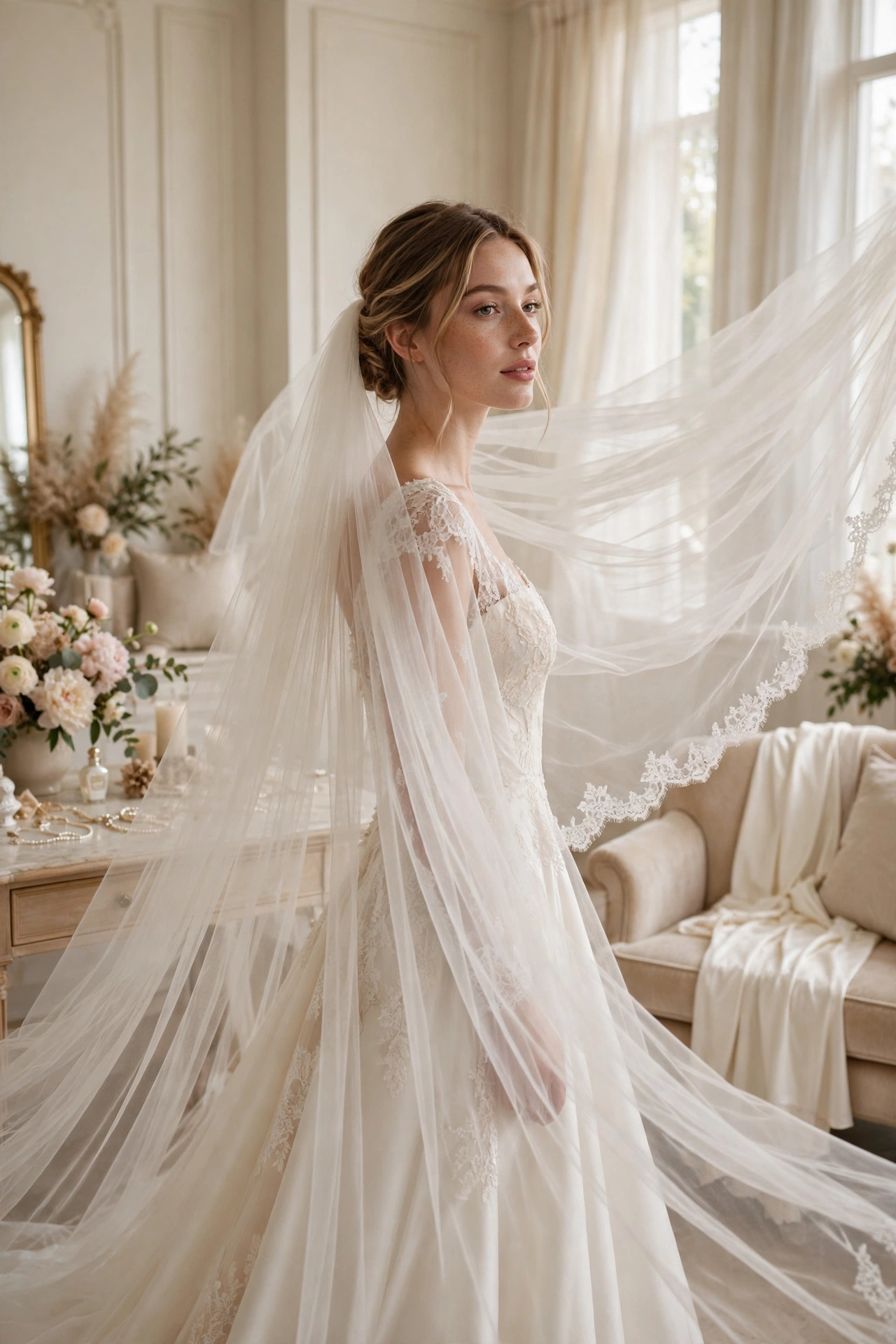
📌 Save
Short on time? The cathedral veil brings full drama, the fingertip veil suits nearly every dress, and the birdcage veil is perfect for vintage-loving brides. Match the veil length to your gown’s train, keep embellishments in the same family as your dress details, and always do a trial with your hairstyle.
Birdcage Veil
📌 Save
A birdcage veil covers just part of the face with delicate netting — pure vintage glamour in inches of tulle.
This short style sits tilted on the head and usually ends at the nose or chin. It pairs beautifully with tea-length dresses, sleek sheaths, and city hall weddings. Because it never touches the gown, your dress details stay fully visible.
Choose Russian or French netting for an authentic retro feel. Add a small feather or crystal brooch at the side for extra personality.
Blusher Veil
The blusher is the short layer worn over the face, lifted by a parent or partner before the vows.
Traditionally cut to shoulder or chin length, the blusher adds a tender ceremonial moment without hiding your makeup for long. Many brides pair it with a longer back layer so they get the reveal and the drama.
If your ceremony includes the lifting moment, tell your photographer — it makes one of the day’s most emotional frames.
Shoulder-Length Veil
Ending right at the shoulders, this veil frames the face and neckline without overwhelming the dress.
It is a favorite for brides wearing detailed bodices or statement necklines, since it stops before covering any embroidery. The length also photographs beautifully from the front, giving softness around the jawline.
Try a raw cut edge for a modern minimal look, or a thin satin trim to echo a clean-lined gown.
Fingertip Veil

📌 Save
The fingertip veil ends where your fingertips rest — the most universally flattering length ever made.
It suits ball gowns, A-lines, sheaths, and slips alike, adding softness without competing for attention. If you feel lost choosing, start here: stylists reach for this length first for a reason.
A single layer keeps it airy; a double layer adds volume for fuller skirts.
Waltz / Ballet Veil
Falling between fingertip and floor, the waltz veil moves like it is dancing — hence the name.
It gives more presence than shorter veils while staying easy to manage on the dance floor. Brides who want movement in photos without a train love this in-between length.
Soft English tulle drapes better than stiff bridal tulle at this length.
Chapel Veil
The chapel veil trails just behind the gown, adding formality without full cathedral drama.
It is the sweet spot for church and ballroom weddings: clearly bridal, clearly grand, yet manageable. The slight train reads beautifully in aisle photos as it floats behind you.
Match the veil’s fullness to your skirt — slim gowns want slim veils.
Cathedral Veil

📌 Save
The longest of them all, the cathedral veil extends well past the train for maximum ceremony impact.
Nothing photographs like it: the veil fanned across church steps or a grand staircase is the iconic bridal image. Reserve it for formal venues and gowns with trains that can hold their own beside it.
Two layers give you a blusher plus drama in one piece.
Mantilla Veil
A circular lace-edged veil worn flat on the head, the mantilla brings old-world romance.
Unlike gathered veils, it drapes from a center point, framing the face in lace. It pairs gorgeously with lace gowns and is a beloved choice for Catholic ceremonies.
Look for hand-finished lace edges — they lie flatter and photograph softer.
Juliet Cap Veil
A fitted cap that hugs the head, often with a veil falling from its back edge — straight out of the jazz age.
It suits brides who dislike combs and clips, since the cap itself anchors everything. Pair with finger waves or a low chignon for full vintage effect.
Embroidered or beaded caps double as your something sparkly.
Drop Veil

📌 Save
With no comb or gathering, the drop veil simply rests over the head in one continuous circle of tulle.
The effect is weightless and modern — no pouf at the crown, just a sheer halo. It is ideal for minimalist gowns and brides who want the veil to feel like air.
Because there is no hardware, placement is everything — pin discreetly at the temples.
Bandeau Veil
A narrow band of tulle worn across the forehead or eyes, the bandeau is veil as accessory.
Fashion-forward brides wear it like a headband with attitude — perfect for modern, artful weddings. It keeps the face open while still saying bridal.
Style it with a sleek bun or sharp bob for maximum impact.
Embellished and Colored Veils
Pearls, crystals, embroidered words, or a blush tint turn a veil into the outfit’s signature.
Hand-scattered pearls catch light with every step; embroidered vows or wedding dates hide a secret in the hem. Blush and champagne veils warm up ivory gowns beautifully.
Keep dress embellishments quieter if the veil speaks loudly — one star per outfit.
Veil Lengths Compared
| Veil | Length | Best For | Vibe |
|---|---|---|---|
| Birdcage | To nose/chin | Vintage & city weddings | Retro & chic |
| Fingertip | To fingertips | Nearly every gown | Soft & classic |
| Waltz | Mid-calf | Brides wanting movement | Graceful & flowing |
| Chapel | Trails gown | Church & ballroom | Elegant & formal |
| Cathedral | Past the train | Grand venues | Dramatic & iconic |
Lengths are guides — veils are cut to the bride, so ask your salon to pin your exact length.
Budget Tips
- Borrow or rent a cathedral veil — you wear it under an hour and heirloom quality rents well.
- A simple raw-edge fingertip veil costs a fraction of a lace-edged one and suits modern gowns.
- Buy the veil after the dress, never before — the gown dictates the length.
- Ask about a two-in-one: many chapel veils detach to fingertip for the reception.
- Check sample sales; veils are often the steepest discounts in the salon.
Frequently Asked Questions
How do I choose a veil for my dress?
Match length to the train and keep details in the same family. A plain gown can carry an embellished veil; a beaded gown wants a quieter one. Bring dress photos to every veil appointment.
When should I buy my veil?
After the dress is chosen and about three months before the wedding. Custom lace and handwork need the most lead time.
Can I wear a veil with an updo?
Absolutely — combs slide into updos beautifully. Bring your hairstyle photo to the fitting so placement can be tested together.
Do I have to wear the veil all day?
No. Most brides wear it for the ceremony and portraits, then remove it for dinner and dancing. Comb-set veils lift out in seconds.
What is the difference between chapel and cathedral?
Length. Chapel trails just past the gown; cathedral extends well beyond the train. Cathedral needs a grander venue and a gown that can share the spotlight.
Key takeaways
- Fingertip length flatters nearly everyone — start your search there.
- Match veil fullness to skirt fullness for a balanced silhouette.
- Always trial the veil with your hairstyle, not separately.
- One embellished star per outfit: loud veil, quiet dress or vice versa.
- Plan the exit — detachable and comb-set veils make reception freedom easy.