Irish Wedding Traditions (2027)
By zainzari • Published October 23, 2026 • Updated October 23, 2026
 📌 Save
Irish wedding traditions mix Celtic-rooted ritual with warm folklore: handfasting binds the couple’s hands with cords (the original ‘tying the knot’), Claddagh rings promise love, loyalty and friendship, and a lucky horseshoe — carried points-up — keeps fortune from spilling out. Add uilleann pipes, céilí dancing guests can actually learn, beloved blessing readings and a bride’s handkerchief destined to become a baby’s bonnet, and you have Ireland’s gentle, joyful inheritance.
Irish wedding customs have a distinctive personality: half of them are blessings and half of them are jokes the blessings are hiding inside. A bell given to end arguments. A horseshoe for luck. A handkerchief with a second career as a christening bonnet. Underneath the charm sits something serious — a culture that treats marriage as a community event blessed by words, music and everyone present saying the good wishes out loud.
This guide separates the genuinely old from the happily revived, and labels folklore as folklore — handfasting, for instance, is an ancient Celtic-rooted practice now embraced by modern celebrant-led ceremonies across Ireland and the diaspora. Where traditions vary between Ireland, Northern Ireland and the diaspora, it says so, so couples can choose with their own family’s blessing rather than a search engine’s confidence.
At a Glance: Symbols and What They Carry
| Symbol | What Happens | What It Means |
|---|---|---|
| Handfasting cords | Couple’s hands bound during vows | Two lives tied — the original tying the knot |
| Claddagh ring | Heart held by hands, topped with a crown | Love, loyalty and friendship |
| Lucky horseshoe | Bride carries it points-up | Luck kept in, never spilled |
| Make-up bell | A bell gifted to the couple | Ring it to end an argument sweetly |
| Handkerchief to bonnet | Bride’s hanky sewn into a baby bonnet later | Today’s wedding, tomorrow’s christening |
| Irish blessing | Read aloud at ceremony or speeches | The community wishes the road upward |
Note: several of these are folklore and revived customs rather than universal Irish practice — which is exactly how Irish families treat them: loved, optional and told with a story.
Handfasting: The Original Tying the Knot
 📌 Save
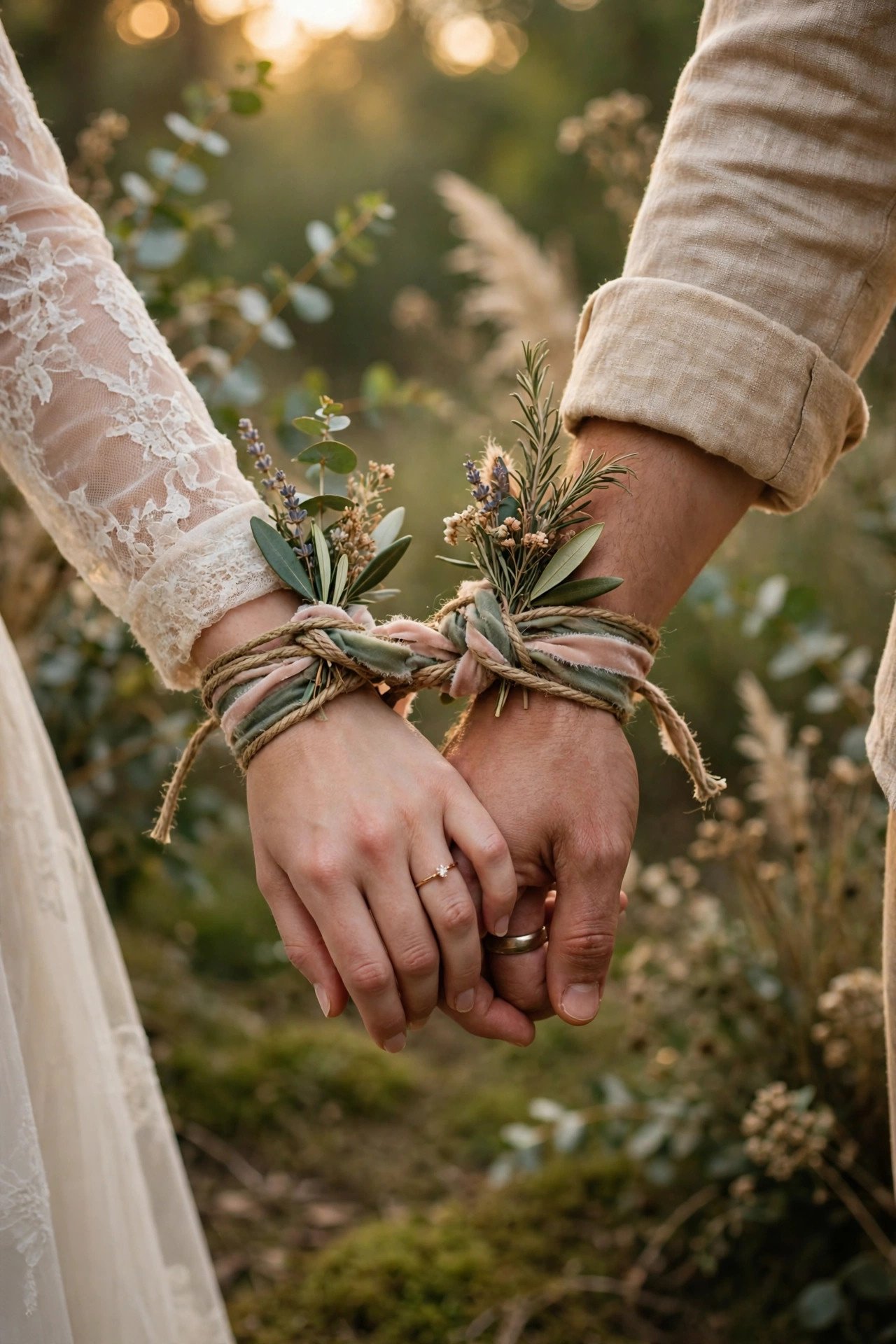
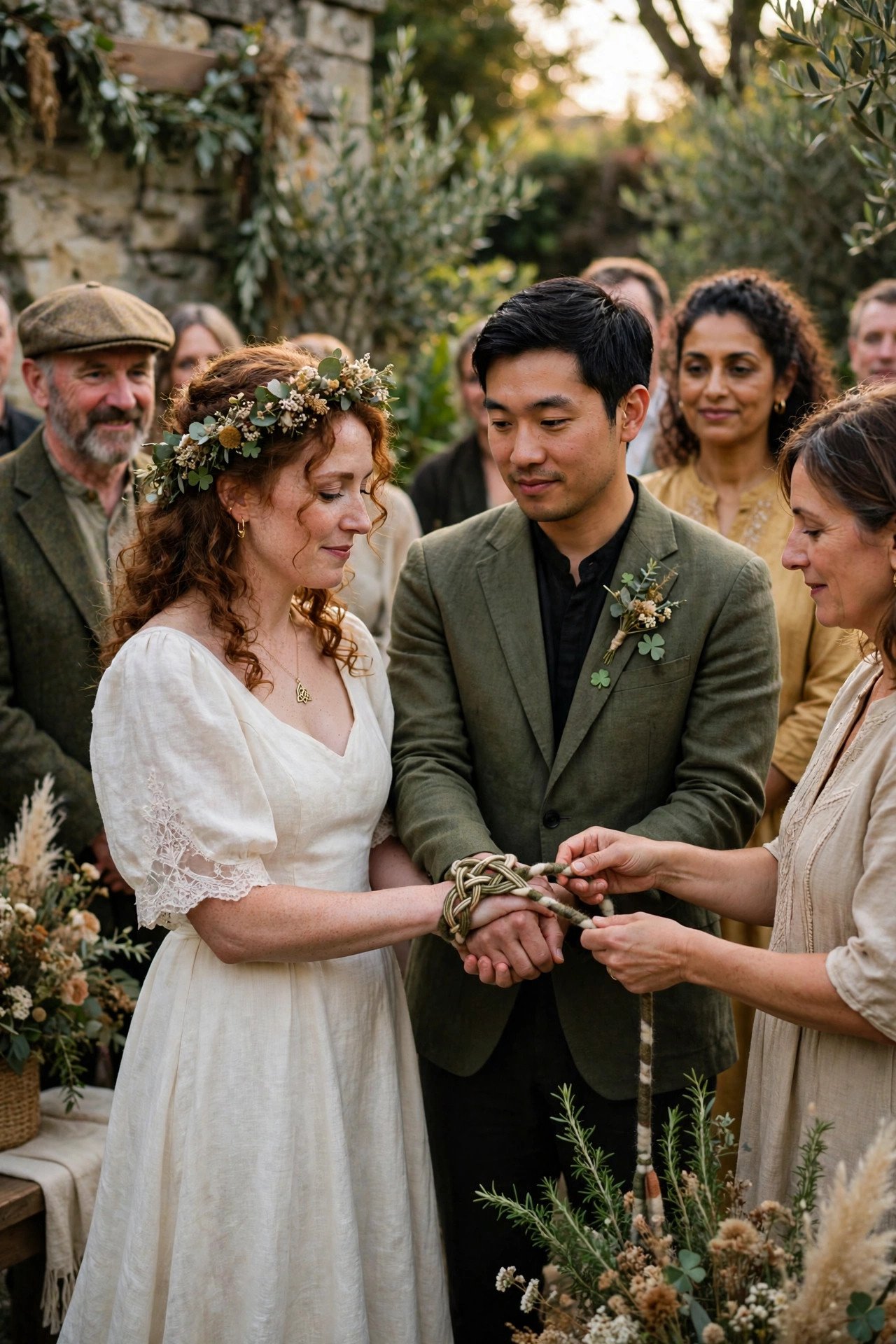
Handfasting is a Celtic-rooted ritual in which the couple’s hands are bound together with cords or ribbons while vows are spoken — the living origin of the phrase ‘tying the knot.’ Historical handfasting in Ireland and Scotland carried legal and betrothal meanings in past centuries; today it is most often a symbolic act within celebrant-led and Humanist ceremonies, with cord colors chosen for meanings the couple assigns. The bound cords are kept, knotted, as the marriage’s first artifact.
The Claddagh Ring: Love, Loyalty, Friendship
 📌 Save
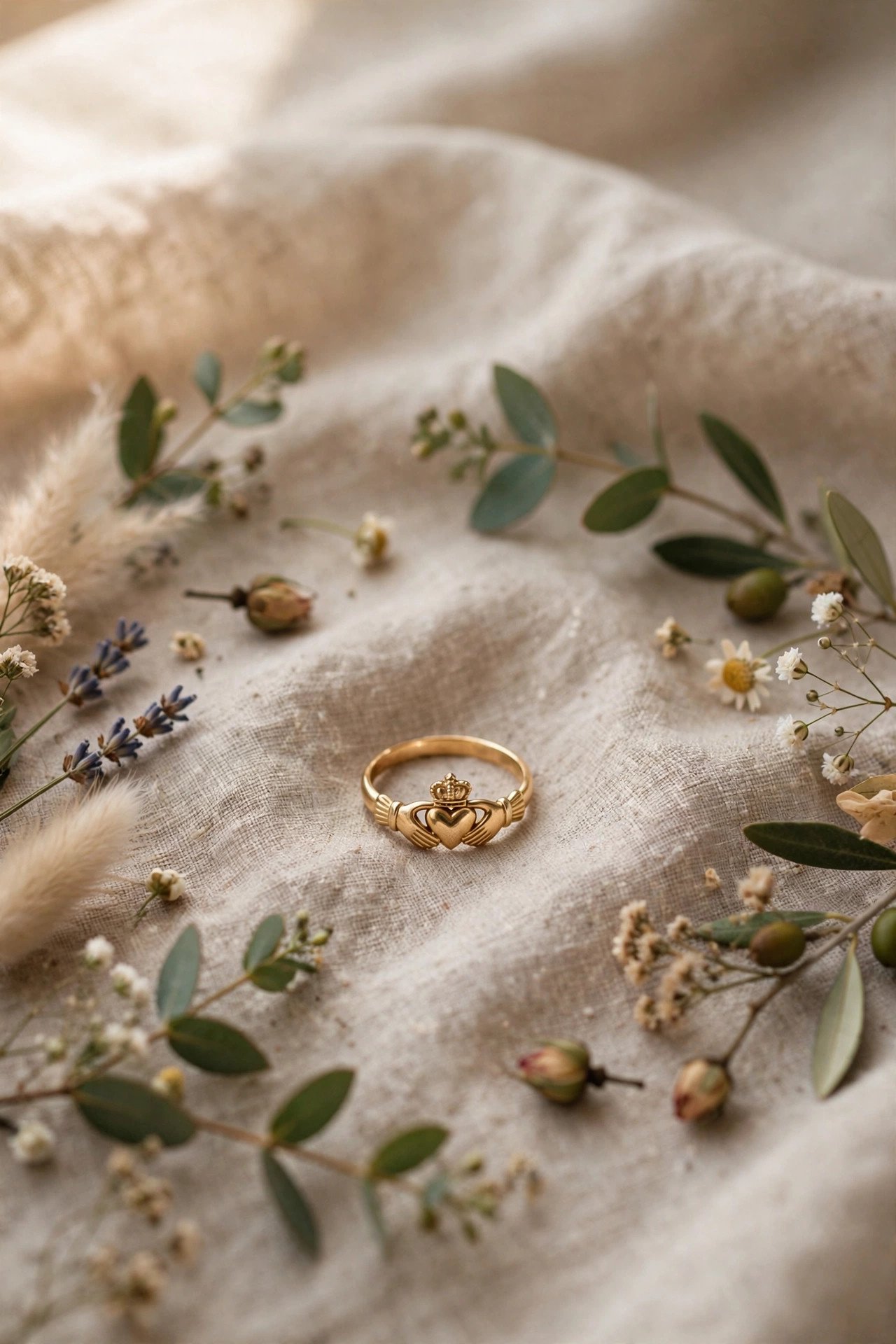
From the fishing village of Claddagh in Galway comes Ireland’s most famous ring: two hands holding a heart topped with a crown — friendship holding love, crowned by loyalty. Worn as an engagement or wedding ring by Irish couples worldwide, its meaning is also read in how it is worn: on the right hand with the heart pointing outward, the heart is free; turned inward or worn on the left hand in marriage, the heart is spoken for. The storytelling is part of the jewel.
The Lucky Horseshoe, Points Up
 📌 Save
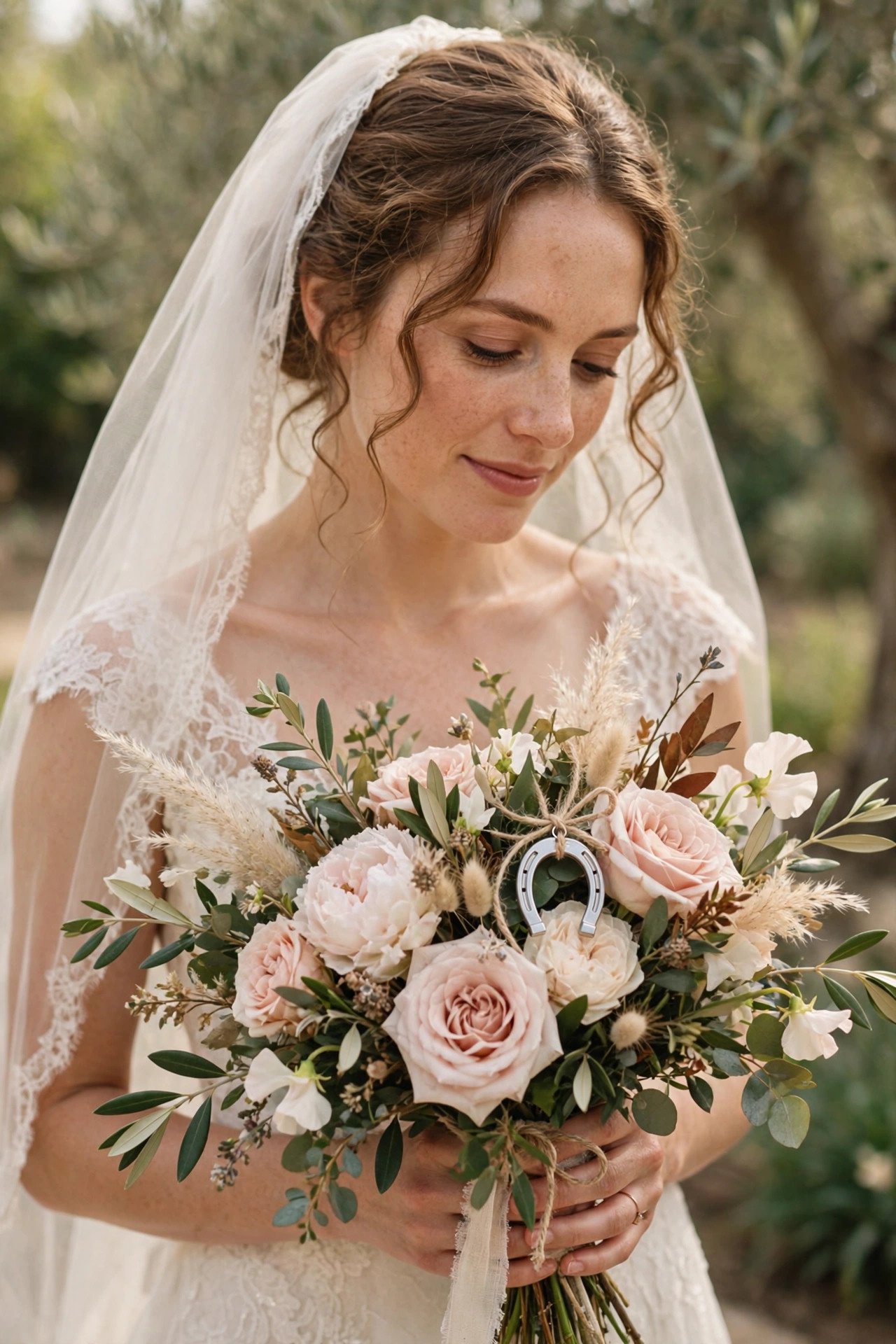
Irish brides have long carried a real horseshoe — or a small porcelain or fabric one — for luck, carried points-up so the luck does not spill out. It appears in bouquets, sewn into a dress hem’s keepsake pouch, or processed down the aisle by a very proud flower girl. Like most luck customs it is folklore, kept because grandmothers kept it, which at an Irish wedding is reason enough.
Blue Before White: Ireland’s Bridal Color History
 📌 Save
Before white became the bridal standard in the Victorian era, Irish brides often married in blue — a color of purity and fidelity in older symbolism — and the ‘something blue’ of the famous rhyme preserves that world inside modern weddings. Some Irish brides still choose blue dresses, sashes or embroidery as a deliberate historical nod. It is a lovely example of a tradition surviving by shrinking into a rhyme, then blooming back out when a bride chooses it on purpose.
Irish Lace and Linen: Craft in the Details
 📌 Save
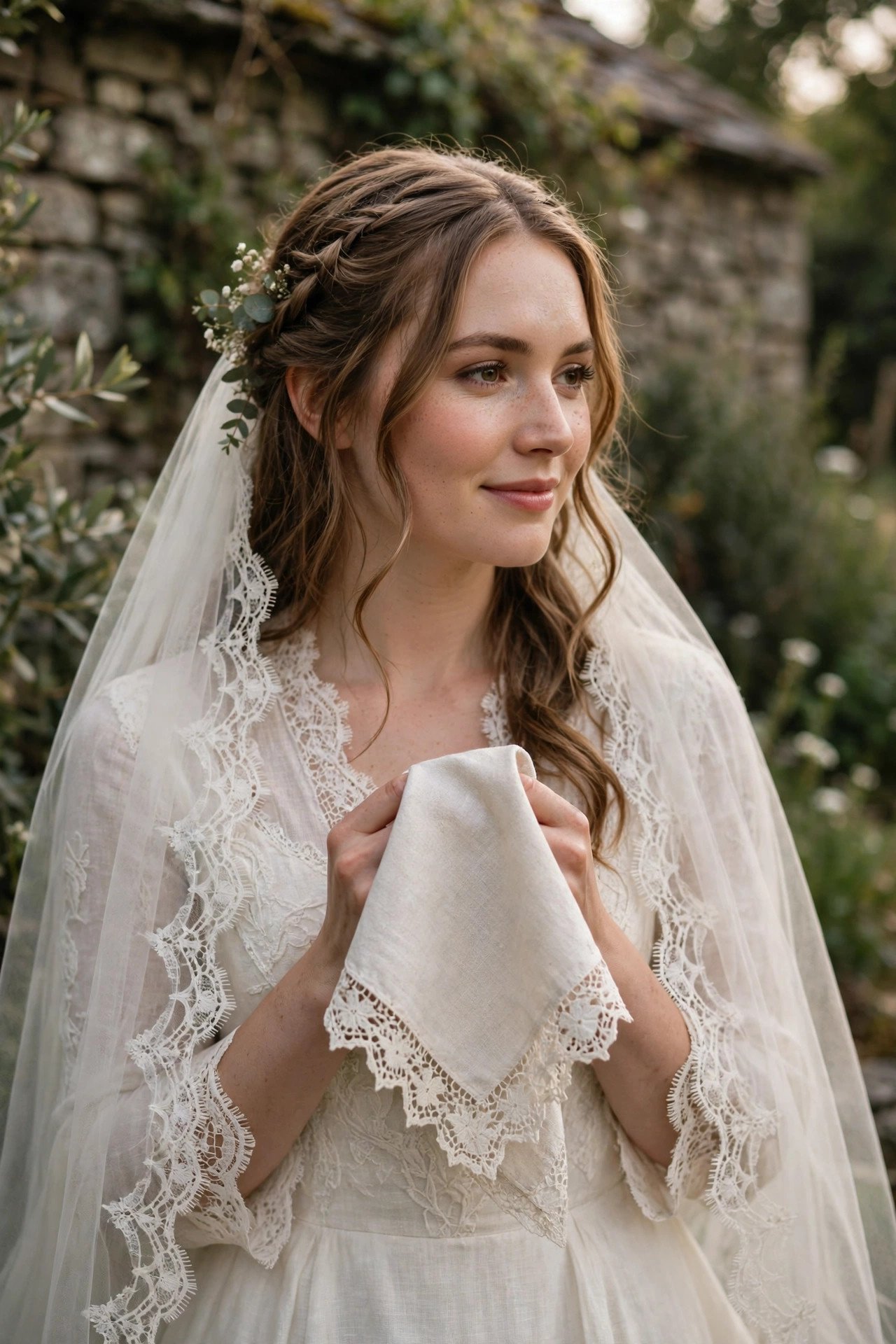
Ireland’s textile crafts — Carrickmacross and Limerick lace, Irish linen from the flax counties — have dressed brides for two centuries, in veils, handkerchiefs, dress panels and christening robes that become family heirlooms. A lace-edged handkerchief carried by the bride may have been carried by three brides before her. Modern Irish designers revive these crafts in contemporary silhouettes, keeping the skills — and the women who hold them — at the center.
The Make-Up Bell: A Gift for Future Arguments
 📌 Save
Among Ireland’s cheeriest wedding gifts is a small bell — the make-up bell — given to the couple with the instruction that whenever an argument brews, either partner may ring it, and the other must pause, listen and make peace. Folklore also credits wedding bells generally with scaring off ill luck, which is why church bells ring the couple out. The bell tradition survives because it is funny — and because, couples report, it actually works at least once.
The Bride’s Handkerchief, Destined to Be a Bonnet
 📌 Save
A beloved Irish custom: the bride carries a special handkerchief on her wedding day, and when the couple’s first baby arrives, the handkerchief is sewn — with a few stitches — into the baby’s christening bonnet; later still, the stitches are snipped and the handkerchief returns for that child’s own wedding day. It is a three-generation relay race run in linen, and mothers guard the handkerchief’s whereabouts like state secrets between ceremonies.
Uilleann Pipes and the Session Spirit
 📌 Save
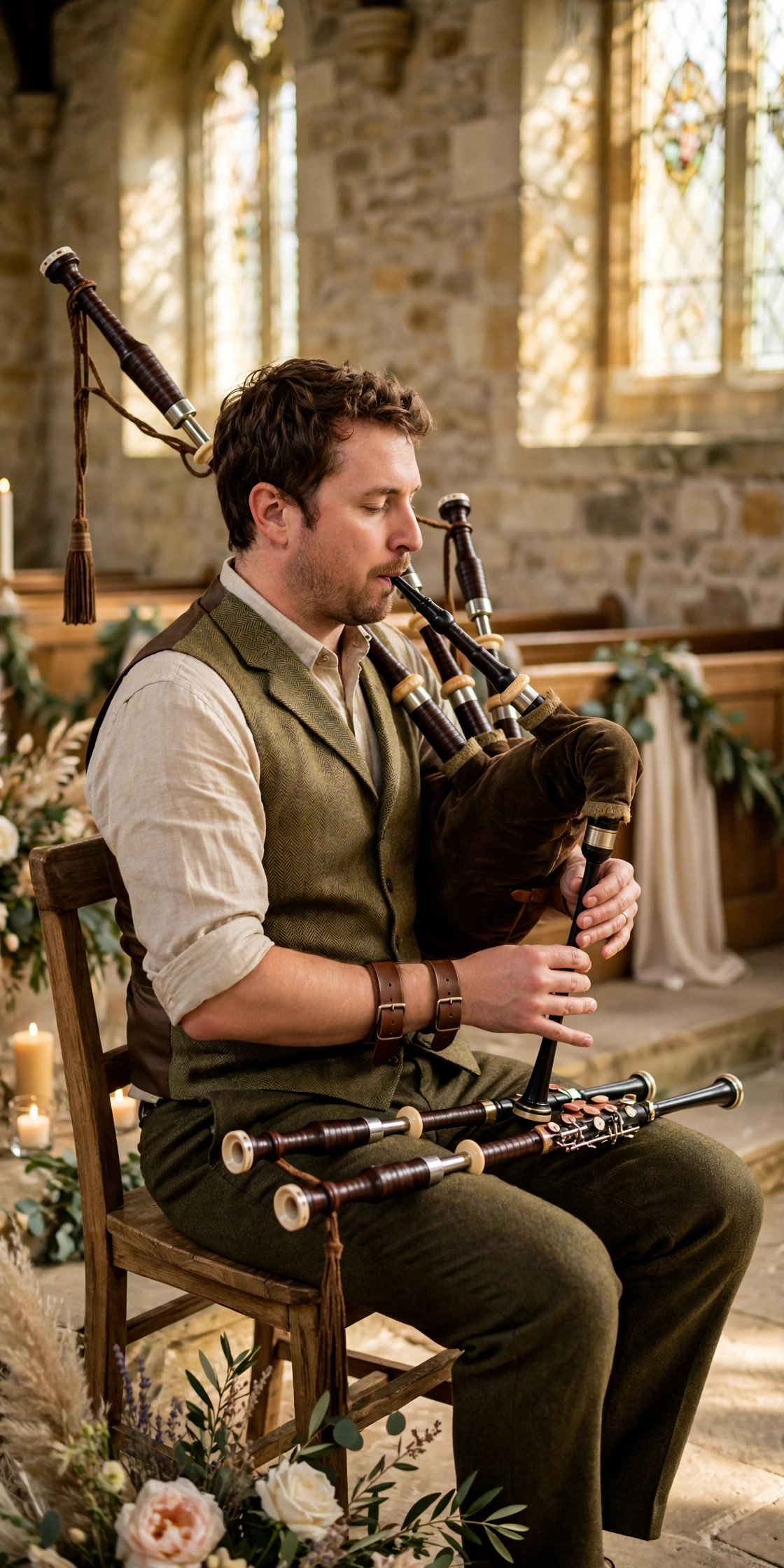
Ireland’s national pipes — the uilleann pipes, played seated with bellows under the elbow — give ceremonies a sound both ancient and intimate, alongside fiddle, harp and flute. At receptions, the tradition is the session: musicians playing together informally, tunes rolling into tunes, with the couple’s favorite song learned specially. Irish wedding music is participatory by design; a good session pulls singers out of the guest list like a tide.
Céilí Dancing: Steps Guests Actually Learn
 📌 Save
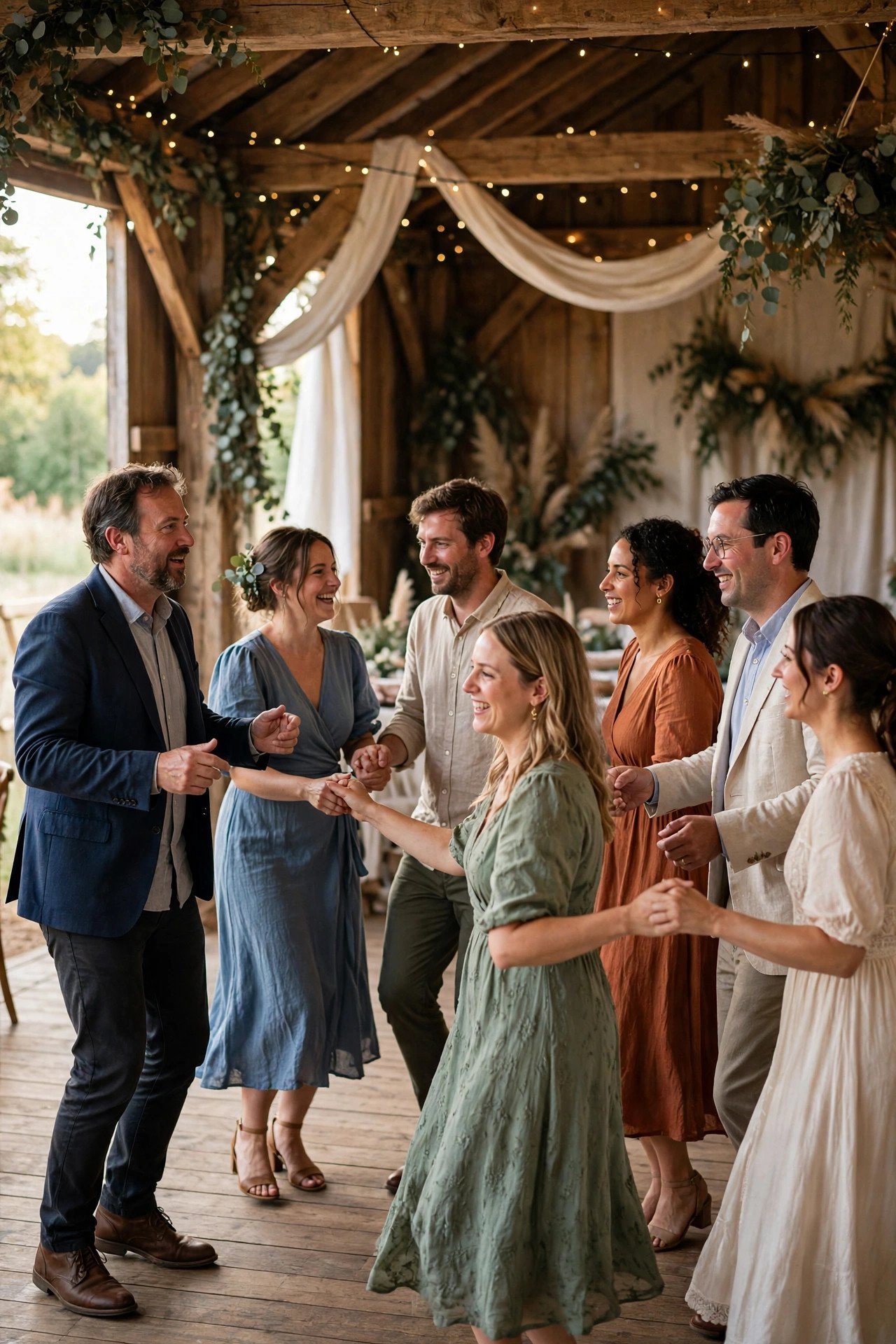
A céilí is a social dance gathering with set dances — walls, bridges and haymakers’ jigs — taught on the spot by a caller while a live band plays. Weddings hire céilí bands precisely because nobody needs experience: the caller walks every dance through, grandparents partner grandchildren, and the floor fills with people who swore they could not dance, dancing. In a world of choreographed first dances, the céilí remains gloriously democratic.
Irish Blessings, Read Aloud
 📌 Save
Irish blessings — ‘May the road rise up to meet you’ the most famous — are read at ceremonies, printed on orders of service and woven through speeches, because Irish celebration treats spoken good wishes as actual gifts the community gives. Many beloved ‘ancient Irish blessings’ are in truth more recent or anonymous compositions; they are loved anyway, and honesty about that takes nothing from their beauty when a grandfather reads one aloud. Choose blessings your family actually says.
The Feast: Soda Bread, Colcannon and a Proper Roast
 📌 Save
An Irish wedding breakfast (the celebratory meal, whatever the hour) celebrates the island’s larder: seafood chowder and smoked salmon to start, roast meats with colcannon or champ, floury potatoes done three ways, soda breads and carrageen or bread-and-butter puddings in modern dress. Contemporary Irish chefs have made the wedding menu a showcase of the island’s farms and fisheries. Whatever the menu’s ambitions, the rule stands: nobody leaves an Irish table hungry, and somebody’s uncle inspects that this remains true.
St. Brigid’s Crosses and February Weddings
 📌 Save
For weddings near St. Brigid’s Day (February 1), some couples weave in her symbols: the rush cross of St. Brigid, hung in Irish homes for protection and blessing, and the first signs of spring her feast day promises. A cross woven by a family member for the couple’s new home is a gift of deep local meaning in the counties where the craft is strong. Like many Irish customs, it is regional, handmade and carried by the families who keep it.
Heather and Wild-Inspired Bouquets
 📌 Save
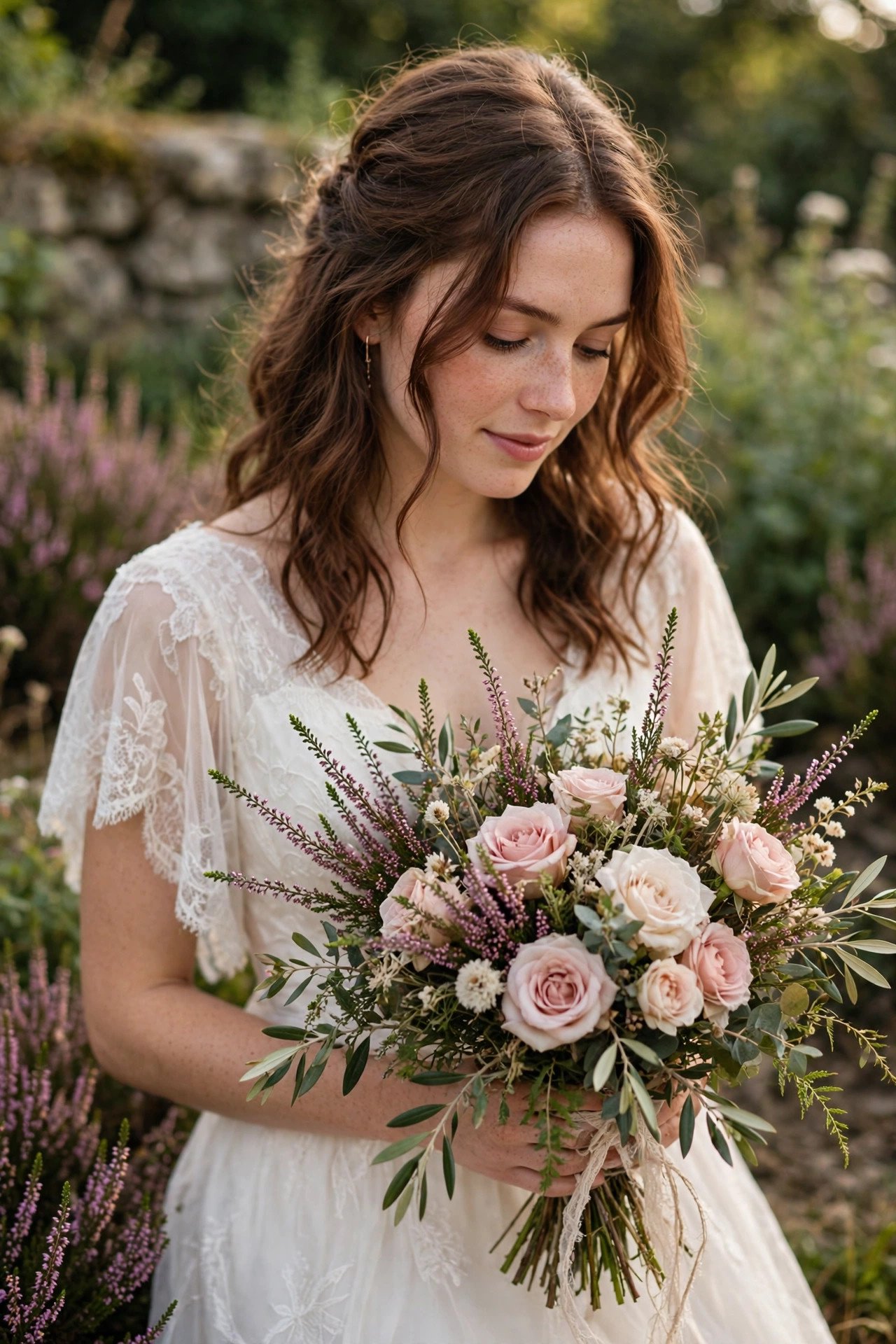
Irish bouquets love the island’s palette: heather in season, wild-rose pinks, foxglove shapes echoed by cultivated delphiniums, and greenery with hedgerow energy arranged loosely rather than tightly. A note of care: wild bluebells are protected in Ireland and the UK and must never be picked — florists achieve the look with cultivated blue varieties of other flowers, which is the correct and legal romance. Bouquets should look gathered from a beautiful place, not taken from a protected one.
The Wedding Coin: A Groom’s Old Gesture
 📌 Save
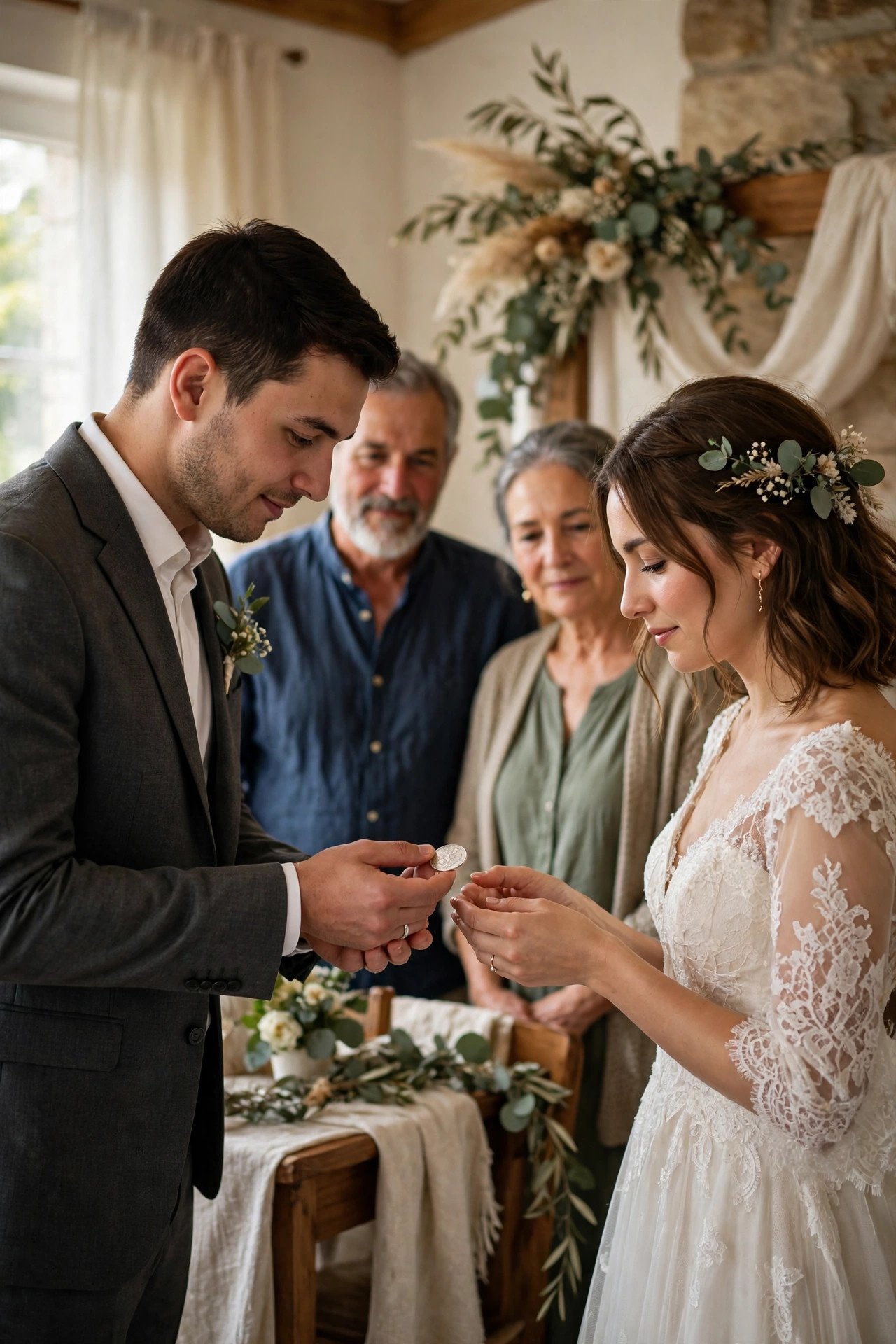
In a custom kept in some Irish families, the groom presents the bride with a silver coin during or after the ceremony, saying words to the effect of ‘I give you my worldly goods’ — a small, formal token of provision echoed in other European traditions. Families vary in whether they keep it, and modern couples often exchange coins or adapt the words to mutuality. Where it survives, the coin joins the handkerchief in the family’s box of wedding treasures.
Rain on the Day: Ireland’s Weather Philosophy
 📌 Save
On an island kept green by rain, folklore has made its peace: rain on a wedding day is read by many Irish families as luck — tears the sky cries so the bride need not, or a knot tied wet that cannot be undone. Venues plan for four seasons in an afternoon, couples photograph gloriously under umbrellas, and the party indoors loses nothing. Diaspora couples in drier climates import the philosophy along with the customs: whatever the sky does is material for the speeches.
The Child of Prague: Ireland’s Weather Insurance
 📌 Save
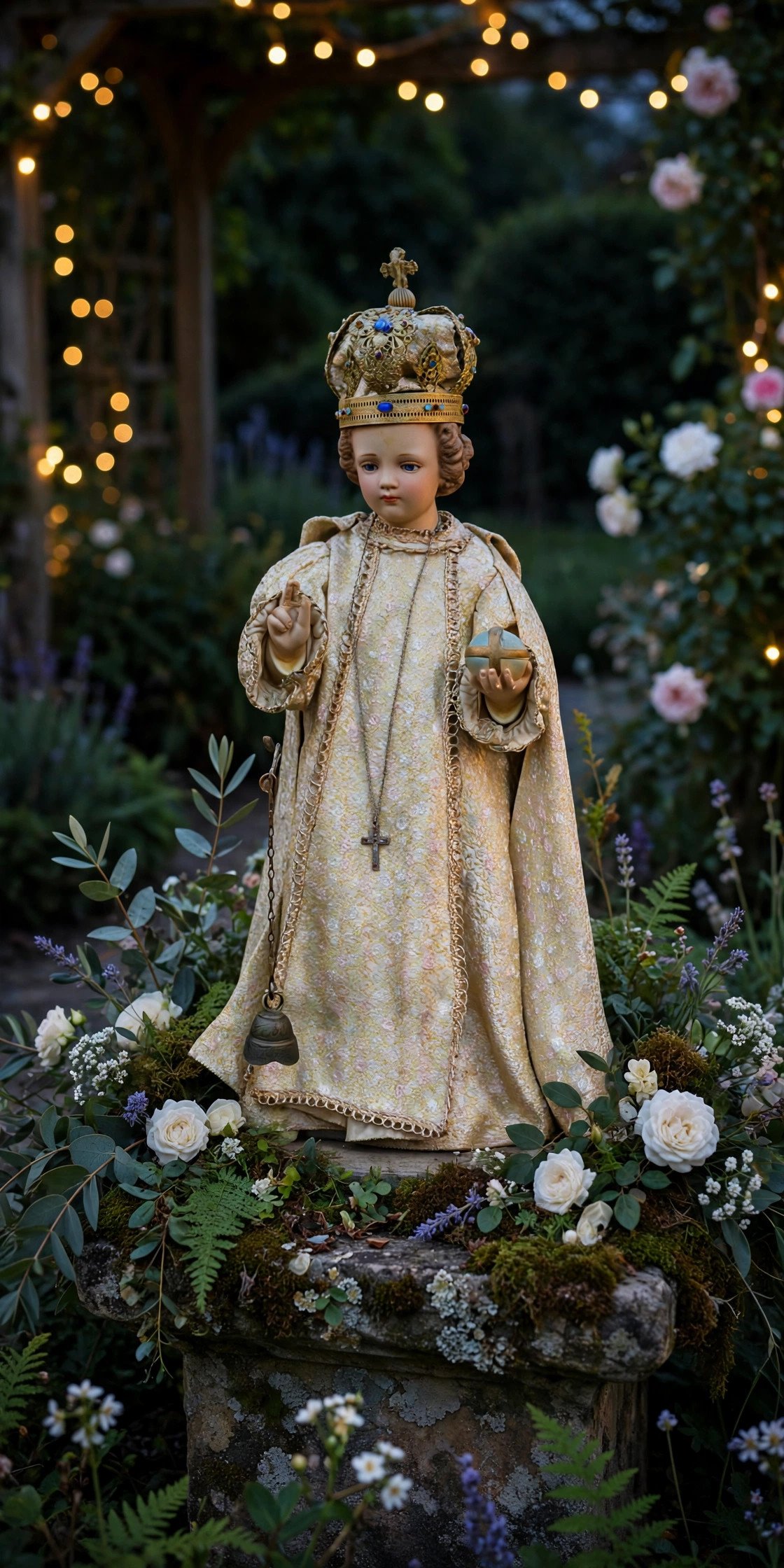
Ask an Irish mother about wedding weather and she will mention the Child of Prague: the tradition of placing a statue of the Infant of Prague in the garden — some say under a bush, some say with its head respectfully intact whatever the jokes claim — the night before the wedding, to ask for a dry day. It is among Ireland’s most genuinely widespread wedding customs, practiced by families of every level of formality with a straight face and crossed fingers. Whether it works is a matter of faith; that it is done is a matter of record in a thousand family stories.
Grá: Irish Language Touches That Belong
 📌 Save
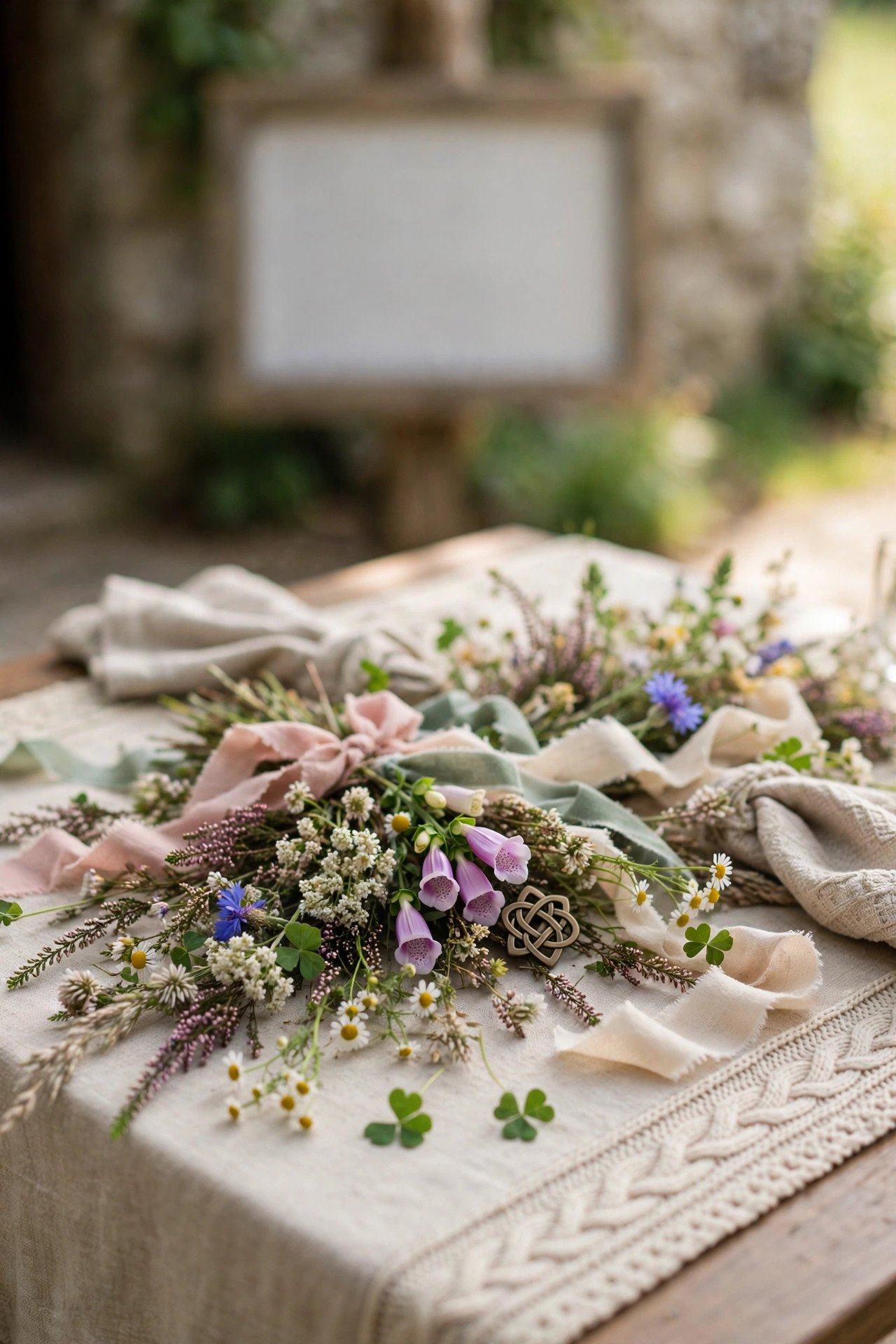
A cúpla focal — a few words of Irish — thread through modern ceremonies: grá (love) on signage and stationery, sláinte wishes in speeches, bilingual readings, and place names spoken correctly at last. Used by families with the language or learning it with respect — pronunciation checked, meanings understood — these touches root a diaspora wedding in something real. A single well-chosen Irish line, said well, outweighs a program full of decorative fragments.
The Top Table and the Toasts
 📌 Save
Irish wedding speeches are a contact sport played with love: the father’s welcome, the groom’s thanks, the best man’s carefully weaponized anecdotes, and increasingly the bride’s own speech closing the show. Toasts are raised in sparkling water, tea, coffee and whatever guests are drinking, with sláinte is táinte (‘health and wealth’) among the cheers. The top table seats the families intermixed as one new unit — the seating plan itself a small act of diplomacy and theatre.
County Colors and a Nod to the GAA
 📌 Save
Modern Irish weddings carry county pride in playful doses: county colors in the ribbons and flowers, the couple photographed in their county jerseys over wedding clothes, a groom’s cake in club colors, or the great rivalries of the GAA acknowledged in the speeches to roars from one half of the room. For mixed-county marriages it is diplomatic dynamite handled with humor — both jerseys appear, both counties are toasted, and the All-Ireland of the heart ends in a draw.
Cards and Cash: The Irish Guest Custom
 📌 Save
The standard Irish wedding gift is a card with cash or a check inside — registries exist but the card remains king — handed over at the reception to the couple or placed in the gift box or post box provided. Amounts scale to closeness and means, and the words inside matter: Irish cards get read, kept and quoted. Guests arriving from abroad should know the card is not a fallback; it is the tradition, executed with handwriting.
Honoring Grandparents: Front Seats and Flowers
 📌 Save
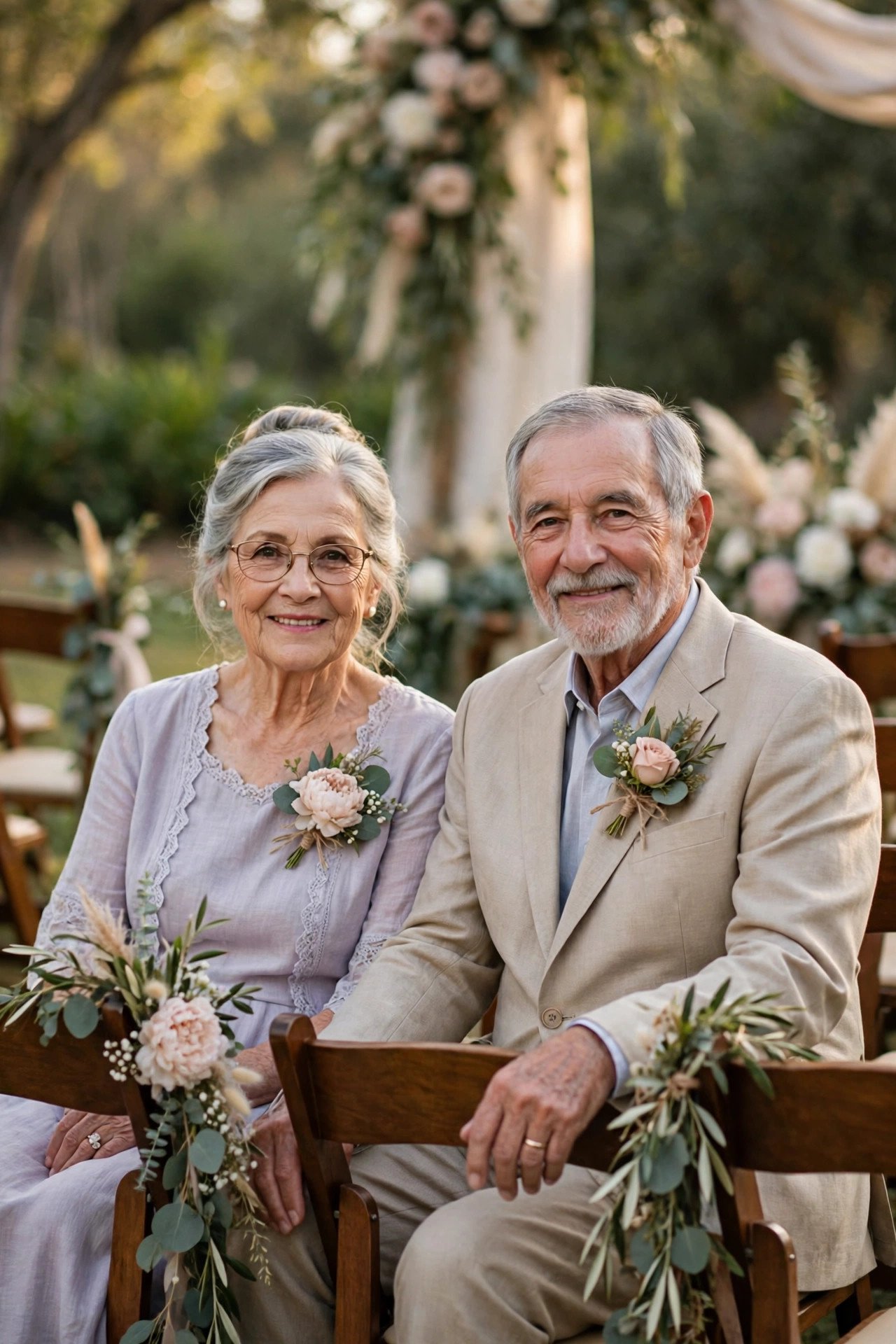
Irish weddings seat grandparents like royalty — front rows at the ceremony, places of honor at the top table’s end, corsages and buttonholes marking them, and a specific thank-you in the speeches that names what they built. In a culture where emigration scattered families for generations, a wedding that gathers three or four generations in one room is treated as the treasure it is, and the eldest guests are its crown jewels. Diaspora weddings fly grandparents in as guests of supreme honor.
Tin Cans on the Car: An Older Send-Off
 📌 Save
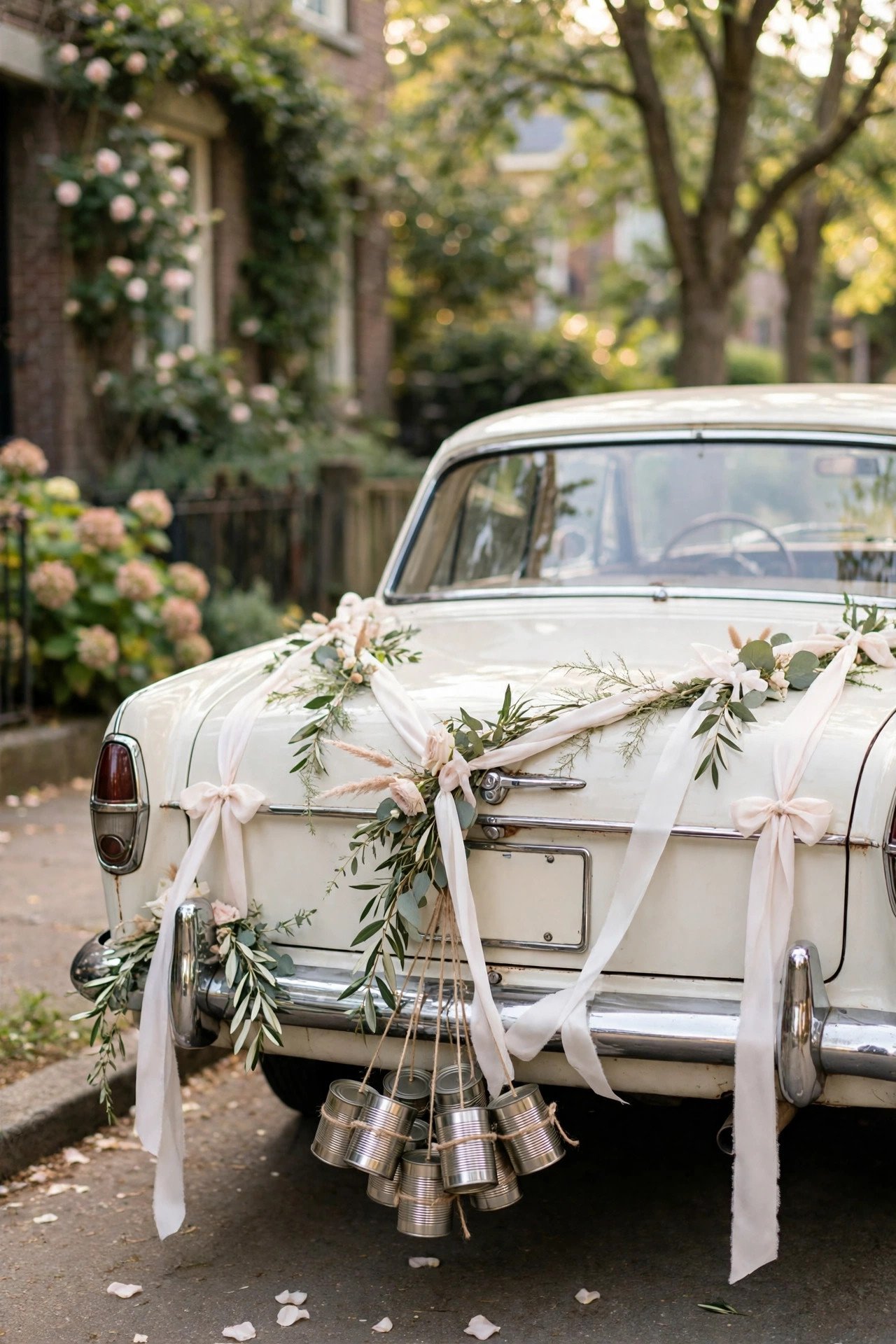
Older Irish and wider European custom tied tin cans and old shoes to the couple’s departing car — noise to celebrate and, folklore says, to scatter ill luck — a send-off diaspora couples still revive for the photograph alone. Modern venues and rental cars require a gentler edit: ribbons, a ‘just married’ sign and cans only where the car and the council allow. The spirit — a noisy, joyful farewell — survives every adaptation.
Castles, Churches and Hotel Ballrooms
 📌 Save
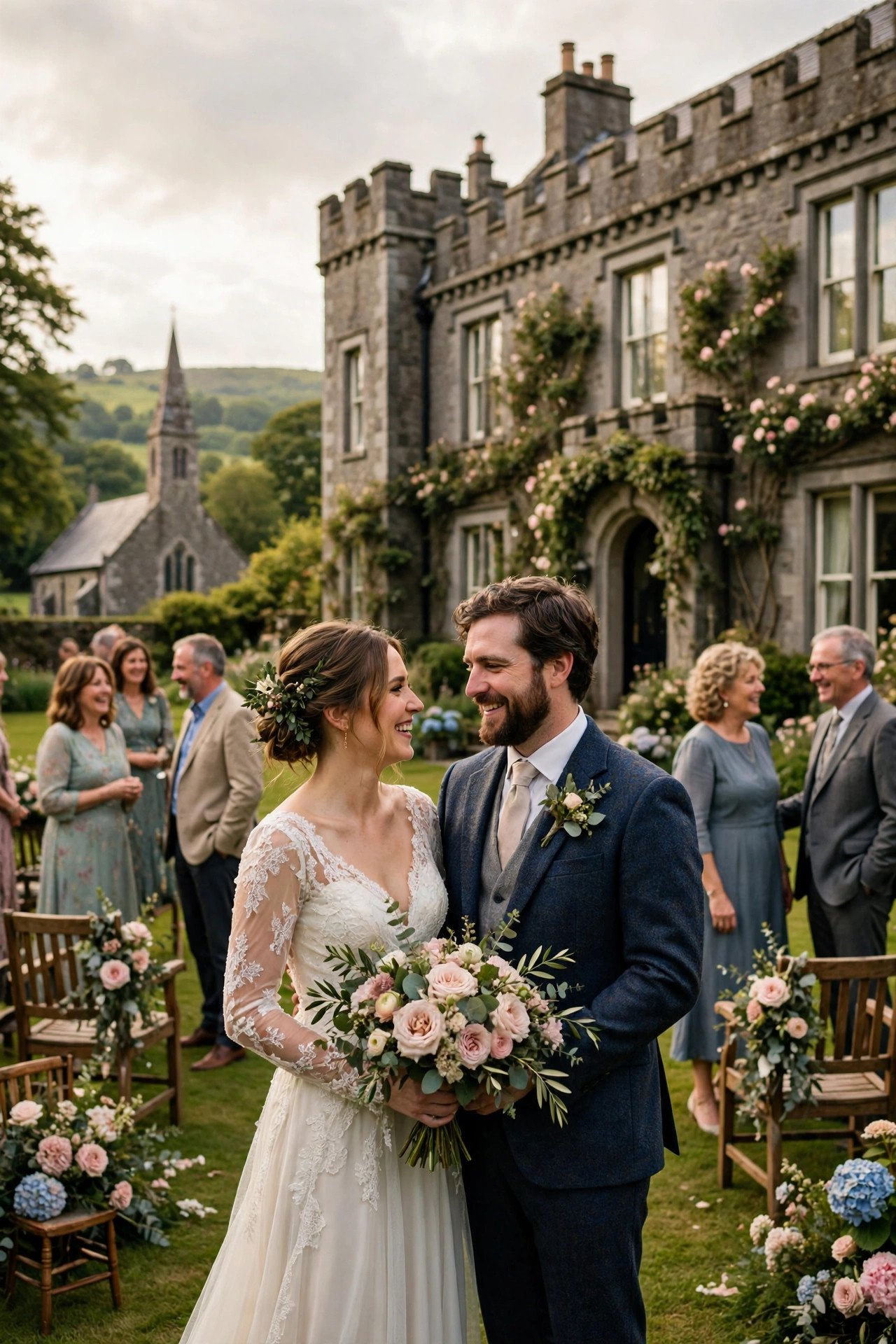
Ireland’s wedding geography runs from parish churches and cathedral ceremonies to castle hotels, country houses and the great hotel ballroom tradition where whole towns celebrate. Church weddings follow the parish’s preparation courses; civil and celebrant-led ceremonies — where handfasting and other rituals flourish — are held at approved venues with a separate legal process through the HSE registrar in Ireland. Couples plan the legal and ceremonial tracks together, with notice periods that reward early organization.
Regional and Religious Variation, Honestly
 📌 Save
Ireland and Northern Ireland hold Catholic, Church of Ireland, Presbyterian, Methodist, Humanist and many other wedding traditions, county customs from Cork to Donegal, and a diaspora that has layered American, British and Canadian habits on top. No list — this one included — speaks for all of it. The customs here are the widely shared and widely loved ones; your family’s parish, county and grandmother remain the supreme court of what an Irish wedding is.
Blending Irish Traditions Anywhere on Earth
 📌 Save
Irish traditions travel superbly: a handfasting woven into a celebrant-led ceremony in Chicago, Claddagh rings exchanged in Toronto, a céilí band hired in London, blessings read by a grandfather on a video call from Galway. The blend works when the elements carry their meanings with them — cords explained, rings’ symbolism spoken, the céilí called properly — rather than arriving as untranslated decoration. Diaspora couples often find these customs become more precious abroad, not less.
Irish Wedding Traditions FAQs
What is handfasting and is it legally binding?+
Handfasting is a Celtic-rooted ritual where the couple’s hands are bound with cords while vows are spoken — the origin of ‘tying the knot.’ In past centuries it carried betrothal significance in Ireland and Scotland; today it is a symbolic act within celebrant-led ceremonies, while the legal marriage is completed through the registrar process. Couples choose cord colors for meanings they assign together.
What does a Claddagh ring mean?+
The Claddagh ring, from Galway, shows two hands holding a heart topped by a crown: friendship, love and loyalty. Tradition reads the wearer’s heart in how it is worn — on the right hand with the heart outward means unattached; inward, or on the left hand in marriage, means the heart is given.
What gift do guests give at an Irish wedding?+
Traditionally a card with cash or a check, given at the reception — the words in the card are genuinely treasured. Registries exist, especially in the diaspora, but the handwritten card remains the heart of Irish wedding gifting. Amounts follow closeness and means.
What is a céilí and can beginners join?+
A céilí is a social dance event with traditional set dances taught by a caller over a live band. It is designed for beginners — every dance is walked through first — and wedding céilís deliberately mix generations and both families. No experience is needed, only willingness.
Are these traditions practiced at all Irish weddings?+
No — and that is normal. Irish weddings vary by region, faith and family: some couples handfast, others have never seen it done. These are widely loved, widely shared customs and folklore, and each family keeps the ones that feel like theirs. When in doubt, the family’s own practice is the guide.
Key Takeaways
- Handfasting and Claddagh rings carry the deepest roots — and their meanings deserve a program note.
- Folklore is seasoning: horseshoes, bells and hanky-bonnets are loved, optional and story-worthy.
- A céilí solves the reception’s hardest problem — it teaches every guest to dance, together.
- Guests: bring a card with cash and real words inside; dress for weather that has opinions.
- Let family and parish arbitrate the details — Ireland has many versions of itself, all correct.
Final Thoughts
An Irish wedding sends its couple off with their hands tied together, a bell for their arguments, a horseshoe guarding their luck and a room full of people who have danced a céilí in their honor and meant every blessing out loud. Keep the meanings spoken, the folklore smiling and the caller booked — in Donegal or Denver, that is an Irish wedding done right.