Scottish Wedding Traditions (2027)
By zainzari • Published October 23, 2026 • Updated October 23, 2026
 📌 Save
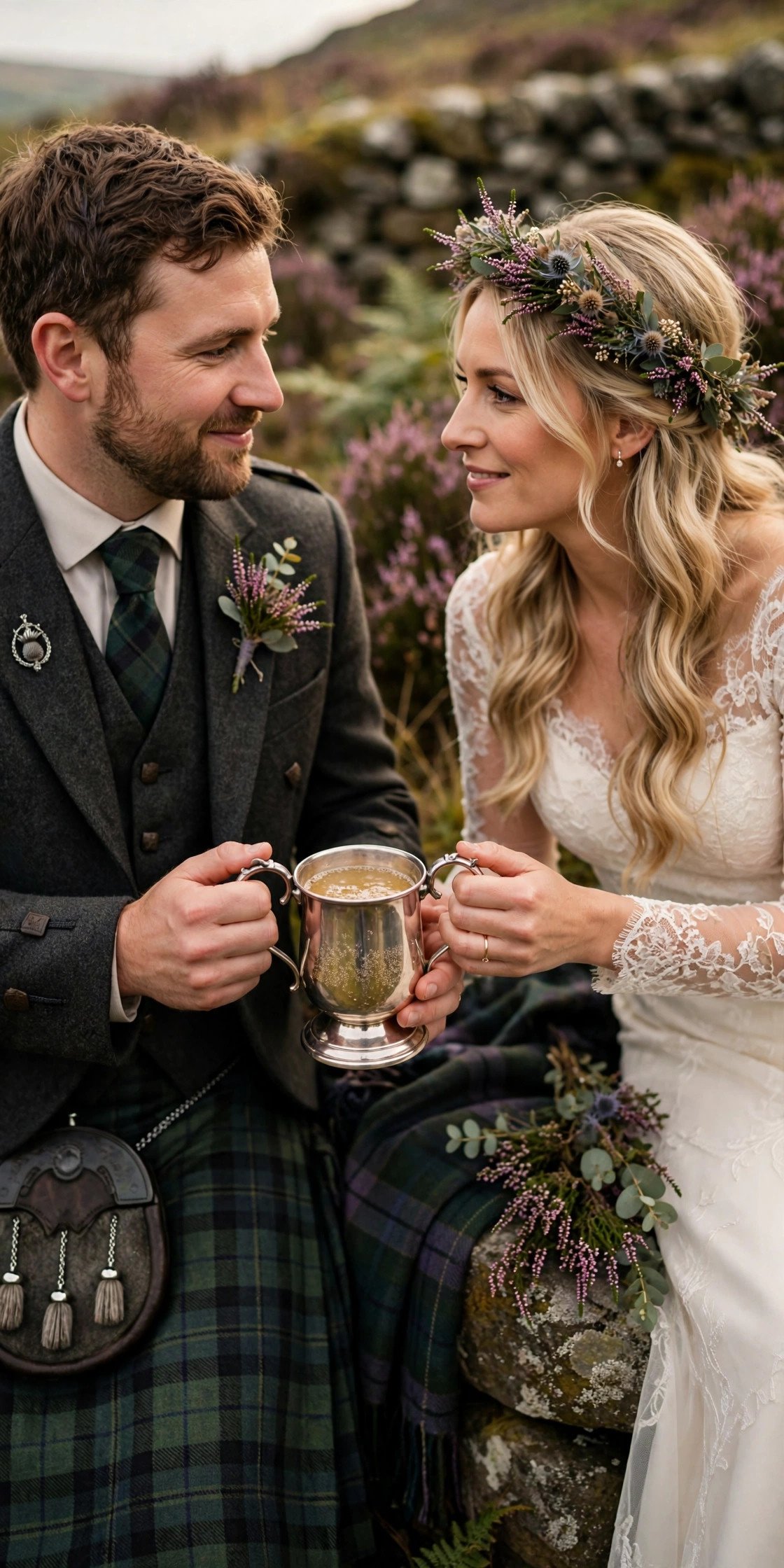
Scottish wedding traditions blend Highland romance with practical warmth: the couple shares a quaich — a two-handled cup of welcome and trust — hands are fasted with tartan cloth, kilts and family tartan carry heritage visibly, and the reception is a ceilidh where a caller teaches every dance. Luckenbooth brooches, heather in the bouquet, a wedding scramble of coins for children and a closing circle of Auld Lang Syne complete a celebration built for community.
A Scottish wedding is engineered for warmth in a climate that does not provide it: shared cups, joined hands, dances that require holding onto your neighbor and songs everyone already knows. Its symbols are wonderfully tactile — wool tartan, silver, heather, a cup with two handles so that drinking from it is automatically an act of trust between the people holding it.
Scotland’s customs vary between Highlands, Lowlands, islands and cities, and several beloved elements — tartan pageantry among them — were shaped or romanticized in the nineteenth century before being genuinely adopted as national heritage. This guide says so where it matters, because Scottish families themselves hold their history with both pride and humor. It is written for couples in Scotland and the diaspora, and for guests facing their first ceilidh with trepidation.
At a Glance: Symbols, Garments and Moments
| Element | What It Is | What It Means |
|---|---|---|
| Quaich | Two-handled sharing cup | Welcome, trust and friendship |
| Handfasting | Hands bound with tartan or cords | Two lives tied together |
| Kilt and tartan | Highland dress in family or chosen tartan | Heritage worn visibly |
| Luckenbooth | Intertwined-hearts brooch | A love token with royal folklore |
| Heather | Sprig in bouquet and buttonholes | Luck, admiration and Scotland itself |
| Ceilidh | Caller-led social dancing | Every guest dances — no exceptions |
| Wedding scramble | Coins thrown for children | Shared luck, scattered generously |
Note: tartan etiquette is welcoming in practice — anyone may wear most tartans, and hosts are typically delighted when guests join in. The couple’s guidance on the day always wins.
The Quaich: A Cup with Two Handles
 📌 Save
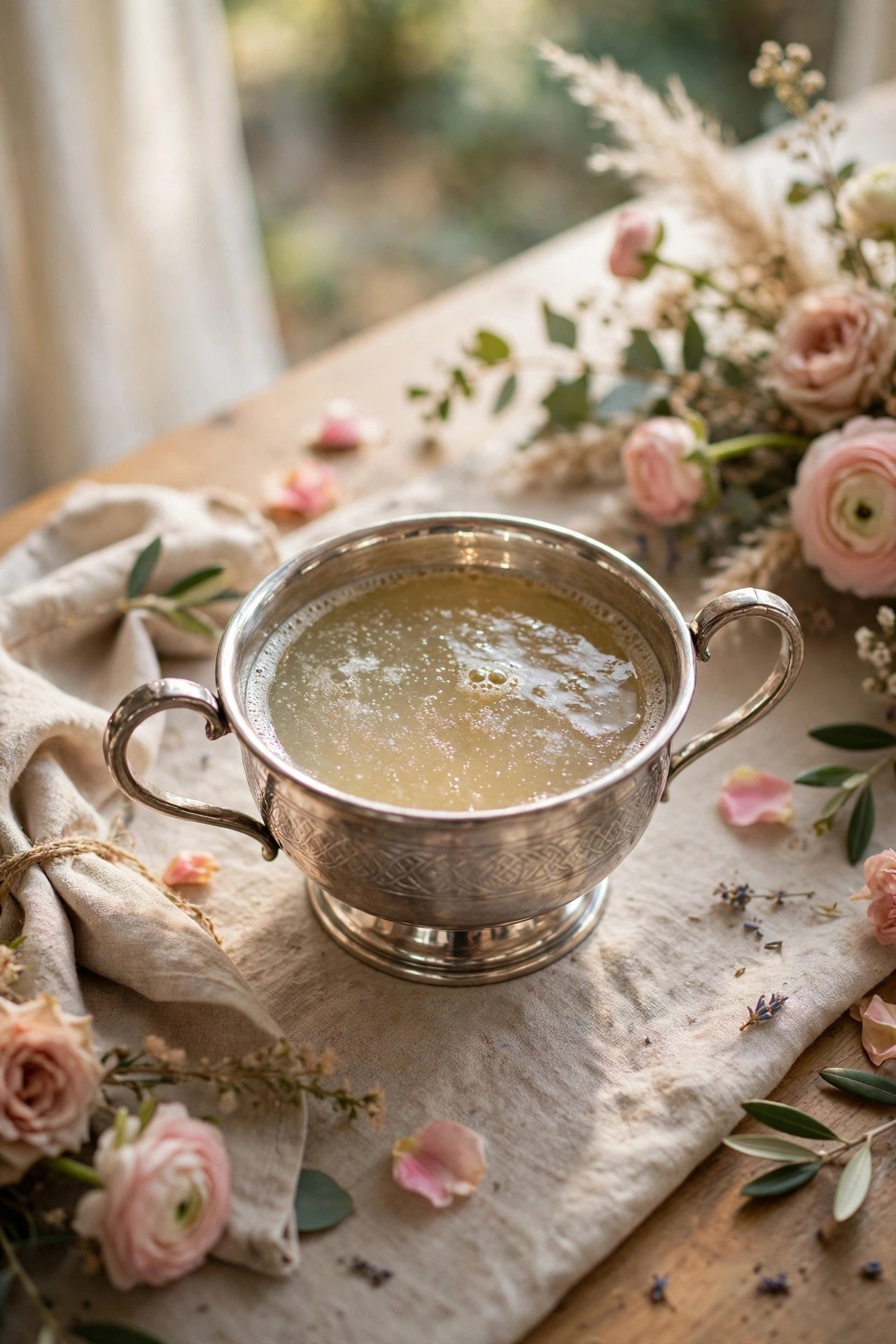
The quaich is Scotland’s cup of welcome: a shallow bowl with two flat handles, passed between host and guest for centuries as a gesture of trust — both hands occupied, both parties at ease. At weddings, the couple drinks from a shared quaich after the ceremony or at the top table, often from an engraved family cup. Traditionally the quaich held whisky, but today couples fill it with a non-alcoholic drink of their choice — sparkling cider, a favorite cordial or sweet tea are all common — because the meaning was never the contents; it is the two handles and the two hands.
Handfasting with Tartan Cloth
 📌 Save
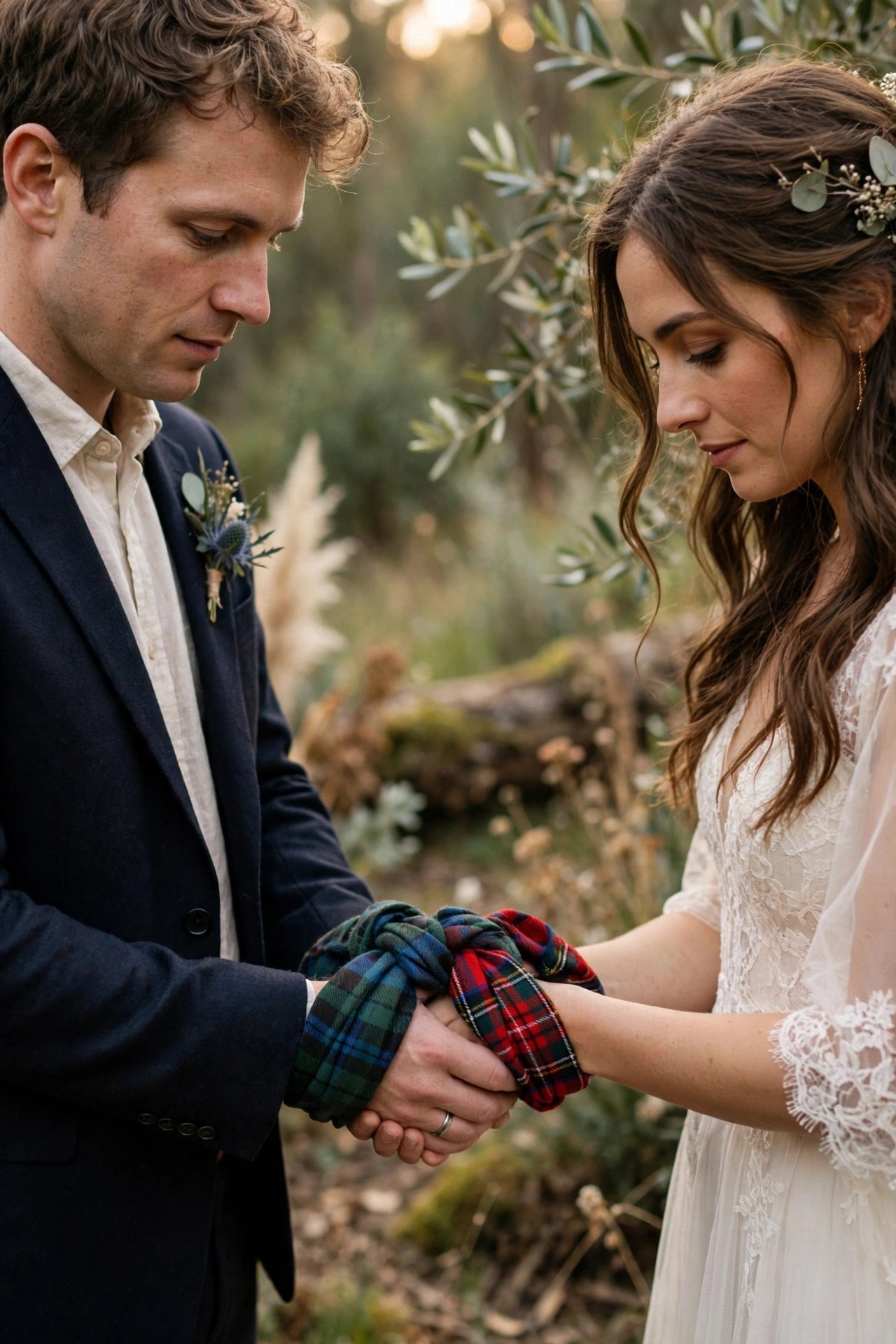
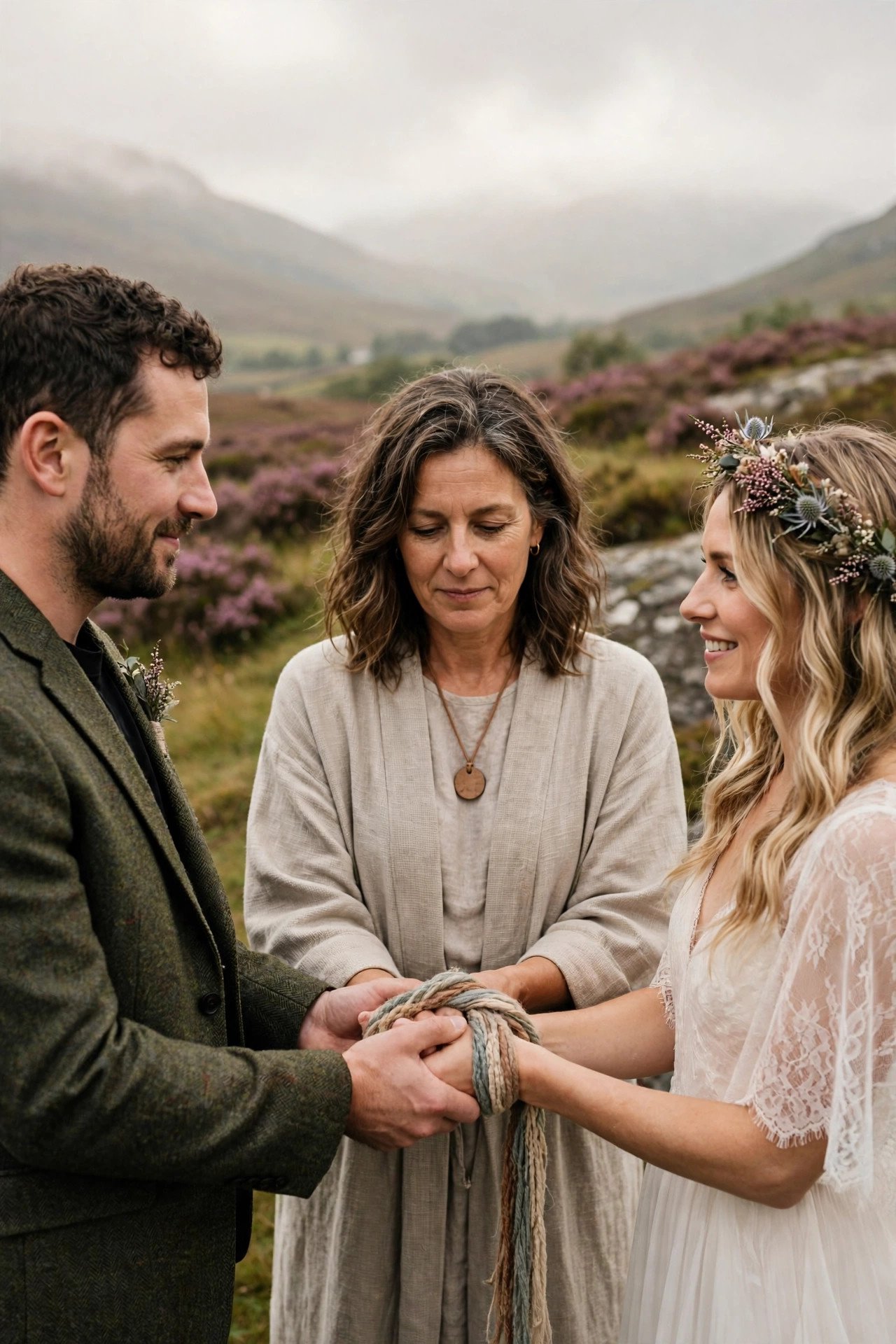
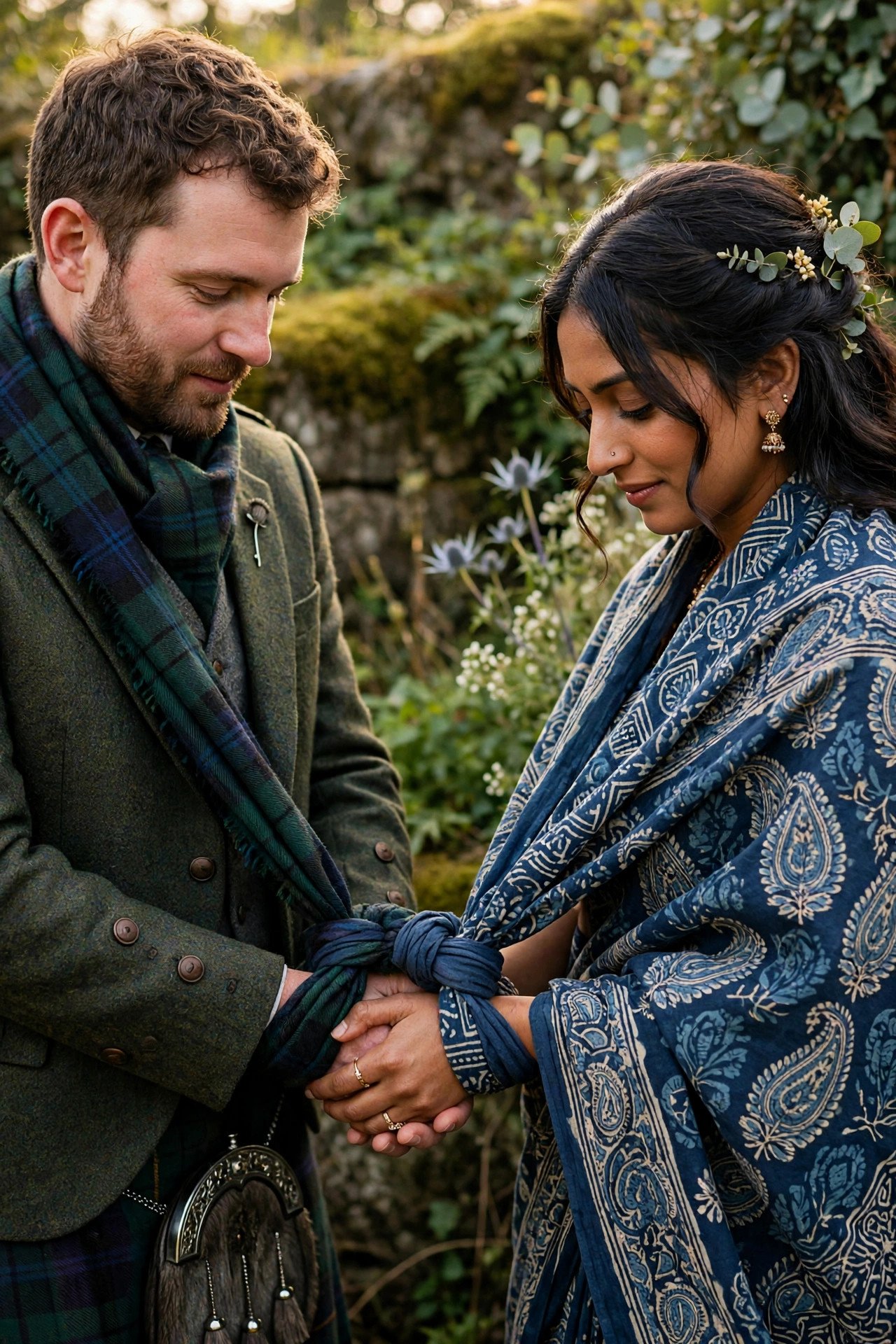
Scottish handfasting binds the couple’s hands with strips of tartan — often one from each family — or with cords, while vows are exchanged: the origin of ‘tying the knot,’ practiced in Scotland for centuries in betrothal custom and now central to celebrant-led and Humanist ceremonies. Using both families’ tartans literally weaves two lineages together over the couple’s joined hands. The bound cloth is kept knotted as an heirloom of the vows.
Kilts and Highland Dress, Explained for Guests
 📌 Save
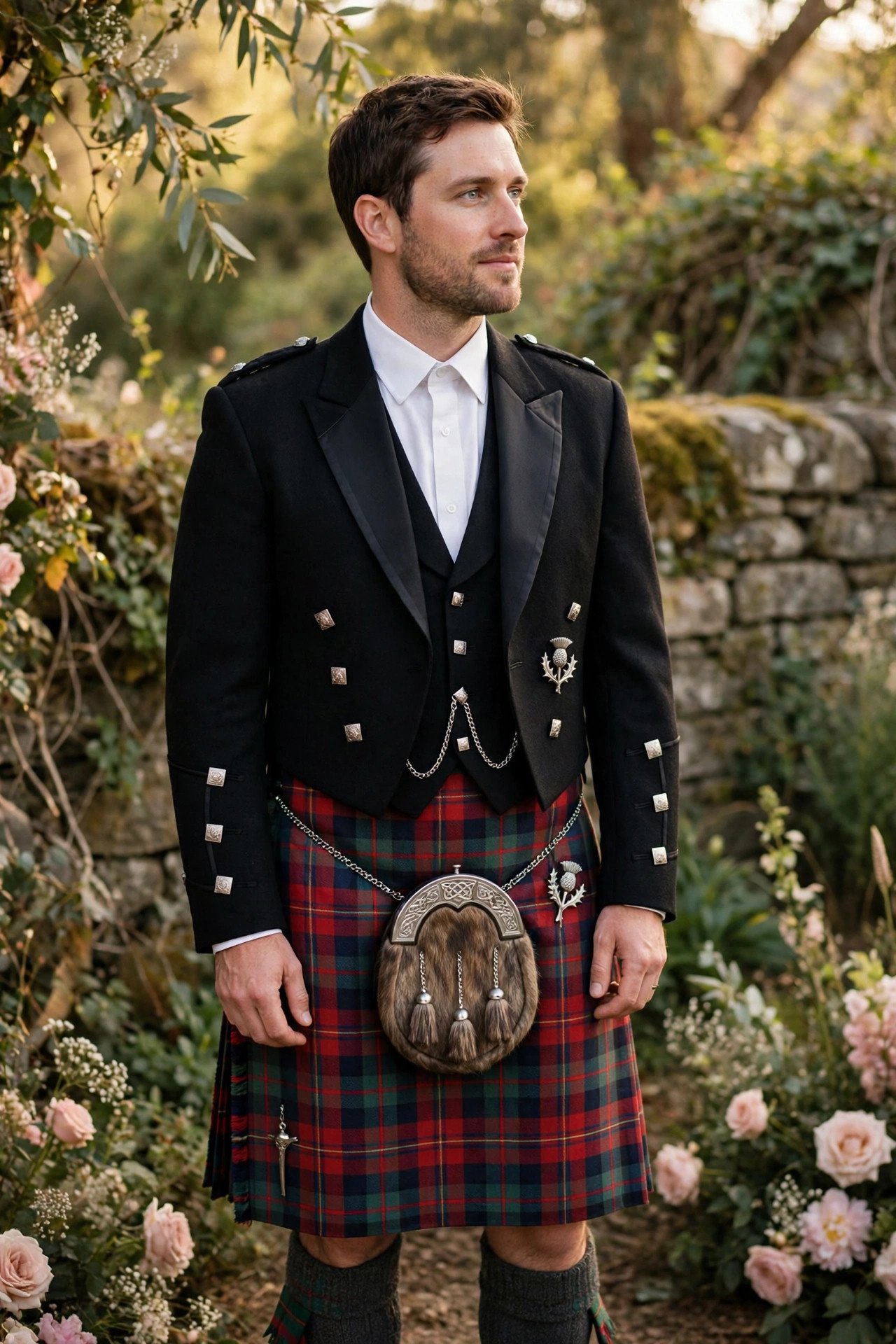
The groom and groomsmen in Highland dress wear the kilt — eight yards of pleated tartan wool — with a jacket (Prince Charlie for evening formality), sporran, kilt hose, flashes, ghillie brogues and a sgian-dubh tucked in the sock. Every element has a practical ancestor and a modern dress code, and a properly fitted outfit is Scotland’s answer to the black-tie suit: formal, flattering and built for dancing. Guests in kilts hire from specialists who fit the whole kit correctly.
Tartan: Choosing Yours with Respect
 📌 Save
Tartan patterns identify clans, families, districts and regiments, recorded in official registers, alongside universal and fashion tartans anyone may wear. A groom typically wears his family tartan if he has one; couples without clan ties choose a district or universal tartan whose colors they love, or commission a wedding tartan registered for their own family — an increasingly popular and entirely legitimate modern tradition. The respectful rule is simple: wear tartan gladly, claim a clan connection honestly.
Pinning the Tartan: Welcomed Into the Family
 📌 Save
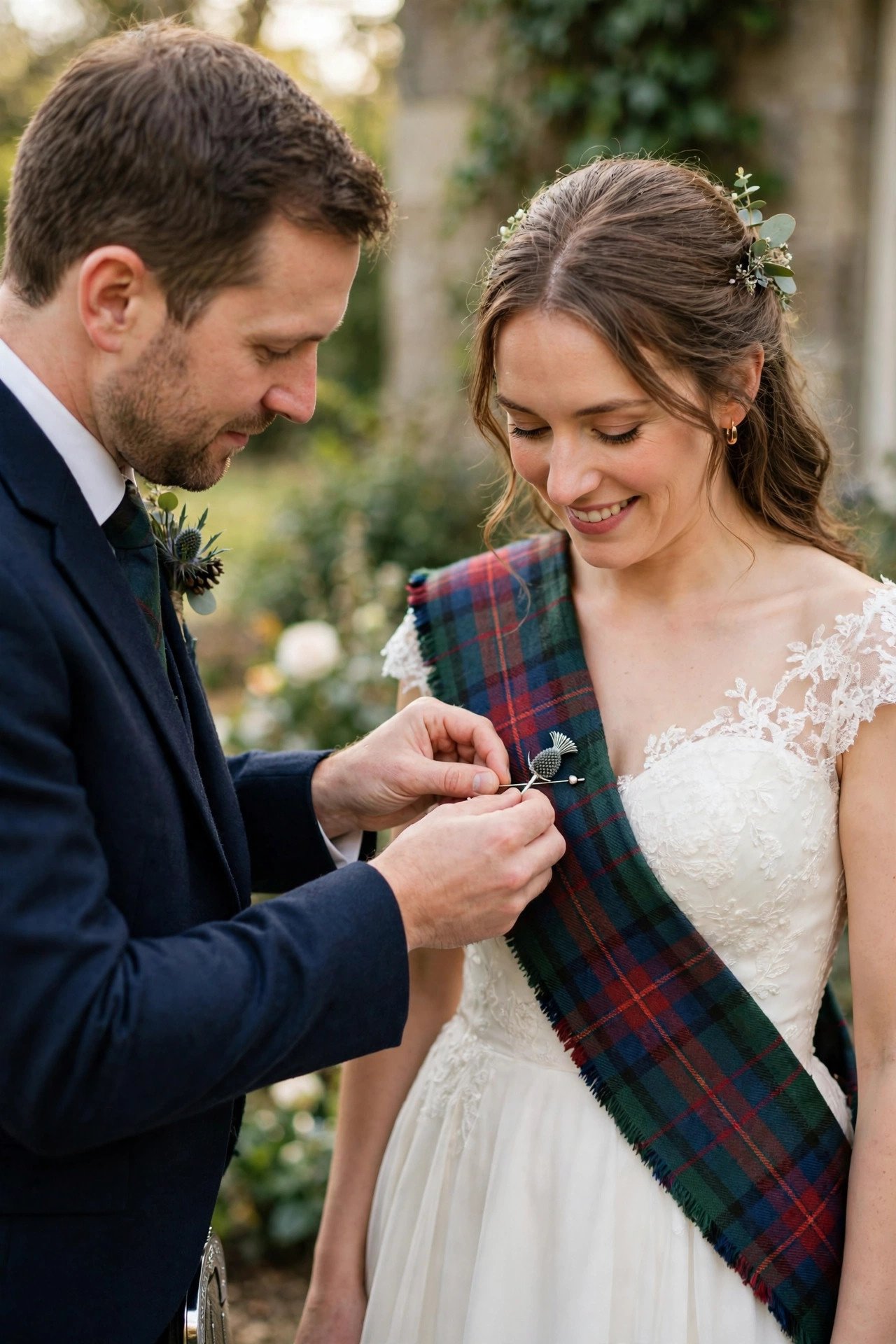
In the pinning of the tartan, popular at modern Scottish and diaspora weddings, a sash or piece of the groom’s family tartan is pinned onto the bride (or a tartan item is presented to the partner joining the family) after the vows, symbolizing her welcome into his clan and kin. It is a recent ceremonial custom rather than an ancient one — and none the worse for that, families say — because its meaning is instantly understood by every guest present.
The Ceilidh: Dancing with a Caller
 📌 Save
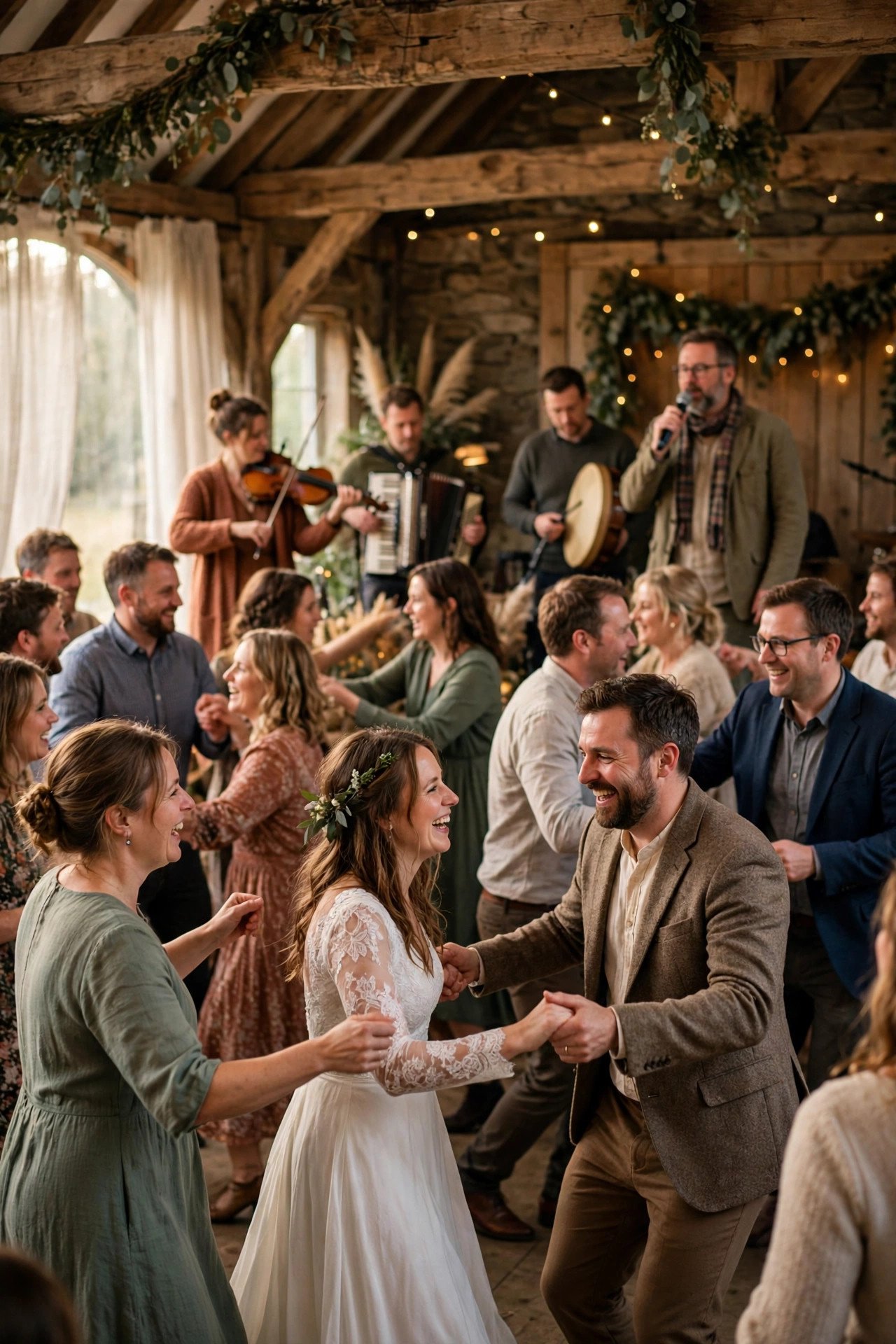
The ceilidh (pronounced KAY-lee) is the Scottish reception’s beating heart: a live band and a caller who teaches traditional dances — the Gay Gordons, the Dashing White Sergeant, Strip the Willow — in thirty seconds each, then lets the room loose. No experience survives as an excuse; the dances are designed for beginners, partner-swapping is built in, and the resulting chaos is the most reliable mixer of two families ever devised. Flat shoes by the second dance are a badge of honor.
Bagpipes: In, Out and Everywhere Between
 📌 Save
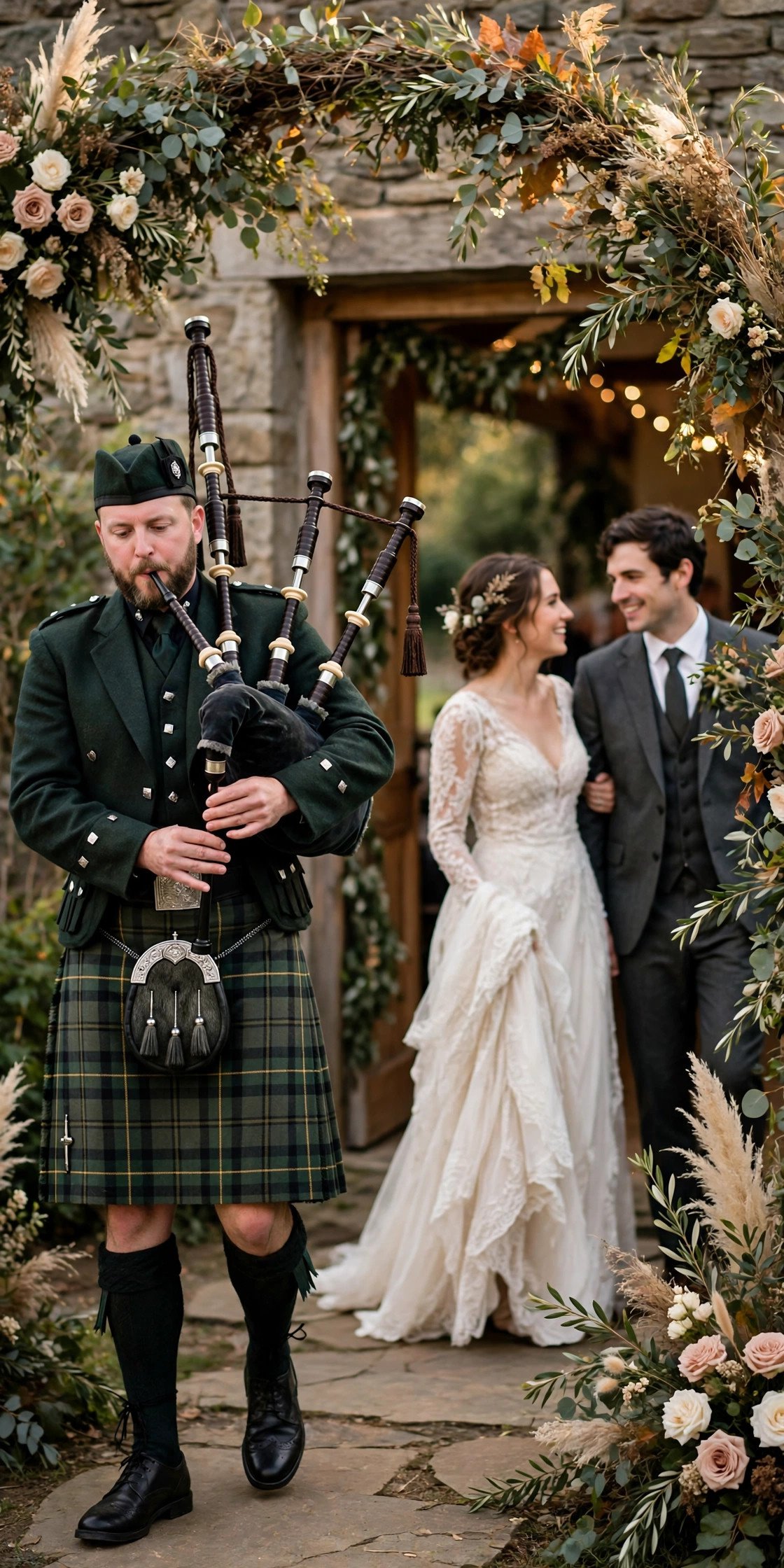
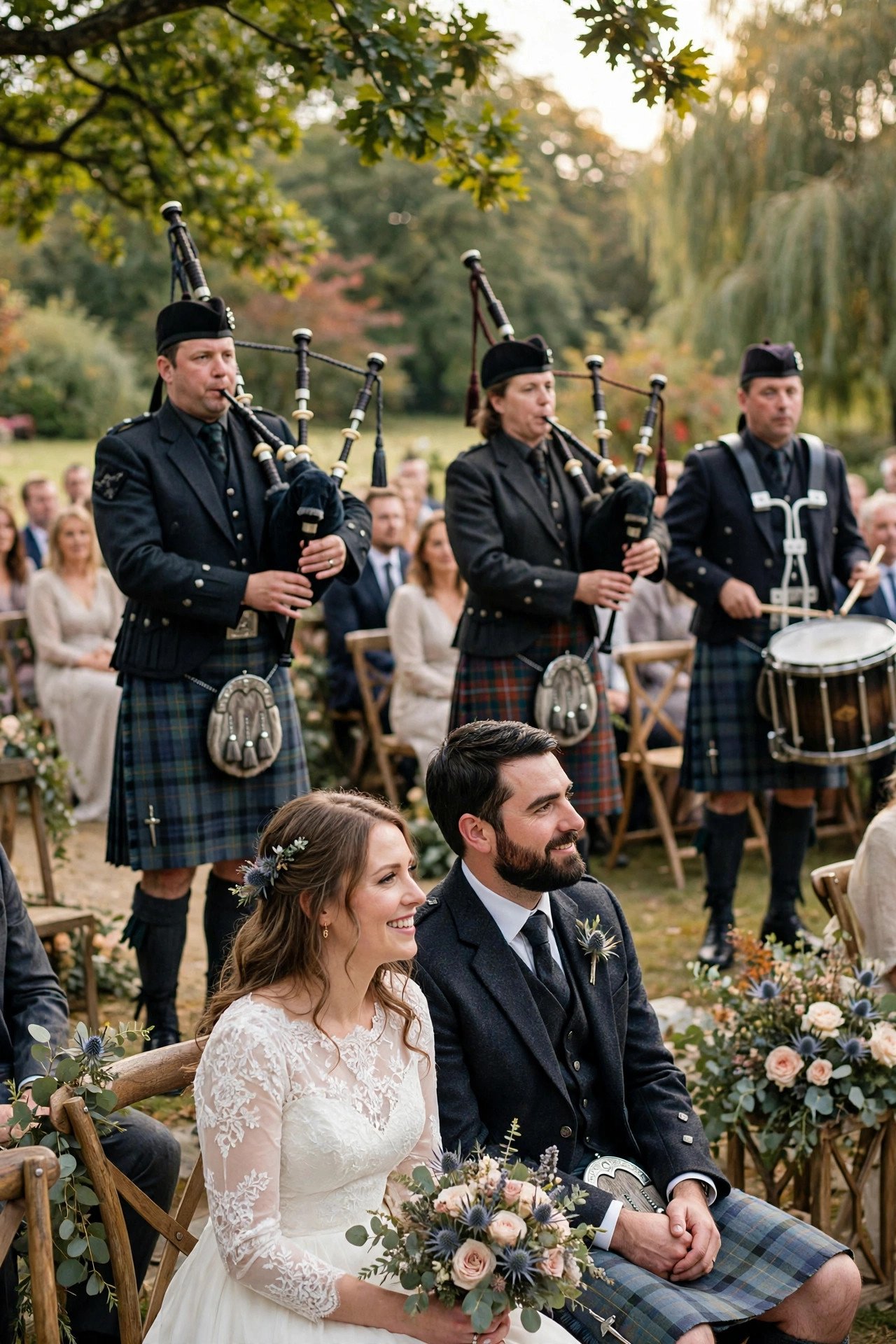
A piper pipes the couple out of the ceremony, into the reception and sometimes to the top table — the Great Highland bagpipe being Scotland’s unmistakable voice, at its best outdoors or in grand spaces where its volume becomes glory rather than overwhelm. Pipers wear full Highland dress and often know the couple’s clan marches. Indoor piping is choreographed carefully — position, duration and the piper’s entrance are planned like a military operation, which the pipes rather suit.
The Luckenbooth Brooch: A Token of Two Hearts
 📌 Save
The luckenbooth brooch — two intertwined hearts topped with a crown, sold from Edinburgh’s locked booths (luckenbooths) from the 1600s — was given as a love and betrothal token, and folklore ties its finest examples to Mary, Queen of Scots. Grooms gift one to brides, brides pin one inside a dress or on the bouquet, and mothers pass them down. It is Scotland’s Claddagh-equivalent: small, silver and saturated with story.
The Wedding Sark: A Shirt Made with Love
 📌 Save
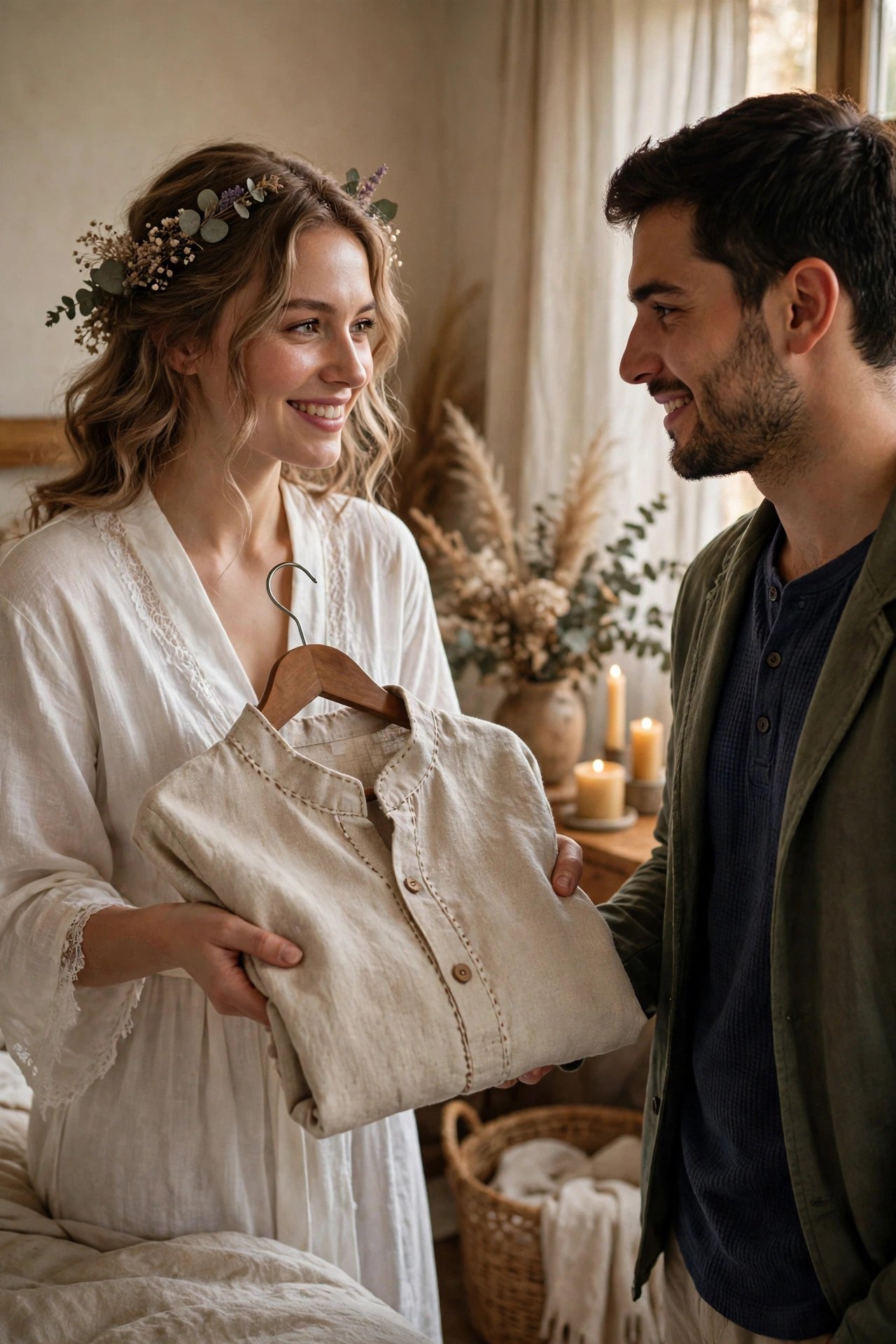
In an old Scottish custom, the bride made her groom a wedding sark — his fine wedding shirt, sewn by her own hands over the engagement — and he in turn provided her wedding dress, an exchange of craft and provision between the couple. Folklore decorated the sark with protective significance, and the making of it was a public proof of the bride’s skill and devotion. Modern couples revive it selectively: a hand-finished shirt, a stitched pocket square, or the groom’s tie sewn by the bride carries the same sentence in shorter form.
Heather: Luck in the Bouquet
 📌 Save
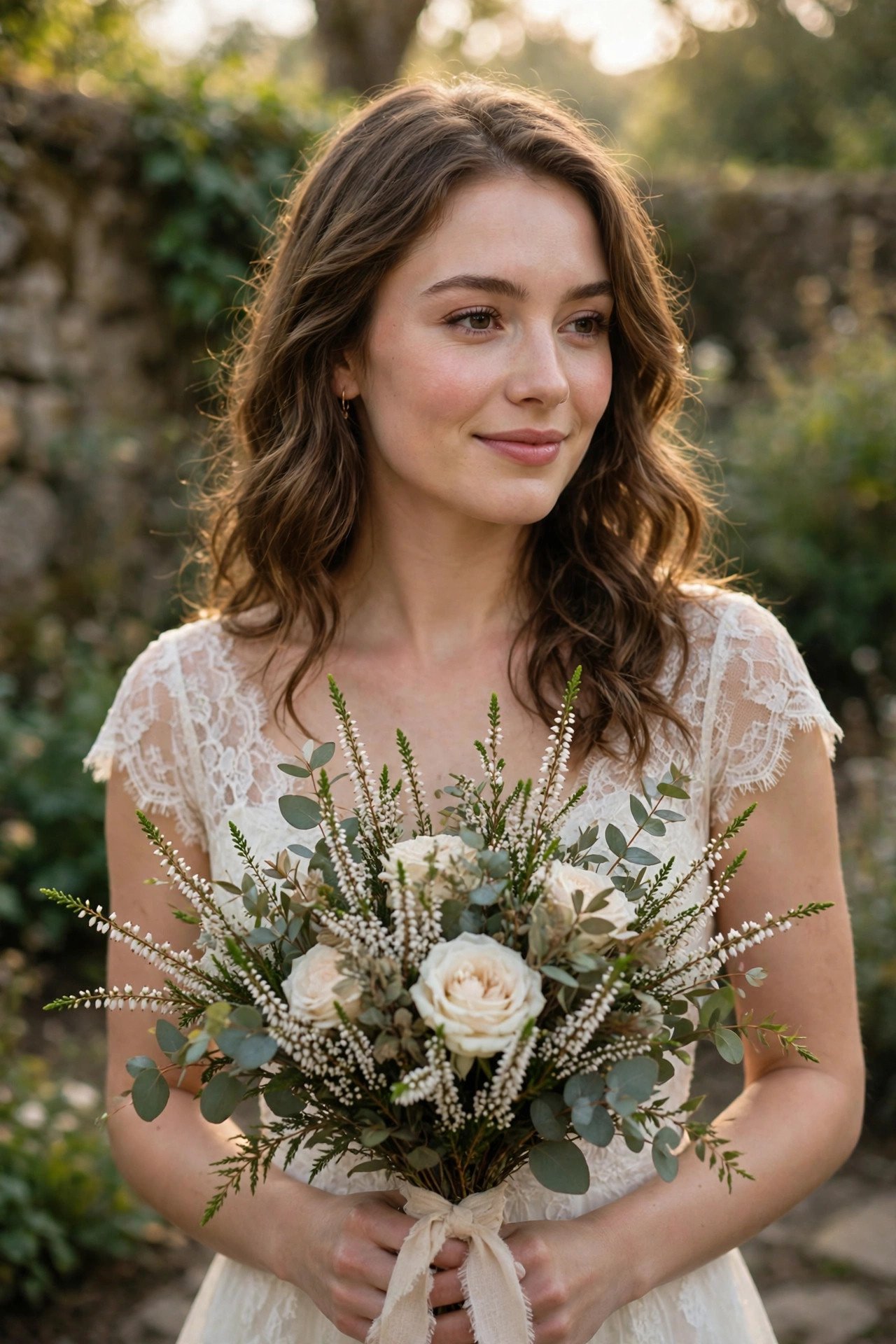
A sprig of heather — white heather especially, for luck — hides in Scottish bouquets and buttonholes, a custom so established that florists add it unasked north of the border. Heather is Scotland’s landscape in miniature: hardy, beautiful in harsh weather and blooming where little else will. Dried heather keeps the sprig permanent, and couples press the wedding sprig into the marriage certificate’s frame or the quaich box.
The Thistle: Scotland’s Emblem at the Table
 📌 Save
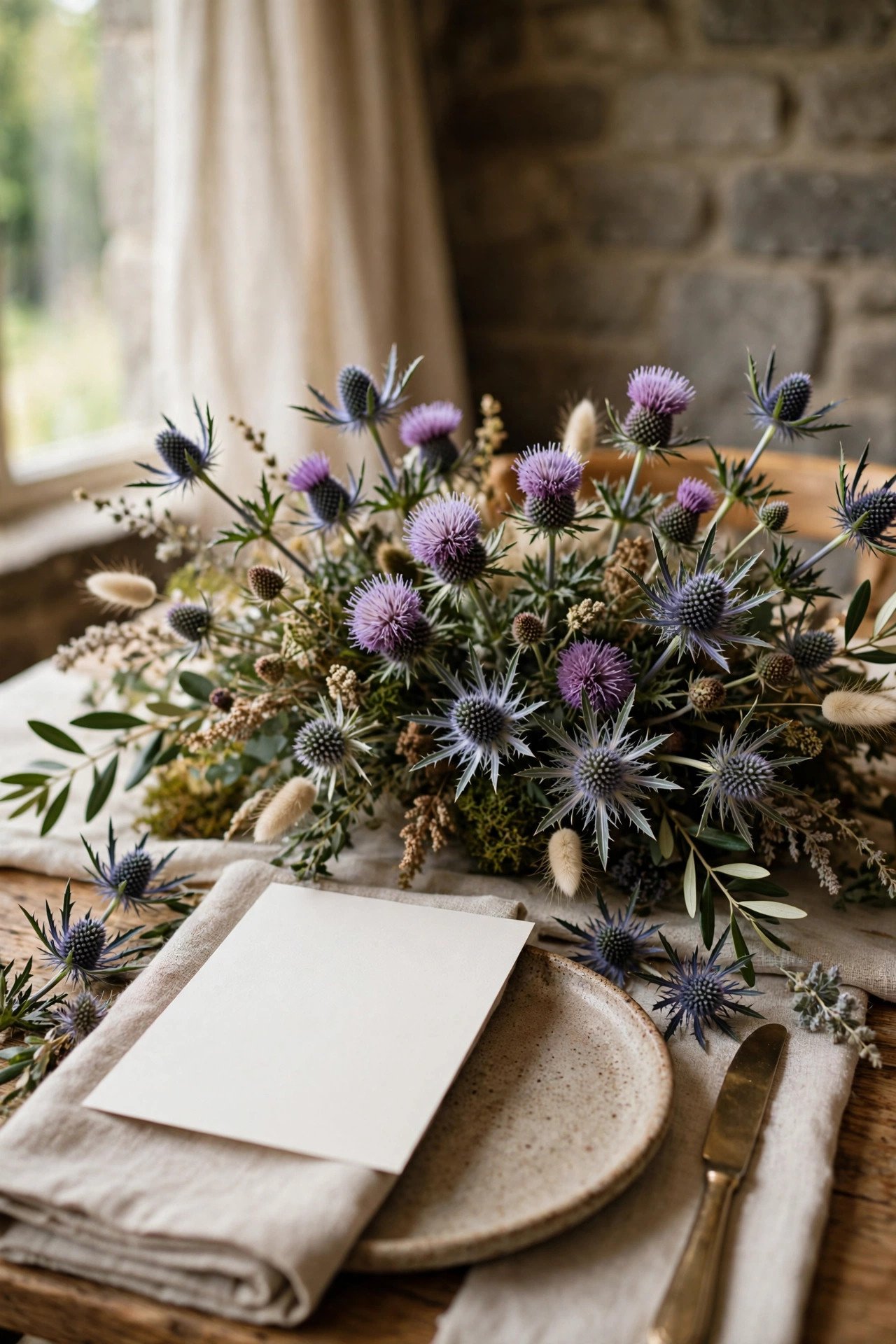
The thistle — Scotland’s prickly national emblem, defended in legend against a barefoot invader — appears at weddings in stationery, cake design, cufflinks and floral arrangements (the ornamental sea holly stands in elegantly where real thistles threaten dresses). It signals Scottish identity more compactly than any flag and pairs with heather in the national palette of purple, green and cream. Guests read it instantly: this wedding is Scottish on purpose.
The Wedding Scramble: Coins for the Children
 📌 Save
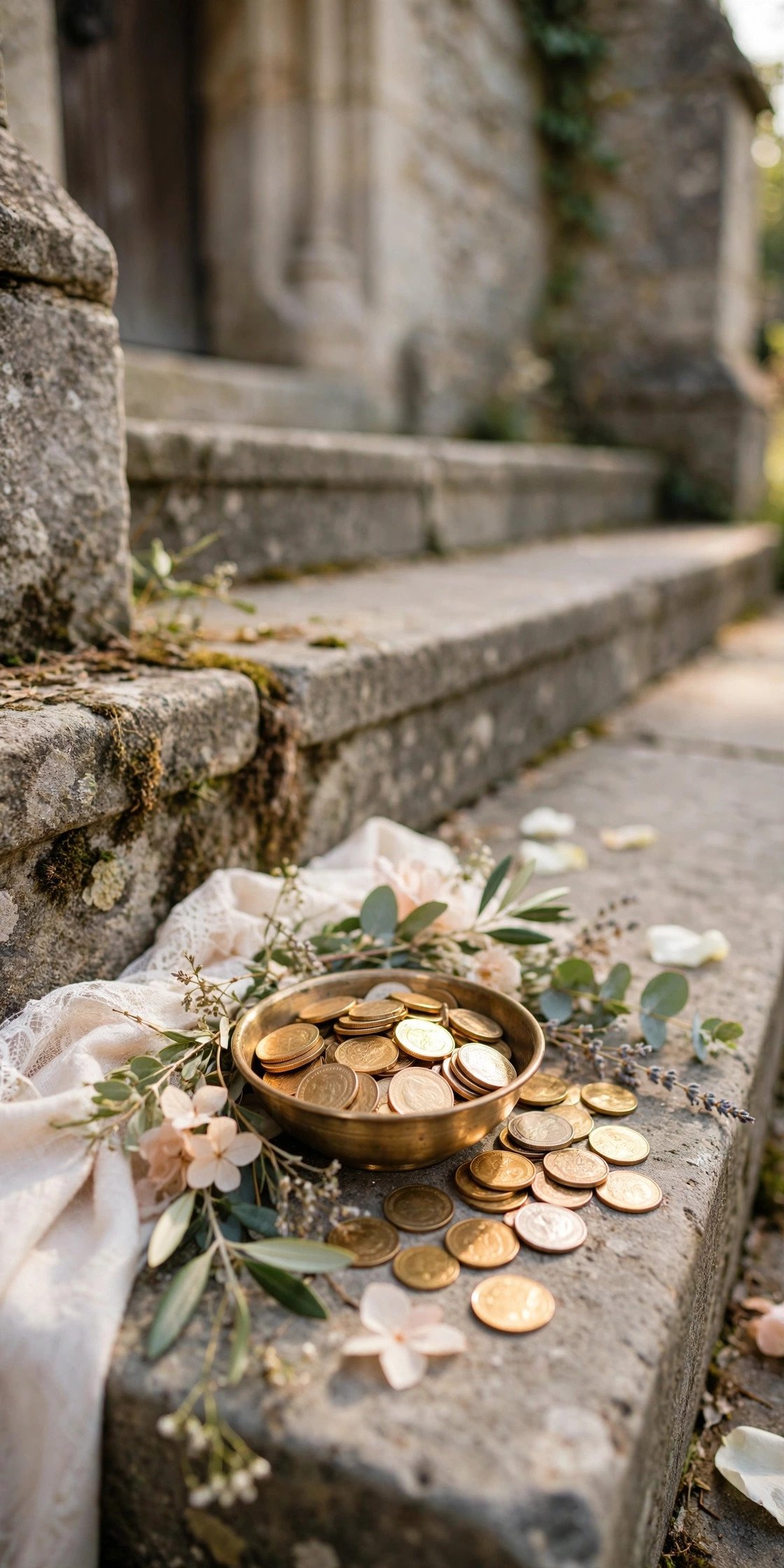
In the wedding scramble, kept in various Scottish communities, the bride’s father (or the couple) throws a handful of coins as the couple leaves the church or arrives at the reception, and the local children scramble joyfully to gather them — luck, quite literally scattered to the next generation. Modern couples adapt with wrapped sweets where coins are impractical, but the principle endures: a wedding’s good fortune is for sharing, loudly, with the smallest guests first.
The Blackening: A Messy, Beloved Ordeal
 📌 Save
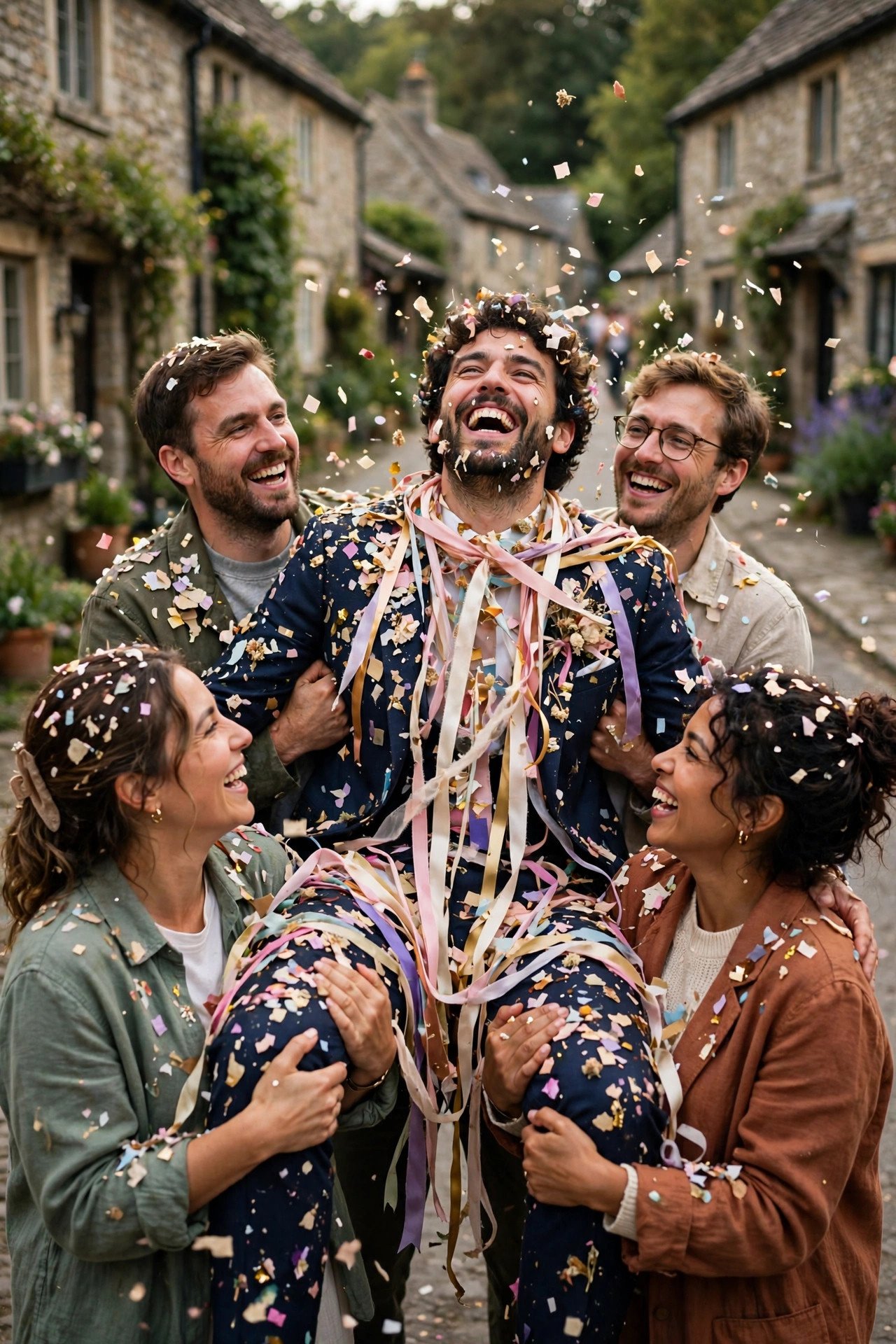
In parts of northern and rural Scotland, the blackening remains the great pre-wedding rite: friends ambush the bride or groom (sometimes both), cover them in a joyful mess of treacle, flour, feathers and worse from buckets prepared in secret, parade them through the village — often on a truck, rung with bells and pots — and the couple endures it as a badge of being loved by their community. It is said to ward off ill luck by exhausting it in advance. Modern blackenings are arranged with consent, a change of clothes and a very thorough shower plan.
The Wedding Breakfast: Haggis, Shortbread and Pride
 📌 Save
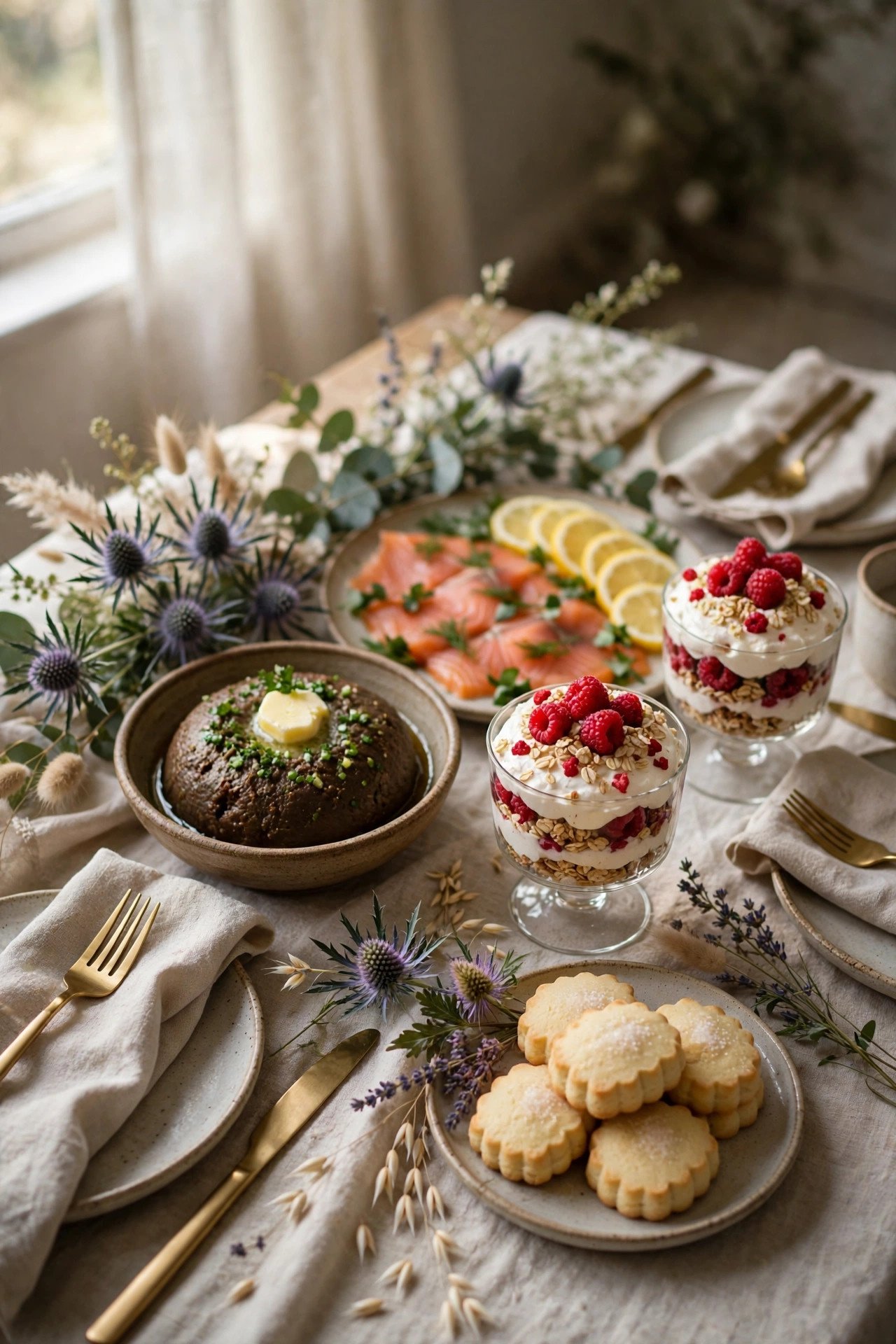
Scottish wedding menus celebrate the larder: Cullen skink or cock-a-leekie soup, salmon from named rivers, Aberdeen Angus beef or venison, a ceremonial haggis piped in at Burns-season weddings, cranachan — raspberries, cream, oats and honey — and shortbread with coffee. The food tells guests the couple’s geography as faithfully as the tartan does. Vegetarian haggis has proudly joined the canon, ensuring nobody’s feast is theoretical.
The Grand March: Opening the Dancing Properly
 📌 Save
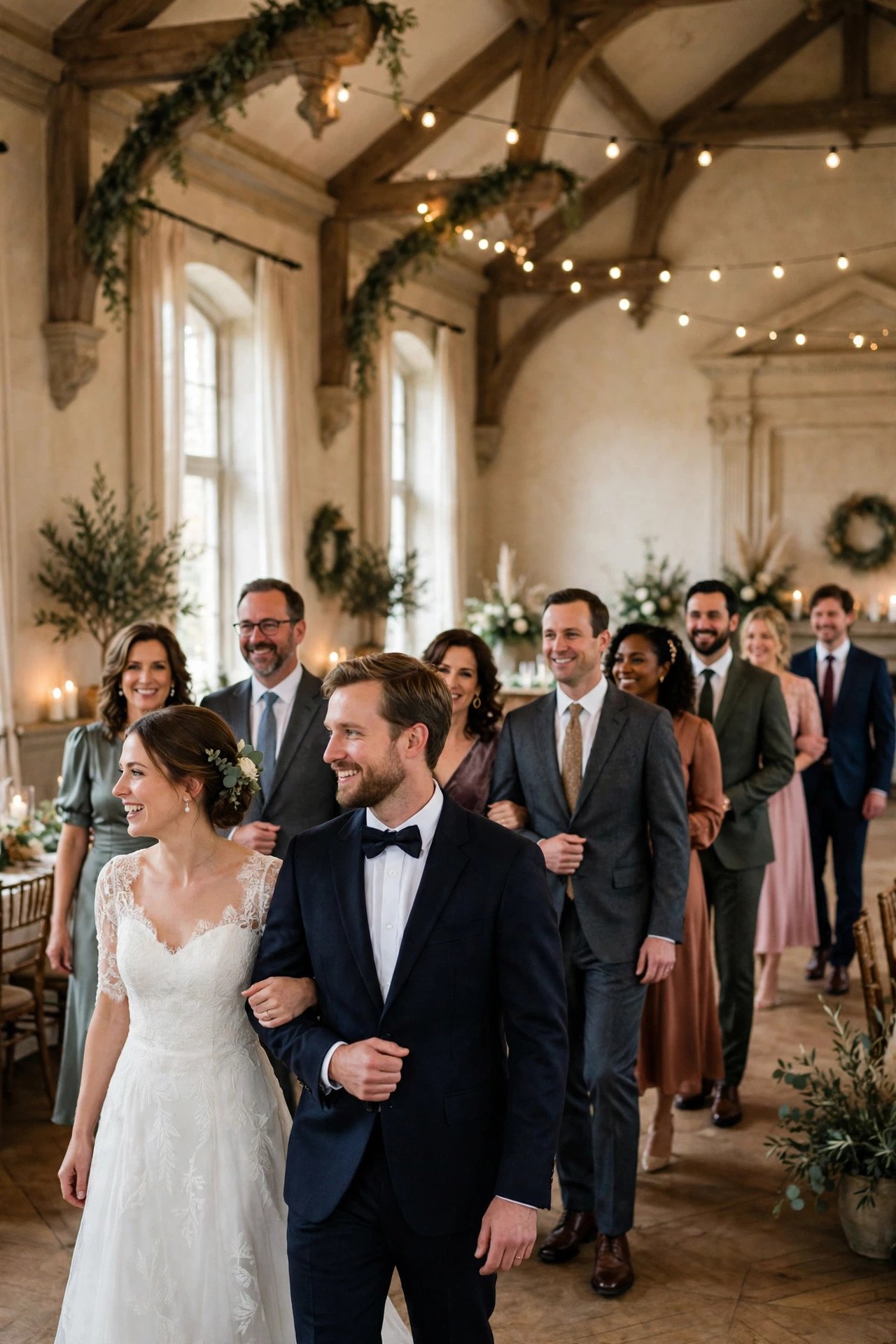
Traditional Scottish receptions may open the evening with a grand march: the couple leads a growing procession of couples — parents, wedding party, then everyone — marching in formation around the hall to the band before breaking into the first ceilidh dance. It assembles the whole room into the celebration in order of honor, and even guests who ‘don’t dance’ discover they can march. Modern receptions keep it as the bridge between dinner and the ceilidh.
Auld Lang Syne: The Circle at Midnight
 📌 Save
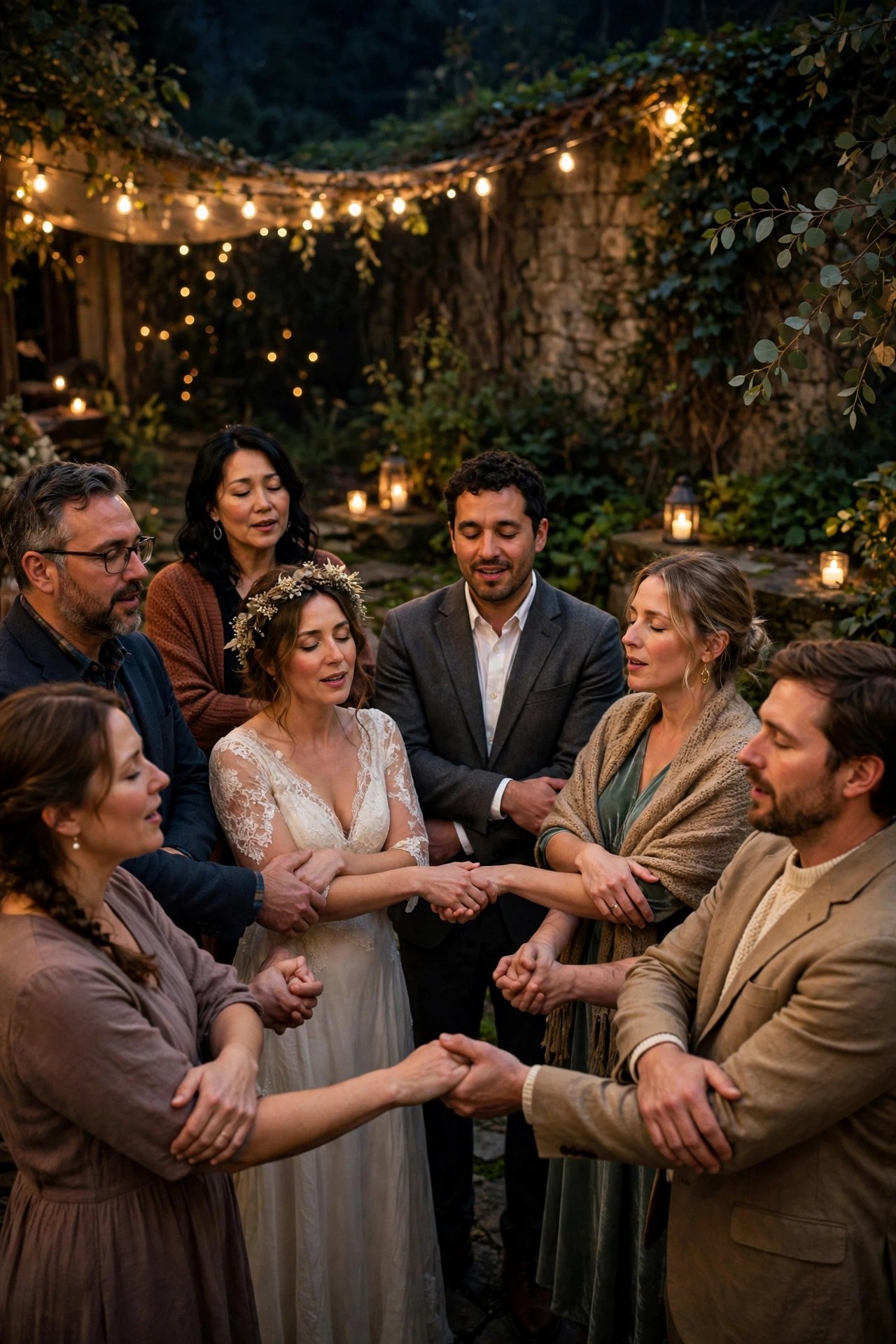
Scottish receptions traditionally close with the whole room in a circle, arms crossed and hands held, singing Auld Lang Syne — Robert Burns’ anthem of old friendship — and surging into the center as the tempo lifts, with the couple honored in the middle for the final verse. It ends the night the way the quaich began it: hands joined, community literal. Diaspora guests worldwide know the tune from New Year; at a Scottish wedding they learn what it is actually for.
Cutting the Cake with Ceremony
 📌 Save
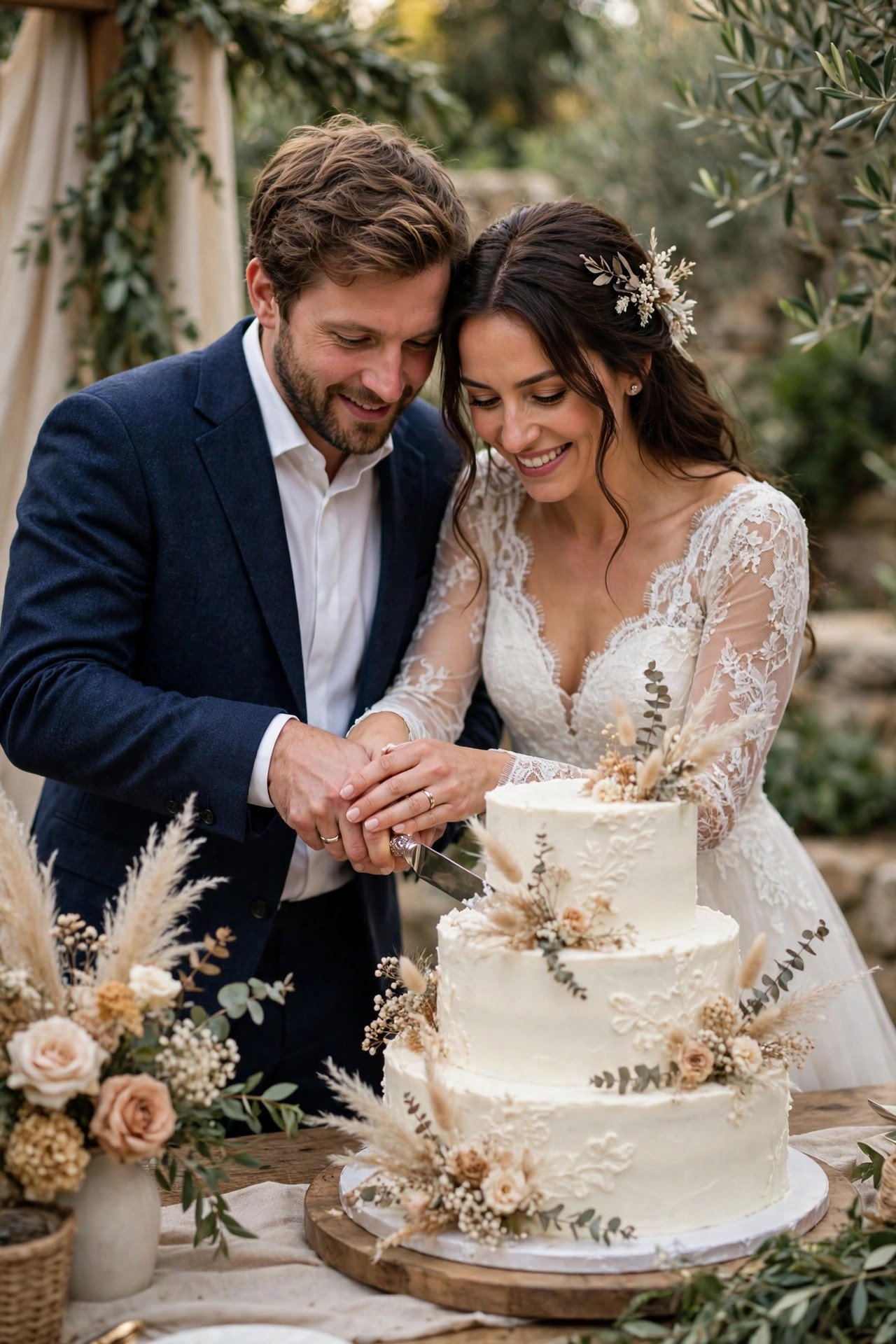
At some Highland weddings the couple cuts the cake with a ceremonial dirk or the groom’s sgian-dubh presented for the occasion — a flourish handled with venue agreement, a cleaned blade and the couple’s hands together on the hilt. Elsewhere a family cake knife does the honors. Scottish cakes themselves split loyalties between rich fruit cake (the traditional keeper, with a tier saved for a christening in old custom) and modern sponges in crowd-pleasing flavors.
A Sixpence in the Shoe, Scottish Style
 📌 Save
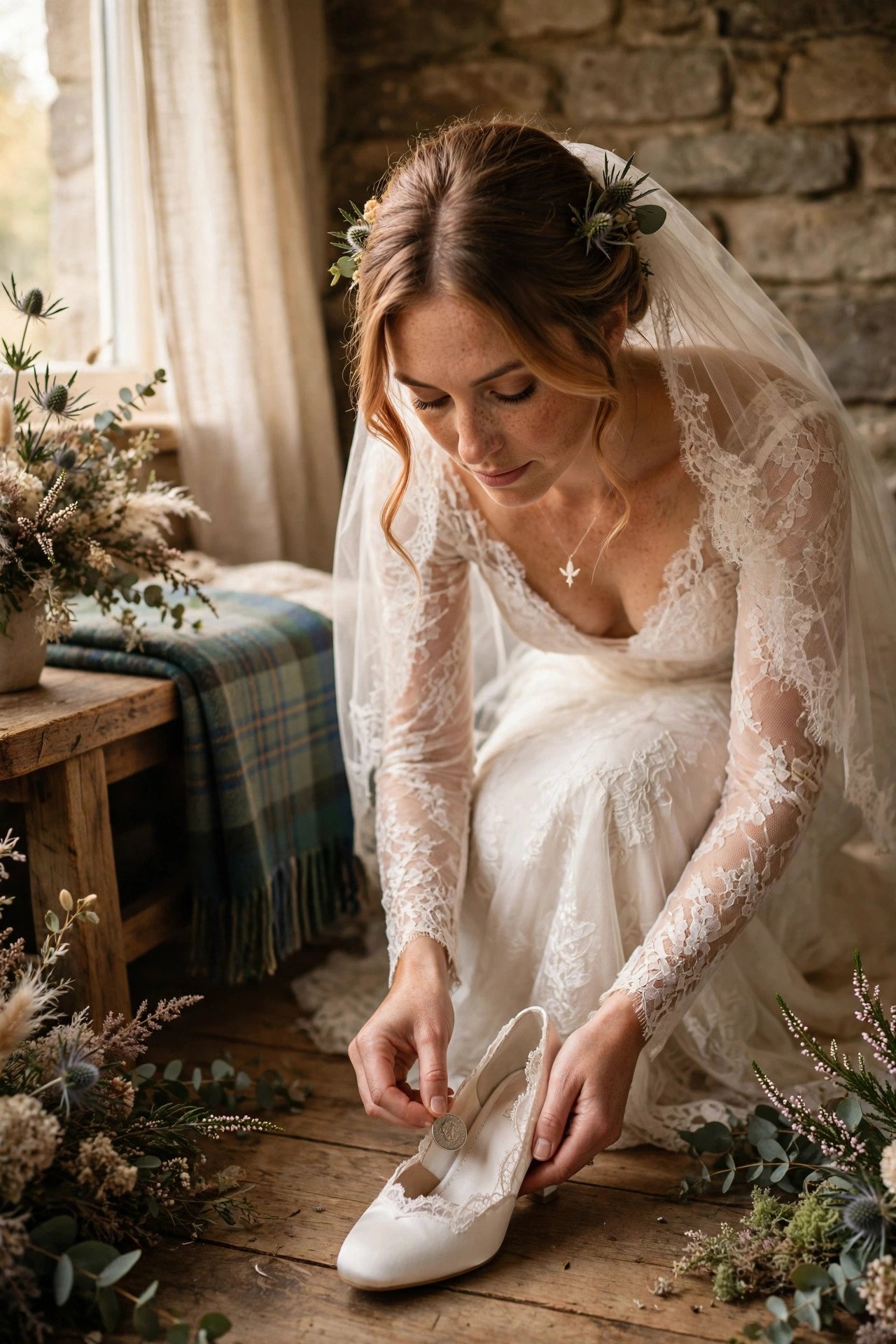
The rhyme’s ‘sixpence in her shoe’ belongs to Britain and Ireland broadly, and Scottish brides keep it as proudly as any — a coin taped or tucked in the left shoe for prosperity, uncomfortable in exact proportion to its symbolism. Modern sixpences are bought as keepsakes, since the coin left circulation decades ago, and many a Scottish grandmother produces a genuine one from a drawer with theatrical timing. It joins the heather and the luckenbooth in the bride’s small museum of luck.
Celtic Knots in Rings and Stationery
 📌 Save
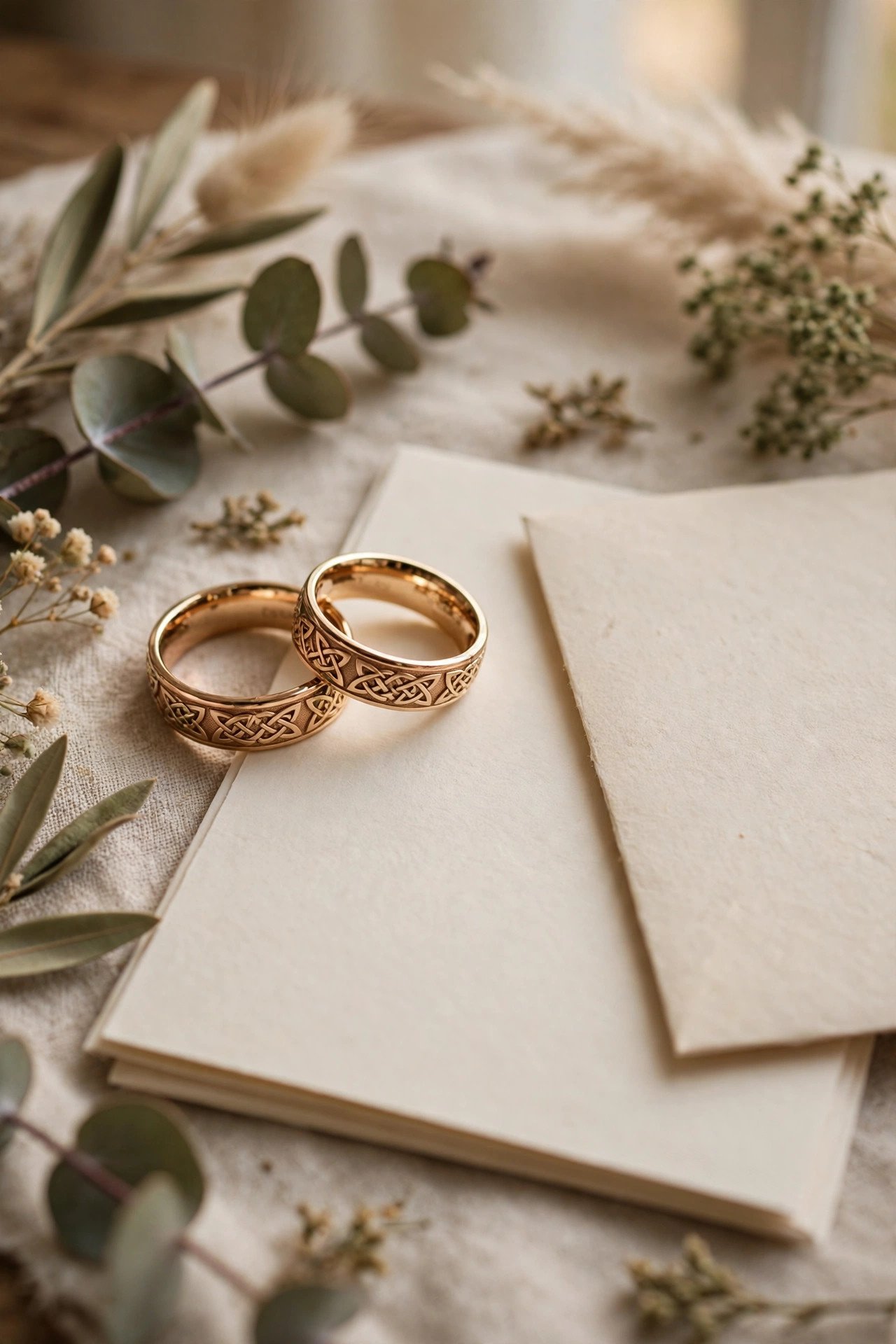
Interlaced Celtic knotwork — endless lines with no beginning or end — decorates Scottish wedding rings, invitations, cake bands and the handfasting cords themselves, symbolizing eternity and lives interwoven. The designs descend from Pictish and early medieval stone carving across Scotland, and contemporary jewelers in Edinburgh and Glasgow work them in modern metals. Couples choose one knot motif and repeat it across the day for a design language with genuine roots.
Humanist Ceremonies: Scotland’s Modern Signature
 📌 Save
Scotland is distinctive for its Humanist ceremonies: celebrants registered to marry couples legally have conducted fully personal, handfasting-friendly weddings across Scotland for two decades, alongside religious and civil options — a framework much of the world still lacks. This is why so many ‘Scottish wedding traditions’ in diaspora weddings (handfasting above all) arrive via celebrant craft: Scotland built the ceremony format that lets ancient symbols carry legal weight. Couples abroad replicate the style with their local celebrants and laws.
Weather, Castles and the Highland Venue Reality
 📌 Save
Scottish venue romance — castles, lochside lawns, Highland lodges — comes with weather that treats the forecast as a rough suggestion. Experienced couples plan the wet version as the real version: marquee heating, shoe choices for grass, a piper who has piped in horizontal rain (they all have), and photography that uses moody skies as the backdrop they are. The diaspora imports the attitude: if the celebration is warm, the weather is a detail.
Evening Guests: The Two-Part Scottish Reception
 📌 Save
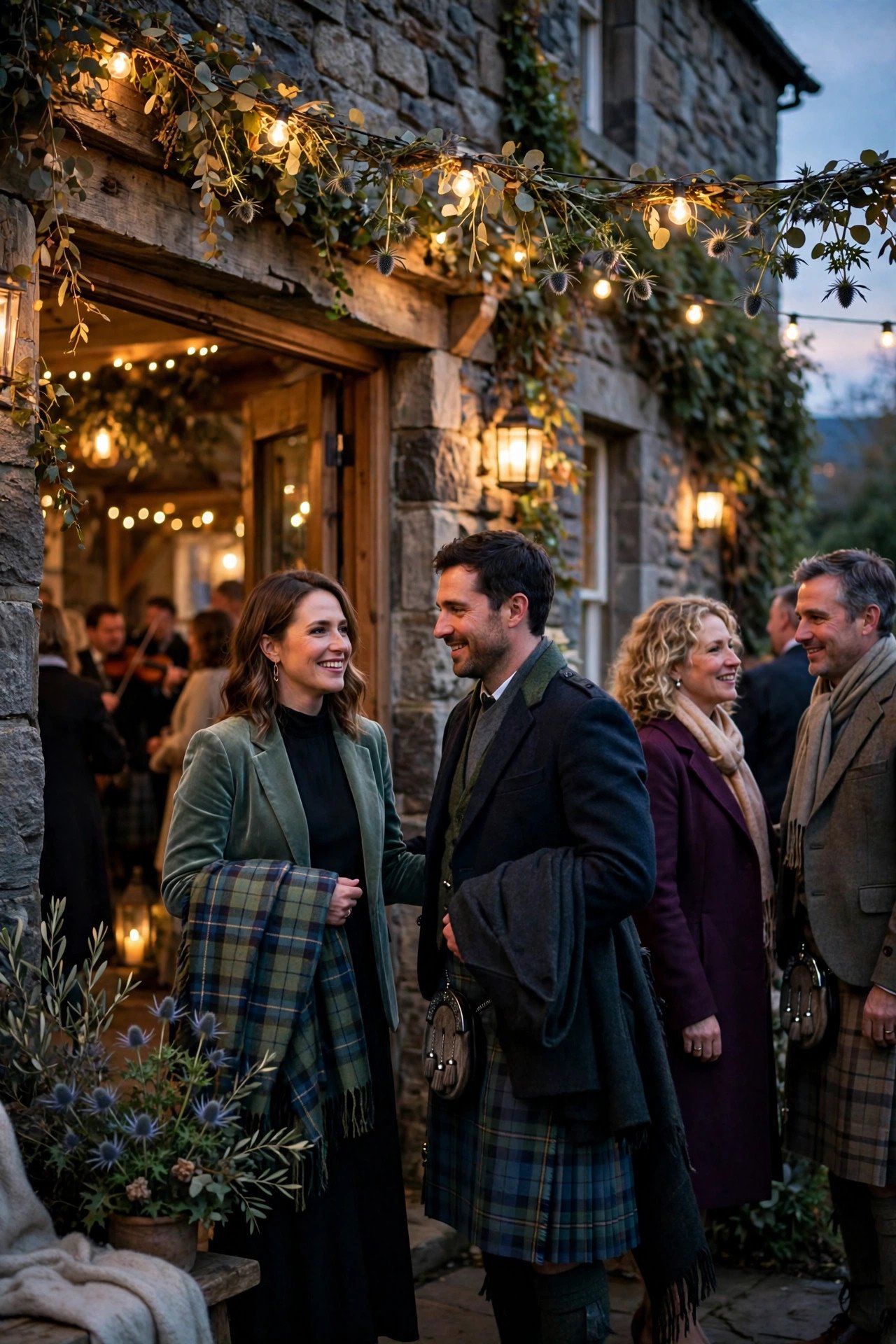
Scottish (and wider British) receptions traditionally run in two waves: day guests for the ceremony and meal, evening guests arriving for the ceilidh and buffet — rolls and bacon or sausage in Scotland’s beloved evening rolls among them. Evening invitations are a compliment, not a consolation, and the ceilidh is timed to ignite just as the second wave lands. Couples abroad adopting the format find it solves capacity and budget with genuine tradition rather than apology.
What Guests Should Wear (and the Kilt Question)
 📌 Save
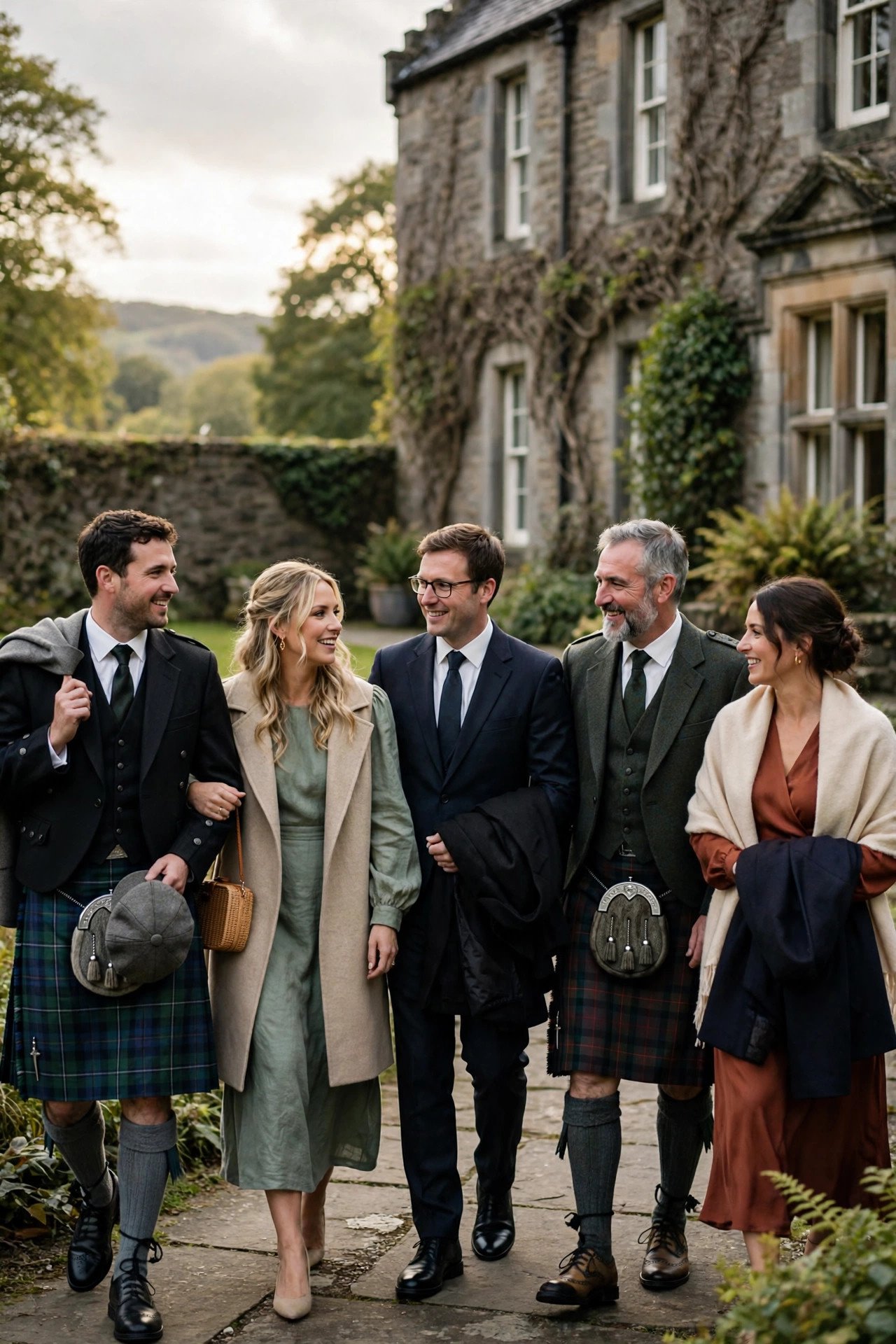
Guests ask two questions: may I wear a kilt if I am not Scottish, and must I? The answers, from Scottish hosts themselves: yes — kilt hire shops dress wedding guests of every origin daily, choose a universal or district tartan or the couple’s suggested one, and wear it correctly with the full kit — and no, a smart suit is always correct too. Women wear dresses or tartan sashes; nobody wears white; everybody brings layers and dancing shoes for the ceilidh, which does not recognize spectators.
Blending Scottish Traditions with Another Culture
 📌 Save
Scottish fusion weddings have a ready-made emblem: handfasting with two cloths — tartan from one family, a textile from the other — bound in a single knot. Quaichs are exchanged with in-laws, ceilidh callers teach beside the other culture’s dances, and tartan ribbons appear on bouquets whose flowers honor both homes. The blend succeeds because Scottish customs are participatory rather than precious: a ceilidh absorbs any family’s dancers, and a quaich welcomes any guest.
Scotland in the Diaspora: Caledonian Societies and Games
 📌 Save
From Nova Scotia (‘New Scotland’) to Otago, Scottish diaspora communities keep wedding culture through Caledonian societies, St. Andrew’s balls, Highland games circuits and pipe bands in every major city — which is why a couple in Toronto or Chicago can hire a piper, a ceilidh band and kilt hire within a week of trying. Diaspora Scottish weddings often out-Scottish the homeland in tartan enthusiasm, a compliment the homeland returns by adopting the diaspora’s registered wedding tartans right back.
Scottish Wedding Traditions FAQs
What is a quaich and what goes in it?+
A quaich is a traditional Scottish two-handled cup symbolizing welcome and trust. At weddings the couple shares a drink from it after the ceremony or at the top table. Traditionally it held whisky; today couples commonly fill it with a non-alcoholic drink of their choice such as sparkling cider or a favorite cordial — the shared cup and its two handles carry the meaning.
Can guests who are not Scottish wear a kilt?+
Yes — Scottish hosts are typically delighted. Kilt hire shops fit wedding guests of every background daily. Choose a universal, district or couple-suggested tartan rather than claiming a clan tartan that is not yours, wear the full outfit correctly (the hire shop will dress you), and you will be complimented all night. A smart suit is equally correct if you prefer.
What happens at a ceilidh?+
A ceilidh band’s caller teaches traditional group dances — like the Gay Gordons and Strip the Willow — in a few spoken steps before each one, then the band plays and everyone dances. No experience is needed or expected; dances are designed for beginners, partners rotate, and the chaos is the charm. Bring or change into flat shoes.
What is handfasting?+
Handfasting binds the couple’s hands with cloth or cords — often tartan from each family — while vows are exchanged. It is a centuries-old Scottish betrothal custom and today a central ritual in celebrant-led and Humanist ceremonies, which in Scotland can be fully legal. The knotted cloth is kept as an heirloom.
What is a luckenbooth brooch?+
A luckenbooth is a Scottish love token: a brooch of two intertwined hearts surmounted by a crown, sold from Edinburgh’s luckenbooths since the 1600s and associated in folklore with Mary, Queen of Scots. It is given between sweethearts and spouses, pinned on bouquets or dresses, and passed down through families.
Key Takeaways
- The quaich’s two handles teach the whole tradition: welcome and trust, shared — fill it as you choose.
- Kilt etiquette is welcoming: hire the full kit, claim clan tartan honestly, dance regardless.
- The ceilidh is non-negotiable joy — a caller turns two families into one dance floor in an hour.
- Handfasting with two family cloths is fusion’s perfect emblem, and Scotland made it legally mainstream.
- Guests: layers, dancing shoes and a voice ready for Auld Lang Syne at midnight.
Final Thoughts
Scotland marries the way it hosts: a cup passed with both hands, a knot tied from two families’ cloth, a dance nobody is allowed to sit out and a song about old friends sung in a circle at midnight. Keep the quaich engraved, the caller booked and the tartan honest, and your wedding — in a Highland castle or a Toronto hall — will carry the country’s warmest export: the feeling that everyone present is, by the end, kin.