Renting a Wedding Bus (2027)
By zainzari • Published October 23, 2026 • Updated October 23, 2026
 📌 Save
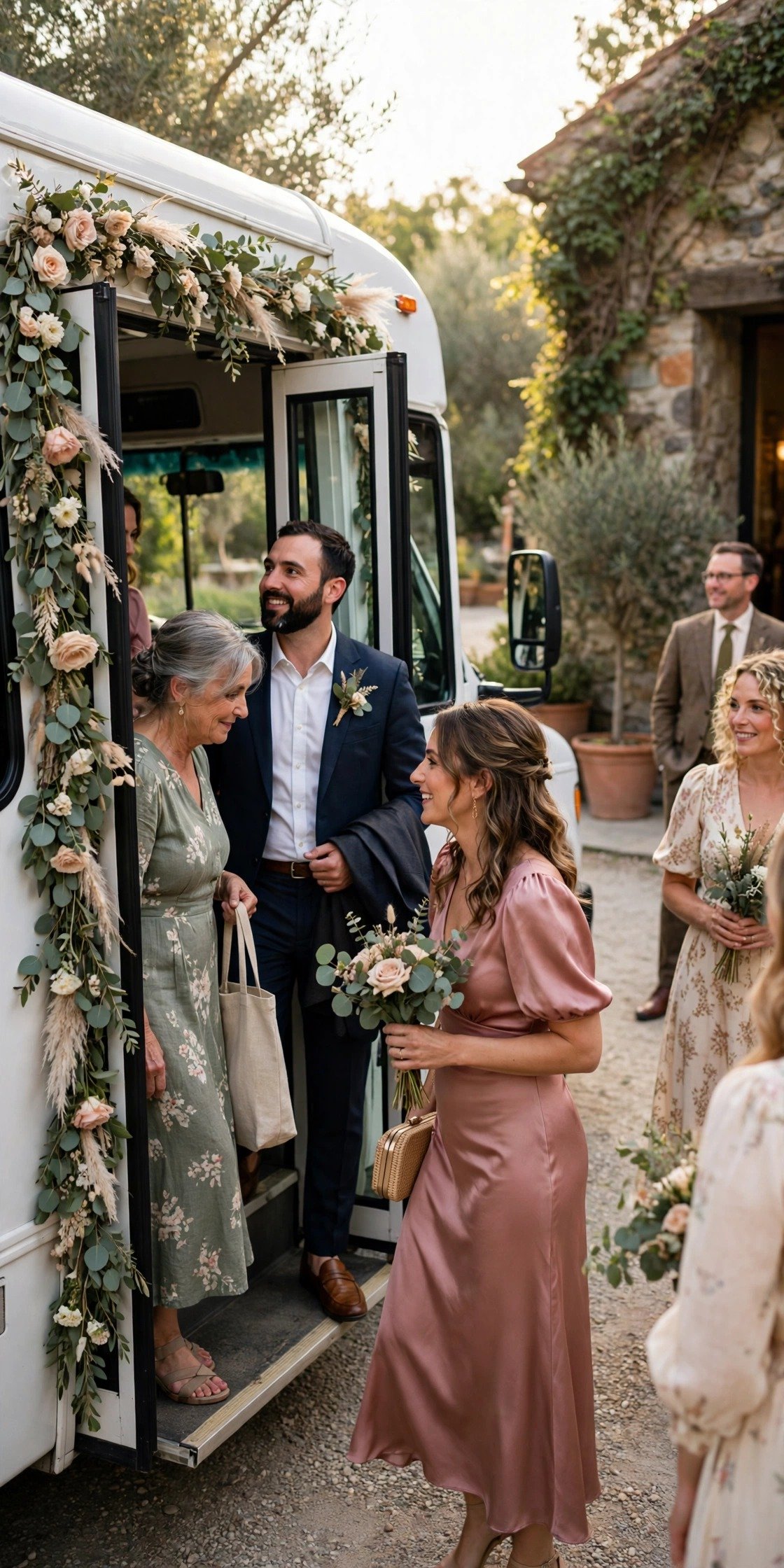
Renting a wedding bus means hiring a charter bus or shuttle to run planned loops between your hotels, ceremony, reception, and back again, so no guest has to navigate, park, or drive after a long celebration. Book 9 to 12 months ahead for peak 2027 dates, size the bus to your largest single trip, and publish the schedule where guests will actually see it.
A wedding bus quietly solves three problems at once: out-of-town guests who do not know the area, venues with limited parking, and everyone getting home safely at the end of the night. It also turns travel time into part of the party — guests arrive together, chat on the ride, and walk in already in a celebratory mood.
These 25 steps walk you through the whole rental, from the first headcount to the final headcount call the week of the wedding. Follow them in order and your wedding bus rental becomes the least stressful line item on your planning list.
At a Glance: Bus Sizes, Routes & Booking Steps
| # | Step | Focus | Best For |
|---|---|---|---|
| 1 | Start With an Honest Guest Headcount | Headcount first | Planning basics |
| 2 | Choose the Right Bus Size for Your Biggest Trip | Size it right | Capacity planning |
| 3 | Compare Mini Buses, Coaches, and Trolleys | Compare styles | Style match |
| 4 | Book 9 to 12 Months Ahead for Peak Dates | Book early | Peak season |
| 5 | Map Every Pickup and Drop-Off Point | Route mapping | Exact addresses |
| 6 | Build Buffer Time Into Every Leg | Buffer time | Traffic proof |
| 7 | Run a Loop Route Between Hotels and Venue | Loop service | Hotel stops |
| 8 | Confirm Accessibility for Every Guest | Accessibility | Inclusive planning |
| 9 | Ask About Restrooms on Longer Routes | Onboard comfort | Long rides |
| 10 | Check Heating and Air Conditioning in Person | Climate check | All seasons |
Start with steps 1 to 3 to lock your size and vehicle type, then use the middle steps to build the route guests will actually ride. Full detail for all 25 steps is below.
Start With an Honest Guest Headcount
 📌 Save
Count the guests who will genuinely ride, not your total invitation list. Out-of-town guests, older relatives, and anyone staying at your hotel blocks are the most likely riders, while locals with their own cars often drive themselves.
Choose the Right Bus Size for Your Biggest Trip
 📌 Save
Your bus must fit the single largest group that will ride at the same time, which is usually the trip from the ceremony to the reception. A 24-passenger mini bus suits intimate weddings, while full coaches carry 50 or more for large guest lists.
Compare Mini Buses, Coaches, and Trolleys
 📌 Save
Mini buses are nimble on narrow lanes and kind to small budgets. Full coaches add reclining seats, big windows, and luggage space, while a trolley brings open-air charm and doubles as a photo backdrop at the venue door.
Book 9 to 12 Months Ahead for Peak Dates
 📌 Save
Saturdays in May, June, September, and October book out fast in most US, UK, and Canadian cities, and prom and graduation season competes for the same fleets in spring. Reserving early gets you the vehicle style you want instead of whatever is left.
Map Every Pickup and Drop-Off Point
 📌 Save
Write down the street address and the exact door or bay for every stop: hotel entrances, the ceremony venue, and the reception. Drivers cannot guess which hotel entrance your guests are standing at, and a wrong-door stop can cost you ten minutes per loop.
Build Buffer Time Into Every Leg
 📌 Save
Traffic, a slow elevator at the hotel, and one guest running back for a forgotten gift will eat your schedule. Add ten to fifteen minutes of cushion to each leg so a small delay never pushes the ceremony start or the reception entrance.
Run a Loop Route Between Hotels and Venue
 📌 Save
A looping shuttle that circles between two or three hotels and the ceremony gives guests choice instead of one rigid departure. Two or three pre-ceremony loops and continuous returns after dinner mean nobody waits an hour — or feels trapped until midnight.
Confirm Accessibility for Every Guest
 📌 Save
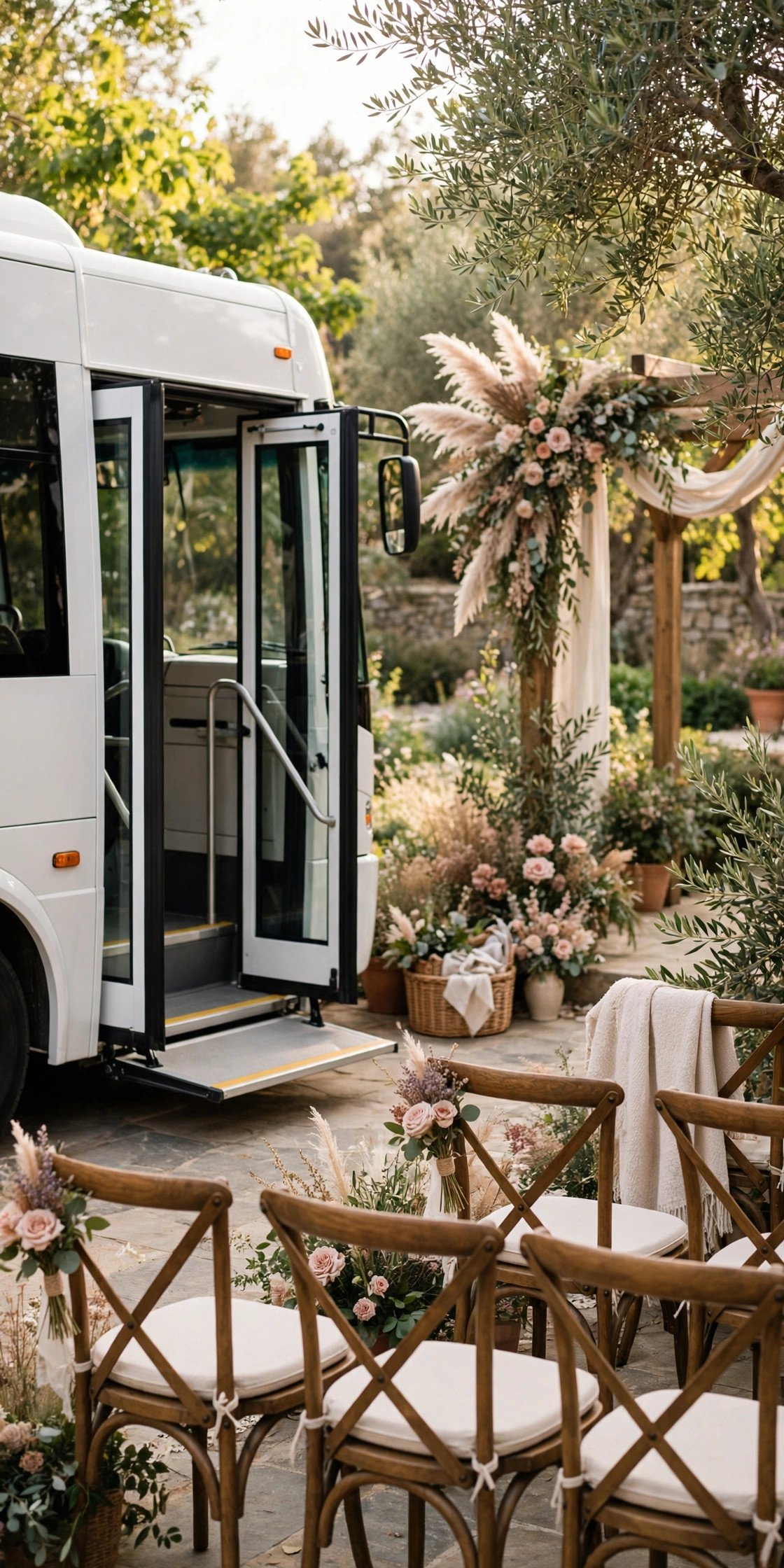
Ask directly whether the bus has a lift or low step, priority seating near the door, and space for a folded wheelchair or walker. Grandparents who would never complain out loud are the guests most likely to struggle with a high coach step.
Ask About Restrooms on Longer Routes
 📌 Save
If any leg runs longer than about 45 minutes, a coach with an onboard restroom saves an unscheduled stop with 50 guests aboard. For short city hops it hardly matters, but rural venues an hour from the hotel are a different story.
Check Heating and Air Conditioning in Person
 📌 Save
A bus that sits in the sun between trips becomes an oven, and a dress shirt under a suit jacket shows it fast. When you visit the company, step aboard a similar vehicle and feel the airflow at the back seats, where cooling is always weakest.
Plan One Scenic Photo Stop on the Route
 📌 Save
If your route passes a skyline view, a covered bridge, or the venue’s prettiest gate, schedule a five-minute stop for a wedding-party photo with the bus. Drivers know the safe pull-off points, and the shot is always a favorite.
Add Clear Signage So Guests Board Confidently
 📌 Save
A simple sign in the windshield with your names and “Wedding Shuttle” ends the hesitation every guest feels at a hotel curb. If two weddings share a hotel, signage is the difference between your guests and a stranger’s reception.
Publish the Schedule on Your Wedding Website
 📌 Save
Put departure times, pickup points, and the last-bus time on your wedding website and in the welcome bag note. Guests check their phones, not the invitation insert they left at home, so the website is where the schedule earns its keep.
Text Guests a Pickup Reminder That Morning
 📌 Save
A single group text or a note through your wedding app on the morning of the wedding lifts ridership more than any other step. Keep it short: pickup spot, three departure times, and the last return of the night.
Stock the Bus With Water and Light Snacks
 📌 Save
A cooler of bottled water and a basket of granola bars or mints makes a 40-minute ride feel like hospitality instead of logistics. It matters most on the return trips, when guests have danced for hours and dinner feels long ago.
Set a Family-Friendly Playlist for the Ride
 📌 Save
Send the driver a clean, all-ages playlist or pick a radio-friendly station for the ride over. Upbeat classics keep energy high on the way in, and something mellow suits the sleepy final loop home.
Assign a Boarding Helper at Each Stop
 📌 Save
A cousin, usher, or coordinator stationed at the main hotel stop with the guest list turns boarding into a two-minute job. They answer the “is this our bus?” question, count heads, and wave the driver off on time.
Ask the Driver to Drive the Route in Advance
 📌 Save
Good companies send the driver over the route beforehand, checking turnarounds, low bridges, and where a long vehicle can actually stop. A coach that cannot turn at the ceremony lane needs a different plan, and you want that discovered on Tuesday, not Saturday.
Confirm Overtime Rates Before You Need Them
 📌 Save
Receptions run long, and the last thing you want is the bus leaving mid-party or a mystery charge afterward. Get the per-hour overtime rate and the driver’s hard end-of-shift limit in writing before you sign.
Plan the Final Departure So Nobody Is Stranded
 📌 Save
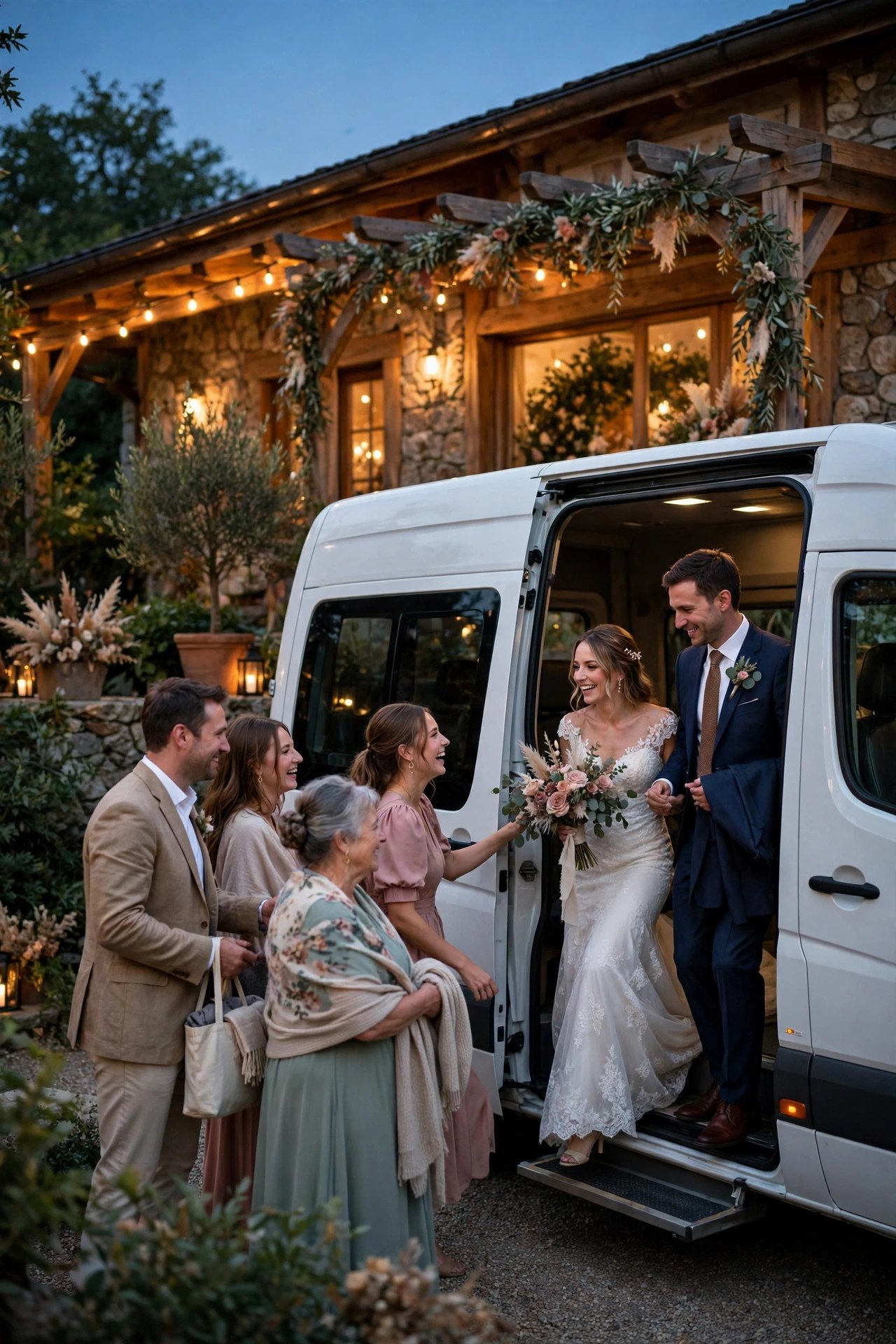
The last departure deserves a DJ announcement 15 minutes before it leaves and a helper sweeping the venue for stragglers. Set the time at least 20 minutes after the reception ends so the farewell moment is not rushed.
Coordinate Staging and Parking at the Venue
 📌 Save
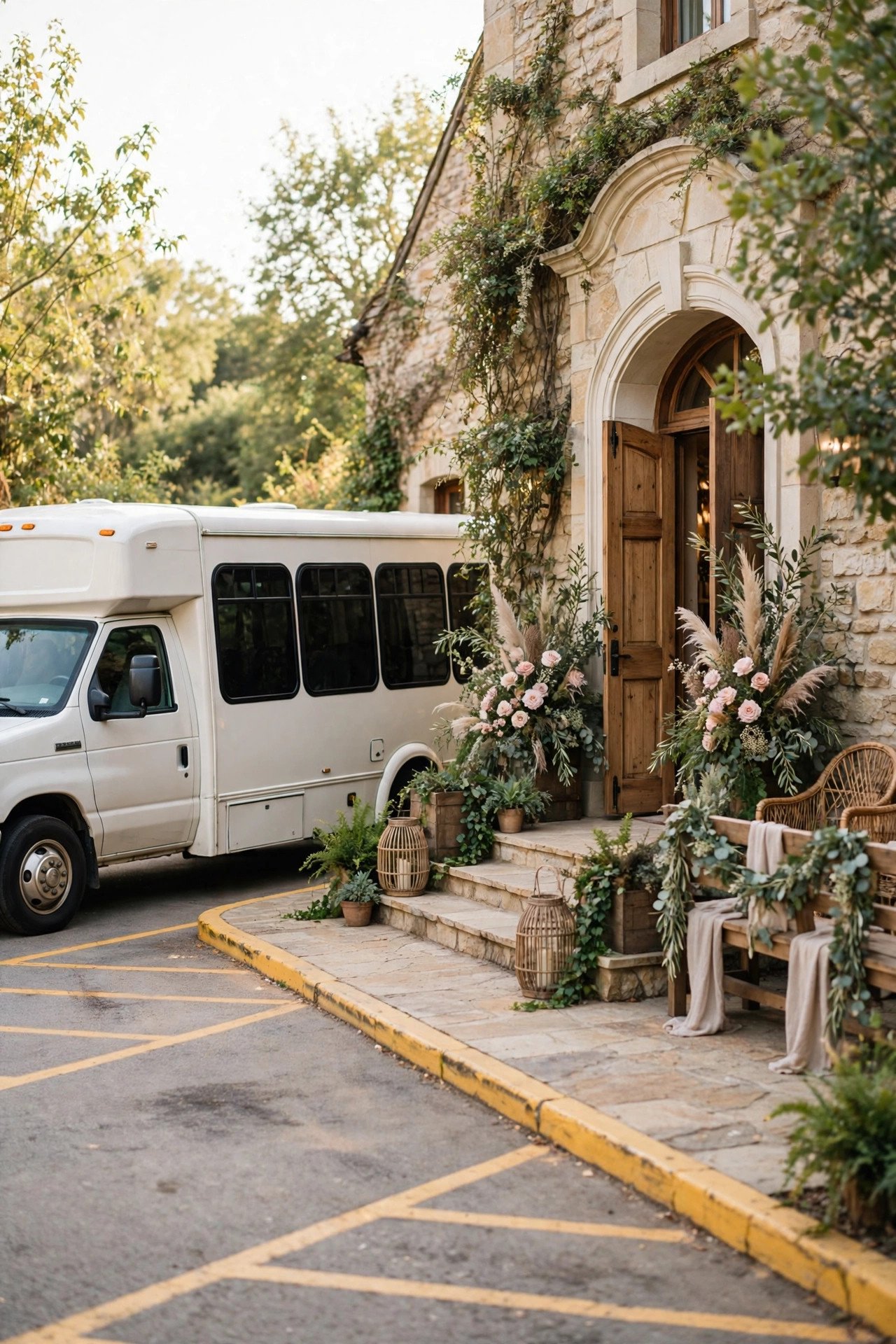
Ask your venue where the bus may idle between loops — some properties ban engines running near the ceremony lawn, and others reserve a loading bay. A staged bus in the wrong spot blocks your photographer, your getaway car, or the fire lane.
Give the Driver a Printed Passenger Manifest
 📌 Save
A printed list of expected riders per stop, with the key phone numbers, lets the driver load fast and spot who is missing. Phones die and signals fail at rural venues; paper always works.
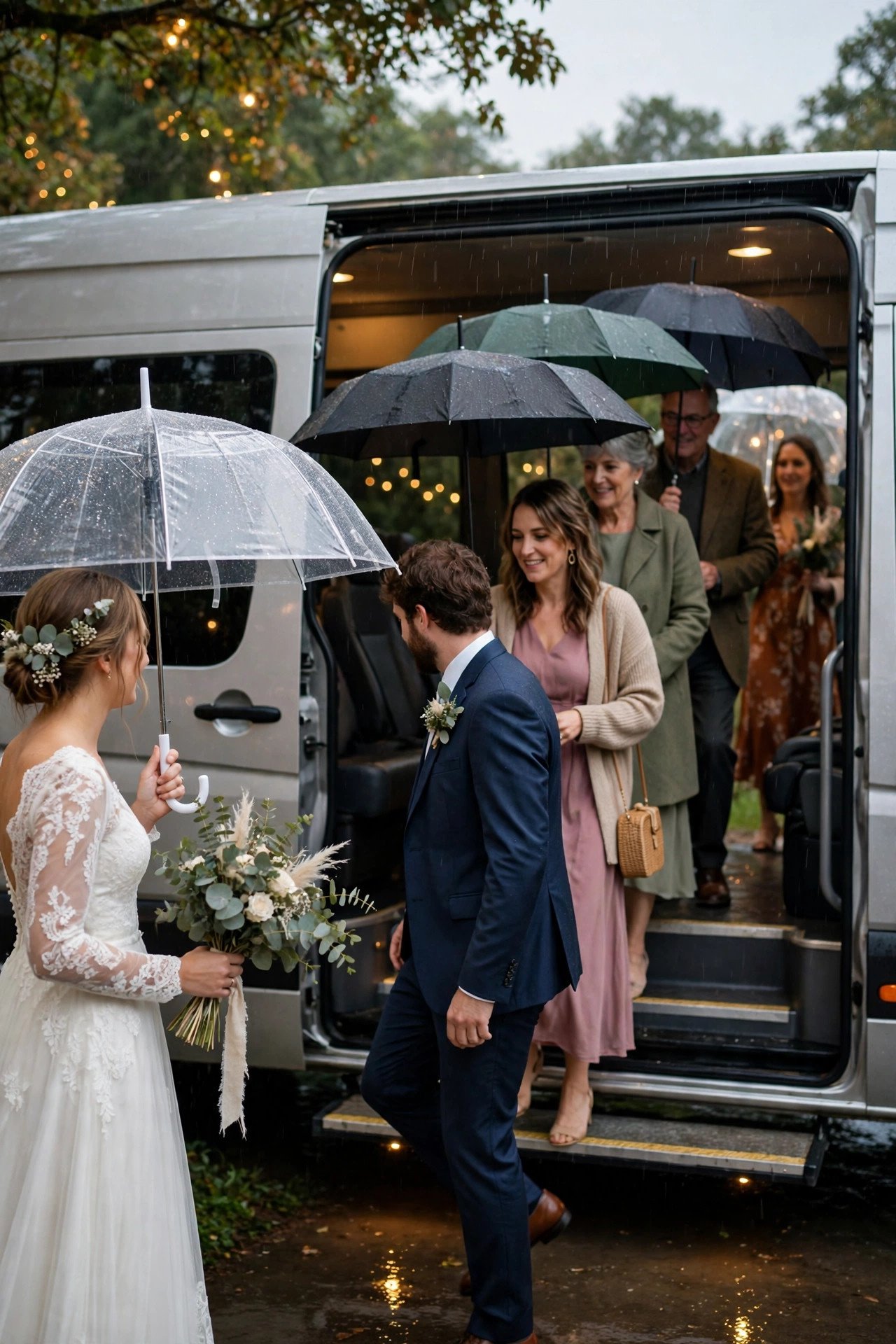
Build a Weather Backup Into the Plan
 📌 Save
Rain changes everything: boarding slows, dresses need shelter, and country lanes get slick. Agree in advance that the bus can pull closer to doors in bad weather and that loops start ten minutes earlier if a storm is forecast.
Read the Cancellation and Swap Terms Carefully
 📌 Save
Check the deposit, the cancellation window, and the clause about vehicle substitution if your bus breaks down. A reputable company guarantees an equal-or-better replacement; the contract should say so in plain words.
Make the Final Headcount Call the Week Of
 📌 Save
Three to five days out, call the company and confirm every detail out loud: vehicle, capacity, first pickup, loop times, last departure, and the driver’s number. Fleets get reassigned and notes get lost; the call is your insurance.
Renting a Wedding Bus FAQs
How far in advance should we book a wedding bus rental?+
For peak Saturdays in spring and fall, book 9 to 12 months ahead. Smaller cities and off-season dates often have availability at 4 to 6 months, but the most popular vehicle styles at a wedding bus rental company are reserved first.
What size bus do most weddings need?+
Most weddings ride comfortably on a 24 to 35-passenger mini bus running loops. Large weddings with everyone riding at once should size a full coach to the biggest single trip, usually ceremony to reception.
How many trips will the bus make?+
Plan two or three loops to the ceremony, continuous loops during the first reception hour for anyone arriving separately, and returns every 30 to 45 minutes after dinner, ending with a clearly announced last departure.
What does a wedding bus rental usually cost?+
Prices vary by city and hours, but many couples budget a few hundred to around fifteen hundred dollars for an evening of shuttle service. Minimum-hour rules, distance, and vehicle size move the number most — get the full quote in writing.
Should we tip the bus driver?+
A gratuity is customary when the driver is not already covered by a service charge in the contract. Many couples give a general range of about 15 to 20 percent of the rental, or a flat thank-you amount handed over by the coordinator at the last departure.
Key Takeaways
- Size the bus to your largest single trip, and leave a few spare seats.
- Book 9 to 12 months out for peak 2027 Saturdays.
- Publish pickup times on your website and text a reminder that morning.
- Add buffer minutes to every leg so small delays never cascade.
- Confirm vehicle, times, and driver number by phone the week of the wedding.
Final Thoughts
A wedding bus is invisible when it works — guests simply appear, celebrate, and get home safely without a single logistics worry. Put the headcount, route, and schedule in writing early, and your rental becomes one of the kindest things you do for the people you love.