When to Start Getting Ready (2027)
By zainzari • Published October 23, 2026 • Updated October 23, 2026
 📌 Save
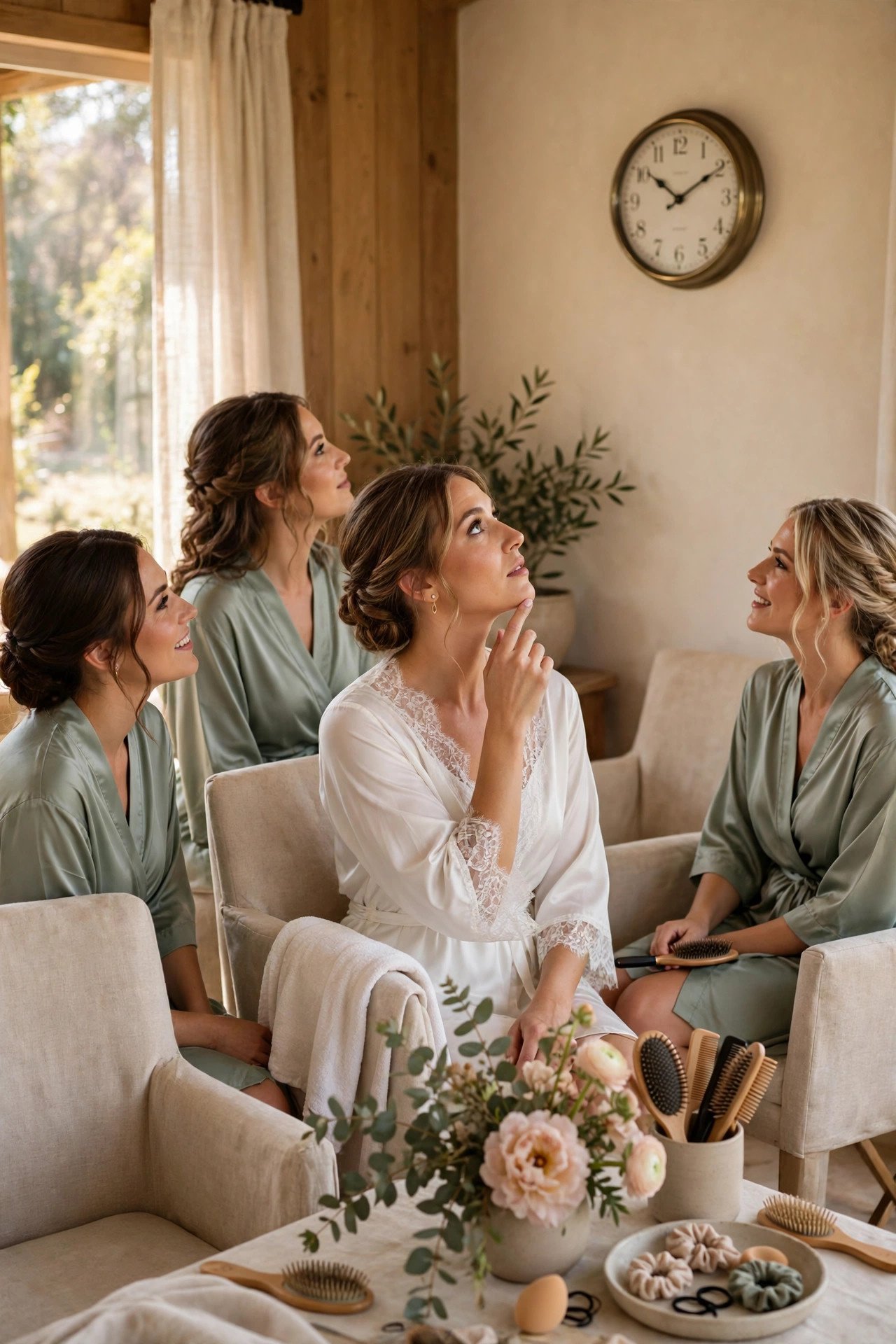
Most brides should start getting ready about five hours before the ceremony — for a 4 p.m. ceremony with a party of five, that means chairs at 9 a.m. and waking at 7:30. Start earlier for big parties, single artists, morning ceremonies or separate photo locations, using the backwards formula in this guide: departure time minus dressing, touch-ups and total chair time.
Start too late and the morning becomes a sprint in a gown. Start too early and everyone’s makeup, energy and hairstyles are five hours old when the vows begin. The right start time sits in a narrow, calculable window — and this guide calculates it for the scenarios couples actually face.
Find your ceremony time and party size below, note your start, then read the adjustment cards for travel, first looks and photos. By the end you will have a start time you can defend to any skeptical bridesmaid.
At a Glance: Start Times by Scenario
| # | Scenario | Start Getting Ready | Ceremony Time | Key Variable |
|---|---|---|---|---|
| 1 | The Standard Answer: Five Hours Before the Ceremony | Ceremony −5 hrs | 4 PM ceremony | Party of 5, two artists |
| 2 | 2 PM Ceremony: Chairs at 9 AM, Wake at 7:30 | 9:00 AM chairs | 2 PM ceremony | Early afternoon |
| 3 | 4 PM Ceremony: Chairs at 11 AM Is Too Late — Start at 9:30 | 9:30 AM chairs | 4 PM ceremony | Party of 5–6 |
| 4 | 6 PM Ceremony: Chairs at 12:30 PM, and Plan the Morning | 12:30 PM chairs | 6 PM ceremony | Evening ceremony |
| 5 | 11 AM Ceremony: Chairs at 6 AM, No Apologies | 6:00 AM chairs | 11 AM ceremony | Morning ceremony |
| 6 | Noon Ceremony at a Courthouse or Venue Nearby | 7:00 AM chairs | 12 PM ceremony | Small party |
| 7 | Party of Eight or More: Add 90 Minutes or an Artist | +90 min or +1 artist | Any ceremony | Party of 8+ |
| 8 | One Artist Doing Both Services: Start an Hour Earlier | +60 min | Any ceremony | Single artist |
| 9 | First Look Planned: Everything Moves 45 Minutes Earlier | −45 min | Any ceremony | First look + portraits |
| 10 | No First Look: Portraits After, Morning Breathes | Standard | Any ceremony | Traditional order |
| 11 | Separate Getting-Ready and Ceremony Locations: Add the Drive, Doubled | +2× drive | Two locations | Travel |
| 12 | Photos at a Third Location: Add Another Hour | +60 min | Three locations | Photo location |
| 13 | Sunset Ceremony: Start at Midday, Chase the Light Backwards | Midday chairs | Sunset ceremony | Light-driven |
| 14 | Winter Weddings: Earlier Light, Earlier Start | −30 min light rule | Winter dates | Short days |
| 15 | Summer Heat: Start for Comfort, Not Just Light | Standard, shaded | Summer dates | Heat management |
| 16 | Destination and Hotel Weddings: Add the Buffer Floor | +30 min | Hotel/destination | Unfamiliar logistics |
| 17 | At-Home Weddings: Start Standard, Protect the House | Standard | Home venue | Home logistics |
| 18 | The Wake-Up and Breakfast Hour Comes First | +60 min before chairs | Every scenario | Fuel first |
| 19 | The Formula: Departure Minus Everything | Formula | Every scenario | The planner’s method |
| 20 | Trial Day: Rehearse the Clock Too | Trial day | Before the wedding | Rehearsal |
| 21 | Tell the Party Their Time, Not the Start Time | Communication | Every scenario | Each person’s slot |
| 22 | When in Doubt, Start 30 Minutes Earlier | Rule of thumb | Every scenario | Uncertainty |
| 23 | Signs Your Start Time Is Wrong (Fix Them Early) | Diagnostics | Planning stage | Red flags |
| 24 | The Night Before Decides the Morning | Night before | Every scenario | Preparation |
| 25 | Your Start Time, On One Line | Summary | Your wedding | Write it down |
Start times mean first person in the first beauty chair. Add the wake-up and breakfast hour in front of them — nobody sits in a chair unfed.
The Standard Answer: Five Hours Before the Ceremony
 📌 Save
For the most common 2027 wedding — afternoon ceremony, five people in beauty, two artists, one location — chairs start five hours before the ceremony and everything fits with buffer to spare. Treat this as your baseline and adjust with the cards below.
2 PM Ceremony: Chairs at 9 AM, Wake at 7:30
 📌 Save
An early-afternoon ceremony moves everything into the morning proper: wake 7:30, breakfast at 8, chairs at 9, dressed by 12:30 and portraits at 1. The upside is a long, golden evening of reception ahead of you.
4 PM Ceremony: Chairs at 11 AM Is Too Late — Start at 9:30
 📌 Save
Many couples guess 11 for a 4 p.m. ceremony and discover the truth at the trial: five people, two services each, plus dressing and portraits needs chairs turning by 9:30 with two artists — 8:30 with one. The ceremony time feels distant until the math arrives.
6 PM Ceremony: Chairs at 12:30 PM, and Plan the Morning
 📌 Save
Evening ceremonies gift you a slow morning — sleep in, brunch at 10:30, chairs at 12:30, dressed by 4:45. The risk flips from rushing to drifting: without a written mini-schedule, the party snacks all day and starts beauty unfed and unshowered.
11 AM Ceremony: Chairs at 6 AM, No Apologies
 📌 Save
A late-morning ceremony means a genuinely early start: wake 5:15, coffee and breakfast delivered at 5:30, chairs at 6. It feels dramatic for exactly one morning and produces the most beautiful light and the longest celebration day of any scenario.
Noon Ceremony at a Courthouse or Venue Nearby
 📌 Save
Small parties shrink everything: three people, two artists, chairs at 7, dressed by 10, portraits at 10:30 and a noon ceremony with an hour to spare. Small is the one scenario where the five-hour rule safely becomes four.
Party of Eight or More: Add 90 Minutes or an Artist
 📌 Save
Every person beyond six adds roughly 75 minutes of single-team chair time. For eight-plus, either start 90 minutes earlier than the standard rule or add an artist and keep the civilized start — the artist almost always wins on morale.
One Artist Doing Both Services: Start an Hour Earlier
 📌 Save
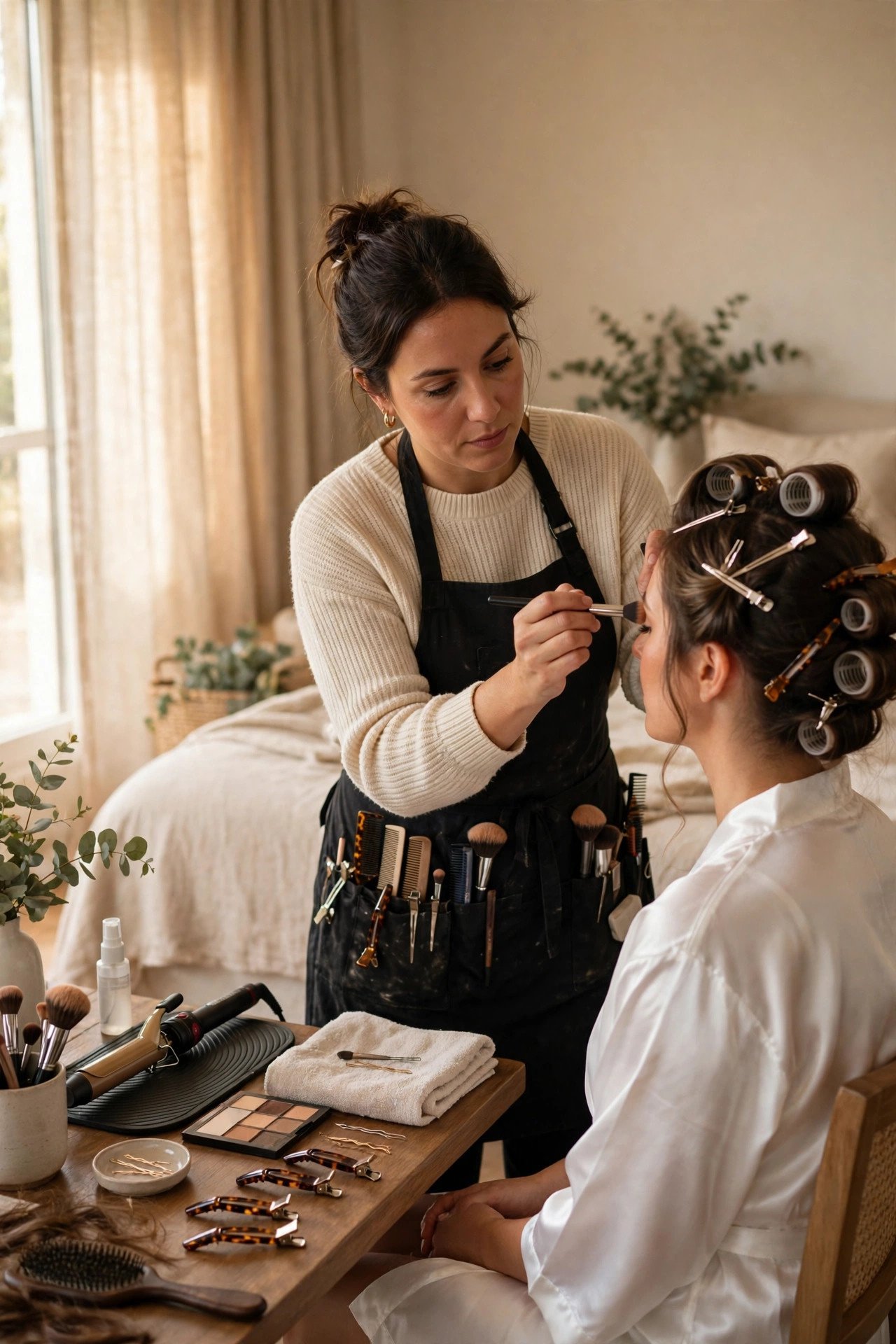
A single artist alternates hair and makeup person by person, and the sequential math costs about an hour versus a two-artist team. If budget chose one artist, the clock pays the difference — start an hour earlier than every two-artist sample you see.
First Look Planned: Everything Moves 45 Minutes Earlier
 📌 Save
A first look plus full portraits before the ceremony is worth about 45 minutes of schedule: you must be fully dressed, touched up and at the photo location earlier. Move the whole morning earlier rather than squeezing the portrait block.
No First Look: Portraits After, Morning Breathes
 📌 Save
Skipping the first look returns 45 minutes to the morning — but borrows them from cocktail hour, when portraits happen while guests wait. Choose where your day prefers its pressure: a slightly earlier start, or a slightly longer guest gap.
Separate Getting-Ready and Ceremony Locations: Add the Drive, Doubled
 📌 Save
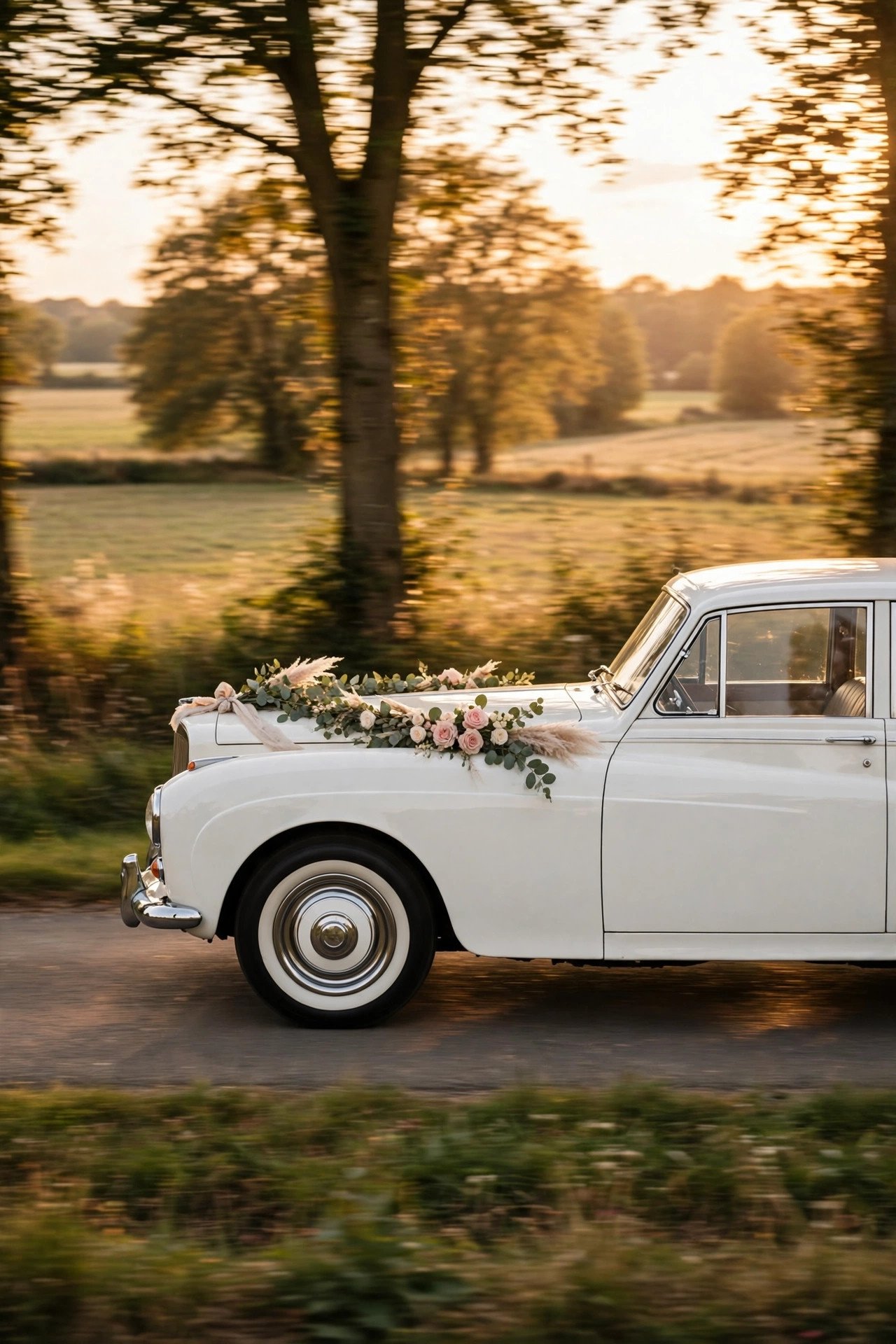
If the suite and ceremony sit 20 minutes apart, the morning must start 40 minutes earlier than the one-location math says — the drive, doubled for buffer, plus parking and walking in formal clothes.
Photos at a Third Location: Add Another Hour
 📌 Save
Portraits at a park, landmark or family home between getting ready and the ceremony add the drive both ways plus walking in a gown: budget a full extra hour of start time, and a weather decision point the morning of.
Sunset Ceremony: Start at Midday, Chase the Light Backwards
 📌 Save
For a ceremony timed to sunset, work backwards from the light: portraits of the party happen before in afternoon light, the couple’s portraits in the glow right after. Chairs usually start around midday — confirm sunset for your exact date and city when planning.
Winter Weddings: Earlier Light, Earlier Start
 📌 Save
Winter’s early darkness pulls portrait time forward: for December weddings in northern US, UK and Canadian cities, outdoor portraits may need to finish by 3:30, dragging the whole morning 30 to 60 minutes earlier than the same ceremony in June.
Summer Heat: Start for Comfort, Not Just Light
 📌 Save
Summer start times bend toward comfort: beauty in the coolest room, portraits shaded or later, and water and electrolytes scheduled like services. The clock start stays standard; what changes is where each block happens.
Destination and Hotel Weddings: Add the Buffer Floor
 📌 Save
Hotels add friction: elevators, long corridors, room-service timing and guests dropping by. Add a flat 30 minutes to any home-based calculation, and order breakfast for 30 minutes before you think you need it.
At-Home Weddings: Start Standard, Protect the House
 📌 Save
Getting ready at home removes travel but adds family, pets, doorbells and a kitchen everyone wanders through. Start at the standard time and spend the travel savings on a calmer breakfast and a closed-door beauty room.
The Wake-Up and Breakfast Hour Comes First
 📌 Save
Whatever your chair start, wake an hour before it: water, daylight, a shower and a real breakfast, eaten sitting down. Brides who skip this hour spend the beauty chair hungry and the ceremony light-headed, whatever the clock said.
The Formula: Departure Minus Everything
 📌 Save
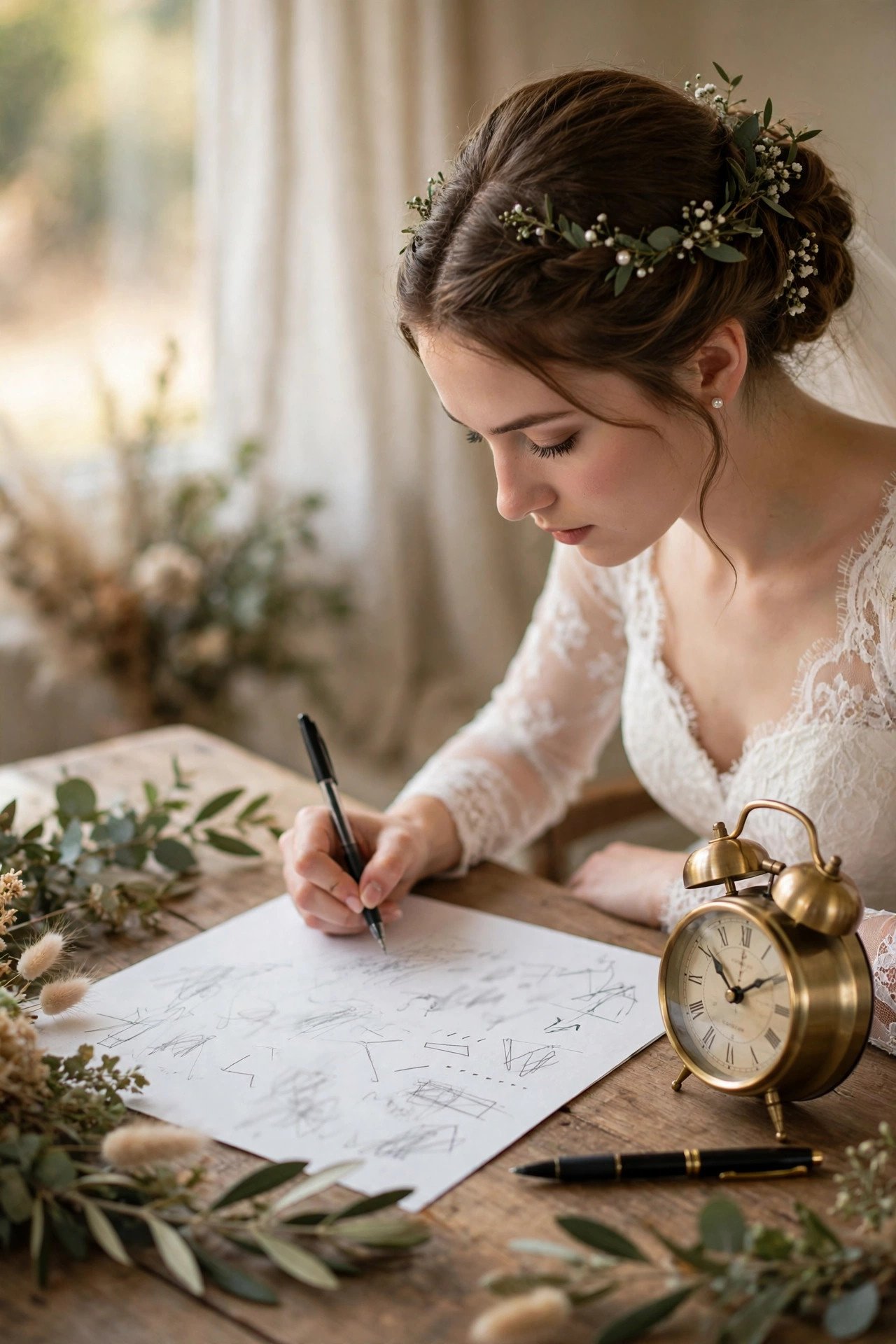
Write your departure time. Subtract 30 for dressing, 20 for touch-ups, then every beauty service at standard durations in rotation order, then 30 of buffer. What remains is your chair start; subtract one more hour for waking and breakfast. That is your morning.
Trial Day: Rehearse the Clock Too
 📌 Save
Ask your artist to note how long the trial actually took, service by service, and rebuild your start time from those numbers instead of estimates. A timed trial converts your schedule from hopeful to measured.
Tell the Party Their Time, Not the Start Time
 📌 Save
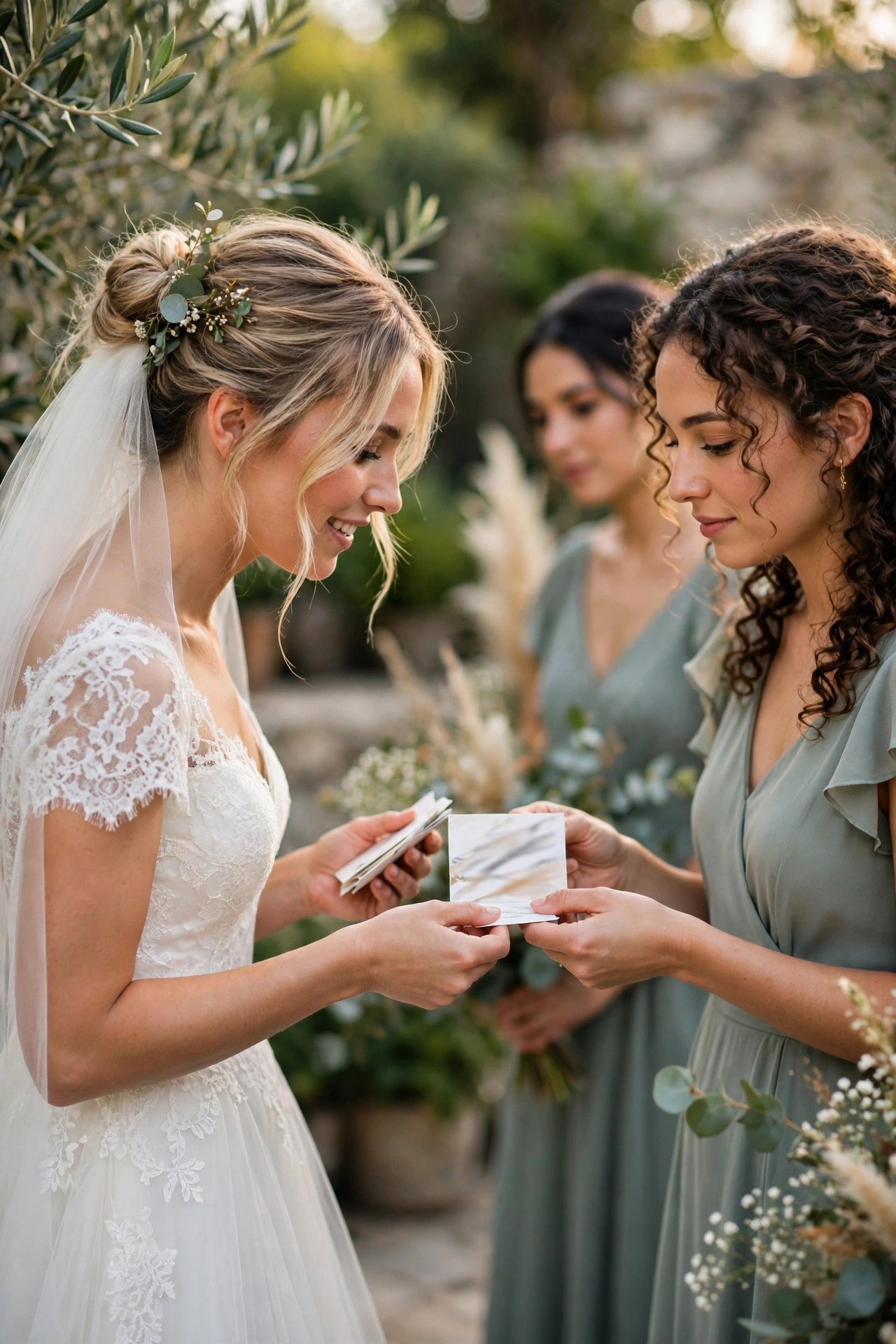
Attendants do not need the day’s start time; they need their own slot, their arrival time (30 minutes before it) and their prep instructions. Personal times get followed; general announcements get approximated.
When in Doubt, Start 30 Minutes Earlier
 📌 Save
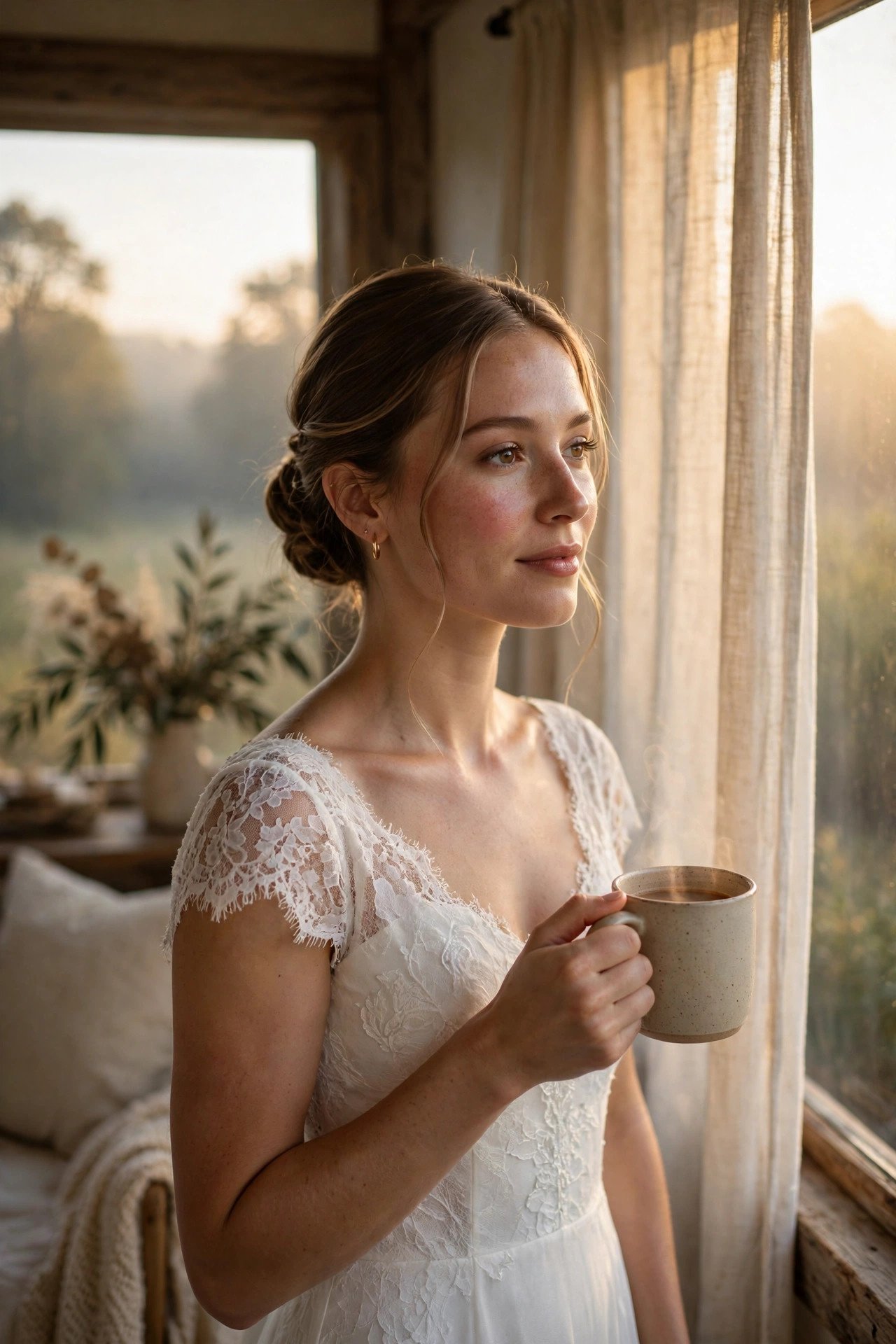
Every wedding professional gives the same tiebreaker: the cost of starting early is a relaxed coffee; the cost of starting late is a rushed bride. Uncertainty about party size, traffic or a new artist all resolve in the same direction.
Signs Your Start Time Is Wrong (Fix Them Early)
 📌 Save
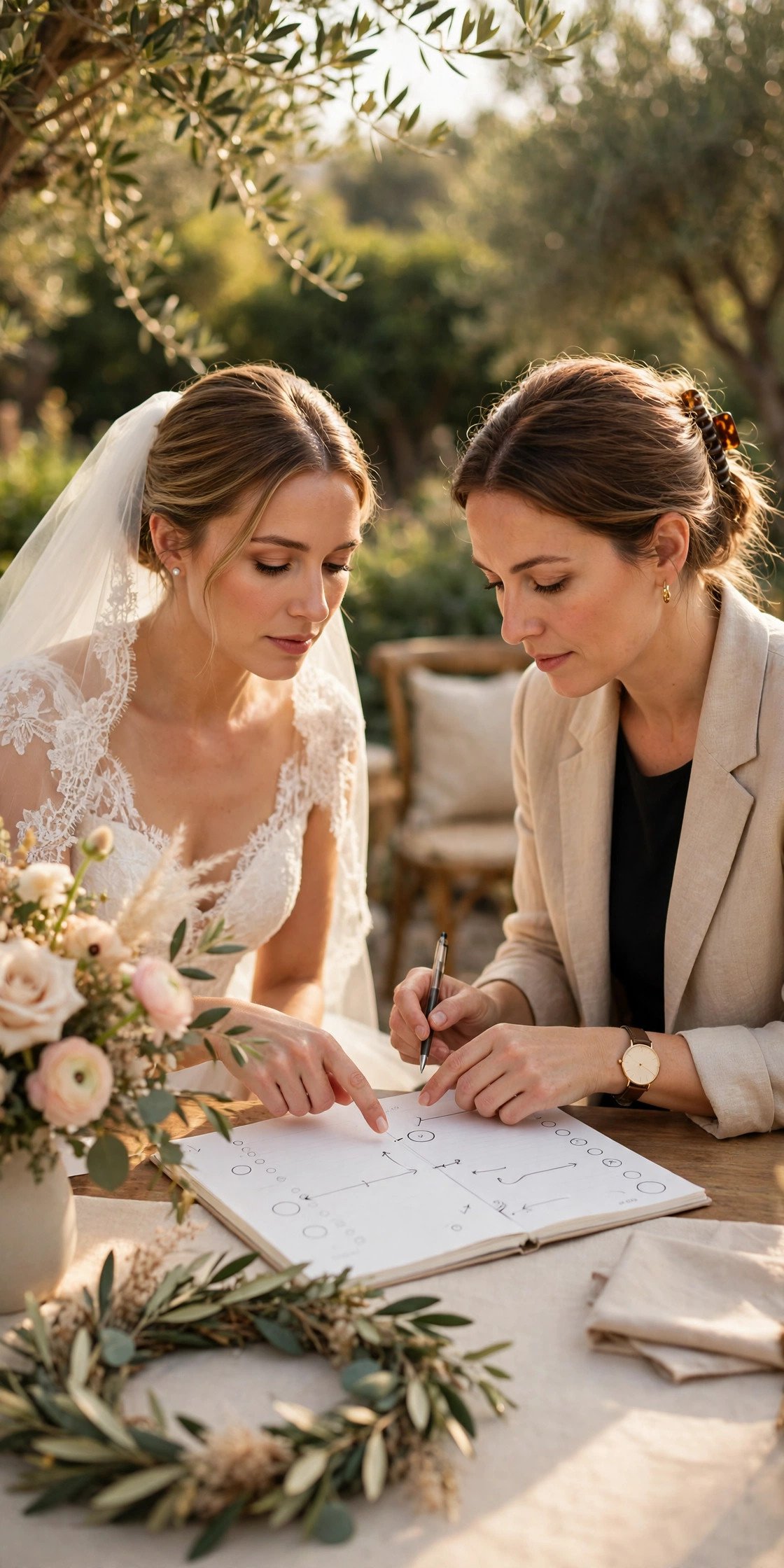
Wake-up before 5 a.m., beauty ending after dressing should start, artists suggesting more help, or a rotation with zero buffer — each is the schedule asking for an artist added, a style simplified or a start moved. All are cheap fixes in planning month and expensive ones in wedding week.
The Night Before Decides the Morning
 📌 Save
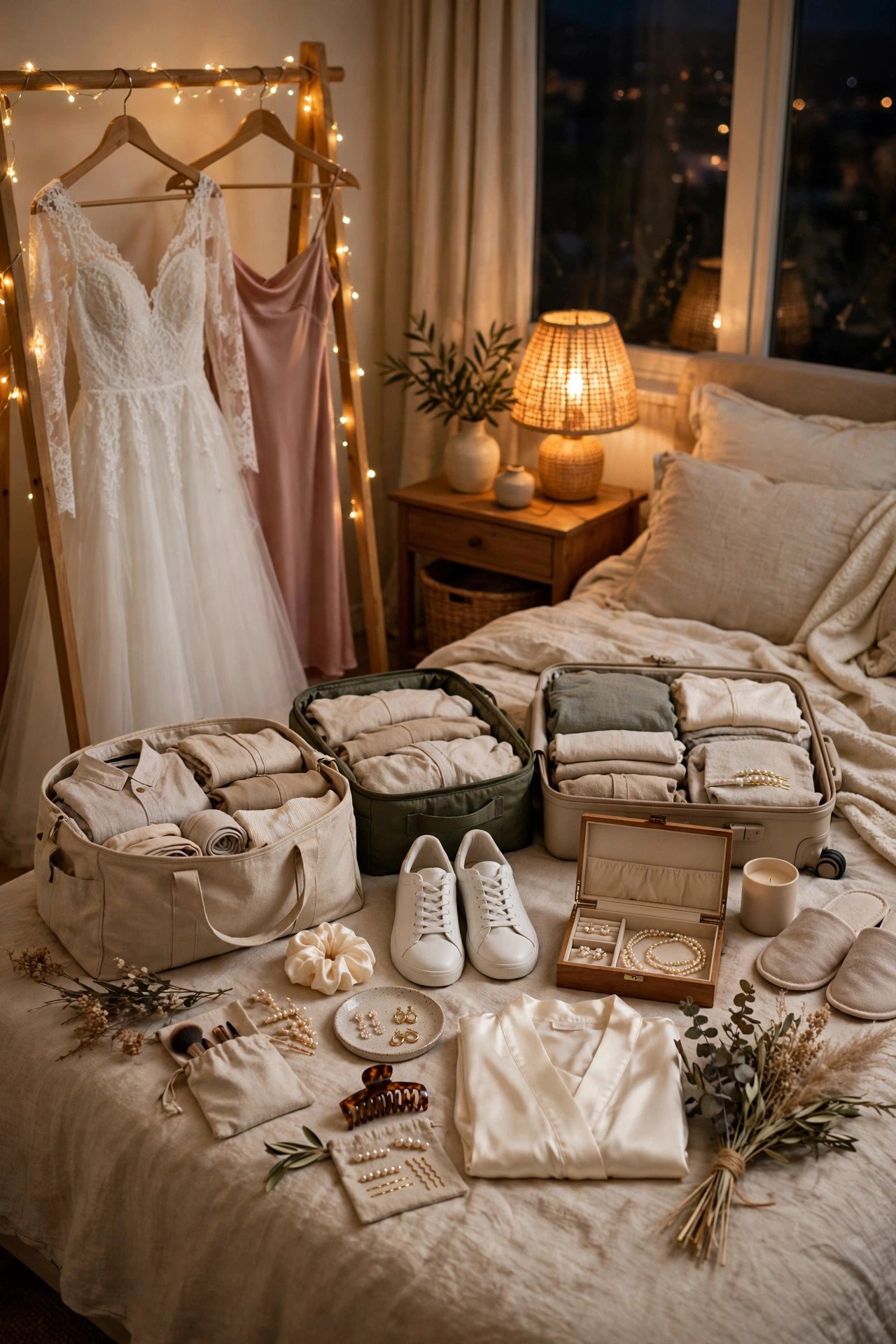
Lay out clothes, steam dresses, pack the car, set the coffee and confirm every vendor by text before the rehearsal dinner ends. A prepared night-before buys the morning a full hour of grace no alarm can provide.
Your Start Time, On One Line
 📌 Save
By now your morning compresses to one line — ‘Wake 7:30, breakfast 8, chairs 9, dressed 1:15, leave 2:45’ — and that line goes on the fridge, in the group chat and on the mirror. A start time everyone can recite is a start time that happens.
When to Start Getting Ready FAQs
How many hours before the wedding should you start getting ready?+
For most weddings, about five hours before the ceremony: that covers waking, breakfast, beauty for a party of five with two artists, dressing and portraits, with buffer. Big parties and single artists need more.
What time should you start getting ready for a 4 p.m. wedding?+
Wake around 7:30 a.m., breakfast at 8, first beauty chairs at 9 to 9:30, dressed by about 1:15 p.m. and portraits at 1:45. With one artist instead of two, start chairs closer to 8:30.
Is it better to start getting ready earlier or later?+
Earlier, within reason. Starting 30 minutes early costs a relaxed coffee; starting late costs calm, photos and sometimes the ceremony start. Makeup freshness is protected by a touch-up pass, not by starting late.
How does party size change the start time?+
Each person taking both hair and makeup adds roughly 75 to 85 minutes of chair time with one artist, or about half that with two artists in parallel. Parties of eight or more should add an artist rather than only starting earlier.
What if my ceremony is in the morning?+
Shift the whole schedule earlier rather than compressing it: an 11 a.m. ceremony usually means chairs at 6 a.m., the party sleeping near the venue, an early night before, and breakfast delivered before the artists arrive.
Key Takeaways
- Baseline: chairs five hours before the ceremony, wake one hour before that.
- One artist, big party, extra locations — each moves the start earlier.
- A first look shifts everything 45 minutes earlier; winter light can too.
- Use the backwards formula with your real headcount, not a template’s.
- When in doubt, start 30 minutes earlier — the worst case is coffee.
Final Thoughts
The perfect start time is the one where nobody ever looks at a clock with worry. It is calculated, not guessed: backwards from departure, honest about headcount, generous with buffer, and kind about breakfast.
Do the math once, write your one line, and let the morning unfold at the pace a wedding deserves — unhurried, well-fed and quietly joyful.