Outdoor Wedding Rain Backup Plans (2027)
By zainzari • Published October 23, 2026 • Updated October 23, 2026
 📌 Save
An outdoor wedding rain backup rests on five physical pillars: a properly sized frame tent held on reserve, sidewalls and flooring to defeat wind-driven rain and mud, checked drainage so water moves away from guests, a dry covered path from parking to seats, and a lightning rule that pauses everything for 30 minutes. Sort those five and almost any garden, farm or backyard wedding can ride out a wet day beautifully.
This guide is the hands-on companion to a general rain plan: where that one covers decisions and communication, this one covers canvas, gravel, flooring and footwear — the physical tactics that keep an outdoor wedding dry. Everything here is what rental companies, farmers and seasoned outdoor venues actually do.
Work through the 25 tactics before you sign your rental order. Most cost little when booked in advance and are nearly impossible to source on the week itself.
At a Glance: The Tactic, What It Solves & Typical Cost
| # | Backup Tactic | Solves | Typical Cost |
|---|---|---|---|
| 1 | Reserve a Frame Tent as Your Plan B Roof | Roof for everything | Deposit / hold fee |
| 2 | Add Sidewalls Before You Decide You Need Them | Dry perimeter | Modest add-on |
| 3 | Lay Flooring Over Grass to Beat the Mud | No mud | Mid-range rental |
| 4 | Check the Site’s Drainage After a Real Rain | Layout intelligence | Free |
| 5 | Grade the Flow: Keep Water Moving Away From Guests | Dry tent floor | Low — labour |
| 6 | Shrink the Ceremony Layout to Fit Under Cover | Dry ceremony | Free — planning |
| 7 | Rent Patio Heaters for the Damp-Day Chill | Warm guests | Low per unit |
| 8 | Create a Covered Catering and Kitchen Zone | Food quality | Small tent rental |
| 9 | Protect Sound Gear With Covers and Raised Cables | Music continues | Free — planning |
| 10 | Anchor Tents for Wind, Not Just Rain | Safety | Included / weights extra |
| 11 | Build a Dry Guest Path From Parking to Seat | Dry shoes | Low |
| 12 | Set Up a Welcome Point With Umbrellas and Towels | Guest mood | Low |
| 13 | Choose Chairs That Will Not Sink Into Wet Ground | Stable seating | No extra cost |
| 14 | Use an Aisle Runner That Grips When Wet | Safe processional | Low |
| 15 | Build a Covered Photo Station With Good Light | Dry portraits | Free — planning |
| 16 | Keep a Touch-Up Station Under Cover | Fresh faces | Low |
| 17 | Protect Attire: Hem Guards and Sensible Shoe Plans | Clean outfits | Low |
| 18 | Move the Cake Under Cover Early | Cake survives | Free — planning |
| 19 | Swap Paper Programs for Weatherproof Alternatives | Readable info | Low |
| 20 | Station a Coffee and Hot Cider Bar for Chilly Guests | Warm guests | Low–mid |
| 21 | Follow the 30-Minute Lightning Rule Without Debate | Guest safety | Free |
| 22 | Do a Post-Shower Wipe-Down Before Guests Return Outside | Scene restored | Free — labour |
| 23 | Use Clear Umbrellas as Cover and Photo Props | Dry and photogenic | Low |
| 24 | Keep a Squeegee, Mop and Towel Kit on Standby | Dry floors | Low |
| 25 | End With a Dry, Warm Send-Off | Strong finish | Free — planning |
Costs are typical US rental ranges and vary by region and season — always confirm with your local rental company, and ask what is refundable if the sun shines.
Reserve a Frame Tent as Your Plan B Roof
 📌 Save
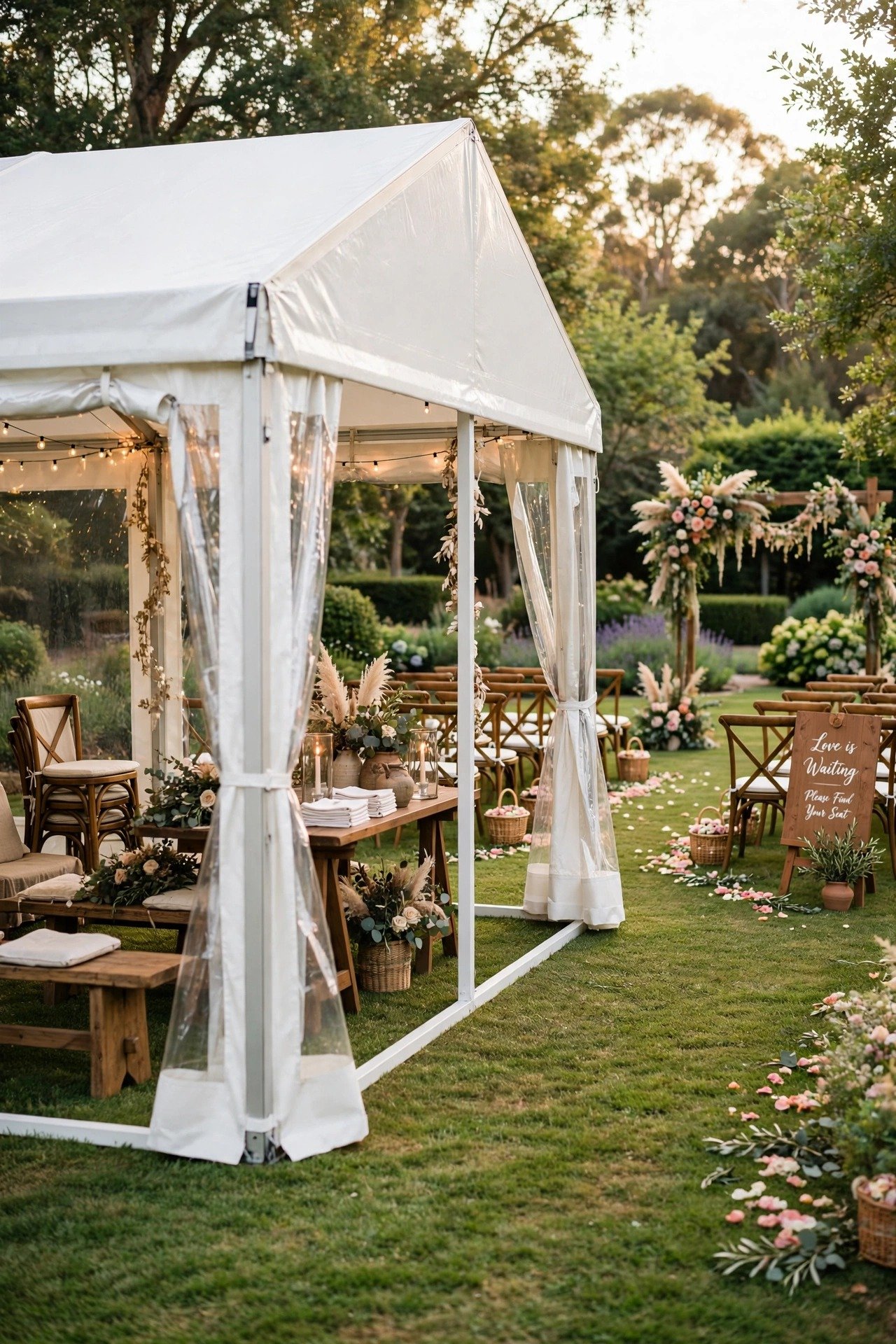
A frame tent — no centre poles, clean sightlines — is the backbone of every outdoor rain backup. Reserve it on a rain hold with your rental company: you typically pay a deposit or percentage now and the balance only if it is installed. Book the hold when you book everything else; tents vanish from inventory the moment a wet forecast appears.
Add Sidewalls Before You Decide You Need Them
 📌 Save
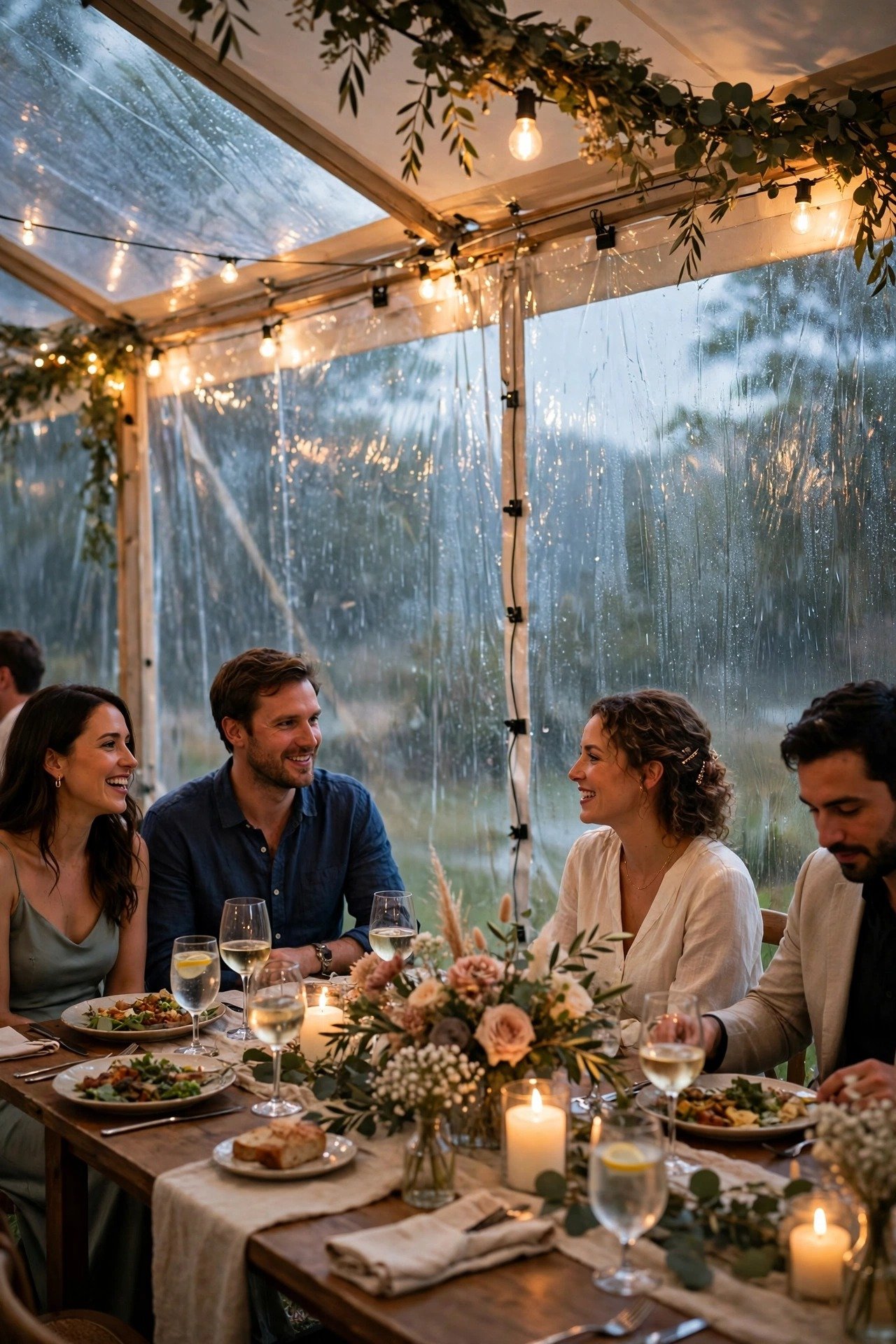
Rain rarely falls straight down. Clear or windowed sidewalls — ordered with the tent, installed on the windward sides first — turn an open canopy into a room. Include at least two closable openings for airflow and access, and ask for walls on standby even if the forecast looks kind; adding them mid-storm is miserable work.
Lay Flooring Over Grass to Beat the Mud
 📌 Save
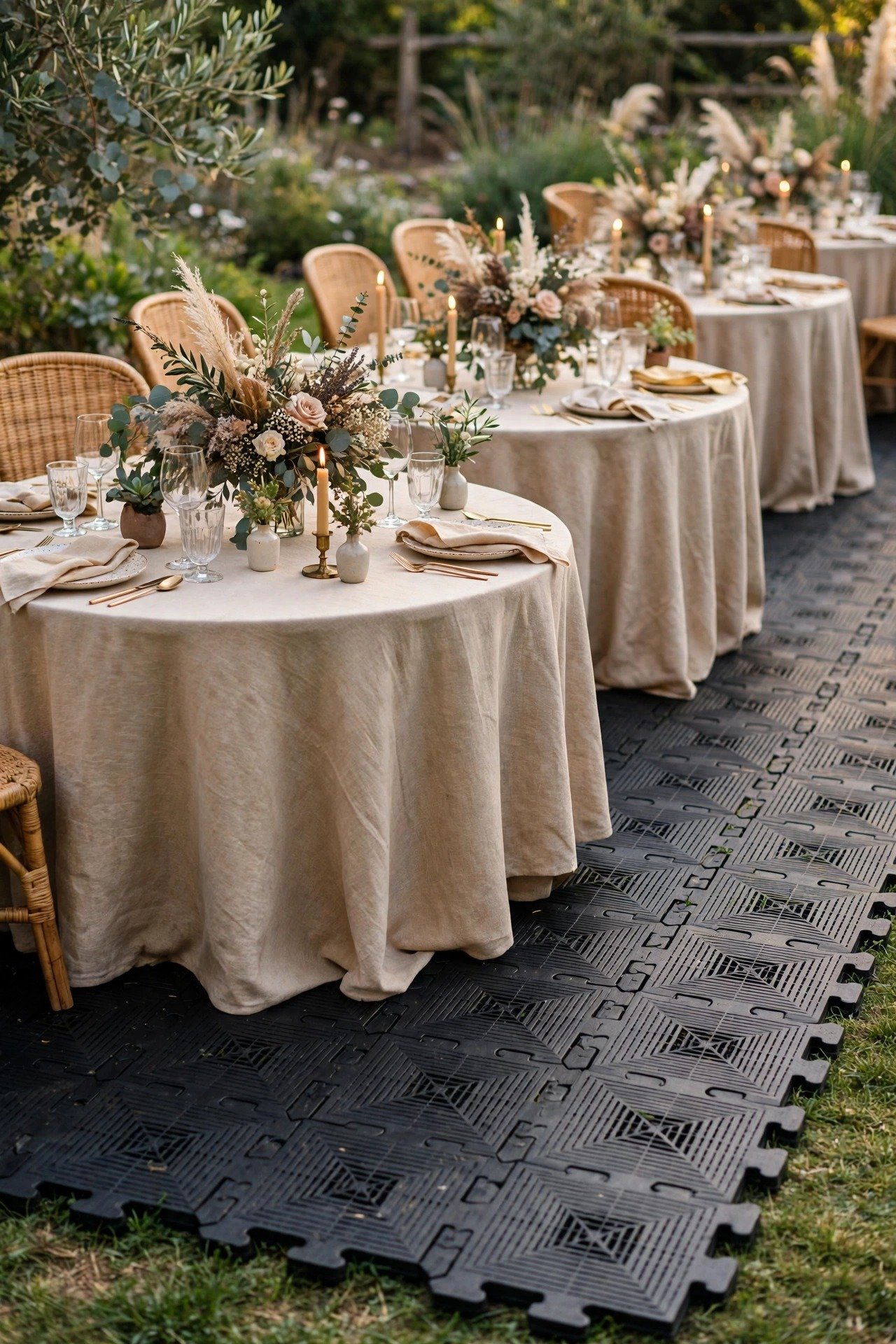
Bare wet grass under 120 chairs becomes a swamp by the second hour. Interlocking plastic or plywood event flooring under the tent — at minimum under dining and the dance floor — keeps shoes, hems and chair legs out of the mud. It is the single upgrade guests mention most after a rainy wedding.
Check the Site’s Drainage After a Real Rain
 📌 Save
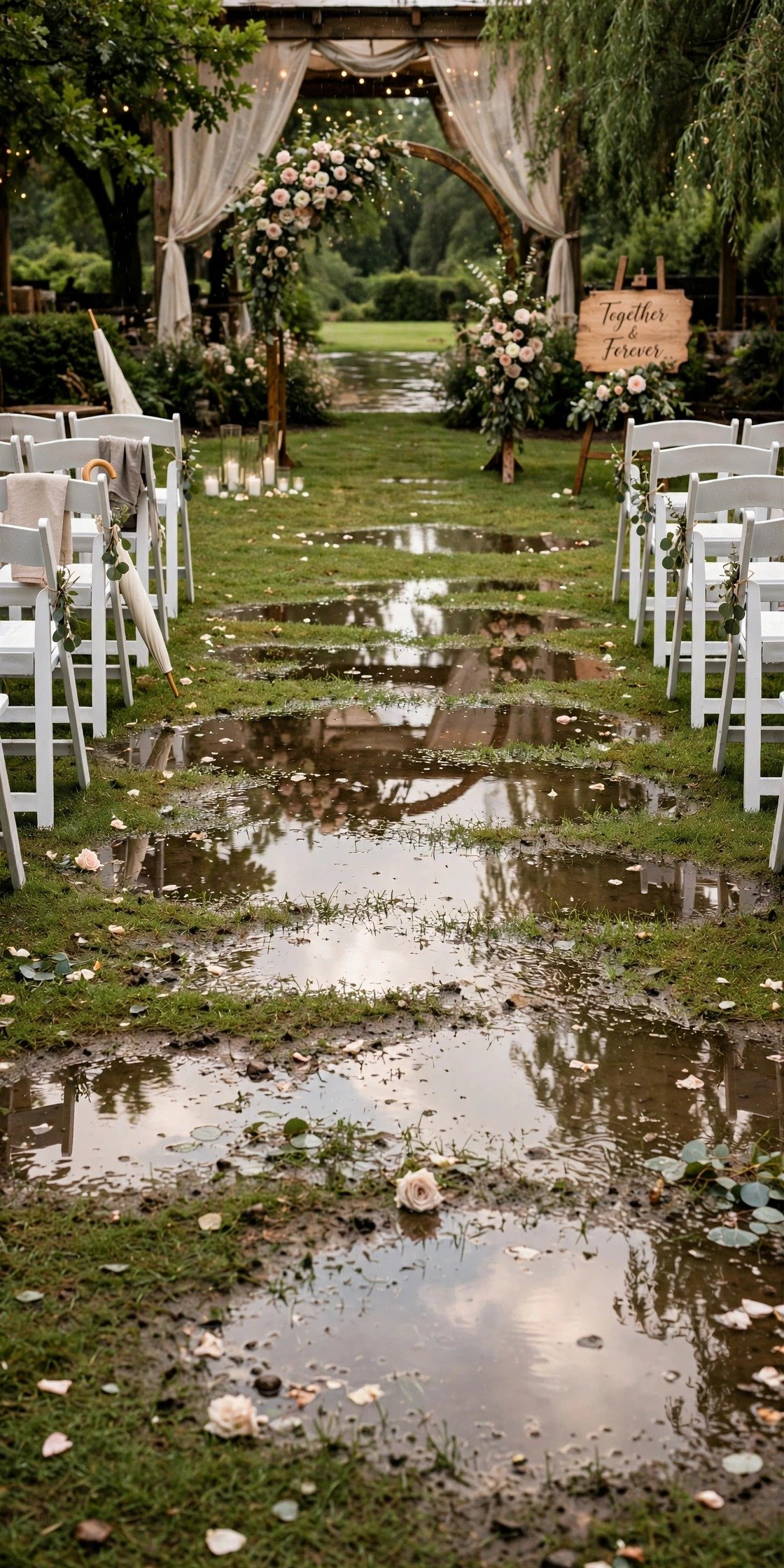
Tour your venue the day after heavy rain, or ask the owner directly where water pools and how long it takes to drain. Every lawn has low spots, and they are exactly where a tent, dance floor or ceremony arch should never sit. Photograph the puddles and plan your layout around them.
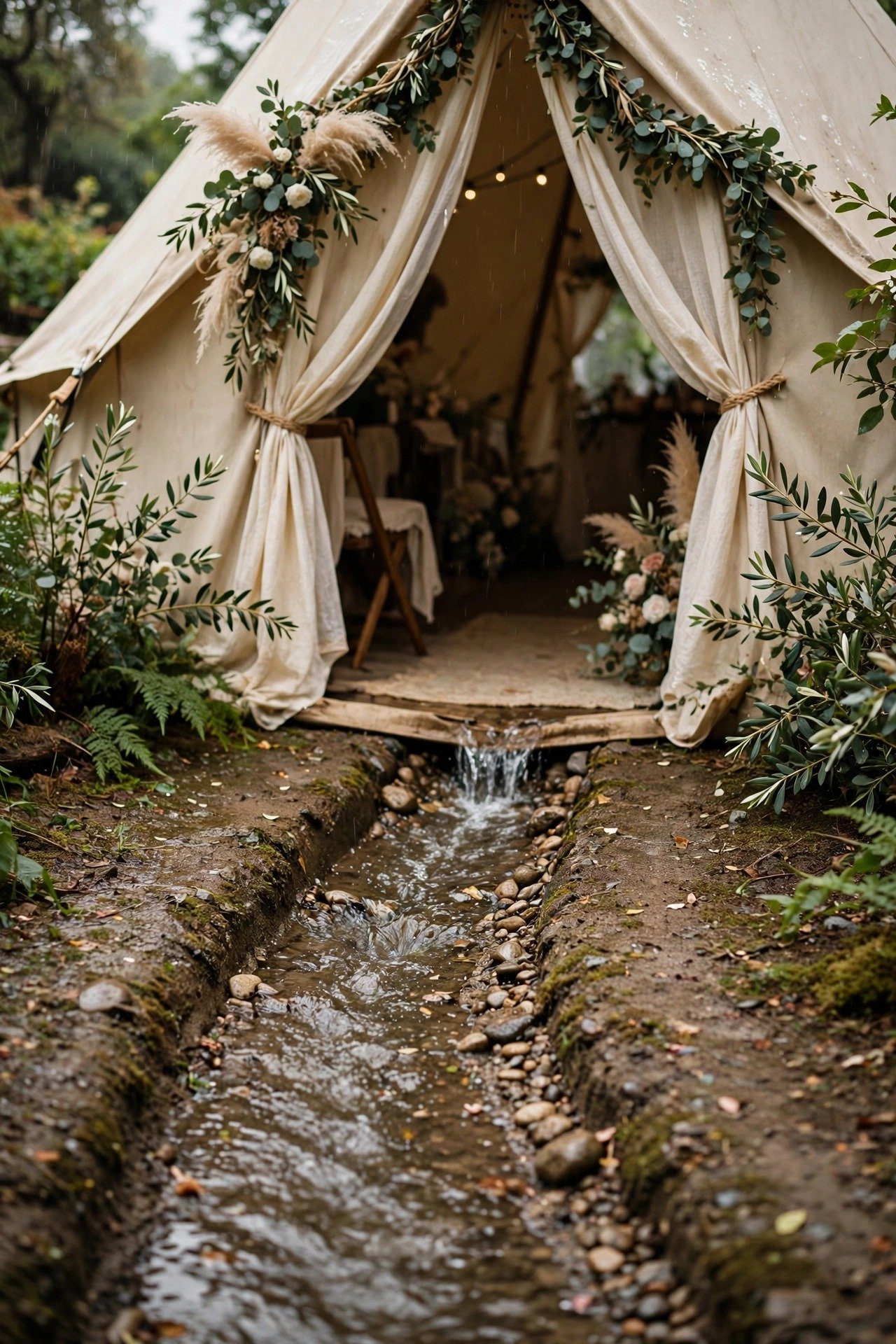
Grade the Flow: Keep Water Moving Away From Guests
 📌 Save
On farms, gardens and private land, a shallow swale or a line of gravel-filled channel upslope of your tent diverts sheet water before it arrives. Venues that host outdoor weddings do this as routine site prep. It is unglamorous, cheap, and the reason some tents stay dry inside while others develop a stream through the dance floor.
Shrink the Ceremony Layout to Fit Under Cover
 📌 Save
Design the rain version of your ceremony deliberately: fewer chairs per row, a shorter aisle, the arch moved inside the tent line, and reserved seating that still puts family in front. A tight layout under cover feels intimate and intentional — and it rehearses in five minutes at the walkthrough.
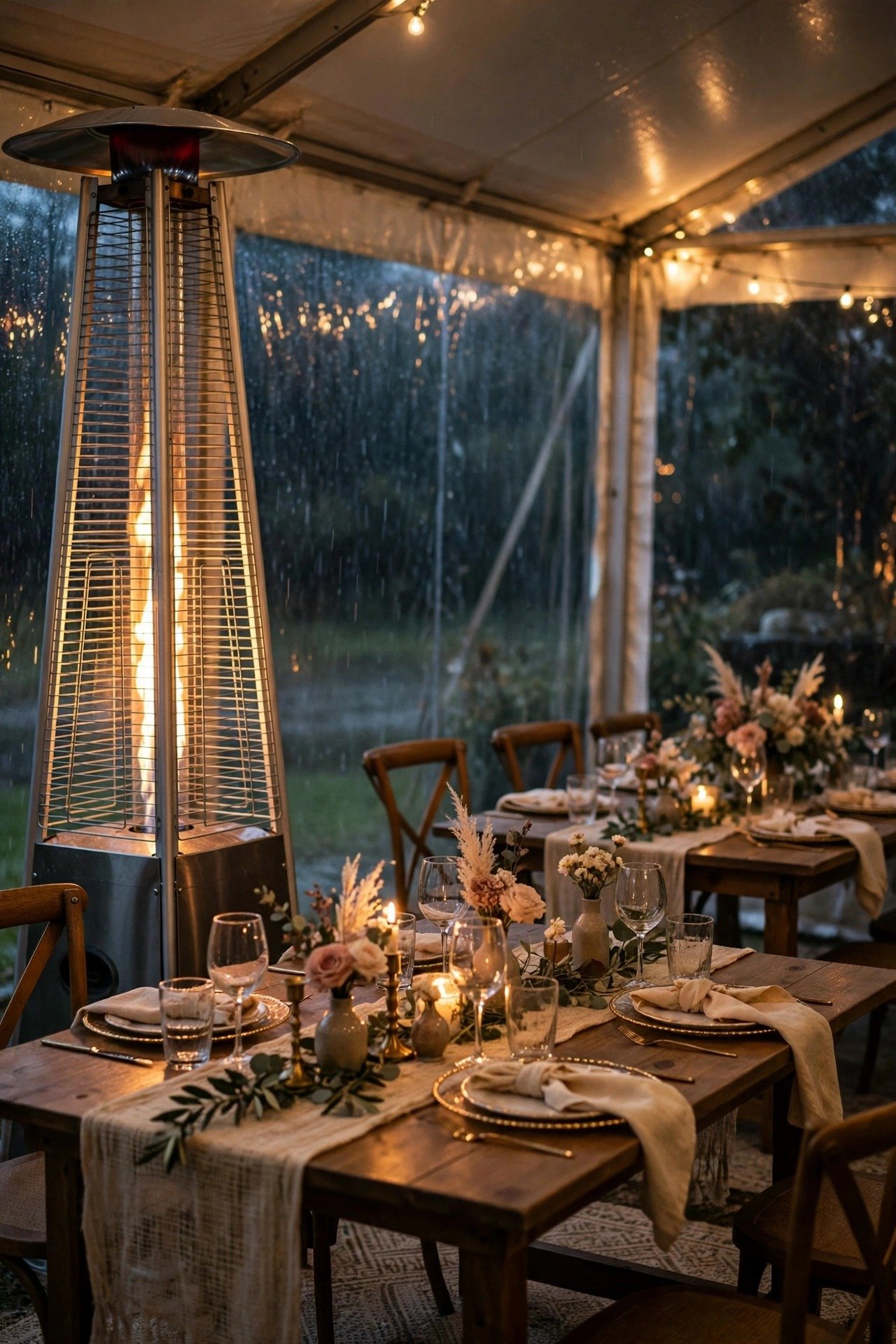
Rent Patio Heaters for the Damp-Day Chill
 📌 Save
Rain drops the temperature fast, and a tent full of guests in sleeveless dresses feels it by dessert. Two to four patio heaters — placed at the tent edges, never centre — restore comfort, and their gentle glow honestly improves the atmosphere. Rental companies deliver and collect them with the tent, so it is one phone call.
Create a Covered Catering and Kitchen Zone
 📌 Save
Hot food cannot travel through rain. A small connected catering tent or a guaranteed covered route from kitchen to tables protects every plate — and your caterer’s contract may quietly require it. Confirm who provides it at booking: venue, caterer or your rental order. This is the most commonly forgotten item in outdoor rain plans.
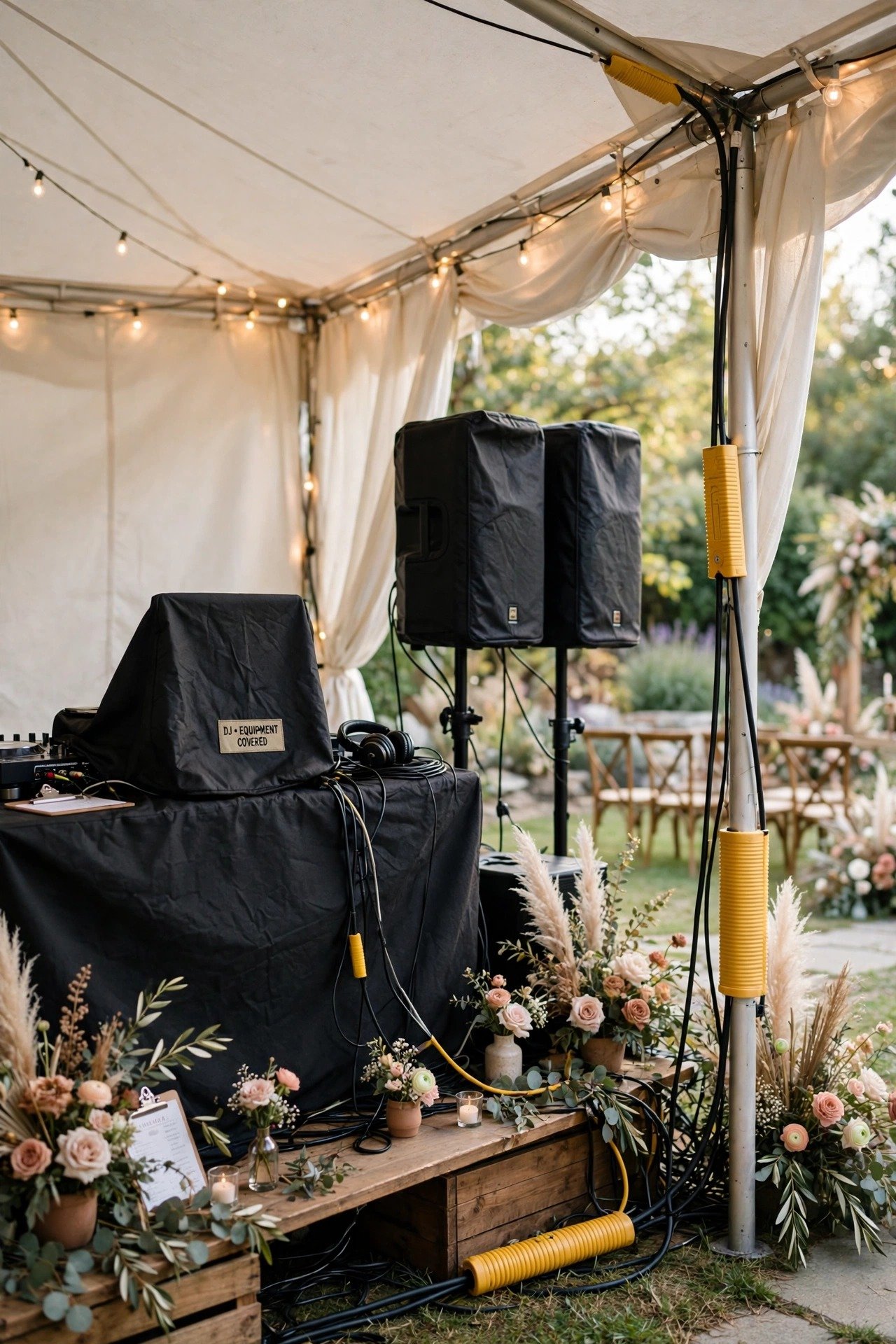
Protect Sound Gear With Covers and Raised Cables
 📌 Save
DJs and bands will not — and should not — run equipment in the wet. Give them a covered, floored corner with power arriving on raised, covered cable runs. Ask each music vendor what their rain setup requires and put it in writing; most simply need the tent position confirmed so their gear lands dry the first time.
Anchor Tents for Wind, Not Just Rain
 📌 Save
Rain plans fail dangerously when wind is ignored. Frame tents must be staked or — where staking is impossible, as on patios — weighted with water barrels or concrete blocks to the rental company’s specification. Never accept a tent secured by hope, and confirm who makes the call to evacuate if gusts exceed the tent’s rating.
Build a Dry Guest Path From Parking to Seat
 📌 Save
Guests forgive a wet view; they do not forgive a swamp walk in good shoes. Lay a defined path — outdoor mats, gravel, plywood runners or a simple carpet run — from parking to the tent entrance, with lighting if the return trip is after dark. Venues often keep path materials in storage; ask before you buy.
Set Up a Welcome Point With Umbrellas and Towels
 📌 Save
Just inside the entrance, place the welcome point: loan umbrellas for the dash from cars, a basket of small towels, a mat for wiping shoes, and a human being whose job is greeting. Guests who are dried off and welcomed in the first thirty seconds reset their whole mood about the weather.
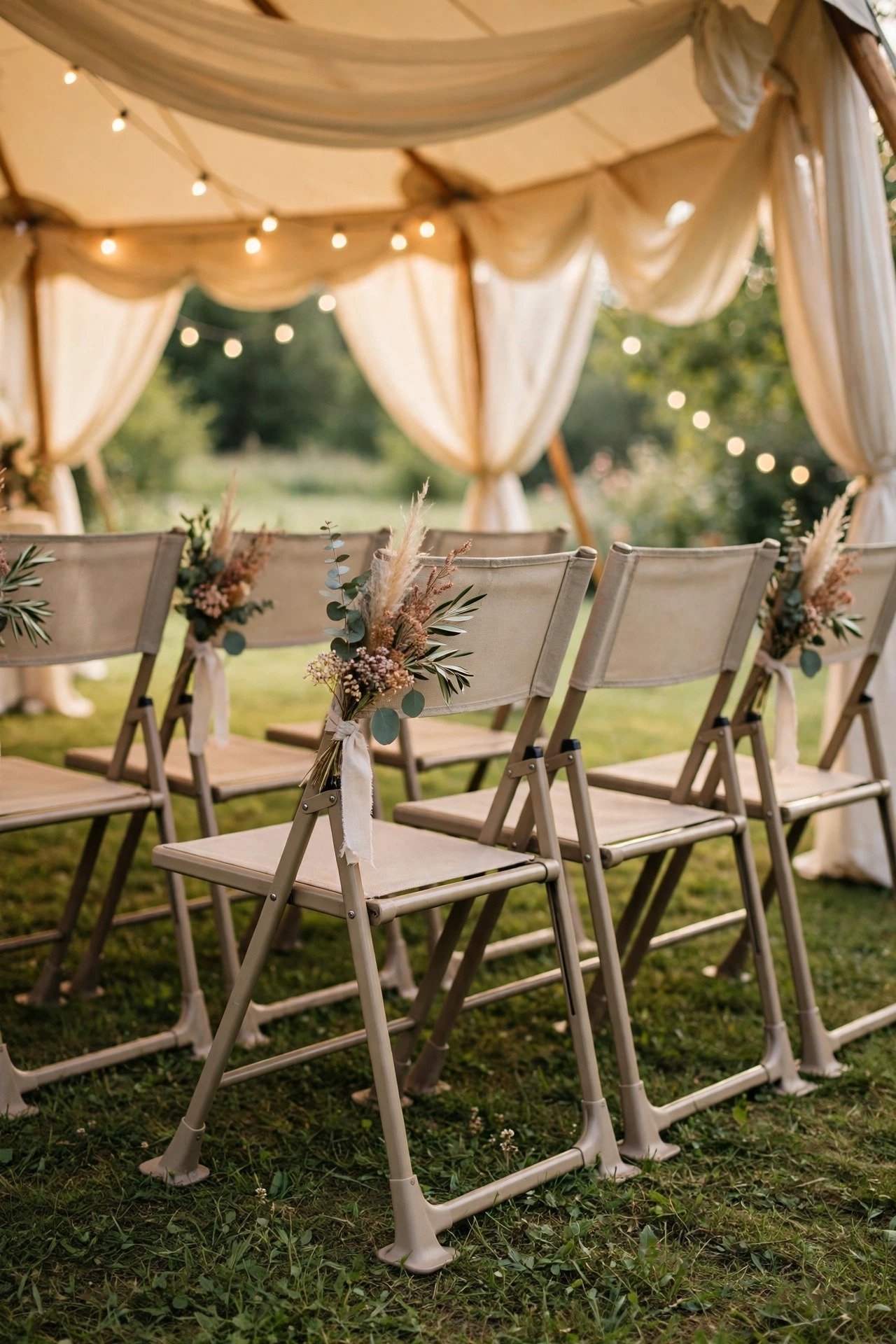
Choose Chairs That Will Not Sink Into Wet Ground
 📌 Save
Slim-legged chairs on saturated ground sink an inch per guest, leaving tables mismatched and elderly guests struggling to rise. Choose folding chairs with wide feet or chair pads, and insist on flooring or mats in the seating zone if the ground is already soft. Your rental company knows exactly which of their chairs behaves — ask them.
Use an Aisle Runner That Grips When Wet
 📌 Save
Light fabric runners on wet grass float, bunch and trip people. If you must have a runner outdoors in rain, choose a heavy, rubber-backed or carpet-style runner secured at both ends — or skip it entirely and scatter petals directly on a mown path, which looks romantic and cannot slide anywhere.
Build a Covered Photo Station With Good Light
 📌 Save
Pick one covered spot with open shade — a tent edge, porch, barn doorway — dress it simply, and declare it the photo station. Consistent light and a dry floor mean your photographer can move groups through quickly between showers. Add a couple of clear umbrellas as props and rain becomes a look, not a problem.
Keep a Touch-Up Station Under Cover
 📌 Save
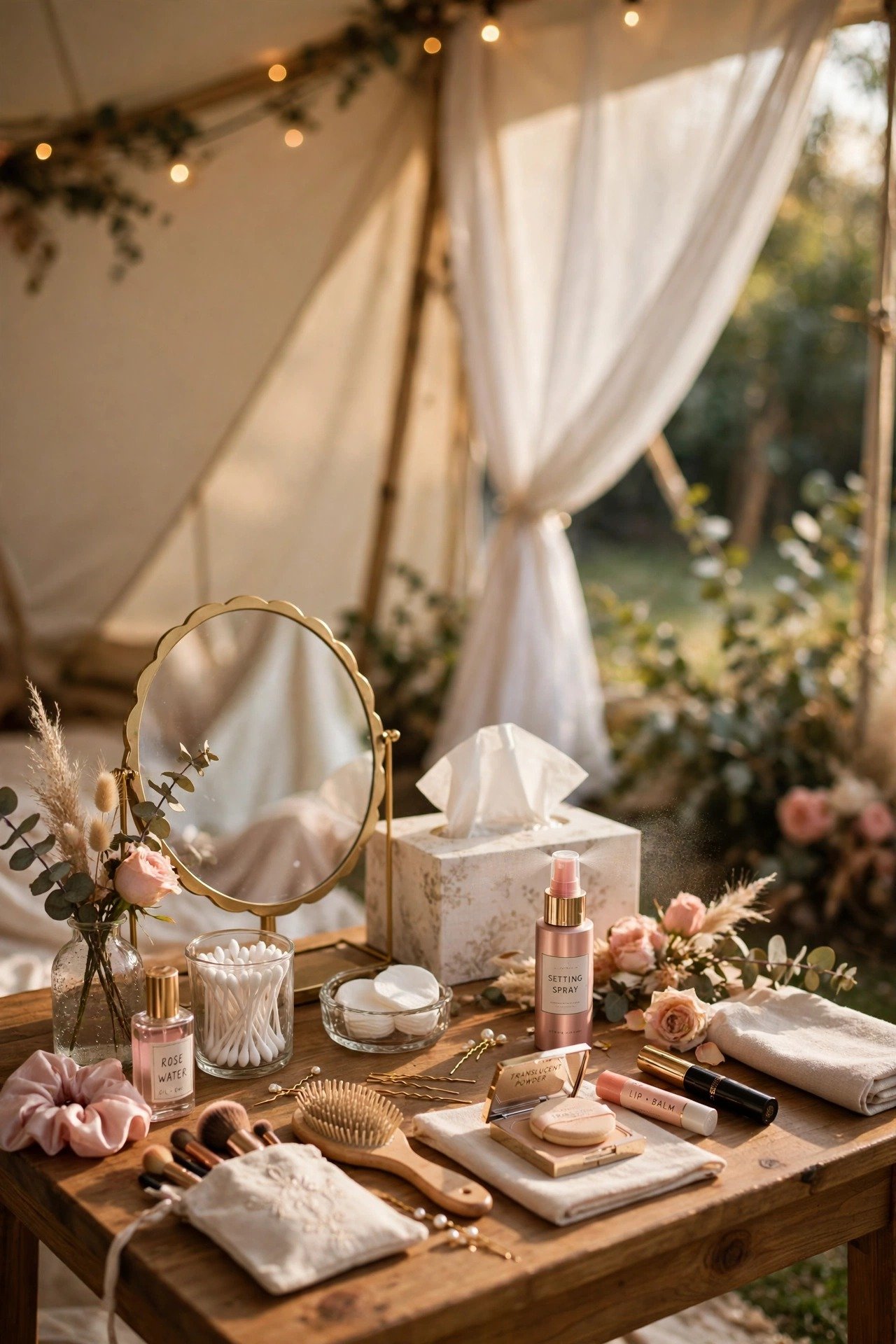
Humidity frizzes hair and damp air melts makeup — plan for it with a small stocked table near the restrooms: mirror, blotting papers, tissues, mini hairspray, cotton buds, safety pins and a hand towel. Wedding party members can self-serve in two minutes, which quietly rescues the portrait schedule all day.
Protect Attire: Hem Guards and Sensible Shoe Plans
 📌 Save
Tell the wedding party the ground truth early: block heels or wedges outdoors, heel stoppers if stilettos are non-negotiable, and hems bustled or lifted for every grass crossing. A can of fabric protector on shoes and a hemline towel at the tent door keep white dresses white. Photographers also carry clear umbrellas for exactly these transits.
Move the Cake Under Cover Early
 📌 Save
Buttercream and humidity are enemies, and a cake cannot be carried across a wet lawn in a hurry. Decide its covered home in advance — inside the tent on a level, sturdy table away from the entrance drip line — and have it delivered there directly. Ask your baker what they need; many will refuse a rainy outdoor placement, rightly.
Swap Paper Programs for Weatherproof Alternatives
 📌 Save
Paper programs in rain become papier-mâché in guests’ hands. For an outdoor wedding with any rain risk, print the order of service as one framed sign at the entrance, or put it on your wedding website with a tiny printed card pointing there. Escort cards move inside the tent, under an escort display with a cover or lid.
Station a Coffee and Hot Cider Bar for Chilly Guests
 📌 Save
Nothing rehabilitates a damp evening like something hot in both hands. A self-serve coffee and hot spiced cider station — urns from your caterer or rental company, real mugs if you can — gives guests a warm destination inside the tent and a reason to mingle. It is inexpensive, zero-proof, and remembered fondly for years.
Follow the 30-Minute Lightning Rule Without Debate
 📌 Save
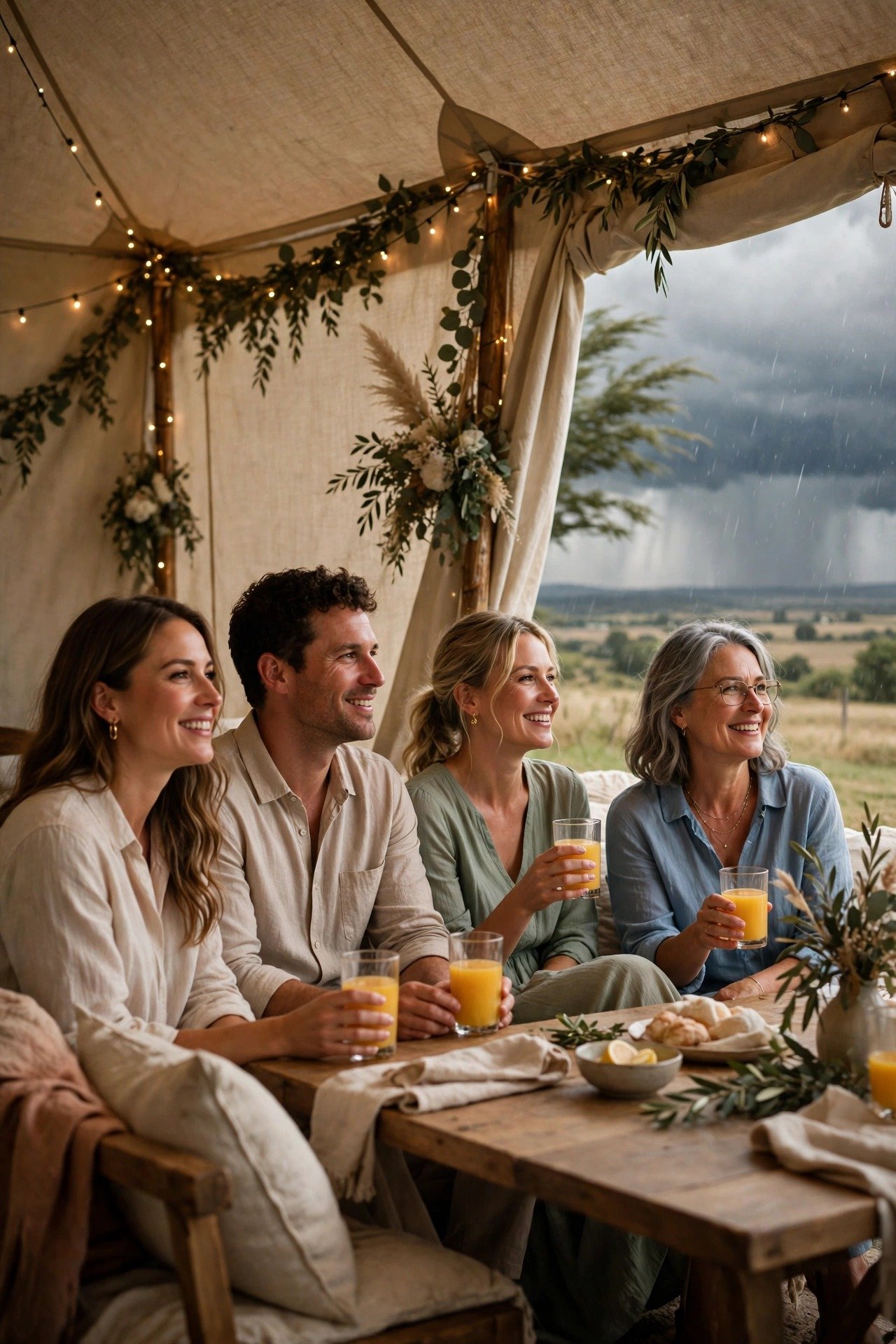
If thunder roars, guests move fully under cover or indoors and stay there until 30 minutes after the last thunder or lightning — the standard guidance used by venues and event safety bodies. Tents are not lightning shelters; a substantial building or vehicles are safer. Brief your coordinator to own this call so it is never negotiated in the moment.
Do a Post-Shower Wipe-Down Before Guests Return Outside
 📌 Save
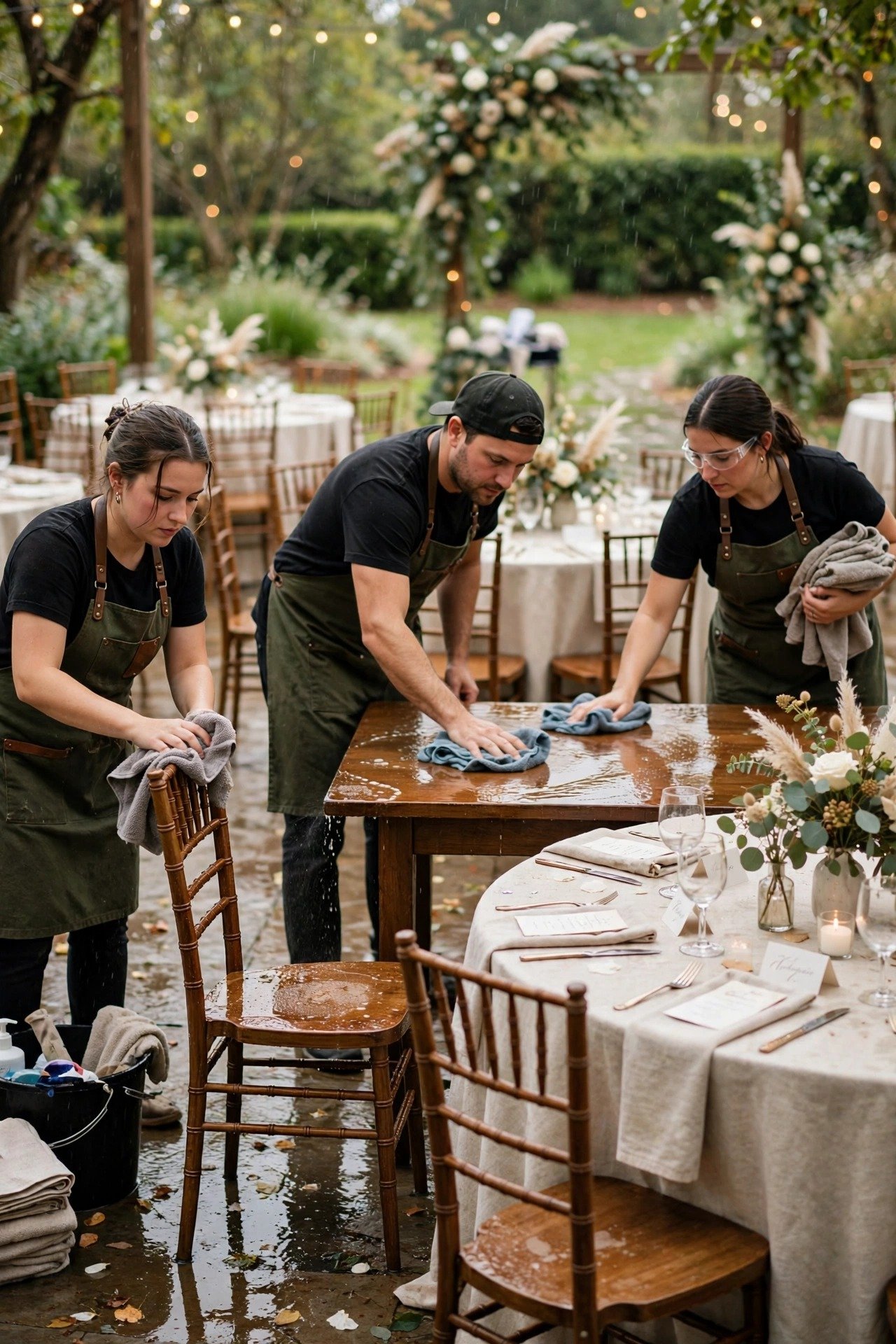
Showers pass. When one does, a two-person crew with towels can dry chairs, tables and the dance floor in about ten minutes, and the celebration spills back into the fresh, washed garden — often the most beautiful light of the day. Pre-assign the crew and stash the towels at setup, not when the sun reappears.
Use Clear Umbrellas as Cover and Photo Props
 📌 Save
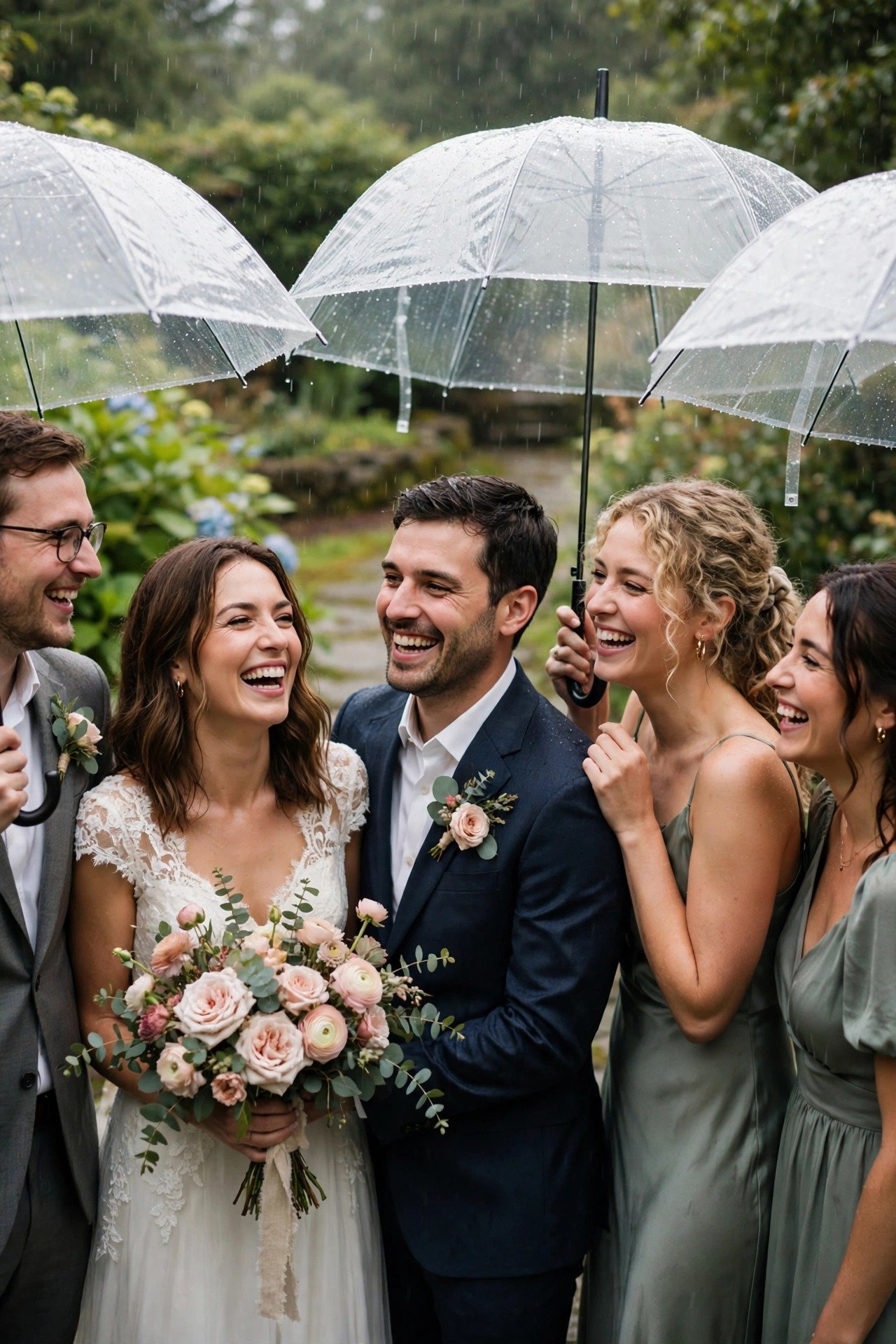
Buy or rent a bundle of clear dome umbrellas — enough for the couple, party and key family. They keep hair and shoulders dry without hiding faces, photograph beautifully, and give nervous guests something useful to hold. Of every rain purchase couples make, this is the one they cite as worth it most often.
Keep a Squeegee, Mop and Towel Kit on Standby
 📌 Save
Water walks into tents on shoes and pools at entrances. A squeegee for the dance floor edge, a mop for the entry, doormats at both doors and a stack of towels turn drip management into a background task. Ask the venue what they keep on site — many have a full kit and a staffer who knows the drill.
End With a Dry, Warm Send-Off
 📌 Save
Plan the ending for the weather you have: sparklers under the tent edge or a covered porch, glow sticks if rain kills flames, the getaway car pulled as close to cover as physics allows, and one volunteer with a big umbrella dedicated to the couple. A dry, cheering send-off sends everyone home remembering a triumph, not a drenching.
Outdoor Wedding Rain Backup Plans FAQs
How much does a backup wedding tent typically cost?+
It varies widely by size, region and season, but as a rough guide a frame tent for around 100 guests often rents in the low thousands of dollars in the US, with flooring, sidewalls and heaters adding to that. Many rental companies offer rain-hold terms — a deposit now, the balance only if installed. Always confirm exactly what your quote includes.
What size tent do we need for our guest count?+
A common planning rule is roughly 10 square feet per guest for a seated dinner with round tables, more if you add a dance floor, DJ and buffet under the same roof. A 40 by 60 foot tent typically hosts about 100 to 120 seated guests. Your rental company will calculate it precisely from your floor plan — bring the plan, not just the headcount.
Can we still hold the ceremony outside in light rain?+
A passing drizzle, yes — many couples do, with clear umbrellas for the party and guests choosing for themselves. Steady rain, no: wet chairs, ruined paper, miserable guests and unsafe electrics. Agree the threshold with your coordinator in advance and let them make the call, and never let an outdoor ceremony continue when thunder is audible.
How do we keep guests’ shoes and hems out of the mud?+
Flooring or mats under the tent and along the parking-to-tent path, a defined dry route, and honest communication: one line on your wedding website about lawn-friendly footwear works wonders. Put heel stoppers in a basket at the entrance — guests in stilettos will bless you for it.
What happens if there is lightning during our outdoor wedding?+
Everything pauses and guests move to a substantial building or vehicles — a tent is not a lightning shelter. The standard rule is to wait 30 minutes after the last thunder before resuming outdoors. Brief your coordinator to own the call, and fill the pause with drinks, coffee and music so it feels like an intermission.
Key Takeaways
- Book the tent on a rain hold early — flooring, sidewalls and heaters ride the same order.
- Drainage decides everything: tour after rain and lay out the site around its pooling spots.
- Guests judge the path and the welcome, not the sky — dry route, umbrellas, towels, hot drinks.
- Caterers, DJs and cakes each need a covered home; confirm whose job each roof is.
- Lightning means pause and move to a real building for 30 minutes. No debate, ever.
Final Thoughts
An outdoor wedding with a serious rain backup is not a gamble — it is a venue with two beautiful versions. Sort the tent, the floor, the drainage and the path while the sun is shining, and if the clouds do arrive, you will spend your wedding watching your guests stay dry, warm and delighted — which is the whole point of planning in the first place.