Best Mismatched Green Bridesmaid Dresses Under $300
By zainzari • Published April 2026 • Updated October 11, 2026
 📌 Save
The best mismatched green bridesmaid dresses use two or three closely related shades — sage, eucalyptus, olive or emerald — with consistent hem lengths and matching fabric finishes, all under $300. Let each bridesmaid choose her own neckline, order fabric swatches first, and share a simple mood board so the group looks cohesive and intentional in photos.
Mismatched green bridesmaid dresses are one of the most-loved wedding party looks right now, and it is easy to see why. Different necklines, soft prints and varied tones in the same color family photograph beautifully — and every bridesmaid gets a dress she actually feels good in, at a price that respects her wallet.
This guide walks you through the four green shade families, the mixing rules that keep everything cohesive, and a real under-$300 shopping playbook. Green is forgiving, flattering and endlessly mixable — here is how to do it right.
At a Glance: Green Shades for Bridesmaids
| Shade | Pairs Well With | Best Season | Best For |
|---|---|---|---|
| Sage Green | Ivory, gold, neutral shoes | Spring, summer | Garden weddings |
| Eucalyptus & Dusty Green | Silver, soft blush | Spring, early fall | Romantic weddings |
| Olive Green | Rust, terracotta, gold | Fall | Rustic or barn weddings |
| Emerald & Forest Green | Champagne, gold | Fall, winter | Formal evening weddings |
| Green Floral Prints | Solid sage or olive | Spring, summer | Relaxed outdoor weddings |
The golden rule: two to three closely related shades, one hemline, one fabric finish. Everything else can vary — that is the whole joy of mismatched.
Sage Green: The Soft Anchor
 📌 Save
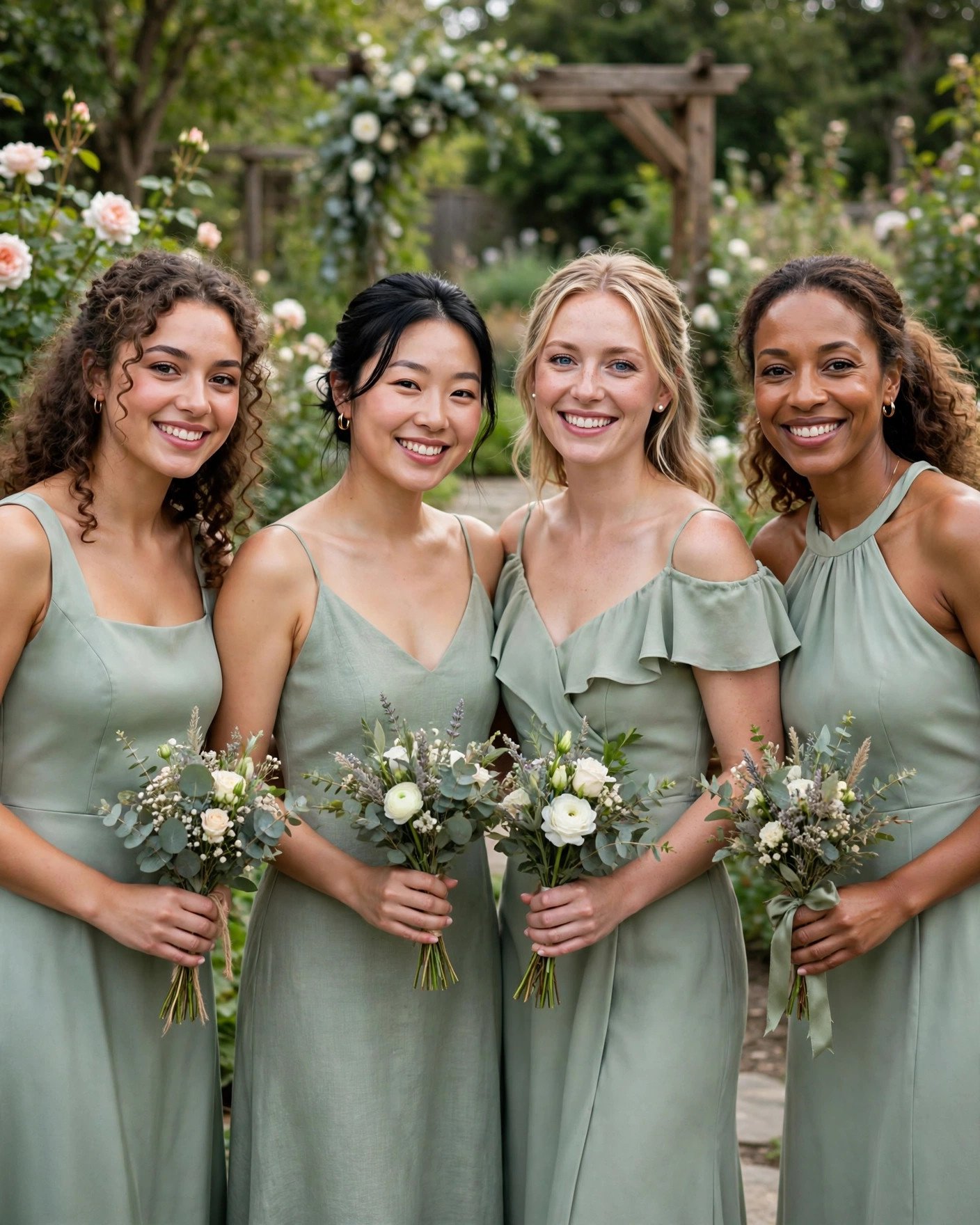
Sage green is the friendliest starting point: a soft grey-green that flatters nearly every skin tone and comes in endless affordable styles.
Use sage as your anchor shade and let each bridesmaid choose her own silhouette. A satin slip, a chiffon wrap dress and a crepe midi in sage still read as one family in photos because the color does the unifying work. It pairs beautifully with ivory florals, gold jewelry and neutral shoes, which makes the rest of your styling decisions easy.
Because sage is so popular, you will find the widest range of under-$300 options in this shade — from fast-fashion to dedicated bridesmaid lines. That availability is a quiet superpower when five different women need five different sizes on one deadline.
Read next: How to Have a Beautiful Wedding on a Budget
Eucalyptus and Dusty Green
 📌 Save
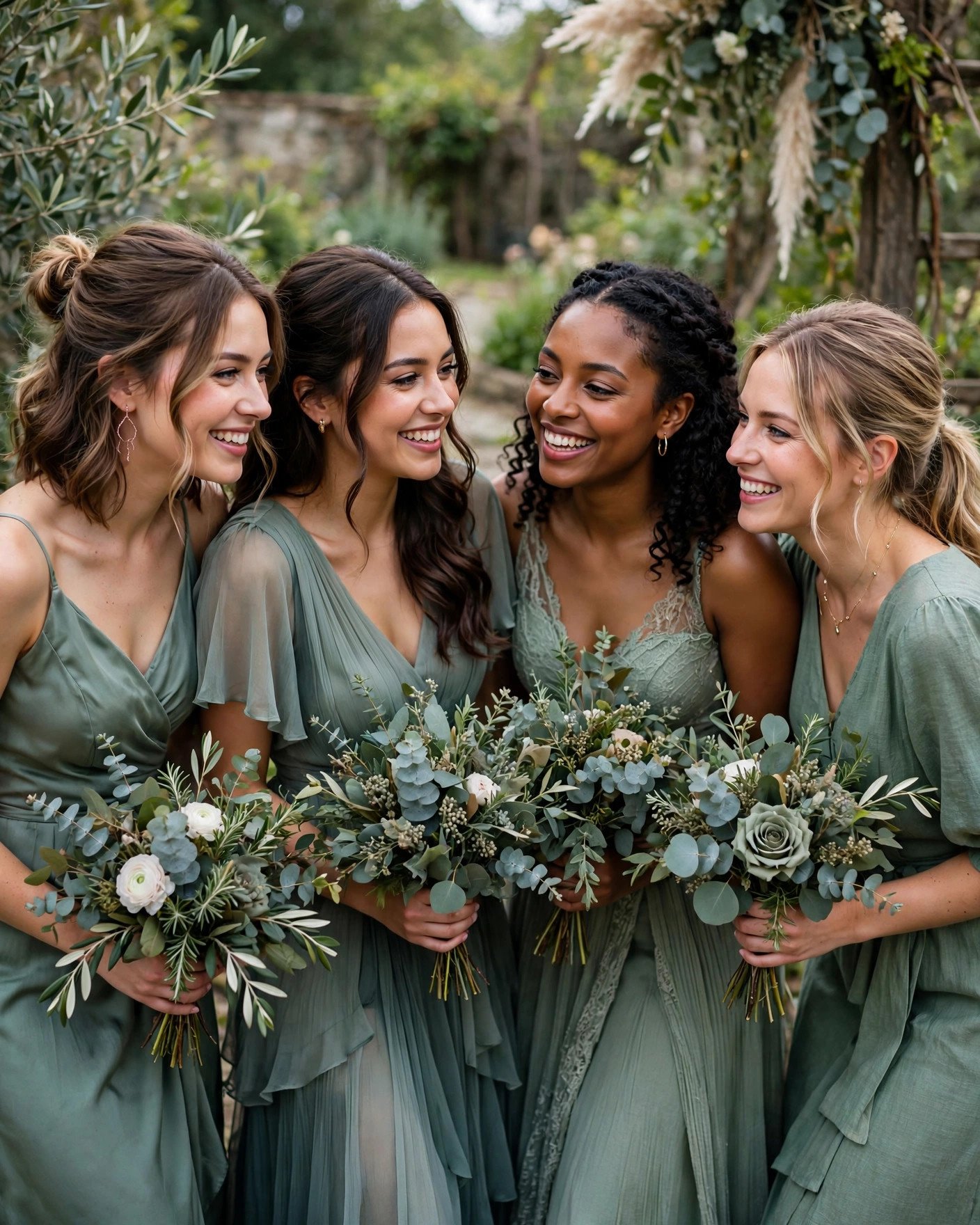
Eucalyptus and dusty green add a cooler, silvery depth that makes a sage lineup look instantly more layered.
These are the shades for the bride who finds plain sage a little safe. Mix two or three of these slightly deeper tones across the party instead of matching one exact color — the small shifts create that effortless, collected look mismatched dressing is famous for. They shine at romantic garden ceremonies and early-fall weddings, pairing gorgeously with silver jewelry and soft blush blooms.
Keep the finish consistent here — all matte or all soft-sheen — because cooler greens show finish differences more than warm ones. When the tones are close and the finish matches, the group looks expensive even when every dress was under $300.
Read next: How to Save Money on Your Wedding
Olive Green Warmth
 📌 Save
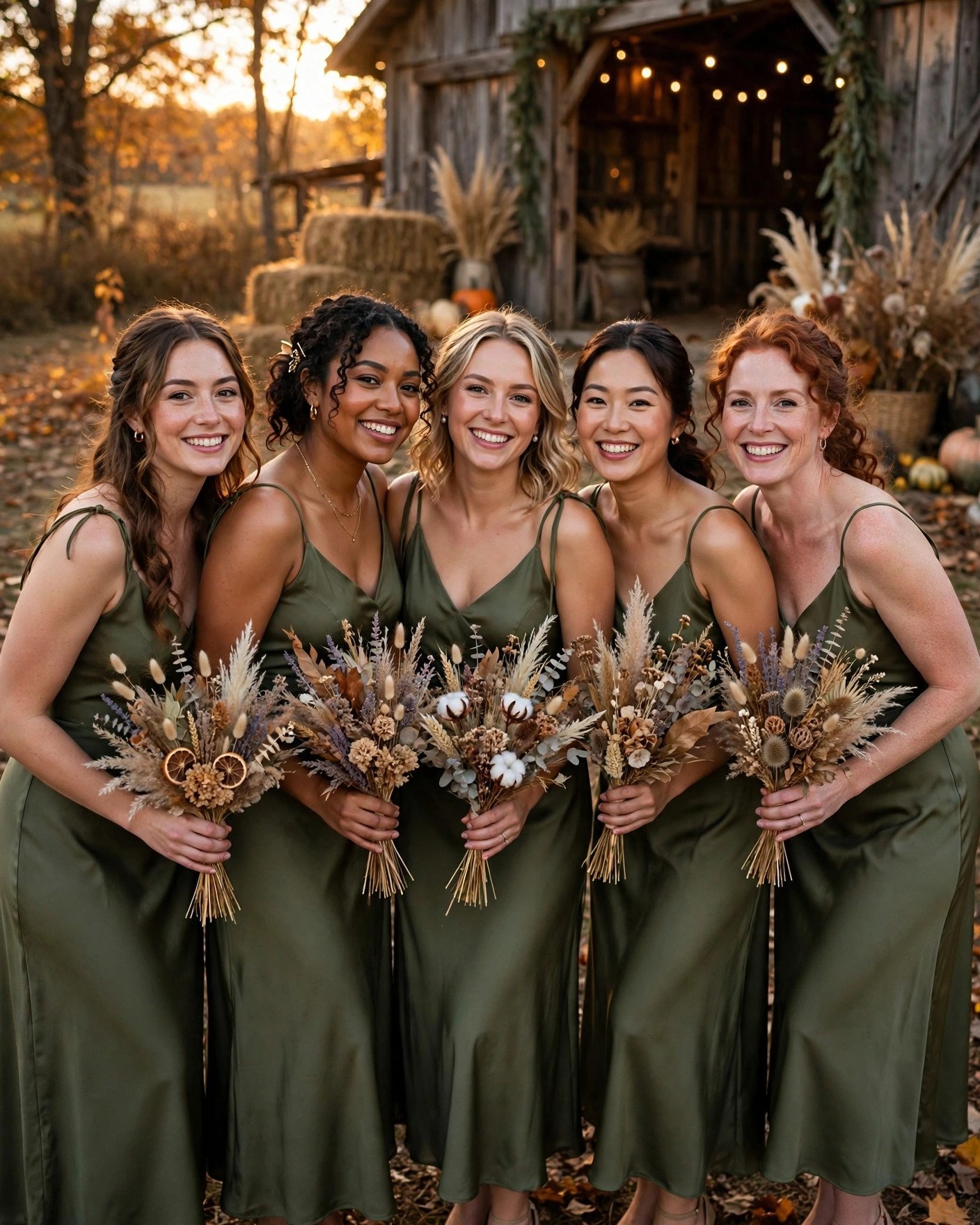
Olive green brings warmth and richness — the perfect green for rustic barns and autumn weddings.
Olive is the cozy green: warm, earthy and stunning against fall palettes of rust, terracotta and gold. Pair olive dresses with a few lighter moss tones to keep the lineup from feeling heavy, and lean into textured fabrics like pleated chiffon or soft velvet — they add richness without needing extra accessories. Bonus: olive hides small wrinkles beautifully on a long wedding day.
Style it with dried or warm-toned bouquets and gold jewelry, and the whole party glows. Olive is also one of the most re-wearable bridesmaid shades — your friends will genuinely wear these dresses again.
Emerald and Forest Drama
 📌 Save
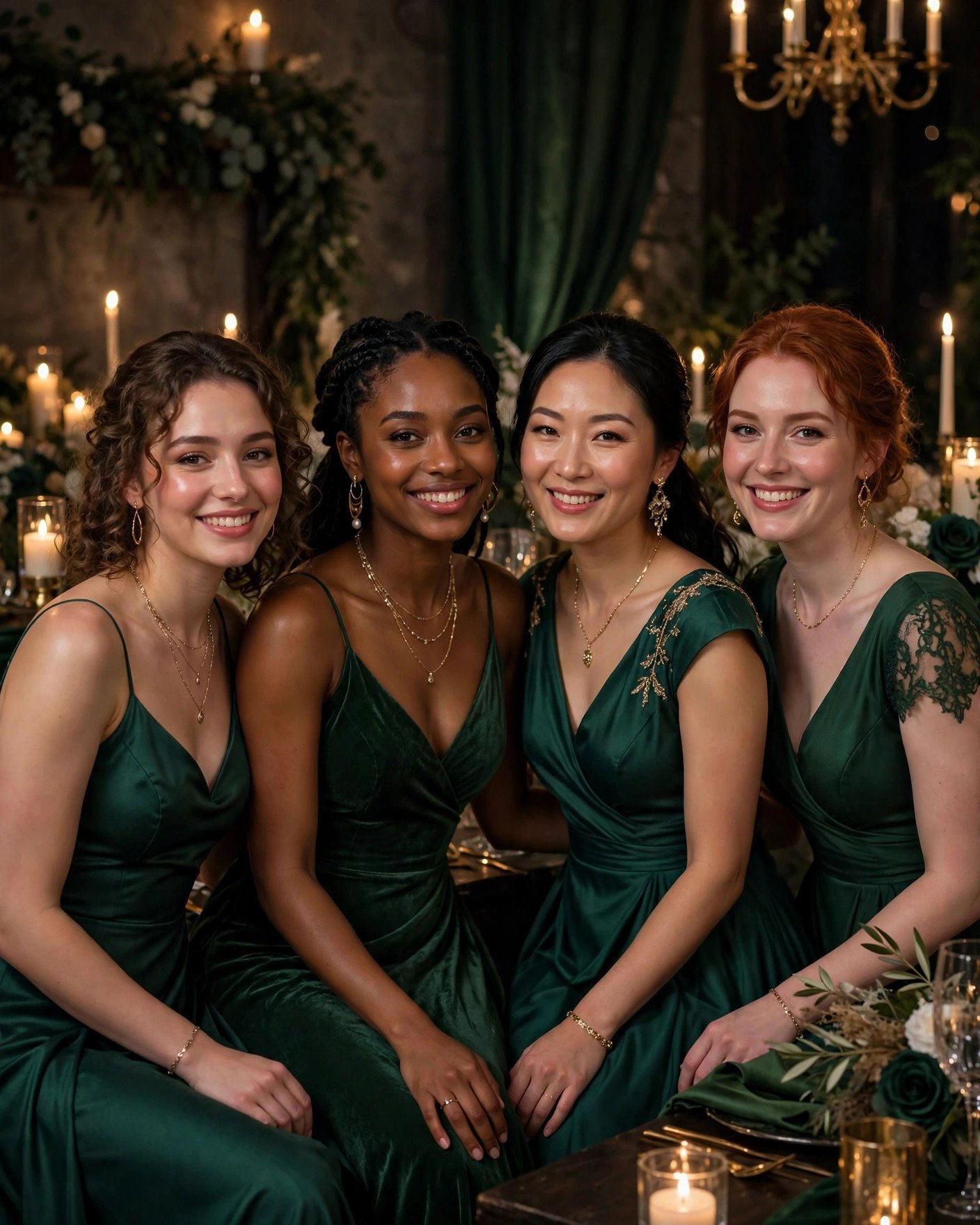
Emerald and forest green deliver rich, formal drama — made for candlelit receptions and cooler seasons.
Deep greens are the showstoppers of the green family. They photograph with incredible richness, which means you can keep silhouettes simple — a fitted style mixed with a flowy one, all within the same dark family. Gold or champagne accessories lift the darker shades and tie the group together instantly.
With jewel tones, restraint is everything: pick at most one matte and one satin deep green, since too many finishes look uneven under evening lighting. Done right, this is the lineup that makes guests gasp when the party walks in.
Read next: How to Have a Beautiful Wedding on a Budget
Mixing Floral Prints With Solids
 📌 Save
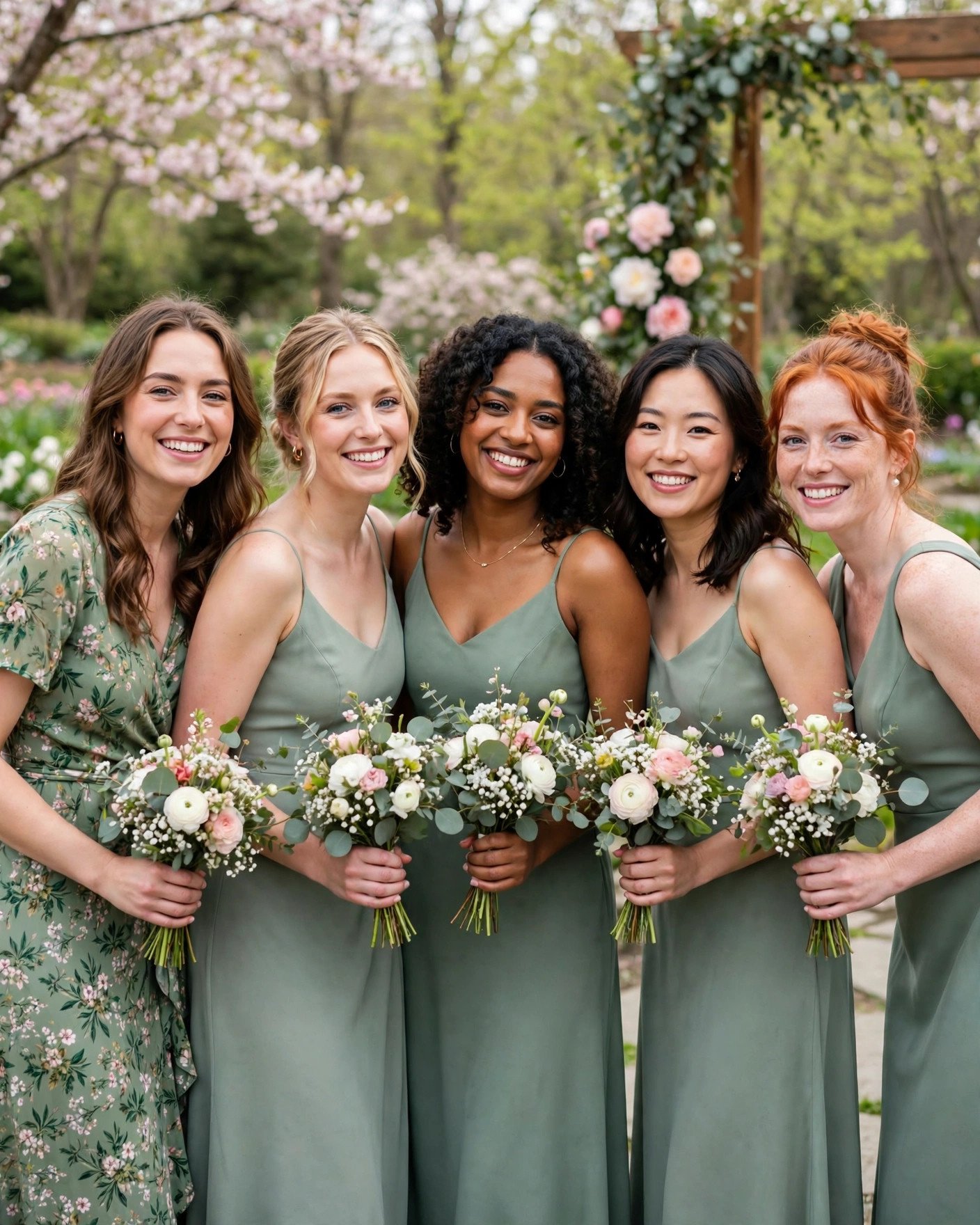
A single green-toned floral print adds personality to a lineup of solids — the key is restraint.
One floral dress among solid greens is delightful; five floral dresses is chaos. Limit prints to one or two bridesmaids, and choose a pattern where green is the dominant color so it reads as part of the family. Match the print scale to the dress style — small florals on simple cuts, larger blooms on flowy skirts.
This trick works best for spring and summer outdoor weddings, where a floral feels natural. Hold the printed dress next to the solid shades before ordering to confirm the greens truly harmonize — screens lie, fabric does not.
Read next: How to Save Money on Your Wedding
Mixed Necklines, One Hemline
 📌 Save
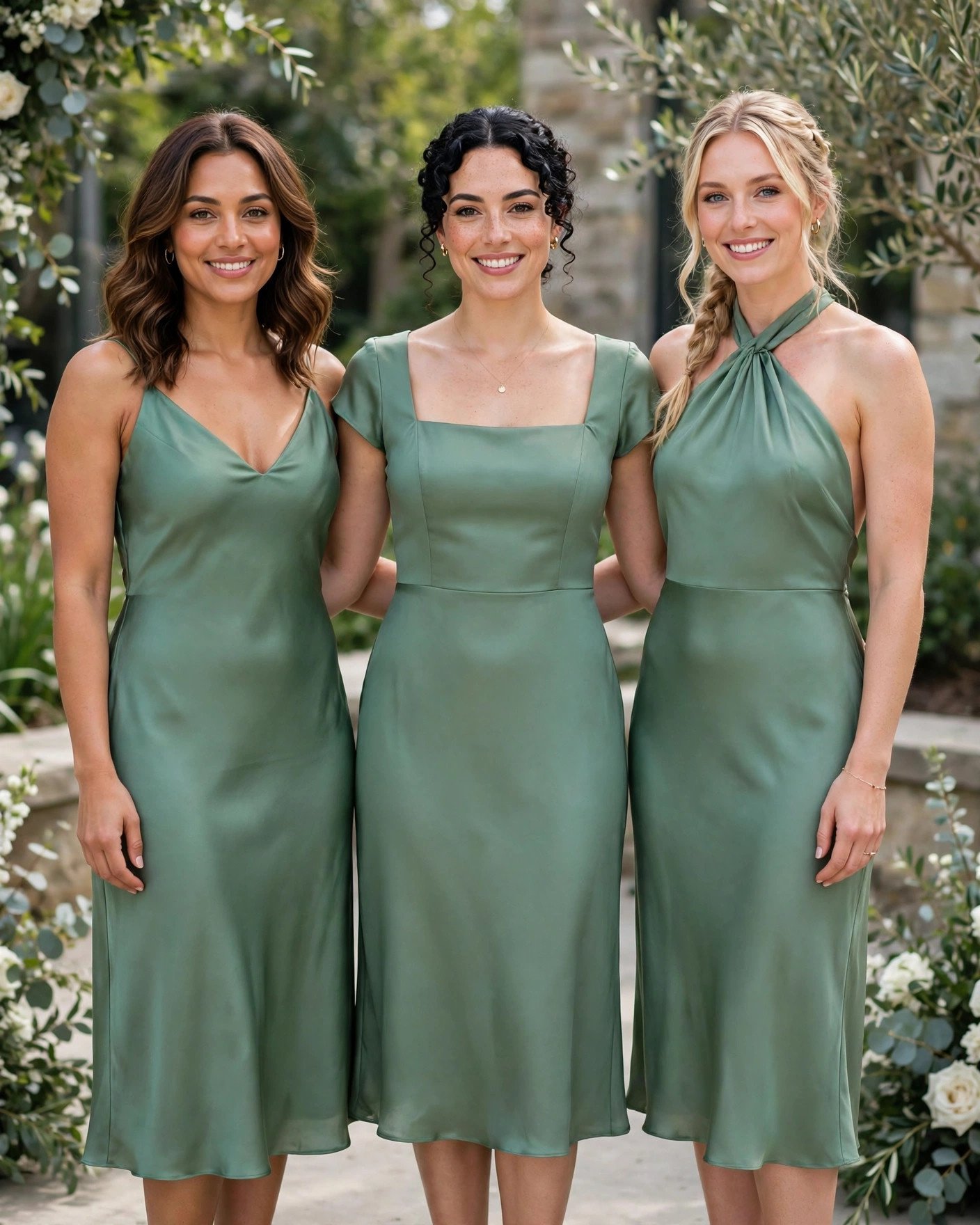
Different necklines let every bridesmaid feel comfortable — one shared hemline keeps the group looking intentional.
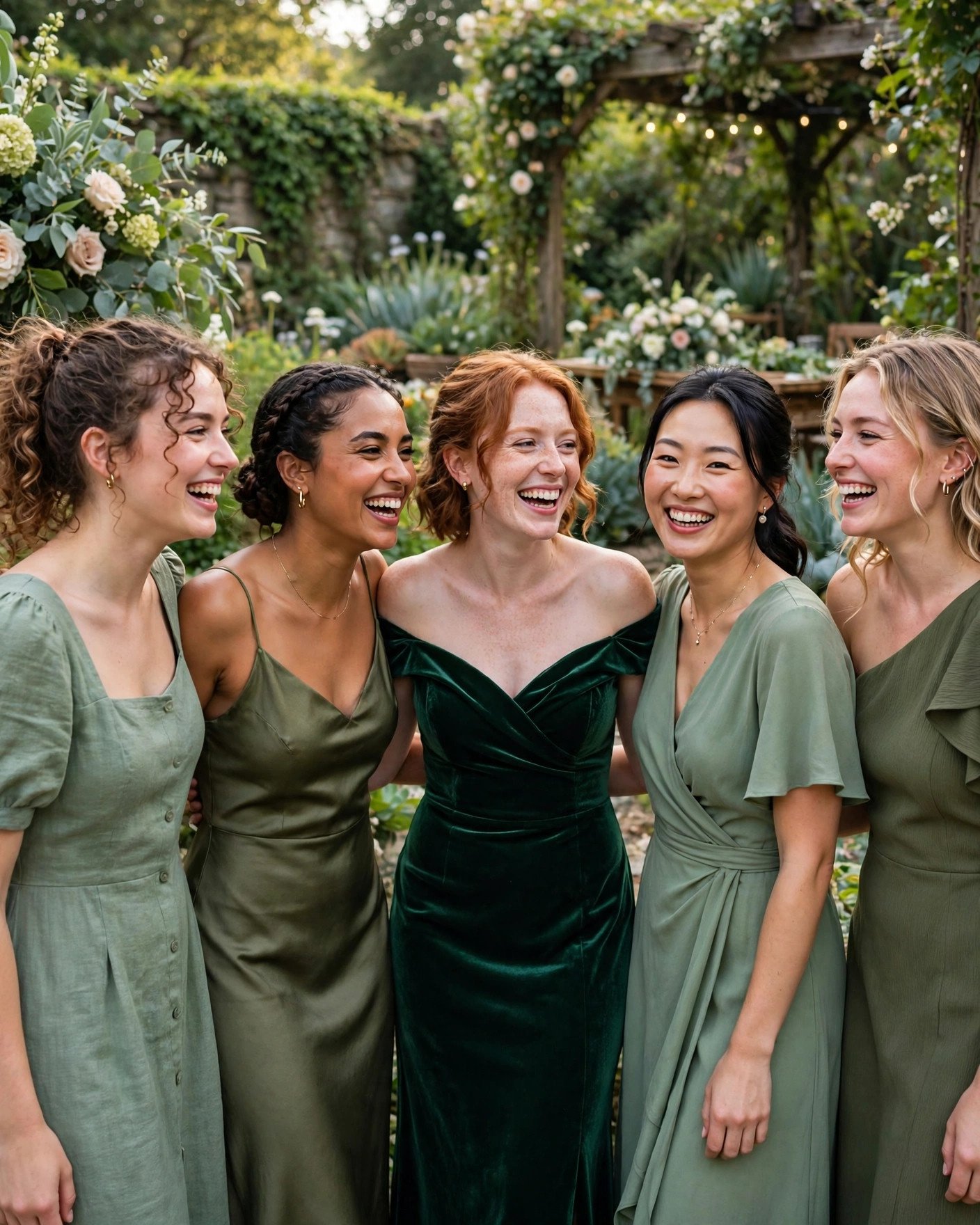
This is the core formula of mismatched dressing: combine V-necks, square necks, halters and off-the-shoulder styles in the same green range, but keep the hem length consistent — all midi or all floor-length. That single horizontal line across the group is what makes varied dresses read as a planned lineup rather than a coincidence.
Add one or two shared details — thin straps, a similar waist shape, matching shoes — and the cohesion locks in. Send everyone a mood board with the approved shades and the hem rule, and they can shop independently with confidence.
Matching Fabric Finishes
 📌 Save
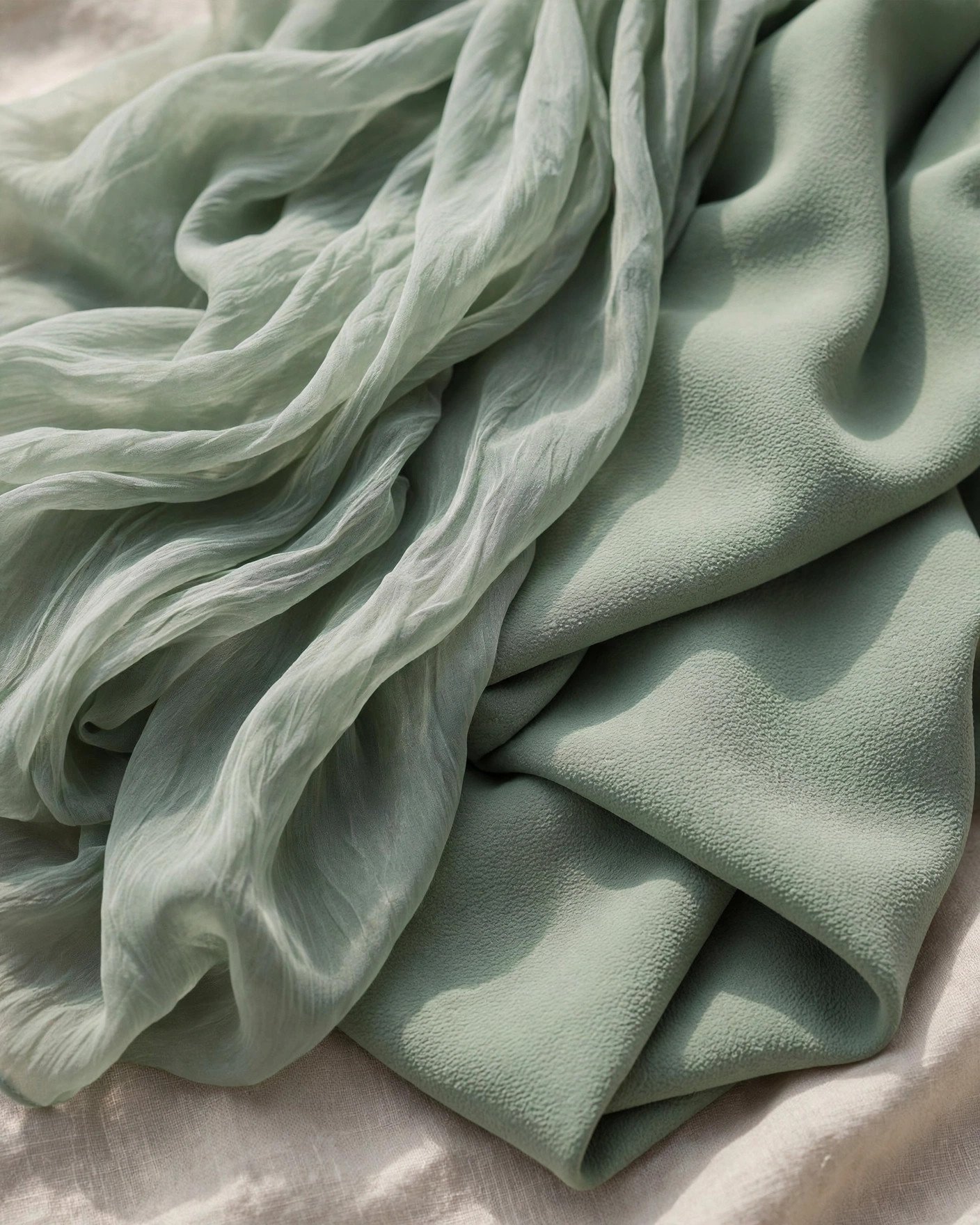
You can mix chiffon, crepe and georgette — but keep them all matte, or all lustrous. Finish is the invisible glue.
Here is the styling secret most guides skip: the eye reads fabric finish before it reads exact shade. A matte sage chiffon next to a shiny sage satin can look like two different colors in photos, while a matte chiffon next to matte crepe reads as intentional variety. Pick one finish family for the whole party and let fabrics, weaves and textures vary inside it.
This rule matters most with deeper greens and evening lighting, where sheen differences get exaggerated. When in doubt, matte is the safer, more forgiving choice — and it photographs beautifully.
Read next: How to Have a Beautiful Wedding on a Budget
The Under-$300 Shopping Playbook
 📌 Save
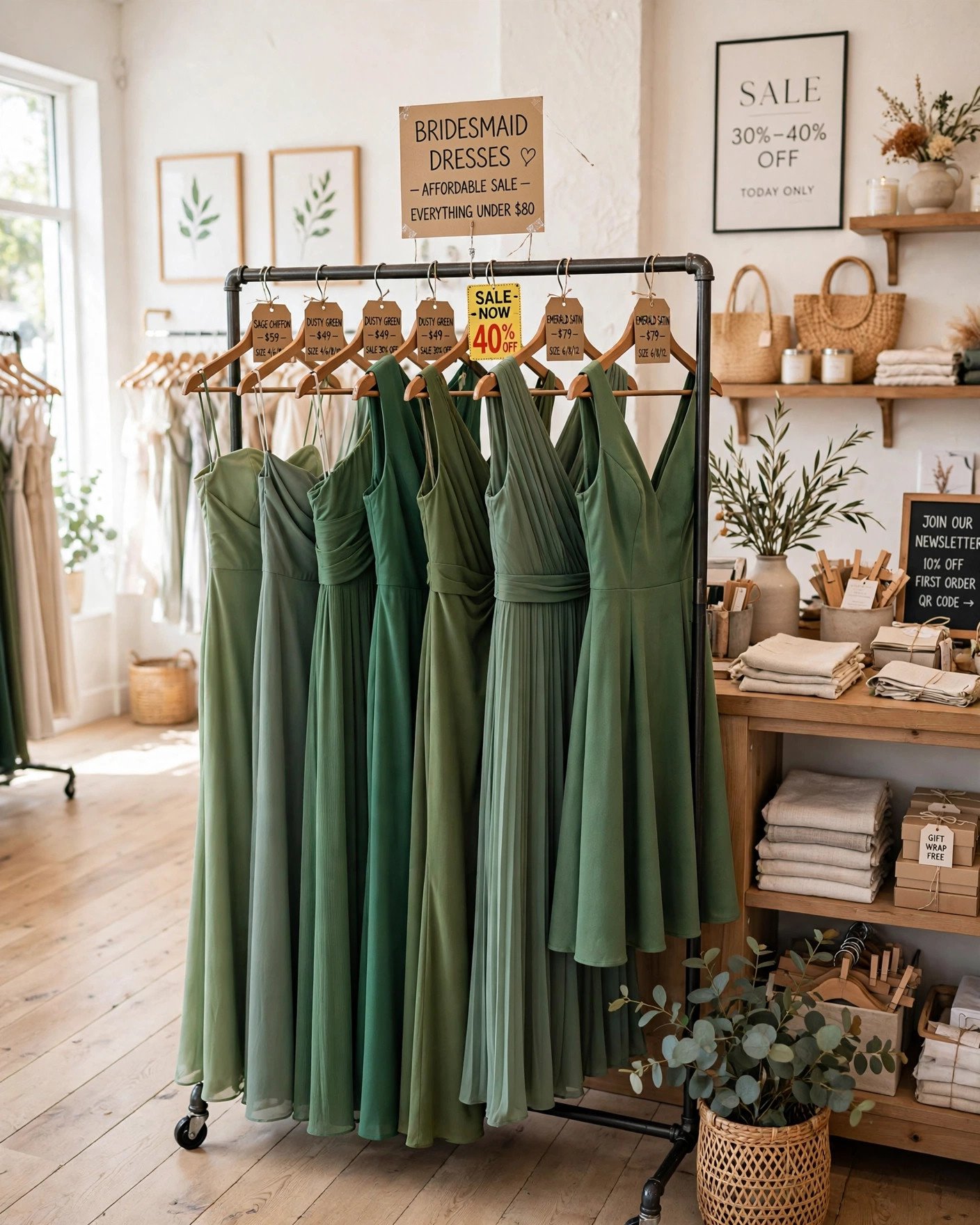
Under $300 is very doable — the trick is knowing where to look and when to buy.
Start with dedicated bridesmaid lines that price most styles between $100 and $250, then check occasion-dress retailers during sale season — green evening dresses in January and July clearances are goldmines. Let each bridesmaid set her own sub-budget inside the $300 ceiling; one might spend $120 on a simple midi while another spends $280 on a dream gown, and the mismatched approach makes both choices invisible.
Order two to three months before the wedding to allow shipping and alterations, and check return windows before anyone commits — shade surprises are the number one reason dresses go back.
Read next: How to Save Money on Your Wedding
The Swatch and Lighting Test
 📌 Save
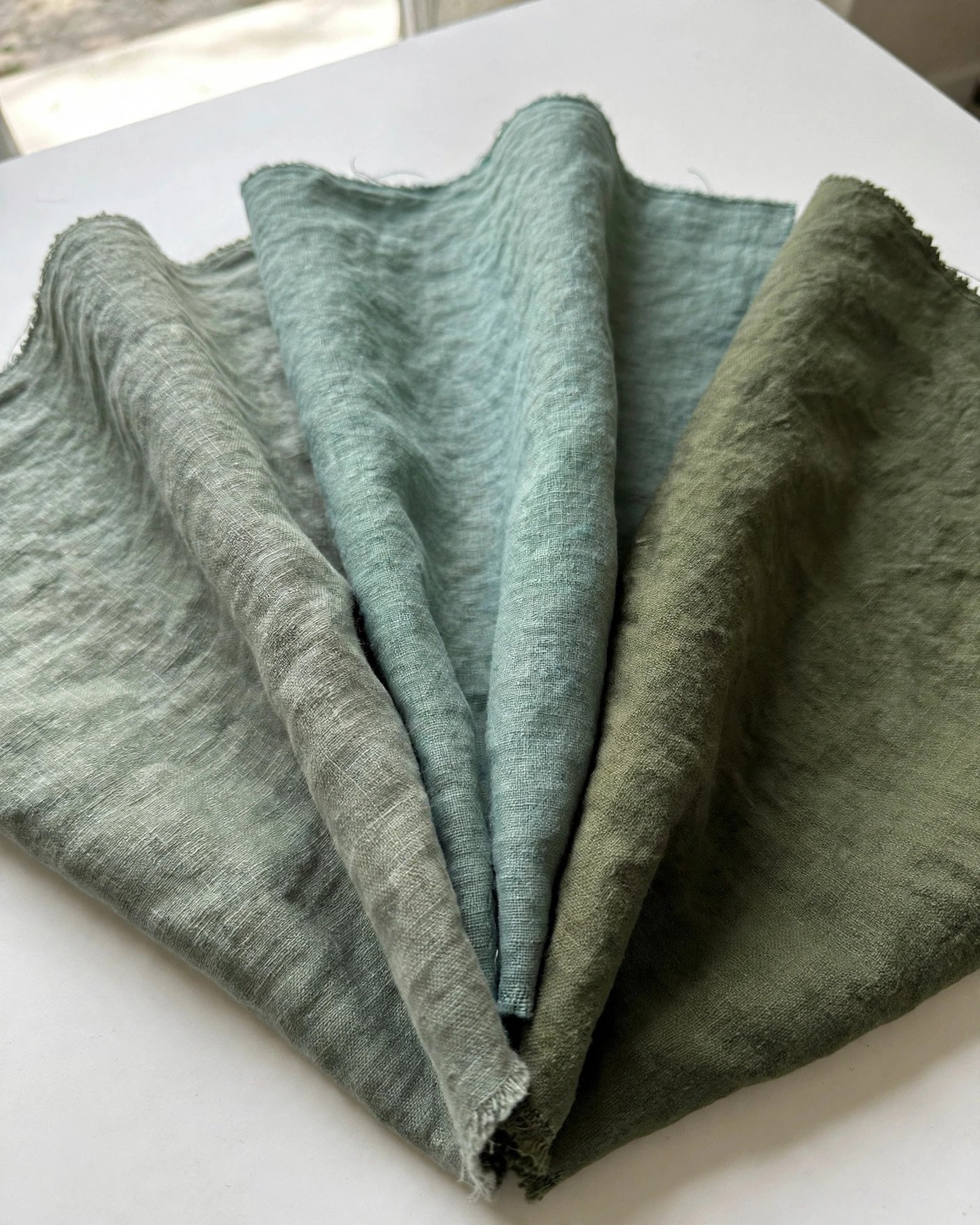
Green is the trickiest color on screens — swatches in real light are non-negotiable.
Have every bridesmaid order a fabric swatch (usually a few dollars) and lay them all together in natural daylight, then again under warm indoor light. You are checking two things: that the undertones harmonize (all warm or all cool, never mixed) and that the finishes match. This ten-minute test prevents the classic disaster of dresses that matched online and clash in person.
Keep one approved swatch set with you as the reference — when anyone second-guesses her choice, the swatches settle it. Photograph the final lineup of swatches too, so your photographer knows the intended palette.
Styling the Group Photo
 📌 Save
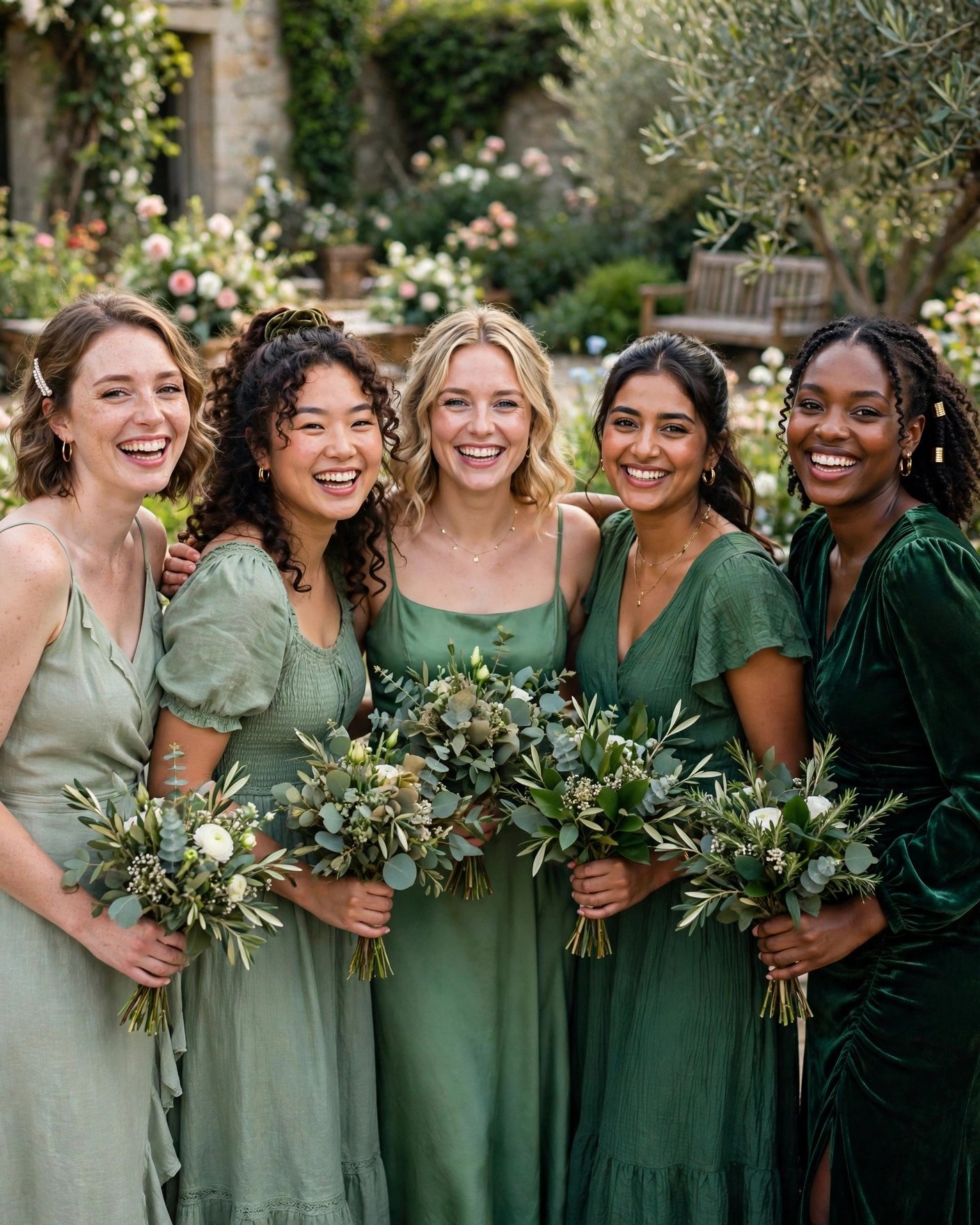
The dresses are chosen — now arrange shades light-to-dark and unify the extras for a flawless group shot.
On the day, arrange the party with the lightest green in the center fading to the deepest at the ends — it creates a natural gradient that looks art-directed. Unify the small things: matching bouquets, similar shoe tones (nude or metallic works with every green), and one jewelry metal across the group. These shared extras are what make varied dresses look like one deliberate vision.
Give your photographer a heads-up about the mismatched plan and the shade order you want. A thirty-second briefing turns good bridesmaid photos into the ones you frame.
Read next: How to Have a Beautiful Wedding on a Budget
Frequently Asked Questions
What are mismatched bridesmaid dresses?
Mismatched bridesmaid dresses are different dress styles in the same color family — for example, various necklines and fabrics in shades of green. Each bridesmaid chooses a flattering fit while the group still looks cohesive in photos.
How do I make mismatched green dresses look cohesive?
Stick to two or three closely related shades of green, keep the hem length consistent, and match fabric finishes (all matte or all satin). Share a mood board with approved shades so everyone shops within the same palette.
What green shades work best together for bridesmaids?
Sage, eucalyptus and dusty green blend softly for spring and summer weddings; olive suits warm rustic weddings; emerald and forest green bring drama to formal evening weddings. Keep to shades with similar undertones for the most harmonious result.
Can you find good bridesmaid dresses under $300?
Yes — many retailers offer bridesmaid dresses in green shades well under $300, and the mismatched approach lets each bridesmaid shop within her own budget. Order 2–3 months ahead for shipping and alterations, and always order fabric swatches first.
Should bridesmaids all wear the same fabric?
Not the same fabric exactly, but the same finish. Mixing matte chiffon with shiny satin in the same shade can look uneven in photos, while two different matte fabrics read as intentional. Pick one finish family — matte or lustrous — and let silhouettes vary.
✨ Key Takeaways
- Pick two or three closely related greens — sage, eucalyptus, olive or emerald — never the whole rainbow.
- One hemline and one fabric finish keep mismatched dresses looking intentional.
- Let necklines vary so every bridesmaid gets a flattering fit.
- Order fabric swatches and check them in real light before anyone buys.
- Share a mood board and the $300 ceiling early so everyone shops with confidence.
Final Thoughts
Mismatched green bridesmaid dresses are the rare trend that is both beautiful and kind — kind to different bodies, kind to different budgets, kind to the planet when dresses get reworn. Start with one anchor shade, add one or two friends to the family, and hold the line on hemline and finish. Do that, and your wedding party will look effortlessly coordinated without ever looking identical.