How to Save Money on Your Wedding
By zainzari • Published April 2026 • Updated October 11, 2026
 📌 Save
To save money on your wedding, work a timeline: set a real budget 12+ months out, lock the big three vendors early, negotiate at 10–11 months, cut the guest list at 8–9 months, use off-peak leverage at 6–7 months, audit every vendor at 4–5 months, and freeze spending in the final month. Polite, specific negotiation — itemized quotes, bundled services, off-peak asks — saves thousands more than last-minute scrimping.
Most wedding savings advice is a list of tips. This is not that — it is a playbook. Saving real money on a wedding is about timing: booking the right vendors at the right moment, negotiating when vendors are motivated, and making the big structural decisions (guest count, date, venue type) before the small ones lock you in.
Follow this month-by-month timeline from engagement to wedding day, use the negotiation scripts at the end, and you will save thousands — without a wedding that feels cheap.
At a Glance: When to Act & What It Saves
| Timing | Action | Effort | Savings Level |
|---|---|---|---|
| Day one | Set the budget split | Low | High (prevents overspend) |
| 12+ months | Book venue, caterer, photographer | Medium | High (locks prices) |
| 10–11 months | Negotiate mid-tier vendors | Medium | High |
| 8–9 months | Finalize guest list | Low | Highest |
| 6–7 months | Off-peak & weekday leverage | Low | High |
| 4–5 months | Audit every vendor contract | Medium | Medium–High |
| 3 months | Attire, flowers, decor deals | Medium | Medium |
| 6 weeks | Payment calendar & deposits | Low | Medium |
| 1 month | Spending freeze | Low | Medium |
The pattern: big structural decisions early (guest count, date, venue), negotiations in the middle, and a hard spending freeze at the end. Savings compound when the order is right.
Start With a Real Number: The 50/30/20 Wedding Split
 📌 Save
Before you book anything, split your total budget: roughly 50% venue and catering, 30% attire, photo, flowers and music, 20% everything else — plus a 5–10% surprise buffer.
Couples who overspend almost always do it the same way: they book an emotional favorite first, then discover the remaining budget cannot cover the essentials. The split fixes this. Write your total number down, assign every dollar a category, and track spending in one shared spreadsheet from day one. When a category hits its cap, the answer is already decided.
Automate a monthly transfer into a dedicated wedding savings account the day you set the budget. Money you never see is money you never accidentally spend on “just one more” upgrade.
Read next: How to Have a Beautiful Wedding on a Budget
12+ Months Out: Lock the Big Three Early
 📌 Save
Book venue, caterer and photographer 12+ months out — you lock current pricing before annual rate increases hit.
Vendors raise prices yearly, and the big three represent the majority of most budgets. Booking early is not just about availability; it is a financial move. A venue booked this spring at this spring’s rate can save you 5–10% versus next year’s pricing for the same space.
Prioritize venues with open catering policies and included rentals (tables, chairs, linens) — these two factors quietly save more than any discount. Get every inclusion in writing before you sign.
10–11 Months Out: The First Negotiation Round
 📌 Save
This is prime negotiation season: vendors are filling next year’s calendar and motivated to win your booking.
Never accept a package price at face value. Ask for an itemized quote, then ask what can be removed, swapped or downgraded — fewer photography hours, a simpler floral package, a DJ without the lighting add-ons. Removing beats discounting: vendors protect their rates but happily trim scope.
Get three quotes minimum per category. You do not always take the cheapest — you take the best quote back to your favorite vendor and ask them to meet it on scope. Competition is your leverage; use it kindly.
Read next: How to Have a Beautiful Wedding on a Budget
8–9 Months Out: Guest List Math
 📌 Save
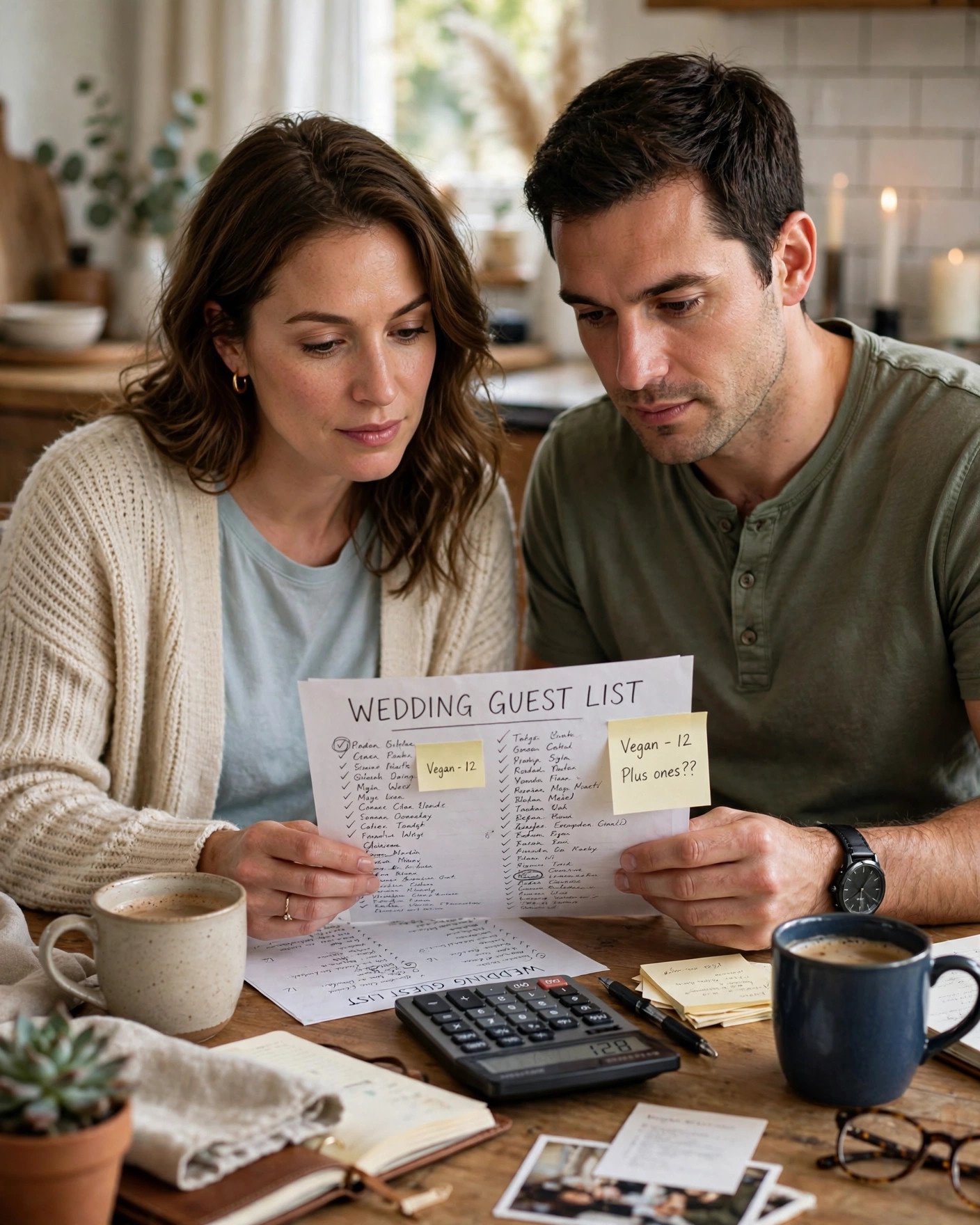
Trimming the guest list is the single biggest savings move — each guest removed saves across catering, rentals, favors and more.
Do the real math: at a typical per-guest cost, cutting 30 names can save thousands in one decision — more than every decor hack combined. Build your list in tiers: must-haves first, then add only while the budget allows. Apply one clear plus-one rule to everyone so it never feels personal.
Lock the list at 8–9 months and give it to your caterer and stationer then. Every late addition after this point costs more and stresses everyone — the deadline is the discipline.
6–7 Months Out: Off-Peak Leverage
 📌 Save
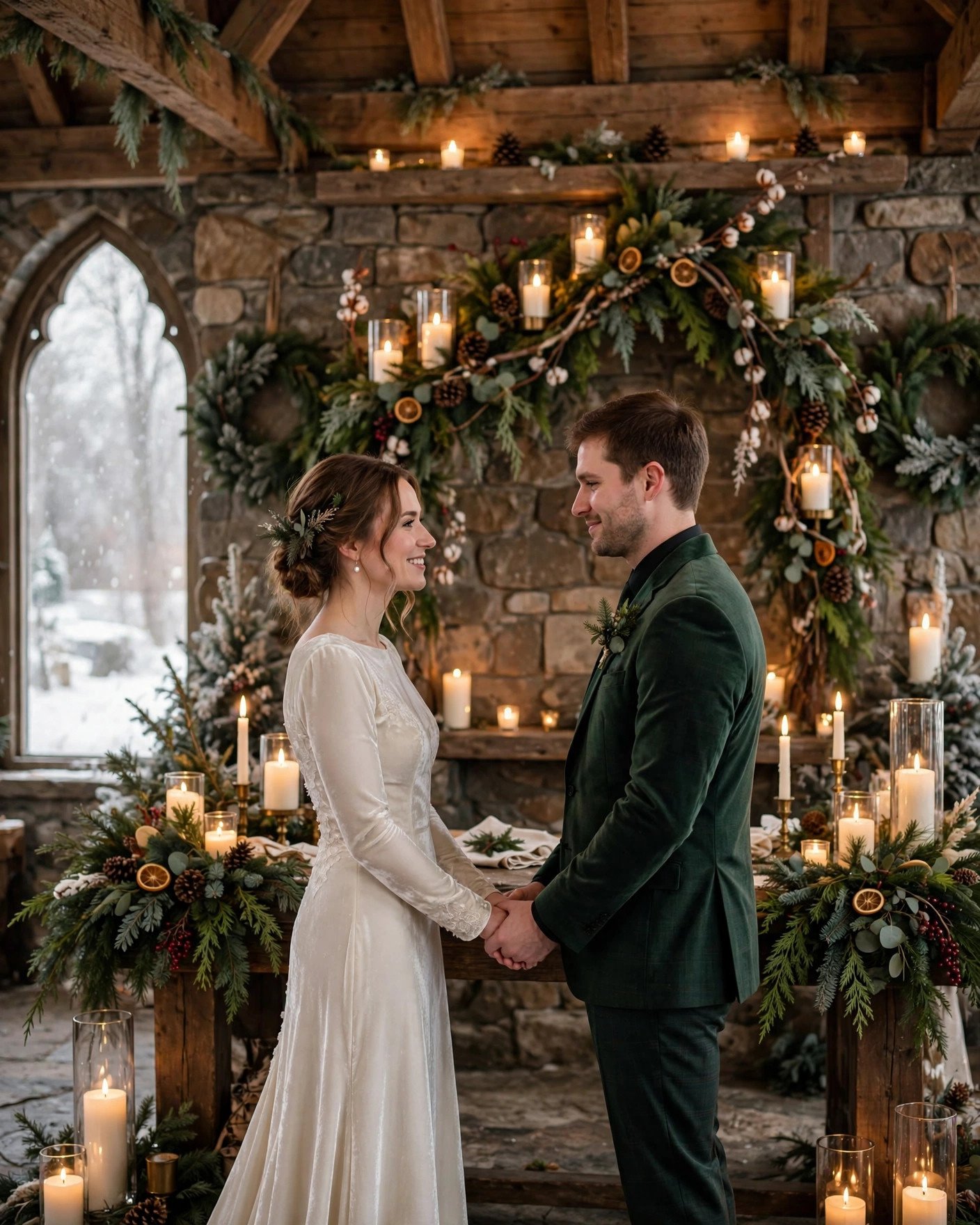
If your date is still flexible, off-season and weekday weddings unlock the deepest vendor discounts.
Saturday in peak season is the most expensive slot in weddings — everything else discounts from there. Fridays and Sundays often run 10–20% less; weekdays can drop further. Winter and early spring dates bring similar savings across venues, photographers and florists, who are hungry for off-season bookings.
Even if your date is fixed, use off-peak knowledge as leverage: ask vendors what the price difference would be, then ask what they can do to close the gap. And consider a brunch or lunch reception — daytime catering routinely costs less than a full dinner service.
Read next: How to Have a Beautiful Wedding on a Budget
4–5 Months Out: The Vendor Audit
 📌 Save
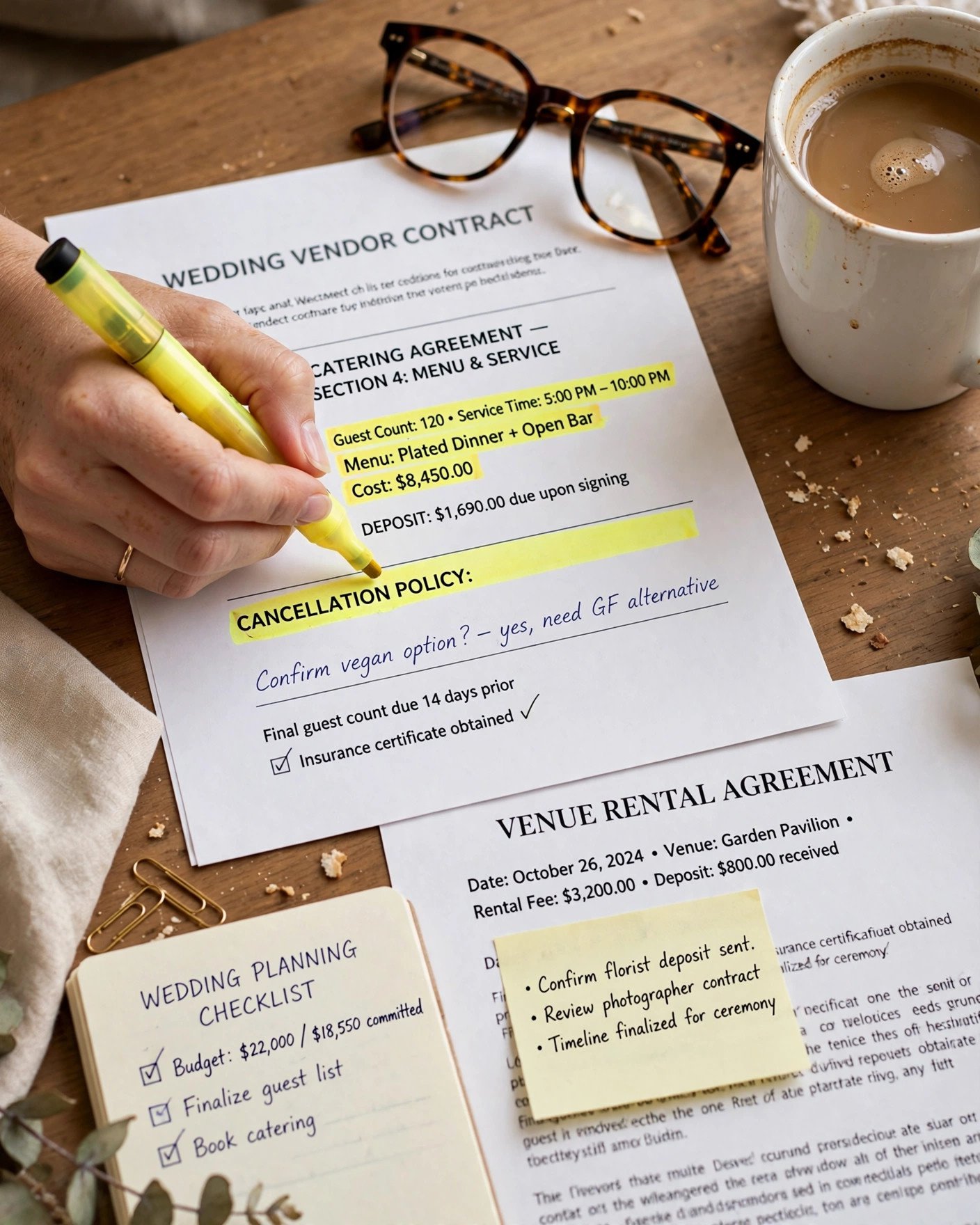
Re-read every signed contract and pending quote with one question: what can be cut, swapped or downgraded without anyone noticing?
The audit is where packages quietly shrink to fit your budget. That second photography hour nobody needs, the premium linen upgrade, the full open bar when a signature drink plus beer and wine would delight everyone, the 200-chair rental when 150 guests are coming — line items accumulate, and each one is negotiable until the final payment.
Call each vendor once with a consolidated ask rather than five small emails. “We need to trim $800 from this package — what would you cut first?” Vendors answer this question well because you have made it collaborative, not adversarial.
3 Months Out: Attire, Flowers and Decor Deals
 📌 Save
Three months out is deal season for attire and flowers — sample sales, off-the-rack gowns and seasonal blooms.
Ask bridal shops about sample sales and trunk shows; off-the-rack and sample gowns routinely sell for a fraction of ordered dresses, and you take them home the same day. For flowers, commit to seasonal, locally available blooms and let your florist design around what’s abundant — flexibility here can halve the floral bill.
Finalize decor now with a “borrow first, buy second” rule: ask family and friends for vases, candles and stands before spending a dollar. Label everything borrowed so it all returns safely.
Read next: How to Have a Beautiful Wedding on a Budget
6 Weeks Out: The Payment Calendar
 📌 Save
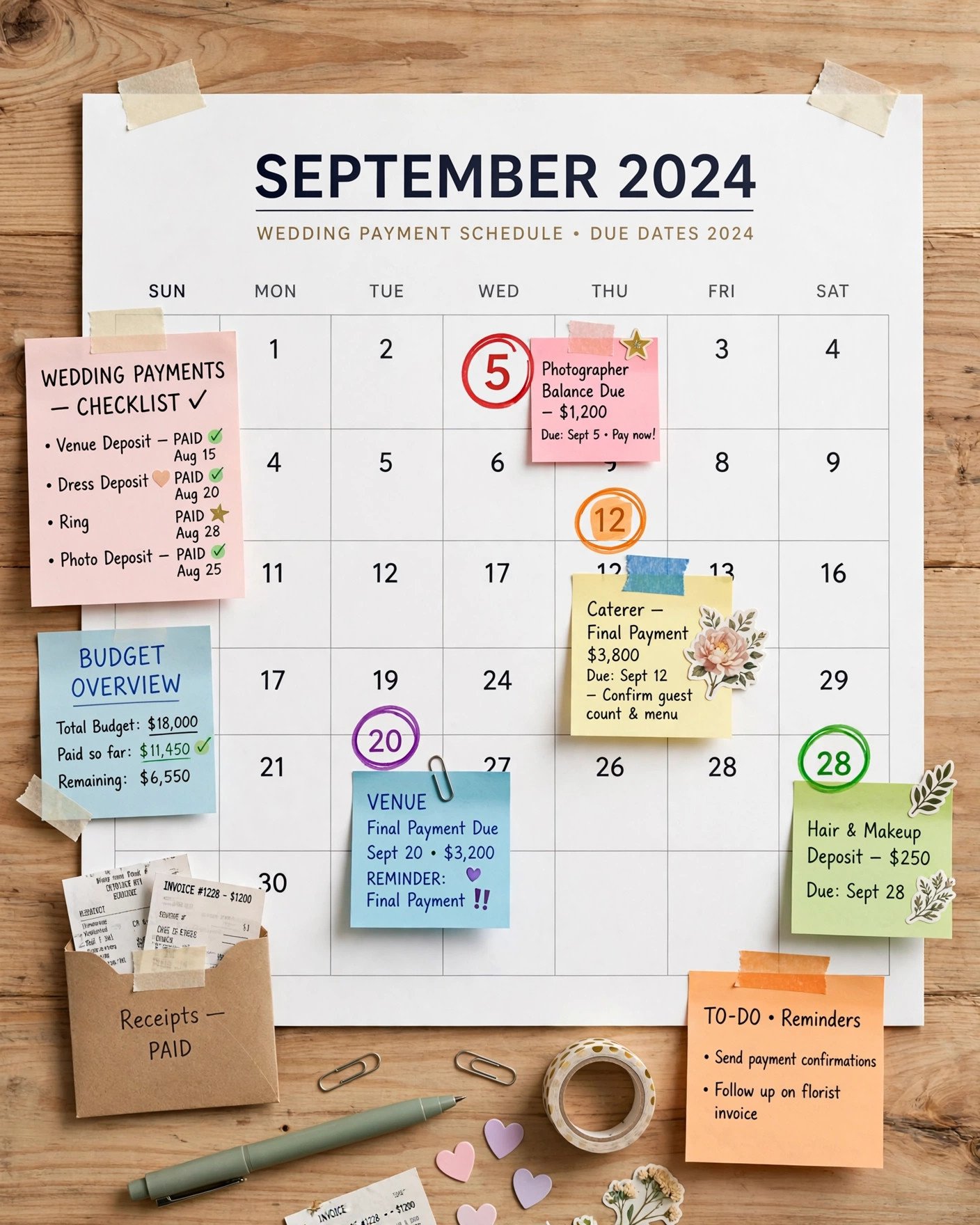
Map every remaining payment on one calendar — late fees and rush charges are the most avoidable wedding expenses.
List every vendor balance, its due date and its payment method in one place. Pay on time, every time: late fees, rush alteration charges and expedited shipping quietly add hundreds in the final weeks. Where vendors offer early-payment or pay-in-full discounts, take them — but only from savings, never on credit you cannot clear.
This is also the moment to confirm final guest counts with the caterer. Overestimating “just in case” wastes money on uneaten plates; the RSVP deadline exists to give you a real number — use it.
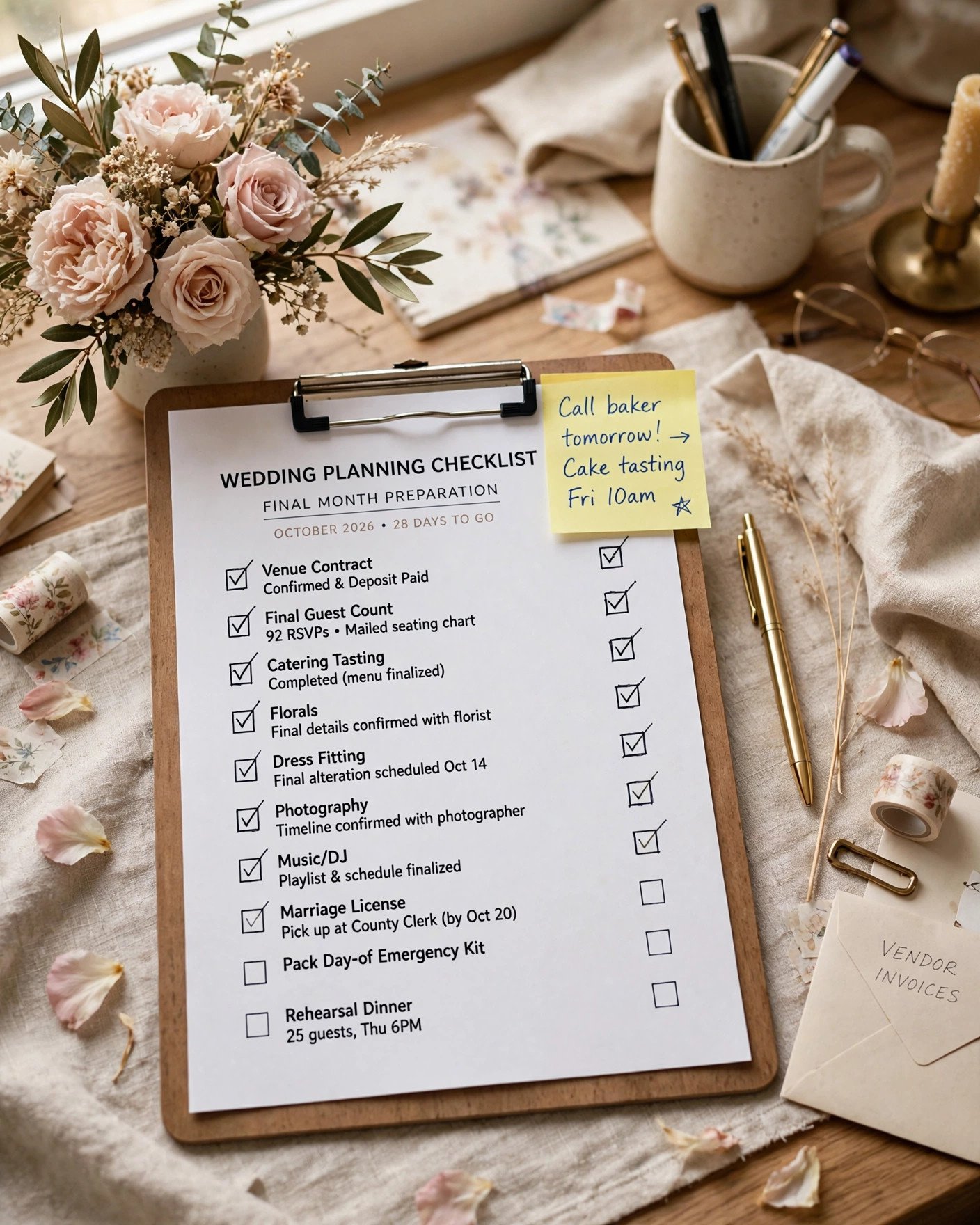
1 Month Out: The Spending Freeze
 📌 Save
Thirty days out, stop shopping: no new decor ideas, no upgrades, no “just one more thing.”
The final month is where budgets die — not on big decisions but on dozens of small “it is only $30” purchases that total hundreds. Institute a hard freeze: anything not already on the plan does not get bought. New idea? Write it down for someone else’s wedding. Your plan is complete; now you execute it.
Keep the buffer untouched for genuine surprises (a broken heel, a wilted bouquet emergency). If the month ends and the buffer is intact, it becomes honeymoon money — the best possible outcome.
Read next: How to Have a Beautiful Wedding on a Budget
Negotiation Scripts That Save Thousands
 📌 Save
Steal these five scripts — polite, specific and proven to move vendor pricing.
One: “Could you send an itemized quote so we can see what to prioritize?” Two: “We love your work — what would this look like without X?” Three: “We are flexible on timing — do you offer off-peak or weekday rates?” Four: “If we book both photography and videography with you, is there a bundle rate?” Five: “We need to trim our budget by this amount — what would you cut first?”
The principles behind them: ask about scope, not discounts; give vendors a problem to solve with you; always be ready to walk away kindly. And get every agreed change in a revised contract — verbal promises evaporate.
Frequently Asked Questions
What is the biggest way to save money on a wedding?
Cutting the guest list is the single biggest lever — every guest adds a plate, a chair, favors and drinks, so trimming 30 names can save thousands at once. After that, choosing an off-season or weekday date and negotiating vendor packages deliver the largest savings.
Can you negotiate with wedding vendors?
Yes — most vendors expect it. Ask for itemized quotes, request off-peak or weekday pricing, bundle services, and ask what can be removed or swapped rather than asking for a blunt discount. Polite, specific asks work far better than haggling.
When should you book wedding vendors to save money?
Book the big three — venue, caterer, photographer — 12+ months out to lock current prices before annual increases. Then negotiate mid-tier vendors 8–10 months out when they are filling calendars and motivated to offer deals.
How far in advance should you start saving for a wedding?
Start 12 months out with a written budget split across categories, automate a monthly wedding savings transfer, and review spending quarterly. A small buffer of 5–10% for surprises keeps one unexpected cost from wrecking the plan.
What wedding costs are negotiable?
Venue rental fees, catering minimums, photography hours and albums, DJ overtime rates, floral quantities, stationery suites and transportation are all commonly negotiable. Fixed costs like marriage licenses, postage and venue-mandated insurance rarely budge.
✨ Key Takeaways
- Set a written budget split on day one — 50/30/20 plus a surprise buffer.
- Book the big three vendors 12+ months out to lock current prices.
- Negotiate scope, not discounts — itemized quotes are your leverage.
- The guest list is the biggest lever; finalize it at 8–9 months and hold the line.
- Freeze all new spending in the final month and protect your buffer.
Final Thoughts
Saving money on your wedding is not about deprivation — it is about sequencing. Make the big structural decisions early, negotiate in the middle when vendors are hungry, and hold a hard line at the end. Do that, and you will walk down the aisle with money in the bank and zero regrets about what you spent to get there.