How to Plan a Courthouse Wedding (2027)
By zainzari • Published October 23, 2026 • Updated October 23, 2026
 📌 Save
To plan a courthouse wedding: choose your courthouse and date, apply for a marriage license, book your ceremony appointment, arrange witnesses, plan outfits and photography, and organize a small celebration afterward — most couples complete the whole plan in two to eight weeks. Requirements vary at every step, so check your local courthouse, register office (UK), or municipal clerk (Canada) for the exact rules where you will marry.
Planning a courthouse wedding is refreshingly linear: a handful of legal steps, a handful of joyful ones, and no seating chart in sight. Most couples go from decision to married in a few weeks, and the planning itself can be part of the fun rather than a second job.
This guide walks the whole journey in order — legalities first, then the day’s design, then the celebration. Wherever you marry in the US, UK, or Canada, the shape is the same; only the local details change, which is why each legal step ends with the same advice: confirm it with your local office.
At a Glance: Step, When & Effort
| # | Planning Step | When | Priority | Effort |
|---|---|---|---|---|
| 1 | Decide What Kind of Day You Want | 6+ weeks out | Essential | Low |
| 2 | Choose Your Courthouse or Register Office | 6 weeks out | Essential | Medium |
| 3 | Check the Local Requirements Carefully | 6 weeks out | Essential | Low |
| 4 | Apply for Your Marriage License | 3–6 weeks out | Essential | Medium |
| 5 | Book Your Ceremony Appointment | 3–5 weeks out | Essential | Low |
| 6 | Understand the Fees and Payment Rules | 3–5 weeks out | Essential | Low |
| 7 | Choose and Brief Your Witnesses | 4 weeks out | Essential | Low |
| 8 | Decide Your Guest List — Honestly | 4 weeks out | Essential | Medium |
| 9 | Plan the Celebration Afterward | 3–4 weeks out | High | Medium |
| 10 | Choose Outfits With Time for Tailoring | 4 weeks out | High | Medium |
| 11 | Order the Bouquet and Boutonniere | 1–2 weeks out | High | Low |
| 12 | Book Photography — Even One Hour | 3–4 weeks out | High | Medium |
| 13 | Write Short Personal Vows (Optional but Lovely) | 2 weeks out | Nice to have | Low |
| 14 | Handle Rings, Documents, and Details | 1 week out | Essential | Low |
| 15 | Plan the Day’s Timeline | 1 week out | Essential | Low |
| 16 | Sort Transport and Parking | 1 week out | High | Low |
| 17 | Prepare a Tiny Emergency Kit | 1 week out | High | Low |
| 18 | Tell People the News Plan | 1 week out | High | Low |
| 19 | The Day Before: Rehearse the Route | Day before | Essential | Low |
| 20 | The Morning Of: Get Ready Without Rush | Wedding day | Essential | Low |
| 21 | At the Building: Check In and Breathe | Wedding day | Essential | Low |
| 22 | During the Ceremony: Be Present | Wedding day | Essential | Low |
| 23 | After: Steps, Photos, and the Certificate | Wedding day | High | Low |
| 24 | Celebrate Like You Mean It | Wedding day | High | Low |
| 25 | After the Day: Certificates and Thank-Yous | After | Essential | Low |
Priority guide: essential steps are legally or logistically required; the rest shape how the day feels. Full guidance for all 25 steps is below.
Decide What Kind of Day You Want
 📌 Save
Before any paperwork, agree on the shape of the day: just the two of you or a small group, morning or afternoon, brunch or dinner afterward, photographer or phones. This one conversation decides your budget, guest approach, and booking order. Write the answers down — every later choice gets easier against them.
Choose Your Courthouse or Register Office
 📌 Save
You are usually not limited to your home county or district, so choose deliberately: a grand historic building, your neighborhood office, or a city you love. Compare ceremony rooms, appointment availability, and photo opportunities. Many couples marry somewhere beautiful and handle the license in the same jurisdiction to keep paperwork simple.
Check the Local Requirements Carefully
 📌 Save
Requirements vary — check your local courthouse, register office, or municipal clerk for ID rules, license validity windows, appointment systems, witness rules, and fees before assuming anything from articles like this one. Make a written list of your office’s exact requirements and deadlines. This single step prevents nearly every courthouse wedding problem.
Apply for Your Marriage License
 📌 Save
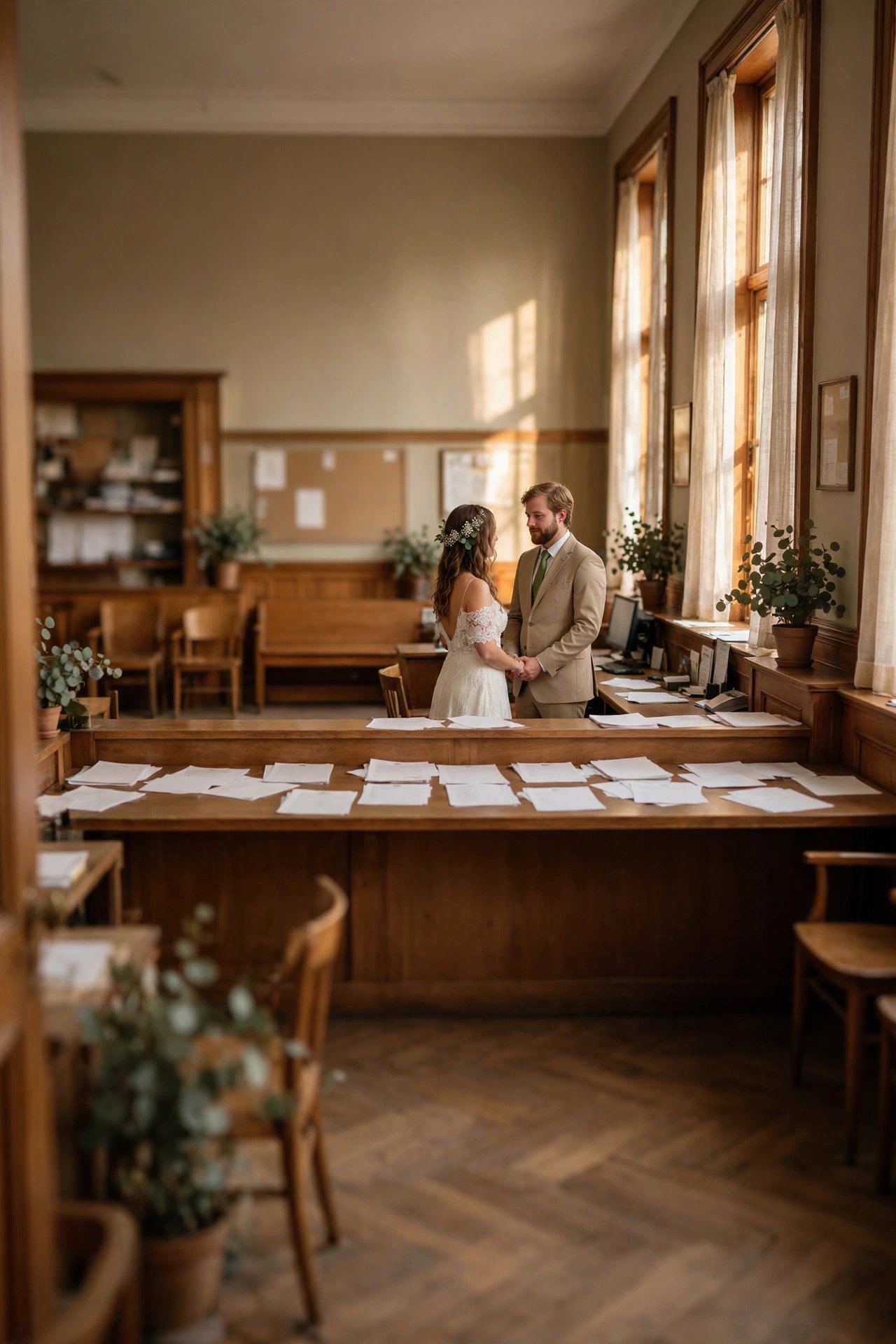
In the US you typically apply together at a county or city clerk’s office with photo ID; in England and Wales you give notice at a register office; in Canada you apply through your province or municipality. Licenses usually become valid after a short waiting period in some places and expire after a set window — commonly weeks to a few months — so time your application to your ceremony date.
Book Your Ceremony Appointment
 📌 Save
Many offices require a ceremony appointment separate from the license: booked online, by phone, or at the counter. Popular slots — Fridays, weekends where offered, and memorable dates — fill weeks ahead. Book as soon as your license timeline allows, and confirm how early to arrive and where to check in.
Understand the Fees and Payment Rules
 📌 Save
License and ceremony fees are usually modest — often somewhere in the $25 to $150 range combined in the US, with UK register office and Canadian municipal fees following their own published scales. Some offices take cards; others ask for cash or money orders. Confirm amounts and payment methods when you book so the day has no counter surprises.
Choose and Brief Your Witnesses
 📌 Save
Most civil ceremonies require one or two adult witnesses; some offices can provide them if you marry alone, but asking people you love is far more meaningful. Brief your witnesses on arrival time, dress expectations, and the photo ID they must bring. Their signatures are part of your legal record — choose people you are proud to have there.
Decide Your Guest List — Honestly
 📌 Save
Ceremony rooms are small and guest limits are usually strict, so decide your number against the room’s actual capacity before inviting anyone. Tell non-invited loved ones early and warmly, ideally paired with your celebration or later-party plans. Most people understand courthouse limits instantly when they hear the room fits twelve.
Plan the Celebration Afterward
 📌 Save
Reserve your celebration as soon as your ceremony slot is confirmed: a brunch spot, a restaurant private room, a rooftop hour, or a park picnic. Pre-order food where possible and arrange for a small cake. A booked celebration turns a short ceremony into a full wedding day with a beginning, middle, and end.
Choose Outfits With Time for Tailoring
 📌 Save
Shop outfits early enough for alterations — two to four weeks of tailoring lead time is comfortable. Courthouse looks range from full gowns to tailored suits and jumpsuits; the only rule is that they fit and feel like you. Order shoes at the same time and break them in at home.
Order the Bouquet and Boutonniere
 📌 Save
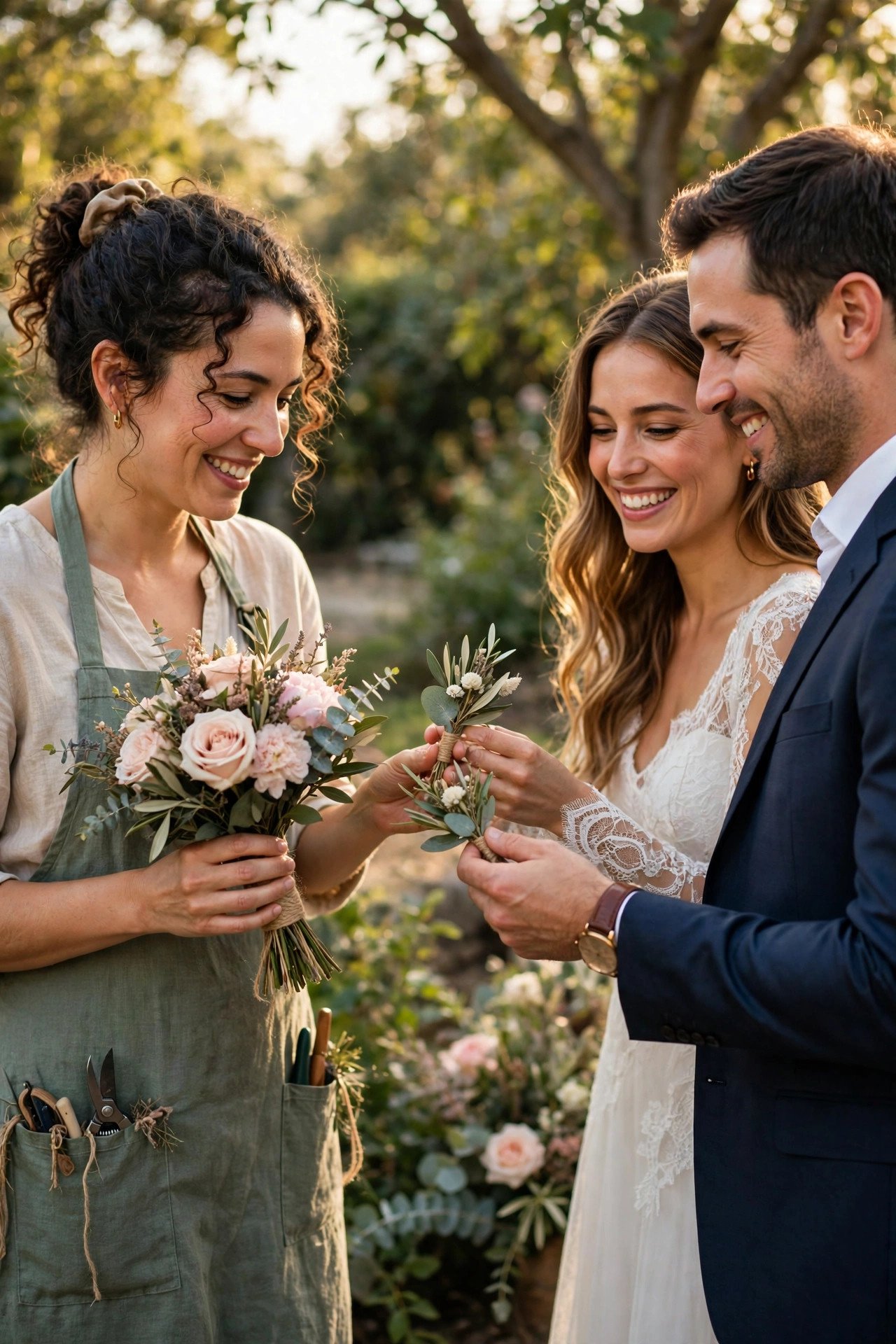
Order flowers one to two weeks ahead — compact bouquet, a boutonniere, and posies for witnesses if you like. Hardy choices like orchids, callas, and roses survive the full day. Alternatively, plan a DIY market bouquet for the day before. Either way, decide where the bouquet waits during the ceremony itself.
Book Photography — Even One Hour
 📌 Save
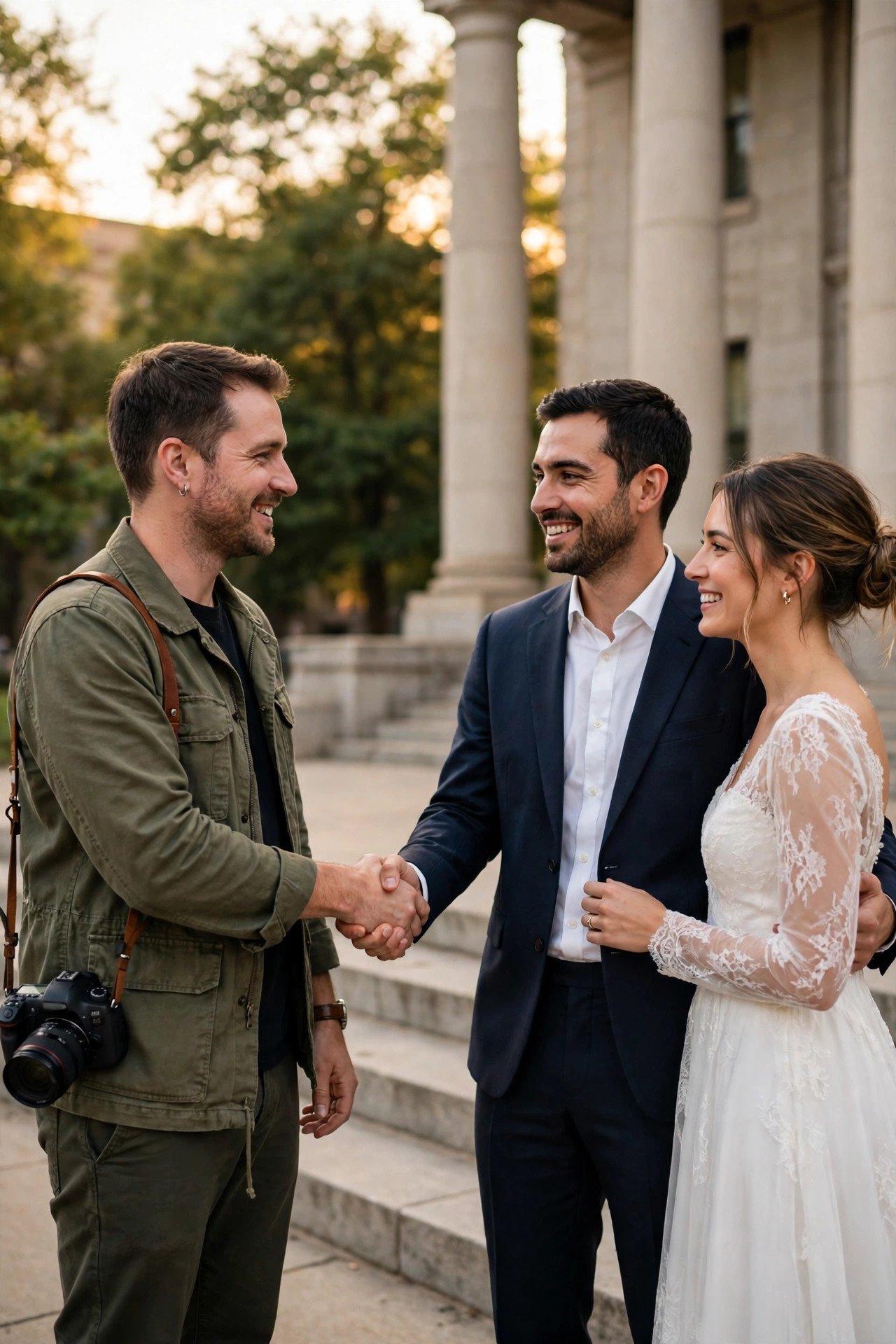
Book a photographer for one to two hours covering arrival, ceremony, steps portraits, and a short walk. Share your shot list and the building’s photo rules a week ahead. If budget forbids a pro, brief two friends with good phones using a written shot list instead — but treat photography as essential planning, not an optional extra.
Write Short Personal Vows (Optional but Lovely)
 📌 Save
Civil ceremonies use a set legal script, but many couples exchange personal vows privately just before or after — on the steps, in a park, or at the celebration. Keep them short: 150 to 250 words read aloud is about a minute. Write them on cards you can keep, and tell your photographer so the moment is captured.
Handle Rings, Documents, and Details
 📌 Save
Assemble a wedding folder: license paperwork, both IDs, appointment confirmation, and payment method. Assign the rings to one named person — usually a witness — with a specific handoff moment. Decide now who carries the bouquet during the ceremony and where bags wait during photos.
Plan the Day’s Timeline
 📌 Save
Write a simple timeline: getting ready, travel, arrival 30–45 minutes early, check-in, ceremony, steps photos, photo walk, celebration. Share it with witnesses, guests, and your photographer. Padding matters — courthouse queues and city traffic are real — so build in buffers rather than precision.
Sort Transport and Parking
 📌 Save
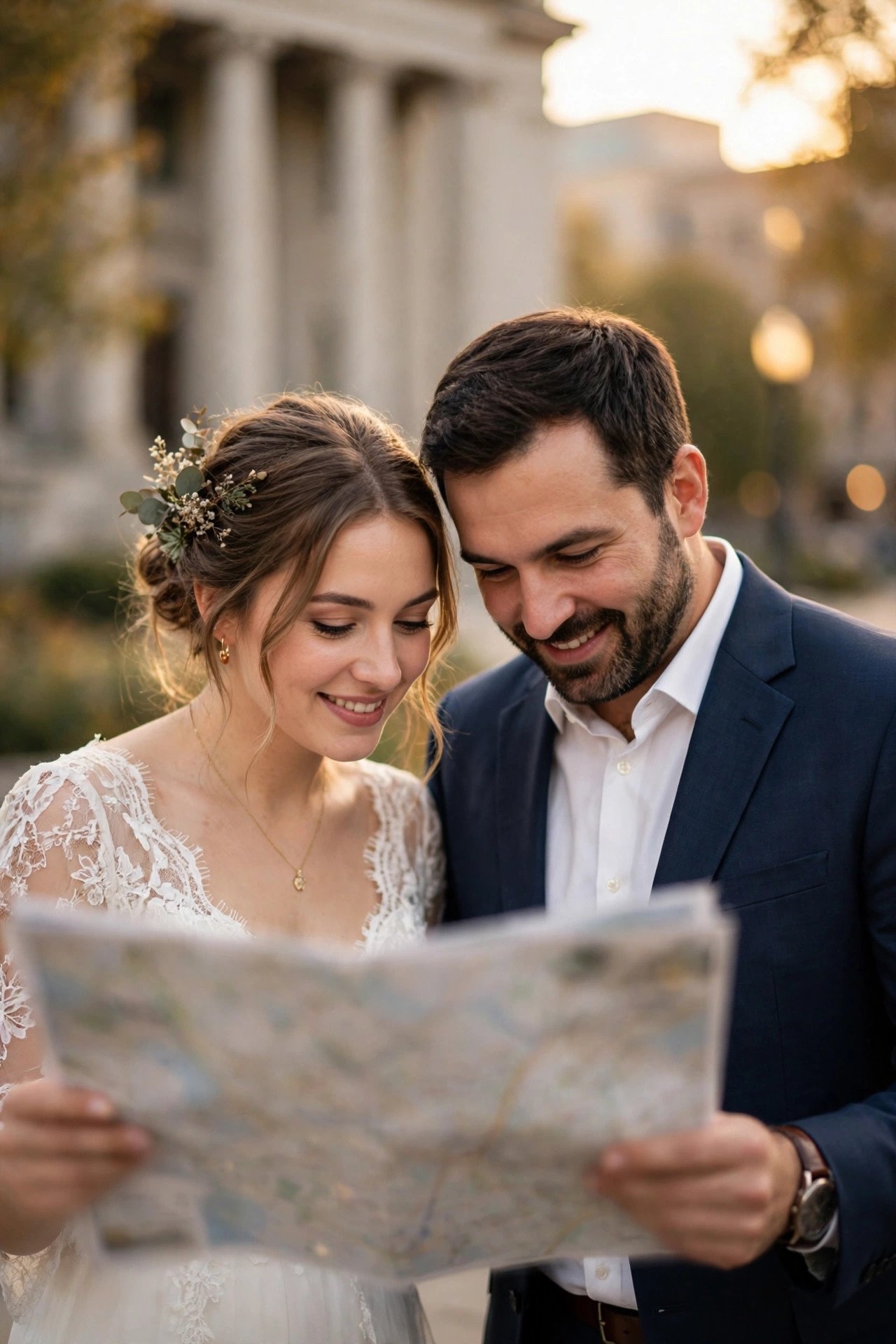
Scout parking or drop-off options near your courthouse in advance, and share them with guests. Consider a rideshare or booked car to remove parking stress entirely — and it doubles as a photo backdrop. If you are doing a photo walk or a landmark stop, map the walk and the celebration route as one journey.
Prepare a Tiny Emergency Kit
 📌 Save
Pack a palm-sized kit: tissues, mints, blotting papers, lipstick, safety pins, fashion tape, a mini sewing kit, pain relievers, and a phone charger. One witness carries it. Courthouse days are short, so the kit is small — but a popped button or shiny forehead in photos lasts forever without it.
Tell People the News Plan
 📌 Save
Decide in advance how the news travels: a photo announcement that evening, calls to parents first, a printed card later, a bigger party announcement. Tell your witnesses and guests not to post before you do. A planned announcement protects feelings and gives everyone the joyful version of the story at once.
The Day Before: Rehearse the Route
 📌 Save
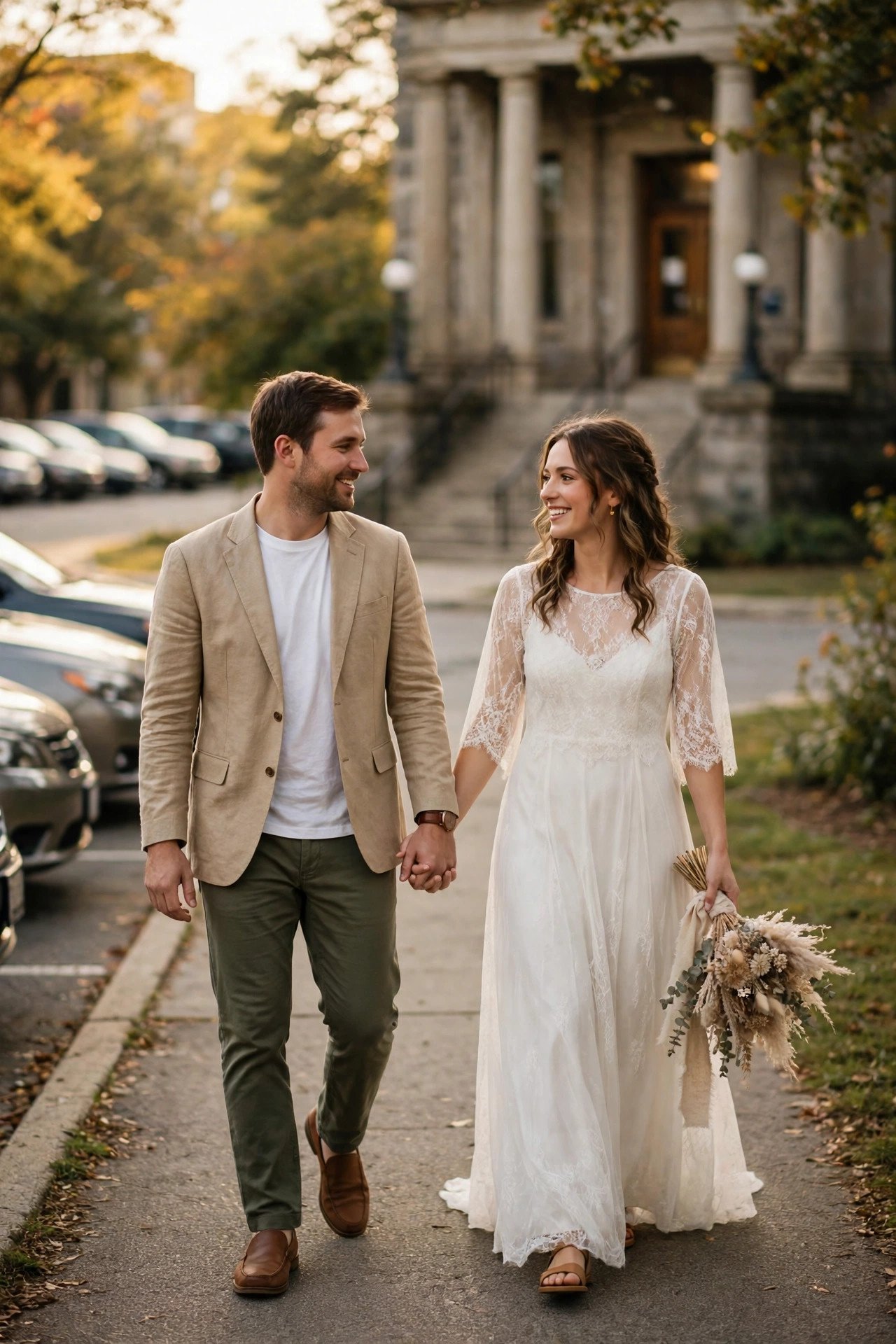
Walk or drive your route the day before at the same time of day: parking, entrance, security, check-in desk, ceremony corridor. Lay out outfits, charge phones, pack the folder and kit, and confirm times with witnesses and photographer. Then stop planning — an early night is the last planning step of the day before.
The Morning Of: Get Ready Without Rush
 📌 Save
Give yourselves at least two unhurried hours: breakfast, coffee, dressing, and a few quiet photos at home or the hotel. Eat something real — ceremonies plus emotion plus an empty stomach is a poor mix. Leave with buffer time; arriving early is pleasant, arriving late is the day’s only true stressor.
At the Building: Check In and Breathe
 📌 Save
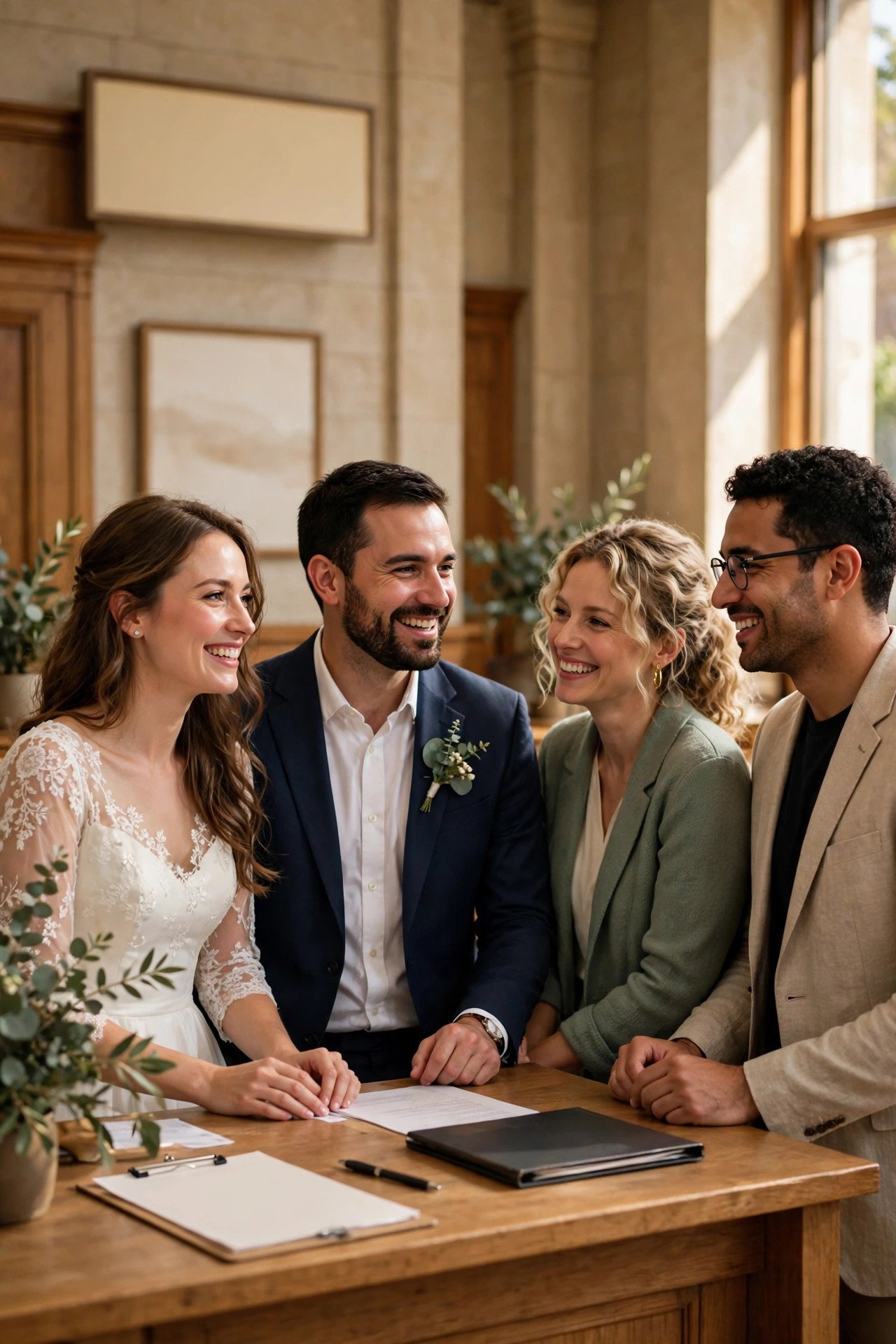
Check in at the desk with your documents, follow staff guidance through security and waiting, and trust the process — these offices marry couples all day, every day. Waiting is normal and often joyful, surrounded by other couples. Keep the bouquet, folder, and rings in their assigned hands and enjoy the anticipation.
During the Ceremony: Be Present
 📌 Save
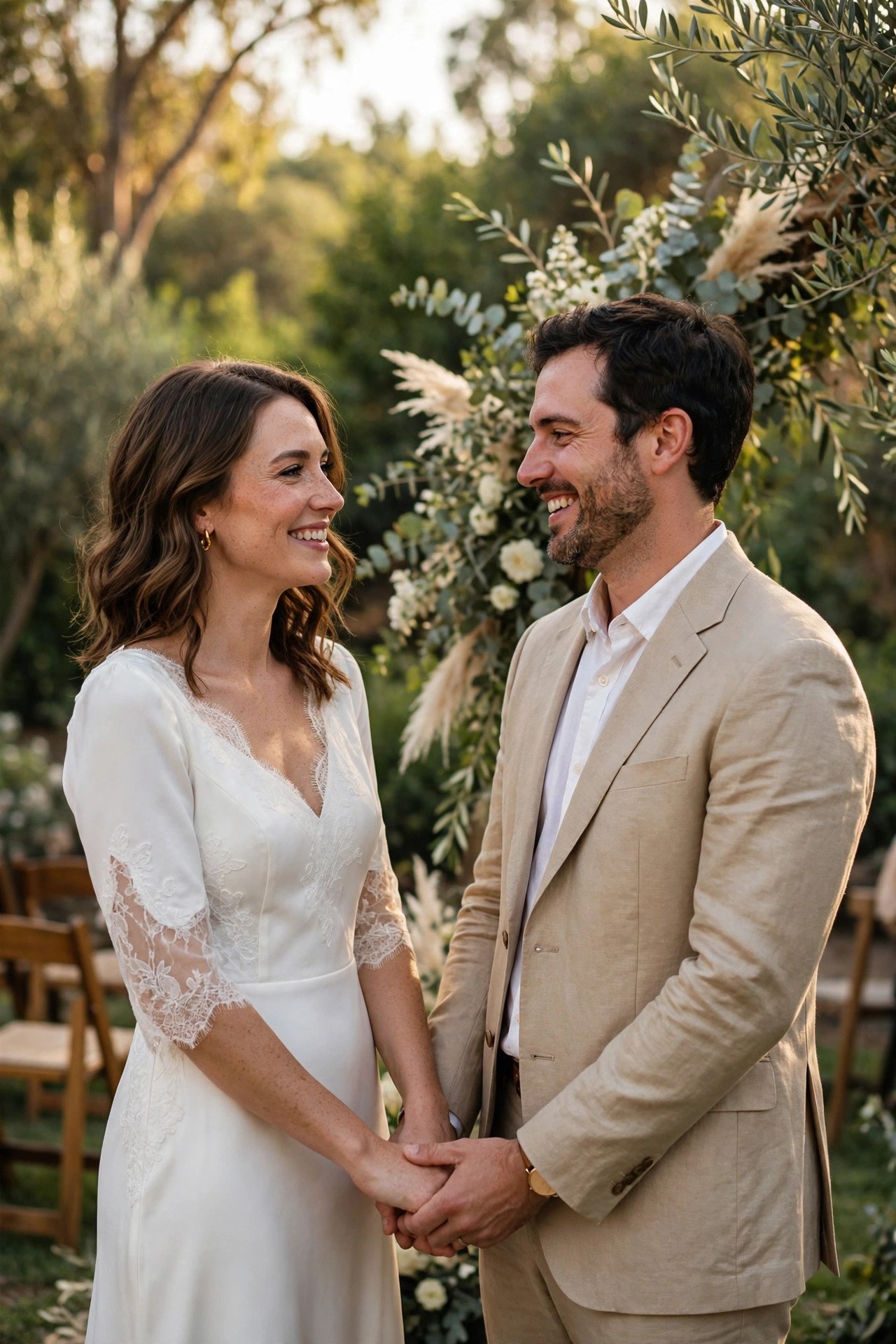
Civil ceremonies are brief — usually ten to fifteen minutes of declarations, vows, ring exchange, and signing. Look at each other, hold hands, and let the photographer handle the recording. If you planned personal vows, you will exchange them right after; the legal words carry their own quiet power in the moment.
After: Steps, Photos, and the Certificate
 📌 Save
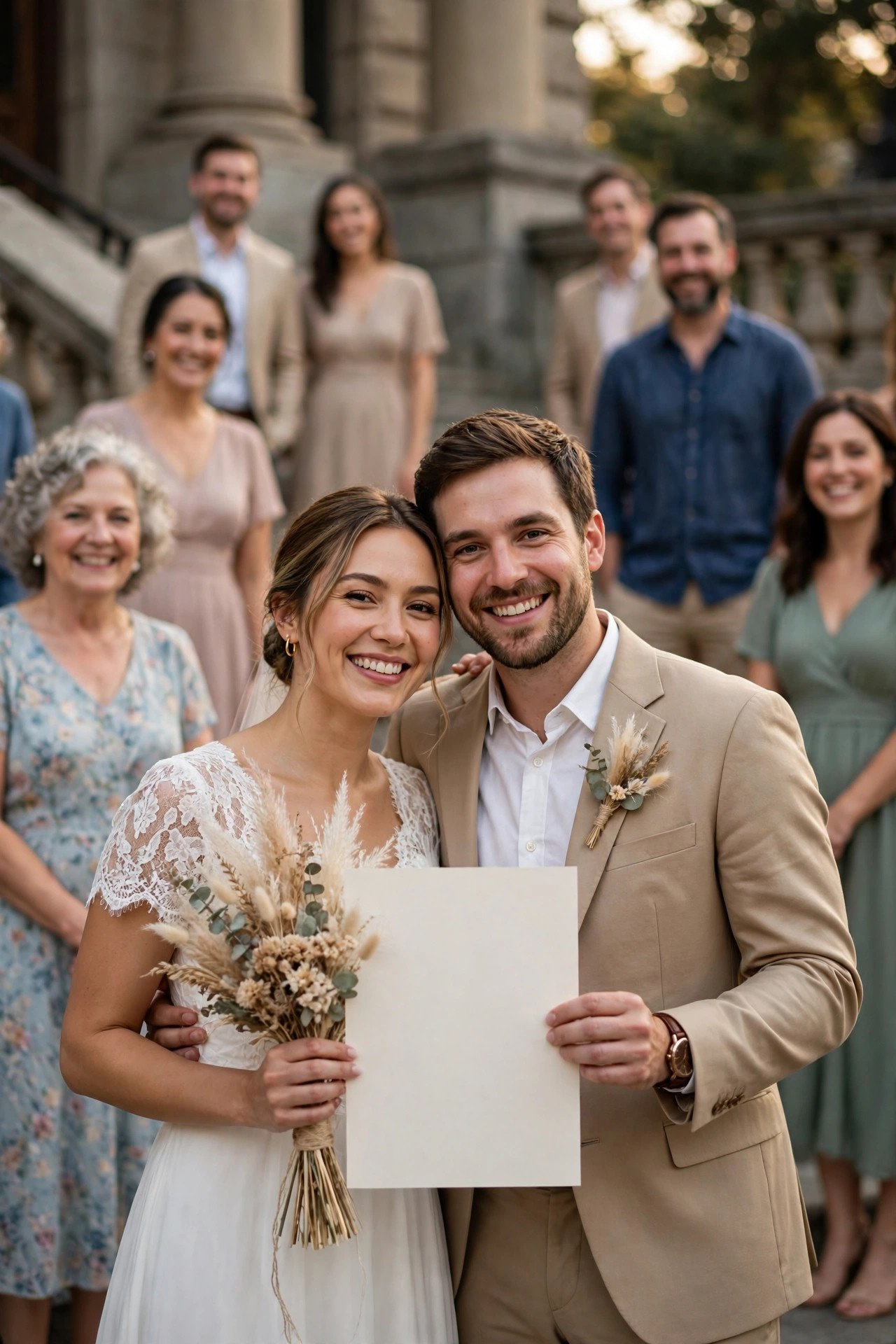
Run the celebration sequence while everyone is together: certificate portrait, steps photos, confetti or petal exit if your building allows it, then group photos, then your landmark stop. Keep it brisk and joyful — 30 to 45 minutes covers most courthouse photography plans. Then release everyone to the celebration.
Celebrate Like You Mean It
 📌 Save
Whatever format you chose — brunch, private room, rooftop, picnic — commit to it fully: cut the cake, make the toasts with sparkling cider or signature zero-proof drinks, and let people say the kind things they came to say. A small celebration done wholeheartedly feels bigger than a large one done halfway.
After the Day: Certificates and Thank-Yous
 📌 Save
In the following week, order several certified copies of your marriage certificate — you will need them for name changes, insurance, banking, and records. Send thank-you notes to witnesses, guests, and anyone who helped, and order prints while the gallery is fresh. If a bigger party is planned, your announcement can carry those details too.
How to Plan a Courthouse Wedding FAQs
How far in advance should we plan a courthouse wedding?+
Most couples plan a courthouse wedding in two to eight weeks. The pacing items are the marriage license — which usually has a validity window — popular appointment slots, and tailoring or photography bookings. Requirements vary, so check your local courthouse, register office, or municipal clerk first and build your timeline around their deadlines.
What is the order of steps for a courthouse wedding?+
The usual order is: choose the courthouse, check local requirements, apply for the marriage license, book the ceremony appointment, arrange witnesses and guests, book the celebration and photography, choose outfits, and prepare documents and a day-of timeline. Legal steps come first because everything else hangs on the date they unlock.
How much does it cost to plan a courthouse wedding?+
The legal core is usually modest — license and ceremony fees are often in the $25 to $150 range combined in the US, with their own published scales in the UK and Canada. Most couples’ real budgets go to photography, outfits, flowers, and the celebration, and a complete courthouse wedding commonly lands anywhere from a few hundred to a few thousand dollars depending on those choices.
Do we need witnesses, and who can be one?+
Most jurisdictions require one or two witnesses, who usually must be adults able to understand the ceremony and sign the register or license, with photo ID. Exact rules vary — some offices allow staff witnesses for couples marrying alone — so confirm your local requirement when you book and choose your witnesses early.
Can we plan a courthouse wedding in another city or country area?+
Often yes within the same country or jurisdiction system — many couples marry in a city they love rather than their home district — but license rules are local: the license usually must come from the jurisdiction where you marry. Requirements vary, so check both the license office and the ceremony office for the place you choose before booking travel.
Key Takeaways
- Legal steps first: requirements, license, appointment — then the joyful ones.
- Requirements vary — check your local courthouse, register office, or municipal clerk, in writing.
- Most couples plan the whole wedding in two to eight weeks.
- Book the celebration and one hour of photography the moment your slot is confirmed.
- A one-page timeline and a document folder remove nearly all day-of stress.
Final Thoughts
Planning a courthouse wedding is the friendliest version of wedding planning: a short list of legal steps, a short list of joyful ones, and a day that is entirely the size you chose. Work the steps in order, confirm the local details, and leave room for the unplanned laughter in the waiting room.
You are not planning a smaller wedding. You are planning a concentrated one — and concentration, done well, is a luxury.