Japan Honeymoon Itinerary (2027)
By zainzari • Published October 23, 2026 • Updated October 23, 2026
 📌 Save
A classic Japan honeymoon runs 10 to 14 days: Tokyo for energy and food, Hakone for a private onsen night with Mount Fuji views, Kyoto for temples and old-town romance, and a day trip or two to Nara or Osaka. Ride bullet trains between bases, travel in late March to April for cherry blossom or mid-November for autumn color, and expect most couples to spend roughly $5,000–$9,000 excluding flights.
Japan is two honeymoons in one: the electric rush of Tokyo and the hush of a Kyoto temple garden at dawn, sometimes on the same day. It is also one of the world's most couple-friendly trips — safe, punctual, delicious, and full of small rituals, from tea ceremonies to onsen soaks, that feel made for newlyweds.
This itinerary walks through 25 highlights in the order most couples actually travel them, then covers the practical layer: best seasons, rail passes, stay styles, honest budgets and sample 10- and 14-day routes you can copy outright.
At a Glance: Cities, Moments & Budgets
| # | Highlight | Type | Best For | Good to Know |
|---|---|---|---|---|
| 1 | Start in Tokyo: Choose Your Home Base | Place to stay | First nights | 3–4 nights |
| 2 | Asakusa and Sensō-ji at Dawn | Iconic experience | Culture lovers | Morning |
| 3 | A Digital Art Date at teamLab | Iconic experience | Art lovers | 2–3 hours |
| 4 | Shibuya Crossing and a Sky-High View | Romantic moment | City icons | Evening |
| 5 | Kyoto: Sleep in a Gion Machiya Townhouse | Place to stay | Old-town romance | 3–4 nights |
| 6 | Arashiyama Bamboo Grove at Sunrise | Iconic experience | Early risers | Morning |
| 7 | Walk the 10,000 Gates of Fushimi Inari | Iconic experience | Active couples | 2–3 hours |
| 8 | A Private Onsen Night in Hakone | Place to stay | The signature splurge | 1–2 nights |
| 9 | Mount Fuji from Lake Kawaguchi | Day trip | Fuji chasers | Full day |
| 10 | Bullet Train Rides Between Bases | Getting around | The journey itself | All trip |
| 11 | Osaka After Dark: Dōtonbori Street Food | Food experience | Fun evenings | Evening |
| 12 | Nara Day Trip: Bowing Deer and the Great Buddha | Day trip | Easy excursion | Half to full day |
| 13 | Hiroshima and Miyajima's Floating Gate | Day trip | Meaningful excursion | Full day |
| 14 | A Tea Ceremony for Two in Kyoto | Iconic experience | Slow rituals | 1 hour |
| 15 | Kimono Stroll and Photo Session | Romantic moment | Keepsakes | Half day |
| 16 | Karaoke Date Night, Tokyo Style | Romantic moment | Playful nights | Evening |
| 17 | Takayama: A Slow Countryside Detour | Day trip | Off the main route | 1–2 nights |
| 18 | Stay Styles: Ryokan versus City Hotel | Where to stay | Know the difference | All trip |
| 19 | Cherry Blossom Season: Late March to April | Planning | Season guide | Blossom window |
| 20 | Autumn Color Season: Mid-November to Early December | Planning | Season guide | Foliage window |
| 21 | Getting Around: Rail Passes and IC Cards | Getting around | Logistics | Essential |
| 22 | Pocket Wi-Fi, Cash and Small Essentials | Planning | Practical kit | All trip |
| 23 | What a Japan Honeymoon Typically Costs | Planning | Budget ranges | Honest numbers |
| 24 | A Sample 10-Day Japan Itinerary | Planning | Itinerary | 10 days |
| 25 | A Sample 14-Day Japan Itinerary | Planning | Itinerary | 14 days |
How to use this table: travel the list top to bottom and you have a route — Tokyo, Hakone, Kyoto, day trips, home. Full notes for all 25 highlights are below.
Start in Tokyo: Choose Your Home Base
 📌 Save
Tokyo is not one city but a dozen villages stitched together by trains, and your base shapes your trip. Shinjuku is the transport-hub all-rounder, Ginza the polished and quiet luxury pick, and Asakusa the traditional quarter of temples and lantern-lit lanes. All three work — pick by mood, since the metro makes everything else reachable.
Asakusa and Sensō-ji at Dawn
 📌 Save
Tokyo's oldest temple, Sensō-ji, anchors Asakusa with its giant red lantern and the Nakamise shopping lane leading to the hall. Arrive before 8 a.m. and the incense, pigeons and morning prayers belong almost entirely to you; by ten, the same lane is a river of visitors.
A Digital Art Date at teamLab
 📌 Save
Tokyo's teamLab spaces dissolve the line between art and playground: rooms of cascading digital flowers, lantern fields that respond to your touch, and water you wade through barefoot. For couples it is a shared wonder that photographs beautifully and needs zero art knowledge to love.
Shibuya Crossing and a Sky-High View
 📌 Save
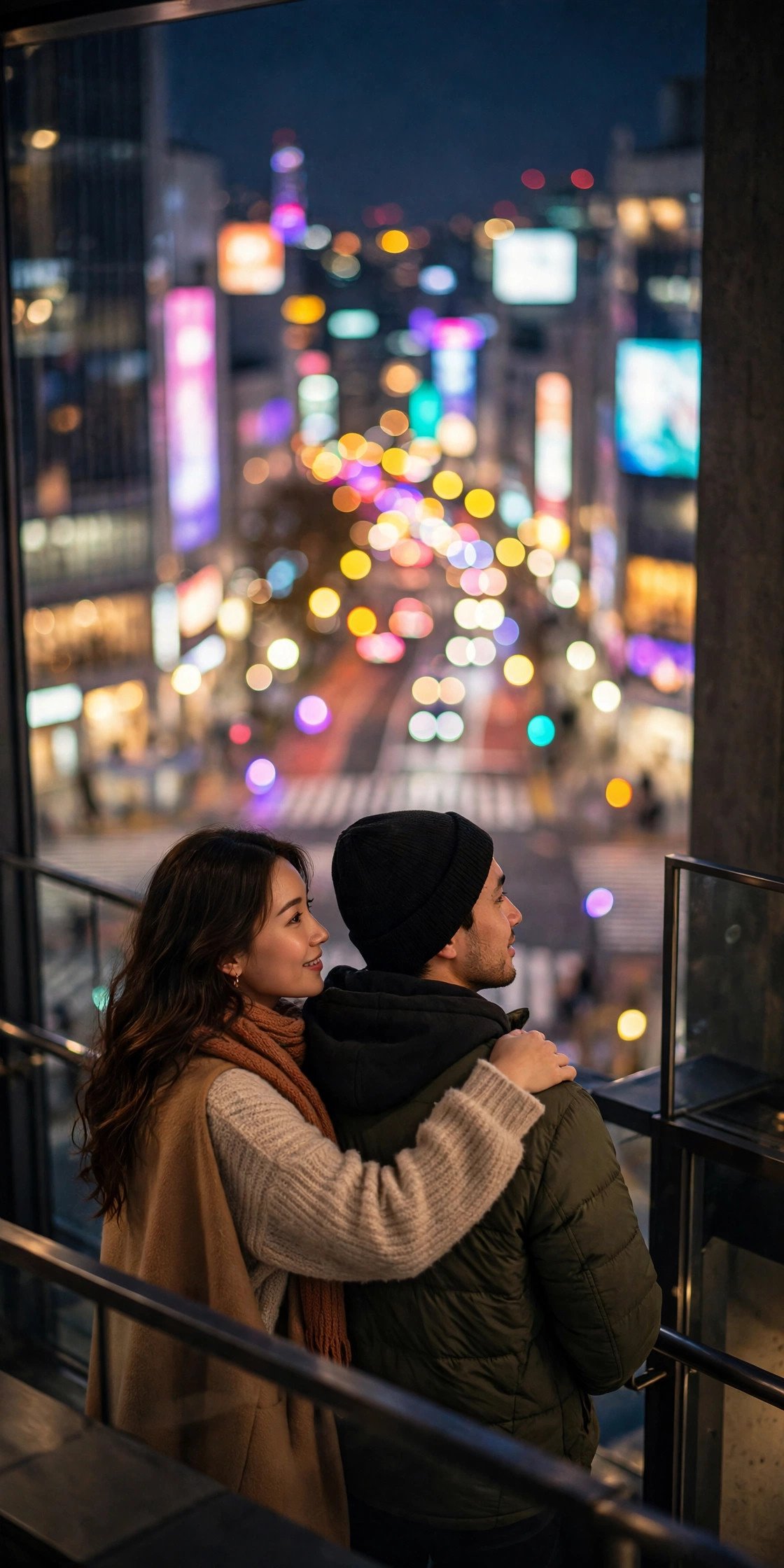
Watching up to 3,000 people cross Shibuya's scramble at each green light is Tokyo's great free spectacle, best seen from a high observation deck as the neon kicks on. Ride the escalators down afterward and join the flow yourselves — then duck into a tiny side street for dinner away from the glow.
Kyoto: Sleep in a Gion Machiya Townhouse
 📌 Save
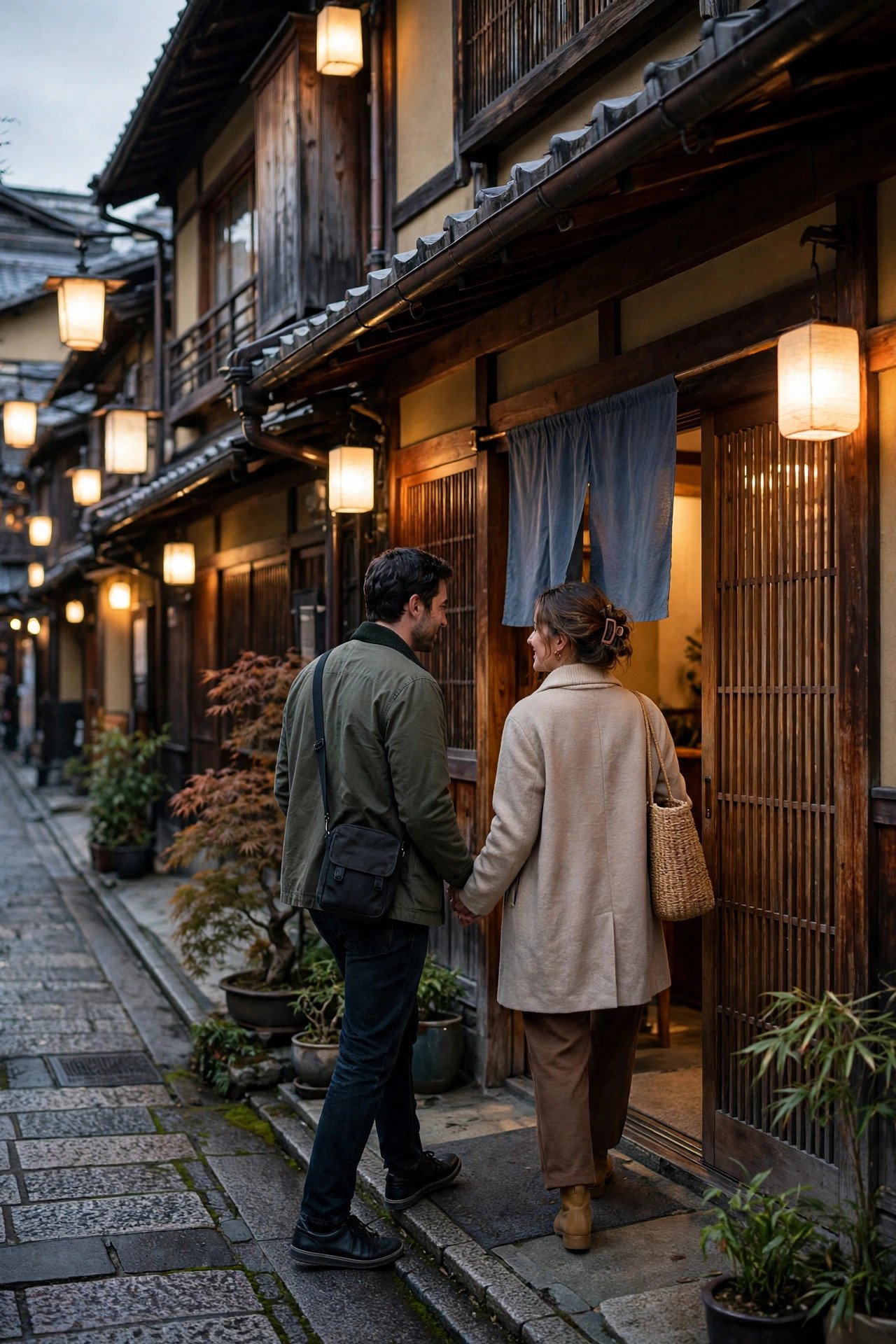
Kyoto's wooden machiya townhouses — narrow, deep, and built around tiny gardens — are now some of Japan's most romantic small stays, and Gion's preserved lanes put geisha-spotting strolls and teahouses at your door. Sleeping on tatami in a century-old house slows the whole trip down in the best way.
Arashiyama Bamboo Grove at Sunrise
 📌 Save
The Arashiyama bamboo grove is short — barely 500 metres — but standing among 30-metre stalks as they creak and filter the morning light is pure atmosphere. Pair it with the UNESCO-listed Tenryū-ji garden next door and the river views from Togetsukyō Bridge for a full, unhurried morning.
Walk the 10,000 Gates of Fushimi Inari
 📌 Save
Fushimi Inari's thousands of vermilion torii gates tunnel up a sacred mountain on the edge of Kyoto, thinning from busy at the base to silent near the summit. Most visitors turn back at the first viewpoint; couples who climb the full loop get city views, forest shrines and long stretches of gates entirely to themselves.
A Private Onsen Night in Hakone
 📌 Save
Hakone, the hot-spring town in the hills between Tokyo and Kyoto, is where Japan honeymoons peak: a traditional ryokan inn, a multi-course kaiseki dinner served in your room, and a private open-air bath steaming under the stars. Rooms with in-room open-air baths cost more and are worth every yen for newlyweds.
Mount Fuji from Lake Kawaguchi
 📌 Save
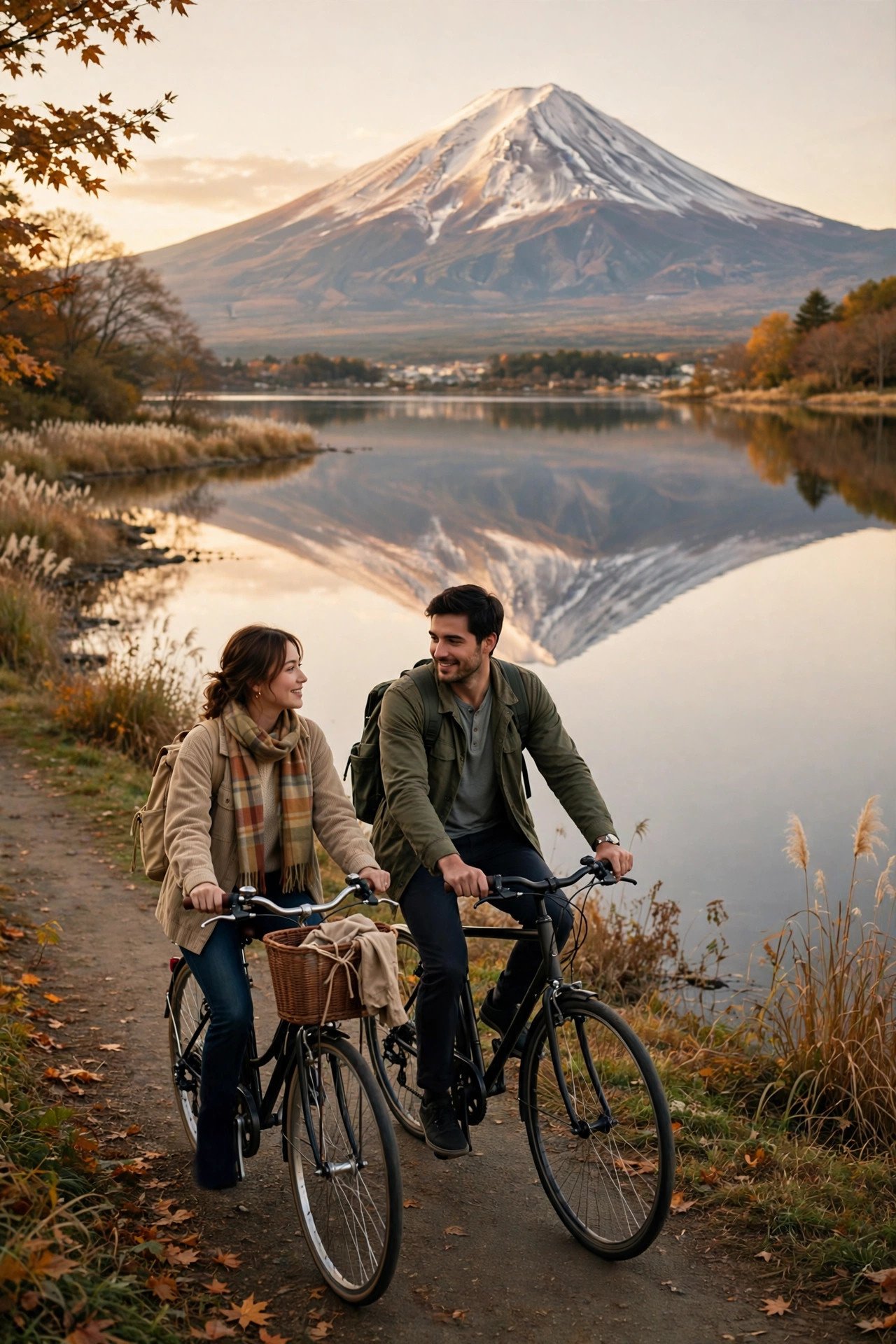
Of Fuji's five lakes, Kawaguchi offers the easiest access, the most cafés and the classic postcard angle of the mountain over water. Rent bicycles, ride the quiet north shore, and stop at the Ōishi Park flower fields; on a clear morning the reflection doubles the mountain.
Bullet Train Rides Between Bases
 📌 Save
Riding the shinkansen is a honeymoon experience in itself: whisper-quiet cars, bento boxes bought on the platform, and Mount Fuji sliding past the right-hand windows between Tokyo and Kyoto. Reserve the Fuji-side pair of seats (D and E seats heading west) and the two-hour ride becomes a date.
Osaka After Dark: Dōtonbori Street Food
 📌 Save
Forty minutes from Kyoto, Osaka does evenings louder: the Dōtonbori canal blazing with neon, takoyaki octopus balls flipped at lightning speed, kushikatsu skewers and melon pan for dessert. Eat standing up, eat often, and let the Glico running man sign be your meeting point photo.
Nara Day Trip: Bowing Deer and the Great Buddha
 📌 Save
In Nara, sacred deer bow politely for crackers in the park, and Tōdai-ji houses one of the world's largest bronze Buddhas inside a vast wooden hall. It is the easiest day trip from Kyoto — 45 minutes by train — and its gentle, park-like mood makes a lovely slow day between temple-heavy ones.
Hiroshima and Miyajima's Floating Gate
 📌 Save
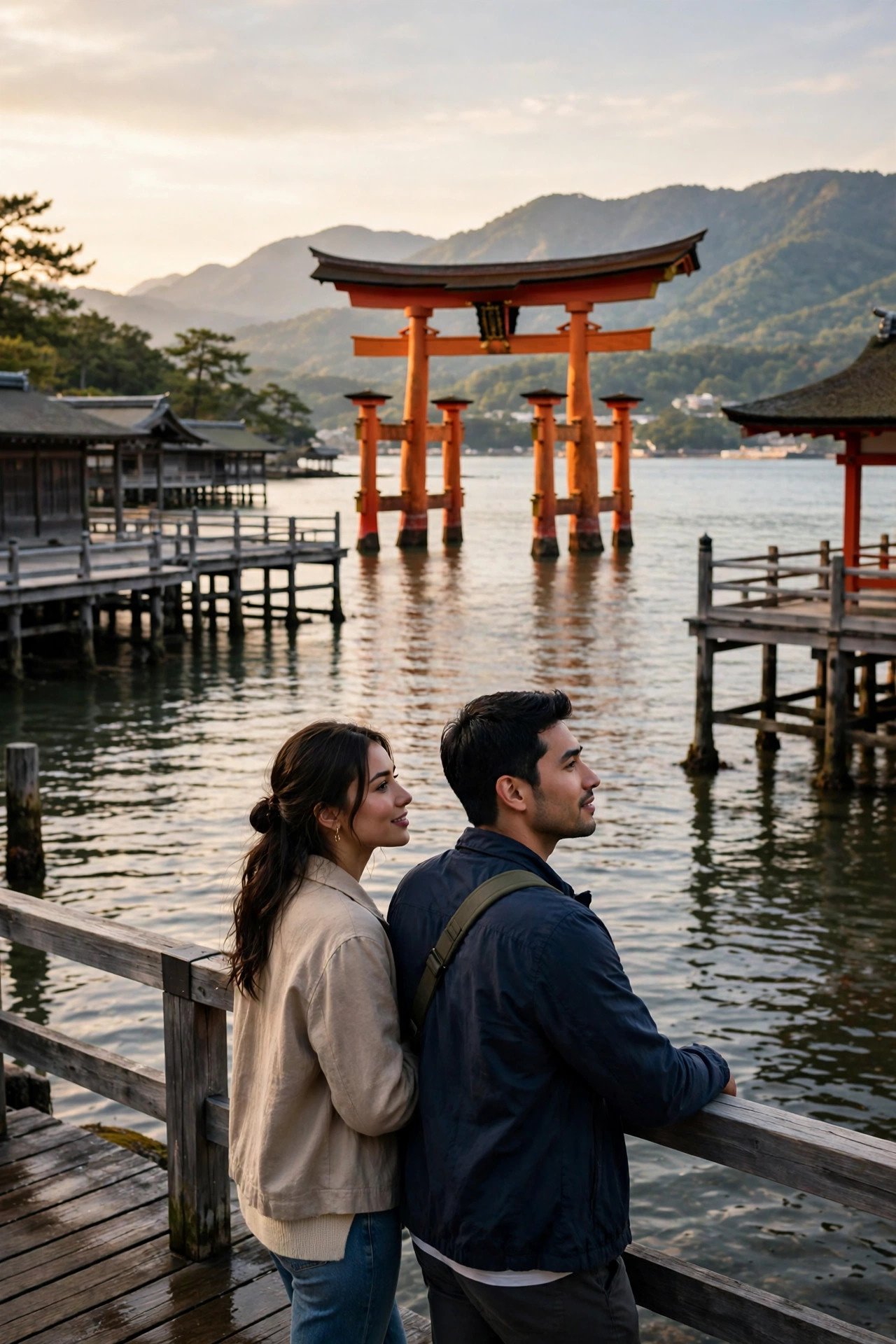
A long but rewarding day from Kyoto or Osaka pairs Hiroshima's Peace Memorial Park and museum — sobering, important, and handled with great dignity — with the ferry to Miyajima, where Itsukushima shrine's great gate appears to float at high tide. Friendly deer, maple valleys and grilled oysters round out the island.
A Tea Ceremony for Two in Kyoto
 📌 Save
A private or small-group tea ceremony slows time to the whisk of matcha and the turning of a bowl — a meditative hour that suits the reflective mood of a honeymoon. Many Kyoto tea houses offer kimono rental beforehand, so the ceremony doubles as your portrait session in the old town.
Kimono Stroll and Photo Session
 📌 Save
Renting kimono and strolling the stone lanes of Higashiyama — past the Yasaka pagoda, up to Kiyomizu-dera's wooden stage — turns a sightseeing morning into a portrait session. Studios include dressing and hair styling, and the district's preserved streets give you a new backdrop every fifty steps.
Karaoke Date Night, Tokyo Style
 📌 Save
Japanese karaoke means a private booth for two, a tambourine, a touchscreen song list in English, and snacks delivered to your door — just your voices, no strangers. It is the most reliably fun evening in Tokyo, especially on the trip's last night when you are too happy-tired for anything ambitious.
Takayama: A Slow Countryside Detour
 📌 Save
Takayama, in the Japanese Alps, preserves whole streets of Edo-period wooden houses, morning markets along the river, and a slower rhythm than any big city. As a one- or two-night detour between Tokyo and Kyoto it adds mountains, beef sukiyaki dinners and the feeling of having found the Japan most tourists skip.
Stay Styles: Ryokan versus City Hotel
 📌 Save
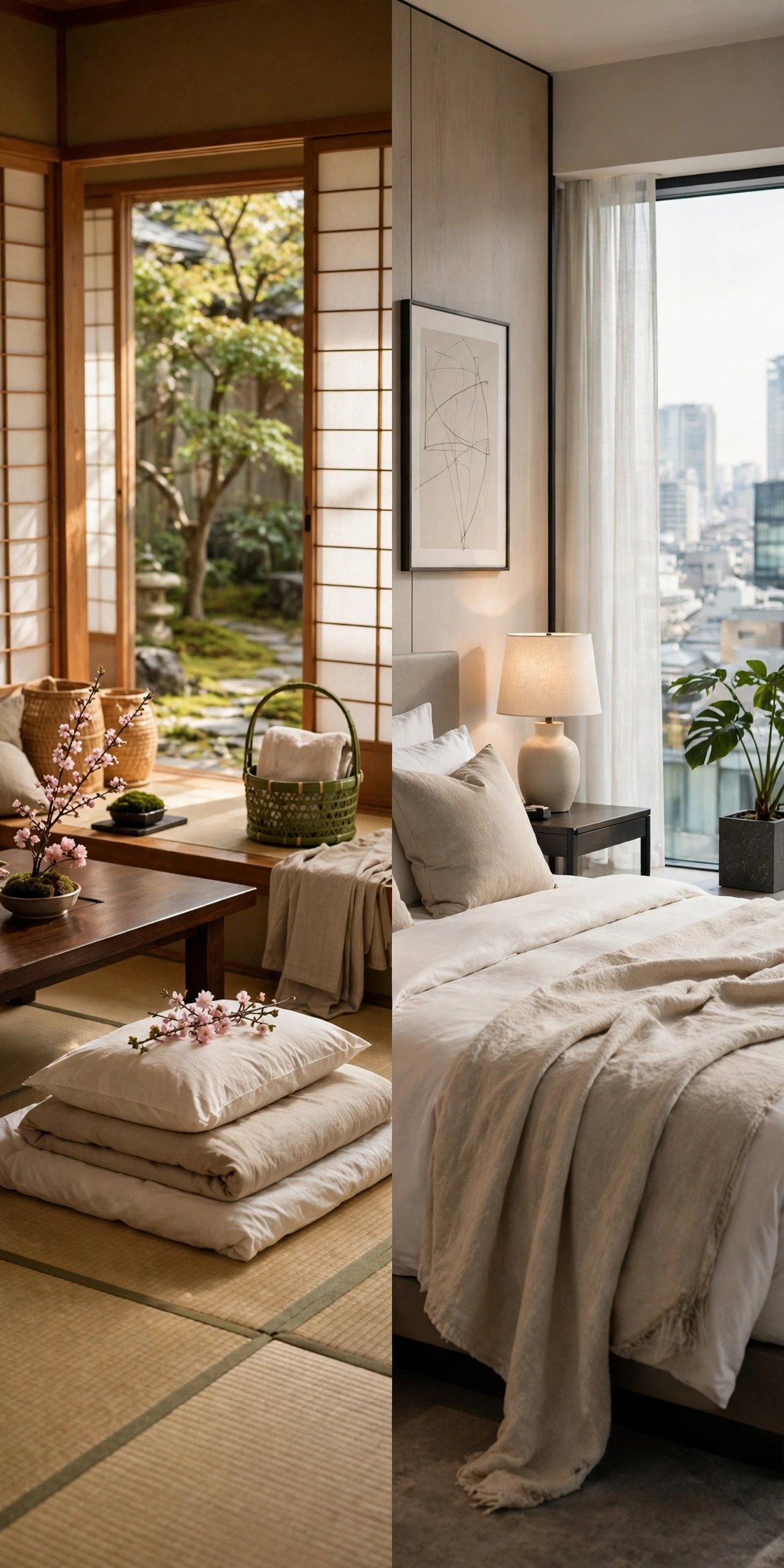
Ryokan are traditional inns: tatami rooms, futons rolled out after dinner, shared or private onsen baths, and kaiseki meals included. City hotels offer big beds, late checkouts and easy luggage handling. The honeymoon sweet spot is mixing them — hotels in Tokyo and Kyoto for flexibility, one or two ryokan nights in Hakone for the full ritual.
Cherry Blossom Season: Late March to April
 📌 Save
Cherry blossom turns all of Japan into a festival: picnic blankets under pink canopies, lantern-lit evening blossom in Kyoto, petals drifting down temple lanes. Full bloom lasts barely a week per city and forecasts sharpen only a month out, so flexible routes that can shift a day win.
Autumn Color Season: Mid-November to Early December
 📌 Save
Autumn is the connoisseur's season: Kyoto's temple gardens ignite in reds and golds, evening illuminations light the maples after dark, and the air turns crisp without winter's bite. Crowds are real but gentler than blossom season, and Fuji visibility improves as the air dries.
Getting Around: Rail Passes and IC Cards
 📌 Save
A nationwide rail pass pays off when your route includes Tokyo–Kyoto plus a long day trip like Hiroshima; purely Tokyo–Kyoto routes sometimes do better with individual tickets, so price both. Either way, load an IC card (Suica or Icoca) on your phones for metros, buses and convenience stores — one tap replaces all ticket machines.
Pocket Wi-Fi, Cash and Small Essentials
 📌 Save
Japan runs on a mix of the ultra-modern and the pleasantly analog: eSIMs or a shared pocket Wi-Fi keep maps and translation live, while small shrines, rural buses and family restaurants still prefer cash. Carry a coin pouch (you will accumulate ¥100 coins), a small hand towel, and a bag for your trash — public bins are rare by design.
What a Japan Honeymoon Typically Costs
 📌 Save
Excluding flights, most couples spend roughly $5,000–$9,000 for 10 to 14 days: comfortable city hotels typically $130–$250 a night, a private-onsen ryokan night $350–$700 as the signature splurge, glorious food for $60–$120 a day for two, and rail passes or tickets usually $300–$500 per person depending on route. Japan's floor for quality is high, so mid-range here feels premium.
A Sample 10-Day Japan Itinerary
 📌 Save
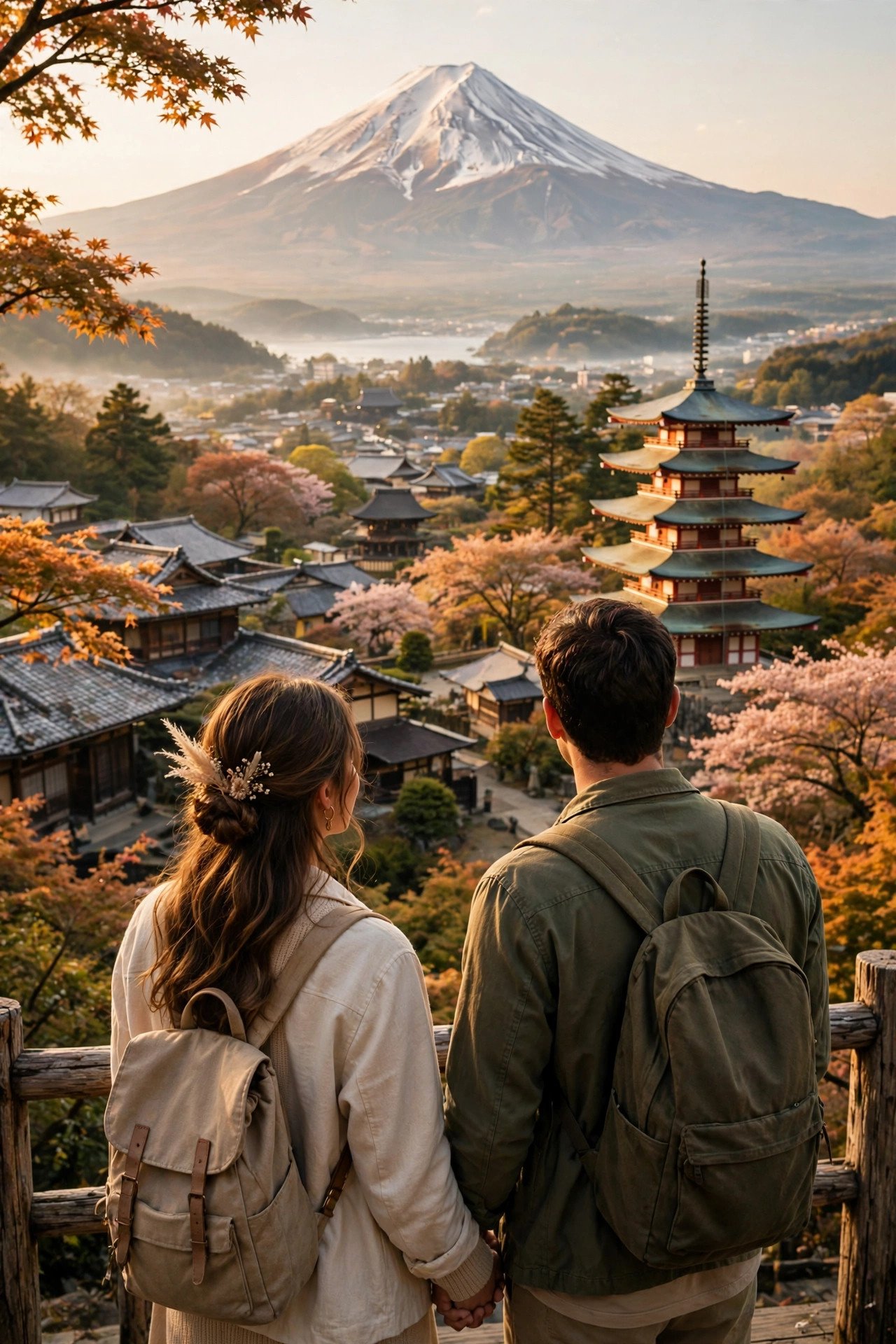
Days 1–4: Tokyo (Asakusa, teamLab, Shibuya, a karaoke night). Day 5: Hakone ryokan with a private onsen and Fuji views if the sky cooperates. Days 6–9: Kyoto (Arashiyama at dawn, Fushimi Inari, tea ceremony, kimono stroll) with a half-day in Nara. Day 10: slow morning, last souvenir run, train to the airport. It is the route most couples describe afterward as 'just right.'
A Sample 14-Day Japan Itinerary
 📌 Save
With two weeks, keep the 10-day spine and add: two nights in Takayama for alpine old-town calm between Tokyo and Kyoto, a Hiroshima–Miyajima day from Kyoto, a second ryokan night (this time kaiseki-maximal), and one unplanned day in whichever city stole your hearts. The extra days convert a great itinerary into an unhurried honeymoon.
Japan Honeymoon Itinerary FAQs
What is the best time of year for a Japan honeymoon?+
Late March to April brings cherry blossom and mid-November to early December brings autumn maples — both are peak romance and peak pricing. For value and mild weather, late May and October are excellent, while summer is hot and humid outside the mountains.
How many days do we need in Japan?+
Ten days covers Tokyo, Hakone and Kyoto comfortably. Fourteen days adds Takayama, Hiroshima–Miyajima or a second onsen town and, more importantly, breathing room. Under a week, pick Tokyo plus Kyoto only and save the rest for an anniversary trip.
How much does a Japan honeymoon typically cost?+
Excluding flights, most couples spend roughly $5,000–$9,000 for 10 to 14 days. City hotels typically run $130–$250 a night, one private-onsen ryokan splurge $350–$700, and food is gloriously reasonable at $60–$120 a day for two.
Is Japan easy to navigate without speaking Japanese?+
Yes. Trains and metros are signed in English, station staff are famously helpful, translation apps handle menus, and hotels manage luggage forwarding and reservations for you. Learning a few phrases — arigatō gozaimasu above all — is appreciated everywhere.
Should we buy a nationwide rail pass?+
It depends on your route: passes pay off with Tokyo–Kyoto plus Hiroshima or Takayama legs, while a simple Tokyo–Kyoto return can be cheaper with individual tickets. Price your exact itinerary both ways before buying, and remember seat reservations are free with the pass.
Key Takeaways
- The classic route: Tokyo 3–4 nights, Hakone 1–2, Kyoto 3–4, day trips between.
- One private-onsen ryokan night is the splurge couples never regret.
- Go at dawn: Sensō-ji, Arashiyama and Fushimi Inari transform before 8 a.m.
- Book blossom and maple season Kyoto hotels as early as they open.
- Most couples spend roughly $5,000–$9,000 for 10–14 days excluding flights.
- Send luggage ahead by forwarding service and travel light between bases.
Final Thoughts
Japan rewards couples who slow down inside a busy country: the dawn temple, the long onsen soak, the second bowl of ramen you did not plan. Take the itinerary, hold it loosely, and let the small rituals — a shared tea ceremony, a bowing deer, Fuji appearing through train glass — become the stories you tell for decades.