
Top Garden Wedding Bridesmaid Dress Ideas
By zainzari • Published April 2026 • Updated October 11, 2026
 📌 Save
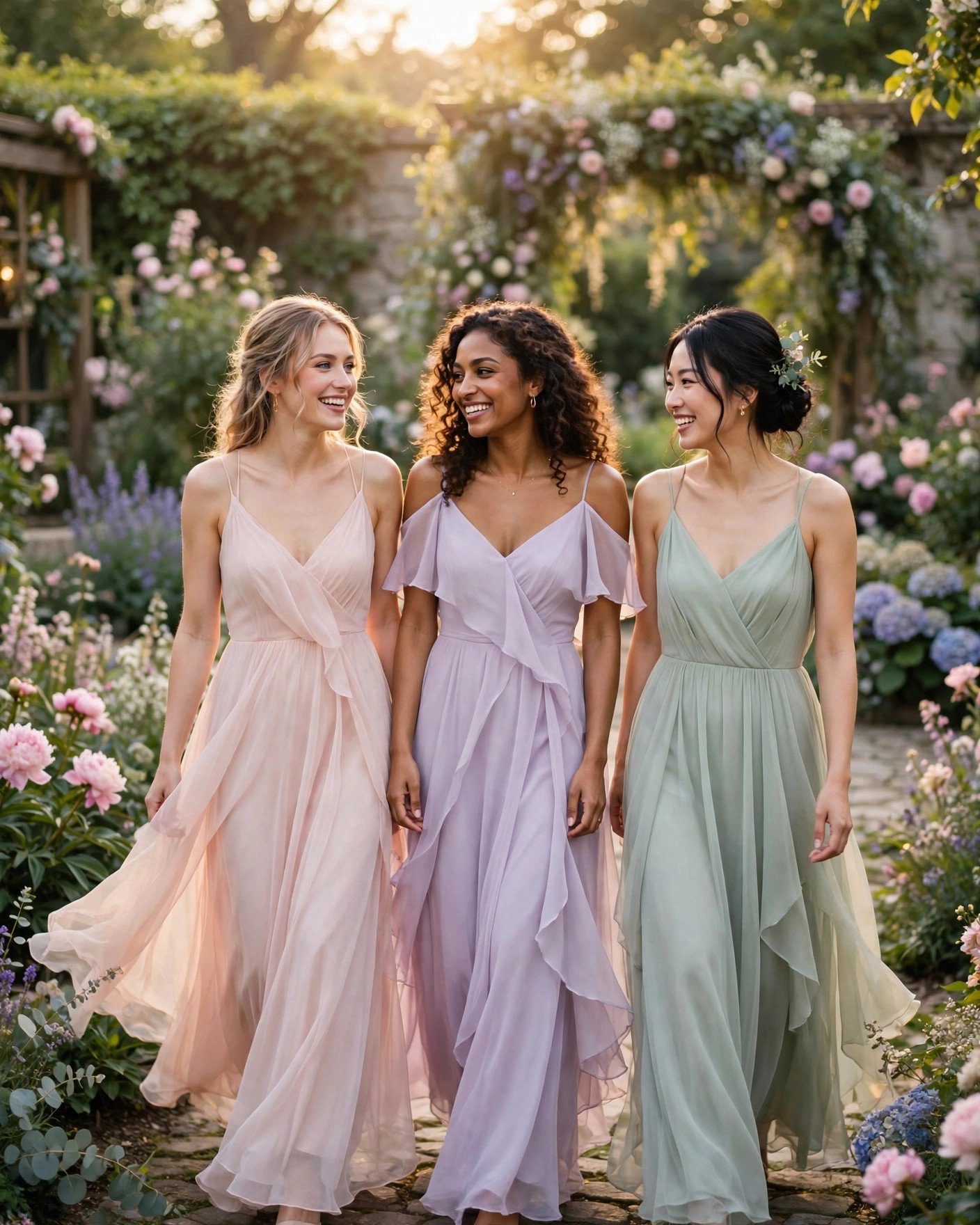
The best garden wedding bridesmaid dresses start with your setting, not a catalog: choose palettes that echo your blooms (soft pastels, earthy tones, muted florals), breathable fabrics like chiffon and silk, flattering silhouettes per bridesmaid, season-appropriate weight, and grass-proof footwear. Unify mismatched dresses through one color family and one fabric type, and always photograph swatches in daylight before ordering.
A garden wedding hands you the world’s prettiest backdrop for free — the dresses just need to belong in it. This isn’t a list of pretty dresses (though there are gorgeous ones ahead). It’s the full decision guide: how to read your venue, build a palette, choose fabrics that survive outdoors, flatter every bridesmaid, and plan for weather.
Work through the ten chapters in order and you’ll arrive at your final fitting with zero regrets — dresses that look intentional in photos, feel good all day, and let every bridesmaid shine without upstaging the blooms.
At a Glance: Style, Fabric, Season & Vibe
| Style Direction | Best Fabric | Best Season | Vibe |
|---|---|---|---|
| Soft Pastel Solids | Chiffon, tulle | Spring, early summer | Dreamy romantic |
| Muted Floral Prints | Chiffon, light crepe | Spring through fall | Vintage chic |
| Earthy Tones | Linen blend, silk | Late summer, fall | Grounded elegance |
| Mismatched Shades | One fabric family | Any season | Personal yet unified |
| Bohemian Flowing | Lace, embroidered mesh | Summer, golden hour | Free-spirited |
| Sage and Botanical | Crepe, satin-back | Spring, fall | Modern garden |
Price ranges are general guidance only and vary by retailer, size and customization — most garden bridesmaid dresses land between $60–$220.
Start With Your Garden Setting
 📌 Save
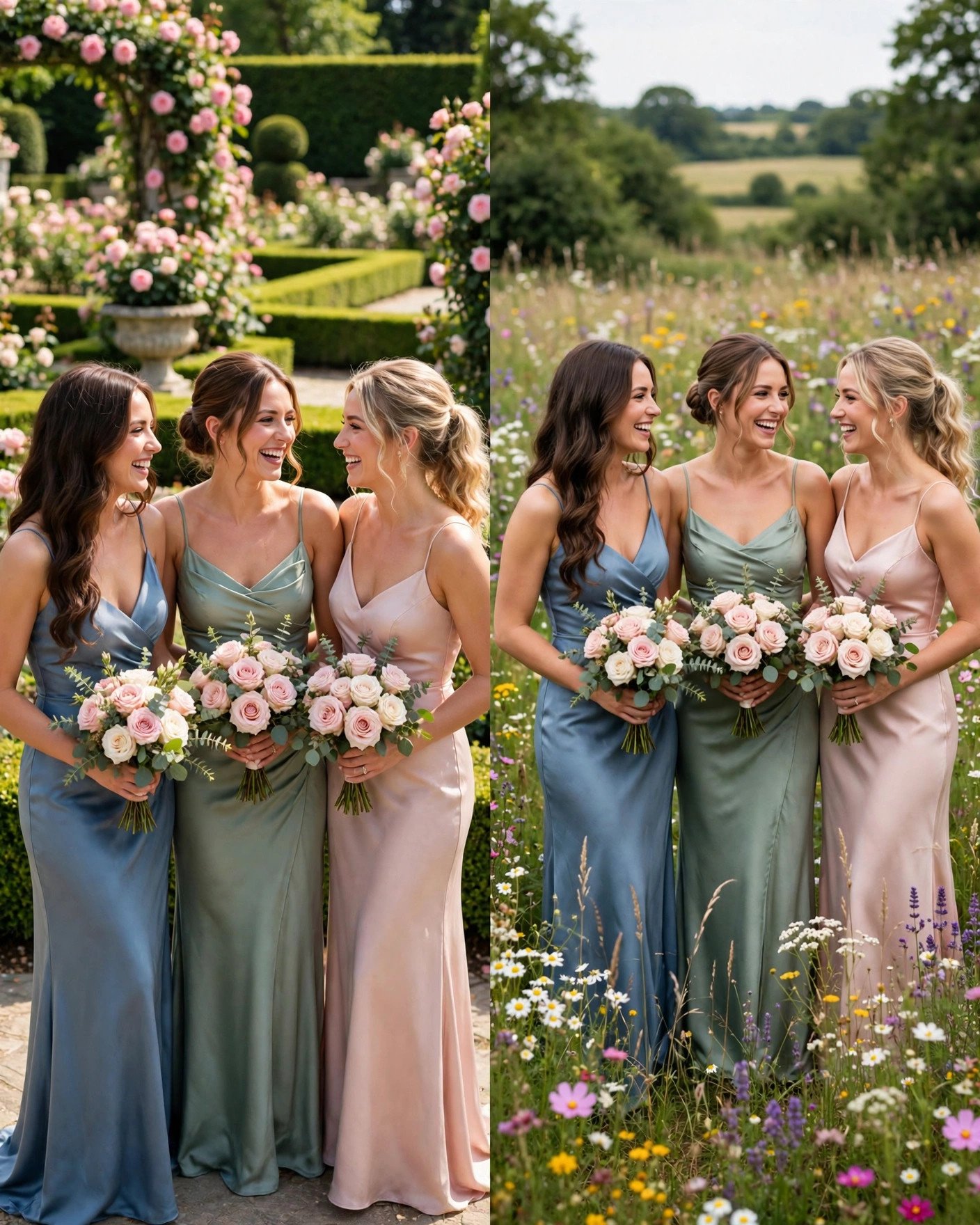
A manicured rose garden and a wildflower meadow demand different dresses — read your venue before you shop.
Visit your venue at the same time of day as your ceremony and really look: is the palette lush green and structured, or golden and wild? Formal botanical gardens suit polished fabrics and saturated colors; rustic meadows and vineyards love flowing, earthy, slightly undone looks. Photograph the exact ceremony backdrop on your phone — this photo becomes your shopping reference.
Also note the ground (lawn vs. gravel vs. stone patio affects hemlines and shoes), the light (dappled shade vs. open sun changes how colors read), and the wind exposure (open hilltops need weighted hems).
Read next: 15 Wedding Guest Dresses for Women Over 50
Pick a Palette That Echoes the Blooms
 📌 Save
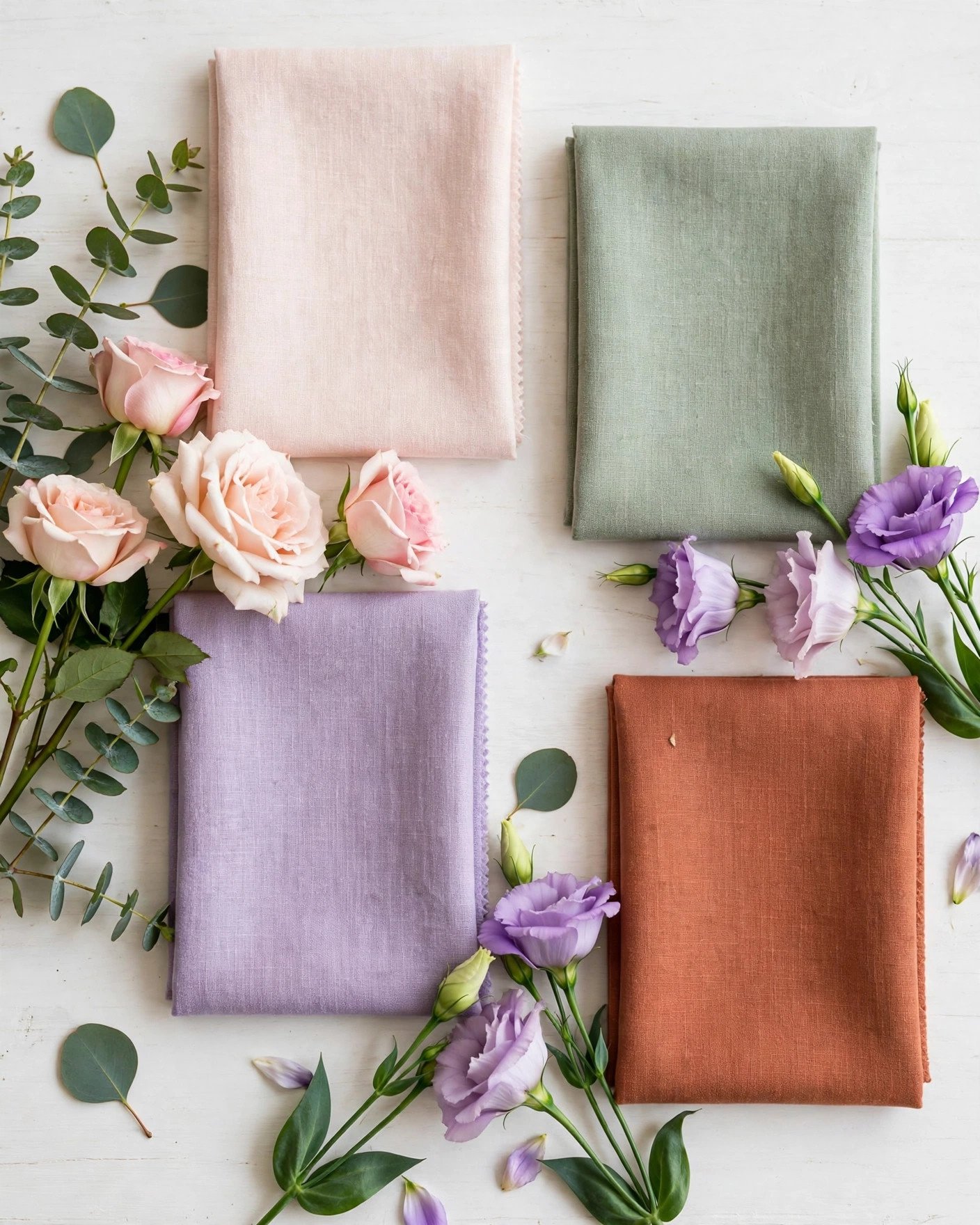
The easiest cohesive palette: steal it from your bouquet and garden beds.
Look at your key flowers and pick two to three tones from them — blush from the roses, sage from the eucalyptus, lavender from the lisianthus. Dresses in these exact tones will photograph as if the whole wedding was designed by one hand. Soft pastels (blush, lavender, mint, powder blue) suit spring gardens; earthy tones (sage, terracotta, taupe) suit late-summer and vineyard settings.
Avoid matching flowers too literally — bridesmaids in the exact red of your roses will vanish into the garden beds. Aim for tones that harmonize, not camouflage.
Read next: 11 Mistakes Brides Make When Choosing Their Wedding Colors
Chiffon: The Garden MVP Fabric
 📌 Save
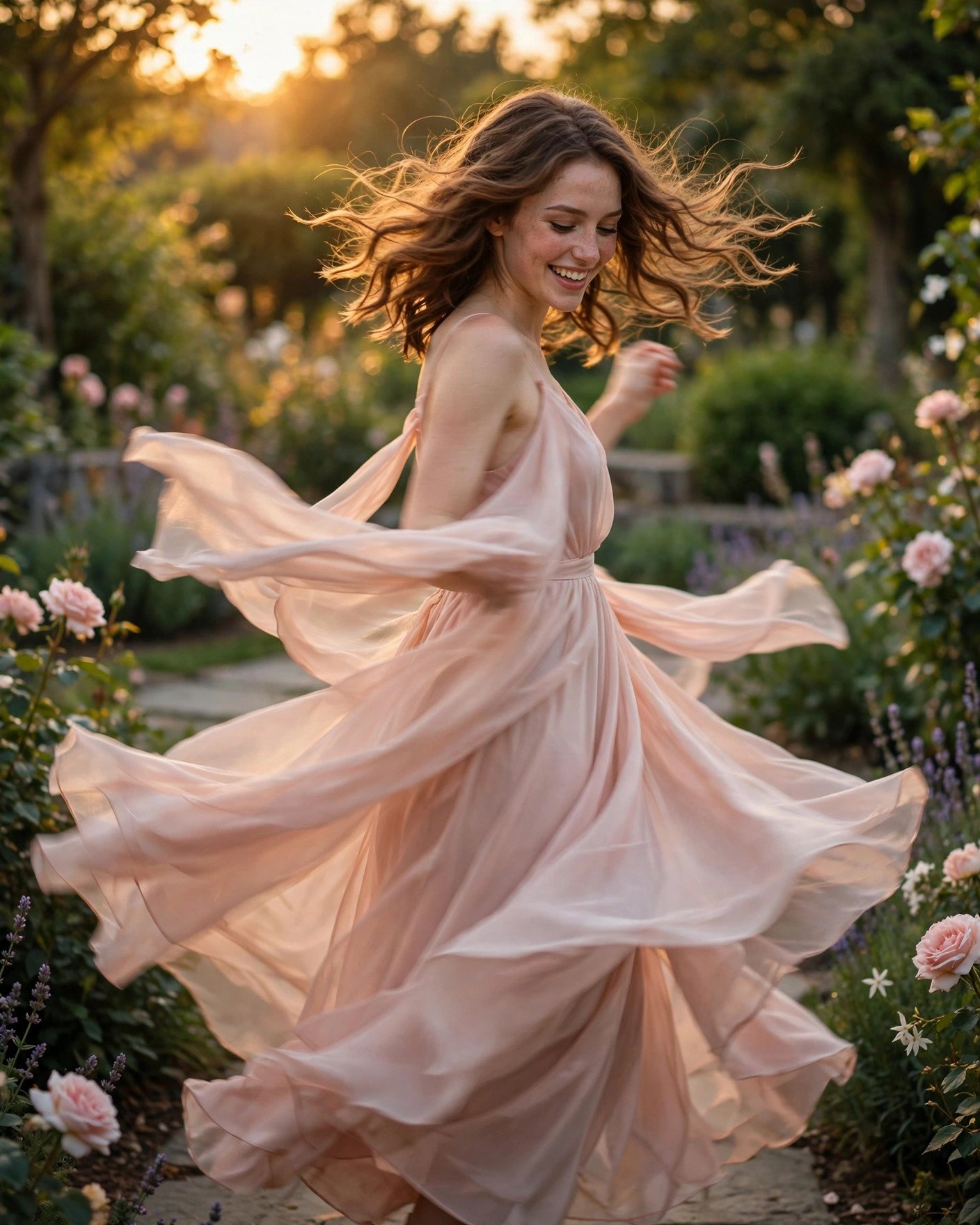
Light, airy and forgiving, chiffon is the safest fabric bet for any outdoor wedding.
Chiffon drapes softly over every body type, catches the breeze for those dreamy movement shots, and doesn’t wrinkle as aggressively as linen. It’s affordable, widely available in every color, and layers beautifully over linings for opacity. For garden weddings, it’s the default that never disappoints.
Choose quality over rock-bottom: cheap chiffon can look plasticky and static-prone. A mid-range chiffon with a soft hand and good lining reads twice as expensive. And always check opacity in sunlight — thin unlined chiffon goes sheer outdoors.
Read next: 15 Wedding Guest Dresses for Women Over 50
Linen and Silk for Elevated Outdoor Weddings
 📌 Save
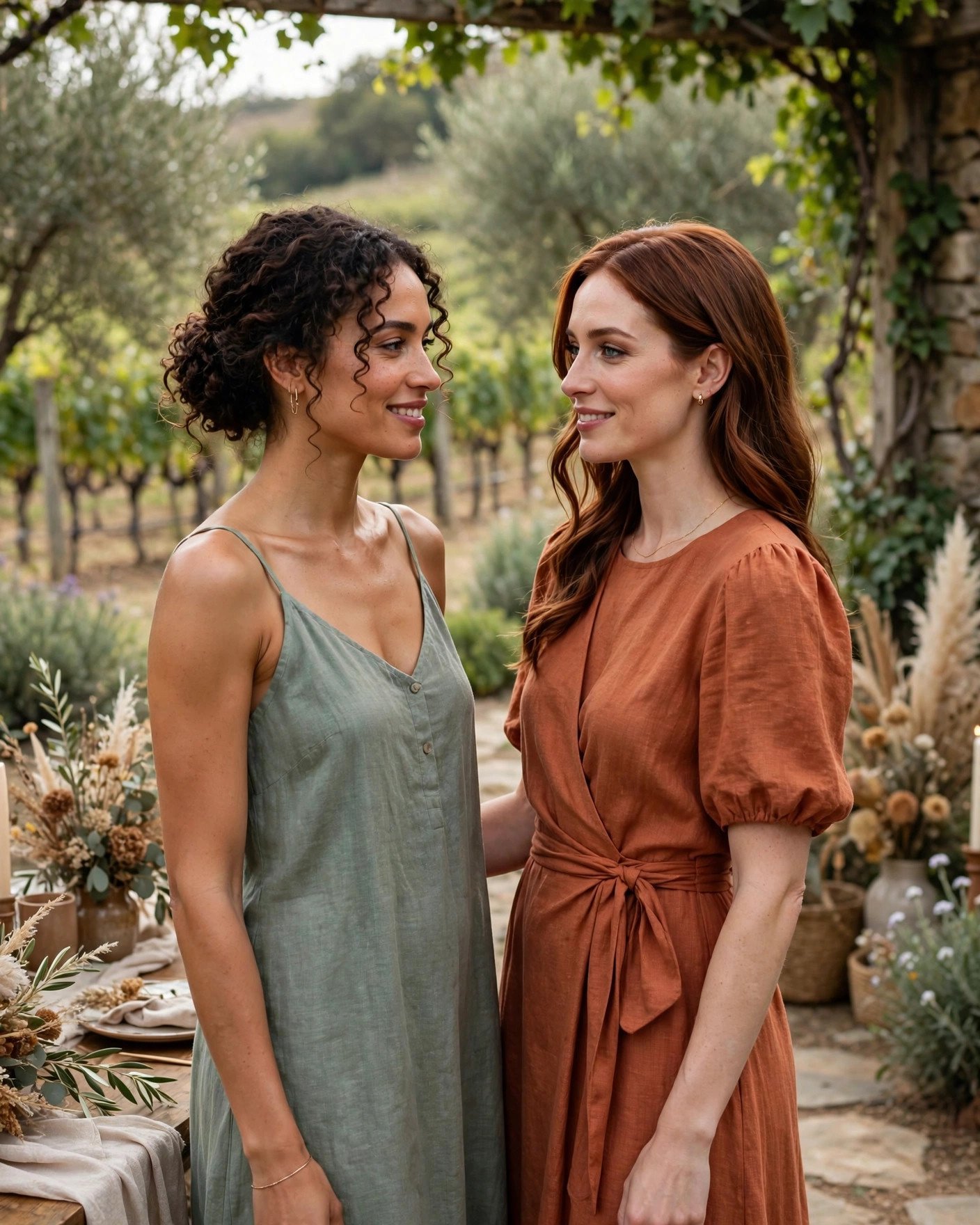
For estate gardens and formal outdoor weddings, linen and silk bring a texture chiffon can’t match.
Linen (in a blend — pure linen wrinkles relentlessly) gives an organic, editorial texture perfect for vineyard and farmhouse-garden weddings. Silk and silk-like satins bring quiet sheen for formal botanical gardens and evening garden receptions. Both photograph with a richness that reads “expensive” even in simple cuts.
The trade-offs: linen needs steaming the morning of, silk shows water spots if it rains, and both cost more than chiffon. Plan a steamer on-site and check the forecast — silk under sudden rain is a heartbreak.
Read next: 11 Mistakes Brides Make When Choosing Their Wedding Colors
Floral Prints Done Right
 📌 Save
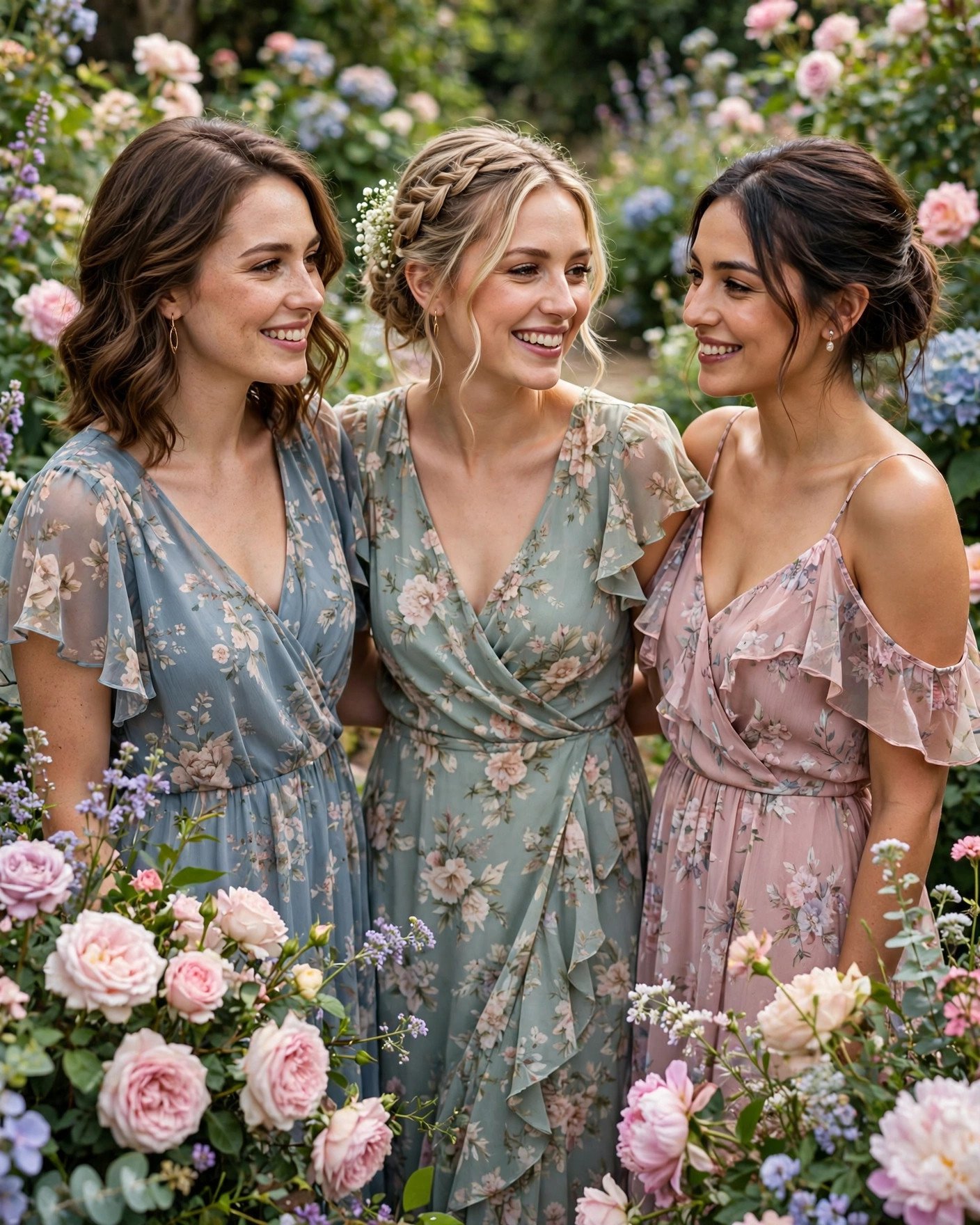
Floral prints belong at garden weddings — with one rule: muted prints on calm backgrounds.
A floral dress surrounded by real flowers can either look magical or chaotic. The difference: choose prints with soft, muted tones on a neutral or pastel base, and keep the scale medium — tiny ditsy prints read busy in photos, giant blooms compete with the actual garden. Let the dress be the quieter floral in the scene.
Balance the rest of the look down: if dresses are printed, keep bouquets simple and monochromatic. One floral statement per bridesmaid, not three.
Read next: 15 Wedding Guest Dresses for Women Over 50
Mismatched Dresses That Still Look Cohesive
 📌 Save
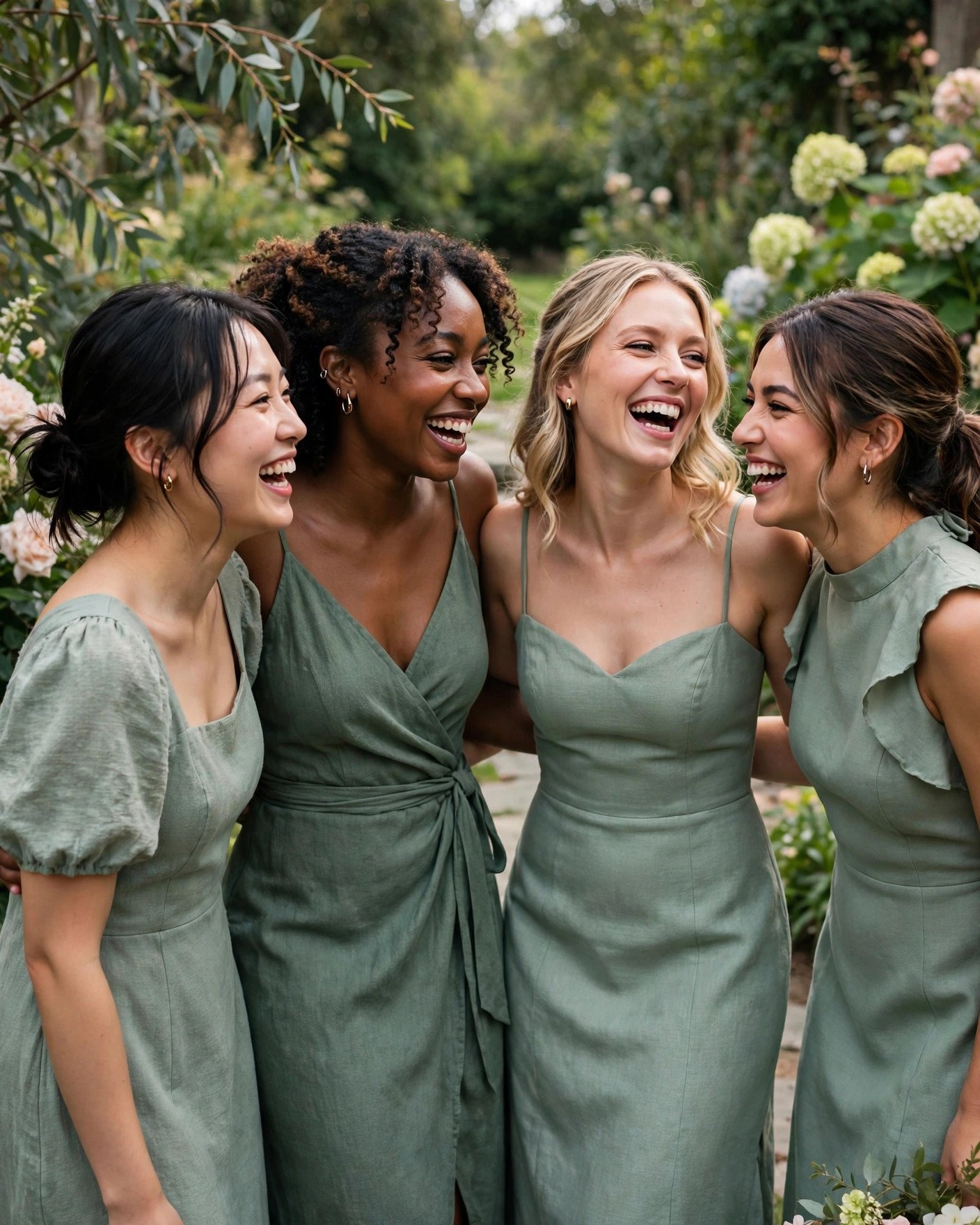
Let each bridesmaid choose her cut — unify the group with one color family and one fabric type.
Mismatched dresses are a gift to bridesmaids of different heights, sizes and tastes. The formula that keeps it cohesive: same color family (all greens from sage to emerald, or all blush-to-mauve pinks), same fabric family (all chiffon), and same hem length. Two unifying elements minimum — three is bulletproof.
Give the group a shared Pinterest board or 3–4 specific swatches, plus a “no” list (no neon, no stark white). Then let them shop. Identical bouquets across the party tie everything together in photos.
Read next: 11 Mistakes Brides Make When Choosing Their Wedding Colors
Flattering Silhouettes for Every Bridesmaid
 📌 Save
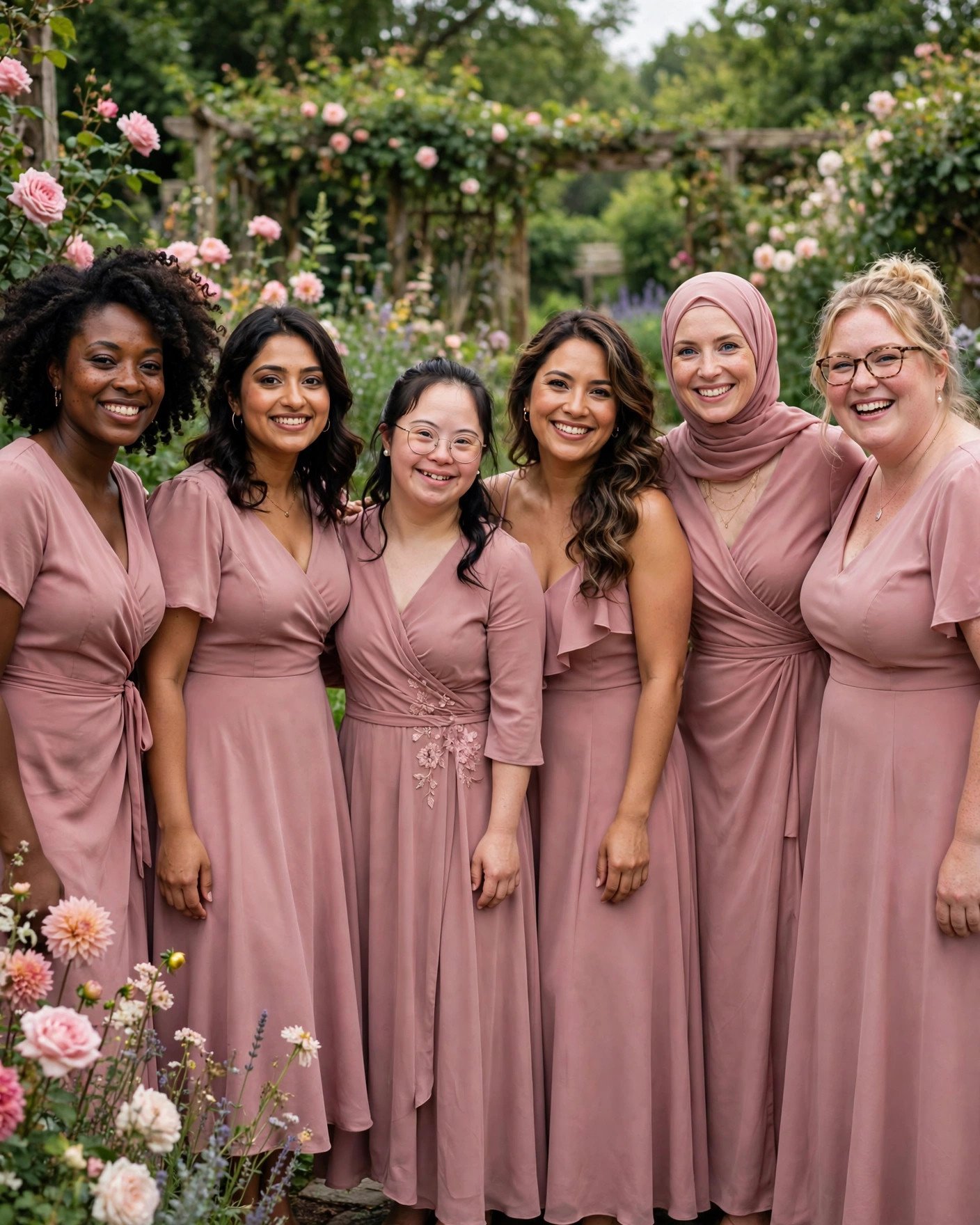
A-line and empire waists flatter nearly everyone; wrap and fit-and-flare cover the rest.
No single silhouette suits six different bodies, so know the workhorses: A-line skims hips and suits almost all; empire waist elongates petites and flatters fuller busts; wrap dresses define waists beautifully; fit-and-flare celebrates curves. V-necklines lengthen necks, and flutter or short sleeves add arm coverage without heat.
If you insist on one dress for all, choose A-line with a V-neck in chiffon — it’s the most universally forgiving combination ever made. Otherwise, let the mismatched approach do the work.
Read next: 15 Wedding Guest Dresses for Women Over 50
Season-by-Season Dress Choices
 📌 Save
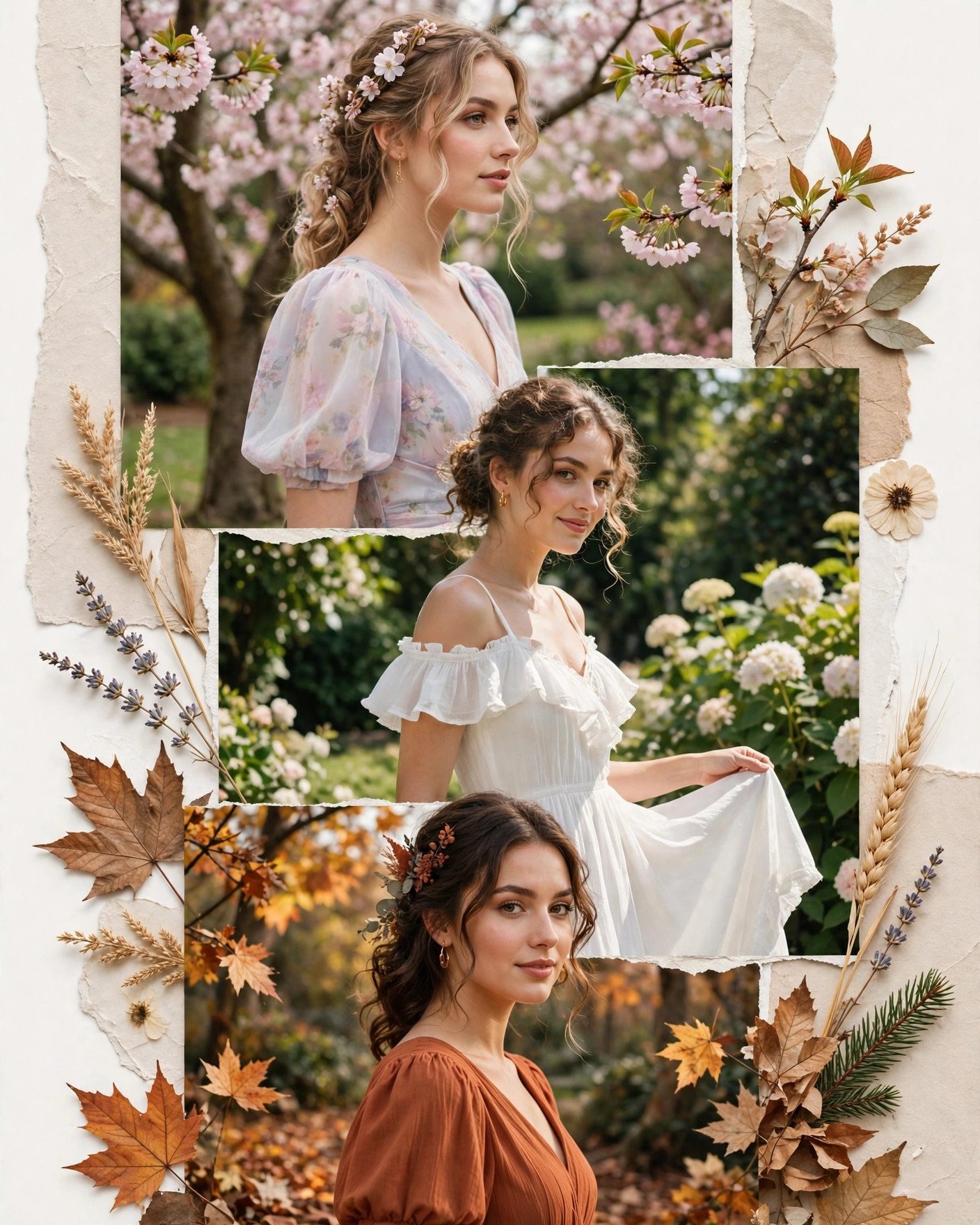
Match fabric weight and color depth to your season — a July chiffon and an October satin are different dresses.
Spring gardens: soft pastels, light chiffon, short or flutter sleeves. Summer: the lightest fabrics you can find, sweat-friendly linings, deeper tones that won’t show perspiration, and sun-safe coverage options. Fall gardens: richer earthy tones, slightly heavier crepe or satin, three-quarter sleeves, and wraps for cooling evenings.
Winter garden weddings (greenhouse venues, conservatories) are the wildcard — long sleeves, velvet or heavy satin, jewel tones, and closed-toe shoes. The garden is indoors, but the photos still read “garden.”
Read next: 11 Mistakes Brides Make When Choosing Their Wedding Colors
Grass-Proof Footwear and Accessories
 📌 Save
The fastest way to ruin garden photos: bridesmaids sinking into the lawn — mandate block heels, wedges or flats.
Stilettos punch straight into grass and soft soil. Block heels (2–3 inches) give height without the sink; wedges distribute weight even better; elegant embellished flats are the comfort queen’s choice. Heel protectors — little caps that widen the heel base — can rescue a beloved stiletto pair on firm lawns.
Accessories: keep jewelry simple and nature-friendly (no pieces that snag on branches), add pashminas or wraps in the wedding palette for evening chill, and consider flower crowns or combs instead of veils for the bridal party — they photograph beautifully against real blooms.
Read next: 15 Wedding Guest Dresses for Women Over 50
Ordering, Fittings and Weather Backup Plan
 📌 Save
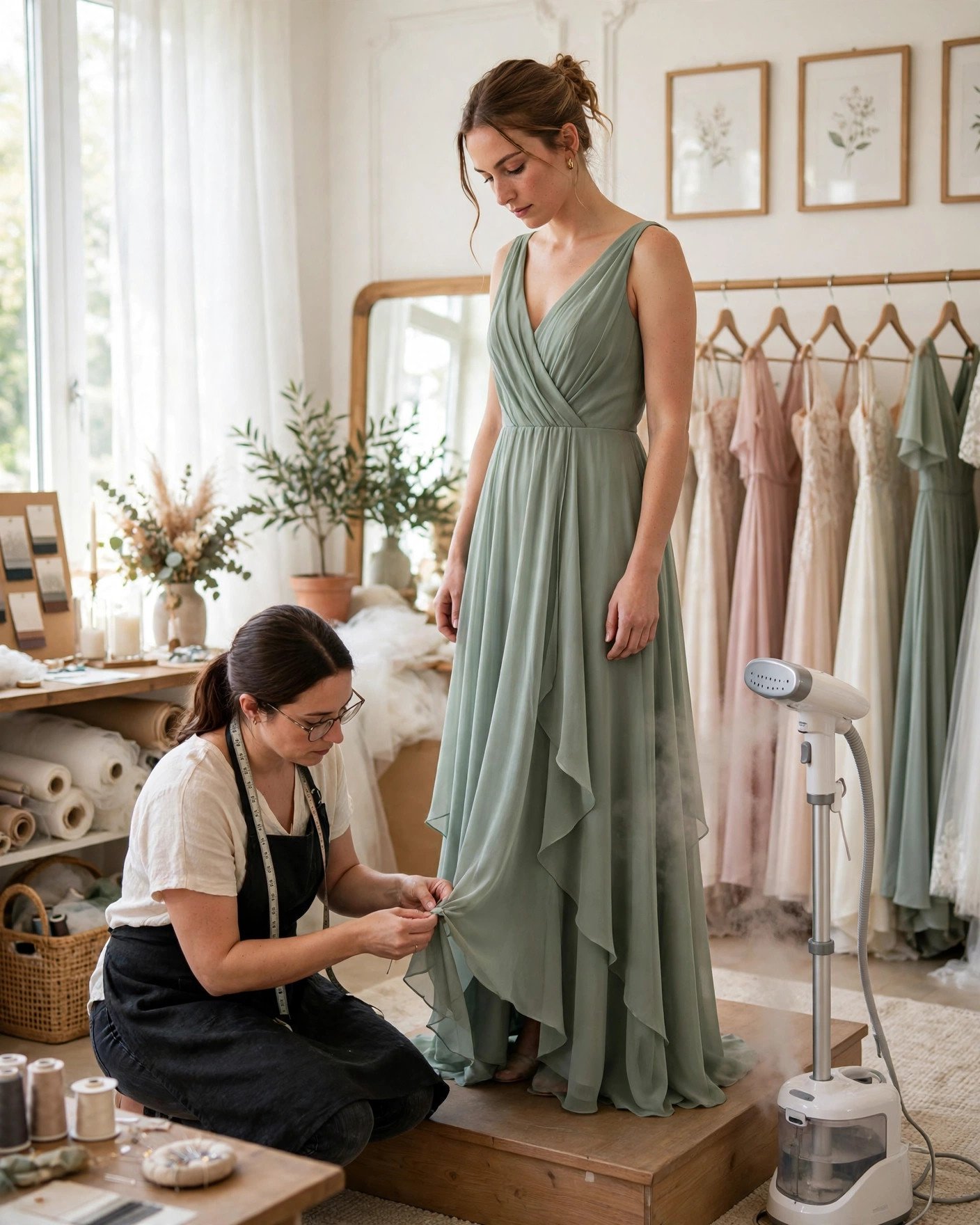
Order 4–6 months out, finalize fittings 2–3 weeks before, and have weather layers chosen by the last fitting.
Made-to-order dresses need 4–6 months; off-the-rack with alterations needs 8–12 weeks. Schedule final fittings 2–3 weeks before the wedding — bodies change, and outdoor weddings leave no hiding place for a poor fit. Hem for the actual shoe height, and walk the dresses on grass once: hems pick up dew and dirt, so consider hemming a half-inch shorter than indoor length.
Weather backup isn’t optional for garden weddings: matching wraps or pashminas, clear umbrellas for photos, and a plan for sudden wind (weighted hems, hair plans). Decide these by the final fitting so nothing is a day-of scramble.
Read next: 11 Mistakes Brides Make When Choosing Their Wedding Colors
Frequently Asked Questions
What color bridesmaid dresses look best at a garden wedding?
Soft pastels (blush, lavender, mint, powder blue) and earthy tones (sage, terracotta, taupe) blend beautifully with greenery and flowers. Photograph your palette swatches outdoors in daylight — pastels can shift dramatically under sun.
What fabrics are best for outdoor garden weddings?
Light, breathable fabrics like chiffon, tulle, silk and linen-blends keep bridesmaids comfortable and move beautifully in a breeze. Avoid heavy satins for summer gardens — they trap heat and show perspiration.
How do I make mismatched bridesmaid dresses look cohesive at a garden wedding?
Stay within one color family (shades of green or pink), match fabric type and hem length, and give everyone the same bouquet style. Two unifying elements are enough to make varied dresses read as one look.
What shoes should bridesmaids wear on grass?
Block heels, wedges or elegant flats — never stilettos, which sink into lawns. Heel protectors help on firm ground. Match shoe metal tones across the party for a polished group photo.
When should I order bridesmaid dresses for a garden wedding?
Order 4–6 months out for made-to-order dresses, 8–12 weeks for off-the-rack with alterations. Schedule final fittings 2–3 weeks before the wedding, and have weather layers planned by the final fitting.
✨ Key Takeaways
- Read your garden first — the venue’s tone, light and ground dictate the dresses.
- Pull your palette from your florals; harmonize with blooms, don’t camouflage into them.
- Chiffon is the safest all-round fabric; linen and silk elevate formal garden weddings.
- Unify mismatched dresses with one color family, one fabric type and matching bouquets.
- Ban stilettos on grass, hem for real shoe height, and lock in a weather backup early.
Final Thoughts
The best garden bridesmaid dresses don’t fight the setting — they complete it. Start with your venue, build a palette from your blooms, choose fabrics that breathe, and let each bridesmaid wear the silhouette that flatters her. Do that, and your bridal party will look like they grew there — which, for a garden wedding, is exactly the point.



2 Comments