What Time to Arrive (2027)
By zainzari • Published October 22, 2026 • Updated October 22, 2026
 📌 Save
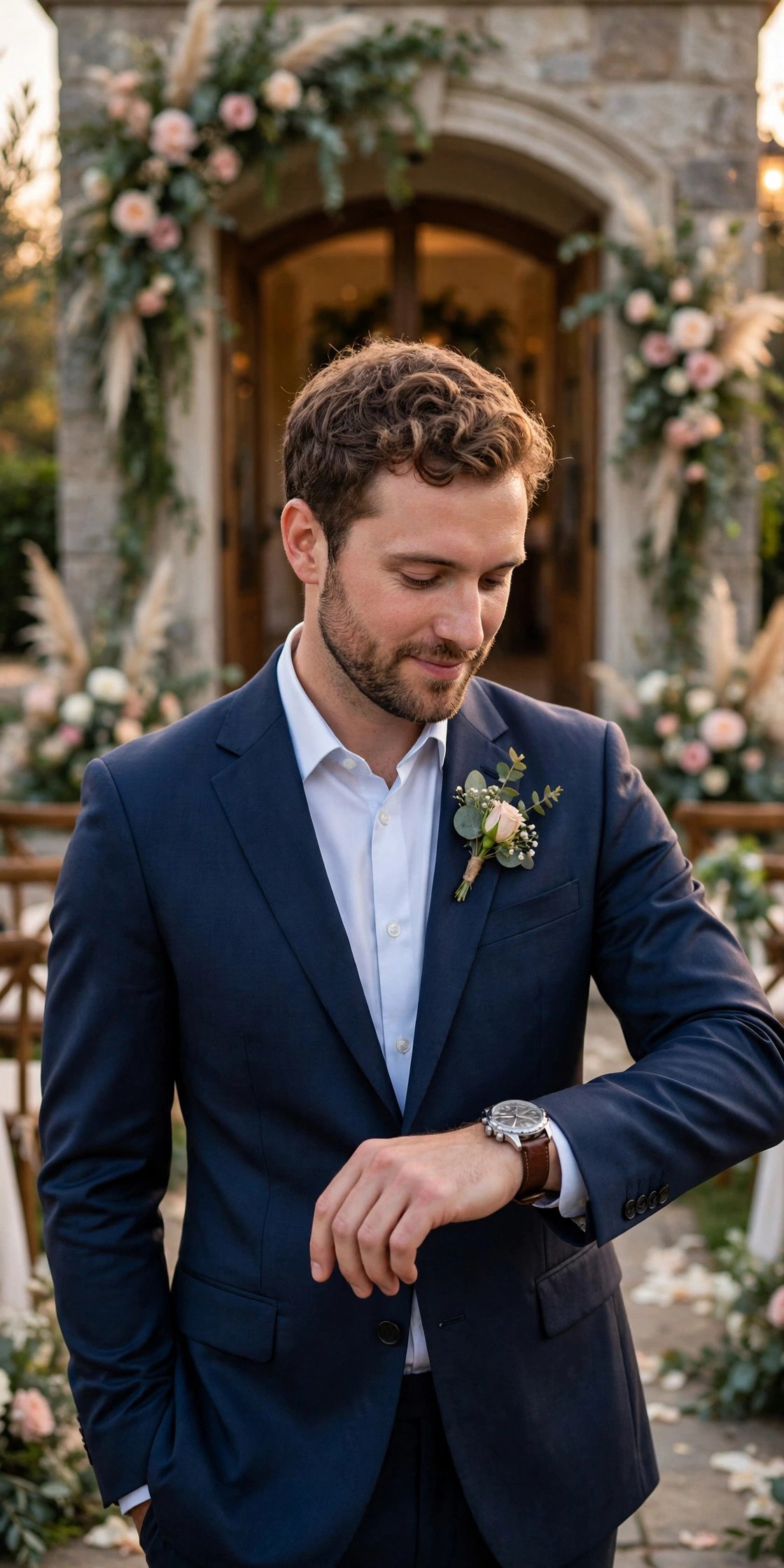
Arrive at a wedding 30 minutes before the time printed on the invitation — that printed time is when the ceremony starts, not when guests should show up. Aim to be parked, settled, and seated 15 to 30 minutes ahead, so the processional begins in a calm, full room.
Every wedding has one guest sprinting up the path as the music starts — and every couple remembers who it was. Timing is the easiest etiquette win there is: it costs nothing but a small buffer, and it buys total calm.
These 25 rules decode invitation times, travel buffers, and every ‘how early is too early’ question, for churches, venues, and destination days alike.
At a Glance: Arrival Timing by Situation
| # | Situation | Arrive | Invitation Says | Buffer For |
|---|---|---|---|---|
| 1 | Standard venue wedding | 30 min early | Ceremony start | Parking & seating |
| 2 | Church ceremony | 30–45 early | Ceremony start | Parking & quiet settle |
| 3 | Unfamiliar city venue | 45 min early | Ceremony start | Traffic unknowns |
| 4 | Rural / estate venue | 45 min early | Ceremony start | Long driveways, shuttles |
| 5 | Hotel-block shuttle | First shuttle | — | Full shuttles skip stops |
| 6 | Destination / resort | 30 min early | Ceremony start | Resort distances |
| 7 | Wedding party member | Per call sheet | — | Photos before guests |
| 8 | Vendor-adjacent helper | As assigned | — | Setup duties |
| 9 | Running late | Back, quietly | — | Wait for a pause |
| 10 | Reception-only invite | At reception start | Reception time | No buffer needed |
The pattern behind the table: the printed time is always a start time, and your buffer grows with every unknown between you and the venue door.
The Golden Rule: 30 Minutes Early
 📌 Save
Build your whole plan around arriving 30 minutes before the invitation time. That window absorbs parking, finding the ceremony space, a restroom stop, and finding your seat — with minutes to spare for a breath and a smile.
The Invitation Time Is the Start Time
 📌 Save
The time printed on a wedding invitation is when the processional begins — not a suggestion to head over around then. Guests who ‘arrive at 4 for a 4 o’clock wedding’ arrive, by definition, late.
Seated by 15 Minutes Before
 📌 Save
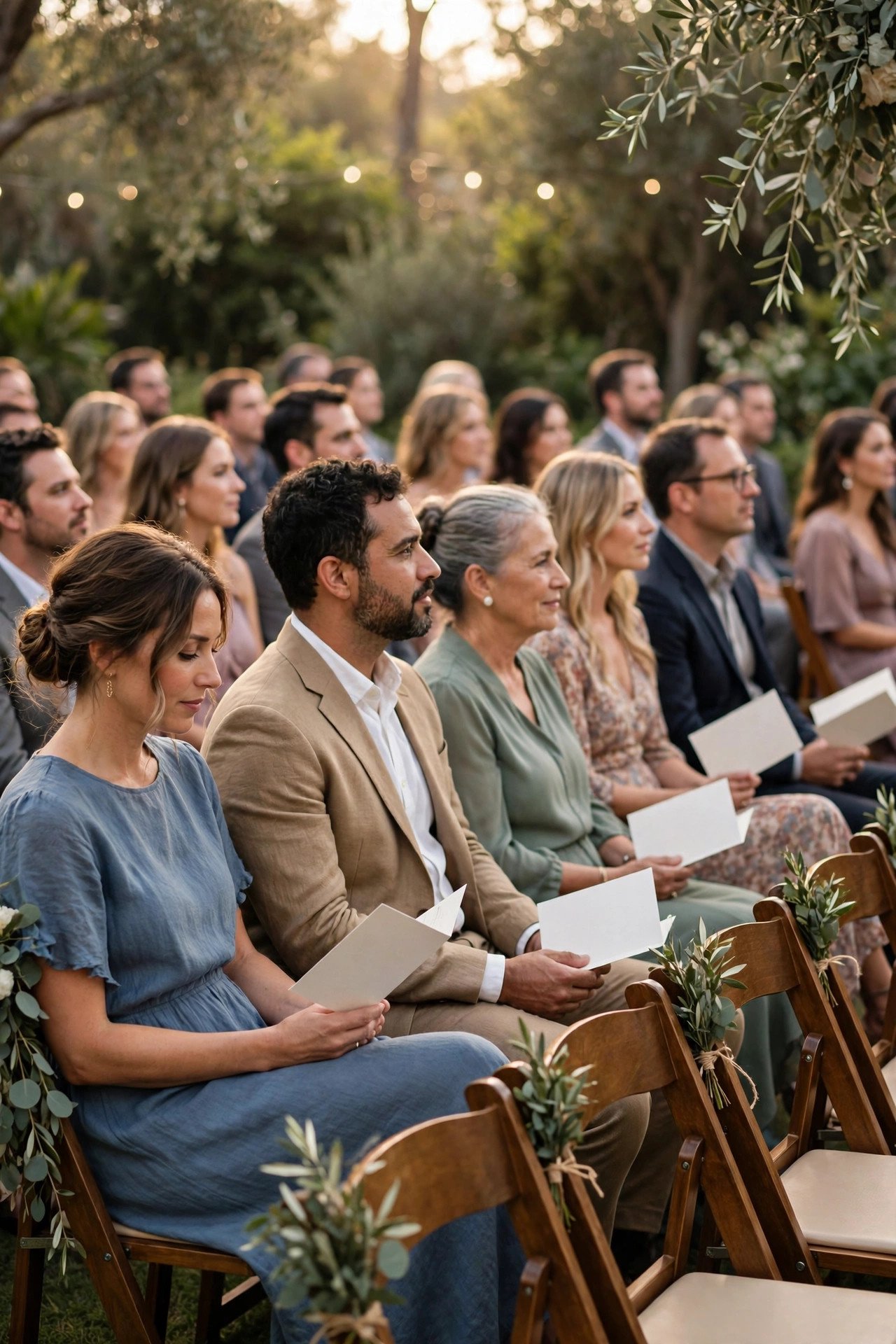
Aim to be actually seated fifteen minutes before the start. Ushers close doors, musicians tune, and the wedding party lines up in those minutes — a settled, seated room is part of the ceremony’s opening scene.
Never Arrive More Than 45 Minutes Early
 📌 Save
Earlier than 45 minutes and you collide with setup: vendors arranging, photographers testing, the couple hiding from sight. If you land super early, wait in your car or a nearby café until the 30-minute mark.
Add a Buffer for Unfamiliar Venues
 📌 Save
First time at the venue, in that city, or on those roads? Add fifteen minutes to your buffer. Unfamiliar parking structures and one-way streets have ended more punctual intentions than traffic ever has.
Church Weddings: Lean Earlier
 📌 Save
Church ceremonies often start with particular promptness and involve older buildings, street parking, and quiet foyers where late entry is conspicuous. Give a church wedding the generous end of the buffer — 30 to 45 minutes.
Plan for Parking Like It Matters
 📌 Save
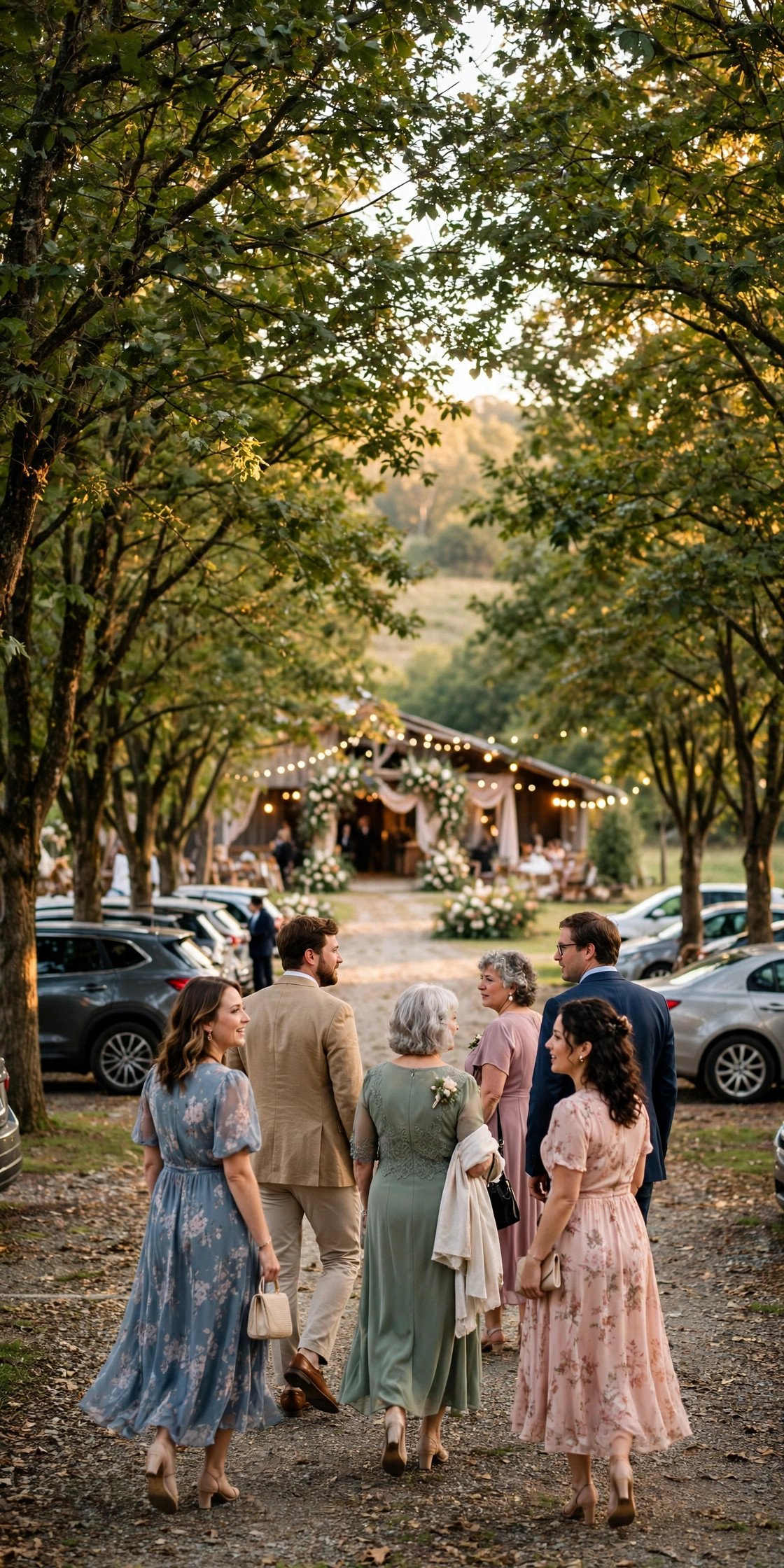
Research parking before the day: venue lot, garage, street only? Ten unplanned minutes circling for a space is the single most common reason good guests become late guests.
Shuttle Guests: Take the First Shuttle
 📌 Save
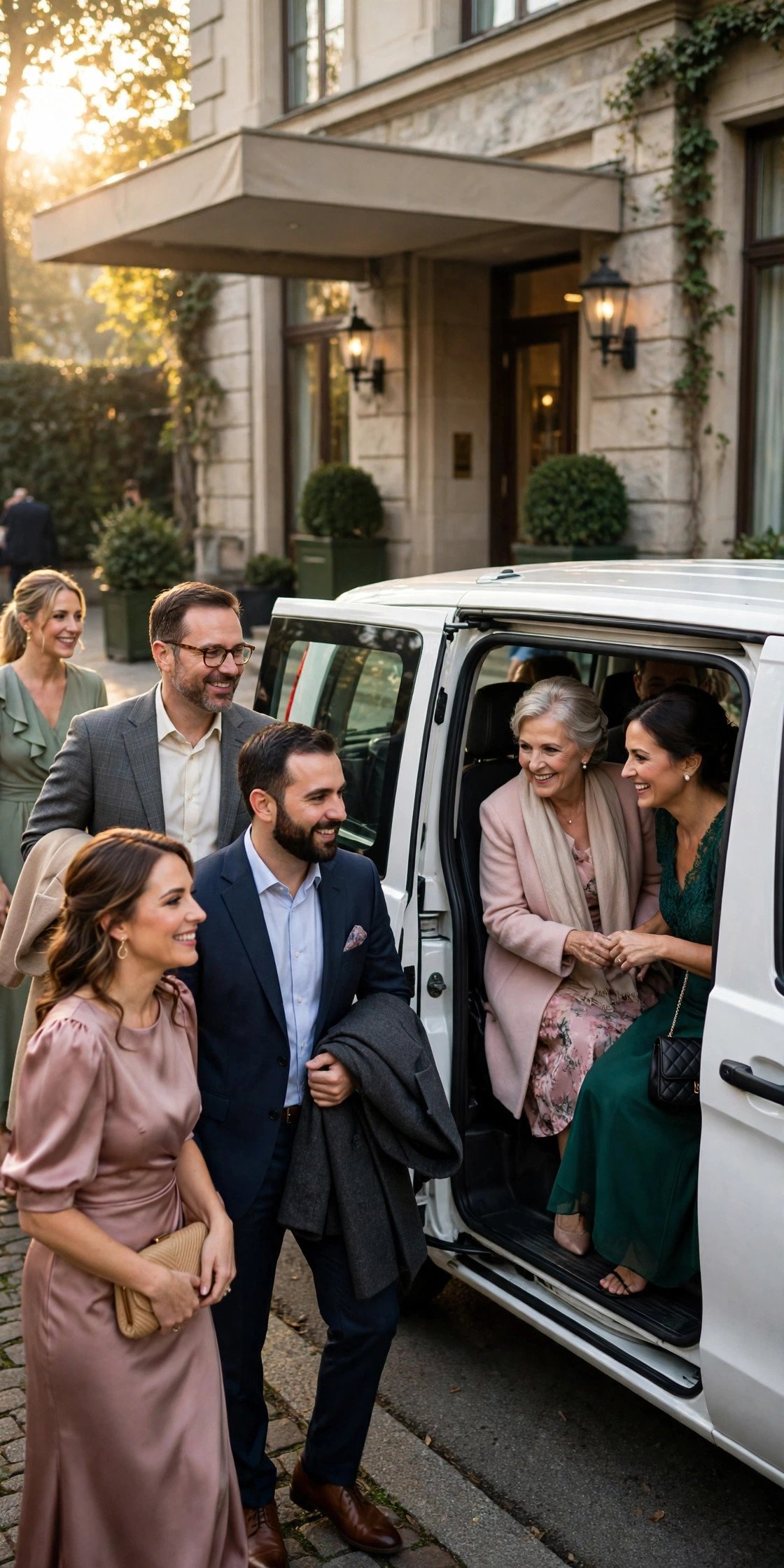
If the couple provides shuttles from the hotel, board the first departure, not the last. Last shuttles fill, skip stops, and deliver their passengers directly into processional panic.
Build Your Getting-Ready Backwards
 📌 Save
Plan the day backwards from your target arrival: arrival minus drive time minus parking minus getting ready. Write the ‘leave the house’ time down — vague intentions are how buffers evaporate.
Traffic Apps Lie Optimistically
 📌 Save
Your maps app’s estimate assumes normal conditions — not event traffic, not the road closure, not everyone else driving to the same venue. Add 20 percent to any drive over half an hour, minimum.
Weather Doubles Everything
 📌 Save
Rain, snow, or festival-weekend traffic can double a familiar drive. Check the forecast the night before and promote your buffer accordingly — weather is the most foreseeable surprise there is.
If You Are Running Late, Still Go
 📌 Save
Ten or fifteen minutes late is a moment; skipping the ceremony entirely is a statement. Go anyway. A late guest who handles it gracefully — see the next rule — is always better than an absent seat.
Late Arrival Protocol: Back and Quiet
 📌 Save
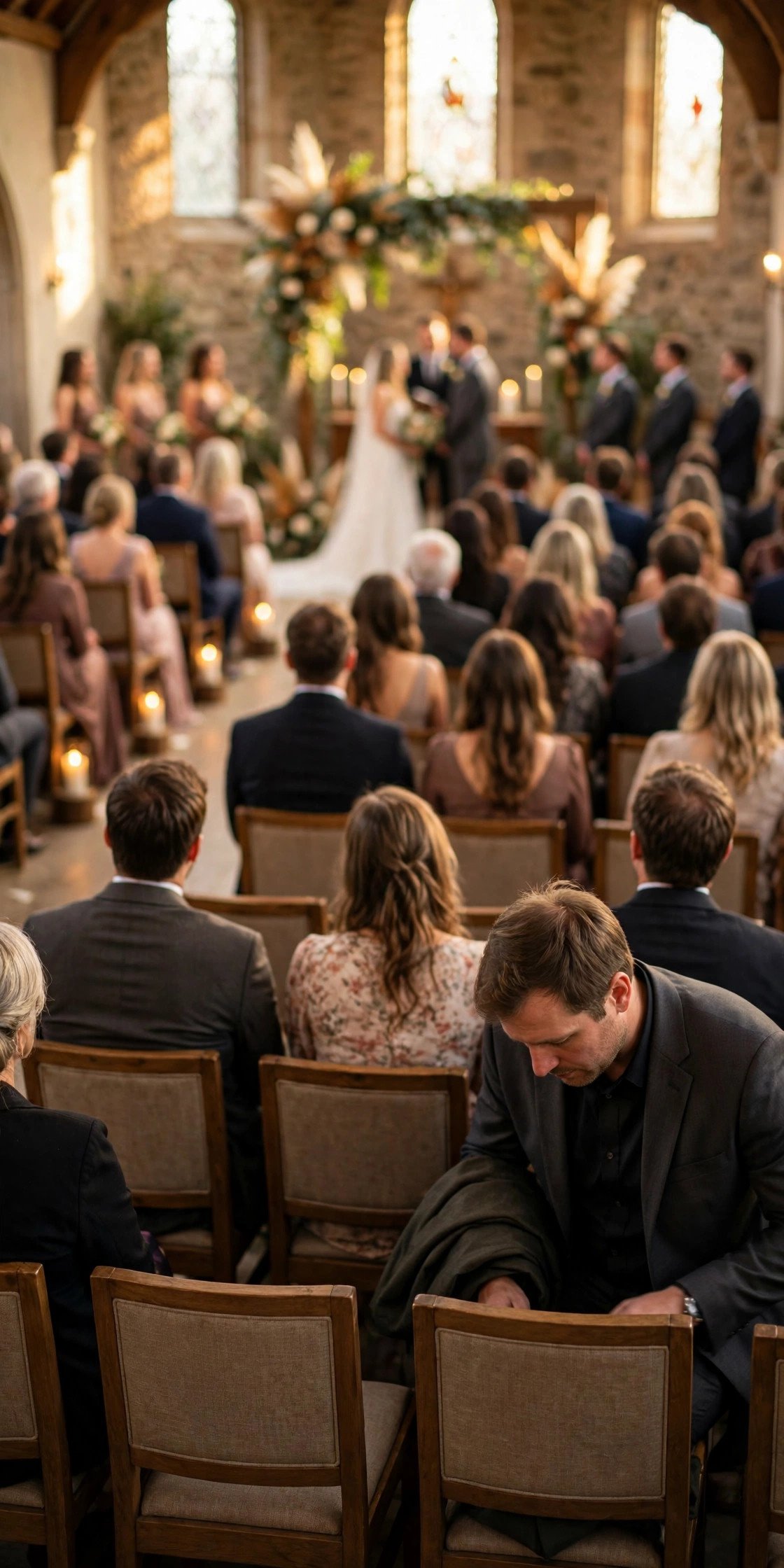
Enter from the rear or side, never down the aisle. If the processional is underway, wait outside until it finishes. Sit in the last row, quietly, and save explanations for the reception — never mid-ceremony.
Never Walk In During the Vows
 📌 Save
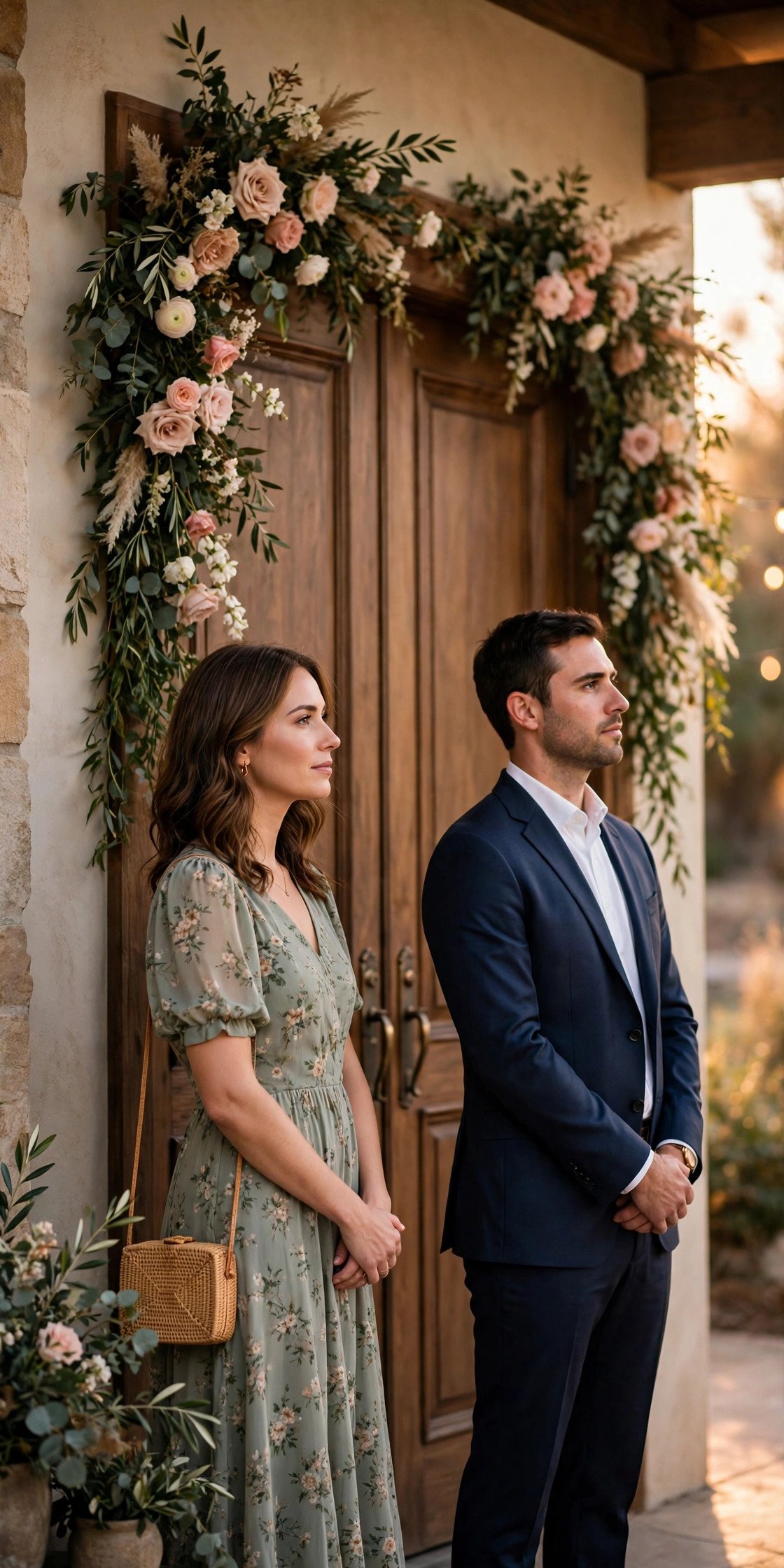
If you arrive during the ceremony’s quiet heart — vows, readings, a moment of silence — wait outside the doors until you hear applause or music. Thirty patient seconds outside beats a door creak inside, forever on video.
Wedding Party: Your Time Is Different
 📌 Save
Attendants, readers, and anyone in the program follow the couple’s call sheet, not guest timing — often two to three hours early for photos and rehearsal. If you have any role at all, confirm your personal call time the week before.
Parents and Family: Earlier Still
 📌 Save
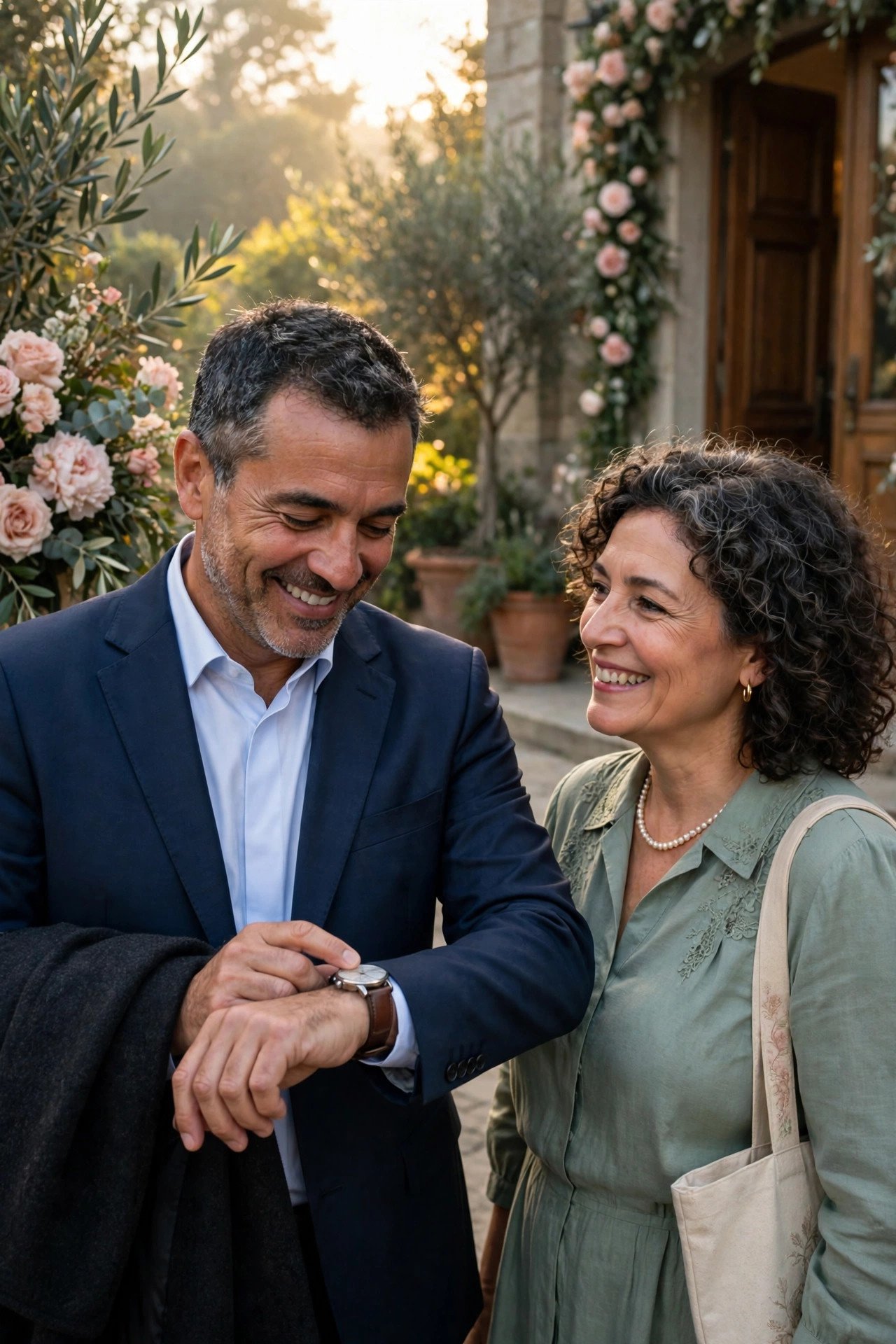
Immediate family typically arrives with or before the wedding party for portraits and front-row settling. If you are family and nobody gave you a call time, ask — do not improvise with guest timing.
Ceremony-to-Reception Gap: Arrive Fresh
 📌 Save
For split days with a gap between ceremony and reception, the reception’s printed time is a genuine doors-open time — arriving right at it is correct, and 10 to 15 minutes after is still perfectly fashionable.
Reception-Only Invitations: On Time Is Fine
 📌 Save
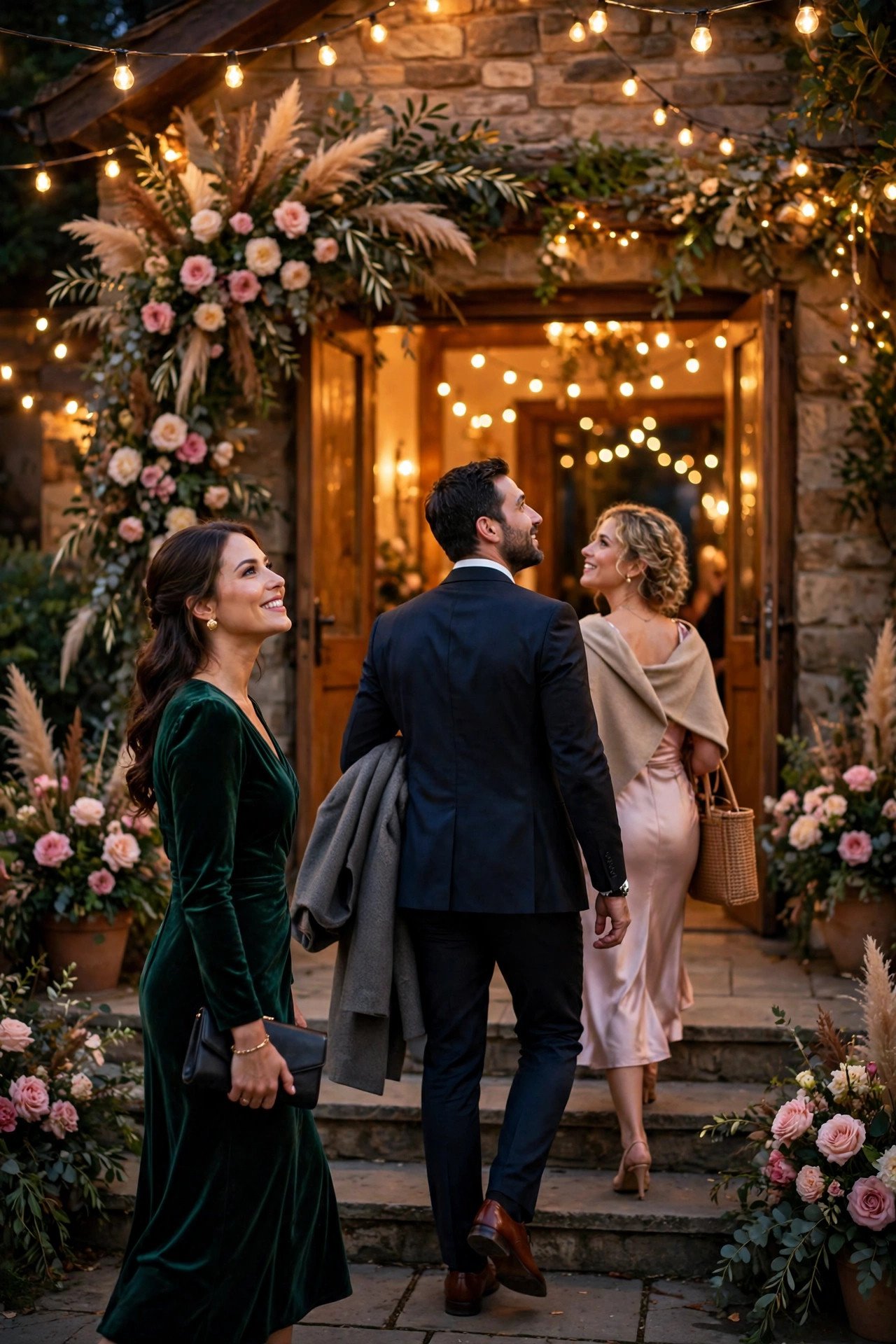
Invited to the reception only? Arrive at the stated time or a few minutes after — venues build cocktail flow for gradual arrivals, and there is no processional for you to precede.
Destination Weddings: Scout the Route
 📌 Save
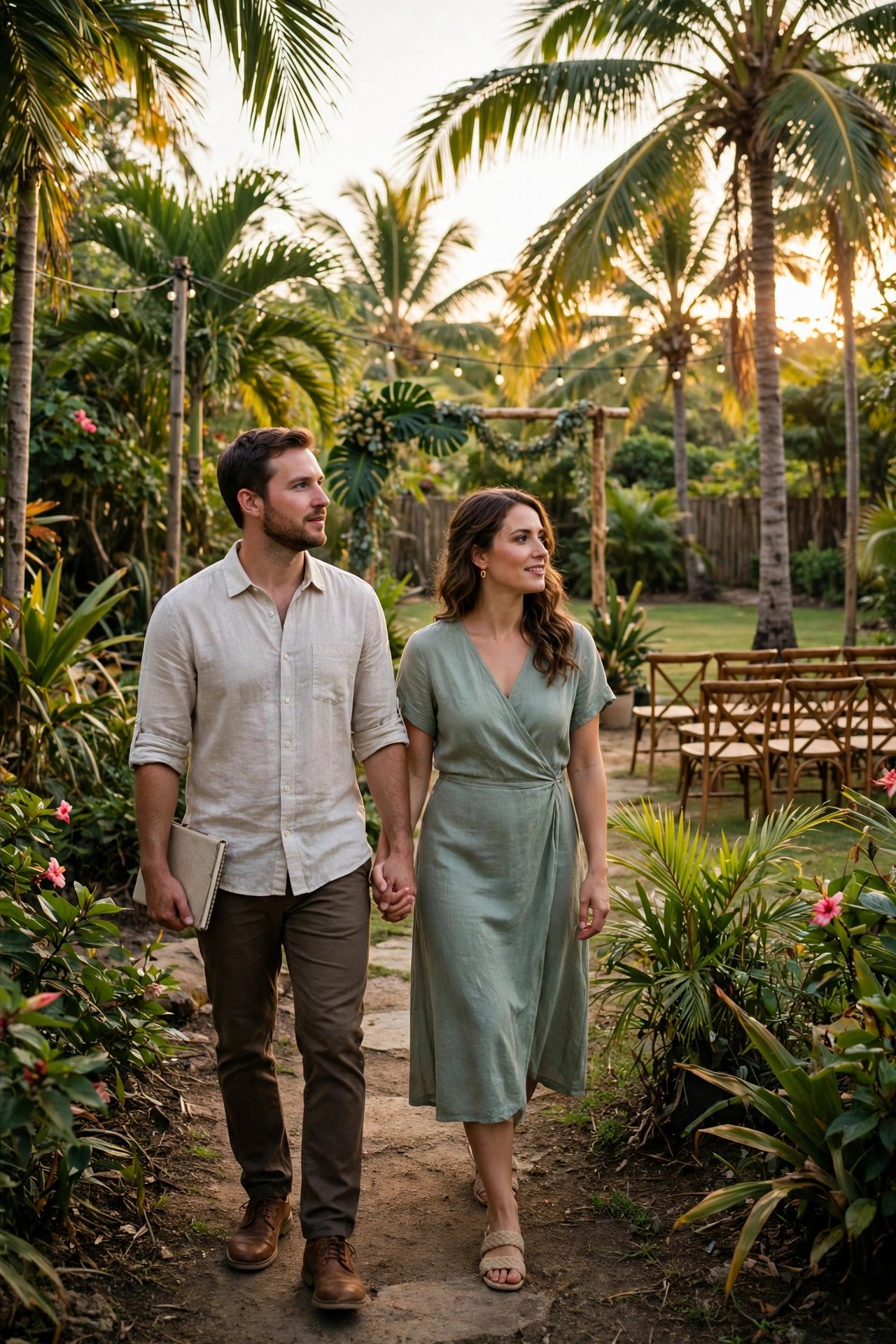
Resorts and foreign venues hide distance: the ‘five-minute’ walk is fifteen in heels, uphill. Walk your route to the ceremony space the day before, time it honestly, and set the group’s plan from reality.
Time Zones and Travel Days
 📌 Save
Flying in the same day is the riskiest timing plan in weddings: one delayed flight erases the ceremony. Arrive the day before whenever distance allows, and treat the wedding morning as sacred, unhurried buffer.
Set Two Alarms, Not One
 📌 Save
Set a ‘start getting ready’ alarm and a ‘leave now, no discussion’ alarm. The second one is the real rule — when it rings, shoes on, out the door, whatever state your hair believes it is in.
Tell Your Plus-One the Real Time
 📌 Save
Do not give your date a fake earlier time ‘because they’re always late’ — it breeds distrust and still fails. Share the real plan and the real stakes: the processional does not wait for either of you.
Early Is a Gift to the Couple
 📌 Save
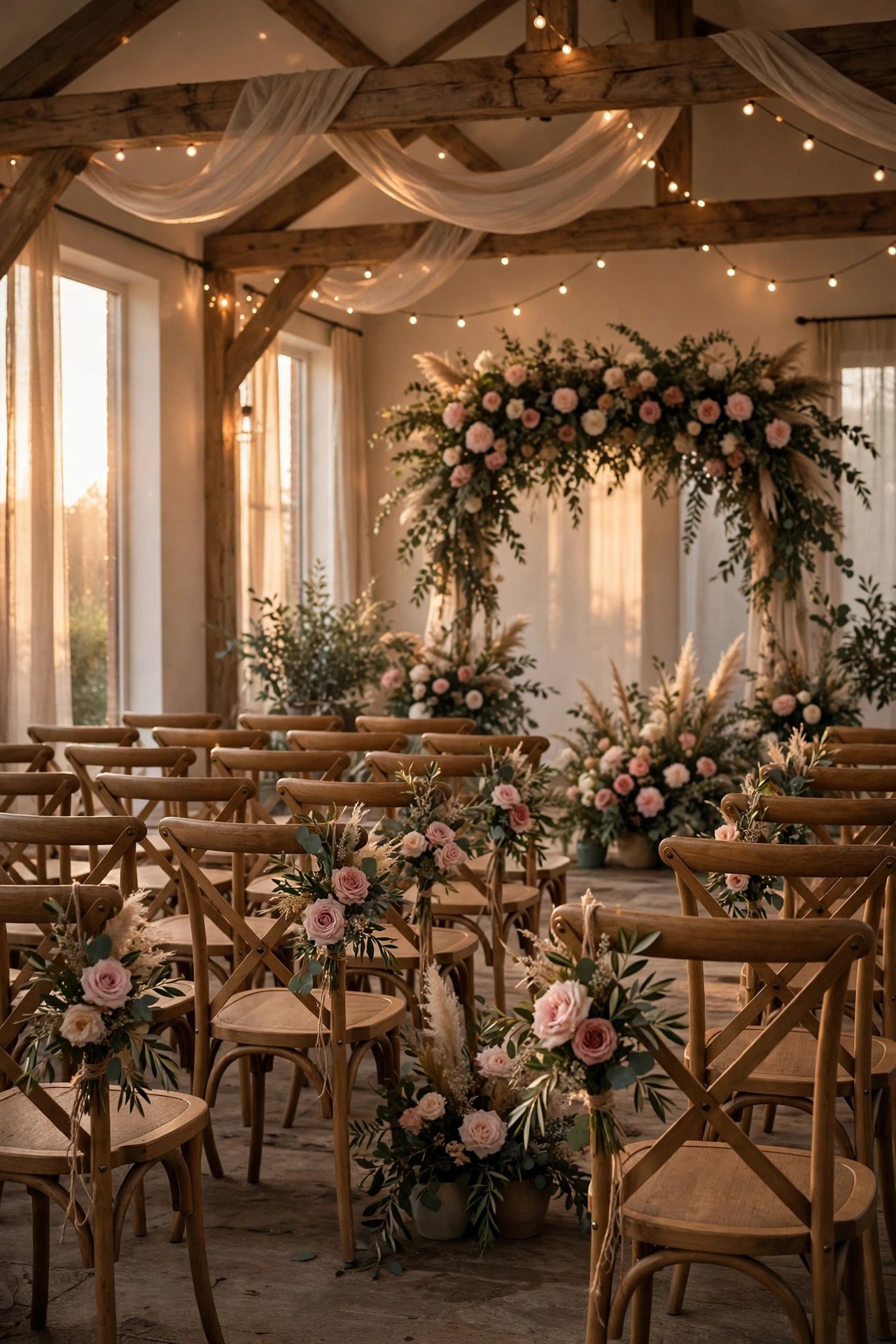
Couples in the wings peek at the room before walking in. A full, settled, smiling room at start time genuinely steadies their nerves — your punctuality is emotional support they can see.
Early Guests Get the Best of Everything
 📌 Save
The quiet rewards of early arrival: easy parking, your choice of aisle seat within your section, a calm hello with the couple’s parents, and photographs of the empty, perfect ceremony space. Punctuality pays in comfort.
The One Sentence to Remember
 📌 Save
If you keep one sentence from this guide: the invitation time is the start time, so be seated fifteen minutes before it. Everything else — buffers, shuttles, weather — is just machinery for making that sentence true.
What Time to Arrive (2027) FAQs
What time should you arrive at a wedding?+
Arrive 30 minutes before the time printed on the invitation, and aim to be seated 15 minutes before the ceremony starts. The printed time is the ceremony’s start time — arriving then means arriving late.
Is it rude to arrive too early to a wedding?+
Arriving more than 45 minutes early can collide with vendor setup and the couple’s private pre-ceremony moments. If you reach the area very early, wait in your car or a nearby café until about 30 minutes before the start.
What should I do if I am running late to a wedding ceremony?+
Go anyway, enter quietly from the back or side, and sit in the last row. If the processional or vows are underway, wait outside until a natural break. Never walk down the aisle or explain yourself until the reception.
What time should the wedding party and family arrive?+
Much earlier than guests — usually two to three hours ahead for getting ready and portraits, following the couple’s call sheet. If you have any role or are immediate family and have not been given a time, ask the week before.
Does the 30-minute rule apply to reception-only invitations?+
No. For reception-only invitations, or the reception after a gap, arriving at the printed time — or a few minutes after — is correct. The 30-minute buffer exists to protect the ceremony processional specifically.
Key Takeaways
- The invitation time is the start time — arrive 30 minutes before it.
- Be seated 15 minutes ahead; never arrive over 45 minutes early.
- Take the first shuttle and add buffers for parking, weather, traffic.
- Late? Enter at the back, quietly — and never during the vows.
- Flying in? Arrive the day before, not the morning of.
Final Thoughts
Punctuality is the cheapest elegance a guest can wear. Be the person seated, settled, and smiling when the music starts — the couple will feel the calm you brought into the room, and you will never star in a late-arrival story again.