Family-Style Wedding Dinners (2027)
By zainzari • Published October 23, 2026 • Updated October 23, 2026
 📌 Save
A family-style wedding dinner serves shared platters and bowls to each table, and guests pass and serve themselves — combining a buffet’s variety with a seated dinner’s warmth. It works best with wide tables, a menu of two mains and three sides built for passing, and staff who refill, clear, and pace the meal behind the scenes.
Family-style is the dinner format guests describe with the word ‘cozy’ — and then immediately ask the couple how they pulled it off. The secret is that the warmth is engineered: platter sizes, table width, passing-friendly food, and staff choreography all have to be planned, or the charm collapses into clutter and cold food.
This guide walks through the whole system, from platter math and menu building to allergy handling and a sample timeline. Whether your venue is a barn, a garden, or a ballroom, you will finish knowing exactly what family-style demands — and whether your crowd will love it.
At a Glance: A Family-Style Dinner, Piece by Piece
| Element | What Works | Watch Out For |
|---|---|---|
| Table | 60-inch rounds or wide farm tables | Narrow tables plus big centerpieces |
| Menu | 2 mains, 3 sides, bread service | Too many dishes fighting for space |
| Platters | One set per 8 guests, plus refills | Oversized showpiece platters nobody can lift |
| Staff | Runners plus a captain per few tables | No refill plan for popular dishes |
| Timing | Courses in two waves | Speeches while platters are mid-pass |
Ask your caterer to set one full sample table — with platters, glassware, and centerpiece — before you finalize rentals.
What Family-Style Service Really Means
 📌 Save
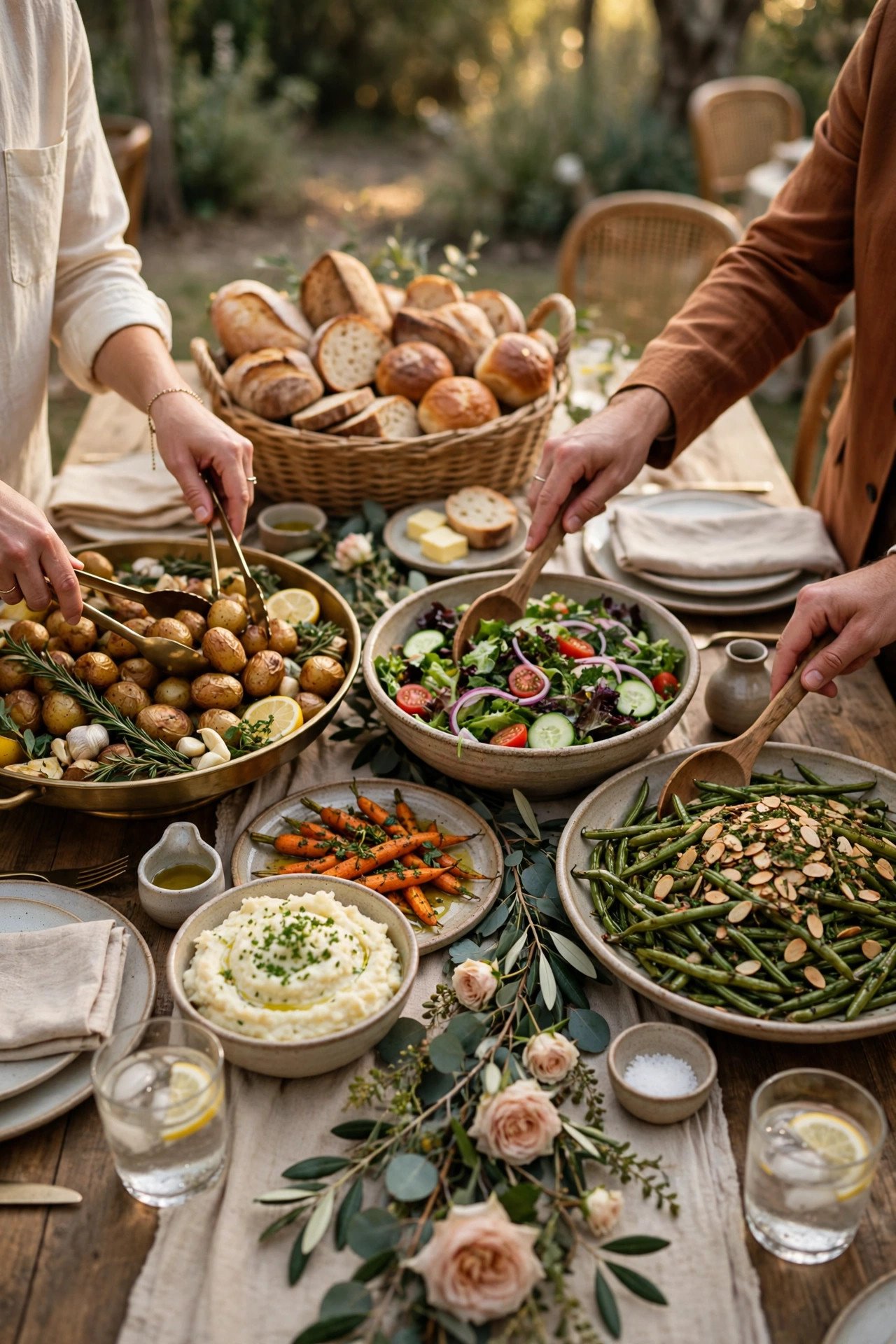
Family-style means the kitchen sends shared platters to each table and guests serve themselves, passing dishes around like a holiday dinner. It is neither buffet nor plated: nobody queues, nobody is locked into a pre-chosen entrée, and the table becomes its own little dinner party. The format lives or dies on logistics — platter weight, table space, and refill speed — far more than on the menu alone.
The Cozy, Conversational Atmosphere
 📌 Save
Passing a platter is an icebreaker no seating chart can manufacture: strangers ask for the potatoes, compliment the chicken, and become tablemates within minutes. That social warmth is family-style’s real product, and it suits long, laughter-heavy receptions. If your favorite dinners are loud kitchen-table affairs, this format will feel like home at wedding scale.
Platter Math: How Much Per Table
 📌 Save
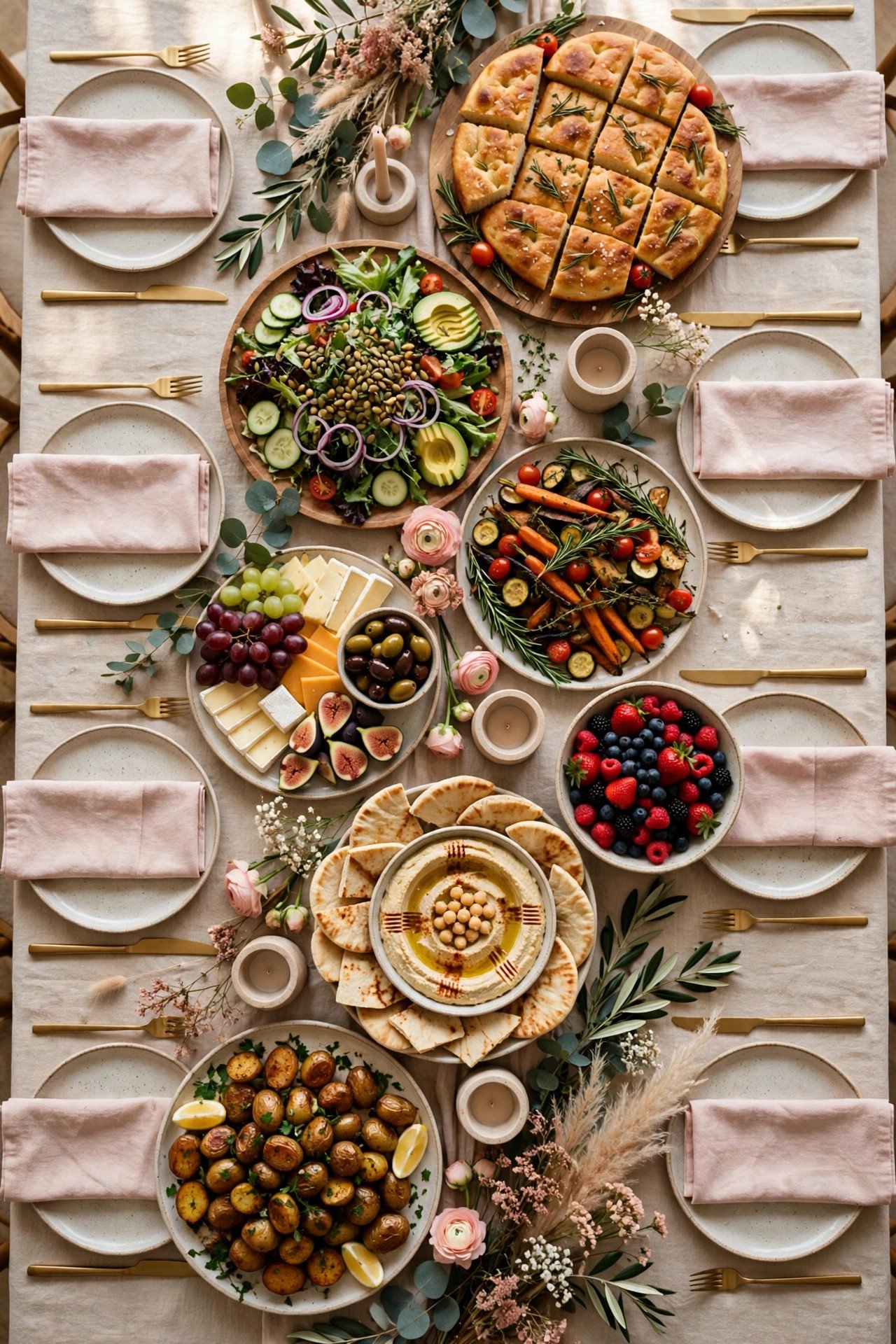
Caterers typically portion a platter for the table it lands on — roughly eight servings per platter set — and hold backup pans for refills of the most popular items. Protein portions run the same per guest as plated, but sides are portioned more generously because passing invites tasting. Confirm how your caterer counts a ‘table portion’ and which dishes get guaranteed refills before you sign.
Table Width and Lazy Susans
 📌 Save
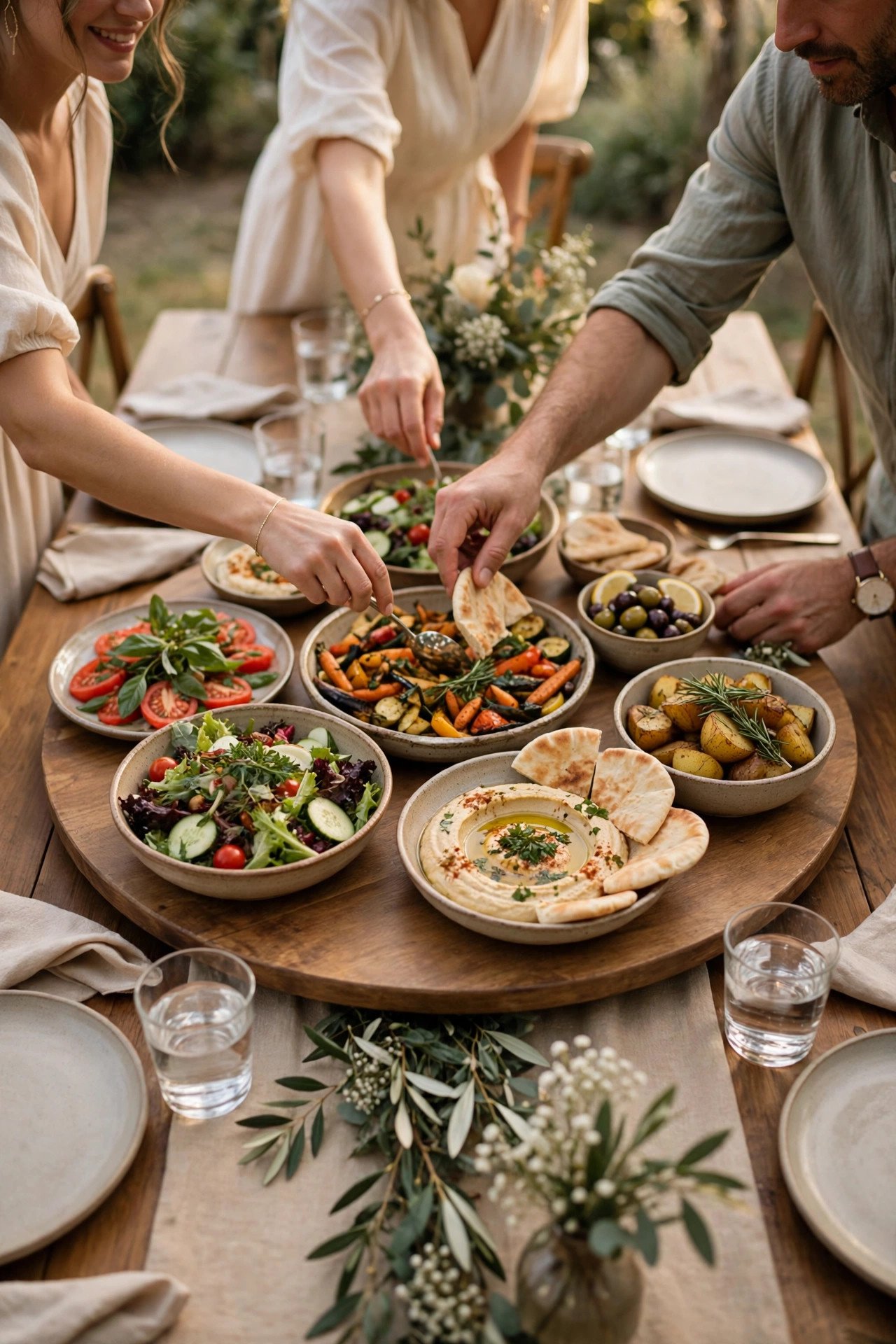
Passing needs elbow room: 60-inch rounds seat eight comfortably with platter space, and farm tables should be at least 36–40 inches wide once place settings are down. On very long banquet tables, a lazy Susan per section turns stretching and spills into an easy spin. Walk your layout with the actual rental tables if you can — inches matter more here than in any other format.
Menu Building: Two Mains, Three Sides
 📌 Save
The classic family-style architecture is two mains — say, herb chicken and sliced steak — plus three sides, a salad, and bread. That is plenty: more dishes mean more passing, more clutter, and more lukewarm food. Choose contrasting flavors and textures so the table feels abundant without being chaotic, and make at least one main genuinely satisfying for vegetarian guests at mixed tables.
Warm Bread and Butter Service
 📌 Save
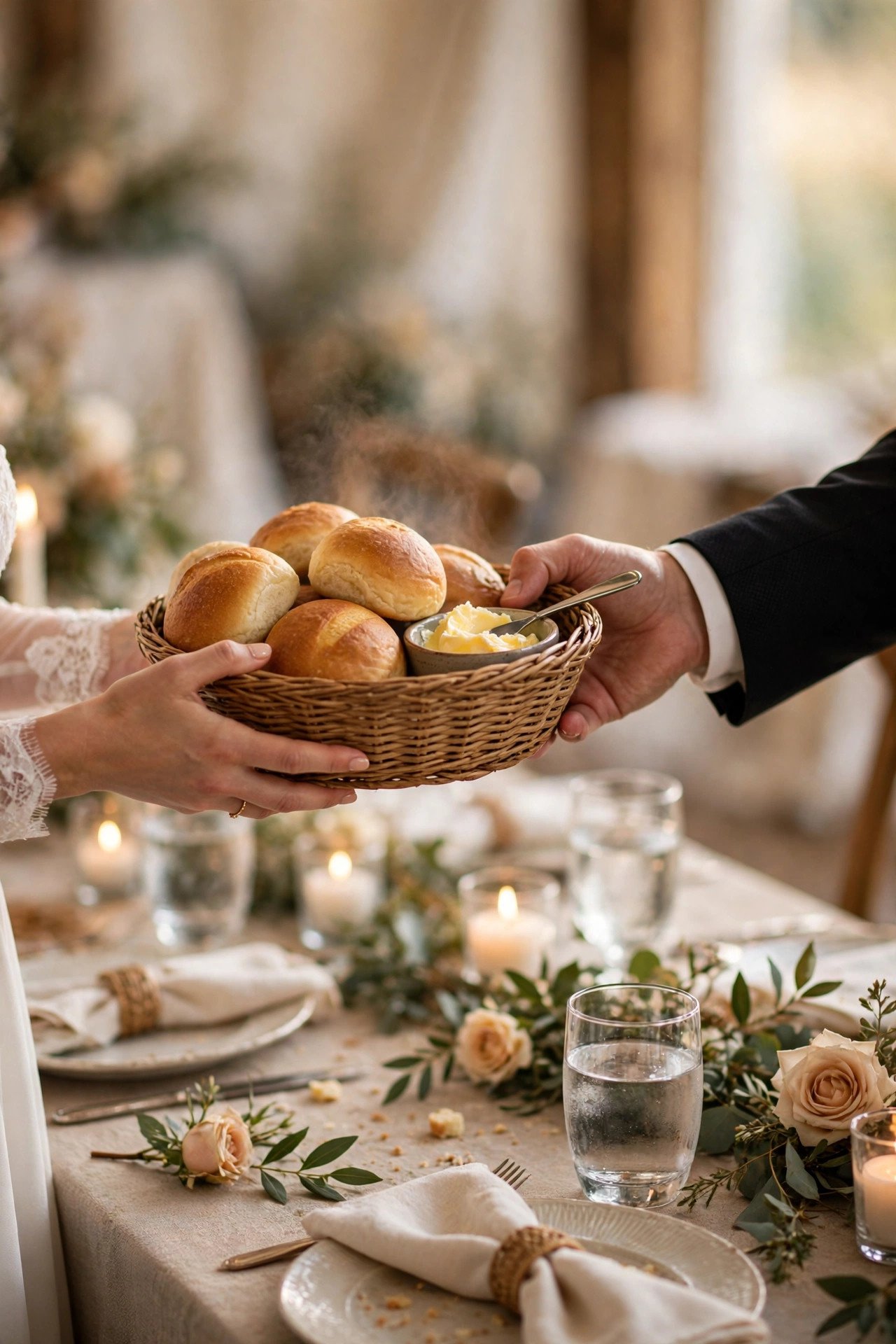
Bread is the unsung hero of family-style: baskets land first, hands stay busy, and the table settles while mains are fired. Warm rolls, sliced sourdough, or cornbread with soft butter feel generous and cost little. Send bread out the moment guests sit — it buys the kitchen calm and the table patience.
Salads That Travel Well
 📌 Save
Great passing salads are sturdy: chopped romaine with shaved cheese, grain salads, or slaws that hold their texture for twenty minutes on a warm table. Delicate greens wilt and dressing-heavy bowls slosh mid-pass, so dress sturdy salads lightly and serve extra dressing in a small jug alongside. A salad that still tastes fresh when it reaches the last seat is a small engineering triumph.
Pasta Platters Everyone Reaches For
 📌 Save
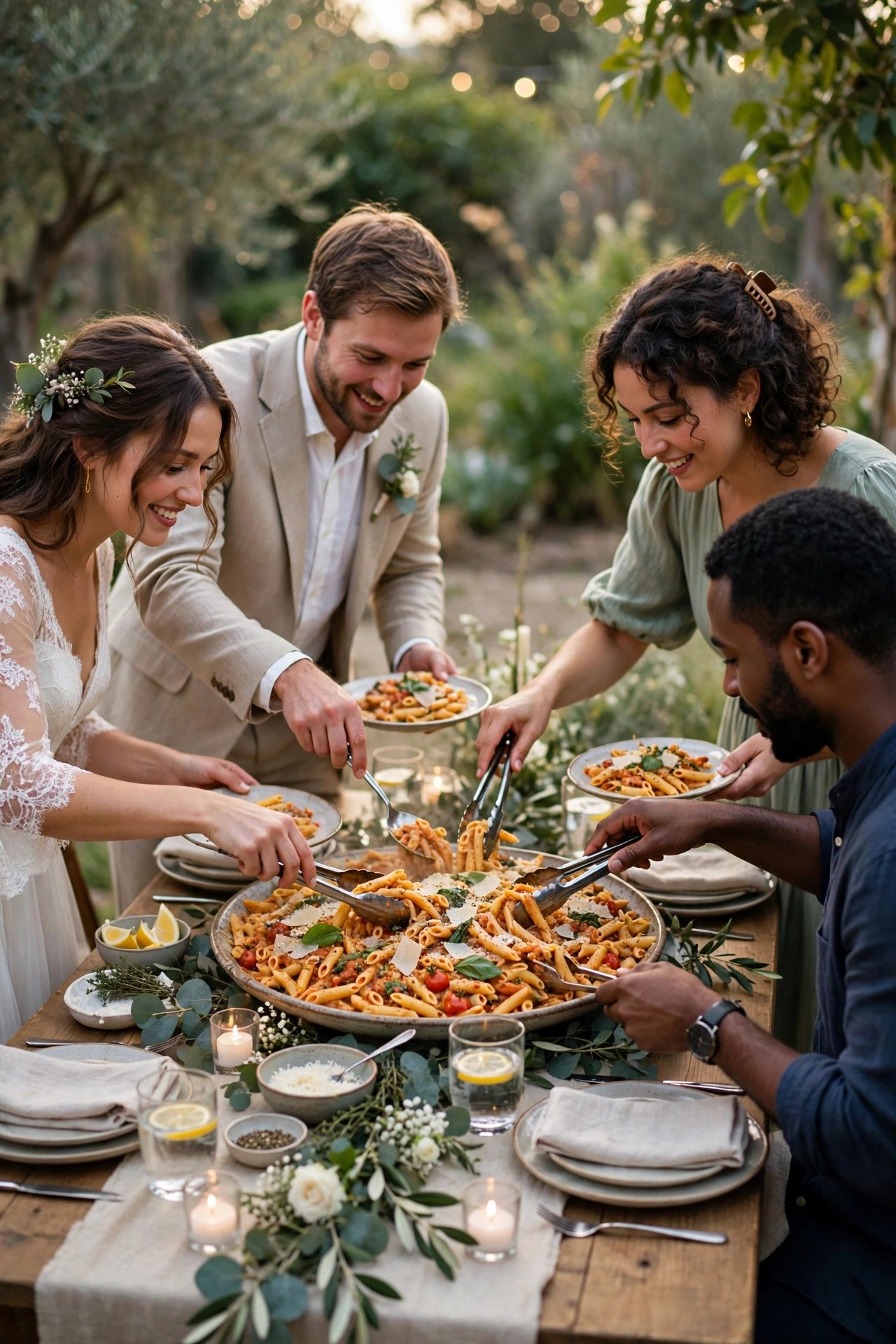
Pasta is family-style royalty — forgiving on temperature, beloved by every age, and easy to portion generously. Baked ziti, rigatoni with slow tomato sauce, or creamy penne hold heat in ceramic platters and invite second scoops. Offer one pasta with a vegetarian sauce as a default, and the meat-eaters will happily eat it too.
Roast and Carved Meats for Sharing
 📌 Save
Sliced roasts are ideal mains: the kitchen carves, the platter arrives ready to pass, and guests choose their portion size. Herb-crusted chicken, chimichurri steak, and glazed ham all slice cleanly and look abundant. Avoid anything requiring individual carving at the table — it slows the pass and cools the plate.
Vegetarian Mains That Hold Their Own
 📌 Save
At a family-style table, the vegetarian main is shared by everyone — so it must be a dish the whole table covets, not a token plate. Stuffed portobellos, eggplant parmesan, mushroom Wellington slices, and halloumi skewers all pass beautifully and carry real protein. When the vegetarian dish is this good, it stops being an accommodation and becomes part of the feast.
Keeping Food Hot on the Table
 📌 Save
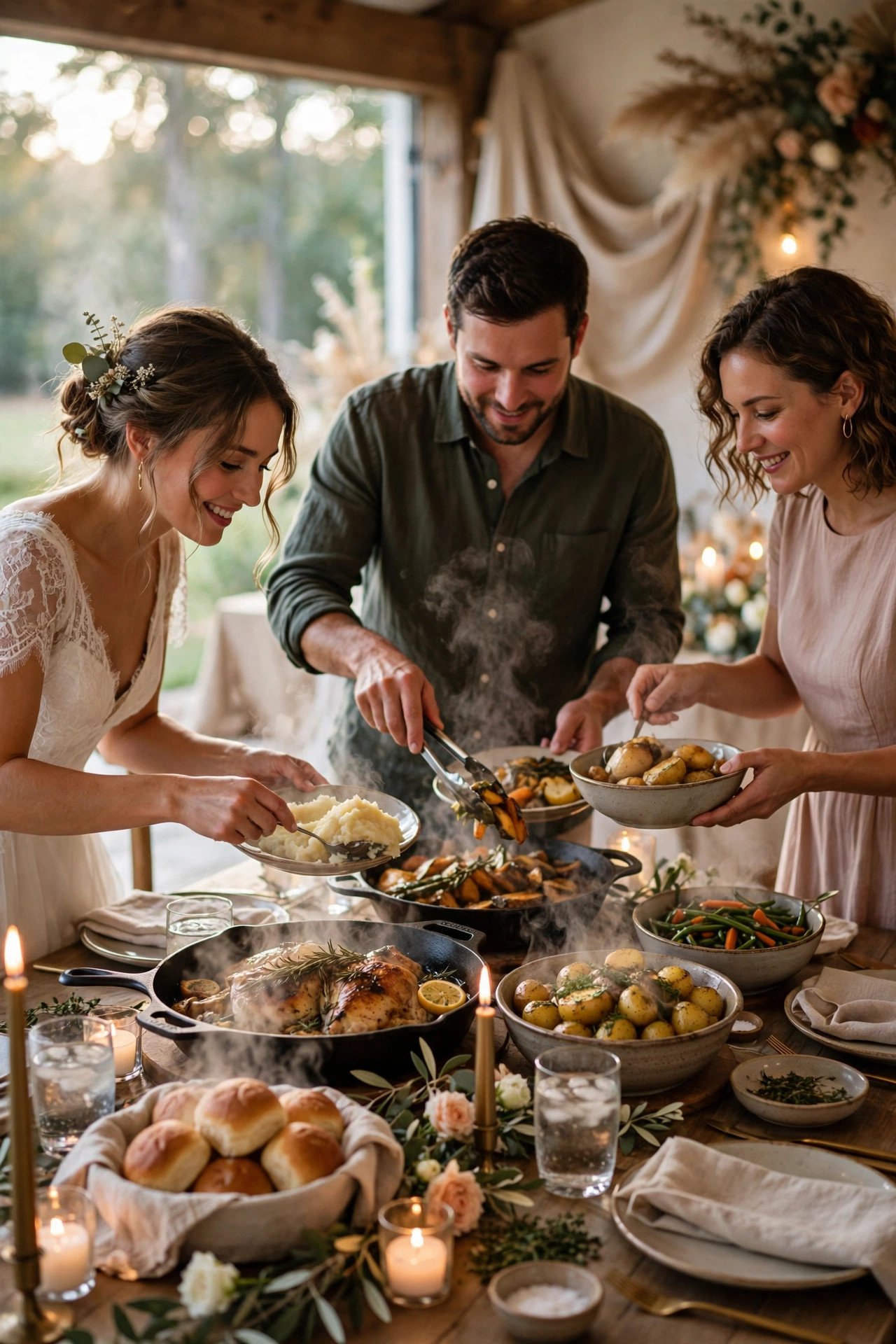
Family-style’s honest challenge is temperature: food sits out while it travels the table. Kitchens counter it by sending smaller platters more often, pre-warming ceramics, and saucing hot dishes generously since sauce holds heat. Your job is pacing — a table that starts eating promptly eats hot food. Build the timeline so platters land when guests are seated, not during a wandering cocktail-hour drift.
Serving Utensils and Double-Dipping Rules
 📌 Save
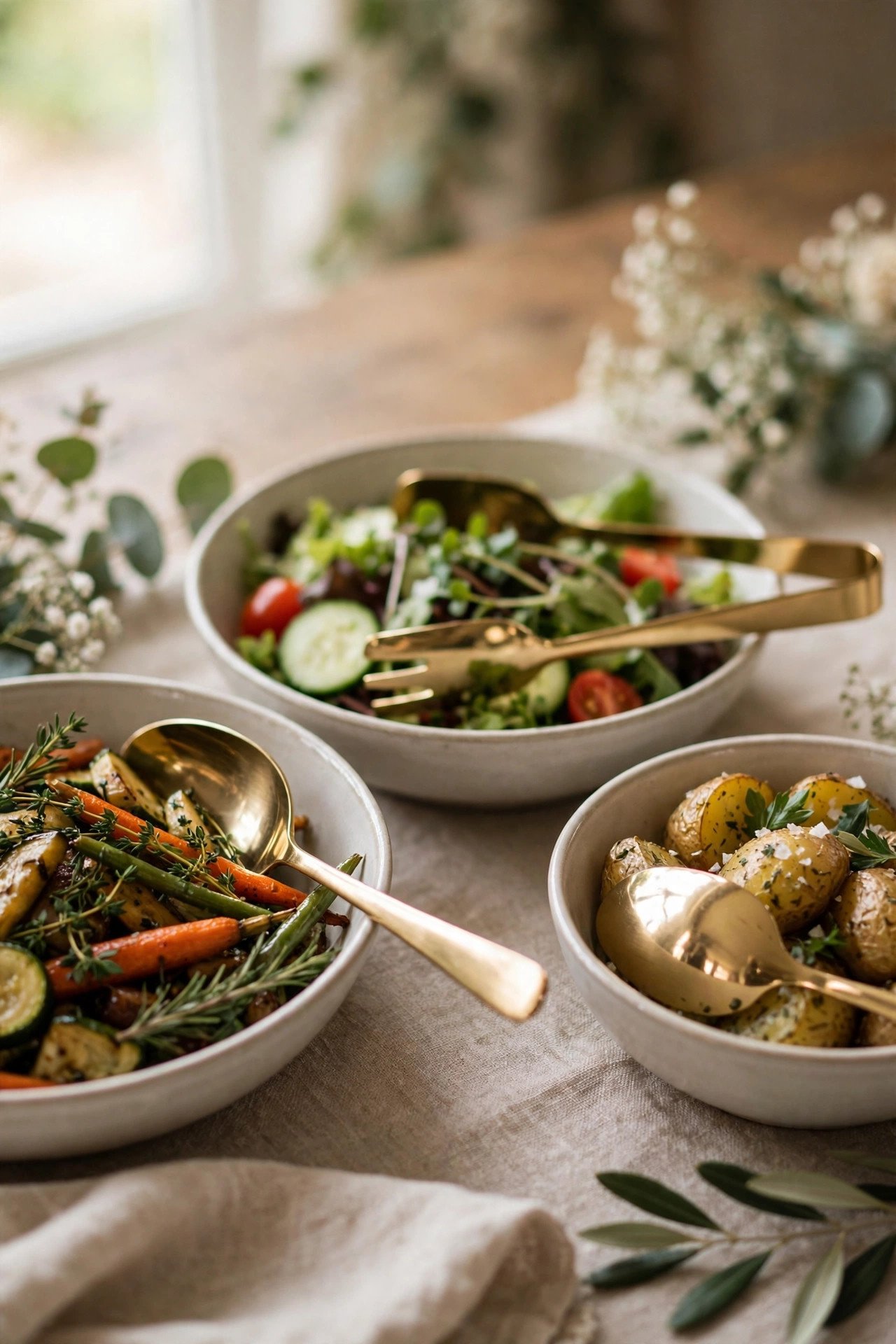
Every platter needs its own serving spoon or tongs — two per large platter, one at each end of a long table — and guests should never see a dish arrive utensil-less. Personal forks stay out of shared bowls; that is both hygiene and etiquette. Rental counts for serving pieces surprise couples, so list them explicitly with your caterer rather than assuming they are included.
Staff Roles: Runners and Table Captains
 📌 Save
Family-style looks effortless because staff work constantly: runners ferry fresh platters and whisk away empties, while a captain per few tables watches levels, clears plates, and times the next wave. Without that crew, tables end up hoarding empty platters and hunting for refills. Confirm your caterer’s exact staffing model for this format — it needs more floor presence than a buffet, if less than full plated service.
Seating Plans for Smooth Passing
 📌 Save
Seat eight per round or per farm-table section so a platter completes its circuit before cooling. Mix generations at each table so confident passers sit beside anyone who needs a hand, and place your most enthusiastic food-lovers where the first platters land. Keep aisles behind chairs wide enough for runners working with full hands.
Centerpieces That Leave Room to Eat
 📌 Save
Family-style centerpieces must be low, narrow, and movable — garlands, clustered bud vases, and candle trios that staff can shift in seconds when platters arrive. Tall, wide arrangements steal exactly the square footage dinner needs. Many couples move centerpieces to the table’s center line and let the food itself provide the abundance at the edges.
Family-Style for Outdoor Weddings
 📌 Save
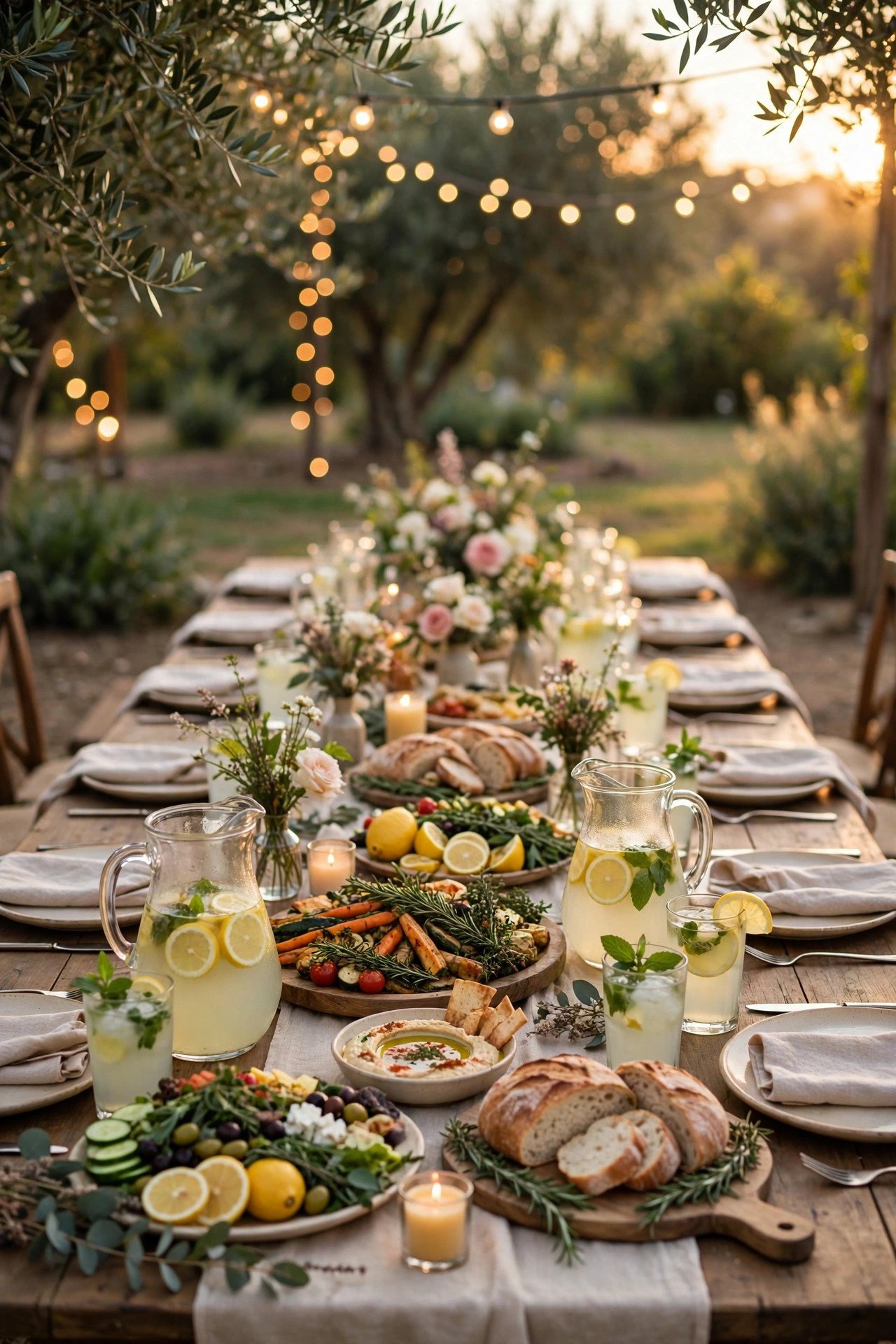
Outdoors, family-style feels like the world’s best picnic — long farm tables, lawn light, platters under string lights. The practical notes are wind (napkins and light salads need weight), temperature (shade for food tables), and distance from the prep area. Chafing fuel under key platters and a shaded staging table keep the meal safe and appetizing.
Family-Style for Ballrooms
 📌 Save
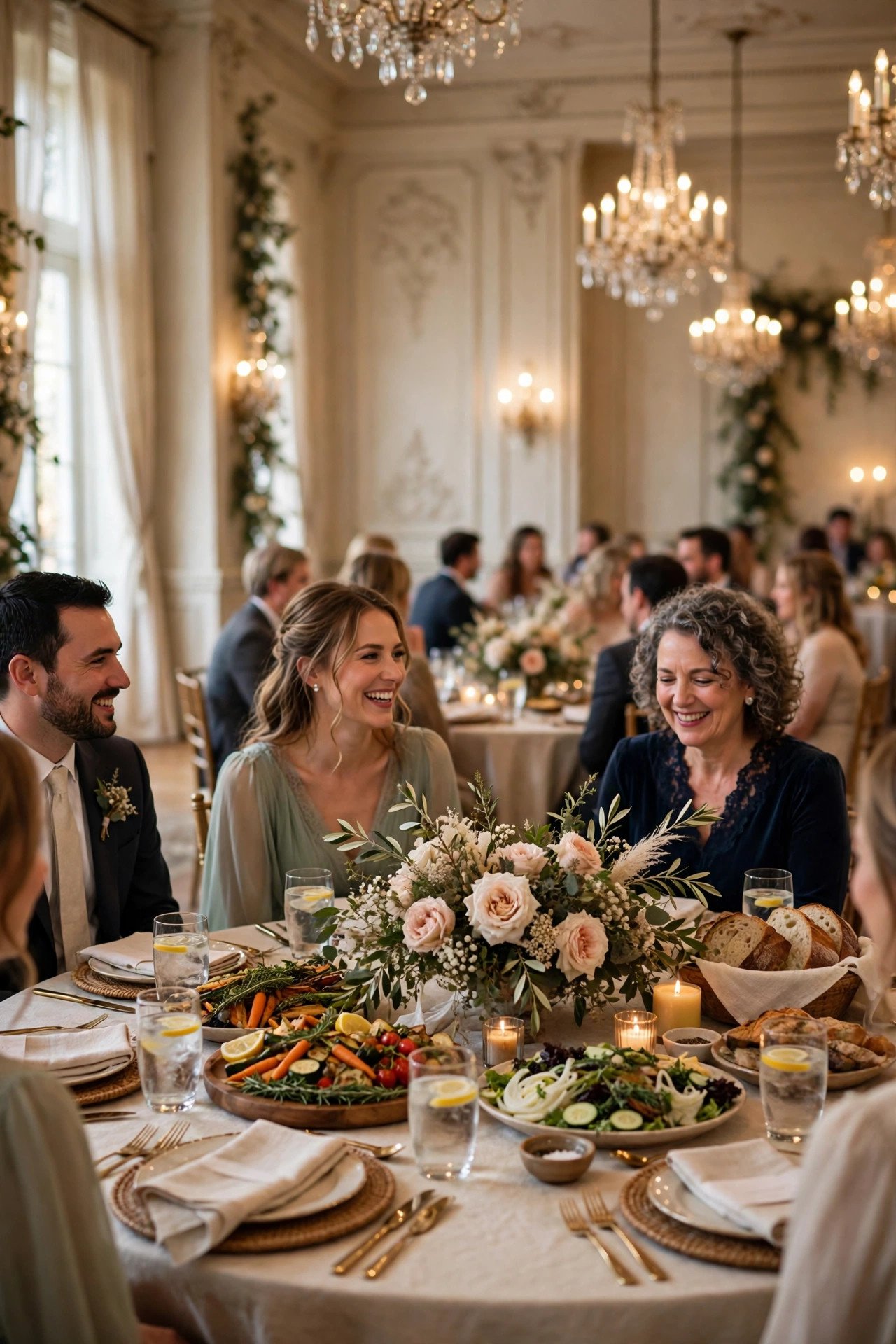
Ballrooms give family-style a polished twist: uniformed runners, gleaming platters, and courses that feel like a restaurant’s sharing menu. The format softens a formal room beautifully, giving black-tie guests something relaxed to do with their hands. Confirm the venue’s aisle widths and captain staffing — ballroom plated teams adapt well, but the service pattern is genuinely different.
Timing Toasts Around the Pass
 📌 Save
Speeches land best between waves — after mains have circulated and before dessert — when hands are free and glasses are full. A toast mid-pass strands guests holding platters and splits attention. Your coordinator should cue speakers as the captain confirms tables are served, and keep each toast tight so refills and clearing keep their rhythm.
Kids at Family-Style Tables
 📌 Save
Children adore family-style: they choose their own portions, seconds are normal, and the food is recognizably dinner. Seat kids beside a parent who can serve them, and consider a small dedicated platter of the most kid-loved dish per family-heavy table. Spill risk is real but manageable — sturdy cups and prompt clearing keep it charming rather than chaotic.
Allergies and Shared Platters
 📌 Save
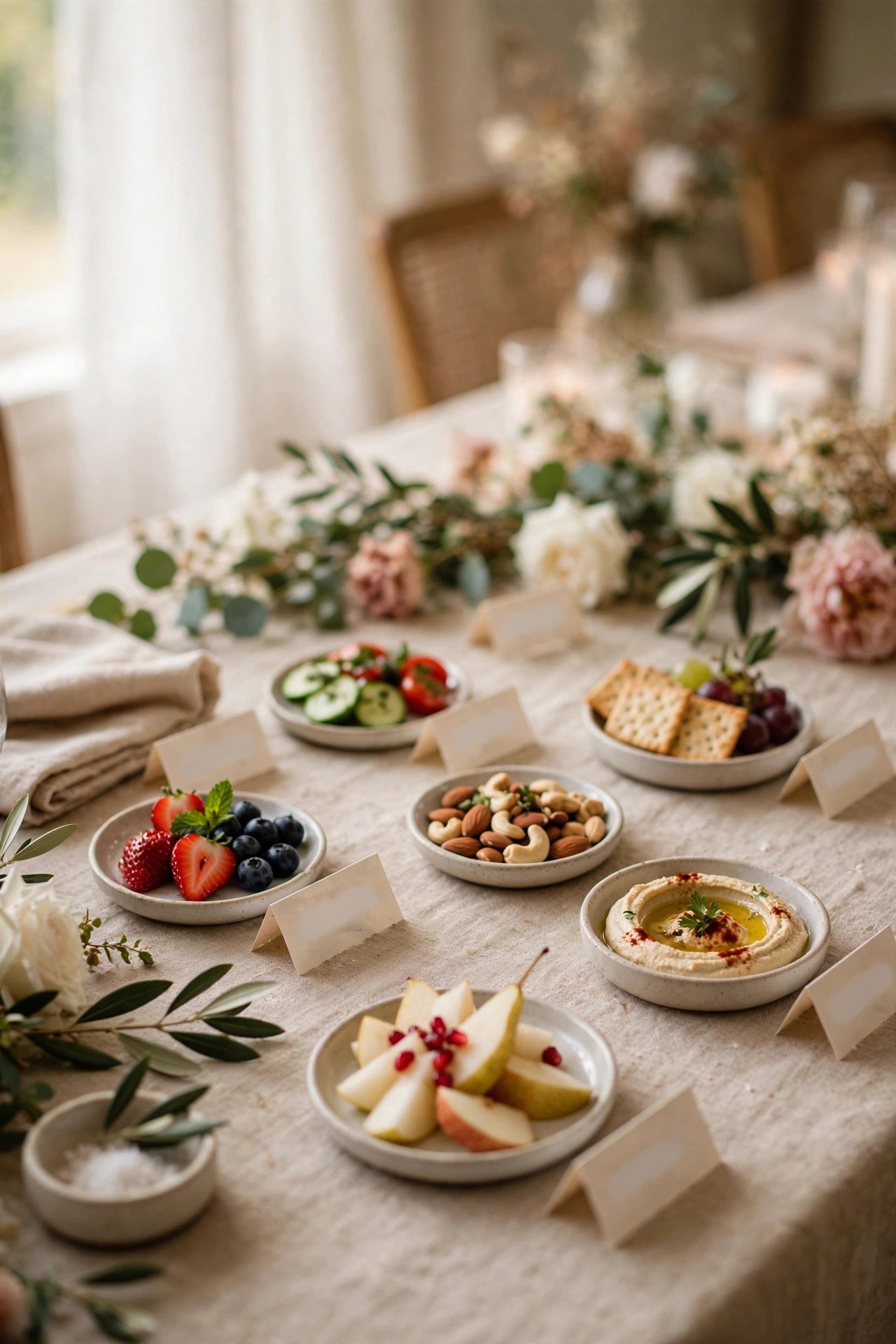
Shared food needs shared information: label the allergy-safe dishes clearly, give them dedicated utensils that stay with the dish, and seat the allergic guest where those platters land first. For serious allergies, the kitchen should still plate an individual portion — family-style warmth never outranks safety. Collect dietary details on the RSVP and brief your captains by table number.
Leftovers and Food Safety Timing
 📌 Save
Platters that have toured a table for an hour are done — caterers plan quantities so food is eaten fresh, not saved. Ask your caterer how they handle untouched backup pans (those can often be boxed for you) versus table-toured food, which should be discarded on food-safety grounds. Build this expectation into your final-count conversation so nobody is surprised at midnight.
Rentals: Platters, Boards and Bowls
 📌 Save
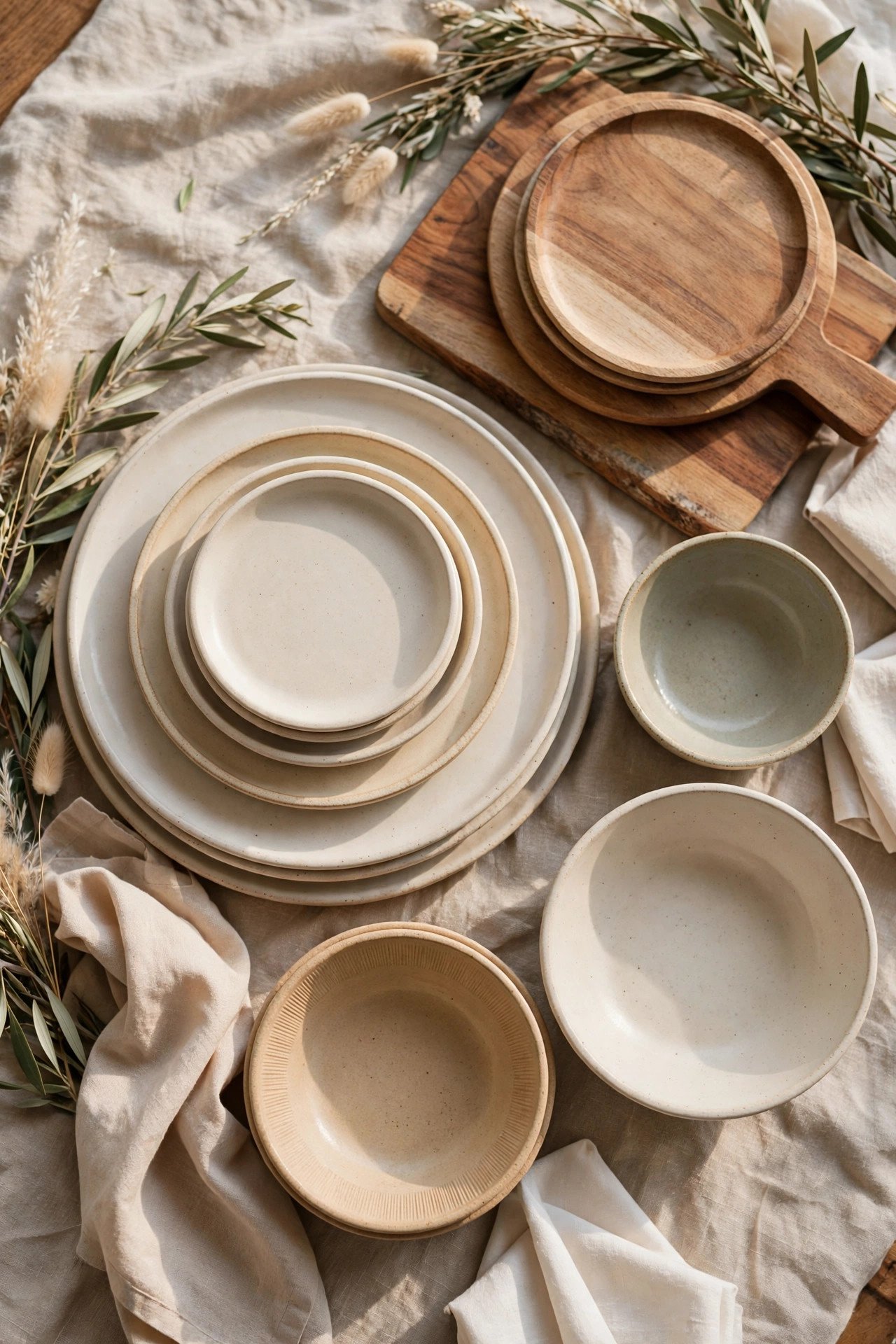
Family-style needs a small mountain of serveware: platters per table per course, bowls, boards, serving utensils, and backup sets for refills. Mixing ceramic, wood, and metal looks collected and warm — as long as sizes stay practical for passing weight. Get the serveware list from your caterer early; rental houses run short of popular platter styles in peak season.
Cost Factors to Budget For
 📌 Save
Family-style usually lands between buffet and plated: more staff than a buffet, more food quantity than plated, plus the serveware rentals. The hidden line items are refill quantities and extra serving pieces, not the menu itself. Ask for an all-in quote with staffing, rentals, and refill policy spelled out, and compare it against the same caterer’s other formats.
A Sample Family-Style Timeline
 📌 Save
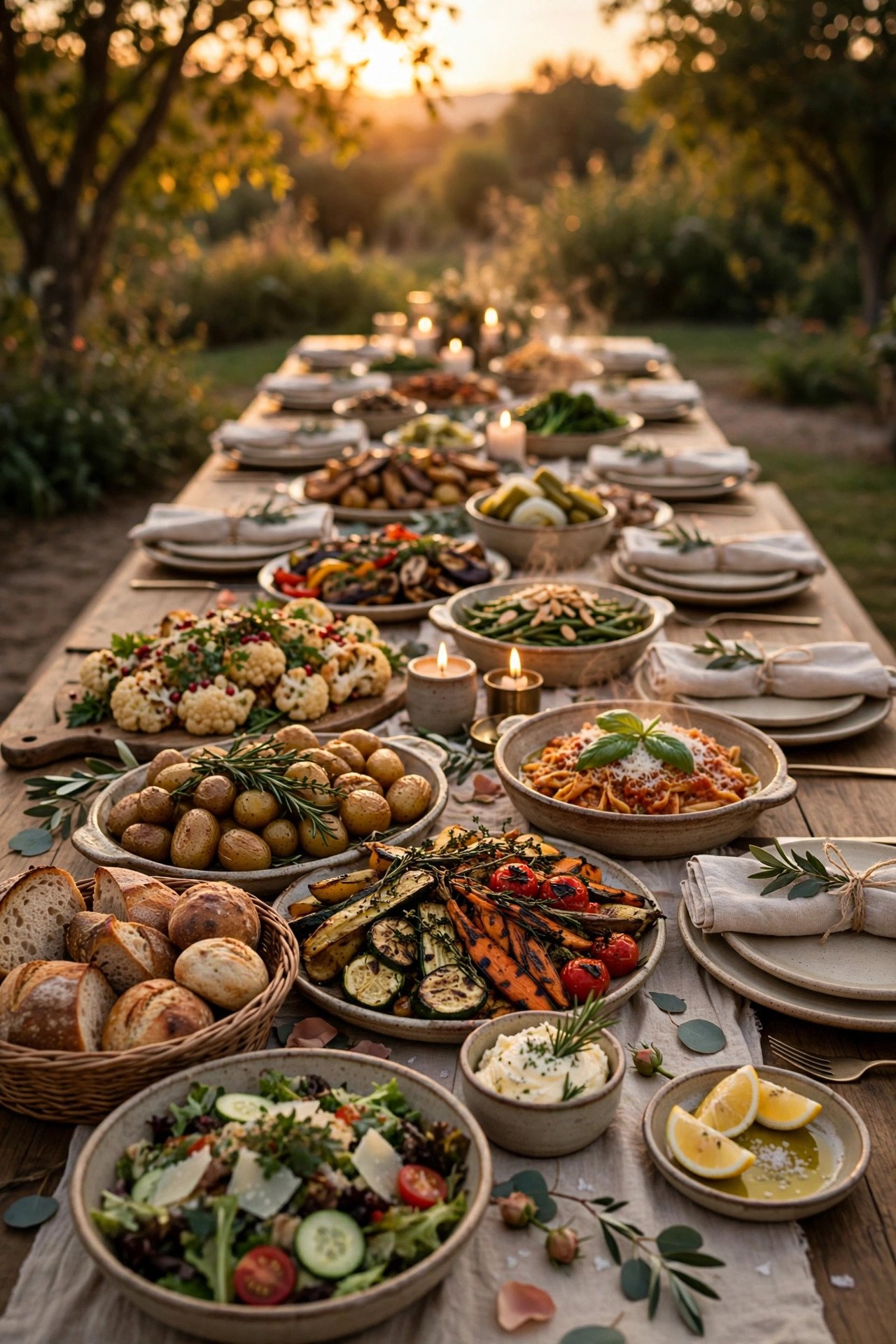
A smooth evening runs like this: guests seated, bread and salads land within five minutes; mains and sides follow in one confident wave around the twenty-minute mark; captains refill and clear through the hour; toasts land between mains and dessert; dessert — plated or passed — closes the meal near the ninety-minute mark. Dancing starts with full, happy guests and a clear floor plan. Adjust the wave times to your caterer’s kitchen distance.
Is Family-Style Right for Your Crowd?
 📌 Save
Choose family-style if your people are talkers, sharers, and seconds-takers who light up around a full table. Think twice if your crowd is very formal, your tables are narrow, or many guests have complex allergies that shared dishes would complicate. When it fits, no other format makes a wedding dinner feel more like family — which is rather the point of the day.
Family-Style Wedding Dinners FAQs
How many dishes should a family-style wedding dinner have?+
Two mains, three sides, a salad, and bread is the proven architecture. More dishes create clutter, slow the passing, and let food cool. Abundance comes from generous portions and refills, not from dish count.
What size tables work best for family-style service?+
Sixty-inch rounds seating eight, or farm tables at least 36 to 40 inches wide, leave room for platters alongside place settings. Avoid squeezing ten guests at a table planned for eight — passing space disappears first.
Is family-style cheaper than plated service?+
Usually it lands in between: more staff and food quantity than a buffet, less synchronized staffing than plated. Serveware rentals and refill quantities are the line items to watch — get an all-in quote to compare fairly.
How do you handle allergies with shared platters?+
Label allergy-safe dishes, keep dedicated utensils with them, and seat the guest where those platters land first. For serious allergies, the kitchen should plate an individual portion — safety always outranks format.
Does family-style work for a formal wedding?+
Yes — ballrooms run family-style beautifully with uniformed runners and polished platters. The format relaxes a formal room in the best way. Keep centerpieces low and narrow so tables stay functional.
Key Takeaways
- Build the menu as two mains, three sides, a salad, and bread — abundance comes from refills.
- Table width and platter size are logistics, not decor details — test a loaded sample table.
- Staffing makes the format: runners and captains keep platters full and tables clear.
- Plan allergy-safe dishes with dedicated utensils, plus plated portions for serious allergies.
- Time toasts between serving waves so no guest is stranded mid-pass.
Final Thoughts
Family-style is dinner as the day itself intends it: people you love, passing food you love, around one table. Plan the platters, the pacing, and the people behind the scenes, and the warmth everyone remembers will take care of itself.