What to Do If Your Wedding Runs Late (2027)
By zainzari • Published October 23, 2026 • Updated October 23, 2026
 📌 Save
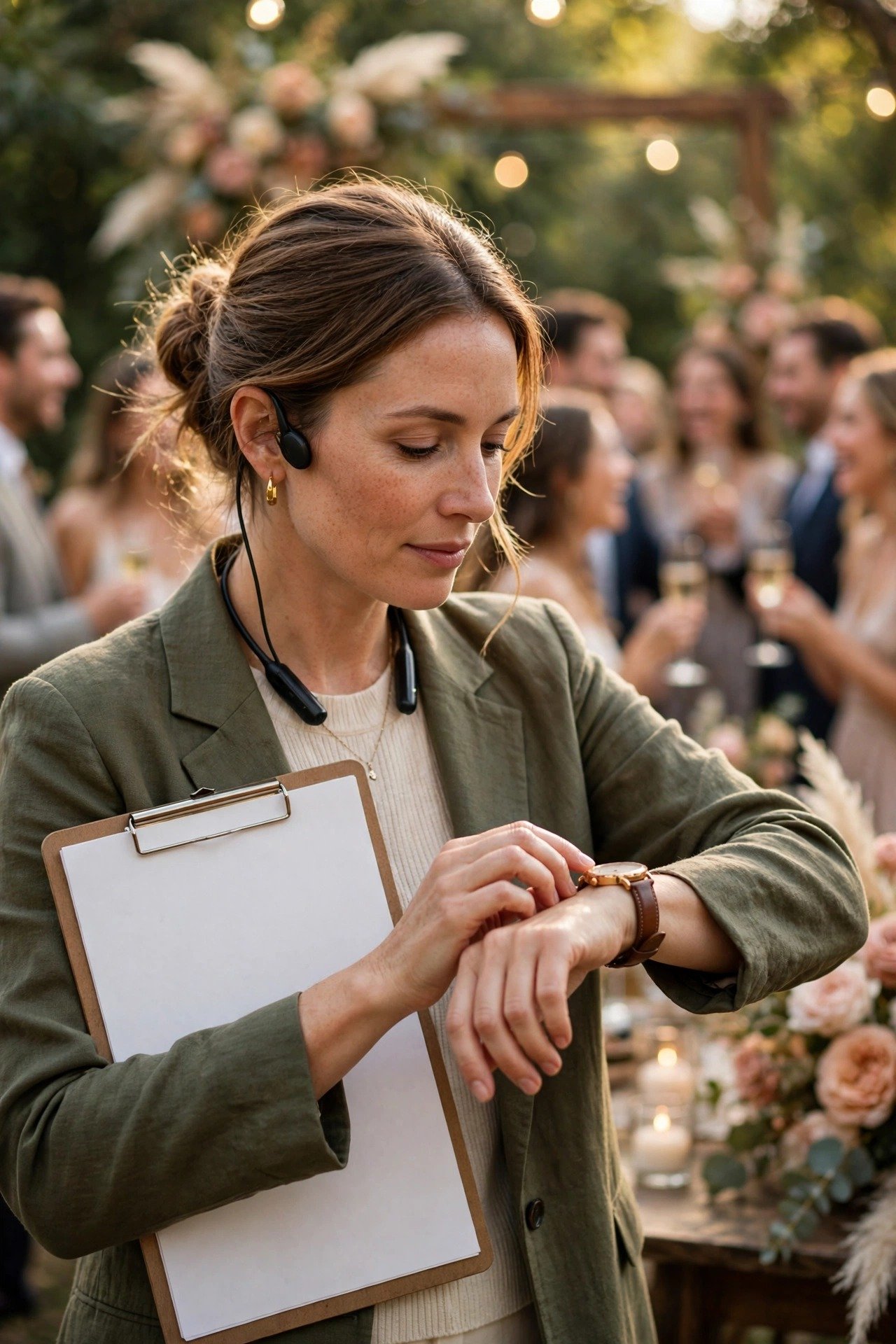
If your wedding runs late, do three things first: find out exactly how many minutes you have lost, check the venue’s hard end time, and hand the problem to one person — your coordinator or a trusted friend. Then win time back invisibly: trim the photo list, move toasts into dinner, merge the entrance with the first dance, and protect the last dance and send-off at all costs.
Almost no wedding starts exactly on time, and almost no guest remembers a wedding that ran 15 minutes behind. What guests do remember is feeling rushed, hungry or confused — which means the goal is never to panic-speed the day, but to quietly rearrange it.
These 25 recovery moves are the ones coordinators actually use, ordered from first response to final rescue. Used together, they can recover 30 to 45 minutes without cutting a single moment your guests came for.
At a Glance: The Move, the Saving & When to Use It
| # | Recovery Move | Time Saved | Use It When |
|---|---|---|---|
| 1 | Stay Calm and Hand the Problem to One Person | — | Any delay |
| 2 | Check the Clock Honestly — How Late Are You, Really? | — | First step, always |
| 3 | Ask the Venue About the Hard End Time First | Up to 60 min | Any delay over 15 min |
| 4 | Trim the Photo List to the Must-Haves | 10–20 min | Photos running long |
| 5 | Merge the Grand Entrance With the First Dance | 10 min | Reception behind |
| 6 | Ask Catering to Compress the Gaps Between Courses | 10–15 min | Dinner running long |
| 7 | Move the Toasts Into Dinner, Between Courses | 10–15 min | Speeches still pending |
| 8 | Skip the Receiving Line and Greet at Tables Instead | 20–30 min | Big guest lists |
| 9 | Shorten Drinks Reception, Not Dinner | 15–20 min | Ceremony ran late |
| 10 | Stack the Special Moments Back-to-Back | 10 min | Evening behind |
| 11 | Move the Cake Cutting Earlier in the Evening | 10 min | Dessert bottleneck |
| 12 | Brief the DJ to Trim the Announcements | 5–10 min | Whole evening |
| 13 | Keep Guests Fed and Watered During Any Wait | — | Any visible gap |
| 14 | Make the One Friendly Announcement That Explains Nothing | — | Guests waiting |
| 15 | Feed the Wedding Party While They Wait | — | Party waiting |
| 16 | Move Portraits to Golden Hour or Night Shots | 15 min | Portrait backlog |
| 17 | Ask About Overtime Costs Before You Actually Need Them | Buys 30–60 min | End time at risk |
| 18 | Drop One Non-Essential Item Entirely | 15–30 min | Major delay |
| 19 | Give Kids and Elderly Guests a Heads-Up Personally | — | Vulnerable guests |
| 20 | Text the Late-Evening Vendors the New Times | Prevents new delays | Any shift over 15 min |
| 21 | Protect the Last Dance and the Send-Off | — | Restructuring |
| 22 | Never Rush the Ceremony to Catch Up | 0 min | Ceremony starting late |
| 23 | Write Down the New Times So Everyone Is Working From One Version | Prevents drift | After any change |
| 24 | Thank Your Vendors — and Tip for Flexibility | — | End of the night |
| 25 | Remember: Guests Rarely Know You Are Late | — | Your mindset |
Golden rule: recover time from transitions, waiting and announcements — never from the ceremony, the meal or the moments guests travelled for.
Stay Calm and Hand the Problem to One Person
 📌 Save
The moment you notice slippage, appoint exactly one person — your coordinator, or your most organised friend if you have none — to own the recovery. Everyone else, especially the couple, stays in the celebration. Panic is contagious, but so is calm, and guests take their cues entirely from the two of you.
Check the Clock Honestly — How Late Are You, Really?
 📌 Save
Feelings exaggerate delays. Get the actual figure: if the ceremony started eight minutes late, you do not have a crisis, you have a rounding error. A clear number — 10, 20, 40 minutes — tells you whether you need small trims or a real restructure, and stops well-meaning helpers from over-cutting the day.
Ask the Venue About the Hard End Time First
 📌 Save
Everything depends on when the night must truly finish. Many venues in the USA, UK and Canada have strict 10 or 11 PM noise curfews, while others allow paid extensions. One quiet question to the venue manager — can we end 30 minutes later, and what would it cost? — often turns a crisis into a non-event.
Trim the Photo List to the Must-Haves
 📌 Save
Photography is the most compressible part of the day. Cross off the nice-to-have combinations — second locations, extra groupings, duplicate poses — and keep immediate family, the full party, and your couple portraits. Tell your photographer the new hard finish time and let them drive the pace; this is routine for them.
Merge the Grand Entrance With the First Dance
 📌 Save
Normally the entrance and first dance sit in different parts of the evening, each with its own gathering and settling time. Merge them: enter to your song, go straight into the first dance, then sit for dinner. Guests are already standing, cheering and watching — you save the entire second round-up.
Ask Catering to Compress the Gaps Between Courses
 📌 Save
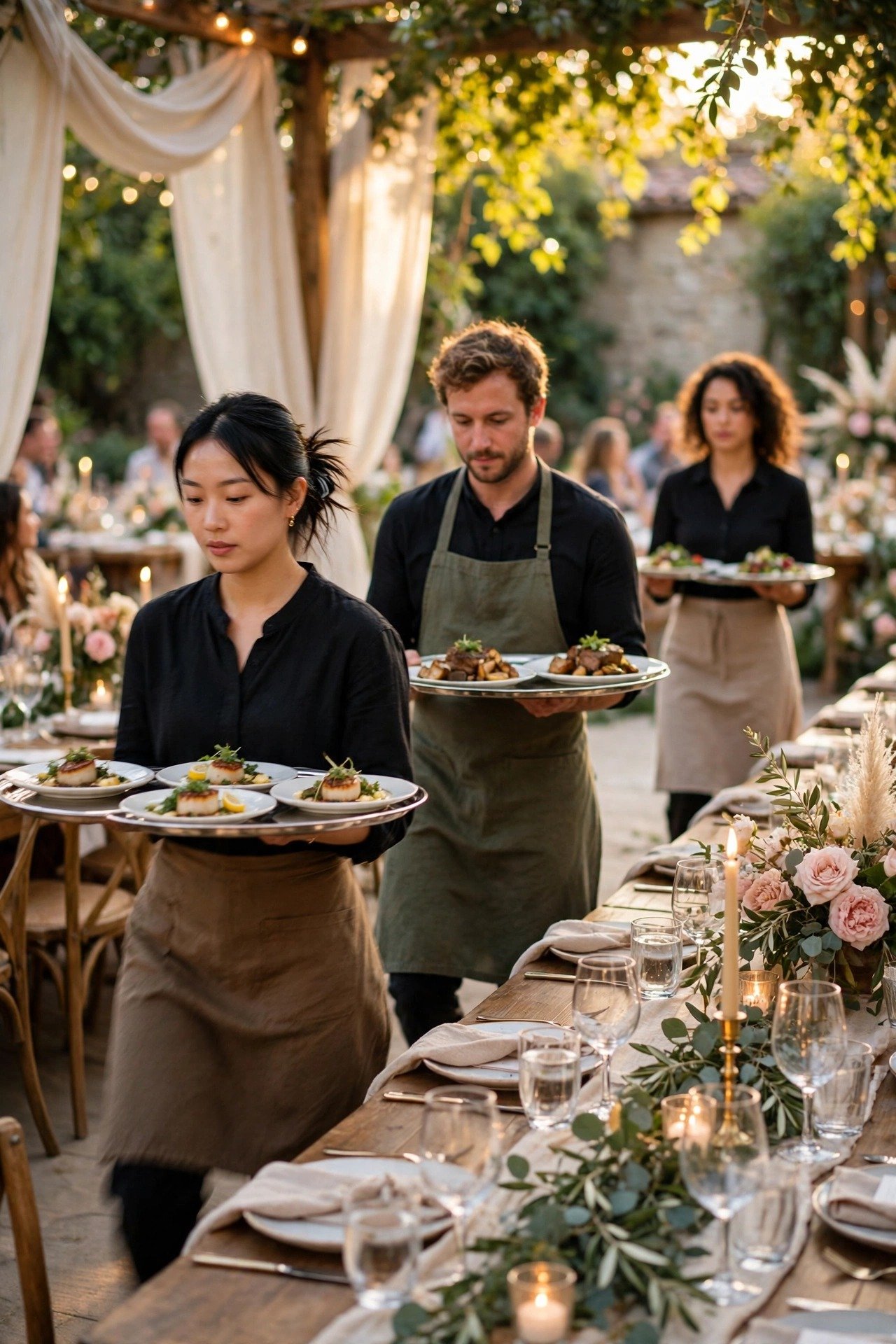
Kitchens build slack into service — salads wait, mains rest, dessert sits plated. If dinner is the bottleneck, ask catering to tighten the gaps between courses rather than rushing anyone’s eating. Professional banqueting teams can usually pull service forward by 10 to 15 minutes without a single guest feeling hurried.
Move the Toasts Into Dinner, Between Courses
 📌 Save
A standalone speech block before or after dinner costs 15 to 20 minutes of settling, refills and microphone logistics. Weave two toasts between courses instead — guests are seated, glasses are full of sparkling cider or juice, and the applause doubles as the pause while plates are cleared. Nothing is cut; it is simply relocated.
Skip the Receiving Line and Greet at Tables Instead
 📌 Save
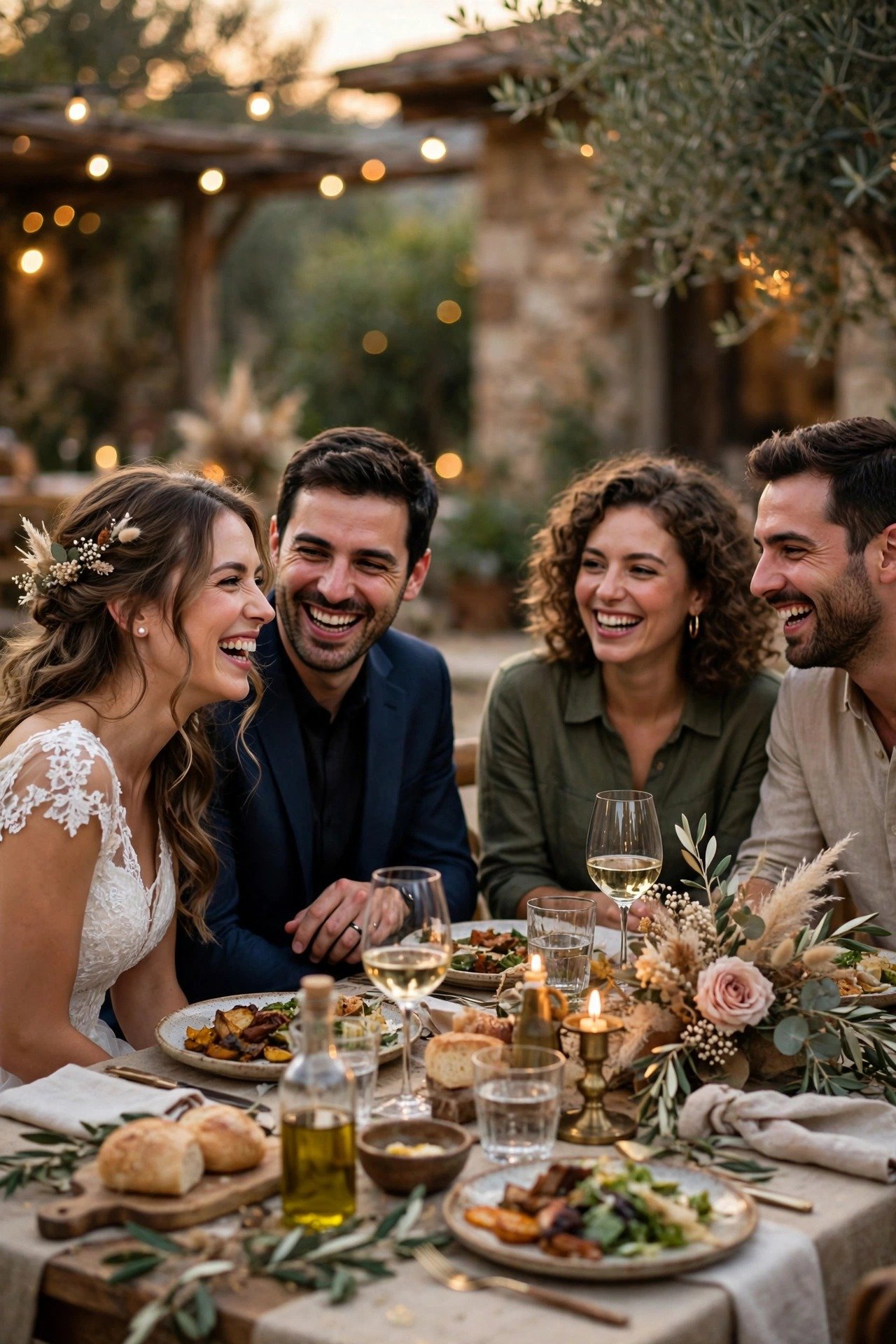
A receiving line for 120 guests quietly eats 25 to 40 minutes. Replace it with table-to-table visits during dinner: you reach everyone, conversations are real instead of four-second handshakes, and the schedule simply absorbs the greetings into a block that already exists. Guests consistently prefer this version anyway.
Shorten Drinks Reception, Not Dinner
 📌 Save
If you must shorten a block, shorten drinks reception from 60 minutes to 40. Guests barely register it — they still get a drink, a canapé and a chat — whereas a rushed dinner feels cheap and leaves everyone hungry. Just make sure photos are truly finished before you call guests in early.
Stack the Special Moments Back-to-Back
 📌 Save
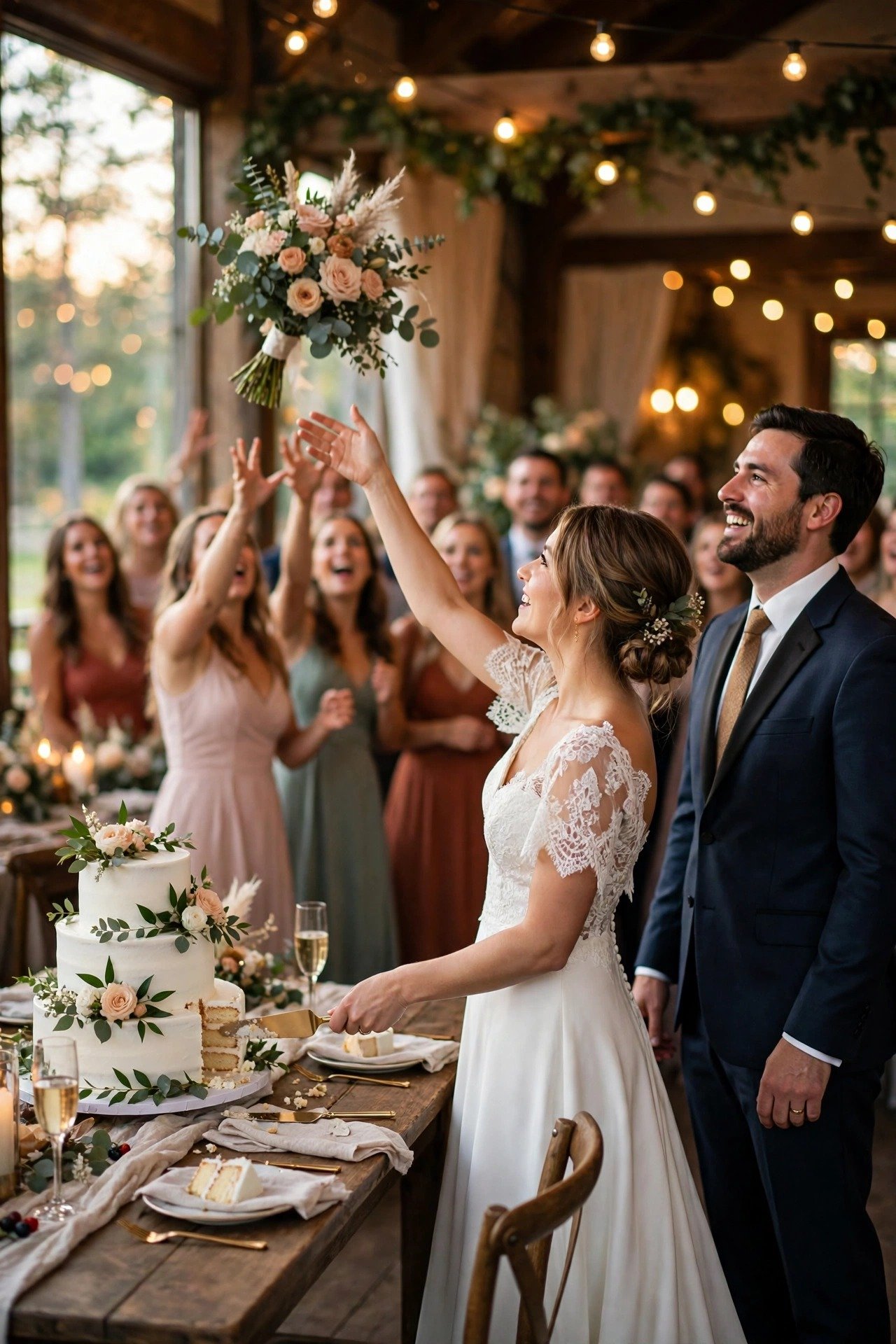
Cake cutting, bouquet toss and parent dances each carry a hidden cost: gathering the room, resetting lights, finding the people. Run them consecutively in one spotlight block and the setup cost is paid once. Photographers love it, guests stay on their feet, and the evening re-opens for dancing far sooner.
Move the Cake Cutting Earlier in the Evening
 📌 Save
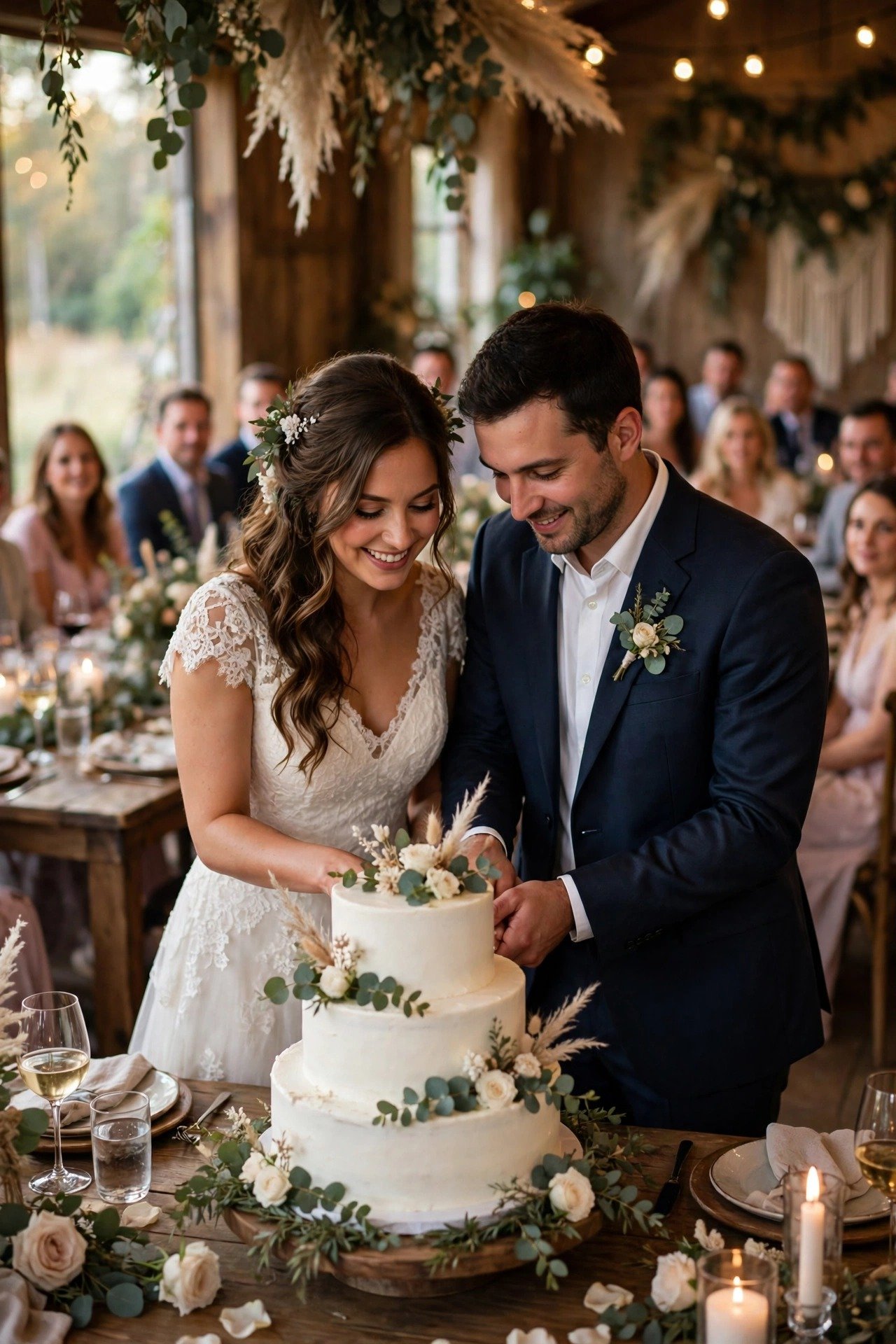
Cake cutting late in the evening forces catering to hold dessert service hostage. Cut the cake right after dinner — or even before the first dance — and the kitchen can slice and serve it during dancing. You win back the end-of-night bottleneck and older guests get their slice before they head home.
Brief the DJ to Trim the Announcements
 📌 Save
DJs and MCs fill gaps with announcements — and gaps multiply when a night runs late. Ask yours to cut every non-essential announcement, speak once instead of twice, and keep music playing under transitions. A tight host can quietly recover five to ten minutes across an evening without guests hearing a single change.
Keep Guests Fed and Watered During Any Wait
 📌 Save
Delays only become complaints when guests are standing around hungry and uninformed. If a gap opens, open something: a lemonade and iced-tea station, sparkling cider, a basket of leftover canapés or even the dessert table early. A fed guest checks their watch half as often.
Make the One Friendly Announcement That Explains Nothing
 📌 Save
If guests are clearly waiting, one warm announcement fixes it: Dinner will be served in just a few minutes — please enjoy the drinks and the garden. Never apologise, never explain the delay, never mention the schedule. Confidence is the whole trick; the room relaxes because someone clearly has it handled.
Feed the Wedding Party While They Wait
 📌 Save
When photos or setup overrun, the wedding party is often standing idle — and quietly starving. Send in sandwiches, juice and coffee the moment a wait appears. Energy, patience and photo smiles all return within minutes, and a fed party moves twice as fast when things restart.
Move Portraits to Golden Hour or Night Shots
 📌 Save
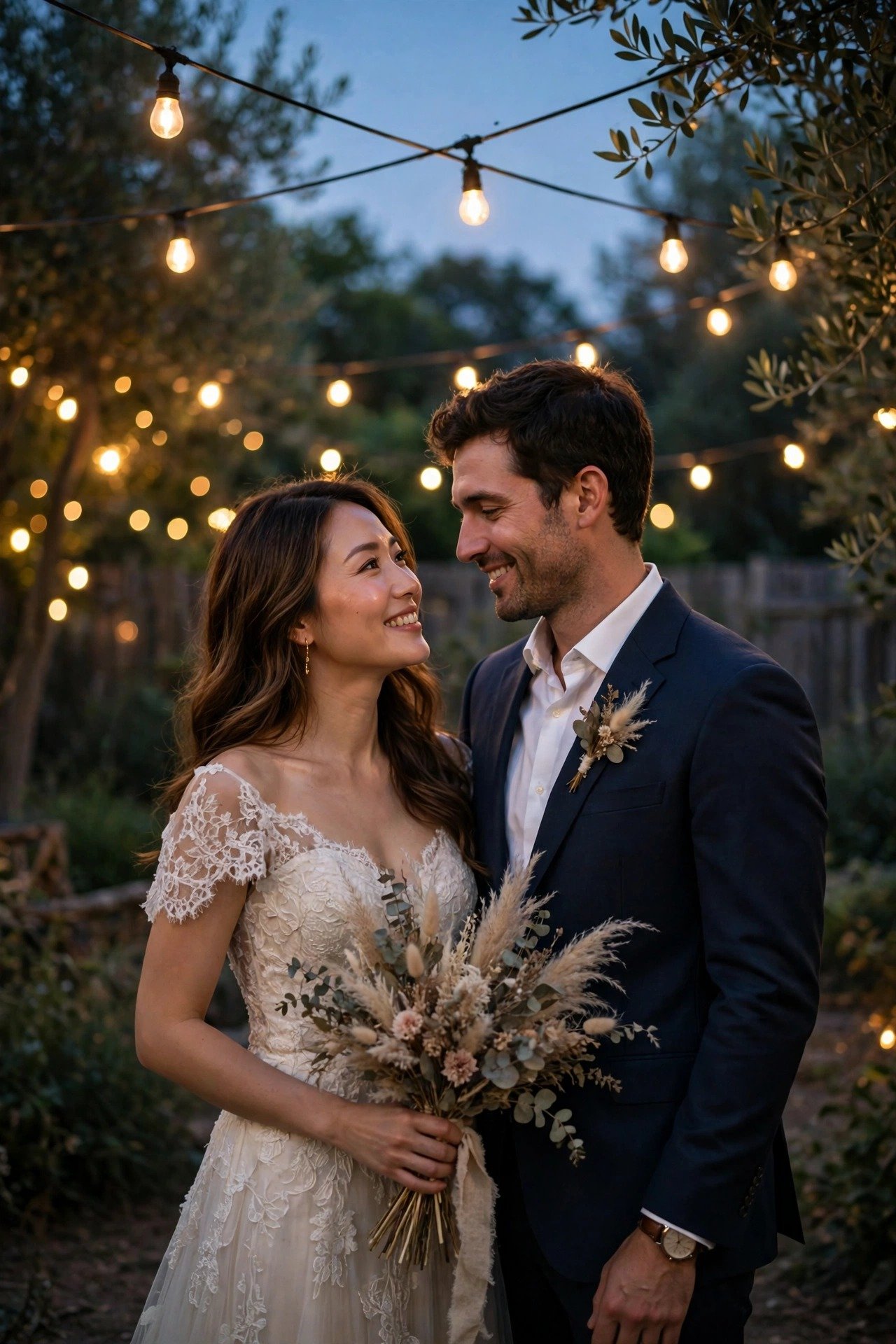
If daytime portraits are what the delay is eating, do not chase them — reschedule them. Golden-hour portraits during drinks reception are more flattering than midday ones anyway, and a short night session with sparklers, festoon lights or a lit doorway can become the most dramatic photos of the whole set.
Ask About Overtime Costs Before You Actually Need Them
 📌 Save
A two-minute conversation early in the day — what does an extra 30 minutes cost with the venue, DJ and photographer? — turns an unknown fear into a known number. Typical extension fees vary widely by vendor and region, so get your actual figures. Often the answer is modest enough that you can simply buy the time and stop cutting.
Drop One Non-Essential Item Entirely
 📌 Save
If you are 40 minutes down, trims will not save you — something has to go, and it should be the least-loved item: the second game, the extra photo booth hour, the long video montage. Cut it fully and cheerfully rather than shrinking everything. Guests cannot miss what they never knew was planned.
Give Kids and Elderly Guests a Heads-Up Personally
 📌 Save
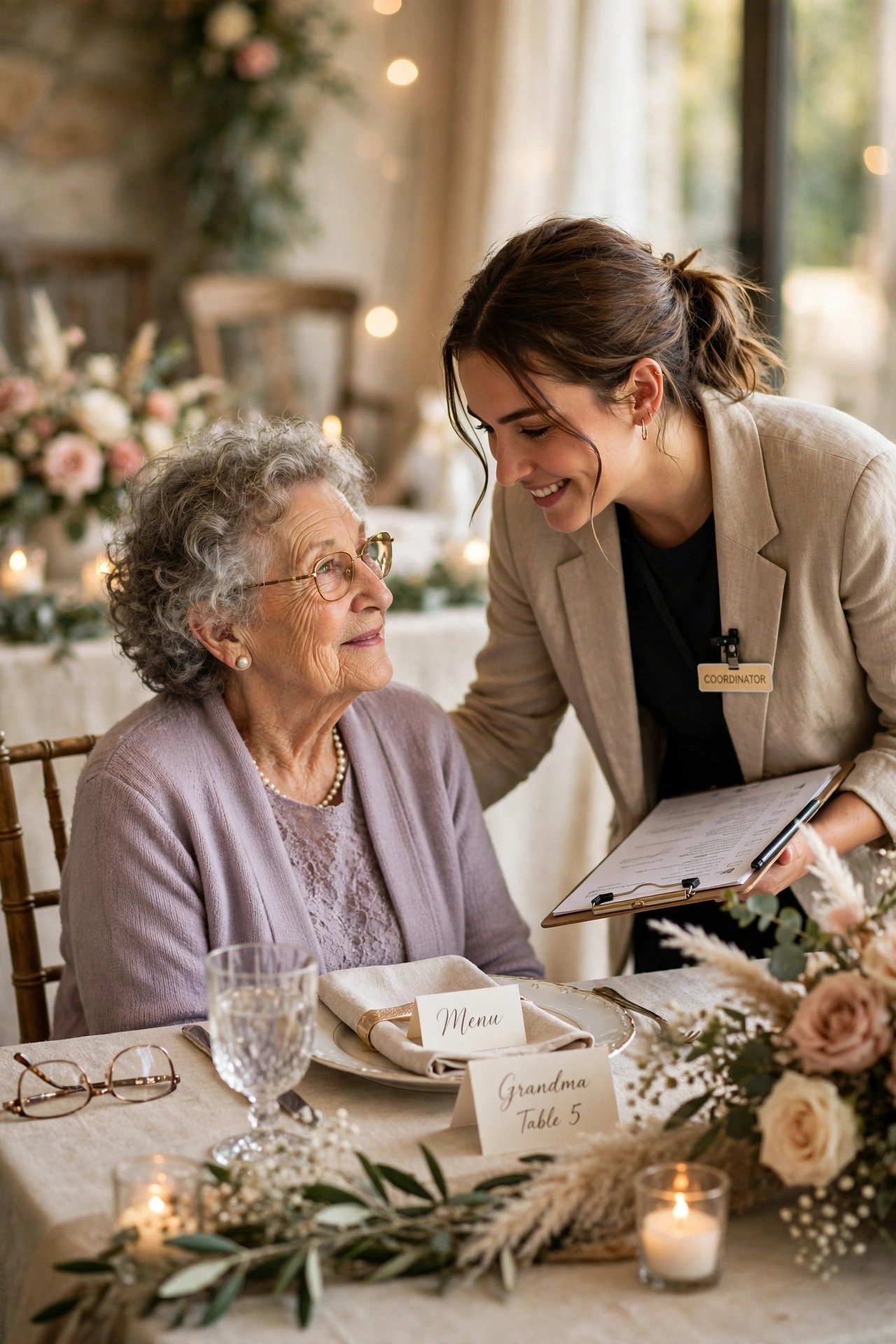
A shifted timeline hits some guests harder: toddlers nearing meltdown, grandparents with medication or transport booked, anyone with a taxi at a fixed time. A quiet word at their table — dinner is about twenty minutes away, thank you for your patience — prevents the only complaints that actually matter.
Text the Late-Evening Vendors the New Times
 📌 Save
Send-off drivers, photo booth operators, evening entertainers and the person bringing the getaway car all work to the old times unless told otherwise. One group message with the three new key times — dinner, last dance, send-off — takes ninety seconds and prevents a second delay at the end of the night.
Protect the Last Dance and the Send-Off
 📌 Save
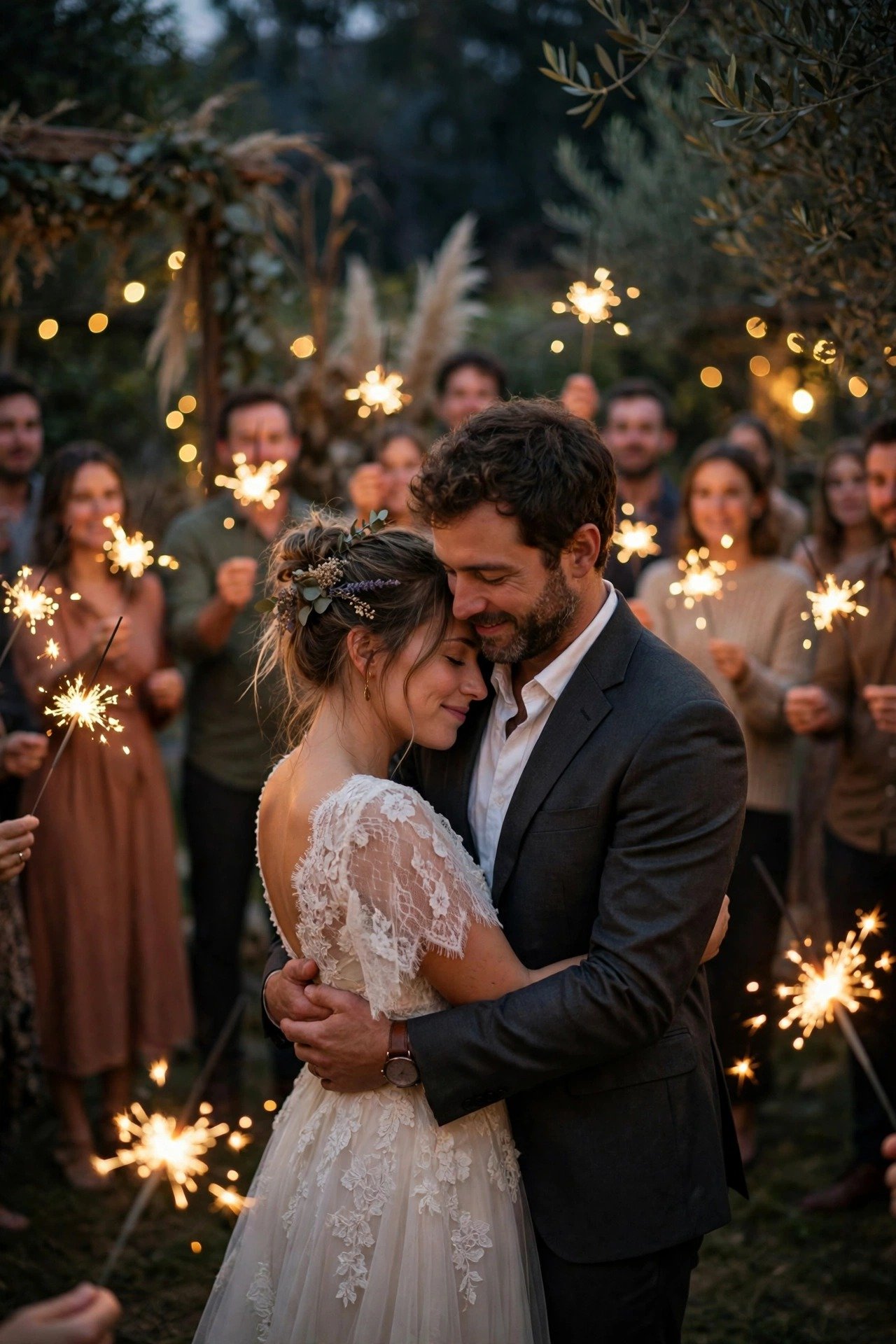
When time must come from somewhere, take it from the middle, never the end. The last dance and the send-off are the final impression every guest carries home, and they are irreplaceable. If needed, shorten open dancing in the middle of the evening — a slightly shorter party that ends brilliantly beats a long one that fizzles at curfew.
Never Rush the Ceremony to Catch Up
 📌 Save
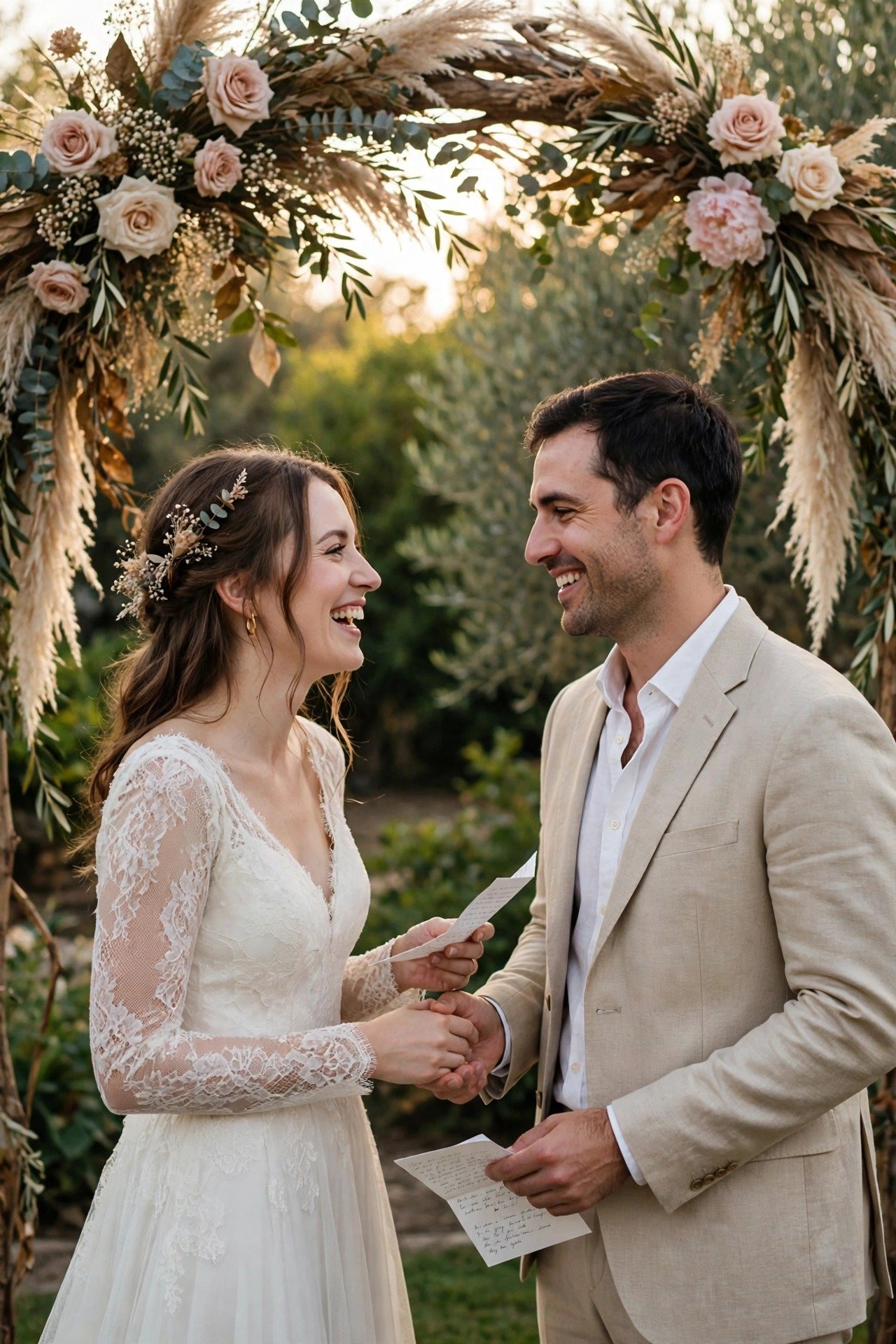
However late the ceremony starts, let it run at full length and full feeling. Speed-read vows and a skipped reading are the only delay-recovery guests genuinely notice and remember. Recover the minutes later from drinks reception, photos and dinner gaps — the ceremony is the one block that is always protected.
Write Down the New Times So Everyone Is Working From One Version
 📌 Save
Half of all wedding-day confusion is two vendors working from two different schedules. The moment times change, your coordinator writes the new key times on the master timeline and shows it to the DJ, catering lead and photographer. Thirty seconds of alignment prevents three separate mini-delays later.
Thank Your Vendors — and Tip for Flexibility
 📌 Save
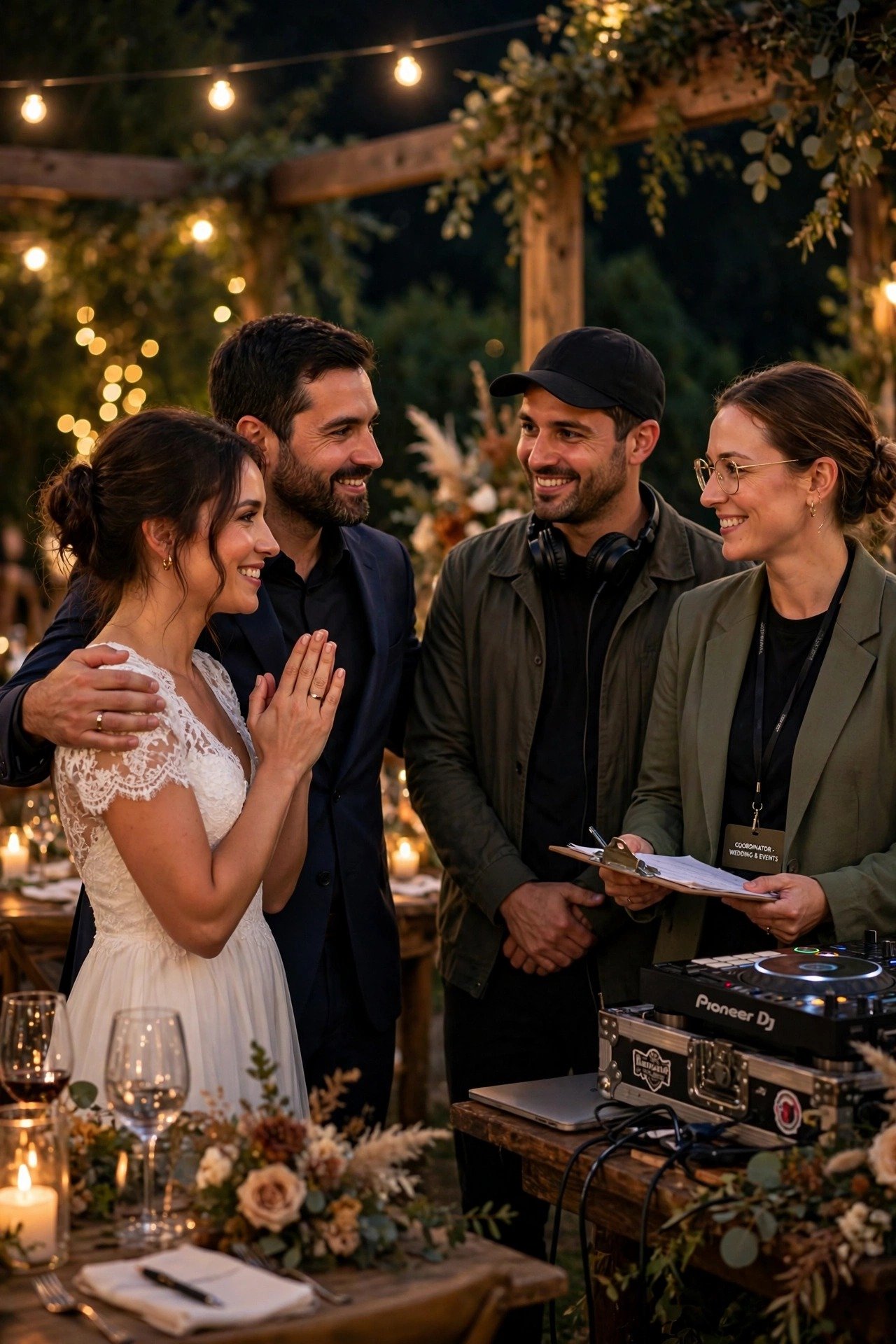
Vendors who quietly rearranged their craft to save your evening deserve to hear it — and where it fits your budget, a tip or a glowing review the next week means the world. More practically, grace under schedule pressure is what separates great suppliers from average ones; note it when you recommend them.
Remember: Guests Rarely Know You Are Late
 📌 Save
The final, truest move: remember that guests have no copy of your timeline. They do not know the first dance was moved, the toasts relocated, or dinner tightened by twelve minutes. They know the food was good, the music was fun and you two looked happy. A late wedding, recovered with a smile, is just a wedding.
What to Do If Your Wedding Runs Late FAQs
How late is too late for a wedding ceremony to start?+
Up to about 15 minutes late is invisible to guests, especially with prelude music and drinks available. Beyond 30 minutes, restructure the reception using the moves in this guide and check your venue’s end time. Ceremonies starting more than an hour late are rare and usually weather- or travel-related — communicate early and guests stay remarkably kind.
What should we cut first if the wedding is running behind?+
Cut transitions, not moments: shorten drinks reception, merge the entrance with the first dance, move toasts into dinner, and trim the photo list. If you still need more than 30 minutes, drop one non-essential item entirely — a game or montage — rather than squeezing everything a little.
Do we have to pay vendors overtime if the wedding runs late?+
Often, yes — most venue, DJ and photography contracts include overtime rates, typically charged per half hour or hour beyond the booked end time. Rates vary widely, so ask for your actual figures early in the day. Sometimes paying for 30 extra minutes costs less than the stress of cutting the evening.
Will guests notice if our wedding runs late?+
Almost never, because guests do not have your timeline. They notice only hunger, long unexplained waits and visible panic. Keep drinks flowing, make one cheerful announcement if a wait grows, and protect the food and the party — the delay itself stays invisible.
Who should fix the schedule if things slip on the day?+
Your day-of coordinator if you have one — it is literally their core job. Without one, appoint your most organised, calm friend in advance and give them the master timeline and vendor phone numbers. The couple should never be the ones solving it; your job is to look like people having the best day of their lives.
Key Takeaways
- Get the real number first — most ‘disasters’ are 10 to 20 minutes, and trims cover that easily.
- Check the venue’s hard end time before cutting anything; you may be able to simply buy time.
- Recover minutes from transitions, photos and announcements — never from the ceremony or the meal.
- Fed, informed guests never notice a delay; hungry, confused guests notice everything.
- Protect the last dance and send-off above all — the ending is the memory.
Final Thoughts
A wedding that runs late is not a failed wedding — it is every wedding. The couples who enjoy theirs anyway are the ones who hand the clock to someone they trust, trim quietly, and keep smiling at their guests. Do that, and in twenty years nobody — including you — will remember the missing twenty minutes. You will remember the day.