
How to Do Wedding Food on a Budget: A Complete Guide
By zainzari • Published April 2026 • Updated October 11, 2026
 📌 Save
To do wedding food on a budget, choose your format first (buffet, stations, food truck, potluck or dessert-only — never plated), learn the real per-head math ($5–$35 depending on format), get quotes from local restaurants instead of wedding caterers, and tell guests what to expect on the invitation. This complete guide covers catering math, three sample menus under $15 a head, station strategies, drink formulas and a 90-day timeline.
Food is where wedding budgets go to die. A plated “wedding caterer” dinner runs $60–$120+ per person — for 100 guests, that’s $6,000–$12,000 before you’ve bought a single flower. But here’s what the wedding industry doesn’t advertise: the format you choose matters more than the food itself. The same ingredients served as a buffet cost half as much.
This is the complete guide — not just ideas, but the math behind them. You’ll learn exactly what each format costs per head, get three full sample menus, and leave with a 90-day timeline that keeps the whole thing under control.
At a Glance: Format, Cost & Best For
| Format | Per Head | Best For | Effort |
|---|---|---|---|
| Plated dinner (avoid) | $60–$120+ | — | High |
| Buffet | $20–$35 | Most weddings | Medium |
| Food stations | $18–$30 | Casual crowds | Medium |
| Food truck | $15–$25 | Outdoor / fun | Low |
| Heavy hors d’oeuvres | $12–$20 | Cocktail receptions | Medium |
| Restaurant drop-off | $12–$22 | DIY-friendly | Medium |
| Dessert-only | $5–$10 | Off-peak timing | Medium |
| Potluck | $3–$8 | Close-knit groups | High |
Prices are per-head food cost before service and rentals — always get itemized quotes and compare the same format across vendors.
Choose Your Format First
 📌 Save
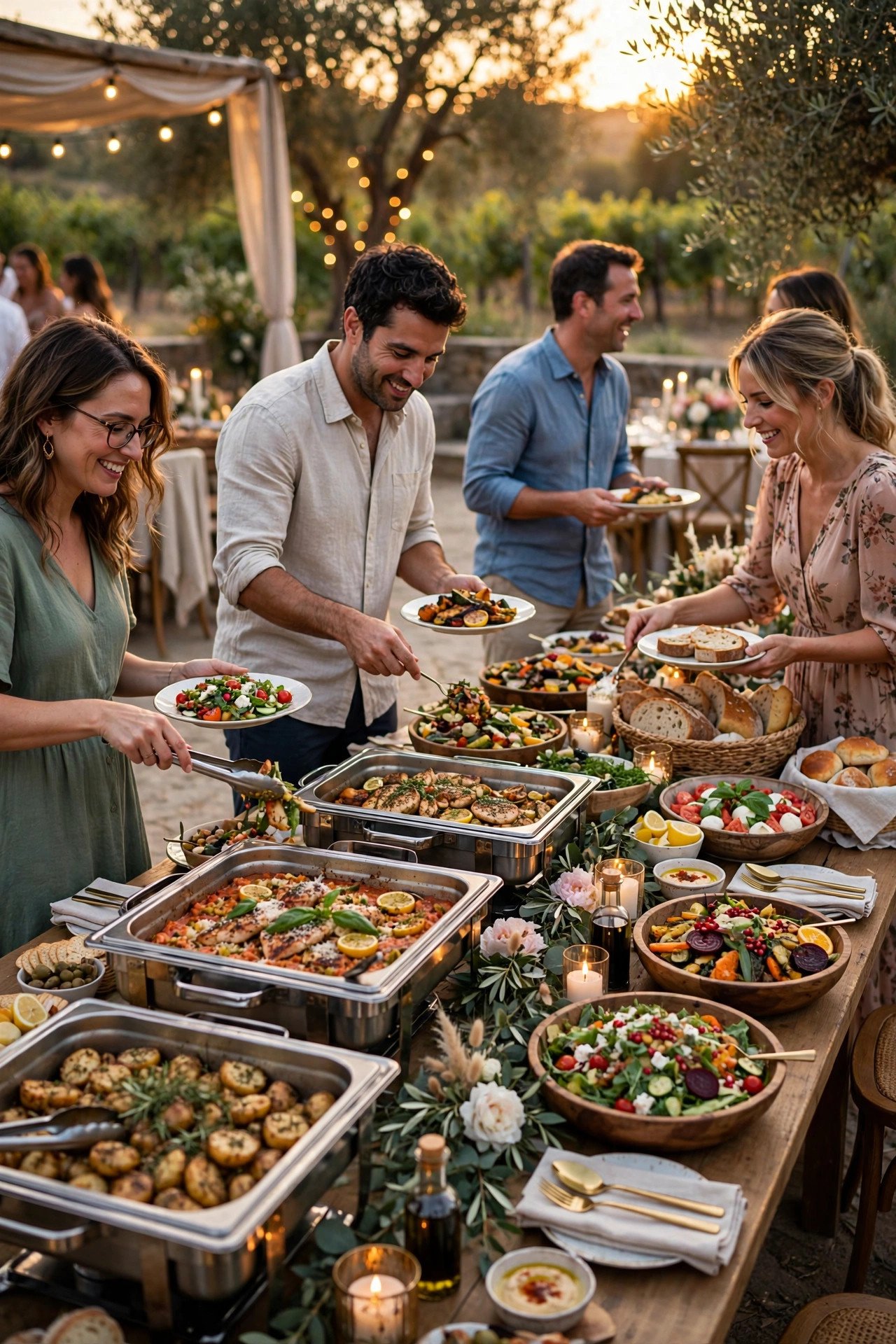
Pick your service format before you pick a single dish — buffet, stations, truck, potluck or dessert-only.
Every food decision flows from format. A plated dinner needs servers, rentals and timing; a buffet needs chafing dishes and a flow plan; a food truck needs parking and a serving window. Decide format using three inputs: your guest count (under 75 opens DIY options), your venue’s facilities (kitchen? power? outdoor space?), and your time of day (a 2pm wedding can be dessert-only; a 6pm one needs dinner).
Rule of thumb: the more formal the format, the higher the cost. Work down the formality ladder until the price fits — most couples land happily on buffet or stations.
Read next: How to Plan Your Dream Wedding Under $5,000
Catering Math: The Real Per-Head Numbers
 📌 Save
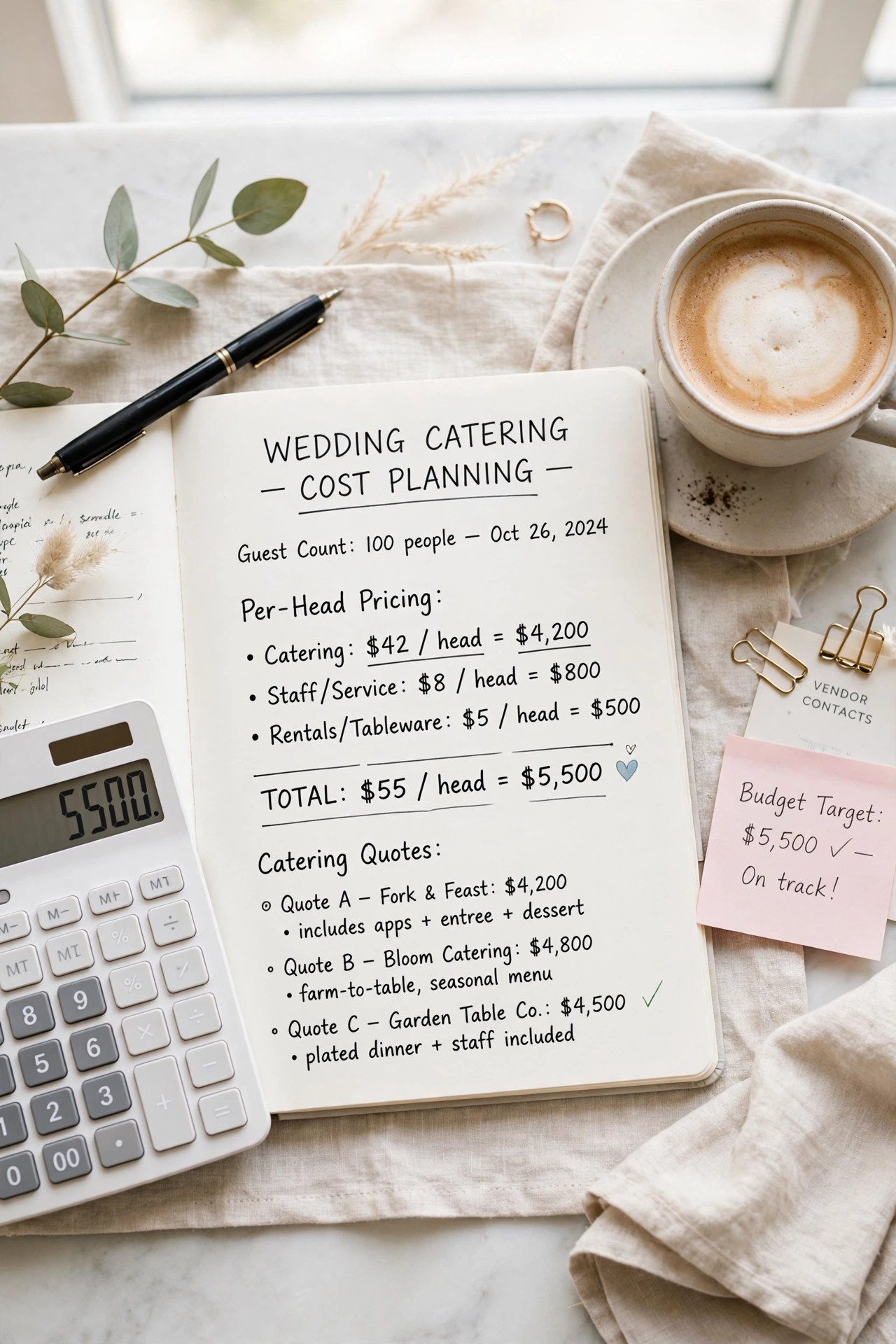
Total food cost = per-head price × guests + service + rentals + tax + tip. Know every line before you sign.
Caterers quote per-head, but the per-head is never the total. A $30 buffet becomes $45+ after 20% service, rentals (chafing dishes, serving ware), delivery, tax and gratuity. Always ask for the “all-in per person” number. For quantity: buffet dinner needs 1–1.25 lbs of food per guest; cocktail receptions need 8–12 appetizer pieces per person for two hours; cake needs one serving per guest (not everyone eats it, but running out is worse).
Get three quotes minimum, and make them compete on identical formats — a buffet quote versus a plated quote tells you nothing.
Read next: 36 Ways to Slash Your Wedding Budget
Three Sample Menus Under $15 a Head
 📌 Save
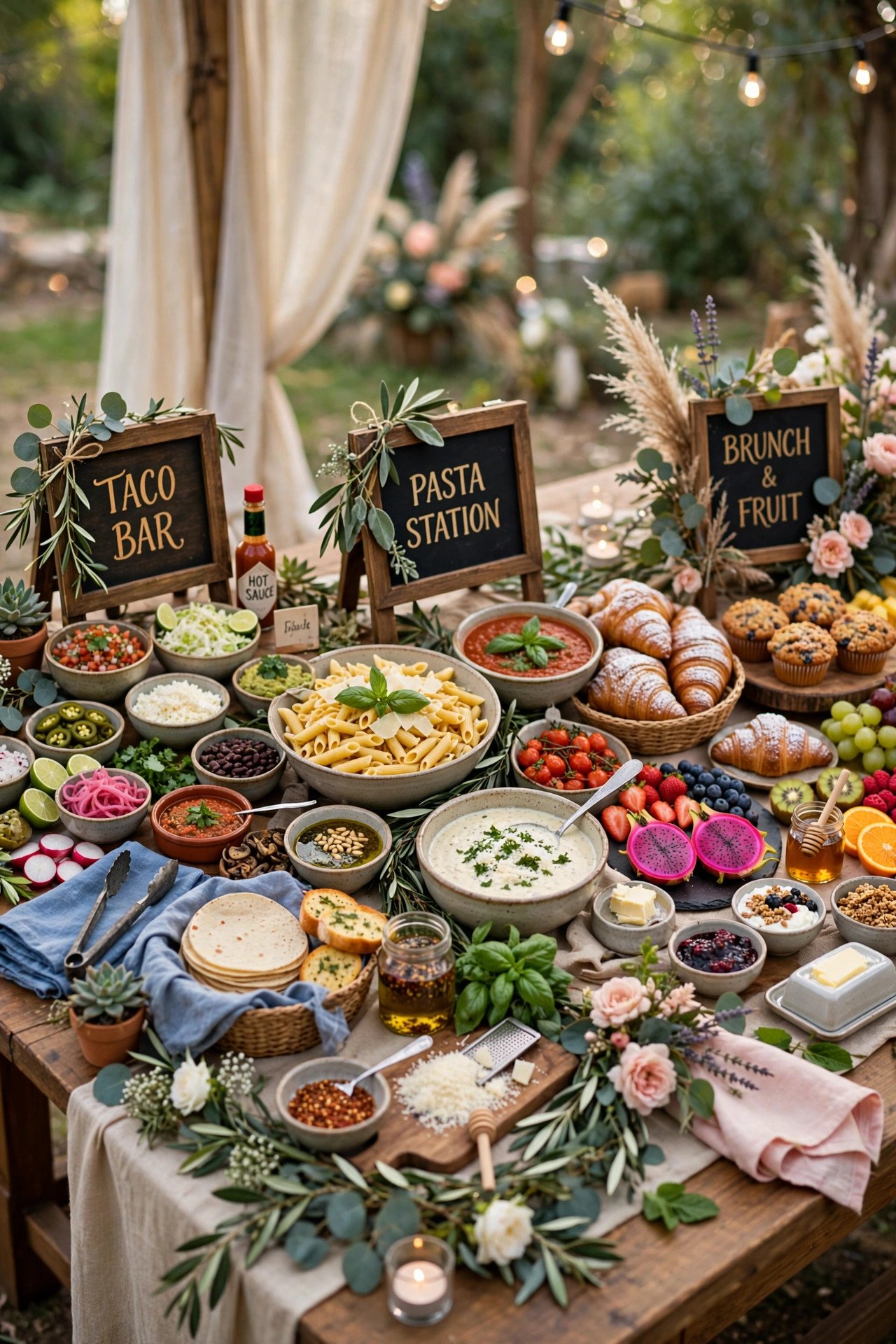
Taco bar ($12), pasta station ($13), brunch spread ($14) — full menus with quantities for 50 guests.
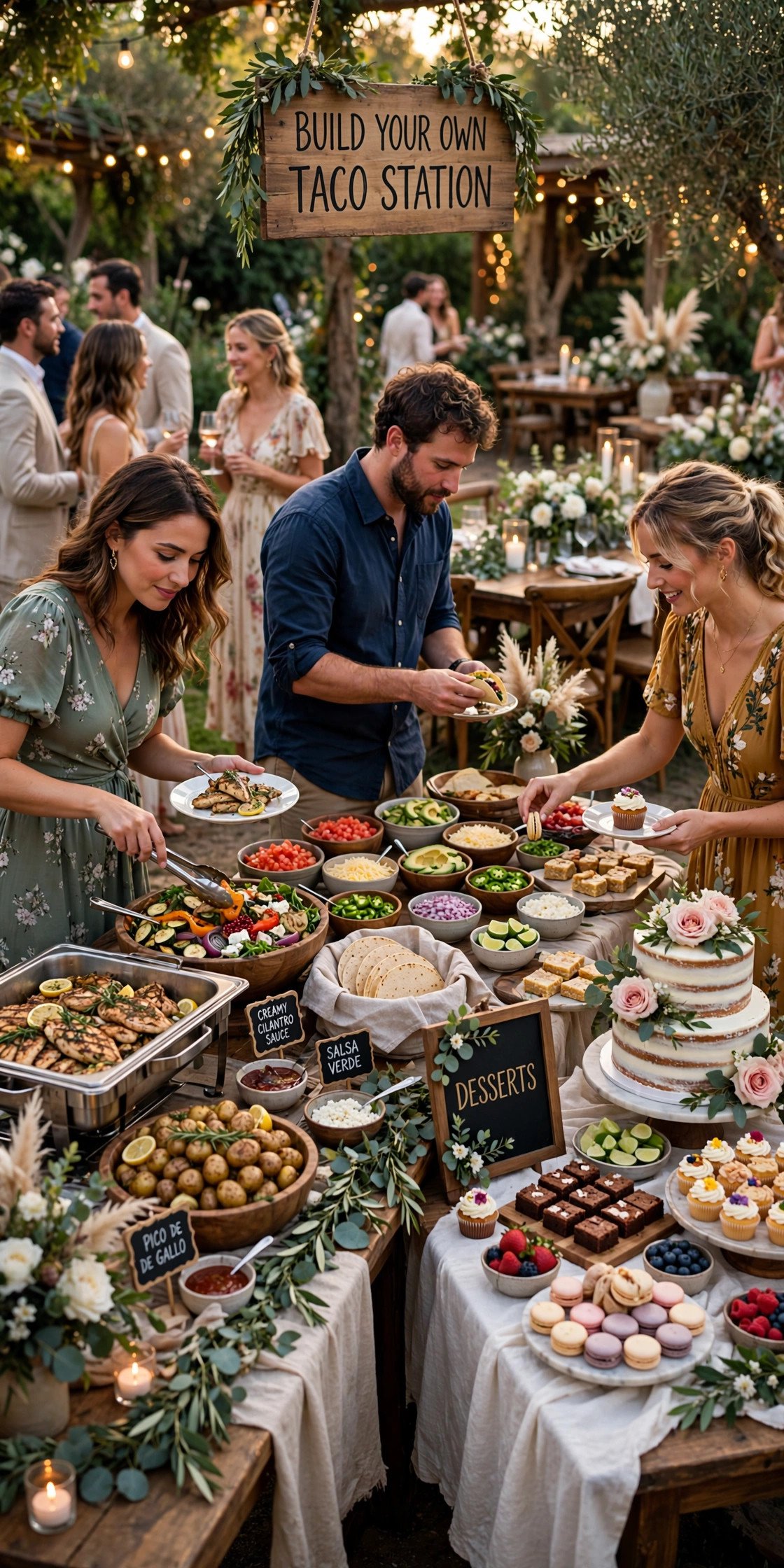
Menu 1 — Taco bar: seasoned chicken and beef, tortillas, rice, beans, and toppings; ~$12/head from a local taqueria. Menu 2 — Pasta station: two pastas, two sauces, garlic bread, Caesar salad; ~$13/head. Menu 3 — Brunch spread (for morning weddings): frittata, breakfast potatoes, fruit, pastries, coffee; ~$14/head. Each feeds 50 for $600–$700 total — less than one plated course at a traditional caterer.
All three scale beautifully and handle dietary needs naturally: tacos and pasta are easily made vegetarian, and brunch covers gluten-free with fruit and eggs.
Read next: How to Plan a Wedding on a Small Budget
Food Stations That Scale
 📌 Save
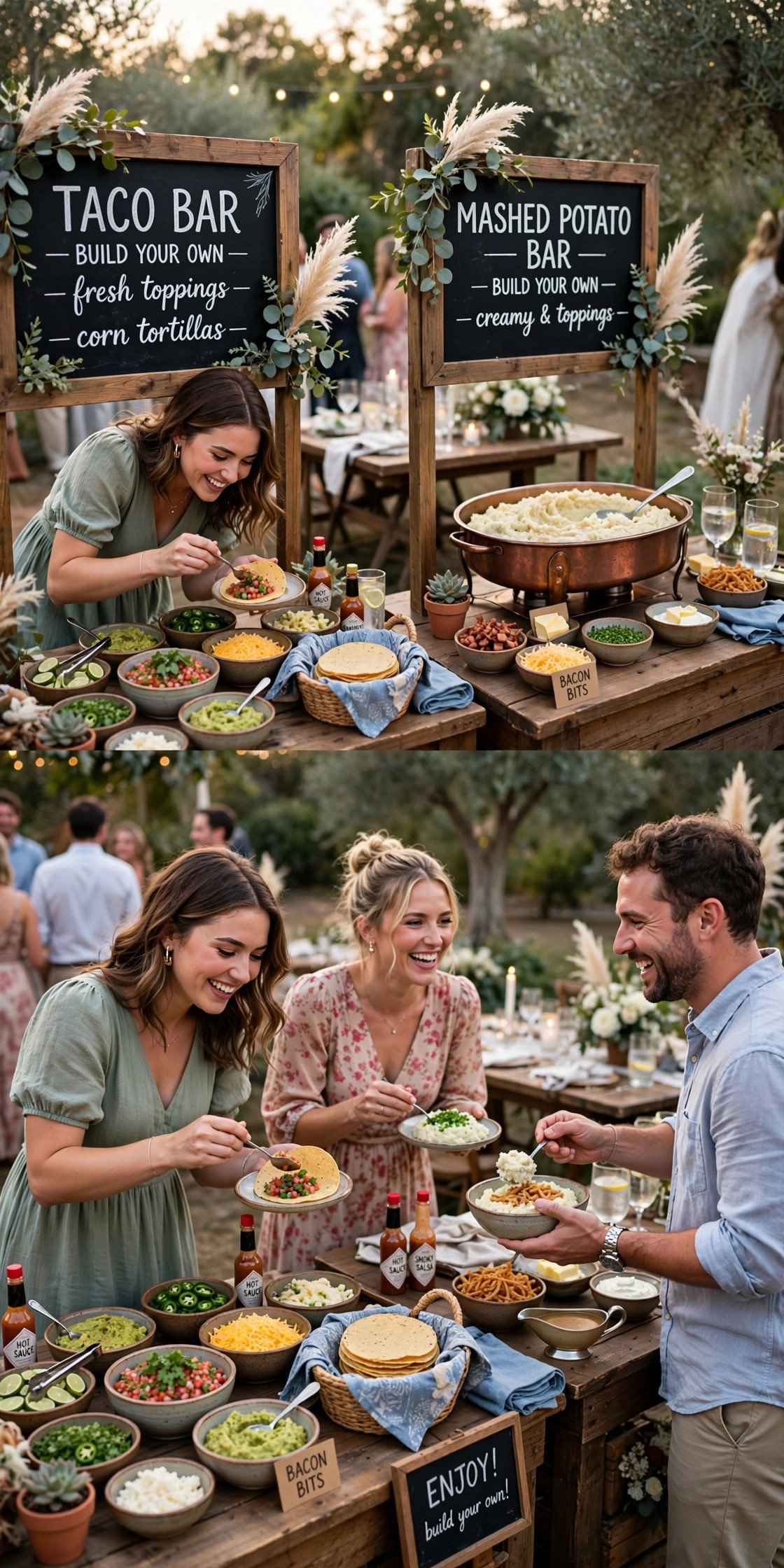
Two or three themed stations (tacos, sliders, mashed potato bar) beat one long buffet line.
Stations work because they use cheap bulk ingredients guests assemble themselves: a taco station needs tortillas, two proteins and toppings; a slider station needs buns, patties and fixings; a mashed-potato bar needs potatoes and toppings. Each station serves 25–40 guests per hour, so two stations handle 75 guests without lines. They also photograph beautifully and give guests something to do during cocktail hour.
Assign one helper per station for restocking — the only job is keeping trays full. Draw a simple table map so helpers know exactly where everything goes.
Read next: 20 Wedding Craft Ideas for Low Budgets
The Dessert-Only Reception
 📌 Save
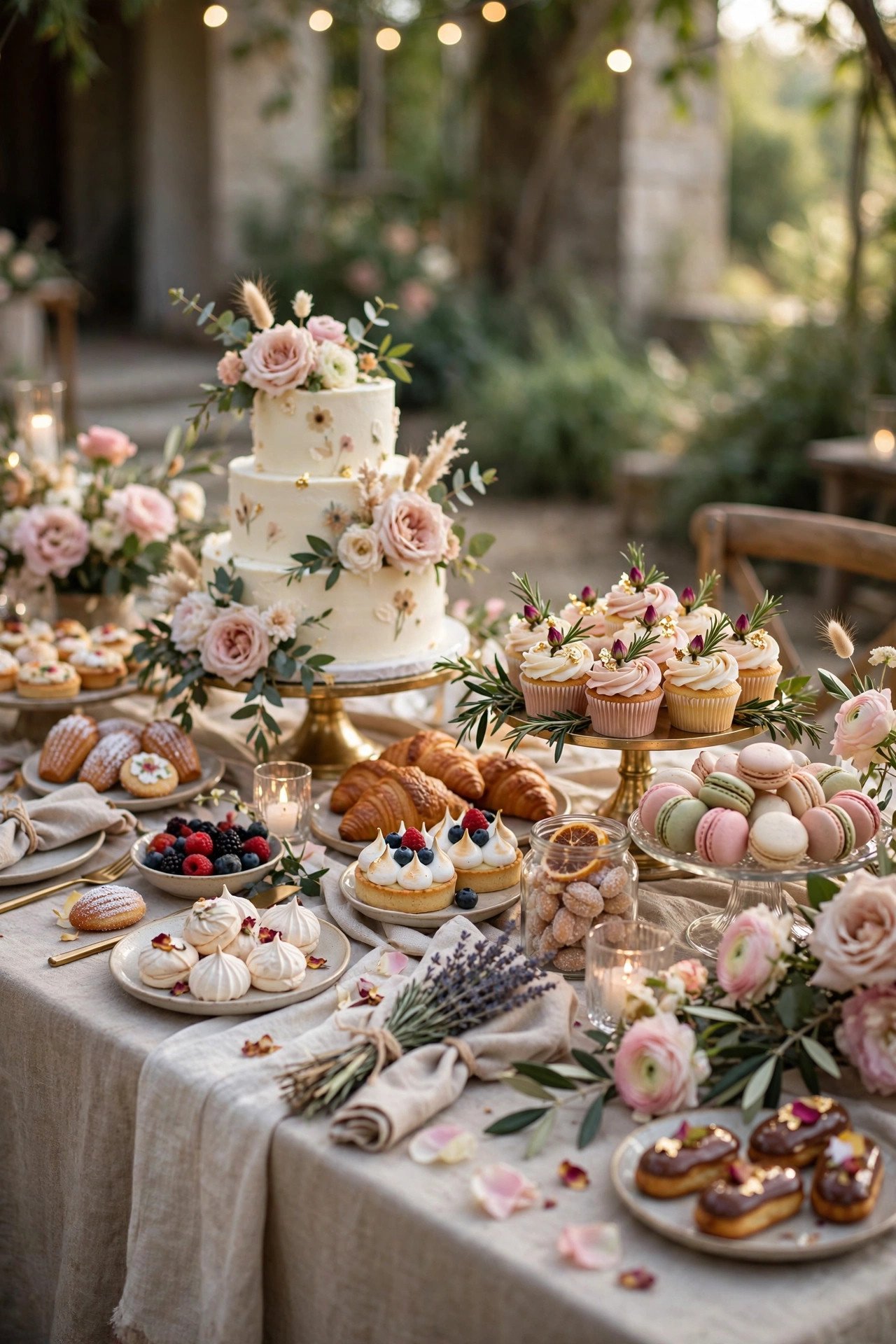
Host at 2pm or 8pm, serve only desserts and drinks — the cheapest legitimate reception format.
Time it right and nobody expects dinner: a 2pm ceremony with a 3–5pm dessert reception, or an 8pm ceremony with late-night sweets and dancing. Ask talented friends to each bring their signature dessert, order a small display cake, add coffee, tea and punch — total cost for 75 guests: $400–$750. Style the dessert table lavishly (height, linens, flowers) and it becomes the visual centerpiece of the reception.
The invitation must say “dessert reception” clearly — guests who arrive expecting dinner will be unhappy, and that’s on the wording, not the format.
Read next: How to Throw a Wedding Reception for $1000
Restaurant Catering, Not Wedding Catering
 📌 Save
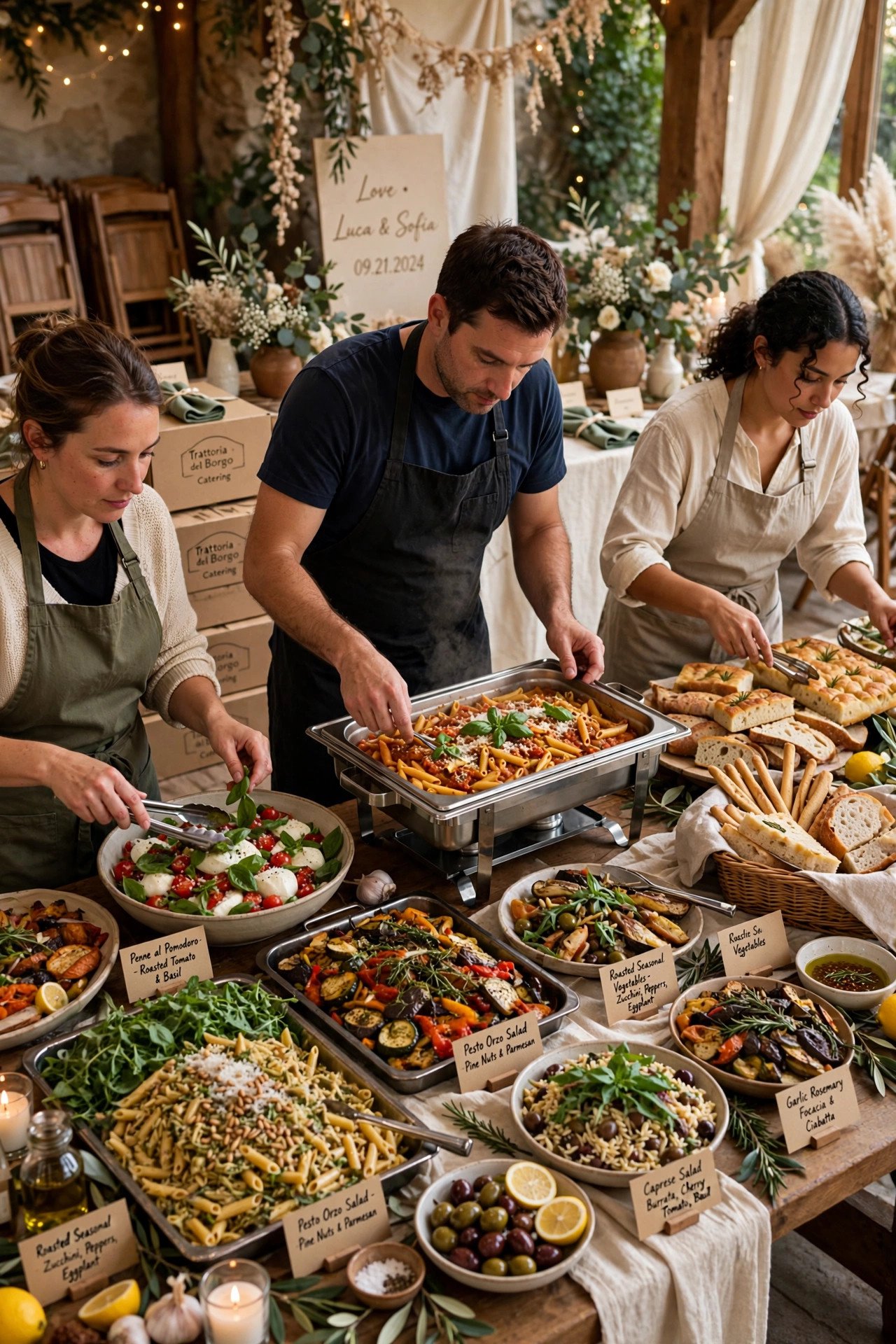
Order catering from a beloved local restaurant instead of a wedding caterer — same food, half the price.
Wedding caterers charge a premium for the word “wedding.” Your favorite Italian, Mexican or BBQ restaurant will cater 50–75 people at their normal catering prices — often $12–$22 per head including trays and serving utensils. The food is the food they serve every day, which means it’s reliably good. Ask about drop-off versus full service; drop-off with your own helpers is cheapest.
Get the quote in writing with everything itemized: food, trays, utensils, delivery, setup. And ask how much they recommend per guest — restaurants know their portions.
Read next: 12 Budget Wedding Plans That Look Expensive
Food Trucks Done Right
 📌 Save
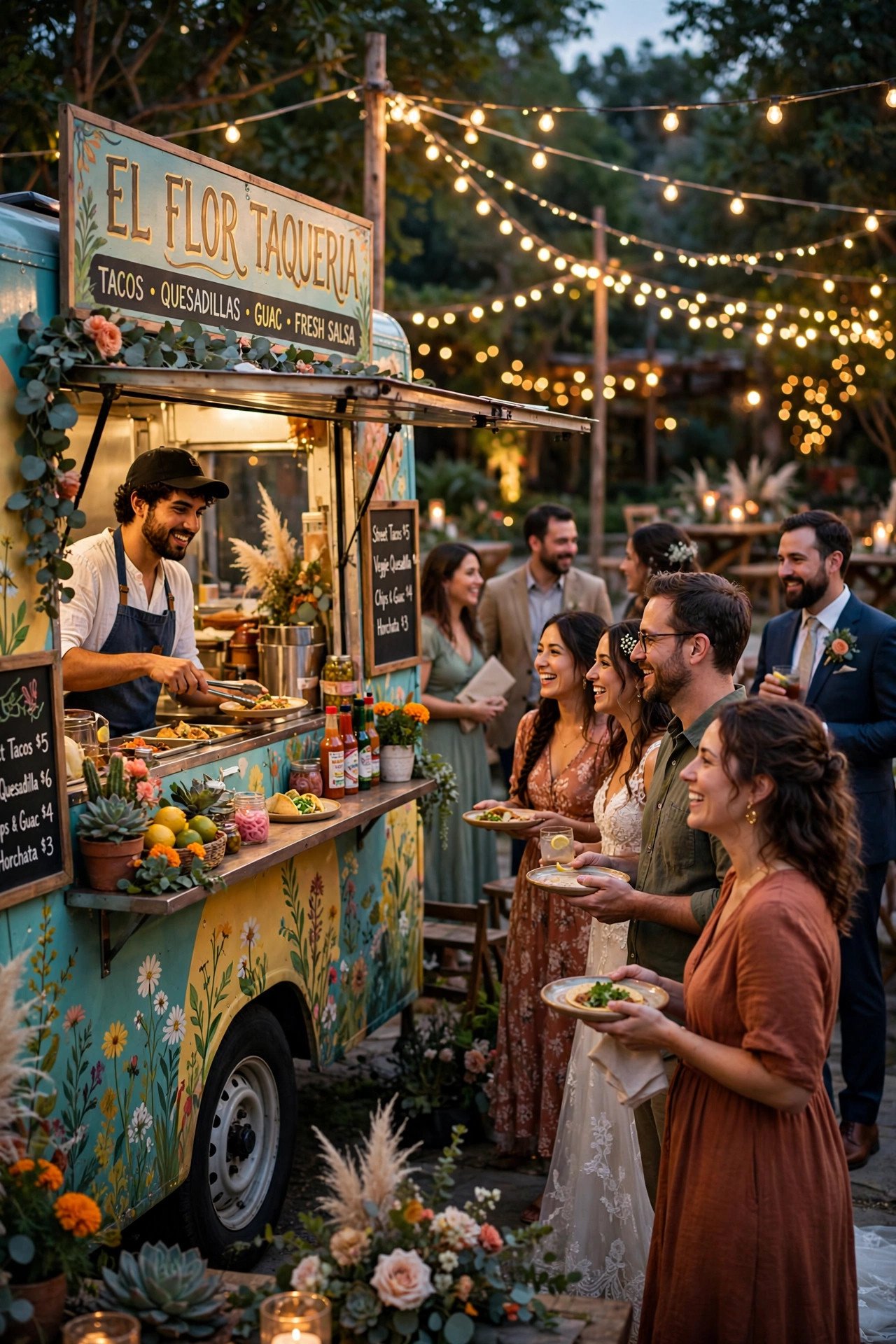
One truck, one set menu, buffet-style service — fast, fun and genuinely affordable.
Food trucks shine when you treat them as a kitchen, not a novelty: negotiate a fixed set menu (not the full street menu), ask about buffet-style service to kill lines, and confirm how many guests they can serve per hour. Tacos, pizza, BBQ and grilled cheese trucks all land at $15–$25 per head for weddings. The truck itself becomes decor and entertainment — guests love it.
Confirm power, parking, minimums and travel fees in writing. Some trucks have high minimums that erase the savings for small weddings — they’re best at 75+ guests.
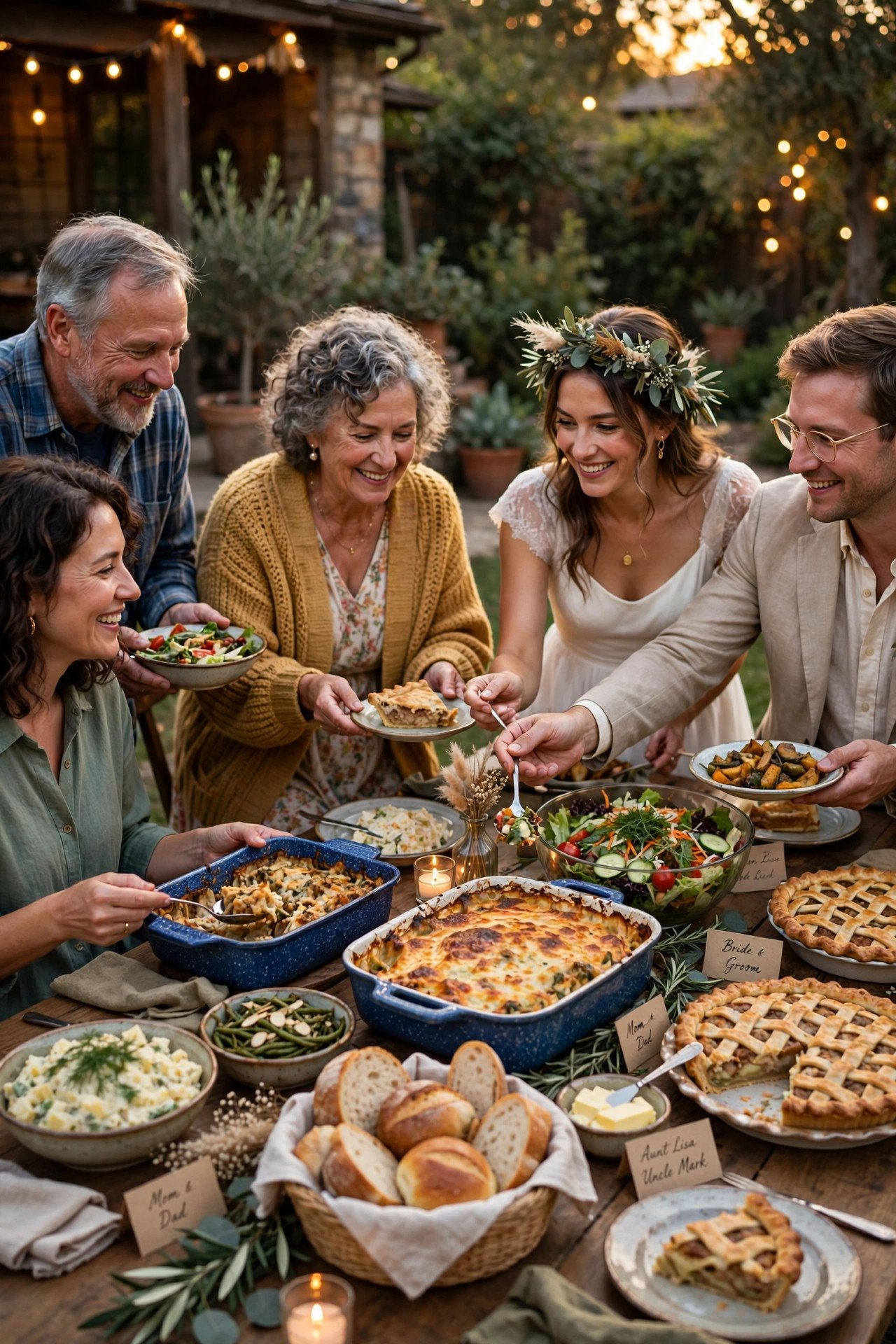
Potluck Rules That Actually Work
 📌 Save
Potlucks work for close-knit weddings under 75 — with assigned dishes, a sign-up sheet and zero gaps.
The difference between a chaotic potluck and a beloved one is organization. Assign every dish: mains to the confident cooks, sides by category, desserts to the bakers — no duplicates, no “I’ll bring something.” Use a shared spreadsheet so everyone sees the full menu. You handle the infrastructure: serving dishes, utensils, warming trays, drinks and the main protein (buy the ham or turkey yourself so the centerpiece dish is guaranteed).
Only ask people you truly trust, and frame it as tradition, not thrift: “Our family has always fed each other — we want our wedding to taste like us.”
Read next: 10 Things a New Bride Needs From Her Mother
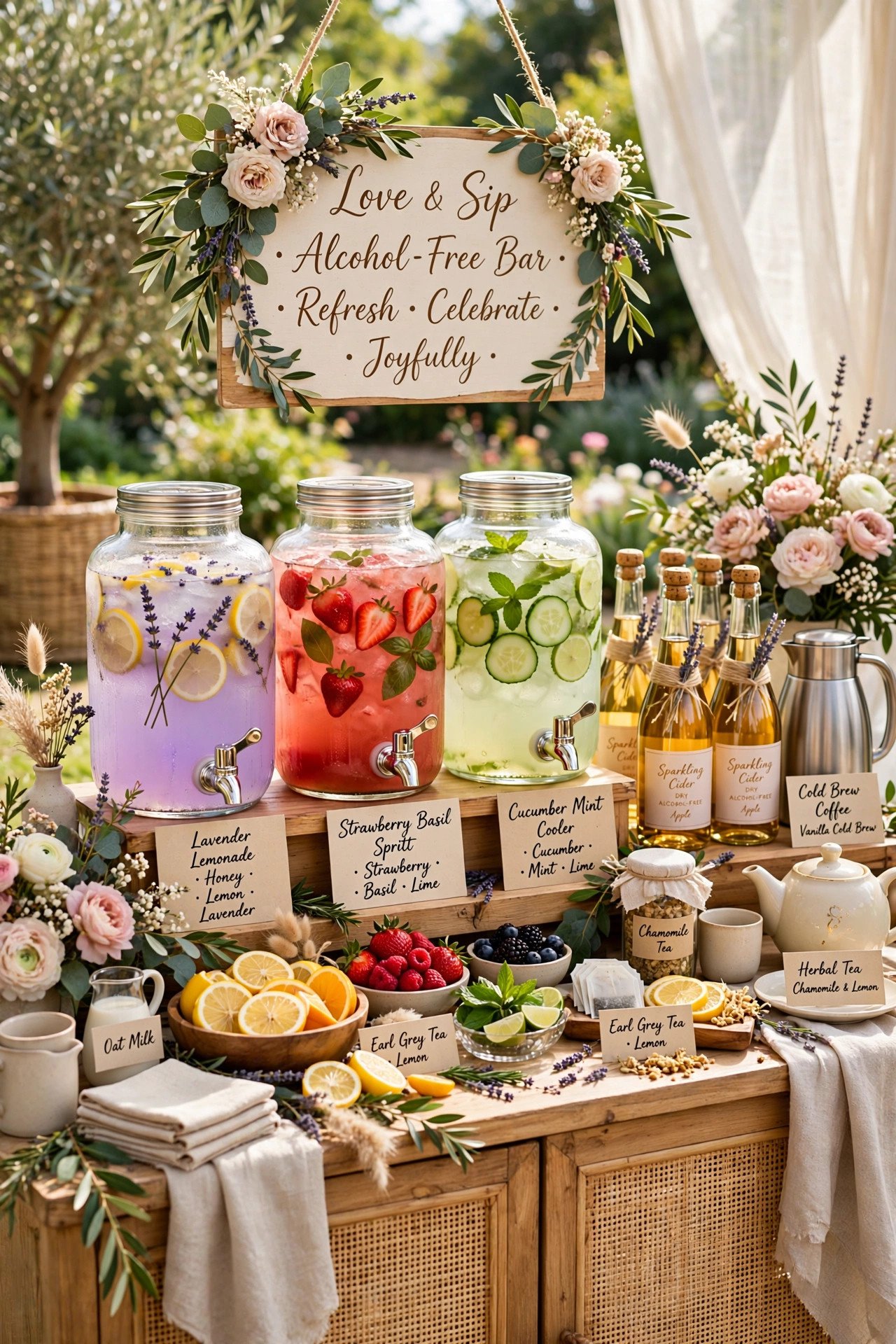
Drinks: The Budget Bar Formula
 📌 Save
Skip the full bar: one signature mocktail, sparkling cider, lemonade, coffee and tea — $3–$6 per head, all-in.
Drinks are the silent budget killer — a full bar runs $15–$30 per head plus bartenders. The budget formula: one signature drink (a beautiful mocktail named after you two, batched in dispensers), sparkling cider for toasts, lemonade and iced tea, plus a real coffee and tea station. Buy in bulk, serve in plain glassware, garnish generously — presentation makes it feel premium.
Math: one gallon of punch serves ~20 guests; plan 2–3 drinks per guest for a 4-hour reception. Buy 20% extra of the signature drink — it always goes first.
Read next: Wedding Freebies You Can Get Now
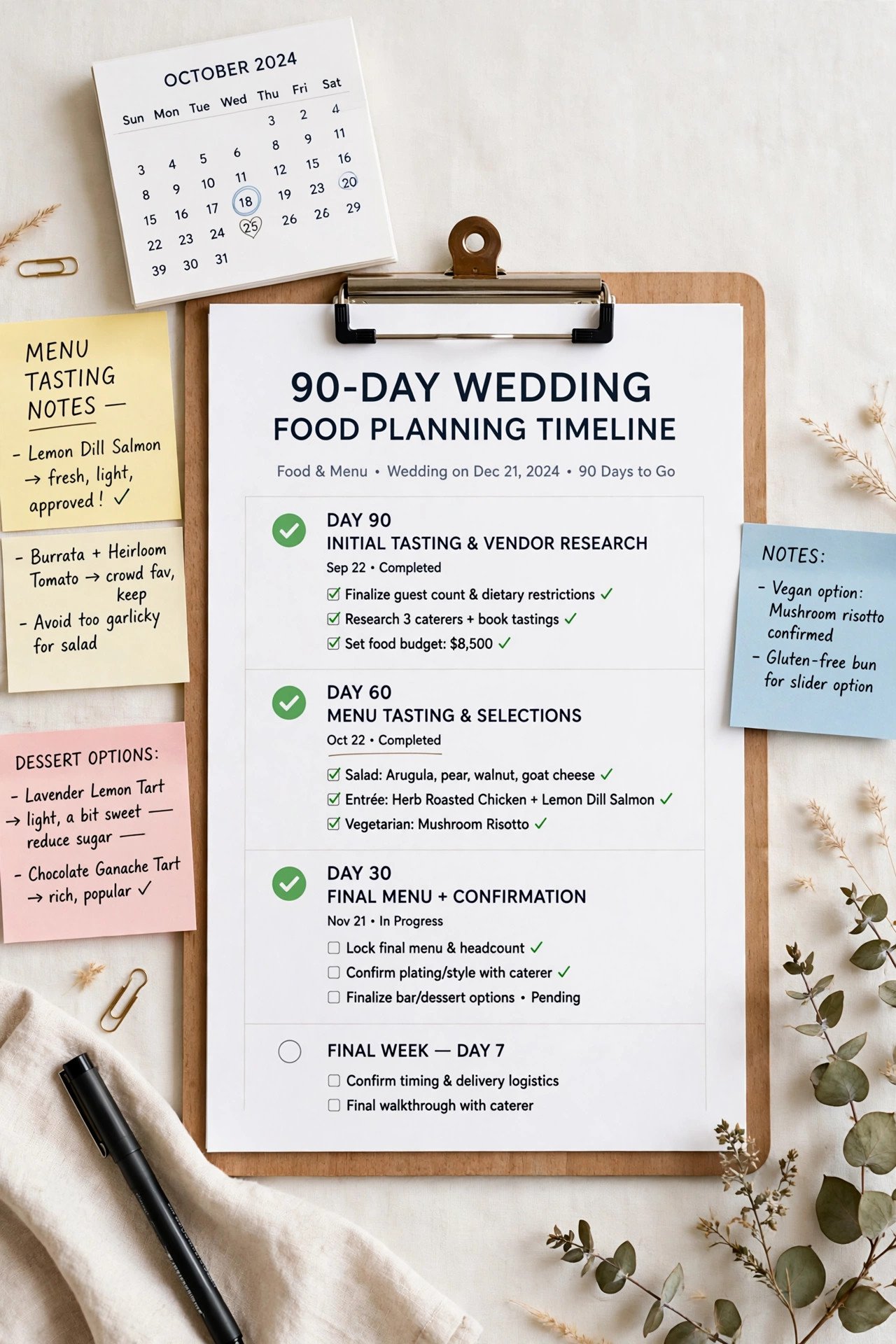
Your 90-Day Food Timeline
 📌 Save
90 days: choose format and get 3 quotes. 60 days: book and pay deposit. 30 days: finalize menu and counts. 2 weeks: confirm in writing. Day of: eat.
Day 90: decide your format and collect three itemized quotes. Day 60: book your choice, pay the deposit, and assign helper roles (shopping, setup, serving, cleanup). Day 30: lock the final menu, confirm dietary needs from RSVPs, and order rentals. Two weeks out: confirm everything in writing — quantities, arrival times, setup needs. Week of: buy non-perishables and ice; day before: prep what you can; wedding day: assign one food captain and don’t think about food again.
The golden rule: nothing food-related gets decided in the final week. By then you’re only executing.
Read next: Ultimate Wedding Planning Checklist
Frequently Asked Questions
What is the cheapest way to feed wedding guests?
A dessert-and-drinks reception outside mealtimes is cheapest ($5–$10 per head), followed by potluck ($3–$8) and heavy hors d’oeuvres ($12–$20). For full meals, buffet or food stations from a local restaurant ($20–$35 per head) beat plated wedding catering ($60–$120+) by a wide margin.
How much food do I need per guest at a wedding?
For a buffet dinner, plan 1–1.25 lbs of food per guest total (about 6–8 oz protein, plus sides). For hors d’oeuvres receptions, 8–12 pieces per person for a 2-hour cocktail window. Always round up 10% — running out is the one catering mistake guests never forgive.
Is it tacky to have a potluck wedding?
Not when it’s framed with love and organized well. Potlucks work beautifully for close-knit, family-centered weddings under 75 guests. The key is clear assignments (no duplicates, no gaps), a sign-up sheet, and presenting it as a cherished tradition, not a cost-cutting measure.
How do I handle dietary restrictions on a budget?
Ask about restrictions on the RSVP, then build them into the main menu rather than ordering separate meals. Buffet and station formats naturally accommodate vegetarians, vegans and gluten-free guests when you label everything. One thoughtful inclusive menu costs far less than special individual orders.
Should I serve alcohol to save money?
Skipping alcohol is the single biggest food-budget saver — a full bar can cost $15–$30 per head. A celebration with signature mocktails, sparkling cider, coffee and tea feels intentional and festive, not cheap. If you want alcohol, one signature drink plus beer and wine beats a full bar.
✨ Key Takeaways
- Choose your format first — it determines cost more than the menu does.
- Learn the all-in per-head math (food + service + rentals + tax + tip) before signing anything.
- Local restaurants beat wedding caterers on price for identical food.
- Tell guests the format on the invitation — expectations prevent complaints.
- Nothing food-related gets decided in the final week — only executed.
Final Thoughts
Great wedding food isn’t about spending more — it’s about choosing smarter. Pick the format that fits your crowd, learn the math so no quote surprises you, and put your energy into flavor and abundance rather than formality. Your guests will remember a delicious taco bar far longer than a forgettable plated chicken.






3 Comments