How Long Is a Wedding Reception? (2027)
By zainzari • Published October 23, 2026 • Updated October 23, 2026
 📌 Save
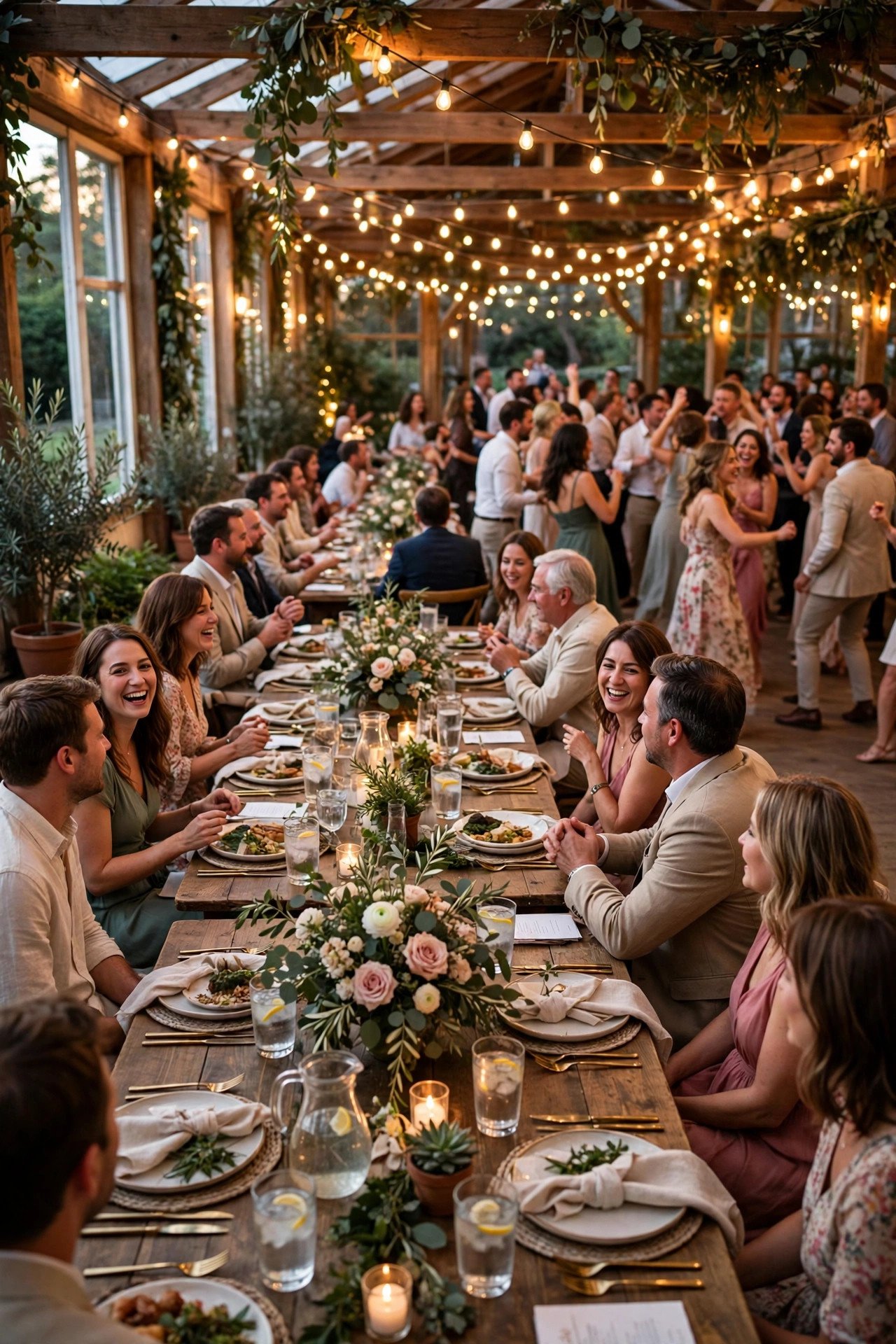
Most wedding receptions last 4 to 5 hours: roughly an hour for the refreshment hour while photos finish, 60 to 90 minutes for dinner with toasts, about 15 minutes for cake, and 2 to 3 hours of dancing before the send-off. Shorter formats like a brunch reception run 2.5 to 3.5 hours, while full evening and many cultural receptions run 6 hours or more — all typical ranges that shift with your venue, crowd and program.
Couples usually ask ‘how long is a reception?’ when what they really need is ‘how long is each part?’ — because pacing, not total length, is what guests actually feel. A five-hour reception can fly or crawl depending on how its segments are sized.
Below, every reception segment is timed as a typical range, then the common full formats are added up. Use them to build your evening backward from your venue’s end time, and the night will pace itself.
At a Glance: Reception Segment, Typical Length & Pacing Note
| # | Reception Segment | Typical Length | Pacing Note |
|---|---|---|---|
| 1 | The Short Answer: Most Receptions Run 4 to 5 Hours | 4–5 hours | Refreshment hour to send-off |
| 2 | The Refreshment Hour: 45 to 60 Minutes | 45–60 mins | Covers the photo window |
| 3 | Grand Entrance and Introductions: 5 to 10 Minutes | 5–10 mins | Energy spike, keep moving |
| 4 | The First Dance: 3 to 5 Minutes | 3–5 mins | One song, edited if needed |
| 5 | Parent Dances: 6 to 10 Minutes | 6–10 mins | Two songs, back-to-back |
| 6 | Dinner Service: 60 to 90 Minutes | 60–90 mins | Plated slower, buffet varies |
| 7 | Toasts and Speeches: 15 to 25 Minutes in Total | 15–25 mins total | 3–5 speakers x 3–5 mins |
| 8 | Cake Cutting and Serving: 10 to 15 Minutes | 10–15 mins | Cutting quick, serving overlaps dancing |
| 9 | Open Dancing: 2 to 3 Hours | 2–3 hours | The party’s main body |
| 10 | Bouquet Toss and Other Crowd Moments: 10 to 15 Minutes | 10–15 mins | Gather once, do them all |
| 11 | Late-Night Snack Service: 20 to 30 Minutes | 20–30 mins | Opens ~1 hr before the end |
| 12 | Last Dance and Send-Off: 10 to 15 Minutes | 10–15 mins | One big song + the line |
| 13 | Brunch Reception: 2.5 to 3.5 Hours | 2.5–3.5 hrs | Ceremony-to-goodbye ~4 hrs total |
| 14 | Lunch Reception: 3 to 4 Hours | 3–4 hours | Meal-led, light program |
| 15 | Full Evening Reception: 5 to 6 Hours | 5–6 hours | Dinner + long dance block |
| 16 | Micro-Wedding Reception: 2 to 3 Hours | 2–3 hours | Dinner-party shaped |
| 17 | Cultural Receptions That Run Longer: 6 Hours or More | 6+ hours | Multiple stages & costume changes |
| 18 | The Venue Window Behind It All: Typically 8 to 12 Hours | 8–12 hrs total access | Setup + event + cleanup |
| 19 | How Curfews and Noise Rules Shorten the Night | Hard end times | Music off != party off |
| 20 | The Room Flip During the Hour: 30 to 60 Minutes | 30–60 mins | Guests hosted elsewhere |
| 21 | What Makes a Reception Feel Too Long | Pacing problems | Gaps, repeats, waits |
| 22 | What Makes a Reception Feel Too Short | Rushed segments | Dinner & dancing squeezed |
| 23 | How to Pace the Night So It Never Drags | Alternate energy | Seat, stand, eat, dance |
| 24 | Reception Length by Guest Count | Bigger = slightly longer | Queues scale with heads |
| 25 | Building Your Reception Timeline Backward From the End | Start at curfew | Subtract segment by segment |
Ranges are typical for weddings in the USA, UK and Canada. Venue curfews, cultural traditions and your crowd’s age mix all stretch or shrink them — treat this as a planning frame, not a promise.
The Short Answer: Most Receptions Run 4 to 5 Hours
 📌 Save
The classic reception — refreshment hour, dinner, toasts, cake, dancing, send-off — adds up to 4 to 5 hours for most weddings. Under about 3.5 hours an evening reception starts to feel hurried; beyond 6, most crowds thin out unless the format or culture is built for it.
The Refreshment Hour: 45 to 60 Minutes
 📌 Save
The hour between ceremony and dinner — drinks, canapés and mingling while group photos finish — is planned at 45 to 60 minutes. Shorter feels stingy, longer starts to starve people; if photos need more time, feed this hour properly with real food stations.
Grand Entrance and Introductions: 5 to 10 Minutes
 📌 Save
Introducing the wedding party and the couple takes 5 to 10 minutes depending on party size and how much choreography is involved. It is short, loud and joyful — and it works best flowing straight into the first dance while the room is already on its feet.
The First Dance: 3 to 5 Minutes
 📌 Save
A first dance is one song: 3 to 5 minutes. Couples who choreograph often agree a graceful fade with their DJ at a set point; guests experience a full, emotional dance either way, and the floor opens sooner for everyone.
Parent Dances: 6 to 10 Minutes
 📌 Save
Two parent dances take 6 to 10 minutes combined when run back-to-back, which is why most timelines stack them directly behind the first dance. Some couples combine both into one shared song — a sweet way to halve the time without losing the moment.
Dinner Service: 60 to 90 Minutes
 📌 Save
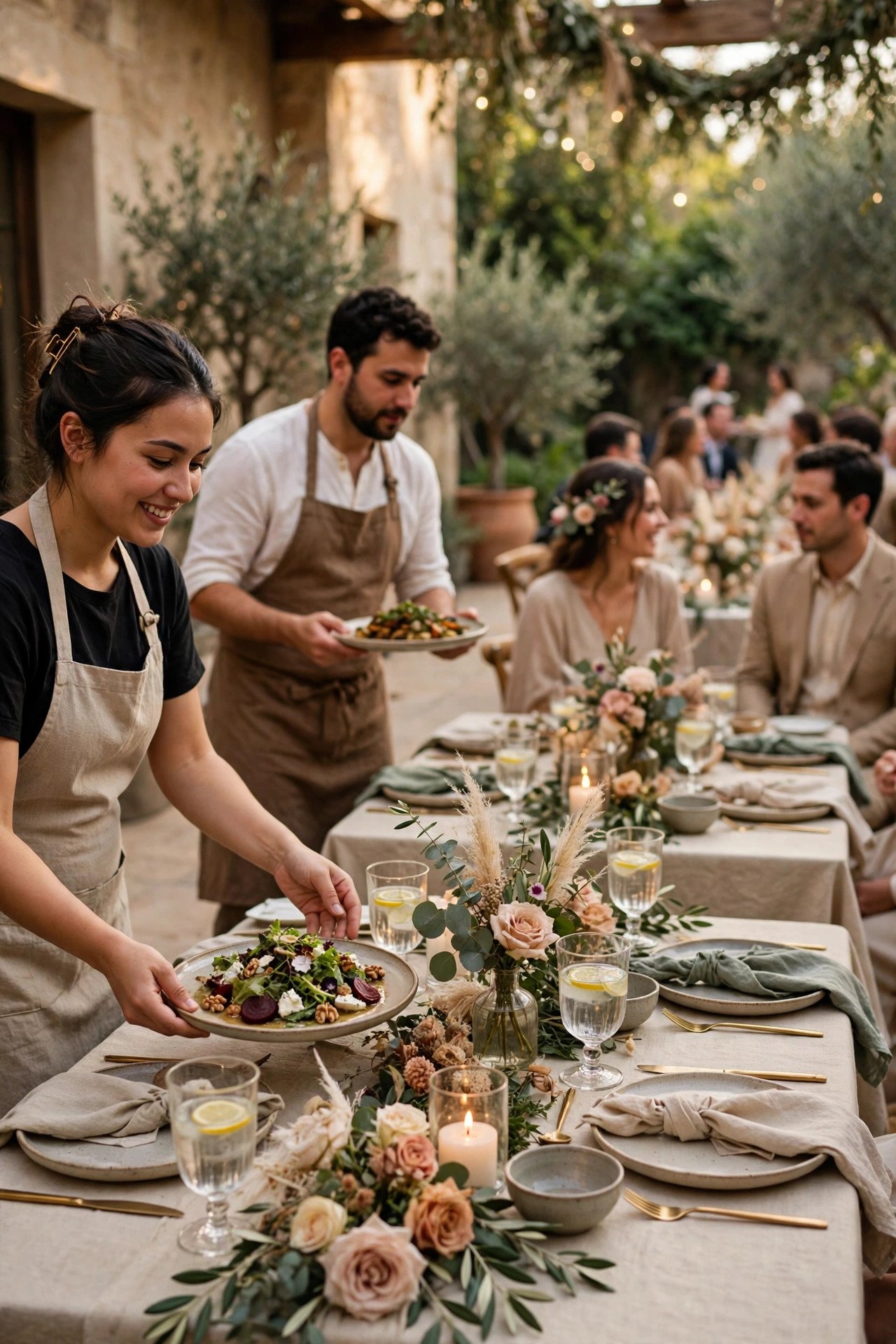
Dinner itself runs 60 to 90 minutes: a plated three-course service at the longer end, stations and buffets sometimes faster per guest but with their own queues. This block also quietly hosts the couple’s table visits, so it should never be squeezed to feed the dance floor.
Toasts and Speeches: 15 to 25 Minutes in Total
 📌 Save
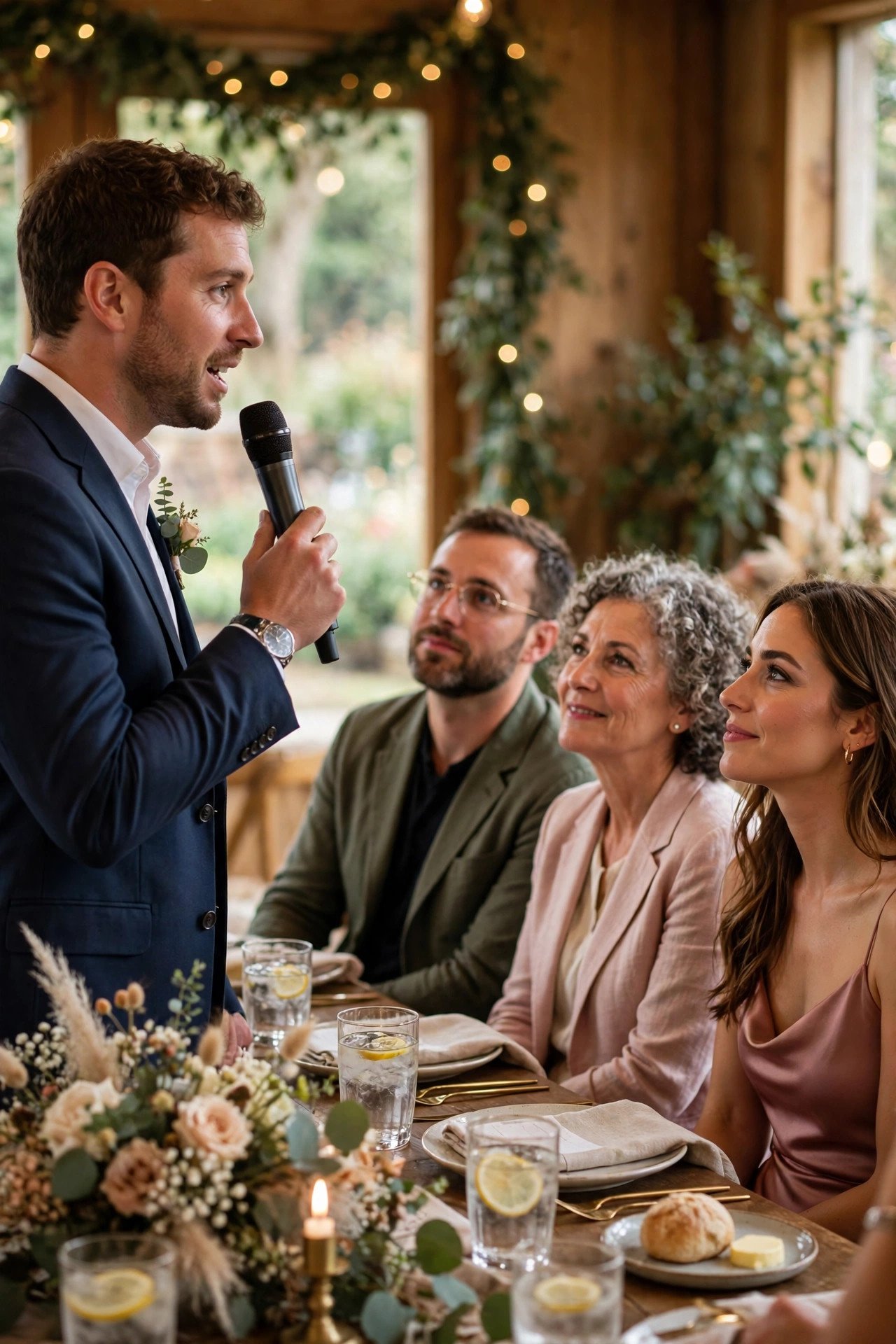
The full toast program — typically three to five speakers — should total 15 to 25 minutes, ideally split between courses rather than stacked in one long block. Raised glasses of sparkling cider, a working microphone and a coordinator keeping gentle time are all it needs.
Cake Cutting and Serving: 10 to 15 Minutes
 📌 Save
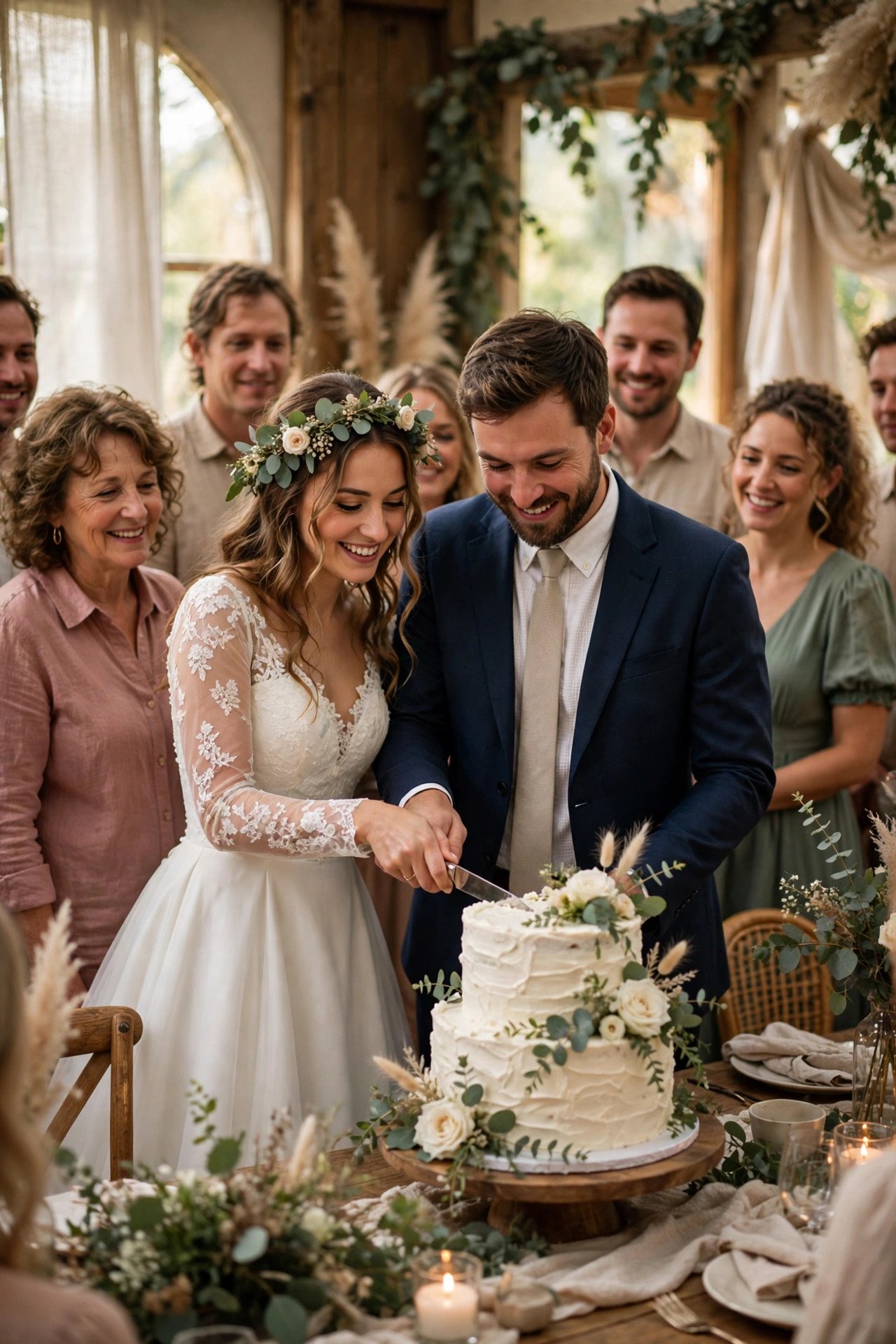
The cake moment itself — announcement, cut, the fed bite, photos — takes about 10 minutes, with slices reaching tables over the following 15 while dancing begins. Placing the cut at the end of dinner lets it double as the signal that the party phase is starting.
Open Dancing: 2 to 3 Hours
 📌 Save
Open dancing is the reception’s main body at 2 to 3 hours in a classic format. The first hour belongs to all generations; the last hour belongs to the couple’s closest crowd. A great DJ or band waves the energy — peaks, a breather song, another peak — rather than flooring it throughout.
Bouquet Toss and Other Crowd Moments: 10 to 15 Minutes
 📌 Save
The bouquet toss and any other crowd-participation moments total 10 to 15 minutes, and they work best batched together mid-dancing: the DJ gathers the floor once, the moments roll, and dancing resumes without a second interruption later.
Late-Night Snack Service: 20 to 30 Minutes
 📌 Save
Late-night snacks — fries, sliders, pizza, a donut wall’s second act — are typically served across a 20-to-30-minute window about an hour before the end. Add coffee beside them; the combination is the reception’s beloved second wind.
Last Dance and Send-Off: 10 to 15 Minutes
 📌 Save
The closing sequence — a final group sing-along or last dance, goodbyes gathering, and the sparkler, bubble or ribbon-wand send-off line — takes 10 to 15 minutes to do without rushing. Endings that are staged feel celebratory; endings that just stop feel like the power failed.
Brunch Reception: 2.5 to 3.5 Hours
 📌 Save
A brunch reception runs 2.5 to 3.5 hours: a generous meal as the centerpiece, toasts over coffee, lawn games and mingling instead of a long dance block, and a daylight send-off. Its shorter arc is a feature — energy stays high because the format never asks daylight guests to party like midnight.
Lunch Reception: 3 to 4 Hours
 📌 Save
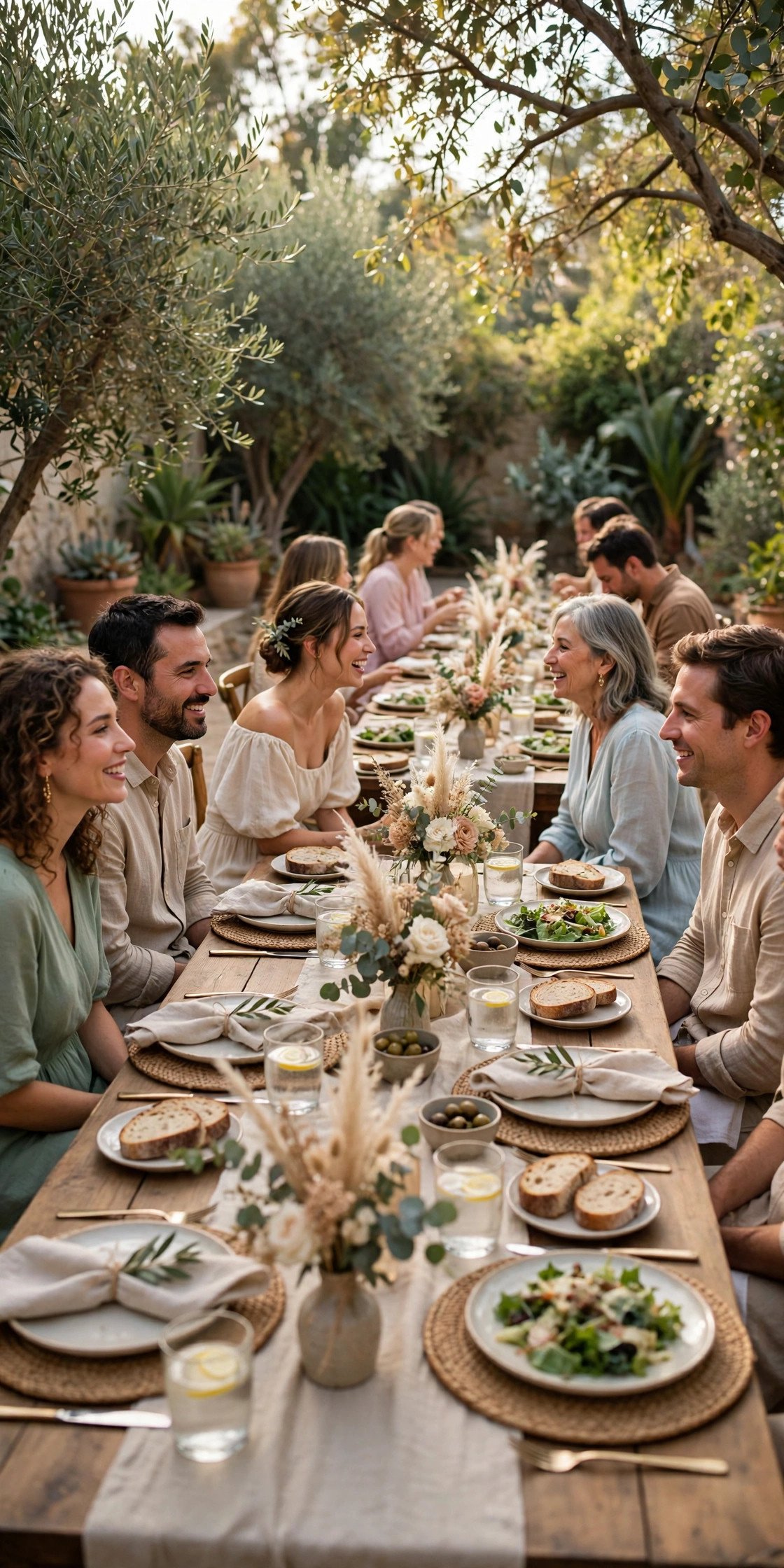
A lunch reception following a late-morning ceremony runs 3 to 4 hours, led by the meal itself: courses arriving slowly, toasts between them, perhaps a short dance or none at all. It suits restaurant venues and smaller guest lists beautifully.
Full Evening Reception: 5 to 6 Hours
 📌 Save
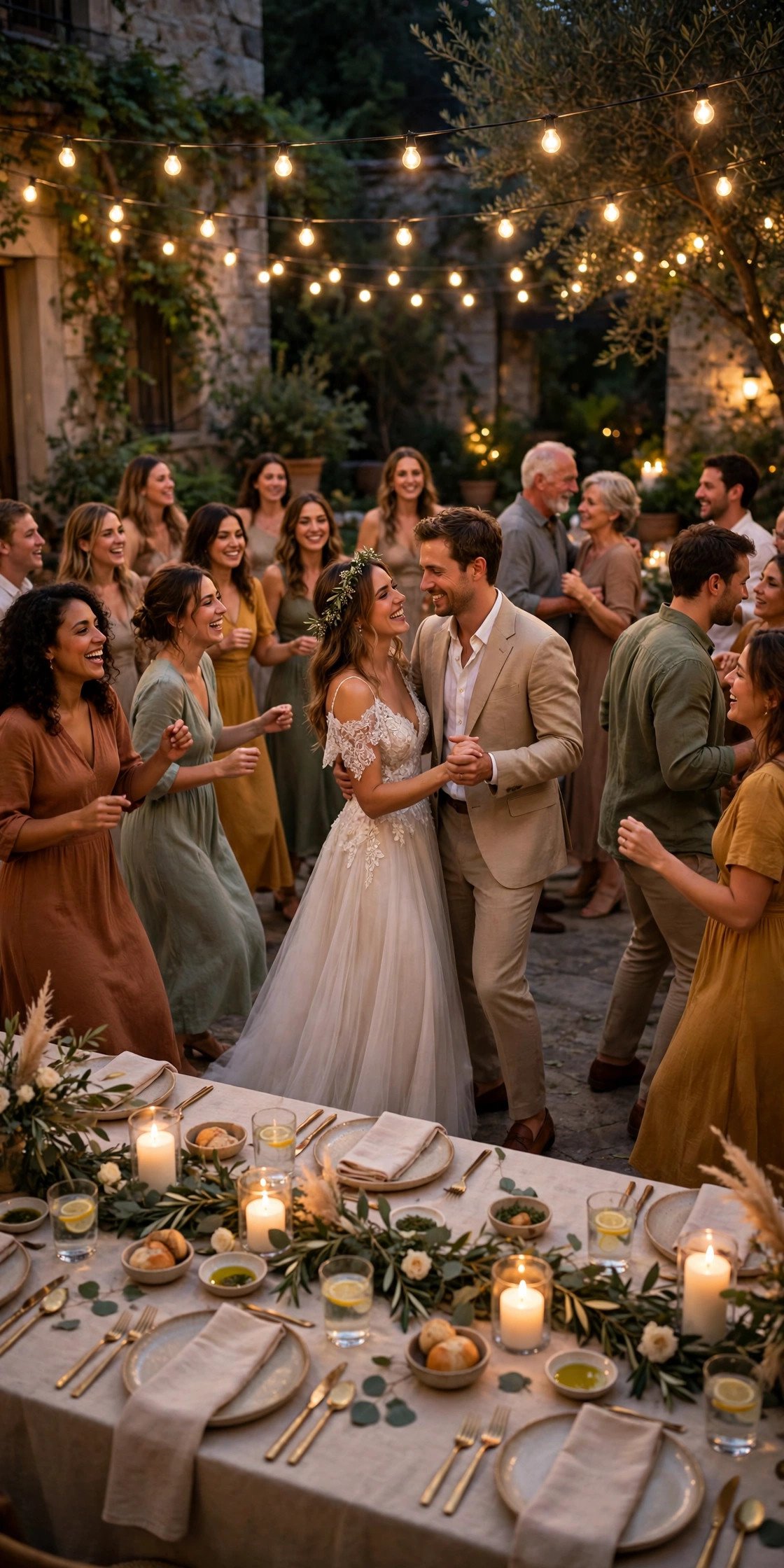
A full evening reception — ceremony at four or five, reception to eleven or midnight — totals 5 to 6 hours, with a dance block stretching toward 3.5 hours. It works when the crowd is young, the venue allows the hours and late-night food is planned to fuel the back half.
Micro-Wedding Reception: 2 to 3 Hours
 📌 Save
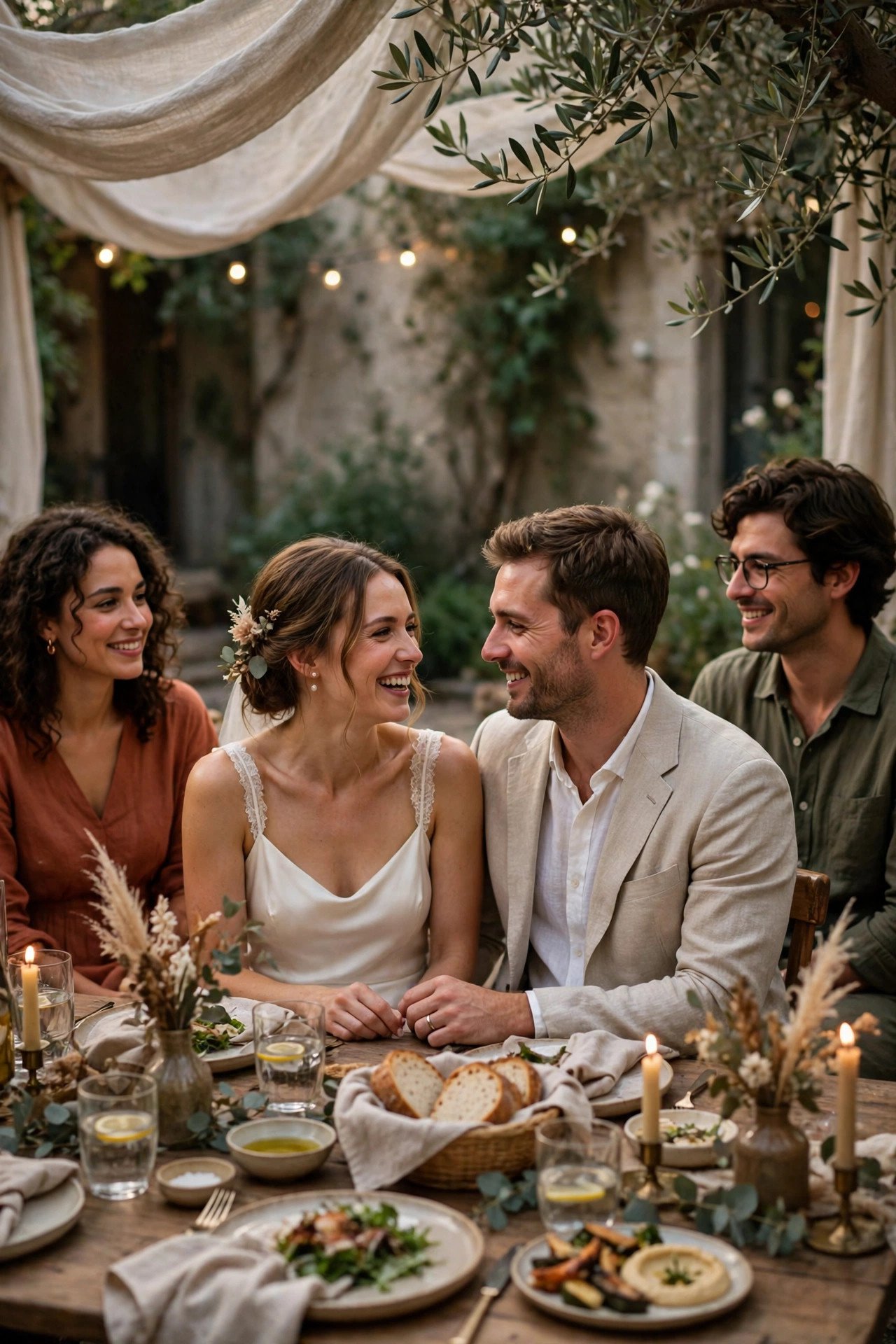
With 20 guests or fewer, the reception is essentially a wonderful dinner party of 2 to 3 hours: one long table, courses unhurried, toasts conversational, perhaps a first dance in the middle of the room. Programs and MC announcements shrink away entirely — and nobody misses them.
Cultural Receptions That Run Longer: 6 Hours or More
 📌 Save
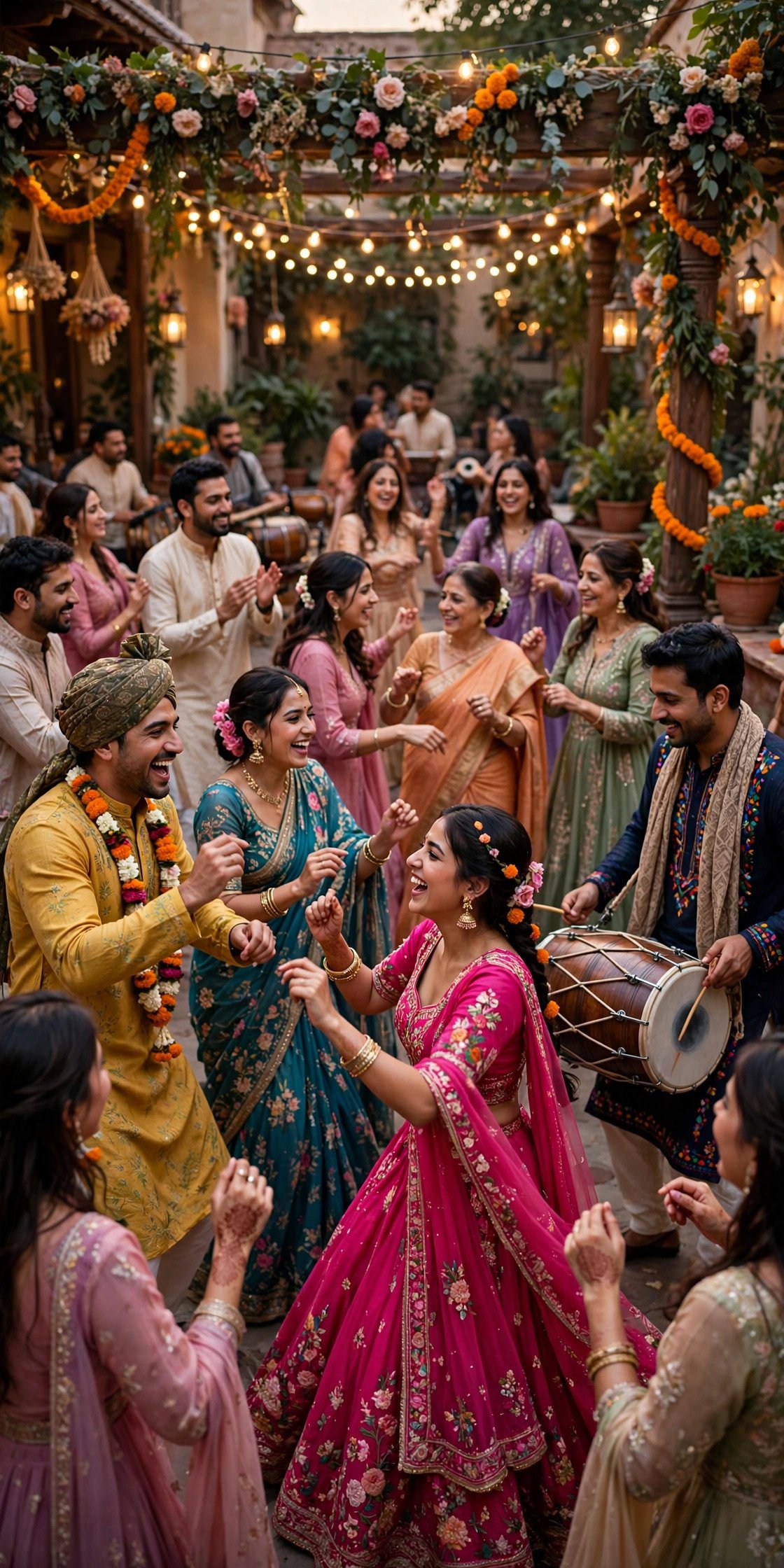
Many cultural celebration formats are designed to run 6 hours or more: multiple entrances, costume changes, family performances, tea ceremonies, money dances and feasting in waves. These lengths work because the program keeps renewing itself — new segments arrive before energy can dip.
The Venue Window Behind It All: Typically 8 to 12 Hours
 📌 Save
Behind the party sits the rental window: venues commonly give 8 to 12 hours of total access, inside which setup (3 to 5 hours), the event and cleanup (1 to 2 hours) must all fit. A 5-hour reception inside a 10-hour window is comfortable; inside an 8-hour window it demands fast setup and same-night load-out.
How Curfews and Noise Rules Shorten the Night
 📌 Save
Many venues — especially outdoor, residential and historic ones — enforce music curfews, often around 10 or 11 PM, and some require amplified sound to move indoors or stop entirely. Your send-off should land 15 minutes before the hard cutoff, with the last dance before that.
The Room Flip During the Hour: 30 to 60 Minutes
 📌 Save
When one room hosts both ceremony and reception, the flip — chairs out, tables in, settings laid — takes a practiced crew 30 to 60 minutes, which is exactly what the refreshment hour must cover. Understaffed flips are the commonest cause of the 90-minute ‘hour’ guests grumble about.
What Makes a Reception Feel Too Long
 📌 Save
Receptions feel long when segments stall: a refreshment hour without enough food, toasts stacked for 45 minutes, a dance floor that opens then empties for the bouquet toss, long queues at a single drink station. Guests rarely clock-watch a well-paced six hours — but they feel every unpaced ten minutes.
What Makes a Reception Feel Too Short
 📌 Save
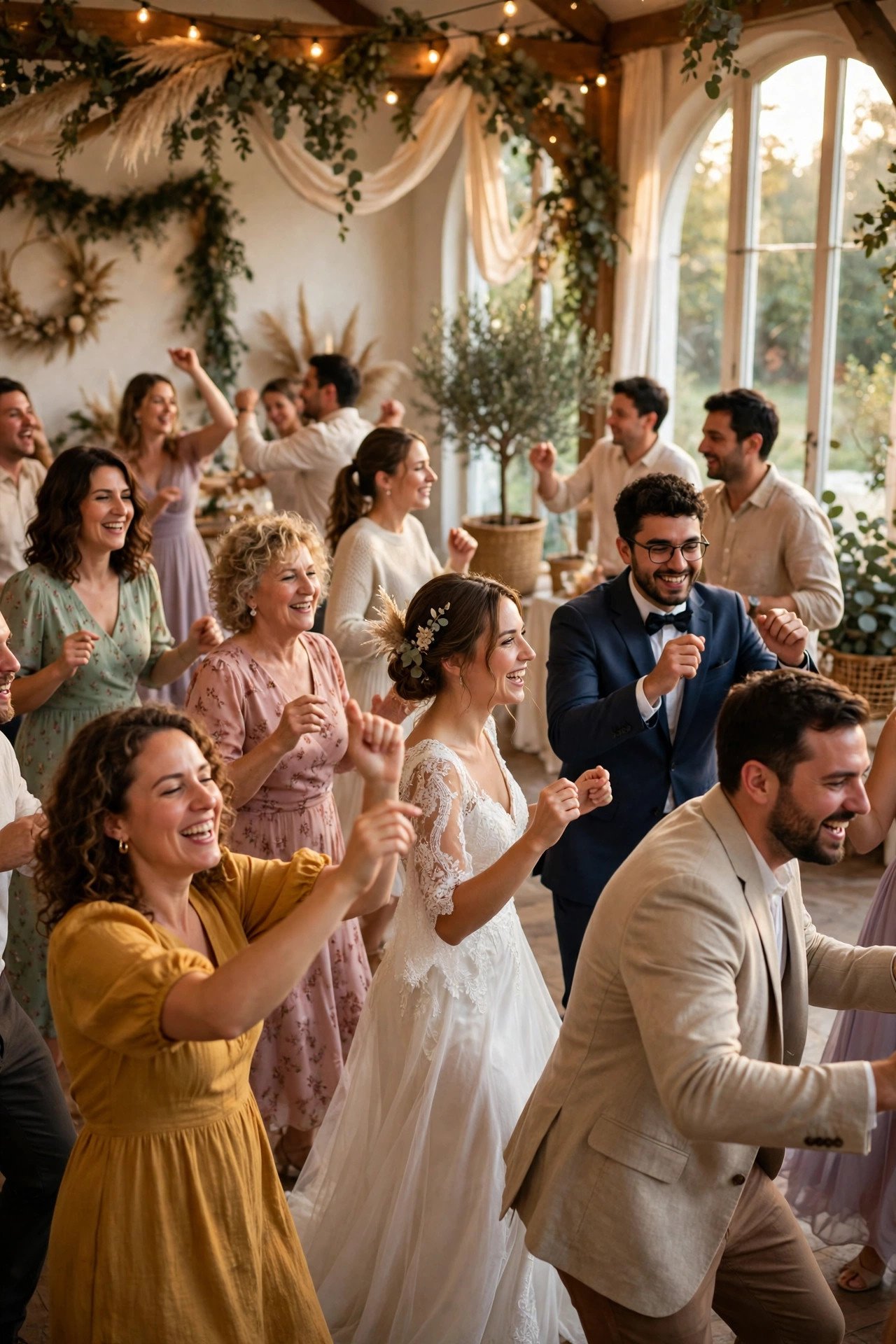
Receptions feel short when the fixed segments expand and the joyful ones shrink: a 90-minute photo session, a two-hour dinner, and suddenly dancing gets 45 minutes and the send-off arrives mid-song. Protect the dance block the way you protect the ceremony start — it is the memory guests take home.
How to Pace the Night So It Never Drags
 📌 Save
Good pacing alternates states every 20 to 40 minutes: seated eating, standing mingling, watching a moment, joining the floor. No single state — not even dancing — should run unbroken for over an hour, and every transition should be announced so guests move with the night instead of wondering what is happening.
Reception Length by Guest Count
 📌 Save
Guest count quietly stretches everything: seating 200 guests takes twice as long as 80, buffet lines and drink queues grow, and group moments need bigger gathers. As a rough guide, add about 30 minutes to your reception plan for every 100 guests beyond the first hundred — mostly inside dinner and transitions.
Building Your Reception Timeline Backward From the End
 📌 Save
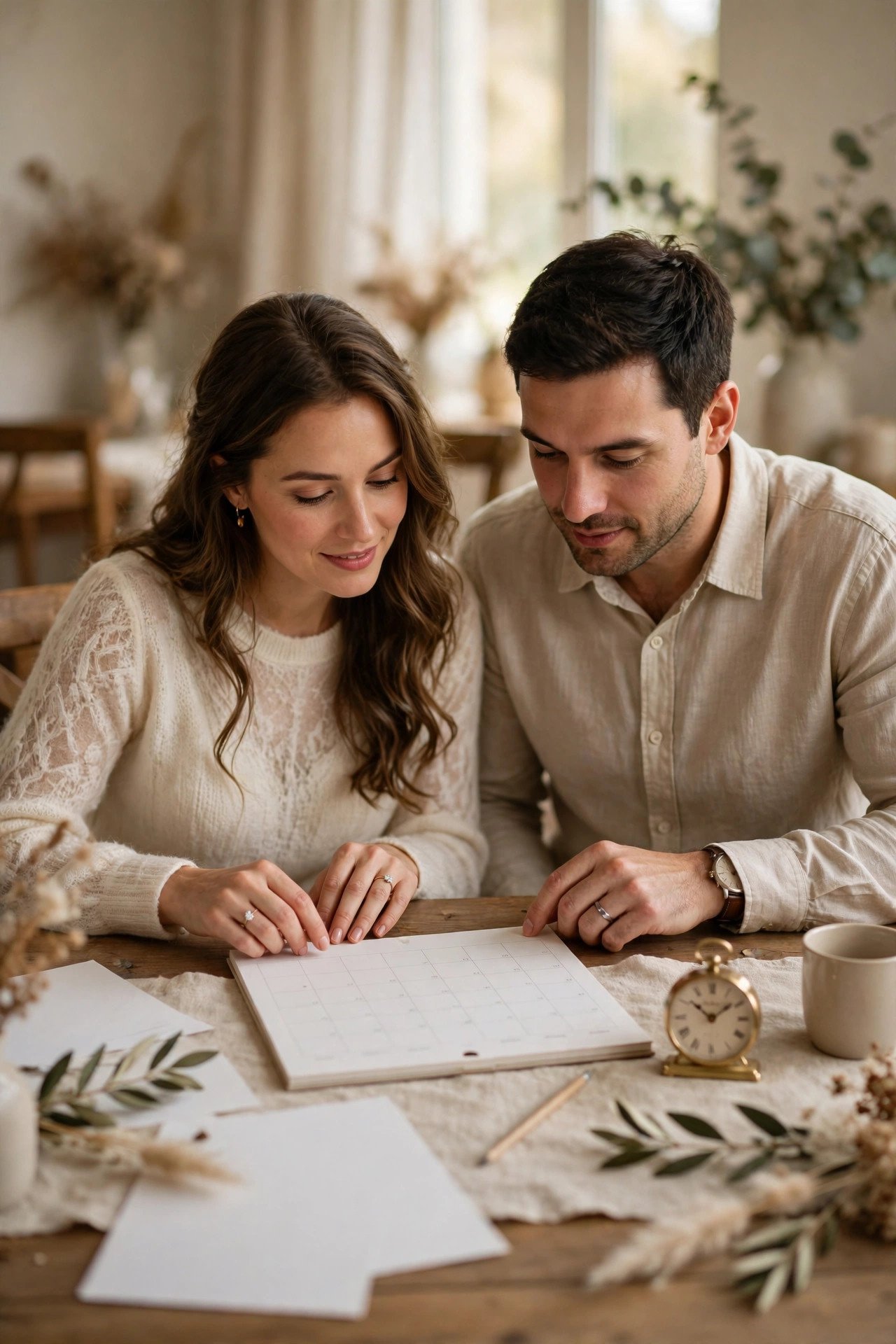
Build the reception from its fixed point — the venue’s end or curfew time — subtracting the send-off, the dance block, cake, dinner and toasts in the ranges above, until the refreshment hour lands against your ceremony’s end. If the maths does not meet in the middle, adjust a segment now, on paper, instead of on the night.
How Long Is a Wedding Reception? FAQs
How long is the average wedding reception?+
Most receptions run 4 to 5 hours, from the refreshment hour through dinner, toasts and cake to 2 to 3 hours of dancing and the send-off. Brunch and lunch formats are shorter at about 2.5 to 4 hours, and full evening or multi-stage cultural celebrations often run 6 hours or more.
How long should the hour between the ceremony and dinner be?+
Plan 45 to 60 minutes. That covers the couple’s remaining photos comfortably when most portraits happen before the ceremony. If a room flip or a large photo list stretches it toward 90 minutes, feed guests generously with real food stations, seating and shade so the hour feels hosted, not waited out.
Is a 4-hour reception long enough?+
Yes, for most weddings — a 4-hour reception fits a 45-minute refreshment hour, an hour of dinner with toasts, cake, and close to two hours of dancing. It feels complete when segments are paced tightly; it only feels short if photos or dinner expand and quietly eat the dance block.
What time should an evening reception end?+
Most evening receptions end between 10 PM and midnight, shaped by venue curfews and local noise rules — many venues require amplified music off by 10 or 11 PM. Plan the send-off about 15 minutes before your hard cutoff so the night ends on your terms.
How much of the reception is dancing?+
In a classic 4-to-5-hour reception, open dancing takes about 2 to 3 hours — roughly half the night. Brunch receptions may have little or no formal dance block, while full evening formats stretch dancing toward 3.5 hours with late-night snacks to fuel it.
Key Takeaways
- Most receptions: 4 to 5 hours; brunch: 2.5 to 3.5; full evening: 5 to 6.
- Dinner takes 60 to 90 minutes and toasts 15 to 25 — count them before dancing.
- Open dancing deserves 2 to 3 protected hours; it is the memory guests keep.
- Venue windows and music curfews, not wishes, fix the end of the night.
- Build the timeline backward from the end time and the pacing designs itself.
Final Thoughts
A reception’s length is just arithmetic; its pacing is the art. Size each segment honestly, protect the dancing, respect the curfew, and your 4 or 5 or 6 hours will feel exactly as long as a great party should — over too soon, in the best possible way.