
How to Get Married in Another State (2027)
By zainzari • Published October 23, 2026 • Updated October 23, 2026
 📌 Save
Yes, you can legally marry in a US state you do not live in: in most states there is no residency requirement, and you simply apply for a marriage license in the state (usually the county) where the ceremony will happen. But the details — fees, waiting periods, validity windows, witness and officiant rules — vary by state, so always check the requirements with the local county clerk’s office where you will marry before booking anything. A marriage validly performed in one US state is generally recognized in all the others.
Dream venue across the state line, a hometown wedding from three states away, an elopement in the mountains — marrying outside your home state is common, legal and usually straightforward. The one rule that matters is that the license comes from the place of the ceremony, and the fine print is local.
This guide gives the general steps and the typical ranges for fees, waiting periods and rules. It is general information for US readers (with notes for UK and Canadian readers marrying across borders), not legal advice — your county clerk’s office is always the final word.
At a Glance: Step, What to Know & What to Watch Out For
| # | Step / Check | What to Know | Watch Out For |
|---|---|---|---|
| 1 | Start With the County Clerk Where You Will Marry | Your first research stop | Rules are set locally |
| 2 | Most States Have No Residency Requirement | Non-residents can usually apply | A few places differ — verify |
| 3 | Know the License Validity Window | Typically 30–90 days | Ceremony must fall inside it |
| 4 | Build In the Waiting Period | Typically 0–3 days | Some states have none at all |
| 5 | Gather the ID Documents You Will Usually Need | Photo ID + birth details typically | Both partners usually appear |
| 6 | Budget the License Fee | Typically $30–$100 | Some counties add small extras |
| 7 | Ask About Blood Tests — Rare Today | Usually not required | A historical rule, mostly gone |
| 8 | Confirm the Witness Rules | Typically 1–2 witnesses | Some states need none |
| 9 | Check Your Officiant Is Authorized There | Rules vary by state | Judges, clergy, ordained ministers |
| 10 | Online-Ordained Officiants: Verify County Acceptance | Accepted in most places | A few counties say no |
| 11 | Self-Uniting Licenses Exist — in a Few Places Only | Rare & specific | Ask the clerk directly |
| 12 | Previously Married? Bring the Paperwork | Divorce decree usually required | Dates matter |
| 13 | Under 18? Expect Extra Rules | Consent & court approval typical | Many states set 18 flat |
| 14 | Marrying in a State Where Neither of You Lives | Perfectly common | Destination rules still apply |
| 15 | Destination Wedding in the US: License Where the Ceremony Happens | Ceremony location = license location | No ‘bring your own license’ |
| 16 | Return the Signed License on Time | Typically within days to a month | Officiant usually files it |
| 17 | Order Certified Copies of the Marriage Certificate | Typically a small fee each | Order several at once |
| 18 | Your Marriage Is Recognized Back Home | Valid where performed = valid at home | The general US rule |
| 19 | Name Change: It Starts After the Certificate | Certificate first, agencies after | Not automatic |
| 20 | Marrying Across the US–Canada Line | Each country’s rules apply | License in the ceremony country |
| 21 | Marrying Across the US–UK Line | Notice periods apply in the UK | Register office is the source |
| 22 | The Common-Law Myth and Other Stories | Myths debunked | Ceremonies do not self-legalize |
| 23 | Military and Deployed Couples: Ask About Accommodations | Expedited & proxy options in places | Entirely jurisdiction-specific |
| 24 | The Legal Ceremony and the Big Celebration Can Be Separate | A valid strategy | License where the legal part happens |
| 25 | Your Out-of-State Marriage Checklist, Recapped | The whole guide in one card | Clerk, timing, documents, filing |
Everything here is general guidance. Marriage law is set state by state (and country by country), and offices update their rules — verify every detail that matters with the clerk or registrar where your ceremony will take place.
Start With the County Clerk Where You Will Marry
 📌 Save
Every out-of-state wedding starts at the same desk: the county clerk’s office (in some places a probate court or city clerk) in the county where the ceremony will be held. Their website or a short phone call gives you the current requirements, fees, office hours and whether an appointment is needed — the authoritative version, not a blog’s summary.
Most States Have No Residency Requirement
 📌 Save
The good news first: the large majority of US states do not require you to live in the state — or even in the country — to get a marriage license there. Tourism and destination weddings depend on it. A small number of jurisdictions have extra conditions, which is exactly why the clerk check comes first.
Know the License Validity Window
 📌 Save
A marriage license is not open-ended: it is typically valid for somewhere between 30 and 90 days depending on the state, and the ceremony must happen within that window. Apply too late and a waiting period bites; too early and the license lapses. Count backward from the wedding date and mark the application day on your calendar.
Build In the Waiting Period
 📌 Save
Many states have no waiting period at all — you can license and marry the same day — while others typically require a wait of 24 hours to 3 days, with occasional exceptions or waivers. For a destination wedding this is the detail that sets your arrival date: fly in early enough that the waiting period is never the day’s drama.
Gather the ID Documents You Will Usually Need
 📌 Save
Typically, both partners apply in person with government photo ID — a driver’s license or passport — and provide details such as birth dates and places and parents’ names; some offices also ask for Social Security numbers for US citizens. Requirements for non-citizens vary. Bring originals, and check the clerk’s list rather than assuming a home-state habit travels.
Budget the License Fee
 📌 Save
Marriage license fees are usually modest — typically somewhere in the $30 to $100 range depending on the state and county, occasionally a little more in popular destination counties, with small extra charges for certified copies. Some offices take cards; a few are cash or check only, which is worth one line in your research notes.
Ask About Blood Tests — Rare Today
 📌 Save
Blood tests were once a standard license requirement, but they have been repealed in nearly every state and are usually not required today. Because ‘nearly’ is doing some work in that sentence, it remains a one-line question for the clerk — a five-second check that closes a very old worry.
Confirm the Witness Rules
 📌 Save
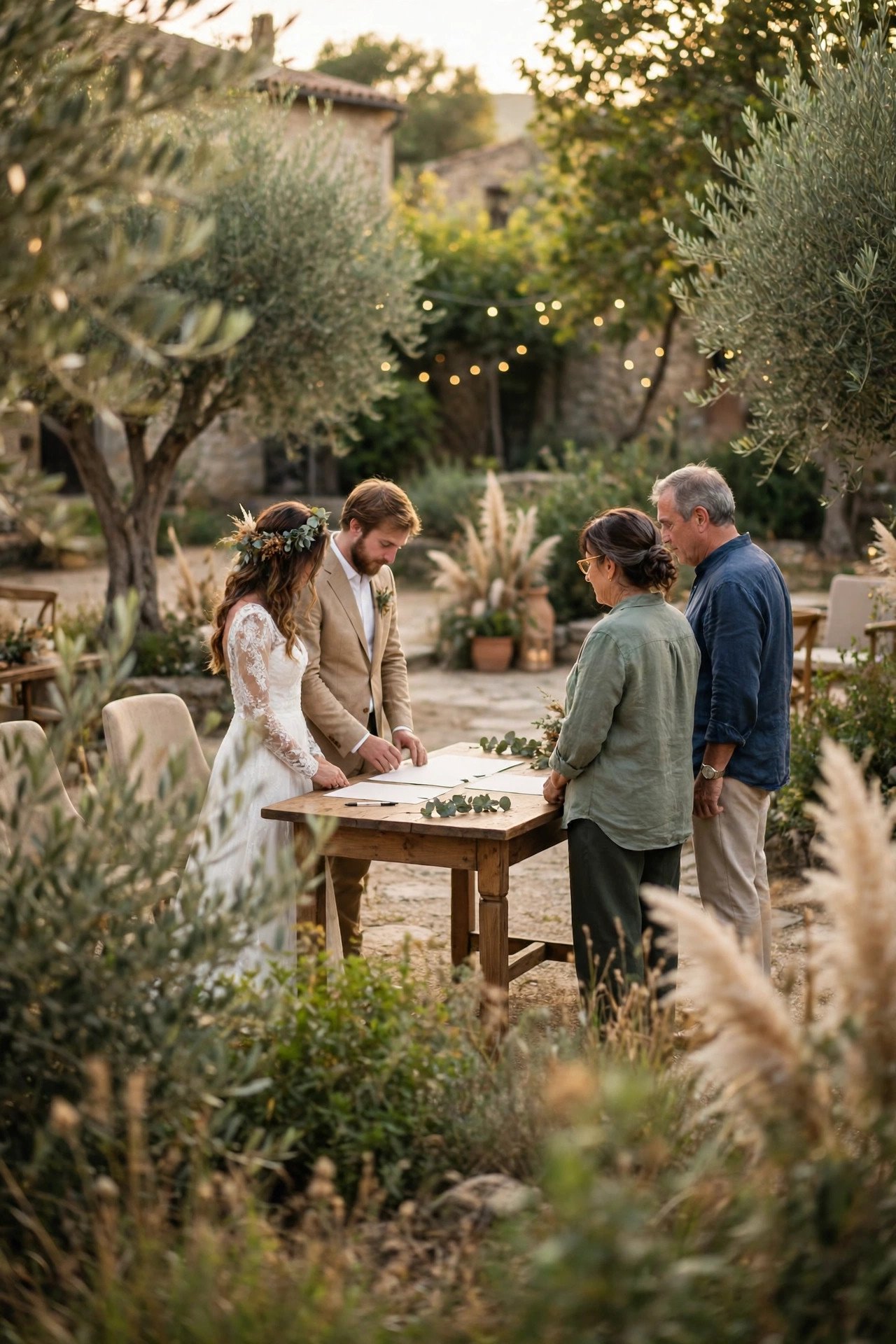
Most states typically require one or two witnesses to be present and to sign the license, and a few require none at all. Witnesses usually need to be adults who were actually present at the ceremony. Decide who yours are in advance — for an elopement, photographers and venue staff step into this role constantly.
Check Your Officiant Is Authorized There
 📌 Save
Who can legally officiate — judges, clerks, clergy, ordained ministers, and in a few places the couple themselves — is set by the marrying state’s law, and an officiant authorized at home is not automatically authorized elsewhere. If your officiant is traveling with you, confirm their standing with the clerk’s office in the ceremony state.
Online-Ordained Officiants: Verify County Acceptance
 📌 Save
Having a friend ordained online is common and widely accepted, but a small number of states or counties restrict or question online ordinations. One call to the clerk where you will marry settles whether your officiant’s credentials will be accepted for your license — make that call before the invitations, not after.
Self-Uniting Licenses Exist — in a Few Places Only
 📌 Save
A few jurisdictions — Pennsylvania is the best-known example, with roots in Quaker tradition, and a small number of others have similar provisions — allow self-uniting licenses where the couple marries without an officiant. This is the exception, never the default: if it appeals to you, the clerk in your chosen county will tell you whether it exists there at all.
Previously Married? Bring the Paperwork
 📌 Save
If either partner was previously married, the prior marriage must be legally final, and the clerk will usually ask for the date of the divorce (or a spouse’s death) and sometimes a certified copy of the divorce decree. A small number of places have a short waiting period after a divorce becomes final — another detail for the clerk checklist.
Under 18? Expect Extra Rules
 📌 Save
Marriage under 18 is restricted almost everywhere: many states now set 18 as a flat minimum, and where exceptions exist they usually involve parental consent and sometimes a judge’s approval. If this applies to you, treat the clerk’s guidance as the plan itself — this is not an area for internet summaries.
Marrying in a State Where Neither of You Lives
 📌 Save
Plenty of couples marry in a state neither calls home — a beloved city, a mountain town, a beach from a first vacation. Legally it changes nothing beyond the usual destination steps: license from that state’s county, its waiting period honored, its officiant rules followed. The logistics, not the law, are what need planning.
Destination Wedding in the US: License Where the Ceremony Happens
 📌 Save
The single most misunderstood rule: a marriage license is issued for use where it is issued — typically within that state, sometimes that county — and you cannot obtain one at home and use it at a destination ceremony elsewhere. The ceremony’s location decides the license’s origin, every time.
Return the Signed License on Time
 📌 Save
After the ceremony, the signed license must be returned to the issuing office to be recorded — typically within a set number of days, often somewhere between a few days and a month depending on the jurisdiction. Usually the officiant files it, but the legal responsibility ultimately sits with the couple, so confirm who is mailing what, and keep proof.
Order Certified Copies of the Marriage Certificate
 📌 Save
Once the marriage is recorded, you can order certified copies of the marriage certificate from the issuing office, usually for a small fee each. Order several at once: name changes, insurance, banking, immigration or passport processes may each want one, and reordering later from another state takes weeks.
Your Marriage Is Recognized Back Home
 📌 Save
Couples often worry they must ‘register’ the marriage at home or marry again — generally, no. A marriage that was validly performed under the laws of the state where it took place is recognized across the United States; there is no home-state re-registration step. Keep your certified certificate copies somewhere safe as your standing proof.
Name Change: It Starts After the Certificate
 📌 Save
Marriage does not automatically change anyone’s name. If either partner wants a new surname, the recorded marriage certificate is the key document, and the change then happens agency by agency — typically Social Security first for US citizens, then driver’s license or state ID, passport, banks and employers. Each office has its own forms and order preferences.
Marrying Across the US–Canada Line
 📌 Save
For a US couple marrying in Canada, licenses are issued by the province or territory (often through municipal offices or appointed issuers), with their own fees, ID rules and validity windows; a marriage legally performed in Canada is generally recognized in the US. Canadian couples marrying in the US follow the US state’s rules in this guide. Either way, check the specific province or state office where the ceremony will happen.
Marrying Across the US–UK Line
 📌 Save
In England and Wales, couples must usually give notice at a register office at least about a month before the ceremony, and non-UK nationals can face additional Home Office referral steps and longer timelines; Scotland and Northern Ireland have their own systems. A marriage legally performed in the UK is generally recognized in the US. US readers planning a UK wedding should start with the register office for the ceremony district — early.
The Common-Law Myth and Other Stories
 📌 Save
Three myths to retire: living together for a set number of years makes you married (common-law marriage exists in only a few states, with strict conditions, and traveling does not create it); a ceremony anywhere counts if it felt official (without a valid license and authorized officiant, it may not); and a license from one state can be used in another (it cannot). Friendly stories are not law — the clerk is.
Military and Deployed Couples: Ask About Accommodations
 📌 Save
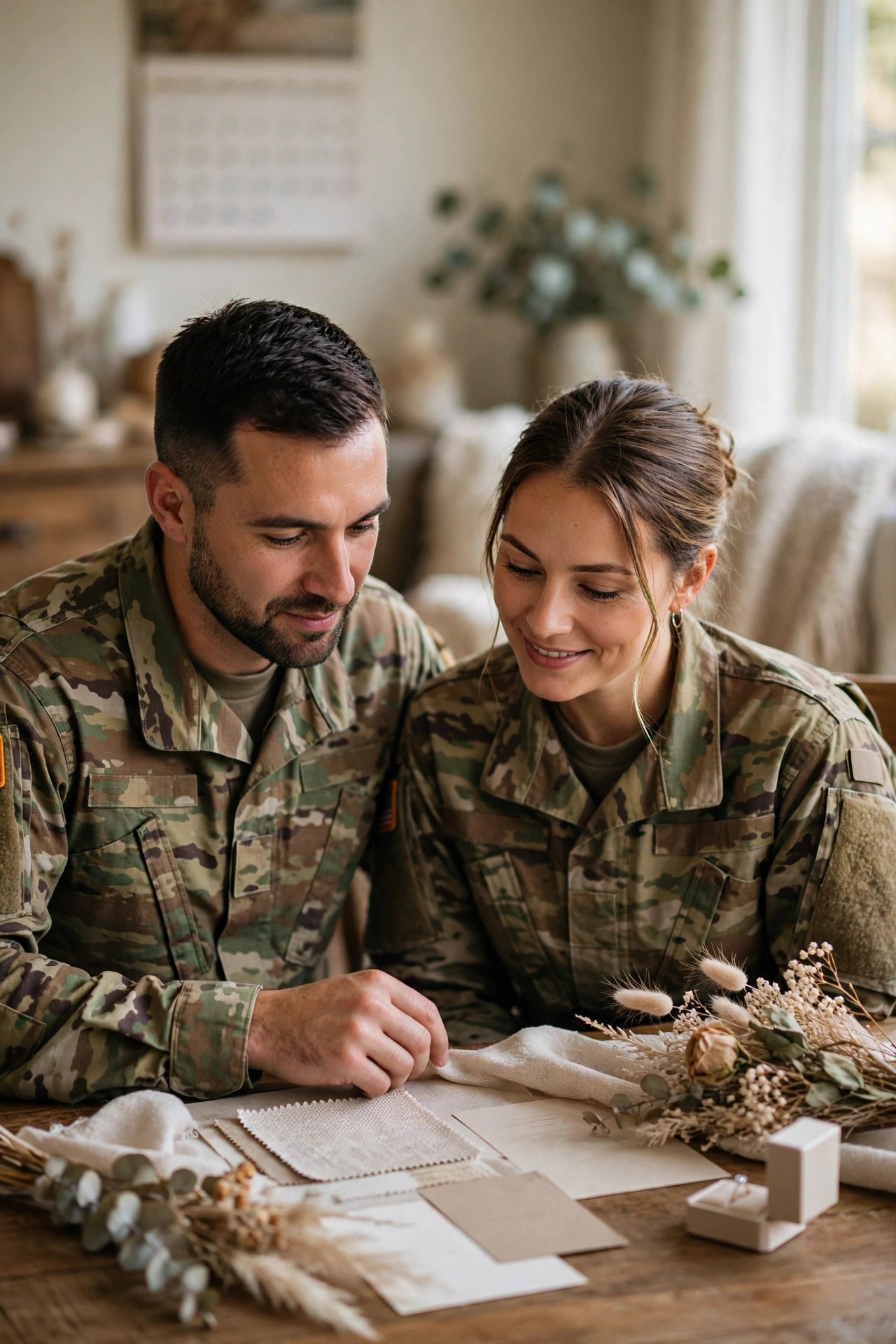
Some states offer accommodations for military couples — waived or shortened waiting periods, expedited processing, and in a very small number of jurisdictions, forms of proxy marriage where one party cannot appear. None of this is uniform, so a deployed timeline should start with the clerk’s office and, where available, the installation legal assistance office.
The Legal Ceremony and the Big Celebration Can Be Separate
 📌 Save
If another state’s rules clash with your date — a waiting period that does not fit, an officiant who cannot qualify — many couples hold a small legal ceremony at home (or wherever the paperwork is easiest) and treat the destination event as the celebration. It is a legitimate, increasingly common plan, as long as nobody pretends the symbolic ceremony is the legal one.
Your Out-of-State Marriage Checklist, Recapped
 📌 Save
The whole process in one breath: call the clerk where you will marry; confirm residency (usually none), the validity window and any waiting period; gather ID and prior-marriage paperwork; budget the fee (typically $30–$100); verify witnesses and your officiant; marry; make sure the signed license is filed on time; order certified copies. Do those, in that order, and the legal side of an out-of-state wedding is genuinely simple.
How to Get Married in Another State FAQs
Do marriage license requirements vary by state?+
Yes — requirements vary by state, and sometimes by county: fees, waiting periods, license validity windows, witness numbers and officiant rules all differ. That is why the golden rule of this guide is to check the local county clerk’s office where you will marry and treat their current requirements as the final word.
Can we get a marriage license in a state we do not live in?+
In most states, yes — the large majority have no residency requirement, so non-residents routinely marry in destination states. A few jurisdictions have extra conditions, so confirm with the clerk’s office in the county of your ceremony before making travel plans around it.
How much does a marriage license usually cost?+
Typically somewhere in the $30 to $100 range, depending on the state and county, with small additional fees for certified copies of the certificate afterward. Payment methods vary by office — some take cards, others cash or check only — so it is worth asking when you call.
Is our out-of-state marriage valid when we get home?+
Generally, yes. A marriage validly performed under the laws of the state (or country) where it took place is recognized across the United States, and there is no need to re-register it or marry again at home. Your certified marriage certificate from the issuing office is your proof.
Do we need a blood test to get married in another state?+
Usually not — blood-test requirements were standard decades ago but have been repealed in nearly every state. Because ‘nearly’ is not ‘everywhere,’ it remains a sensible one-line question for the clerk’s office where you will marry, alongside fees and waiting periods.
Key Takeaways
- Requirements vary by state — the county clerk where you will marry is the final word.
- Most states have no residency rule; the license must come from the ceremony’s location.
- Fees typically run $30–$100; waiting periods usually 0–3 days; validity often 30–90 days.
- Verify your officiant’s authorization in the marrying state, especially online ordinations.
- A valid out-of-state marriage is recognized at home — order several certified copies.
Final Thoughts
Marrying in another state is mostly a paperwork errand wrapped around a celebration — a call to the right clerk, a license in the right window, signatures in the right places. Handle it early with the local rules in hand, and the legal side will be the calmest part of your whole wedding story. This guide is general information only, not legal advice; for your specific situation, your clerk’s office (or a local attorney) is the voice to follow.






One Comment