Indian Wedding Traditions (2027)
By zainzari • Published October 23, 2026 • Updated October 23, 2026
 📌 Save
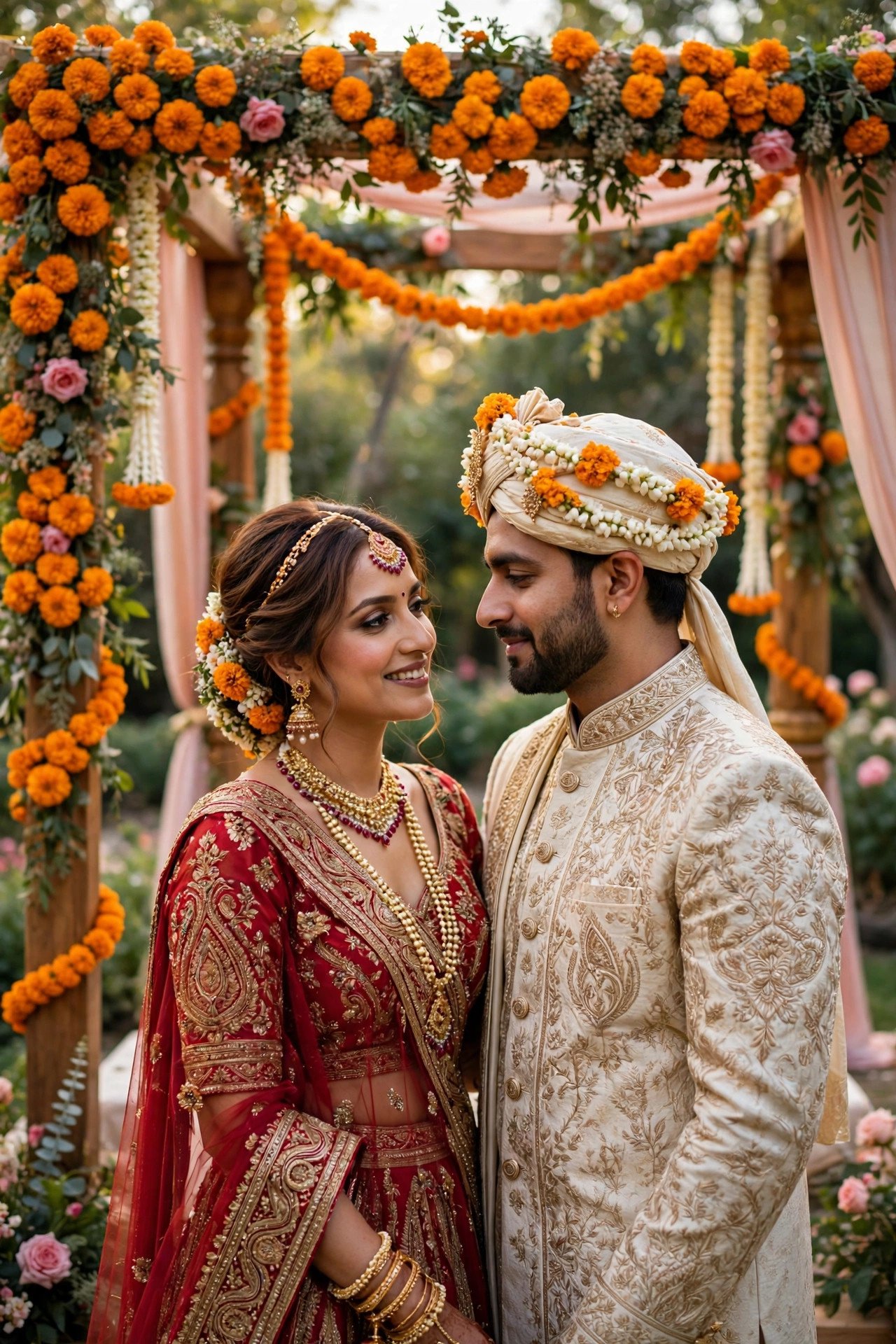
Indian wedding traditions are not one ceremony but a festival of events — often spanning several days — that can include a mehndi party, a haldi turmeric blessing, a sangeet of family performances, the groom’s joyful baraat procession, and a sacred ceremony built around fire, garlands, and seven steps of vows. Because India spans many religions, regions, and languages, every family shapes these traditions differently; this guide explains the most widely shared customs, what they mean, and how guests and couples blending cultures can take part respectfully.
A note before the celebration begins: there is no single Indian wedding. India is home to Hindu, Muslim, Sikh, Jain, Christian, Buddhist, and Parsi communities, dozens of states, and hundreds of languages — and weddings reflect all of it. A Punjabi Hindu celebration, a Tamil ceremony, a Bengali wedding, and a Goan Catholic one share a spirit of color, family, and feast while differing in rituals, outfits, and even the direction the couple faces.
This guide focuses on the traditions guests most often encounter — many of them rooted in Hindu customs, which shape the majority of Indian weddings — and flags where practice varies by region, faith, and family. Whether you are attending your first Indian wedding, marrying into an Indian family, or planning a fusion celebration, the through-line is simple: these rituals are about family bonds as much as the couple, and joining in warmly is always the right instinct.
At a Glance: The Celebrations at a Glance
| Moment | What Happens | Who Takes Part |
|---|---|---|
| Mehndi | Henna art applied amid music and snacks | Bride, female relatives, friends |
| Haldi | Turmeric paste blessing for glow and protection | Close family and friends |
| Sangeet | An evening of family dance performances | Both families, all guests |
| Baraat | The groom’s dancing procession to the venue | Groom’s family and friends |
| Milni | Formal welcome and garlanding of the families | Both families’ elders |
| Jai mala | The couple exchange flower garlands | The couple, cheered by guests |
| Kanyadaan | Parents give their daughter’s hand in marriage | Bride’s parents and the couple |
| Saptapadi | Seven steps around the sacred fire, with vows | The couple, guided by the priest |
| Vidaai | The bride’s emotional farewell to her family | Bride and her family |
Order and naming vary by region and faith — treat this as a map of the most common celebrations, and let the couple’s invitation and family be your final guide.
Start With Respect: Many Religions, Many Regions
 📌 Save
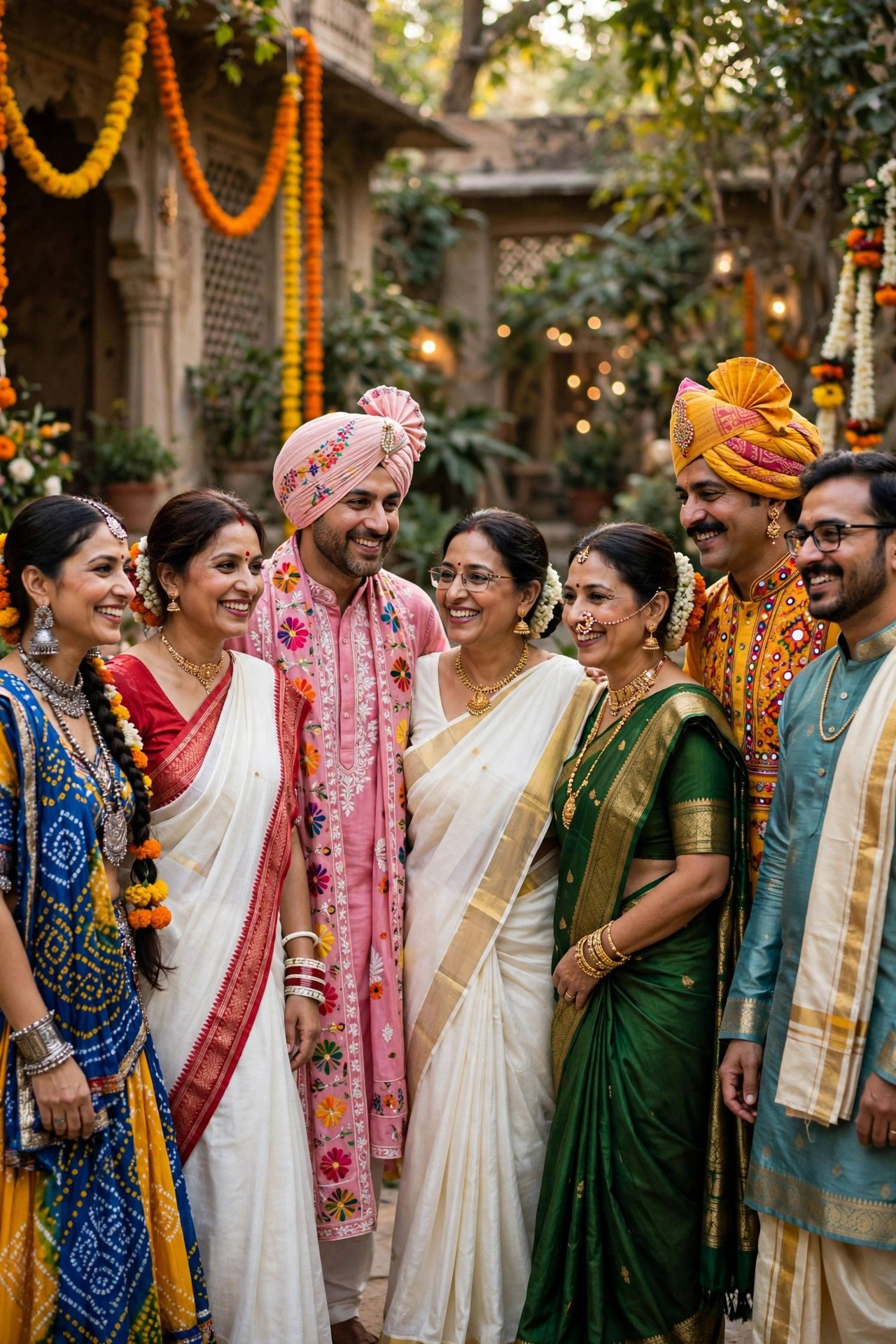
The most important Indian wedding tradition is understanding that there are thousands of them. Customs differ between Hindu, Sikh, Muslim, Jain, and Christian families, between north and south India, and between one family’s practice and the next. Everything in this guide is a widely shared pattern, never a rule — the couple and their families are always the authority on their own celebration.
The Multi-Day Celebration
 📌 Save
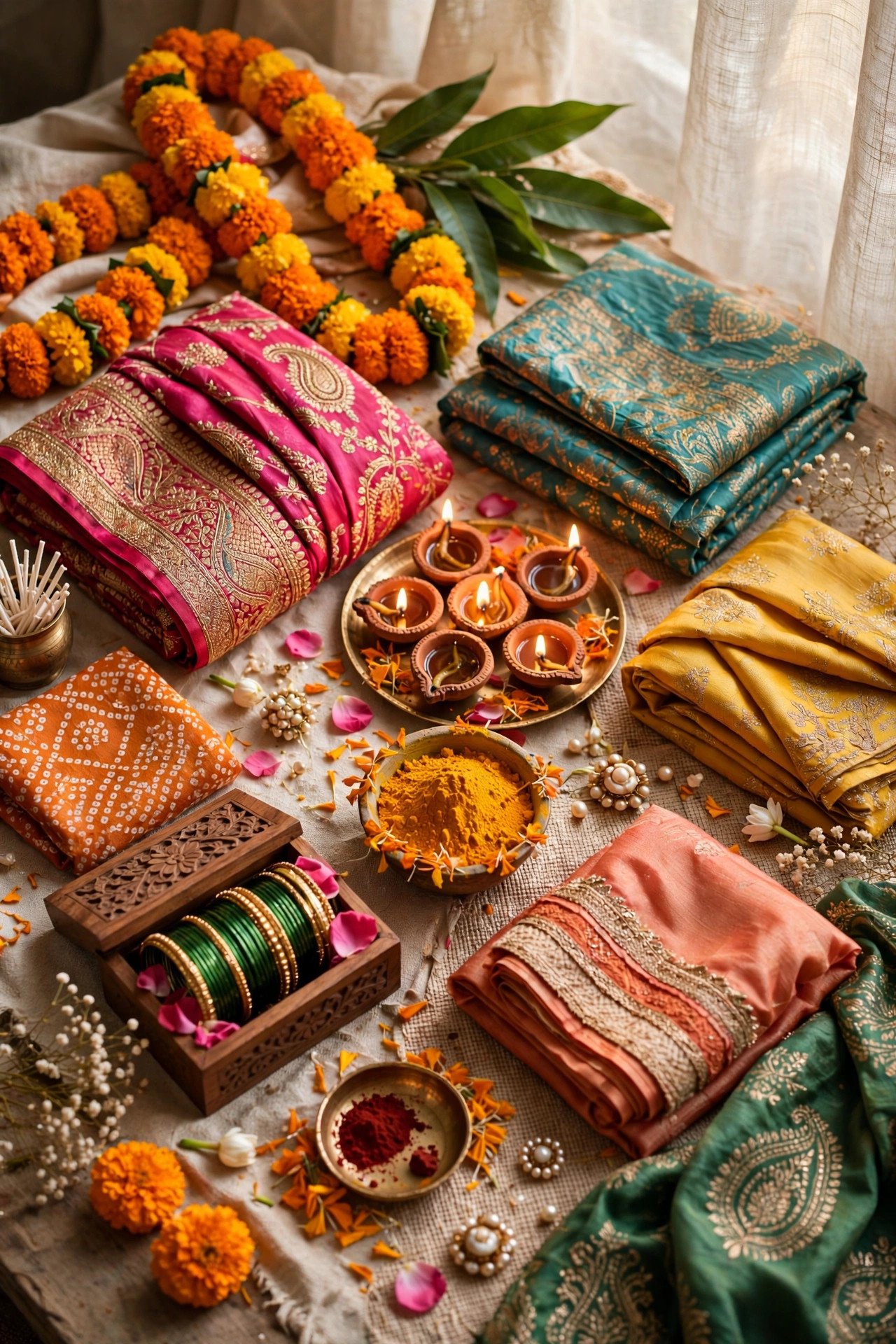
Where many Western weddings center on a single day, Indian celebrations typically unfold across several days of distinct events — henna, turmeric, music, ceremony, reception — each with its own outfit, mood, and guest list. The length is the point: marriage joins two families, and families take time to become one.
Mehndi: Henna Art and Music
 📌 Save
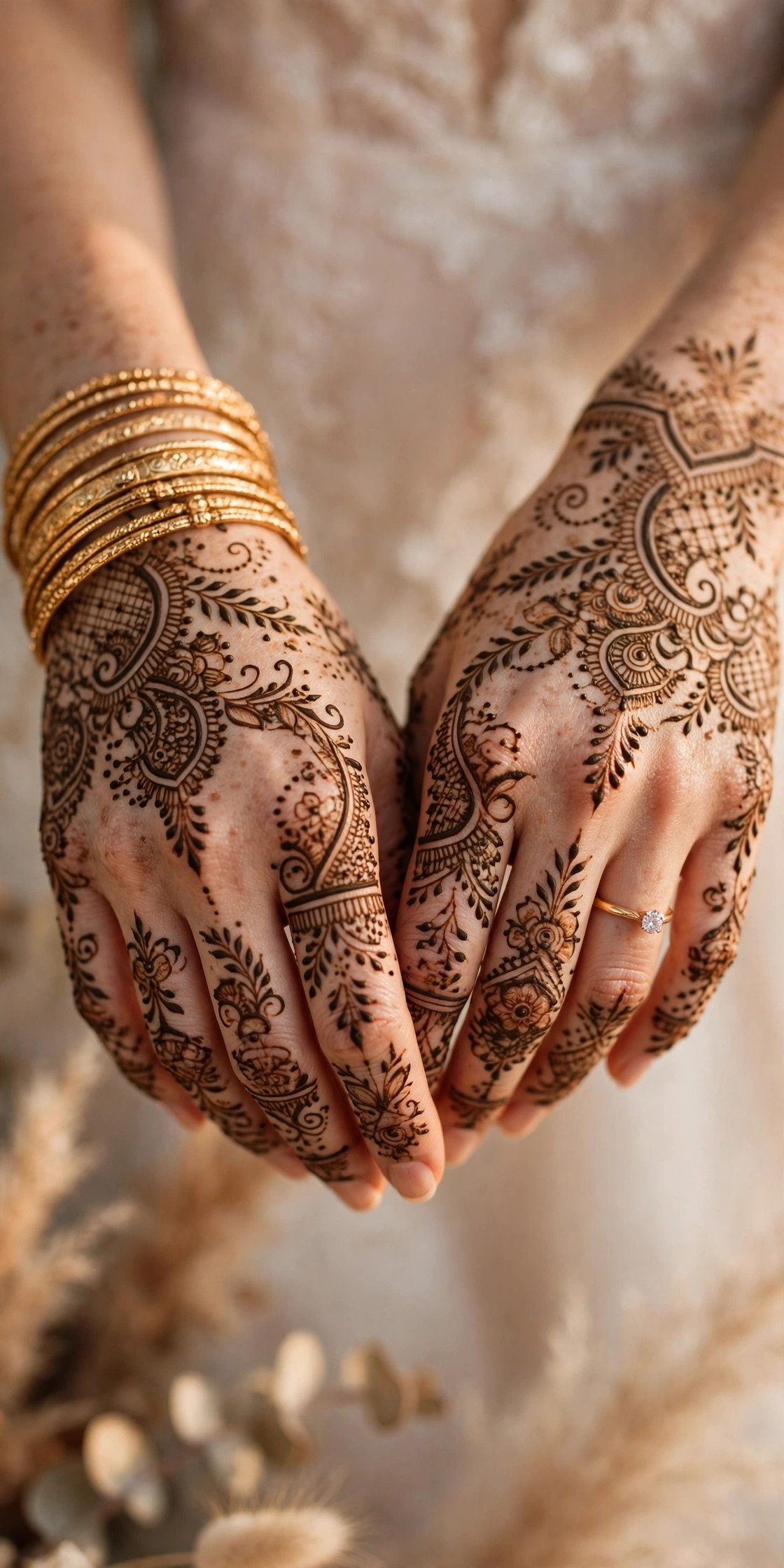
At the mehndi, professional artists paint intricate henna designs on the bride’s hands and feet — sometimes hiding the groom’s initials within the pattern — while female relatives and friends get simpler designs, and everyone enjoys music and snacks. The deep reddish stain that develops over the following day or two is traditionally said to reflect the love the bride will receive in her new home.
Haldi: The Turmeric Ceremony
 📌 Save
During the haldi, family and close friends apply a paste of turmeric, sandalwood, and rosewater to the bride’s and groom’s skin — traditionally at their respective homes. Turmeric is associated with blessing, protection, and a pre-wedding glow, and the ceremony quickly turns playful as paste ends up on everyone’s faces, clothes, and occasionally the walls.
Sangeet: A Night of Family Performances
 📌 Save
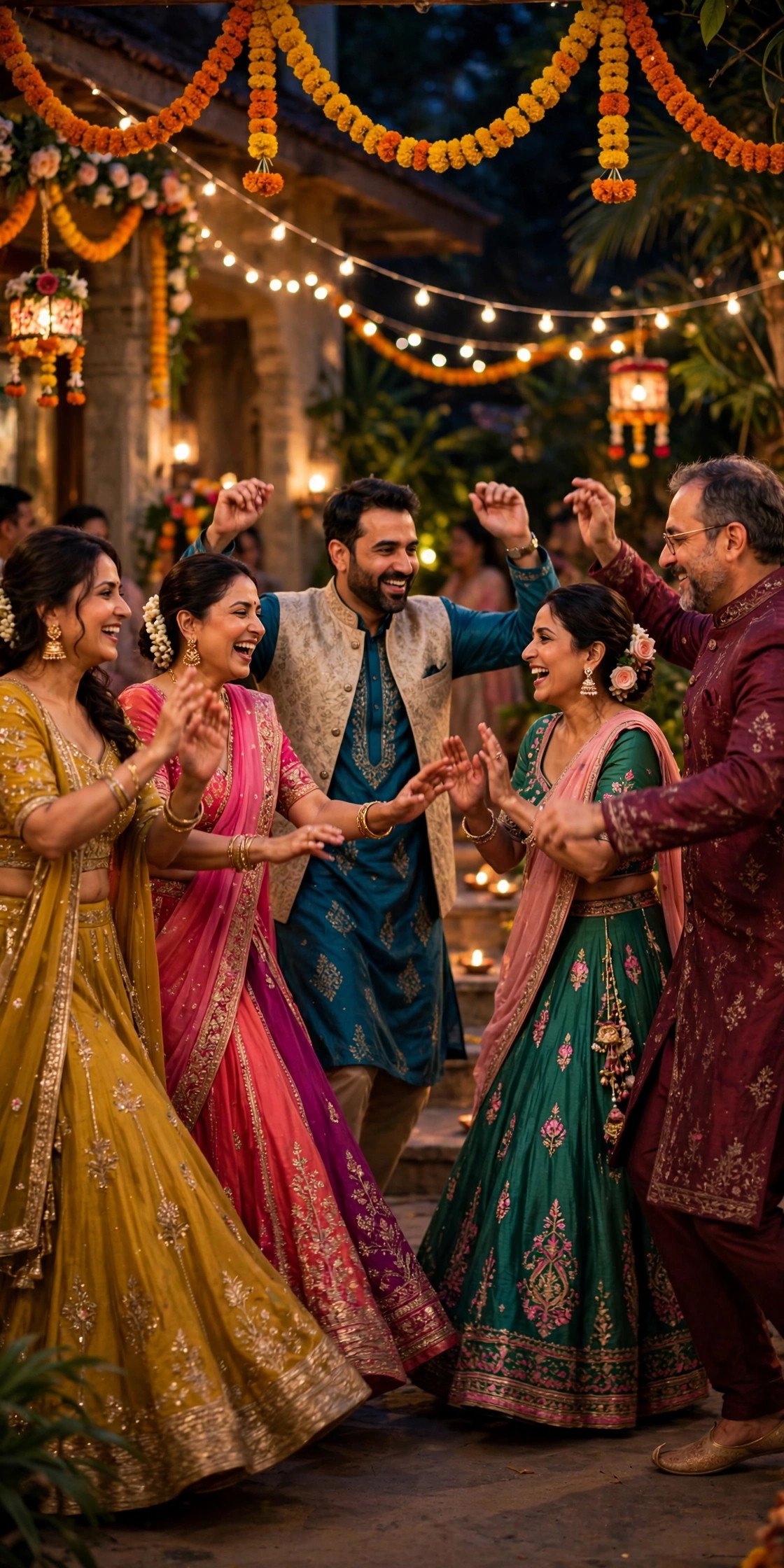
The sangeet is an evening of music and dance performances by the two families — choreographed group numbers, heartfelt solos, playful skits retelling the couple’s story, and sometimes a friendly dance-off between sides. What was once a mainly northern tradition has become a highlight across India and the diaspora, and rehearsals are half the bonding.
The Baraat: The Groom’s Joyful Procession
 📌 Save
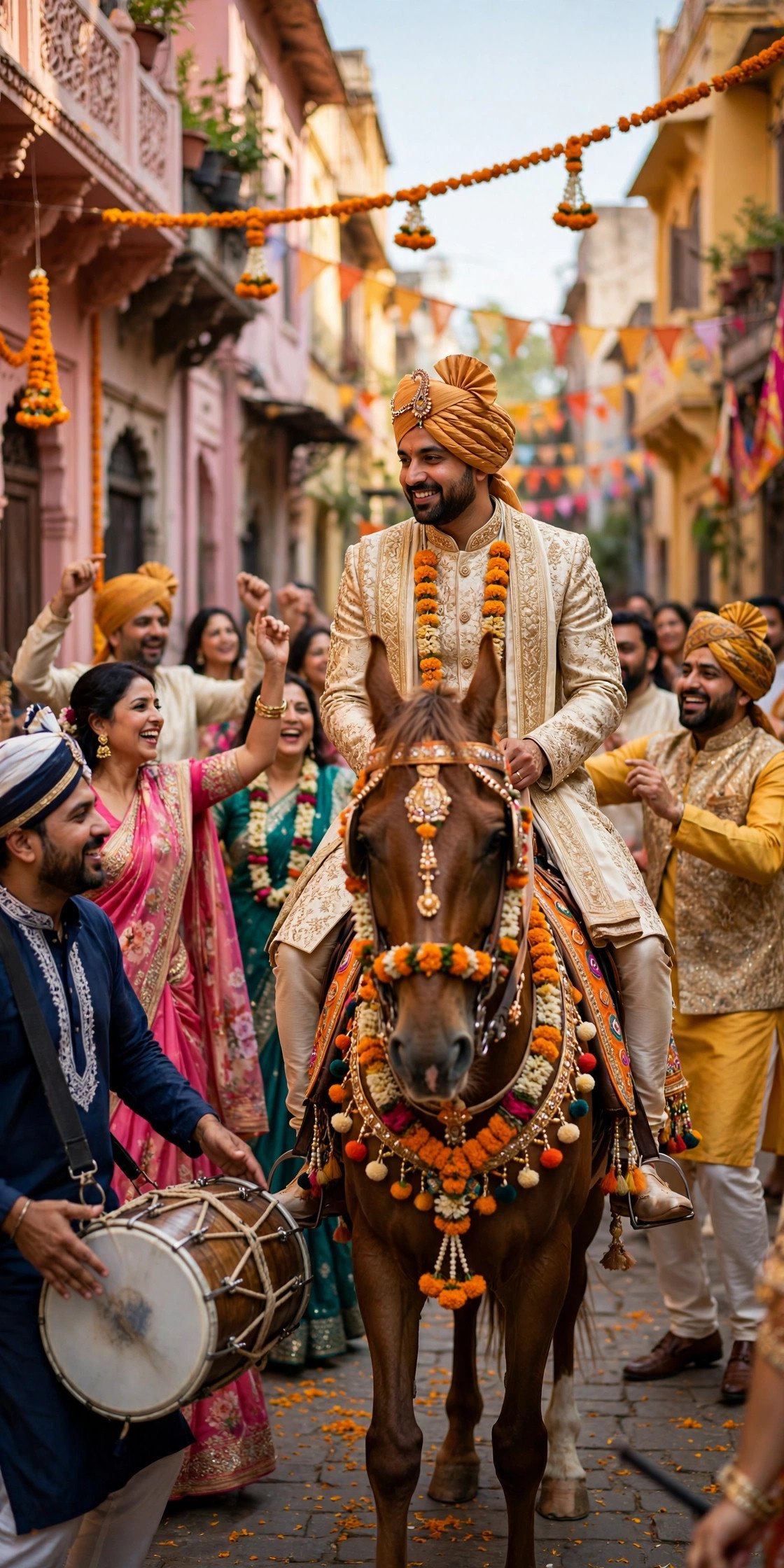
The baraat is the groom’s procession to the ceremony venue, traditionally arriving on a decorated horse or in a vintage car, surrounded by his family and friends dancing to dhol drums and music. It is loud, joyful, and deliberately slow — the dancing is the destination. At the venue, the bride’s family waits to welcome the entire procession.
Milni: When the Two Families Meet
 📌 Save
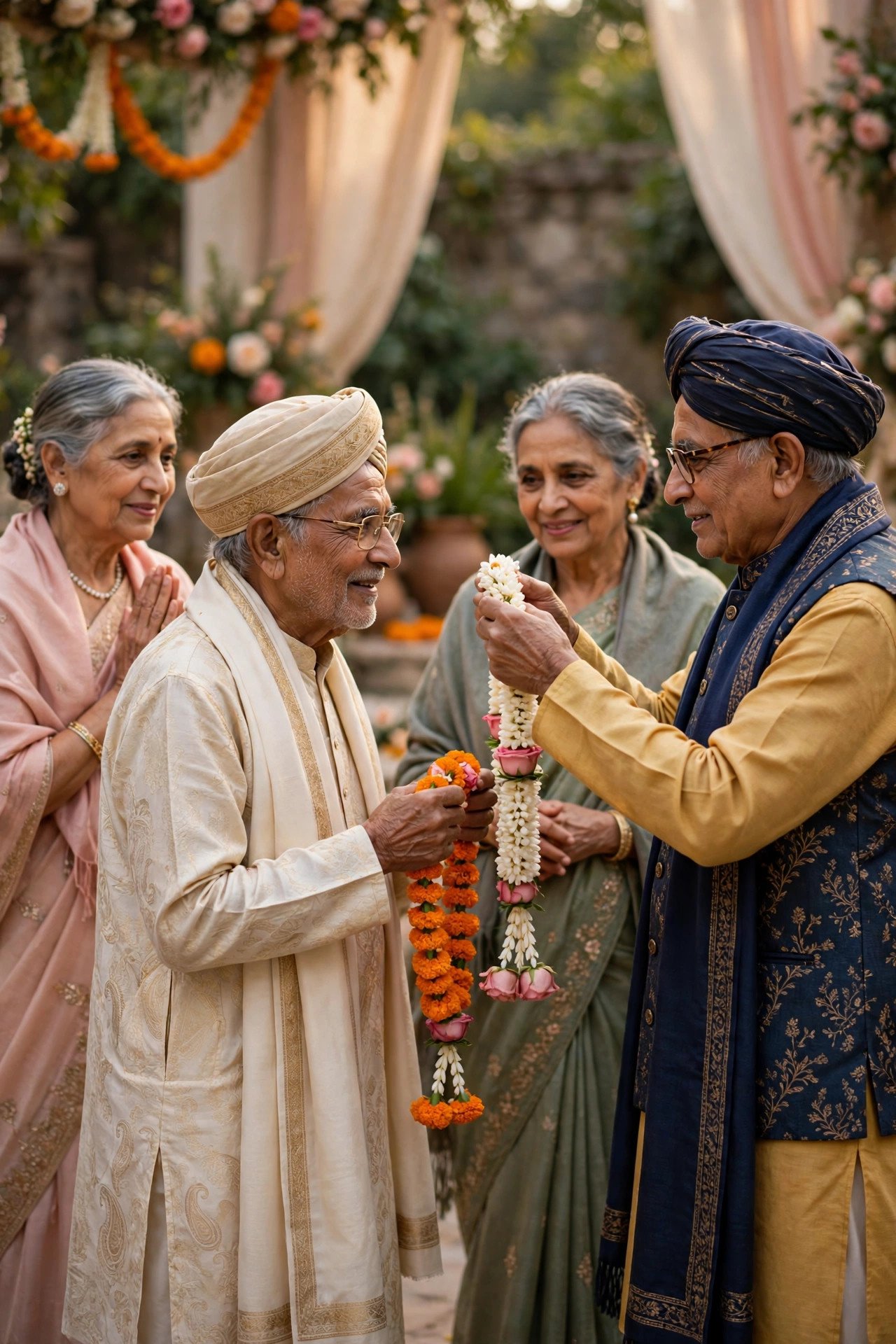
On the baraat’s arrival, the milni formally introduces and honors the two families: corresponding relatives — the two fathers, the two uncles, the grandfathers — meet, exchange garlands, embrace, and sometimes lift each other playfully in the air. It is a public, joyful declaration that from today, these families are one.
Jai Mala: The Garland Exchange
 📌 Save
In the jai mala (also called varmala), the bride and groom exchange fresh flower garlands, accepting each other as partners in front of everyone they love. Friends and cousins often lift the couple playfully out of each other’s reach, turning the exchange into one of the ceremony’s most laughed-over moments — before it succeeds, to applause.
Kanyadaan: Giving Away the Bride
 📌 Save
In Hindu ceremonies, kanyadaan is the moment the bride’s parents formally give her hand to the groom, who accepts her with a promise to honor and care for her. It is considered one of the most sacred and meritorious acts parents can perform, and its emotional weight — pride, love, and letting go — is felt by everyone present.
The Sacred Fire: Agni at the Center
 📌 Save
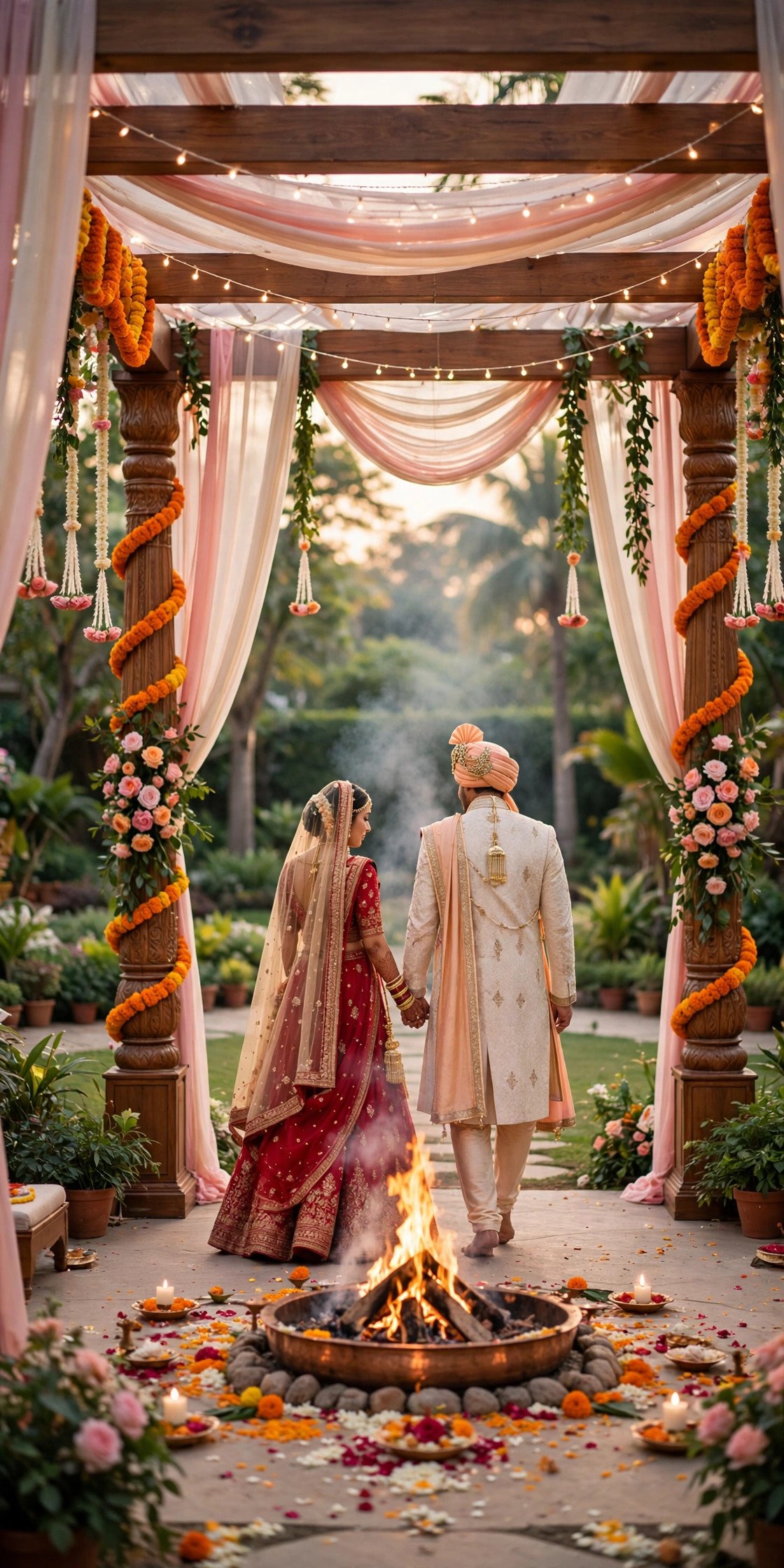
Many Hindu wedding rituals unfold around a sacred fire, Agni, kept in a small vessel at the center of the mandap. The fire is regarded as a divine witness to the marriage, and offerings made into it punctuate the ceremony. The priest guides the couple through each rite, often explaining meanings in Sanskrit with translations, depending on the family.
Mangalsutra: The Sacred Necklace
 📌 Save
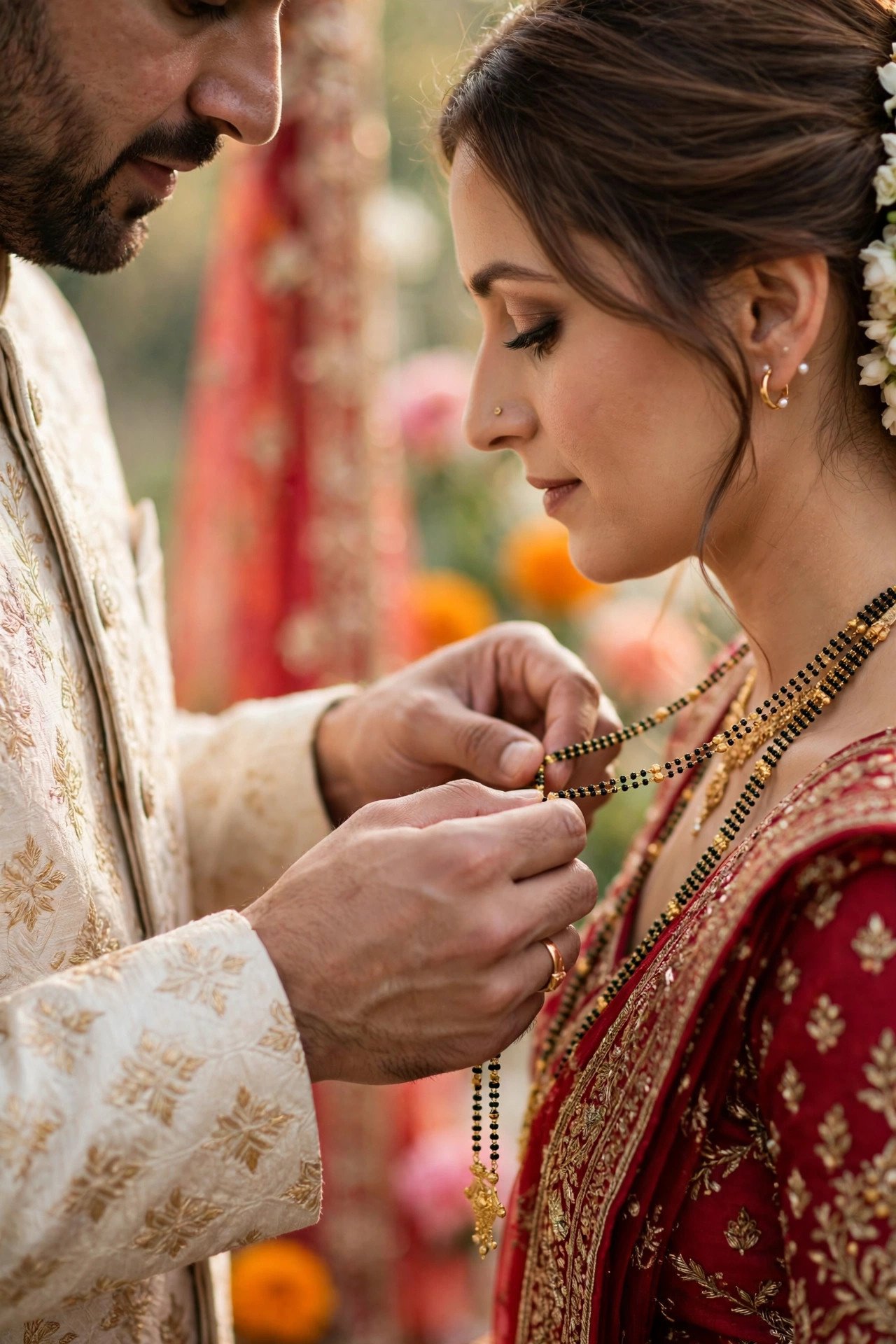
In many Hindu traditions, the groom ties a mangalsutra — a necklace of black beads and gold — around the bride’s neck during the ceremony, symbolizing their union and his commitment to her wellbeing. Designs vary by region and community, and many brides wear theirs daily as a sign of their marriage.
Saptapadi: The Seven Steps and Vows
 📌 Save
The saptapadi — seven steps taken together, traditionally around the sacred fire — is the heart of the Hindu ceremony. With each step the couple makes a promise: to nourish each other, grow in strength, share prosperity, exchange love and trust, raise a family, live long together in peace, and remain lifelong companions. In many traditions, these steps are what solemnize the marriage itself.
Sindoor: A Mark of Marriage
 📌 Save
In many Hindu weddings, the groom applies sindoor — vermilion-red powder — to the parting of the bride’s hair, a visible and ancient symbol of her married status and of wishes for the couple’s long life together. Customs around who wears sindoor, and how often, vary widely among modern families, from daily wear to ceremonial occasions only.
Vidaai: The Emotional Farewell
 📌 Save
The vidaai marks the bride’s departure from her family home after the wedding. In a custom many families observe, she tosses handfuls of rice over her shoulder as she leaves — thanking her parents and wishing prosperity back upon the home that raised her — before being escorted to her new life, traditionally amid tears, hugs, and blessings from everyone who loves her.
Griha Pravesh: Welcoming the Bride Home
 📌 Save
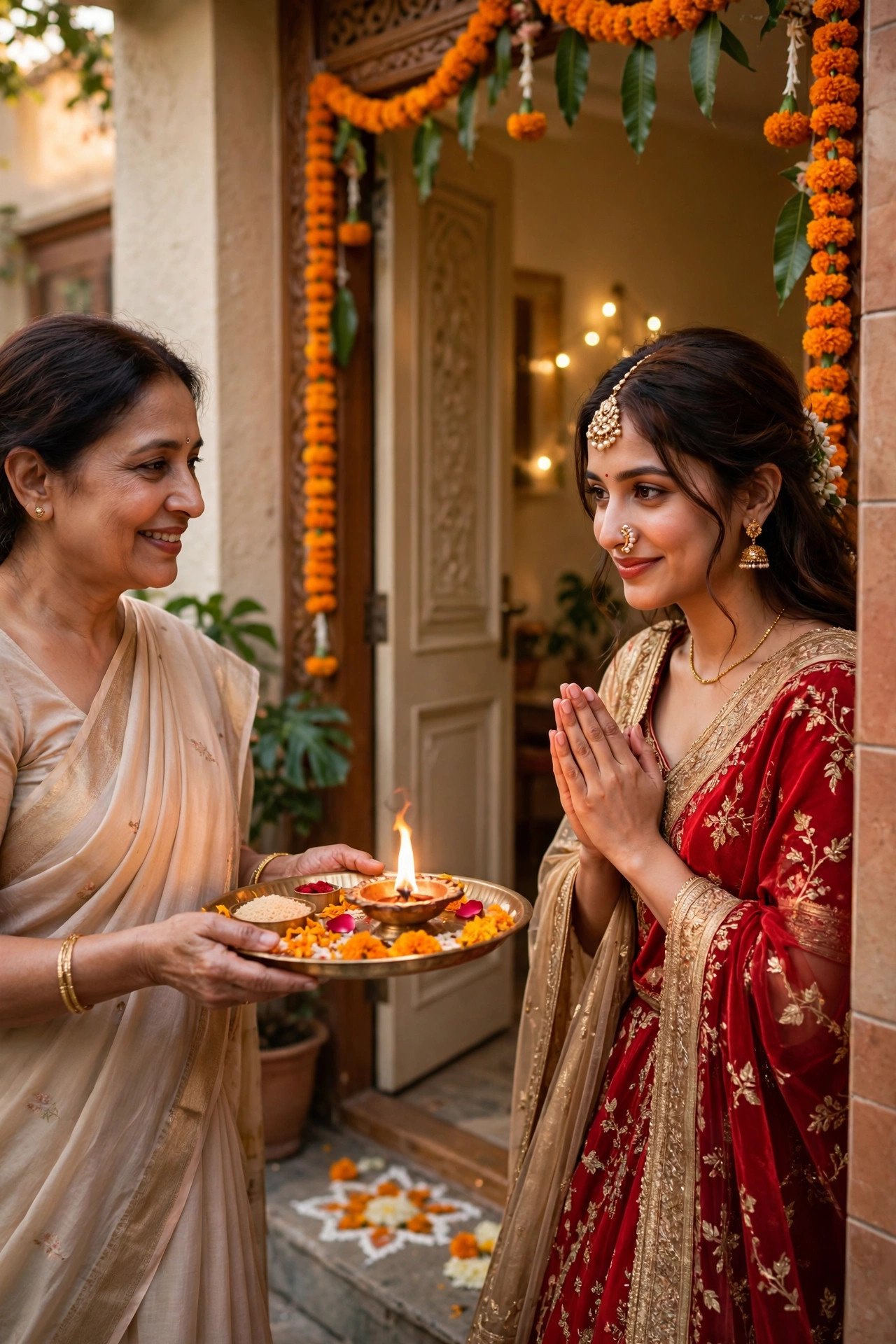
After the wedding, the groom’s family welcomes the bride home in the griha pravesh: she is greeted at the threshold, often with an aarti lamp, and in a beloved custom gently tips a vessel of rice at the doorway as she enters — symbolizing the prosperity and abundance she brings into the household. Games and laughter usually follow the formality.
The Mandap: A Canopy Full of Meaning
 📌 Save
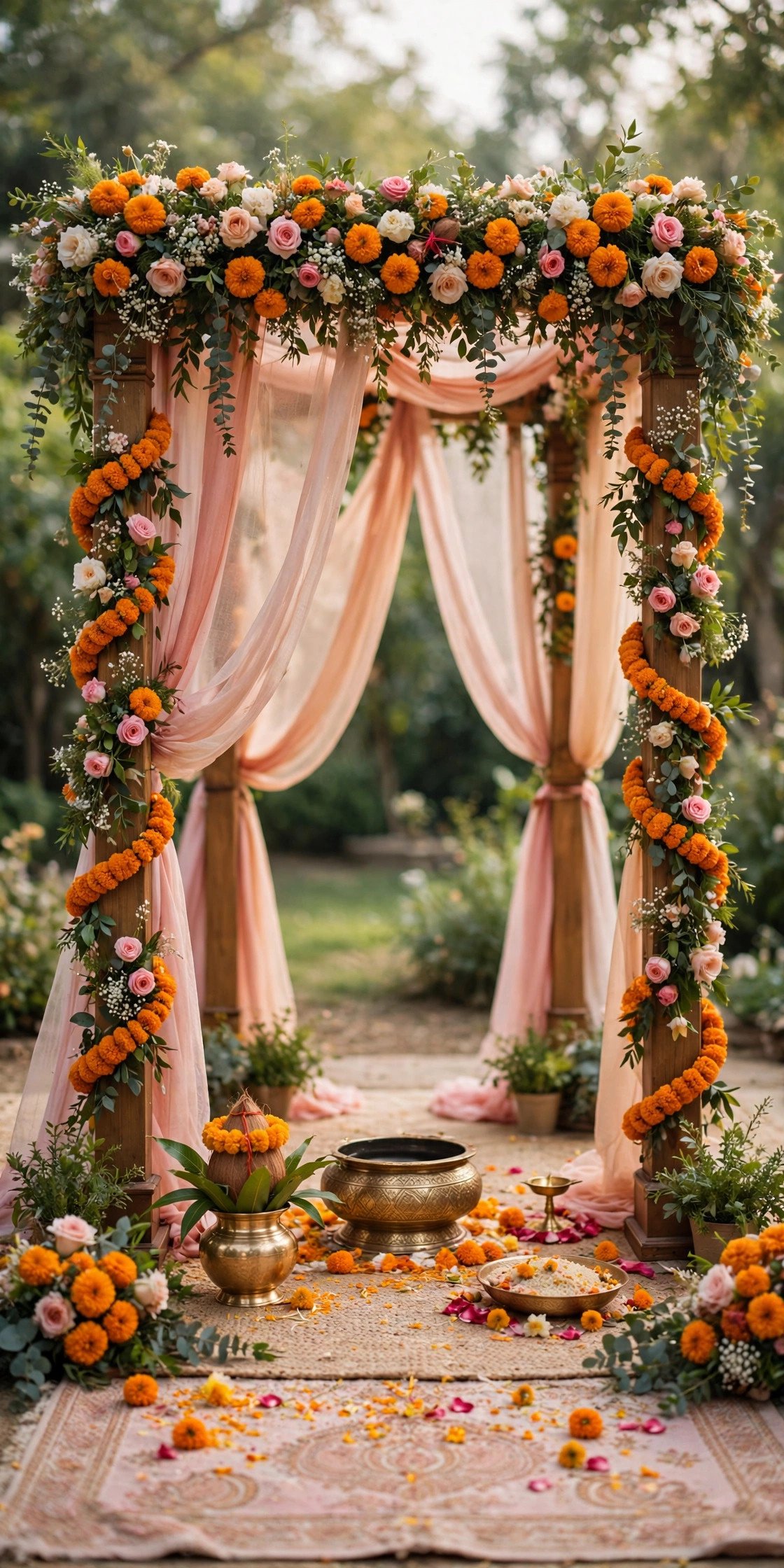
Hindu ceremonies take place under a mandap, a canopy on four pillars traditionally representing the four parents and the elements of a grounded life. Modern mandaps range from flower-draped garden structures to crystal-draped ballroom stages, but the meaning endures: a temporary sacred home, built for the couple by the people who love them.
Color Everywhere: What the Palette Means
 📌 Save
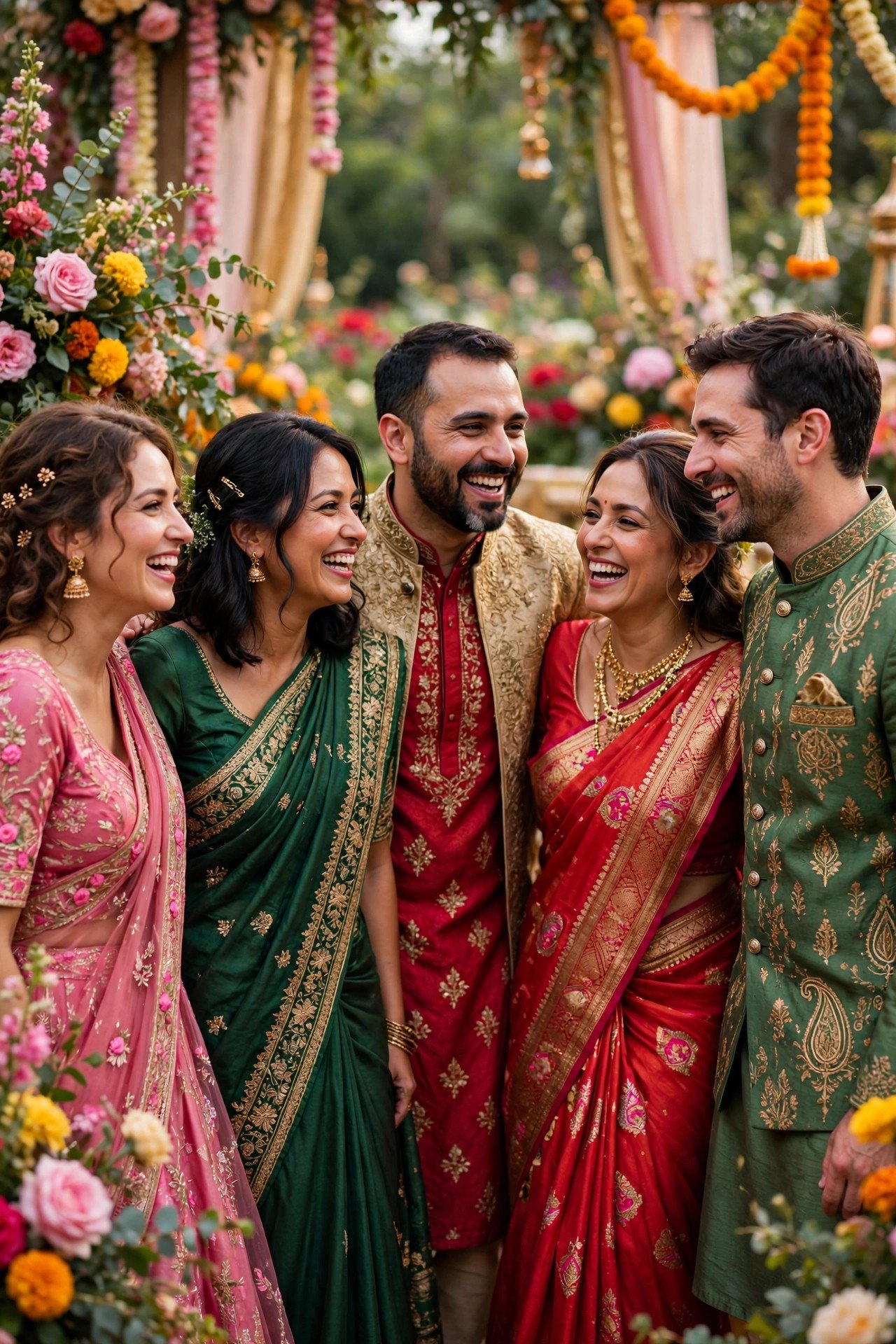
Indian weddings are famously colorful, and the palette is meaningful: reds and maroons are associated with love and prosperity and remain the most traditional bridal colors in many communities; gold signifies wealth and blessing; marigolds — strung into garlands and strewn everywhere — bring brightness and auspiciousness. White, associated with mourning in some communities, is traditionally avoided by guests at Hindu celebrations, though modern families vary.
What Guests Wear: A Friendly Guide
 📌 Save
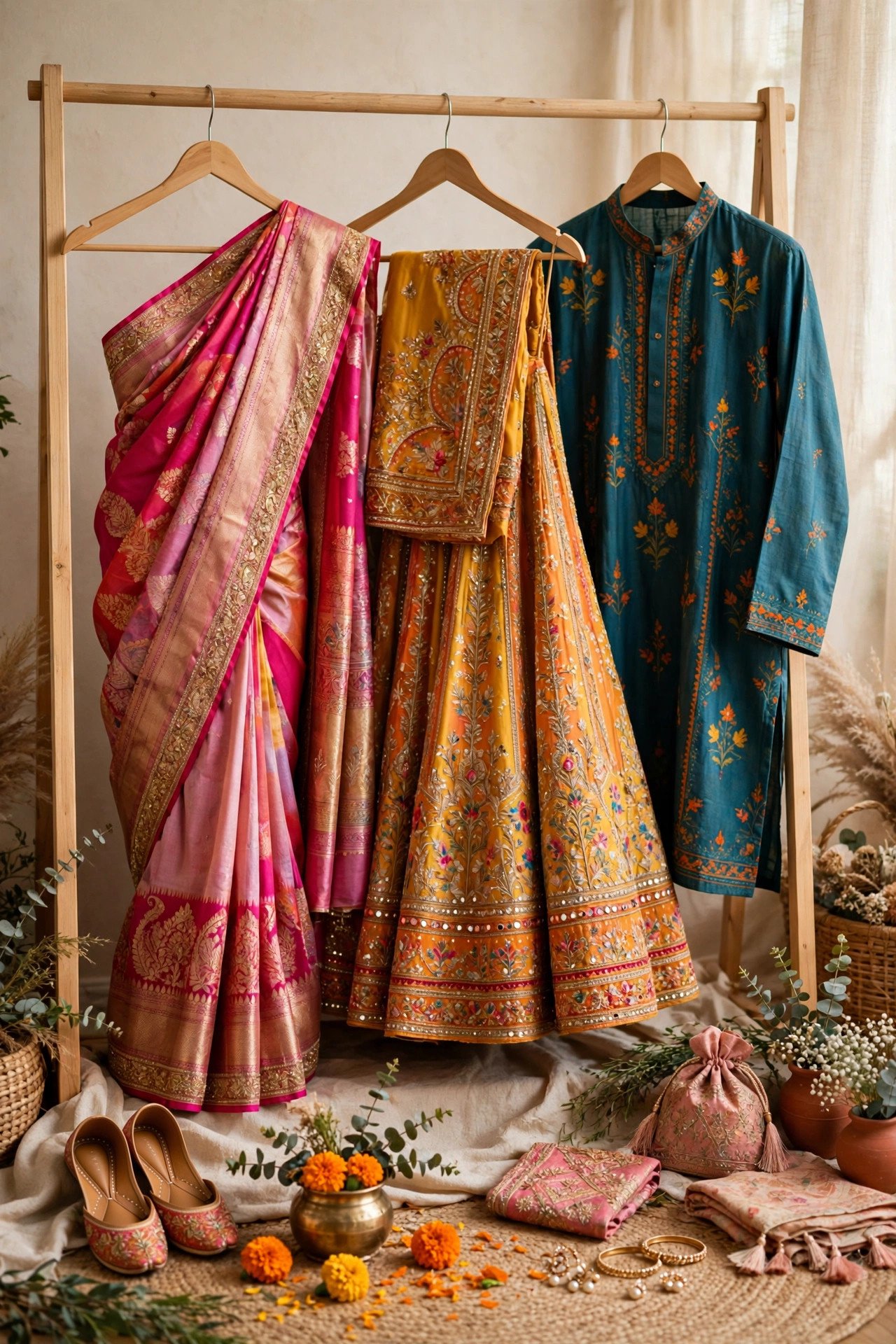
Guests of any background are warmly welcomed — and often encouraged — to wear Indian formalwear: a sari, lehenga, or salwar kameez for women, a kurta or sherwani for men. Borrowing from a friend or renting is normal and appreciated as participation, not costume, when worn respectfully and correctly. Dress brightly, dress modestly enough for religious moments, and ask an Indian friend to help you drape and pin.
Gifts and the No-Boxed-Gifts Custom
 📌 Save
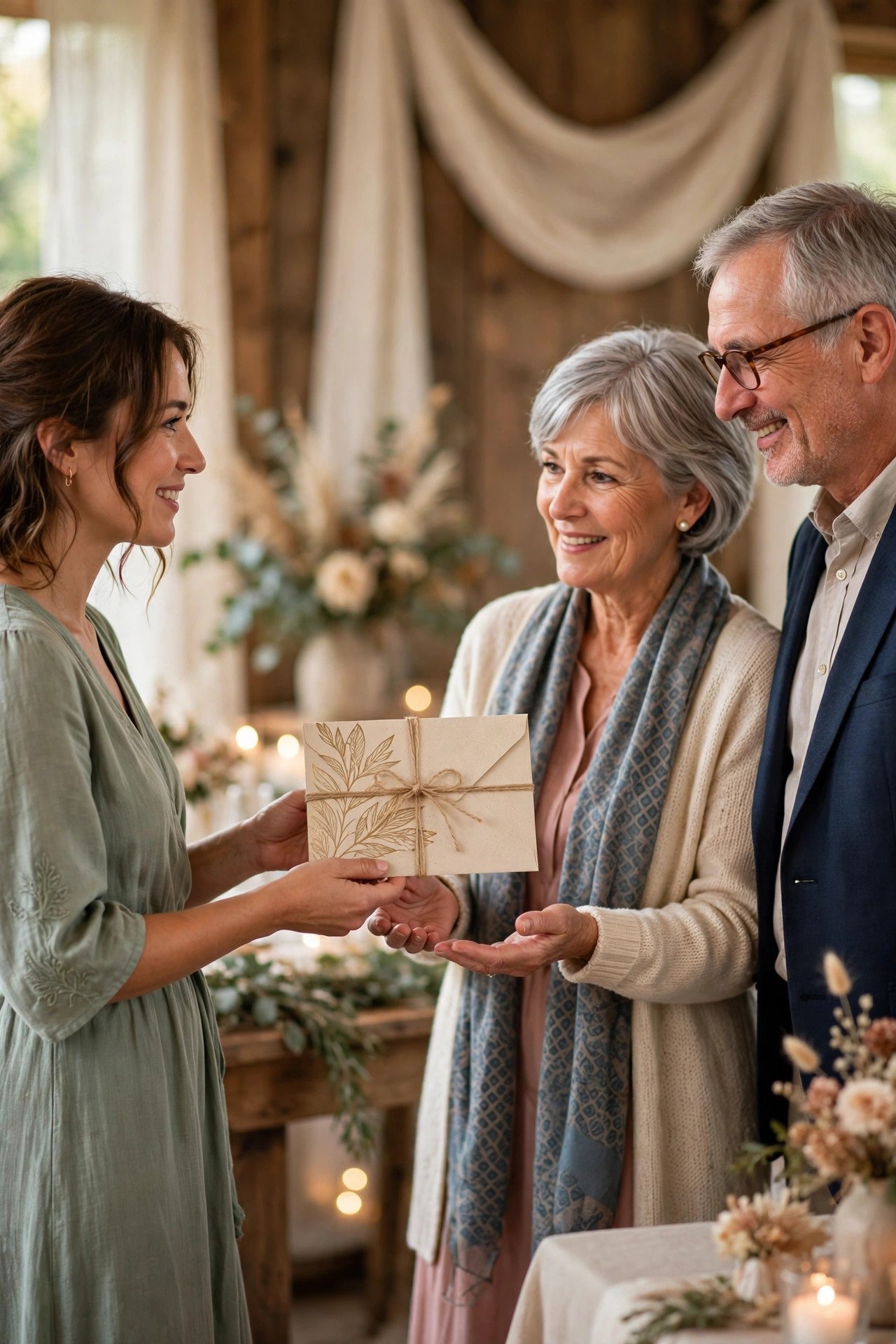
Many Indian wedding invitations carry the phrase no boxed gifts, a practical custom in families where the couple is setting up a home with specific needs — or receiving blessings from hundreds of guests. The customary alternative is money in an envelope, often given in auspicious odd amounts ending in 1 — such as 51 or 101 — where the extra coin symbolizes a beginning rather than a closed sum. Customs vary by family, so the invitation always wins.
Food at the Center of Celebration
 📌 Save
Food is not catering at an Indian wedding; it is hospitality itself. Expect generous spreads reflecting the family’s region — rich curries, breads, rice dishes, street-food-style snack stations, and tables of sweets — with vegetarian offerings central at many Hindu and Jain celebrations. Refreshments flow all day, from spiced chai to fresh juices and lassi, and guests are pressed, lovingly and repeatedly, to eat more.
Music, Drums and Dancing
 📌 Save
Music drives every stage of an Indian wedding: dhol drums powering the baraat, family performances at the sangeet, and receptions where Bollywood and bhangra favorites keep the floor full until the venue insists otherwise. Dancing is participation, not performance — guests are pulled in, shown the moves, and celebrated for trying.
Regional Variations Across India
 📌 Save
A Bengali bride may arrive carried on a wooden platform, a Tamil ceremony centers different rites and banana-leaf feasts, a Punjabi celebration leans into bhangra and exuberance, and a Maharashtrian couple may exchange garlands behind a held cloth curtain that drops for their first look. These differences are the tradition — India’s weddings are a family of celebrations, not a single script.
Traditions Across Faiths: Sikh, Muslim, Jain and Christian Weddings
 📌 Save
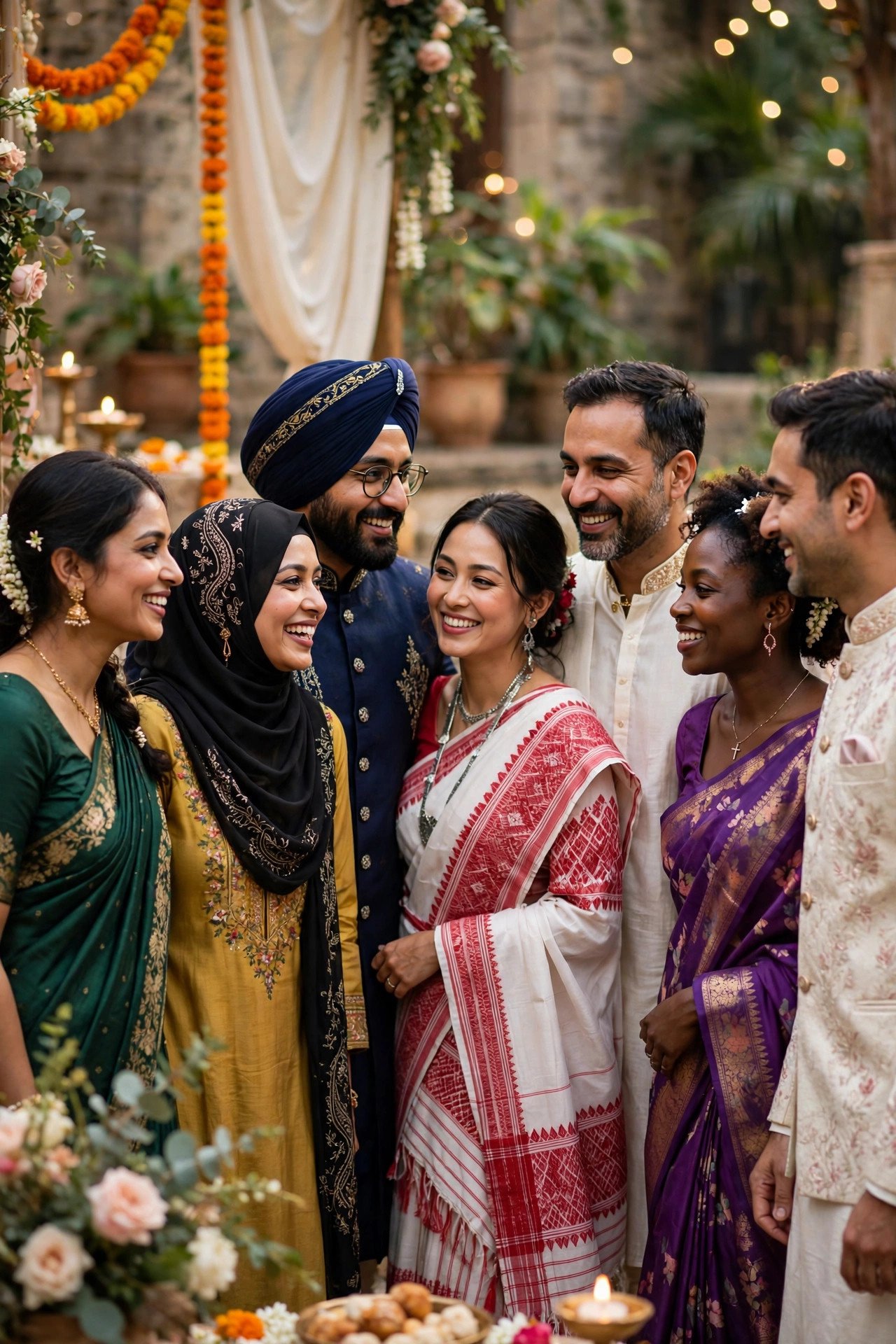
Beyond Hindu ceremonies, India’s wedding tapestry includes Sikh Anand Karaj ceremonies around the Guru Granth Sahib in a gurdwara, Muslim nikah ceremonies centered on a marriage contract and blessings, Jain weddings with their own vows and emphasis on non-violence, and Christian weddings in churches from Kerala to Goa. Festivities around them — mehndi, sangeet-style music, feasting — are often shared across faiths within a region or family.
Blending Cultures in a Fusion Wedding
 📌 Save
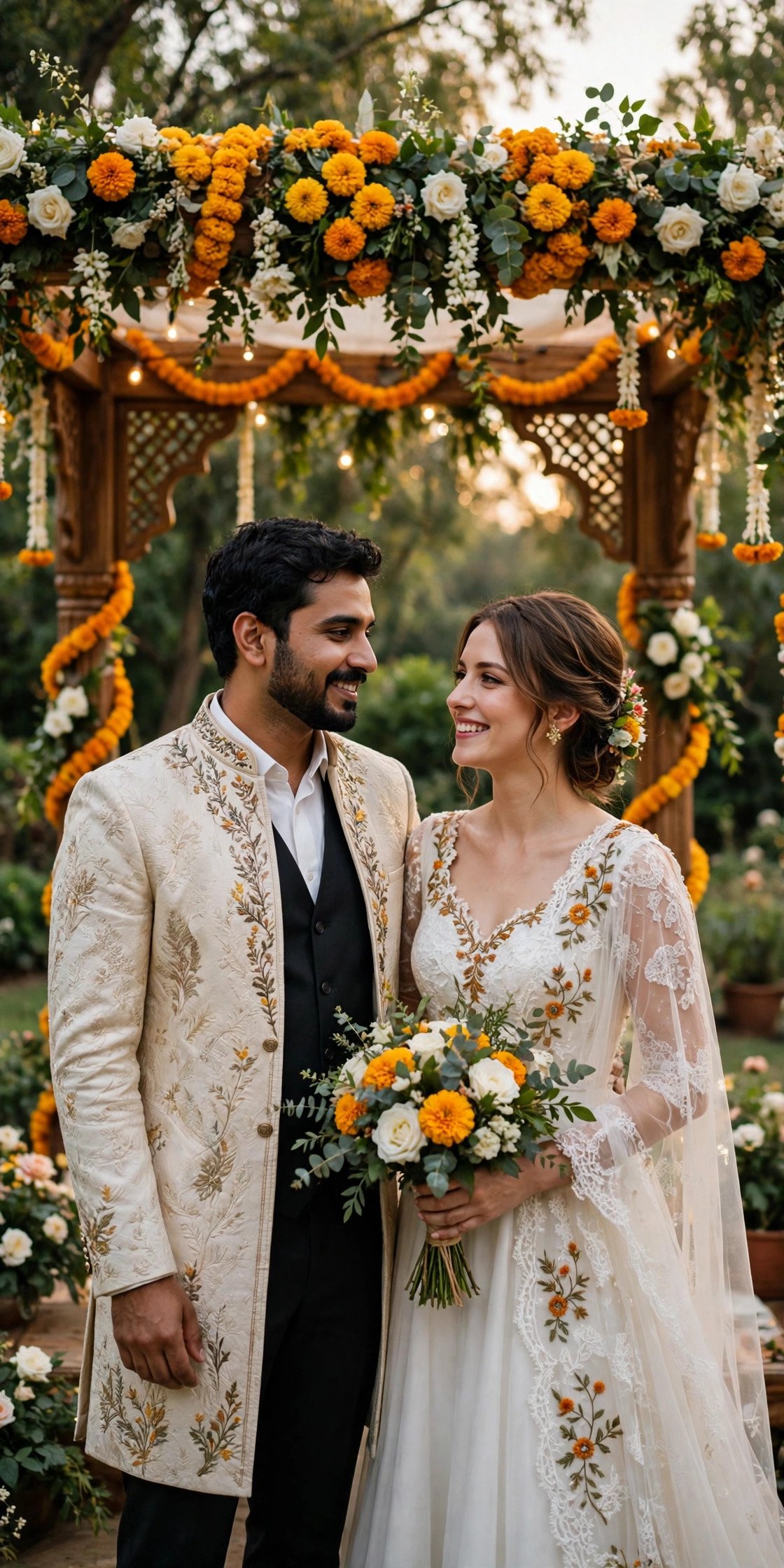
Couples blending Indian and other heritages often weave both into one celebration: a baraat leading into a Western-style ceremony, garlands exchanged alongside rings, a sangeet the night before a white-dress wedding. The fusion works best when both families help choose which rituals to include, an officiant explains each element to the whole room, and nothing sacred is reduced to decoration.
Being a Great Guest: Participate Politely
 📌 Save
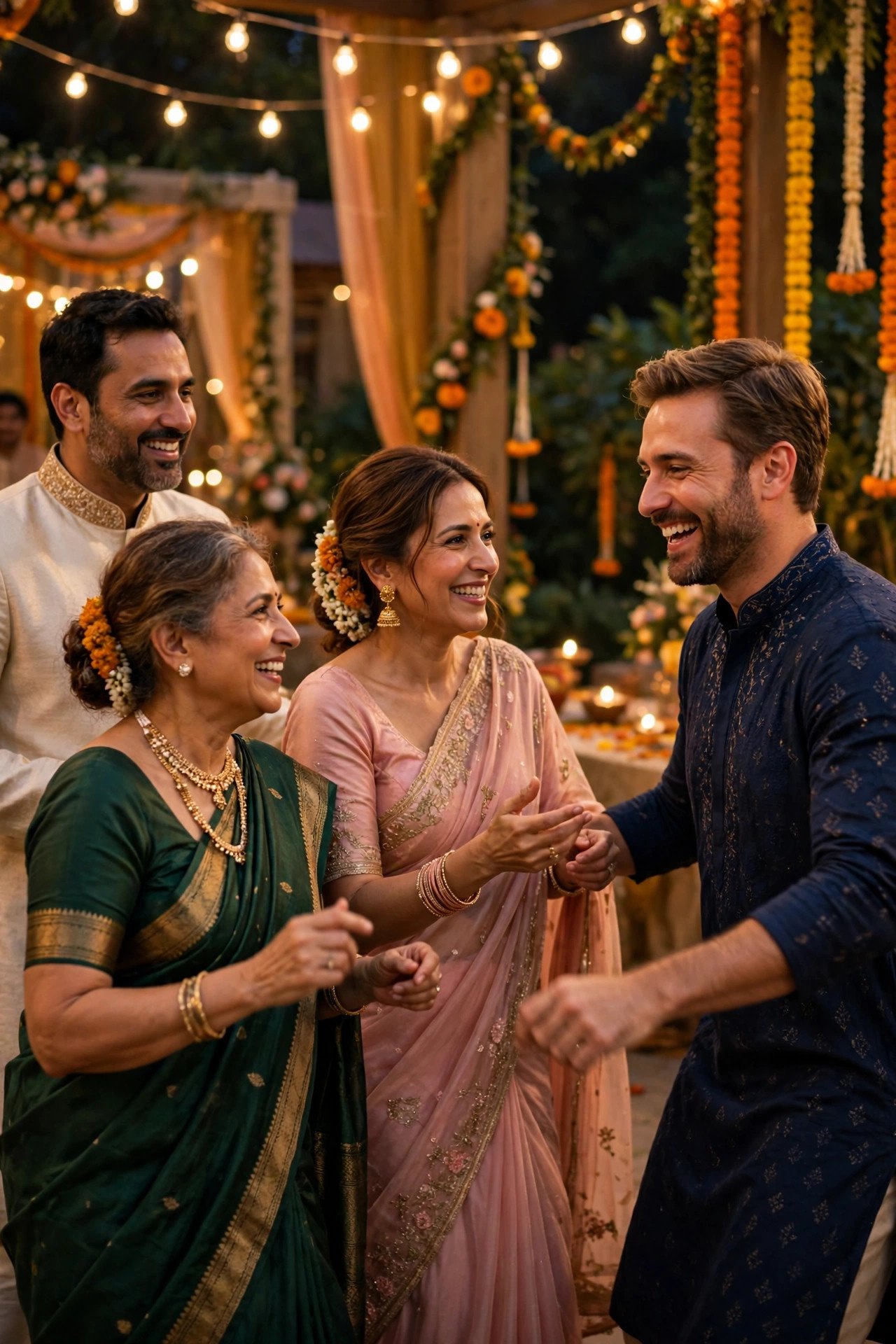
The perfect guest at an Indian wedding is simply enthusiastic: join the baraat dancing, accept the sweets pressed on you, watch the sacred moments with quiet respect, and ask your questions during the parties, of anyone who looks delighted to explain — most people are. Remove shoes where others do, follow the family’s lead on photography during rituals, and let your curiosity show; it reads as the compliment it is.
Indian Wedding Traditions FAQs
How long does an Indian wedding last?+
Typically two to four days of events, though celebrations range from a single full day to a week. The main events for most guests are the sangeet (music night), the ceremony day — which includes the baraat, ceremony, and often a reception — and sometimes a separate reception evening. Your invitation will specify which events you are invited to; attend all you can, as each has a different flavor.
What should a guest wear to an Indian wedding?+
Bright, festive formalwear — and guests of every background are welcome to wear Indian dress such as a sari, lehenga, or kurta, ideally with a friend helping you drape it correctly. Traditionally, avoid solid white and plain black at Hindu celebrations, as white is associated with mourning in some communities; jewel tones are always safe. When in doubt, ask the couple — they will be glad you did.
Can guests join in the rituals and dancing?+
Enthusiastically yes for the celebrations: the baraat, sangeet dancing, and reception are built for everyone to join. During the sacred ceremony itself, guests mainly witness with respect — following cues on sitting, standing, and photography — though families often invite guests forward for blessings at set moments. When unsure, watch the family’s elders and follow their lead.
What gift is appropriate for an Indian wedding?+
If the invitation says no boxed gifts, follow it: cash or a check in an envelope is customary, often in an odd, auspicious amount ending in 1, like 51 or 101 in the relevant currency. If there is a registry or no guidance, a registry gift or an envelope are both gracious. Present it to the couple or their parents during the reception.
I am attending my first Indian wedding — what should I expect?+
Expect warmth on an operatic scale: multiple events, extraordinary food, music everywhere, hundreds of family members who will treat you as one of their own, and rituals whose meanings deepen the more you watch. Expect also a relaxed relationship with start times. Bring comfortable dancing shoes, an appetite, and your questions — you are in for one of the most joyful celebrations on earth.
Key Takeaways
- Indian weddings are a family of traditions across faiths and regions — the couple’s family is the final authority on theirs.
- The big events: mehndi, haldi, sangeet, baraat, and a ceremony centered on garlands, fire, and seven vows in Hindu tradition.
- Nearly every ritual is about two families becoming one, not only the couple’s union.
- Guests: dress brightly, join the dancing, eat generously, and follow the family’s lead during sacred moments.
- Follow the invitation on gifts — no boxed gifts usually means an envelope, often in an amount ending in 1.
Final Thoughts
An Indian wedding is less an event than a tide of color, music, food, and family that carries everyone in it toward the same shore: two people married, two families joined. Learn the stories behind the rituals, participate where you are welcomed — which is nearly everywhere — and let the celebration’s generosity set your own. You will leave with henna on your hands, songs in your head, and a standing invitation to eat more, forever.