Hindu Wedding Ceremony (2027)
By zainzari • Published October 23, 2026 • Updated October 23, 2026
 📌 Save
A Hindu wedding ceremony is a sacred ritual, led by a priest (pandit), in which the couple marries before a sacred fire under a canopy called a mandap. Its best-known moments include the garland exchange, kanyadaan, the seven circles around the fire, and blessings from elders — though details vary widely by region, language and family.
For couples planning a Hindu ceremony — and for guests attending one for the first time — the flow can feel unfamiliar, because many rites happen in Sanskrit and in an order that differs from a Western ceremony. This guide walks through the most common elements in plain language, so you can follow along, participate politely, and understand what each moment means.
One honest note before we begin: there is no single Hindu wedding. Customs differ between North and South India, between diaspora families in the USA, UK and Canada, and from one family to the next. Treat what follows as common elements many families include — and always let the couple’s own program and families be your final guide.
At a Glance: Key Moments, Meanings & Guest Notes
| Moment | What It Means | Guest Note |
|---|---|---|
| Jai Mala | Mutual acceptance, shown by exchanging garlands | Smile and applaud as the couple is lifted or cheered on |
| Kanyadaan | Parents entrust their daughter to the marriage | A quiet, emotional moment — listen respectfully |
| Saat Phere | Seven circles around the sacred fire, one per vow | Stay seated; this is the heart of the ceremony |
| Sindoor & Mangalsutra | Marks of the marriage, placed by the groom | A joyful moment — applause is welcome |
| Vidaai | The bride’s farewell to her family home | Expect tears; tissues are a kind thought |
Order and inclusion vary by region and family. If the couple provides a printed program, it is the most reliable guide to their ceremony.
The Mandap: A Sacred Canopy
 📌 Save
The mandap is a four-pillared canopy, often draped in fabric and fresh flowers, under which the ceremony takes place. Its pillars are commonly said to represent the four parents or the four aims of life, and the space beneath it is treated as sacred for the duration of the rites.
Arriving With the Baraat Procession
 📌 Save
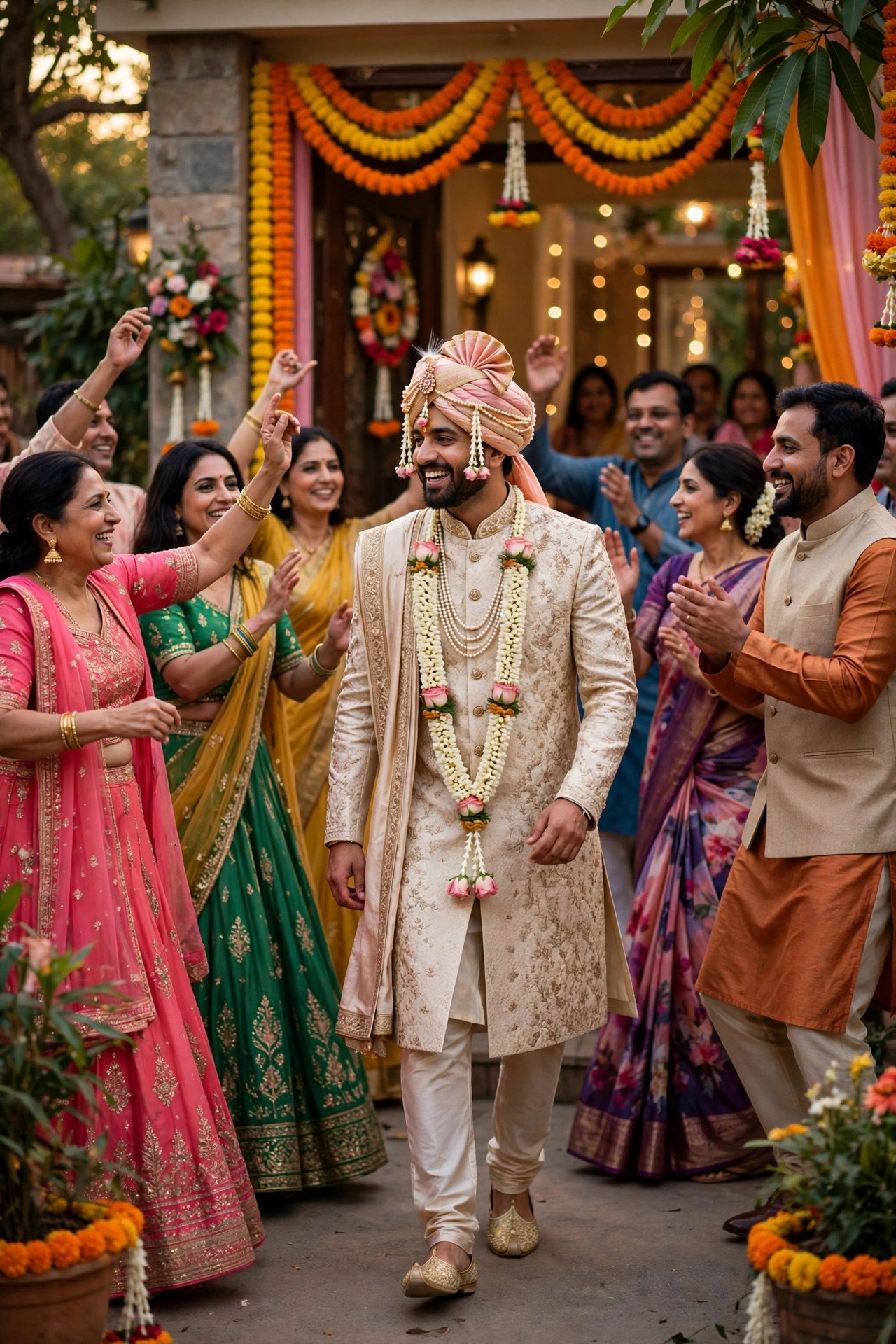
In many North Indian weddings, the groom arrives in a baraat — a joyful procession with music and dancing, sometimes with the groom on a horse or in a decorated car. The bride’s family formally welcomes him at the entrance in a short rite before everyone moves inside.
Kanya Aagaman: The Bride’s Entrance
 📌 Save
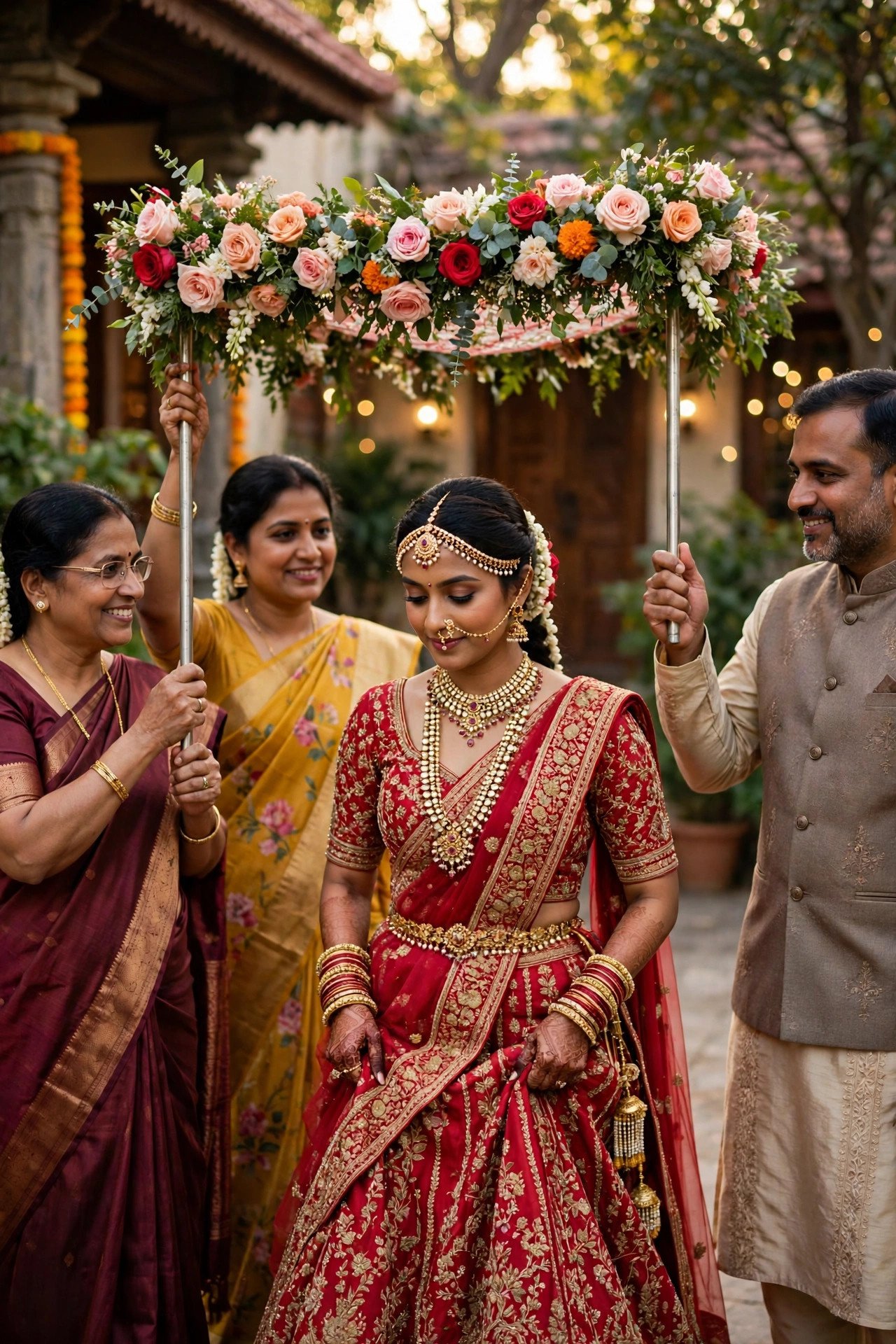
The bride is often escorted into the mandap by her maternal uncle or close family members, sometimes beneath a cloth canopy of flowers. A screen or cloth (antarpat) may briefly separate the couple before it is lowered for their first look within the ceremony.
Jai Mala: The Garland Exchange
 📌 Save
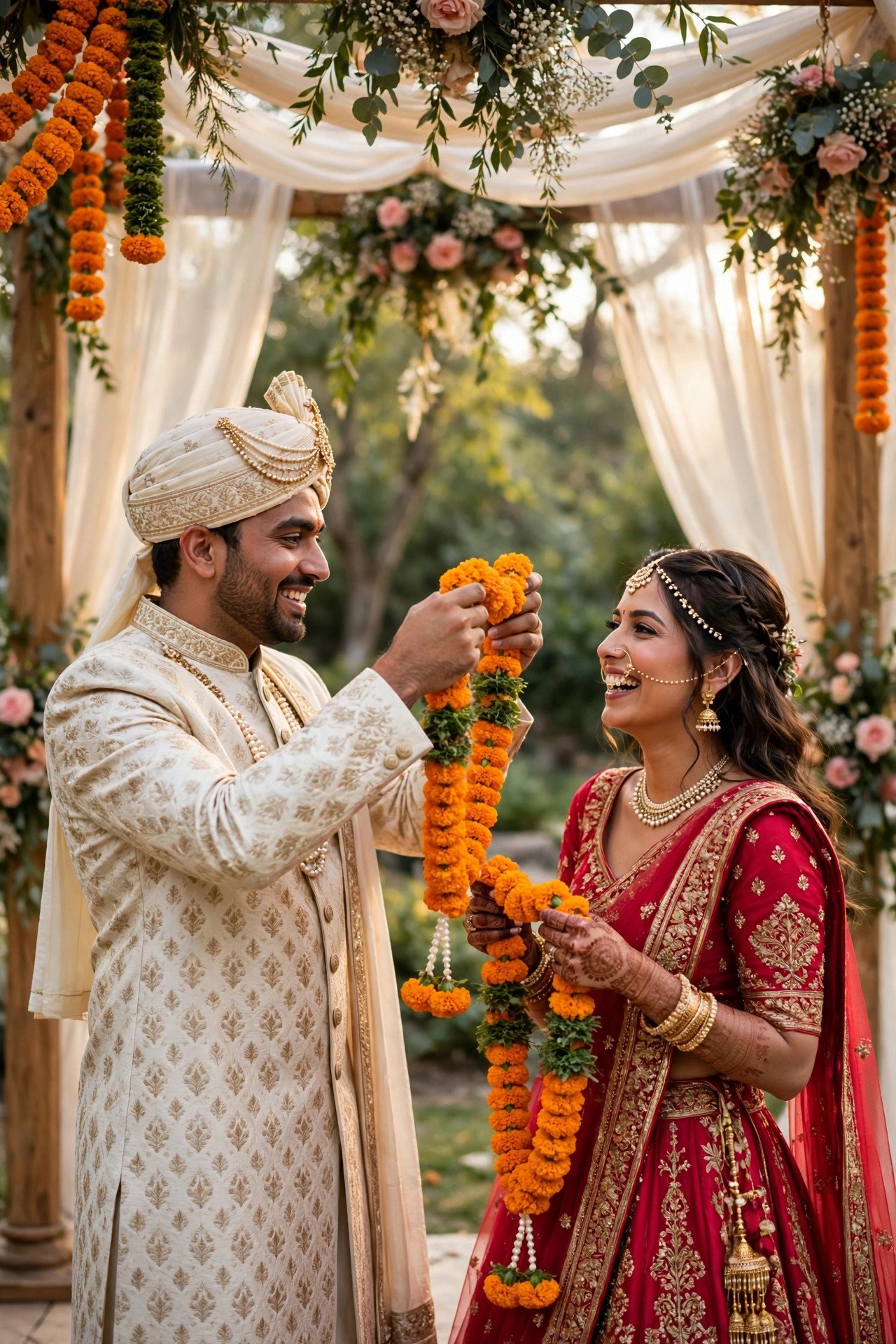
Early in the ceremony, the couple exchanges fresh flower garlands in a rite called jai mala or varmala. It symbolizes mutual acceptance and respect, and friends often playfully lift the couple so each must reach to place their garland — a light-hearted highlight for guests.
Ganesh Puja: Beginning With Prayer
 📌 Save
Many ceremonies open with a short prayer to Lord Ganesh, the remover of obstacles, asking for a smooth and blessed start. The priest may also bless the space, the couple and the families with verses and offerings of flowers, fruit and water.
Kanyadaan: The Giving Away
 📌 Save
In kanyadaan, the bride’s parents place her hand in the groom’s, formally entrusting her to the marriage while verses are recited. Many modern couples reinterpret or soften this rite together with their priest, and some adapt the wording — the couple’s choices here are personal and should simply be witnessed with respect.
The Sacred Fire: Agni as Witness
 📌 Save
A small fire is kindled in a vessel at the center of the mandap, and offerings are made into it as prayers are spoken. The fire, Agni, is regarded as a divine witness to the vows, which is why so many of the central rites happen gathered around it.
Mangalsutra: The Sacred Necklace
 📌 Save
In many communities, the groom ties a mangalsutra — a necklace, often black beads and gold — around the bride’s neck as a sign of the marriage. Styles and significance vary by region; in some families a toe ring or other jewelry carries similar meaning.
Saat Phere: The Seven Circles
 📌 Save
The couple, with garments sometimes knotted together, walks seven slow circles around the sacred fire. Each circle accompanies a vow — commonly covering nourishment, strength, prosperity, family, health, friendship and lifelong companionship — though exact wording varies by priest and tradition.
Saptapadi: The Seven Steps
 📌 Save
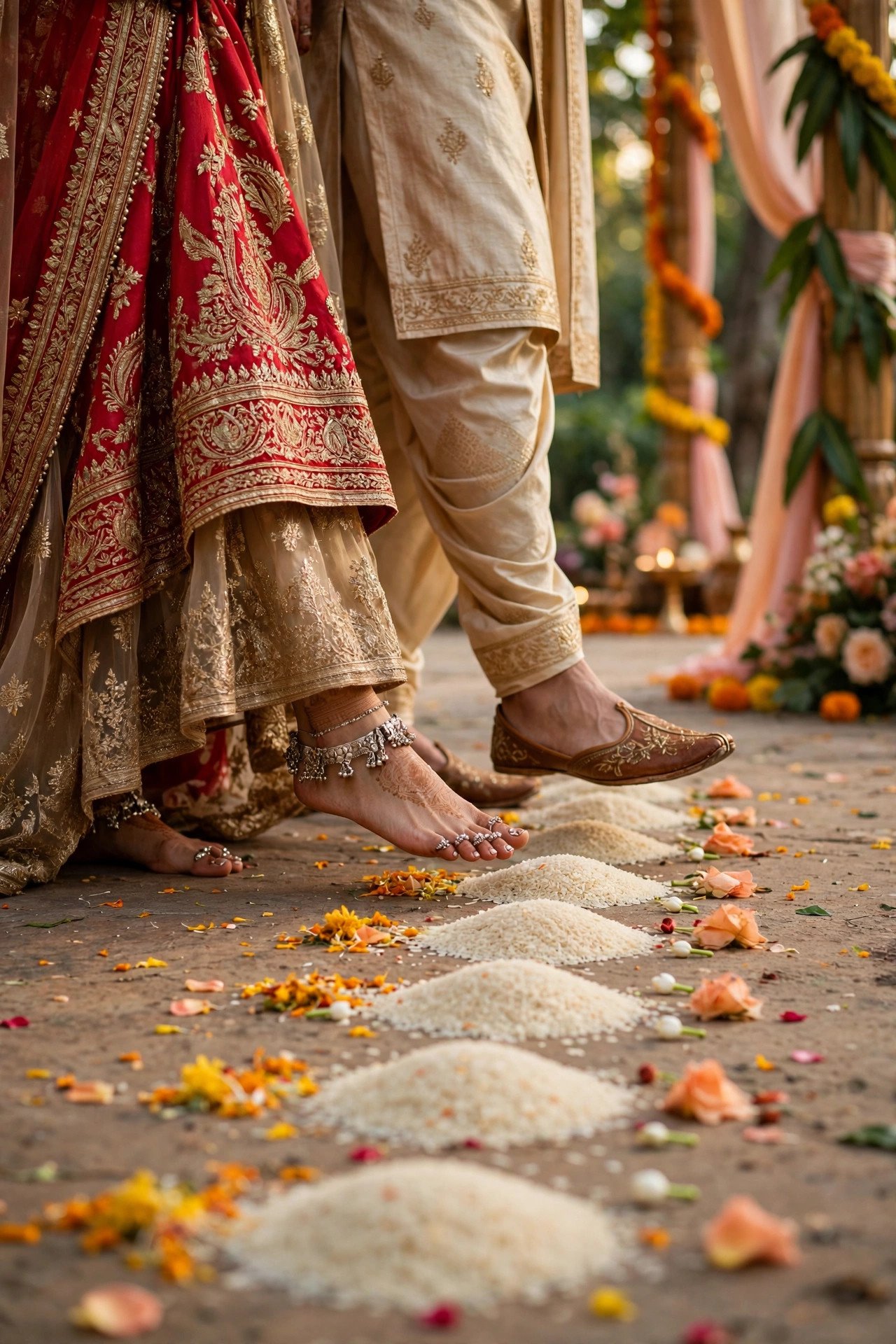
Closely related to the circles, the saptapadi is the taking of seven steps together, each with a promise for the life ahead. In Indian law and in many families’ eyes, completing the saptapadi is the binding heart of the marriage ceremony.
Sindoor: Vermilion in the Hair Parting
 📌 Save
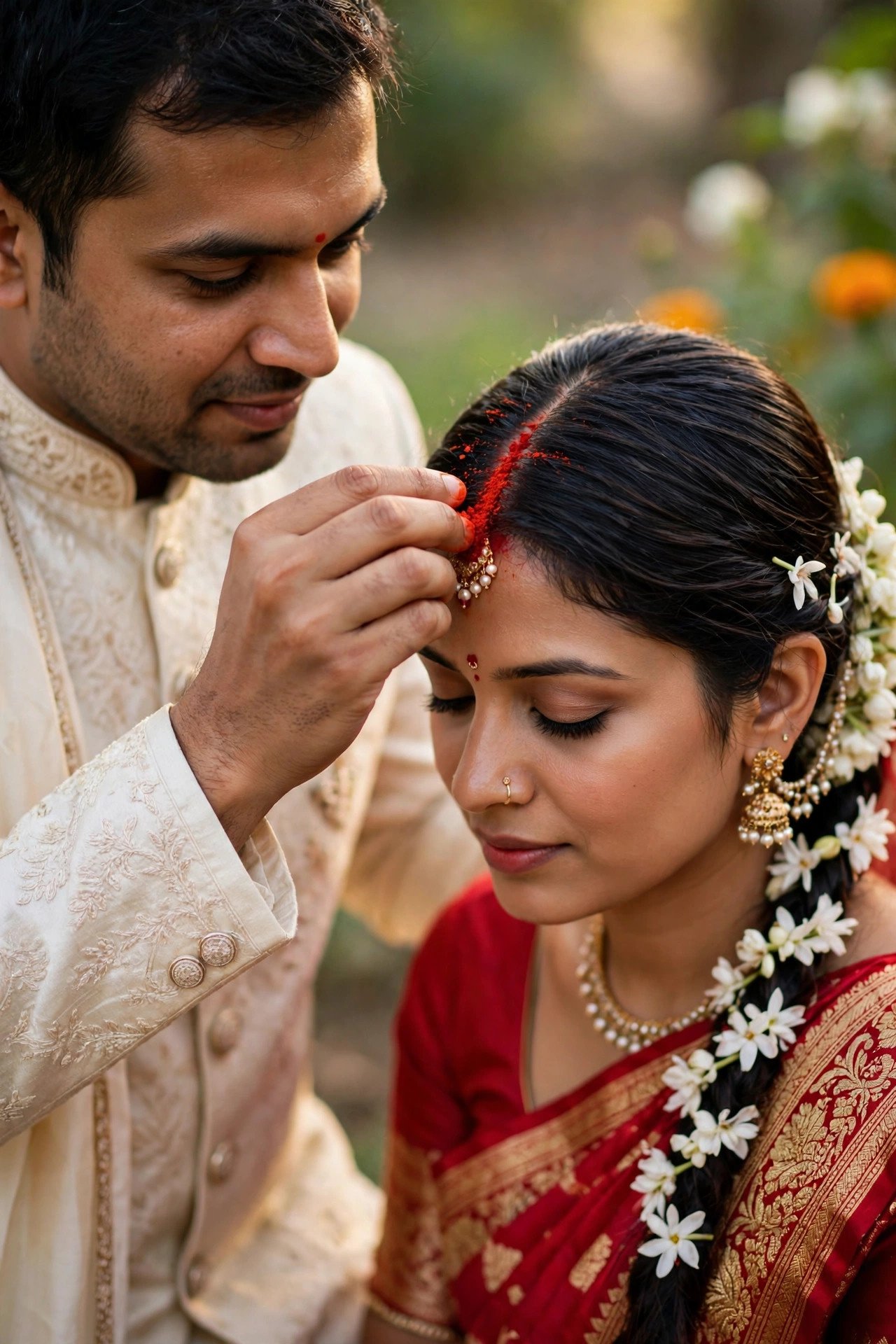
In many North Indian ceremonies, the groom applies sindoor — vermilion powder — to the parting of the bride’s hair. Along with the mangalsutra, it is one of the visible signs of a married woman in those communities; not all regions include it.
Ashirwad: Blessings From Elders
 📌 Save
After the main rites, elders shower the seated couple with flower petals or grains of rice while offering blessings. It is a tender, photogenic moment that formally welcomes the couple into their new life with the whole family’s good wishes.
Vidaai: The Emotional Farewell
 📌 Save
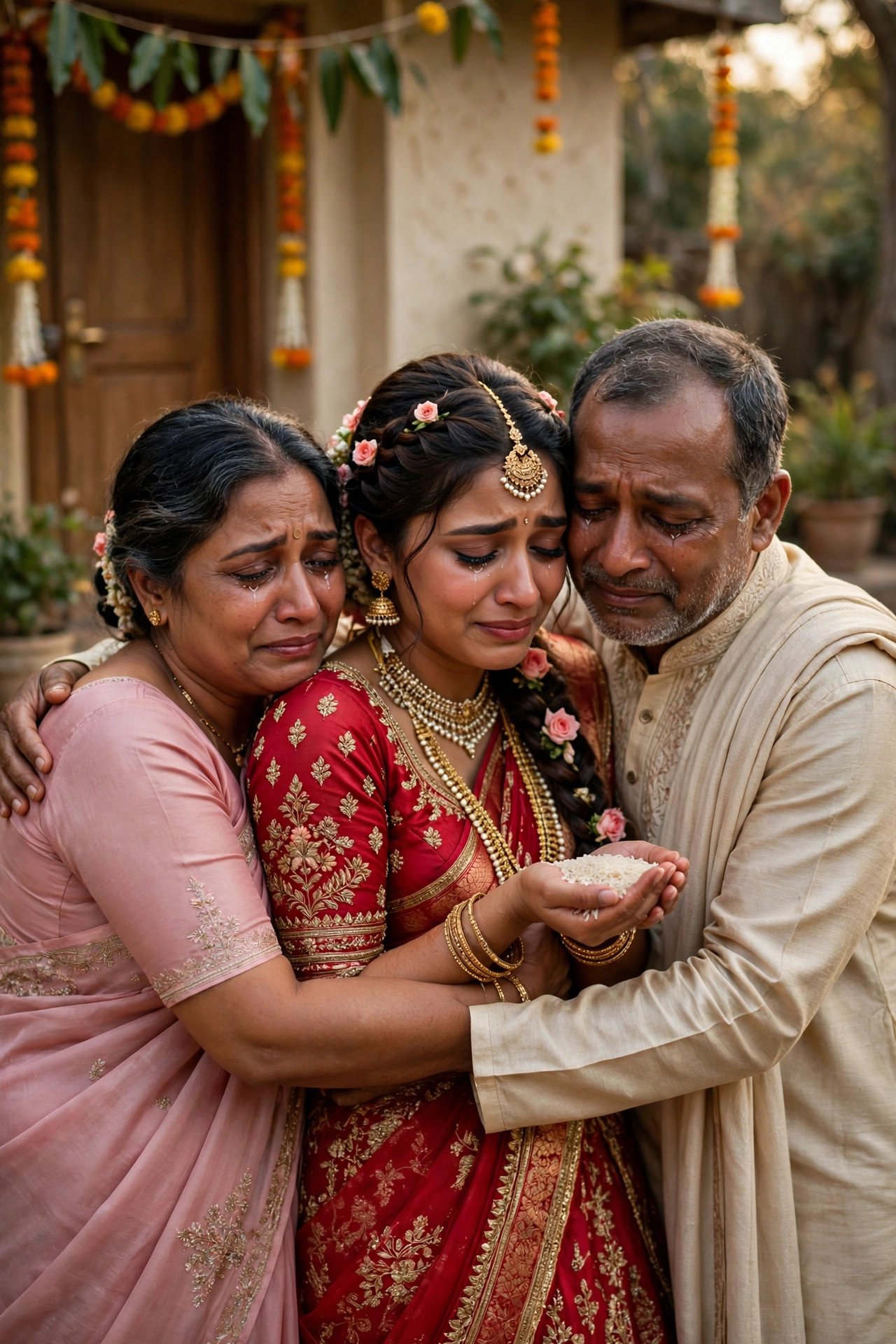
The vidaai marks the bride’s farewell to her family home, often with the bride throwing rice over her shoulder as she leaves, wishing prosperity to the home she leaves behind. It is traditionally emotional, and tears from close family are completely normal.
What to Wear as a Guest
 📌 Save
Guests may wear formal Western attire or traditional Indian clothing if they wish — bright colors are welcome and festive. Traditionally, guests avoid plain white and black, which are associated with mourning and inauspicious occasions in many Indian communities, though diaspora norms are relaxing.
Removing Shoes and Covering Your Head
 📌 Save
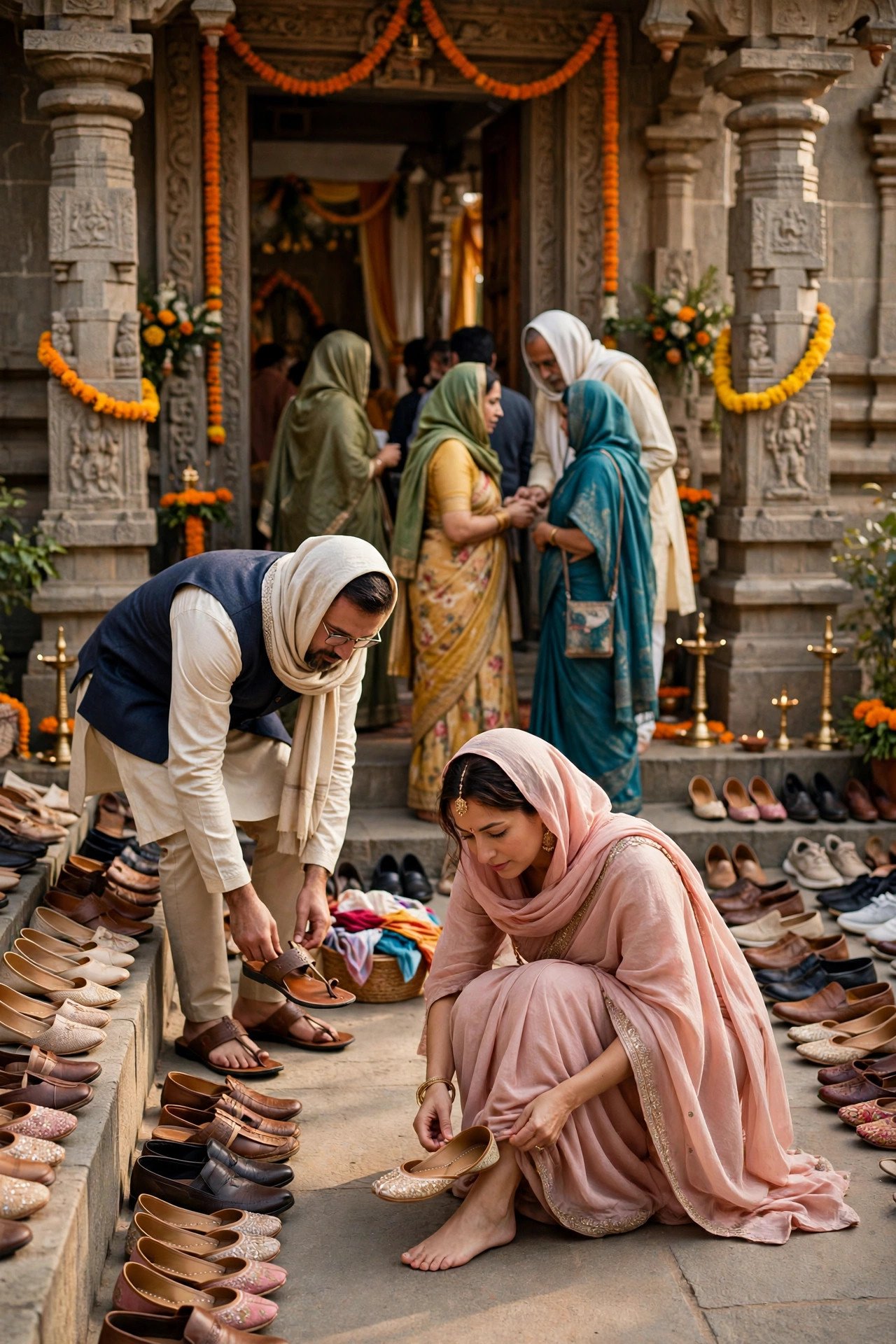
At temple ceremonies, and sometimes around the mandap, guests are asked to remove their shoes as a sign of respect for sacred space. A head covering is not usually required of wedding guests, but if the venue is a temple, follow any signs or guidance given on arrival.
How Long Does the Ceremony Last?
 📌 Save
A full Hindu ceremony commonly runs one to three hours depending on which rites are included, and pre-ceremony events can make the wedding day much longer. Many couples shorten the rite list with their priest or provide refreshments and clear timings so guests can plan.
Gifts: Money in Odd Numbers
 📌 Save
Money gifts, often called shagun, are customary at many Indian weddings, traditionally given in odd-numbered amounts ending in one — such as 51 or 101 — as a sign of a beginning without an end. Many couples also keep a registry, and a card with either is always appropriate.
Vegetarian Food and Prasad
 📌 Save
Reception food at Hindu weddings is very often vegetarian, and some venues serve no eggs either, out of respect for the sacred nature of the day. Blessed food offered during the ceremony, called prasad, may be shared with guests — accepting a small portion politely is the norm.
Mehndi: The Celebration Before
 📌 Save
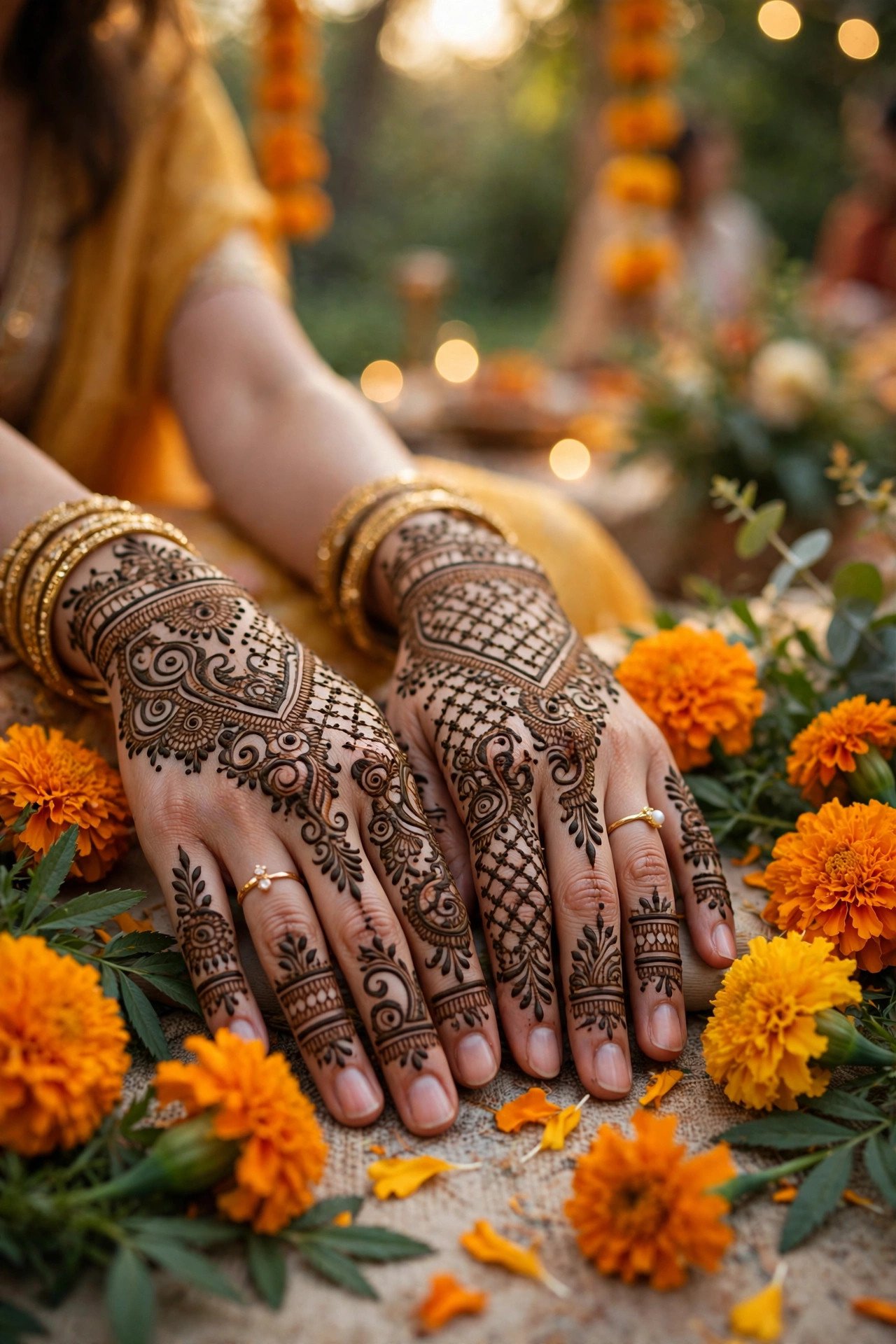
A day or two before the ceremony, many brides host a mehndi gathering where henna artists apply intricate designs to the bride’s hands and feet, and guests may have simpler designs done too. It is a relaxed, musical afternoon hosted by the bride’s family in many communities.
Haldi: The Turmeric Ceremony
 📌 Save
At a haldi ceremony, family and friends apply a paste of turmeric, sandalwood and rosewater to the couple’s skin as a blessing for glow and protection. It is playful and messy by design — in many families it happens at home the morning before the wedding.
Sangeet: The Music and Dance Night
 📌 Save
The sangeet is an evening of music and choreographed dances performed by family and friends for the couple, traditionally hosted by the bride’s family and now often shared. Guests are audience and cheerleaders — and may be pulled onto the dance floor at the end.
Blending Hindu and Western Ceremonies
 📌 Save
Many diaspora couples pair a Hindu ceremony with a Western-style ceremony, vow exchange or ring exchange on the same day. Work with both officiants early so timings, translations and the order of events honor both families without rushing either tradition.
Finding and Working With a Pandit
 📌 Save
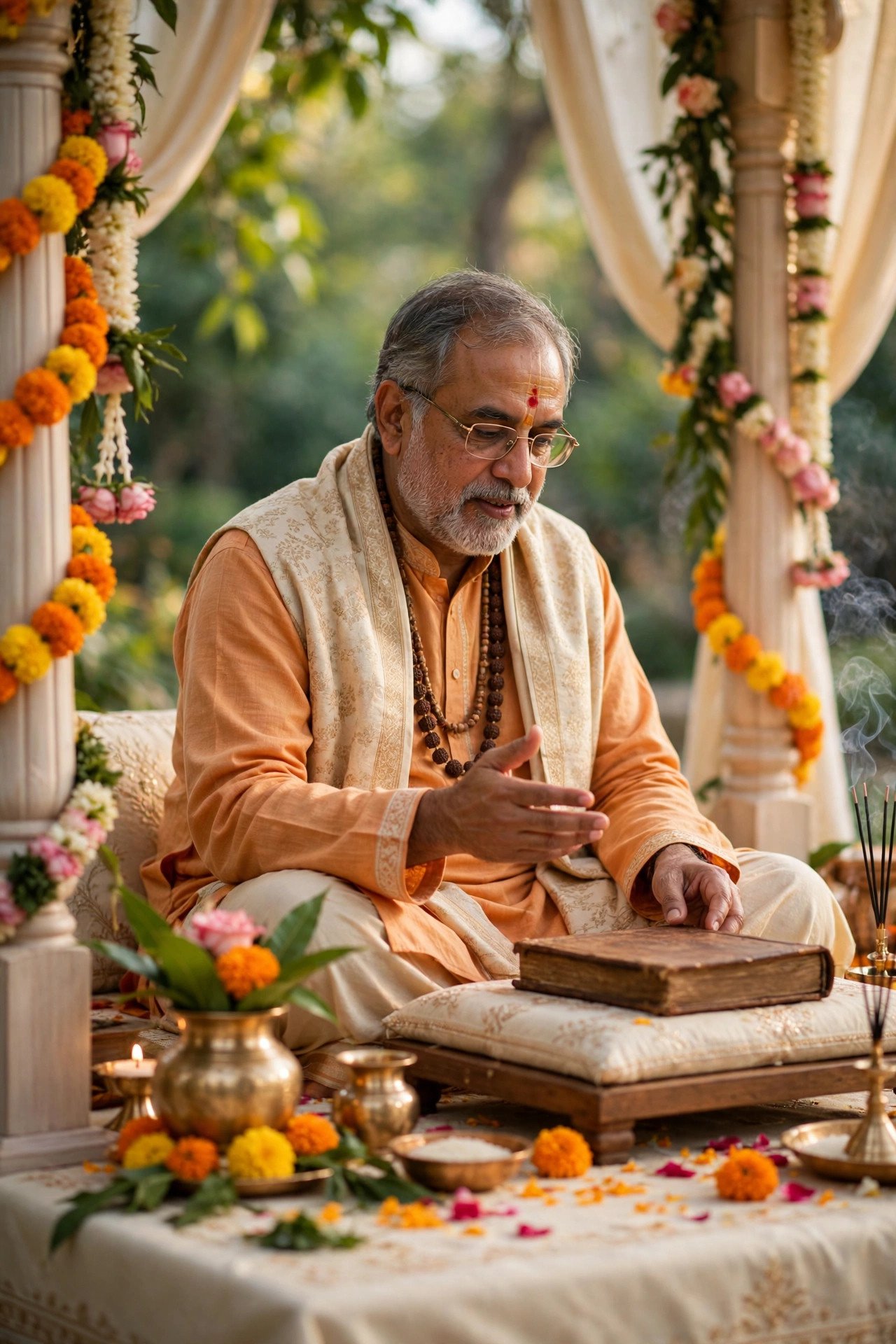
The officiant, or pandit, leads the Sanskrit verses and explains the rites — many diaspora priests offer English explanations throughout for mixed audiences. Meet early to choose which rites to include, agree the length, and discuss any adaptations your families want.
Programs That Explain Each Rite
 📌 Save
A short printed program translating each rite into a line or two is one of the kindest touches at a Hindu wedding. It helps guests follow a long ceremony, know when to stand or applaud, and appreciate meanings they would otherwise miss.
Asking Questions Respectfully
 📌 Save
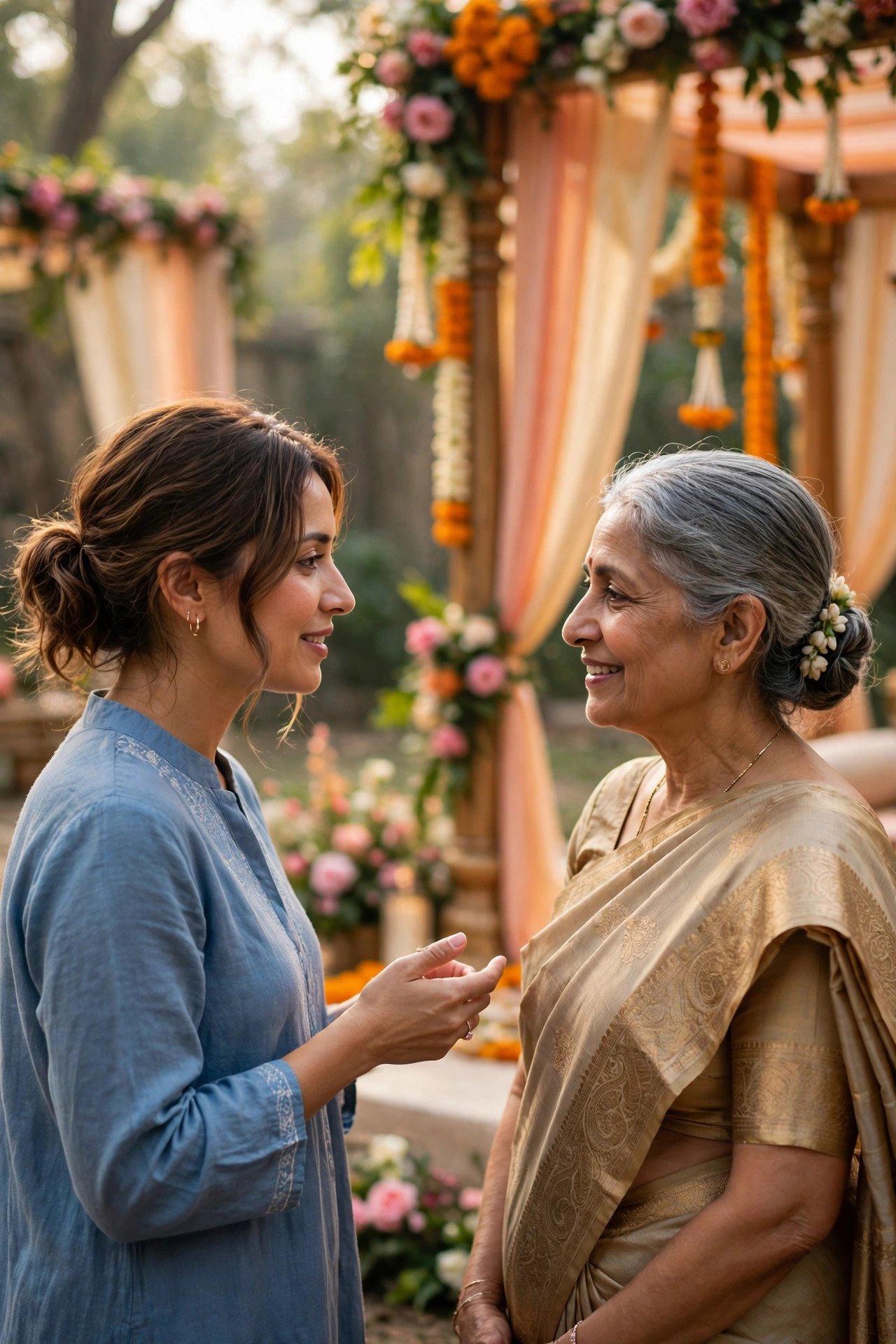
Elders and family members are usually delighted to explain their traditions to a genuinely curious guest. Ask during breaks or the reception rather than mid-rite, and frame questions with appreciation — what does this symbolize is always a welcome opener.
Hindu Wedding Ceremony FAQs
How long is a Hindu wedding ceremony?+
Most run one to three hours depending on the rites included, and the full celebration with pre-events like haldi, mehndi and sangeet can span several days. Check the invitation and the couple’s program for their exact plan.
What should a guest wear to a Hindu wedding?+
Formal attire in bright, festive colors is a safe choice, and traditional Indian clothing is welcome if you would like to wear it. Many guests avoid plain white and black, though norms vary by family.
Do guests take part in the ceremony?+
Mostly you will watch, applaud at joyful moments, and may be invited to shower the couple with petals during the blessings. The baraat procession and sangeet dancing are the moments where joining in is warmly welcomed.
Why is there a fire in the ceremony?+
The sacred fire, Agni, is regarded as a divine witness to the marriage. The couple’s most important vows — including the seven circles and seven steps — are made around it.
Is the food at a Hindu wedding vegetarian?+
Very often, yes — many families serve a fully vegetarian menu out of respect for the sacred occasion, and menus are generous and varied. Let the couple know about allergies ahead of time.
Key Takeaways
- The mandap and sacred fire are the heart of the ceremony; saat phere and saptapadi carry the central vows.
- Details vary widely by region, language and family — the couple’s program always outranks any general guide.
- Guests show respect by arriving on time, dressing festively, staying quiet during prayers, and joining the joyful moments.
- Pre-events — haldi, mehndi and sangeet — are celebrations in their own right, not optional extras.
- A short translated program transforms the day for first-time guests.
Final Thoughts
A Hindu wedding is a marriage witnessed by fire, family and community, built from small rites that each carry a wish for the couple’s life. Whether you are planning one or attending for the first time, follow the family’s lead, savor the joyful moments, and let the quiet ones move you — that is exactly what the ceremony is for.