French Wedding Traditions (2027)
By zainzari • Published October 23, 2026 • Updated October 23, 2026
 📌 Save
French wedding traditions start with the law: the only legally binding marriage in France is the civil ceremony at the mairie (town hall), performed by the mayor — couples then add a religious or symbolic ceremony if they wish. Celebrations feature the vin d’honneur welcome reception for a wide circle, a long seated dinner, a croquembouche of caramel-joined profiteroles instead of (or beside) a tiered cake, dragées sugared almonds for guests, and dancing that traditionally runs until dawn.
France separates its wedding into two honest parts: the state marries you, and then everyone celebrates that you married. The mairie ceremony is short, civic and surprisingly moving — the mayor reads the law, the témoins (official witnesses) sign, and the livret de famille is handed over. Everything after — the church or garden ceremony, the vin d’honneur, the endless dinner, the croquembouche tower — is chosen, which gives French weddings their particular mix of formality and freedom.
Customs vary by region — Provence, Brittany and Alsace each add their own music, cakes and symbols — and this guide labels the regional and historical elements as such. It is written for couples marrying in France, couples bringing French traditions to the USA, UK or Canada, and guests who need to know why dinner starts at nine and why nobody expects them to leave before the onion soup.
At a Glance: The French Wedding Day, in Order
| Stage | What Happens | Good to Know |
|---|---|---|
| Mairie ceremony | Mayor marries the couple legally | The only binding ceremony in France |
| Religious / symbolic ceremony | Church, temple or celebrant-led service | Optional, and held after the mairie |
| Vin d’honneur | Welcome reception for a wide circle | Short, sociable, photo-friendly |
| Le dîner | Long seated dinner with speeches | Starts late, paced slowly |
| Pièce montée | Croquembouche presented and cracked | Caramel and profiteroles, not slices |
| Le bal and soupe à l’oignon | Dancing into the night, onion soup near dawn | Pace yourself — it is a tradition |
Note: diaspora couples follow their own country’s law for the legal part and adopt the mairie-to-bal flow as a celebration structure — the shape travels even when the paperwork differs.
The Mairie: Where France Actually Marries You
 📌 Save
In France, marriage is legally created only by the civil ceremony at the mairie — the town hall of the commune where at least one partner has the required connection or residence. The mayor or a deputy officiates in the salle des mariages, reads articles of the civil code on the duties of spouses, takes the couple’s consent, and declares them married before their témoins sign the register. It is brief, republican and — families insist — genuinely touching, often with the whole village’s wedding party spilling onto the town hall steps for photographs.
The Livret de Famille: Your Family’s Official Book
 📌 Save
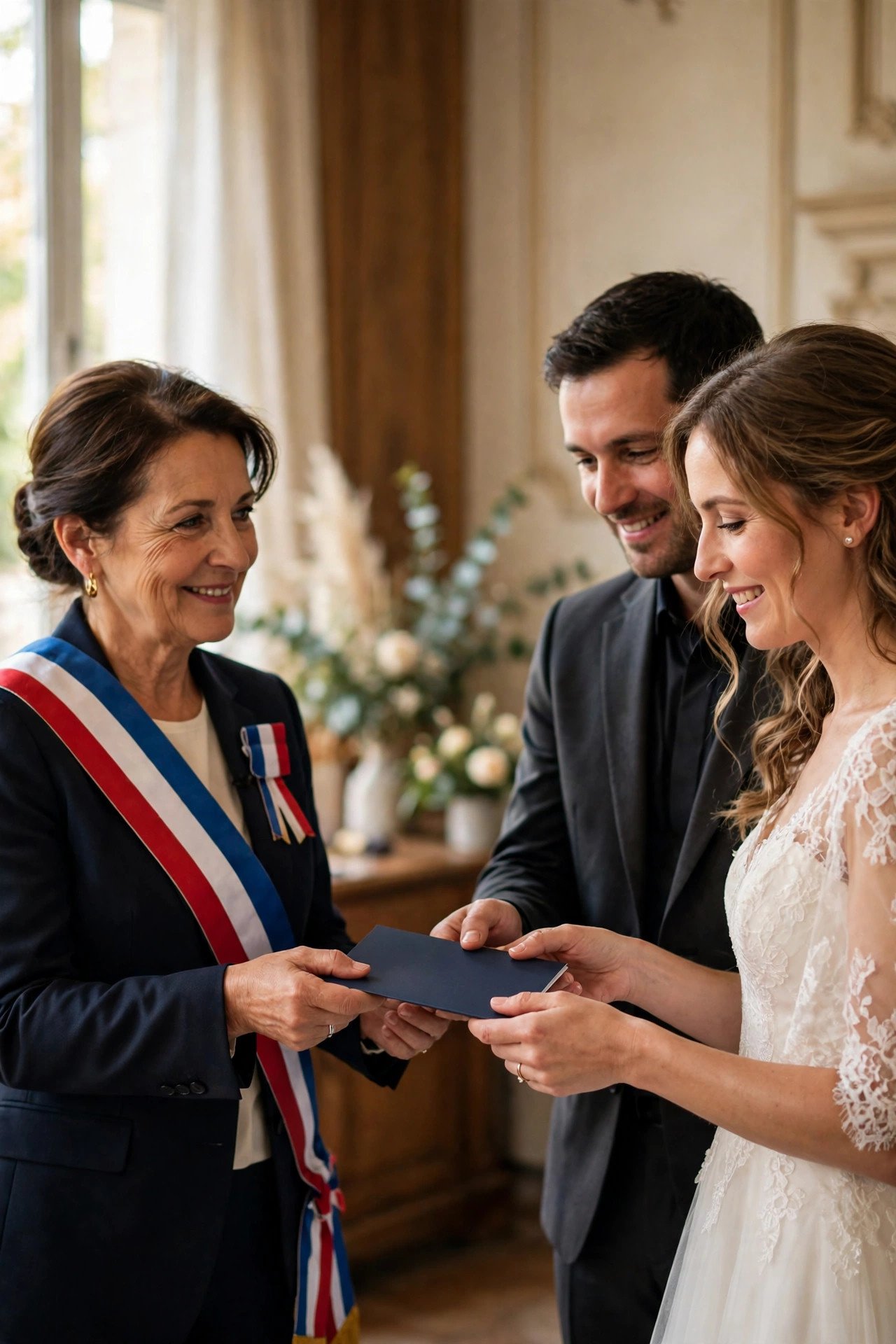
At the mairie, the couple receives the livret de famille — the family booklet in which the state will record the marriage and, in time, births of children and other family milestones. French families guard it for life; it is produced for school registrations and officialdom for decades. Receiving it is the ceremony’s quiet thunderclap: the couple leaves the town hall not just married, but documented as a new family unit in the republic’s own book.
Témoins, Not Bridesmaids: The Witness System
 📌 Save
French weddings have no bridal party in the Anglo sense — instead, each partner chooses témoins (witnesses), usually one or two, who sign the register at the mairie and stand as the marriage’s official human evidence. The role is an honor of intimacy rather than logistics: témoins are the couple’s closest people, and they often organize the bachelor and bachelorette celebrations (EVJF/EVG) as their domain. No matching dresses are required; the signature is the uniform.
The Second Ceremony: Church, Temple or Garden
 📌 Save
After the mairie, many couples hold the ceremony of their hearts: a Catholic Mass or blessing, a Protestant or Jewish service, or a cérémonie laïque — a celebrant-led symbolic ceremony in a garden, château or barn, crafted entirely around the couple’s story with readings, music and rituals like a shared candle or a tree planting. Because it carries no legal weight, it carries complete creative freedom, and French celebrants have become artists of the form. The day’s flow — mairie, then ceremony, then celebration — is a rhythm French guests know by heart.
Vin d’Honneur: The Welcome Reception
 📌 Save
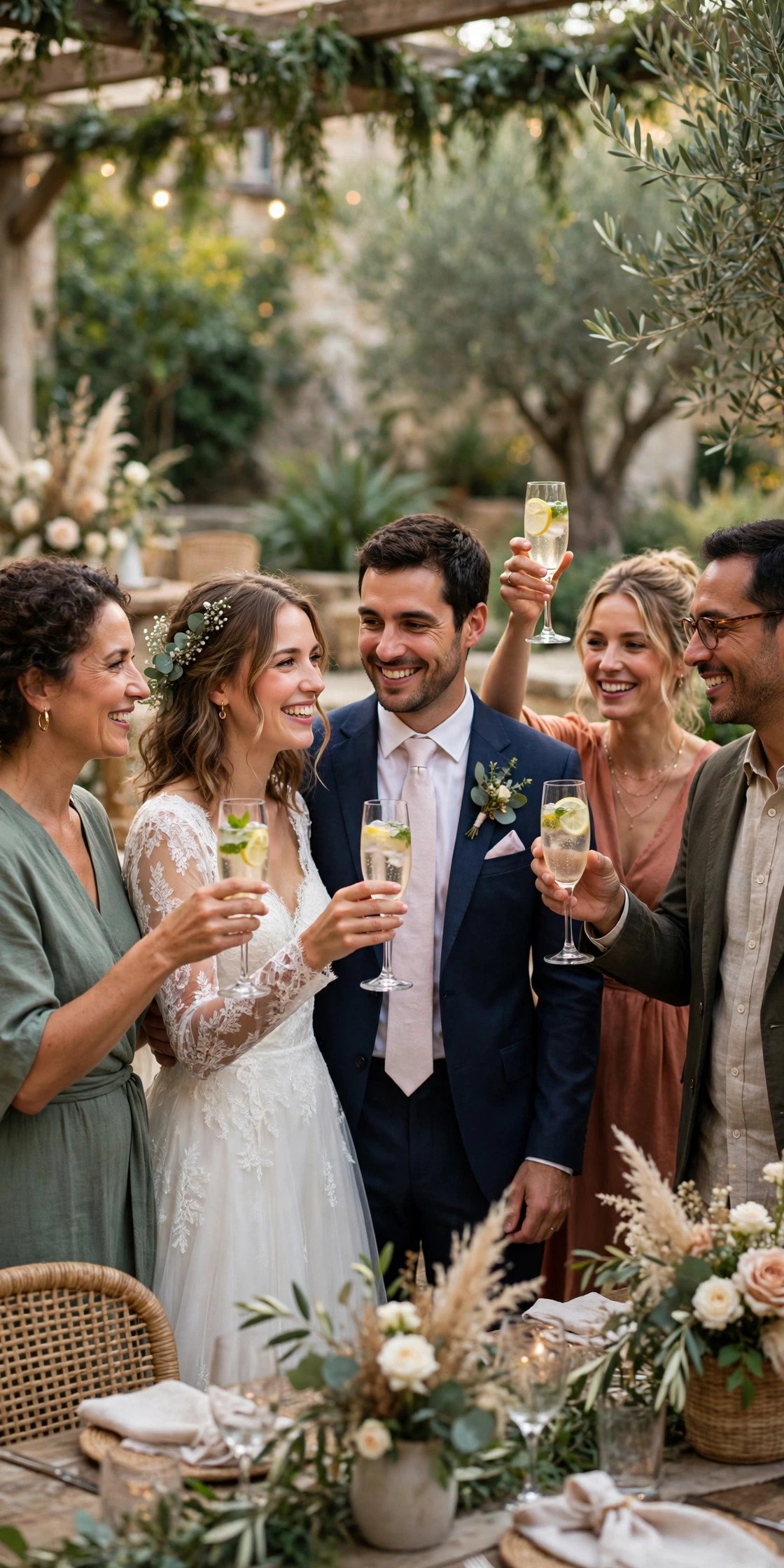
The vin d’honneur is the wedding’s wide doorway: a reception, held between the ceremony and dinner, to which a broader circle is invited — colleagues, neighbors, the parents’ friends — guests who greet the couple, share a toast of honor in their name, take photographs and enjoy light bites and refreshments such as sparkling water, juices, coffee and sweet drinks alongside the traditional offerings. It lets two hundred people celebrate the couple while eighty sit down to dinner, without a hint of second-class feeling — an elegant French solution to the guest-list problem.
Croquembouche: The Tower You Crack
 📌 Save
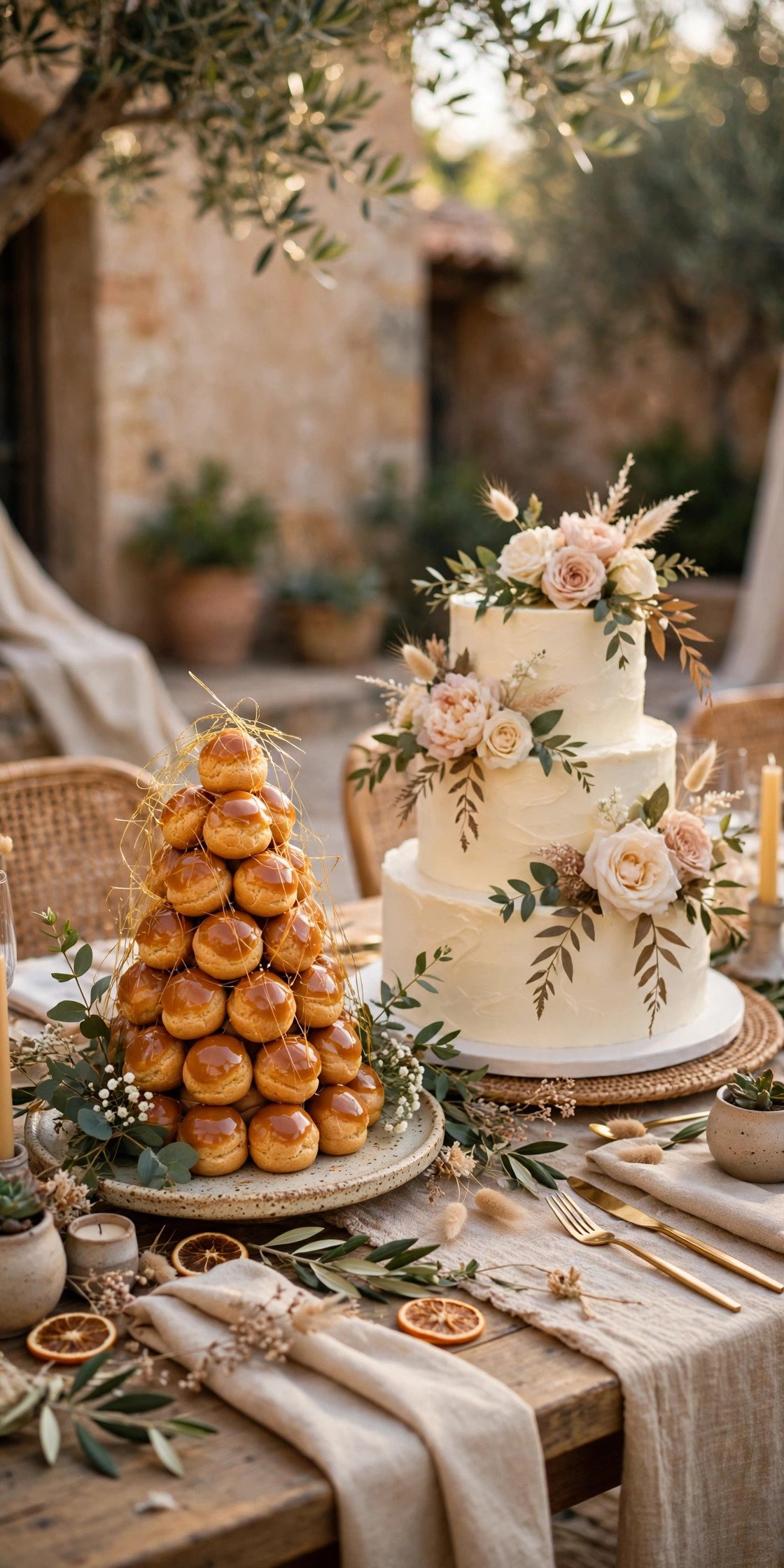
The classic French wedding cake is the croquembouche — literally ‘crunch in the mouth’ — a tower of cream-filled profiteroles joined with caramel threads into a gleaming cone, sometimes crowned with spun sugar and sugared flowers. It is not sliced but cracked and served with tongs and ceremony, often presented in the dark with sparklers in traditional celebrations. Modern couples may serve it beside a tiered cake rather than instead of one; the croquembouche remains the photograph and the talking point either way.
Dragées: Sugared Almonds, French Style
 📌 Save
Dragées — sugar-coated almonds, cousins of Italian confetti through their shared Mediterranean history — are France’s wedding sweet: given to guests in tulle bundles, cones or little boxes, in white and pastel, with the couple’s names and date on a card. French dragées are a craft product of makers in Verdun and elsewhere, and families taste-test them with a jeweler’s care — the almond quality and the shell’s thinness are matters of household honor. Chocolate dragées now share the bundle happily.
The Long Dinner: Courses, Seating and Speeches
 📌 Save
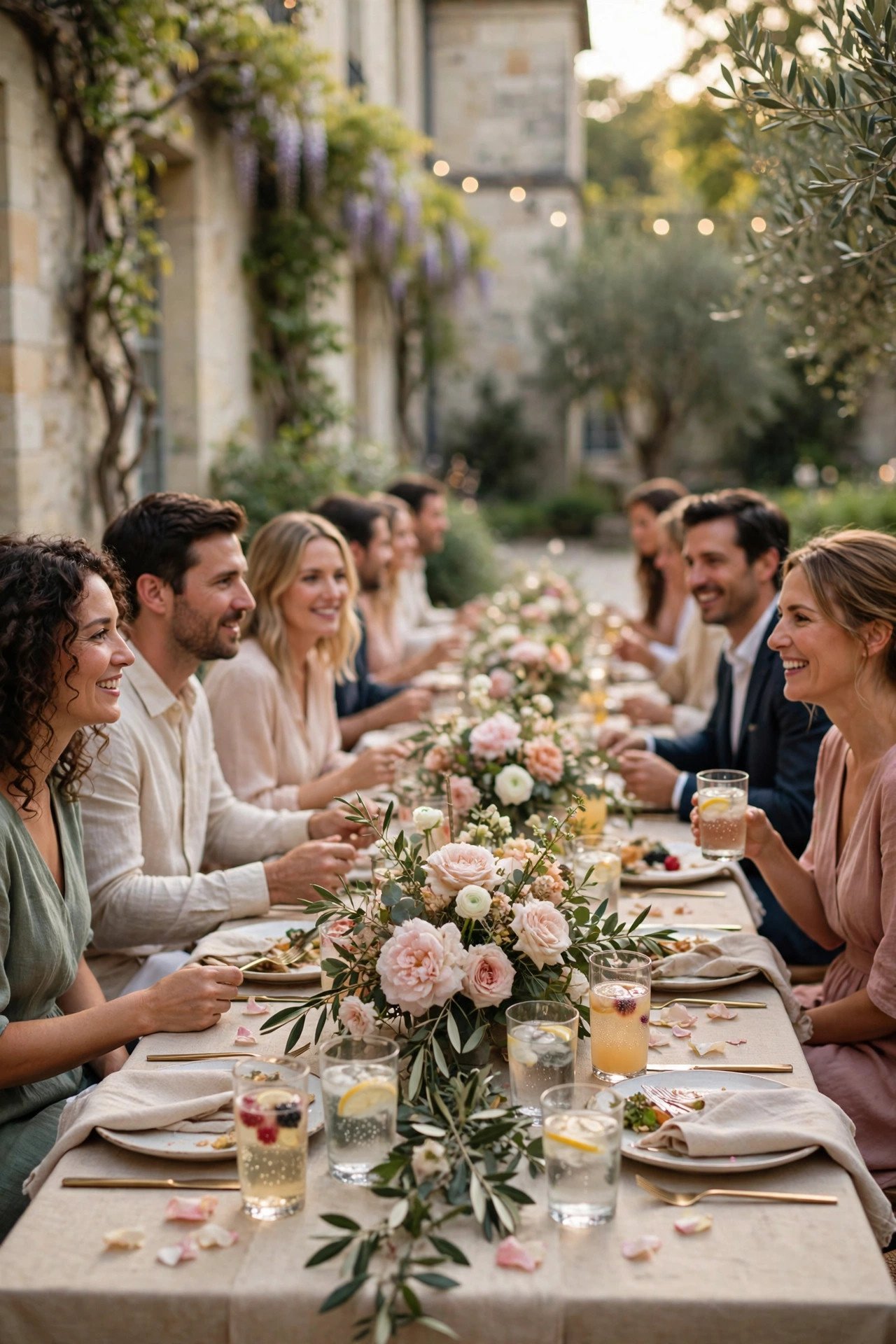
French wedding dinner is an endurance art: seated service of many courses — entrée, fish, meat, cheese, dessert — beginning late by Anglo standards and paced with speeches, songs and surprises between courses, including the French custom of guests spontaneously chanting and tapping glasses to demand the couple kiss. Seating plans are marriages of diplomacy (plan de table posted at the door), and the couple visits tables through the night. Nobody is in a hurry; the bal is coming and dawn is far away.
Le Jeu des Douze Mois and the Témoins’ Games
 📌 Save
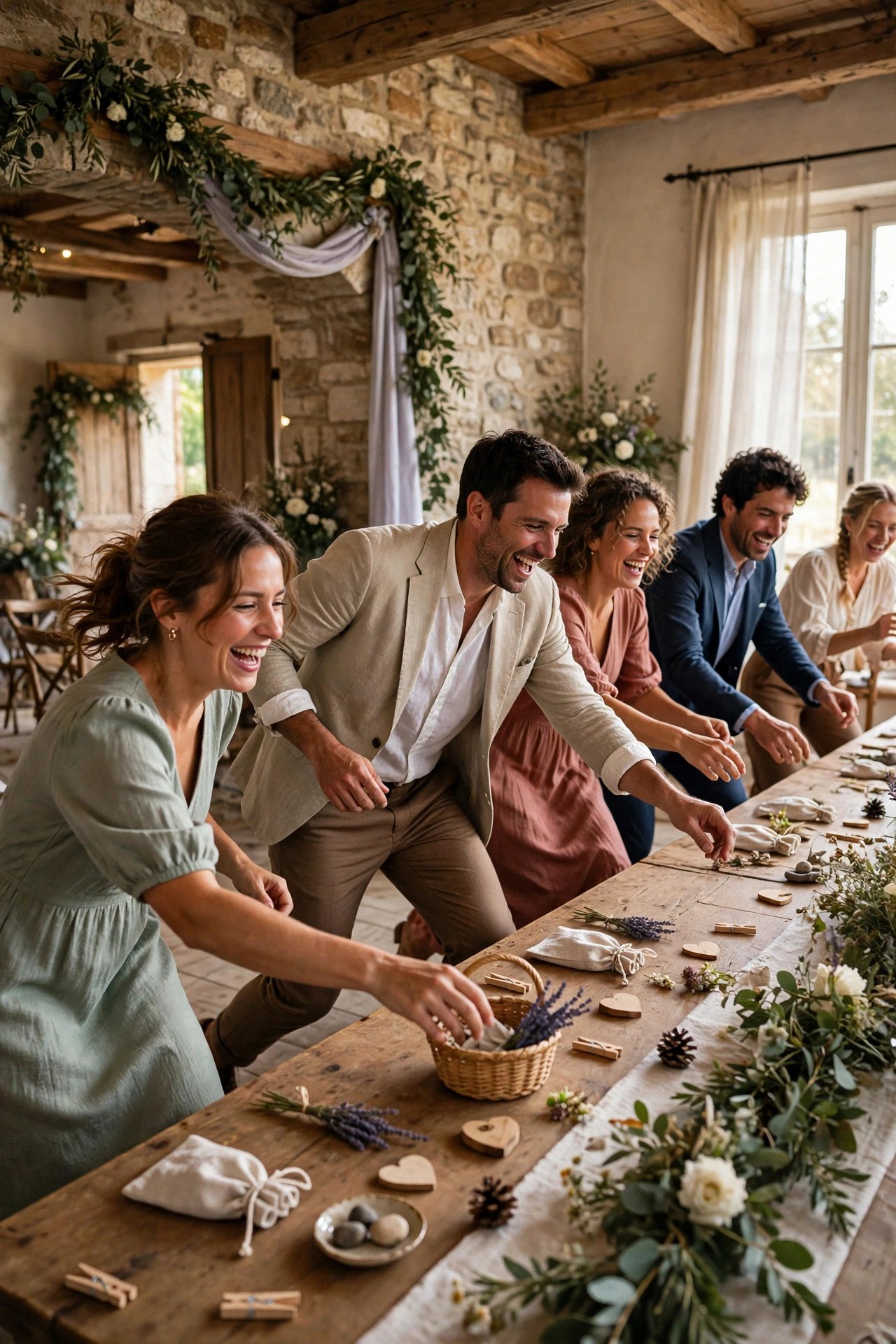
French dinners are punctuated by games organized by the témoins and friends — most famously le jeu des douze mois, where a dozen guests race to fetch objects the animator names (a sock, a traffic sign photograph, a stranger’s signature), with the slowest earning a playful ‘gage’ — a small task to perform for the couple in the coming months, one per month of the first year. Speeches, slideshows and surprise songs fill other gaps between courses. Foreign guests should know the chaos is choreographed by love, and participate at full volume.
La Soupe à l’Oignon: Onion Soup at Dawn
 📌 Save
When the dancing finally thins in the small hours, French tradition serves soupe à l’oignon — onion soup with its gruyère crust — to the survivors: a restorative, reviving ritual said to bring the couple (and their indefatigable friends) back to life before the farewells. Some families present it with ceremony to the couple; some venues serve it at a set hour as the night’s final course. It is the tradition foreign guests disbelieve in advance and praise forever afterward.
Le Bal: Dancing Until the Night Gives Up
 📌 Save
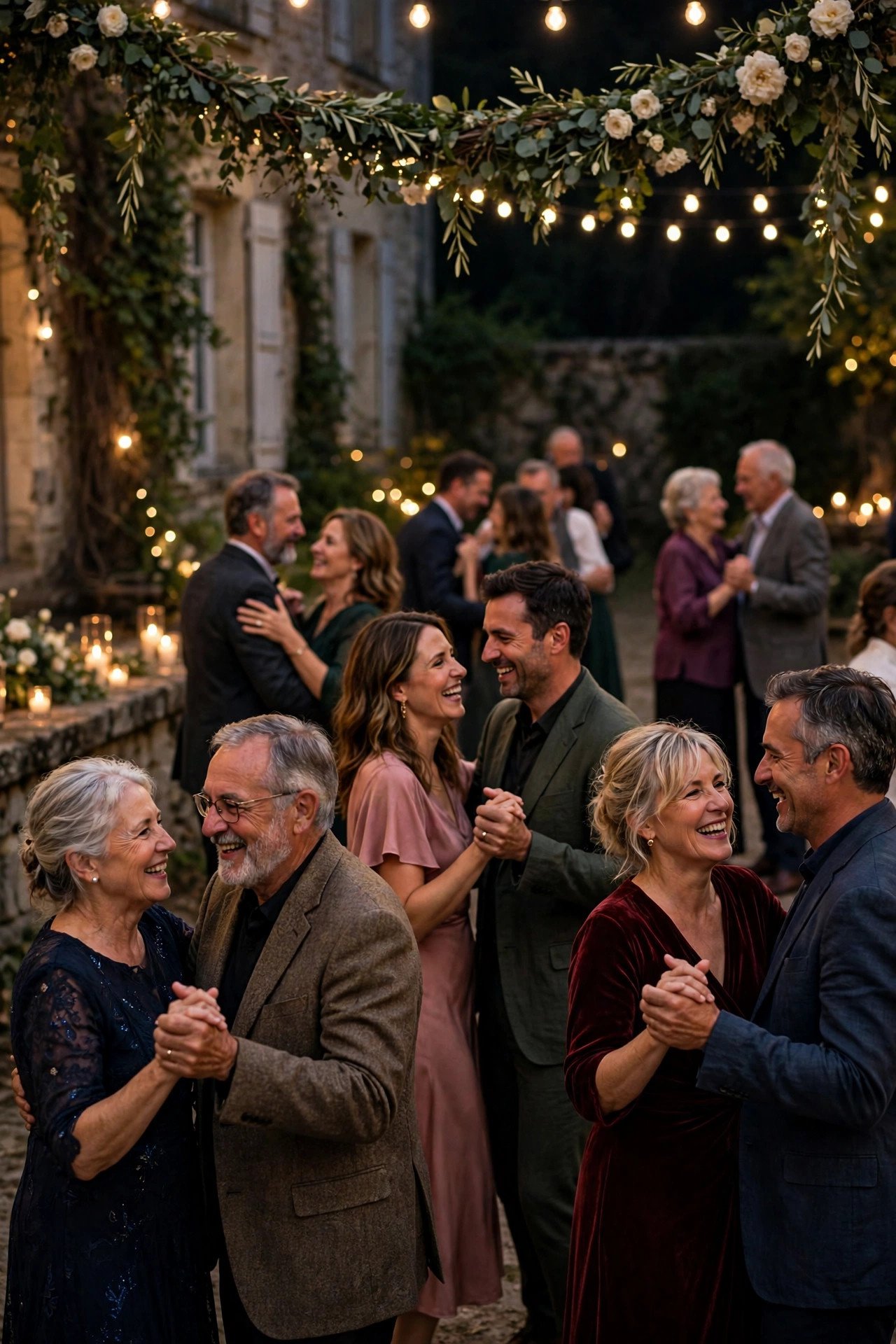
After dinner, le bal opens — traditionally with the couple’s first dance, sometimes a waltz — and the floor belongs to every generation until the couple decides otherwise, which in France can mean four in the morning. French wedding DJs and bands mix chanson, disco classics beloved of parents, and current hits with a diplomacy the UN could study. The couple’s departure is not the party’s end; in tradition, the party barely acknowledges it.
La Haie d’Honneur: The Guard of Honor
 📌 Save
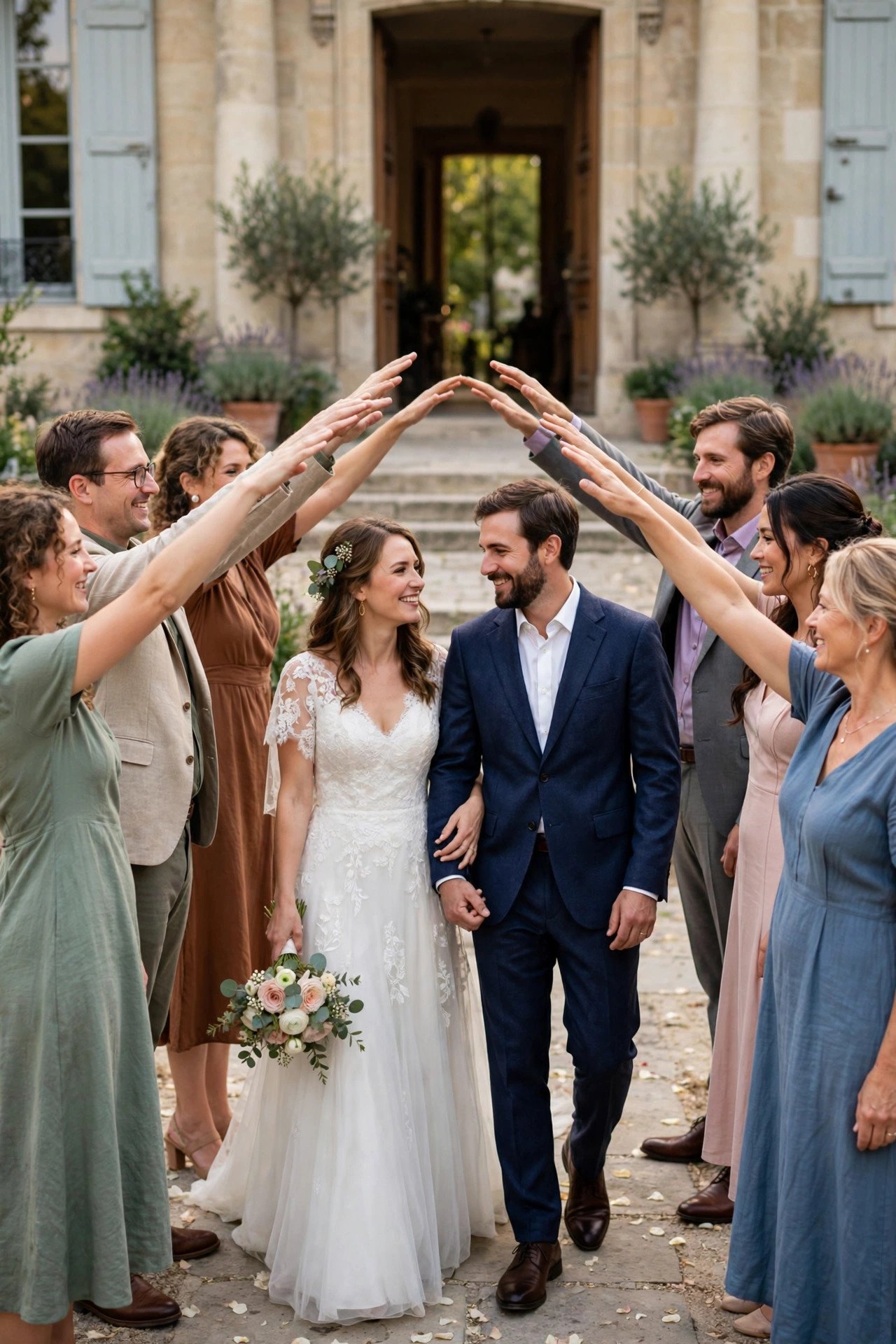
Leaving the mairie or church, the couple may pass through a haie d’honneur — a guard of honor formed by their club, corps or colleagues: firefighters with axes raised, rugby teammates with an arch of arms, colleagues with baguettes, oars, or whatever the shared life provides. It is France’s version of the military arch, democratized by every association the couple belongs to. The photographs are unbeatable and the meaning is precise: your people, standing to attention for your joy.
La Jarretière: The Garter Custom, Honestly
 📌 Save
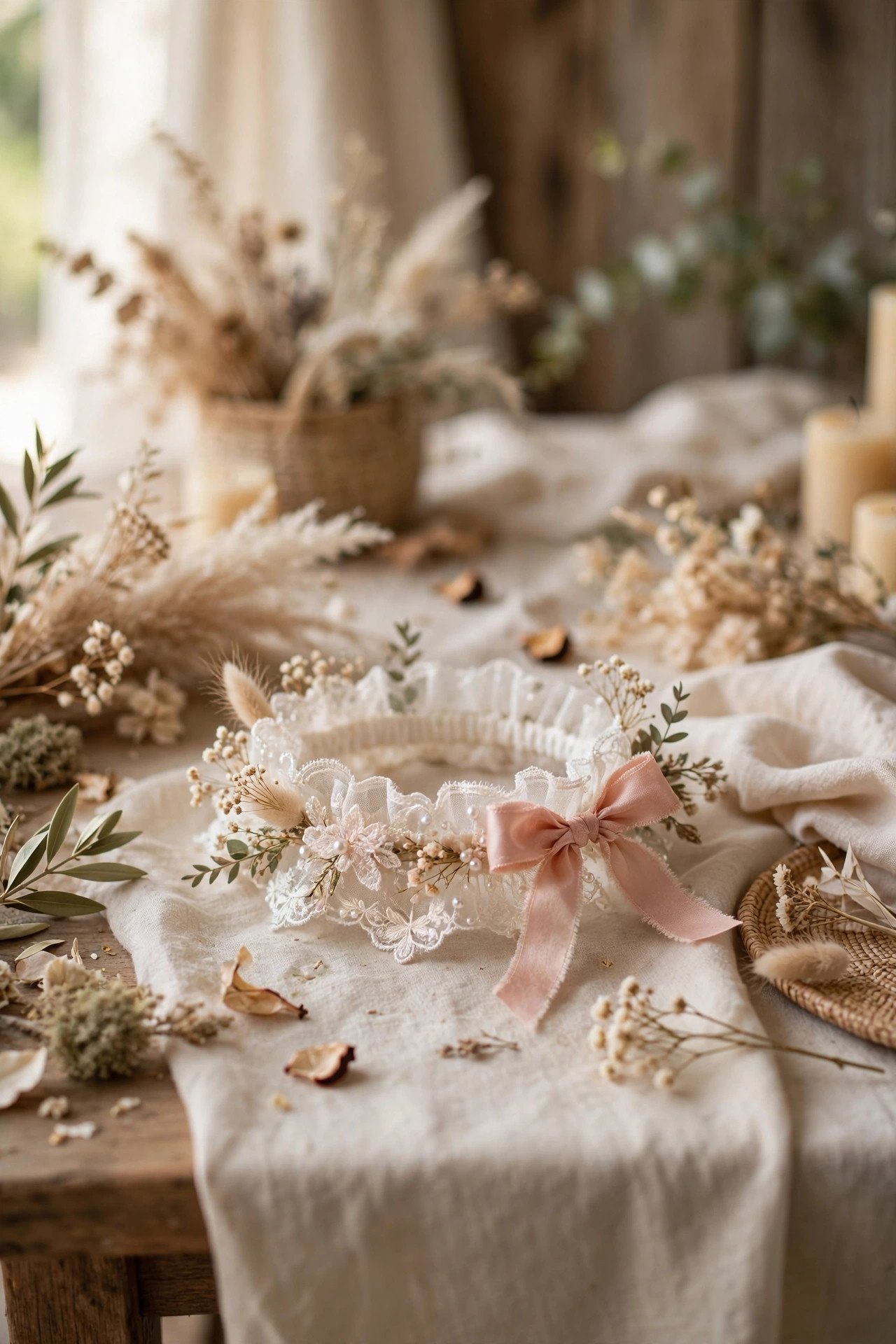
La jarretière — the auctioning of the bride’s garter — is a genuinely traditional French reception moment: the garter is playfully ‘bid’ for by guests, with folklore choreography around raising or lowering the dress hem as bids rise or fall, raising money for the couple. Honesty requires the modern footnote: many couples today skip it as dated, or replace it with a charity raffle or a garter toss, and no couple should feel it is obligatory tradition homework. Where families love it, it is kept brief, willing and entirely in fun.
The Globe de Mariée: A Keepsake Under Glass
 📌 Save
The globe de mariée is a revived nineteenth-century tradition: the bride’s bouquet, crown or veil pieces were preserved under a glass dome on a decorated base, displayed in the couple’s home for life — often growing over the years with locks of children’s hair and family mementos. Antique globes are collected; modern couples commission new ones as their marriage’s first museum. It is France’s most romantic answer to the question of what to do with the bouquet.
Le Trousseau and Family Linen
 📌 Save
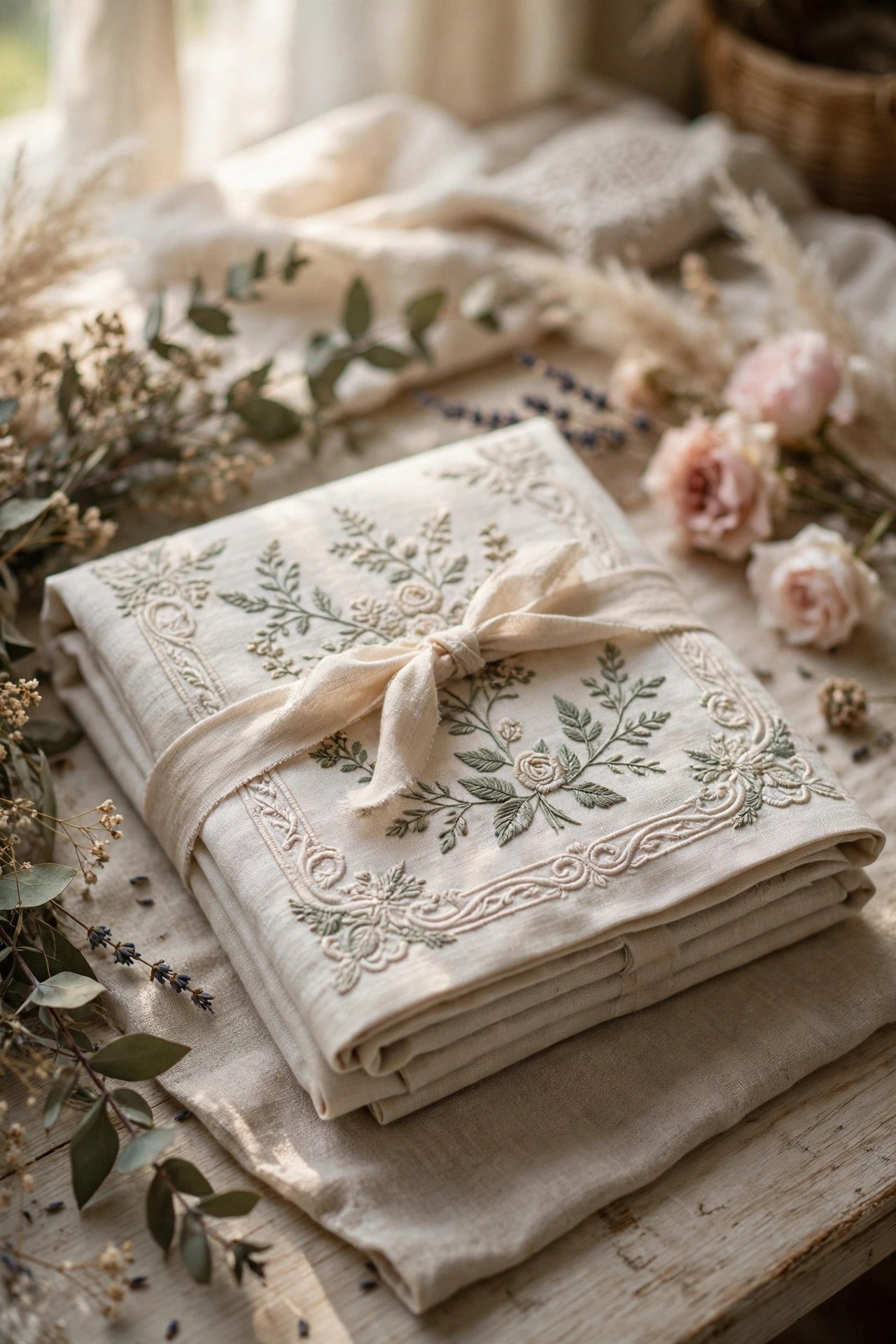
Historically, a bride’s trousseau — household linens embroidered with her initials, accumulated by her family over years — was displayed and inventoried as part of the marriage preparations, a dowry of domestic craft. The full custom has faded, but its descendants thrive: grandmothers gift embroidered linen, couples receive monogrammed household pieces, and ‘something borrowed’ at a French wedding is often a great-grandmother’s lace or table linen worked into the day. The thread literally runs from her hands to your table.
Lavender in Provence: Regional Fragrance
 📌 Save
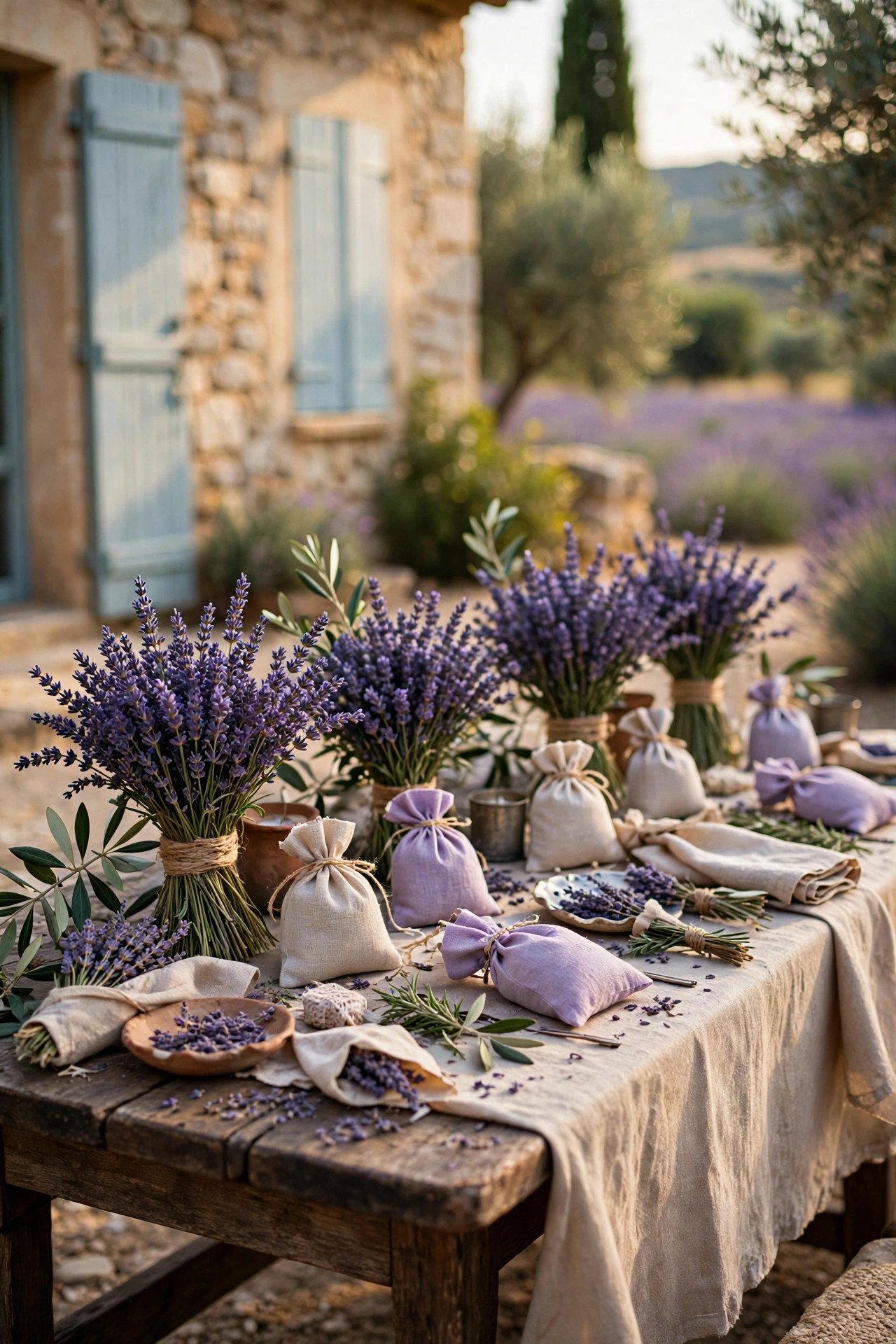
In Provence, lavender joins the wedding: in bouquets, as favors in linen sachets, scattered through the dinner’s styling, its scent doing what décor cannot. Provençal celebrations add olive branches, cicada motifs (the region’s lucky emblem in pottery and fabric) and outdoor dinners under plane trees that end when the mistral or the dawn decides. Regional identity in France is not garnish — a Provençal wedding and a Breton wedding are cousins, not twins.
Brittany: Fest-Noz Spirit and Salted Caramel
 📌 Save
Brittany brings the fest-noz — the UNESCO-listed night festival of Breton dance and music, with bombarde and biniou leading circle dances — into its wedding receptions, alongside kouign-amann and salted caramel among the sweets and a maritime palette of navy, white and rope. Breton circle dances, like their Celtic cousins, are caller-friendly and community-built, and a Breton wedding party can out-dance any region in France on home turf.
Alsace: Kouglof, Storks and Timbered Towns
 📌 Save
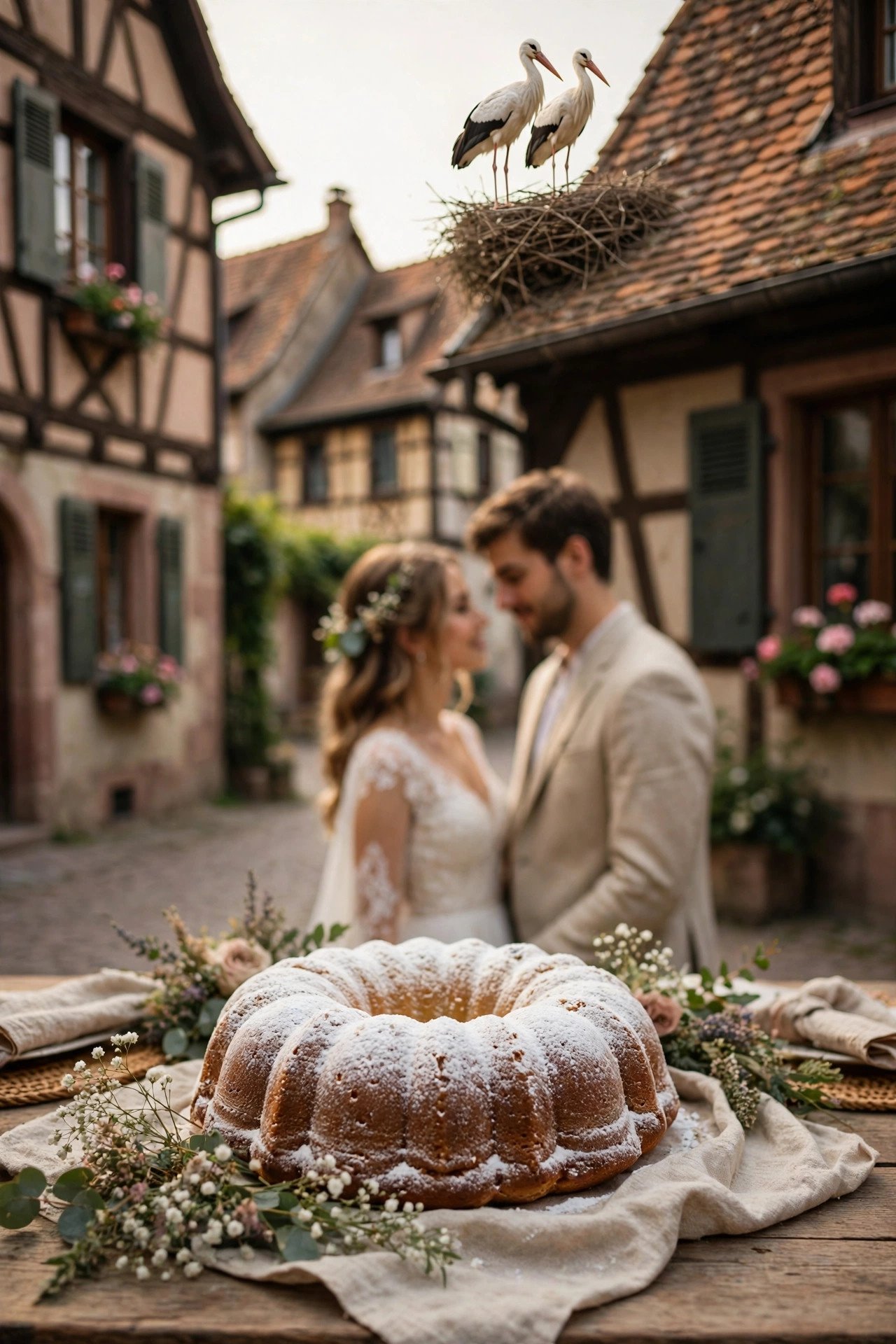
Alsace weddings bake the kouglof — the region’s ring-shaped brioche, studded with raisins and almonds — into the celebration, marry in half-timbered villages of storybook saturation, and nod to the stork, Alsace’s beloved emblem of fidelity and good fortune, in stationery and favors. Riesling country hospitality is famously generous (the region’s tables groan in two languages of tradition, French and Alsatian), and winter weddings add vin chaud spices to the air — as scent, at least, in every market square.
The Paperwork, Honestly: Marrying in France as a Foreigner
 📌 Save
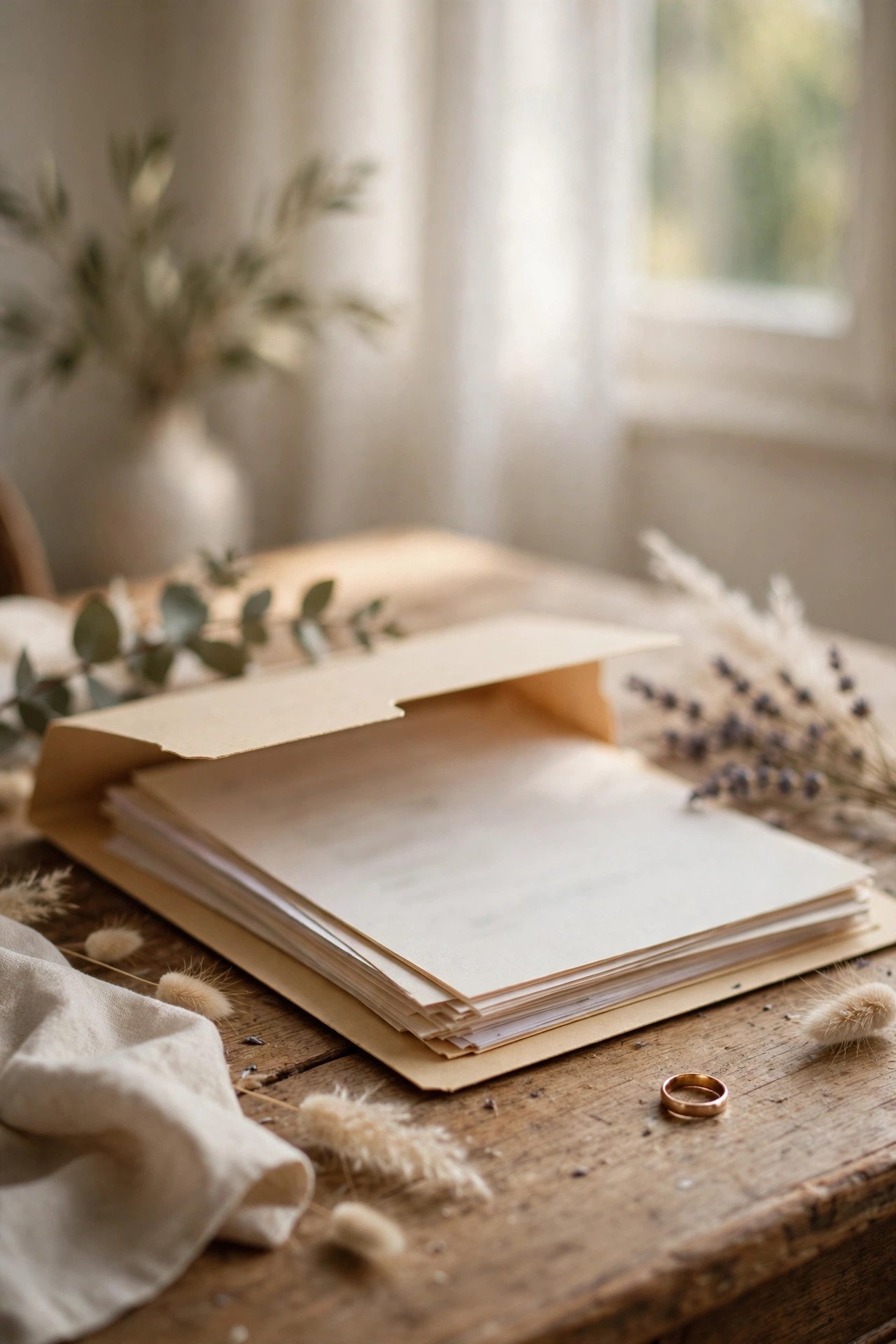
Foreigners marrying in France face a real dossier: typically at least one partner must have lived in the commune for a set period before the mairie will marry them, documents (birth certificates, proof of status) must be recent, translated and sometimes apostilled, and the mairie publishes banns in advance. Rules and timelines genuinely vary and change, which is why many international couples do the legal ceremony at home and hold their French celebration — mairie-style procession, vin d’honneur, croquembouche and all — as the symbolic heart. Verify everything with the specific mairie and your consulate, in writing, early.
Liste de Mariage and the Envelope
 📌 Save
French couples traditionally publish a liste de mariage — a gift list held at a department store or online — while many guests, especially family, give money in an envelope toward the couple’s projects or honeymoon. Diaspora and modern couples blend freely: a list for the household, an urne (decorated gift box) at the reception for envelopes and cards. Guests abroad should simply follow the couple’s stated system; in France, asking the témoins what is planned is the polite shortcut.
Guest Guide: Timing, Dress and Survival
 📌 Save
Guests, recalibrate your clocks: a French wedding may begin at the mairie in the morning, reach dinner at nine and end after the onion soup at four — dress elegantly (never white), bring a layer for the vin d’honneur outdoors, eat at every offered stage, and do not schedule anything the next morning. Children are included or not as the invitation states; babysitting networks at French weddings are an auntie-run institution of their own. Your stamina is your gift to the couple.
The Day After: Brunch and Farewells
 📌 Save
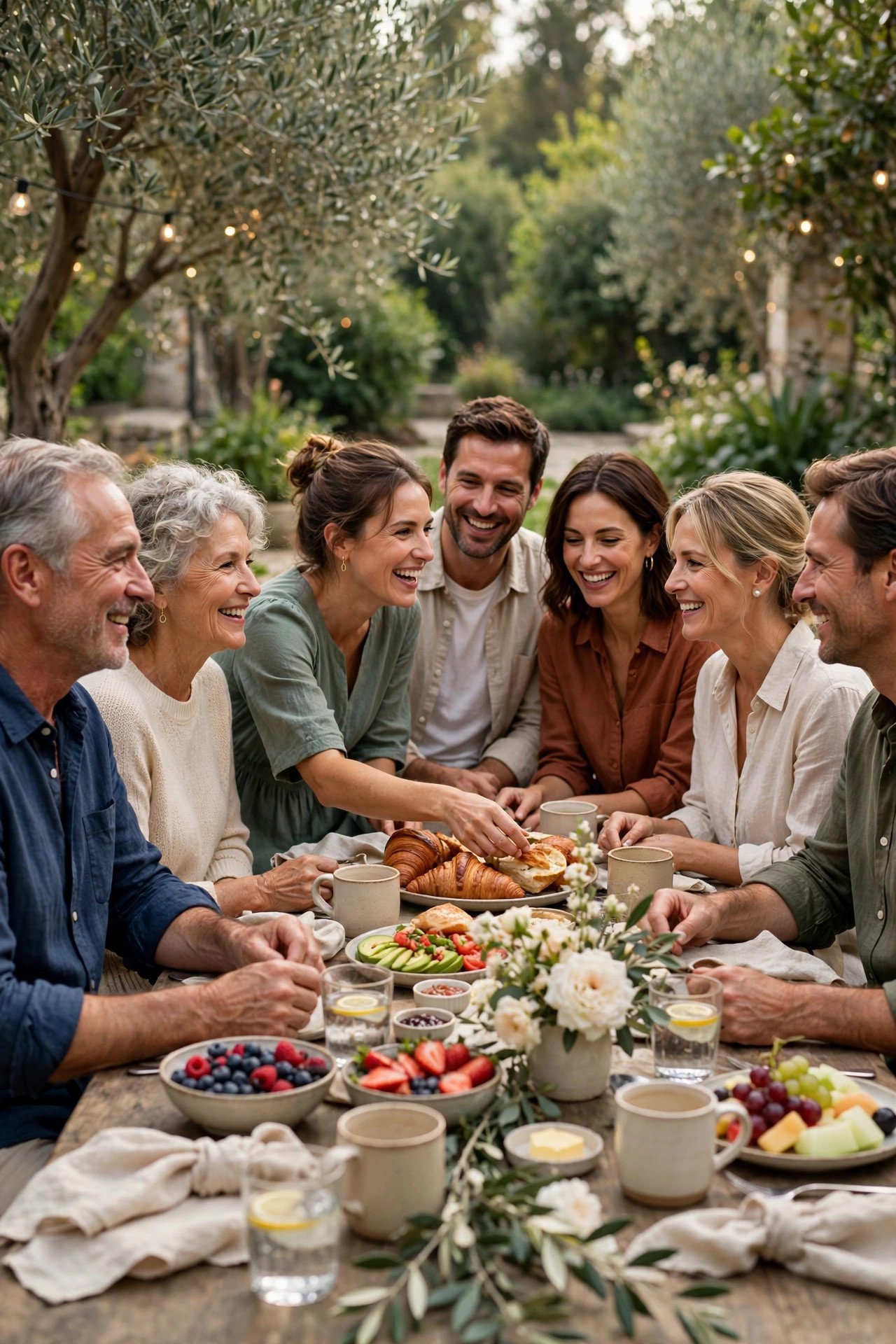
The lendemain — the day after — gathers whoever remains for brunch or a casual lunch at the family home or venue: croissants, leftovers proudly reappearing, the croquembouche’s remains defended by uncles, photographs already circulating and the couple finally sitting down in daylight. It is where out-of-town family is properly farewelled and where the wedding’s stories get their first official telling. Diaspora couples have adopted the brunch as standard; France simply never skipped it.
French Language Touches, Done Properly
 📌 Save
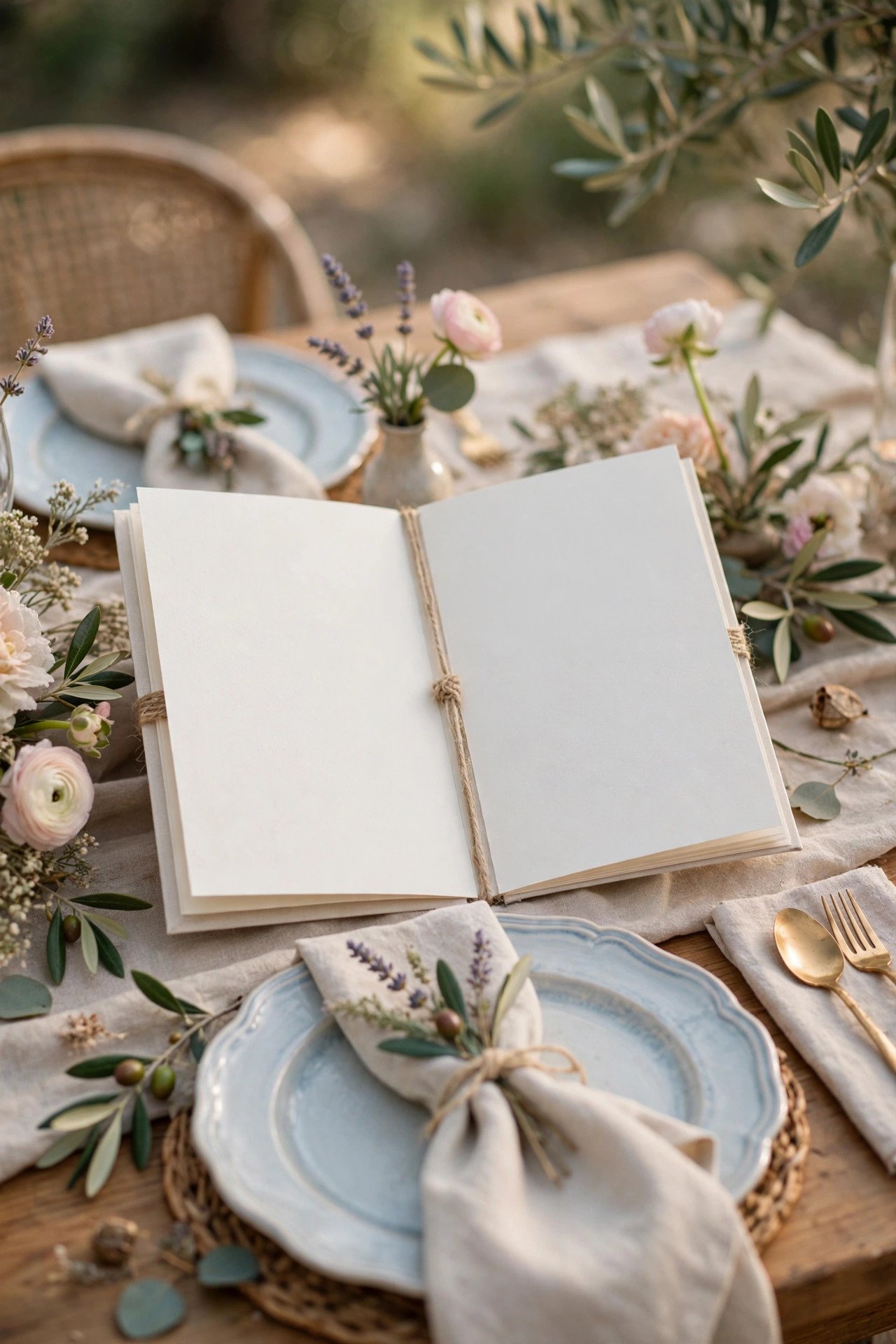
Bilingual French weddings thread the language through vows, menus and signage — félicitations on the cards table, the menu printed in both languages, a grandparent’s toast translated live by a témoin. Done with care (translations checked by a speaker, pronunciation rehearsed), French touches honor heritage; done decoratively, they curdle into costume. The French themselves are the model: they use English at weddings sparingly and correctly, and expect the same courtesy back.
No Early Finish: The French Relationship with Time
 📌 Save
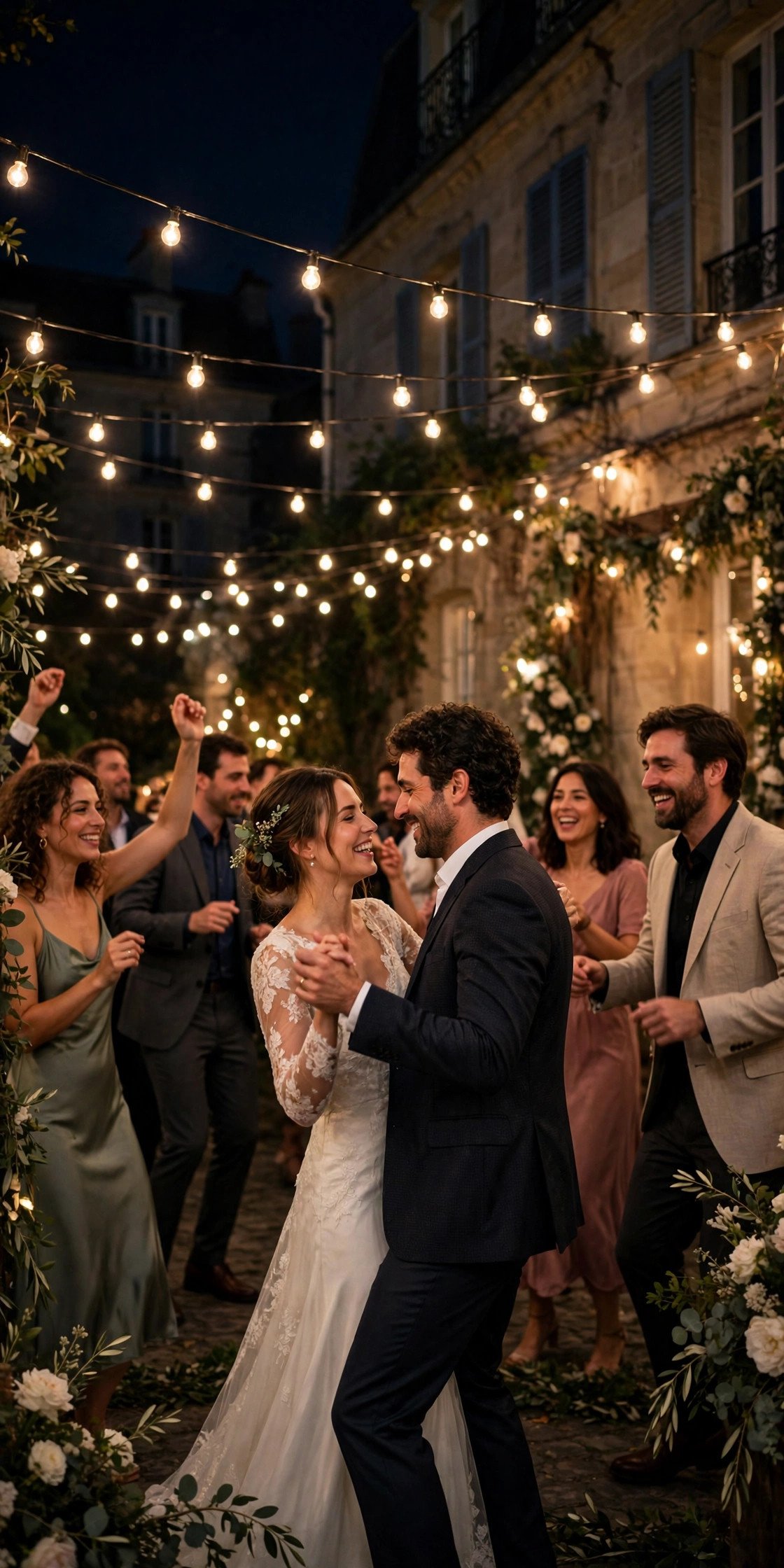
Underlying every French custom is a philosophy diaspora couples import deliberately: the wedding is not a program to execute but a day that expands — dinner is long because conversation is the point, the bal is late because dancing is the reward, and the soup at dawn is not excess but punctuation. Couples planning French-style celebrations in the US, UK or Canada brief their venues early, because the format’s only real enemy is an 11 p.m. noise curfew — plan around it, and the night is yours.
Blending French Traditions Into Your Wedding Anywhere
 📌 Save
The French format exports beautifully: a civil-first structure (register office, then ceremony), a vin d’honneur that solves your guest-list math, a croquembouche cracking beside your cake, dragées in tulle, and a dinner that refuses to be rushed. What keeps it French rather than French-themed is the philosophy — real pâtisserie, real time, witnesses honored as témoins — plus French family or teachers guiding any element with roots. Elegance, in this tradition, is mostly a scheduling decision.
French Wedding Traditions FAQs
Is a church wedding legally binding in France?+
No. In France only the civil ceremony at the mairie (town hall), performed by the mayor or a deputy, creates a legal marriage. A religious or symbolic ceremony may follow but has no legal effect. Couples must complete the mairie ceremony — with a dossier of documents filed in advance — to be married under French law.
What is the vin d’honneur?+
The vin d’honneur is a welcome reception held between the ceremony and dinner, to which a wide circle — colleagues, neighbors and extended acquaintances — is invited to congratulate the couple, share refreshments and take photographs. It lets many more people celebrate the couple than can be seated at dinner, gracefully and without tiers of importance.
What is a croquembouche?+
A croquembouche is the classic French wedding cake: a tower of cream-filled profiteroles joined with caramel into a cone, often finished with spun sugar. Its name means ‘crunch in the mouth.’ It is cracked and served rather than sliced, frequently presented with sparklers, and often appears beside a tiered cake at modern weddings.
Who are témoins?+
Témoins are the couple’s official witnesses — usually one or two chosen by each partner — who attend the mairie ceremony and sign the marriage register. They replace the bridesmaid/groomsman structure in French weddings: the honor is about intimacy and trust rather than matching outfits or party logistics, though témoins often organize the bachelor and bachelorette events.
What gift should a guest give at a French wedding?+
Follow the couple’s system: many publish a liste de mariage (gift list) at a store or online, while family and close friends often give money in an envelope, placed in the urne (gift box) at the reception. When unsure, ask the témoins — advising guests is part of their role.
Key Takeaways
- Only the mairie marries you in France — church and symbolic ceremonies follow as chosen celebrations.
- Témoins sign the register; there is no bridal party, and the signature is the honor.
- The vin d’honneur solves guest-list math: everyone congratulates, fewer dine, nobody feels tiered.
- Croquembouche, dragées and a many-course dinner that starts late define the French table.
- Pace like France: dinner long, bal later, onion soup at dawn, brunch the day after.
Final Thoughts
A French wedding is honest about what marriage is: a legal act witnessed by your closest people, then a very long party thrown by everyone who loves you. Keep the mairie moment honored, the vin d’honneur wide, the croquembouche real and the dinner unhurried — in Lyon, London or Los Angeles — and you will have imported not just France’s customs but its best idea: that celebration, like marriage, should never be rushed.