Turkish Wedding Traditions (2027)
By zainzari • Published October 23, 2026 • Updated October 23, 2026
 📌 Save
Turkish wedding traditions unfold in beloved stages: the formal asking (kiz isteme) where the bride serves coffee — with one famously salty cup for the groom — a promise ceremony with rings joined by a red ribbon (soz), an emotional henna night (kina gecesi), the fetching of the bride to drums and zurna, the civil marriage signing (nikah), and a reception where guests pin gold on the couple and everyone dances the halay. Customs vary by region and family; this guide explains each one.
A Turkish wedding is not a day, it is a season: asking, promising, engaging, henna, fetching, signing, feasting — each stage with its own cast, sweets and small ceremonies, and the same families showing up for all of them. The customs blend Central Asian, Ottoman and Anatolian village roots, and they are remarkably intact in 2027, in Turkey and across its huge diaspora in Germany, the UK, the USA and Canada.
Here are 25 Turkish wedding traditions in the order families live them, from the coffee tray to the gold-pinning queue, with each custom’s meaning and modern form. As always in this series: regions differ — a Black Sea wedding is not an Aegean one — and every family edits. Let your family’s elders be the final editors.
At a Glance: Turkish Customs, Meanings and Moments
| # | Tradition | What It Is | When It Happens |
|---|---|---|---|
| 1 | Kiz Isteme — Asking for Her Hand | the groom’s family formally requests the bride’s hand | Engagement stage |
| 2 | The Coffee Ritual and the Salty Cup | the bride serves Turkish coffee; the groom’s cup is salted | Engagement stage |
| 3 | Flowers and Chocolates for the Asking Visit | the groom’s family arrives with a bouquet and boxed chocolates | Engagement stage |
| 4 | Soz — The Promise, Rings on a Red Ribbon | rings are joined by a ribbon and cut by an elder | Engagement stage |
| 5 | Nisan — The Engagement Celebration | a bigger party marks the formal engagement | Engagement stage |
| 6 | The Ceyiz — Trousseau on Display | the bride’s handmade trousseau is prepared and shown | Before the wedding |
| 7 | Kina Gecesi — The Henna Night | the bride’s farewell celebration with henna, song and tears | Night before the wedding |
| 8 | The Bindalli — The Bride’s Henna Dress | an embroidered velvet caftan worn for the henna night | Henna night |
| 9 | The Gold Coin in the Bride’s Palm | the bride opens her fist only for a gold coin from her mother-in-law | Henna night |
| 10 | Henna Songs and Happy Tears | friends sing the farewell songs around the veiled bride | Henna night |
| 11 | The Groom’s Shave — Damat Tirasi | the groom is ceremonially shaved amid jokes and music | Wedding morning |
| 12 | Gelin Alma — Fetching the Bride | the groom’s party comes to the bride’s home with music | Wedding day |
| 13 | Davul and Zurna at the Door | drum and reed pipe — Anatolia’s wedding sound | Wedding day |
| 14 | The Dowry Chest Standoff | someone sits on the bride’s chest until paid to move | Wedding day |
| 15 | The Red Sash from Her Father | a red ribbon is tied at the bride’s waist as she leaves home | Wedding day |
| 16 | Names Written Under the Bride’s Shoe | single friends’ names are written on the sole; the first to fade marries next | Wedding day |
| 17 | The Wedding Convoy | a honking line of decorated cars crosses the town | Wedding day |
| 18 | Road-Blocking for Envelopes | children stop the convoy and are paid in envelopes to let it pass | Wedding day |
| 19 | The Civil Nikah Signing | the official marriage ceremony performed by a registrar | Wedding day |
| 20 | Stepping on Toes at the Signing | bride and groom race to step on each other’s foot after signing | Wedding day |
| 21 | Taki — The Gold-Pinning Ceremony | guests queue to pin gold coins and notes on the couple | Reception |
| 22 | Kissing Elders’ Hands for Blessings | the couple kisses elders’ hands and touches them to their foreheads | Whole celebration |
| 23 | Halay — The Circle Dance | guests dance hand-in-hand in lines and circles, led by a handkerchief | Reception |
| 24 | Nikah Sekeri — Wedding Candy Favors | sugared almonds in tulle, the classic guest favor | Reception |
| 25 | Breaking the Clay Pot | in some regions the bride breaks a pot of sweets at her new door | Arrival at new home |
Planning note: the Turkish sequence has many stages across weeks. Map them on one calendar early — isteme, soz, nisan, kina and the wedding day each need their own evening.
Kiz Isteme — Asking for Her Hand
 📌 Save
The process begins with kiz isteme: the groom, his parents and respected elders visit the bride’s family home, bringing flowers and chocolates, and the eldest guest makes the formal request with the classic formula — ‘by God’s command and the Prophet’s word, we ask for your daughter for our son.’ The bride’s family, having usually signaled willingness in advance, accepts with grace, and coffee is served to seal the visit. It is the families’ first official alliance, staged with deliberate formality.
The Coffee Ritual and the Salty Cup
 📌 Save
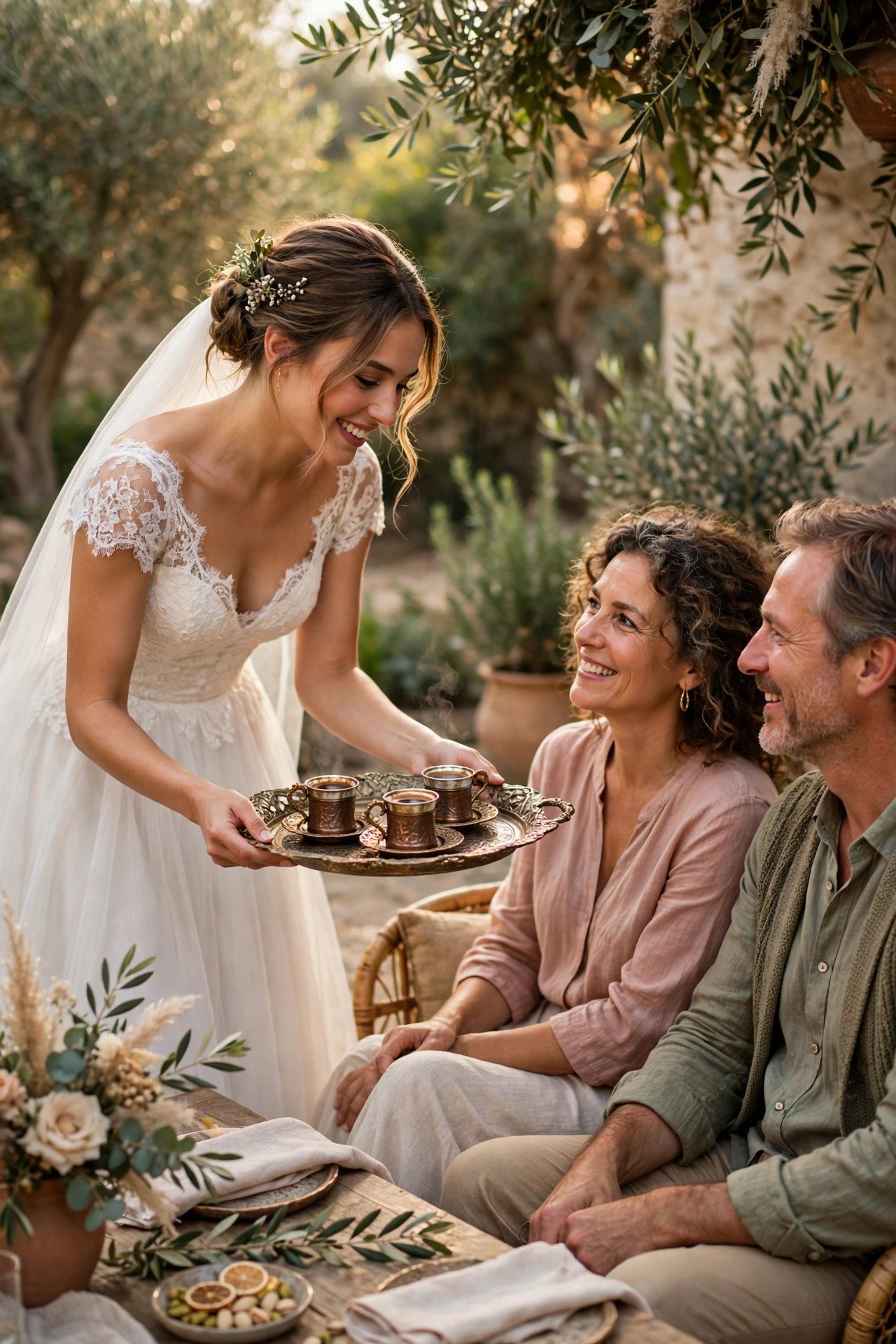
At the asking, the bride prepares and serves Turkish coffee to all the guests — and the groom’s cup is secretly loaded with salt (some families use extra sugar, lemon or spice). He must drink it without flinching or complaining: proof he will endure anything for her, and a first public display of grace under family pressure. The room watches his face like a final score. If he drains the salty cup smiling, applause breaks out — he has passed the first of the wedding’s many joyful tests.
Flowers and Chocolates for the Asking Visit
 📌 Save
The asking visit has a dress code for gifts: a substantial bouquet — classically red roses — and chocolates presented on a silver tray or in an elegant box, sometimes accompanied by Turkish delight. The gifts honor the bride’s household and sweeten the negotiations to come. Florists in Turkey prepare ‘isteme bouquets’ as a specialty, grand enough to require two hands. In the diaspora the custom is kept intact; it is often the groom’s first lesson in how seriously his new family takes presentation.
Soz — The Promise, Rings on a Red Ribbon
 📌 Save
At the soz — the promise ceremony, often held the same evening as the asking or soon after — the couple’s rings are placed on their right ring fingers, joined by a single red ribbon. An elder offers prayers and good wishes, then cuts the ribbon: the couple is now sozlu, promised, and the cut pieces are sometimes kept as keepsakes. The ceremony is intimate — family and close friends — and in many homes it is the moment the engagement truly begins, announced to the neighborhood by sweets and celebration.
Nisan — The Engagement Celebration
 📌 Save
The nisan is the formal engagement celebration — for many families a party approaching wedding scale, at a hall or large home, with the bride in a special nisan dress, an engagement cake, dancing and the couple’s rings (from the soz, or exchanged here in grander form) admired by all. Gifts of gold and clothing are presented to the bride by the groom’s family. Couples marrying quickly may merge soz and nisan; traditional timelines give each its own night, weeks apart.
The Ceyiz — Trousseau on Display
 📌 Save
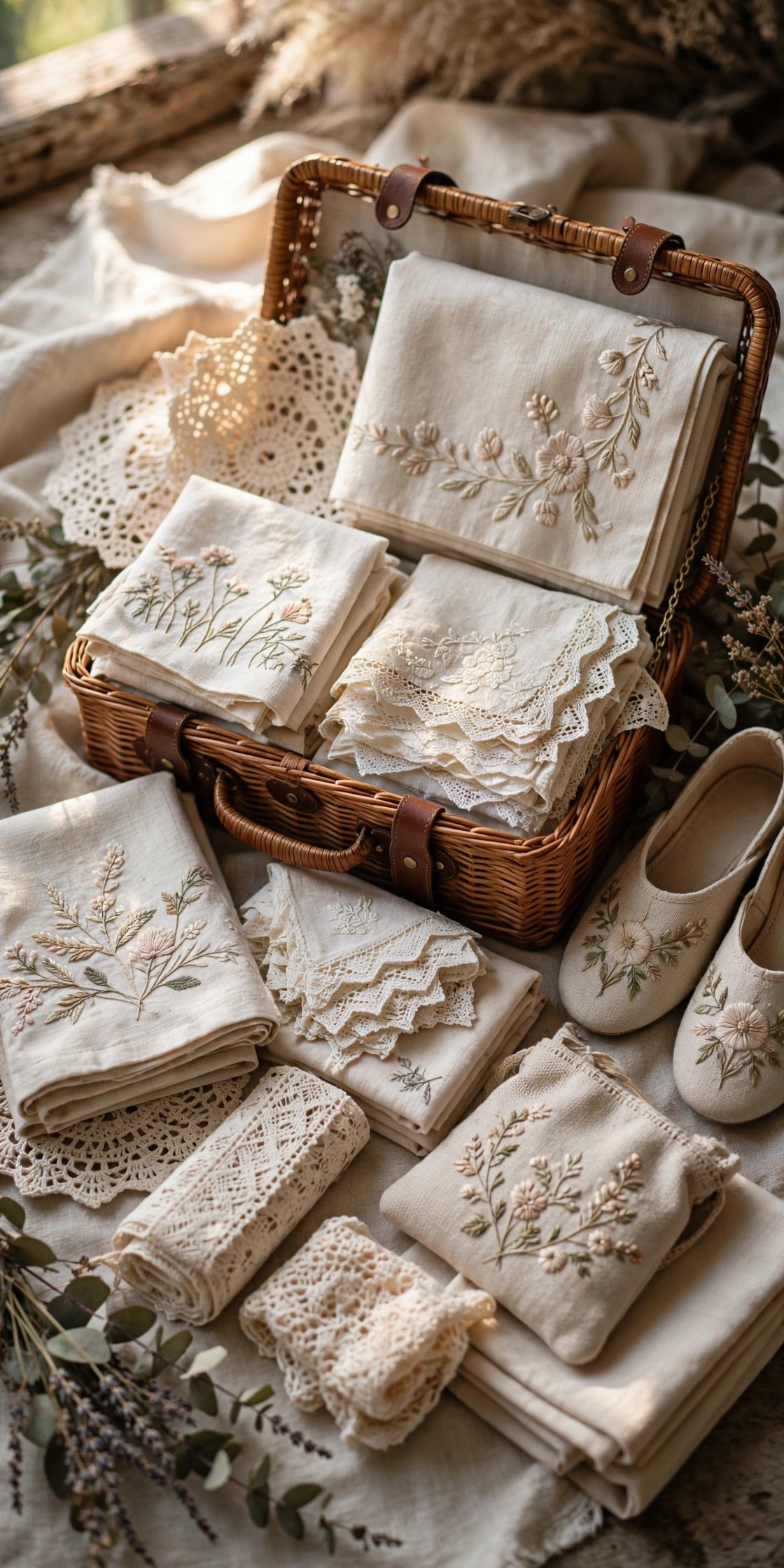
The ceyiz is the bride’s trousseau: linens, lace, embroidery, knitted goods and household textiles prepared over years — traditionally by the bride, her mother and grandmothers — and in many homes formally displayed before the wedding (ceyiz sergisi) for relatives to admire. Every embroidered towel is a small archive of family skill. Modern brides buy much of it ready-made, but a few handmade pieces from a grandmother’s hands remain the collection’s crown, and the display day is still a women’s celebration of tea, sweets and compliments.
Kina Gecesi — The Henna Night
 📌 Save
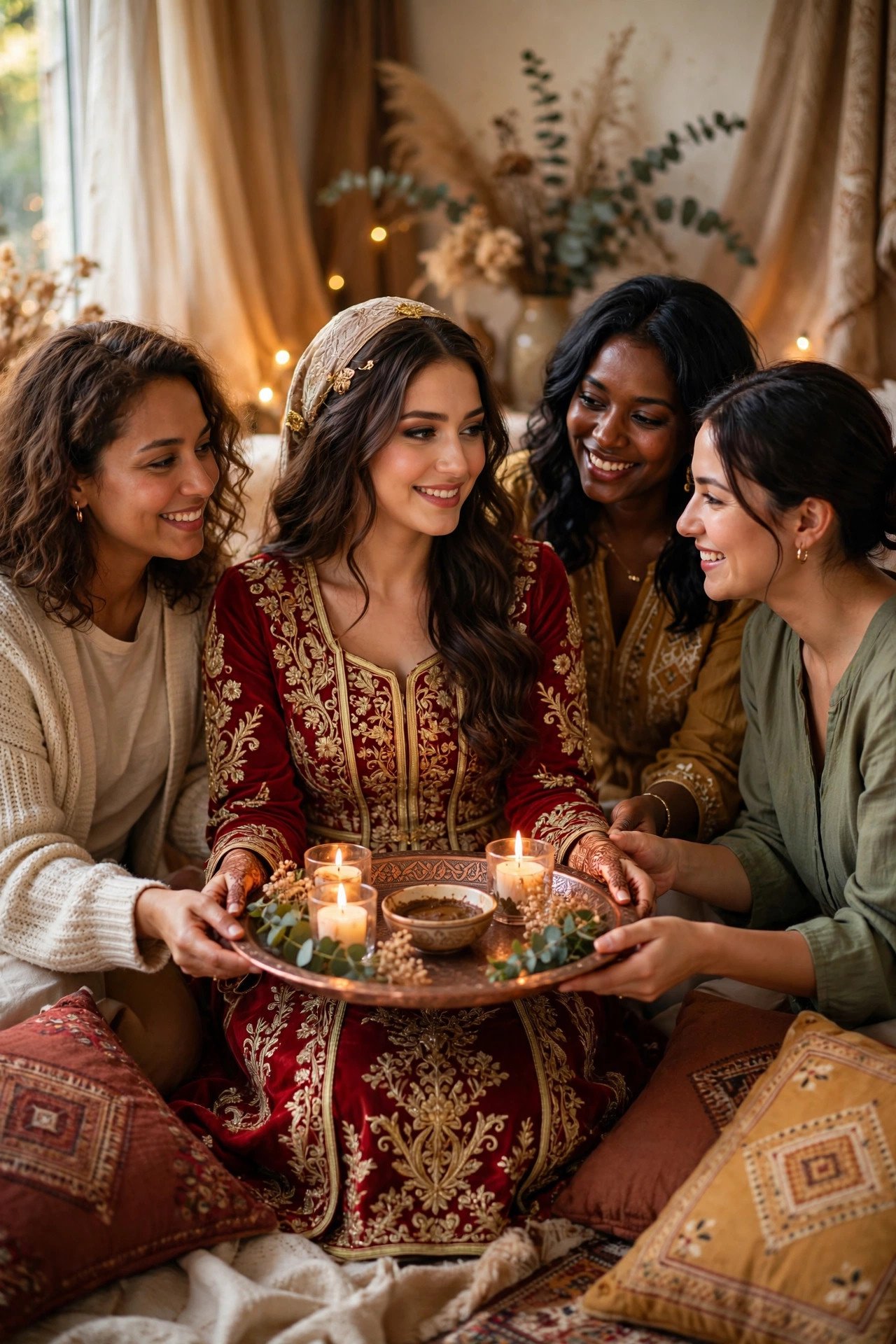
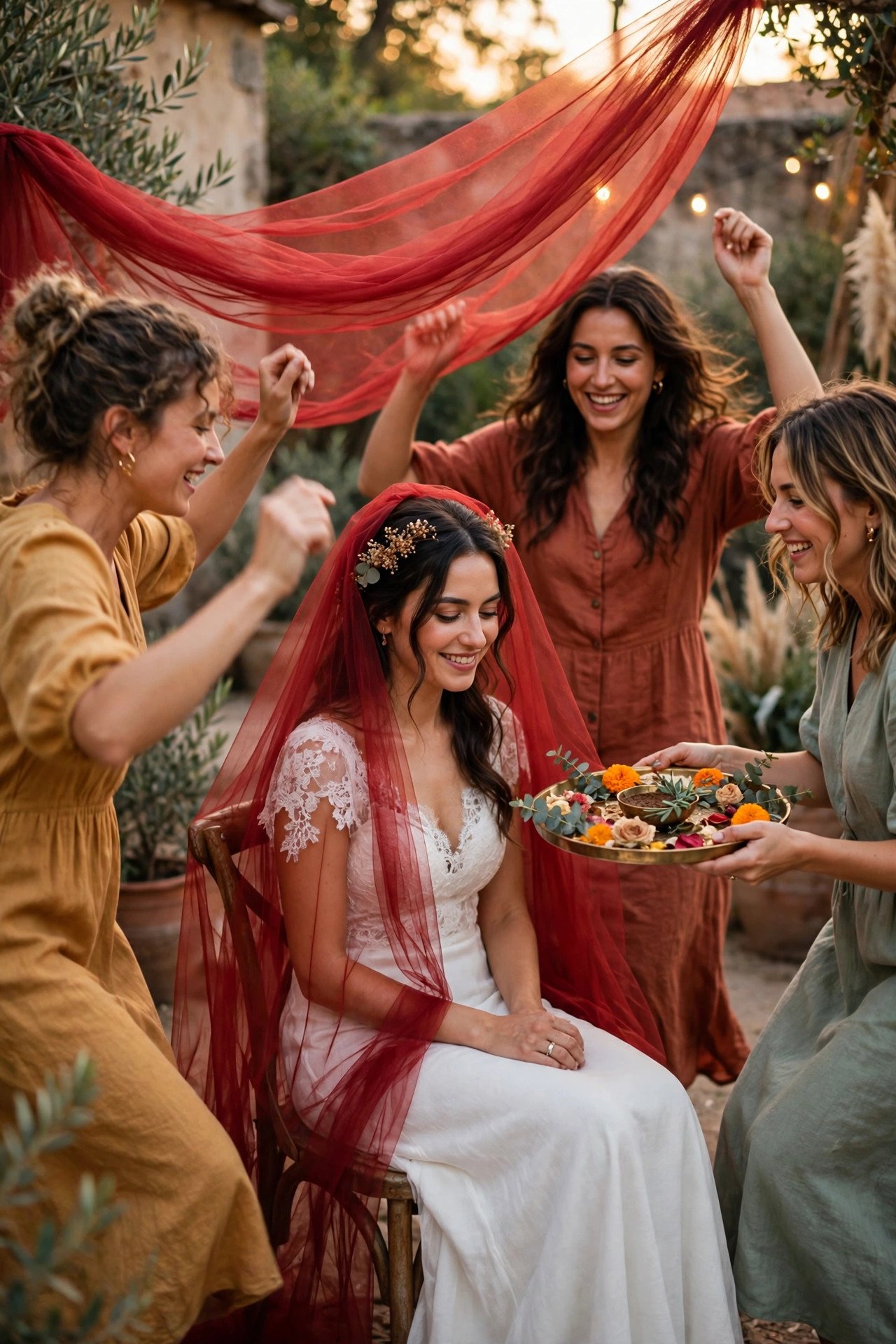
The night before the wedding belongs to the kina gecesi, the henna night: an all-women celebration (men join in some modern versions) where the bride, veiled in red, is seated in the center while her friends dance around her with the candlelit henna tray, singing traditional songs — including the famous ‘Yuksek Yuksek Tepelere’ — designed partly to make her cry: tears honor the home she is leaving. Then henna is pressed into her palm, the mood lifts into dancing, and the farewell becomes a party. It is the Turkish wedding’s emotional masterpiece.
The Bindalli — The Bride’s Henna Dress
 📌 Save
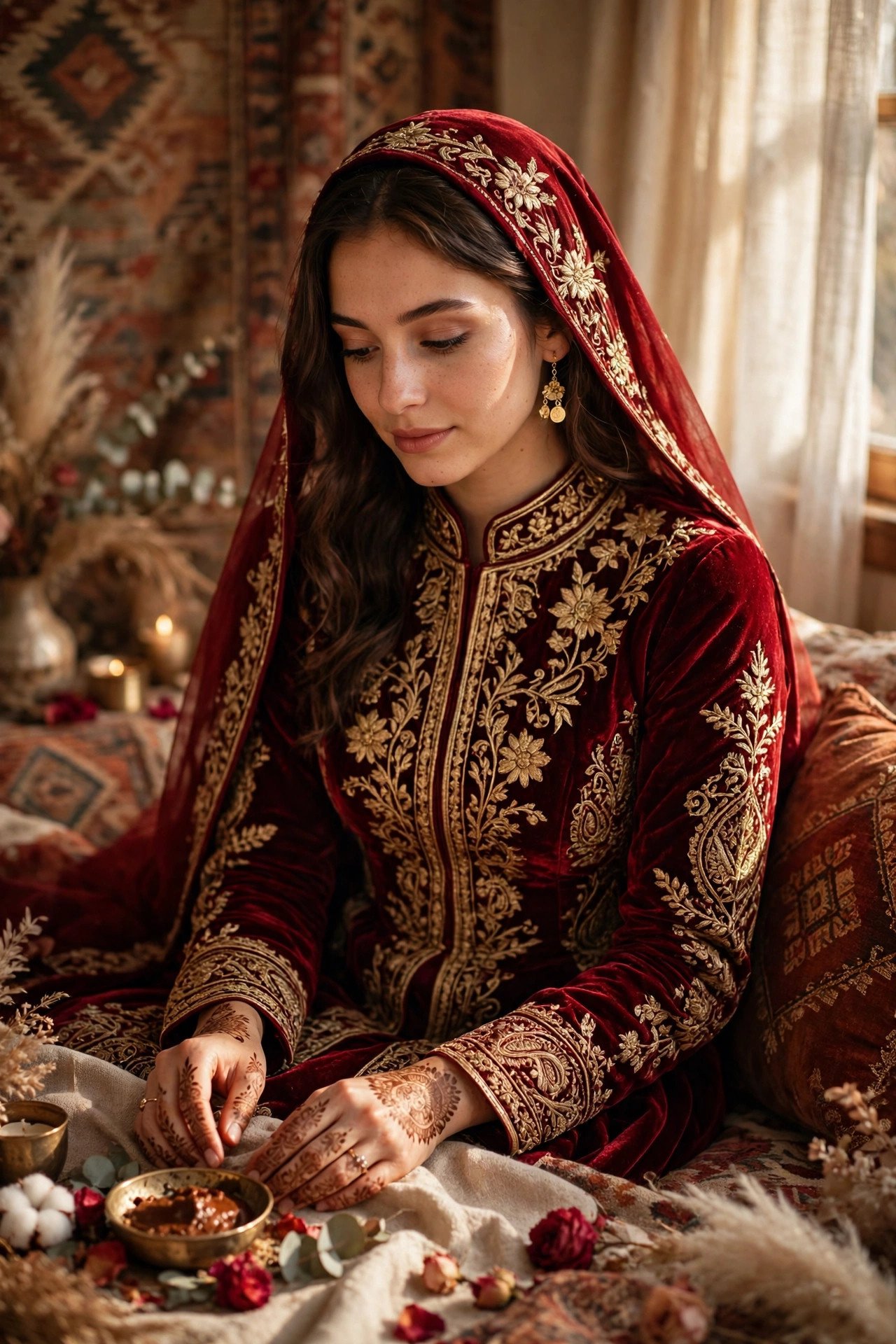
For the henna night the bride wears a bindalli: a traditional caftan of deep red or burgundy velvet, heavy with gold embroidery, worn with a matching headdress and, for the ceremony’s peak, a red veil over her face. Rental ateliers keep racks of them; many families own one passed between daughters and nieces. The bindalli’s weight and splendor mark the henna night as a ceremony distinct from the wedding — the bride appears not as a modern bride but as the latest in a line of brides stretching back centuries.
The Gold Coin in the Bride’s Palm
 📌 Save
When the henna is ready, the bride keeps her fist closed: by custom she will not open her hand until her future mother-in-law places a gold coin in her palm — a gift that blesses the henna and welcomes her into the family. Only then is the henna mound pressed onto the coin, her hand wrapped in decorative cloth and mittens, and the coin kept afterwards as a luck piece. The tiny negotiation is played with great ceremony and laughter, and the mother-in-law’s generosity is applauded by the room.
Henna Songs and Happy Tears
 📌 Save
The henna tray procession is a performance: unmarried friends in traditional dress circle the seated bride carrying the tray and candles, singing the repertoire of henna songs whose lyrics speak of leaving home, distant hills and a mother’s blessing. The bride, veiled, is the still center. The emotional design is ancient and effective — grief and gratitude are sung out loud so the wedding day itself can be pure joy. Diaspora henna nights now often mix the classics with pop, and grandmothers are consulted as living songbooks.
The Groom’s Shave — Damat Tirasi
 📌 Save
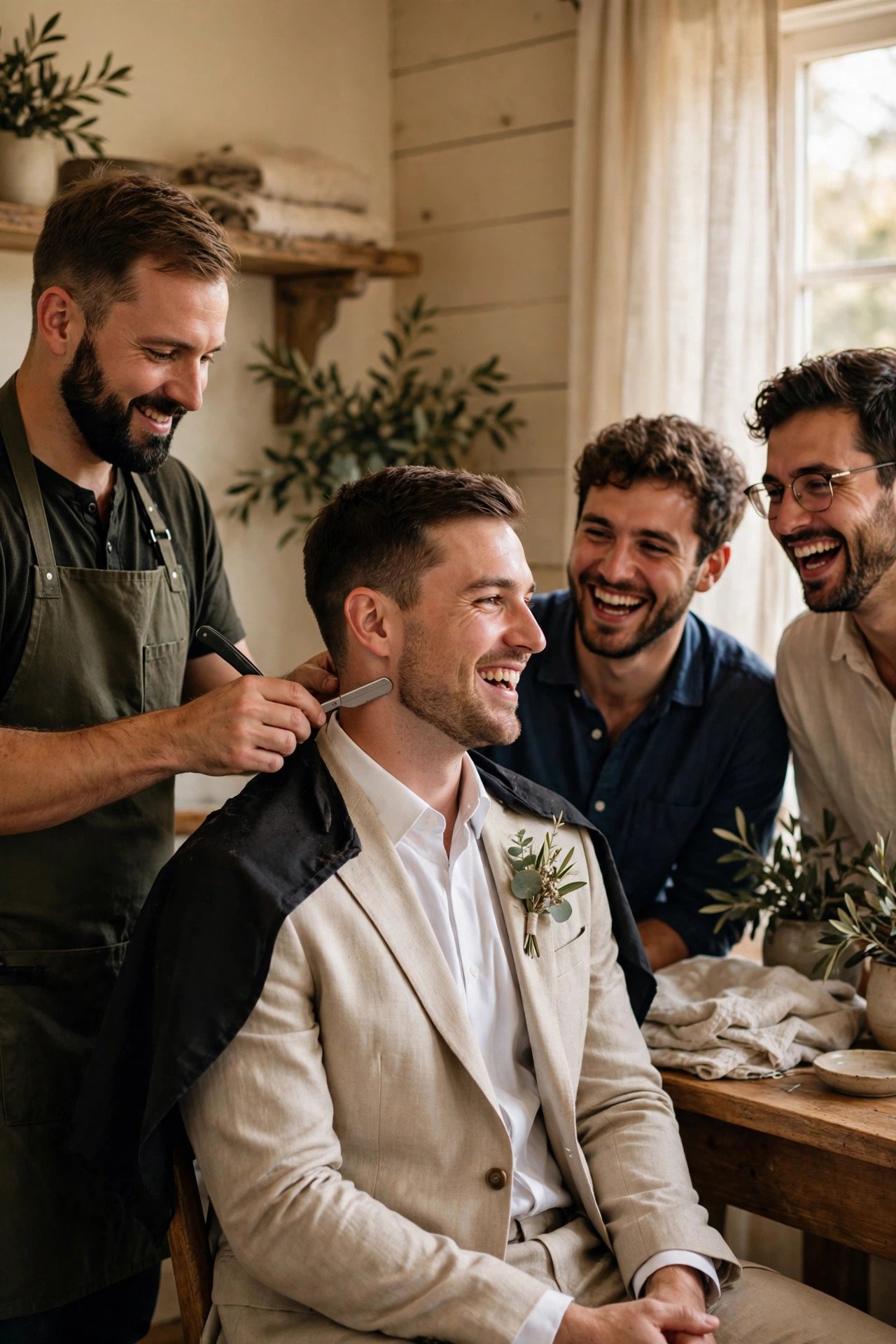
While the bride prepares, the groom undergoes damat tirasi — the groom’s shave: a barber shaves him (at home, at the barber’s, or at the venue) while his friends provide commentary, jokes, music and mock-ceremony, sometimes ‘auctioning’ each stage. The shave marks his transition to bridegroom, polished and presentable, and gives his friends their own ritual to match the women’s henna night. In modern form it is often a stylish barbershop session with photographs, coffee and the best man presiding over the teasing.
Gelin Alma — Fetching the Bride
 📌 Save
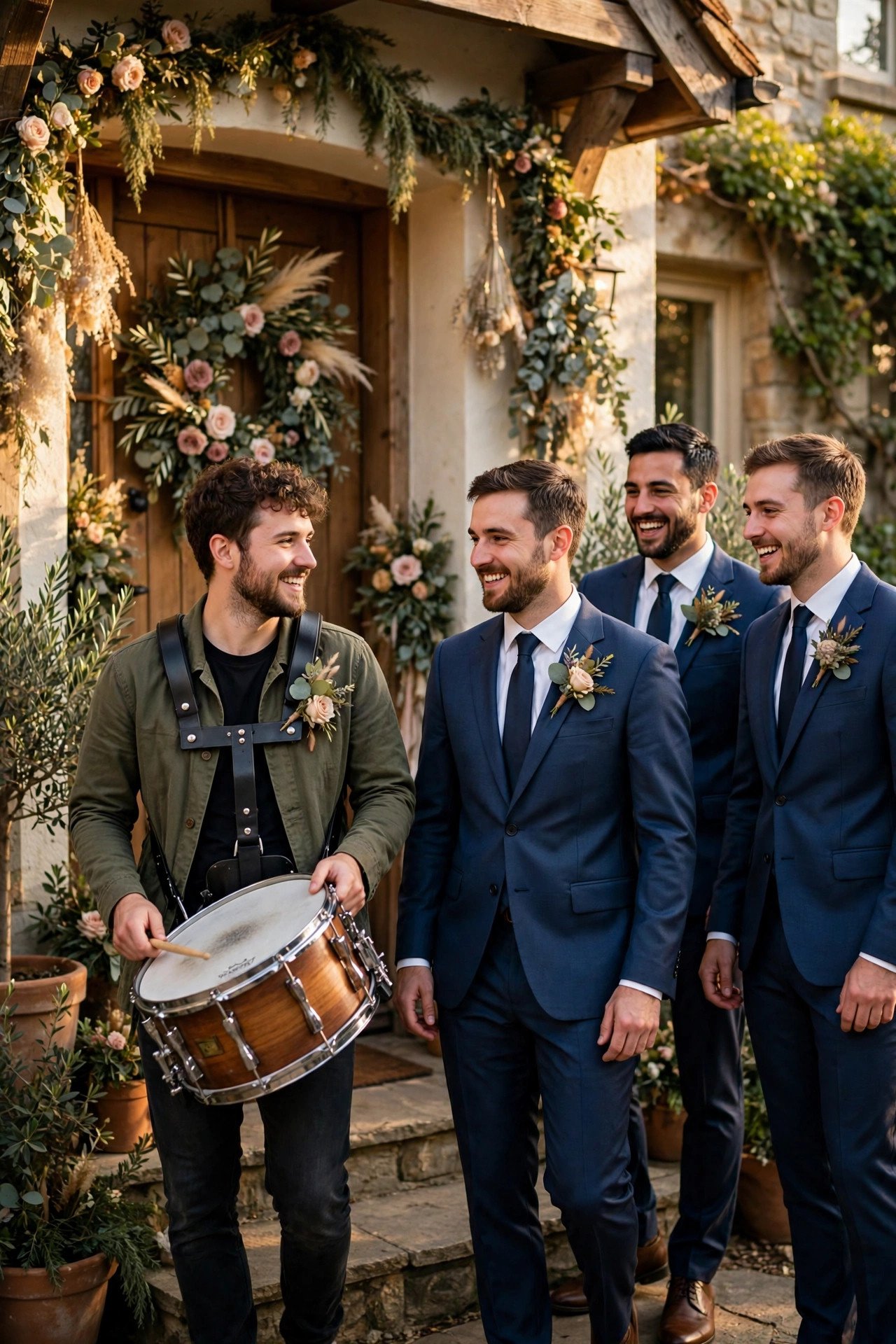
On the wedding day the groom’s family and friends travel to the bride’s home to fetch her — gelin alma — announced by davul drums and the piercing zurna, with dancing in the street or courtyard. The bride’s family receives them; prayers are said; the bride is brought out, often on her father’s or brother’s arm, to applause and tears. The fetching is the day’s great threshold: she leaves her childhood home inside a wall of music, and the whole neighborhood witnesses it.
Davul and Zurna at the Door
 📌 Save
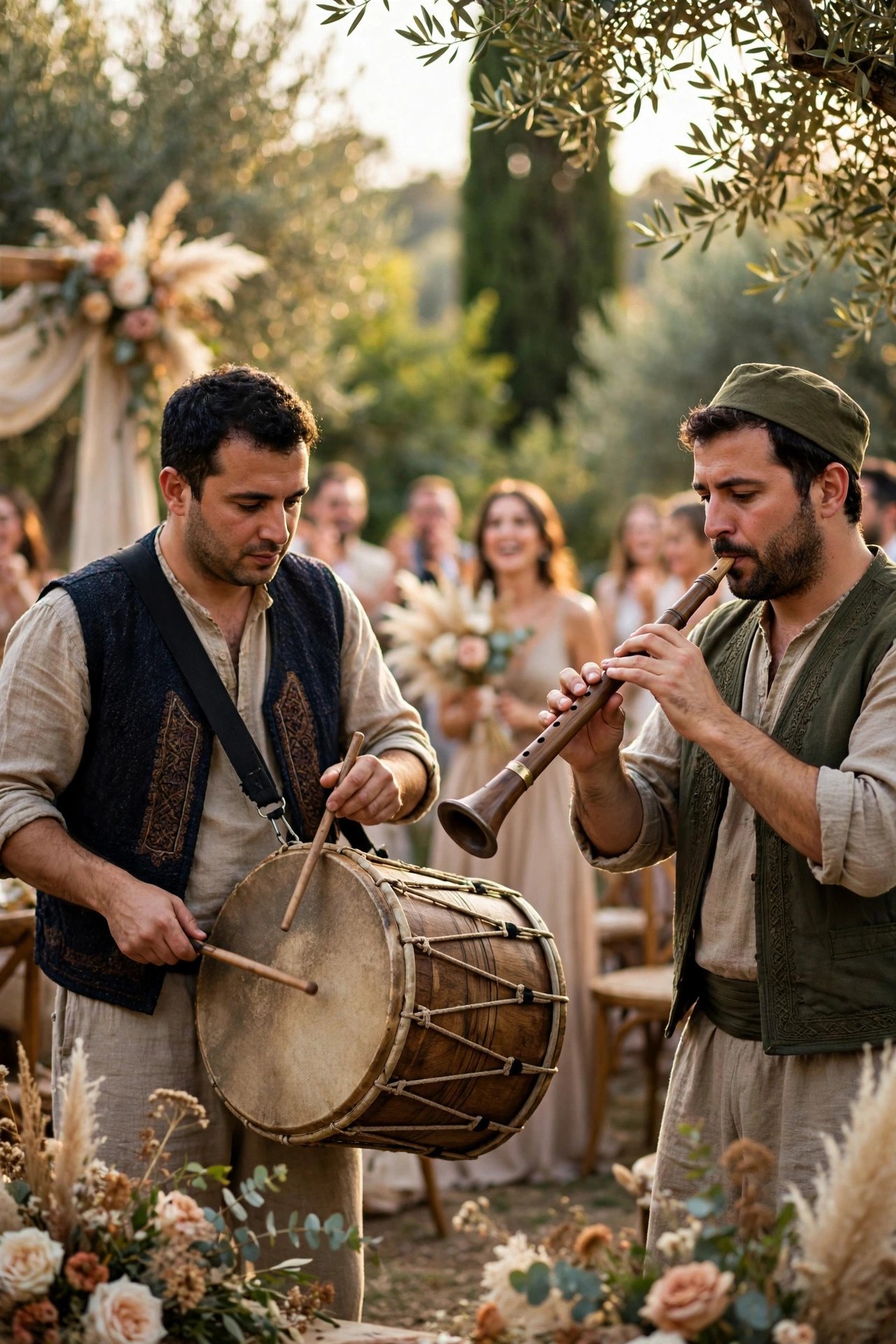
The davul (a large double-headed drum) and zurna (a piercing reed pipe) are the ancient sound of Anatolian celebration, played at fetchings, village squares and reception entrances. A master zurna player can keep a melody circling for minutes on circular breathing while the davul drives the dancers. Hiring the duo is a declaration that this wedding honors its roots — in diaspora cities from Berlin to Toronto, davul-zurna players are booked out every summer weekend.
The Dowry Chest Standoff
 📌 Save
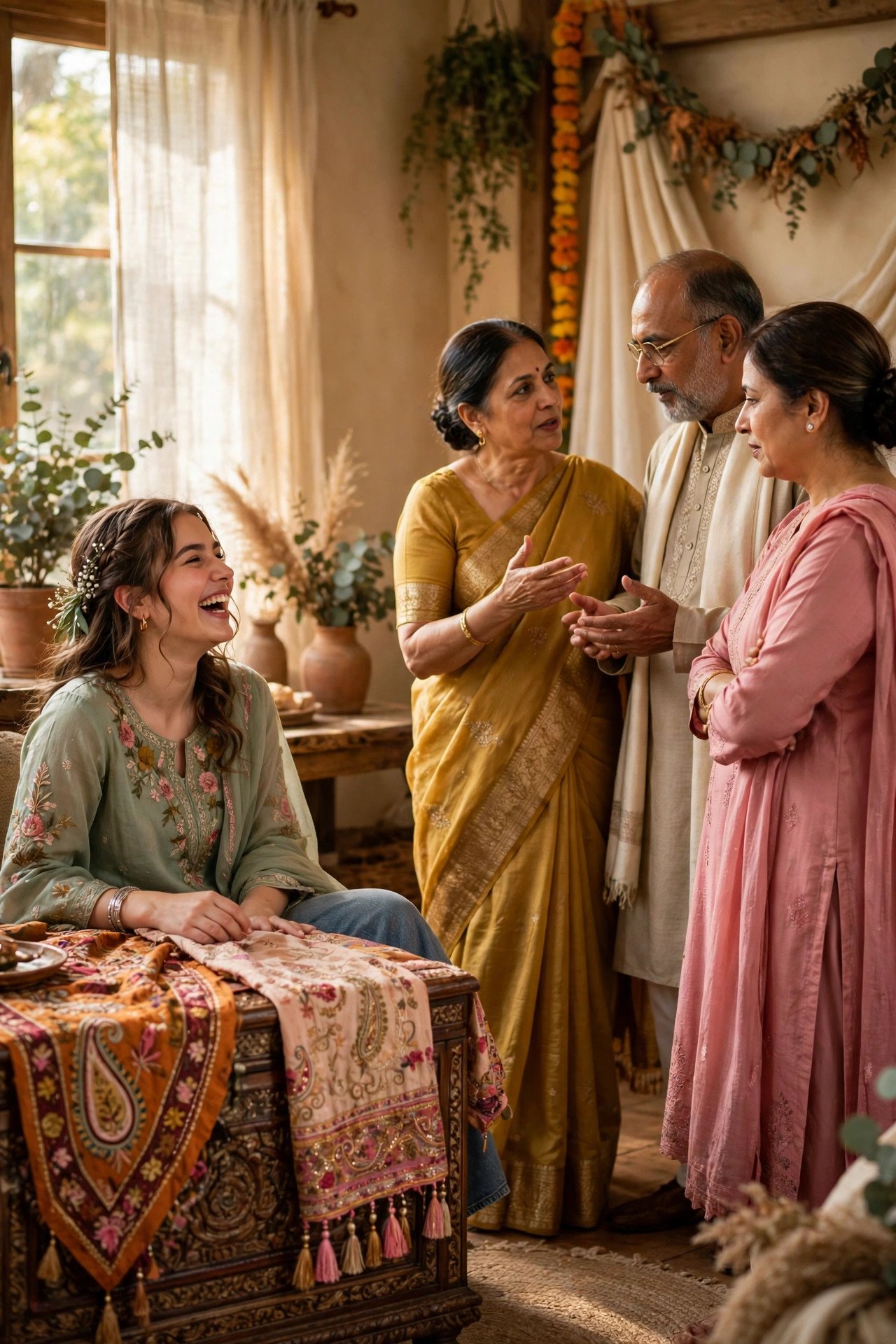
When the bride’s trousseau chest (sandik) is carried out, tradition stations a guard: a younger sibling, cousin or child sits on the chest and refuses to budge until the groom or his father pays a cheerful ransom. Variations include the bride’s door being blocked and the bride’s shoe being ‘stolen’ for ransom. These tolls are the day’s running comedy — small, expected extortions that let the bride’s family ‘lose’ her with laughter instead of only tears.
The Red Sash from Her Father
 📌 Save
As the bride leaves her family home, her father (or an elder brother) may tie a red sash — kusak — around her waist, often circling her two or three times with whispered prayers. The red stands for joy, luck and the family’s love going with her; the quiet tying, in the doorway chaos of the fetching, is for many brides the single most emotional moment of the entire wedding. Families keep the sash afterwards, sometimes tying it for each daughter in turn.
Names Written Under the Bride’s Shoe
 📌 Save
Before the ceremony, the bride’s unmarried friends write their names on the sole of her shoe. By the end of the night’s dancing, the name that has worn away most is said to belong to the next bride. The checking of the sole becomes a midnight ceremony of its own, with shrieks guaranteed. It is Turkey’s answer to the bouquet toss — kinder, funnier and playable by women who would never dive for flowers in formal dress.
The Wedding Convoy
 📌 Save
The fetching becomes a convoy: the couple’s car dressed with ribbons and flowers, relatives’ cars behind, horns sounding in rhythm as the line crosses town to the ceremony or reception. In Turkey the convoy is a public institution — strangers wave, children run out, and in villages the route passes every important doorstep: the family home, the grandparents, the cemetery gate for a respectful nod in some regions. Diaspora convoys keep the horns polite and the decorations extravagant.
Road-Blocking for Envelopes
 📌 Save
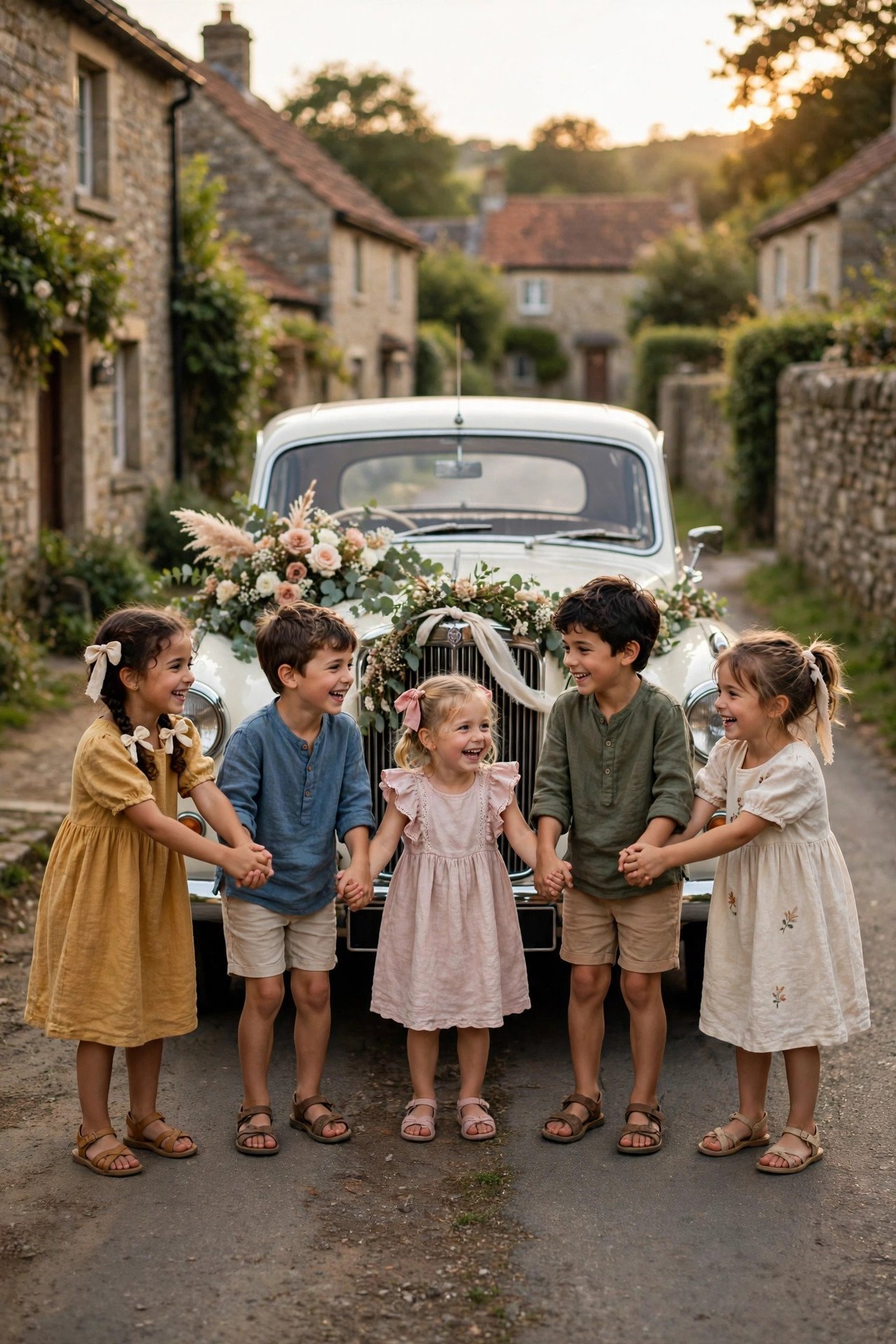
On village and neighborhood routes, children (and occasionally whole streets of them) block the convoy’s path with ropes, branches or sheer numbers, demanding their toll: envelopes with small money, distributed by the groom or best man to general delight. It is the community’s children collecting their share of the wedding’s luck. Grooms prepare a stack of small envelopes in advance — running out mid-route is a rookie error the road never forgets.
The Civil Nikah Signing
 📌 Save
In Turkey, the legally binding marriage is the civil ceremony performed by a marriage officer (from the municipality, or an authorized official), in a wedding hall (nikah salonu) or at the reception itself: the couple declares their consent before two witnesses and signs the great register, and the family booklet is presented. A religious ceremony may also be held according to the family’s wishes, but the civil nikah is what makes the marriage official. Couples abroad follow their own country’s law and often add a Turkish-style celebration around it.
Stepping on Toes at the Signing
 📌 Save
The instant the register is signed, a beloved micro-tradition fires: bride and groom each try to step (gently) on the other’s foot, because whoever steps first is said to ‘have the say’ in the marriage. The scuffle is fast, funny and entirely symbolic — the room calls the winner like a cup final. Most couples pre-agree to aim for a draw, and many photographs of the signing show two people laughing down at their own feet.
Taki — The Gold-Pinning Ceremony
 📌 Save
At the reception’s taki ceremony, guests queue to congratulate the couple and pin gifts directly onto them: gold coins and jewelry on red ribbons pinned to the bride’s dress and the groom’s sash or lapel, banknotes likewise. An announcer may name each giver and gift (‘from the uncle: a full gold coin!’), and the couple visibly accumulates the family’s wealth and love on their clothes. The pinned gold is the couple’s start-up treasure — serious money, worn as decoration for an hour.
Kissing Elders’ Hands for Blessings
 📌 Save
Throughout the celebrations, the couple greets elders with el opme: taking the elder’s hand, kissing it and raising it briefly to their forehead — the classic Turkish gesture of respect. Elders respond with blessings, embraces and often gifts of money or gold. At weddings the gesture runs continuously — at the asking, the henna, the fetching, the reception line — each repetition re-knitting the couple into the family’s generations. Teaching a non-Turkish partner the gesture, and when to use it, is a small rite of welcome in itself.
Halay — The Circle Dance
 📌 Save
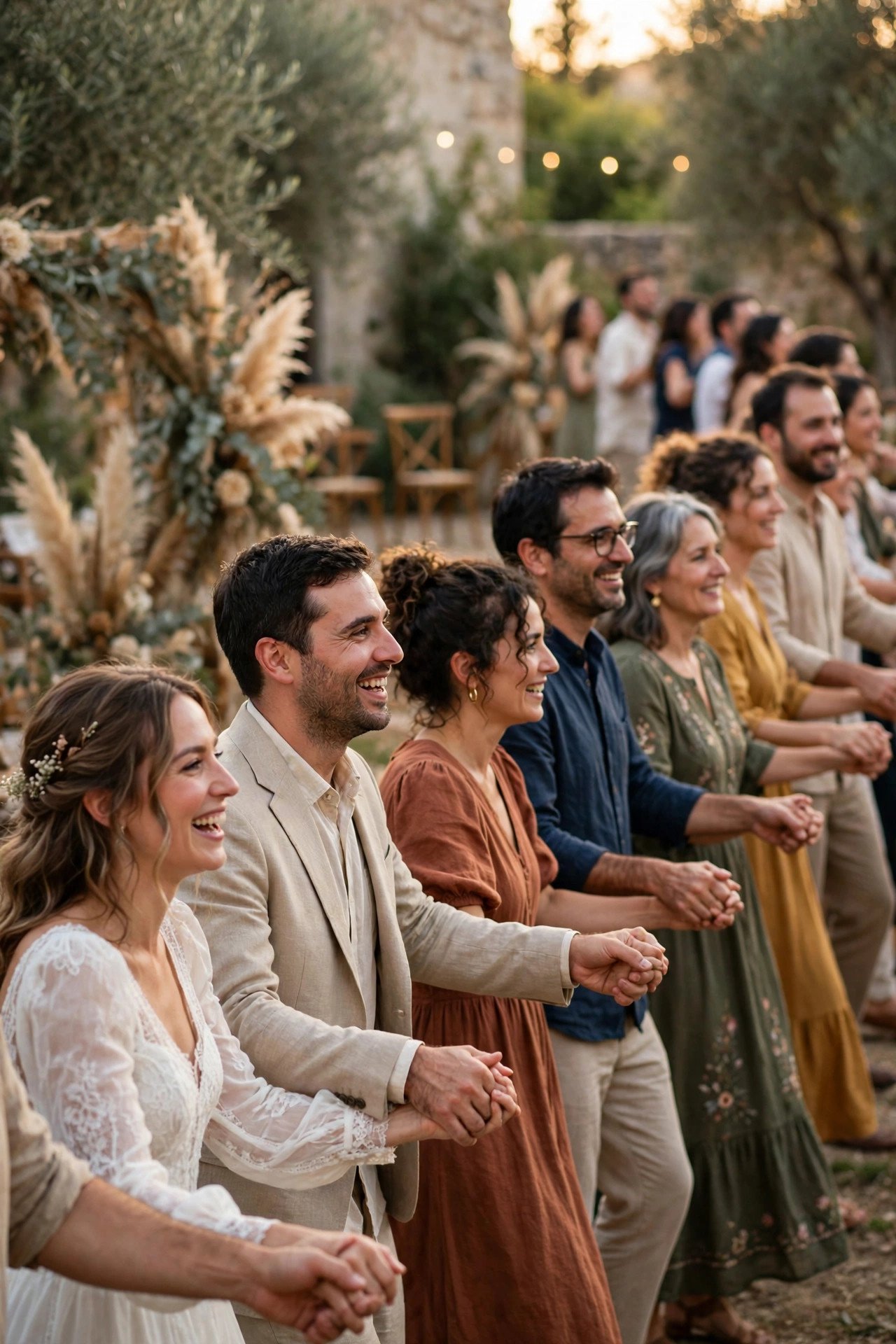
The reception’s dance floor belongs to the halay: guests link hands or shoulders in long lines and circles, stepping in unison to the davul’s beat or the DJ’s folk set, while the leader (halay basi) waves a handkerchief — the mendil — and improvises flourishes at the line’s head. Halay is engineered inclusion: the steps are learnable in one song, the line absorbs everyone, and by the second chorus the shyest uncle is mid-line. Regional styles vary — the steps of Gaziantep are not those of Trabzon — and families dance their own.
Nikah Sekeri — Wedding Candy Favors
 📌 Save
Each guest receives nikah sekeri — wedding candy, classically sugared almonds wrapped in tulle with a decorative tag, charm or small ornament — the Turkish favor tradition from which many others descend. Modern versions fill miniature boxes, jars or themed containers with almonds, chocolates or Turkish delight, matched to the wedding’s colors. Confectioners prepare thousands in season; families traditionally help assemble them, turning favor-making into one more pre-wedding gathering.
Breaking the Clay Pot
 📌 Save
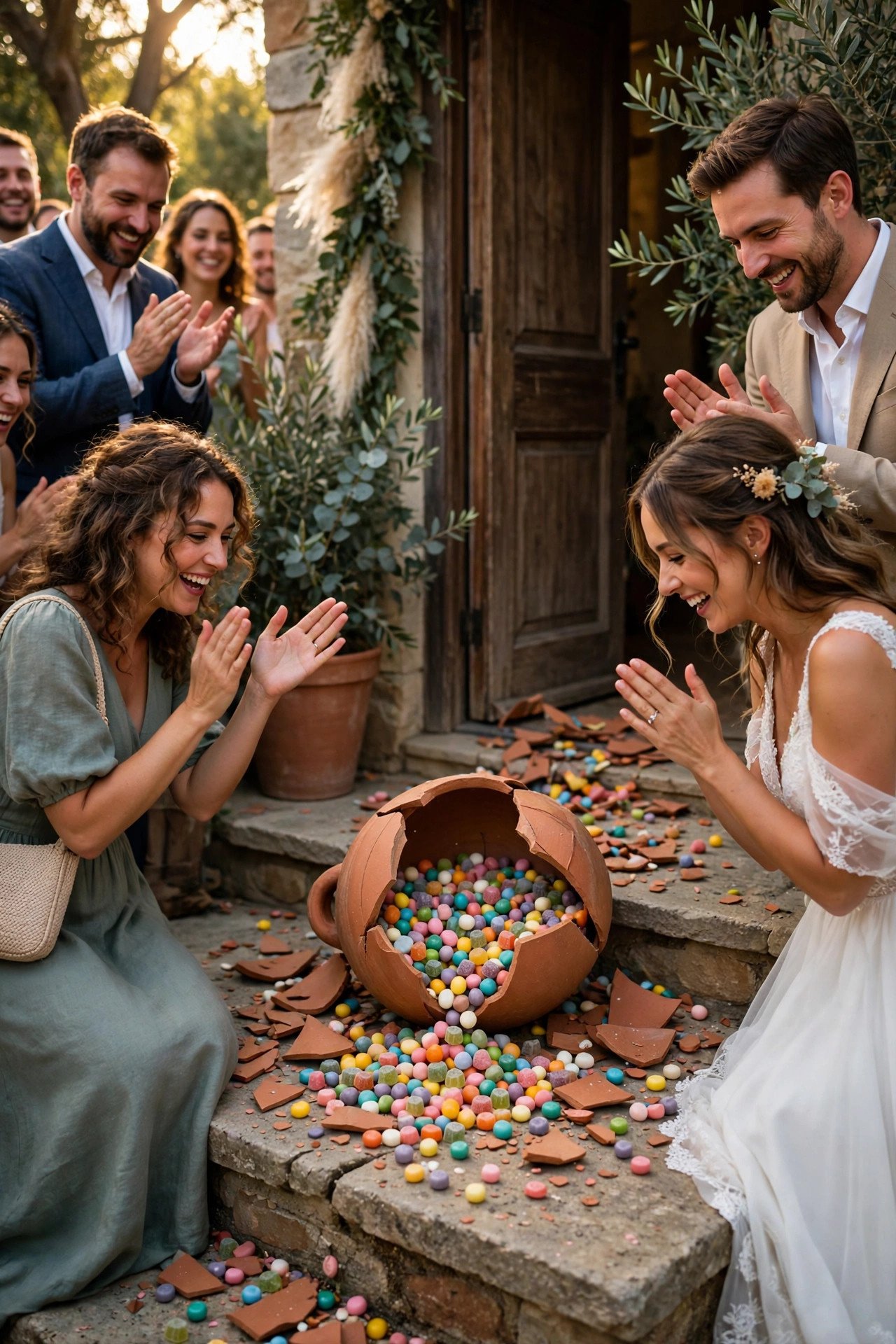
In some regions, when the bride arrives at her new home she is given an earthenware pot filled with sweets, coins or grain to break at the threshold — the shards and spilled sweetness wishing the household abundance and a life that ‘breaks’ only into good fortune, with children scrambling for the candy. It is a regional, older custom, kept proudly where it lives and unknown in other regions entirely — exactly the kind of tradition to ask your own grandparents about before assuming.
Turkish Wedding Traditions FAQs
Why does the groom drink salty coffee?+
At the formal asking (kiz isteme), the bride serves Turkish coffee to the guests and secretly salts the groom’s cup. Drinking it without complaint playfully proves his devotion and composure before both families. It is a test everyone in the room is in on — except, officially, him.
What is the difference between soz and nisan?+
Soz is the intimate promise ceremony at home: rings joined by a red ribbon are placed on the couple and the ribbon is cut by an elder. Nisan is the larger engagement celebration that follows — a party with many guests, where the engagement is shown to the wider community. Some couples combine them; traditionally they are separate events.
What happens at a henna night (kina gecesi)?+
The henna night, usually the evening before the wedding, is a women’s celebration: the bride wears a traditional embroidered bindalli and red veil, friends circle her with the candlelit henna tray singing farewell songs, and henna is pressed into her palm — over a gold coin placed there by her mother-in-law. Emotional songs give way to dancing as the night goes on.
What is taki, the gold pinning?+
Taki is the reception ceremony where guests queue to pin gifts onto the couple — gold coins and jewelry on ribbons, and banknotes — while an announcer names the giver and gift. The pinned gold becomes the couple’s start-up savings, and a written log of gifts is kept for thank-you notes and family records.
Is a religious ceremony enough to be married in Turkey?+
No. In Turkey the legally binding marriage is the civil ceremony performed by an authorized marriage officer, with witnesses and registration. Many couples also hold a religious ceremony according to their beliefs, but the civil nikah is the legal requirement. Rules and documents change, so confirm the current requirements with the municipality.
Key Takeaways
- The journey runs in stages: asking (isteme), promise (soz), engagement (nisan), henna night (kina), fetching, signing, feast.
- Coffee carries the plot: one salty cup at the asking tests the groom before both families.
- The henna night is the emotional heart — bindalli dress, farewell songs, a gold coin under the henna.
- Gold flows to the couple publicly: pinned on ribbons at the taki ceremony, coin by coin, name by name.
- Everyone dances: the halay line absorbs the whole room, led by a handkerchief and a drum.
Final Thoughts
Turkish wedding traditions are engineered, over centuries, to do one job: move a bride and groom from two families into one, without ever letting the emotion outrun the joy — every tear at the henna night is answered by drums at the door, every solemn promise by a queue of gold. If you marry into them, surrender to the sequence. The families have run this production many times, and they are very, very good at it.