
7 Questions Every Bride Should Ask at Her Wedding Dress Fitting
By zainzari • Published April 2026 • Updated October 9, 2026
 📌 Save
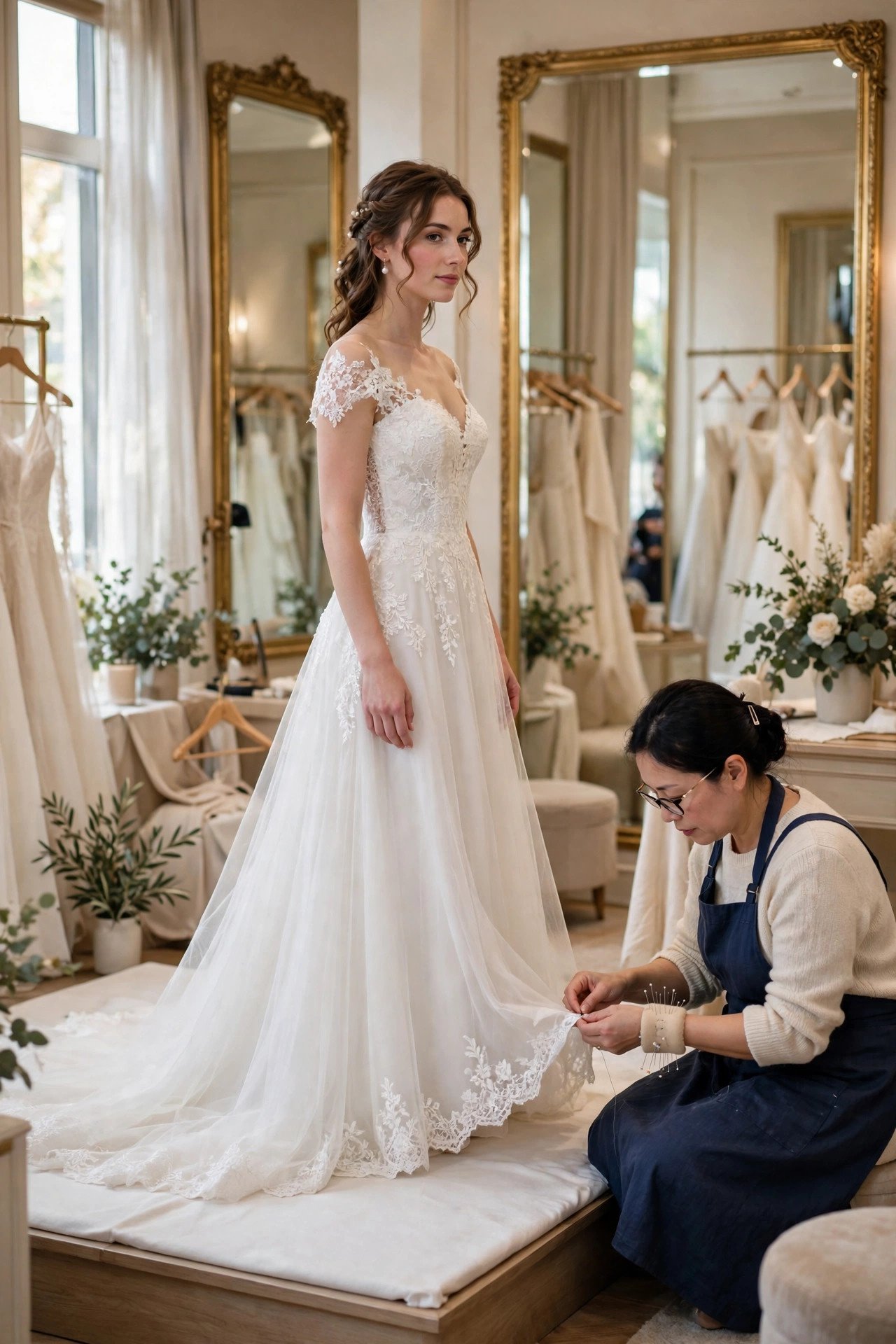
Your wedding dress fitting is where a beautiful gown becomes your gown — but only if you ask the right questions. For 2027, the 7 questions every bride should ask are: Can this be altered to fit perfectly? How does the bustle work? What undergarments should I wear? Can I sit, dance and move in it? What’s the steaming and care plan? What’s the alterations timeline? And which accessories complete the look? Ask them across your 2–3 fittings, bring one trusted person to learn the bustle, and get every alterations promise in writing.
Here’s the truth about dress fittings: the salon and seamstress know exactly what your dress needs, but they won’t always volunteer it. Brides who ask sharp questions get better alterations, fewer surprises and a gown that actually works on the wedding day — not just on the fitting-room pedestal. Brides who stay quiet often discover problems at the worst possible moment: a bustle nobody learned, a hem that pools, a bodice that won’t let them sit.
These 7 questions for 2027 turn you from a passive mannequin into an informed partner in your own alterations. Ask them in order across your fittings, take notes on the answers, and walk out confident that your dress will fit, move and photograph exactly the way you dreamed.
At a Glance: Fitting Questions Cheat Sheet
| Question | Why Ask It | When to Ask | Red Flag |
|---|---|---|---|
| Can this be altered to fit? | Defines what’s possible before you commit | First fitting | “It’ll be fine” with no specifics |
| How does the bustle work? | Someone must learn it for the wedding day | Second fitting | No bustle plan for a train |
| What undergarments? | Foundation changes everything about fit | First fitting | “Whatever you have on is fine” |
| Can I move in it? | You’ll wear it 8+ hours | Every fitting | Can’t sit or raise arms |
| Steaming & care plan? | Wrinkles ruin photos | Final fitting | No pressing service offered |
| Alterations timeline? | Rush fees are brutal | First fitting | Vague dates, no written plan |
| Which accessories? | Completes the look cohesively | Second fitting | Pushy upselling |
Screenshot this table and bring it to your fitting — brides who ask these seven questions consistently report better alterations and zero day-of dress surprises.
Can This Be Altered to Fit Perfectly?
 📌 Save
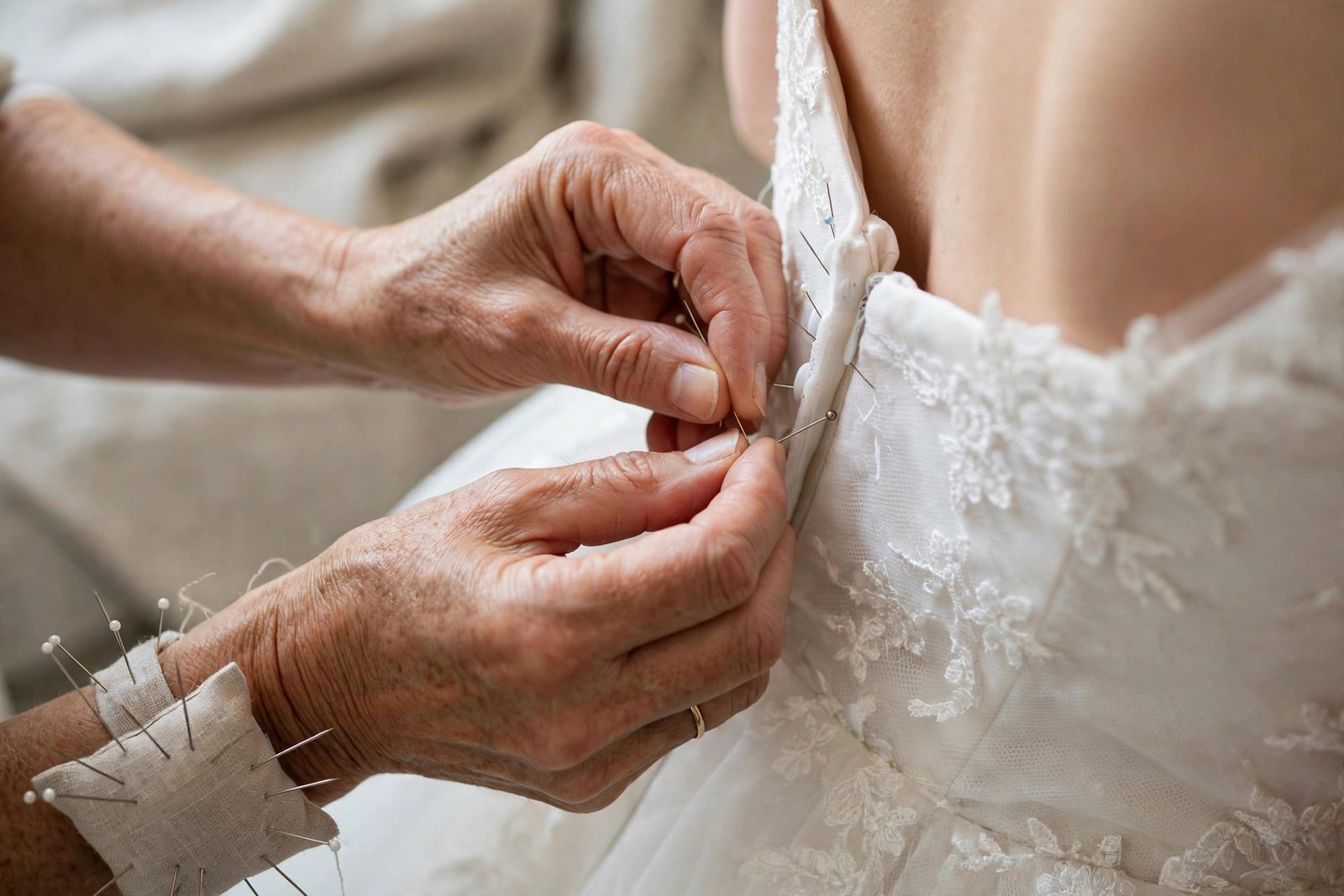
Ask exactly what can be taken in, let out or reshaped — and get the seamstress to show you, not just tell you.
Almost no wedding dress fits perfectly off the rack — gowns are made to be altered, and a skilled seamstress can typically adjust a dress by 1–2 sizes. But “alterable” has limits: bodices with heavy beading, intricate lace appliqué and boned corsets are harder (and pricier) to change. Ask your seamstress to pin the dress on you and explain precisely what she’ll do: “I’ll take the bodice in two inches here, hem three inches here, and reshape the neckline.”
Get the full plan and an itemized quote in writing before any work begins — what will be altered, what it costs, and when each fitting happens. The red flag is vagueness: if the answer to “can this be altered?” is a breezy “oh, it’ll be fine” with no specifics, get a second opinion before you commit to that salon’s tailor.
Read next: Wedding Hair With Veil Ideas
How Does the Bustle Work?
 📌 Save
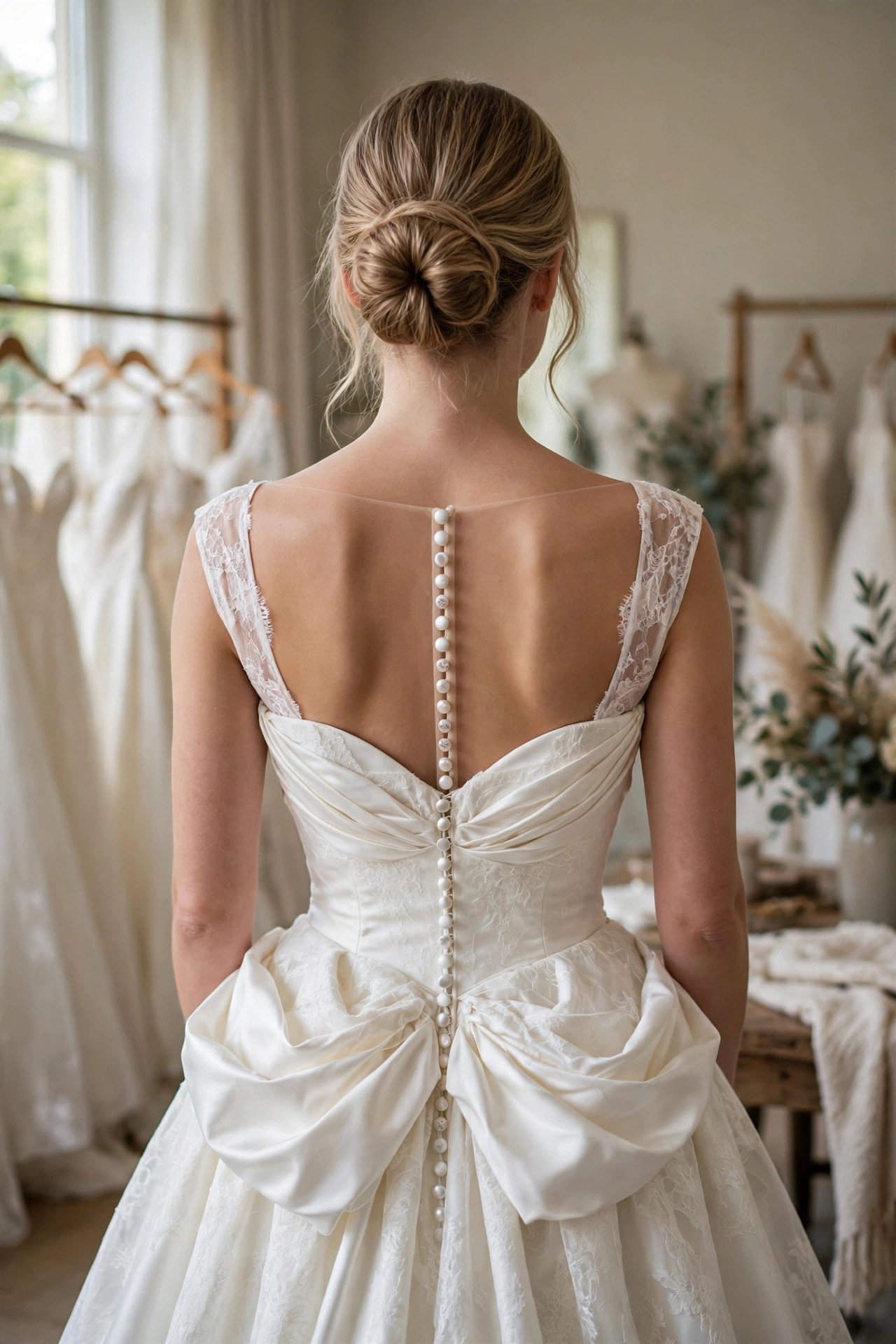
Have the seamstress demonstrate the bustle on your actual dress — then make your maid of honor practice it twice.
A bustle lifts your train off the floor for the reception, and every bustle is different: French bustles with hidden ribbons, American bustles with visible buttons, ballroom bustles with multiple pick-up points. The only way to learn yours is hands-on — have the seamstress bustle the dress while your maid of honor watches, then have her do it herself while the seamstress supervises. Photograph or video the process; wedding-day brains forget everything.
Ask which bustle style suits your dress best and why — a good seamstress will explain the trade-offs (French looks seamless but takes longer; American is fast but visible). If your dress has a train and nobody mentions a bustle, that’s your cue to raise it: an unbustled train on a dance floor is a tragedy in slow motion.
Read next: Ultimate Wedding Planning Checklist
What Undergarments Should I Wear?
 📌 Save
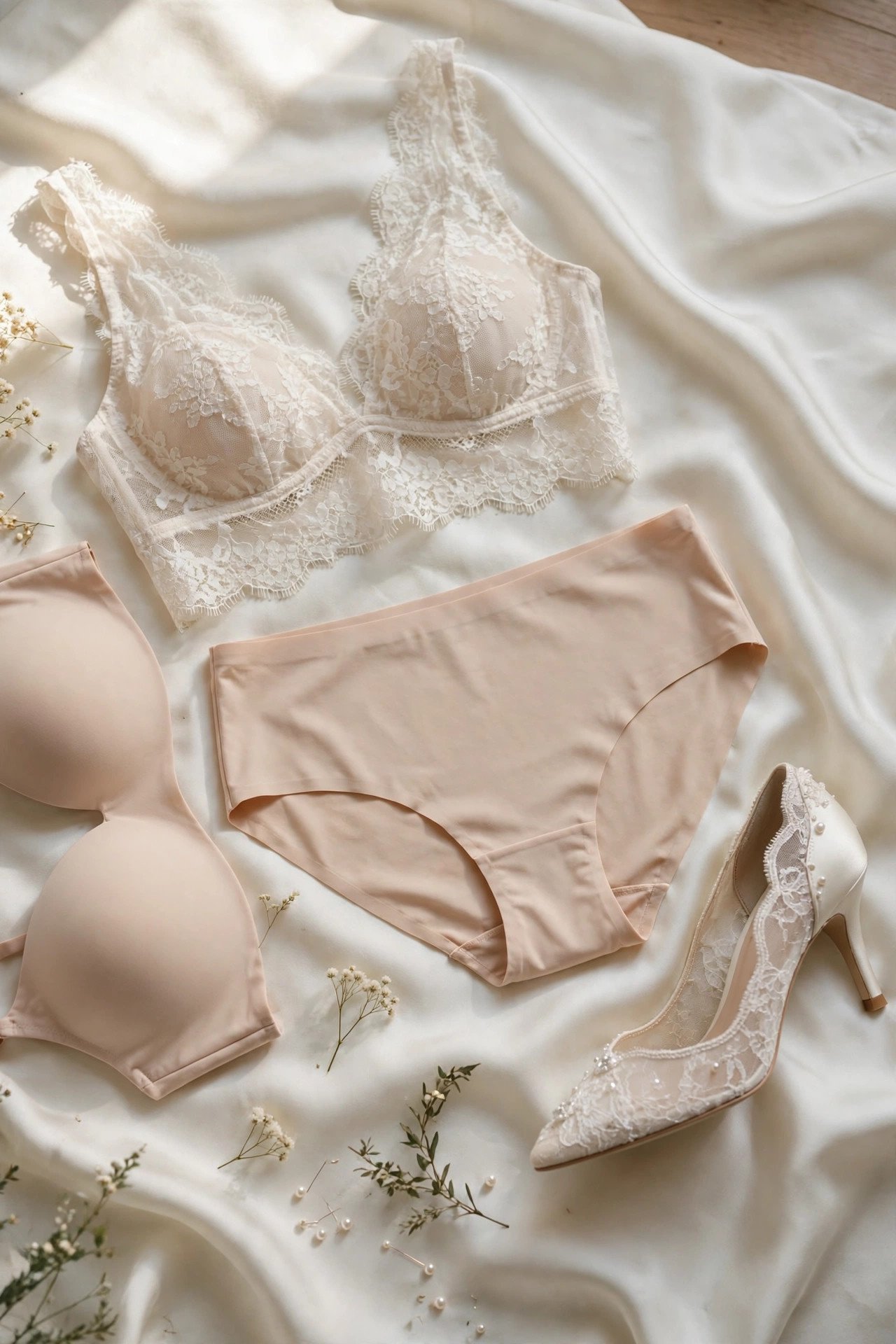
Ask what foundation your dress needs — built-in cups, a strapless bra, shapewear or nothing at all — and buy it before your first fitting.
Undergarments change a dress’s fit dramatically: the right ones smooth, lift and support; the wrong ones create lines, gaps and discomfort. Many modern gowns have built-in cups and boning that make bras unnecessary — but only the salon can tell you for your specific dress. Ask directly: “What should I wear under this?” and follow the advice exactly, including the wedding-day shoes (heel height changes the hem).
Bring your chosen undergarments and shoes to every single fitting — fittings done in different foundations produce different alterations, and that’s how dresses end up not fitting on the wedding day. If you’re between sizes in shapewear, size for comfort: you’ll wear it for 8+ hours, and “sucked in” becomes “miserable” by the first dance.
Read next: Wedding Hair With Veil Ideas
Can I Sit, Dance & Move in It?
 📌 Save
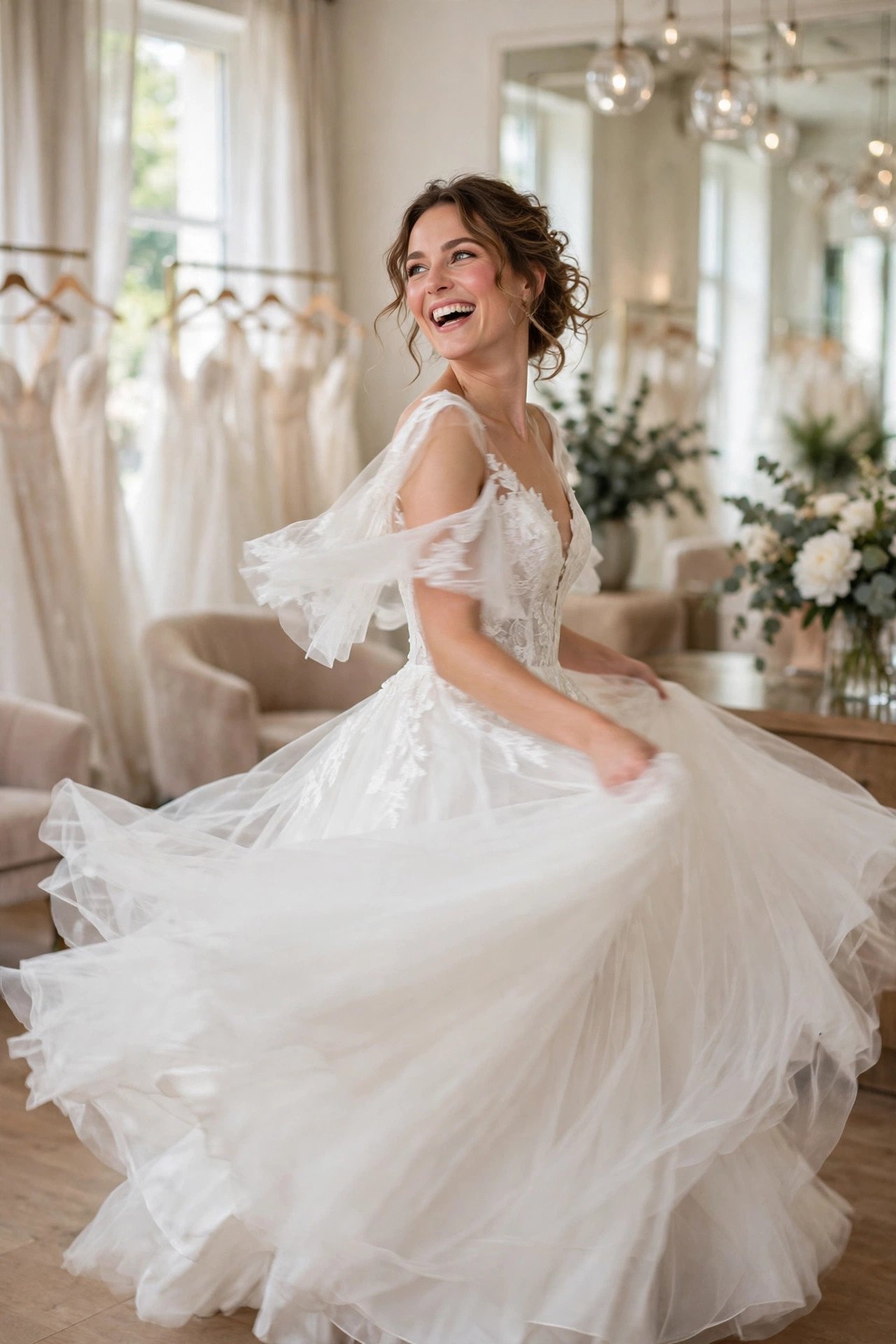
At every fitting, sit down, raise your arms, walk, twirl and practice hugging — if anything pinches or restricts, say so immediately.
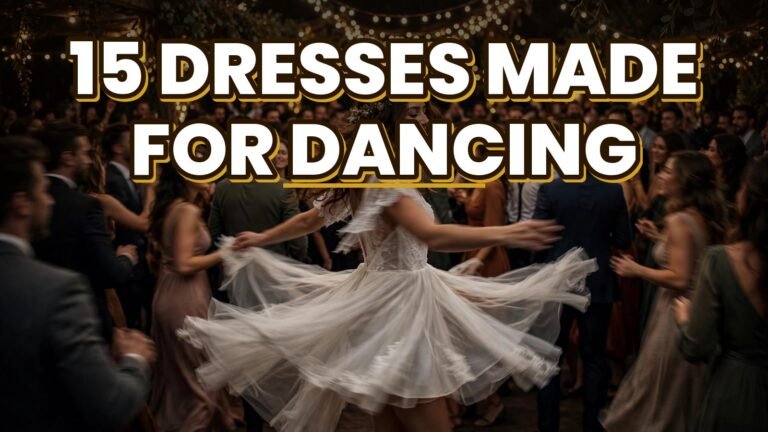
Fitting rooms encourage statue-still posing, but weddings are marathons of movement: sitting through dinner, hugging 100 guests, dancing for hours, navigating stairs and car seats. Test all of it in the salon. Can you sit without the bodice digging? Raise your arms for the bouquet toss? Walk up stairs without tripping on the hem? Bend to hug your grandmother? If the answer to any is no, that’s an alterations conversation, not something to “get used to.”
Be brutally honest about discomfort — seamstresses hear “it’s fine” from brides who are anything but fine, and they can’t fix what you don’t mention. A dress should feel like a firm hug, not a constraint. The goal is forgetting you’re wearing it by the time the party starts.
Read next: 33 Father-Daughter Dance Songs
What’s the Steaming & Care Plan?
 📌 Save
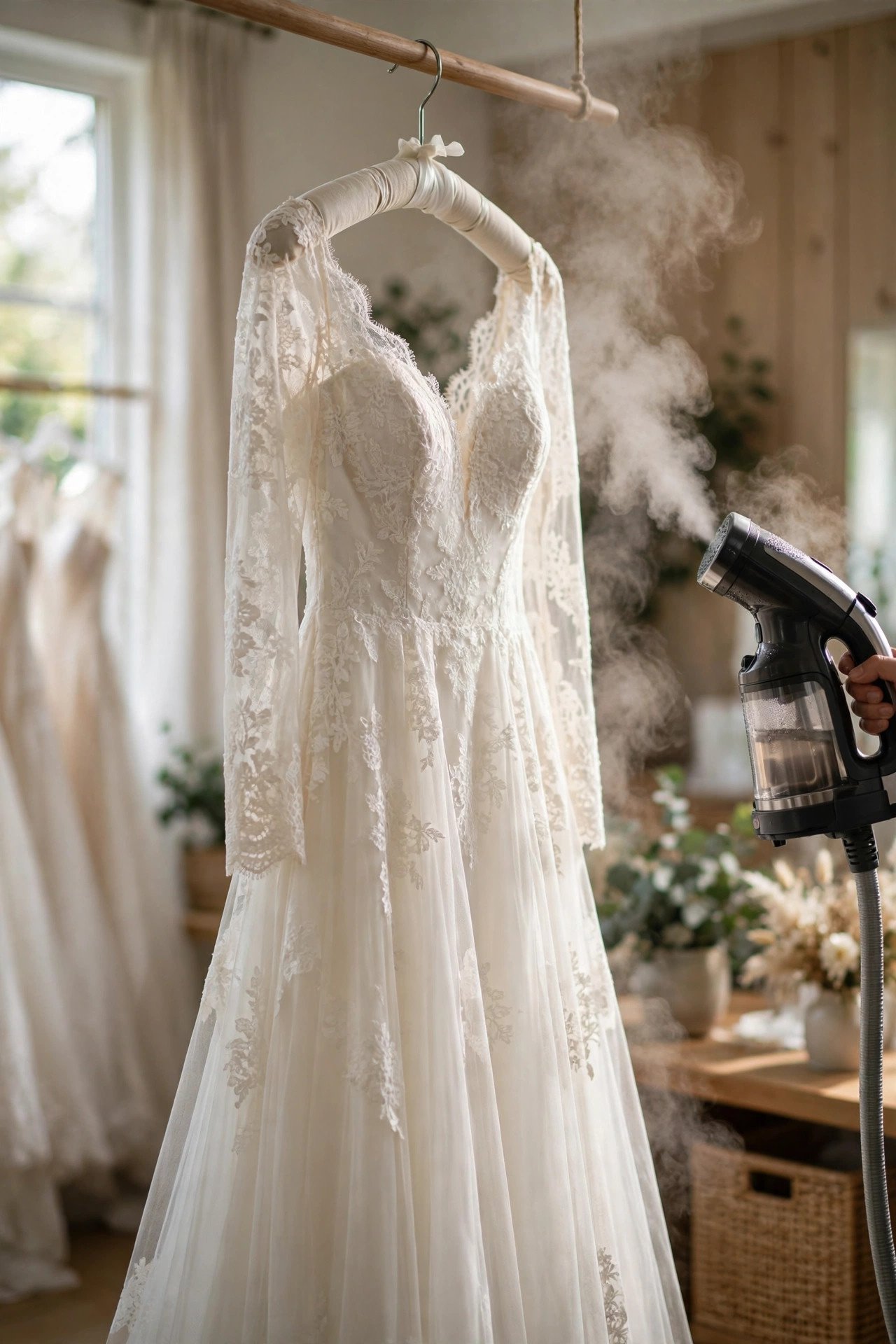
Ask who steams the dress, when, and how it should be stored and transported — wrinkles are the silent photo-killer.
Your dress will travel — from salon to home to venue — and every journey adds wrinkles. Ask the salon: does the price include final pressing? Who steams it on the wedding day, and when? (Ideally 2–3 hours before photos, hung high in a steamy bathroom or with a proper steamer.) And crucially: how should it be stored between the final fitting and the wedding — hung, in the garment bag, away from sunlight and pets?
For transport, lay the dress flat across a clean back seat or hang it from the car’s garment hook — never folded. Pack a small hand steamer in your emergency kit for touch-ups, and ask which fabrics can be steamed directly versus inside-out (beading and delicate lace need distance and care).
Read next: 45 Wedding Photo Ideas to Save Memories
What’s the Alterations Timeline?
 📌 Save
Get every fitting date on the calendar at your first appointment — alterations need 8–12 weeks, and rush fees are punishing.
Alterations can’t be rushed without cost — literally. Standard timelines run 8–12 weeks for typical changes, 3–4 months for major restructuring, with the final fitting 1–2 weeks before the wedding. Ask at your first fitting: “What are my fitting dates?” and get them booked then and there. Salons get slammed in peak season, and “we’ll figure it out” turns into a $200 rush fee fast.
Build in buffer: schedule the final fitting 10–14 days out, not 2–3, so there’s time for last tweaks. And ask what happens if your body changes — most seamstresses can do minor final-week adjustments, but knowing the policy (and cost) upfront beats a panicked phone call.
Read next: Ultimate Wedding Planning Checklist
Which Accessories Complete the Look?
 📌 Save
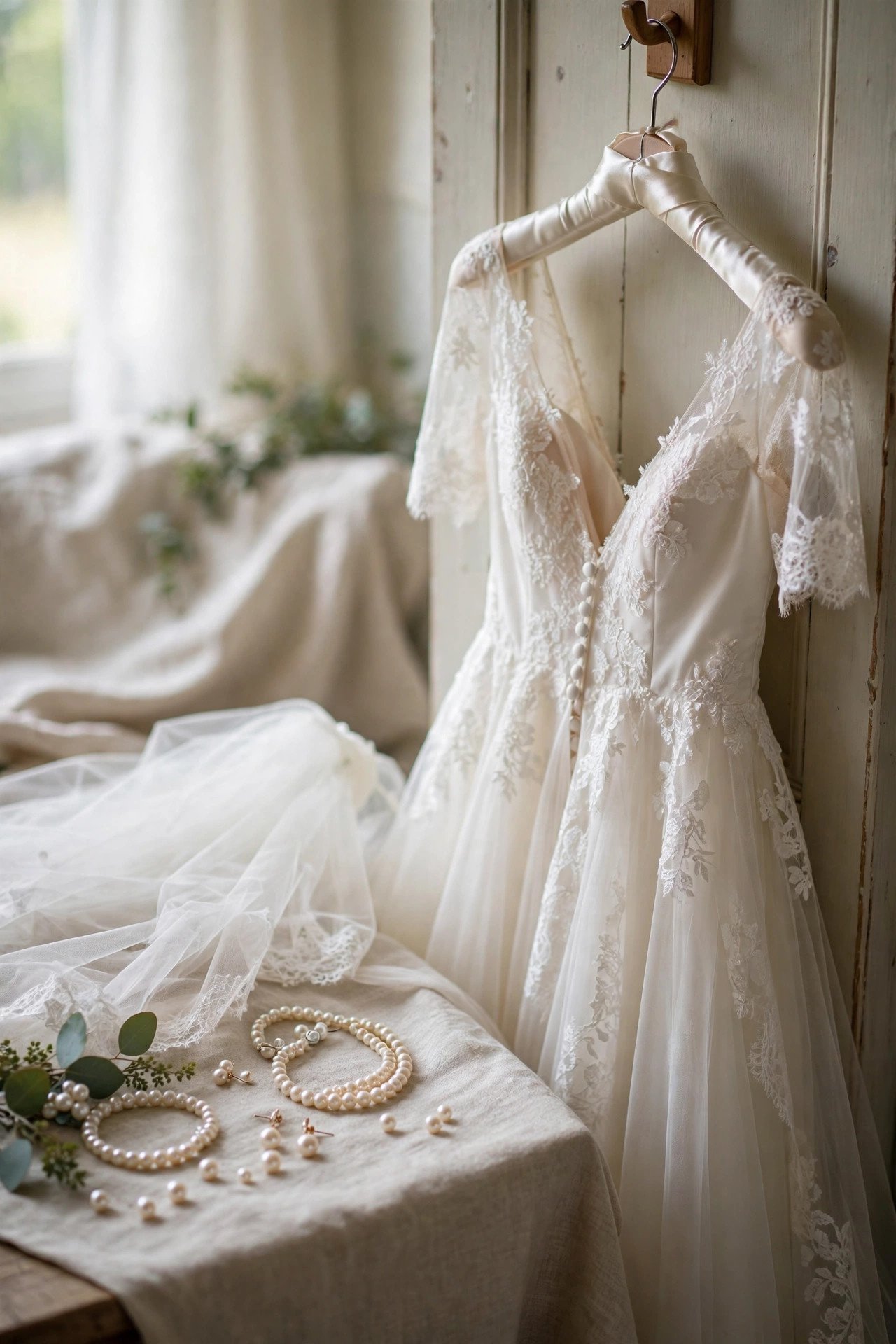
Bring your veil, jewelry and shoes to a fitting and ask what the stylist recommends — accessories should be chosen with the dress on.
A veil changes a neckline. Earrings change a hairstyle decision. A belt changes where the eye lands. That’s why accessories must be evaluated with the actual dress on, not imagined later — bring everything to your second fitting and ask the stylist’s honest opinion: does this veil length work with the train? Do these earrings fight the neckline beading? Does the dress need a belt, or is it perfect clean?
Watch for upselling — salons make margins on accessories, so treat recommendations as advice, not requirements. The right question is “what does this dress need?” not “what do you sell?” And photograph each combination; decisions made in the salon haze look different in photos the next day.
Read next: Wedding Hair With Veil Ideas
Frequently Asked Questions
How many dress fittings do I need?
Most brides need 2–3 fittings: an initial fitting to assess alterations, a second to check the work, and a final fitting 1–2 weeks before the wedding for last tweaks. Complex gowns or significant changes can require a fourth. Your seamstress will recommend a schedule based on your dress and timeline.
When should wedding dress alterations start?
Start 8–12 weeks before the wedding for standard alterations, or 3–4 months out for major restructuring. The final fitting should happen 1–2 weeks before the big day — close enough that your body won’t change, with enough buffer for last-minute tweaks.
Should I bring someone to my dress fitting?
Yes — bring one trusted person (maid of honor, mom or a bridesmaid) to every fitting after the first. They’ll learn the bustle, how to lace or button you in, and what to watch for on the wedding day. Keep the entourage small; too many opinions make fittings stressful instead of fun.
What if my wedding dress doesn’t fit at the fitting?
Don’t panic — that’s exactly what fittings are for. A skilled seamstress can take in or let out most gowns by 1–2 sizes. Be honest about how it feels, ask what specifically can be altered, and get the plan in writing. Only worry if the salon dismisses your concerns instead of addressing them.
How much do wedding dress alterations cost?
In 2027, expect $150–$600 for typical alterations: hemming ($100–$250), bodice adjustments ($75–$200), bustle ($50–$150) and strap or neckline work ($50–$150). Complex restructuring, beading or rush timelines cost more. Always get an itemized quote before work begins.
✨ Key Takeaways
- Ask what’s alterable (and what isn’t) at fitting one — and get the plan and quote in writing.
- Someone must learn your bustle hands-on at the fitting — video it for the wedding day.
- Bring final undergarments and wedding shoes to every fitting; they change the fit.
- Test sitting, dancing, stairs and hugs at every fitting — speak up about any discomfort.
- Lock in all fitting dates at appointment one, and choose accessories with the dress on.
Final Thoughts
Your dress fitting isn’t a formality — it’s the series of appointments where your gown becomes truly yours. These 7 questions turn you from a nervous bystander into the most informed person in the salon, and the payoff is a dress that fits flawlessly, moves beautifully and survives the whole wedding day without a single worry. Ask boldly, take notes, bring your person — and enjoy every minute of watching it come together.





2 Comments