Vietnamese Wedding Traditions (2027)
By zainzari • Published October 23, 2026 • Updated October 23, 2026
 📌 Save
Vietnamese wedding traditions weave together an engagement procession (an hoi), a groom’s procession to fetch the bride (ruoc dau), and a home ceremony where the couple offers tea to elders and burns incense at the ancestral altar. Red and gold dominate, the ao dai is the garment of the day, and the celebration ends with a many-course banquet. Customs vary by region — north, center and south — and by family, so this guide explains each tradition’s meaning so you can include it thoughtfully.
A Vietnamese wedding is really several ceremonies braided into one day, and family — living and ancestral — stands at the center of all of them. The couple does not just marry each other; two households formally meet, negotiate with great politeness, exchange symbolic gifts, and bless the union in front of the ancestors who made both families possible.
Below are 25 Vietnamese wedding traditions explained one by one: the processions, the trays, the tea, the garments and the banquet, plus how couples in Vietnam and across the USA, UK and Canada adapt them in 2027. Practices differ between northern, central and southern Vietnam and from family to family — when in doubt, the elders of your own family are the true guide.
At a Glance: Vietnamese Customs, Meanings and Moments
| # | Tradition | What It Is | When It Happens |
|---|---|---|---|
| 1 | Choosing an Auspicious Date | the wedding date is picked with the lunar calendar | Planning |
| 2 | An Hoi — The Engagement Ceremony | the groom’s family formally proposes with a gift procession | Engagement / morning of |
| 3 | Mam Qua — The Lacquered Gift Trays | red lacquered boxes of gifts carried by young attendants | Engagement / ceremony |
| 4 | Betel Nut and Areca — Trau Cau | the classic symbol of love and fidelity, always offered first | Engagement / ceremony |
| 5 | The Ao Dai | Vietnam’s elegant long tunic, worn by bride, groom and families | Whole day |
| 6 | Khan Dong — The Traditional Headdress | the stacked circular headdress worn with the ao dai | Ceremony |
| 7 | Red and Gold — The Colors of the Day | red for happiness and luck, gold for prosperity | Whole day |
| 8 | Ruoc Dau — The Groom’s Procession | the groom’s party travels to the bride’s home to receive her | Wedding morning |
| 9 | Door Games at the Bride’s Gate | the groom’s party must pass playful challenges to enter | Wedding morning |
| 10 | The Two Family Representatives | one elder speaks for each family in formal exchange | Ceremony |
| 11 | Incense at the Ancestral Altar | the couple offers incense to the bride’s ancestors | Ceremony |
| 12 | The Tea Offering to Elders | the couple serves tea to parents and elders, kneeling | Ceremony |
| 13 | Elders’ Blessings and Red Envelopes | li xi envelopes carry money and good wishes | Ceremony |
| 14 | Gold Jewelry Gifts | family presents the bride with gold jewelry | Ceremony |
| 15 | Dragon and Phoenix Candles | a pair of carved candles presides over the altar | Ceremony |
| 16 | The Double Happiness Symbol | song hy — doubled joy decorating the celebration | Whole day |
| 17 | Exchanging Rings Before the Altar | rings are exchanged as part of the home ceremony | Ceremony |
| 18 | Vu Quy — The Bride Leaves Her Family Home | the farewell procession as the bride departs with the groom | After the home ceremony |
| 19 | The Multi-Course Banquet | a seated feast of many courses at a restaurant or hall | Reception |
| 20 | Table-by-Table Thank-Yous | the couple and parents visit every table during the banquet | Reception |
| 21 | The Outfit Changes | ao dai first, then a Western gown for the banquet | Whole day |
| 22 | The Pre-Wedding Photo Album on Display | studio portraits shown on an easel at the banquet entrance | Reception |
| 23 | Karaoke with the Guests | banquet stages open up for family karaoke | Reception |
| 24 | Morning Ceremonies, Auspicious Hours | the day’s key moments are timed to a lucky hour | Wedding morning |
| 25 | Fusion Weddings Today — Tea First, Vows After | diaspora couples blend home rites with Western ceremonies | Whole day |
Planning note: many Vietnamese ceremonies happen in the morning at an auspicious hour. Build the day backwards from that hour, and let the eldest family members confirm it.
Choosing an Auspicious Date
 📌 Save
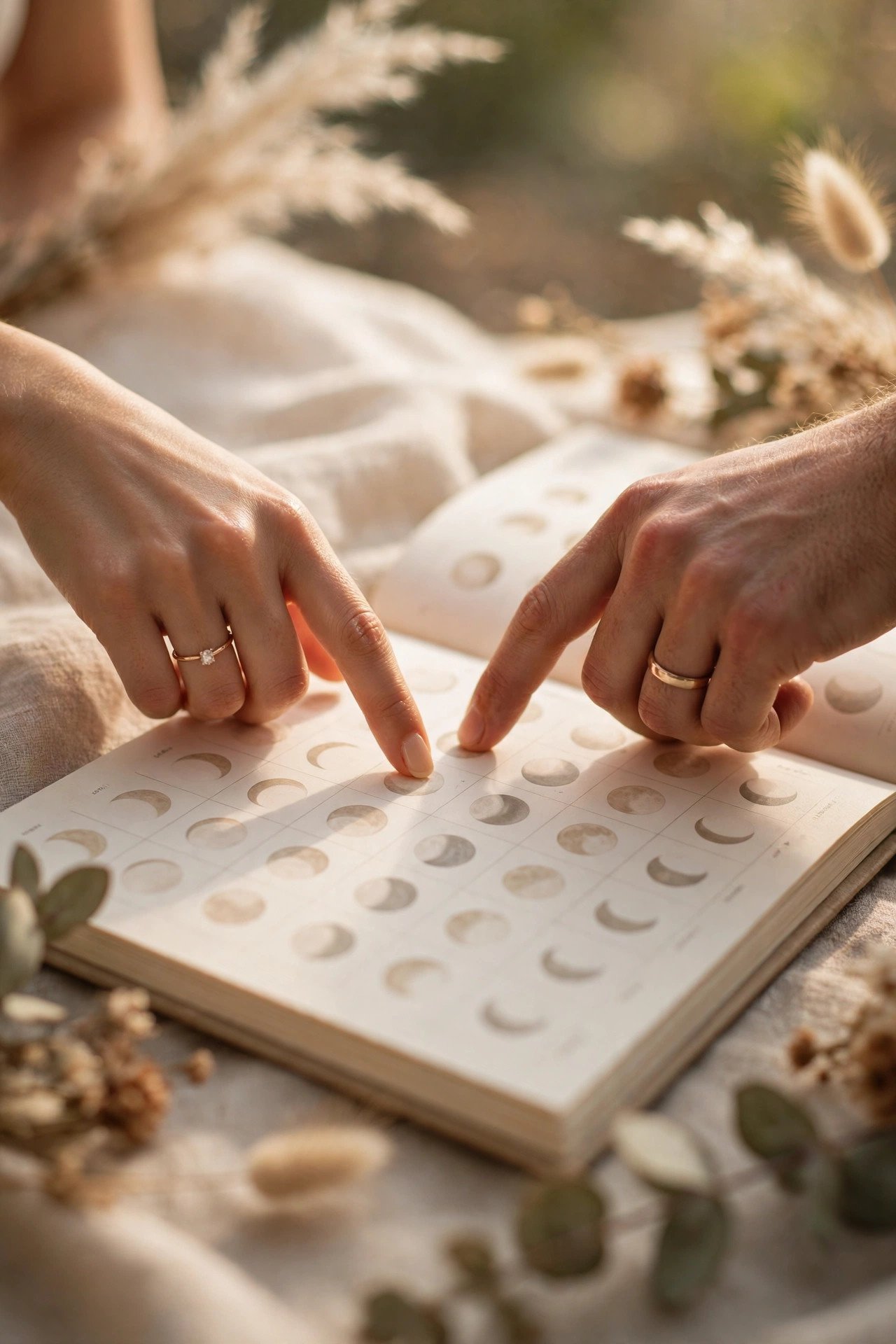
Many Vietnamese families consult the lunar calendar — sometimes with a fortune teller or feng shui adviser — to choose a wedding date and hour that harmonize with the couple’s birth years. Certain days are considered lucky for marriage and others avoided entirely, and the couple’s zodiac signs can shape the choice. Even very modern families often run a shortlist of venue dates past a grandparent or adviser before signing anything.
An Hoi — The Engagement Ceremony
 📌 Save
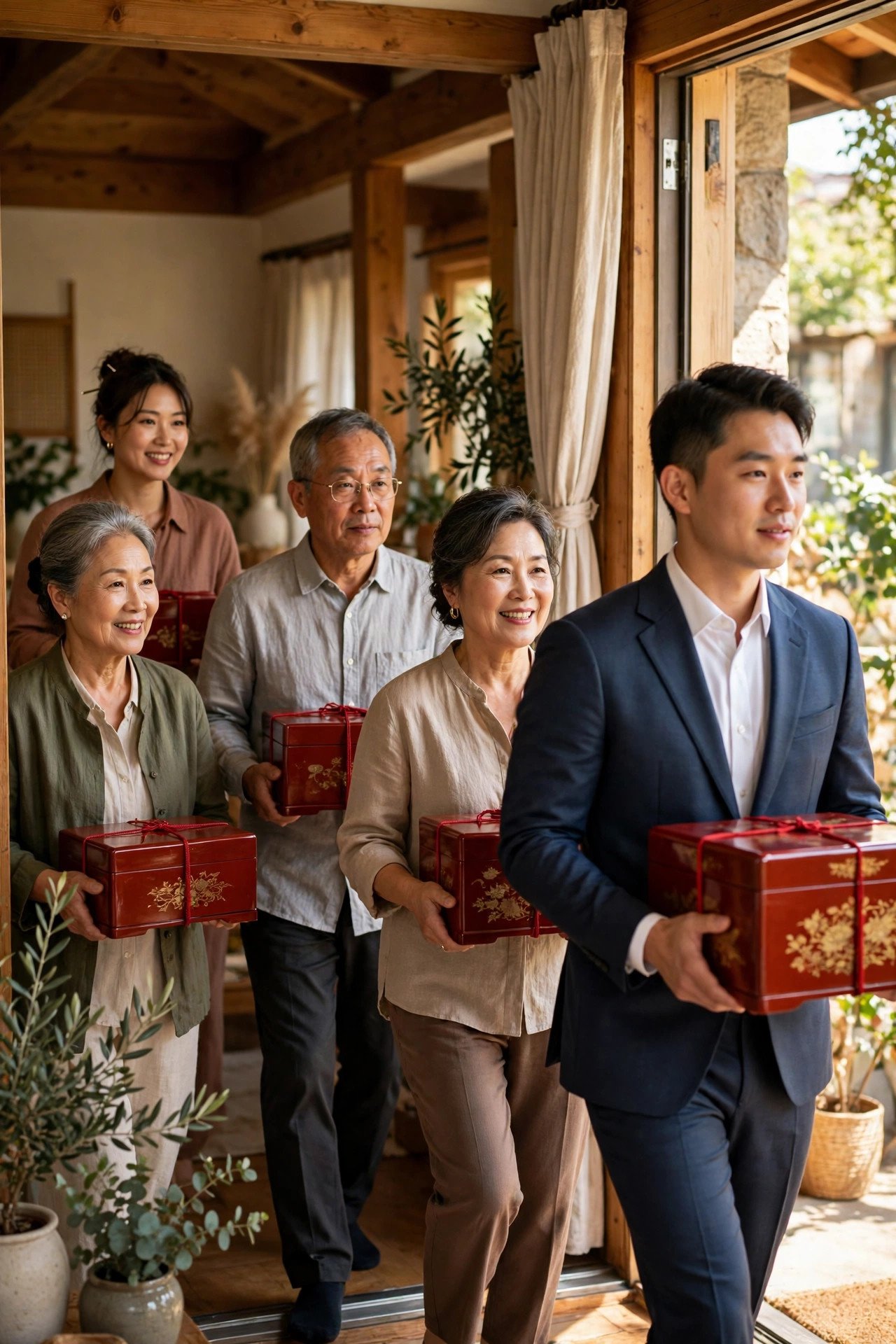
An hoi is the formal engagement: the groom’s family arrives at the bride’s home in a procession, led by a respected elder who speaks for them, carrying lacquered trays of betrothal gifts. The bride’s family receives them, the elder asks permission for the marriage, and the couple — often meeting the room in ao dai — offers tea to the elders. In northern Vietnam an hoi may be its own day weeks ahead; in the south it often flows into the wedding morning.
Mam Qua — The Lacquered Gift Trays
 📌 Save
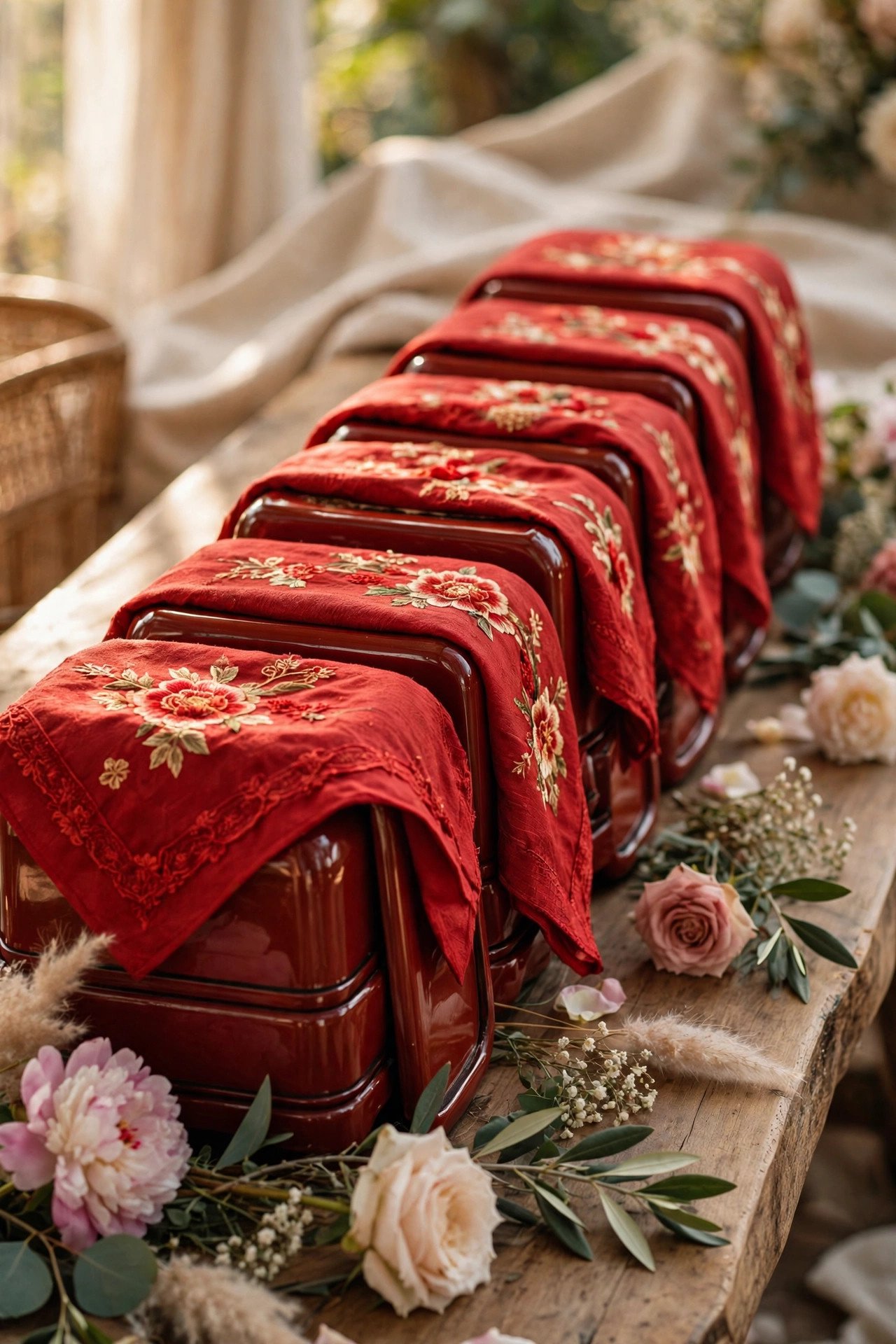
The gifts of an hoi and ruoc dau travel on mam qua: round lacquered trays, traditionally red, covered with embroidered cloths and carried by unmarried young men from the groom’s side and received by young women from the bride’s — the be trai and be gai. Trays hold betel and areca, fruit sculpted and stacked high, tea, sticky rice cakes, a roasted pig in grand celebrations, and an envelope of money for the bride’s family. The number of trays is usually odd and auspicious — five, seven or nine.
Betel Nut and Areca — Trau Cau
 📌 Save
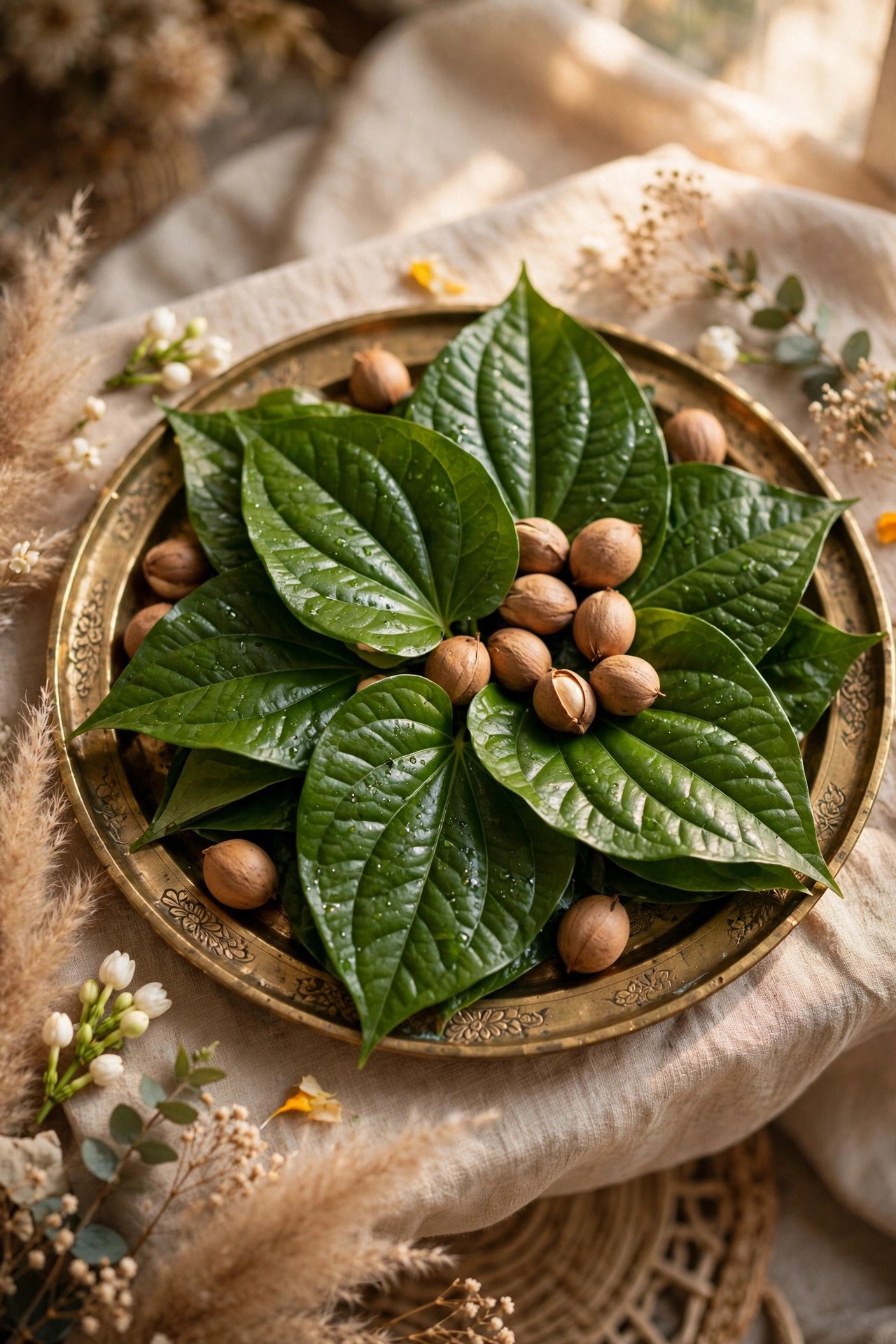
No Vietnamese wedding gift set is complete without trau cau — betel leaves and areca nuts, offered as the first and most essential item. A Vietnamese saying calls betel ‘the beginning of the story’: the pairing symbolizes love, fidelity and the hope that the couple’s words to each other stay sweet. Older relatives may still prepare the quid traditionally, but for most 2027 couples the tray is symbolic — presented with respect, then kept as the ceremony’s first blessing.
The Ao Dai
 📌 Save
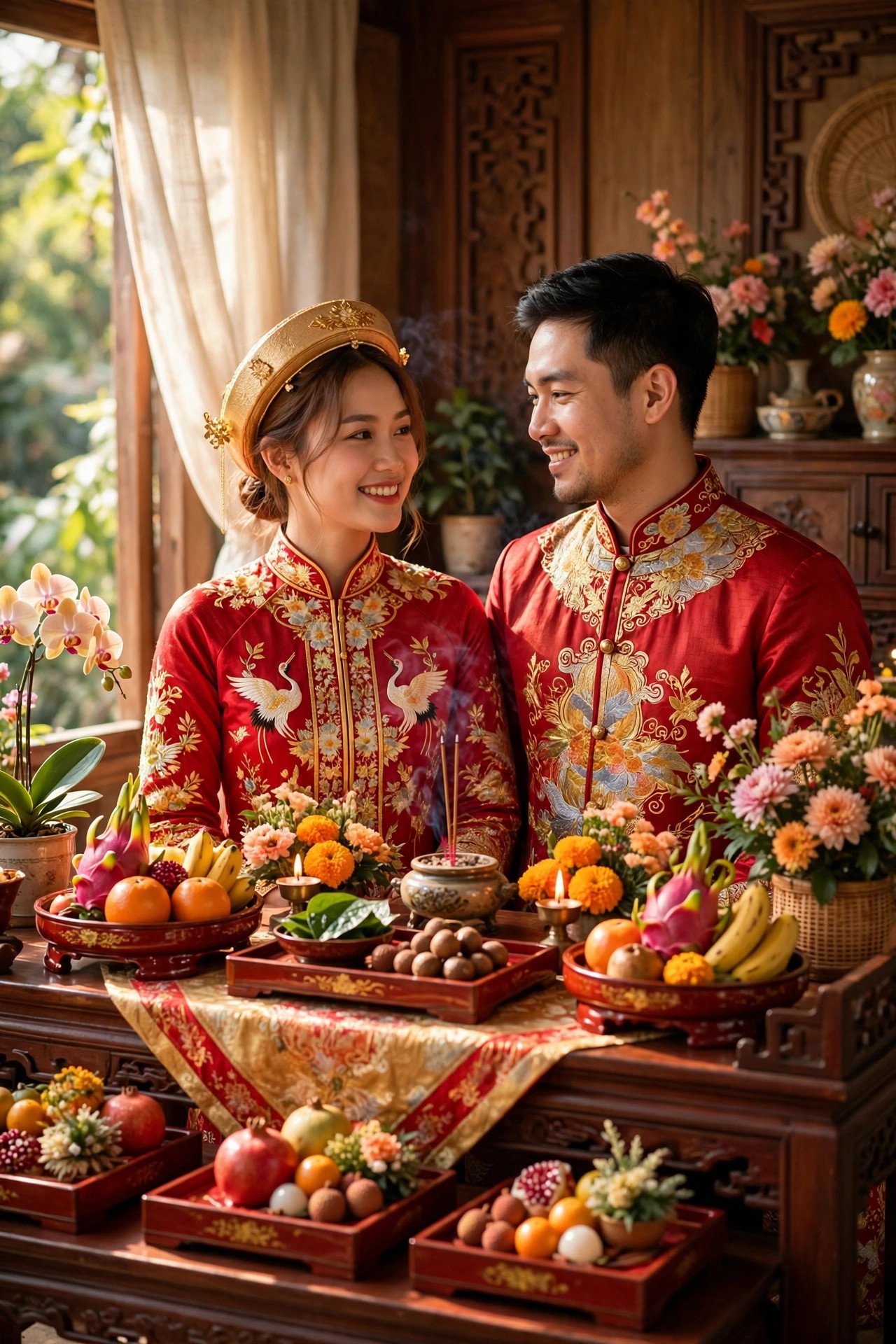
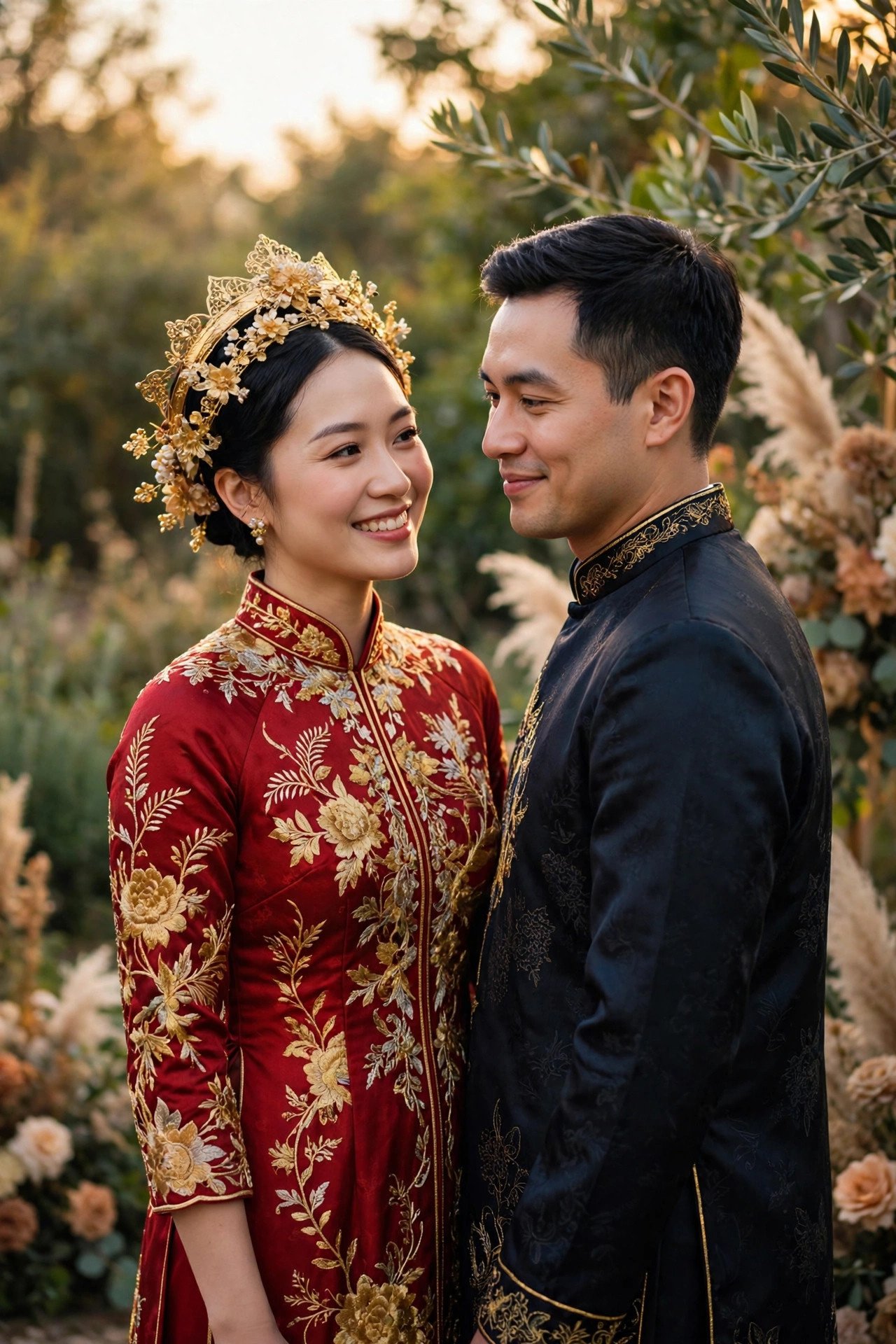
The ao dai — a long, flowing tunic worn over trousers — is the garment of Vietnamese celebrations. Brides often wear red or gold with embroidered phoenixes; grooms wear a complementary ao dai, traditionally in blue or gold with a dragon motif; mothers and attendants coordinate in rich jewel tones. In the diaspora, having ao dai tailored in Vietnam or by Vietnamese tailors abroad is a rite of passage itself, fittings and all.
Khan Dong — The Traditional Headdress
 📌 Save
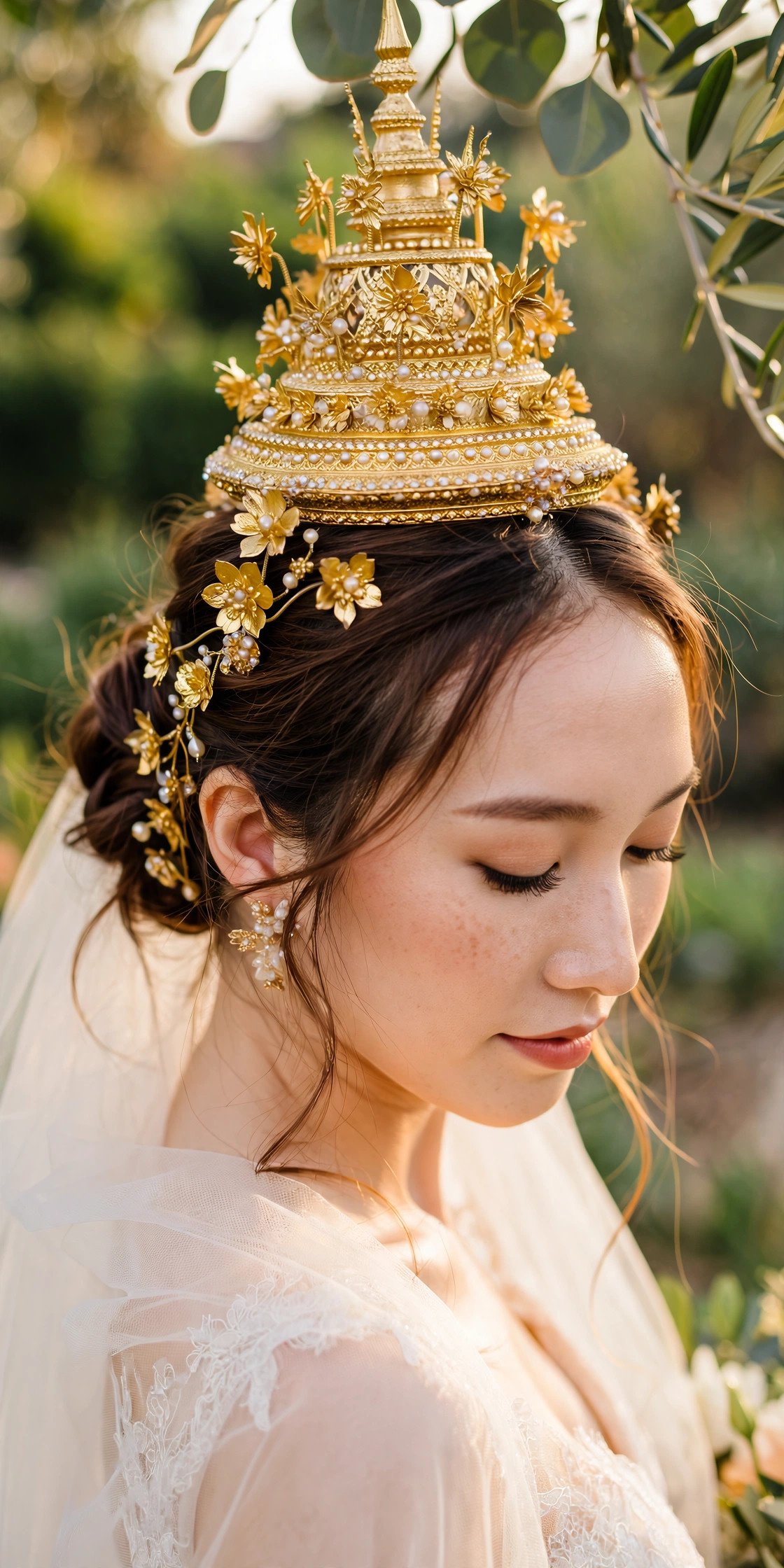
The khan dong (or khan xep) is the traditional headdress worn with the ao dai: a structured, circular wrap of fabric, gold and ornate for the bride, deep blue or black traditionally for the groom. It completes the ceremonial silhouette and appears in nearly every classic Vietnamese wedding portrait. Modern couples sometimes wear it only for the home ceremony and photos, changing hairstyles for the banquet — a practical compromise elders usually accept happily.
Red and Gold — The Colors of the Day
 📌 Save
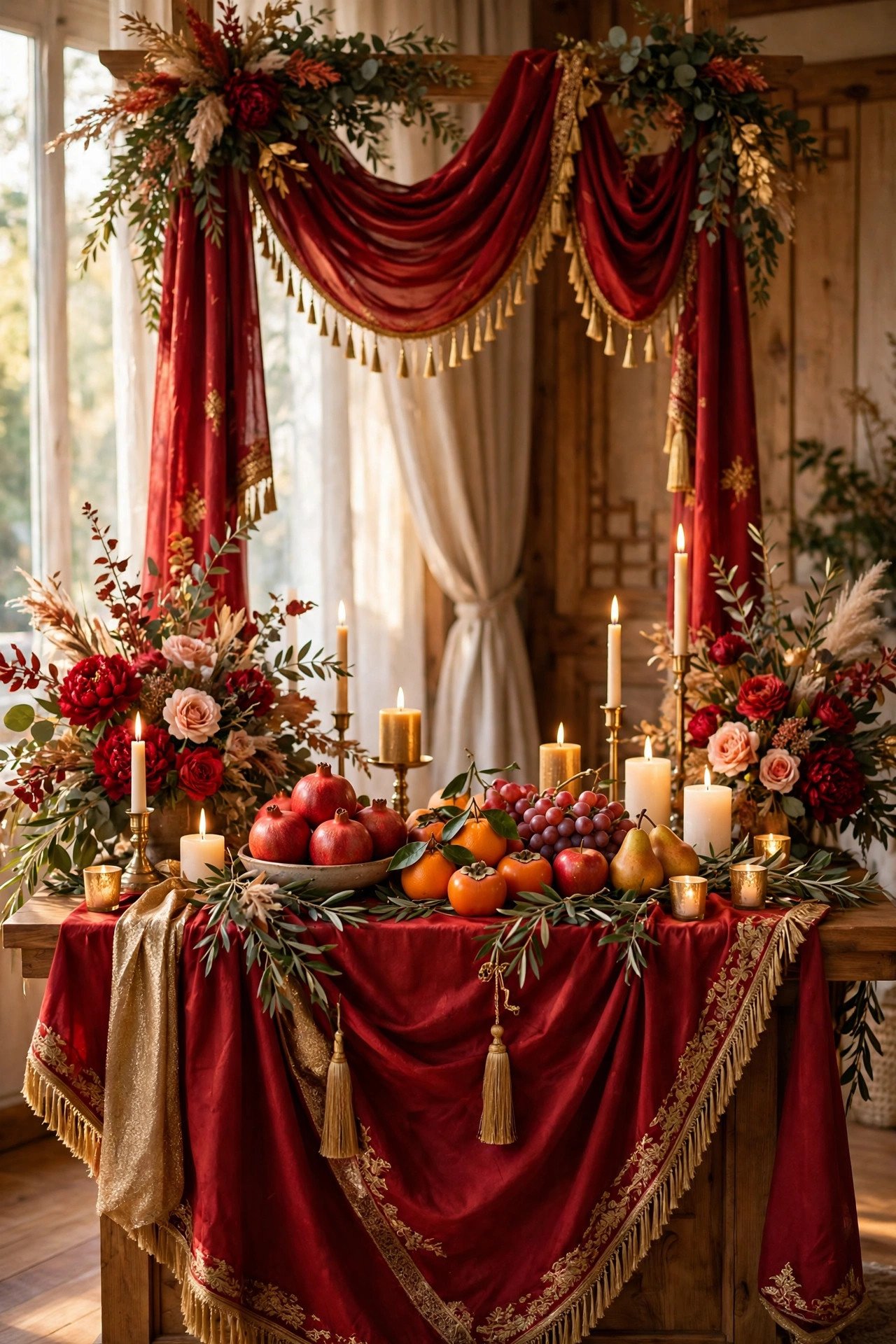
Vietnamese weddings glow red and gold. Red stands for happiness, luck and celebration; gold for wealth and a prosperous future; together they cover altars, trays, backdrops, envelopes and outfits. The double happiness character often decorates the backdrop. Couples planning a softer modern palette usually keep red and gold for the home ceremony — where elders care most — and let the evening banquet carry blush, ivory or whatever palette they love.
Ruoc Dau — The Groom’s Procession
 📌 Save
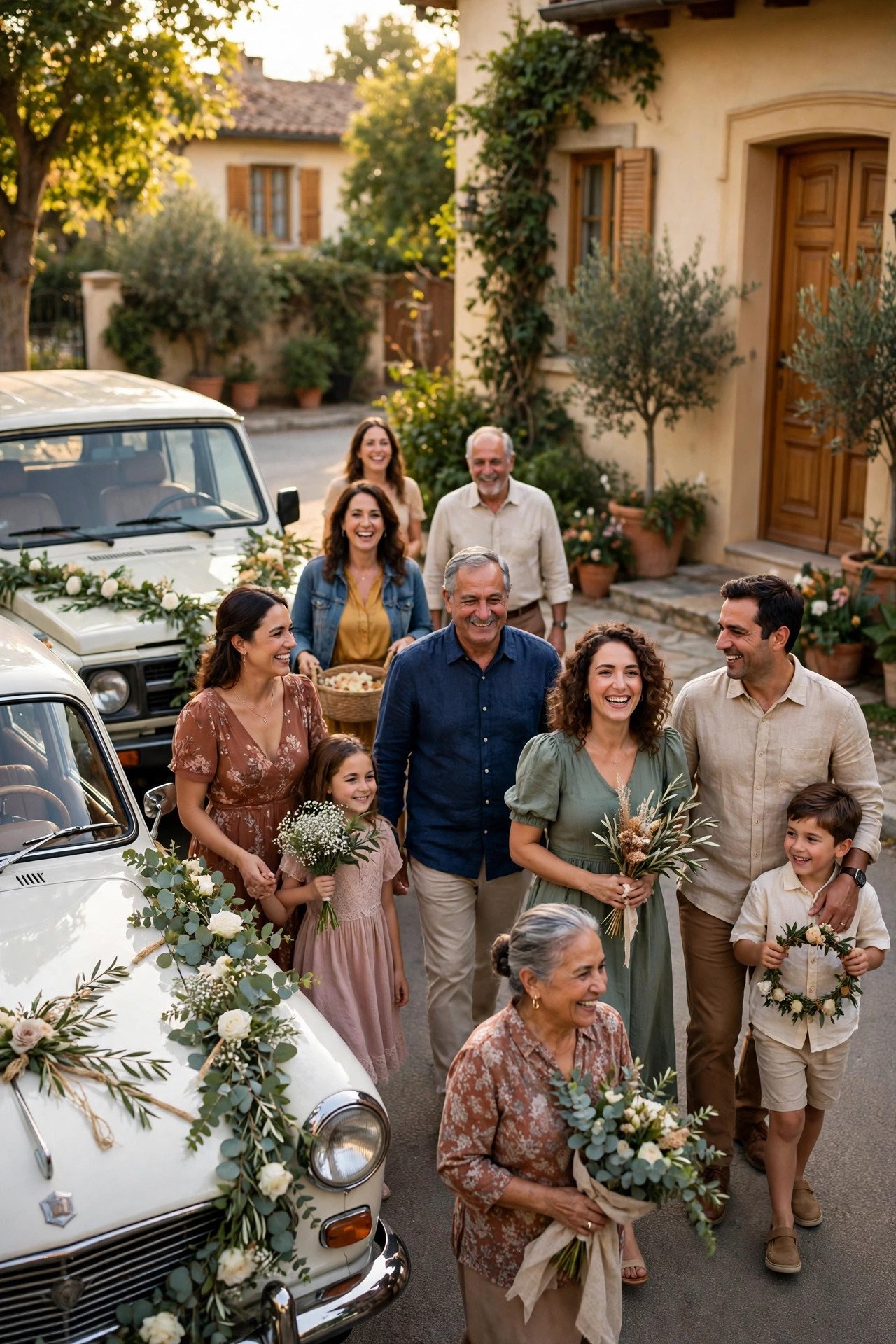
On the wedding morning the groom’s family processes to the bride’s home — ruoc dau — bearing the mam qua trays and led by the groom and the family representative. The mood is festive: decorated cars, drums in some regions, and a crowd of relatives in their finest. At the bride’s gate the procession is formally received, gifts are presented, and the ceremonies at her family altar begin. The procession is the day’s most public moment of joy.
Door Games at the Bride’s Gate
 📌 Save
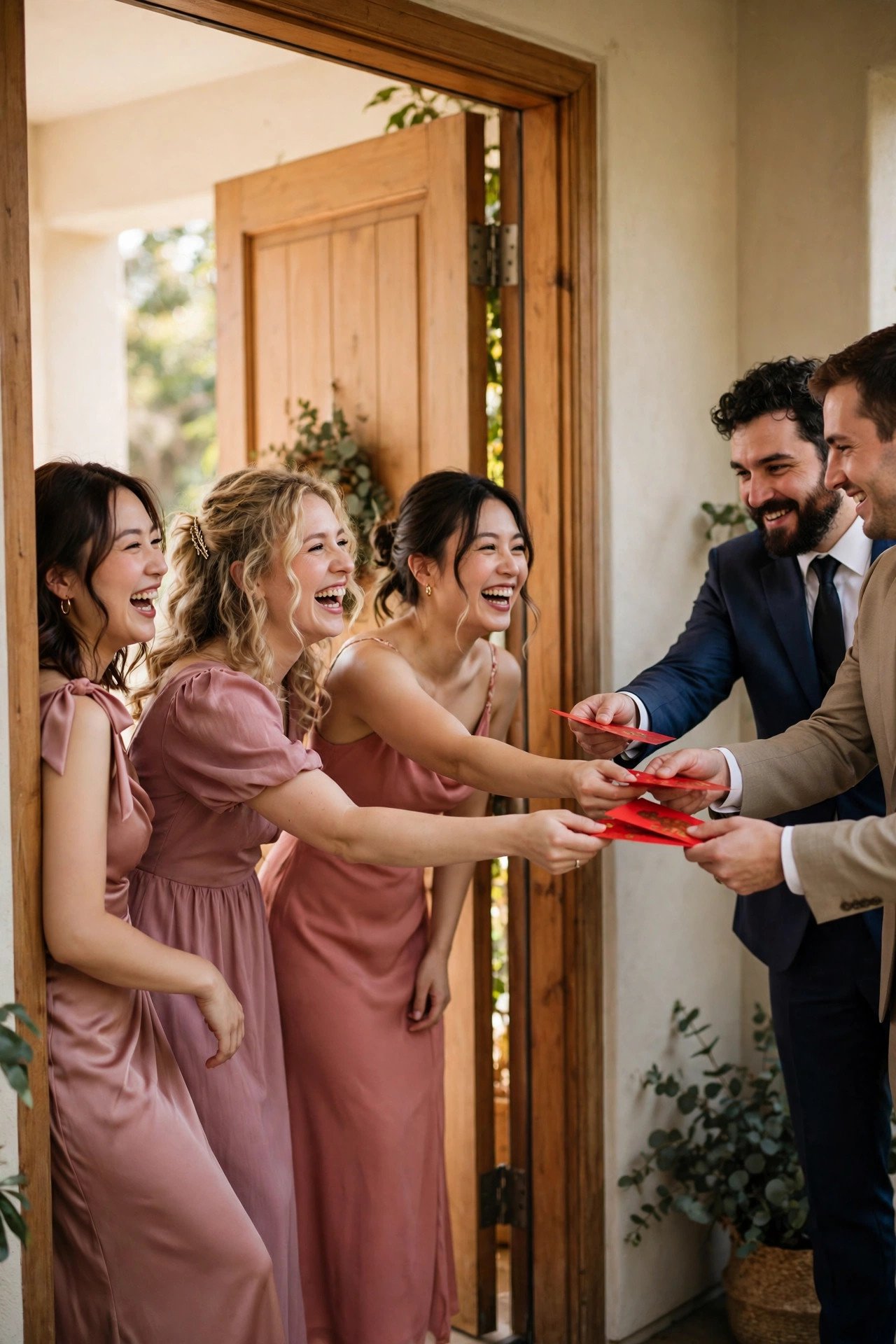
Before the groom may enter, the bride’s attendants often stage door games: riddles, small performances, declarations of love, or playful ‘tolls’ paid in red envelopes. The tradition tests the groom’s sincerity and good humor in front of both families, and the laughter breaks the morning’s formality. The games are kept kind and brief — elders are waiting inside — and a generous envelope or two usually opens the way faster than any riddle.
The Two Family Representatives
 📌 Save
The home ceremony is voiced by two representatives — dai dien hai ho — one senior man (or respected elder) speaking for each family. The groom’s representative requests permission for the marriage and presents the gifts; the bride’s representative responds, accepts, and offers guidance to the couple. The speeches are formal, gracious and often gently humorous. In bilingual diaspora weddings, families sometimes add a short translation so every guest can follow the exchange.
Incense at the Ancestral Altar
 📌 Save
At the bride’s home, the couple kneels or bows before the ancestral altar, offering incense, fruit and flowers to announce the marriage and ask the ancestors’ blessing. Parents may light the incense sticks and place them in the couple’s hands. For many families this is the true heart of the wedding — the moment the marriage becomes real. A parallel offering is later made at the groom’s family altar when the bride is received into his home.
The Tea Offering to Elders
 📌 Save
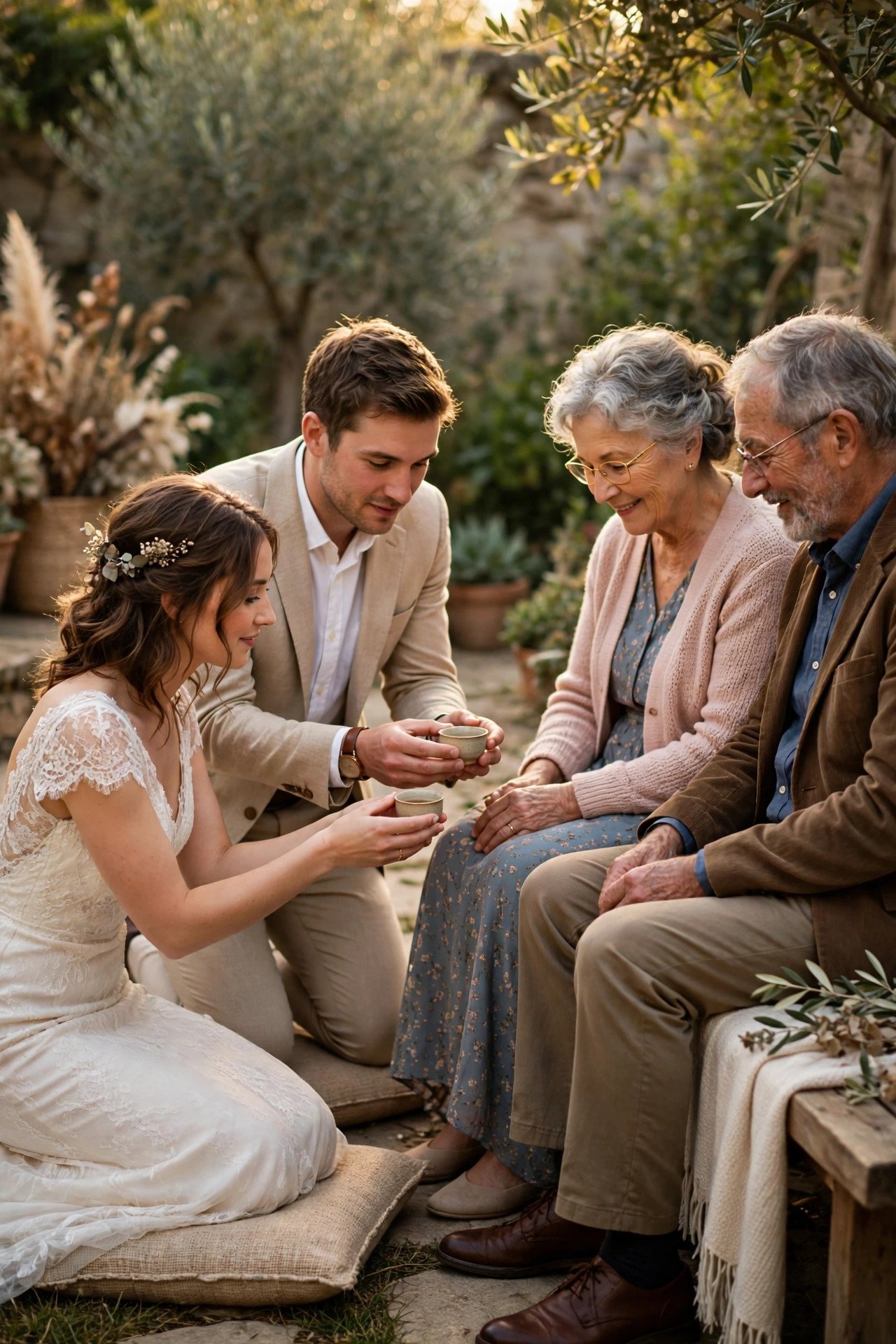
In the tea offering — a centerpiece shared with several East and Southeast Asian cultures — the couple kneels and serves small cups of tea to parents, grandparents and senior relatives, in order of seniority. Elders drink, offer blessings and advice, and present gifts in return — red envelopes and gold jewelry. The order matters and the room watches with full attention; it is often the most photographed and tearful part of the day.
Elders’ Blessings and Red Envelopes
 📌 Save
As elders accept tea, they return red envelopes — li xi — containing lucky money for the couple’s new life, along with spoken blessings and, frequently, a beloved piece of marriage advice. The envelopes accumulate in a designated tray or the bride’s hands, a visible pile of the family’s goodwill. The exchange is unhurried and personal; younger couples say hearing each elder’s words, one by one, is what they remember most years later.
Gold Jewelry Gifts
 📌 Save
Vietnamese families traditionally gift the bride gold jewelry — necklaces, bracelets, earrings — presented during the home ceremony, often placed on her by mothers and grandmothers in front of the room. The gold is both adornment and security: a tangible blessing for the couple’s future. The pieces are frequently family gold, bought for this purpose or passed down, and the bride may wear the full set for the ceremony before simplifying for the banquet.
Dragon and Phoenix Candles
 📌 Save
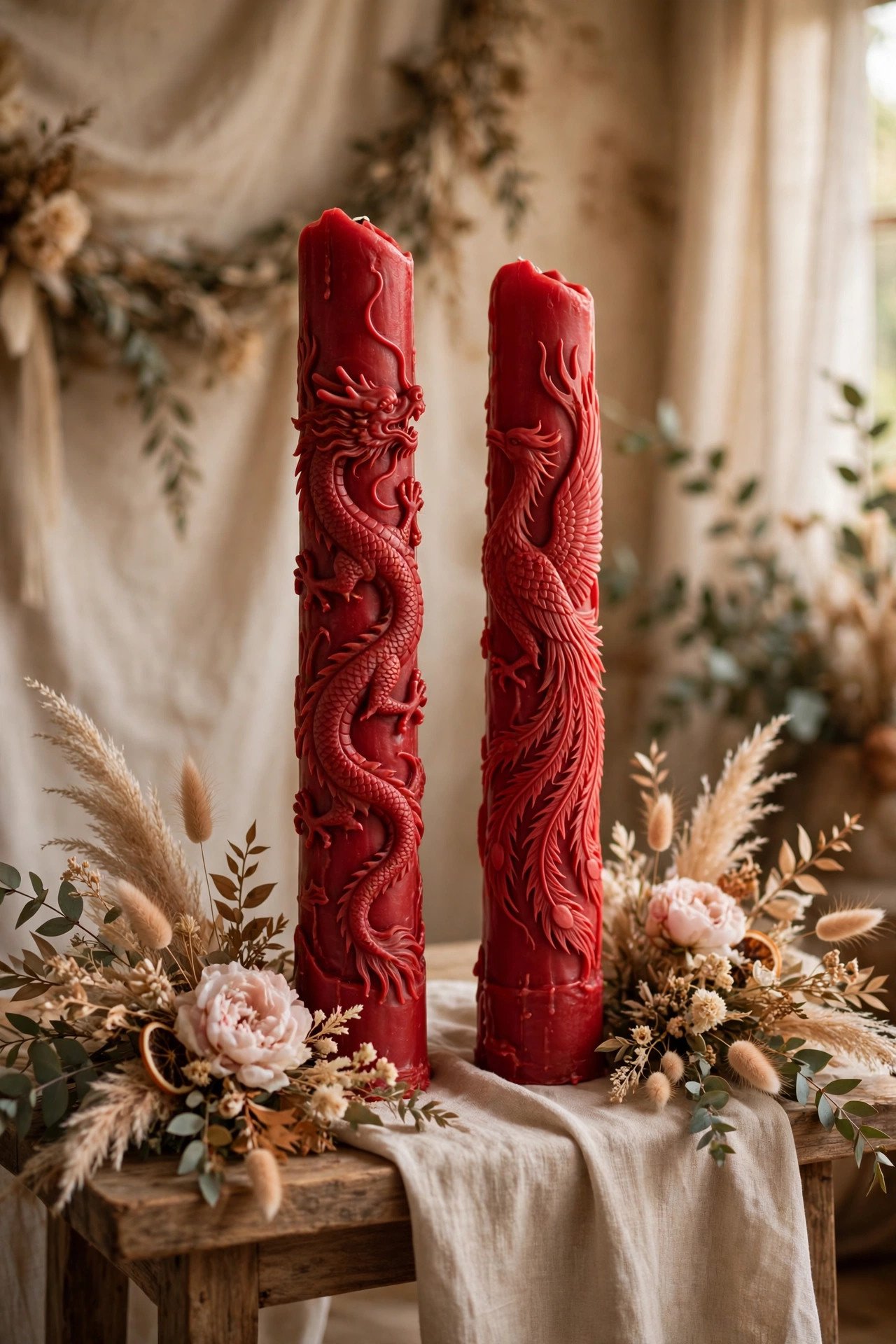
Many Vietnamese wedding altars display a matched pair of tall candles carved or painted with a dragon and a phoenix — the classic pairing symbolizing the groom and bride, strength and grace in balance. They burn through the home ceremony alongside ancestor offerings. Couples keep the unburned portions as household keepsakes. Like much of the altar, the candles’ job is symbolic storytelling: the marriage framed as two natures in harmony, witnessed by heaven and family.
The Double Happiness Symbol
 📌 Save
The double happiness character — song hy in Vietnamese — appears across the wedding: carved into the backdrop, printed on invitations and envelopes, sometimes cut into the fruit displays. It proclaims doubled joy: two people, two families, twice the happiness. The character is shared across Chinese-influenced cultures of the region, and in Vietnam it sits comfortably beside the ancestral altar and the mam qua trays as the celebration’s visual signature.
Exchanging Rings Before the Altar
 📌 Save
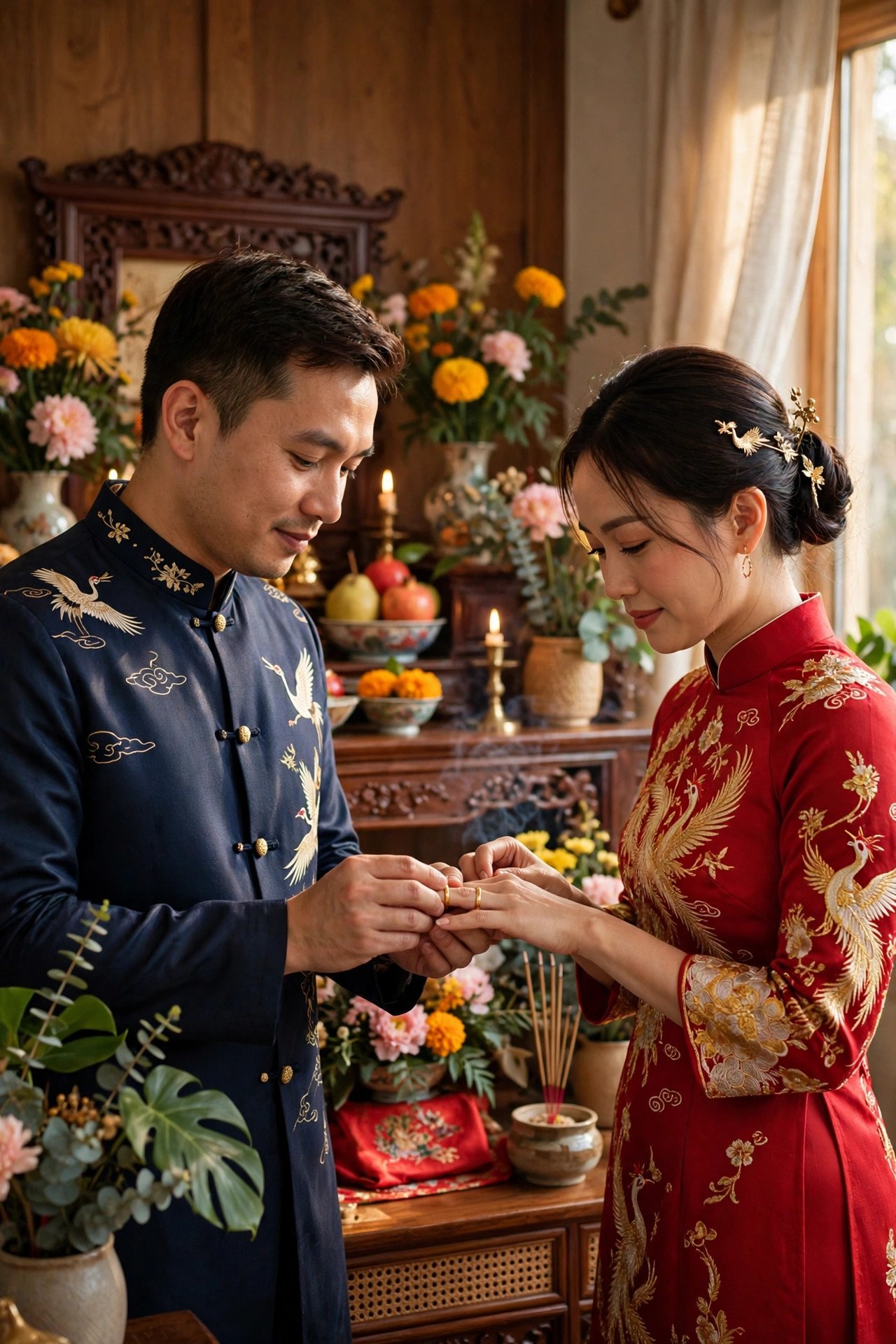
In contemporary Vietnamese ceremonies the couple exchanges rings at the family altar, after the incense offering and tea — blending the Western ring custom into the traditional order of the day. Parents or the representatives may bless the rings first. For couples also holding a church or civil ceremony, rings sometimes move between the two events; families decide together which moment is ‘the’ exchange, and there is no wrong answer.
Vu Quy — The Bride Leaves Her Family Home
 📌 Save
After the ceremonies at her home, the bride departs with the groom’s procession — vu quy, the moment she leaves her family house as a daughter and arrives at his as a wife and daughter-in-law. There are hugs, tears and often laughter through both; her family may watch from the door until the cars turn the corner. At the groom’s home she is welcomed, offers incense at his family’s altar, and the two households’ union is complete.
The Multi-Course Banquet
 📌 Save
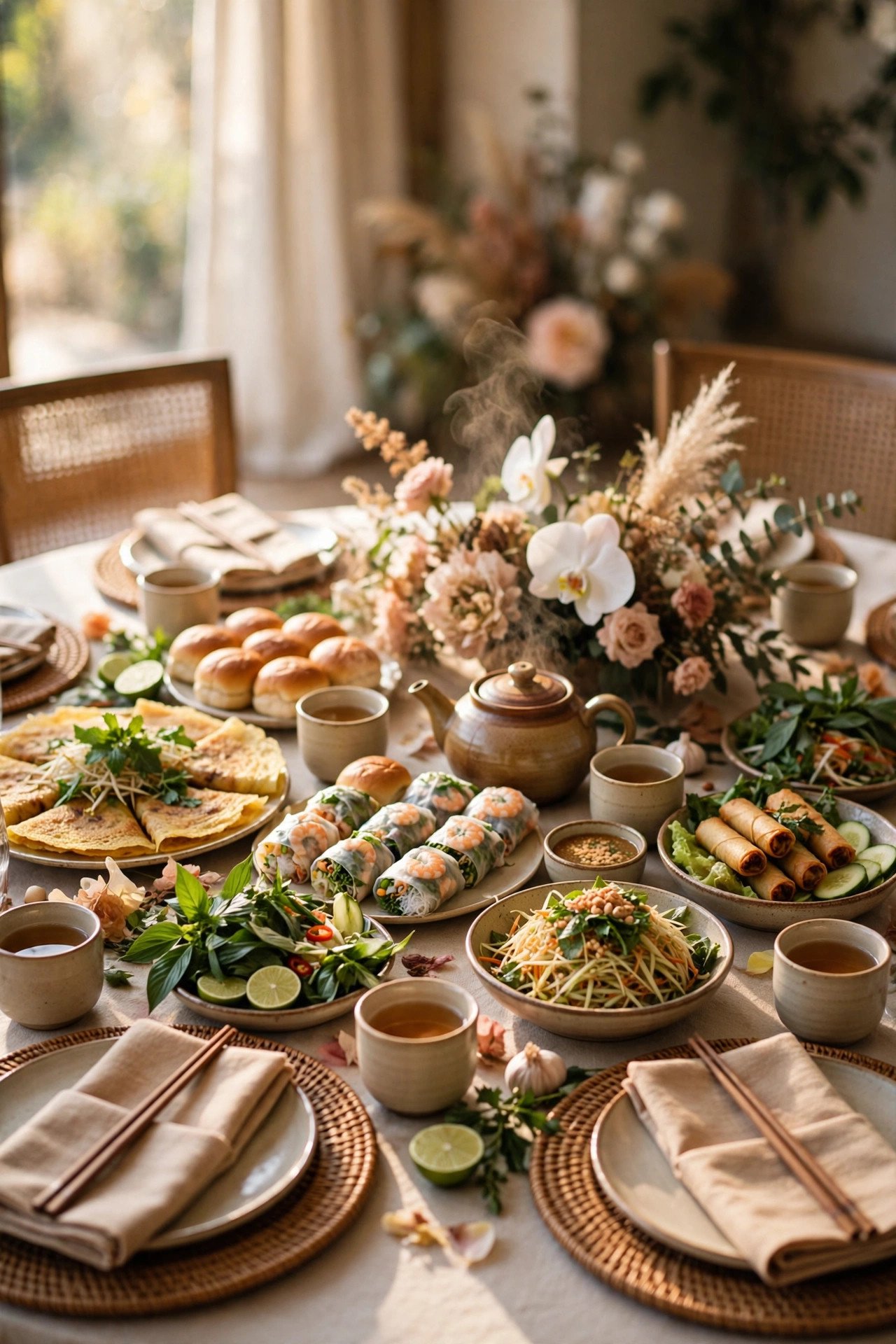
The celebration moves to a restaurant or hall for a seated banquet of many courses — often seven to ten — served family-style at round tables: cold platters, soup, seafood, roasted meats, hot pot and dessert. Abundance is the message, and hosts take pride in guests leaving full. In the diaspora the banquet often anchors the whole day, with the home ceremonies kept intimate in the morning and hundreds of guests welcomed at night.
Table-by-Table Thank-Yous
 📌 Save
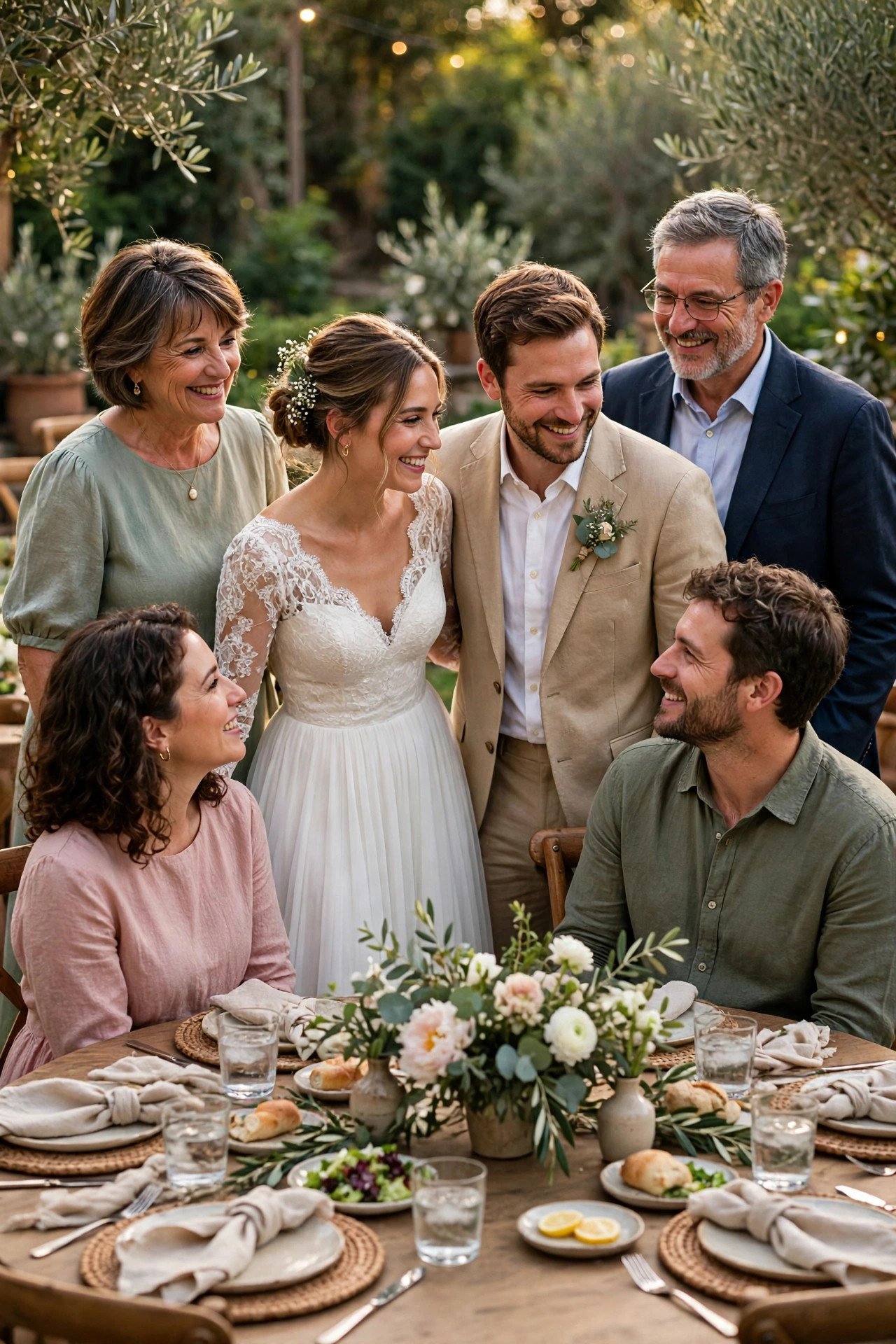
During the banquet, the couple — usually with both sets of parents — visits every table to thank guests personally, raise a glass of tea or sparkling cider together and pose for a photo. With ten or more tables it becomes a joyful procession of its own, winding between courses. Guests who traveled far consistently say this visit, brief as it is, is when the wedding felt personal.
The Outfit Changes
 📌 Save
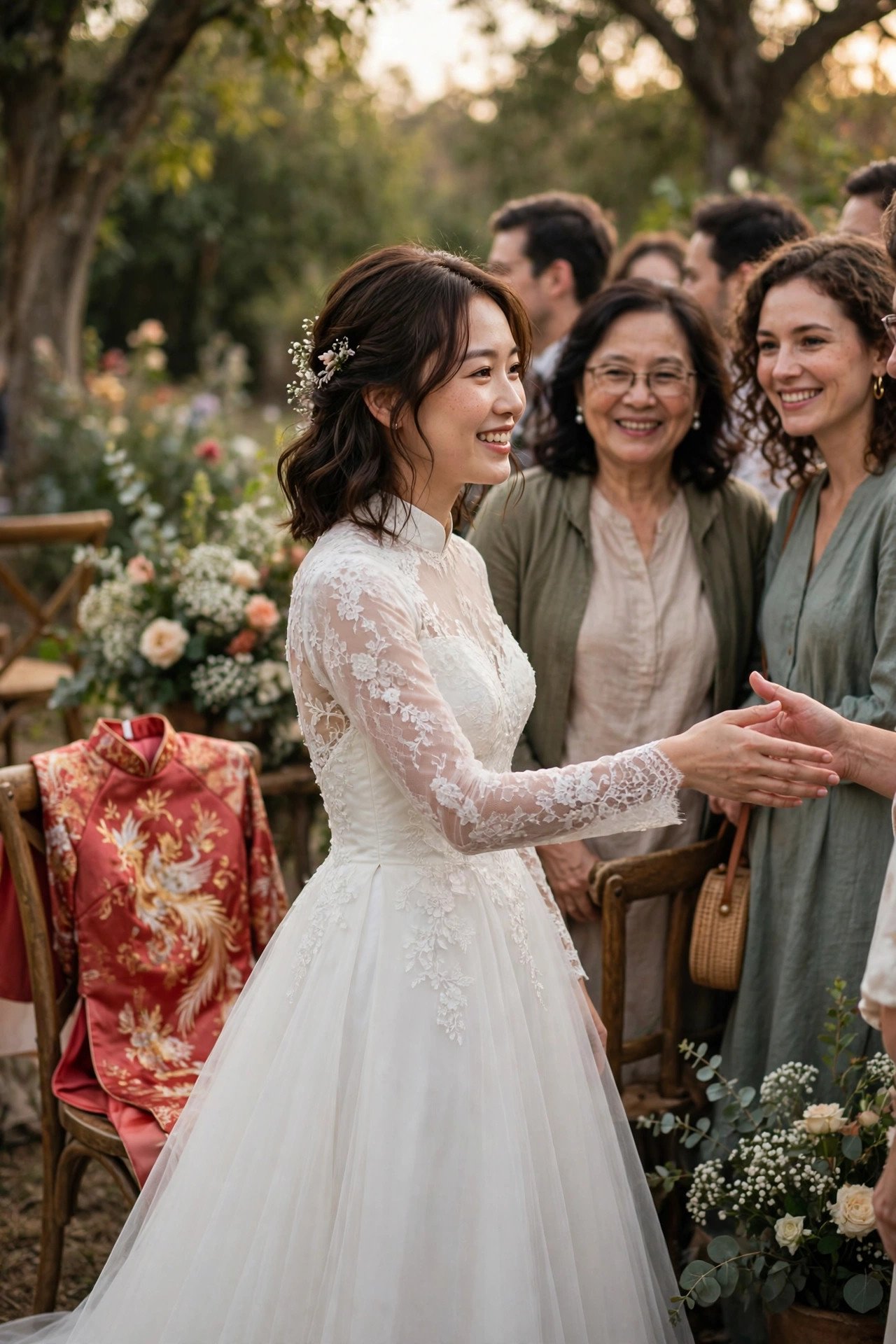
Many Vietnamese brides wear several outfits: the ao dai (sometimes two) for the home ceremonies, then a white Western gown for the banquet, and occasionally a third dress for dancing. Each change marks a chapter of the day — tradition, then celebration. Grooms may follow suit, ao dai in the morning and a suit at night. The logistics are real: changes are timed to the procession gaps and the banquet’s early courses, with an attendant assigned to help.
The Pre-Wedding Photo Album on Display
 📌 Save
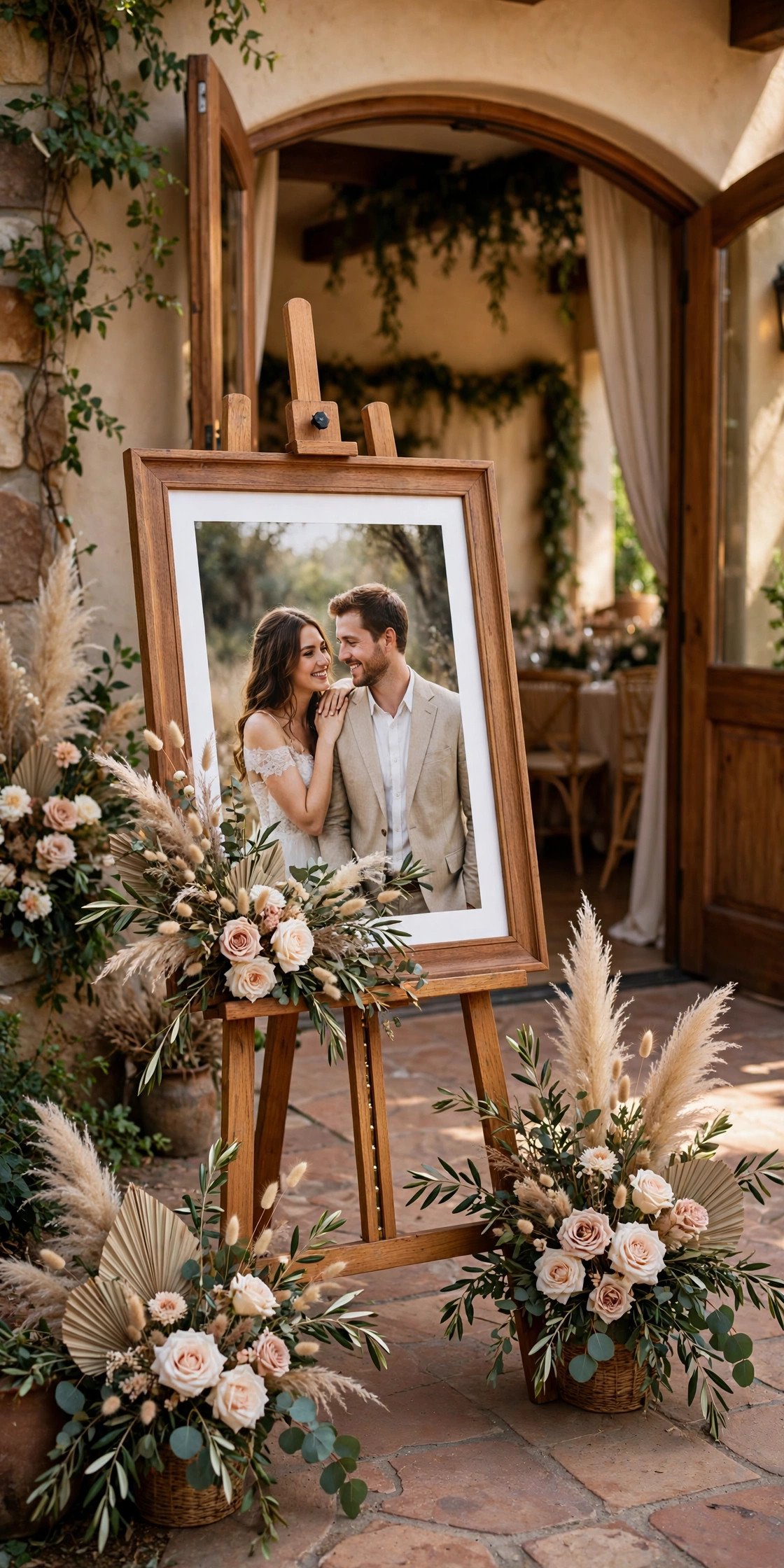
Couples traditionally take elaborate pre-wedding portraits weeks ahead — studios, scenic locations, several outfits — and display the album and a large framed portrait at the banquet entrance. Guests browse it like an exhibition, and elders approve heartily: the marriage is celebrated with professional portraits even before the day itself. The custom thrives in the diaspora, where the shoot doubles as an engagement session with far more wardrobe changes.
Karaoke with the Guests
 📌 Save
Vietnamese banquets run on music: a live band or singer for the formal program, then karaoke, when uncles, aunts and family friends take the stage to great applause. Singing is participation, not performance — enthusiasm beats talent every time, and the couple is usually serenaded more than once. Couples abroad keep the segment with a hired karaoke setup and a sign-up sheet, which prevents both dead air and stage takeovers.
Morning Ceremonies, Auspicious Hours
 📌 Save
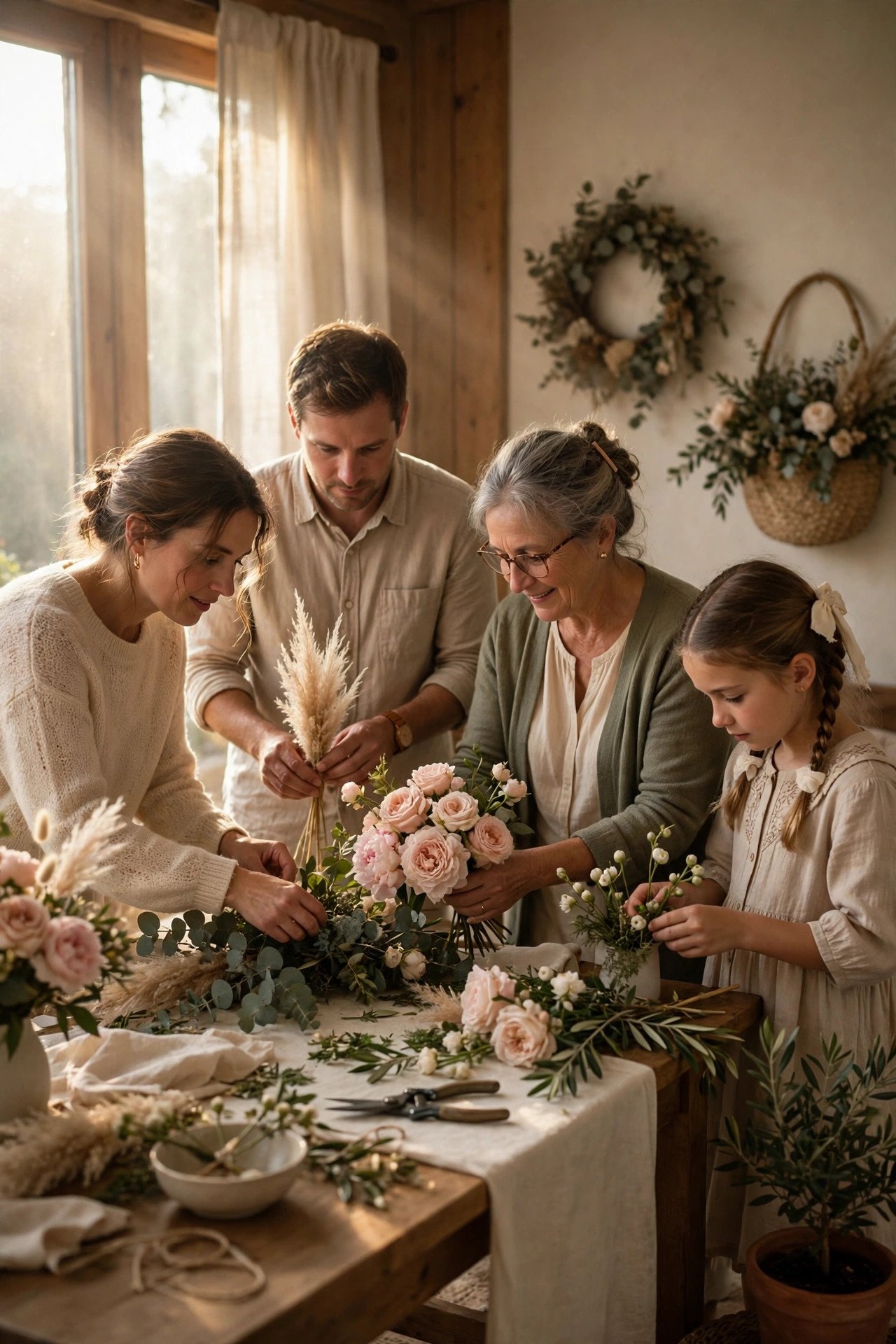
Beyond the lucky date sits the lucky hour — gio hoang dao — an auspicious window, often in the morning, when the procession should arrive and the key rites should occur. Households rise early, altars are prepared by dawn, and the day’s choreography bends around that hour. Guests invited to a morning ceremony should take the start time literally: the procession will not wait, and arriving to a finished tea ceremony is a genuine faux pas.
Fusion Weddings Today — Tea First, Vows After
 📌 Save
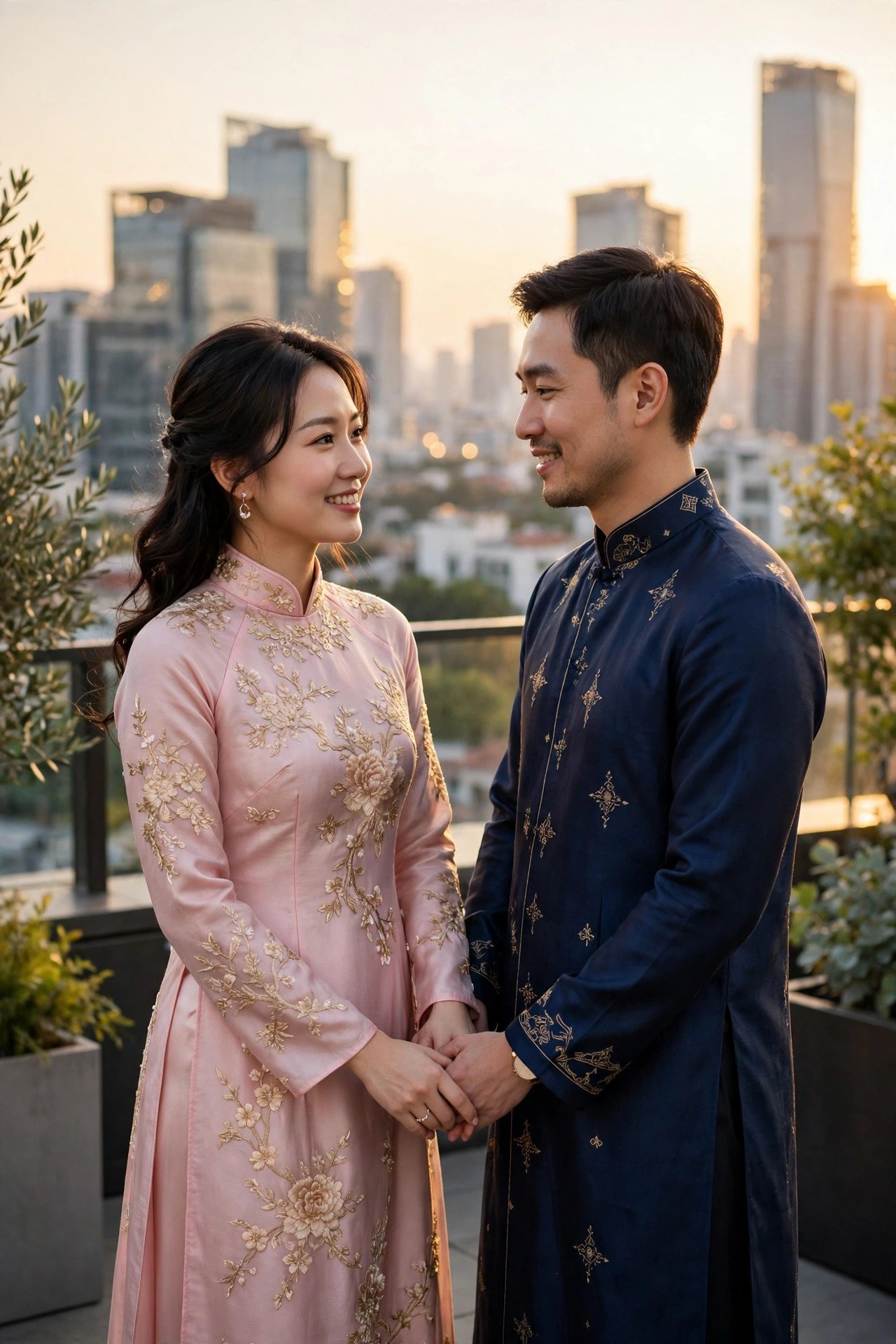
Across the USA, UK and Canada, Vietnamese couples commonly run the full traditional morning — procession, altar, tea — then hold a Western ceremony and reception later the same day or the same weekend. The blend works because each part keeps its integrity: elders get the rites that matter, the couple gets the ceremony style they imagined, and guests get a story they will retell for years. The secret is scheduling honesty: it is a long day, and everyone should know the plan.
Vietnamese Wedding Traditions FAQs
What is the difference between an hoi and ruoc dau?+
An hoi is the formal engagement: the groom’s family brings betrothal gifts to the bride’s home and an elder asks permission for the marriage. Ruoc dau is the wedding-day procession in which the groom’s family comes to fetch the bride after the home ceremonies. In some regions they are separate events; in others they flow together on one morning.
Why do Vietnamese couples serve tea to their elders?+
Serving tea on their knees is how the couple shows respect and gratitude to parents and senior relatives, and formally introduces each partner to the other’s family elders. The elders drink, bless the couple, and give red envelopes and gold jewelry in return.
What should a guest wear to a Vietnamese wedding?+
Formal attire is expected at the banquet — suits and elegant dresses. Guests may wear ao dai if they own one appropriately, but it is never required. Avoid wearing all-white at the home ceremony if the bride wears white, and note that red is the bride’s color of joy — a red outfit is fine, though many guests soften it out of courtesy.
How much money goes in a guest’s envelope?+
Guests traditionally give cash in an envelope, roughly covering the cost of their seat at the banquet plus a generous margin for good luck. Amounts vary widely by city, relationship and family custom — close family gives considerably more — so ask a mutual friend or family member what is typical in that circle.
Can non-Vietnamese partners and guests join the tea ceremony?+
Yes — the tea ceremony is precisely how a new partner is welcomed into the family. The non-Vietnamese side is guided through every step by the representatives and attendants, elders are generally delighted by the effort, and bilingual explanations help everyone follow the meaning.
Key Takeaways
- The day is built on processions: gifts arrive on red lacquered trays, carried between the two homes.
- The ancestral altar and the tea offering are the ceremony’s heart — respect to ancestors and elders comes first.
- Red and gold are the colors, the ao dai is the garment, and the khan dong headdress completes the look.
- Elders give as much as they receive: blessings, red envelopes and gold jewelry flow back to the couple.
- Regional and family variation is real — north, center and south differ — so let your own elders lead.
Final Thoughts
A Vietnamese wedding says, in a dozen small ceremonies, that marriage is a family event before it is a couple’s event. If you are marrying into these traditions, lean in: learn the tea order, wear the ao dai with pride, and let the elders run their beautiful, ancient choreography. You will come out the other side not just married, but adopted — in the best possible way.