Spanish Wedding Traditions (2027)
By zainzari • Published October 23, 2026 • Updated October 23, 2026
 📌 Save
Spanish wedding traditions center on family, faith and a very long celebration: the groom presents thirteen coins (las arras) as a promise of shared prosperity, a lasso cord joins the couple, sponsors called padrinos guide them in place of a large wedding party, and the banquet runs late into the night. Details vary by region and family, so treat every custom here as a starting point, not a rulebook.
A wedding in Spain is rarely a short, early evening affair. Ceremonies often begin in the late afternoon, dinner may not start until ten or later, and the dancing can greet the sunrise — with churros. Underneath the party, though, sits a layer of beautiful ceremony customs, many rooted in Spain’s Catholic heritage and shaped by region, from Andalusia to Catalonia to Galicia.
This guide walks through 25 Spanish wedding traditions one by one: what each custom is, what it symbolizes, and how couples in Spain and across the USA, UK and Canada include it today. As with every tradition in this series, customs vary by region and family — the most respectful way to borrow one is to understand it first and adapt it with the family it belongs to.
At a Glance: Spanish Customs, Meanings and Moments
| # | Tradition | What It Is | When It Happens |
|---|---|---|---|
| 1 | Las Arras — The Thirteen Coins | groom presents 13 blessed coins to the bride | Ceremony |
| 2 | El Lazo — The Wedding Lasso | a cord draped over the couple in a figure eight | Ceremony |
| 3 | The Mantilla Veil and Peineta Comb | lace veil worn over a tall ornamental comb | Ceremony |
| 4 | Padrinos and Madrinas — Sponsors Over Wedding Parties | chosen sponsors guide the couple instead of bridesmaids | Whole day |
| 5 | La Pedida de Mano — The Formal Asking | groom’s family formally asks for the bride’s hand | Engagement |
| 6 | Orange Blossoms in the Bouquet | azahar flowers symbolizing purity and good fortune | Ceremony |
| 7 | The Bouquet Offering at the Altar | bride leaves a bouquet at a statue of the Virgin Mary | Ceremony |
| 8 | Wedding Rings on the Right Hand | Spanish couples traditionally wear rings on the right hand | Ceremony |
| 9 | Rice at the Church Door | guests shower the couple with rice as they exit | After the ceremony |
| 10 | ¡Que Se Besen! — The Chant for a Kiss | guests chant until the couple kisses | Reception |
| 11 | The Late-Afternoon Ceremony | weddings timed for golden light and cooler air | Ceremony |
| 12 | The Long Banquet — Dinner That Starts Late | a seated feast of many courses, often from ten o’clock | Reception |
| 13 | The Jamón Carving Station | a master carver slicing cured ham live at cocktail hour | Cocktail hour |
| 14 | Cutting the Cake with a Sword | the wedding cake is sliced with a ceremonial sword | Reception |
| 15 | Cutting the Groom’s Tie | the tie is cut into pieces and auctioned for the honeymoon | Reception |
| 16 | Sevillanas on the Dance Floor | Andalusia’s folk dance that pulls whole families in | Reception |
| 17 | The First Dance — A Waltz to Open | couples traditionally open the dancing with a waltz | Reception |
| 18 | Table-by-Table Visits During Dinner | the couple greets every table between courses | Reception |
| 19 | Gifts in Envelopes | cash gifts in envelopes are the standard present | Reception |
| 20 | Fans as Summer Favors | hand fans (abanicos) gifted at warm-weather weddings | Reception |
| 21 | The Historic Black Dress | 19th-century Spanish brides famously wore black silk | A heritage note |
| 22 | Churros con Chocolate at Dawn | the party ends with churros and thick hot chocolate | Late night |
| 23 | El Brindis — Toasts to Los Novios | heartfelt toasts raised to the newlyweds | Reception |
| 24 | Regional Touches — Every Region Dances Differently | from Catalan sardana circles to Galician traditions | Reception |
| 25 | The Party That Ends at Sunrise | dancing until dawn, then breakfast together | Late night |
Planning note: Spanish timelines run late on purpose. If you borrow one custom, borrow the unhurried spirit too — and tell your guests when dinner really starts.
Las Arras — The Thirteen Coins
 📌 Save
During the ceremony, the groom presents the bride with thirteen coins, usually carried in a small decorated box or pouch and blessed by the priest. The coins symbolize his promise to provide and share everything he has, and her acceptance of that trust; thirteen is often linked to Christ and the twelve apostles. Today many couples split the gesture — each gives six or seven coins — or keep a set as a family heirloom for the next generation.
El Lazo — The Wedding Lasso
 📌 Save
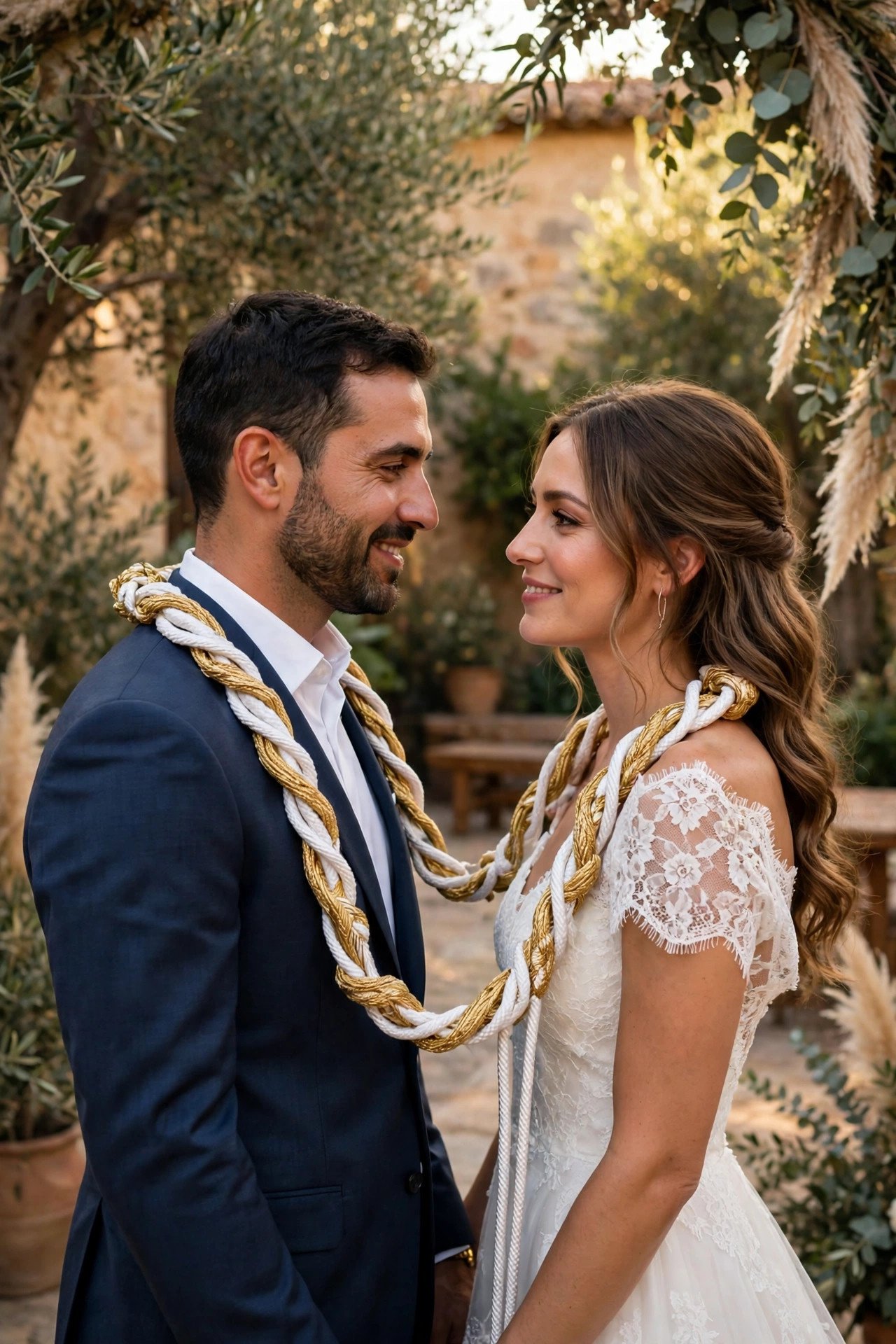
After the vows, sponsors drape a large rosary, cord or floral garland over the couple’s shoulders in a figure eight, the shape of infinity. It rests there through the rest of the ceremony as a visible sign that the two are now bound together. In Spain the lasso is most common in Catholic ceremonies, and many couples keep theirs displayed at home afterwards — a rosary lasso can double as a family prayer piece.
The Mantilla Veil and Peineta Comb
 📌 Save
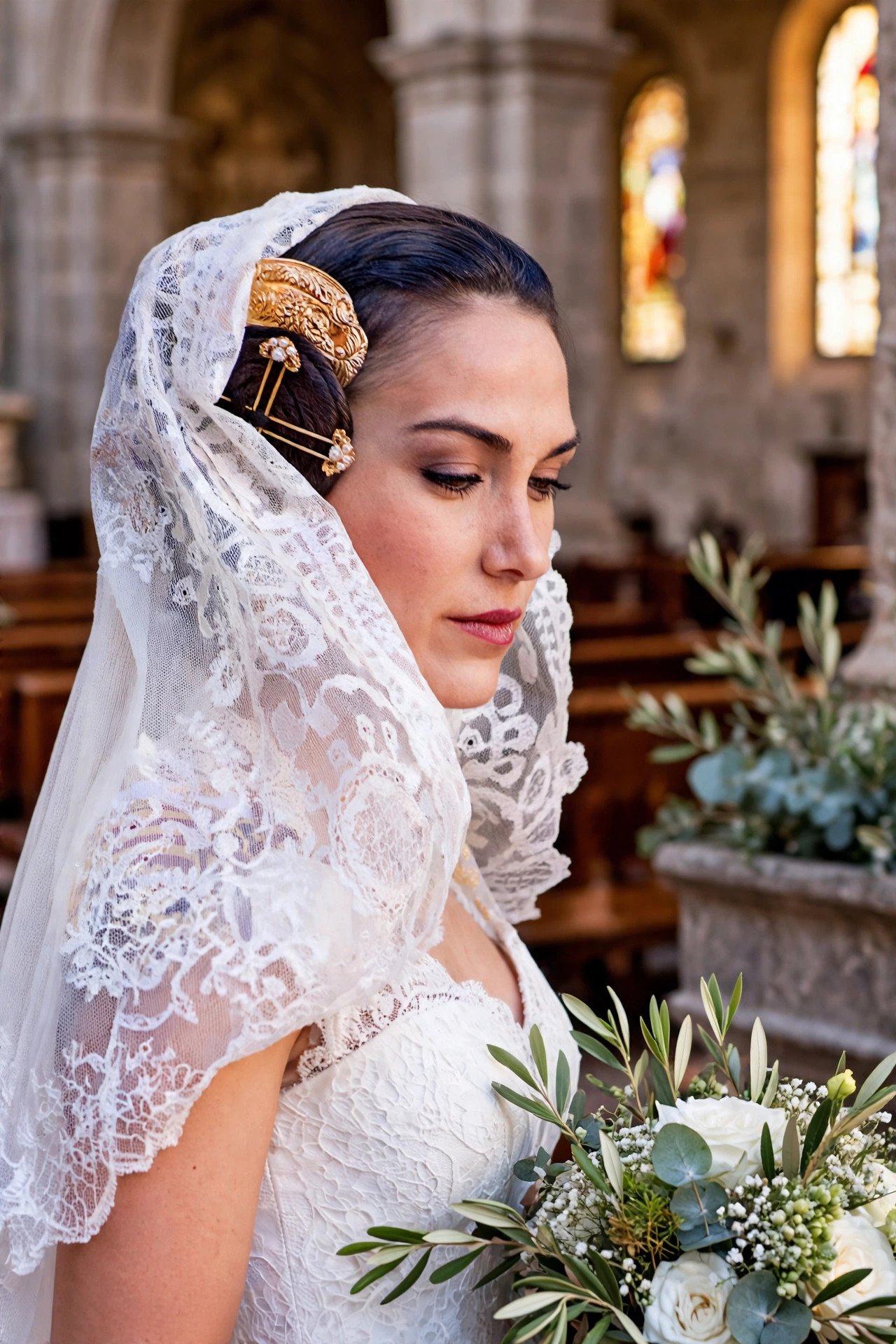
The mantilla is a lace or silk veil worn over a high decorative comb called a peineta, creating the dramatic silhouette most associated with southern Spain. Brides choose ivory or white; mothers and guests may wear black mantillas for formal ceremonies. The look carries centuries of Spanish history, and today it appears everywhere from Seville cathedrals to small diaspora weddings where a bride wants one unmistakable nod to her roots.
Padrinos and Madrinas — Sponsors Over Wedding Parties
 📌 Save
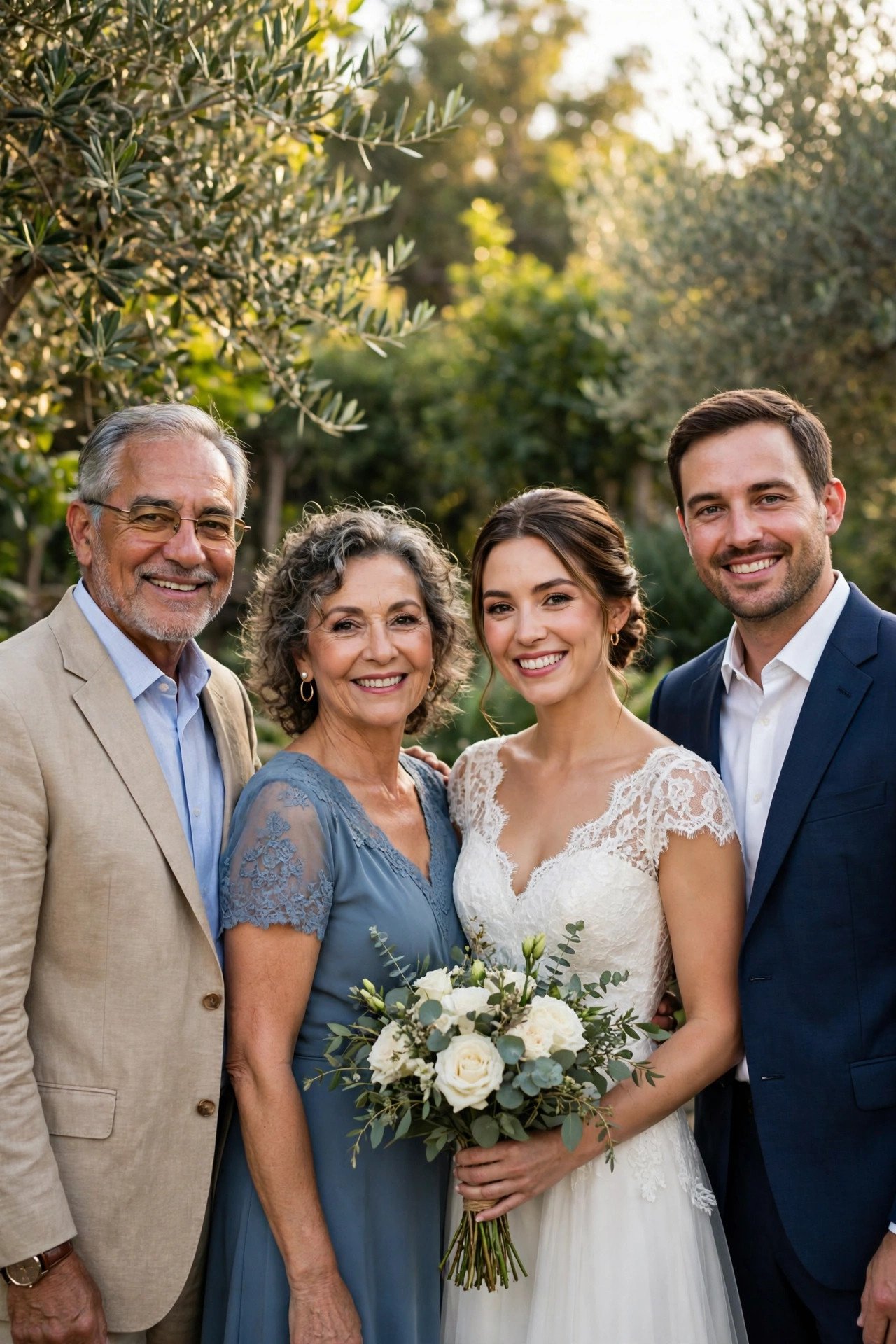
Traditional Spanish weddings have no bridesmaids or groomsmen. Instead, the couple chooses padrinos — often the bride’s father and the groom’s mother, or beloved godparents and mentors — who escort them, sign as witnesses and sometimes sponsor parts of the ceremony like the lasso or arras. It is a system built on guidance rather than matching outfits, and couples blending cultures often keep padrinos while adding a small wedding party too.
La Pedida de Mano — The Formal Asking
 📌 Save
Before any party, tradition calls for la pedida de mano: the groom and his parents visit the bride’s family home to formally ask for her hand. It is part ceremony, part first family summit — flowers and sweets are brought, kind words are exchanged, and the wedding date is often discussed. Modern couples in Madrid apartments or Manhattan ones keep it as an intimate dinner that makes the engagement feel official to both families at once.
Orange Blossoms in the Bouquet
 📌 Save
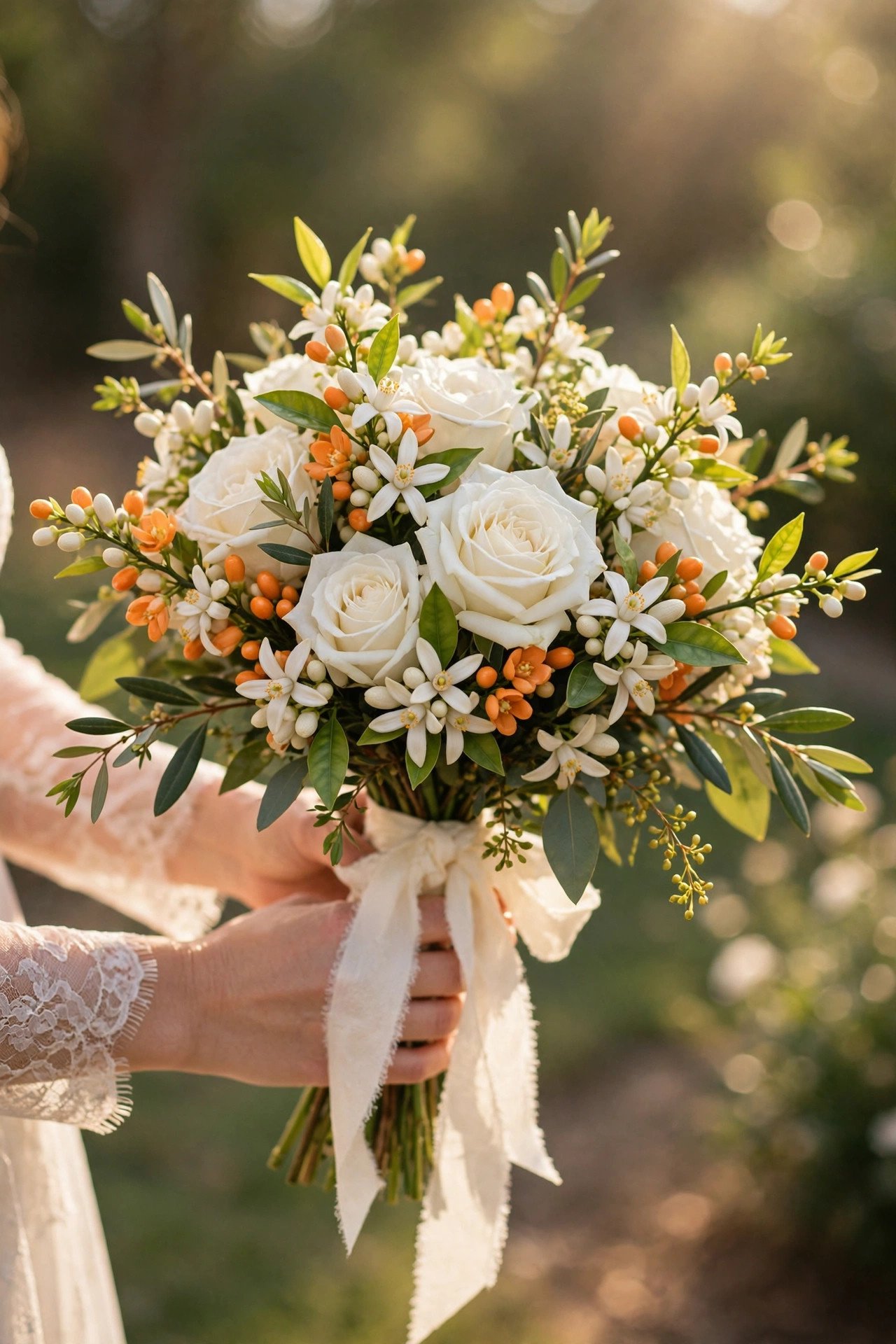
Orange blossom — azahar — has been a Spanish bridal flower for generations, prized for its perfume and its symbolism of purity, good luck and a fruitful marriage. Brides tuck the blossoms into bouquets or hair, especially in citrus-growing regions like Valencia. Because fresh azahar is seasonal, many 2027 brides mix a few real stems with silk ones, or scent the bouquet wrap with orange-blossom water for the same fragrant effect.
The Bouquet Offering at the Altar
 📌 Save
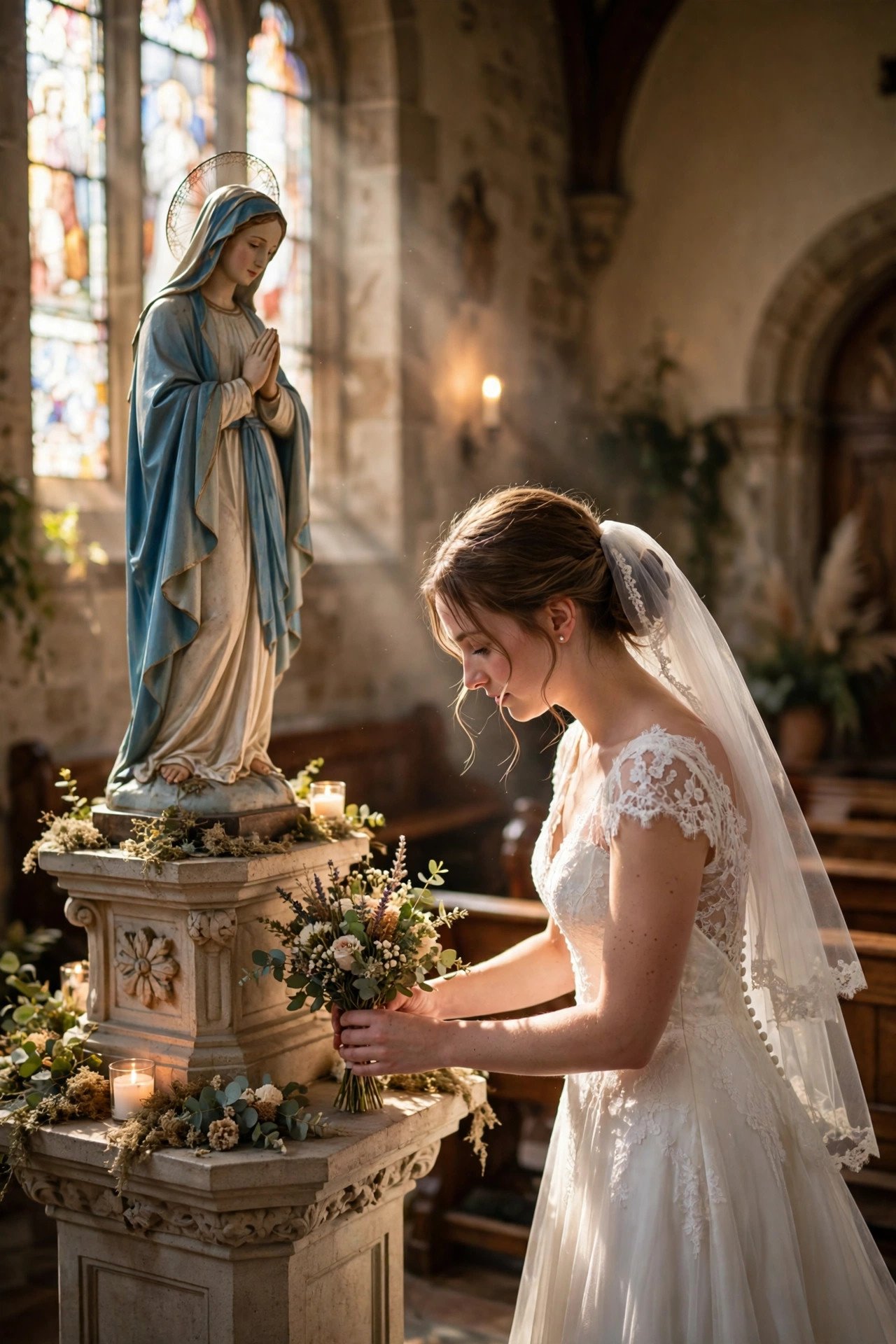
In many Catholic Spanish weddings the bride carries two bouquets: one to keep or toss, and one to lay before a statue of the Virgin Mary after the ceremony, asking for blessing and guidance in her marriage. It is a short, quiet moment, often with a hymn playing, and for many brides it is the emotional heart of the day. Parishes vary, so couples confirm the moment with their priest when planning the liturgy.
Wedding Rings on the Right Hand
 📌 Save
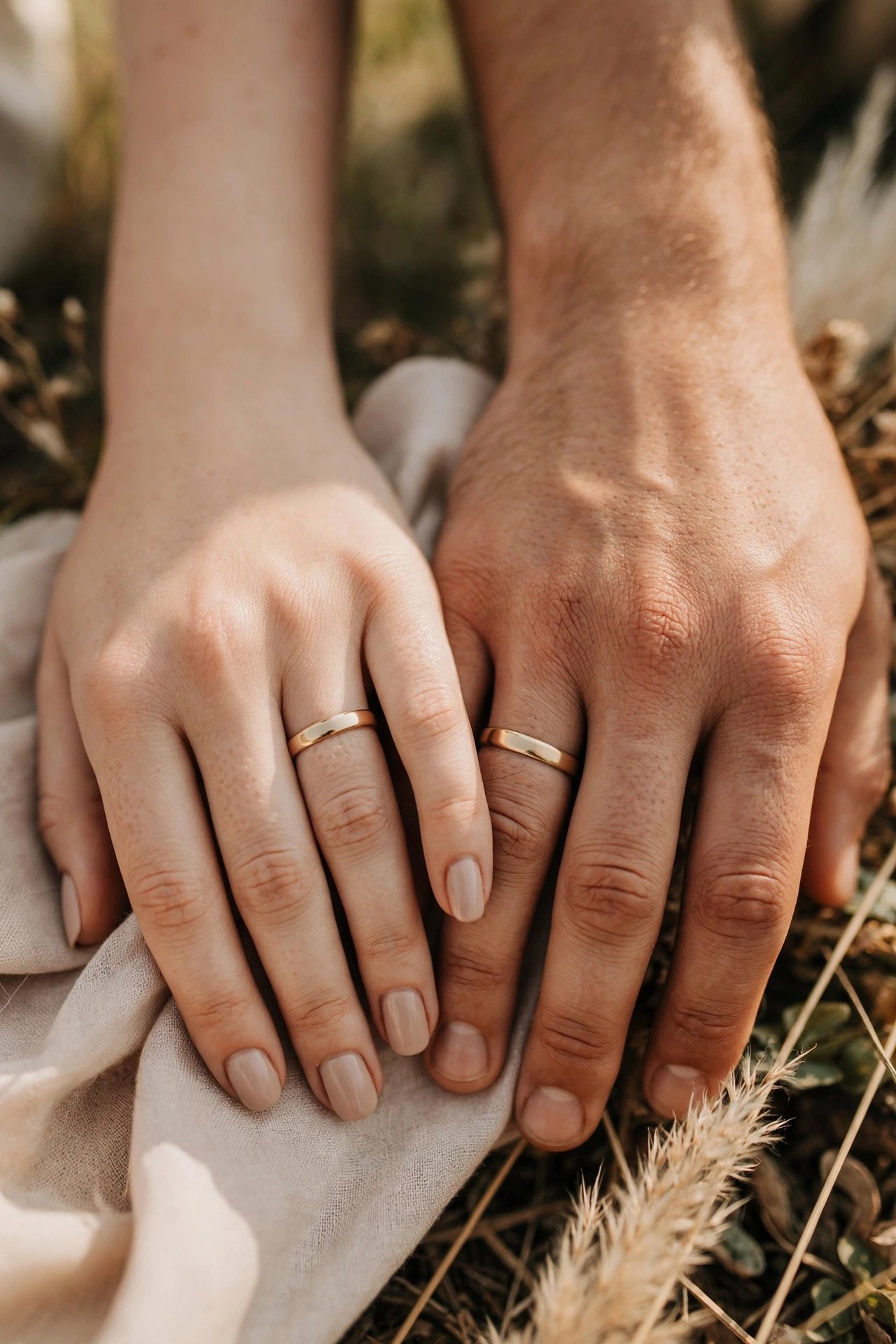
Visitors are often surprised to see Spanish newlyweds wearing their wedding bands on the right hand, the custom across most of Spain — though in Catalonia and Valencia the left hand is traditional instead. The exchange itself happens at the altar like anywhere else; it is the hand that tells the regional story. Couples marrying across cultures usually follow the Spanish partner’s regional custom, or simply pick the hand that feels right and tell the officiant.
Rice at the Church Door
 📌 Save
As the couple leaves the church, guests shower them with rice, a wish for fertility, abundance and good fortune that has survived every modern confetti trend. Some towns add flower petals or, in festival regions, a little celebratory noise. Many venues and parishes now ask couples to swap rice for petals or bubbles for safety and tidiness, but the spirit — a joyful, slightly chaotic blessing at the door — stays exactly the same.
¡Que Se Besen! — The Chant for a Kiss
 📌 Save
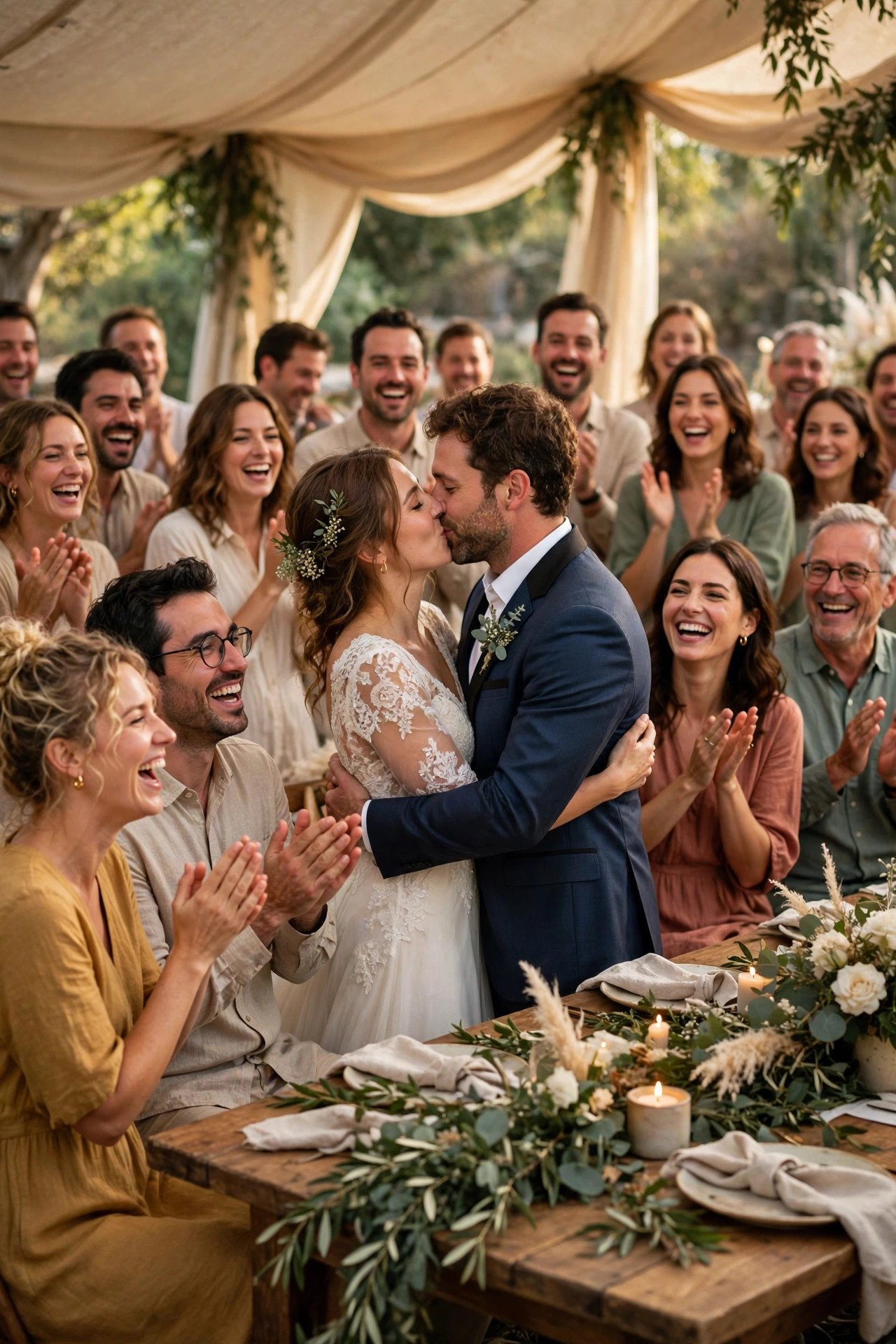
At some point in every Spanish reception, glasses start tapping and the chant rises: ¡Que se besen! — ‘let them kiss!’ The couple obliges, the room cheers, and the chant returns an hour later, usually louder. It is the Spanish cousin of the glass-clinking kiss, and it needs no planning at all. Couples outside Spain who adopt it often teach the chant on a little table card so every guest can join in.
The Late-Afternoon Ceremony
 📌 Save
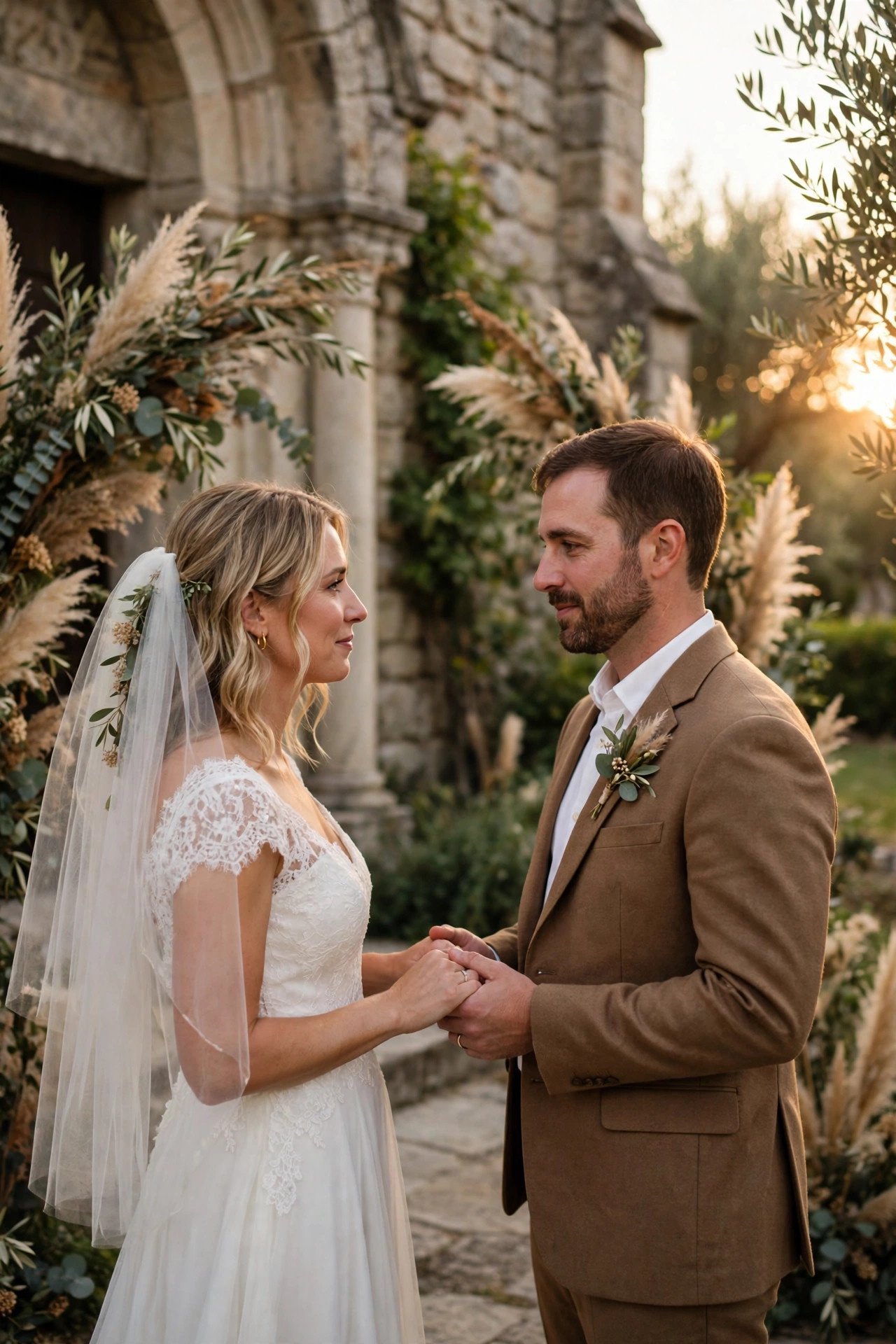
Spanish weddings traditionally start late — five, six, even seven in the evening in summer — a rhythm shaped by heat, siesta culture and long evenings of light. The ceremony rolls straight into a long night with no awkward gap for guests to fill. For 2027 couples in the USA, UK or Canada borrowing the Spanish timeline, the lesson is less about the clock and more about flow: one venue, no dead hours, and a celebration that builds as the light softens.
The Long Banquet — Dinner That Starts Late
 📌 Save
The Spanish wedding banquet is a marathon of courses: shared starters, seafood and meat courses, sorbet, dessert, and coffee, often starting around ten at night and unspooling for hours. Nobody rushes; the meal itself is the entertainment, with the couple visiting tables between courses. Couples planning Spanish-style receptions abroad usually trim the courses but keep the principle — feed people generously and late-night energy takes care of itself.
The Jamón Carving Station
 📌 Save
Few sights say ‘Spanish wedding’ like a cortador — a professional carver — slicing translucent pieces from a whole leg of jamón ibérico at the cocktail hour, surrounded by cheeses, olives and tomato-topped toasts. Guests graze, watch and photograph it like a show. Outside Spain the station travels well: Spanish delis in London, New York and Toronto can supply the ham and the carver, and the rest is Mediterranean grazing-table styling.
Cutting the Cake with a Sword
 📌 Save
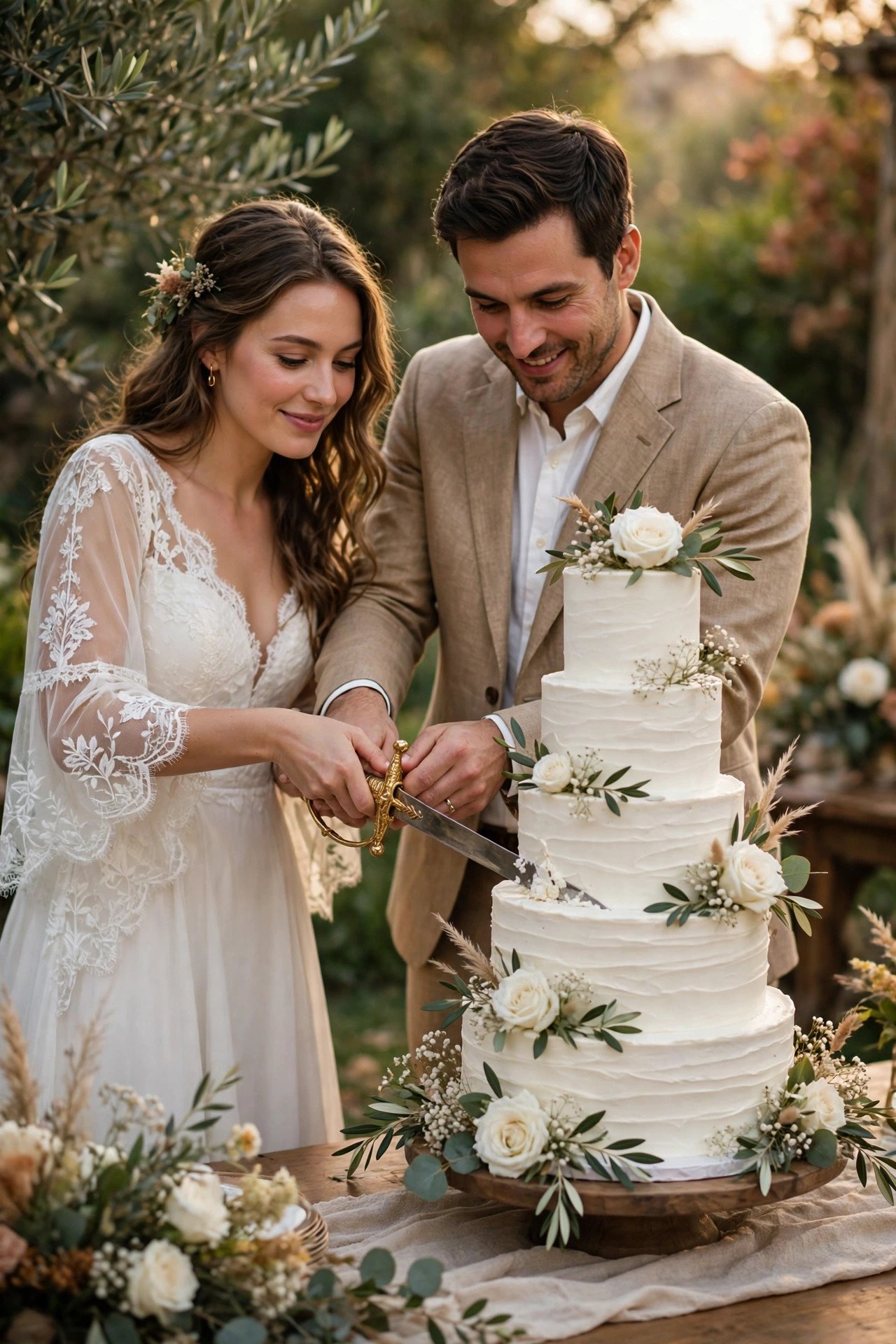
In a custom with military roots, many Spanish couples cut their wedding cake with a long ceremonial sword, both hands on the hilt, to cheers from the room. The sword is usually borrowed from the venue, a family or a local tradition-keeper, and the first slice becomes one of the day’s defining photographs. Venues abroad happily substitute a decorative sabre — just clear it with them first, because real blades need a plan and a sober handler.
Cutting the Groom’s Tie
 📌 Save
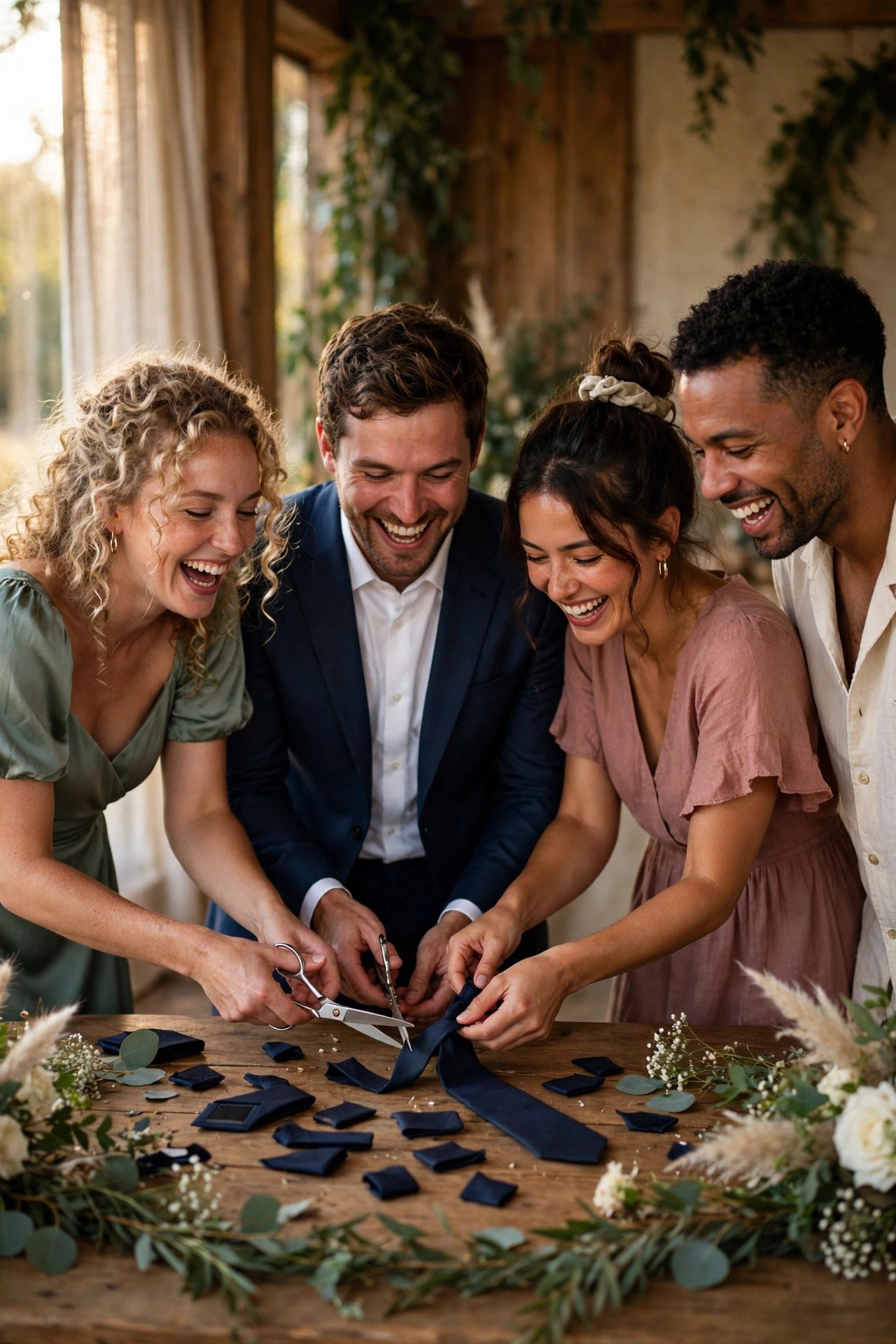
Late in the party, friends seize the groom’s tie, cut it into small pieces and ‘auction’ each piece to guests, with the money going to the couple’s honeymoon. A bride’s garter sometimes gets the same treatment. It is rowdy, affectionate fundraising — the Spanish answer to a money dance — and the groom wears a doomed tie on purpose. Couples who love the fun but not the auction simply gift the tie pieces as keepsakes instead.
Sevillanas on the Dance Floor
 📌 Save
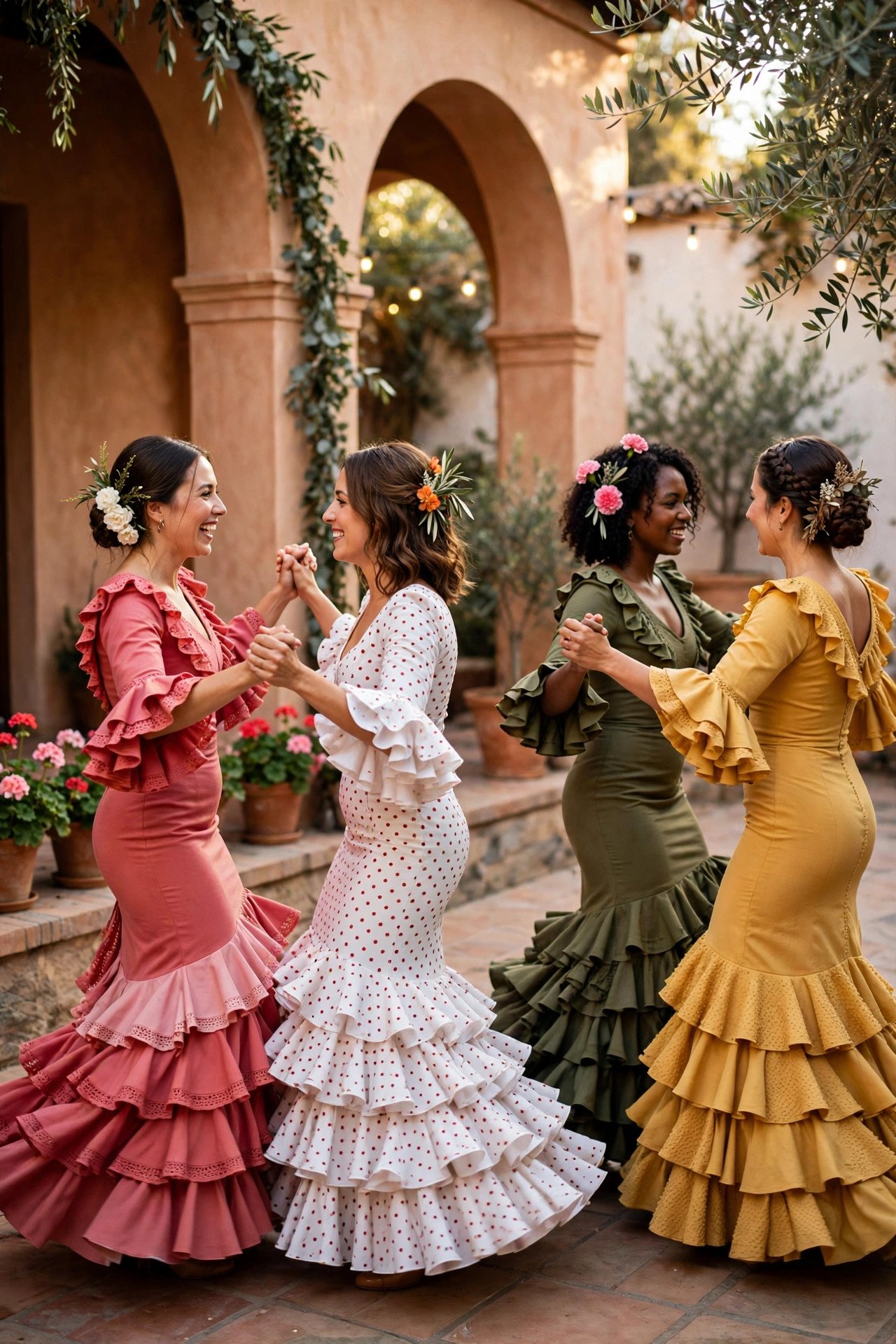
In Andalusia the reception floor fills with sevillanas: a structured folk dance in four short sections, danced in pairs with swirling arms, often in ruffled flamenco-style dresses. Weddings become informal showcases — cousins dance, then aunts, then grandparents, each group applauded in. You do not need Andalusian roots to love the idea: one traditional dance, taught by family and repeated all night, gives a dance floor a heartbeat that a playlist alone cannot.
The First Dance — A Waltz to Open
 📌 Save
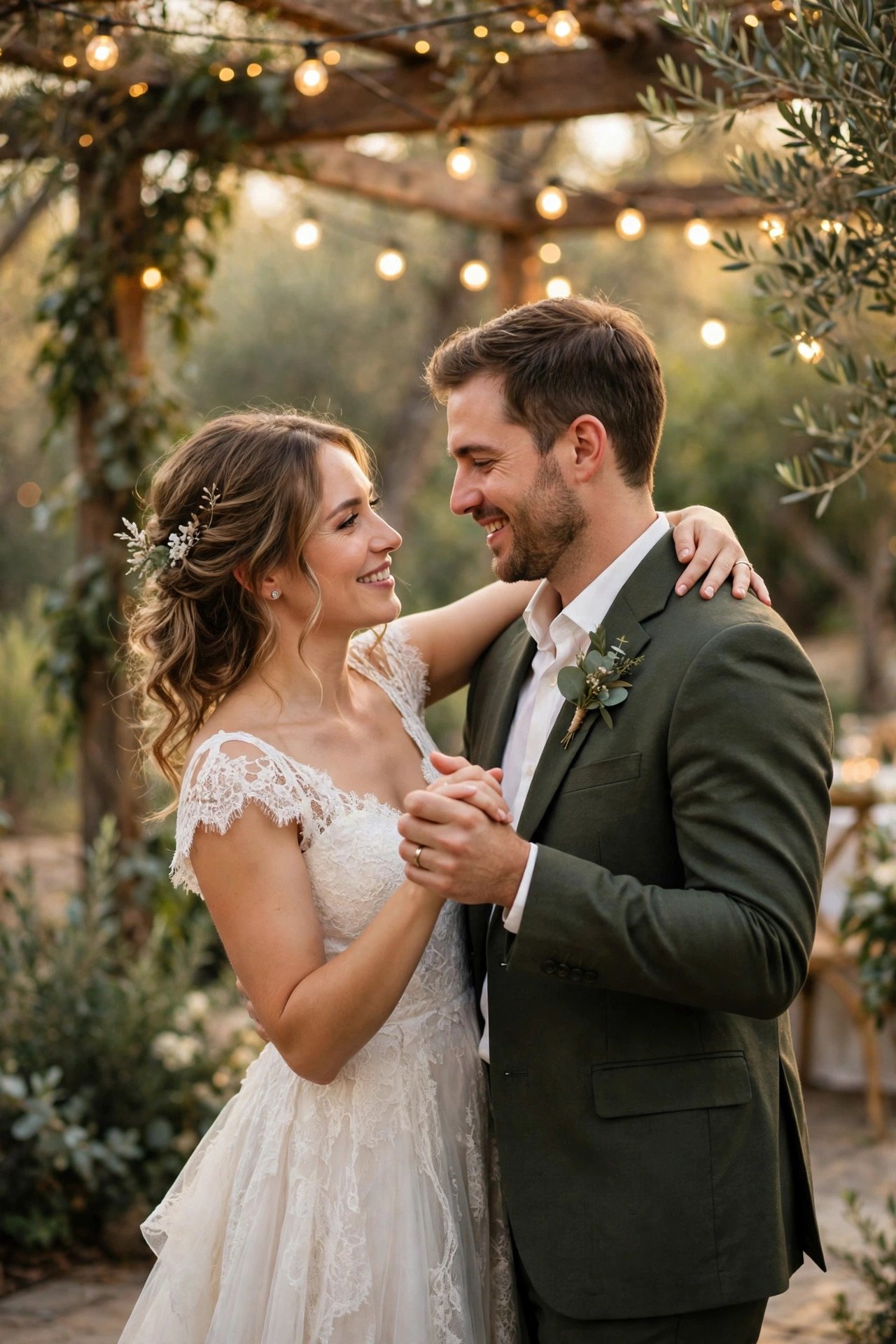
Spanish couples traditionally open the dance floor with a waltz — el vals — a graceful nod to older ballroom custom before the DJ takes over. Some dance it alone; others pull parents in halfway through. In 2027 the waltz is having a quiet revival among couples everywhere who want a first dance that feels timeless rather than choreographed for video. Three or four lessons are genuinely enough for a smooth, confident waltz.
Table-by-Table Visits During Dinner
 📌 Save
Instead of a receiving line, Spanish couples work the room during the long banquet, visiting each table between courses for conversation, thanks and a group photo. By dessert they have properly greeted every guest, and the photographer has a complete set of table portraits. It suits the Spanish pace — the meal is long enough to hold the visits — and it is easy to adopt anywhere by building two or three visit rounds into your own timeline.
Gifts in Envelopes
 📌 Save
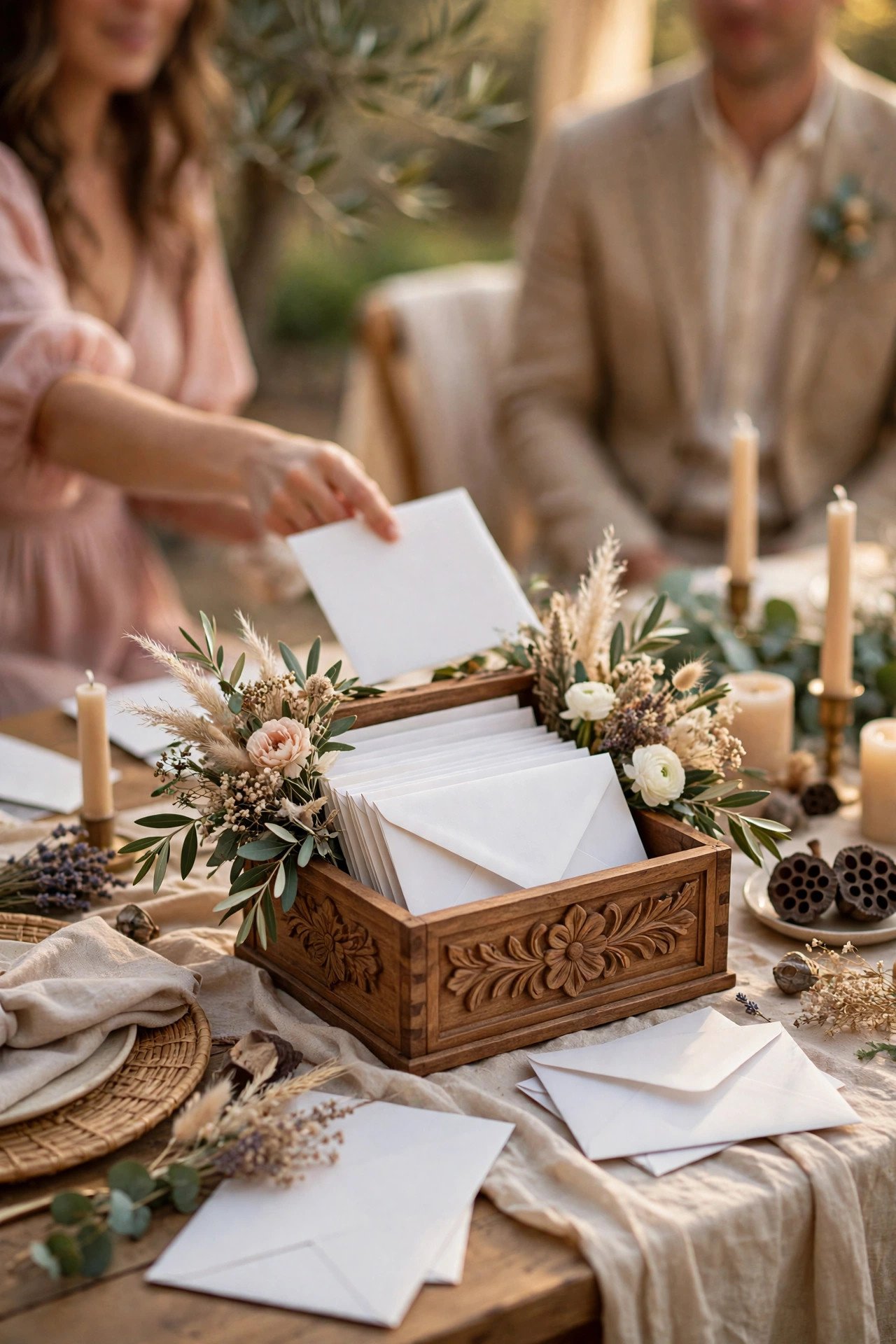
At Spanish weddings, the standard gift is money in an envelope, given directly to the couple or slipped into a decorated box during the reception. Lists and registries exist but are secondary; the envelope tradition funds the honeymoon or the new home, and guests consider it elegant rather than impersonal. Couples marrying in the USA, UK or Canada with Spanish family can smooth expectations by noting ‘your presence is the present; envelopes are traditional in our family’ on the wedding website.
Fans as Summer Favors
 📌 Save
For summer weddings, Spanish couples hand out abanicos — folding hand fans — as favors, sometimes printed with the couple’s names and date. Guests use them immediately: during an outdoor ceremony, at the cocktail hour, and as impromptu dance-floor props all night. It is the rare favor that is beautiful, cheap in bulk and genuinely useful, and it suits any warm-climate 2027 wedding, Spanish-inspired or not.
The Historic Black Dress
 📌 Save
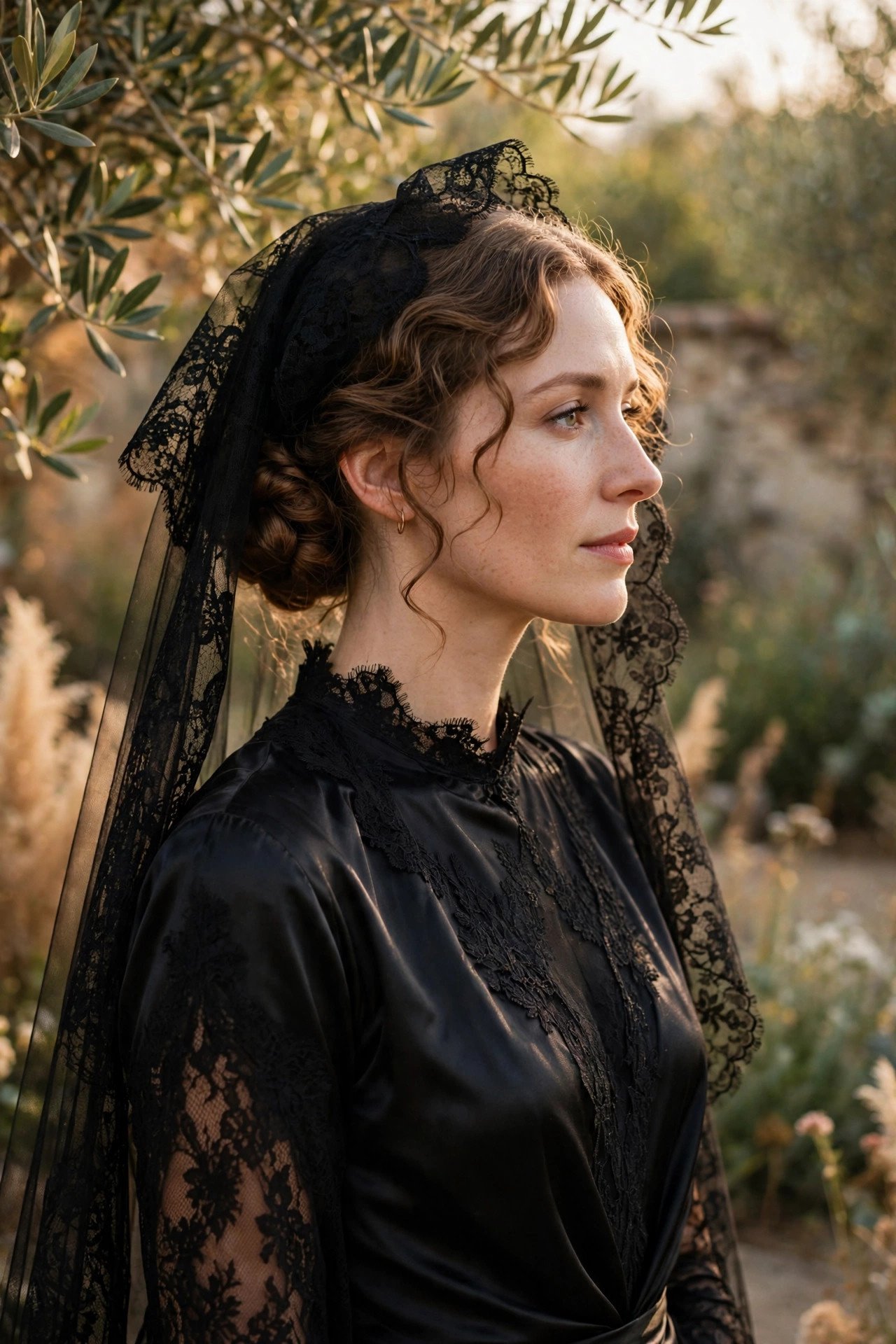
A history note Spanish families love sharing: in the 19th century, many Spanish brides married in black silk — a formal, practical best dress that could be worn for years of Sundays and feast days, paired with a mantilla. White took over in the 20th century as it did across Europe. A few heritage-minded brides nod to the era today with a black sash, black mantilla lace or black-and-white photography, turning a history lesson into a signature detail.
Churros con Chocolate at Dawn
 📌 Save
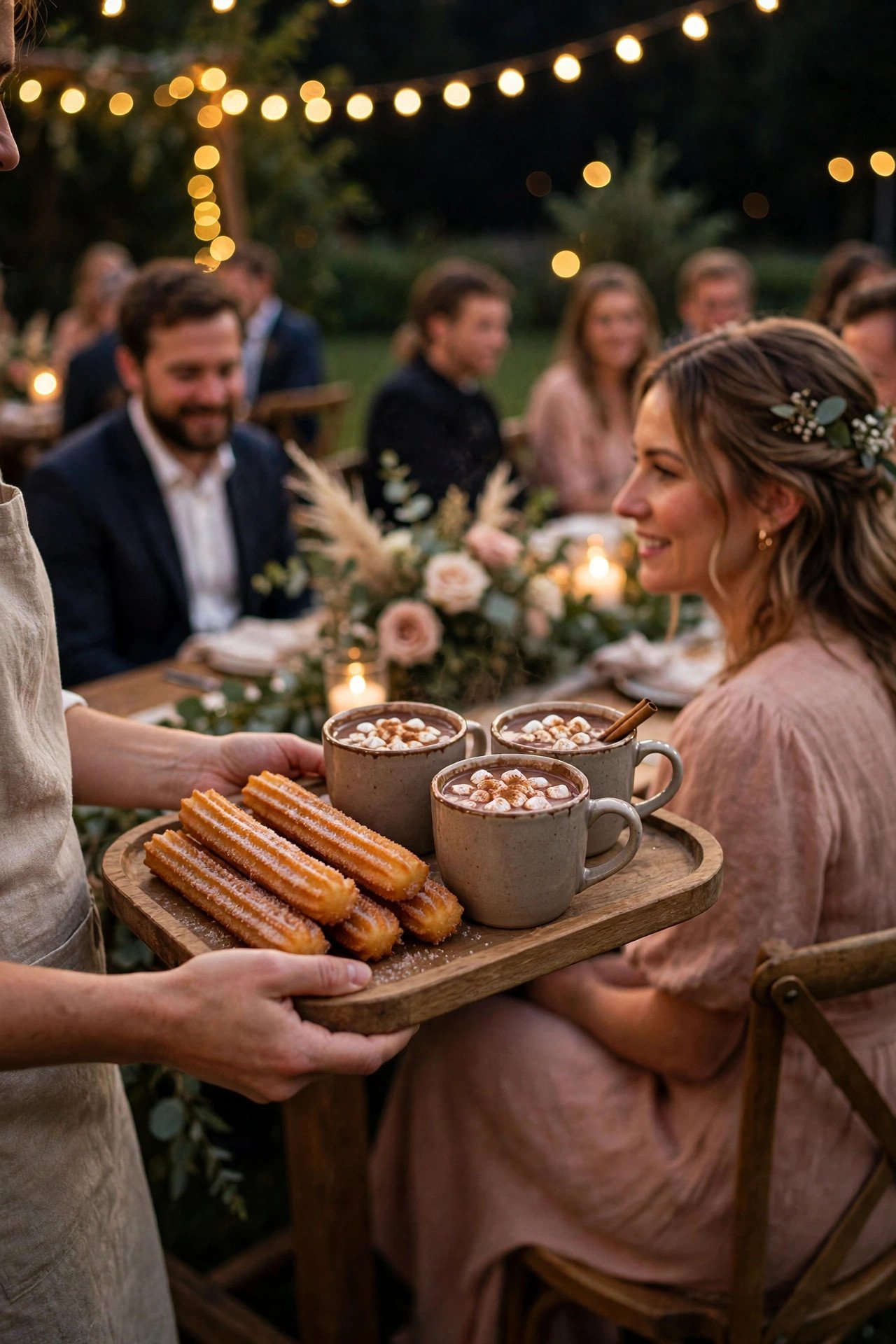
Spanish weddings famously end — or pause — with a resopón, a late-night second supper, and its star is churros con chocolate: crisp fried dough with cups of hot chocolate thick enough to stand a spoon in. Served around three or four in the morning, it revives dancers and soaks up the night. Churro carts and food trucks now bring the ritual to weddings everywhere, and it may be the single easiest Spanish tradition to import whole.
El Brindis — Toasts to Los Novios
 📌 Save
Spanish toasts are warm, brief and frequent: parents, padrinos and old friends raise a glass ‘a los novios’ — to the newlyweds — between courses, and the room answers with cheers and the kiss chant. Couples keeping the celebration zero-proof lose nothing: sparkling cider and citrus spritzers in proper glasses keep the ritual’s sparkle intact. Keep toasts short and spread them through the meal, as Spanish families do, rather than stacking them into one long block.
Regional Touches — Every Region Dances Differently
 📌 Save
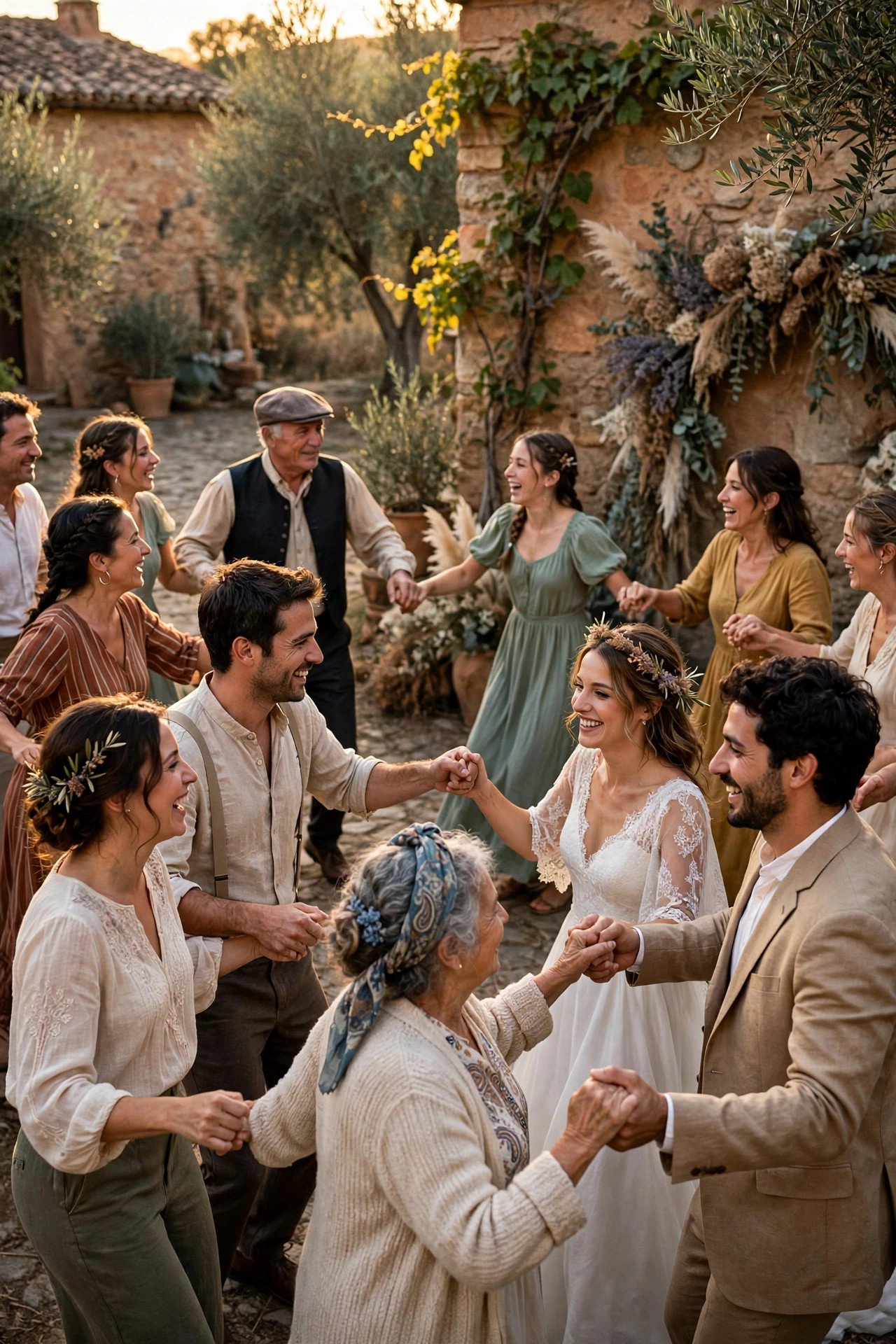
There is no single Spanish wedding. In Catalonia guests may join a sardana, a dignified circle dance to a live cobla band; Galicia has its own music and bagpipes — gaitas; the Basque Country honors elders with the aurresku, a ceremonial dance of respect performed before the couple. The specifics matter less than the mindset: a wedding is where a region shows its flag. If you marry into a Spanish family, ask which customs are theirs rather than assuming the famous ones.
The Party That Ends at Sunrise
 📌 Save
The through-line of every Spanish tradition on this list is time: nobody is watching the clock. Weddings run until four, five, six in the morning, ending with churros, coffee and hugs rather than a hard venue curfew. Couples elsewhere rarely copy the full dawn finish — nor should they if their venue forbids it — but planning one late-night ‘second wind’ moment, whether a snack pass, a surprise song set or a sparkler exit at midnight, borrows the spirit successfully.
Spanish Wedding Traditions FAQs
Do Spanish weddings really have no bridesmaids?+
Traditionally, yes — Spanish weddings use padrinos and madrinas (sponsors, often parents or godparents) instead of bridesmaids and groomsmen. Many modern couples, especially in international marriages, blend the two systems, but the padrino structure is the classic Spanish form.
What are las arras and why are there thirteen coins?+
Las arras are thirteen coins the groom presents to the bride during the ceremony, symbolizing his promise to share his prosperity and provide for their life together. Thirteen is traditionally linked to Christ and the twelve apostles, and the blessed coins are often kept as a family heirloom.
What time does a Spanish wedding actually start and finish?+
Ceremonies commonly begin in the late afternoon or early evening — around 5 to 7 p.m. in summer — dinner may start near 10 p.m., and dancing frequently continues until 4 a.m. or later, closing with churros and hot chocolate. Exact timings vary by region, venue and family.
Can we include Spanish traditions if only one of us is Spanish?+
Absolutely — couples do it all the time. Choose two or three customs with real meaning, explain them briefly in the program or on your wedding website, and involve the Spanish side of the family in performing them, such as padrinos placing the lasso.
What should guests wear to a Spanish wedding?+
Spanish weddings are formal: suits or jackets for men, elegant dresses for women, and mantillas for some women at church ceremonies. Daytime weddings may see shorter dresses, evening weddings longer ones — when in doubt, ask the couple, and avoid white, which is reserved for the bride.
Key Takeaways
- Spanish weddings are built on padrinos, not bridesmaids — sponsors who guide rather than match.
- Las arras (13 coins) and el lazo (the figure-eight cord) are the ceremony’s twin symbols of shared prosperity and unity.
- The timeline is the tradition: late ceremony, long banquet, dancing until dawn, churros to finish.
- Regional identity matters — Andalusian, Catalan, Galician and Basque customs differ, so ask the family which are theirs.
- Borrow respectfully: pick two or three customs, explain them to guests, and let family members lead them.
Final Thoughts
A Spanish wedding is generous with everything — courses, hours, kisses, music. Take the coins, the lasso and the churros if they speak to you, but above all take the philosophy: a wedding is not an event to be scheduled tightly, it is a night a whole community spends together, and there is always time for one more dance.