Filipino Wedding Traditions (2027)
By zainzari • Published October 23, 2026 • Updated October 23, 2026
 📌 Save
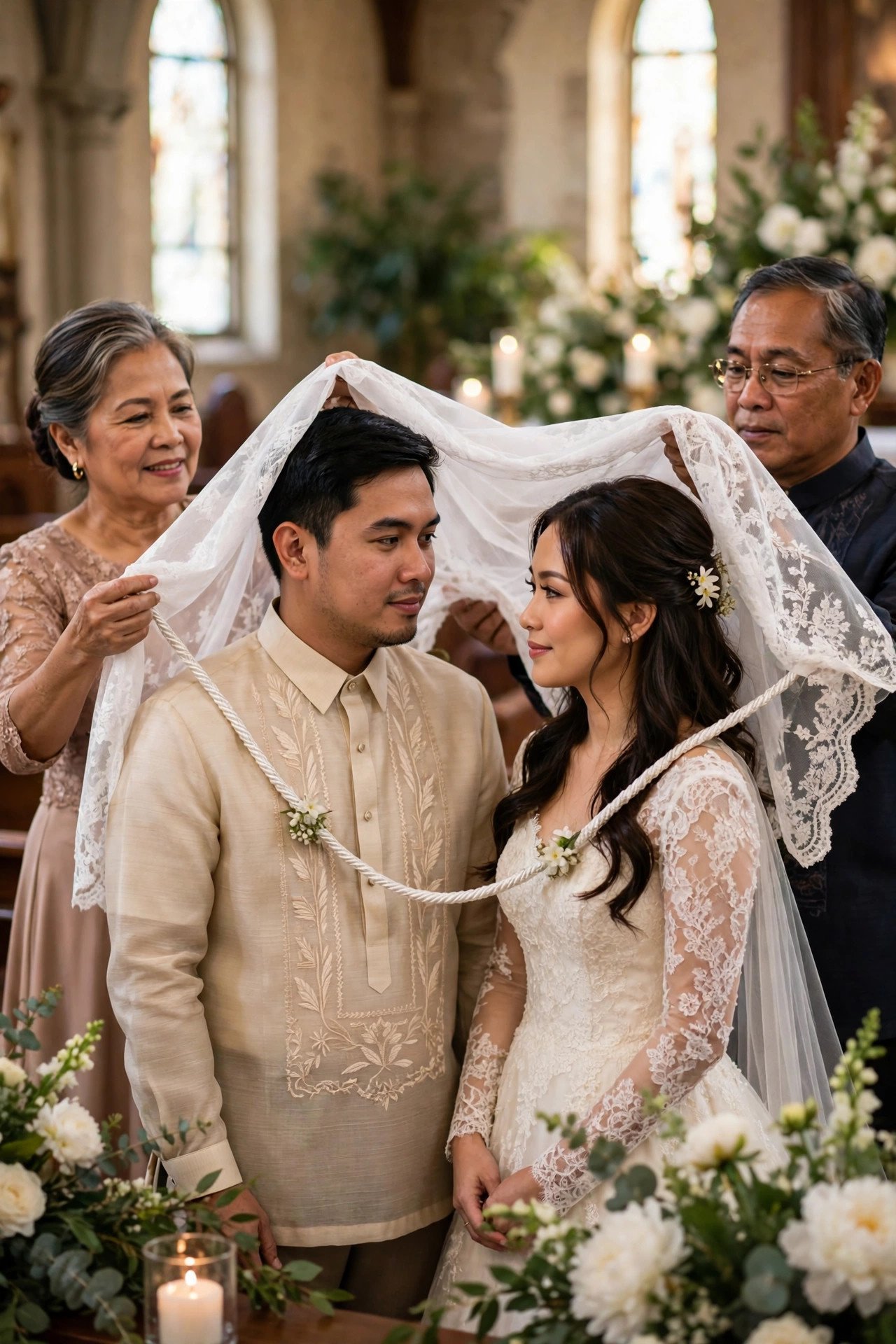
Filipino wedding traditions, shaped by centuries of Catholic practice and close-knit family culture, center on sponsors: principal sponsors (ninongs and ninangs) witness and mentor the couple, while secondary sponsors drape a veil over the couple, loop a cord (yugal) in a figure eight, and light a unity candle. The groom presents thirteen arras coins, families meet beforehand at the pamanhikan, and the reception features a money dance and a serious feast.
In the Philippines, a wedding is rarely a small affair — it is a family summit blessed by the Church. The guest list runs deep because relationships run deep, the sponsors outnumber the wedding party several times over, and every symbolic object — cord, veil, candle, coins — is carried by people chosen to guide the marriage, not just decorate it.
Practice varies across the Philippines’ regions and faiths: most Filipino weddings are Catholic, but Protestant, Iglesia ni Cristo and civil celebrations adapt the sponsor system and symbols in their own ways. This guide explains the widely shared customs honestly, for couples planning Filipino or fusion weddings in the USA, UK and Canada and for the guests lucky enough to be invited.
At a Glance: The Symbols and Their Sponsors
| Symbol | Who Presents It | What It Means |
|---|---|---|
| Veil (belo) | Veil sponsors (secondary) | The couple sheltered under one household |
| Cord (yugal) | Cord sponsors (secondary) | An unbreakable bond, looped in infinity |
| Unity candle | Candle sponsors (secondary) | The light of faith guiding the marriage |
| Arras (13 coins) | The groom, via a coin bearer | Provision, trust and shared stewardship |
| Rings and Bible | Ring and Bible bearers | Vows witnessed by faith and family |
| Principal sponsors | Ninongs and ninangs | Godparents who mentor the marriage for life |
Note: exact order follows the parish’s wedding rite; your church coordinator confirms which symbols your ceremony includes and who carries each one.
The Cord Ceremony (Yugal): Looped for Life
 📌 Save
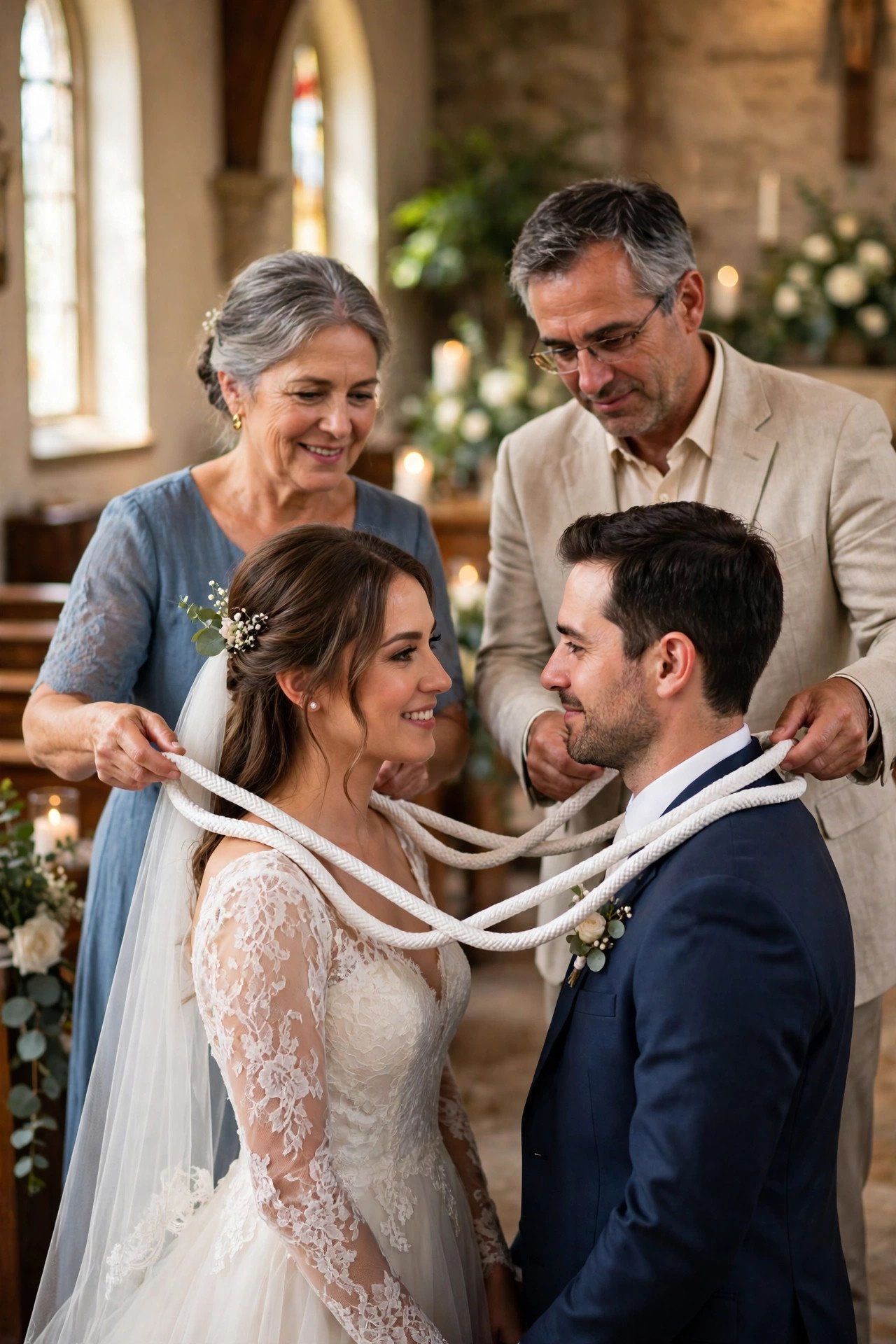
In the cord ceremony, secondary sponsors drape a decorative cord — the yugal, sometimes a rosary or a cord of flowers and coins — over the couple’s shoulders in a figure eight while a prayer is read. The infinity shape says what the symbol means: a bond with no end, worn together. The cord is removed before the couple leaves the altar and kept as a treasured keepsake of the day.
The Veil Ceremony: One Covering, One Household
 📌 Save
Veil sponsors pin a long white veil over the bride’s head and the groom’s shoulder during the ceremony, symbolizing the couple now sheltered together — historically read as the bride’s purity and the couple’s unity under one roof and one faith. The veil moment is quiet, photogenic and deeply familiar to Filipino families; many brides use a veil that a mother or aunt wore before them.
Las Arras: Thirteen Coins of Trust
 📌 Save
As in other Spanish-influenced Catholic traditions, the Filipino groom presents thirteen arras coins — carried to the altar by a young coin bearer — and places them into the bride’s hands as a promise of provision and trust, which she accepts and returns as a sign of shared stewardship. The coins, often kept in a small chest, represent prosperity handled together. Many modern couples exchange the promise in both directions, aloud.
The Unity Candle: Light for the Road
 📌 Save
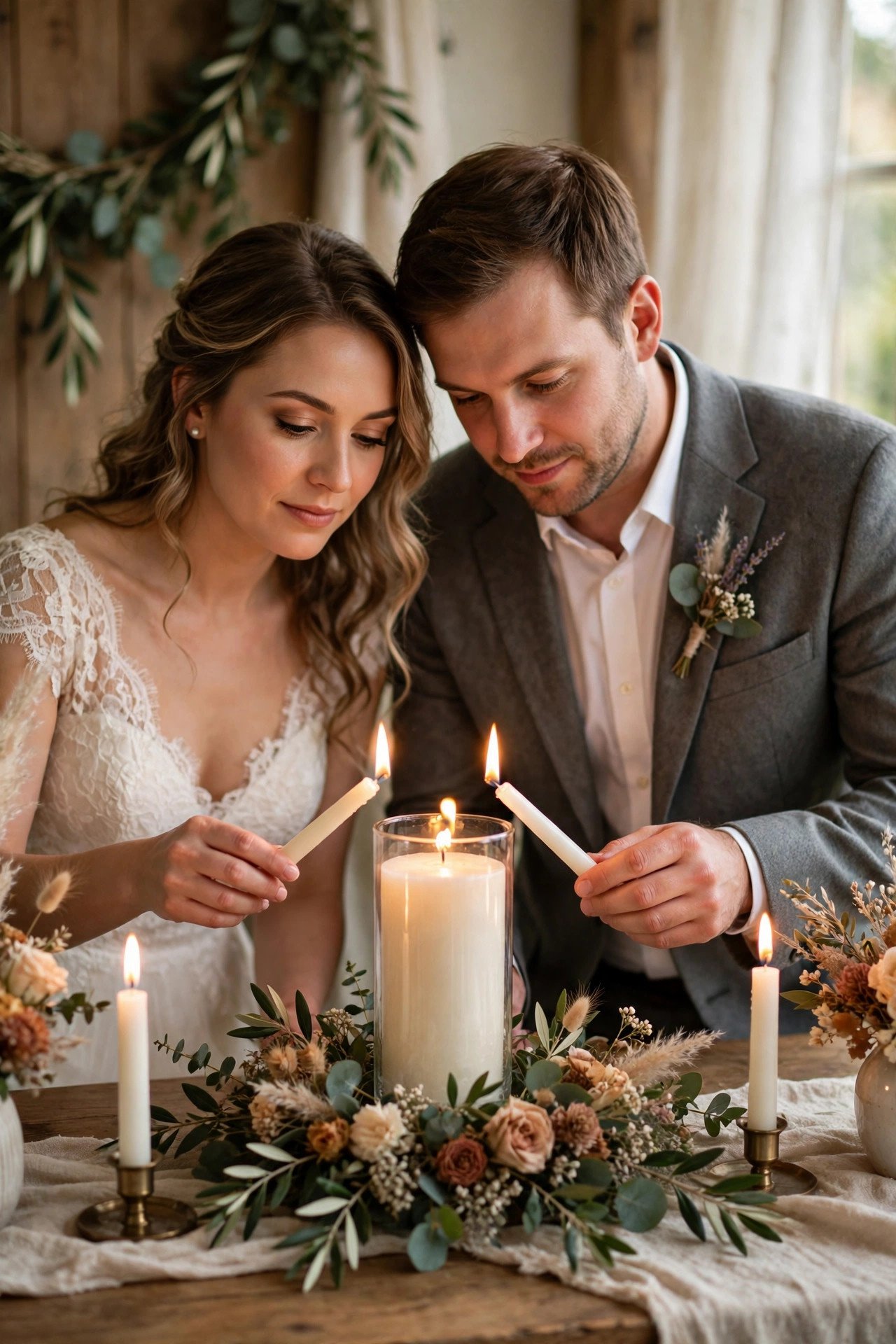
Candle sponsors light two side candles, and the couple together lights one larger central candle — or, in many parishes, the couple lights the unity candle from candles their mothers lit at the start. The symbolism is the light of faith and family guiding the new marriage, and the merging of two family flames into one. Parish rules vary, and some churches substitute a different rite — your coordinator confirms.
Ninongs and Ninangs: Principal Sponsors for Life
 📌 Save
Principal sponsors — ninongs (godfathers) and ninangs (godmothers) — are the ceremony’s official witnesses and the marriage’s standing mentors, chosen from respected relatives, family friends and community figures. Their names fill the marriage documents and the wedding program, and couples consult them for decades on everything from money to conflict. It is an honor with homework — Filipino couples choose sponsors whose marriages and character they genuinely want on call.
Secondary Sponsors: Veil, Cord and Candle Bearers
 📌 Save
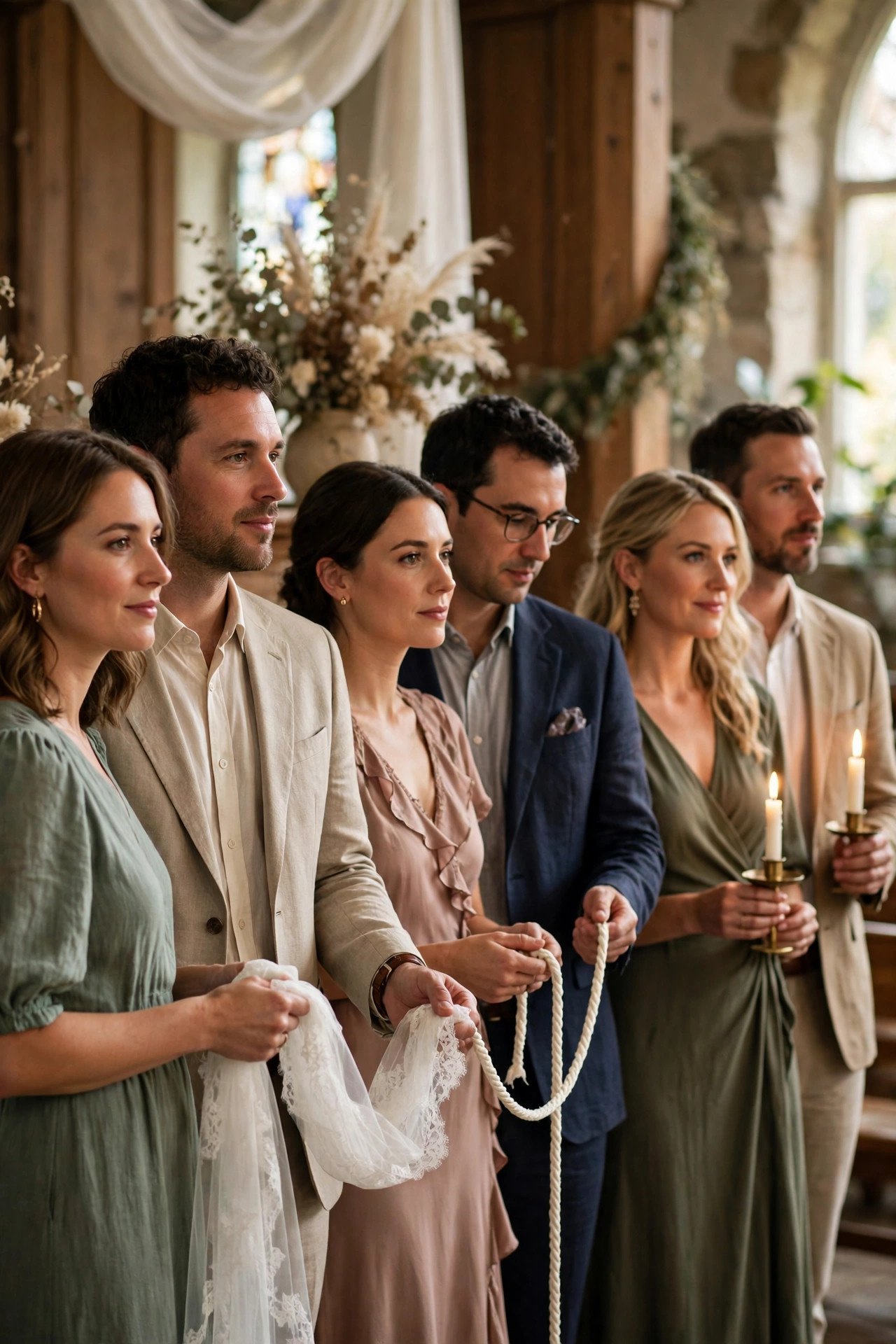
Separate from the principal sponsors, secondary sponsors — usually three pairs of close friends or relatives — perform the veil, cord and candle rites. Being chosen signals deep trust and friendship, and the pairs are matched thoughtfully, often couples themselves. In the program, each pair is listed beside their symbol, which helps guests follow the ceremony’s meaning as it unfolds.
Pamanhikan: The Formal Family Meeting
 📌 Save
Before the wedding, the groom’s family formally visits the bride’s family — pamanhikan — to meet, pay respects and discuss wedding plans, contributions and expectations over a generous meal hosted by the bride’s side. Elders speak, lists are made and the two families leave as future in-laws rather than strangers. Diaspora families hold pamanhikan in family homes and restaurants with the same seriousness and better parking.
Despedida de Soltera: The Farewell Dinner
 📌 Save
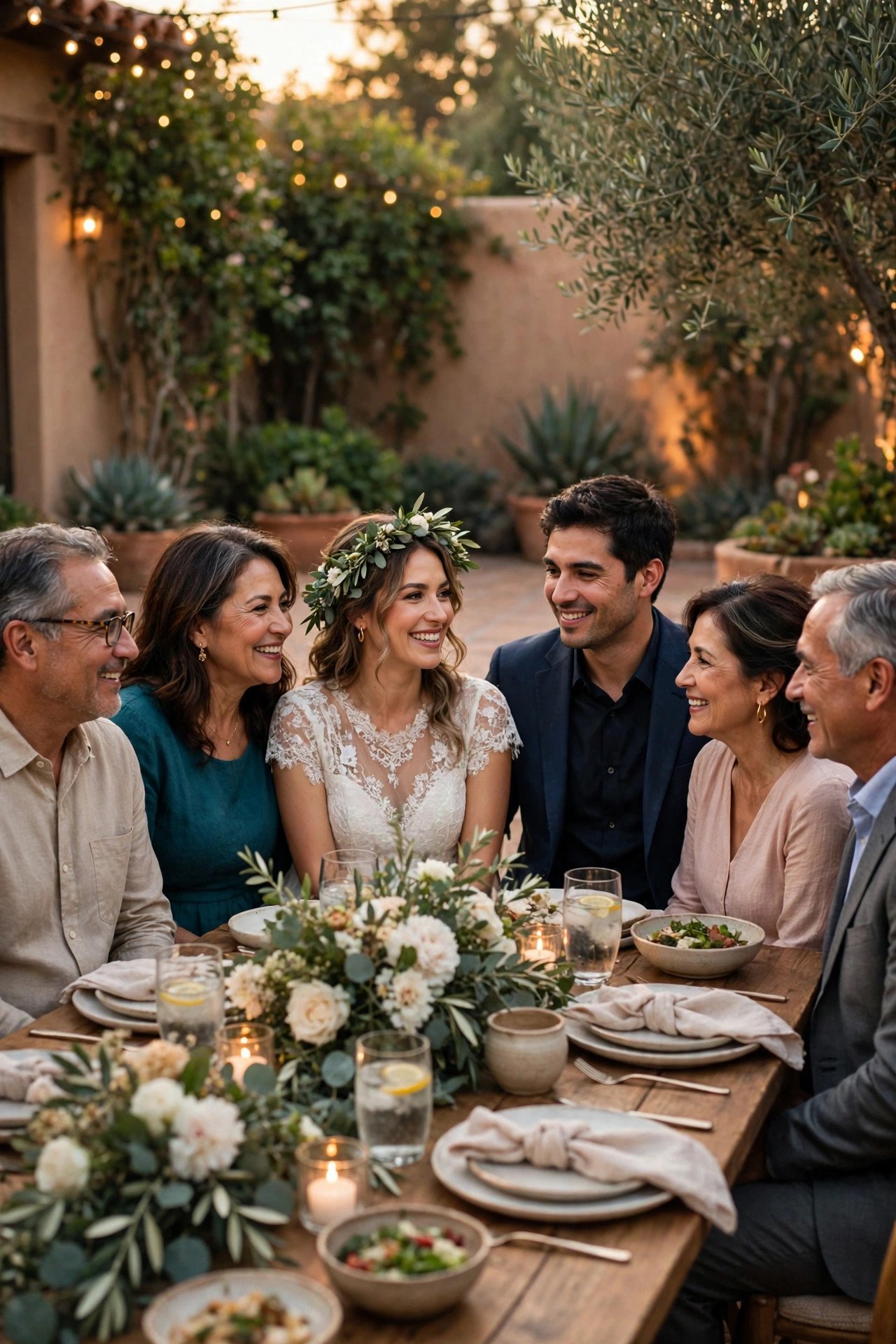
The despedida de soltera is a formal dinner hosted by the bride’s family shortly before the wedding — a farewell to her single life and a welcome of the groom’s family into the fold, attended by both families and close friends. Speeches are affectionate and a little tearful, the bride is honored by her parents, and the evening functions as the families’ dress rehearsal for goodwill. It is distinct from a bridal shower: family-led, dinner-formal and emotionally significant.
Ring, Coin and Bible Bearers: Small Attendants, Big Roles
 📌 Save
Three small attendants carry the ceremony’s treasures: the ring bearer with the rings on a pillow, the coin bearer with the arras in its chest, and the Bible bearer with the wedding Bible. The roles go to beloved children of relatives and sponsors, dressed as miniature members of the celebration, and being chosen is a family honor parents remember for years. Their walk down the aisle — solemn faces, priceless wobbles — is the ceremony’s guaranteed heart-melter.
The Church Ceremony: What Guests Will Experience
 📌 Save
Most Filipino weddings are celebrated in a Catholic church with a full liturgy: processions of sponsors and bearers, the veil, cord, candle and arras rites woven through, and a congregation that knows exactly when to stand. Ceremonies are unhurried and deeply attended — this is the main event, not a prelude to the party. Non-Catholic guests are welcome; during Communion they typically remain seated, as at any Catholic Mass.
The Ceremony Choir: Family Voices in Church
 📌 Save
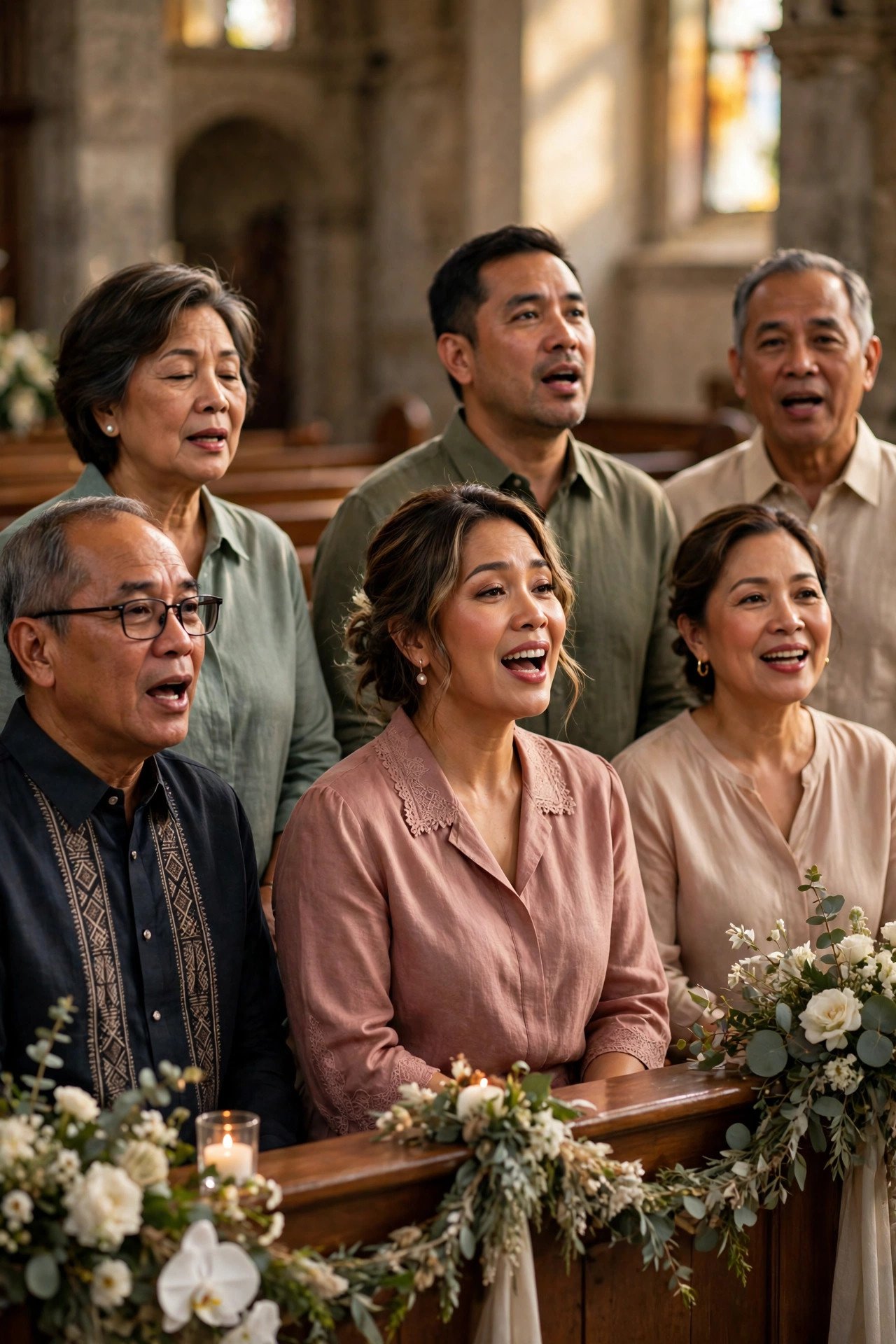
Filipino church weddings are sung as much as spoken: a choir — very often built from family, parish and school voices — carries the Mass with hymns, and a soloist relative performing the Ave Maria or a kundiman is a moment the whole congregation waits for. Music ministry is a genuine Filipino family talent pool, and couples cast their ceremony singers with the same care as their sponsors. The result is a liturgy that sounds like the family itself, harmonizing.
Rice and Petals After the Ceremony
 📌 Save
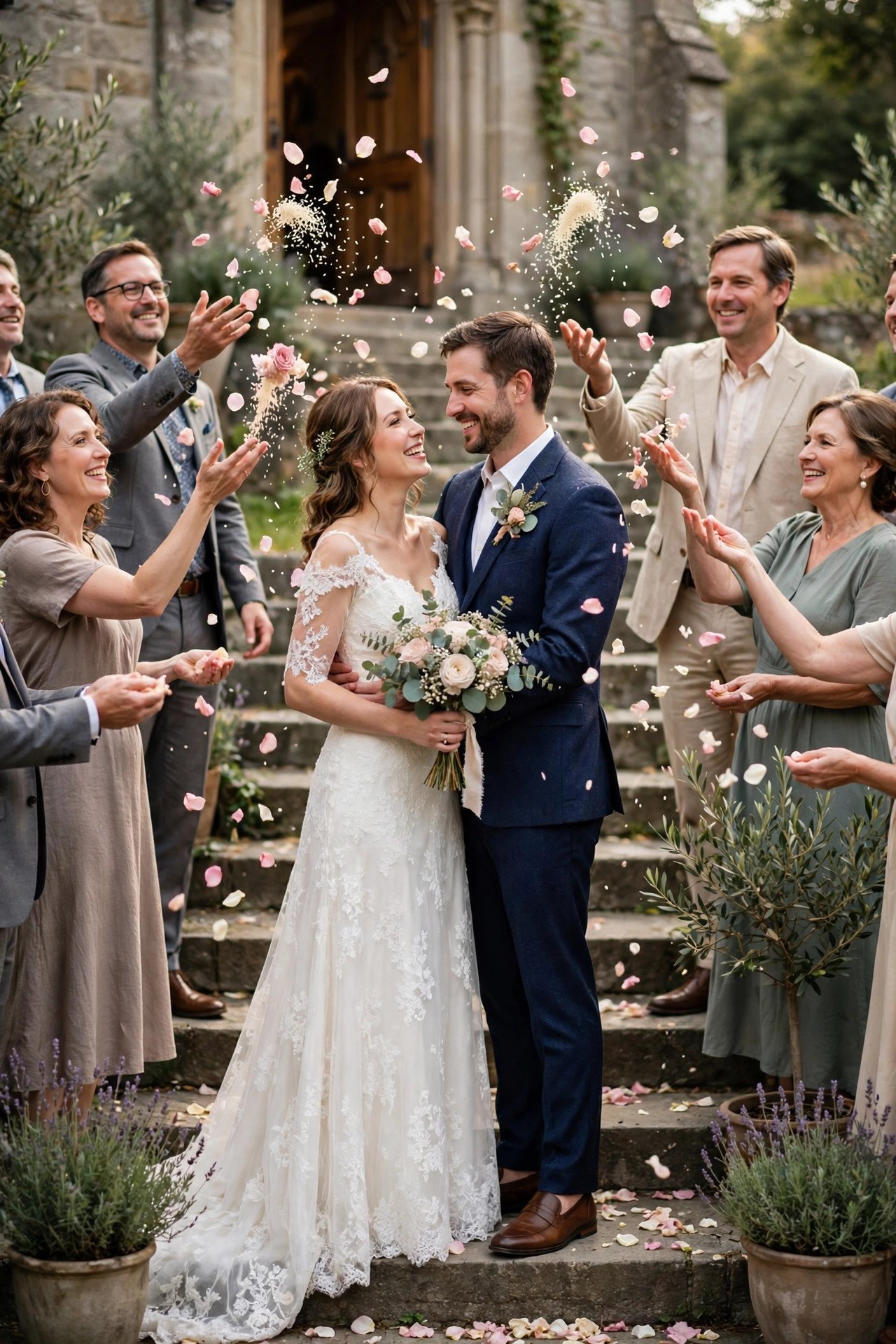
When the couple emerges from the church, guests shower them with rice, petals or both — rice for abundance and a fruitful life, petals for beauty — while the church bells and the crowd do the rest. In some provinces and families, coins join the shower as a prosperity blessing, gathered afterward by the children. Venues and parishes set their own rules, and biodegradable petals have become the diaspora’s favorite compromise between symbolism and sidewalks.
Barong Tagalog: The Groom’s Embroidered Formalwear
 📌 Save
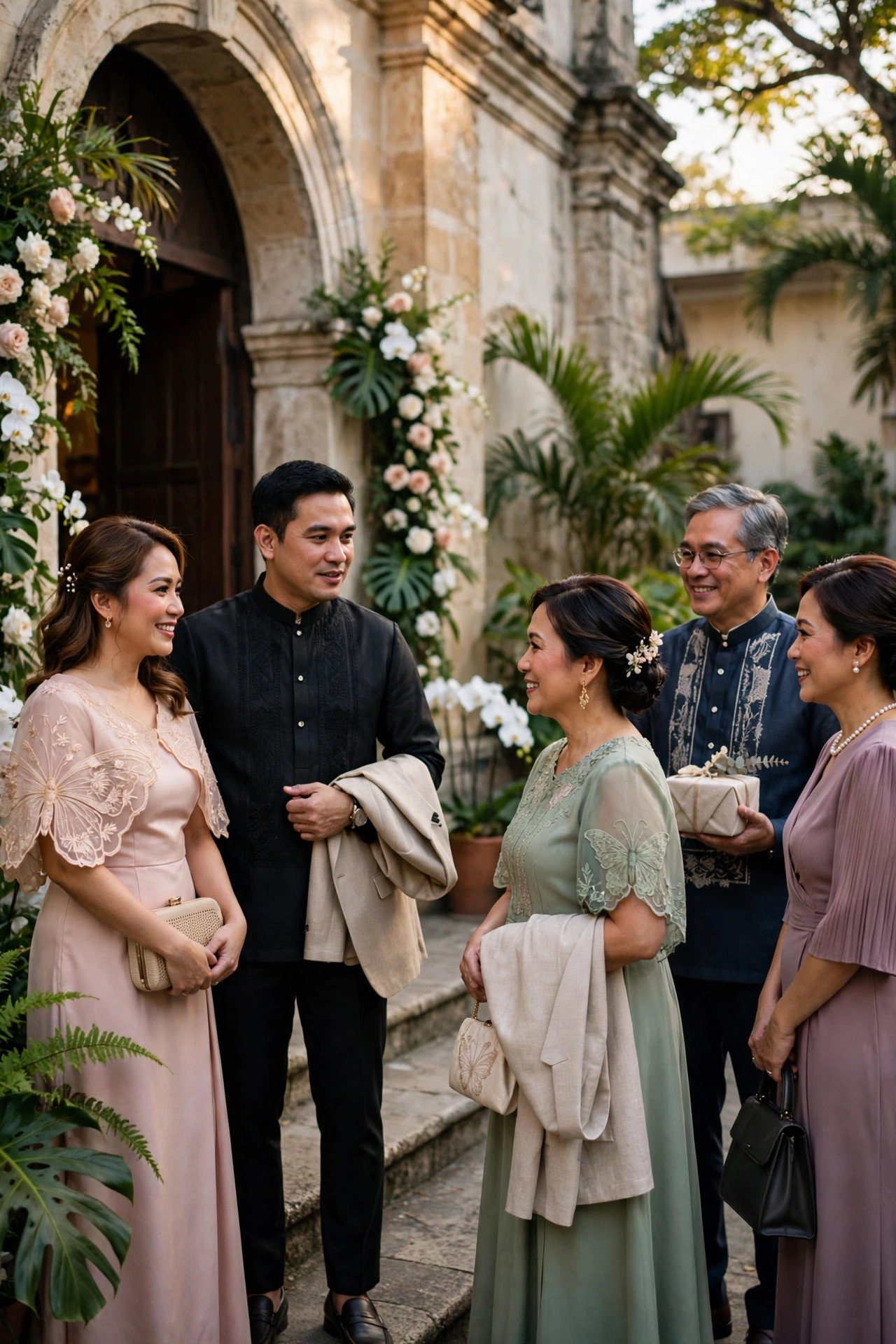
The groom’s classic choice is the barong tagalog: a sheer, embroidered formal shirt — traditionally woven from piña (pineapple fiber) or jusi — worn untucked over trousers, cool in tropical heat and unmistakably Filipino. Fine hand-embroidery (calado) makes heirloom barongs valuable family pieces, and groomsmen, fathers and ninongs often wear coordinated barongs with the groom’s the most ornate. Grooms may change into a suit for the reception, or proudly keep the barong all day.
Filipiniana: Terno Sleeves and Heritage Dress
 📌 Save
Filipiniana dress is defined by the terno’s butterfly sleeves — stiffened, sculptural sleeves rising from the shoulder — worn by brides in modern silhouettes and by ninangs and mothers in jewel-toned formality. The silhouette carries Spanish-era and American-era history distilled into something proudly Filipino, and contemporary designers in Manila and the diaspora reinterpret it constantly. A reception hall of ternos is a fashion show with genealogy.
Harana: The Serenade Tradition
 📌 Save
Harana is the traditional serenade — a suitor (historically with friends and a guitarist) singing love songs beneath a window — and its spirit lives at weddings in groom’s songs, family musical numbers and the kundiman love songs older guests request. Filipino celebrations assume relatives can sing, and someone always can, beautifully. A harana moment at the reception, dedicated to the bride or to the parents, lands with enormous warmth.
The Money Dance: Pinned Bills and Warm Wishes
 📌 Save
At the reception, guests dance briefly with the bride and groom and pin cash to their clothing — using pins provided — as a gift to start the marriage, while the DJ keeps a queue of well-wishers moving. The couple ends the dance decorated in bills and gratitude. Families vary: some use a money box, sash or envelope station instead, and diaspora venues sometimes require those options — follow the couple’s system cheerfully.
Tinikling and Folk Dance Performances
 📌 Save
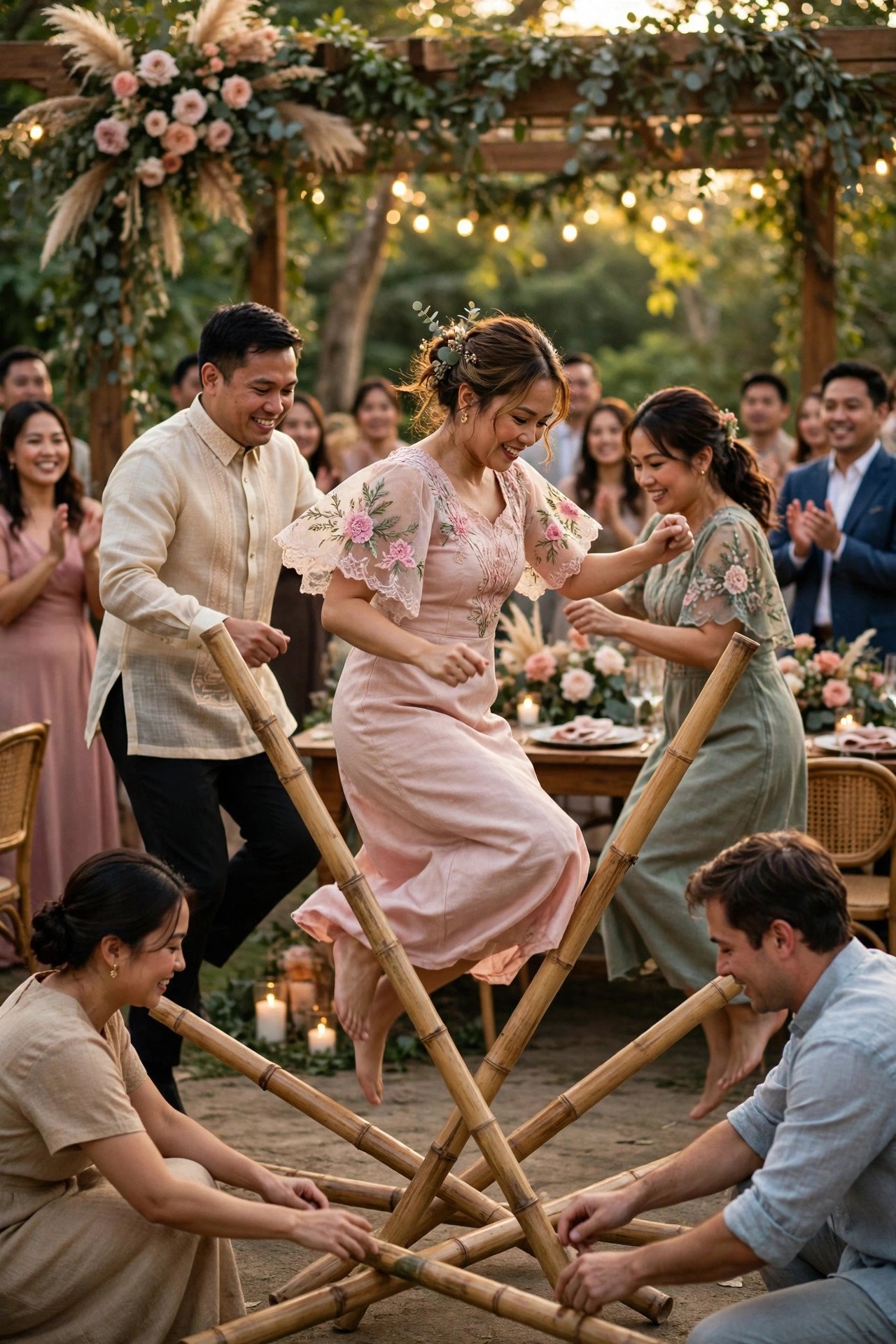
Cultural dance troupes — or brave relatives — may perform tinikling, where dancers step nimbly between clapping bamboo poles in imitation of the tikling bird, alongside other folk dances in regional costume. Performances honor heritage, entertain elders and give younger diaspora guests a living connection to it. Many receptions invite guests to try a careful round after the experts, to general hilarity and delight.
The Feast: Lechon and Celebration Dishes
 📌 Save
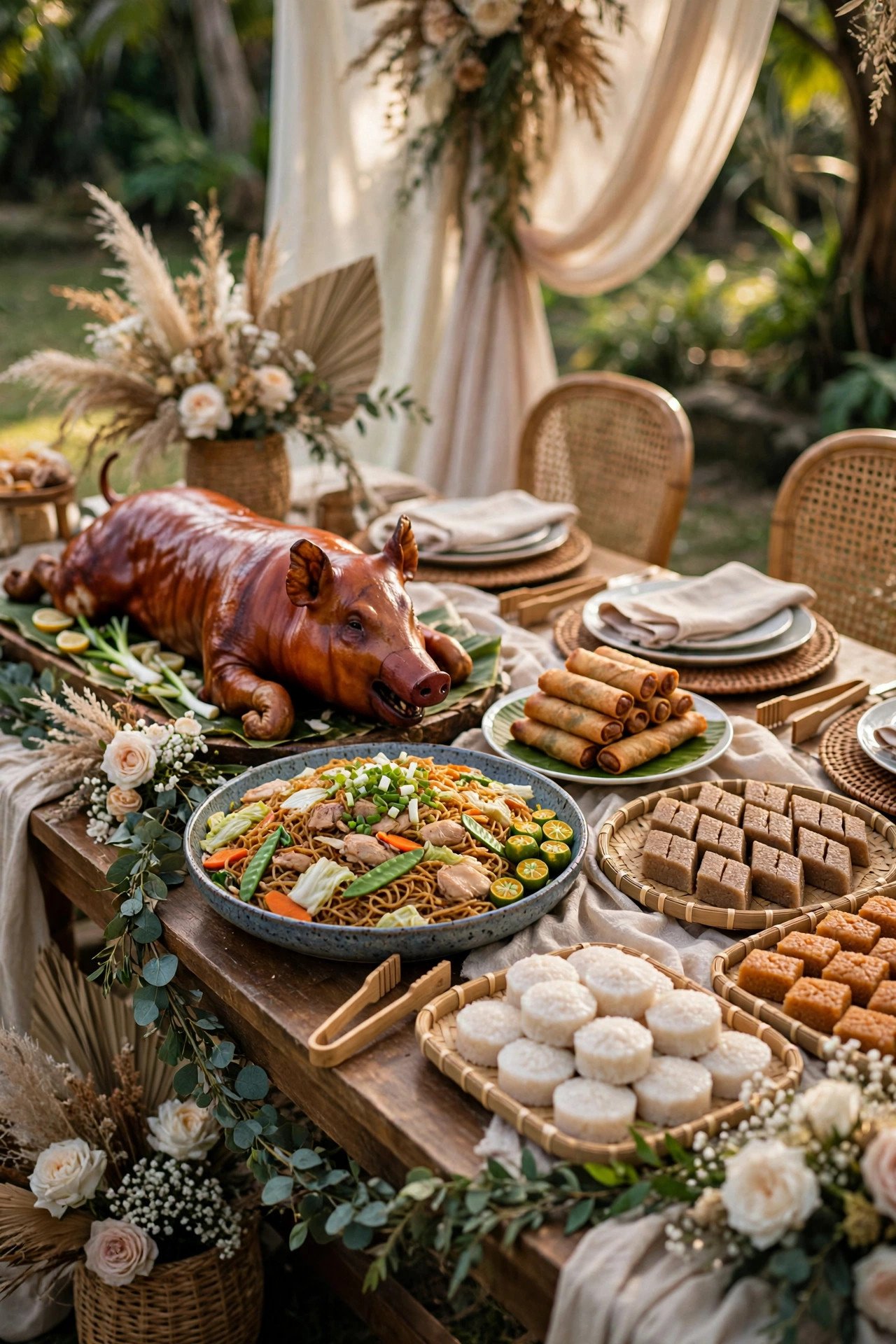
The Filipino wedding feast is a point of national pride: lechon (whole roast pig) as the centerpiece, pancit noodles for long life, lumpia, kare-kare, adobo, grilled seafood and regional specialties from both families’ provinces, with rice cakes (bibingka, kutsinta, puto) and leche flan among the sweets. Buffets are generous and refilled; nobody’s plate is allowed to look empty for long. Diaspora caterers guard their lechon suppliers like state secrets.
Mano: The Blessing Gesture of Respect
 📌 Save
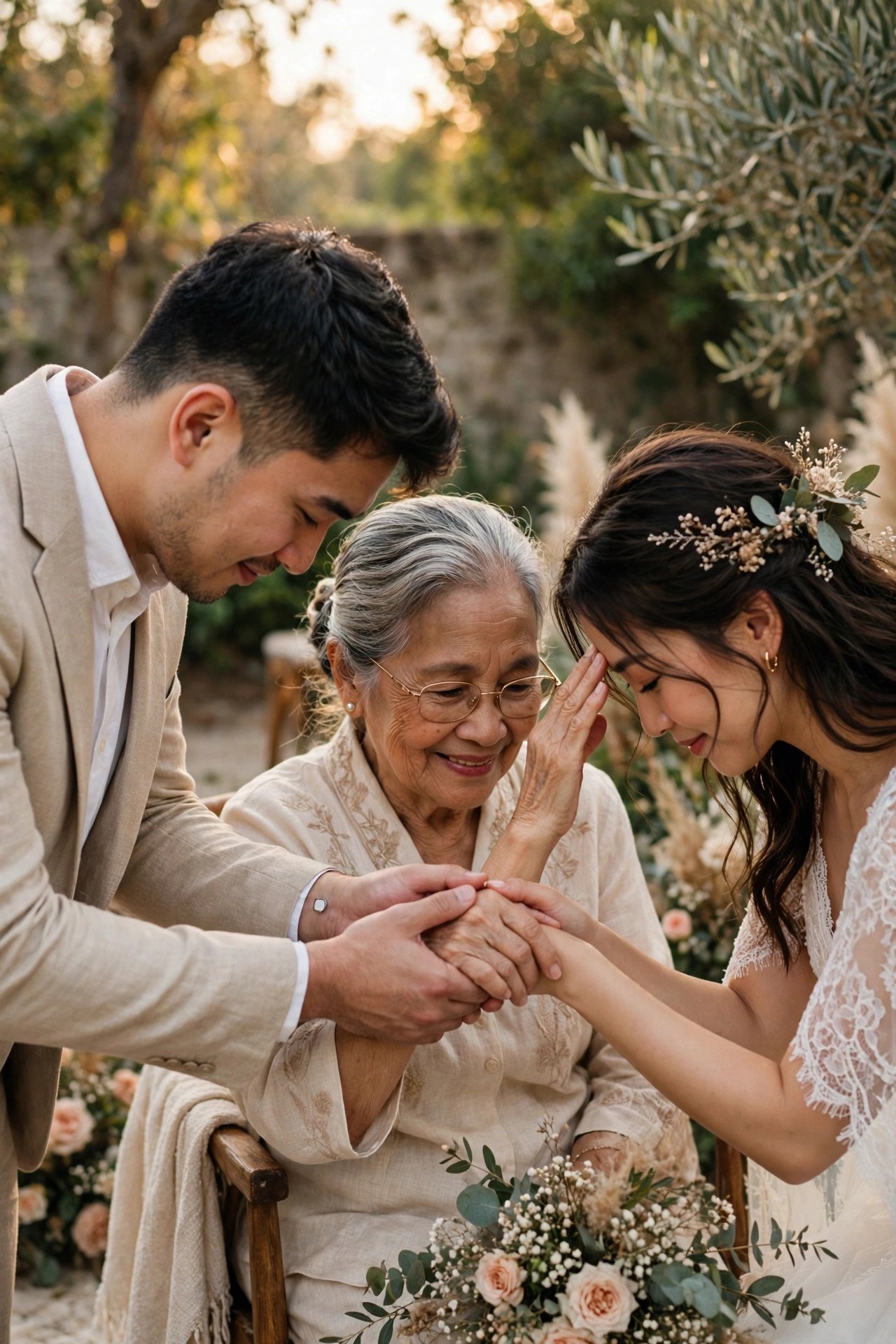
Guests will see the mano throughout a Filipino wedding: a younger person takes an elder’s hand and presses it gently to their forehead, asking a blessing — ‘mano po.’ Couples do the rounds of ninongs, ninangs, grandparents and parents receiving blessings this way, at the ceremony and all through the reception. It is the culture’s respect made physical, and elders light up when younger diaspora relatives remember it.
The Big Guest List: Community as Family
 📌 Save
Filipino weddings famously run large: extended family, parents’ colleagues, church community, childhood neighbors — because in Filipino culture, these relationships are family in practice. Couples abroad face the beloved problem of the plus-everyone invitation list, negotiated at pamanhikan with diplomacy and spreadsheets. The result, when it works, is a reception that feels like a town celebrating — loud, fed and entirely unwilling to end early.
The Reception Program: Games, Speeches and SDE
 📌 Save
Filipino receptions run on a proper program: an emcee, grand entrances, well-wishers’ speeches, games that are genuinely funny, the money dance, and often a same-day-edit (SDE) video of the ceremony played before dinner ends — a production feat Filipino videographers have turned into an art form. Guests expect the program and stay for it; the party dancing comes after the storytelling, not instead of it.
Regional and Religious Variation Across the Philippines
 📌 Save
An Ilocano wedding in the north, a Cebuano celebration in the Visayas and a Muslim wedding in Mindanao share family devotion and little else in detail — Muslim Filipino weddings, for example, follow Islamic rites with their own ceremonies, attire and gender customs, guided by the imam and families. Christian practice itself varies between Catholic, Protestant and Iglesia ni Cristo congregations. The couple’s province and faith — not this guide — set the final order of any real wedding.
What Guests Should Wear and Bring
 📌 Save
Dress formally: barongs and suits for men, formal dresses or Filipiniana for women, and nothing white. Cash gifts in an envelope (sobre) are traditional and appreciated, alongside registries where offered; amounts follow closeness, and the couple’s website settles the diaspora details. Arrive at church early — ceremonies start on time even if you have heard otherwise — and bring a handkerchief for the vows and the parents’ speeches.
Blending Filipino Traditions with Another Culture
 📌 Save
Fusion receptions across the US, UK and Canada commonly keep the full church symbolism — veil, cord, candle, arras — with a bilingual program explaining each rite, then mix menus: lechon beside the other family’s signature dish, the money dance beside the bouquet toss. What makes it work is keeping the sponsors real: ninongs and ninangs chosen for mentorship, secondary sponsors who know what their symbol means and can say it in a sentence.
Filipino Weddings Abroad: Community Rebuilt Anywhere
 📌 Save
In Daly City, Toronto, London and Dubai, Filipino weddings rebuild home with astonishing completeness: barong tailors, lechon caterers, church choirs and aunties running kitchens materialize in every diaspora city. Elders bless by livestream when they cannot fly, and the money dance proceeds in pounds, dollars and dirhams. These are not approximations — they are the tradition traveling, exactly as it has always done between the islands themselves.
Filipino Wedding Traditions FAQs
What are ninongs and ninangs?+
They are the principal sponsors — godparents of the marriage — who witness the ceremony officially and mentor the couple for life. Chosen from respected relatives and family friends for their character and marriages, they are listed in the program and documents, and couples turn to them for counsel for decades.
What happens in the cord and veil ceremonies?+
Veil sponsors drape a white veil over the bride’s head and groom’s shoulder, symbolizing one household. Cord sponsors then loop a decorative cord (yugal) in a figure eight over the couple’s shoulders, symbolizing an unbreakable, endless bond. Both rites happen during the church ceremony, led by the parish’s order of service.
What are the arras in a Filipino wedding?+
The arras are thirteen coins presented by the groom to the bride during the ceremony, promising provision and trust, which she accepts as shared stewardship of their life together. A young coin bearer carries them to the altar, and the couple keeps them in a small chest as an heirloom.
What food is served at a Filipino wedding?+
Expect a generous feast: lechon (roast pig) as centerpiece, pancit noodles symbolizing long life, lumpia, kare-kare, adobo and regional dishes from both families, plus rice cakes like bibingka and kutsinta and leche flan for dessert. Buffets are plentiful and refilled throughout the reception.
What is pamanhikan?+
Pamanhikan is the formal pre-wedding meeting where the groom’s family visits the bride’s family to pay respects and plan the wedding — budget, guest list and roles — over a hosted meal. It turns two families into collaborators months before the wedding and settles most big questions early.
Key Takeaways
- Sponsors are the structure: ninongs and ninangs mentor for life; secondary sponsors carry veil, cord and candle.
- Veil, cord, candle and 13 arras coins give the church ceremony its symbolic heartbeat.
- Pamanhikan plans the wedding the Filipino way — both families, one table, everything settled early.
- The feast is sacred business: lechon, pancit for long life, and rice cakes to finish.
- Guests: dress formally, bring a labeled envelope, arrive at church early and learn the mano.
Final Thoughts
A Filipino wedding wraps a couple in people — sponsors at their shoulders, a cord looped by friends, godparents whose counsel comes with a lifetime warranty, and a hall full of community that considers itself family. Keep the sponsors meaningful, the program explained and the lechon plentiful, and whether your church is in Manila, Mississauga or Manchester, the celebration will feel like what it truly is: a family, formally expanding.