Mexican Wedding Traditions (2027)
By zainzari • Published October 23, 2026 • Updated October 23, 2026
 📌 Save
Mexican wedding traditions blend Catholic ceremony customs with joyful community celebration: a sponsor (padrino) presents las arras — thirteen coins the groom gives the bride as a promise of provision — a floral lazo is looped around the couple in a figure eight to symbolize unity, and padrinos y madrinas sponsor everything from the lazo to the cake. Mariachi, la víbora de la mar and a late, generous fiesta complete the day.
A Mexican wedding is built on a beautiful premise: a couple does not marry alone. Godparents and sponsors — padrinos y madrinas — surround them, each carrying one element of the ceremony; the parish priest blesses coins and a lasso that physically bind the couple together; and at the reception the whole community quite literally weaves them into a snake of dancing guests.
Customs vary across Mexico’s regions and by each family’s faith and means, and diaspora families in the USA, UK and Canada adapt them with love. This guide explains what each tradition means, what guests will see, and how couples blending cultures can include these elements with the family’s guidance — accurately, and without turning sacred moments into décor.
At a Glance: Ceremony Symbols and What They Mean
| Symbol | What Happens | What It Means |
|---|---|---|
| Las arras | Groom presents 13 coins to the bride | Trust, provision and shared resources |
| El lazo | A cord or rosary looped around the couple | Unity and an unbreakable bond |
| Padrinos | Sponsors present each ceremony item | Community surrounds and supports the couple |
| El ramo | Bride offers a bouquet at the altar | Gratitude and devotion |
| Mariachi | Musicians honor the couple in song | Joy, heritage and serenata romance |
| La víbora de la mar | Guests form a ‘sea snake’ line dance | The couple weathers life’s storms together |
Note: many Mexican weddings include a full Catholic Mass; others are civil or blended ceremonies that keep the arras and lazo. The family’s parish and the couple decide the order.
Las Arras: The Thirteen Coins
 📌 Save
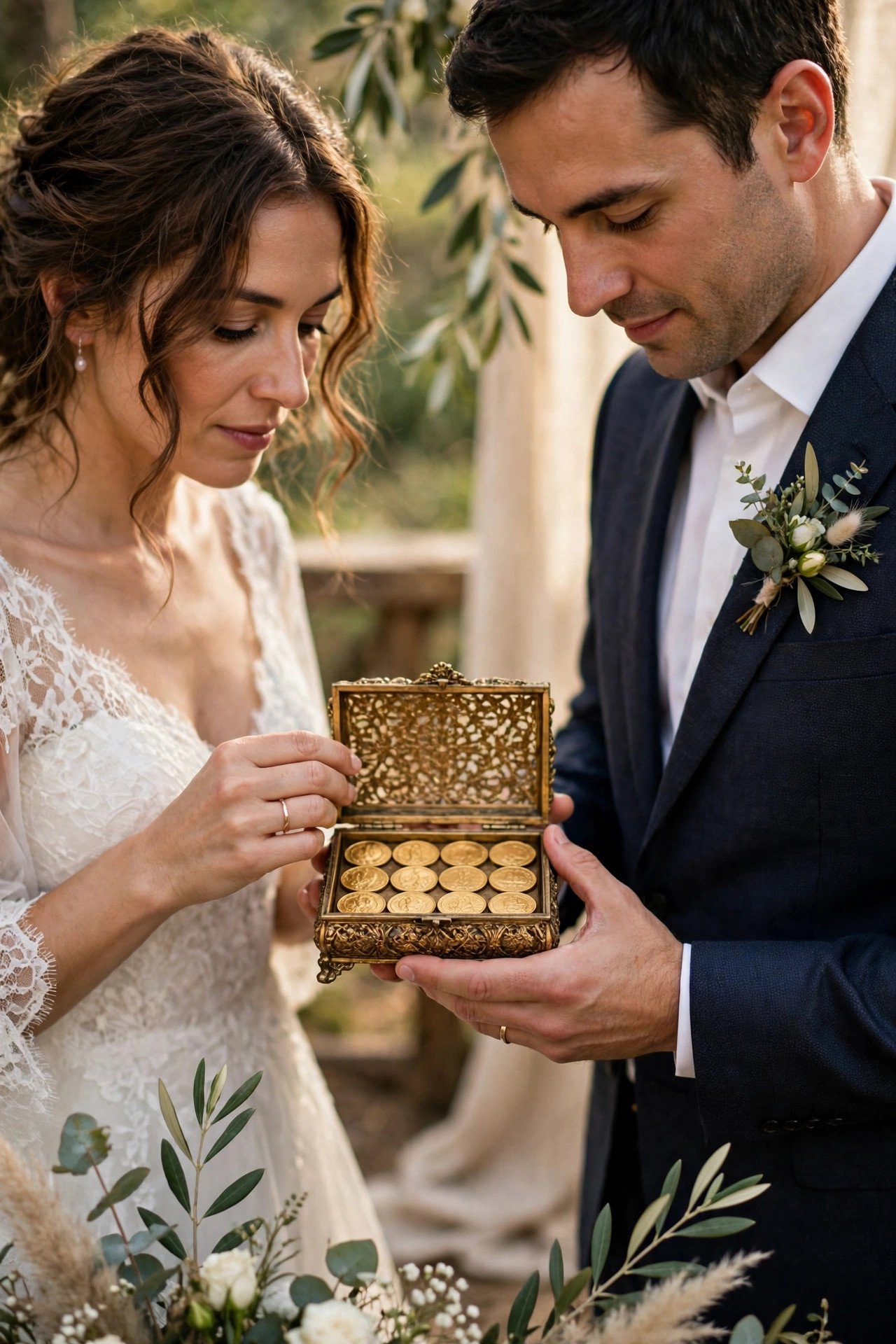
Las arras matrimoniales are thirteen coins — traditionally gold or silver-toned — presented by a padrino and blessed during the ceremony. The groom places them into the bride’s hands, promising to provide for their life together, and she accepts them as a sign of trust and shared stewardship; many couples today speak the promise to each other as equals. The coins are kept in a decorative box or chest as a family keepsake.
El Lazo: The Lasso That Binds
 📌 Save
El lazo is a large cord, rope or rosary, often decorated with flowers or crystals, that is placed around the couple’s shoulders in a figure-eight or infinity shape after the vows. It stays in place for the rest of the ceremony, a visible sign that two lives are now looped together. A padrino and madrina de lazo — sponsors chosen for their own strong marriage — place it and later remove it for the couple to keep.
Los Padrinos y Madrinas: Sponsors for Everything
 📌 Save
Mexican weddings are sponsored piece by piece: padrinos de arras, de lazo, de anillos (rings), de Biblia (Bible), de ramo (bouquet) and more, plus the madrina de cojín who carries the kneeling pillow. Being asked is an honor that carries a real role — presenting the item in the ceremony and standing as a model couple for the newlyweds. The system spreads cost, yes, but its heart is mentorship: each sponsor publicly promises to support the marriage.
The Ceremony and Mass: What Guests Will See
 📌 Save
Many Mexican weddings take place within a full Catholic Mass, with the arras, lazo and ring exchanges woven into the service, kneeling cushions for the couple, and readings chosen by the family. Guests of all faiths are welcome to attend; during Communion, non-Catholic guests typically remain seated or follow the ushers’ guidance, as at any Catholic service. Civil ceremonies in Mexico are legally separate and often held on another day or before the church celebration.
Mariachi: Music That Honors
 📌 Save
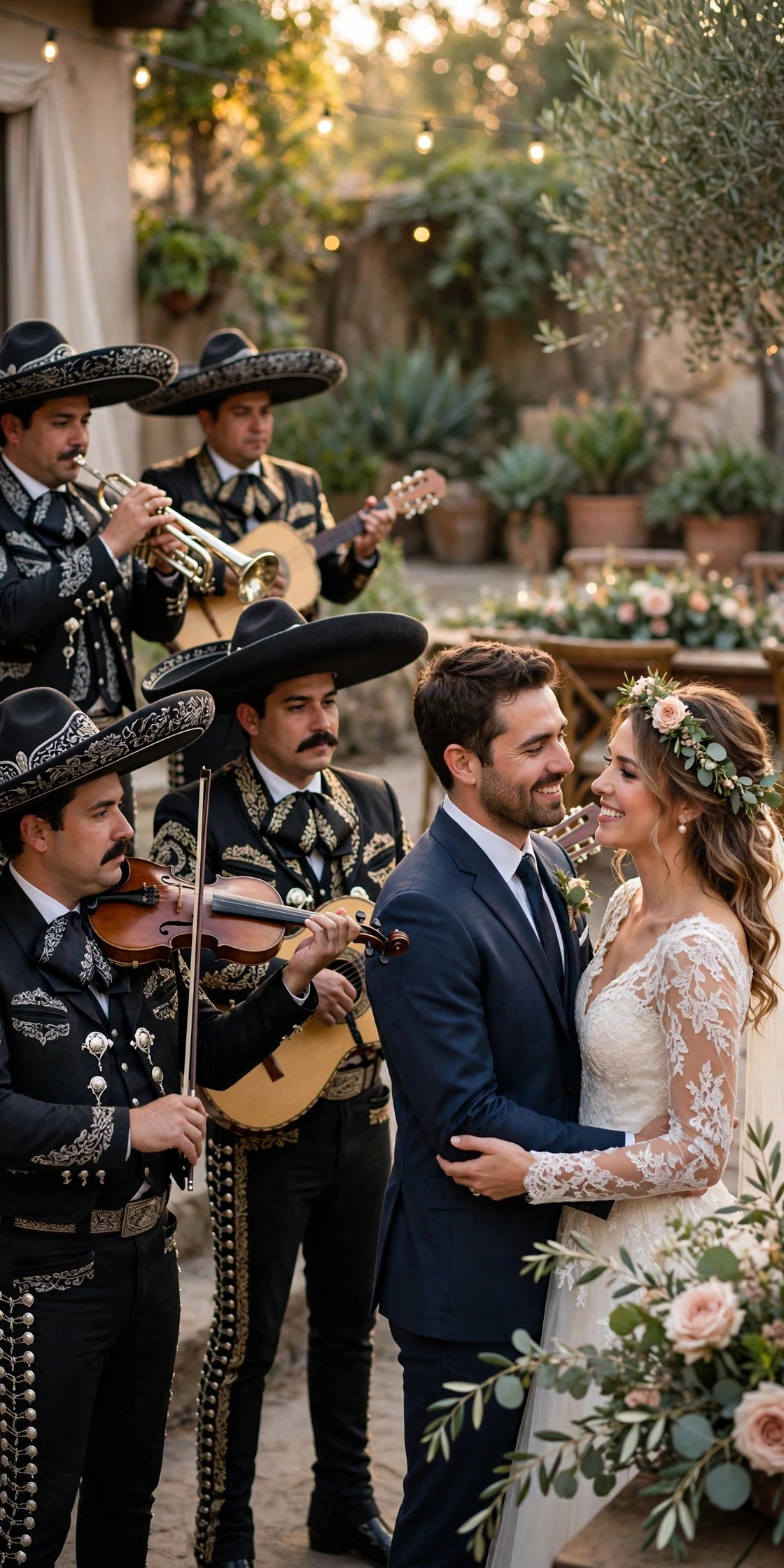
Mariachi — trumpets, violins, guitarrón and vihuela, with singers in embroidered charro suits — is Mexico’s iconic celebration sound. A mariachi may play the couple into the church, honor them during the reception with songs like Las Mañanitas for special moments, and take requests table to table. The serenata tradition, where the groom serenades his bride, lives on inside the mariachi set.
La Víbora de la Mar: The Sea Snake Dance
 📌 Save
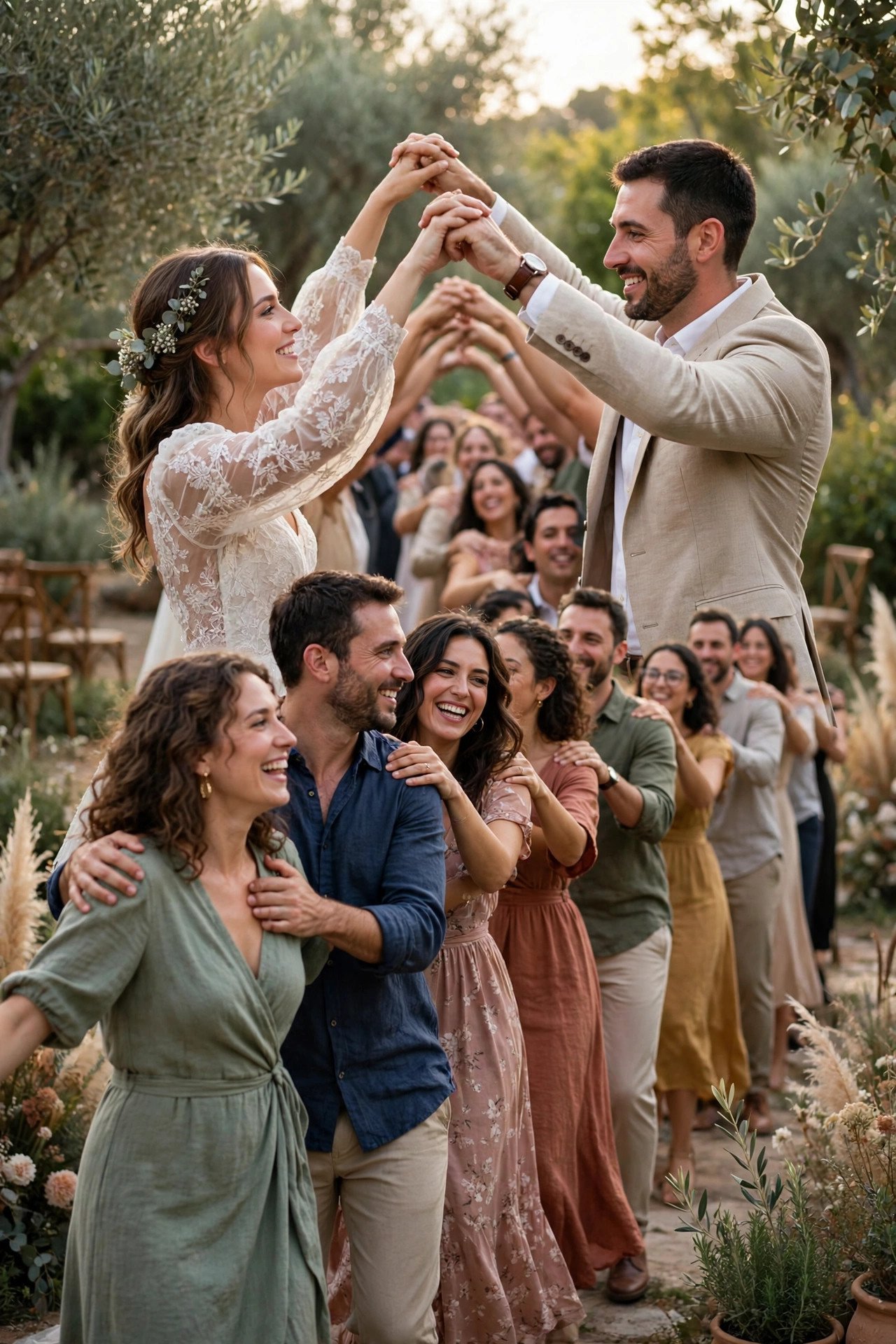
At the reception, la víbora de la mar — ‘the sea snake’ — sends a line of guests, led by the couple, weaving around the room, through an arch made by the bride and groom, under tables and chairs stacked as playful obstacles while the band plays faster and faster. Single guests traditionally trail the line hoping to catch the bouquet’s luck. The symbolism is sweet: the couple learns to navigate life’s obstacles with their community attached.
The Money Dance (Baile del Billete)
 📌 Save
In the money dance, guests pin bills to the couple’s clothing — or tuck them into a designated box or the bride’s shoe in some families — in exchange for a dance with the bride or groom. It is part gift, part guaranteed one-on-one moment with every guest who wants one. Practices vary by region and family, and many couples now offer an envelope station alongside for guests who prefer it.
La Callejoneada: A Joyful Street Parade
 📌 Save
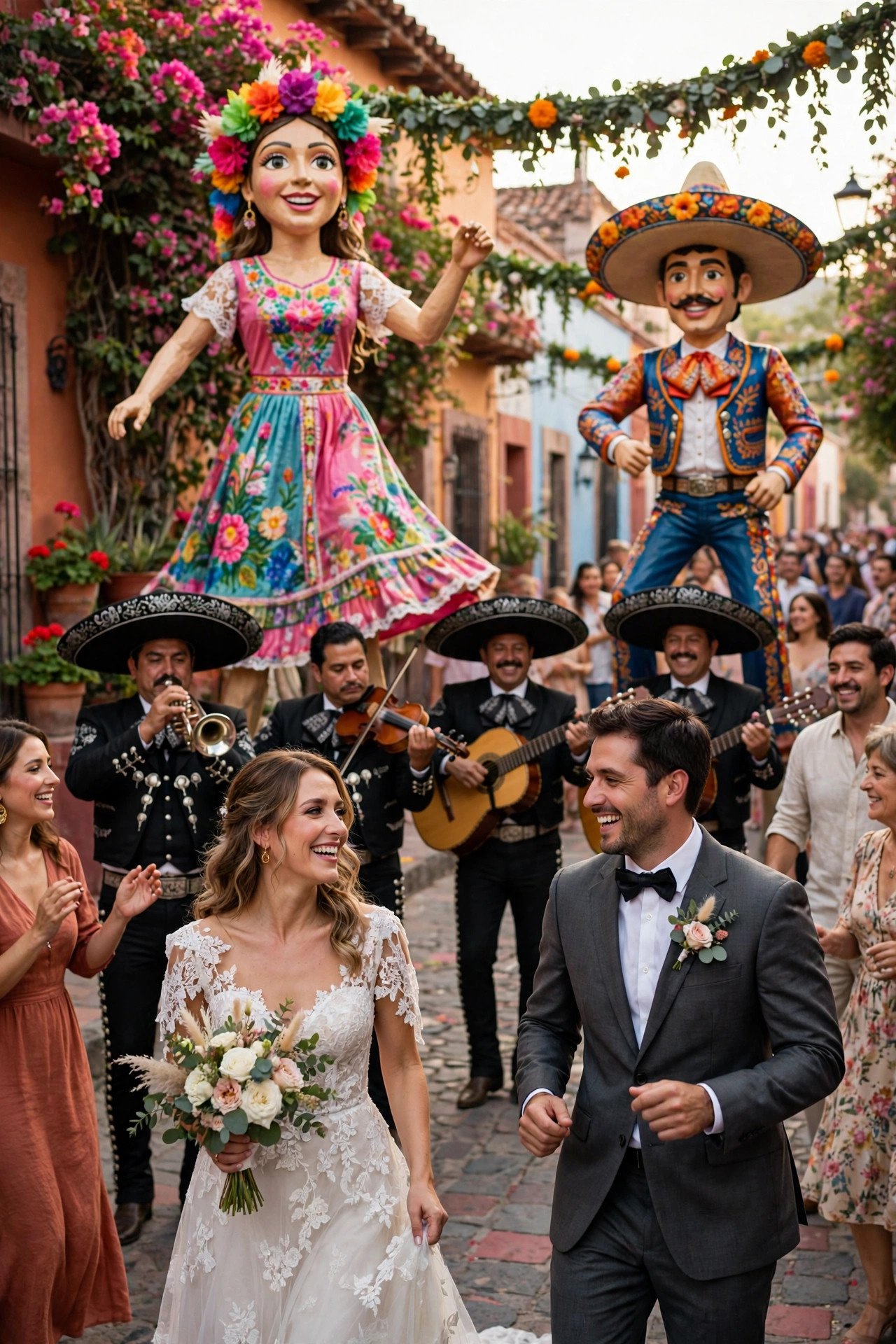
In cities like San Miguel de Allende and Guanajuato, weddings may include a callejoneada: a walking parade through the streets with a mariachi or banda, giant mojiganga puppets of the couple, and guests dancing behind. The tradition turns a wedding into a town celebration and gives incredible photographs against colonial streets. Permits and routes are arranged by local planners where the custom is offered.
Serenata: The Night-Before Serenade
 📌 Save
Traditionally, the groom arrives beneath his bride’s window the night before the wedding with musicians to serenade her — a serenata — sometimes followed by playful negotiations with her family to let her appear. Modern couples adapt it as a rehearsal-dinner performance or a reception surprise song. The spirit is public devotion: love announced to the whole neighborhood, beautifully and at full volume.
Mexican Wedding Food: Mole and Regional Pride
 📌 Save
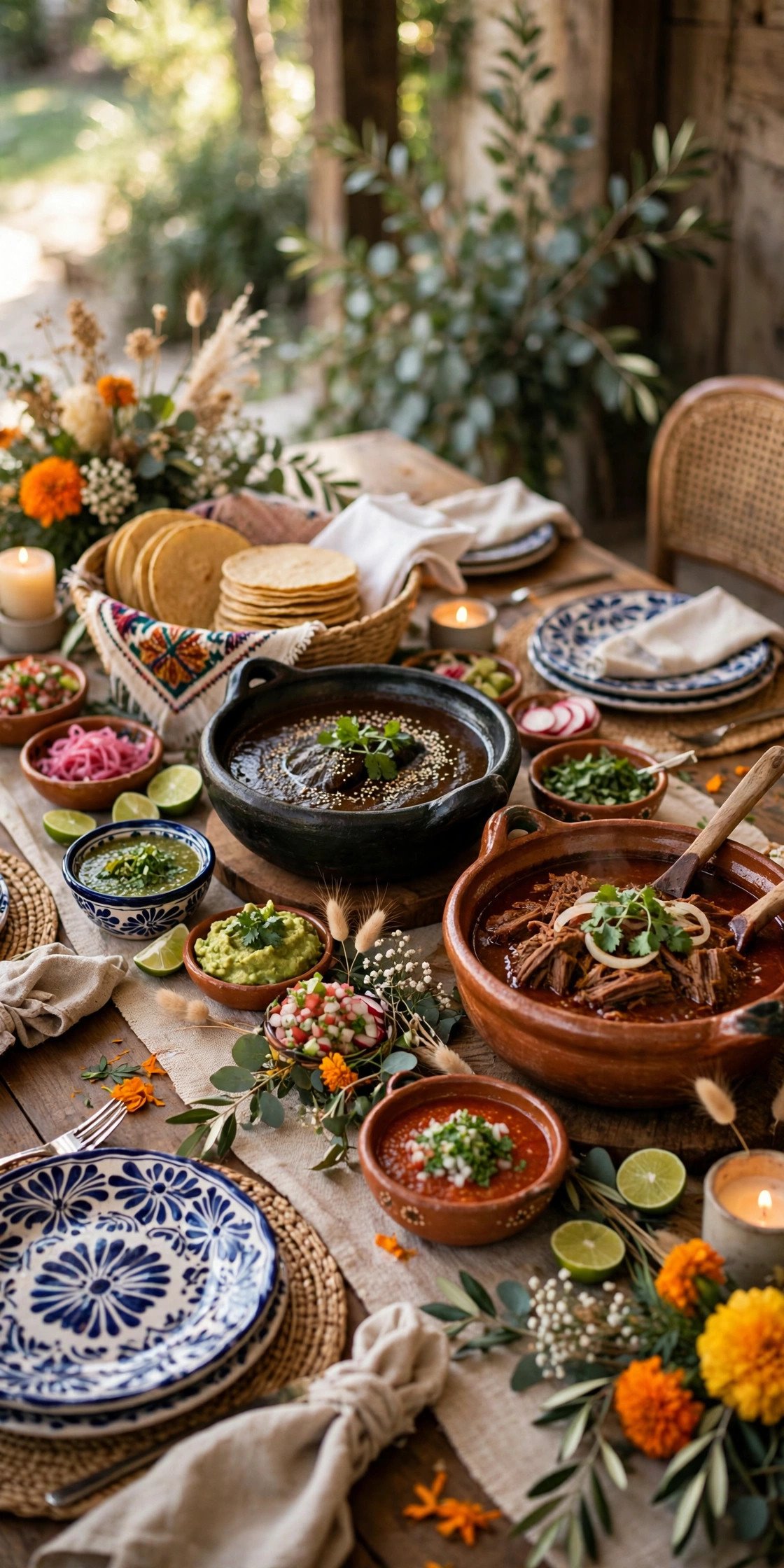
Mexican wedding menus are regional manifestos: mole poblano with its deep, complex sauce, cochinita pibil in Yucatán, birria in Jalisco, carnitas in Michoacán, plus elote, esquites, salsas made tableside and late-night tacos as the fiesta stretches on. Families often insist on a hometown dish even at destination weddings. And yes — a taco station at midnight is a tradition all on its own now.
Aguas Frescas: Sweet Drinks for Everyone
 📌 Save
Aguas frescas — horchata (sweet rice and cinnamon), jamaica (hibiscus), tamarindo and seasonal fruit waters — are the celebratory drinks that belong to everyone at a Mexican wedding, served from big glass vitroleros that become part of the décor. They pair perfectly with spicy food, keep dancers hydrated and make a beautiful, colorful drinks station alongside coffee and sparkling water. Guests will go back for the horchata more than anything else on the table.
Papel Picado: Cut-Paper Banners
 📌 Save
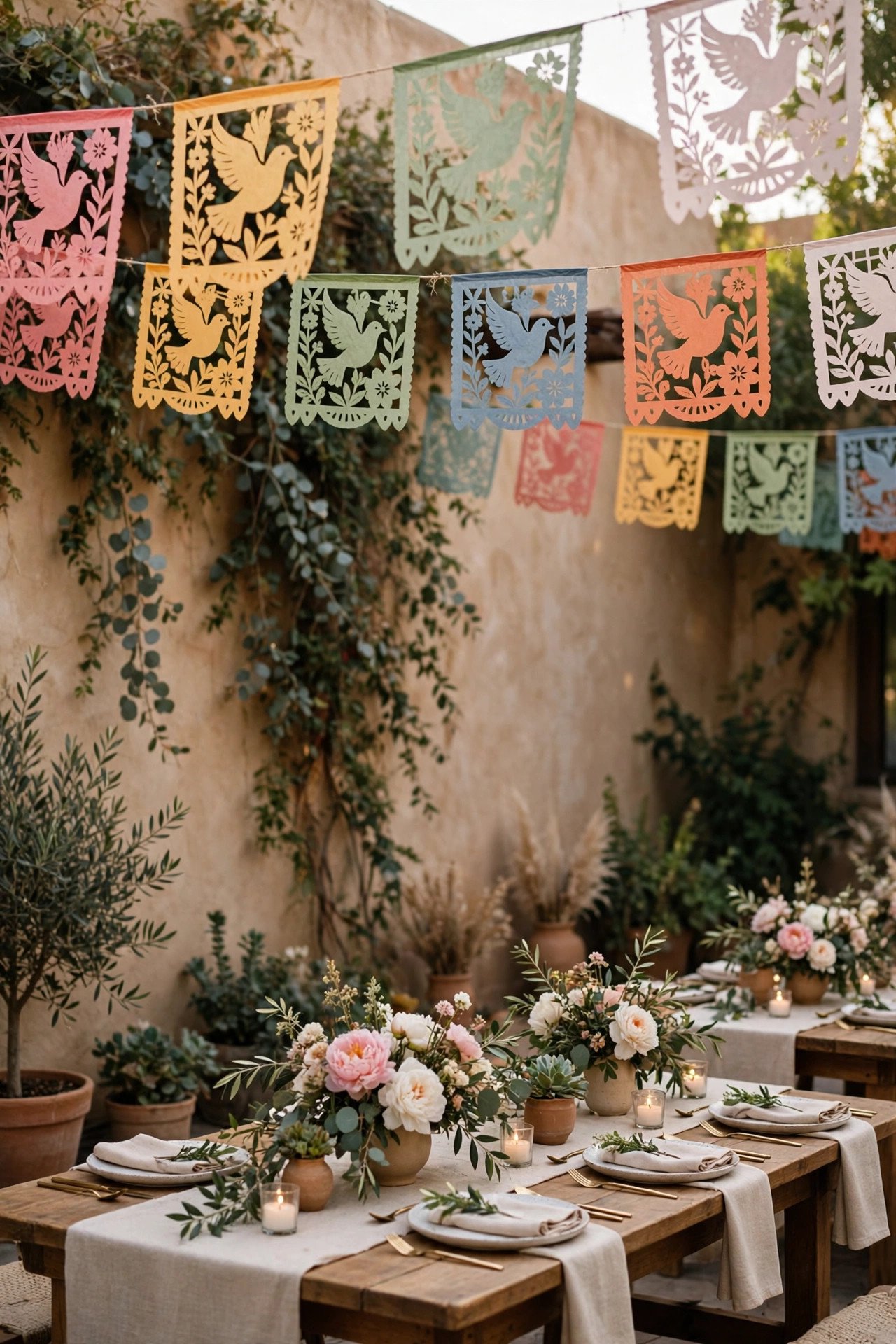
Papel picado — tissue paper banners cut with intricate designs of doves, flowers, bells and the couple’s names — flutter above Mexican celebrations, their movement and color doing the decorating work of a hundred centerpieces. Artisans cut custom panels for weddings, and quality paper or fabric versions hold up outdoors. The craft is recognized as part of Mexico’s cultural heritage, and buying from Mexican artisans keeps it that way.
Dahlias, Marigolds and Bright Florals
 📌 Save
The dahlia is Mexico’s national flower, and Mexican wedding florals embrace saturated color: dahlias, roses, marigolds in season, bougainvillea and orchids arranged generously rather than delicately. Marigolds (cempasúchil) are most famous from Day of the Dead observances, and families differ on using them at weddings — many do for autumn celebrations, others keep them for remembrance altars. Ask your family’s preference; either answer is correct.
The Mantilla Veil and Spanish Heritage
 📌 Save
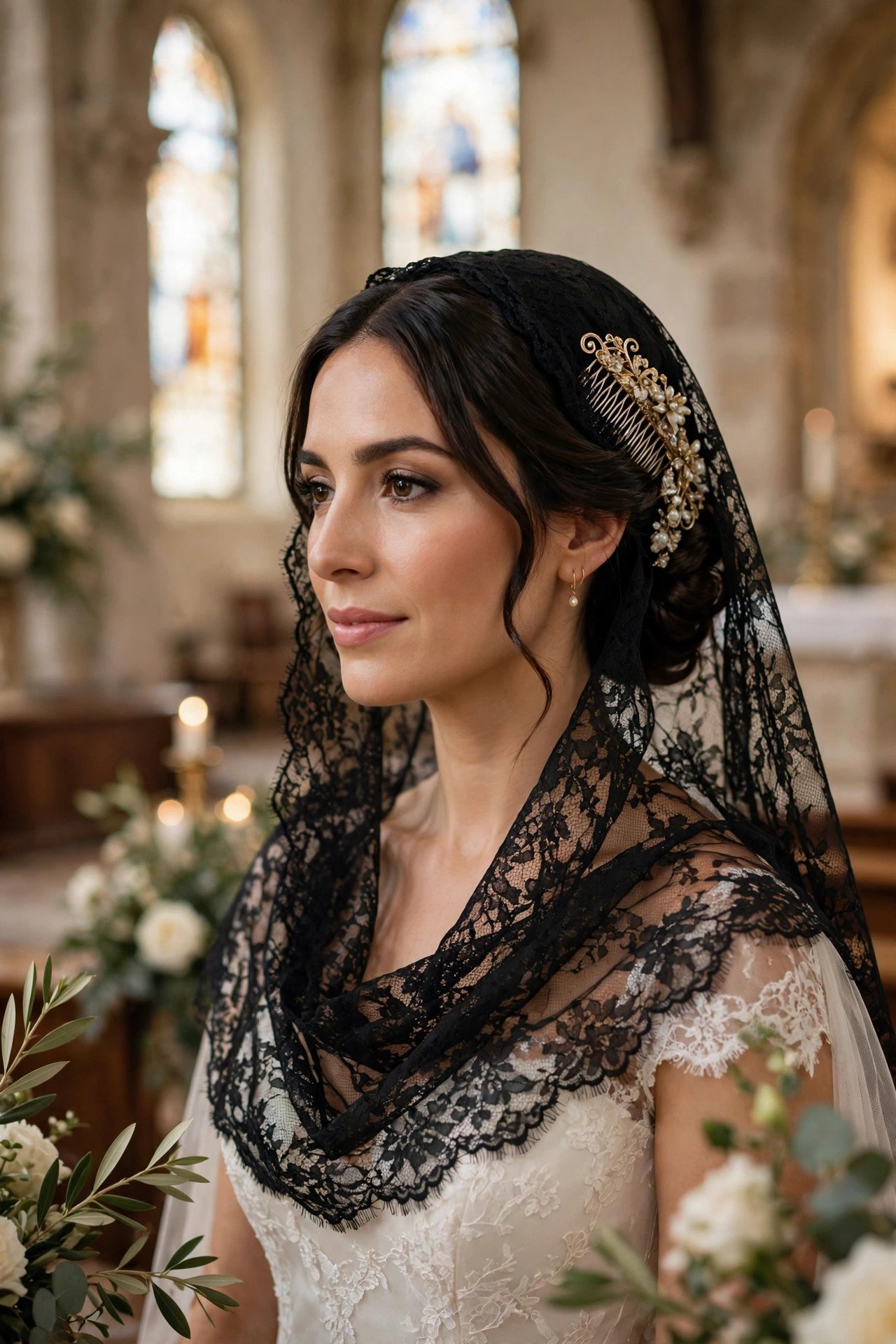
Many Mexican brides wear a mantilla: a lace veil draped over a high comb (peineta), a heritage from Spain that frames the face in scalloped lace during the church ceremony. Family mantillas pass between generations, sometimes worn by a bride whose grandmother wore the same lace. The look pairs naturally with the formality of a full Mass and photographs with timeless softness.
Guayaberas and Linen for Warm-Weather Weddings
 📌 Save
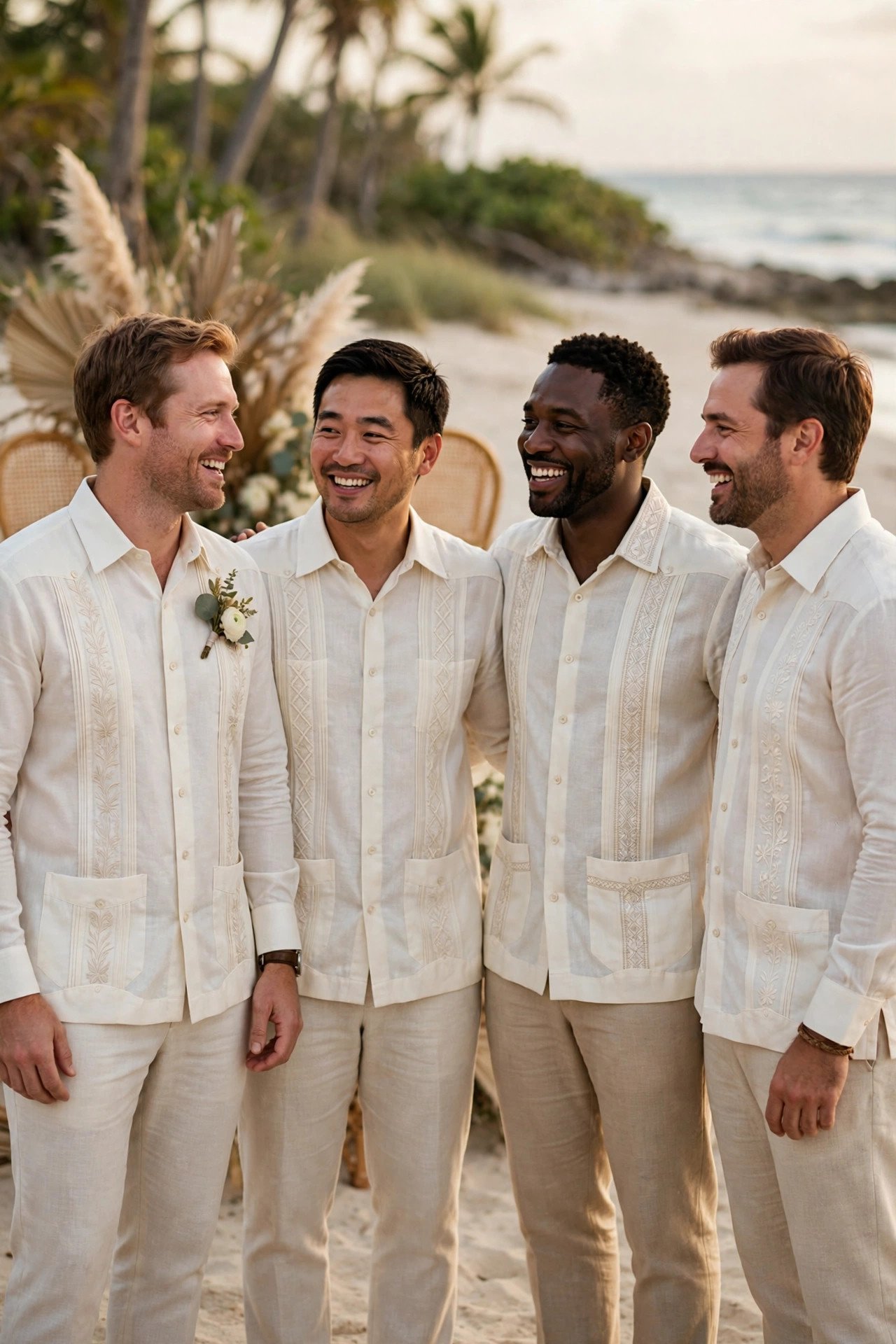
For beach and warm-climate weddings, the guayabera — the pleated, pocketed formal shirt of Yucatán and the Caribbean — gives grooms and guests a look that is both dressy and breathable, worn untucked with linen trousers. Embroidered versions suit the groom; simpler ones dress the wedding party in matching cool elegance. It is formalwear that respects the weather instead of fighting it.
El Ramo: A Bouquet Offered in Thanks
 📌 Save
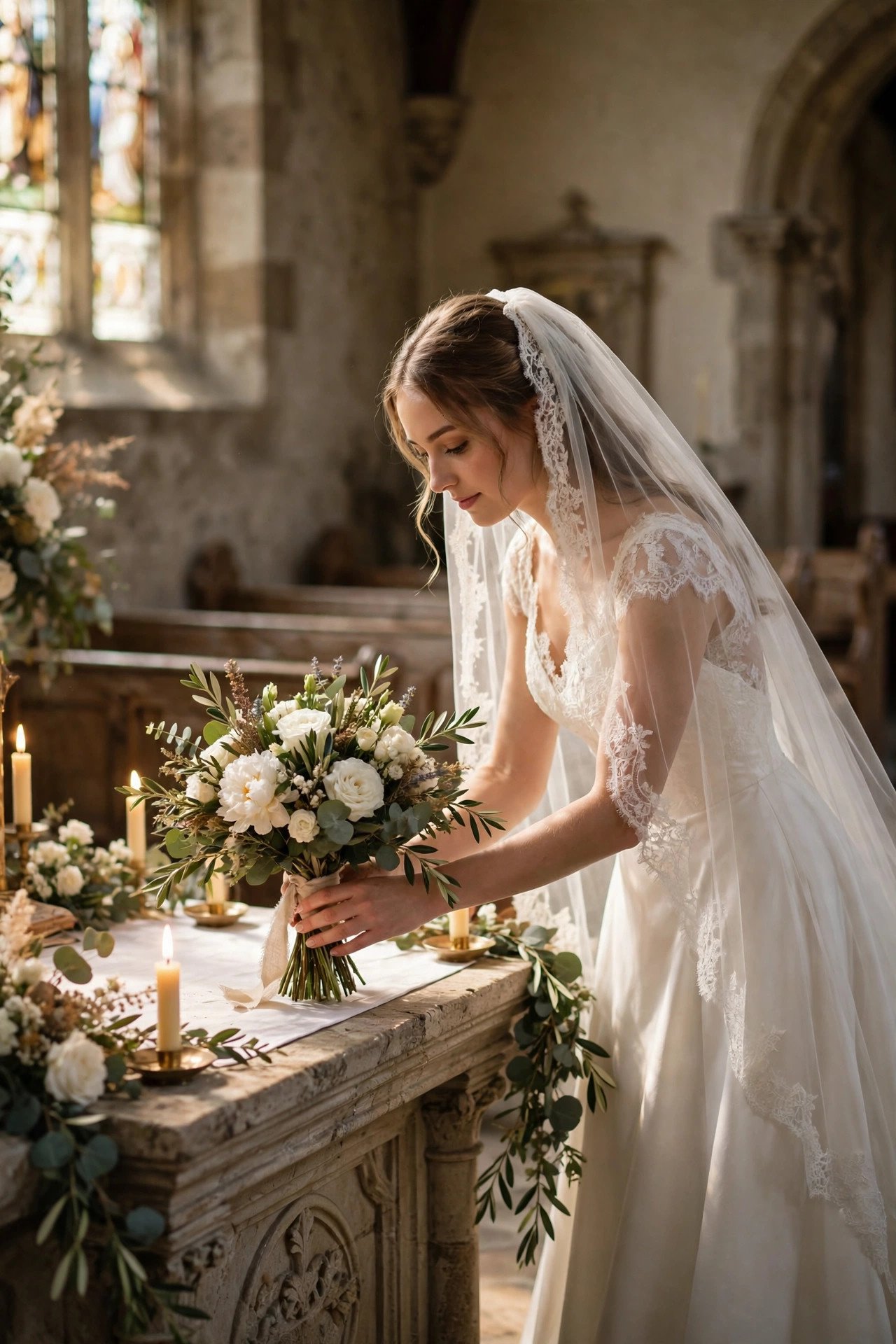
Many brides carry — or are presented with — a second bouquet, el ramo, which is offered at the church altar in gratitude and devotion, traditionally before an image of the Virgin of Guadalupe or the family’s patron. The madrina de ramo sponsors it. The moment is quiet and personal inside a big ceremony, and the bride’s main bouquet is kept for photographs and the reception toss.
El Vals: A First Dance Shared with Family
 📌 Save
In many Mexican receptions, the first dance is a vals — a waltz — and it is not the couple’s alone for long: the bride traditionally dances with her father and padrino, the groom with his mother and madrina, before the couple finally dances together, in an order that honors the people who raised and sponsored them. Families rehearse the sequence like a small ceremony inside the party. It turns the first dance from a performance into a genealogy, danced in three-quarter time.
Remembering Loved Ones at the Fiesta
 📌 Save
Mexican families often weave remembrance into celebration: a table with photographs, candles and favorite flowers honors grandparents and parents who have died, placed where the fiesta can see them. The custom echoes the wider Mexican comfort with keeping the dead present in family joy rather than apart from it. Couples blending cultures find guests from everywhere understand this table instantly — love, continuing.
Baile Sorpresa: The Surprise Dance
 📌 Save
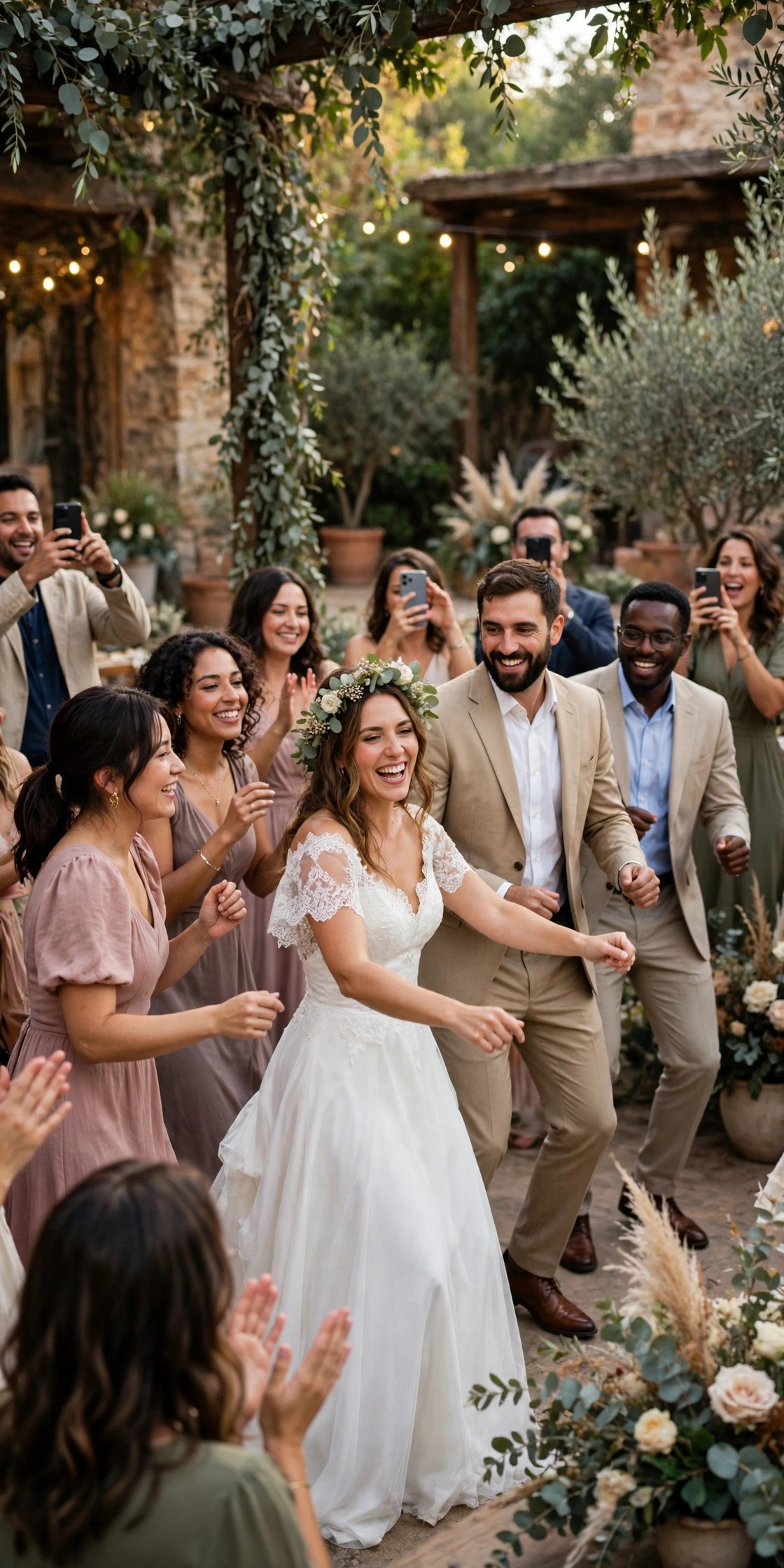
The baile sorpresa is a surprise choreographed dance — the couple, the wedding party or the parents erupt into a rehearsed routine mid-reception, sometimes shifting from a slow romantic song into banda, cumbia or pop. Mexican families take the assignment seriously, with rehearsals and matching energy across generations. It has become the reception moment most likely to be filmed by every single guest.
La Tornaboda: The Day-After Gathering
 📌 Save
La tornaboda is the gathering the day after the wedding — a relaxed meal at a family home where leftovers (recalentado, proudly reheated and often better the second day) are served, stories from the fiesta are retold and out-of-town family is seen off properly. Some families add a pool, a ranch or a mariachi reprise. For diaspora weddings, a tornaboda brunch has become the standard farewell format.
Regional Variation: Every State, Every Family
 📌 Save
Mexico’s 32 states celebrate differently: coastal Veracruz brings jarocho music and white attire traditions, Oaxaca’s Guelaguetza spirit shapes huge community fiestas with calenda parades, and northern ranch weddings run on banda and barbecue. Even within one town, two families’ orders of events can differ completely. Treat every ‘Mexican weddings always…’ sentence — including in this guide — as a starting question for the family in front of you.
What Guests Should Wear and Expect
 📌 Save
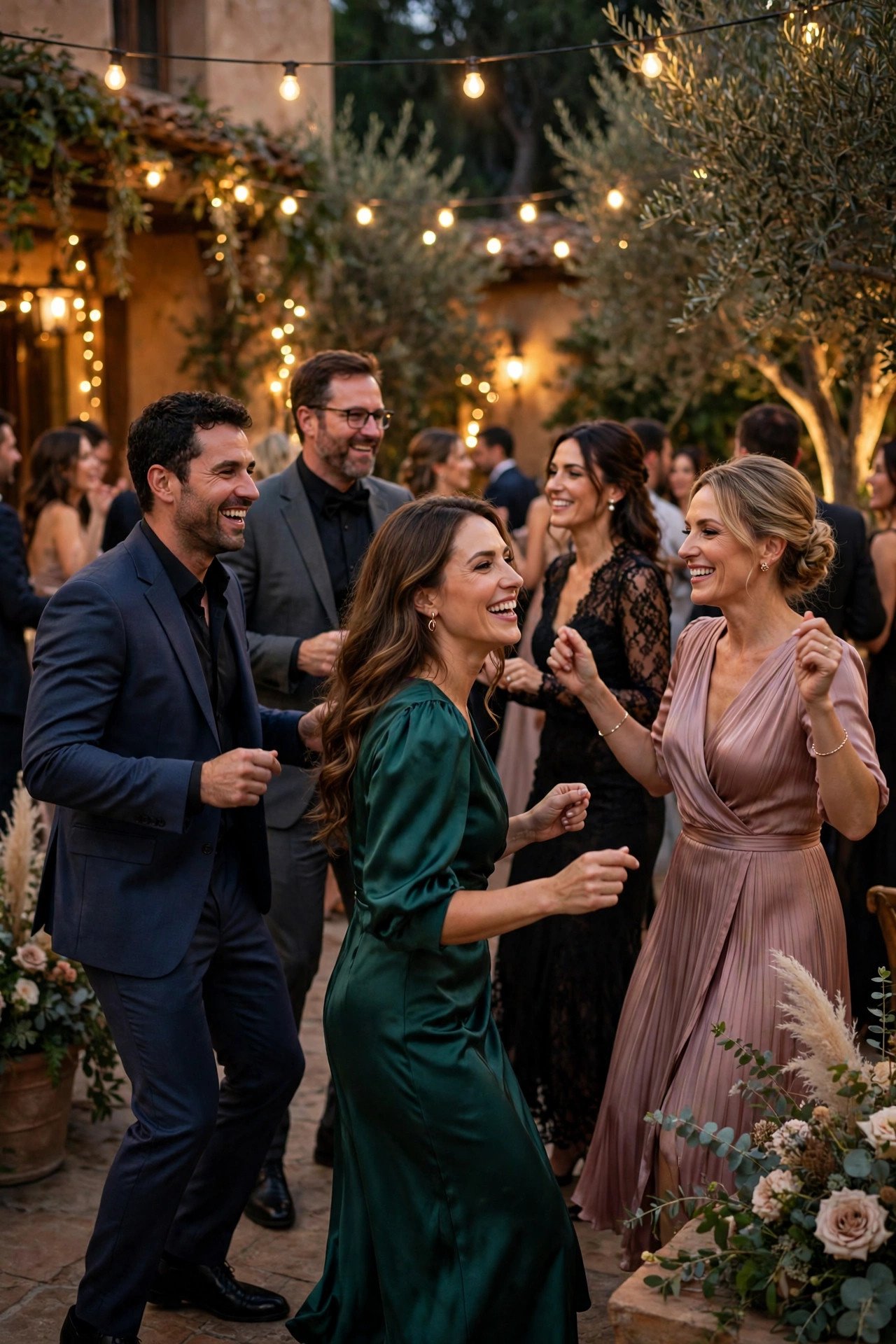
Expect formality at church — covered shoulders are appreciated in many parishes — and a fiesta that starts with dinner and ends when it ends, often very late. Dress in your celebratory best (avoid white), bring a wrap for evening air, and pace yourself: the víbora, the money dance and the surprise dance all want you on your feet. A small envelope gift or registry purchase is standard; check the invitation for the couple’s system.
Guest Gifts and the Envelope Question
 📌 Save
Cash in an envelope is a common, appreciated gift at Mexican weddings, alongside registries where couples provide them; at some receptions the money dance is the giving moment itself. In the diaspora, couples often combine: a registry for household gifts, envelopes for those who prefer, and clear guidance on the wedding website. The padrino system means some close guests sponsor a ceremony item instead of giving a separate gift.
Blending Mexican Traditions with Another Culture
 📌 Save
Fusion couples commonly keep the arras and lazo inside a bilingual ceremony, translate the key moments in the program, and let the reception run full fiesta — mariachi at dinner, a DJ after. The elements travel well because their meanings (provision, unity, sponsorship) are universal; what keeps them respectful is family guidance, real padrinos rather than decorative roles, and sponsors chosen for mentorship, not props.
A Final Word on Faith and Respect
 📌 Save
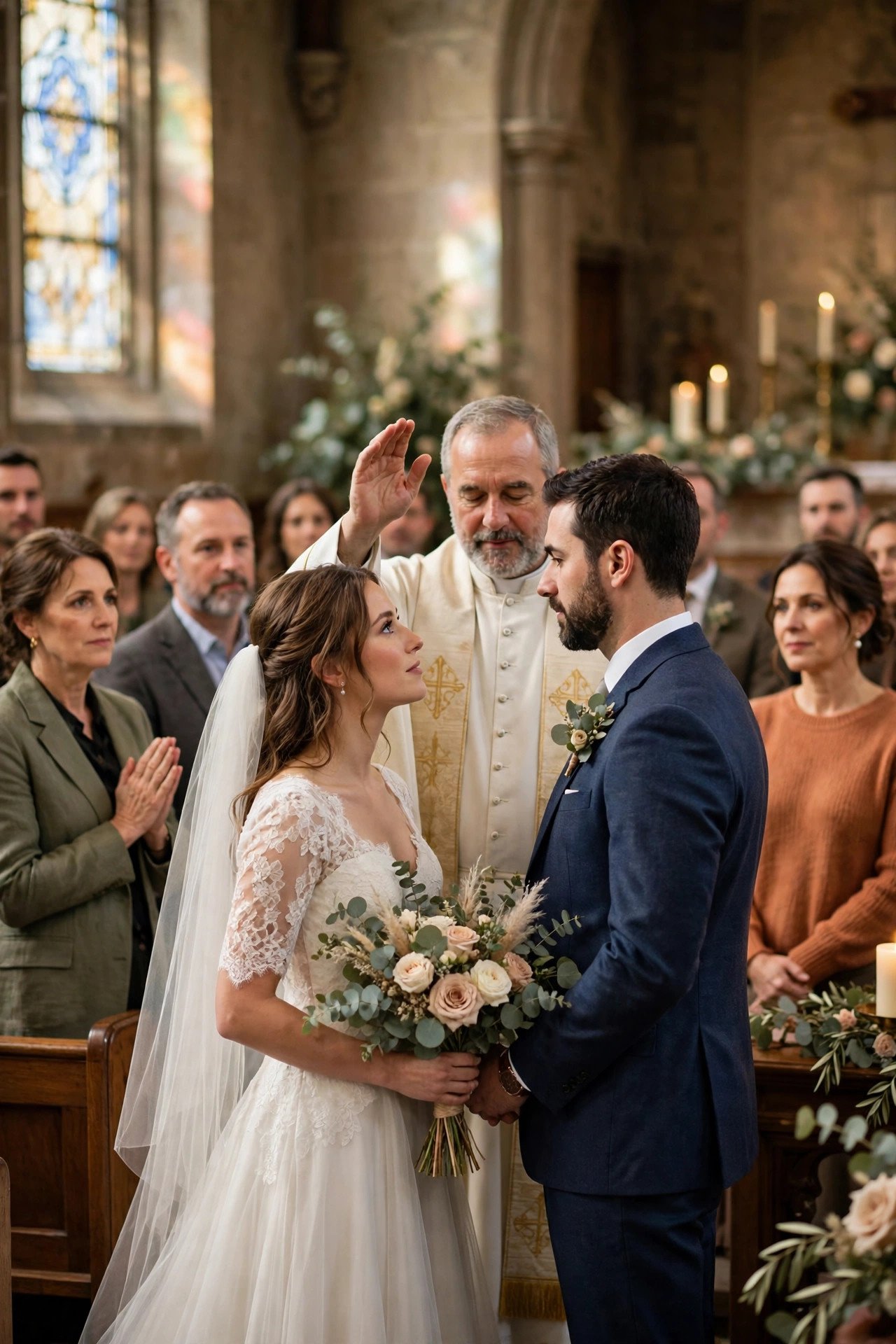
Several Mexican wedding customs are sacramental — the Mass, the lazo blessing, the ramo offering — and belong inside the family’s faith life, not on a mood board. Couples outside the tradition who love these elements should talk with the family and, where relevant, a priest, about what participation means. Admiring a tradition accurately and celebrating the couple wholeheartedly is always a complete way to honor it.
Mexican Wedding Traditions FAQs
What are las arras?+
Las arras are thirteen coins, presented by a sponsor and blessed during the ceremony, which the groom gives the bride as a promise of provision and shared stewardship of their life together. Many couples today voice the promise to each other. The coins are kept in a decorative box as a family heirloom.
What does el lazo symbolize?+
El lazo is a decorated cord or rosary placed around the couple in a figure eight after the vows. It symbolizes unity and an unbreakable bond, and it is placed by sponsors — padrinos de lazo — chosen because their own marriage is admired. The couple keeps the lazo after the wedding.
Who are padrinos and what do they do?+
Padrinos y madrinas are sponsors — couples or family members who each present and often gift one element of the ceremony: the arras, lazo, rings, Bible, bouquet or kneeling pillow. The role is an honor and a promise to mentor and support the new couple, not just a financial contribution.
What happens in la víbora de la mar?+
Guests form a long line led by the couple and weave through the reception — under an arch of the couple’s arms and around playful obstacles — while the band speeds up. It is a joyful reception dance symbolizing the couple navigating life’s obstacles with their whole community attached.
I am attending my first Mexican wedding — what should I expect?+
A formal church ceremony (possibly a full Mass), sponsors presenting the arras and lazo, then a long, generous fiesta: mariachi, a multi-course dinner, the money dance, la víbora and dancing late into the night. Dress formally, avoid white, bring an envelope or registry gift, and save energy for the dancing.
Key Takeaways
- Las arras (13 coins) and el lazo (the unity cord) are the ceremony’s twin symbols — provision and unity.
- Padrinos sponsor each element and mentor the couple; the community literally builds the wedding.
- Mariachi, la víbora de la mar and the baile sorpresa make the fiesta participatory, not performed.
- Aguas frescas, mole and midnight tacos keep every guest — of every age — celebrating.
- Regional and family variation rules: ask the family, honor the faith, and let sponsors be real.
Final Thoughts
A Mexican wedding teaches its guests something true: a marriage held by many hands — sponsors carrying coins, a cord looped by a couple whose own marriage is the model, a whole room becoming a sea snake behind the newlyweds — starts stronger than one carried alone. Keep the meanings in the program, the family in charge and the horchata flowing, and your fiesta will feel like what it is: a community, binding itself to two people it loves.