Italian Wedding Traditions (2027)
By zainzari • Published October 23, 2026 • Updated October 23, 2026
 📌 Save
Italian wedding traditions revolve around family, food and lucky symbols: guests receive confetti — sugared almonds, traditionally five, representing health, wealth, happiness, fertility and long life — tucked into bomboniere favors; the couple may break a vase for luck, dance the tarantella, and sit down to a banquet of many courses. Guests traditionally give money in an envelope (la busta), and a serenata the night before still melts hearts.
An Italian wedding is a feast in every sense — for the stomach, for the family album and for the village square of everyone who has ever fed you a Sunday lunch. The traditions are edible (sugared almonds), wearable (a green dress the night before, in some families), danceable (the tarantella) and breakable (a vase, smashed for luck and counted in pieces).
Italy celebrates regionally — a Piedmont wedding, a Neapolitan wedding and a Sicilian wedding differ in dishes, dialect and detail — and this guide says so wherever a custom belongs to folklore or a particular area. It is written for couples planning Italian or Italian-fusion weddings in the USA, UK or Canada, and for guests who want to arrive knowing why there are almonds in a tulle bag on their plate.
At a Glance: Symbols, Moments and Meanings
| Tradition | What Happens | What It Means |
|---|---|---|
| Confetti (5 almonds) | Sugared almonds given to every guest | Health, wealth, happiness, fertility, long life |
| Bomboniere | A keepsake favor holding the confetti | Thanks, with a sweet inside |
| Tarantella | Fast folk dance in a circle | Joy, energy and a little joyful chaos |
| Breaking the vase | Couple shatters a vase or glass | Each piece a happy year, by folklore |
| Serenata | Groom sings beneath the window | Devotion, performed publicly |
| La busta | Guests give money in envelopes | A practical blessing for the new household |
Note: ‘confetti’ in Italian means sugared almonds — the paper kind is ‘coriandoli.’ Order the right one for your favors and your dance floor.
Confetti: Five Sugared Almonds, Five Wishes
 📌 Save
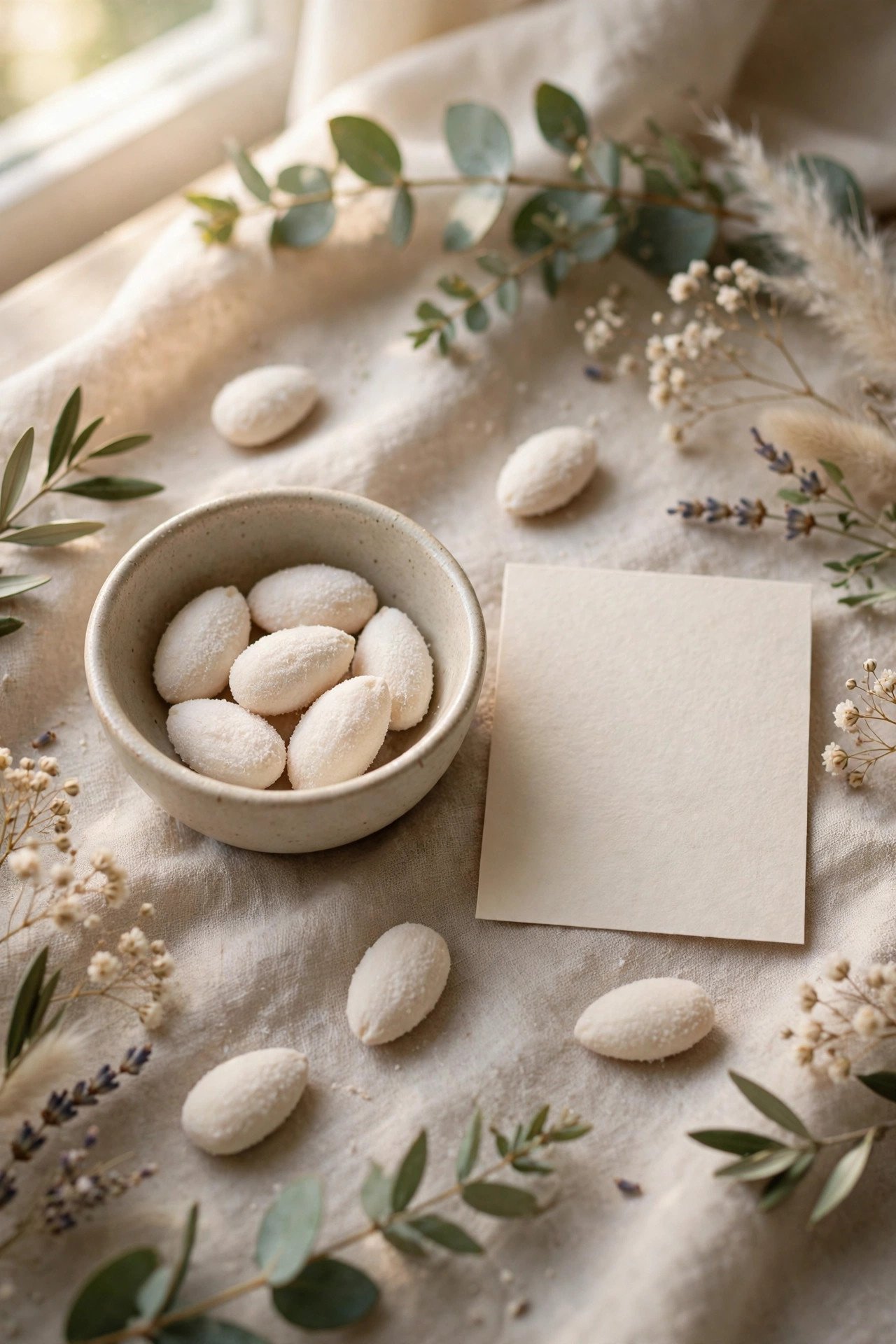
In Italian, confetti are not paper — they are sugar-coated almonds, classically from Sulmona in Abruzzo, and weddings give them in odd numbers, traditionally five, for health, wealth, happiness, fertility and long life. The bittersweet almond under sweet coating is itself a symbol: marriage holds both, sweetened by love. Confetti appear in favor bags, in decorative arrangements and in great bowls guests raid all evening.
Bomboniere: Favors with Something Sweet Inside
 📌 Save
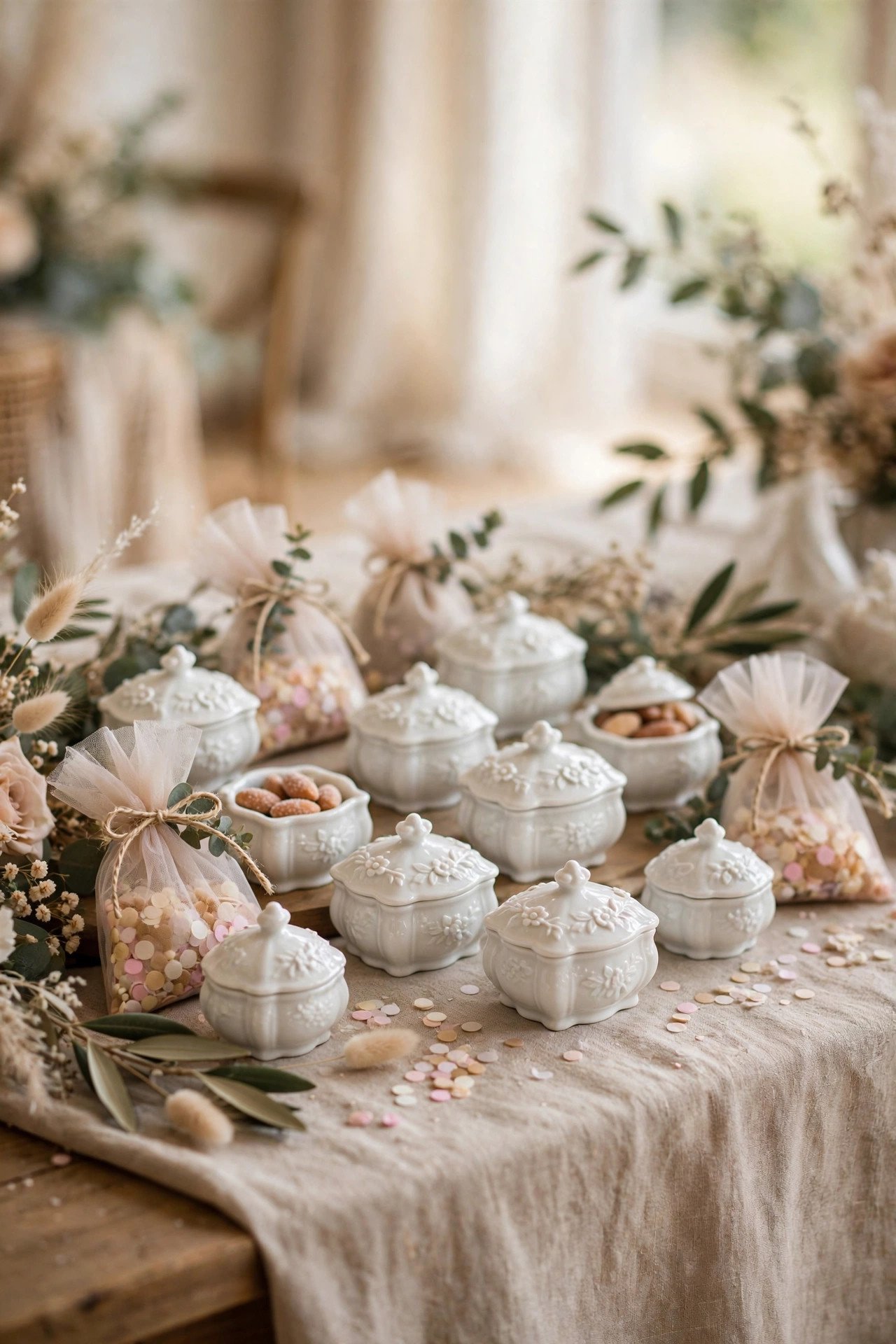
The bomboniera is the wedding favor: a small keepsake — silver, porcelain, glass or something handmade — presented with a tulle sachet of confetti and a card with the couple’s names and date. Couples choose favors meant to be kept or used, and in recent years many Italian couples donate to charity in guests’ names with a card explaining, keeping the confetti either way. Presentation is formal: favors are often displayed on a dedicated table in a beautiful arrangement.
The Tarantella: Dance Like Naples Is Watching
 📌 Save
The tarantella is the South’s whirlwind folk dance — couples and circles spinning in 6/8 time to tambourine and accordion, speeding up until everyone is laughing too hard to continue. Folklore links it to an old (and medically dubious) spider-bite cure; weddings keep it simply as pure kinetic joy, often led by the couple or by folk dancers in costume. Grandparents frequently turn out to be terrifyingly good at it.
Il Valzer: A Waltz That Gathers the Family
 📌 Save
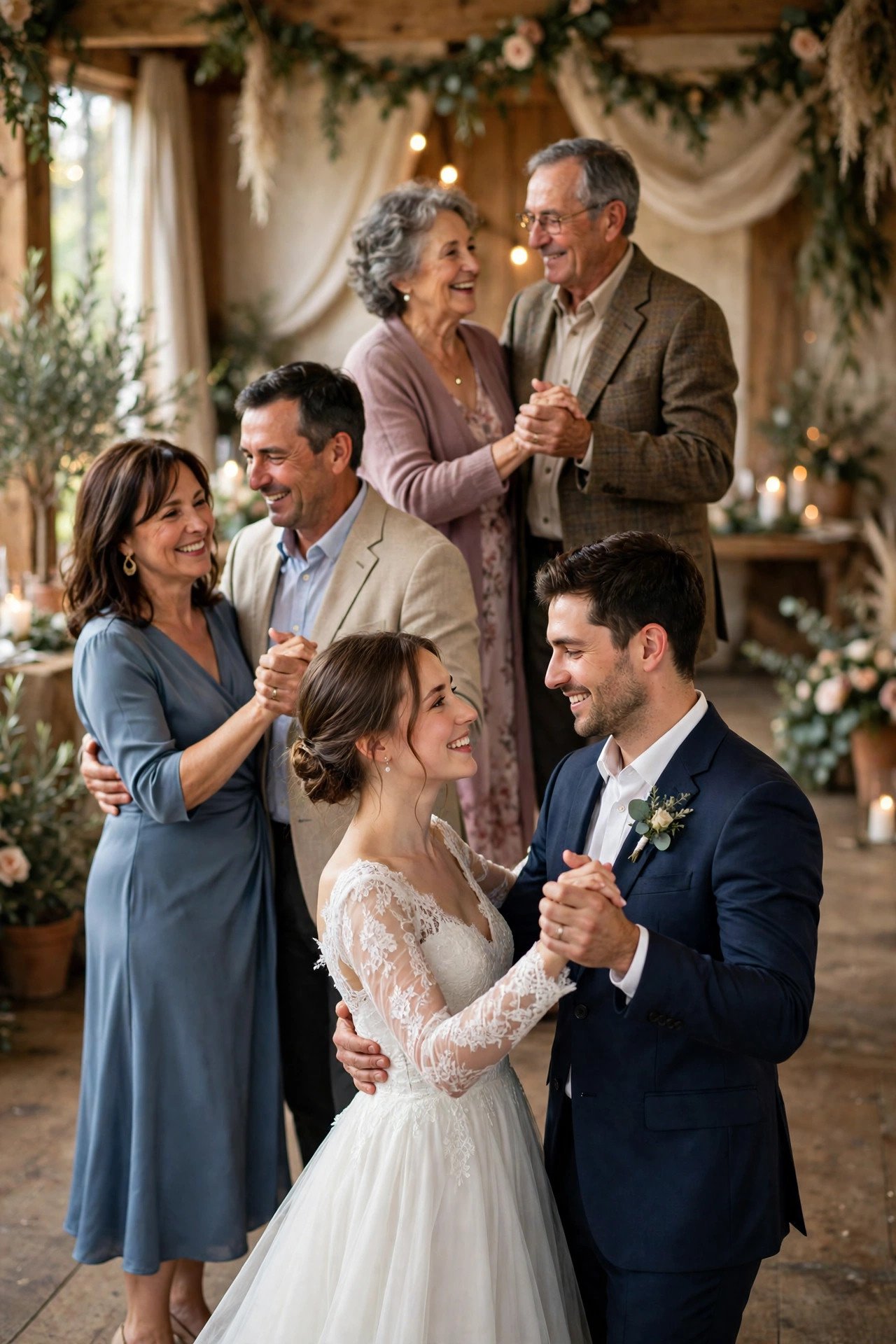
The Italian first dance is traditionally a waltz — il valzer — and in many families it opens outward: after the couple’s first turns, fathers, mothers and grandparents are invited onto the floor in sequence until the waltz becomes a family portrait in motion. The custom suits Italian receptions perfectly, where the dance floor belongs to every generation and a slow, graceful opener flatters dancers of all ages. Modern couples may follow it with the tarantella later, when the floor is warm and the shoes are off.
Breaking a Vase for Luck
 📌 Save
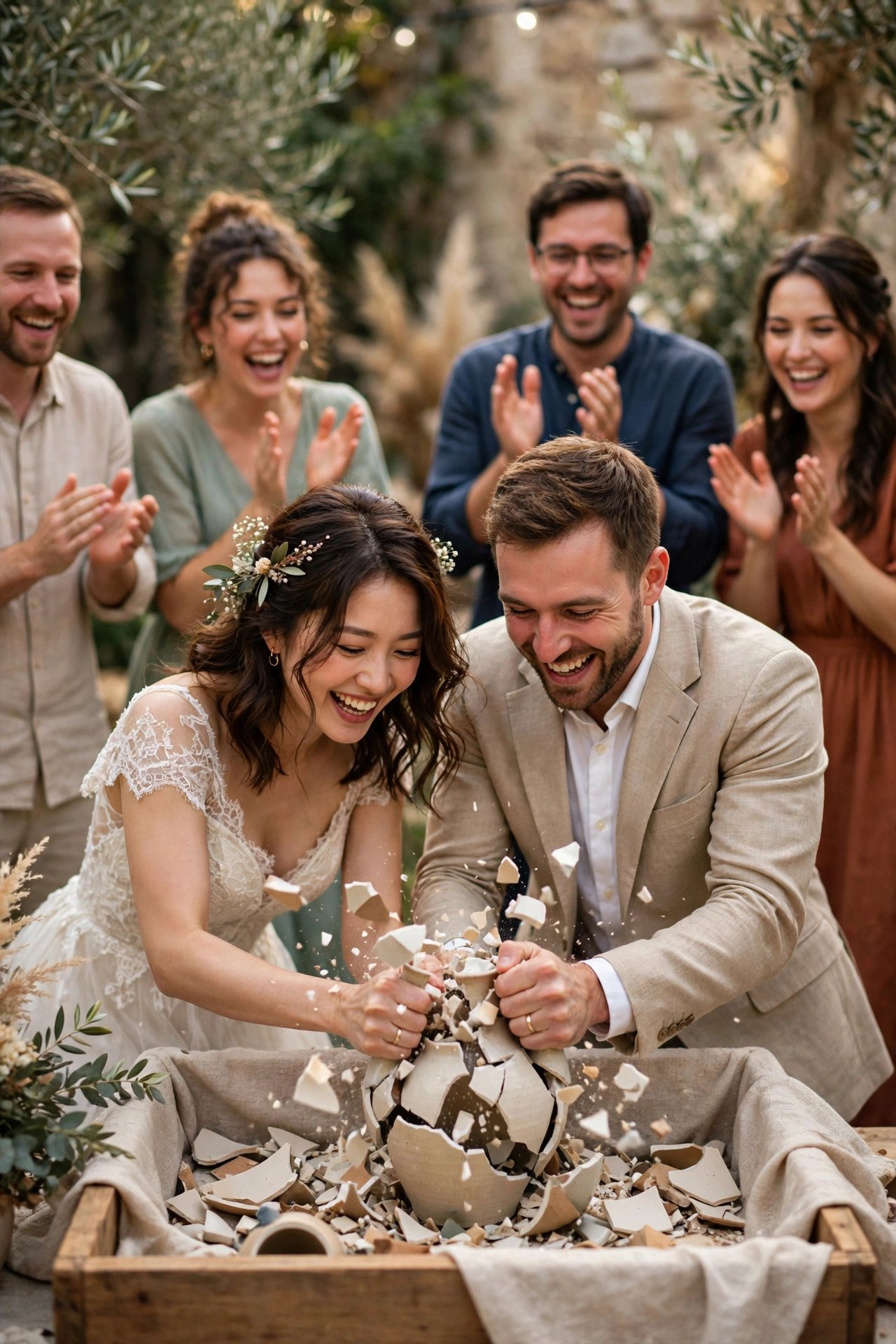
In a beloved piece of folklore practiced in various parts of Italy, the couple breaks a vase or glass together at the reception, and the number of pieces is said to predict the number of happy years ahead — the more pieces, the better. Modern couples use a designated safe spot, a cloth to contain shards and a venue-approved plan. It is theatre, symbolism and stress relief in a single smash.
The Serenata: Singing Under Her Window
 📌 Save
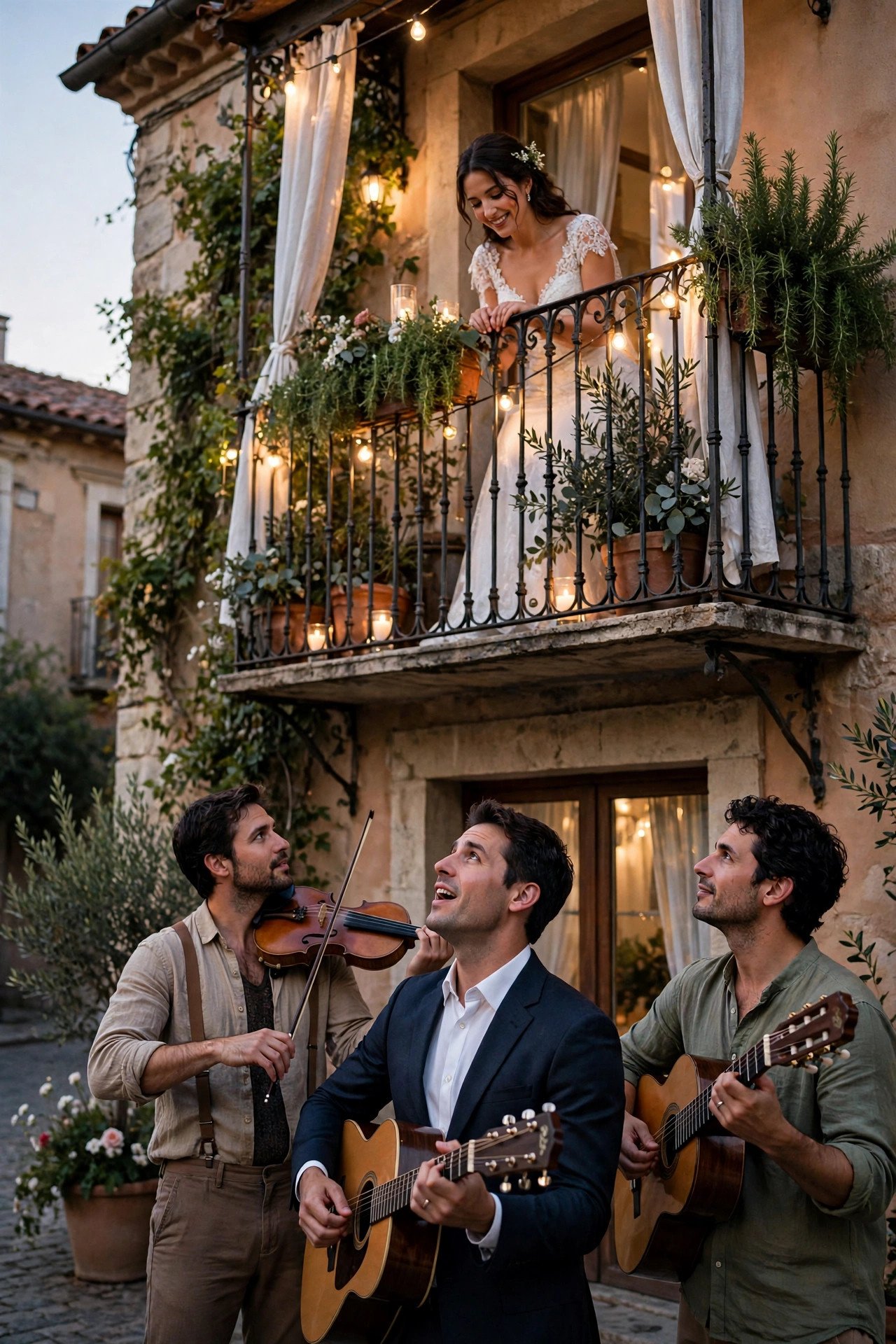
The night before the wedding, in a tradition kept alive especially in the South, the groom arrives beneath his bride’s window with musicians to sing love songs — the serenata — while family and neighbors gather, applaud and eventually the bride appears at the balcony. It is public, romantic and slightly theatrical, and brides’ families have been known to respond with refreshments for the whole street. Diaspora couples adapt it to gardens, rehearsal dinners and reception surprises.
The Tie Cutting: A Playful Auction
 📌 Save
In a playful custom seen at some Italian receptions, the groom’s tie is ceremonially cut into pieces by the best man, and the pieces are ‘auctioned’ or passed among guests in a hat to collect contributions for the couple. A parallel custom in some families involves the bride’s garter. It is handled with humor, kept entirely voluntary, and skipped by plenty of couples — one of those traditions a family either owns with pride or drops without a thought.
Civil and Church Ceremonies in Italy
 📌 Save
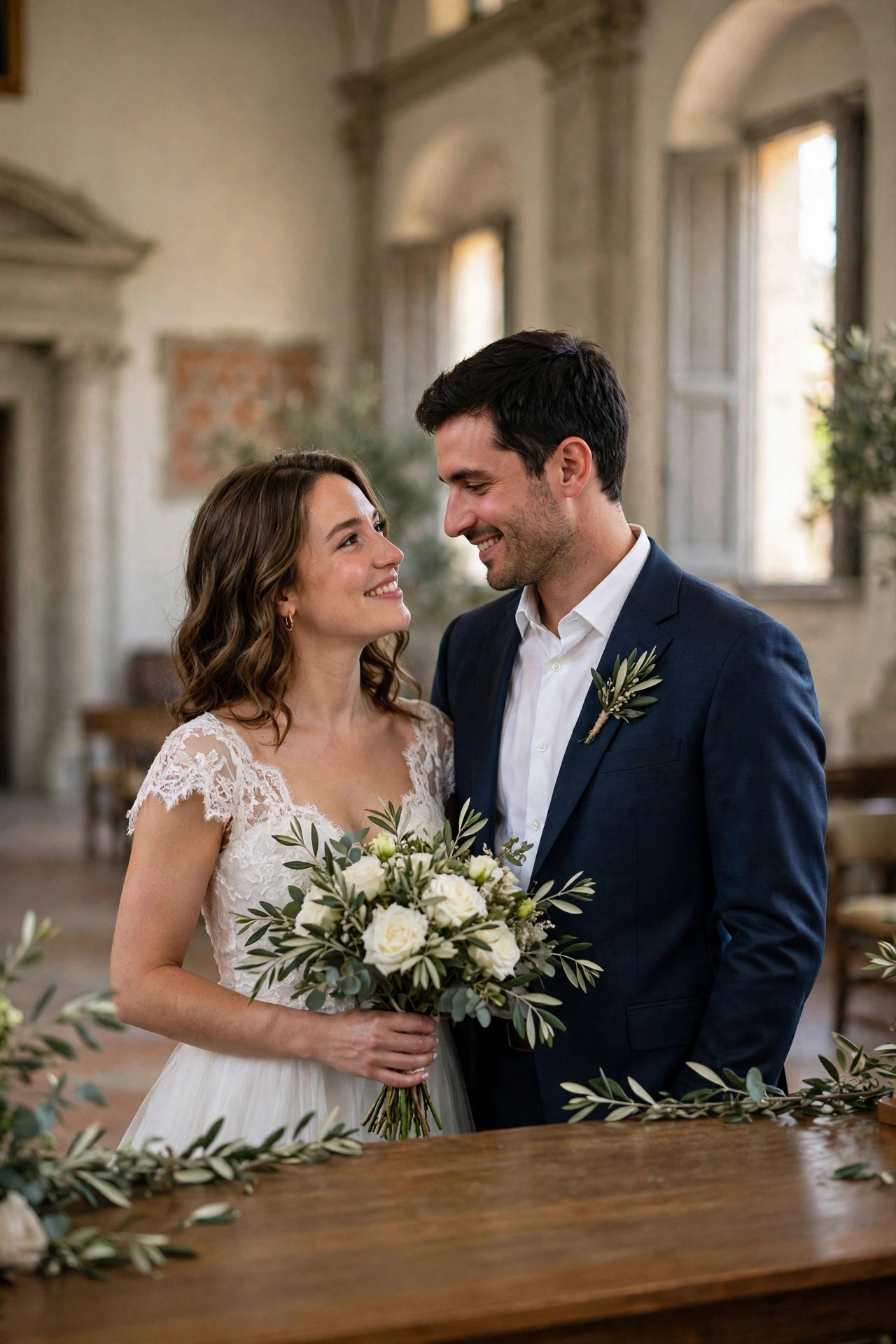
In Italy, a legally binding wedding is either a civil ceremony at the town hall (comune) or a religious ceremony — most often Catholic — that the state recognizes when properly registered; many couples who marry in church complete civil paperwork through the parish process. Foreign couples marrying in Italy face document requirements and lead times that vary by nationality, so destination planners and the local comune become essential guides. Diaspora couples in the US, UK and Canada simply follow their own local law and add the Italian customs they love.
La Promessa: The Formal Engagement Step
 📌 Save
Before an Italian wedding comes la promessa di matrimonio — the couple’s formal declaration of intent at the comune, which triggers the pubblicazioni, the public posting of the marriage banns so any legal impediment can be raised. Historically the promessa was also the family’s formal engagement moment, with its own dinner and the exchange of promises between households. Couples marrying abroad complete their own legal preliminaries, but many keep a promessa-style engagement dinner: the families, a table, and the marriage announced properly out loud.
Throwing the Rice: Riso for Prosperity
 📌 Save
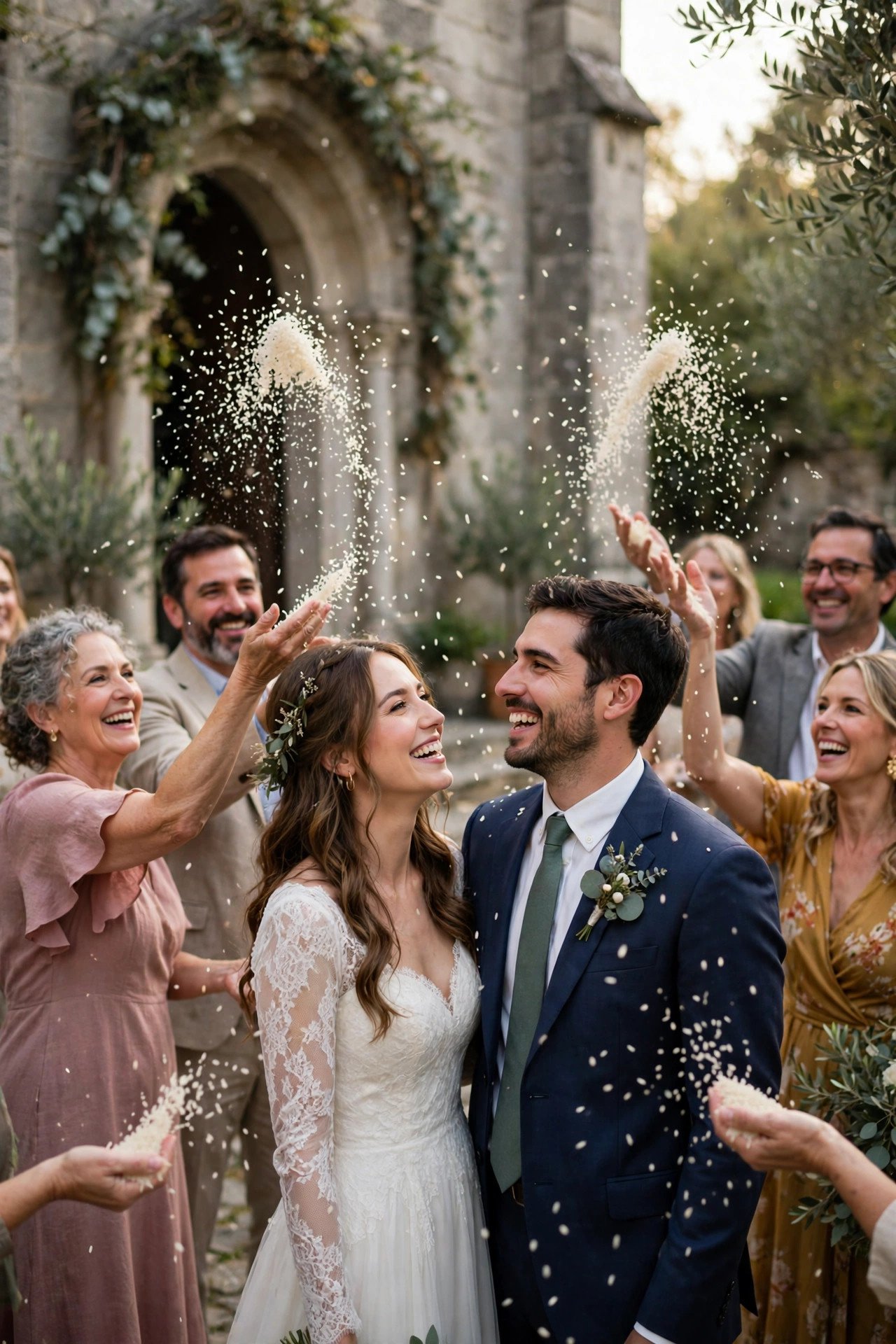
As the couple leaves the church, guests shower them with rice — riso — a wish for prosperity and abundance, thrown with enthusiasm and zero aim correction. The moment produces the day’s most joyful photographs and a bride picking grains from her hair for an hour. Some venues now suggest petals, bubbles or coriandoli (the paper kind) instead, for practical and wildlife reasons — the wish matters more than the projectile.
Lancio del Bouquet: Thrown Backwards, Caught Hopefully
 📌 Save
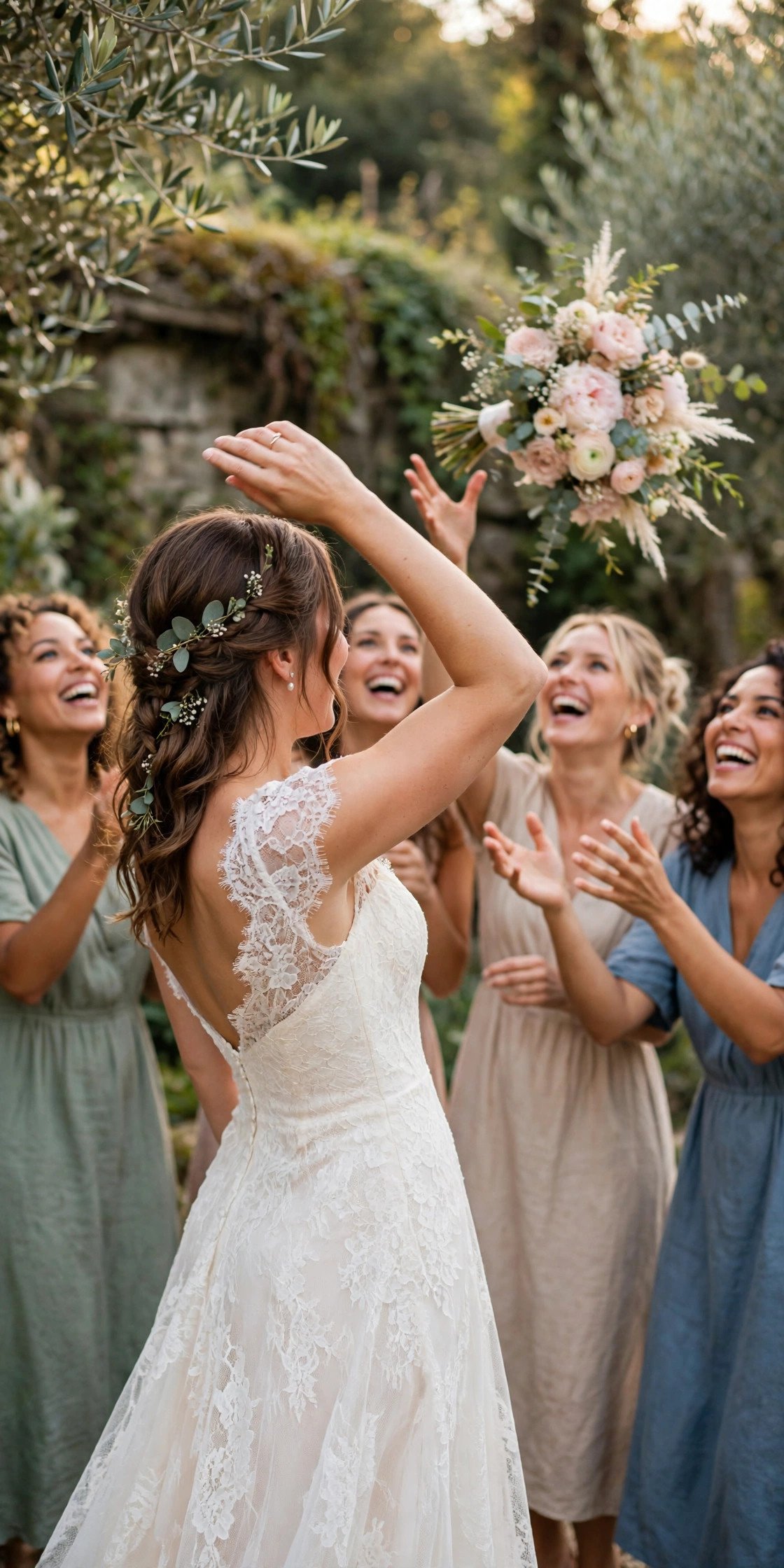
The Italian bouquet toss has its own technique: the bride turns her back to the gathered single friends and throws the bouquet backwards over her shoulder, so luck — not aim — chooses the catcher, who by folklore marries next. The moment is staged late in the reception when the floor is full and the competition is theatrical. Many brides use a smaller tossing bouquet and keep the real one, following the same practical wisdom as their Mexican and Filipino counterparts.
The Banquet: Many Courses, No Rush
 📌 Save
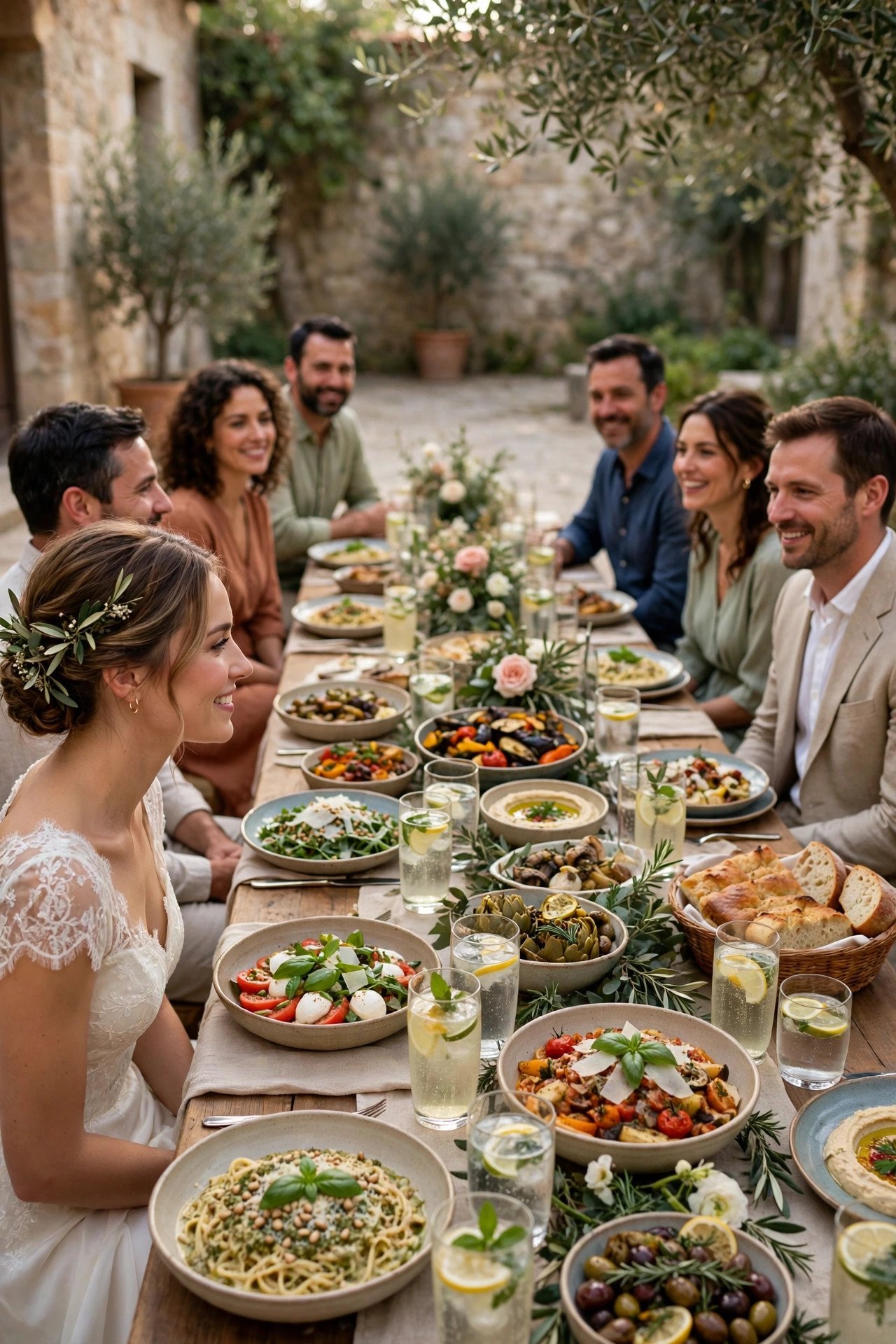
An Italian wedding banquet is a marathon of courses: antipasti, two first courses (a pasta and often a risotto), mains with sides, sorbet or salads between, cheese, fruit, and desserts — paced over hours with speeches and table visits between courses. Guests understand the assignment: eat, rest, dance a tarantella, eat again. Fusion menus abroad work best when they honor the pacing even with fewer courses — nobody’s nonna approves a rushed dinner.
Millefoglie: A Cake Assembled Before Your Eyes
 📌 Save
Italy’s favorite wedding cake is often millefoglie — layers of crisp puff pastry and chantilly cream with fresh berries — assembled by the pastry chef in front of the guests, dusted with sugar at the last second so the pastry stays crisp. The live construction turns dessert into theatre, and the first slice, cut by the couple, rarely survives photographs before being devoured. Tiered sponge cakes appear too, especially at diaspora weddings, sometimes beside the millefoglie rather than instead of it.
Green the Night Before, and Other Sweet Superstitions
 📌 Save
Italian wedding folklore is charming and should be labeled as such: in some families the bride wears something green the night before for luck; the groom may carry a small piece of iron in his pocket to ward off ill luck; the bride traditionally avoids looking at herself fully dressed in the mirror before the ceremony, or peeks with one shoe off. Families keep the ones they love as games and stories — folklore is seasoning, not law.
Wedding Days and Seasons: Folklore Meets Logistics
 📌 Save
Folklore has opinions about wedding days — some families avoid certain days of the week, and the old rhymes about months abound — while logistics have stronger ones: much of Italy slows or closes in mid-August (Ferragosto), and church weddings are not celebrated on certain feast days and during parts of Lent without permission. Practical couples check the parish calendar and the town’s holiday rhythm first, then let folklore decorate the choice rather than dictate it.
Compare d’Anello: The Ring Keeper
 📌 Save
The Italian best man — testimone, formally a witness, and in older custom the compare d’anello, ‘ring companion’ — safeguards the rings and signs the register alongside the maid of honor (damigella d’onore). Italian weddings typically have small wedding parties: one or two witnesses each, not a line of bridesmaids, which keeps the focus and the guest list for the ceremony satisfyingly simple. Children may serve as paggetti, scattering petals in miniature formalwear.
Church Music: The Ave Maria Moment
 📌 Save
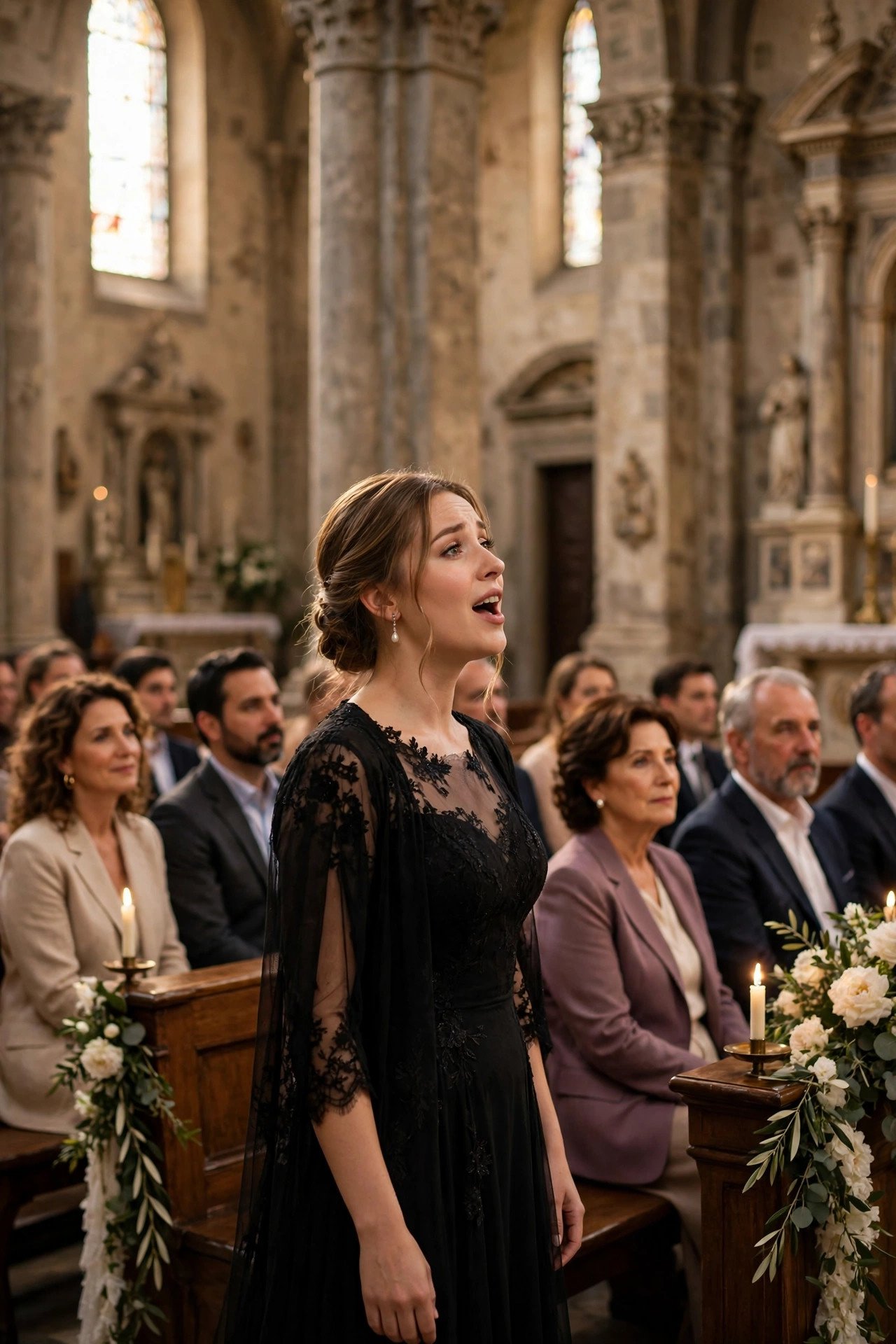
Italian church weddings are scored by tradition: organ, strings and very often a soprano whose Ave Maria stills the entire congregation at the signing or after Communion. Families choose the singer — a professional, or the cousin whose voice the parish has treasured since childhood — with the same seriousness as the flowers. Secular venues borrow the moment with string quartets at the ceremony’s emotional peak. It is the one part of the day nobody photographs noisily, by unspoken national agreement.
Regional Tables: Piedmont to Sicily
 📌 Save
Wedding menus map Italy: agnolotti and braised meats in Piedmont, tortellini in Emilia-Romagna, seafood feasts on the Amalfi Coast, arancini and granita in Sicily, porceddu in Sardinia. Couples marrying abroad often import one hometown dish at any cost — a specific pasta shape, a family sauce — and caterers have learned never to argue with a grandmother about it. Regional pride at the table is not snobbery; it is how Italian families say where love comes from.
Antipasti Hour: Graze, Greet and Wander
 📌 Save
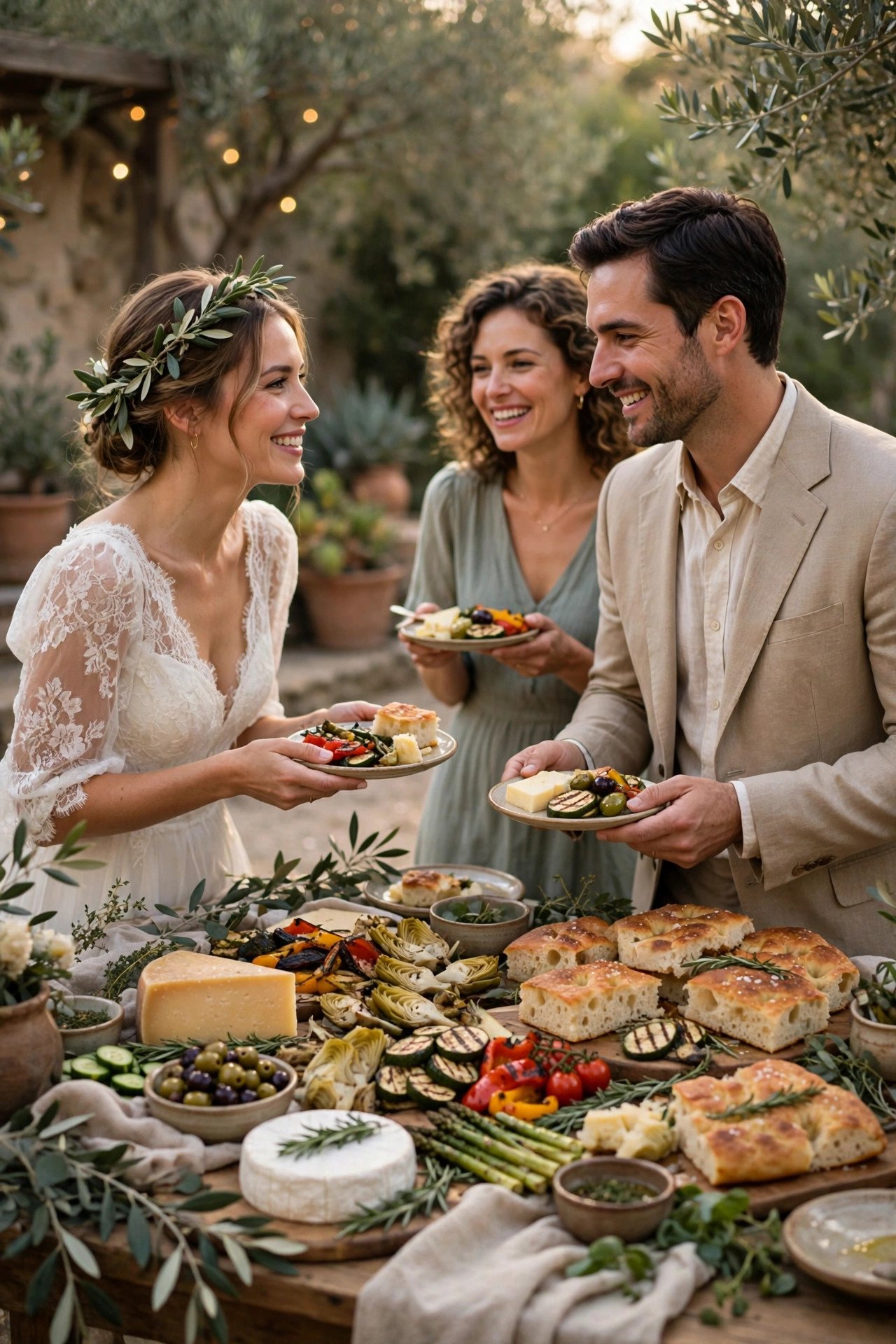
Before the seated courses, many Italian receptions open with abundant antipasti — cured meats, cheeses, grilled vegetables, focaccia and seafood salads — served at stations where guests mingle, greet the couple and graze. The format suits long guest lists and late ceremonies, and abroad it translates beautifully into a grazing hour with sparkling sodas, juices and sparkling water alongside coffee for the elders. Nobody has ever complained that an Italian wedding had too much antipasti.
La Busta: The Envelope Guests Prepare
 📌 Save
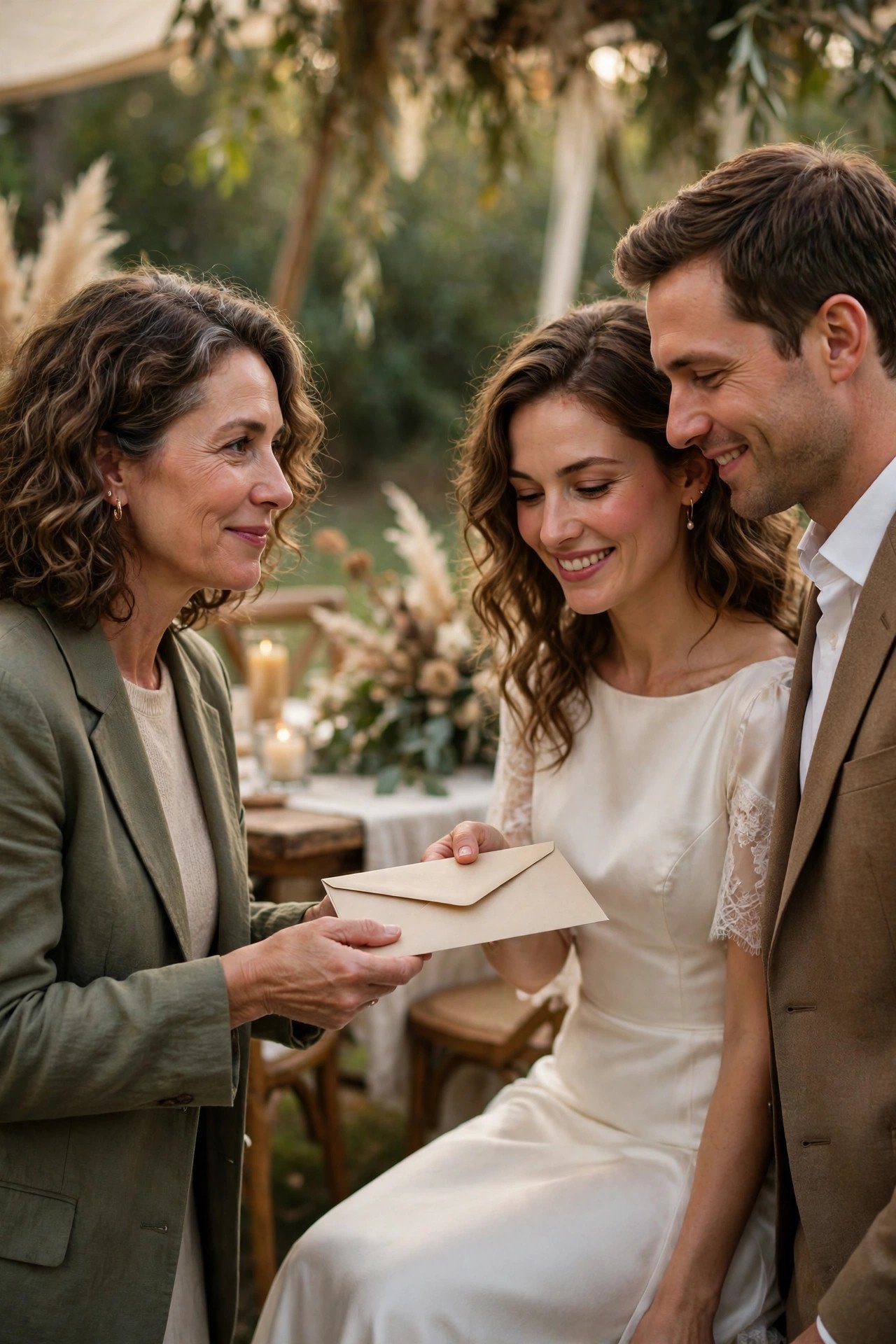
The standard wedding gift in Italy is la busta — ‘the envelope’ — containing money for the couple’s new life, given at the reception to the couple or their designated collector, with amounts scaled to closeness and means. Registries exist but remain secondary to the envelope in most families. Diaspora couples increasingly blend: a registry link for colleagues, la busta for family — and a sturdy, attended box or a trusted uncle guarding the gifts either way.
What Guests Wear in Italy
 📌 Save
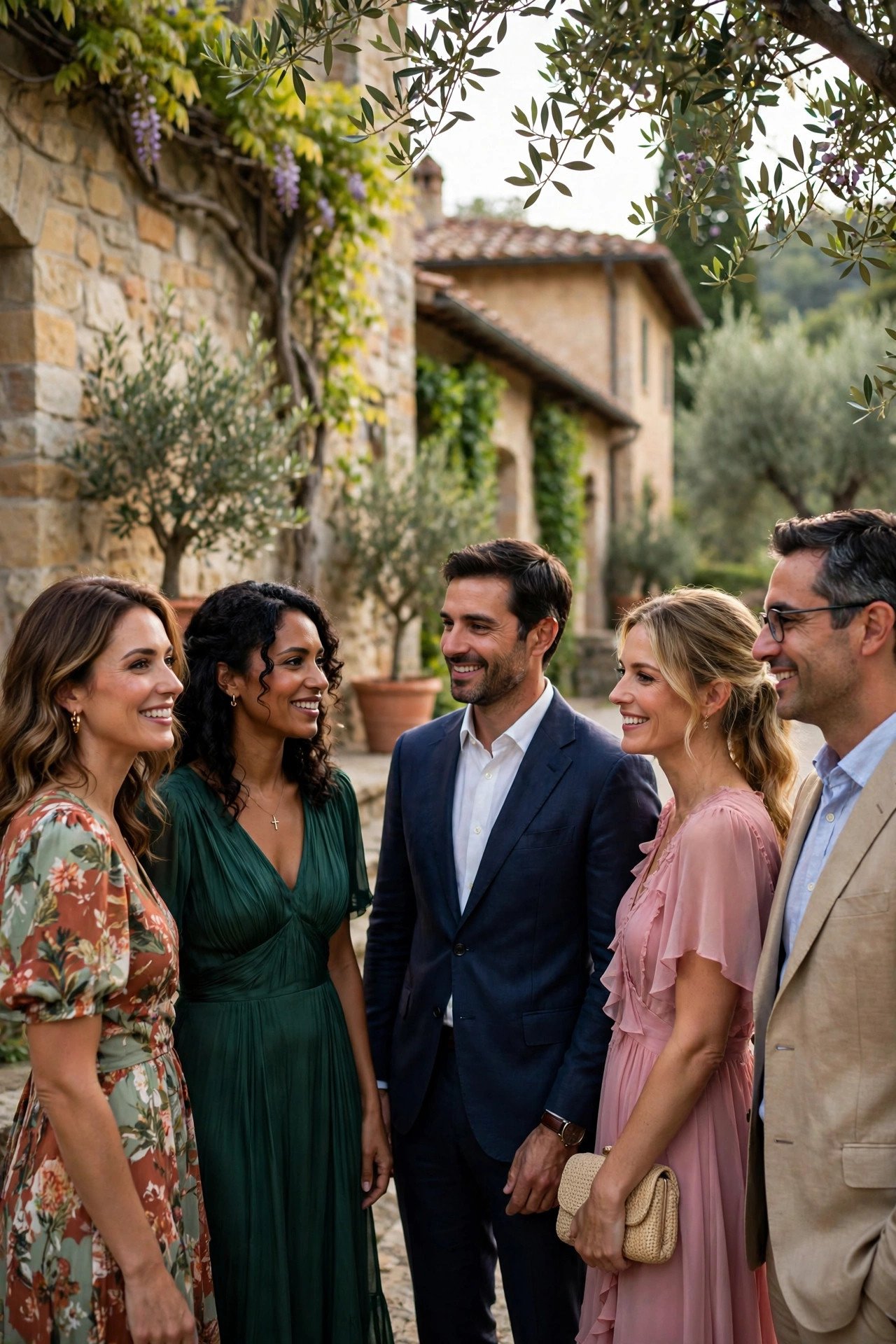
Italian wedding guests dress with polish: suits and ties for men even in summer (linen earns its keep), elegant dresses for women, and covered shoulders inside church out of respect. White is the bride’s; black, once avoided, is now widely worn and chic, though families differ — when in doubt, color is safer. Outdoor villa weddings call for shoes that survive lawns and gravel: block heels and flats are the experienced guests’ uniform.
Destination Weddings in Italy: Plan Like a Local
 📌 Save
Marrying in Italy as foreigners means bureaucracy with a view: documents, translations, validity windows and appointments at the comune, plus parish requirements for church weddings — rules genuinely differ by nationality and town, so a local wedding planner or the consulate’s current guidance is essential rather than optional. Build the trip around Ferragosto, book key vendors early for June and September, and remember that your legal ceremony and your big celebration can be separated if paperwork timelines demand it.
Blending Italian Traditions Abroad
 📌 Save
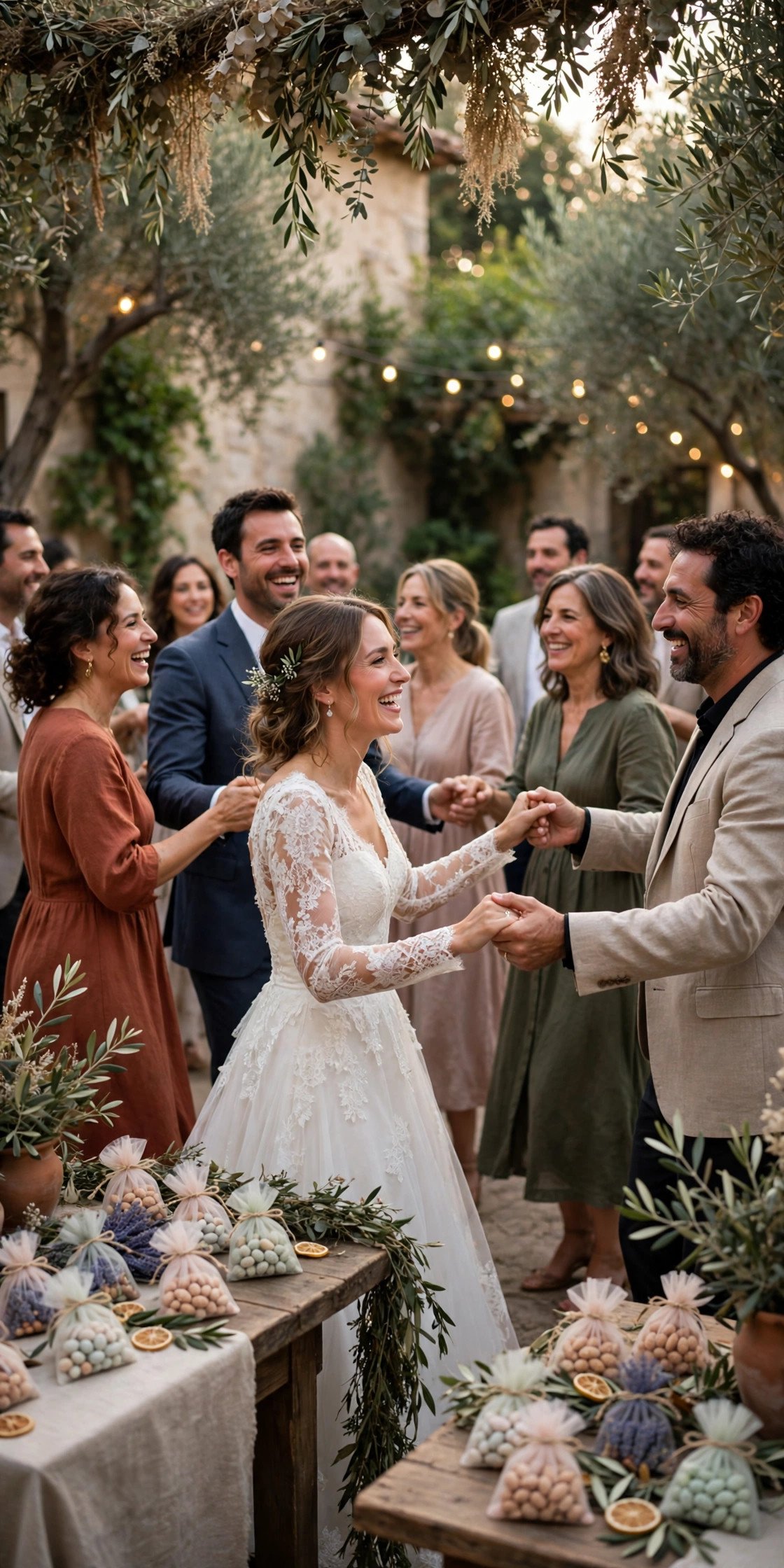
In New York, Toronto, London and Sydney, Italian diaspora weddings blend seamlessly: church or garden ceremony, confetti favors in tulle, a millefoglie assembled live, la busta beside the registry, and a tarantella set that pulls three generations onto the floor. The elements that travel best are the meaningful, edible and danceable ones — and the nonna inspection of the pasta course, which is conducted at every Italian wedding on Earth without exception.
La Luna di Miele: The Sweet Start
 📌 Save
Italians call the honeymoon la luna di miele — the ‘honey moon’ — a name shared with English and wrapped in the same fond folklore about sweetness sustaining the first month of marriage. The historical record is murkier than the story, as families cheerfully admit, but the practice is real: Italian couples traditionally leave for their trip soon after the wedding, sometimes waved off from the reception itself in a going-away outfit. The sweetness, at least, is documentary fact.
Sweet Endings: Gelato Carts and Dessert Tables
 📌 Save
Italian receptions rarely end at the cake: dessert tables layer tiramisu cups, cannoli, panna cotta, fruit and regional sweets, and a gelato cart working the late crowd has become a modern classic from Milan to Melbourne. Sweet endings stretch the party kindly — guests drift between gelato, coffee and the dance floor as the night cools. Send guests home with confetti in hand and a scoop behind them, and you have done an Italian wedding exactly right.
Italian Wedding Traditions FAQs
What are confetti at an Italian wedding?+
Confetti are sugar-coated almonds — the Italian word for the paper kind is coriandoli. Weddings traditionally give five almonds per guest, symbolizing health, wealth, happiness, fertility and long life, tucked into bomboniere favors. The almond’s slight bitterness under sweet coating symbolizes married life sweetened by love.
What gift do guests give at an Italian wedding?+
Traditionally la busta — an envelope of money given at the reception, scaled to your closeness to the couple. Registries exist but are secondary in most Italian families. Diaspora couples often offer both; check the wedding website and label your envelope with your name.
What is the tarantella?+
The tarantella is a fast Southern Italian folk dance in a spinning circle, played on tambourine and accordion and speeding up as it goes. At weddings it is pure participatory joy — musicians lead it, grandparents excel at it, and no guest needs experience to join the circle.
Can foreigners legally marry in Italy?+
Yes, but requirements — documents, translations, validity periods and appointments — vary by nationality and by town, and church weddings carry parish requirements too. Start many months ahead, verify current rules with the comune, consulate or a local planner, and consider separating the legal paperwork from the celebration if timelines are tight.
What is a bomboniera?+
A bomboniera is the wedding favor: a small keepsake — porcelain, silver, glass or handmade — presented with a sachet of confetti almonds and a card with the couple’s names and date. Favors are displayed on a dedicated table and collected by guests as they leave.
Key Takeaways
- Confetti means sugared almonds in Italian — five of them carry five wishes; paper is coriandoli.
- Bomboniere favors, la busta envelopes and rice showers are the guest-facing classics.
- The tarantella, serenata and vase-breaking bring the folklore — joyful, participatory and optional.
- Food is the ceremony’s second venue: many courses, regional dishes and a millefoglie built live.
- Regional and family variation is real — let the family’s region lead, and verify destination paperwork officially.
Final Thoughts
An Italian wedding feeds you five wishes in almond form, spins you in a tarantella, seats you for a dinner that treats time as an ingredient, and sends you home with a keepsake and a scoop of gelato. Keep the confetti real, the courses unhurried and the family’s region on the menu, and your celebration — in Puglia or Pittsburgh — will taste unmistakably like love, Italian style.