Wedding Oyster Bars (2027)
By zainzari • Published October 23, 2026 • Updated October 23, 2026
 📌 Save
A wedding oyster bar serves freshly shucked oysters on deep beds of crushed ice, opened to order by a professional shucker, with lemon, mignonette, and cocktail sauce alongside. Food safety is the foundation: buy from a reputable, licensed supplier, keep oysters at or below refrigerator temperature on ice until the moment they are shucked, and plan roughly two to three oysters per guest for the first hour of a raw bar.
Few stations make a wedding feel instantly coastal, luxurious, and alive like an oyster bar: the ice, the lemons, the shucker’s rhythm, guests gathering with small plates and big opinions about East versus West Coast. It is theater and appetizer in one chilled display.
It is also the one station where safety discipline matters as much as styling. Raw oysters demand a cold chain, reputable sourcing, and clean shucking practice from dock to display. This guide covers the delicious parts — varieties, toppings, styling, quantities — built on the non-negotiable food-safety essentials that make the whole thing trustworthy.
At a Glance: Oyster Bar Planning at a Glance
| Element | Guideline | Why It Matters |
|---|---|---|
| Sourcing | Licensed, reputable supplier with harvest tags | Traceability and freshness |
| Temperature | Iced at all times; cold chain unbroken | Raw seafood safety |
| Quantity | 2–3 per guest in hour one | Most eating happens early |
| Shucking | Professional shucker, to order | Clean shells, no grit, safe technique |
| Service window | 1.5–2 hours maximum on display | Quality and safety |
| Accompaniments | Lemon, mignonette, cocktail sauce, crackers | Classic raw bar finish |
General guidance only — your caterer and local health rules govern the final plan. When in doubt, choose a licensed raw-bar caterer who carries the permits, insurance, and experience.
Why an Oyster Bar Steals Cocktail Hour
 📌 Save
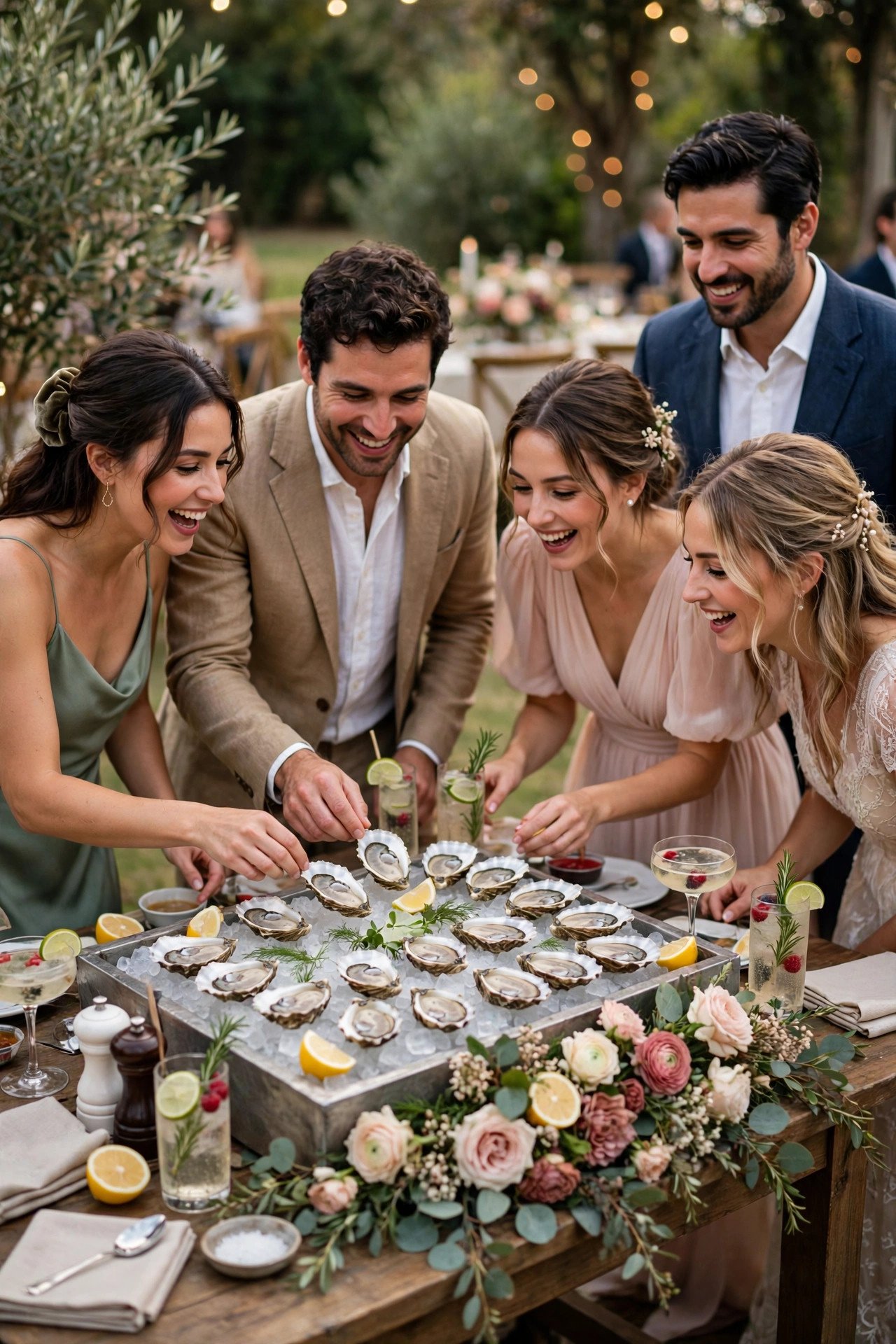
An oyster bar works because it is alive: guests watch their food opened seconds before eating it, compare varieties, and linger in conversation around the ice. It signals abundance and confidence, anchors a coastal or elegant theme, and photographs like a magazine spread — all while functioning as a genuinely substantial appetizer.
Food Safety First: The Non-Negotiables
 📌 Save
Everything in this guide sits on four rules: buy from a licensed, reputable supplier; keep oysters cold and iced without interruption; have them shucked by a professional with clean tools and gloved hands; and serve within a short, defined window. Raw seafood rewards discipline and punishes improvisation, so this station is never a DIY project.
Source From Reputable, Licensed Suppliers
 📌 Save
Reputable suppliers ship oysters with harvest tags recording where and when they were gathered — documentation your caterer should keep as local rules require. Order from established seafood wholesalers or a raw-bar caterer with their own supply relationships, and be suspicious of prices that seem too good for a perishable, regulated product.
Keep the Cold Chain Unbroken
 📌 Save
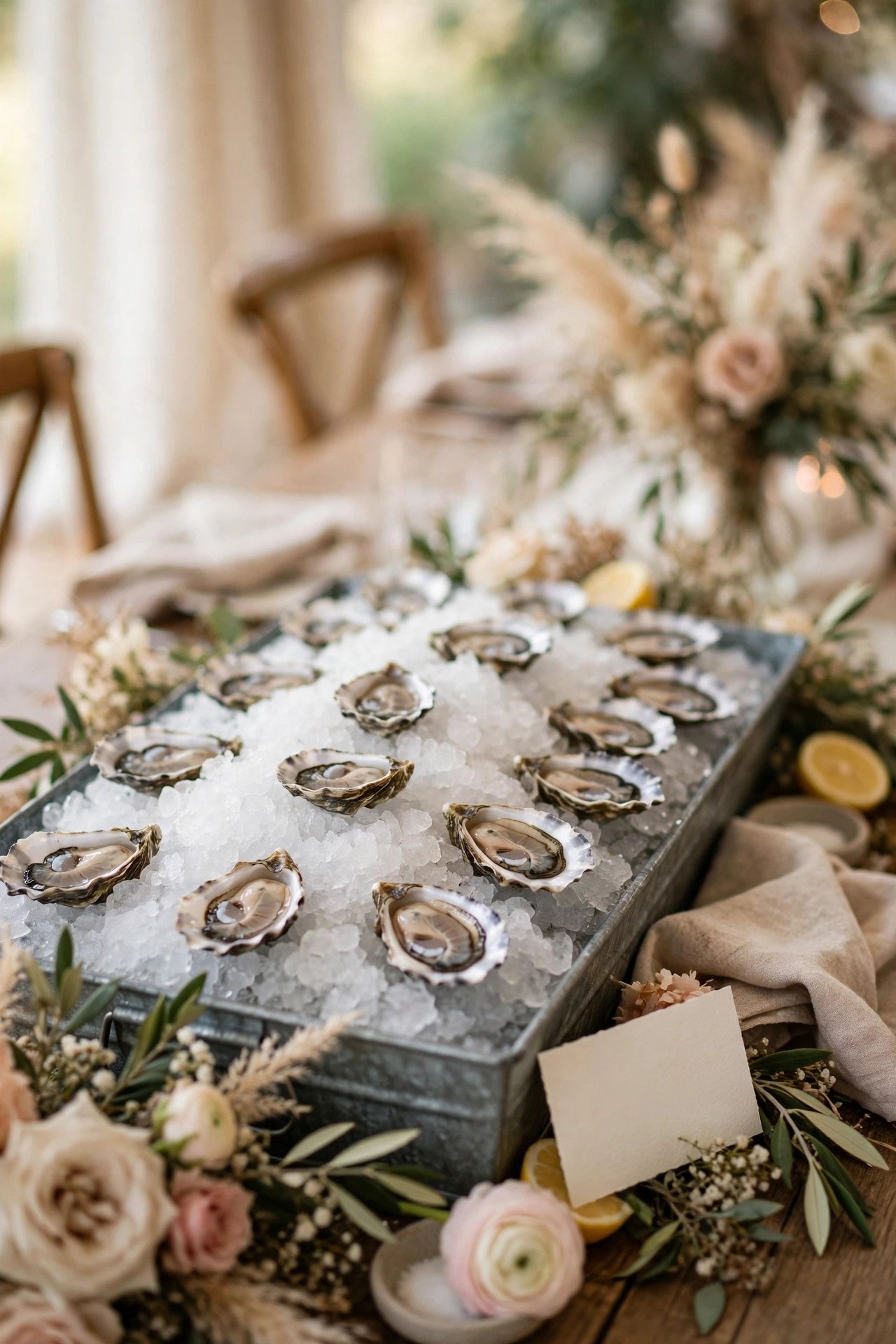
From the supplier’s truck to your display, oysters should never warm up: refrigerated transport, immediate transfer to ice, and a display bed deep enough to bury shells halfway. The shucker works from a chilled backup supply, not a room-temperature pile. On a hot day, shade the station and add ice on a schedule, not when it looks low.
Hire a Professional Shucker
 📌 Save
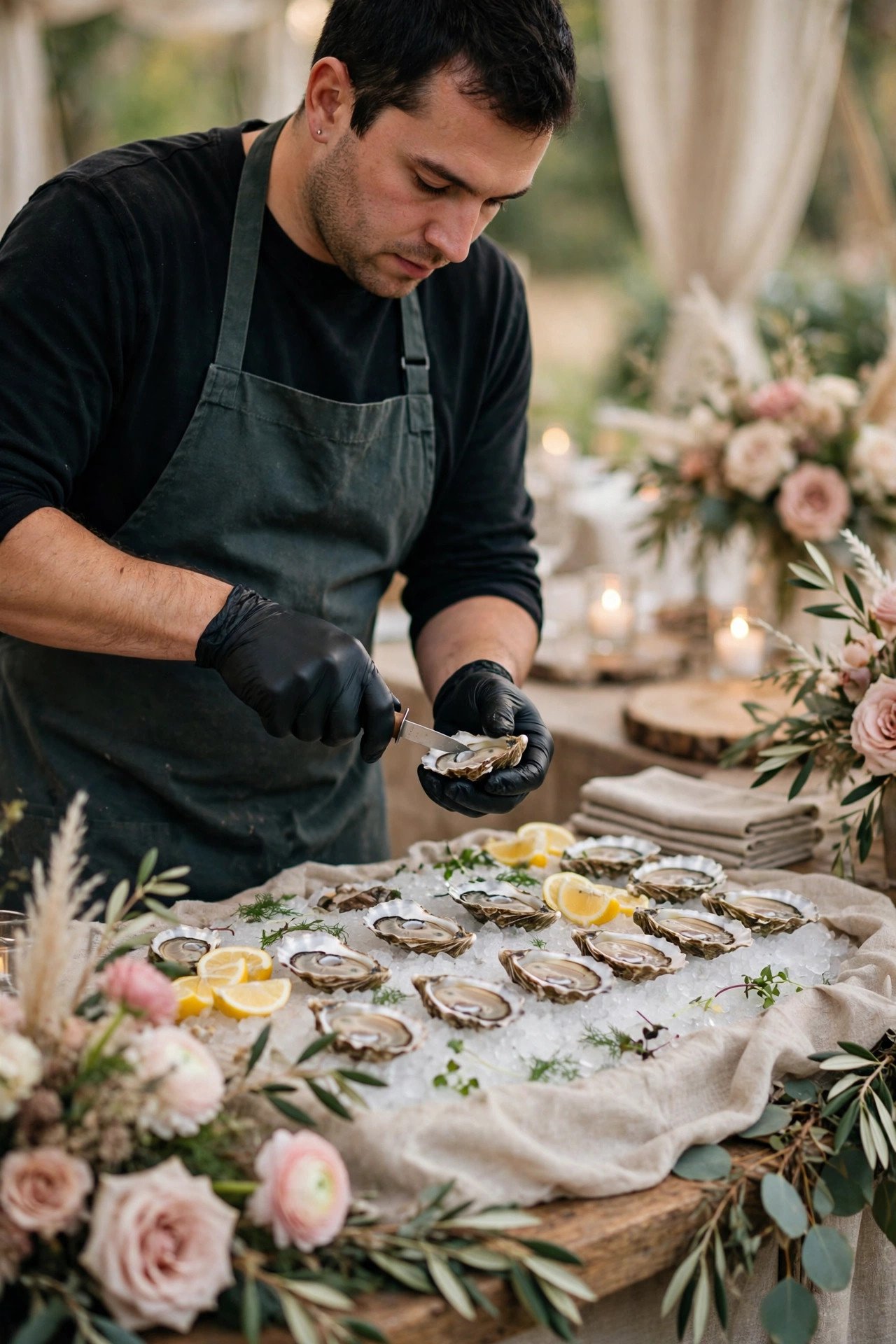
A professional shucker opens hundreds of oysters an hour with clean shells, no grit, the liquor preserved, and zero drama — while wearing the right glove and using the right knife. Shucking is a genuine skill with a genuine injury rate for amateurs; outsourcing it buys speed, presentation, and safety in a single hire.
Shucking Hygiene and Clean Technique
 📌 Save
Proper technique includes rinsing oysters before opening, wiping the knife between shells, discarding any oyster that is open, cracked, or smells wrong, and presenting each oyster liquor-intact on a clean bed of ice. Watch your shucker’s station in the first ten minutes; a tidy, methodical setup is the visible signature of a safe operation.
Choose Your Varieties: East vs. West Coast
 📌 Save
East Coast oysters tend briny, firm, and mineral; West Coast varieties run smaller, sweeter, and more cucumber-melon in character. Offering one of each — clearly labeled — turns the bar into a tasting and gives first-timers a gentle entry point. Your caterer can suggest the best in-season regional picks for your wedding’s coast and date.
How Many Oysters Per Guest
 📌 Save
For a cocktail-hour raw bar alongside other appetizers, plan roughly two to three oysters per guest, weighted to the first hour when appetites and curiosity peak. A 150-guest wedding therefore lands near 300–450 oysters. If oysters are the headline appetizer or your crowd is devoted, raise the estimate and stage the excess iced, off-display.
The Classic Mignonette
 📌 Save
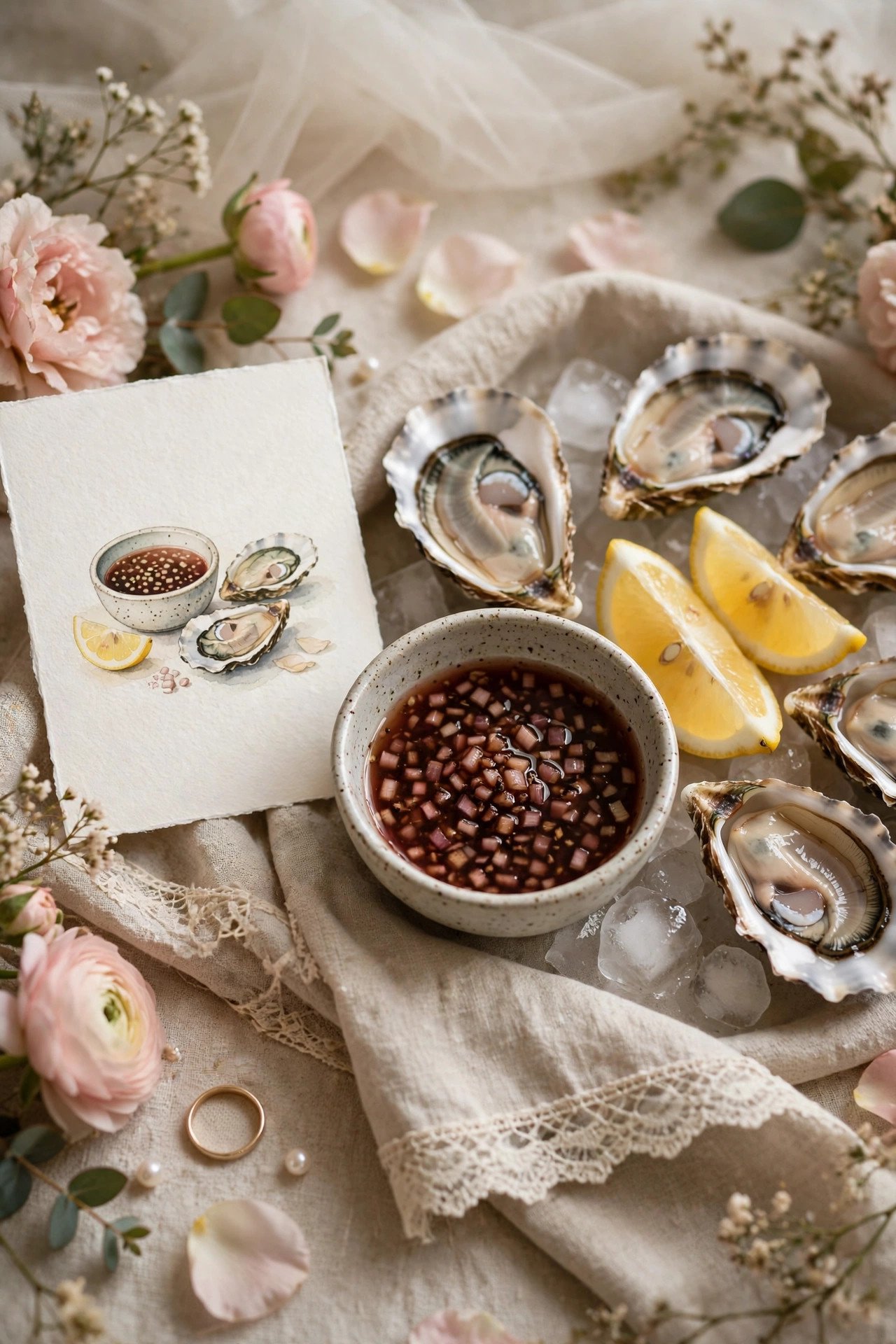
A mignonette — finely minced shallot in seasoned vinegar with cracked pepper — is the oyster’s oldest friend: acid and bite that lift the brine without burying it. Serve it in a small chilled bowl with a tiny spoon, and consider a second, milder cucumber-herb version for guests who find raw shallot assertive.
Lemon, Cocktail Sauce, and Hot Sauce
 📌 Save
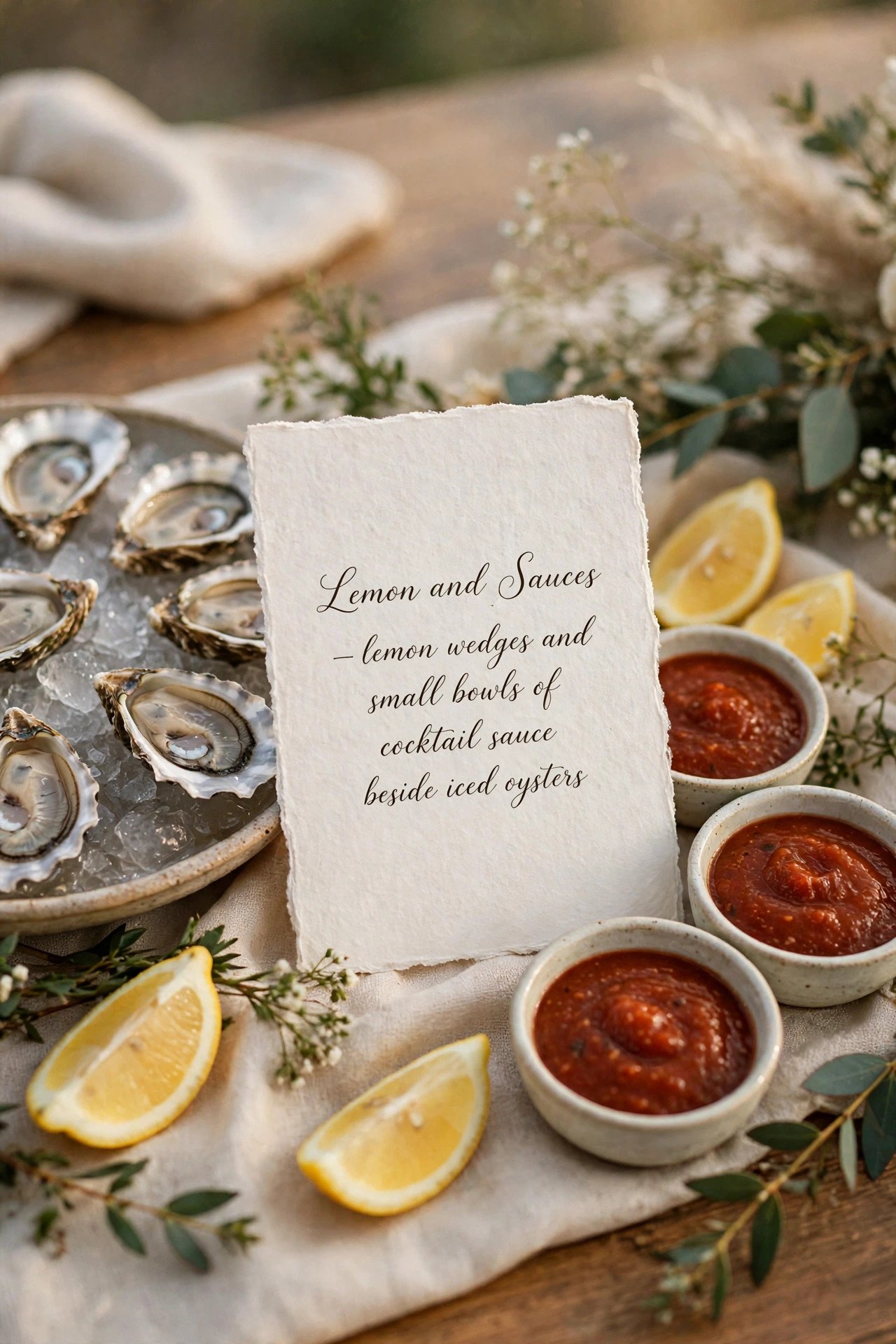
Beyond mignonette, the station needs lemon wedges cut fresh, a horseradish-bright cocktail sauce, and one or two hot sauces for the devoted. Present them in small vessels at the pickup end of the bar so guests season and move. Keep flavors classic — this station’s luxury is purity, not novelty sauces competing with the sea.
Creative Toppings That Still Respect the Oyster
 📌 Save
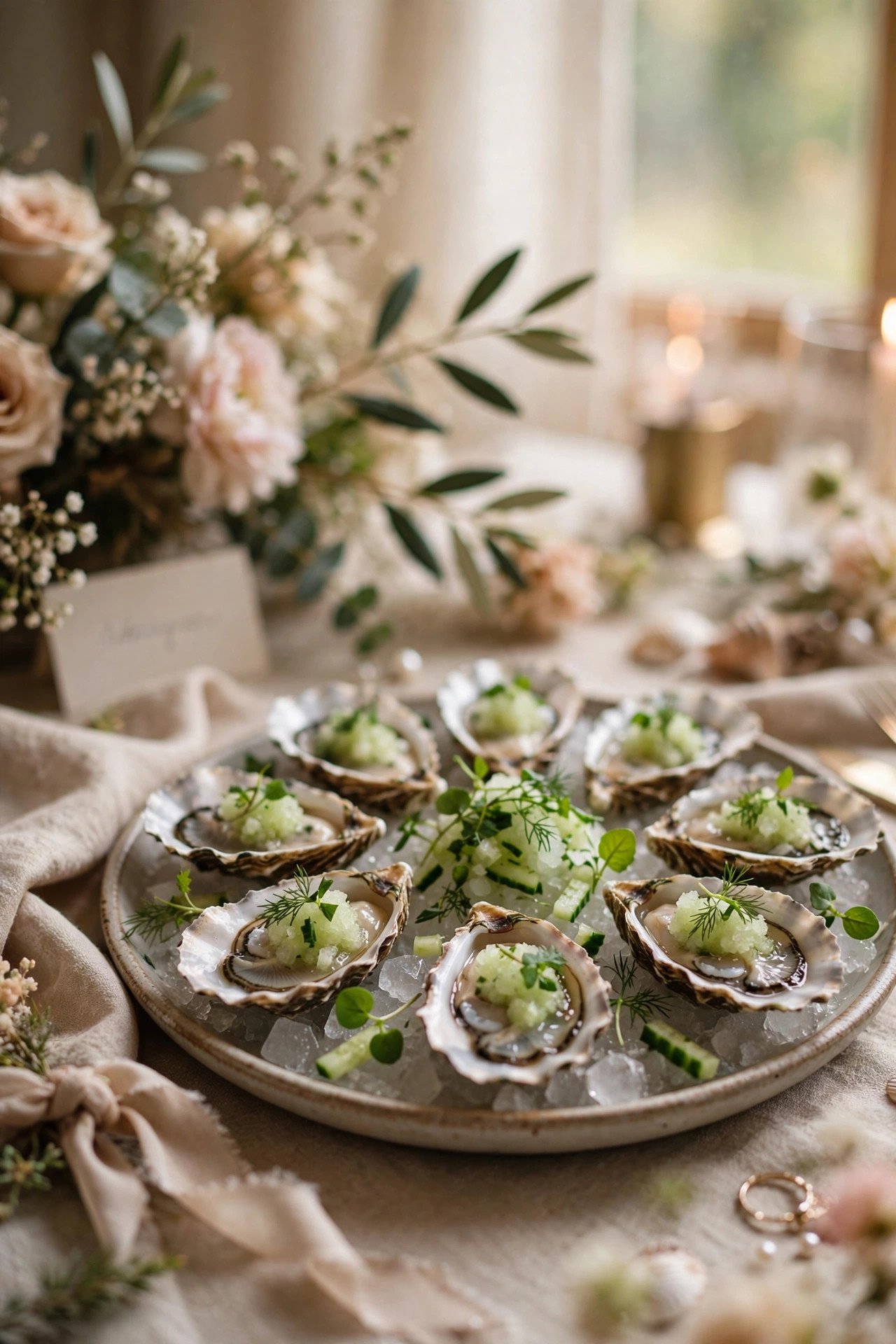
A few modern finishes earn their place: cucumber granita, green apple mignonette, a finger-lime burst, or a drop of herb oil. The rule is temperature and restraint — toppings should be cold, acidic, and few. One signature twist beside the classics gives the bar a point of view without turning it into a condiment fair.
Cooked Options: Grilled and Baked Oysters
 📌 Save
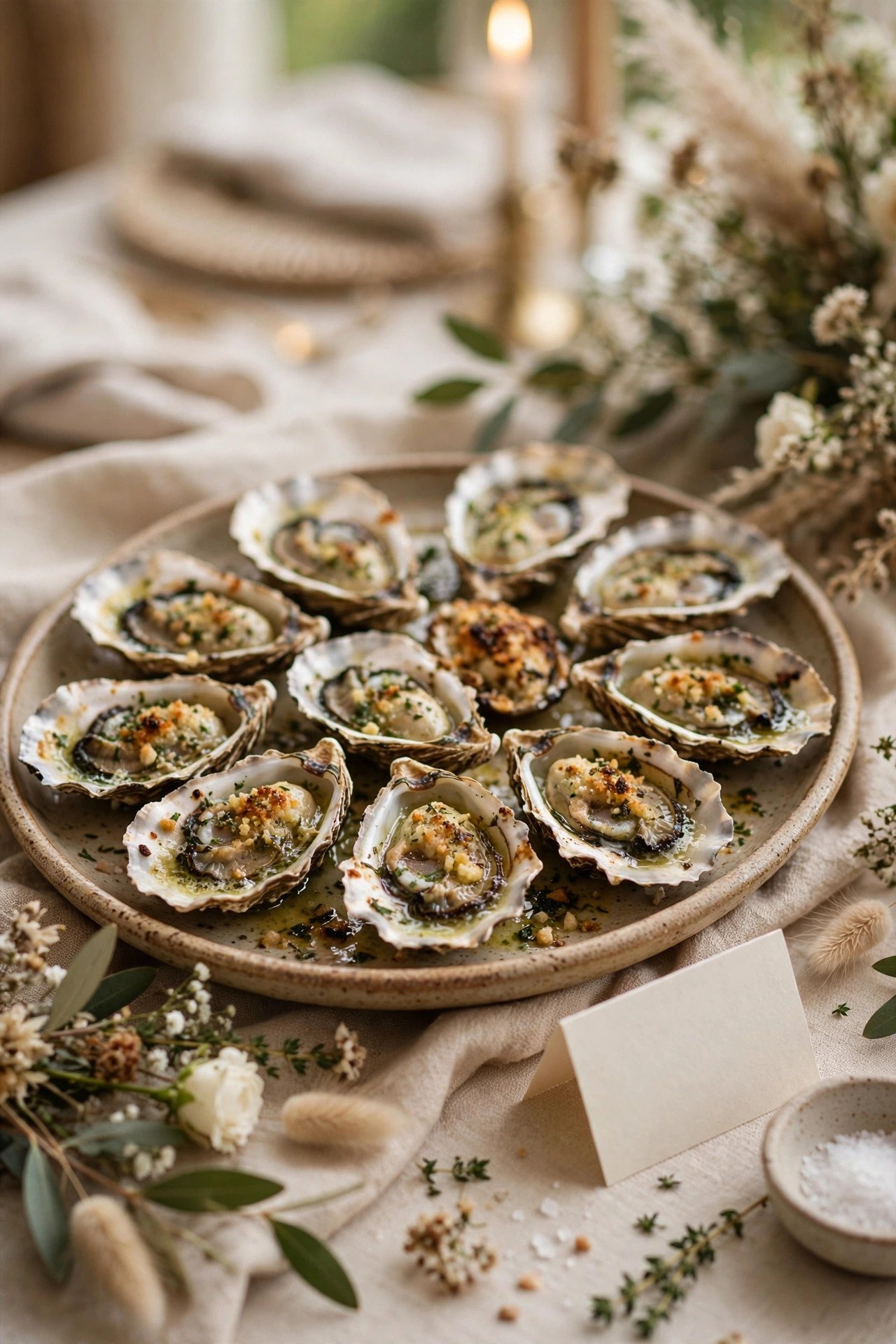
A small cooked line — grilled oysters with garlic-herb butter or a baked Rockefeller-style preparation — welcomes guests who love the station but not raw seafood, and it stretches the bar’s appeal across cautious eaters. Cooked oysters should be prepared to order in small batches and served promptly, on their own tray, clearly signed.
The Ice Display: Crushed, Deep, and Drained
 📌 Save
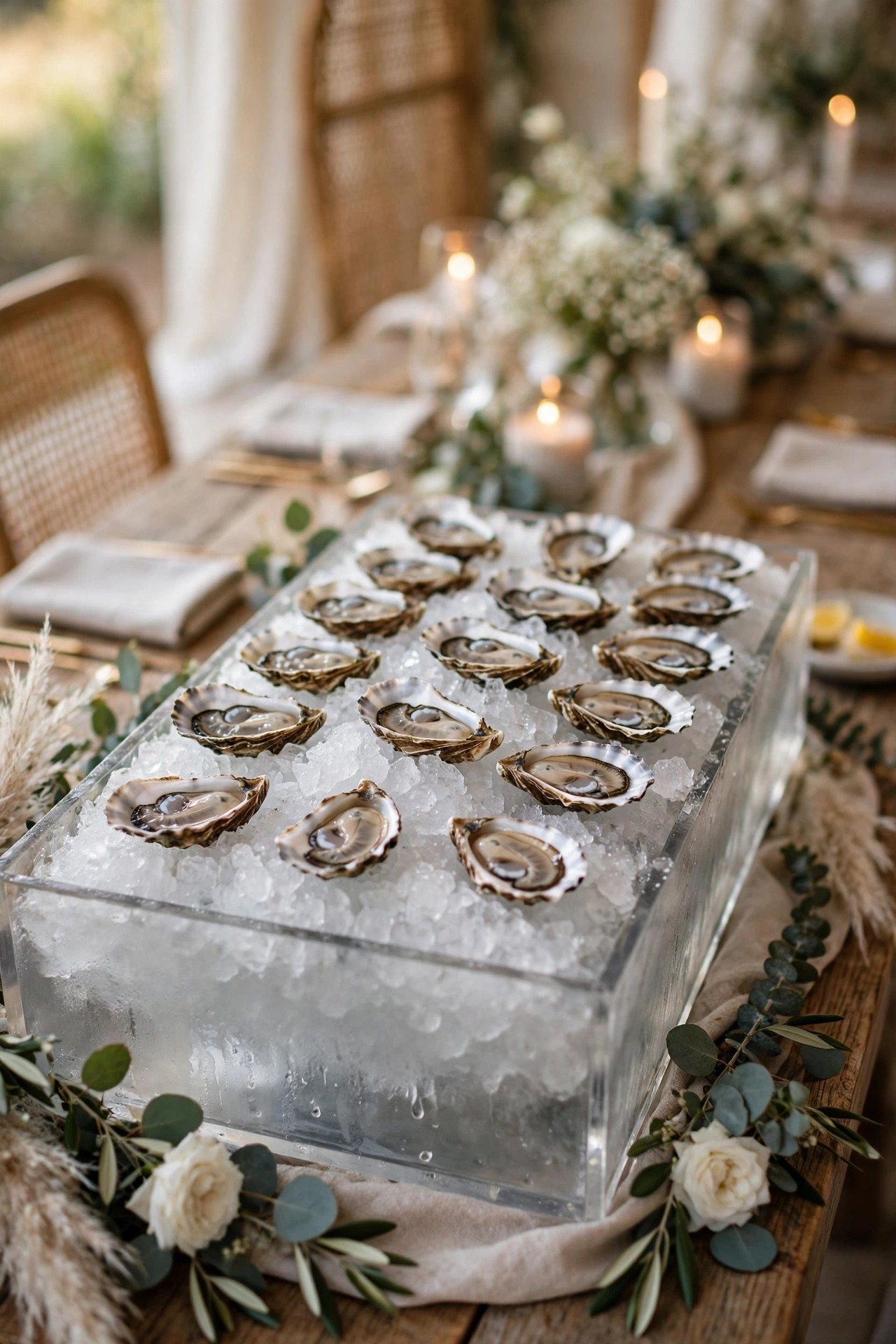
Presentation ice is crushed or pebble ice, mounded deep enough to cradle shells upright so the liquor stays in. A proper display drains meltwater away — oysters sitting in a puddle lose temperature control and dignity at once. Refresh and re-mound the bed between rushes; the display should look abundant from first guest to last.
Styling the Bar: Coastal Elegance
 📌 Save
Style around the ice, not on it: lemon halves, sea greenery, scattered shells, and nautical linen at the station’s edges, with signage in your wedding’s typography. Keep decor out of the food zone entirely — the display itself, gleaming and abundant, is the decoration, and anything that can shed into ice does not belong near it.
Station Flow: Order, Shuck, Season, Go
 📌 Save
Lay the bar out in the order guests use it: plates and forks first, the shucker’s output in the middle, seasonings at the far end, and a discard bowl for shells just past it. One-way flow keeps the line moving and the ice undisturbed. At big weddings, mirror the setup on two sides of one island for double throughput.
Signage for a Raw Bar
 📌 Save
Signage does real work here: variety names and origins, a note that oysters are shucked to order, and a gentle advisory that the station serves raw seafood so guests can choose for themselves. Elegant tent cards in your wedding fonts keep it beautiful; the information keeps it responsible.
Pair the Station With the Right Sips
 📌 Save
Oysters love crisp, cold, citrusy company: sparkling water with lemon, lemonade, iced tea, and sparkling cider keep palates clean between varieties, and a signature mocktail with grapefruit or yuzu echoes the bar’s bright register. Keep drinks on a neighboring table so glasses never crowd the ice.
Timing the Bar: A Defined Window
 📌 Save
Open the bar as cocktail hour begins and close it after about 90 minutes to two hours, when dinner calls. A defined window protects freshness, concentrates the theater, and lets your shucker and ice budget work at full quality instead of fading across the night. Announce last call charmingly — ‘final shuck in fifteen’ — and the bar ends on a high.
Oyster Bars at Indoor and Winter Weddings
 📌 Save
Nothing about a raw bar requires a beach: winter oysters are famously at their best in the cold months, and an iced display gleams in a ballroom. Indoor setups need the same discipline — chilled transport, a drained display, ventilation for the shucking station — plus a floor-friendly mat under the ice for inevitable drips.
Budgeting the Bar Honestly
 📌 Save
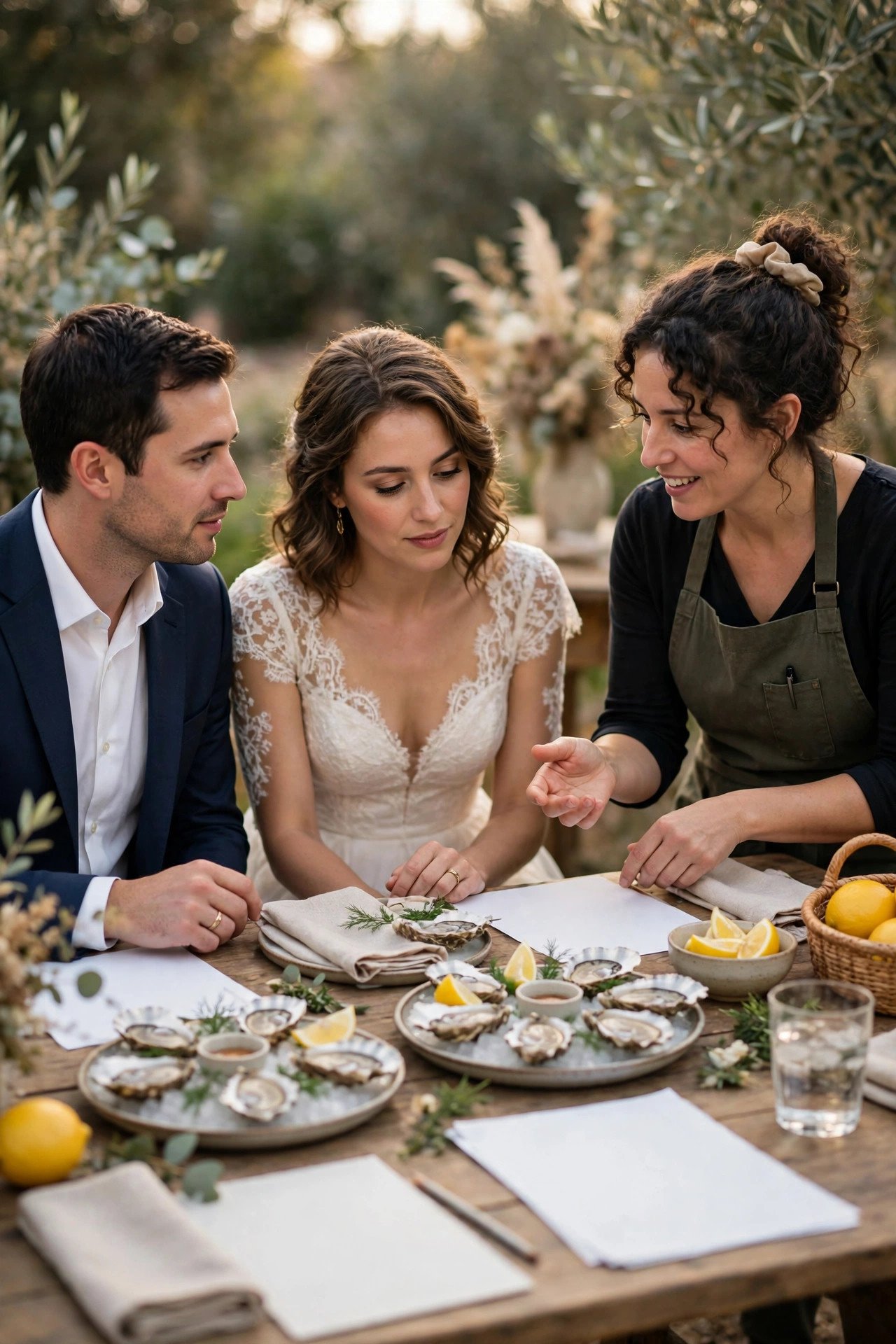
Oyster bars price per piece, plus the shucker’s labor and ice and display rental: the oysters themselves, freight for quality sourcing, and staffing dominate the quote. Control cost with the service window and the per-guest count rather than cheaper sourcing — this is the one station where the bargain option is the wrong place to save.
Sustainability and Responsible Sourcing
 📌 Save
Most oysters sold today are farmed — a genuinely sustainable seafood, since oysters filter water and farmed beds support coastal ecosystems. Ask your supplier about their farms and regions; many couples feature a local estuary’s oysters as a point of place, turning the menu into a small story about where they married.
What About Guests Who Cannot Eat Shellfish?
 📌 Save
Shellfish allergies are serious, so the raw bar needs clean systems: its own table, its own utensils, no shared ice or trays with other stations, and signage that names the station plainly. Place the oyster bar apart from the main appetizer spread so allergic guests can enjoy everything else without navigating around their one hazard.
Alternatives With the Same Spirit
 📌 Save
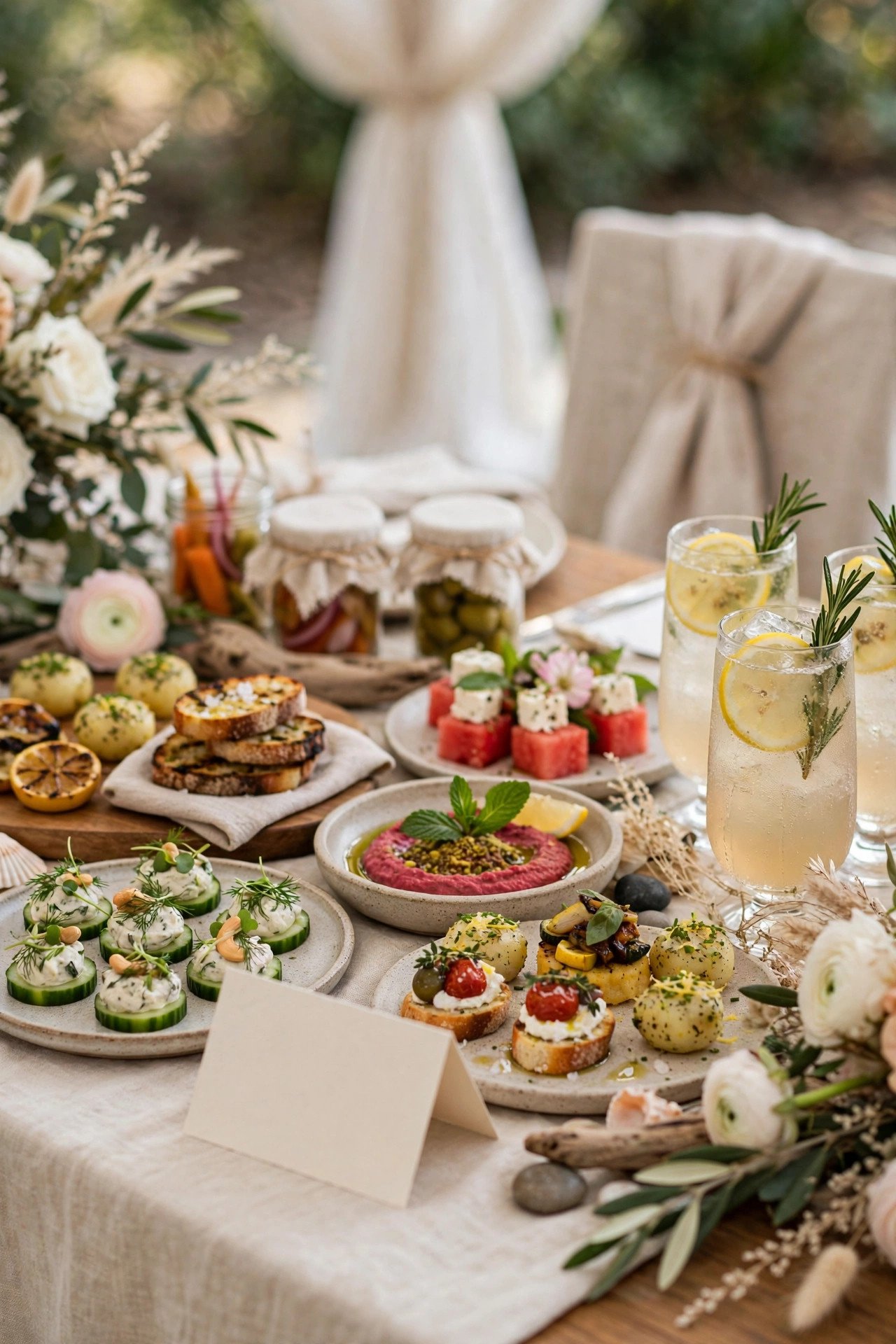
If oysters feel too far, a chilled seafood display — poached shrimp, crab claws where budgets allow, ceviche-style cups cooked in citrus — delivers the same icy theater with cooked products. The styling, flow, and accompaniment logic all transfer; only the sourcing and safety profile simplifies.
Work With a Raw Bar Specialist Caterer
 📌 Save
Many couples hire a dedicated raw-bar company alongside their main caterer, and it is money well spent: specialists bring the display, the ice discipline, the permits, the insurance, and shuckers who are performers as much as technicians. Coordinate the two caterers’ timelines and space needs early so the stations complement rather than crowd each other.
The Couple’s First Oyster Together
 📌 Save
In the swirl of hosting, couples famously miss their own headline station. Put a two-minute stop at the oyster bar into your timeline — right after your entrance to cocktail hour — and let your photographer catch the cheers of shells. You planned the theater; make sure you are in the audience for at least one act.
Wedding Oyster Bars FAQs
Are oysters safe to serve raw at a wedding?+
They can be, with discipline: source from a licensed, reputable supplier, keep the cold chain unbroken with oysters iced from delivery to shucking, use a professional shucker with clean technique, and limit the display window. Your caterer should follow local health codes and keep harvest tags as required.
How many oysters do you need per guest?+
Plan on two to three oysters per guest for the first hour of a raw bar at cocktail hour, less if other appetizers are generous. Enthusiast crowds eat more — if your families are oyster people, tell your caterer, and stage backup dozens on ice rather than on display.
When should an oyster bar be served?+
Cocktail hour is the classic slot: guests are hungry, the light is good, and a 90-minute service window keeps quality and safety tight. Oyster bars work less well as all-night stations — freshness and ice discipline favor a defined opening and closing.
What toppings go with a raw oyster bar?+
The classic trio: lemon wedges, a shallot mignonette, and cocktail sauce with horseradish. Add hot sauce, cucumber or herb granita, and crackers. Keep flavors clean and bright — the oyster itself is the point.
Can guests who avoid raw seafood enjoy the station?+
Yes, with planning: offer a cooked option such as grilled or baked oysters from the same station, plus a neighboring chilled item like shrimp or a crisp crudité. Clear signage keeps raw and cooked choices obvious for every guest.
Key Takeaways
- Source from a licensed, reputable supplier and keep harvest information available.
- The cold chain is sacred: oysters stay iced from delivery until the moment of shucking.
- Hire a professional shucker — speed, cleanliness, and safety in one pair of hands.
- Serve a defined 90-minute-to-two-hour window, ideally at cocktail hour.
- Plan two to three oysters per guest for hour one, with backup dozens kept on ice.
Final Thoughts
An oyster bar is a promise: that luxury and care can share the same bed of ice. Choose a great supplier, a great shucker, and an unbroken line of cold from their hands to your guests’, and the station becomes what couples dream of — the one everyone talks about on the drive home, for all the right reasons.