Persian Wedding Traditions (2027)
By zainzari • Published October 23, 2026 • Updated October 23, 2026
 📌 Save
Persian wedding traditions center on the sofreh aghd — a ceremonial spread of symbolic objects (mirror, candelabras, bread, herbs, eggs, coins, rock candy, honey and more) before which the couple marries during the aghd ceremony, followed by the aroosi reception party. Sugar cones are ground over a canopy above the couple, the bride traditionally makes the groom wait for her ‘baleh’ (yes), and the reception features the beloved knife dance. Customs vary by family and faith background; this guide explains every symbol.
A Persian wedding has two hearts: the aghd, the ceremony itself, where the couple sits before the sofreh — a spread so symbolic that every single item on it carries a wish — and the aroosi, the reception, where Persian hospitality and dancing take over. The sofreh’s roots reach back thousands of years into Persian culture, and families of many faiths cherish it.
These 25 traditions walk the sofreh item by item, then move through the ceremony’s playful rituals and the reception’s famous dances, with notes for couples celebrating in Iran and across the diaspora in Los Angeles, London, Toronto and beyond in 2027. As always, families vary — let yours arrange the final spread.
At a Glance: Persian Customs, Meanings and Moments
| # | Tradition | What It Is | When It Happens |
|---|---|---|---|
| 1 | Aghd and Aroosi — Two Celebrations, One Wedding | the ceremony (aghd) and the party (aroosi) are distinct events | Whole day |
| 2 | The Sofreh Aghd Itself — A Spread of Symbols | a cloth spread with symbolic items before which the couple sits | Ceremony |
| 3 | The Mirror and Candelabras | a mirror of destiny flanked by two candelabras | Ceremony |
| 4 | The Couple’s First Look in the Mirror | the groom first sees the bride’s reflection in the sofreh mirror | Ceremony |
| 5 | Esphand — Wild Rue Incense Against the Evil Eye | esphand seeds are burned in a brazier to protect the couple | Ceremony |
| 6 | Khoncheh — The Ceremonial Trays Arrive | decorated trays of gifts carried in before the ceremony | Before the ceremony |
| 7 | The Silk Canopy Held Overhead | women hold a cloth above the couple during the ceremony | Ceremony |
| 8 | Grinding the Sugar Cones — Kaleh Ghand | two sugar cones are rubbed together over the canopy | Ceremony |
| 9 | The Playful Stitches in the Canopy Cloth | a woman mimes sewing the cloth — a joke about silencing gossip | Ceremony |
| 10 | Honey on Fingertips | the couple feeds each other honey from the sofreh | Ceremony |
| 11 | Bread, Cheese and Fresh Herbs on the Sofreh | naan, feta-style cheese and herbs signify sustenance | Sofreh item |
| 12 | Decorated Eggs, Nuts and Pomegranates | symbols of fertility, abundance and heaven’s fruit | Sofreh item |
| 13 | Rock Candy and Sweets — Nabat | crystallized rock candy stands for sweetness and clarity | Sofreh item |
| 14 | Gold Coins — Sekkeh | coins on the sofreh wish the couple prosperity | Sofreh item |
| 15 | Rosewater — Golab | a flask of rosewater perfumes the ceremony | Sofreh item |
| 16 | The Sacred Book on the Sofreh | many families place a holy book or beloved poetry | Sofreh item |
| 17 | The Bride’s Playful Delay Before ‘Baleh’ | asked three times, the bride answers yes only at the last | Ceremony |
| 18 | Zir Lafzi — The Gift That Wins the Yes | the groom promises a gift prompting the bride’s yes | Ceremony |
| 19 | Baleh Boran — The ‘Yes’ Celebration | the engagement gathering where gifts and sweets seal the yes | Engagement stage |
| 20 | Gold and Gifts Presented to the Bride | the groom’s family adorns the bride with jewelry | Engagement / ceremony |
| 21 | Raghs-e Chaghoo — The Knife Dance | bridesmaids dance with the cake knife; the groom must win it back | Reception |
| 22 | Gol Berizoon — A Shower of Rose Petals | guests shower the couple with petals at joyful peaks | Ceremony / reception |
| 23 | Baba Karam — The Playful Kerchief Dance | a comic traditional dance with hat and handkerchief | Reception |
| 24 | Aroosi Dancing Until Late | Persian pop keeps a mixed-generation floor dancing | Reception |
| 25 | The Modern Sofreh — 2027 Style | designers reinterpret the spread in modern palettes | Ceremony |
Planning note: hire or appoint a sofreh designer early — a full sofreh aghd is a work of art with dozens of components, and the best designers book out a season ahead.
Aghd and Aroosi — Two Celebrations, One Wedding
 📌 Save
Persian couples speak of two events: the aghd, the marriage ceremony where the contract is read and signed before the sofreh, and the aroosi, the reception party. They may share a day — aghd in the afternoon, aroosi at night — or sit weeks apart. The aghd is intimate and solemn-joyful, attended by family and close friends; the aroosi opens the doors to everyone. Understanding the split explains the whole Persian wedding: first the symbols, then the celebration.
The Sofreh Aghd Itself — A Spread of Symbols
 📌 Save
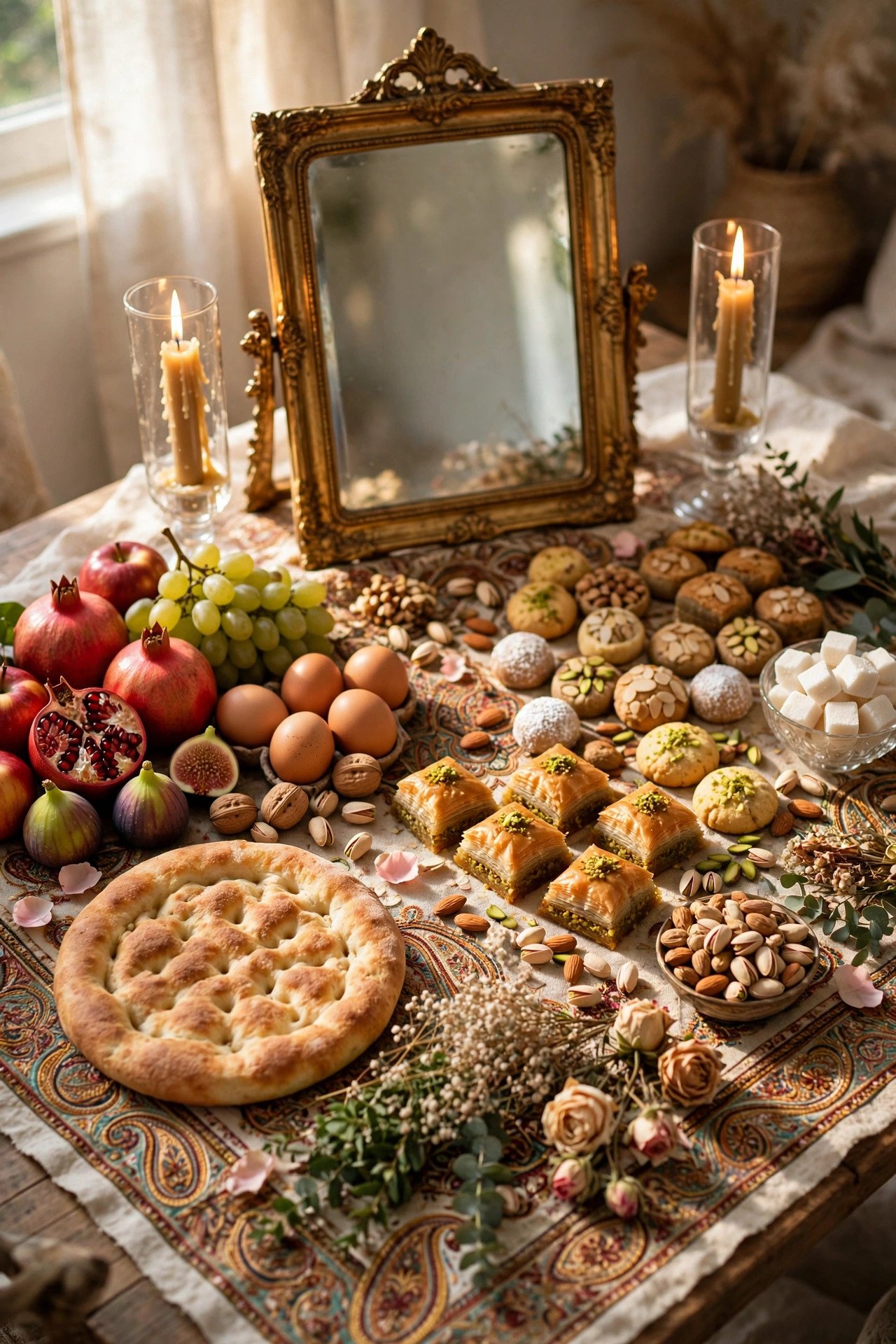
The sofreh aghd is a richly decorated cloth — silk, velvet or family heirloom fabric — spread on the floor or a low platform and covered with symbolic objects: mirror and candelabras, bread, herbs, fruit, eggs, nuts, coins, sweets, honey, rosewater and more, arranged over hours by specialists or devoted aunties. The couple sits at its head, facing the mirror. Nothing on the sofreh is mere decoration; the couple literally marries in front of a table of good wishes made solid.
The Mirror and Candelabras
 📌 Save
At the sofreh’s head stand its crown pieces: the ayeneh, a mirror — the mirror of destiny, into which the couple gazes together — flanked by shamdoon, a pair of candelabras whose flames stand for the couple themselves and the light and fire of their future. The mirror and candles are traditionally a gift from the groom’s family and become the couple’s first household heirloom, displayed at home and brought out for Nowruz and anniversaries. Silver sets pass down generations of brides.
The Couple’s First Look in the Mirror
 📌 Save
In a moment photographers plan albums around, the groom waits seated at the sofreh as the bride arrives and takes her place beside him; her veil is lifted, and his first sight of her is her reflection in the ayeneh — the mirror of destiny showing him his future. The couple then gazes into the mirror together as the ceremony proceeds. The symbolism is deliberate: they enter marriage looking forward, together, at the life the mirror holds.
Esphand — Wild Rue Incense Against the Evil Eye
 📌 Save
Through the ceremony and the couple’s arrivals, a brazier of esphand (wild rue seeds) is carried around them, its fragrant smoke crackling as the seeds pop — an ancient Persian protection against the evil eye (nazar) and ill fortune, accompanied in many families by rhythmic blessings. The scent of esphand is, for Persians, the smell of a wedding and of Nowruz: celebration under guard. The burner makes its rounds at thresholds — the ceremony entrance, the reception entrance, the couple’s arrival home.
Khoncheh — The Ceremonial Trays Arrive
 📌 Save
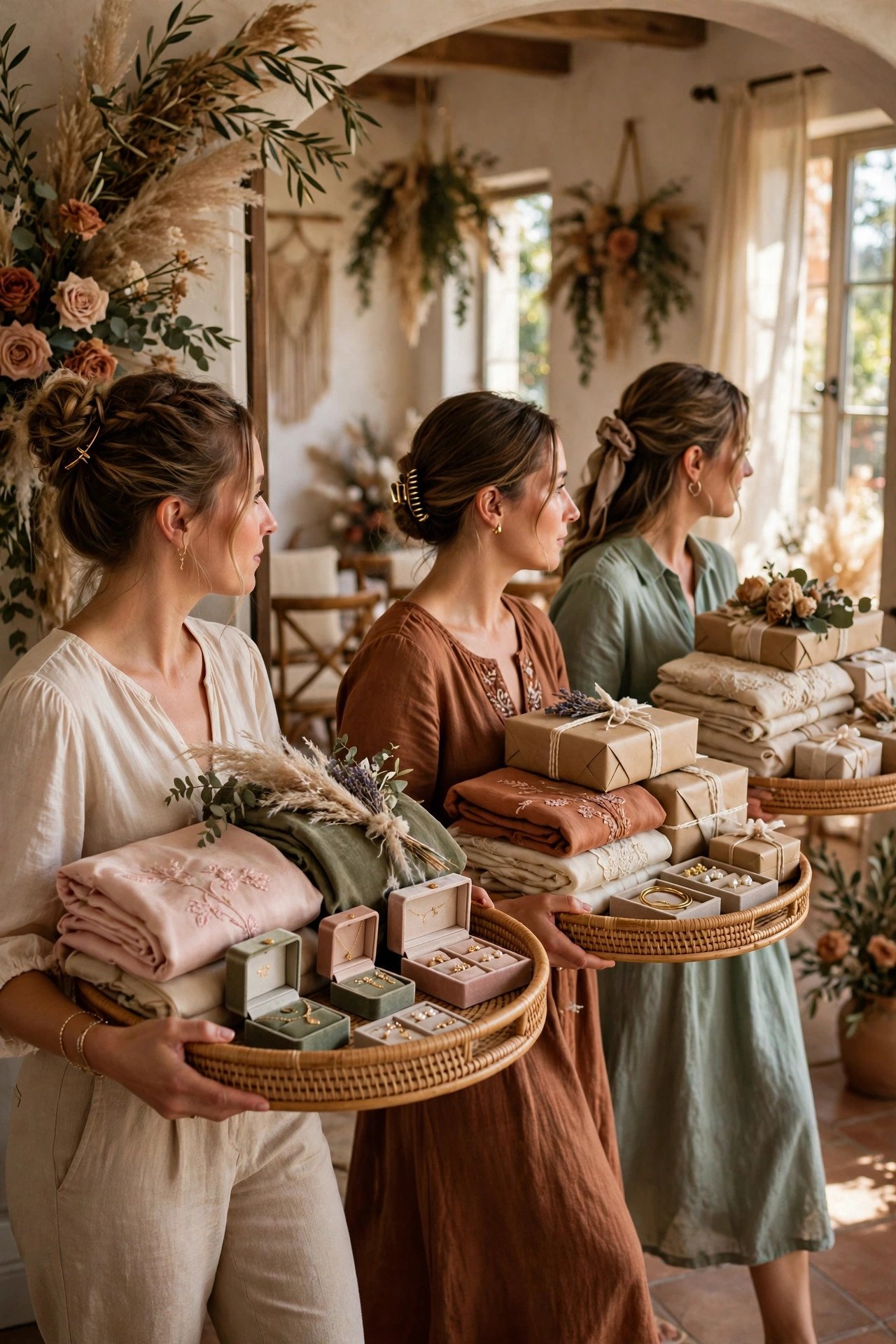
Before the aghd, the groom’s family presents khoncheh: large decorated trays bearing gifts for the bride — lengths of fine fabric, jewelry, sweets, the mirror and candelabras in some families — carried into the ceremony room by relatives in a small procession and displayed. The trays announce the groom family’s generosity and taste before a word of the contract is read. In modern celebrations the khoncheh may arrive at the engagement (baleh boran) instead, or both — families arrange the choreography.
The Silk Canopy Held Overhead
 📌 Save
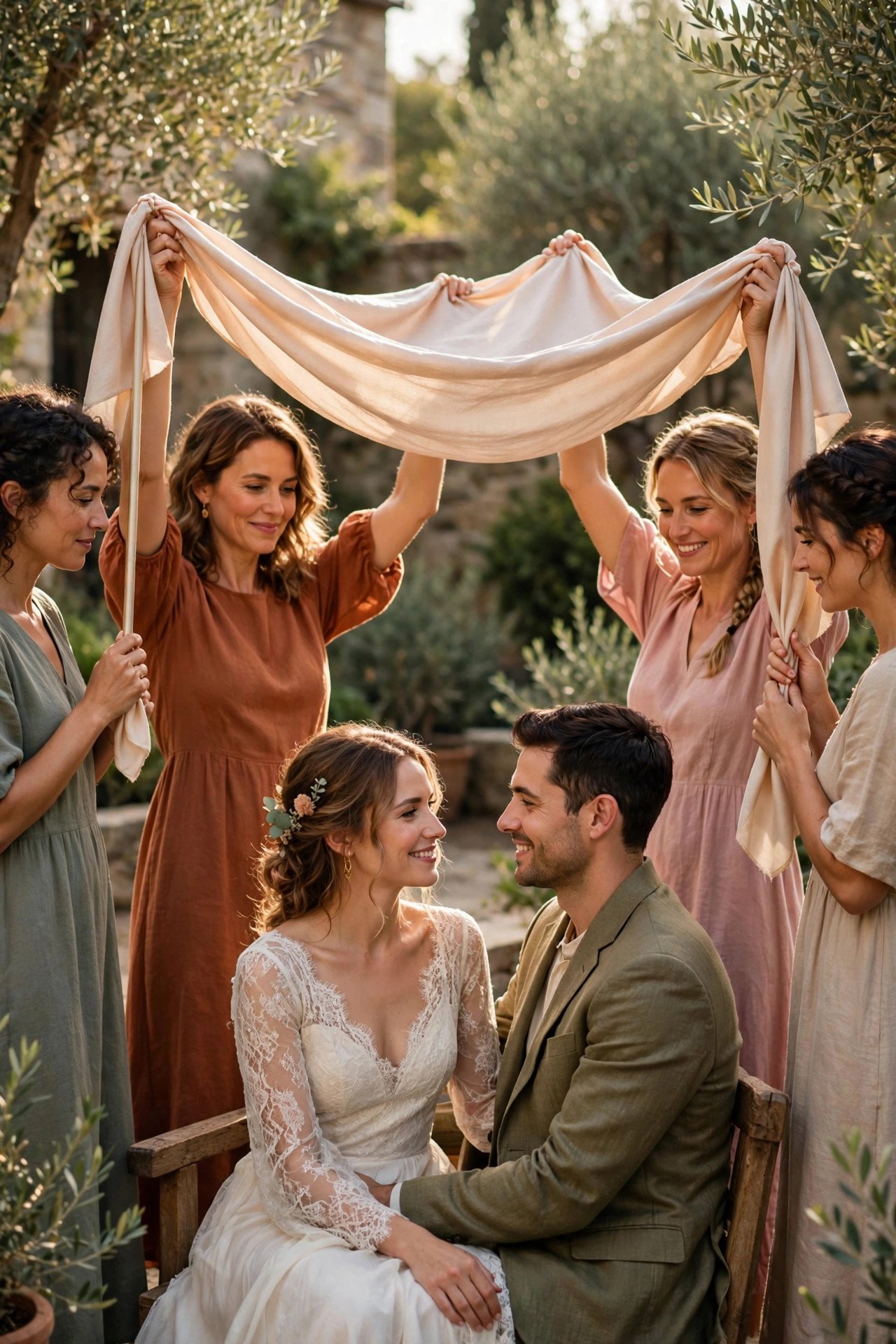
As the vows are read, women from both families — traditionally happily married relatives — hold a fine cloth canopy over the couple’s heads. The canopy shelters them under one roof, symbolically their first shared home, and sets the stage for the sugar grinding that showers sweetness down upon it. The holders are chosen with care: their happy marriages are considered part of the blessing, and being asked to hold the cloth is an honor brides remember to bestow.
Grinding the Sugar Cones — Kaleh Ghand
 📌 Save
Over the canopy, two women take the kaleh ghand — a pair of tall, decorated sugar cones from the sofreh — and rub them together so fine sugar showers down onto the cloth above the couple: sweetness falling on the marriage, quite literally. Other relatives may take turns; the sugar dusts the canopy while the officiant reads. The cones themselves, often wrapped in tulle and ribbons, return to the sofreh as its sweetest sculpture. Few wedding images anywhere are as distinctively Persian as sugar snowing over silk.
The Playful Stitches in the Canopy Cloth
 📌 Save
During the sugar grinding, one of the women may take needle and thread and make playful symbolic stitches in the canopy cloth — a folk joke with a serious wish inside: ‘sewing shut’ the mouths of gossips and ill-wishers (and, teasing tradition adds, any difficult tongue the couple may meet in married life), so the new household hears only good. The room laughs; the symbolism lands. It is a small, very Persian moment: humor deployed as a blessing.
Honey on Fingertips
 📌 Save
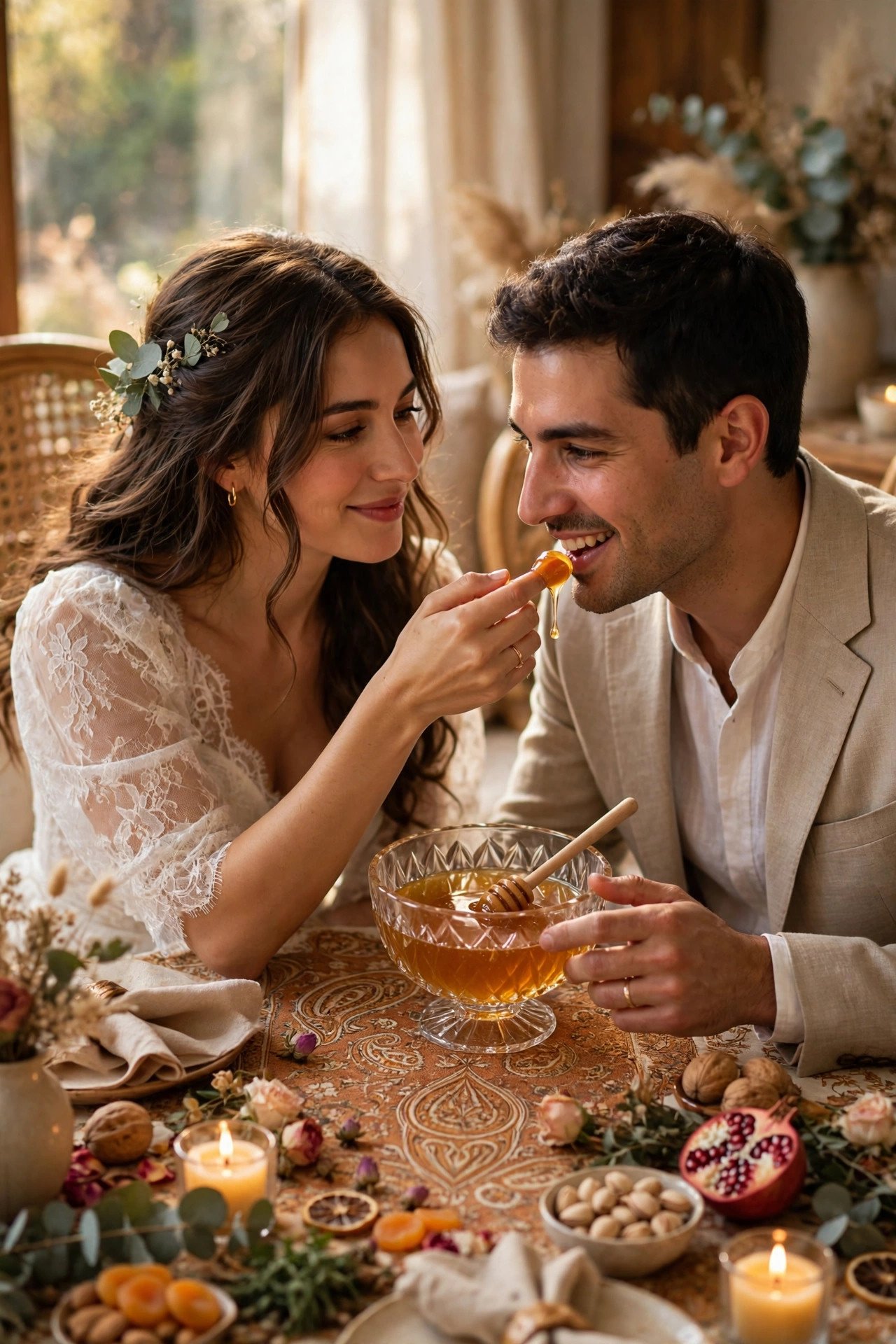
Near the ceremony’s end, the couple dips fingertips into the sofreh’s bowl of honey and feeds each other — bride first, then groom, or together — so that sweetness is quite literally the first thing they give one another as spouses. The gesture is tender, funny (honey drips) and endlessly photographed. The honey bowl returns to the couple’s kitchen as a keepsake; some families serve the same honey at the first anniversary breakfast.
Bread, Cheese and Fresh Herbs on the Sofreh
 📌 Save
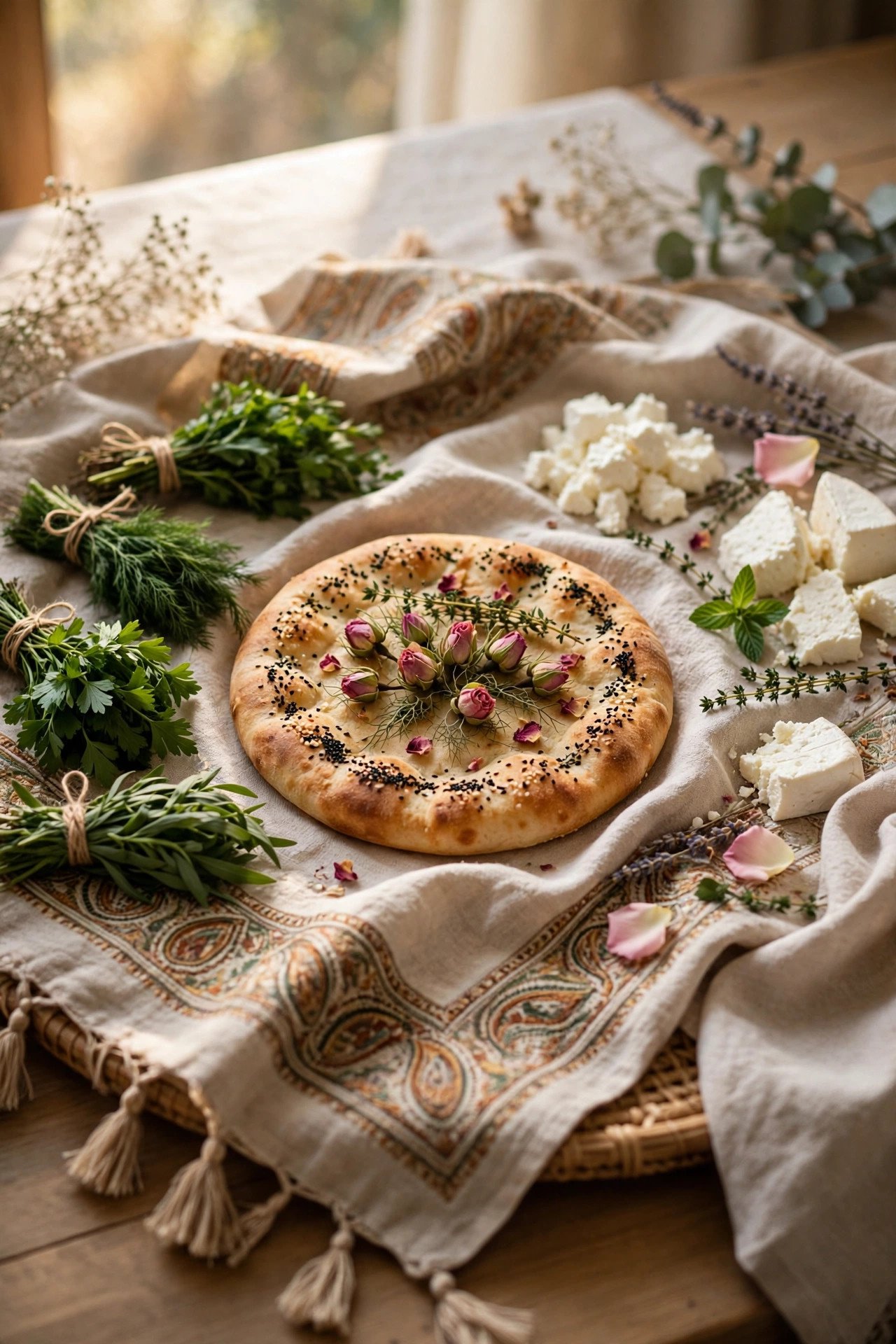
No sofreh is complete without noon-o paneer-o sabzi: bread (often a decorated sangak or lavash), white cheese and a bundle of fresh herbs — mint, basil, tarragon — standing for sustenance, prosperity and the simple wealth of a table that always has food. After the ceremony, guests may share the bread and herbs as part of the celebration’s first bites. The arrangement is often the sofreh’s most fragrant corner, green against all the gold.
Decorated Eggs, Nuts and Pomegranates
 📌 Save
The sofreh’s baskets of plenty carry the oldest wishes: decorated eggs for fertility and new life; walnuts, almonds and hazelnuts in their shells for abundance and strength; pomegranates — the fruit of heaven in Persian poetry — for a joyful, fruitful union, sometimes joined by apples and grapes. The eggs are often painted or gilded by family artists. Together the baskets make the sofreh read like a harvest festival: the marriage blessed with everything the earth gives.
Rock Candy and Sweets — Nabat
 📌 Save
Clusters of nabat — saffron-tinted rock candy on sticks or strings — gleam on the sofreh beside trays of Persian sweets and noghl (sugar-coated almonds). Nabat stands for a sweet life and clear, happy fortune; it is also practical celebration food, later dissolved into tea for the guests. Persian sweet trays generally — baklava, chickpea cookies, marzipan mulberries — turn the sofreh’s edge into a patisserie, and guests graze them through the reception’s early hour.
Gold Coins — Sekkeh
 📌 Save
A small arrangement of gold coins — sekkeh, sometimes in a bowl, sometimes sewn or laid in a pattern — sits on the sofreh as an unembarrassed wish for prosperity. Persian culture treats honest wishes for wealth as blessings, not vulgarity: the coins join eggs, bread and honey in a complete picture of the good life being prayed over the couple. Families may use heirloom coins, and the set often becomes the foundation of the couple’s own sofreh one generation later.
Rosewater — Golab
 📌 Save
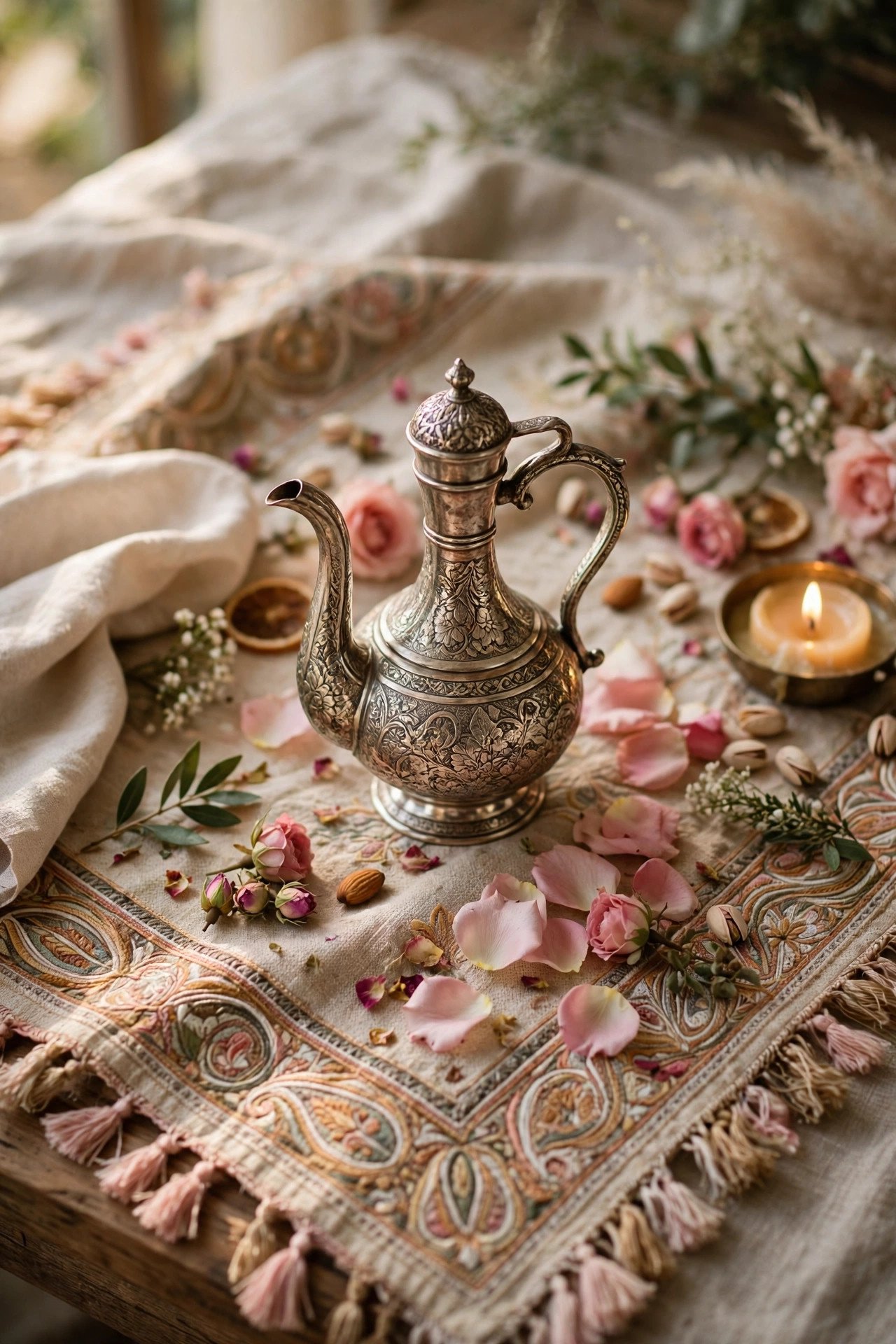
A decorative flask of golab — rosewater, a glory of Persian craft — stands on the sofreh for fragrance and blessing. Rosewater may be sprinkled lightly around the ceremony space or over guests’ hands, and it scents the air with the garden the poetry is always describing. The flask — silver, crystal, sometimes antique — is another heirloom in waiting. In the couple’s new home, rosewater returns in desserts and Nowruz sweets, carrying the wedding’s scent into married life.
The Sacred Book on the Sofreh
 📌 Save
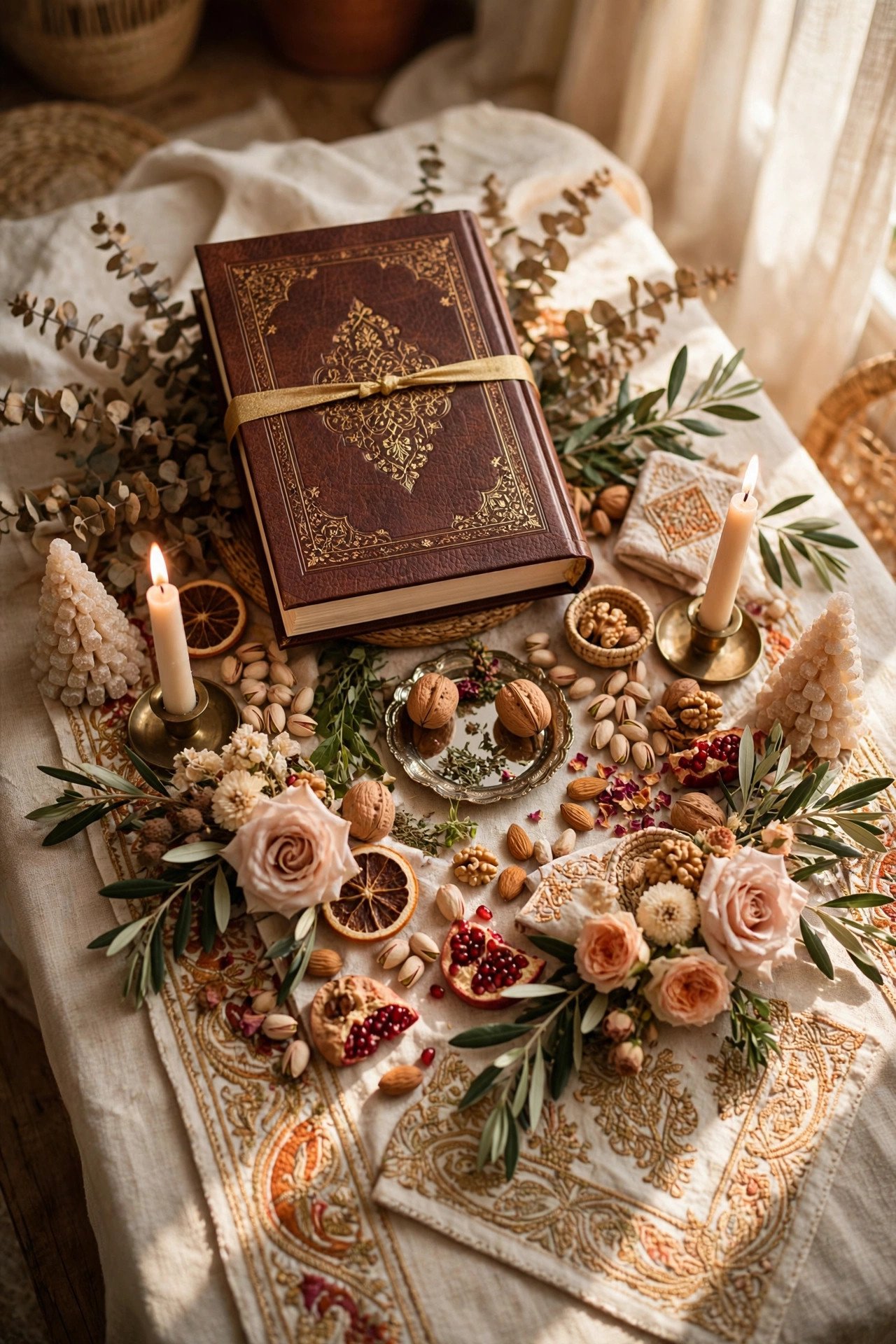
Many families place a sacred or beloved book at the sofreh’s head: Muslim families place a Qur’an (often a family copy in a decorated cover), and families of other backgrounds may place their own scripture or a treasured volume of Hafez’s poetry — Persia’s eternal wedding guest. The book witnesses the contract and anchors the spread in the family’s deepest values. Its placement and handling follow each family’s reverence; officiants and elders direct, and guests simply respect the family’s practice.
The Bride’s Playful Delay Before ‘Baleh’
 📌 Save
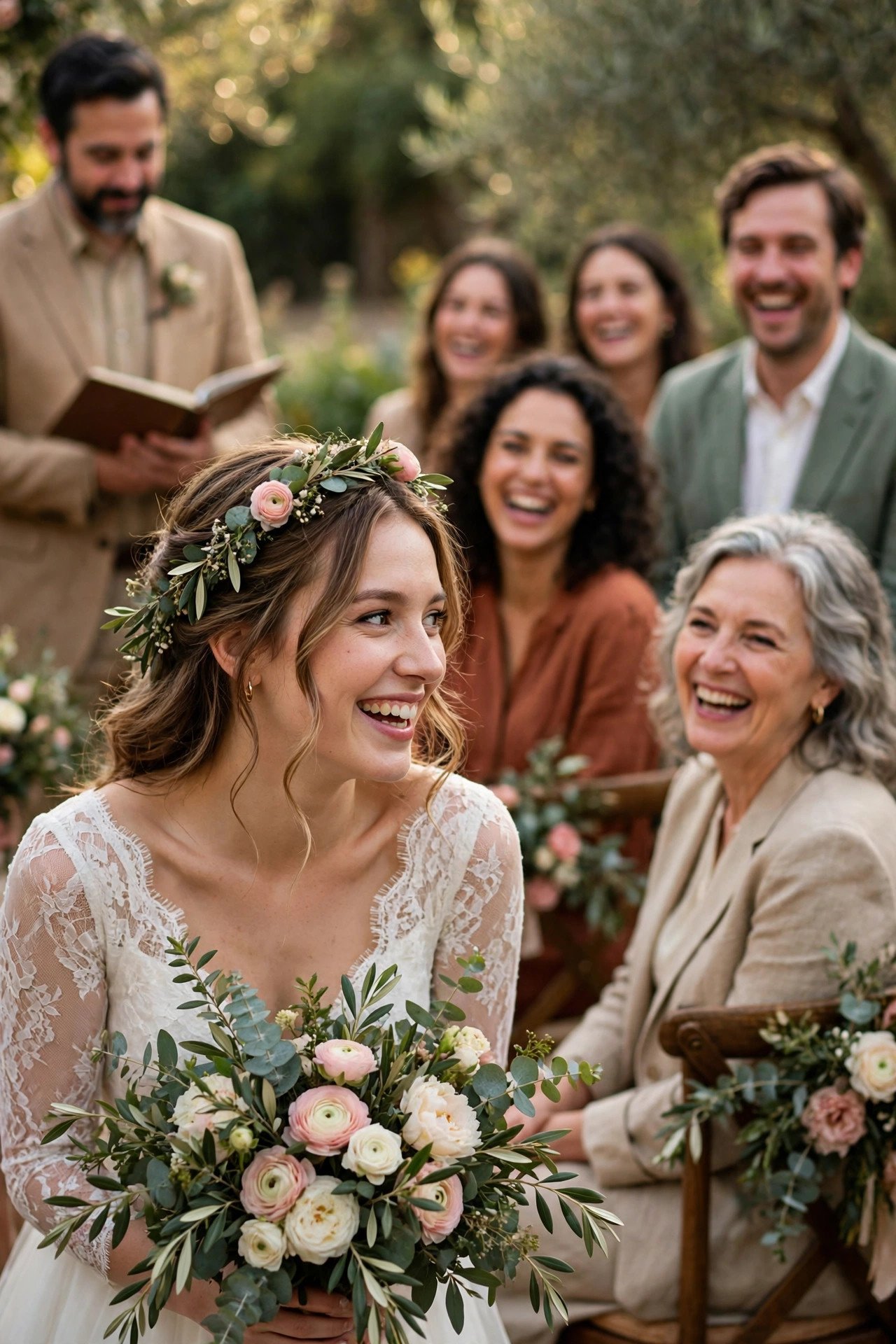
The aghd’s most beloved theater: when the officiant asks the bride whether she accepts the marriage, tradition keeps her silent through the first asking — and often the second — while the room giggles and someone calls out that she has ‘gone to pick flowers’ or is ‘under the table’s spell’. Only at the third asking does she answer ‘baleh’ — yes — to applause and relief. The delay is playful leverage: the groom, and the room, must want that yes properly. Every bride calibrates her own pause; great ones make it legendary.
Zir Lafzi — The Gift That Wins the Yes
 📌 Save
When the bride delays, the ritual has a release valve: the zir lafzi, a gift the groom announces — traditionally gold or jewelry — ‘under the wording’ of the contract, offered as her silence stretches. An elder may call out asking what he will give; he names the gift; the room approves; and soon after, the ‘baleh’ arrives. It is negotiation as flirtation, played entirely in public and entirely in jest — though the gift itself is real, and recorded with the contract’s terms.
Baleh Boran — The ‘Yes’ Celebration
 📌 Save
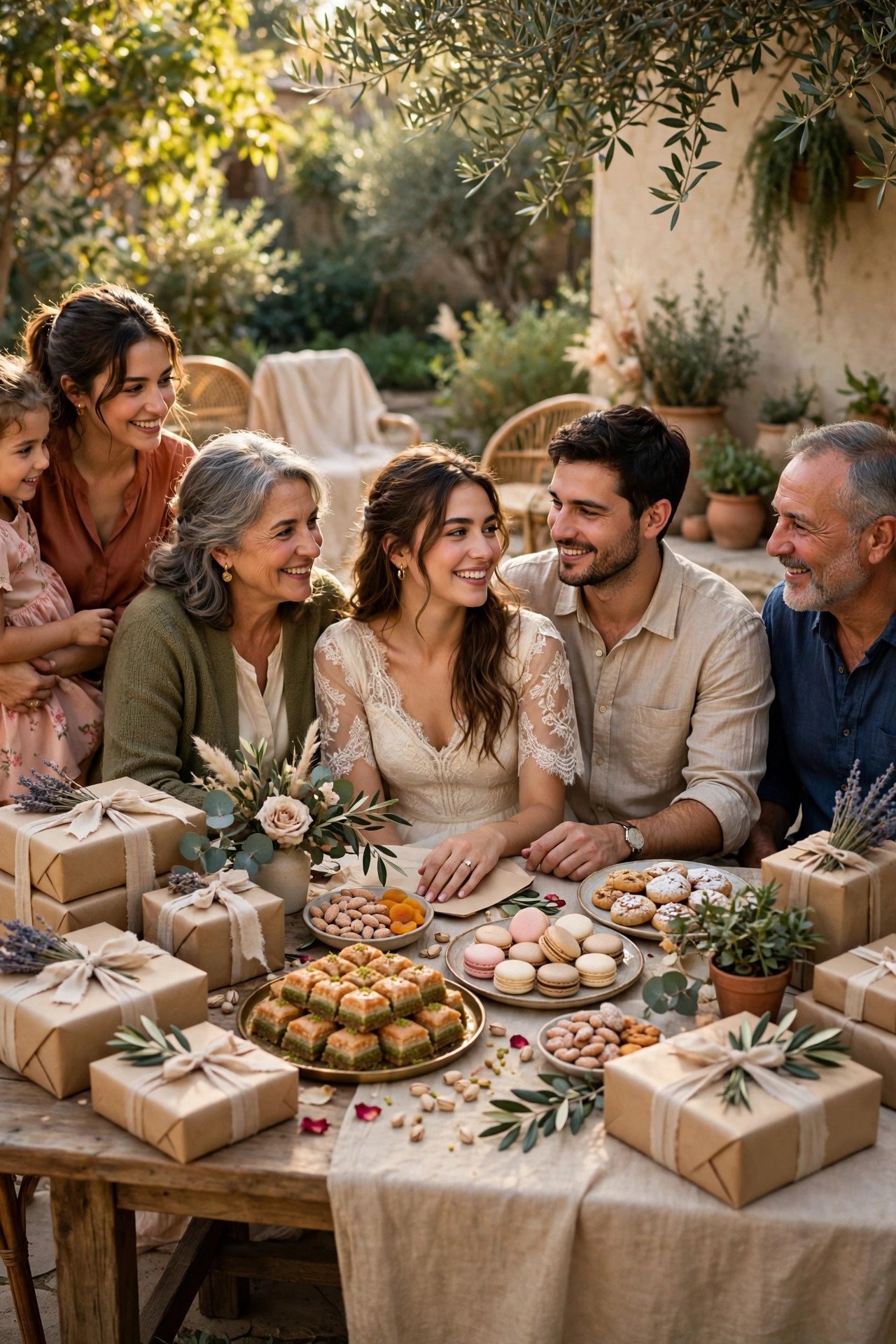
Before the aghd comes baleh boran — literally ‘the yes-cutting/sharing’ — the engagement celebration where the groom’s family brings trays (khoncheh) of gifts, fabric, sweets and sometimes the ring to the bride’s family, and the couple’s engagement becomes official before their community. Sweets (shirini) are shared — eating sweet at the news is itself a custom (shirini khoran) — and the aghd date is often set at this gathering. It is the sofreh’s warm-up act: smaller, sweeter and full of mothers comparing notes.
Gold and Gifts Presented to the Bride
 📌 Save
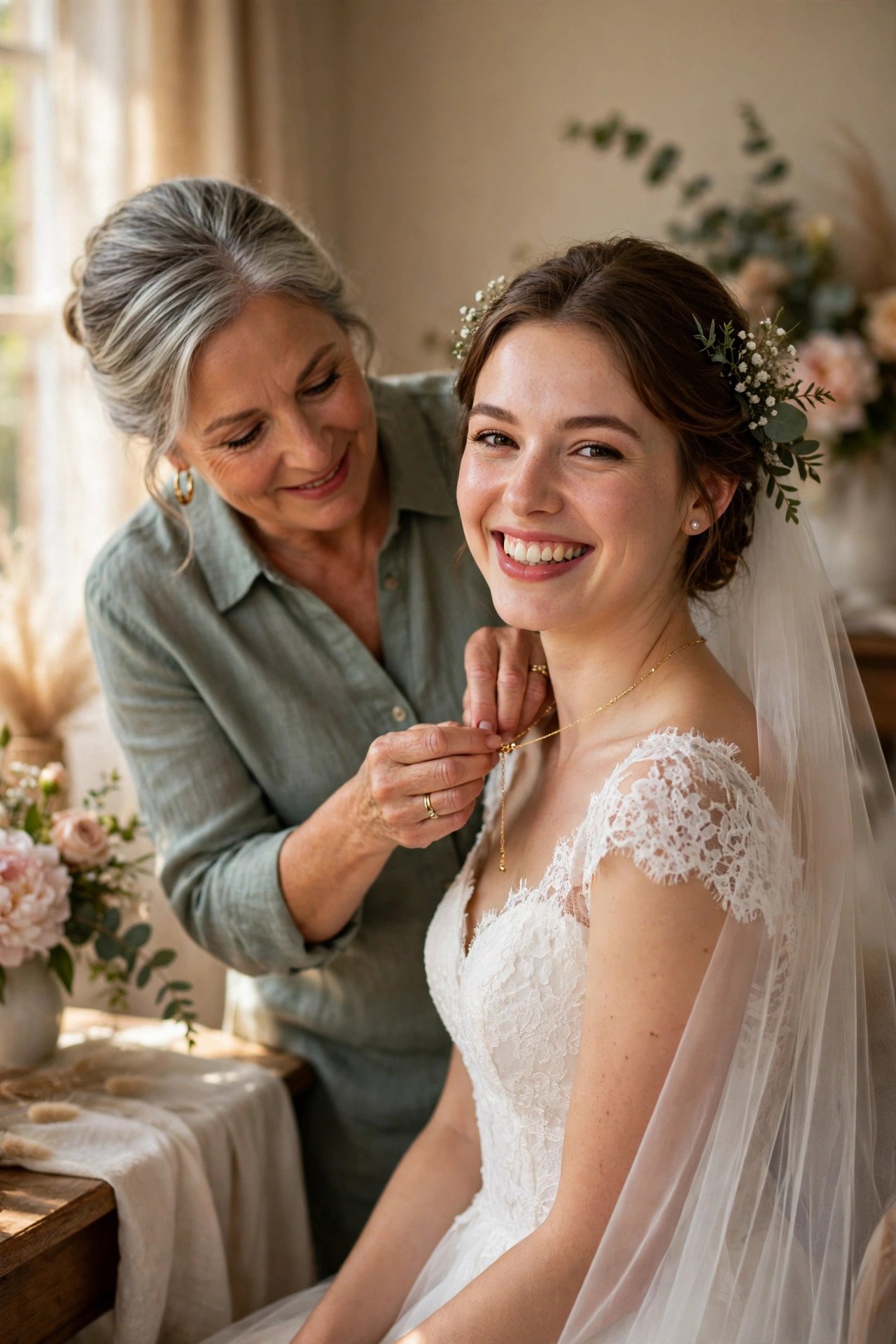
Across the engagement and the aghd, the groom’s family presents the bride with gold and jewelry — at baleh boran, on the khoncheh trays, and sometimes placed on her during the celebrations by his mother. The pieces signify her welcome and her security, and the presentation is deliberately public: generosity witnessed is honor secured. Brides often wear the full suite for the ceremony’s photographs, then simplify for dancing — Persian receptions involve serious dancing, as the next traditions show.
Raghs-e Chaghoo — The Knife Dance
 📌 Save
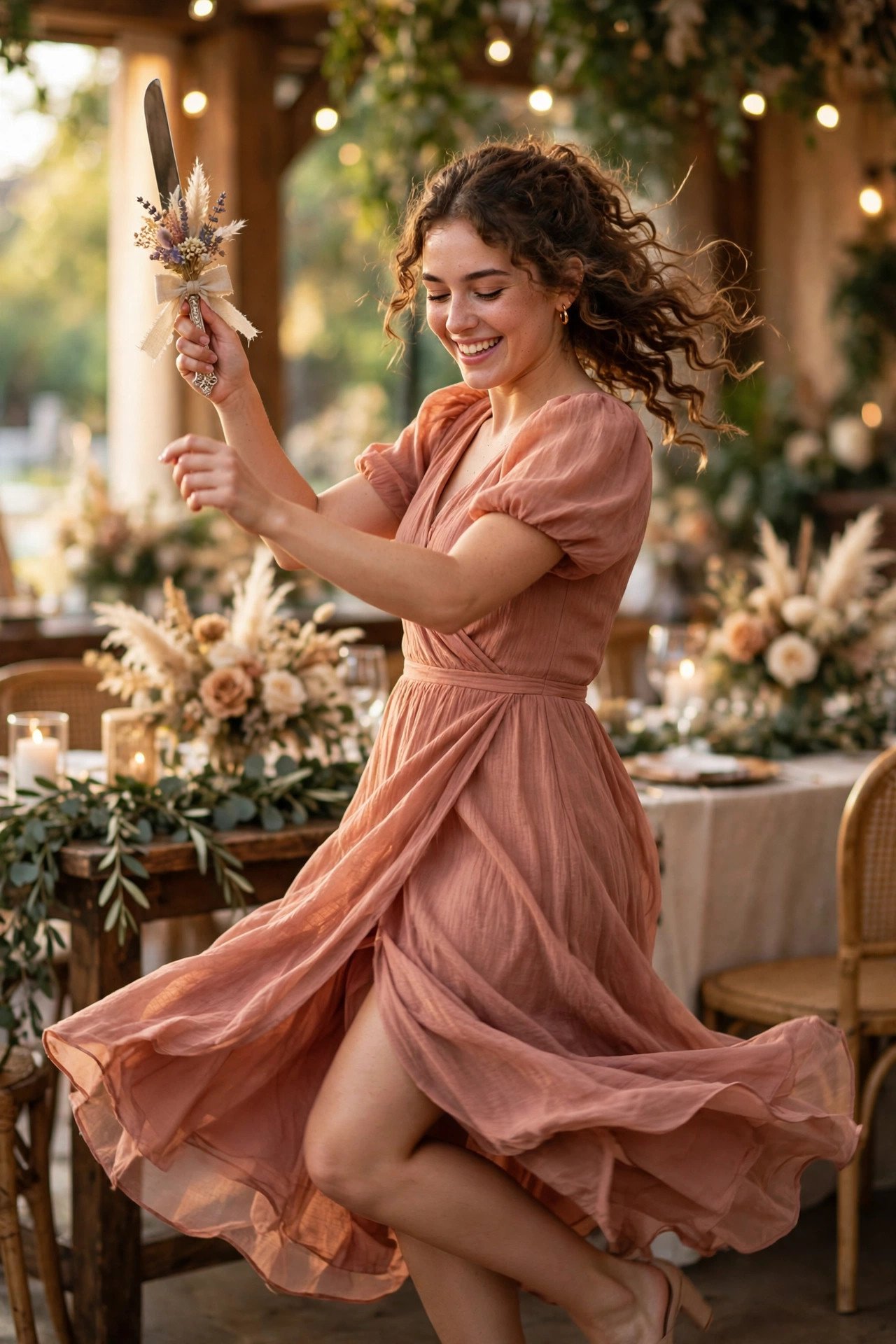
The Persian reception’s signature performance: when it is time to cut the cake, a bridesmaid or sister takes the cake knife and dances with it — graceful, teasing, just out of reach — while Persian music plays and the room claps. The groom must persuade, compliment and usually pay (cash tucked into the dancer’s hand or sash) to win the knife; often it passes to a second and third dancer before surrendering. Only then can the couple cut their cake. It is flirtation, theater and family comedy in one perfect custom, and experienced dancers stretch it gloriously.
Gol Berizoon — A Shower of Rose Petals
 📌 Save
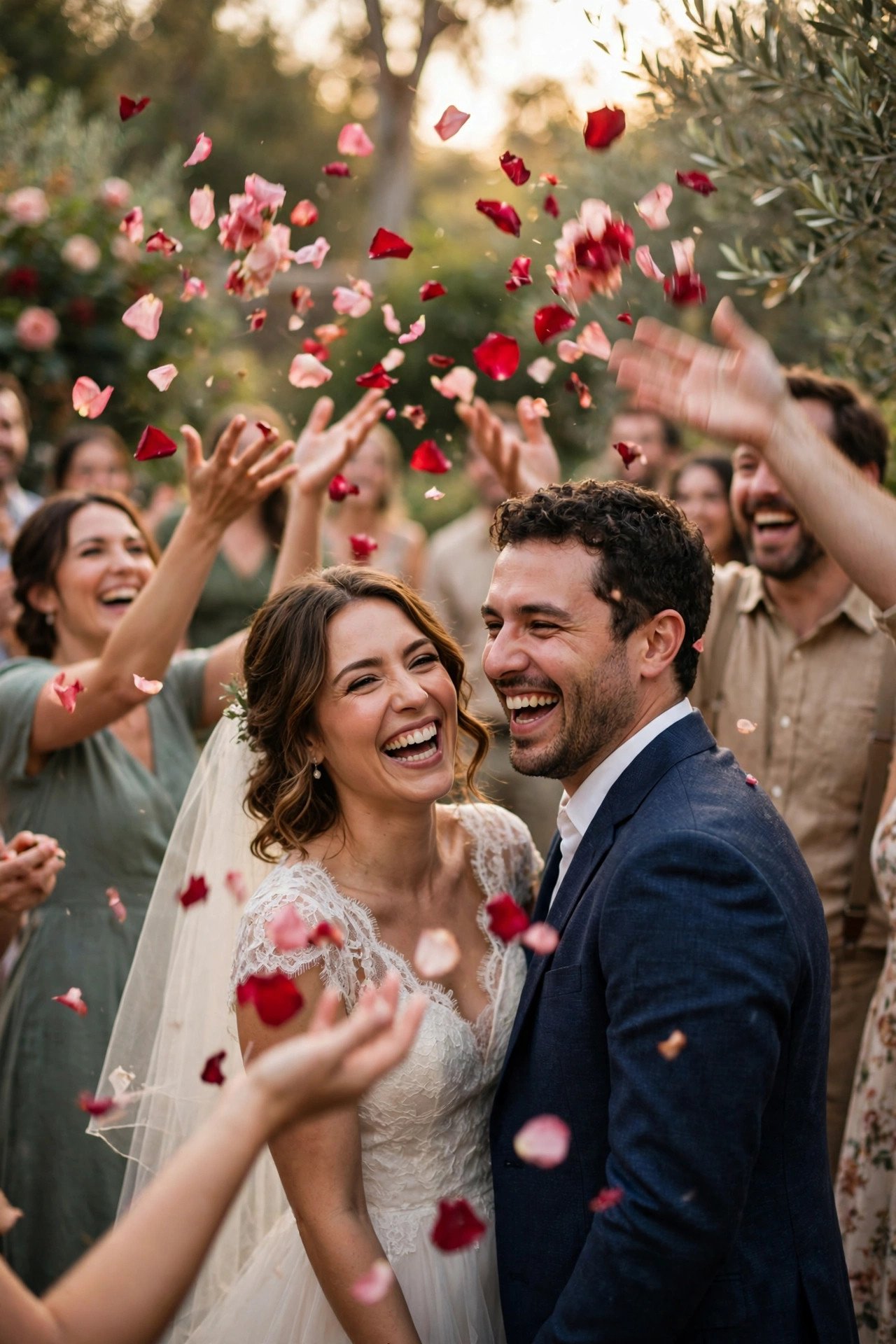
At the ceremony’s close, the couple’s entrance, and the first dance, Persian celebrations erupt in gol berizoon — guests showering the couple with rose petals by the handful and basketful. The custom turns joy physical: for a few seconds the couple stands inside weather made of flowers. Petals are prepared in baskets by the families — fresh, fragrant and plentiful — and no Persian wedding album is complete without the petal-storm portrait, two faces laughing through falling roses.
Baba Karam — The Playful Kerchief Dance
 📌 Save
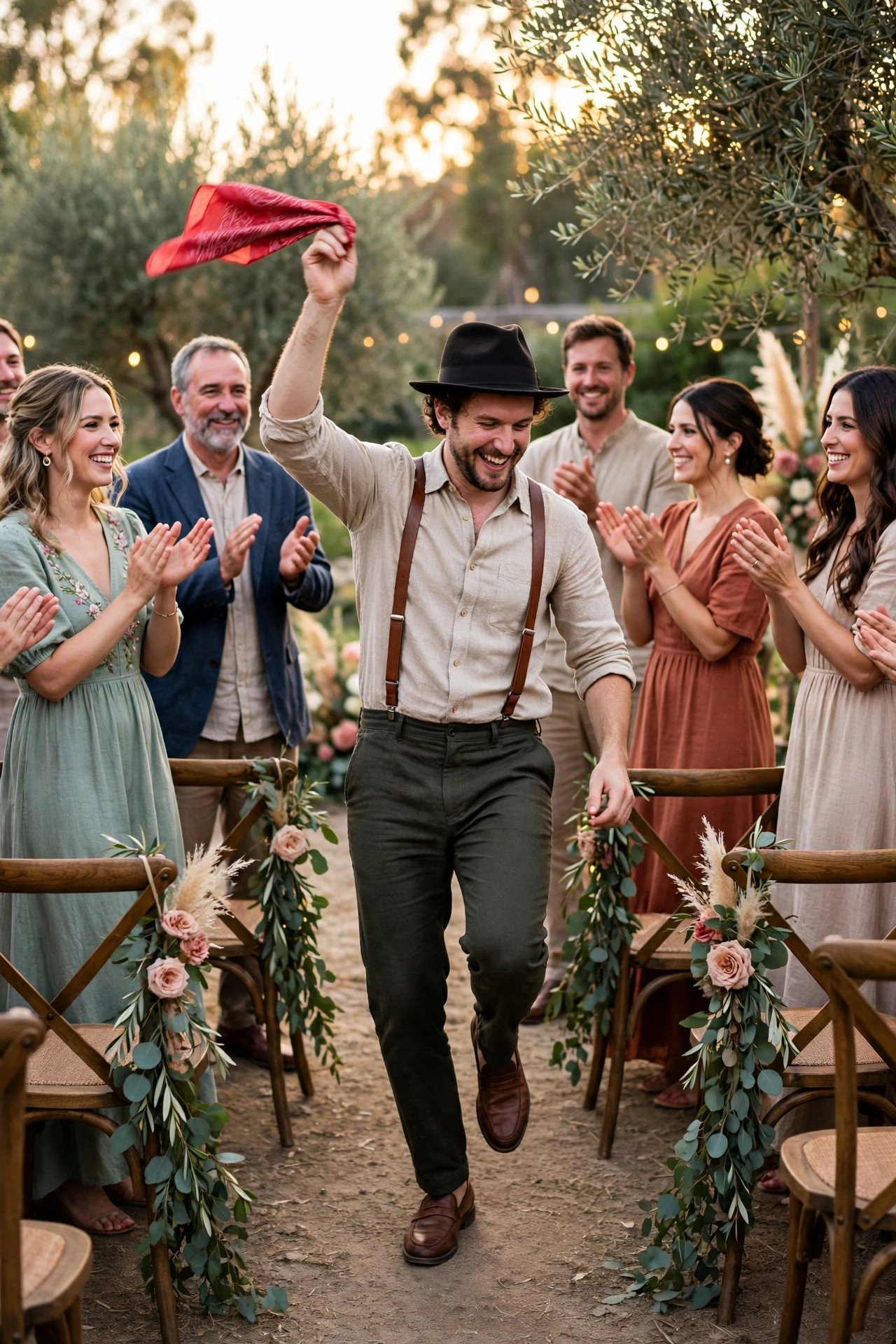
No Persian dance floor is complete without baba karam: a playful, characterful solo dance — traditionally a gentleman’s dance performed with a hat, jacket and handkerchief, all shoulder shimmies, sly glances and comic swagger, to its own beloved song. Uncles and grandfathers are its masters; the groom is always eventually dragged in. In the diaspora, a great baba karam performance is a video that circulates through the family for years — proof that Persian wedding joy has a sense of humor about itself.
Aroosi Dancing Until Late
 📌 Save
The aroosi’s dancing is famously intergenerational: Persian pop classics — the songs every exile household knows by heart — pull grandparents and teenagers onto the same floor, with bandari rhythms from the south raising the temperature further. Persian dancing is social and expressive — arms, shoulders and smiles — and guests judge an aroosi by its floor the way chefs are judged by their rice. Diaspora DJs build sets that travel from 1970s Tehran classics to today’s hits without ever emptying the floor.
The Modern Sofreh — 2027 Style
 📌 Save
Today’s sofreh designers — a genuine profession in Tehran and Los Angeles alike — reinterpret the spread in modern palettes: blush and ivory, sage and gold, minimalist crystal or full heirloom opulence, while keeping every symbolic item in place. Couples abroad blend in their own touches and rent full sofreh sets from specialists. The tradition’s genius is its flexibility: the objects are fixed by meaning, the styling is free — so a 2027 sofreh can look like a Vogue editorial and still carry wishes three thousand years old.
Persian Wedding Traditions FAQs
What is a sofreh aghd?+
The sofreh aghd is the ceremonial spread at a Persian wedding ceremony: a decorated cloth laid with symbolic objects — mirror and candelabras, bread, cheese and herbs, decorated eggs, nuts, fruit, coins, rock candy, honey and rosewater — before which the couple sits during the aghd (marriage ceremony). Every item represents a wish for the marriage.
Why does the bride wait before saying yes?+
It is a beloved playful custom: the officiant traditionally asks the bride three times, and she answers ‘baleh’ (yes) only at the final asking, to laughter and applause. During the pause, the groom may announce a gift — the zir lafzi — which adds to the fun. The delay is theater, not doubt.
What is the knife dance?+
Raghs-e chaghoo, the knife dance, happens at the reception before the cake cutting: a bridesmaid or relative dances gracefully with the cake knife, and the groom must charm and usually tip the dancers — the knife often passes through several hands — before he can win it back and cut the cake with his bride.
Do both events happen on one day?+
They can. The aghd (ceremony) and aroosi (reception party) are distinct events that many couples hold on the same day, ceremony in the afternoon and party at night, and others separate by days or weeks. The aghd is usually the more intimate of the two.
Can a Persian wedding blend with other traditions?+
Persian couples blend the sofreh ceremony with Western and other cultural elements all the time — a church or civil ceremony alongside the aghd, Western dress for the party, mixed music. The sofreh itself is cherished by families of many faiths, and its symbols translate gracefully. Your families and officiant are the guides for what fits.
Key Takeaways
- The sofreh aghd is the ceremony’s heart: a spread where every object — mirror, bread, eggs, honey, coins — is a specific wish.
- Sweetness is staged three ways: sugar cones ground over the canopy, honey fed fingertip to fingertip, rock candy on the spread.
- The bride’s delayed ‘baleh’ and the zir lafzi gift turn the vows into joyful theater.
- The reception’s knife dance is unmissable: the groom must win the cake knife back from dancing bridesmaids.
- Aghd and aroosi are two events — solemn symbols first, then dancing until late.
Final Thoughts
A Persian wedding keeps its blessings visible: you can point at the bread and say ‘sustenance’, at the mirror and say ‘destiny’, at the honey and say ‘sweetness’. There is something deeply moving about marrying in front of a table of wishes your great-grandparents would recognize item by item. Arrange your sofreh with love, delay your ‘baleh’ just long enough, and dance for the knife like you mean it.