Sikh Wedding Traditions (2027)
By zainzari • Published October 23, 2026 • Updated October 23, 2026
 📌 Save
The Sikh wedding ceremony is the Anand Karaj — the ‘ceremony of bliss’ — held in a gurdwara before the Guru Granth Sahib, Sikhism’s holy scripture and eternal Guru. The couple, seated on the floor with the congregation, circles the scripture four times as the four laavan hymns are sung, joins hands through the palla scarf ceremony, and shares karah parshad and langar with everyone present. Around the ceremony sit joyful family traditions — jago, maiya, chooda and the doli farewell. This guide explains each respectfully; for specifics, couples always consult their gurdwara and granthi (officiant).
A Sikh wedding is at once a sacred ceremony and a family festival, and the two halves have different addresses: the Anand Karaj itself belongs to the gurdwara — serene, musical, egalitarian — while the singing processions, turmeric parties and tearful farewells belong to the homes around it. Understanding which part is sacred rite and which is family custom helps guests honor both.
These 25 traditions are explained in order, from the engagement blessings to the bride’s farewell, with careful notes on gurdwara etiquette for guests of all backgrounds. Sikh practice is consistent in its core and warm in its welcome — everyone is invited to an Anand Karaj — but families and gurdwaras vary in detail, and your granthi’s guidance always comes first.
At a Glance: Sikh Customs, Meanings and Moments
| # | Tradition | What It Is | When It Happens |
|---|---|---|---|
| 1 | Anand Karaj — The Ceremony of Bliss | the Sikh marriage rite, meaning ‘blissful union’ | Ceremony |
| 2 | A Ceremony Centered on the Guru Granth Sahib | the holy scripture presides, enthroned at the front | Ceremony |
| 3 | Guest Guidance — Covered Heads and Removed Shoes | all guests cover their heads and remove shoes in the gurdwara | Ceremony |
| 4 | Seated on the Floor — Everyone Equal | the whole congregation sits at one level in the darbar hall | Ceremony |
| 5 | Kurmai — The Engagement Blessing | the families’ formal engagement, often at home or gurdwara | Engagement stage |
| 6 | Roka and the Chunni Ceremony | first blessings on the couple; the groom’s family gifts the bride a chunni | Engagement stage |
| 7 | Jago — The Night-Before Procession | relatives carry a decorated pot through the streets, singing | Night before |
| 8 | Maiya and Vatna — Turmeric Celebrations | turmeric paste is applied to bride and groom at home | Days before |
| 9 | The Groom’s Sehra and Surma | the groom’s turban is dressed with a sehra; kohl lines his eyes | Wedding morning |
| 10 | The Ghodi — The Groom’s Grand Arrival | the groom rides a decorated mare to the celebration | Wedding morning |
| 11 | Milni — When the Families Meet | the two families formally greet and garland each other | Wedding morning |
| 12 | The Bride’s Chooda and Kaleerein | red and white bangles gifted by her maternal uncle | Wedding morning |
| 13 | The Bride’s Entrance | the bride enters with her family as a hymn is sung | Ceremony |
| 14 | The Palla — A Scarf Joins Their Hands | the groom’s scarf end is placed in the bride’s hand | Ceremony |
| 15 | The Four Laavan — Rounds and Hymns | the couple circles the scripture four times as four hymns are sung | Ceremony |
| 16 | Kirtan — Music That Carries the Ceremony | ragi musicians sing shabads throughout the wedding | Ceremony |
| 17 | Anand Sahib and the Closing Ardas | the ceremony concludes with Anand Sahib and congregational prayer | Ceremony close |
| 18 | The Hukamnama — A Reading for the Couple | the scripture is opened at random for the day’s guidance | Ceremony close |
| 19 | Karah Parshad for Everyone | the blessed sweet offering is shared with the whole congregation | Ceremony close |
| 20 | Shagun — A Queue of Blessings and Gifts | the congregation files past to congratulate and gift the couple | After the ceremony |
| 21 | Langar — The Meal That Welcomes All | the free vegetarian community meal served to every guest | After the ceremony |
| 22 | The Kaleerein Game for Single Guests | the bride shakes her kaleerein over seated single friends | After the ceremony |
| 23 | Doli — The Bride’s Farewell | the bride leaves her family home in an emotional farewell | End of celebrations |
| 24 | Rice Over Her Shoulder | the departing bride throws rice backward, blessing her family | Doli |
| 25 | Planning an Anand Karaj — Ask the Gurdwara Early | book the granthi, ragis and hall with the gurdwara’s guidance | Planning |
Guest note: an Anand Karaj welcomes everyone. Cover your head, remove your shoes, sit on the floor, and let the music carry the morning — the etiquette is simple and ushers will help you.
Anand Karaj — The Ceremony of Bliss
 📌 Save
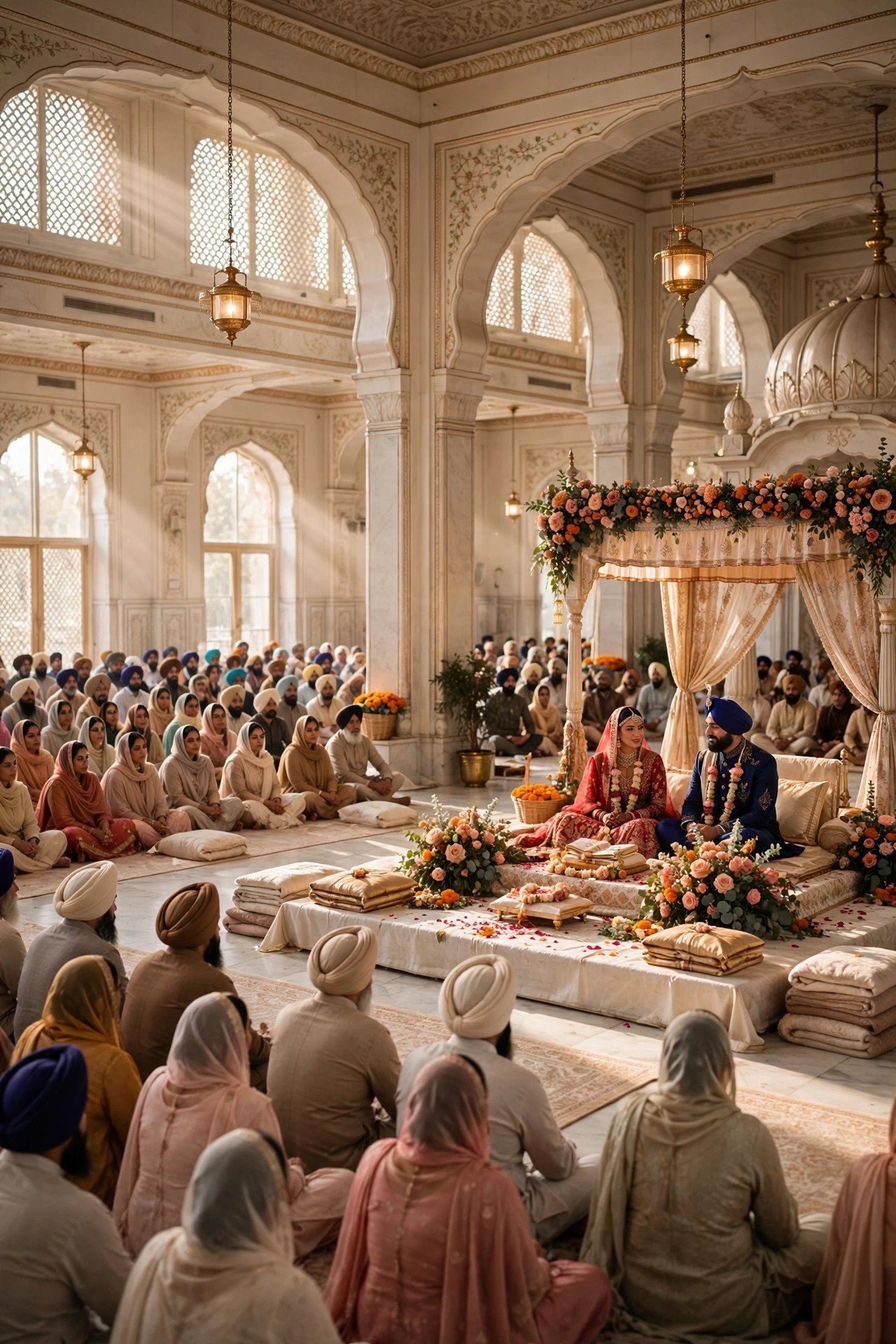
The Anand Karaj — ‘ceremony of bliss’ — was given its present form by the Sikh Gurus: a marriage understood not as a contract but as two souls united on a shared spiritual journey, ‘one light in two bodies’. The rite centers on the four laavan hymns and takes about an hour within its morning of music and prayer. The couple marries before God and the sangat (congregation), not before a priestly intermediary — the granthi guides the ceremony, but the Guru Granth Sahib presides.
A Ceremony Centered on the Guru Granth Sahib
 📌 Save
In the gurdwara’s hall, the Guru Granth Sahib — the sacred scripture Sikhs revere as the eternal Guru — rests enthroned under a canopy on a raised platform, attended by the granthi. Everyone bows before it on entering (matha tekna), and the couple sits before it, never with their backs to it. The wedding’s authority flows from the scripture’s presence: hymns are sung from it, the laavan are its verses, and the ceremony closes with a reading from it. Guests of every faith are welcome to witness, seated respectfully with the congregation.
Guest Guidance — Covered Heads and Removed Shoes
 📌 Save
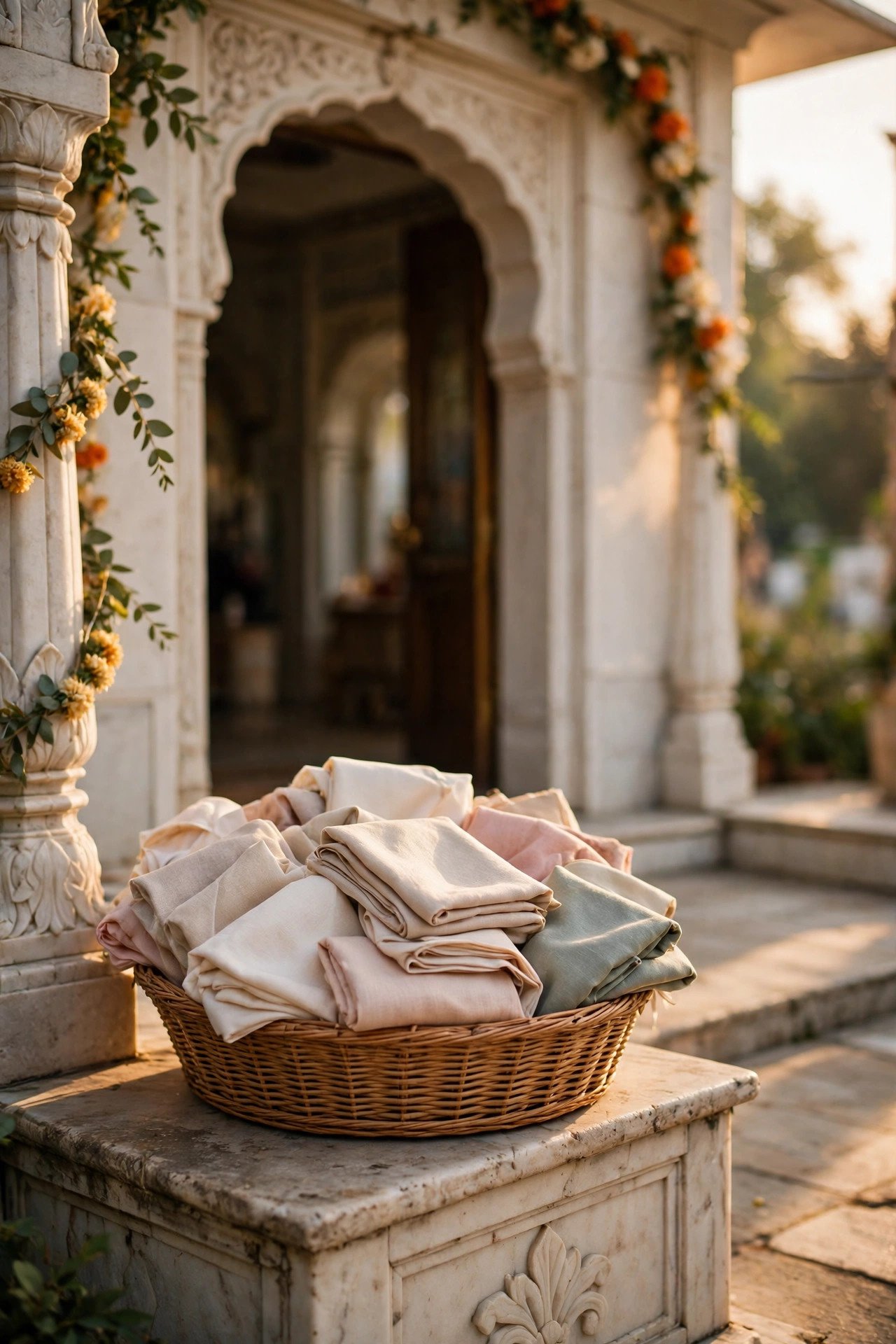
Gurdwara etiquette is simple and universal: shoes come off in the shoe room, and every head is covered — Sikhs with turbans or scarves, guests with a scarf, dupatta or the clean bandanas the gurdwara keeps in a basket at the door for exactly this purpose. Hands are washed, and everyone sits on the floor. Nobody is judged for needing help: sewadars (volunteers) exist to welcome, and a guest fumbling kindly with a borrowed scarf is a familiar, welcome sight.
Seated on the Floor — Everyone Equal
 📌 Save
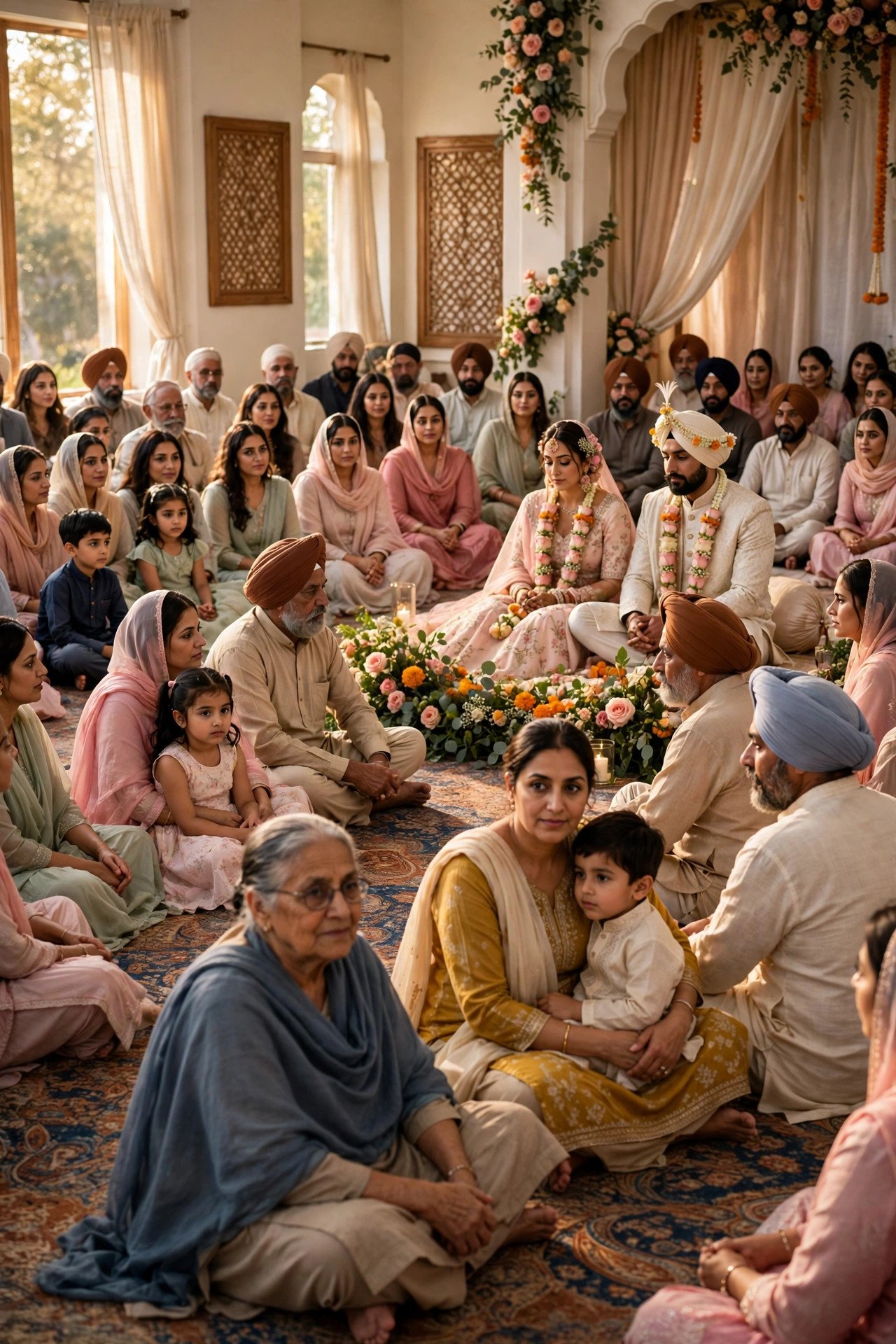
In the darbar hall, prince and cleaner sit on the same carpet: floor seating is Sikh equality made physical, and it shapes the wedding’s feeling — intimate, level, unshowy. The couple sits at the front before the Guru Granth Sahib; elders who cannot manage the floor are given chairs at the sides without a whisper of fuss. Guests sit cross-legged through hymns and prayers, children drift to parents’ laps, and the whole room breathes at the same height as the couple it blesses.
Kurmai — The Engagement Blessing
 📌 Save
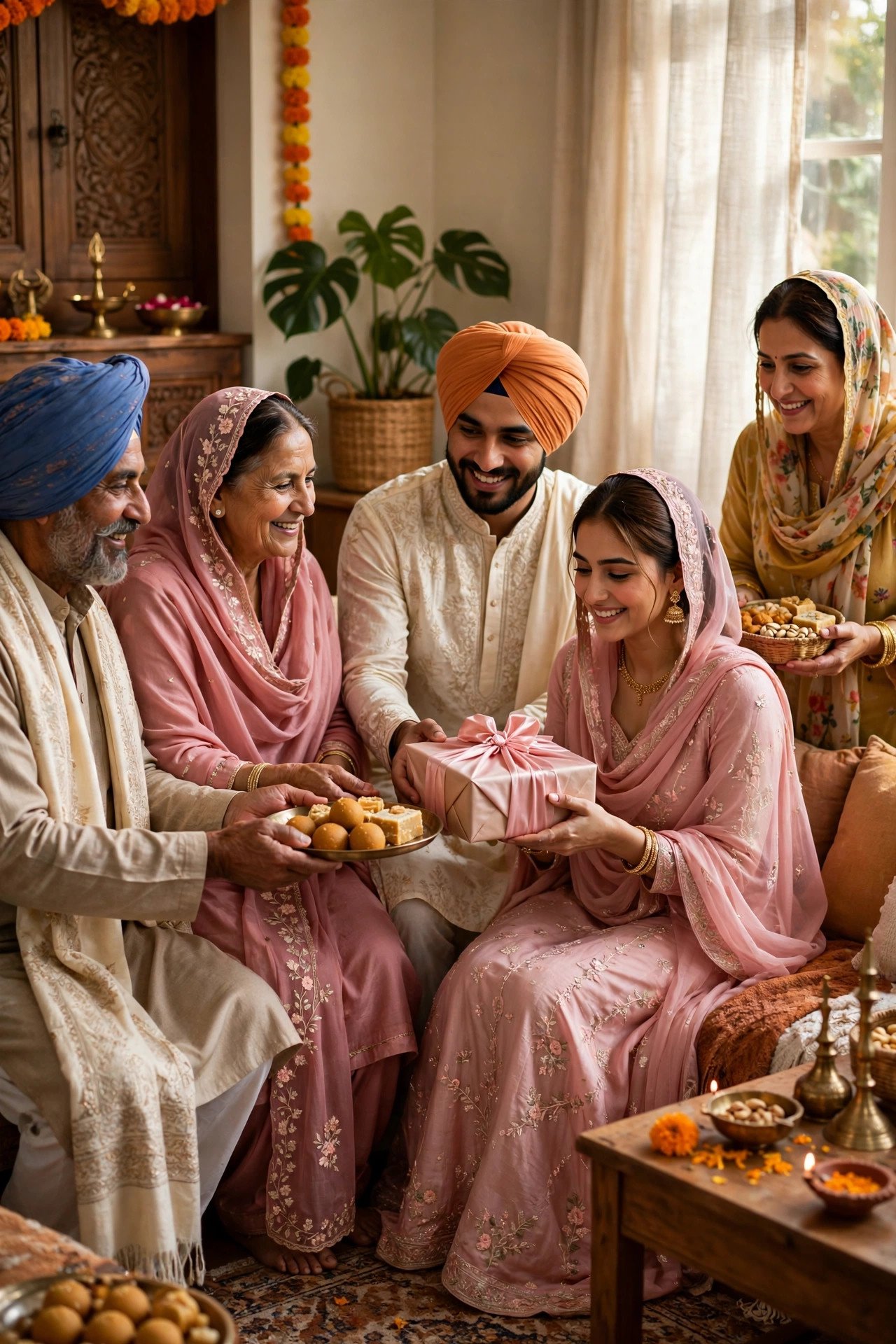
The kurmai is the formal engagement: the bride’s family visits (traditionally the groom’s home, a hall or the gurdwara) with gifts and sweets; prayers are offered; rings may be exchanged; and the groom receives traditional gifts — in many families a kara (steel bracelet) and kirpan among them, items of deep significance in Sikh life. The gathering announces the marriage intention to both communities. Some families hold kurmai months ahead; others combine it with the wedding week’s events.
Roka and the Chunni Ceremony
 📌 Save
Many Punjabi Sikh families begin celebrations with a roka — a small blessing gathering marking that the match is ‘stopped’ (settled) — and a chunni ceremony, where the groom’s mother and female relatives visit the bride, place a decorative chunni (scarf) over her head, apply a touch of henna, feed her sweets and present gifts and her wedding outfit choices. The chunni says she is already cherished by her new family. These gatherings are women’s joy: singing, teasing and the first of many gift exchanges.
Jago — The Night-Before Procession
 📌 Save
The jago is the wedding week’s loudest joy: on a night before the wedding, relatives process through the neighborhood carrying a gaggar — a decorated earthen pot topped with candles or lights — on one woman’s head, singing traditional jago songs whose refrain announces that a wedding is coming and the street should wake up and join. The route visits relatives’ homes, which receive the procession with sweets and more singing. Both bride’s and groom’s sides hold their own jago; in the diaspora it winds through suburban streets to delighted, bewildered neighbors who are promptly fed.
Maiya and Vatna — Turmeric Celebrations
 📌 Save
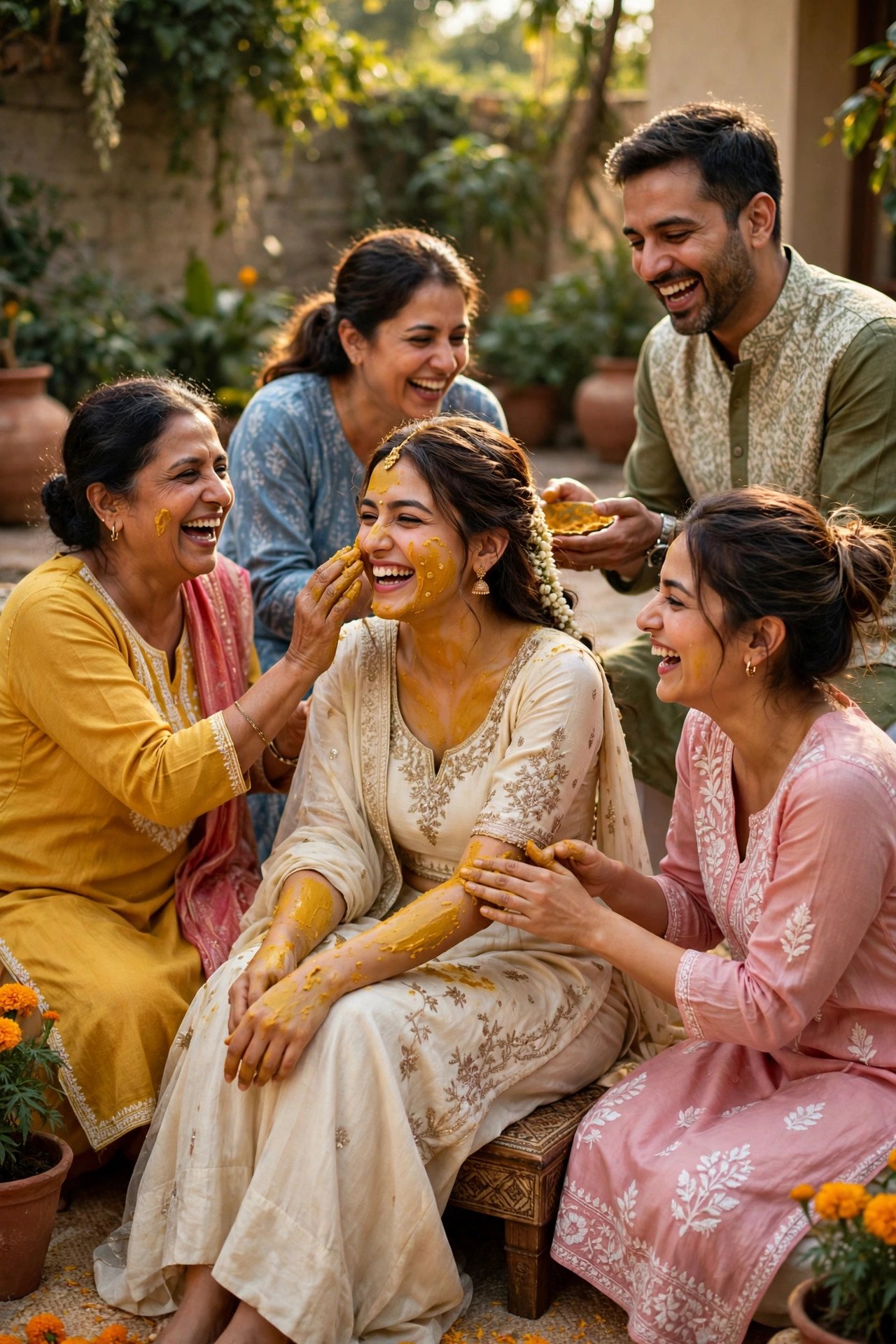
In the days before the wedding, each home holds a maiya: the bride (and separately the groom) sits on a decorated seat or beneath a canopy while family applies vatna — a turmeric paste with mustard oil — to face, arms and legs, to blessings and considerable laughter. Turmeric signifies purification, protection and a wedding glow; the application is affectionate chaos, with cousins ensuring nobody escapes unpainted. After the maiya, by an old custom, the bride or groom stays home until the wedding — the celebrations now come to them.
The Groom’s Sehra and Surma
 📌 Save
On the wedding morning the groom is dressed with ceremony: over his turban is tied the sehra — a veil of flowers or beads — in the sehrabandi, traditionally performed by his sister-in-law (bhabhi), who also lines his eyes with surma (kohl), said to ward off the evil eye on his journey. Smaller rituals gather around: sisters tie his kalgi or bracelets, the family pins his brooch. A groom in full dress — turban, sehra, sword (kirpan) at his side in many families — is a photograph his mother has imagined for decades.
The Ghodi — The Groom’s Grand Arrival
 📌 Save
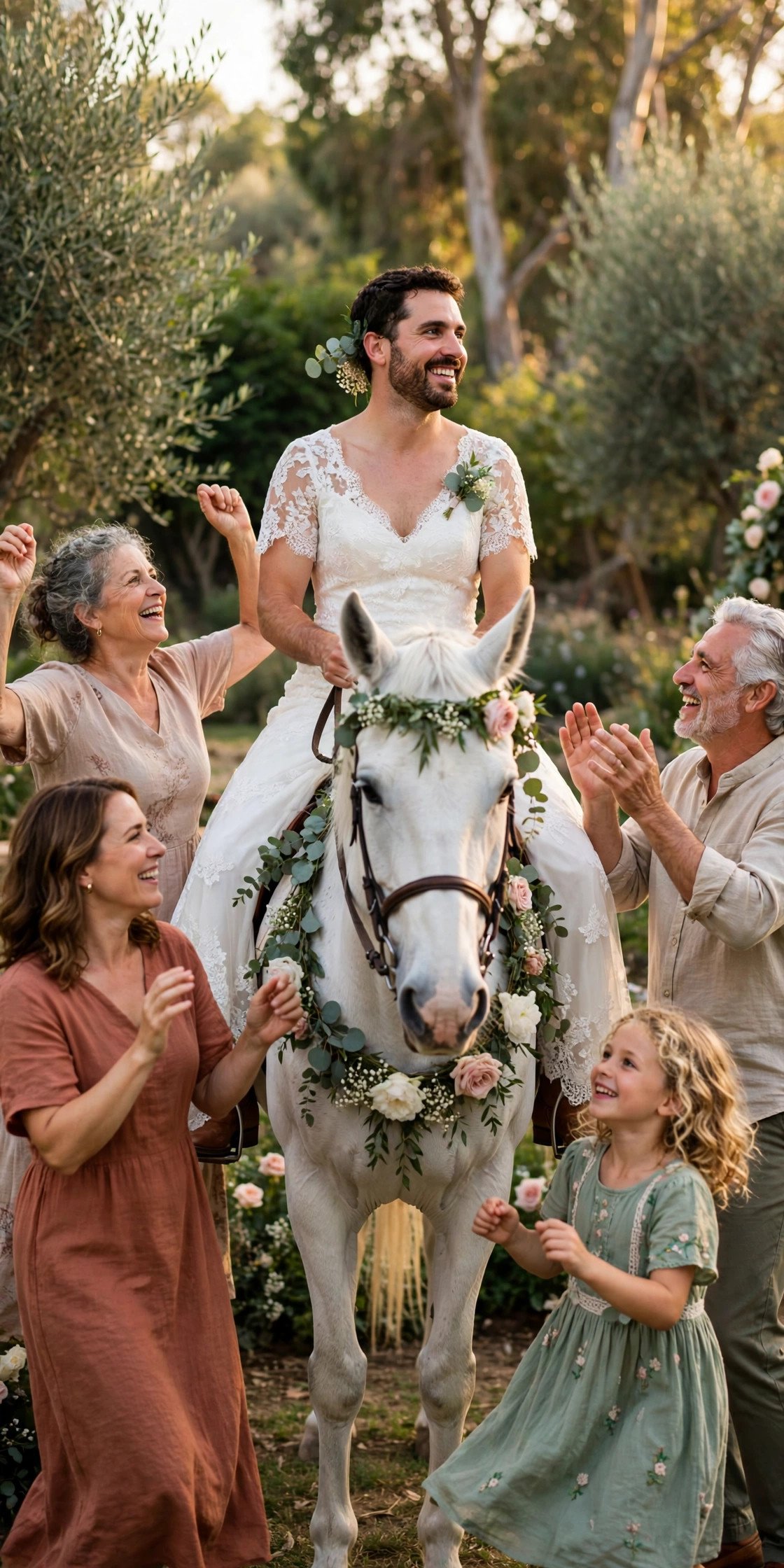
Tradition sends the groom to his wedding on a ghodi — a decorated white mare, garlanded and caparisoned — while his baraat (procession) dances ahead of him to dhol drums. A young nephew or child may ride with him, a small second groom. The mare is fed and blessed before departure; sisters perform small ceremonies around her. Apartment-era and diaspora grooms adapt — a short ride at the venue, a decorated car, occasionally a full horse at a country venue — but where a ghodi appears, the street understands instantly: a groom is coming.
Milni — When the Families Meet
 📌 Save
Before the ceremony, the milni formally introduces the two families: lines of corresponding relatives — the two fathers first, then uncles, brothers, grandfathers — meet in the middle, exchange garlands and embrace, while the granthi offers a short prayer (ardas) for the union. In many families a wit appointed by each side trades playful verses about the other family, to general hilarity. The milni declares publicly that this marriage joins not two individuals but two houses, rank by rank, hug by hug.
The Bride’s Chooda and Kaleerein
 📌 Save
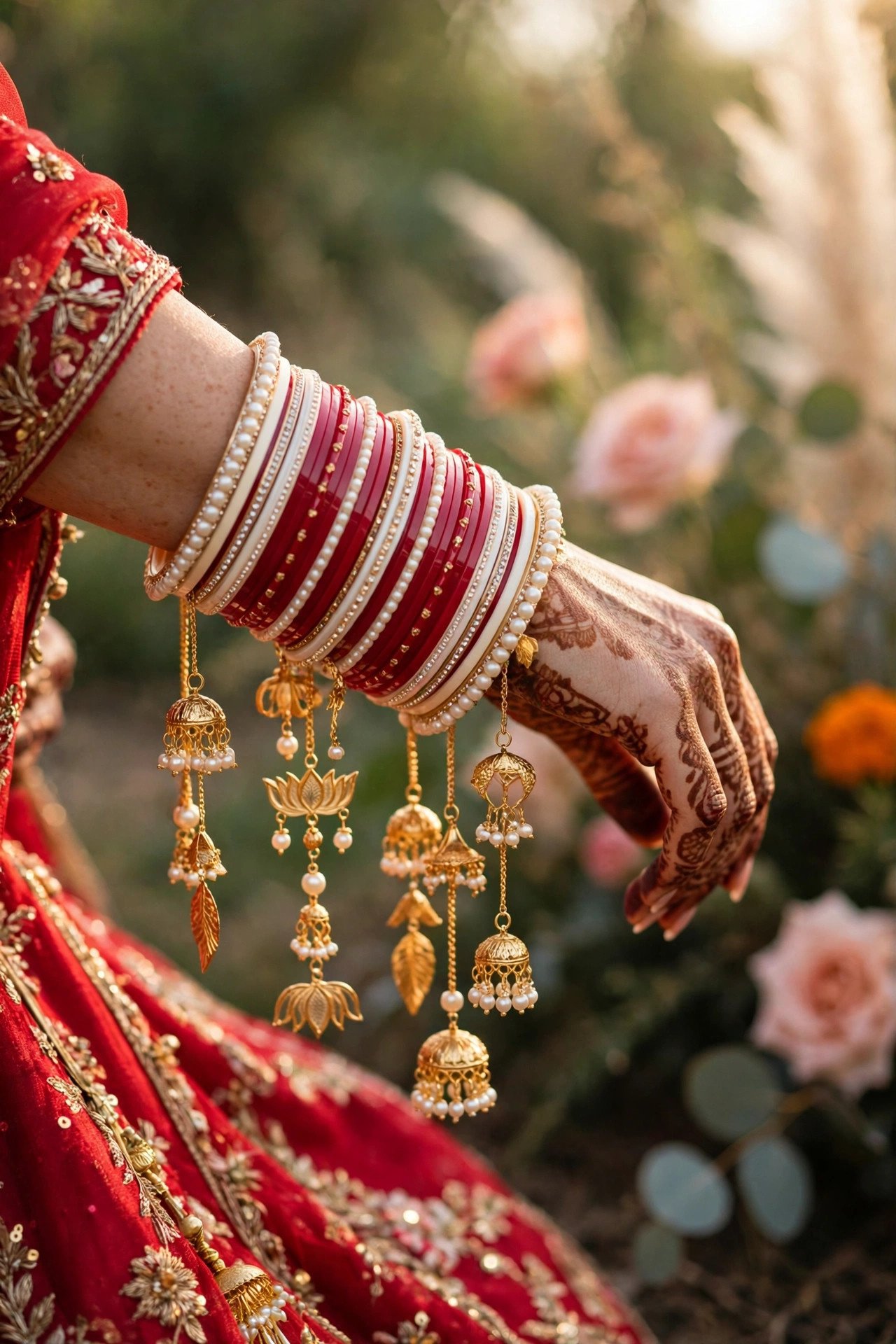
On the wedding morning the bride receives her chooda: a set of red and ivory-white bangles, traditionally gifted by her maternal uncle (mama) in the chooda ceremony, purified (often in milk and rose petals), and slipped onto her wrists while the set is first covered by a cloth. From the bangles hang kaleerein — ornate golden or silver dangling ornaments shaped like domes and leaves. The chooda marks her as a bride for months after; the kaleerein, as the next tradition shows, have matchmaking work to do.
The Bride’s Entrance
 📌 Save
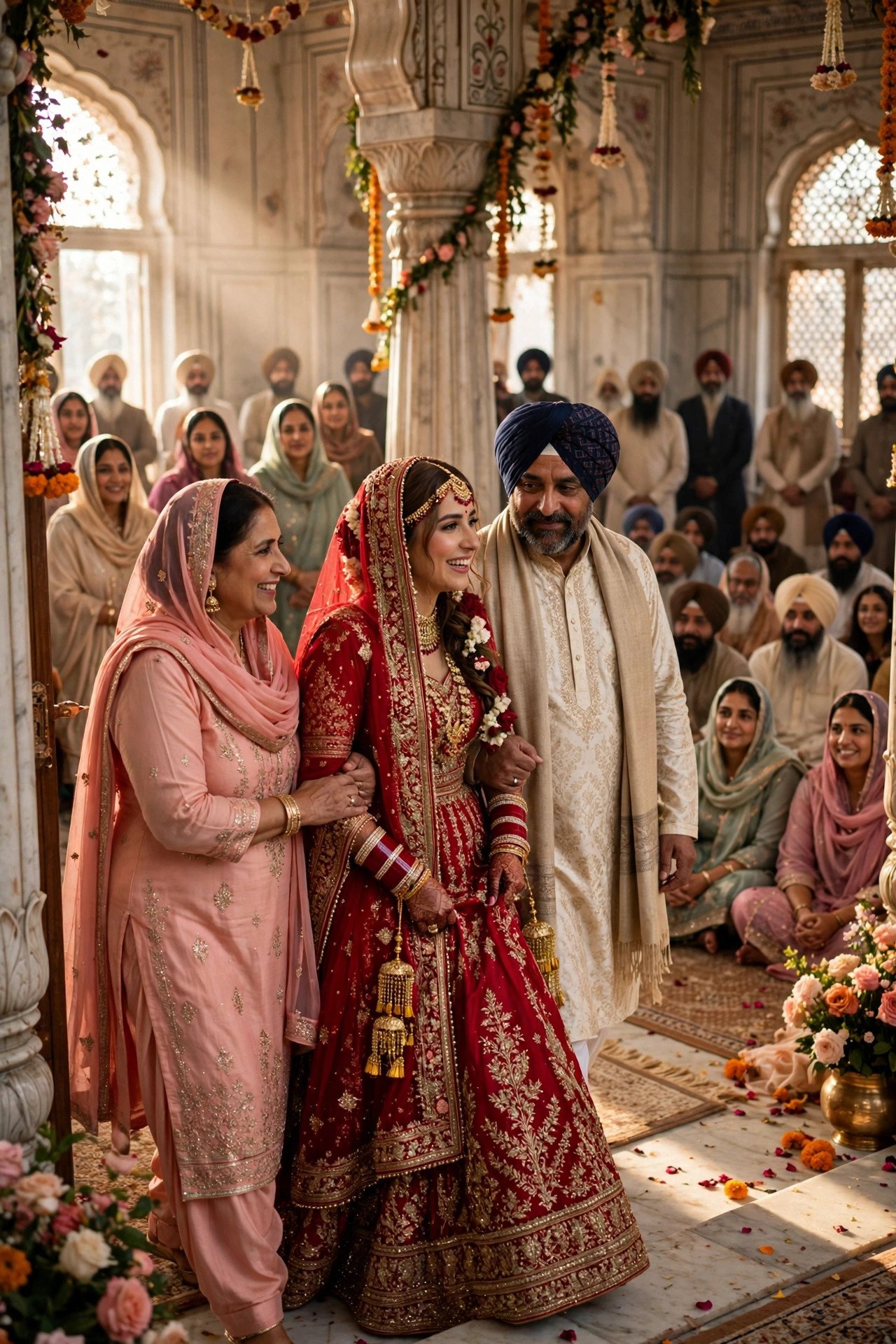
The bride enters the darbar hall escorted by her parents, family or brothers, as the ragis sing a welcoming shabad (hymn). She bows before the Guru Granth Sahib and takes her place beside the groom, traditionally on his left, before the scripture. Her entrance is quiet by design — the gurdwara’s register is reverence, not fanfare — which makes it overwhelming: hundreds of people, one hymn, and a daughter walking toward her marriage through the community that raised her.
The Palla — A Scarf Joins Their Hands
 📌 Save
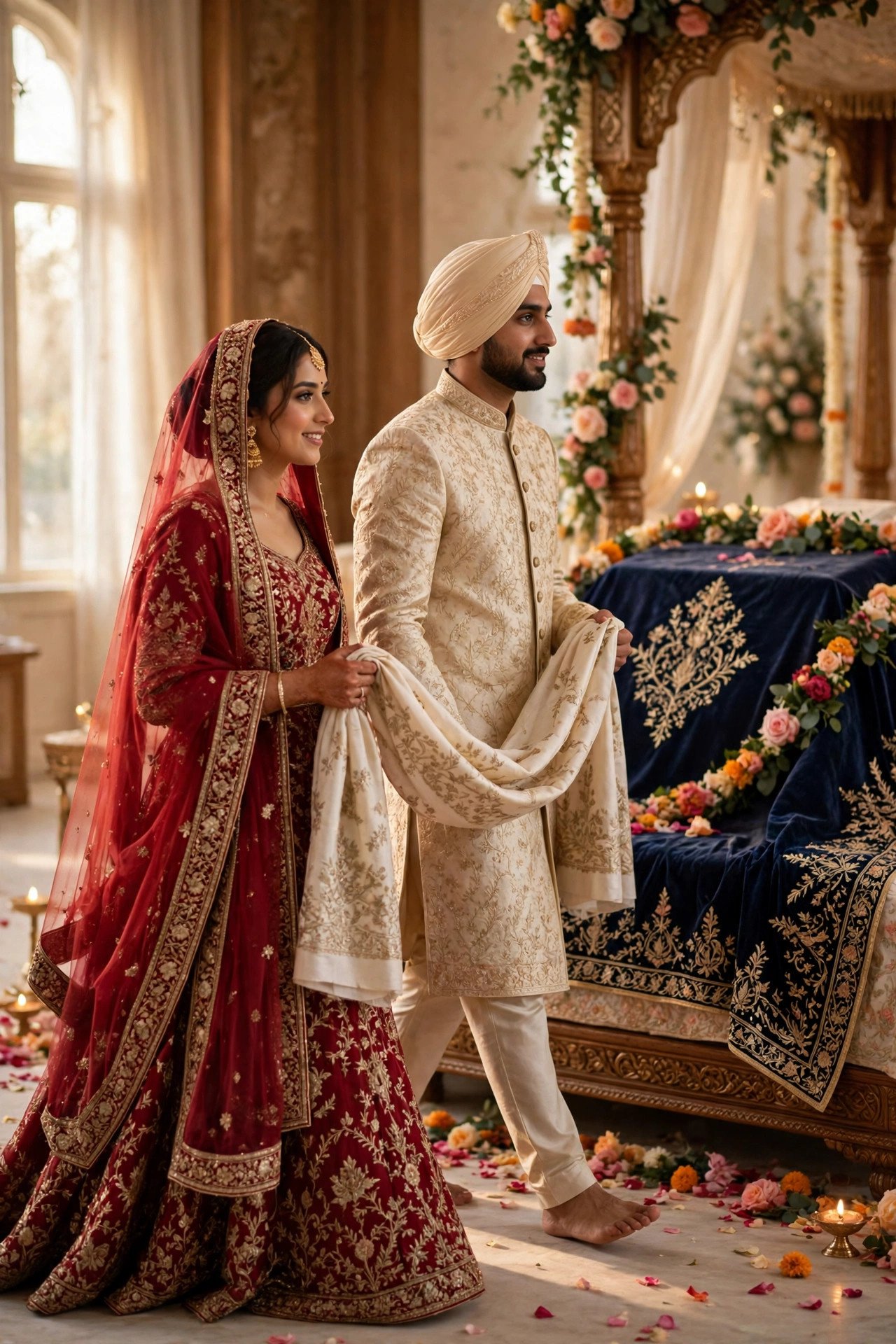
Before the laavan begin, the palla ceremony joins the couple physically for the rounds: the groom wears a scarf (palla) over his shoulder, and the bride’s father takes its end and places it into his daughter’s hands — she will hold it through all four rounds, so the couple circles the scripture literally connected. The gesture carries the father’s giving, the couple’s unity and their promise to walk the path holding on to one another. It is simple, wordless and the moment many fathers quietly weep.
The Four Laavan — Rounds and Hymns
 📌 Save
The Anand Karaj’s core is the laavan: four hymns composed by Guru Ram Das Ji, sung one by one by the ragis while the couple rises and walks slowly around the Guru Granth Sahib, the groom leading, the bride holding his palla. Each hymn describes a stage of the soul’s journey toward God — longing, awakening, detachment-in-love and bliss — and the marriage is framed as two people walking that path together. After each round the couple bows and sits; after the fourth, they are married. The congregation witnesses in silence and song — there is no exchange of Western-style vows; the hymns are the vows.
Kirtan — Music That Carries the Ceremony
 📌 Save
An Anand Karaj is sung from threshold to farewell: ragi jatha — usually three musicians with harmonium and tabla — perform kirtan, the singing of shabads (hymns) chosen for the occasion, framing the couple’s arrival, the palla, the laavan and the closing prayers. Families may also sing a shabad themselves, a beloved custom when a grandmother or the couple’s friend takes a verse. The music is not accompaniment; it is the ceremony’s medium — guests who understand no Punjabi still leave saying the sound itself blessed them.
Anand Sahib and the Closing Ardas
 📌 Save
After the laavan, the ceremony closes in two great movements: the singing of Anand Sahib, Guru Amar Das Ji’s hymn of bliss (its opening stanzas sung at weddings), with the whole congregation joining, and the ardas — the formal congregational prayer, spoken by the granthi as everyone stands with folded hands, remembering the Gurus, the martyrs, the community, and finally this couple by name, asking blessing on their union. The ardas’s sweep — from cosmic history to two names spoken aloud — is the ceremony’s emotional summit.
The Hukamnama — A Reading for the Couple
 📌 Save
The ceremony (like every gurdwara gathering) concludes with the hukamnama or vak: the Guru Granth Sahib is opened at random and the hymn on the page is read aloud as the Guru’s guidance for the day. For a wedding, the reading lands with special weight — families receive it as the first teaching given to the marriage, and the passage is often printed in the couple’s keepsakes. The randomness is the point: the couple does not choose their first lesson; they receive it.
Karah Parshad for Everyone
 📌 Save
No gathering at the gurdwara ends without karah parshad: a warm, sweet semolina halwa, blessed during the ardas, served to every single person present by sewadars walking the rows. It is received with both hands cupped — a small lesson in humility — and eaten entirely; nothing blessed is wasted. For wedding guests from other traditions, karah parshad is often their favorite memory of the ceremony: the whole room, from the couple to the smallest child, tasting the same sweetness at the same moment.
Shagun — A Queue of Blessings and Gifts
 📌 Save
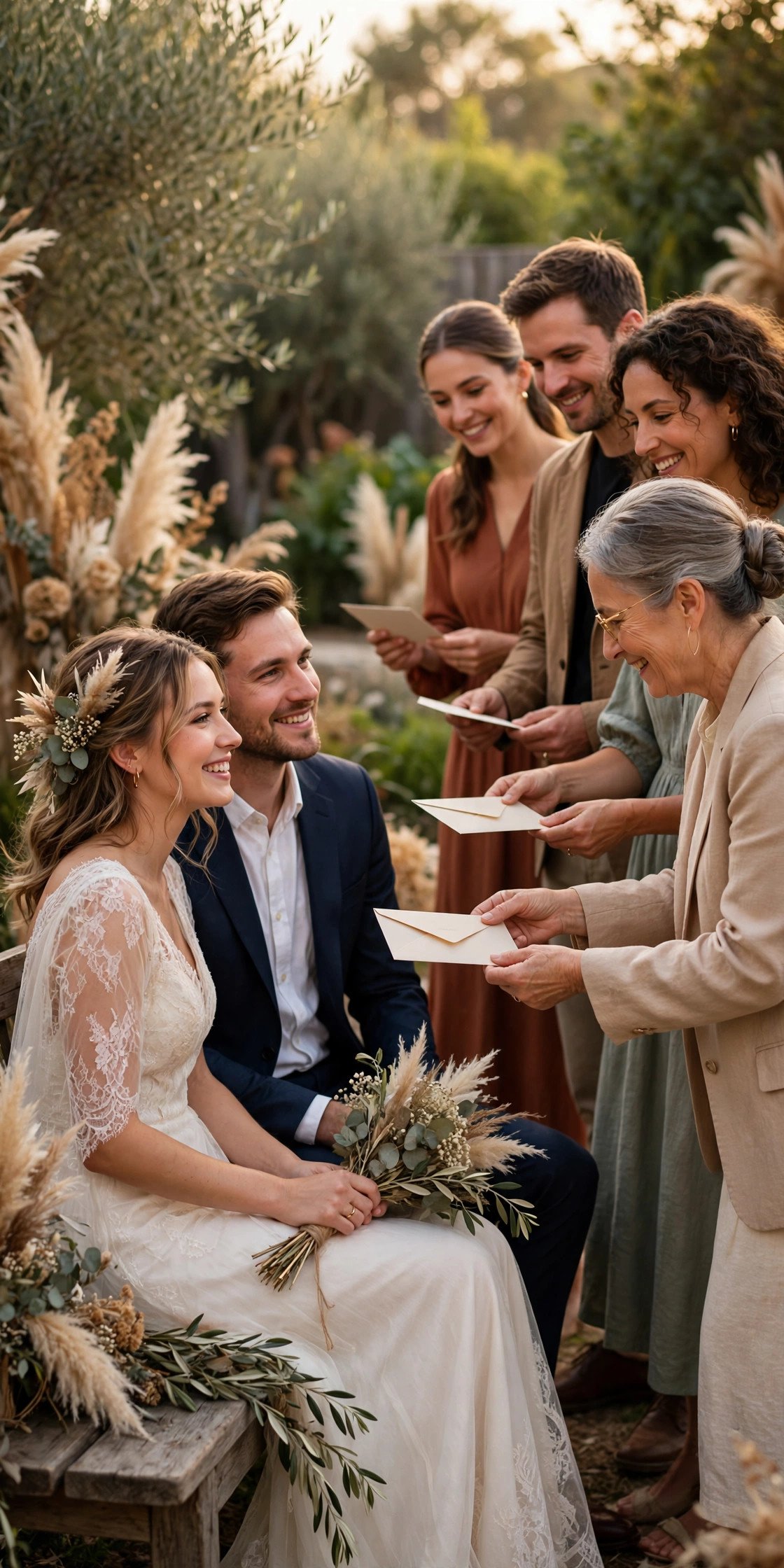
After the ceremony, the couple sits before the congregation as guests file past in the shagun queue: each person congratulates them, offers an envelope or gift (the shagun — traditionally cash in odd, auspicious amounts), and is photographed with them. Parents stand alongside receiving the family’s honor. The queue is long, joyful and unhurried — it is how a community of three hundred individually seals its blessing, and the couple’s cheeks ache from smiling in the best way.
Langar — The Meal That Welcomes All
 📌 Save
The celebration’s meal is langar: the gurdwara’s free vegetarian kitchen, cooked and served by volunteers (sewa), eaten sitting in rows on the floor — every guest, of every faith and station, fed identically and abundantly. Langar is one of Sikhism’s founding institutions: the answer to hunger and hierarchy at once. Wedding langars are festive — richer dishes, sweets, endless refills — but the principle holds: the hosts’ honor is measured by service, and guests often find the couple’s own families serving the rows.
The Kaleerein Game for Single Guests
 📌 Save
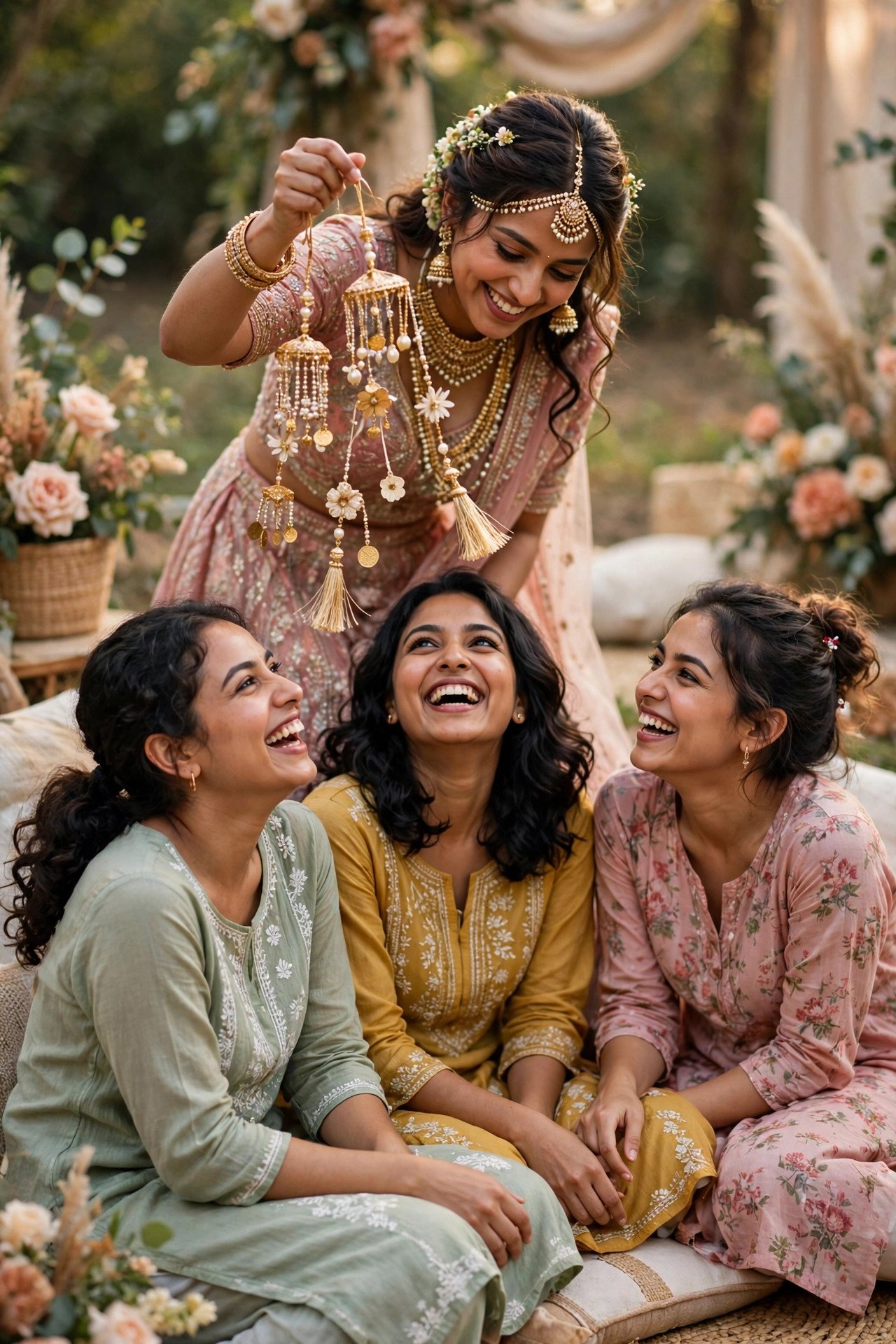
After the ceremony, the bride’s unmarried friends and cousins sit in a row or circle while she passes over them shaking her kaleerein; if a piece (traditionally loosened) falls on someone’s head, she is prophesied the next bride — to screams, denials and total delight. It is the Sikh bouquet toss, except the bride delivers the luck personally, head by head, and grandmothers lean in like referees. Some families play it at the reception; the gurdwara version happens in courtyards and homes after the shagun.
Doli — The Bride’s Farewell
 📌 Save
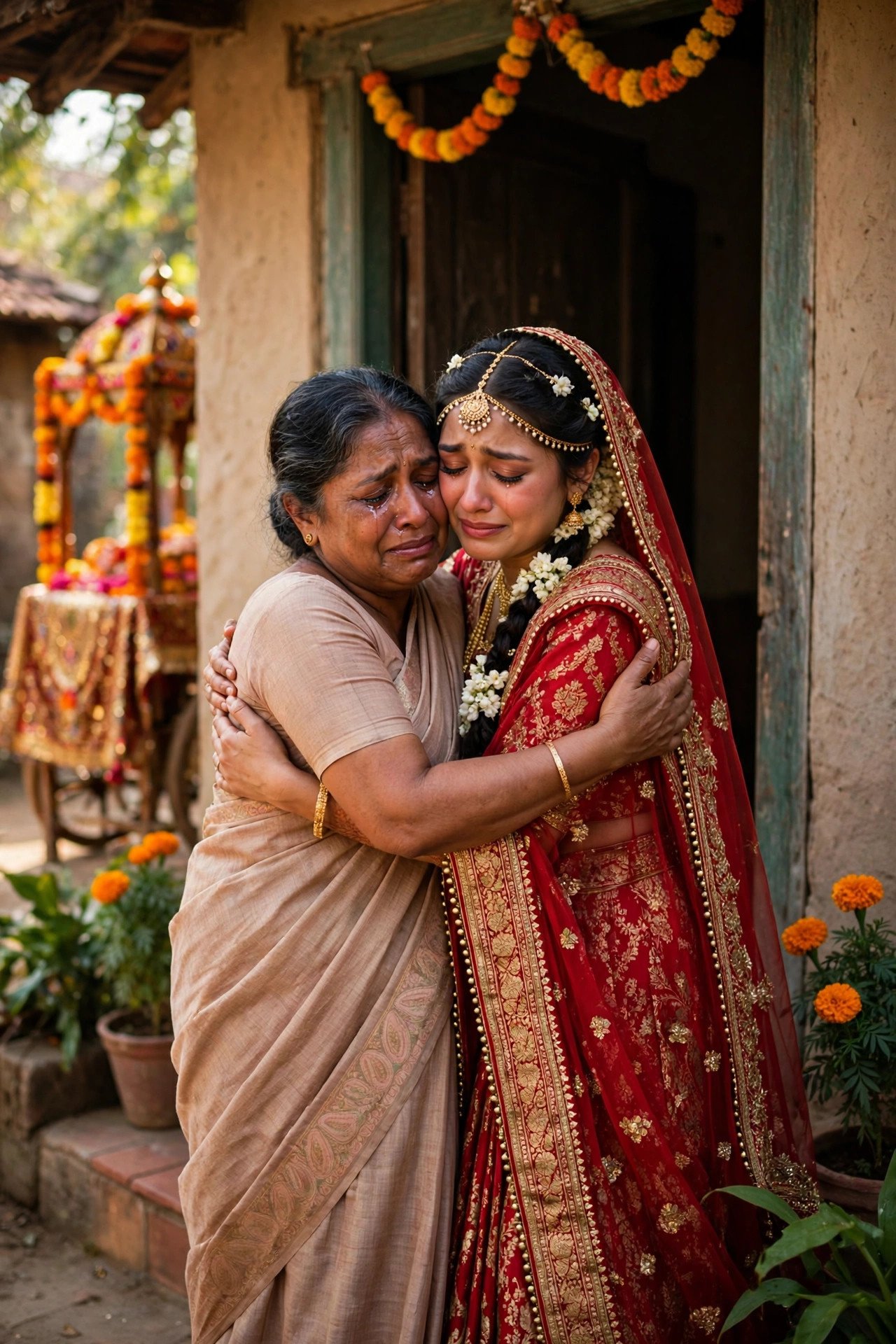
The wedding celebrations end with the doli: the bride’s formal departure from her family home, escorted to the car (the modern doli) by her weeping, blessing family. However modern the couple and however near they will live, the doli is performed at full emotional strength — mothers hold daughters, fathers compose themselves and fail, brothers lift the mood and their sister’s spirits, and old songs surface. The farewell honors the truth inside the celebration: a household is changing shape today, and love acknowledges it before the party resumes at the groom’s side.
Rice Over Her Shoulder
 📌 Save
As she leaves, the bride takes handfuls of rice (in some families rice and coins, or flower petals) and throws them backward over her shoulder without looking — a wish and a thank-you: may the home that raised me always have abundance; I leave prosperity behind me even as I go. Her mother often catches the rice in her dupatta. The gesture, small and ancient, compresses the whole doli into one image — a daughter blessing the house from its own doorway, mid-goodbye.
Planning an Anand Karaj — Ask the Gurdwara Early
 📌 Save
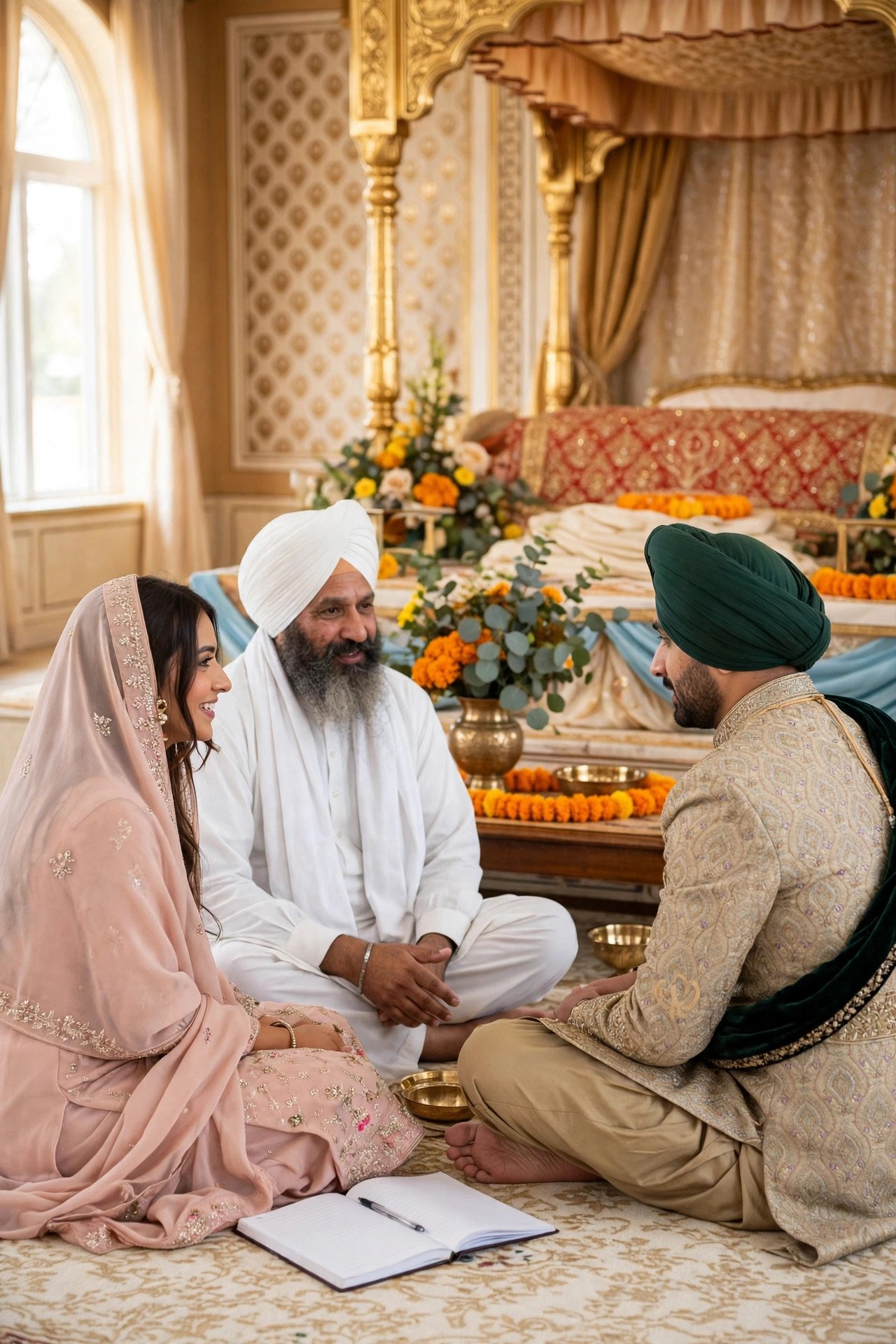
Practicalities, handled respectfully: book the gurdwara early (weekend mornings fill far ahead), meet the granthi to confirm the ceremony’s form, the ragis, timings and any family customs you hope to include, and confirm details like the milni location and langar arrangements. Gurdwaras vary in their wedding guidelines — some have specific expectations for the couple and the ceremony’s conduct — and the only way to honor them is to ask directly and early. A couple that arrives at the gurdwara with humility and questions will be guided beautifully through everything else.
Sikh Wedding Traditions FAQs
Can non-Sikh guests attend an Anand Karaj?+
Yes — the gurdwara and the Anand Karaj welcome everyone. Guests should cover their heads (scarves are provided), remove their shoes, sit on the floor with the congregation, and accept karah parshad with both hands. No one is expected to pray or sing; respectful presence is full participation.
What are the four laavan?+
The laavan are four hymns composed by Guru Ram Das Ji, sung during the ceremony while the couple walks around the Guru Granth Sahib once for each hymn, the bride holding the groom’s palla (scarf). The hymns describe stages of the soul’s journey to God and frame marriage as two people walking that spiritual path together.
How long does a Sikh wedding ceremony last?+
The Anand Karaj itself typically runs about an hour to ninety minutes including the surrounding kirtan, prayers, hukamnama and karah parshad. With the milni before it and shagun and langar after, guests should expect the gurdwara portion of the day to take most of the morning — receptions usually follow in the afternoon or evening.
What is the chooda ceremony?+
The chooda is the set of red and white bridal bangles traditionally gifted by the bride’s maternal uncle on the wedding morning and placed on her wrists in a small family ceremony. Ornaments called kaleerein hang from the bangles; after the wedding the bride playfully shakes them over unmarried friends — whoever catches a falling piece is said to be the next bride.
What gift should I bring to a Sikh wedding?+
Cash in an envelope (shagun) is the standard and welcome gift, traditionally given in odd amounts ending in one — such as 51 or 101 — for auspiciousness. At the gurdwara itself, guests simply attend; the gift is presented during the shagun congratulations after the ceremony or at the reception.
Key Takeaways
- The Anand Karaj is a sung ceremony before the Guru Granth Sahib — the couple marries to hymns, not vows.
- Four laavan, four rounds, one palla scarf held between them: the marriage’s philosophy walked in a circle.
- Equality is structural: floor seating, karah parshad for all, and langar — a free meal where everyone is served alike.
- The week’s joy lives at home: jago processions, maiya turmeric, chooda bangles and the tearful doli farewell.
- Guests of every faith are welcome — cover your head, remove your shoes, and let the gurdwara’s volunteers guide you.
Final Thoughts
An Anand Karaj asks a community to witness a marriage the way it witnesses everything: seated together on the floor, fed together, blessed together. If you attend one, give yourself to its pace — the hymns are long because the promise is. And if you are planning one, start at the gurdwara, ask your granthi everything, and let the week’s singing and turmeric and tears do what they have done for generations of Punjabi families: carry two people, joyfully, into one life.