
101 Questions for Muslim Couples to Ask Before Marriage
By zainzari • Published April 2026 • Updated October 10, 2026
 📌 Save
The most important questions for Muslim couples to ask before marriage span 15 areas: faith and practice, family and in-laws, finances and mahr, career and education, children and parenting, lifestyle and daily habits, communication and conflict, health and wellness, home and living situation, social life and boundaries, past and expectations, roles and responsibilities, dreams and long-term goals, handling hard times, and the wedding itself. Discuss them gradually during the getting-to-know phase — honestly, kindly, and with both families’ values in mind.
In Islam, marriage is a sacred covenant — a partnership built on love, mercy and mutual respect. Before that partnership begins, thoughtful conversation is one of the kindest gifts a couple can give each other. Asking honest questions early doesn’t remove the romance; it protects it, replacing assumptions with understanding and guesswork with trust.
This guide organizes 101 essential questions into 15 conversation categories, from faith and family to finances and future dreams. Work through them gradually, in calm and unhurried moments, with open hearts. The goal isn’t a perfect score — it’s truly knowing the person you’re choosing, and letting them truly know you.
At a Glance: 15 Categories, Why They Matter & When to Discuss
| Category | Why It Matters | When to Discuss | Sample Question Count |
|---|---|---|---|
| Faith & Practice | Shared spiritual rhythm shapes daily life | Early | 9 |
| Family & In-Laws | Marriage joins two families | Early | 9 |
| Finances & Mahr | Money habits cause the most stress | Before engagement | 8 |
| Career & Education | Ambitions shape the next decade | Getting-to-know phase | 7 |
| Children & Parenting | A core life vision to align | Before engagement | 7 |
| Lifestyle & Daily Habits | Small habits, big daily impact | Getting-to-know phase | 6 |
| Communication & Conflict | How you’ll handle disagreements | Early | 7 |
| Health & Wellness | Caring for each other fully | Before engagement | 6 |
| Home & Living Situation | Where your life happens | Before engagement | 5 |
| Social Life & Boundaries | Expectations with the outside world | Getting-to-know phase | 6 |
| Past & Expectations | Honesty builds lasting trust | As trust grows | 6 |
| Roles & Responsibilities | A fair, happy partnership | Before engagement | 7 |
| Dreams & Long-Term Goals | Walking toward the same future | Getting-to-know phase | 6 |
| Handling Hard Times | Resilience is planned, not improvised | Before engagement | 6 |
| The Wedding Itself | Start married life united | Planning stage | 6 |
These 101 questions are conversation starters, not an interrogation checklist. Work through one category at a time in relaxed settings, listen more than you speak, and remember that how someone answers matters as much as what they say.
Faith & Practice
 📌 Save
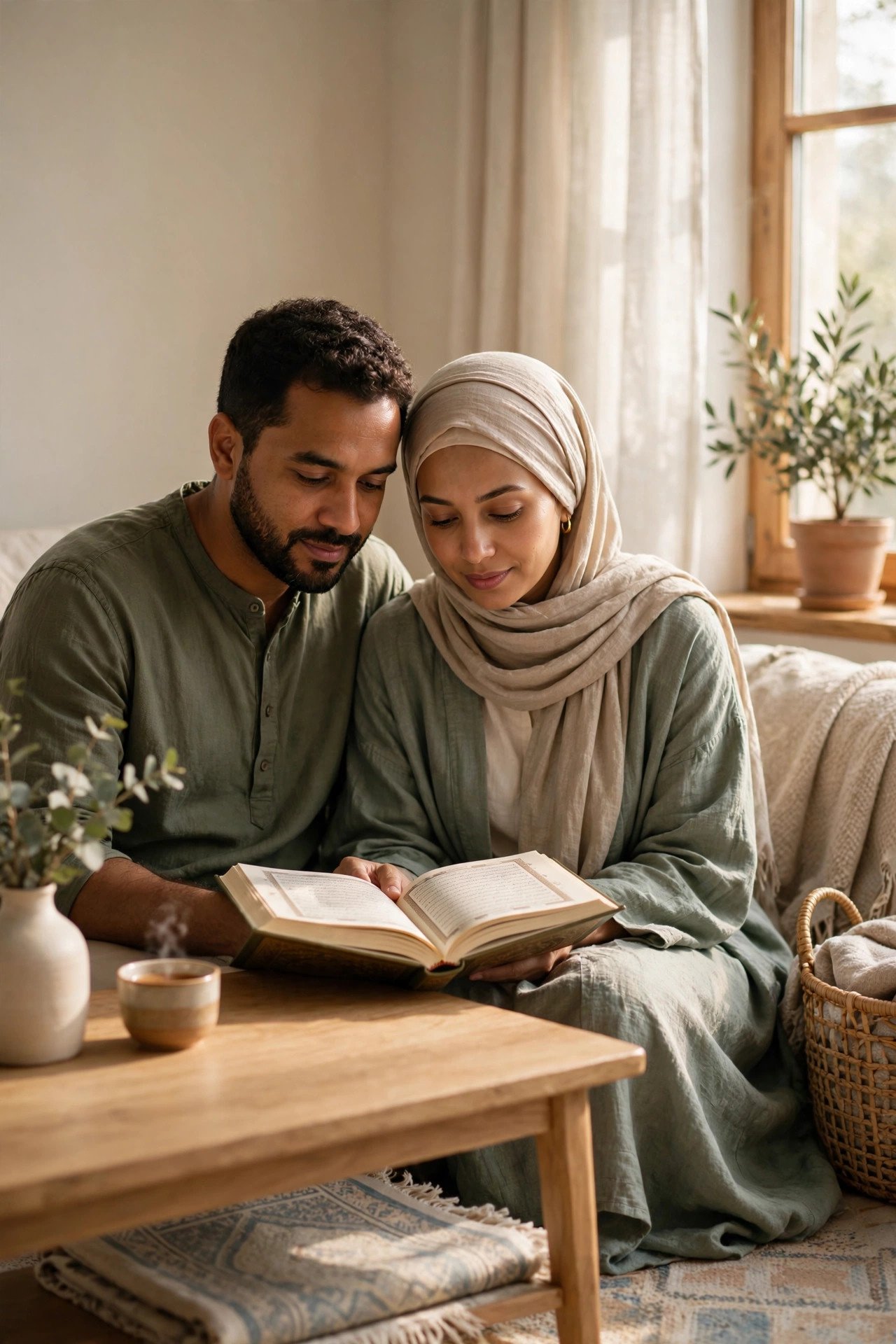
Faith shapes the rhythm of a Muslim home — from daily prayers to Ramadan — so aligning on practice early prevents quiet misunderstandings later.
Talk about each other’s relationship with worship in honest, judgment-free terms: prayer habits, Quran reading, fasting, charity, and how faith guides big life decisions. The aim isn’t identical practice on day one — it’s mutual respect, honesty about where each of you stands, and a shared direction of growth you can walk together.
Try these: “How do you practice your faith day to day?” — “What does Ramadan usually look like for you?” — “How do you hope we’ll support each other’s spiritual growth after marriage?” Notice whether the answers invite partnership or shut the conversation down; that tells you as much as the words.
Read next: 19 Wedding Readings from Movies You Love
Family & In-Laws
 📌 Save
In most Muslim marriages, you’re not just marrying a person — you’re joining two families. Clear, loving expectations now save years of friction.
Discuss how often you’ll visit each set of parents, how holidays and family events will be shared, what role in-laws play in your decisions, and how you’ll care for aging parents. Be specific and kind: vague goodwill (“we’ll figure it out”) is where most in-law tension quietly begins.
Try these: “How often do you hope we’ll see your parents?” — “What role should in-laws play in our big decisions?” — “If our families disagree, how should we handle it as a team?” Listen for whether your partner speaks of their family with respect and balance — or with patterns you’d inherit.
Read next: 33 Beautiful Bridal Shower Ideas You’ll Want to Steal
Finances & Mahr
 📌 Save
Money disagreements top every list of marriage stressors — and in Muslim marriages, the mahr conversation deserves its own clear, respectful space.
Share your full financial picture honestly: income, debts, spending habits, savings goals, and attitudes toward charity and supporting extended family. Then discuss mahr openly with both families involved — what it means to each of you, what feels fair and meaningful, and the timing of it. Clarity here is kindness, not awkwardness.
Try these: “Are you more of a saver or a spender?” — “Do you have debts or obligations I should know about?” — “What are your expectations around mahr, and how should we discuss it with our families?” If money talk feels tense now, that’s exactly why you’re having it now.
Career & Education
 📌 Save
Careers and education shape where you live, how you spend your days, and how you grow — align on the big trajectory before you walk it together.
Share your five- and ten-year professional visions, feelings about further study after marriage, willingness to relocate for opportunities, and how you’d support each other through career changes or unemployment. Ambition differences are fine; unspoken resentment about sacrificed dreams is not.
Try these: “Where do you see your career in five years?” — “Would you relocate for the right opportunity?” — “How do you feel about one of us studying further after marriage, and how would we support that?” The best answer is always a plan you build together.
Read next: 7 Questions Every Bride Should Ask at Her Wedding Dress Fitting
Children & Parenting
 📌 Save
Few topics matter more — or get assumed more. Whether, when and how to raise children deserves an explicit, heartfelt conversation.
Discuss whether you both want children, ideal timing, how many, and the values you want to pass on — including faith education, discipline styles, and the role of grandparents. Also talk honestly about what if plans change: fertility struggles, or one partner’s feelings evolving. Compassion now builds trust for every “what if” later.
Try these: “Do you want children, and what timing feels right?” — “What did your parents do well that you’d repeat — and what would you change?” — “How do you imagine raising our children in faith?” Differences here are workable only when they’re spoken.
Read next: 6 Things Every Bride Should Do Before Putting On Her Wedding Dress
Lifestyle & Daily Habits
 📌 Save
Marriage is lived in ordinary days — and ordinary days are made of habits. The small stuff is the big stuff.
Talk honestly about sleep schedules, cleanliness standards, food preferences and cooking, screen time, and how you each recharge. A night owl married to an early riser can be perfectly happy — but only if they’ve talked about it and planned around it instead of discovering it through irritation.
Try these: “Are you a morning person or a night owl?” — “How tidy do you like the home to be?” — “How do you like to spend a free evening?” These sound trivial; couples consistently say they’re the questions that mattered most.
Read next: 13 Cozy and Creative Winter Bridal Shower Theme Ideas
Communication & Conflict
 📌 Save
Every couple disagrees. Happy couples just have a healthy way back to each other — discover yours before you need it.
Ask how each of you handles anger and hurt: do you need space or immediate talk, do you raise your voice or go quiet, how did your parents argue, and what does a sincere apology look like to you? Understanding conflict styles in advance turns future fights from frightening into familiar.
Try these: “When you’re upset, do you need space or want to talk it through?” — “What helps you feel truly heard?” — “How did your parents handle disagreements, and what would you do differently?” Watch for contempt or stonewalling in the answers — and in the conversation itself.
Read next: 23 Sage Green Bridal Shower Ideas
Health & Wellness
 📌 Save
Your bodies and minds are a trust you’ll care for together — honesty about health before marriage is an act of love, not a risk.
Share any ongoing health conditions, mental health history, medications, and family health patterns that could matter. Discuss how you each handle stress and low moods, what support looks like, and your feelings about seeking professional help if ever needed. Secrets about health discovered later feel like betrayal; shared early, they’re just facts you face together.
Try these: “Are there any health conditions I should know about?” — “How do you handle stress, and how can I help when you’re struggling?” — “Would you be open to counseling if we ever needed it?” The right partner responds to vulnerability with gentleness.
Read next: 40 Fun and Unique Bridal Shower Games
Home & Living Situation
 📌 Save
Where you live shapes everything — privacy, commute, family closeness. This decision deserves daylight, not assumptions.
Discuss the city or town, renting versus buying, living independently versus with extended family, and how long any arrangement should last. In many Muslim families, living with parents initially is normal and beautiful — and it works best when both partners genuinely agree and the expectations (space, privacy, contributions) are spelled out.
Try these: “Where do you picture us living after marriage?” — “How do you feel about living with extended family, at least initially?” — “What would our ideal home look like in five years?” If families are involved in this decision, bring them in early.
Read next: 28 Bridal Shower Games Guests Will Actually Enjoy
Social Life & Boundaries
 📌 Save
One partner’s “we never go out anymore” is the other’s “we’re always out.” Align your social expectations before they become grievances.
Talk about how often you like hosting and attending gatherings, friendships you’ll each maintain, boundaries that matter to both of you, and how much dedicated couple time you need weekly. Respectful boundaries — agreed together, not imposed — protect both the marriage and your individual identities.
Try these: “How often do you like socializing versus quiet time at home?” — “What boundaries are important to you in our social life?” — “How will we balance time with friends and time just for us?” The goal is a rhythm that energizes both of you.
Read next: 20 Fun Bridal Shower Games Guests Will Love
Past & Expectations
 📌 Save
Everyone arrives with a history and a set of hopes. Sharing both — gently, without judgment — is how trust is built.
Talk about significant past experiences that shaped you, previous relationships or engagements if relevant, mistakes you’ve learned from, and what you expect marriage to feel like day to day. Unrealistic expectations (“marriage will fix my loneliness”) cause more heartbreak than any past ever could — name yours and examine them together.
Try these: “Is there anything from your past you feel I should know?” — “What are your biggest hopes for our marriage?” — “What are you most nervous about?” A partner who meets honesty with grace is a partner you can build a life with.
Read next: How to Make Bridal Shower Gift Opening Actually Fun
Roles & Responsibilities
 📌 Save
Who cooks, who earns, who decides? Every couple answers these questions — the wise ones answer them before the wedding.
Discuss how you’ll divide household work, who manages bills and budgeting, expectations around earning, and how big decisions get made — together, always, with each voice carrying real weight. Many Muslim couples blend traditional values with modern partnership; whatever your model, it must be chosen together, not assumed.
Try these: “How should we divide household responsibilities?” — “Who handles the bills and budgeting?” — “How will we make big decisions — and what happens when we disagree?” Fairness isn’t always 50/50; it’s both partners feeling valued.
Read next: 15 Stunning Blue Bridal Shower Theme Ideas
Dreams & Long-Term Goals
 📌 Save
Beyond the logistics of life lies the poetry of it — the dreams that make a marriage feel like an adventure, not an arrangement.
Share your bucket lists, travel dreams, business ideas, creative ambitions, and the kind of legacy you want to leave — including charity and community service close to your hearts. Then ask the practical follow-up: how will we actually make room for these dreams in our budget, our calendar and our life together?
Try these: “What’s a dream you’ve never told anyone?” — “Where do you see us in ten years?” — “What kind of life do we want to build — not just live?” Couples who dream together stay excited about each other for decades.
Read next: 15 Charming Tea Party Bridal Shower Ideas
Handling Hard Times
 📌 Save
Every marriage faces storms — illness, job loss, family crises, grief. Couples who’ve imagined the storm stand steadier in it.
Discuss how you each cope under pressure, what support you need when you’re struggling, how faith sustains you in difficulty, and whether you’d seek counseling if the marriage hit a rough patch. Also talk practically: emergency savings, who you’d turn to for help, and how you’d protect the marriage if extended-family conflict erupted.
Try these: “How do you cope when life gets really hard?” — “Would you be open to counseling if we struggled?” — “How can I best support you in tough times — and how will you tell me?” Resilience isn’t optimism; it’s a plan.
The Wedding Itself
 📌 Save
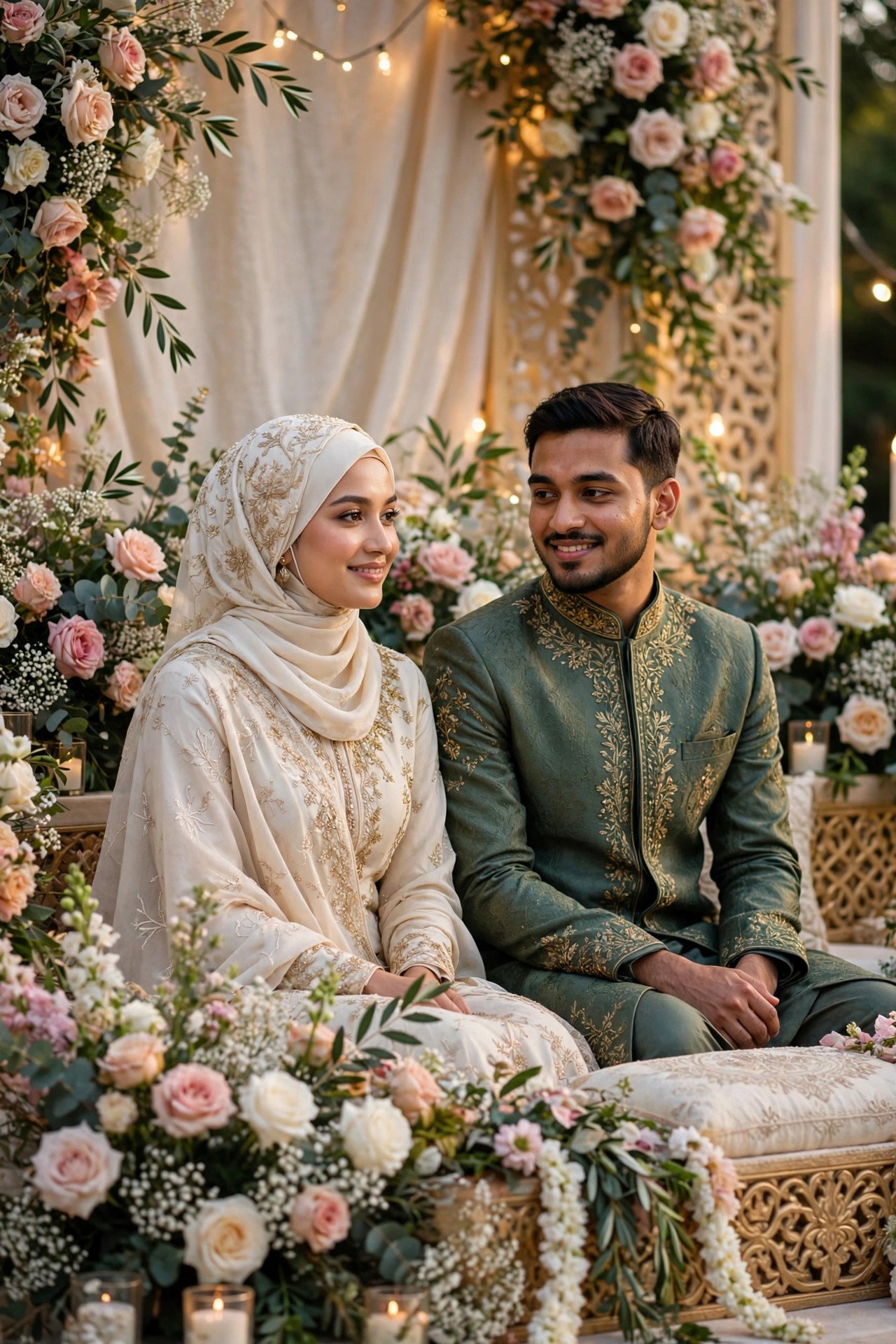
The wedding is the doorway to your marriage — walk through it united, with a celebration that reflects both of you.
Discuss the scale and style of the wedding, the budget and who contributes what, which traditions matter most to each family, and how you’ll handle guest lists and differing opinions. The wedding-planning process is your first real test of teamwork — how you navigate it predicts how you’ll navigate everything after.
Try these: “Big celebration or intimate gathering — what feels right to you?” — “Which wedding traditions matter most to you and your family?” — “How should we set the budget so we start married life without debt stress?” A wedding that honors both families and your future is the perfect beginning.
Read next: 24 Stunning Ideas for Bridal Shower
Frequently Asked Questions
Why is it important for Muslim couples to ask questions before marriage?
In Islam, marriage is a sacred covenant built on love, mercy and mutual respect. Thoughtful questions before marriage replace assumptions with understanding — aligning expectations about faith practice, family, finances and future goals so both partners enter the marriage with clarity and trust.
When should we start having these conversations?
Begin once both families have given their initial blessing and the couple is seriously getting to know each other. Pace the conversations naturally over several relaxed meetings rather than firing through them in one sitting — depth matters more than speed.
How do we discuss sensitive topics like finances or the past?
Choose a calm, private setting and frame questions with curiosity, not interrogation: “help me understand” works better than “why do you.” If a topic feels stuck, invite a trusted elder or counselor to facilitate — there is no shame in seeking guidance.
Do we really need to ask all 101 questions?
The number is a guide, not a test. The 15 categories cover the areas that matter most in a marriage. Even working thoughtfully through half of them — faith, family, finances, children and communication — will leave you far more prepared than most couples.
Should our families be part of these discussions?
Many Muslim couples discuss key matters — living arrangements, mahr, wedding plans, family expectations — with both families, since marriage joins two families as well as two people. The healthiest approach balances family input with the couple’s own honest agreement.
✨ Key Takeaways
- Work through the 15 categories gradually — one relaxed conversation at a time beats a marathon interrogation.
- Listen for how your partner answers, not just what they say — openness and respect matter most.
- Cover faith, family, finances, children and conflict styles at minimum before the engagement.
- Involve both families in the decisions that affect them: living arrangements, mahr and wedding plans.
- The goal is understanding, not agreement on everything — differences are fine when they’re spoken and respected.
Final Thoughts
These 101 questions are really one question asked 101 ways: do I truly know the person I’m choosing? Take your time with them. Laugh through the easy ones, lean into the hard ones, and let the conversations themselves become some of your favorite early memories together. A marriage that begins with honesty, kindness and shared faith has the strongest possible foundation — and every thoughtful question you ask now is a brick in it.


2 Comments